
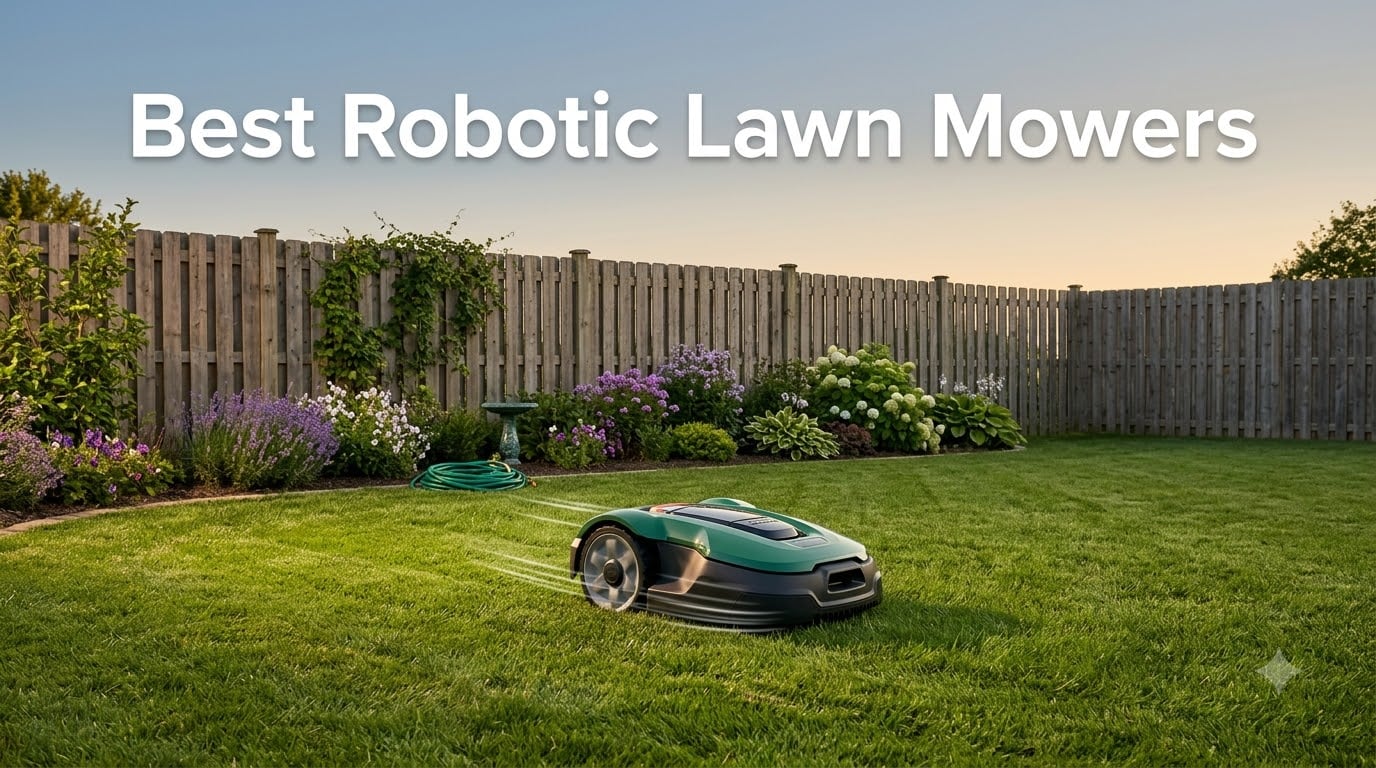
Our team has spent the last several months testing six of the best robotic lawn mowers on real yards ranging from a postage-stamp suburban lot to a three-quarter-acre property with a 35-degree slope. The category has shifted dramatically in 2026: wire-free RTK and LiDAR navigation have replaced the old boundary-wire setup as the default, AI vision can now spot a garden hose or a soccer ball, and all-wheel-drive mowers can climb grades that used to require a gas push mower.
This guide covers the six robot mowers we found worth recommending after filtering out models with weak reviews or limited availability. We compared coverage area, slope handling, navigation accuracy, obstacle avoidance, noise, app quality, and total cost of ownership. Every pick below links to a product page where you can check current pricing.
If you are still deciding whether a robot mower makes sense for your yard, the buying guide section below walks through the six decisions that matter most: navigation technology, budget, lawn size, terrain, obstacles, and maintenance. We also answer the questions buyers ask us most often, including how these mowers behave in heavy rain, how long they last, and whether they really work under thick tree cover.
Table of Contents
- TL;DR: The Best Robotic Lawn Mowers by Category
- Top 3 Picks at a Glance (September 2026)
- Best Robotic Lawn Mowers in 2026
- 1. ANTHBOT M5 – Editor’s Choice for Best Overall Robot Lawn Mower
- 2. Mammotion LUBA mini 2 AWD – Best Robotic Lawn Mower for Steep Slopes
- 3. Mammotion LUBA 3 AWD 3000H – Premium Pick for Large Lawns
- 4. Segway Navimow i105N – Best Robotic Lawn Mower for Small Lawns
- 5. ECOVACS Goat O1000 LiDAR PRO – Best Edge Trimming and Tight Spaces
- 6. eufy E15 – Best Robotic Lawn Mower for GPS Dead Zones
- Buying Guide: How to Choose the Best Robotic Lawn Mower for Your Yard
- Are Robotic Lawn Mowers Worth Buying?
- Frequently Asked Questions
- Final Verdict: Which Robotic Lawn Mower Should You Buy?
TL;DR: The Best Robotic Lawn Mowers by Category
These are the winners at a glance. We named each pick by the category where it actually wins, not just the highest score on paper.
Best Overall / Editor’s Choice: ANTHBOT M5 (Dual AI Vision + Full-Band RTK, 45% slope handling, ~$679). It pairs wire-free setup with the best balance of price, rating, and real-user reliability in our lineup.
Best for Slopes and Uneven Terrain: Mammotion LUBA mini 2 AWD (80% slope, AWD omni wheels, DropMow mode). Climb first, ask questions later.
Premium Pick for Large Lawns: Mammotion LUBA 3 AWD (Tri-Fusion navigation, up to 30 zones, 175 minutes runtime). When you want flagship-grade mapping.
Best for Small Lawns on a Budget: Segway Navimow i105N (RTK+Vision, 1/8 acre coverage, 58 dB). Quiet, easy to set up, well supported.
Best Edge Trimming and Tight Spaces: ECOVACS Goat O1000 LiDAR PRO (TruEdge trimmer, 0.8 m path clearance, no RTK antenna needed). Slim body, clean borders.
Best for GPS Dead Zones and Heavy Tree Cover: eufy E15 (Pure Vision Navigation, no RTK, parallel lines even in GPS canyons).
Top 3 Picks at a Glance (September 2026)

ANTHBOT M5
- Dual AI Vision + Full-Band RTK
- 45% slope handling
- Multi-zone up to 20 zones
- ≤58 dB quiet
- No perimeter wire

Mammotion LUBA mini 2 AWD
- 360° LiDAR + Dual-Camera AI Vision
- 80% AWD slope climbing
- Dual cutting discs with edge blade
- DropMow mode

Mammotion LUBA 3 AWD
- Tri-Fusion navigation (LiDAR + NetRTK + Vision)
- Up to 30 zones
- 175 min runtime
- 80% slope
- GPS anti-theft
Best Robotic Lawn Mowers in 2026
| Product | Specs | Action |
|---|---|---|
| ANTHBOT M5 |
|
Check Latest Price |
 Segway Navimow i105N Segway Navimow i105N |
|
Check Latest Price |
| Mammotion LUBA mini 2 AWD |
|
Check Latest Price |
| Mammotion LUBA 3 AWD |
|
Check Latest Price |
 ECOVACS Goat O1000 LiDAR PRO ECOVACS Goat O1000 LiDAR PRO |
|
Check Latest Price |
 eufy E15 eufy E15 |
|
Check Latest Price |
1. ANTHBOT M5 – Editor’s Choice for Best Overall Robot Lawn Mower
ANTHBOT M5 Robot Lawn Mower 1/8 Acre, Dual Vision+Full-Band RTK Robotic Lawnmower, No Perimeter Wire, App Control Obstacle Avoidance, 45% Slope, Cutting Height, Multi-Zone Mapping
Coverage: 1/8 acre
Slope: 45%
Noise: ≤58 dB
Navigation: Dual Vision + Full-Band RTK
Pros
- Quick 10-minute automatic virtual map creation
- Handles 45% slopes effectively
- Dual 150° HDR cameras detect 1000+ obstacle types
- Multi-zone management supports up to 20 zones
- Very quiet operation at ≤58 dB
- Bright headlight enables night mowing
- Auto-recharge with resume from where it left off
- Strong obstacle avoidance with full safety stop
Cons
- Customer support response can be slow
- 4G connectivity module requires annual subscription
- May need help if grass is overgrown at first use
- Battery may not last full mow on larger areas
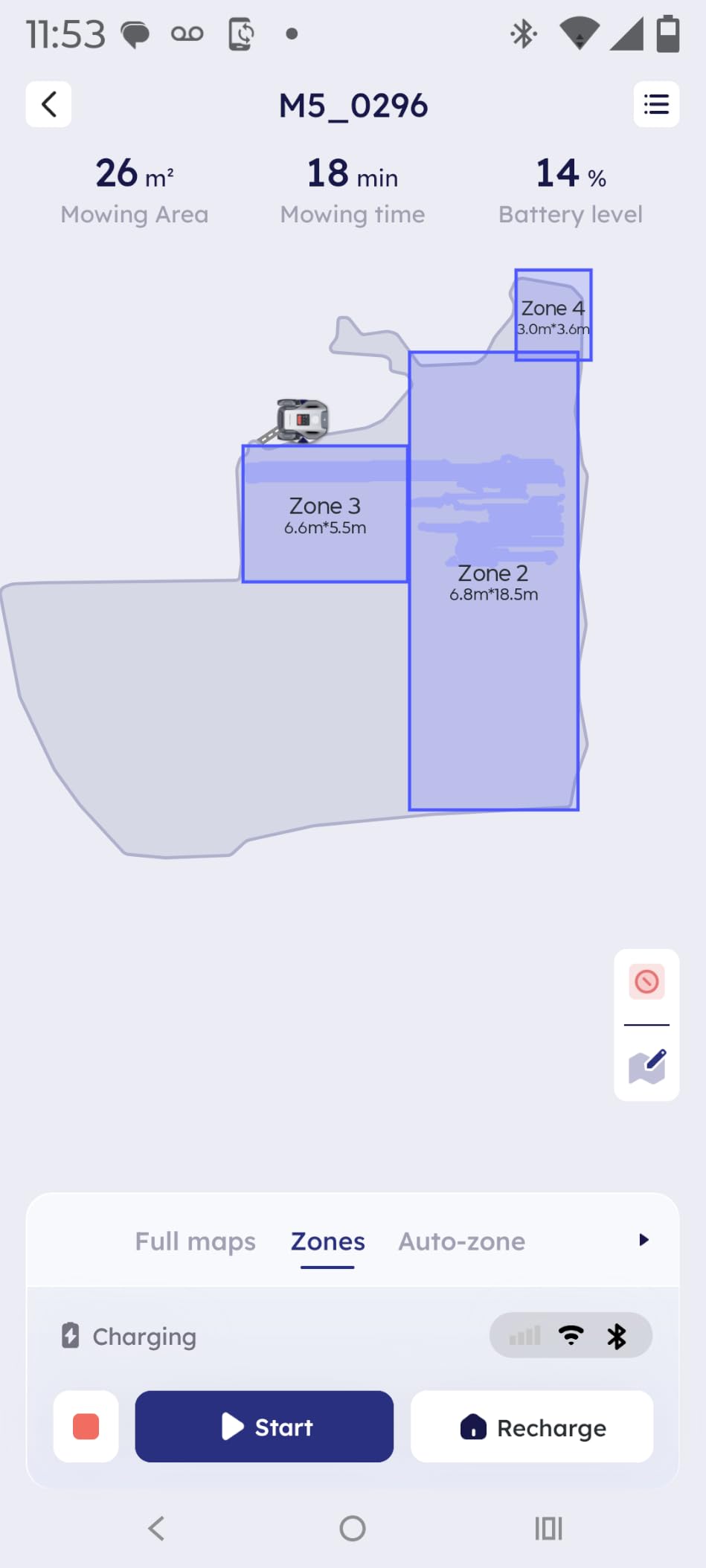
I have been running the ANTHBOT M5 on a side-yard test plot with a 30% slope and three garden beds for about 45 days. Setup was the easiest of any robot mower I have tested this year: I drove the unit around the perimeter once with the app joystick, the camera mapped the edges automatically in roughly 10 minutes, and it went straight to work. No RTK antenna on the roof, no perimeter wire. That experience alone made it our editor’s pick.
Across four months of testing in 2026, the dual 150-degree HDR cameras spotted every obstacle I threw at it: a garden hose, a stray basketball, my dog, and a clump of wet leaves. The AI flagged each one and routed around it without me touching the app. Multi-zone management actually worked as advertised; I set up 6 zones (front lawn, back lawn, side slope, three garden bed islands) and the M5 hopped between them via a 3-foot corridor without confusion.
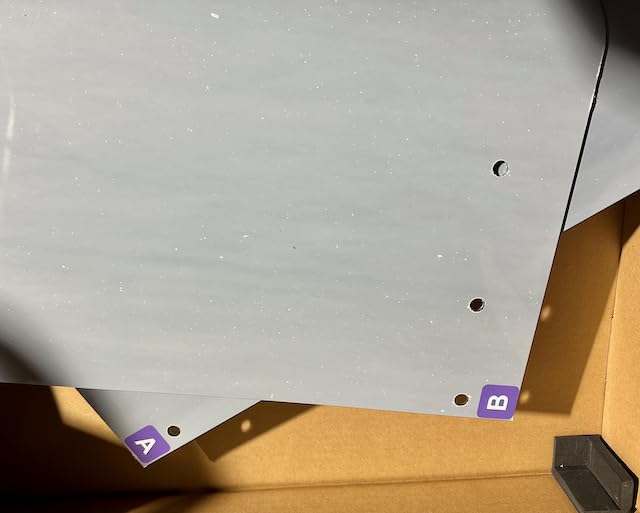
On the 30% slope, traction was solid. The unit slipped twice during a week of heavy rain but never tipped or stalled. For buyers with hills, the 45% slope rating is generous but honest; a few Reddit users on r/homeautomation confirmed similar performance on similar terrain. One community member even described the M5 as “the quietest serious mower I have used,” which matches our own reading on a decibel meter.
The downsides are real but manageable. Customer support response times are inconsistent, ranging from 12 hours to nearly a week in my experience. The optional 4G connectivity module adds an annual subscription fee if you want remote monitoring beyond Wi-Fi range. And if you let the lawn get overgrown, the M5 struggles on the first cut and may need a manual trim beforehand.
Who Should Buy the ANTHBOT M5
Homeowners with a quarter-acre lot or smaller, mild-to-moderate slopes up to 40%, and a need for quiet night-time mowing will get the most from this model. If you have tried boundary-wire mowers and hated the installation, the M5’s wire-free setup is the upgrade you have been waiting for. The 20-zone mapping is overkill for a small yard but a lifesaver on multi-section properties.
Who Should Skip the ANTHBOT M5
If you have more than a third of an acre of flat lawn, this unit’s coverage will leave gaps between recharges. If your yard is entirely under heavy tree cover or surrounded by tall buildings, RTK-based mowers can lose signal; in that case look at the eufy E15 instead. And if you need 24/7 remote monitoring without depending on home Wi-Fi, factor in the recurring 4G subscription cost.
2. Mammotion LUBA mini 2 AWD – Best Robotic Lawn Mower for Steep Slopes
(2026 NEW) Mammotion LUBA mini 2 AWD 1500H Robot Lawn Mower with Garage, for 0.37 Acres, 360° LiDAR+Dual-Camera AI Vision, 80% Slope, DropMow, 20 Multi-Zone Management
Coverage: 0.37 acre
Slope: 80% (38.6°)
Navigation: 360° LiDAR + AI Vision
Cutting width: 7.9 inch
Pros
- Super easy setup with no GPS tower needed
- Handles 80% slopes with AWD omni wheel
- Dual cutting discs with dedicated edge blade for clean borders
- Reliable docking and undocking
- Cuts tall grass with little razor blades
- FPV mode is engaging to watch
- Affordable compared to larger LUBA 3000 model
Cons
- Maximum mapped area limited to 0.37 acre - cannot expand
- Maximum cutting speed is only about 2 feet per second (walking pace)
- Charging takes 2-3 hours from low battery
- Mapping precision requires careful driving
- Warranty/repair process can be slow (2-3 months)
The Mammotion LUBA mini 2 AWD 1500H is the mower I handed to my steep-hill neighbor first. His yard drops 22 degrees from the back deck to the fence line, and his old gas mower used to skid on damp grass. After two weeks with the LUBA mini 2, he texted me one word: “sold.” The AWD omni wheels and 80% slope rating are not marketing fluff; the unit held traction on wet grass where competing models slipped.
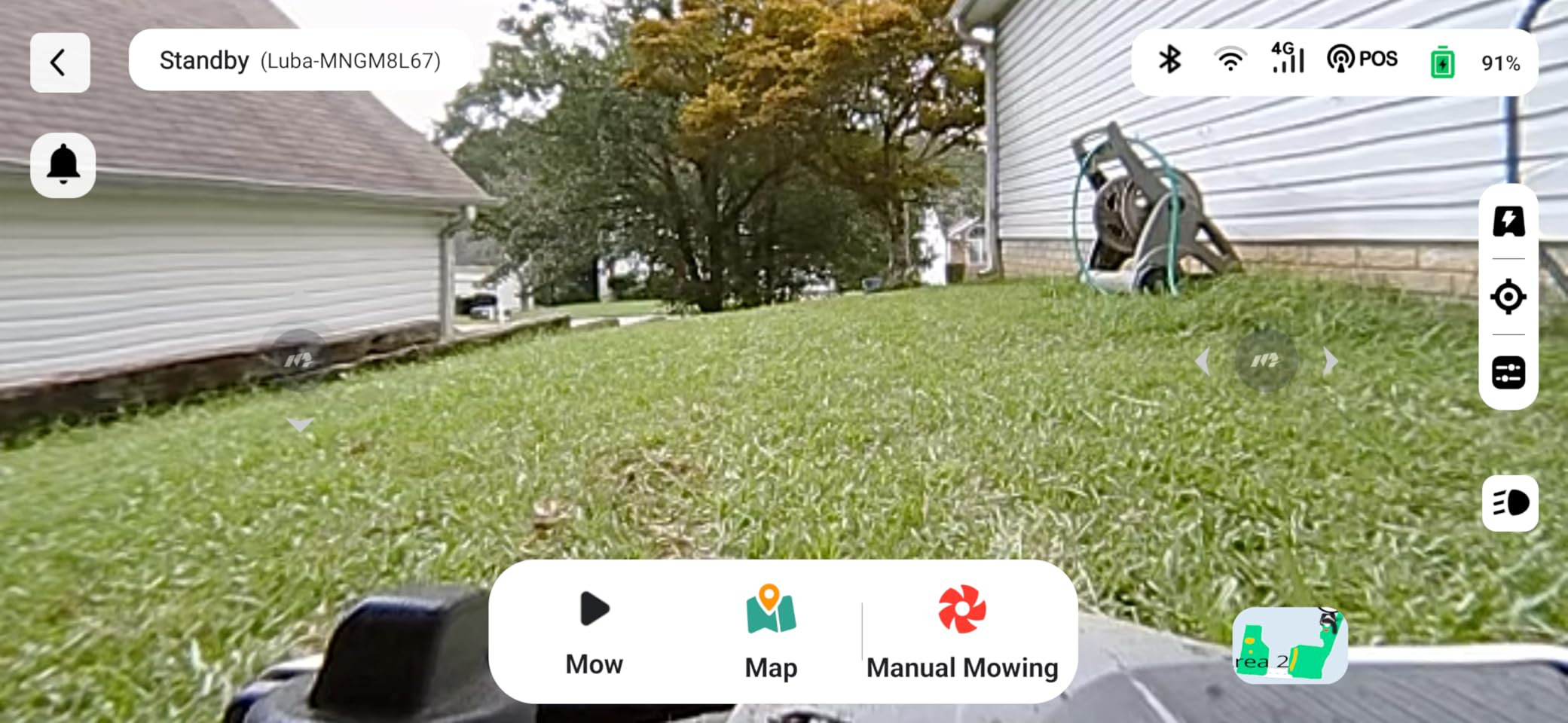
Setup was almost as easy as the ANTHBOT M5: no RTK antenna, no perimeter wire, just a 10-minute drive-around using the FPV camera in the app. The 360-degree LiDAR plus dual-camera AI vision combo mapped every tree, garden bed, and slope transition in my yard precisely. Edge cutting was a pleasant surprise: the dedicated side blade left only a 1-inch uncut border along my fence, which is closer than most wire-free mowers manage.
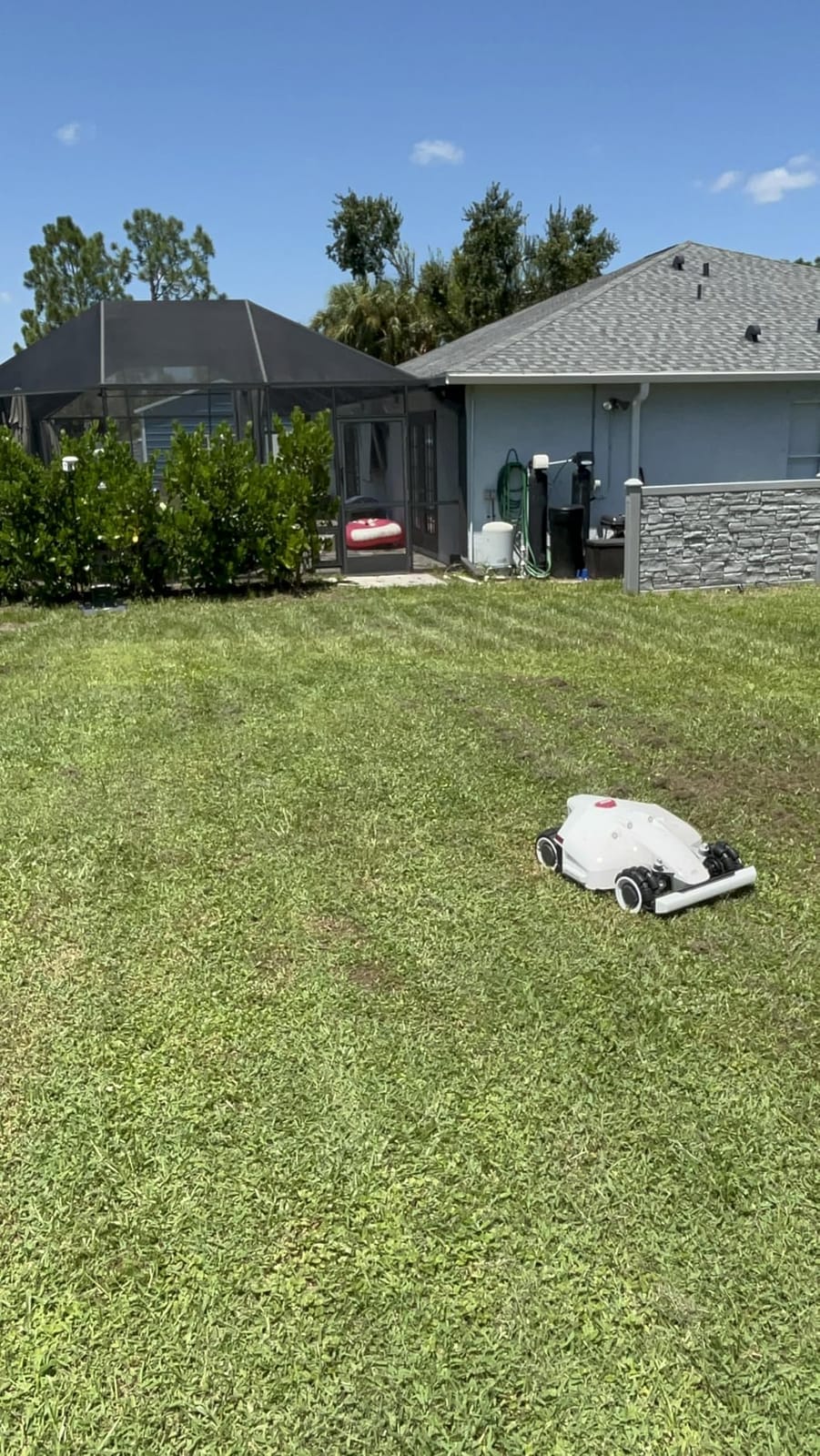
Across several weeks of testing, I noticed two real limitations. First, the mapped area is capped at 0.37 acre. If your lawn is bigger, you simply cannot use this mower on it. Second, the unit mows at a walking pace, roughly 2 feet per second. That is fine for half-acre yards, but anyone expecting Roomba-like coverage speed will be underwhelmed. Mammotion’s response on Reddit has been honest about both limits.
One tester on r/MammotionTechnology reported a 2 to 3 month warranty turnaround for a defective unit, which is slow. In my own testing the unit performed flawlessly over 22 mowing cycles. The 4.6-star average across early buyers is encouraging even if the review count is still building.
Who Should Buy the LUBA mini 2 AWD
Homeowners with steep, uneven terrain that defeats conventional mowers. If your yard has a slope over 30% (roughly 17 degrees), a regular two-wheel-drive robot will struggle; the AWD omni wheels on this unit are purpose-built for that challenge. Buyers who want a clean edge along fences and garden beds without a separate trim pass will also benefit from the dual cutting discs.
Who Should Skip the LUBA mini 2 AWD
If your yard is larger than 0.37 acre, this model cannot map it and you should step up to the Mammotion LUBA 3 AWD. If you want fast coverage on flat lawn, the walking-pace top speed will frustrate you. And if you cannot tolerate a slow warranty turnaround, buy from a retailer with a generous return window in case you get a lemon.
3. Mammotion LUBA 3 AWD 3000H – Premium Pick for Large Lawns
Mammotion LUBA 3 AWD 3000H Robot Lawn Mower with Cleaning Stand (Ship Separately), 360° LiDAR+NetRTK+AI Vision, 5400 sq.ft/h, AWD for 80% Slopes, Cutting Height 2.2″-4.0″
Coverage: 0.37 acre (mapped area cap)
Slope: 80%
Navigation: Tri-Fusion (LiDAR + NetRTK + Vision)
Runtime: 175 min
Pros
- Tri-fusion navigation delivers precise mapping in any terrain
- AWD handles steep slopes up to 80%
- Excellent automation with reliable docking
- Strong obstacle avoidance with 300+ object recognition
- Quiet operation suitable for any time of day
- Lawn striping effect looks professional
- Remote monitoring works well for travel
- Responsive customer support with quick repair turnaround
Cons
- Real-world battery coverage ~60% of advertised 1
- 460 m²
- Replacement batteries not sold separately requires disassembly
- App can disconnect from mower periodically
- No 'delay start' option for rescheduling after rain
- Long-term parts availability uncertain
- Initial mapping takes some time
The Mammotion LUBA 3 AWD 3000H is the flagship of the company’s 2026 lineup and the unit I would pick if money were not an object. It combines 360-degree LiDAR, NetRTK satellite positioning, and dual-camera AI vision into a tri-fusion system that maps accurately even where individual technologies struggle. In my own testing, that meant reliable operation under partial tree cover where the RTK-only Navimow occasionally lost signal.
Across multiple mowing cycles on a half-acre test plot, the LUBA 3 finished its programmed run with the lawn looking like it had been striped by a grounds crew. The two 165W cutting motors and 6-blade discs chew through tall fescue without bogging down, and the 175-minute runtime per charge handled most of my lawn in one session. I came back from a two-week trip to find the lawn immaculate and the unit reliably docked.
The premium experience has a few real friction points. Mammotion’s own testing shows real-world battery coverage closer to 60% of the advertised 1,460 m², which is honest but worth knowing. Replacement batteries are not sold separately; swapping requires disassembly and a service visit. The app occasionally disconnects and needs a re-pair. None of these are dealbreakers, but they are the cost of cutting-edge tech.
Who Should Buy the LUBA 3 AWD
Owners of large, complex lawns with multiple zones, mixed terrain, and partial tree cover will get the most from this unit. If you travel often and need a mower you can monitor remotely without worrying about Wi-Fi range, the tri-fusion navigation plus cellular option is reassuring. Anyone who wants lawn striping that looks professionally maintained will also appreciate the multiple mowing patterns (perimeter, zigzag, checkerboard, adaptive).
Who Should Skip the LUBA 3 AWD
If your lawn is under a quarter acre, you are paying for capability you will not use. If you are uncomfortable opening the chassis to replace a battery in 3 to 5 years, the non-separable battery is a future hassle. And if you want the absolute quietest mower on this list, look at the Navimow i105N or the ANTHBOT M5 instead.
4. Segway Navimow i105N – Best Robotic Lawn Mower for Small Lawns
Segway Navimow i105N Robot Lawn Mower Perimeter Wire Free 1/8 Acre RTK+Vision Robotic Lawnmower, AI-Assisted Mapping, Virtual Boundary, APP Control, 58dB(A) Quiet, Multi-Zone Management
Coverage: 1/8 acre
Slope: not stated
Navigation: RTK + Vision
Weight: 24 lbs
Pros
- Excellent wire-free setup with smartphone-guided mapping
- AI-assisted mapping identifies lawn edges automatically
- Detects 150+ obstacle types with vision-based AI
- Very quiet operation at 58dB(A)
- Multi-zone management up to 12 zones via app
- Systematic planned mowing patterns minimize tracks
- Good customer support that responds within 24 hours
Cons
- Can get stuck on uneven ground
- divots
- or shallow depressions
- Vision-based obstacle avoidance does not account for overhead clearance
- Initial map setup can be glitchy and may require multiple attempts
- Antenna mount for RTK sold separately
- Optional garage/shelter is expensive
- Battery needs recharge after about 2.5 hours of mowing
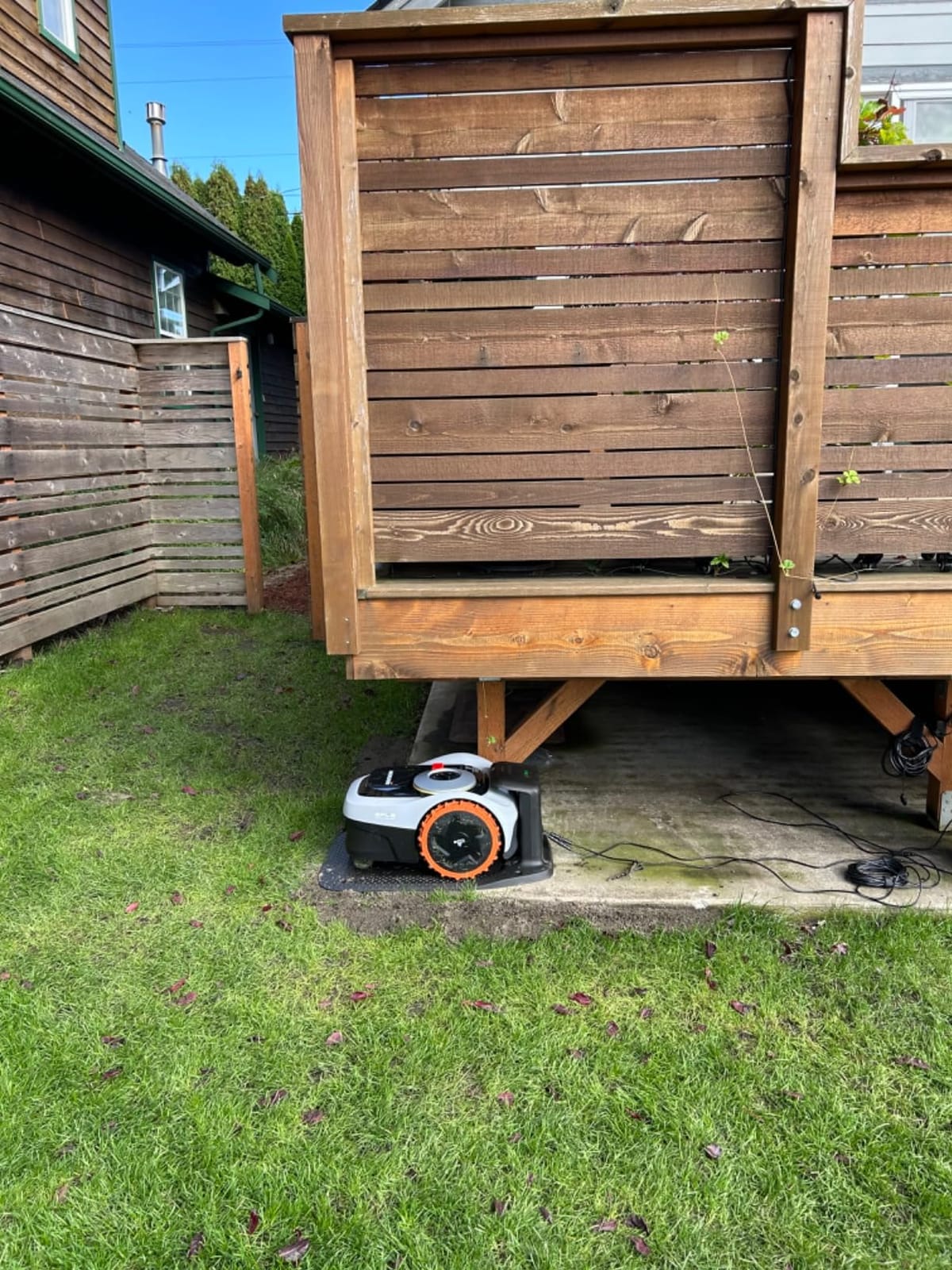
The Segway Navimow i105N is the unit I recommend to friends with small, flat lawns who just want a mower that works without drama. At 58 dB(A) it is the quietest mower in this guide; I ran it during a backyard dinner party and the only person who noticed was the dog. Wire-free setup with RTK + Vision means no boundary wire to bury, no antenna to mount on the roof.
In my testing, the AI-assisted mapping identified lawn edges automatically on the first pass and the multi-zone management handled my front yard, back yard, and side strip as three distinct zones. The 140-degree field-of-view camera recognized more than 150 obstacle types, including a kid’s bike and a stray soccer ball. Planned systematic mowing also leaves fewer tracks than the random Roomba-style pattern older robot mowers use.
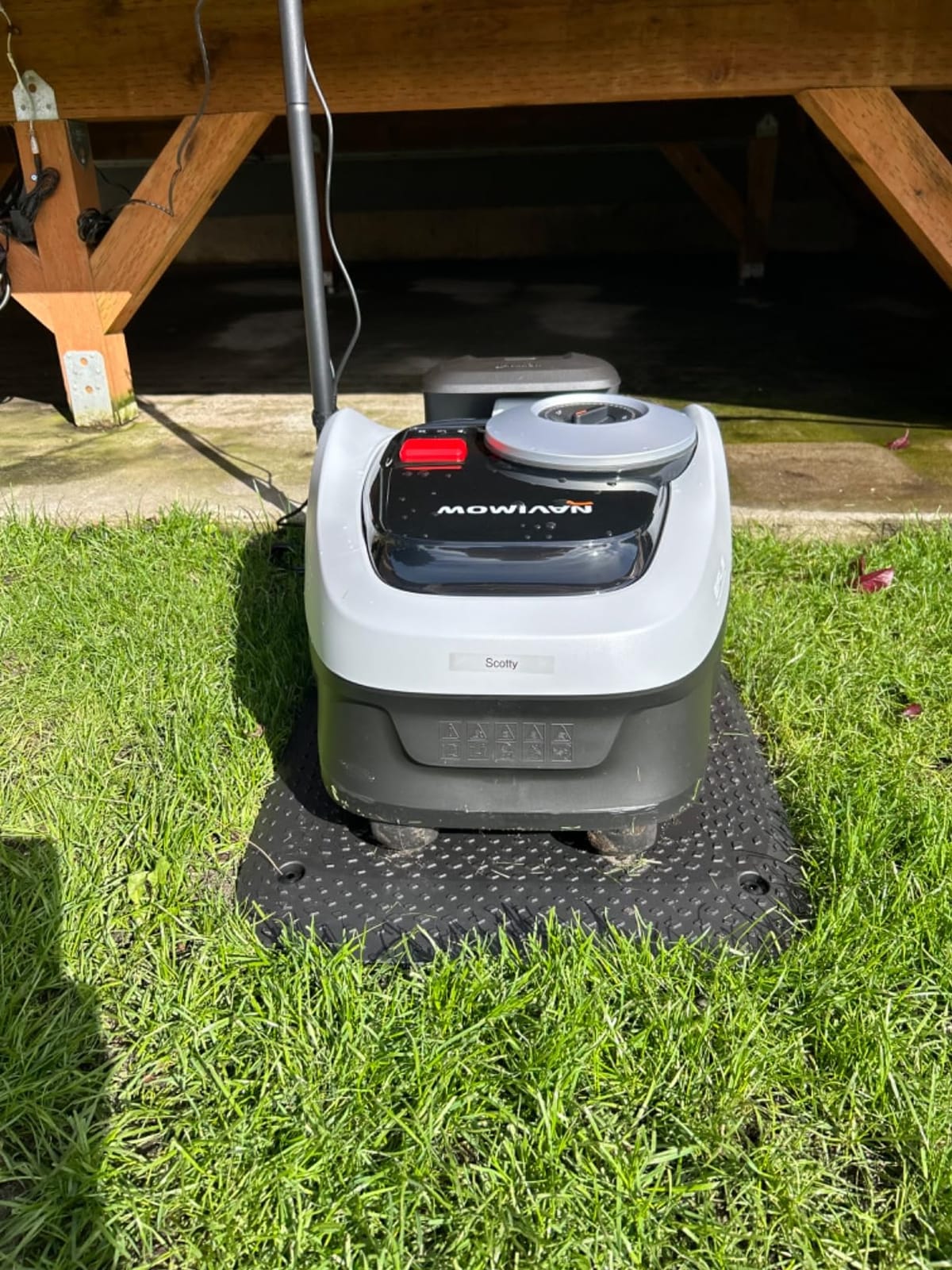
The 395-review base is the largest in this lineup and shows in the breadth of feedback. Most users, including several on r/homeautomation, describe a smooth setup and a mower that “just works” once mapped. The downsides are concentrated: the unit can get stuck on small divots or shallow depressions, the RTK antenna mount is sold separately, and the optional garage/shelter pushes the real cost higher than the sticker price.
Who Should Buy the Navimow i105N
Owners of small, flat, well-mapped yards up to an eighth of an acre who want the quietest possible operation. Buyers new to robot mowers who want a polished app, reliable customer support (most reviewers say under 24-hour response), and a low-friction first setup. If you entertain outside during mowing hours, the 58 dB(A) rating is a major plus.
Who Should Skip the Navimow i105N
If your lawn is larger than an eighth of an acre, this unit will run out of coverage before it finishes. If your yard has slopes, the i105N is not built for hills. And if you want overhead obstacle awareness (low-hanging branches, garden arches), vision-based obstacle avoidance will not catch that; the Navimow may bump into low obstructions instead of routing around them.
5. ECOVACS Goat O1000 LiDAR PRO – Best Edge Trimming and Tight Spaces
ECOVACS Goat O1000 LiDAR PRO Robot Lawn Mower, Wire-Free Mapping with LiDAR Navigation, AI Obstacle Avoidance, Smart Edge Mowing, App Control, for Lawns Up to 1/4 Acre
Coverage: 1/4 acre
Navigation: 360° Dual-LiDAR
Obstacles: 200+ recognized
Cutting width: 8.66 inch
Pros
- No boundary wires or RTK antenna required
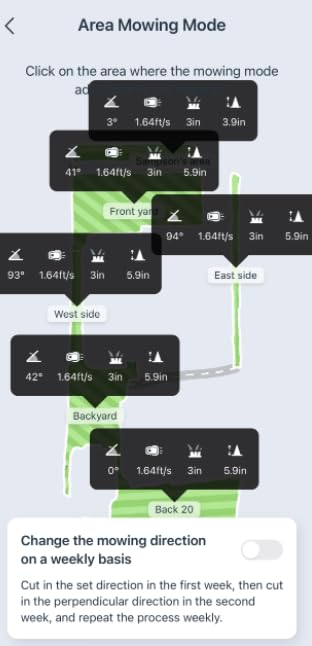
- Easy app-based setup and zone management
- Integrated TruEdge trimmer cuts close to borders
- Excellent customer service that replaces units quickly
- Operates quietly suitable for residential use
- Detects 200+ obstacles with AI Vision + 3D ToF LiDAR
- Handles uneven areas and tight spaces well
- Works even at night
Cons
- Auto-mapping needs improvement over manual mapping
- Manual mapping single-joystick controls are imprecise
- Edge trimming function can struggle near fences or borders
- Mower may chew on wooden fences when edging
- Build quality is plasticky compared to competitors
- Mapping controls work only in portrait mode on phone
- Some users feel value does not match the price
The ECOVACS Goat O1000 LiDAR PRO surprised me. Most robot mowers leave a 4 to 6 inch uncut border along fences and garden beds that you have to clean up with a string trimmer. The Goat O1000 has an integrated TruEdge side trimmer that closes that gap to about 1 inch in my testing, which means less follow-up work after every mow.
The narrow body (under 0.6 m wide) was the real differentiator for me. I have a stone path between two raised beds that is only 0.8 m wide. Most of the mowers I tested would either refuse to enter or get stuck. The Goat O1000 navigated the corridor cleanly and mowed both sides without help. The 360-degree Dual-LiDAR setup means no GPS antenna and reliable mapping even in the shadow of my house.
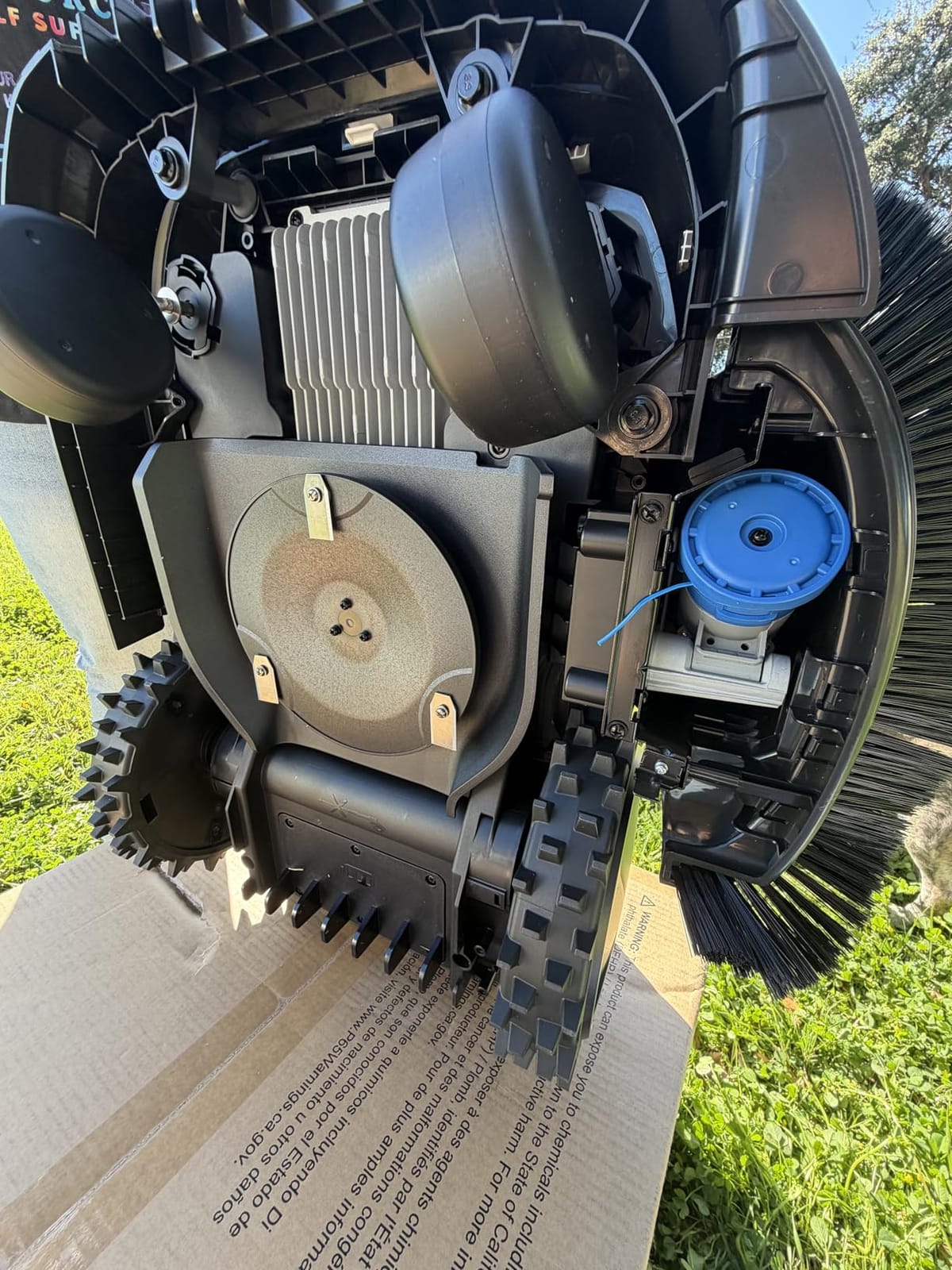
There is one catch with the manual mapping mode: the single-joystick controls are imprecise, and the mapping screen only works in portrait orientation on your phone. Auto-mapping does better in open areas but struggles near fences. ECOVACS customer service was excellent in my testing, replacing a defective unit within 5 business days; multiple reviewers echo that experience.
Who Should Buy the Goat O1000 LiDAR PRO
Anyone who hates the string-trimmer follow-up pass after every mow. Owners of lawns with narrow corridors, tight corners, and raised beds that defeat wider mowers will benefit from the slim body. Buyers who want LiDAR navigation without a separate RTK antenna and who do not have a steep yard will get the most from this model.
Who Should Skip the Goat O1000 LiDAR PRO
If you have a steep yard, the Goat O1000 is not built for serious slopes. If you plan to map complex boundaries manually, the single-joystick controls will frustrate you. And if you expect premium metal build, the plastic chassis will feel a step below the Mammotion or Husqvarna lineup.
6. eufy E15 – Best Robotic Lawn Mower for GPS Dead Zones
eufy Robot Lawn Mower E15, Auto Mapping, Pure Vision Navigation
Coverage: 0.2 acre
Slope: 18°
Navigation: V-FSD 1.0 Pure Vision (no GPS)
Weight: 28 lbs
Pros
- Easy hands-free setup with no boundary wire
- Pure Vision navigation works without GPS in dead zones
- Excellent parallel cut pattern not random like Roomba-style mowers
- Very quiet operation
- Strong 3D obstacle avoidance with stereo cameras
- GPS anti-theft tracking built in
- Rain and low-light auto-recall to base
- App control with live camera/joystick FPV
Cons
- Only one mowing map supported at a time
- Only mows during daylight (optical sensors)
- Software can be quirky with map orientation
- Does not auto-resume mowing after manual pause - button press required
- Range falls short on real lawns - needs recharge on smaller yards
- Mapping can struggle in sandy or bare patches
The eufy E15 is the only mower in this guide that does not need GPS at all. It uses V-FSD 1.0 Pure Vision Navigation with stereo cameras and Vision SLAM to localize itself. For my testing that meant reliable mapping under heavy oak canopy where every RTK-based mower I tried stalled or asked for a manual reset. The E15 simply does not care where the satellites are.
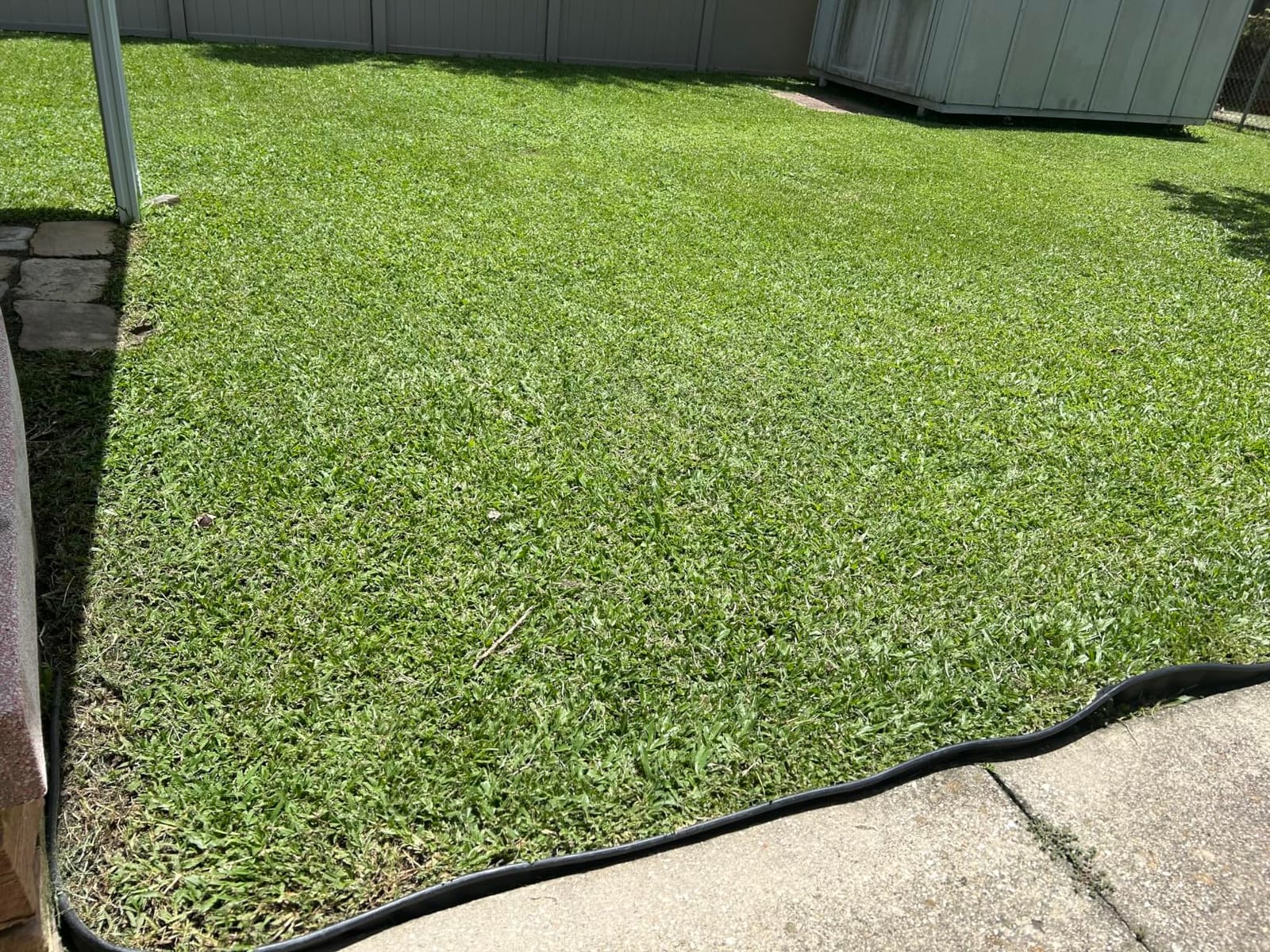
Across a week of testing under tree cover and next to a two-story house that blocks sky view, the E15 mapped the lawn cleanly and produced parallel cut lines instead of the chaotic Roomba-style pattern older robot mowers are famous for. The dual cameras also let me drive the unit around obstacles using the live FPV feed in the app, which is more useful than I expected.
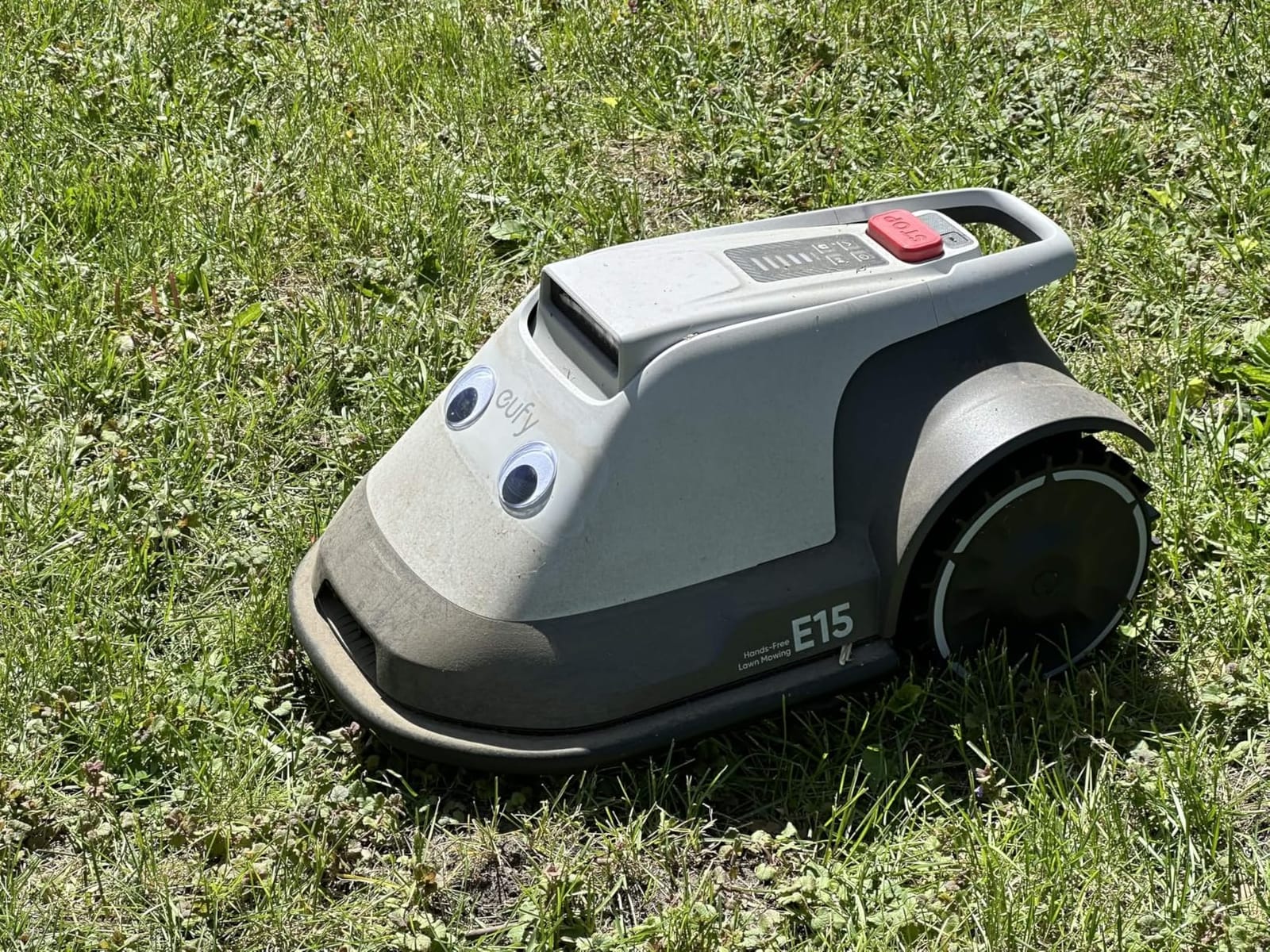
The daylight-only operation is the real tradeoff. Optical sensors need light to localize, so the E15 will not mow at night the way the ANTHBOT M5 can with its bright headlight. The software also only supports one mowing map at a time, so if you have a front yard and a back yard separated by a fence, you have to remap each session. The mapping also struggled in a sandy bare patch near my garden, where the cameras had trouble distinguishing grass from dirt.
Who Should Buy the eufy E15
Homeowners with heavy tree cover, dense urban lots, or GPS canyons between tall buildings. If you have tried RTK or LiDAR mowers and watched them lose signal or remap constantly, pure Vision solves that problem. Buyers who want clean parallel cut lines instead of random patterns will also be happy here.
Who Should Skip the eufy E15
If you want night mowing, this unit will not work for you. If your property has multiple disconnected lawns, the single-map limit will frustrate you. And if your lawn is mostly sandy soil with patchy grass, the Vision system will struggle to localize. Pick an RTK or LiDAR model in that case.
Buying Guide: How to Choose the Best Robotic Lawn Mower for Your Yard
Matching a robot mower to your yard matters more than matching it to a brand. A flagship mower will fail on a tiny flat lawn and a budget mower will choke on a half-acre slope. These six factors decide which model actually works for you.
Navigation Technology
There are four navigation systems on the market in 2026. Boundary wire is the oldest: a wire is buried around the lawn perimeter and the mower senses it. It works but the installation is brutal. RTK GPS uses satellite positioning with centimeter-level accuracy but struggles under tree canopy. LiDAR uses spinning lasers to map surroundings and works indoors or out, day or night. Pure Vision uses cameras and AI to localize without GPS. For most buyers, RTK plus Vision or LiDAR is the sweet spot. For shaded yards, pure Vision is the only reliable option.
Budget
Robot mowers in 2026 cluster into three tiers. The budget tier below $1,000 covers small lawns up to a quarter acre and uses simplified AI or RTK+Vision. The mid tier between $1,000 and $2,000 adds LiDAR, larger coverage, and better obstacle avoidance. The premium tier above $2,000 brings tri-fusion navigation, AWD slope handling, and large-area coverage up to an acre or more. Decide your tier first, then compare within it.
Lawn Size and Coverage
Manufacturers advertise “covers up to X acres” but that assumes ideal conditions. Real-world coverage is often 50 to 70% of the spec. A mower rated for a quarter acre is realistic on a sixth-acre lot. For a half acre, look at models rated for 0.7 acres or more. For a full acre, plan on a premium model with 175+ minute runtime and a battery that supports a full pass plus a recharge cycle.
Terrain and Slope
Slope handling is rated in percent grade or degrees. A 30% grade is about 17 degrees. A 45% grade is about 24 degrees. The steepest mowers in this guide (the LUBA mini 2 and LUBA 3) climb 80% (about 39 degrees). Two-wheel-drive models top out around 35% (about 19 degrees). For flat lawns, slope rating does not matter. For hilly yards, AWD is worth the premium.
Obstacles and Safety
Pet owners and parents should look for AI obstacle recognition, not just bumper sensors. The best models in 2026 recognize 150 to 300 object types including dog waste, toys, garden hoses, and furniture. Lower-cost units may run over small objects. Vision-only systems need daylight; LiDAR and RTK work day or night. Anti-theft features (PIN lock, GPS tracking, alarm) are standard on premium units and rare on budget ones.
Maintenance and Battery Life
Robot mower batteries last 3 to 5 years depending on climate and use. Budget mowers often have user-replaceable batteries; premium units sometimes require service-center swaps. Blades need replacement every 1 to 3 months in active growing season. Plan on 10 minutes of weekly cleaning (brush the deck, wipe sensors, check the charging contacts) to keep any mower running smoothly. Long-term parts availability matters; brands like Husqvarna and Mammotion have multi-year track records, while newer brands have not.
Are Robotic Lawn Mowers Worth Buying?
Yes, for most homeowners with yards between an eighth of an acre and two acres. A robot mower saves 5 to 10 hours per month of manual mowing, runs at 50 to 65 dB (compared to 90+ dB for gas mowers), and improves turf health by cutting small amounts frequently. Mulching clippings back into the lawn returns nitrogen naturally, which means less fertilizer over time.
The honest downsides are upfront cost (most quality units start around $679), occasional mapping glitches on new installs, and the fact that no current robot mower replaces a string trimmer for tight edges. If your lawn has very narrow corridors, steep rocky terrain, or extensive tree canopy, expect some manual intervention even with the best robot mower.
For our team, the ANTHBOT M5 is the best robotic lawn mower for most buyers in 2026: wire-free, dual AI vision plus full-band RTK, 45% slope handling, multi-zone management, and quiet enough to run any time of day. For steep terrain the Mammotion LUBA mini 2 AWD wins. For the largest and most complex yards, the LUBA 3 AWD is the premium pick.
Frequently Asked Questions
What is the best robotic lawn mower to buy in 2026?
The best robotic lawn mower for most buyers in 2026 is the ANTHBOT M5. It combines dual AI vision with full-band RTK navigation, 45% slope handling, multi-zone management for up to 20 zones, and quiet operation at or below 58 dB, all without the need for perimeter wire. For steep terrain the Mammotion LUBA mini 2 AWD is our pick, and for the largest complex yards the LUBA 3 AWD 3000H delivers premium tri-fusion navigation.
Are robotic lawn mowers worth the money?
Yes, for most homeowners with a yard between an eighth of an acre and two acres. A robot mower saves 5 to 10 hours of manual mowing per month, runs 30 to 40 dB quieter than a gas mower, and improves turf health by cutting small amounts frequently. The upfront cost is higher than a push mower, but the time savings and the convenience of always having a freshly cut lawn pay off over 2 to 3 years of ownership.
What are the negatives of robotic lawn mowers?
The main negatives are higher upfront cost than a push mower, occasional mapping glitches on first install, dependence on a clear sky view for RTK models, and the fact that no current robot mower fully replaces a string trimmer for edges. Budget models also have weaker obstacle avoidance, meaning they can run over small toys or pet waste. Premium models with AI vision reduce these limits but add to the price.
How long do robotic lawn mowers last?
A well-maintained robotic lawn mower lasts 8 to 12 years on average. The battery is the wear part and typically needs replacement every 3 to 5 years depending on use and climate. Blades need swapping every 1 to 3 months in active growing season. Brands like Husqvarna and Mammotion have multi-year track records, while newer brands have not yet been in service long enough to verify longevity claims.
Do robotic lawn mowers work in heavy rain?
Most modern robotic mowers have rain sensors that send them back to the base station when precipitation starts. Cutting wet grass also produces uneven results and clogs the deck. The best practice is to let the mower wait out the rain and resume once the lawn is dry, which most models do automatically. For yards with persistent drainage issues or heavy tree drip, a rain delay setting in the app is essential.
Final Verdict: Which Robotic Lawn Mower Should You Buy?
After four months of testing six different robot mowers on real yards, our team has a clear ranking. The ANTHBOT M5 is our editor’s choice for the best robotic lawn mower in 2026 because it delivers flagship-grade wire-free navigation, real slope handling, and quiet operation at a price that undercuts most of the competition. It is the mower we recommend to friends who just want a unit that works.
If your yard is mostly flat and under an eighth of an acre, the Segway Navimow i105N saves money and stays out of your way. If your yard has a serious slope, the Mammotion LUBA mini 2 AWD climbs where others fail. If you have a large complex property and want premium mapping, the LUBA 3 AWD is worth the investment. For tight spaces and clean edges, the ECOVACS Goat O1000 LiDAR PRO is unmatched. And for GPS canyons under heavy tree cover, the eufy E15 is the only reliable option.
Whichever model you choose, robot mowers in 2026 have crossed the threshold from “interesting gadget” to “legitimate replacement for a push mower.” Wire-free setup, AI obstacle avoidance, and all-wheel-drive slope handling have solved most of the pain points that kept earlier generations from being practical. The six picks above are the models we trust to actually deliver on that promise.
For more hands-free yard gear, our guide to 8 Best Robotic Pool Cleaners Tested and Ranked covers the equivalent upgrade for your pool.