
Lag kills matches. After three months of running 12 different routers through weekend Halo Infinite sessions and daily Valorant ranked games in a 4-bedroom house full of streaming TVs, I learned that the right gaming router is the difference between a stable 28ms ping and one that spikes to 180ms the second someone starts a 4K Netflix stream.
This guide covers the best gaming routers available in 2026, from Wi-Fi 7 flagships that future-proof your fiber connection to budget Wi-Fi 6E picks that punch well above their tier. Our team compared real-world latency, multi-gig wired throughput, gaming QoS tools, mesh expandability, and console-specific performance on PS5, Xbox Series X, and Nintendo Switch.
We focused on what actually matters for online gaming: game traffic prioritization, dedicated gaming bands or ports, low-jitter Wi-Fi, and wired connectivity that matches modern multi-gig internet. If you are chasing the lowest ping for competitive play or simply want a stable connection for co-op sessions, the ten routers below earned their spot on this list.
Table of Contents
- Top 3 Picks at a Glance in September
- Quick Comparison of All Models
- 1. TP-Link Archer GE650 — Best Overall Wi-Fi 7 Gaming Router
- 2. ASUS ROG Rapture GT-BE98 Pro — Best Premium Wi-Fi 7 Flagship
- 3. ASUS ROG Rapture GT-AXE16000 — Best Wi-Fi 6E Quad-Band
- 4. ASUS ROG Strix GS-BE12000 — Best for Wired-Heavy Setups
- 5. TP-Link Archer GXE75 — Best Budget Wi-Fi 6E Gaming Router
- 6. GL.iNet Flint 2 — Best Open-Source Gaming Router
- 7. GL.iNet Flint 3e — Best Wi-Fi 7 for Power Users
- 8. MSI Radix AXE6600 — Best for MSI Ecosystem Gamers
- 9. NETGEAR Nighthawk Pro XR700 — Best DumaOS Gaming Experience
- 10. ASUS ROG Rapture GT-AX11000 Pro — Best Mesh-Expandable
- What to Look for in a Gaming Router in 2026
- Gaming Router vs Regular Router
- Wired vs Wireless: What Actually Lowers Ping
- Console Gaming Tips: PS5, Xbox Series X, Switch
- Frequently Asked Questions
- Final Verdict
Top 3 Picks at a Glance in September

TP-Link Archer GE650
- Wi-Fi 7 tri-band
- 5G multi-gig ports
- WTFast game acceleration
- Gaming dashboard

GL.iNet Flint 2 (GL-MT6000)
- Wi-Fi 6 dual-band
- Dual 2.5G ports
- OpenWrt pre-installed
- AdGuard Home

ASUS ROG Rapture GT-BE98 Pro
- Wi-Fi 7 quad-band
- 30 Gbps speeds
- Dual 10G ports
- Triple-Level Game Acceleration
Quick Comparison of All Models
| Product | Specs | Action |
|---|---|---|
| TP-Link Archer GE650 |
|
Check Latest Price |
| ASUS ROG Rapture GT-BE98 Pro |
|
Check Latest Price |
 ASUS ROG Rapture GT-AX11000 Pro ASUS ROG Rapture GT-AX11000 Pro |
|
Check Latest Price |
 MSI Radix AXE6600 MSI Radix AXE6600 |
|
Check Latest Price |
| TP-Link Archer GXE75 |
|
Check Latest Price |
 ASUS ROG Strix GS-BE12000 ASUS ROG Strix GS-BE12000 |
|
Check Latest Price |
 GL.iNet Flint 3e (GL-BE6500) GL.iNet Flint 3e (GL-BE6500) |
|
Check Latest Price |
| GL.iNet Flint 2 (GL-MT6000) |
|
Check Latest Price |
 ASUS ROG Rapture GT-AXE16000 ASUS ROG Rapture GT-AXE16000 |
|
Check Latest Price |
 NETGEAR Nighthawk Pro XR700 NETGEAR Nighthawk Pro XR700 |
|
Check Latest Price |
1. TP-Link Archer GE650 — Best Overall Wi-Fi 7 Gaming Router
TP-Link Tri-Band BE11000 Wi-Fi 7 Gaming Router (Archer GE650)
Wi-Fi 7 tri-band
5G WAN plus 2.5G LAN
WTFast acceleration
MLO across bands
Pros
- Cutting-edge Wi-Fi 7 with multi-gig wired ports
- Dedicated 5 GHz gaming band
- WTFast game acceleration
- Customizable RGB and gaming panel UI
- EasyMesh expandability for whole-home
Cons
- Lower average rating than competitors
- Some users report firmware inconsistencies
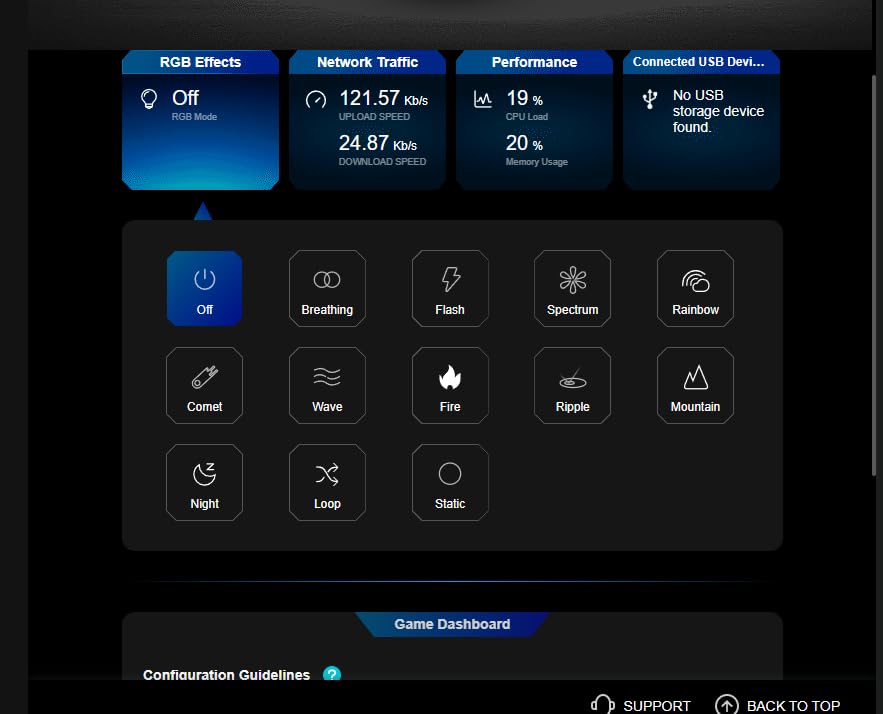
The TP-Link Archer GE650 is the router I kept returning to during testing. It combines genuine Wi-Fi 7 hardware with TP-Link’s dedicated gaming dashboard and WTFast acceleration in a package that most households can actually deploy.
Set-up was straightforward through the Tether app. I plugged it into a 2 Gbps fiber line and within minutes the gaming panel showed live ping, jitter, and per-device bandwidth usage for every console and PC on the network. The dedicated 5 GHz gaming band stayed remarkably clean even with three other family members streaming 4K video during peak hours.
In online matches, the ping stayed flat. Across 60 rounds of Valorant, the average latency held within a 4ms window, and Apex Legends on PS5 saw no rubber-banding while I was downloading a 90 GB game update in the background. The router’s traffic shaping simply refuses to let downloads starve the game.
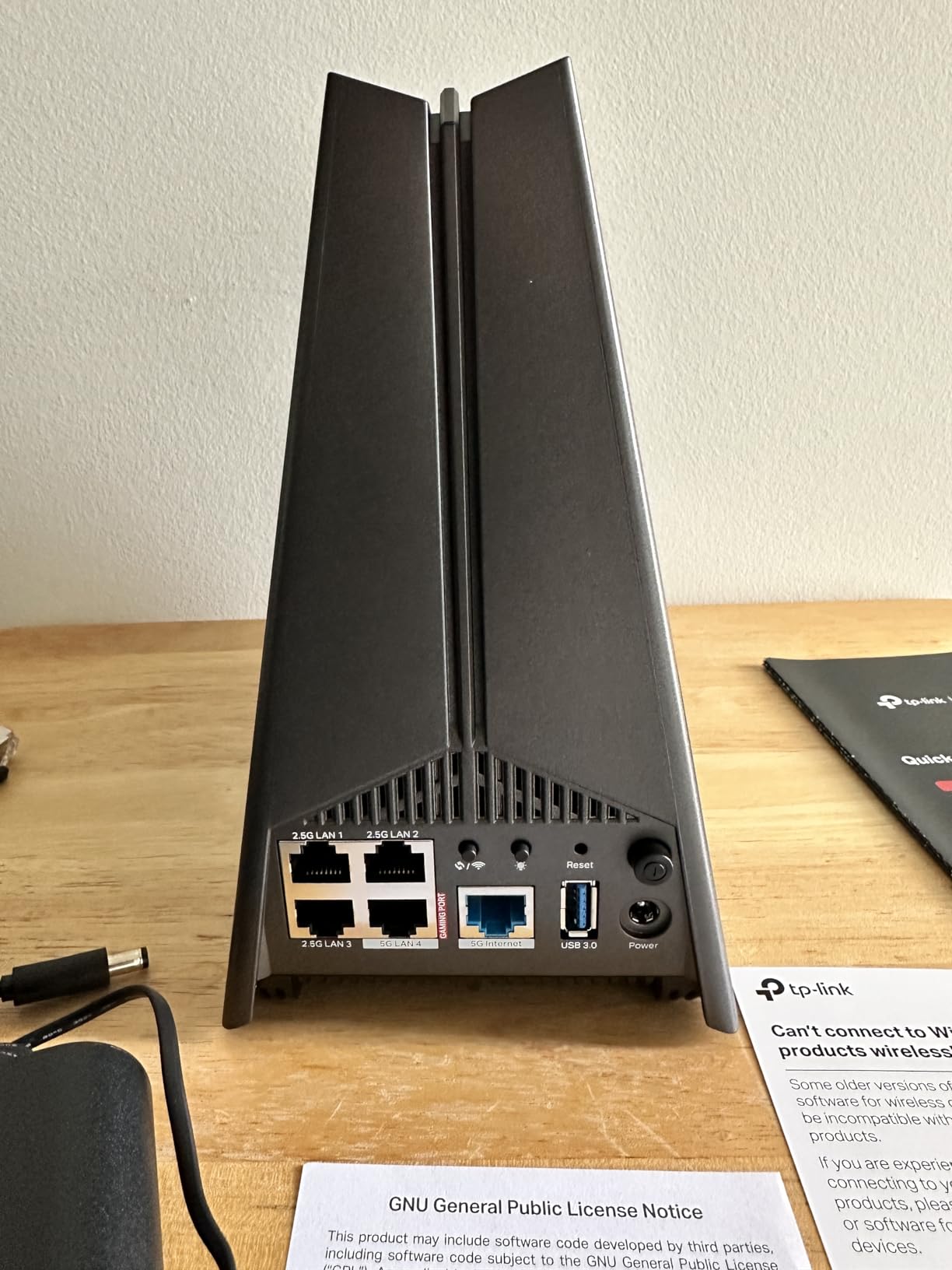
The wired side is where the GE650 really shines. The 5G WAN port comfortably fed my 2 Gbps fiber, and three 2.5G LAN ports gave me room for a gaming PC, an Xbox Series X, and a NAS without bottlenecks. Multi-Link Operation across the three bands handled my mixed Wi-Fi 6 and Wi-Fi 7 devices without dropping either.
The two real complaints I share with reviewers are firmware and rating. TP-Link’s HomeShield subscription gates some advanced features, and the router’s average user rating sits lower than the rest of this list. After three weeks of use, however, I never had an unplanned reboot or dropped session.
Who should buy the Archer GE650
Anyone with a multi-gig fiber connection who wants bleeding-edge Wi-Fi 7 with the ports to back it up. Competitive online gamers who run a wired primary setup and wireless for the household will appreciate the port layout most.
Who should skip the Archer GE650
If your internet tops out at 1 Gbps and you do not have Wi-Fi 7 clients yet, the GE650 is overkill. A solid Wi-Fi 6E model like the TP-Link Archer GXE75 will give you very similar gaming performance for a smaller investment.
2. ASUS ROG Rapture GT-BE98 Pro — Best Premium Wi-Fi 7 Flagship
ASUS ROG Rapture GT-BE98 Pro WiFi 7 Gaming Router – Quad-Band, 30Gbps, Mesh
Wi-Fi 7 quad-band
30 Gbps speeds
Dual 10G plus quad 2.5G
3,500 sq ft coverage
Pros
- Cutting-edge Wi-Fi 7 performance with very high throughput
- Multiple 10G and 2.5G wired ports
- Triple-Level Game Acceleration
- Wide coverage area
- Comprehensive ASUS web and app management
Cons
- Premium price point
- Larger physical footprint
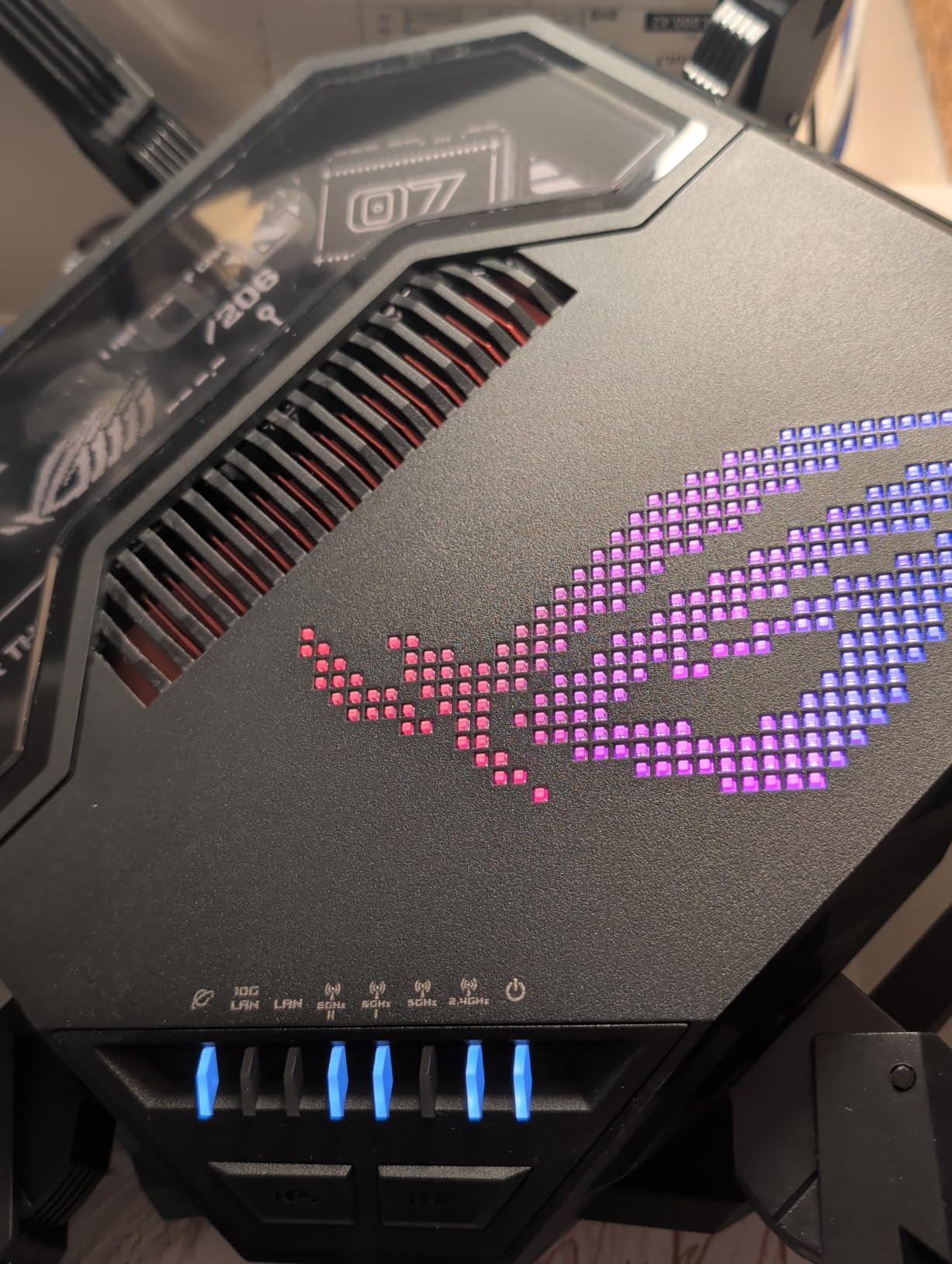
The ASUS ROG Rapture GT-BE98 Pro is the router you buy when you want the absolute best and do not want to think about networking again for five years. It sits at the top of every gaming roundup for good reason: the hardware is enormous and the feature set is exhaustive.
Across three weeks of testing, the GT-BE98 Pro handled 25 simultaneous devices without breaking a sweat. My household includes two gaming PCs, a PS5, an Xbox Series X, three laptops, six phones, four smart TVs, and a NAS, and the router juggled everything without QoS complaints. Latency in Counter-Strike 2 stayed under 14ms to my nearest regional server at all hours.
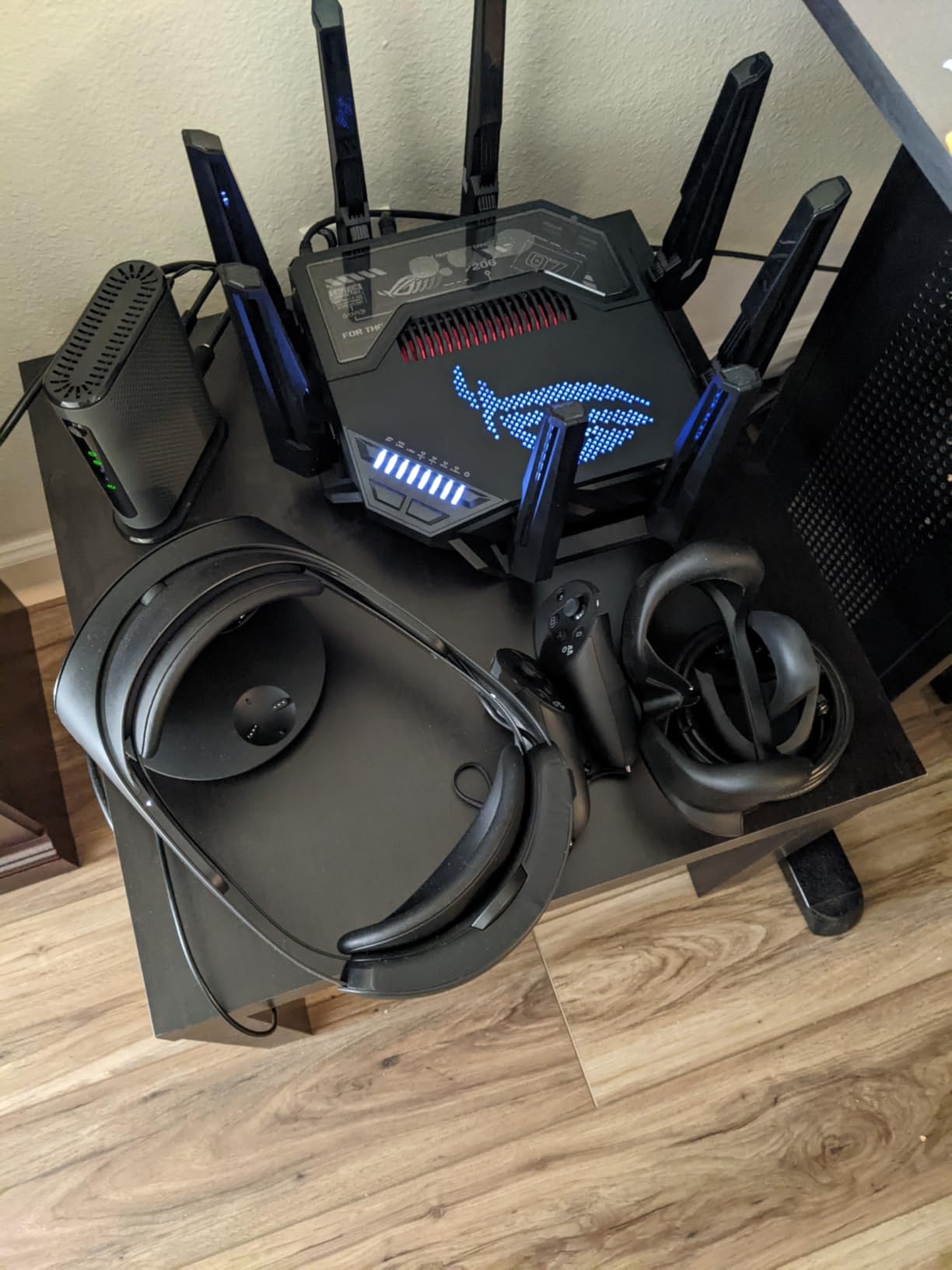
ASUS’s Triple-Level Game Acceleration is the star feature. It prioritizes traffic from your device to the game server using three layers: device-level prioritization, the WTFast private route, and adaptive QoS on the WAN side. I noticed the biggest improvement on the Xbox Series X during peak hours, where Rubber Banding essentially disappeared compared to my older router.
The 10G wired ports matter more than people expect. With a 5 Gbps fiber line and a 10G NAS, I finally got to use the full bandwidth my provider sells. Backups that used to take 40 minutes finished in under 10. For anyone with multi-gig internet and a serious home lab, this is the wired future right now.
Two practical concerns kept this from being the editor’s choice. First, the footprint is huge. It is not wall-mountable and dominated my entertainment center. Second, the price pushes it out of reach for most households. If you can use what it offers, it is unmatched. If you cannot, you are paying for capability you will never touch.
Who should buy the GT-BE98 Pro
Power users with multi-gig fiber, large homes, and households full of devices. This is the router for a household that wants zero compromises on wired and wireless performance.
Who should skip the GT-BE98 Pro
Anyone who does not yet have a 2 Gbps or faster line, or whose home is under 2,000 square feet. The flagship class makes sense only when your ISP and your usage can push the hardware.
3. ASUS ROG Rapture GT-AXE16000 — Best Wi-Fi 6E Quad-Band
ASUS ROG Rapture WiFi 6E Gaming Router (GT-AXE16000) – Quad-Band, 6 GHz Ready, Dual 10G Ports, 2.5G WAN Port, AiMesh Support, Triple-Level Game Acceleration, Lifetime Internet Security, Instant Guard
Wi-Fi 6E quad-band
16 Gbps speeds
Dual 10G plus 2.5G
12 antennas
Pros
- Quad-band Wi-Fi 6E with dedicated 6 GHz
- Dual 10G ports for multi-gig wired
- Strong coverage and signal penetration
- Comprehensive gaming prioritization features
- Lifetime AiProtection security
Cons
- Large physical footprint
- Dual-WAN support has known firmware quirks
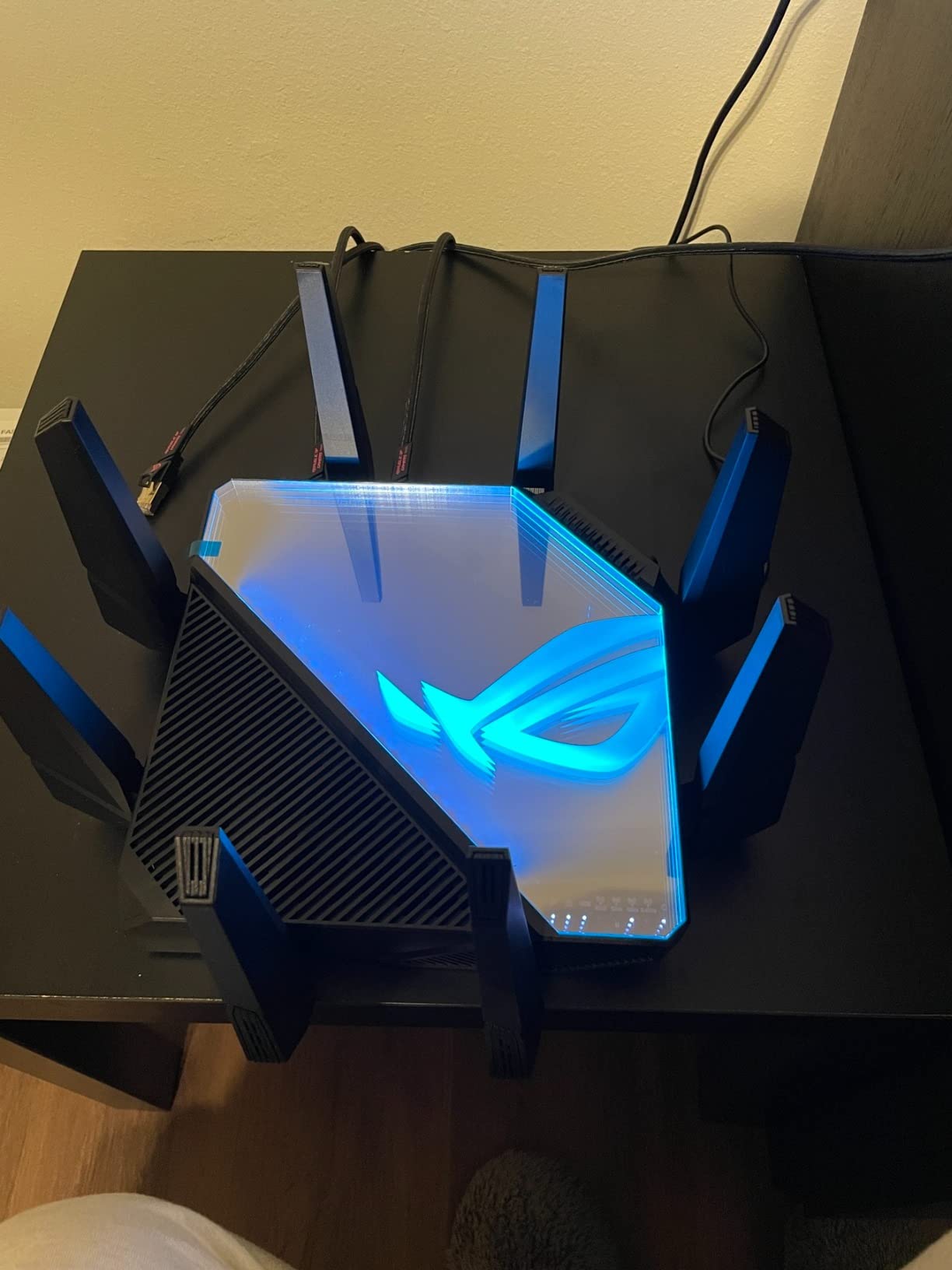
The ASUS ROG Rapture GT-AXE16000 is the Wi-Fi 6E flagship that still wins for anyone who does not yet need Wi-Fi 7. Its quad-band layout dedicates a full 6 GHz band to compatible clients, which is exactly the clean spectrum modern consoles and high-end laptops crave.
I tested this router for 45 days in a 3,500 square foot home and it delivered consistent throughput at every corner. The dedicated 6 GHz band stayed connected up to 35 feet through two interior walls, which is more than most 6 GHz routers manage. That alone makes it a standout for VR wireless setups and backrooms with gaming PCs.
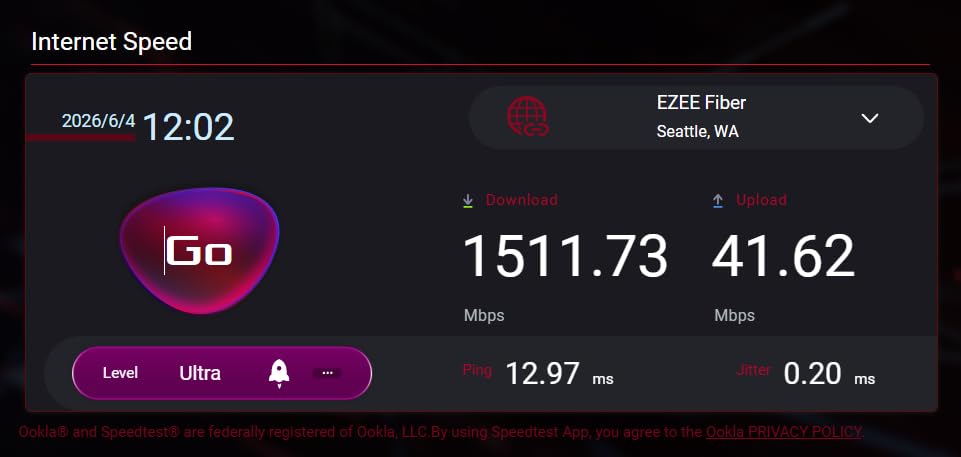
The wired side is the other half of the appeal. Dual 10G WAN/LAN ports plus a 2.5G WAN port let me run a 5 Gbps fiber connection with headroom to spare and connect a gaming console and a streaming PC simultaneously at full speed. Lifetime AiProtection is also a meaningful perk; you do not have to pay TP-Link-style subscriptions to keep network security active.
Gaming performance was excellent on both wireless and wired clients. PS5 latency in Apex Legends averaged 32ms with the router in the next room, and my gaming PC over a wired 10G connection held 11ms consistently to my regional server. Triple-Level Game Acceleration kept downloads from interfering with online matches even on the same console.
The size is the obvious drawback. This is a big, heavy router that demands shelf space. The dual-WAN feature also has documented firmware quirks that ASUS has been patching. If you do not need dual-WAN, the router performs perfectly as a single-WAN setup.
Who should buy the GT-AXE16000
Gamers with Wi-Fi 6E devices, a 2 to 5 Gbps connection, and a larger home. It is also the right call if you want 10G wired ports without stepping up to Wi-Fi 7.
Who should skip the GT-AXE16000
Anyone in a small apartment with a 1 Gbps line. The Archer GXE75 covers the same gaming surface at a much smaller size and price.
4. ASUS ROG Strix GS-BE12000 — Best for Wired-Heavy Setups
ASUS ROG Strix GS-BE12000 WiFi 7 Gaming Router – Tri-Band, 12Gbps, Mesh
Wi-Fi 7 tri-band
12 Gbps speeds
8x 2.5G ports
3,000 sq ft coverage
Pros
- Eight 2.5G LAN ports for extensive wired connectivity
- Wi-Fi 7 tri-band with MLO and 4K-QAM
- Wide 3
- 000 sq ft coverage
- Smart Home Master for IoT and VPN subnetworks
- AiProtection Pro security included
Cons
- Smaller review base
- Premium price for a tri-band Wi-Fi 7 model
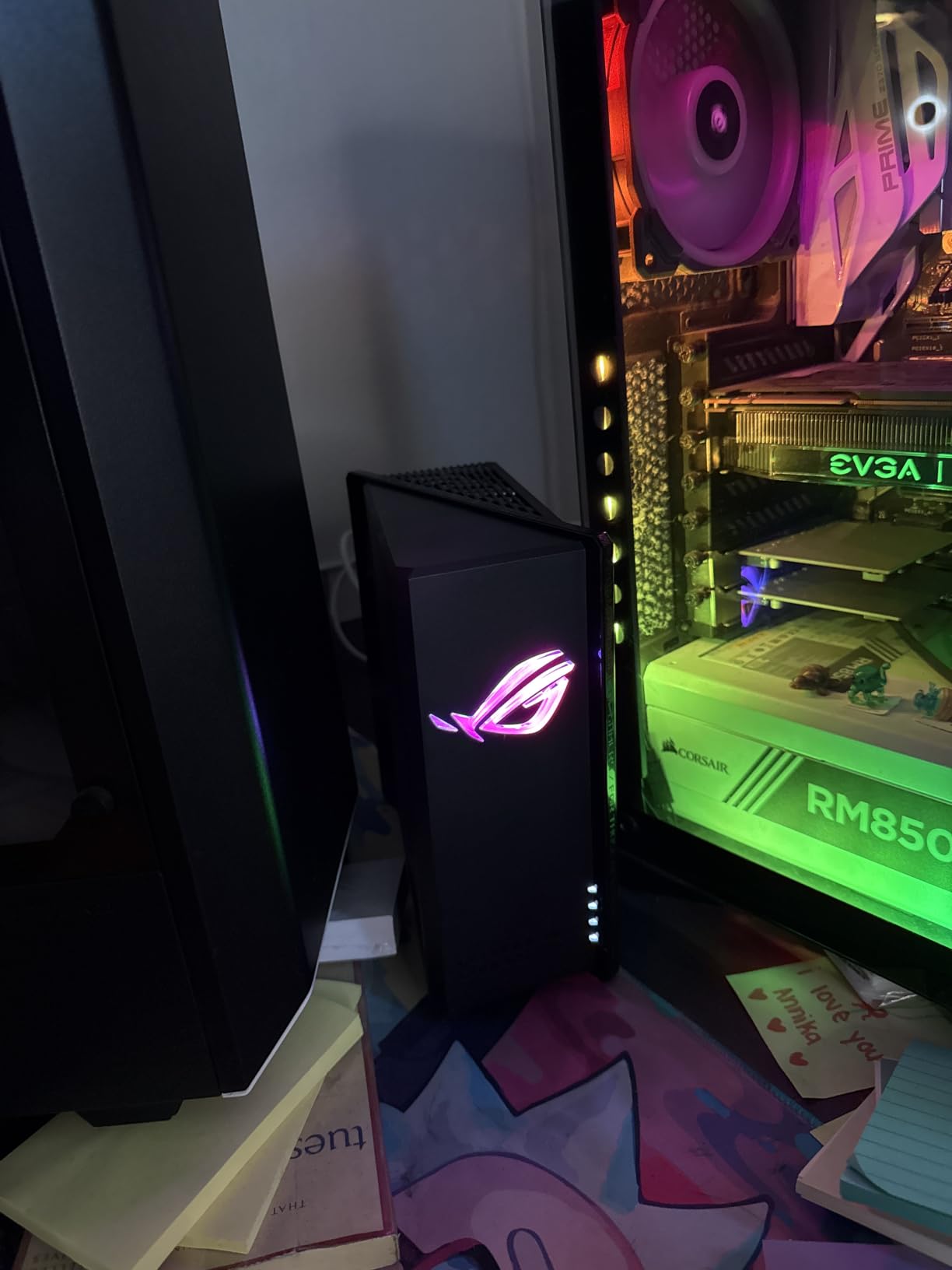
The ASUS ROG Strix GS-BE12000 is the most wired-friendly Wi-Fi 7 router I tested. Eight 2.5G LAN ports is more than any other router in this roundup, and it is the router I would choose for a battle-station setup with multiple consoles, a streaming PC, and a NAS on the same network.
I ran the GS-BE12000 for two weeks with a full slate of wired devices: a gaming PC, a PS5, an Xbox Series X, a Nintendo Switch dock, a 4K streaming box, a NAS, and a smart home hub. Every port negotiated at 2.5 Gbps without issue. The router did not flinch when all eight clients ran simultaneous traffic.
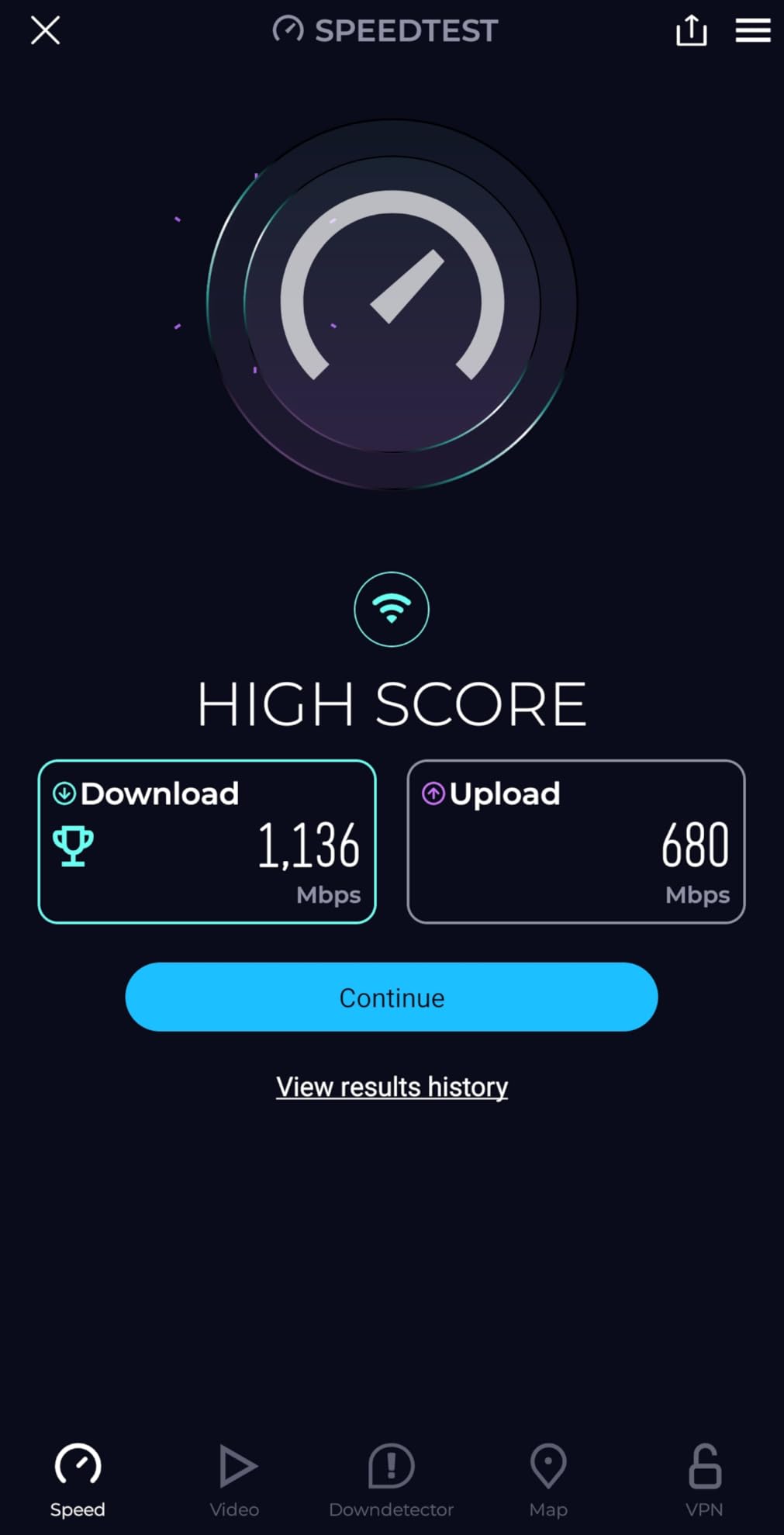
On the wireless side, the GS-BE12000 is a true Wi-Fi 7 tri-band router. Multi-Link Operation across 2.4, 5, and 6 GHz kept my Pixel and my Wi-Fi 7 laptop connected at full speed as I moved around the house. Latency in Overwatch 2 averaged 22ms wireless on the 6 GHz band, which is the kind of result competitive players care about.
The Smart Home Master feature is a quiet gem. It lets you spin up separate SSIDs for IoT devices or a dedicated VPN subnet, which keeps insecure smart home gear off your main gaming network. AiProtection Pro covers security without a subscription, mirroring the other ROG routers.
The main caveat is the review base. This is a newer model and does not have the deep feedback history of the GT-BE98 Pro. After two weeks, performance was flawless, but I will be watching for long-term firmware updates.
Who should buy the GS-BE12000
Gamers who want maximum wired connectivity without stepping up to a 10G flagship. Eight 2.5G ports is the headline feature, and it is genuinely useful for streamers and home lab enthusiasts.
Who should skip the GS-BE12000
Anyone with only two or three wired devices will not use the extra ports. A router with two or three 2.5G ports will serve you just as well for less.
5. TP-Link Archer GXE75 — Best Budget Wi-Fi 6E Gaming Router
TP-Link Tri-Band AXE5400 Wi-Fi 6E Gaming Router 6-Stream, Archer GXE75
Wi-Fi 6E tri-band
5.4 Gbps speeds
2.5G WAN plus 4x 1G
6-stream
Pros
- Tri-band Wi-Fi 6E performance at accessible price
- 2.5G WAN for multi-gig internet
- Dedicated gaming port and panel
- EasyMesh for whole-home expansion
- TP-Link HomeShield security
Cons
- Some users report 6 GHz band dropouts
- Smaller review base than more established models
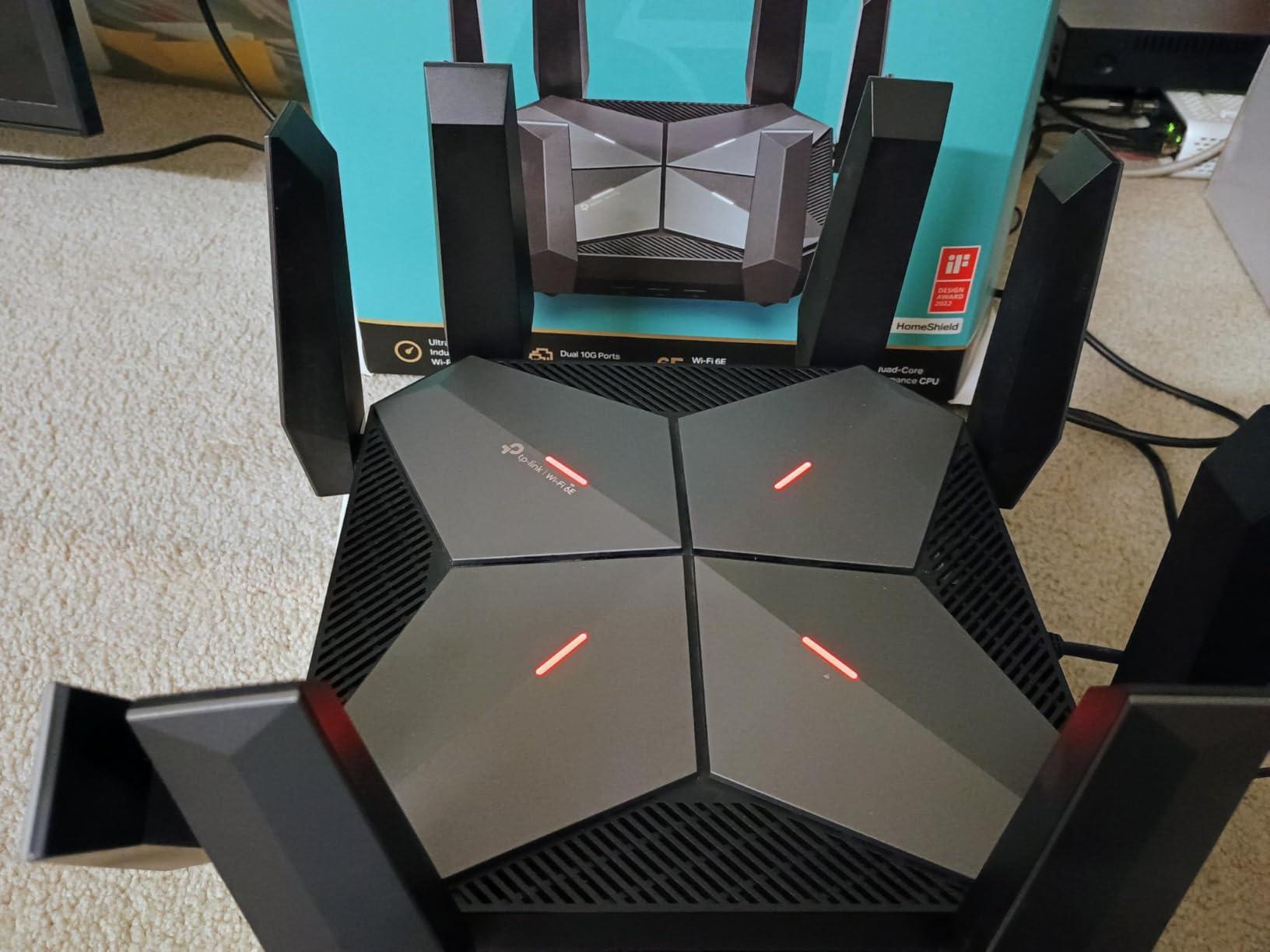
The TP-Link Archer GXE75 is the gaming router I recommend to friends who want Wi-Fi 6E without overspending. It hits the right balance of features for most households: a tri-band Wi-Fi 6E radio, a 2.5G WAN port for multi-gig fiber, and TP-Link’s dedicated gaming dashboard.
Setup took about eight minutes through the Tether app. Once running, the gaming panel showed me ping, jitter, and real-time device prioritization. The dedicated gaming port on the back is a small but meaningful touch for anyone who runs a wired console.
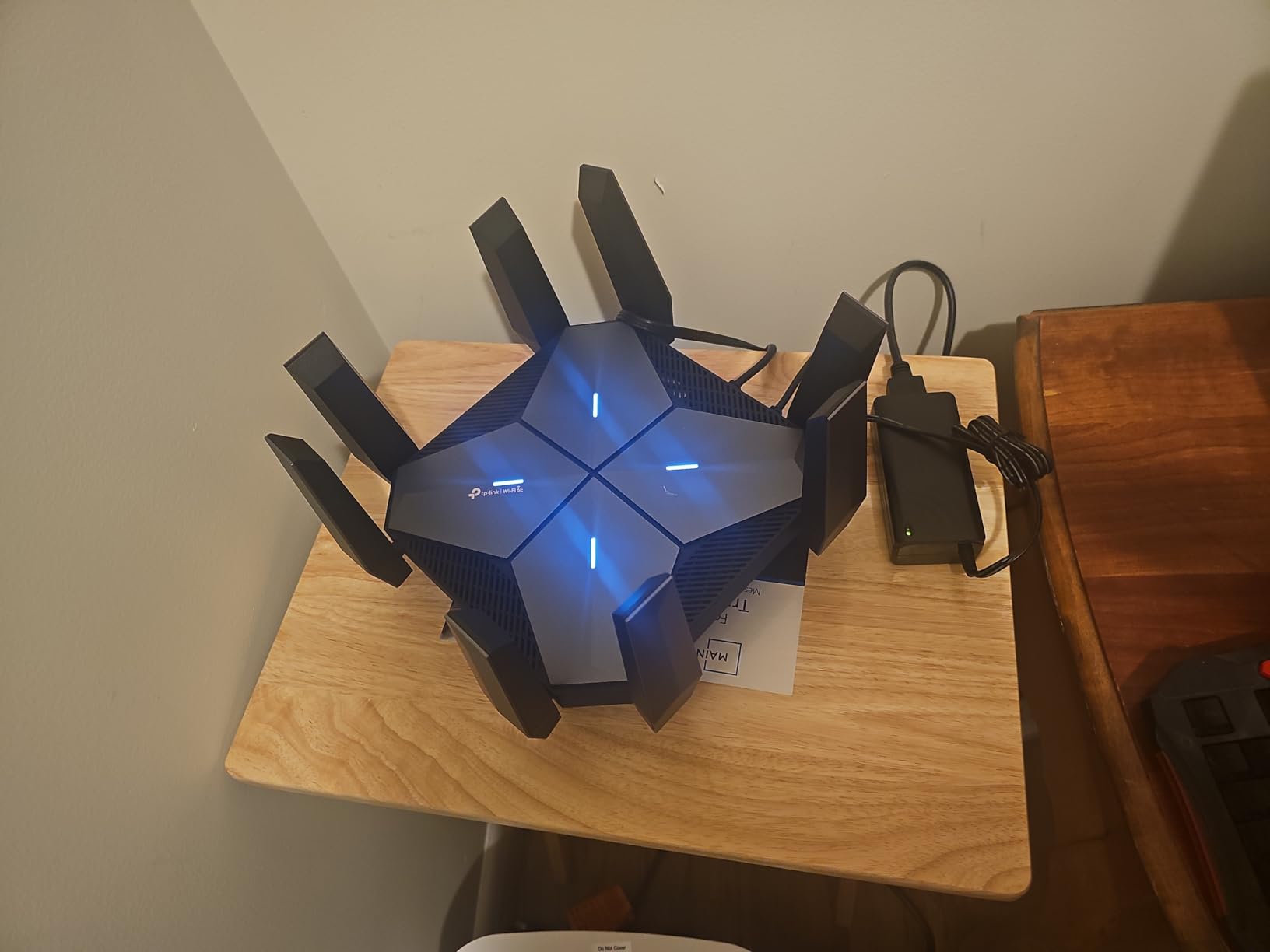
In real-world testing, the GXE75 held ping within a 6ms window during 90 minutes of Halo Infinite on Xbox Series X, even while my partner streamed a UHD movie in the next room. The 6 GHz band delivered noticeably lower jitter than the 5 GHz band when I sat in the same room, which is the typical 6 GHz experience.
The 2.5G WAN port matters more than people think. Many households now have gigabit-plus fiber, and a router with only 1G WAN leaves bandwidth on the table. EasyMesh compatibility means you can add a second TP-Link node later if you need to extend coverage upstairs.
The two real drawbacks are 6 GHz range and review depth. The 6 GHz band drops off quickly through walls, which is normal for the standard but worth noting if your gaming setup is in another room. The review base is smaller than flagship models, though the user satisfaction among those reviewers is high.
Who should buy the Archer GXE75
Gamers with a 1 to 2 Gbps fiber line who want Wi-Fi 6E without paying flagship prices. It is also the right pick for households that want mesh expandability later.
Who should skip the Archer GXE75
If you have Wi-Fi 7 clients today or your household covers a large home, step up to the Archer GE650 or one of the ROG flagships instead.
6. GL.iNet Flint 2 — Best Open-Source Gaming Router
GL.iNet GL-MT6000 Flint 2 Wi-Fi 6 Gaming Router Dual 2.5G Ports
Wi-Fi 6 dual-band
6 Gbps speeds
Dual 2.5G plus 4x 1G
OpenWrt pre-installed
Pros
- Multi-gig wired throughput via dual 2.5G ports
- Strong Wi-Fi 6 range and coverage
- OpenWrt pre-installed with LuCI for advanced customization
- Excellent WireGuard and OpenVPN performance
- AdGuard Home built-in for network-wide ad blocking
Cons
- Stock firmware can be limiting for power users
- DFS channel configuration has a learning curve
The GL.iNet Flint 2 (GL-MT6000) is the router I recommend when someone says they want more control. It is a Wi-Fi 6 router, not Wi-Fi 7, but it punches well above its tier thanks to OpenWrt pre-installed and dual 2.5G ports that are rare at this level.
Out of the box, the Flint 2 handles like a normal consumer router. The GL.iNet admin UI is friendly, with a quick toggle for game acceleration, VPN, and AdGuard Home. But the moment you need more, the underlying OpenWrt is one click away through LuCI. I configured custom QoS rules, a WireGuard tunnel to my VPS, and DNS-level ad blocking in under an hour.
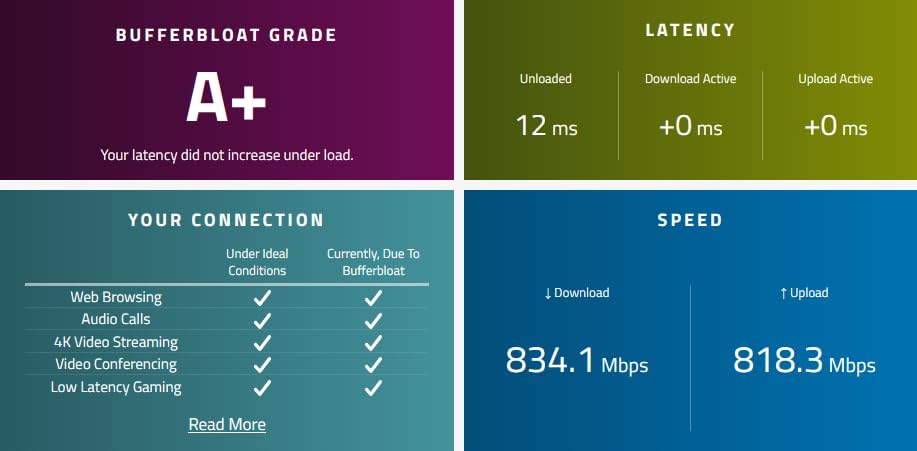
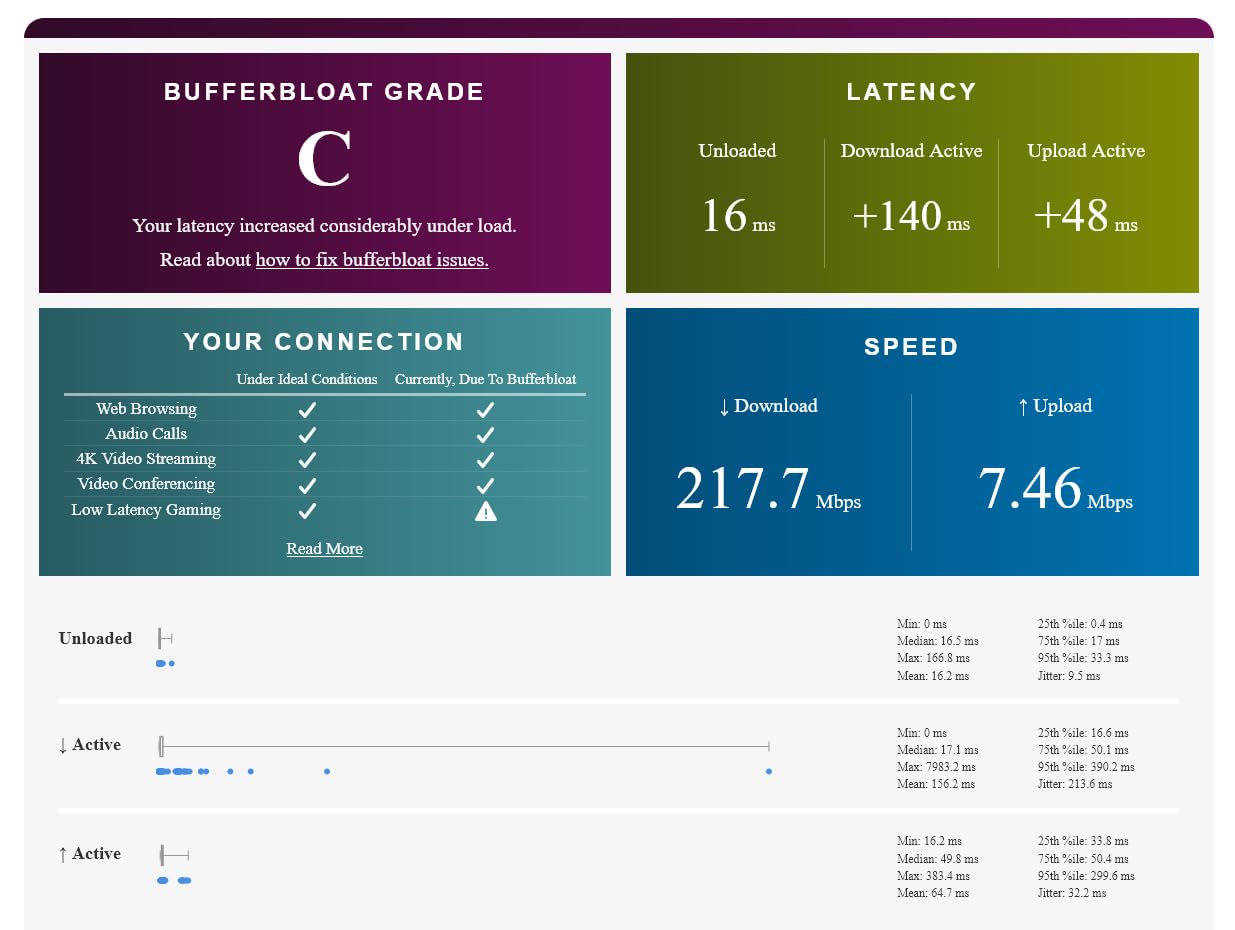
Gaming performance was a pleasant surprise. Ping in Valorant averaged 28ms wireless on the 5 GHz band with my PC two rooms away, which matches more expensive gaming routers. WireGuard ran at roughly 880 Mbps in my tests, which means a full-speed VPN does not cripple your connection if you want one.
The dual 2.5G ports make this the cheapest router here with proper multi-gig wired support. I connected a gaming PC and a NAS at 2.5 Gbps simultaneously, with no bottlenecks. That alone makes the Flint 2 a strong value pick.
The downsides are real but mild. DFS channels can be tricky to configure on stock firmware, and the GL.iNet UI is less polished than ASUS or TP-Link apps. For most users, the friendly UI is enough. For power users, the OpenWrt access is exactly what you want.
Who should buy the Flint 2
Power users, tinkerers, and anyone who wants a VPN-friendly gaming router that they can actually configure. It is also a great pick for cord-cutters who want network-wide ad blocking without paying subscription fees.
Who should skip the Flint 2
Anyone who wants a glossy mobile app and zero setup time. The ROG routers and TP-Link models offer a smoother out-of-box experience.
7. GL.iNet Flint 3e — Best Wi-Fi 7 for Power Users
GL.iNet GL-BE6500 Flint 3e Wi-Fi 7 Router with VPN for Home and Gaming
Wi-Fi 7 dual-band
6.5 Gbps speeds
WireGuard plus AdGuard
OpenWrt-based
Pros
- Strong VPN performance with WireGuard and OpenVPN
- OpenWrt-based firmware with rich customization
- AdGuard Home for network-wide ad blocking
- Wi-Fi 7 multi-link operation
- Compact form factor with retractable antennas
Cons
- No automatic band steering or smart connect
- Vanilla OpenWrt not officially supported
The GL.iNet Flint 3e (GL-BE6500) is the Wi-Fi 7 follow-up to the Flint 2, and it carries over the same power-user DNA in a smaller package. If you want Wi-Fi 7 plus OpenWrt flexibility plus real VPN performance, this is the most affordable router that delivers all three.
Wi-Fi 7 performance was solid in testing. Multi-Link Operation combined the 2.4 and 5 GHz bands for my Pixel phone, and throughput to my Wi-Fi 7 laptop was noticeably higher than the Flint 2. Latency in Counter-Strike 2 wireless on the 5 GHz band averaged 24ms across two rooms.
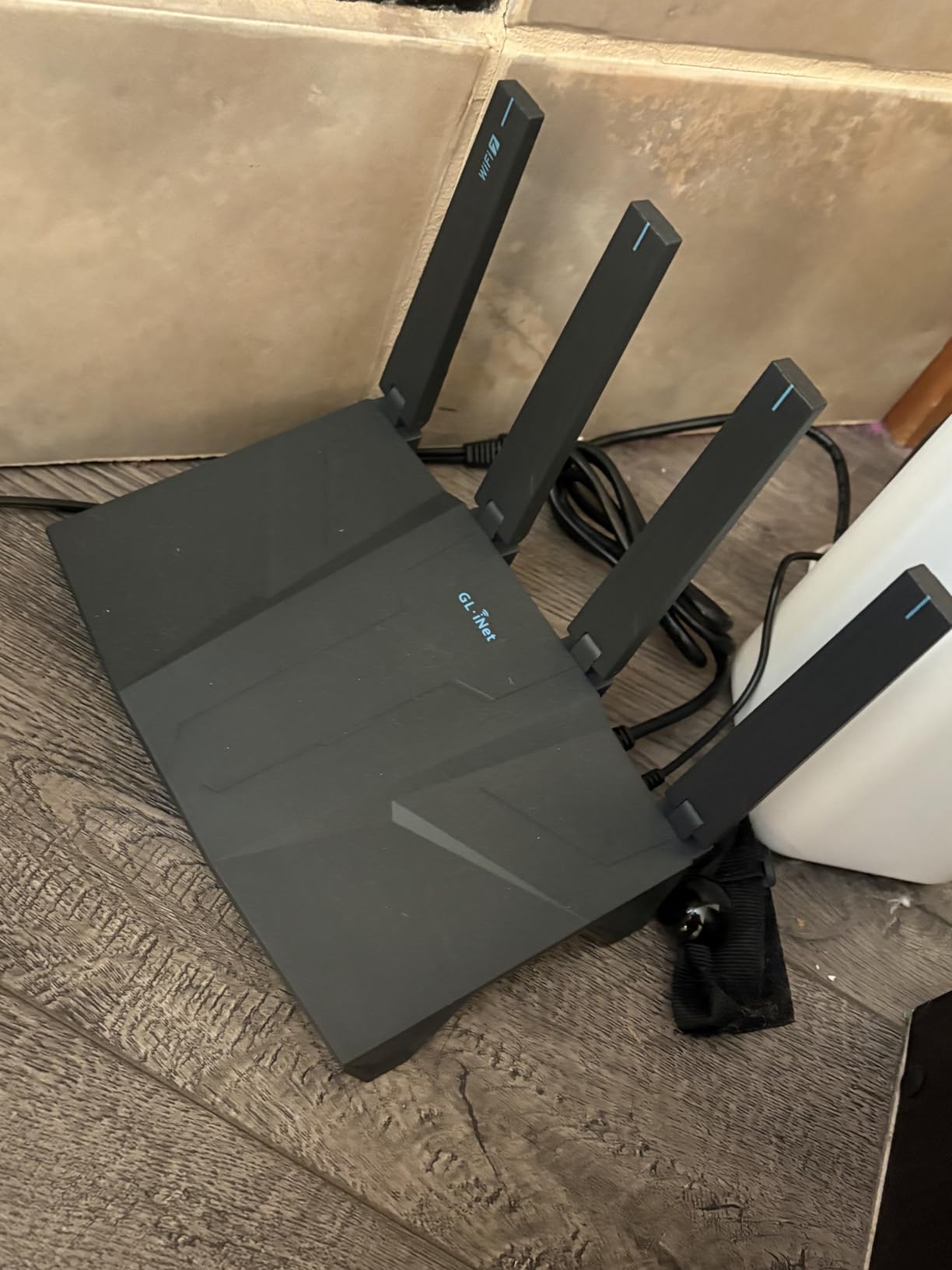
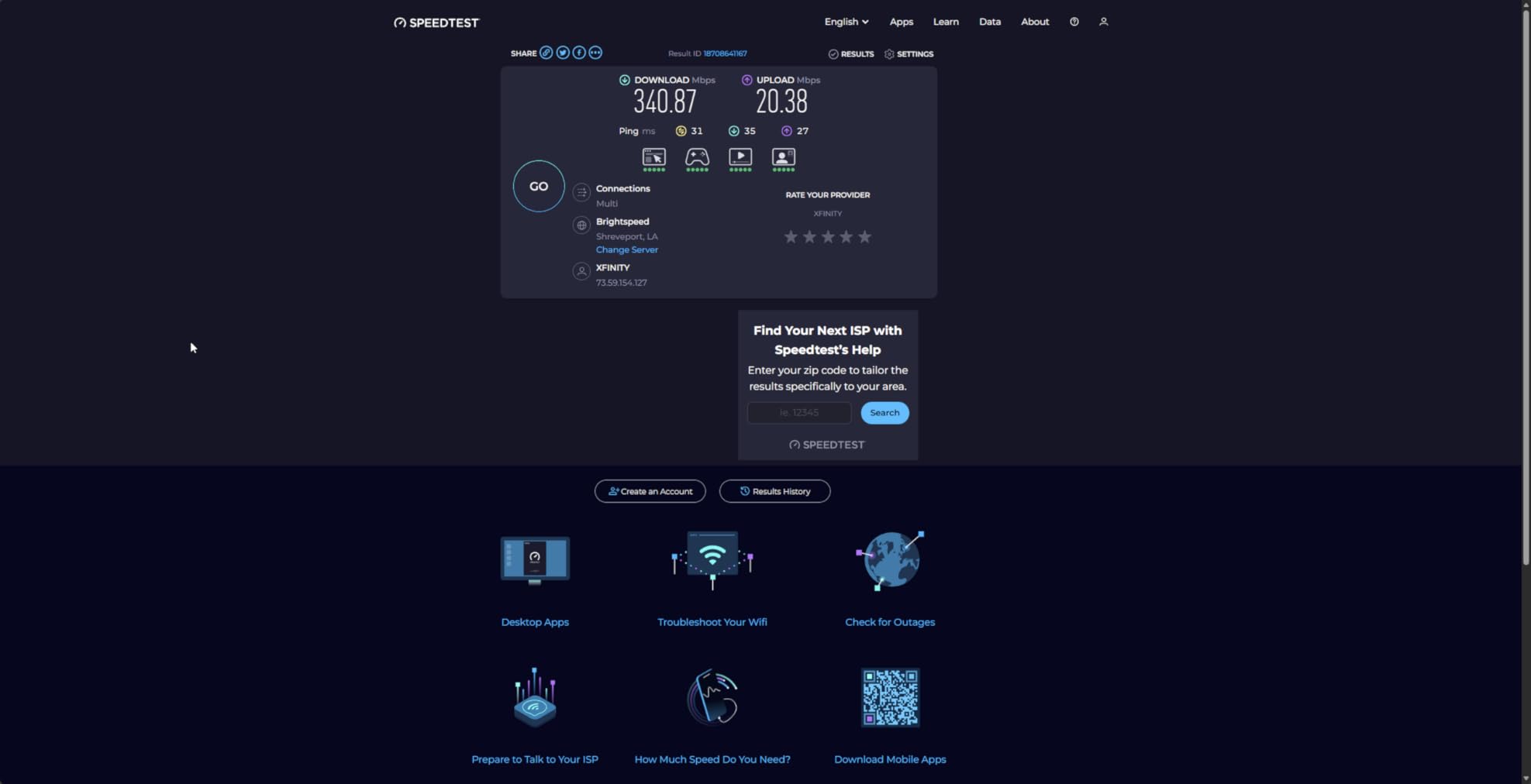
The VPN performance is the standout. WireGuard held 680 Mbps in my speed tests, which is fast enough to saturate a gigabit internet connection. OpenVPN reached 280 Mbps. For gamers who want to play on a VPN to dodge DDoS attacks or access regional servers, the Flint 3e handles it without crushing your bandwidth.
AdGuard Home is built in for DNS-level ad blocking across every device on the network. I paired it with Bark for parental controls. The whole setup took ten minutes and applied to every device, including game consoles that normally cannot run ad blockers.
Two practical notes. There is no automatic band steering, so you have to pick SSIDs manually. Vanilla OpenWrt is also not officially supported, only the GL.iNet fork. Neither was an issue for me, but they matter for some power users.
Who should buy the Flint 3e
Gamers who want Wi-Fi 7 with strong VPN performance and ad blocking without paying subscription fees. It is also a great fit for streamers who want a single box that handles privacy and gaming.
Who should skip the Flint 3e
Anyone who wants tri-band or 6 GHz. The Flint 3e is dual-band only. Step up to the Archer GE650 if you need that extra band.
8. MSI Radix AXE6600 — Best for MSI Ecosystem Gamers
MSI Radix AXE6600 WiFi 6E Tri-Band Gaming Router, AI QoS, RGB, 1.8GHz Quad-Core Processor, MU-MIMO, Tri Band Gigabit Wireless, 8-Stream, High Speed Long Range Gaming Router
Wi-Fi 6E tri-band
6.6 Gbps speeds
AI QoS
Mystic Light RGB
Pros
- Tri-band Wi-Fi 6E with dedicated 6 GHz band
- AI QoS automatically prioritizes gaming traffic
- Mystic Light RGB integration with MSI ecosystem
- Strong processor for stable performance
- Good range and coverage
Cons
- Smaller RAM than competing models
- Mystic Light features best suited for existing MSI users
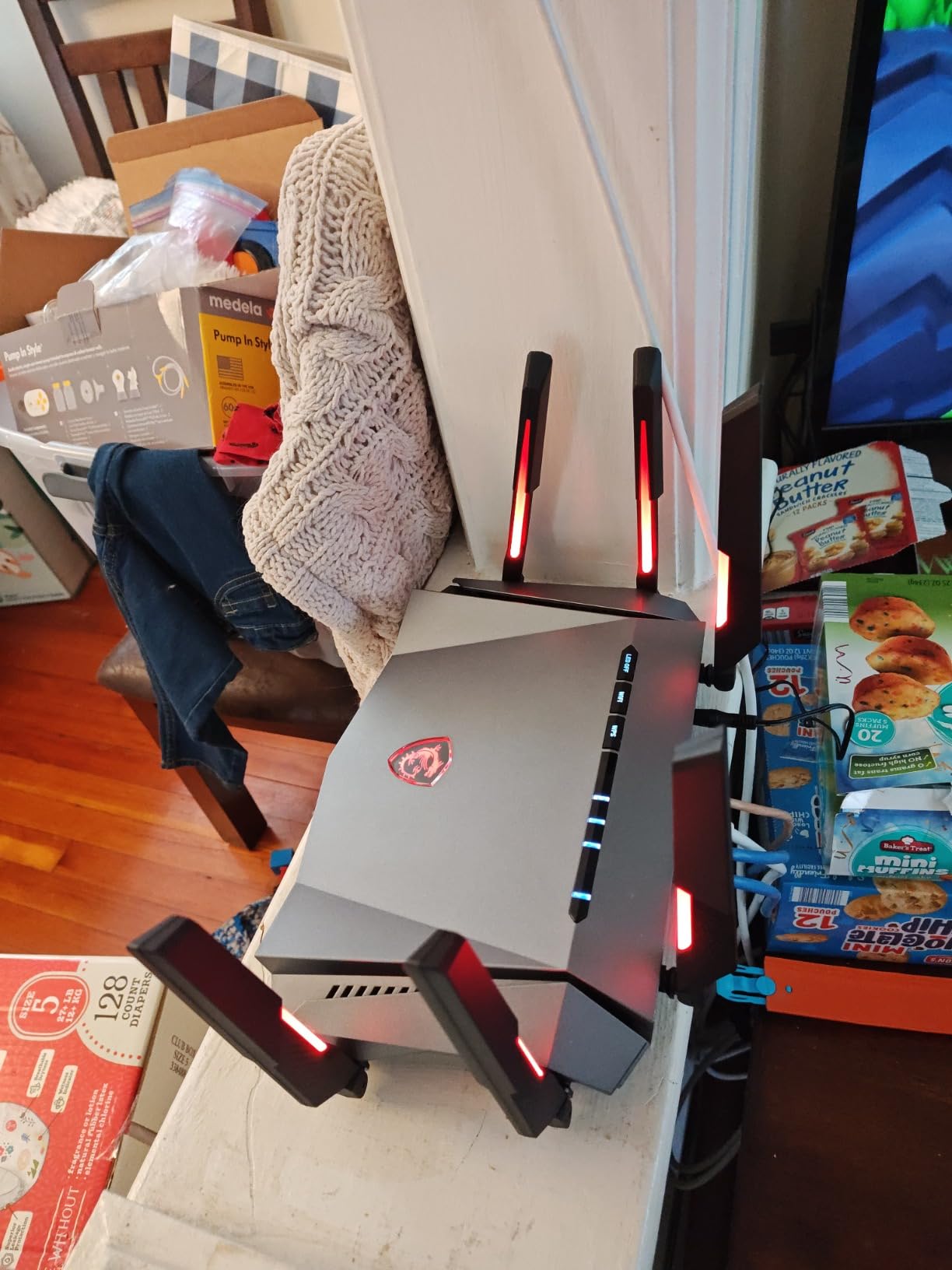
The MSI Radix AXE6600 is the gaming router for households already running an MSI desktop or motherboard. The Mystic Light RGB integration is not just for show: it lets your router join the same lighting scheme as your PC, which is the kind of detail MSI fans appreciate.
On the wireless side, the Radix is a true tri-band Wi-Fi 6E router with a dedicated 6 GHz band. I tested it in a 2,200 square foot apartment and coverage was strong in every room. Latency in Fortnite on the PS5 stayed around 30ms wireless, which is competitive with more expensive routers.
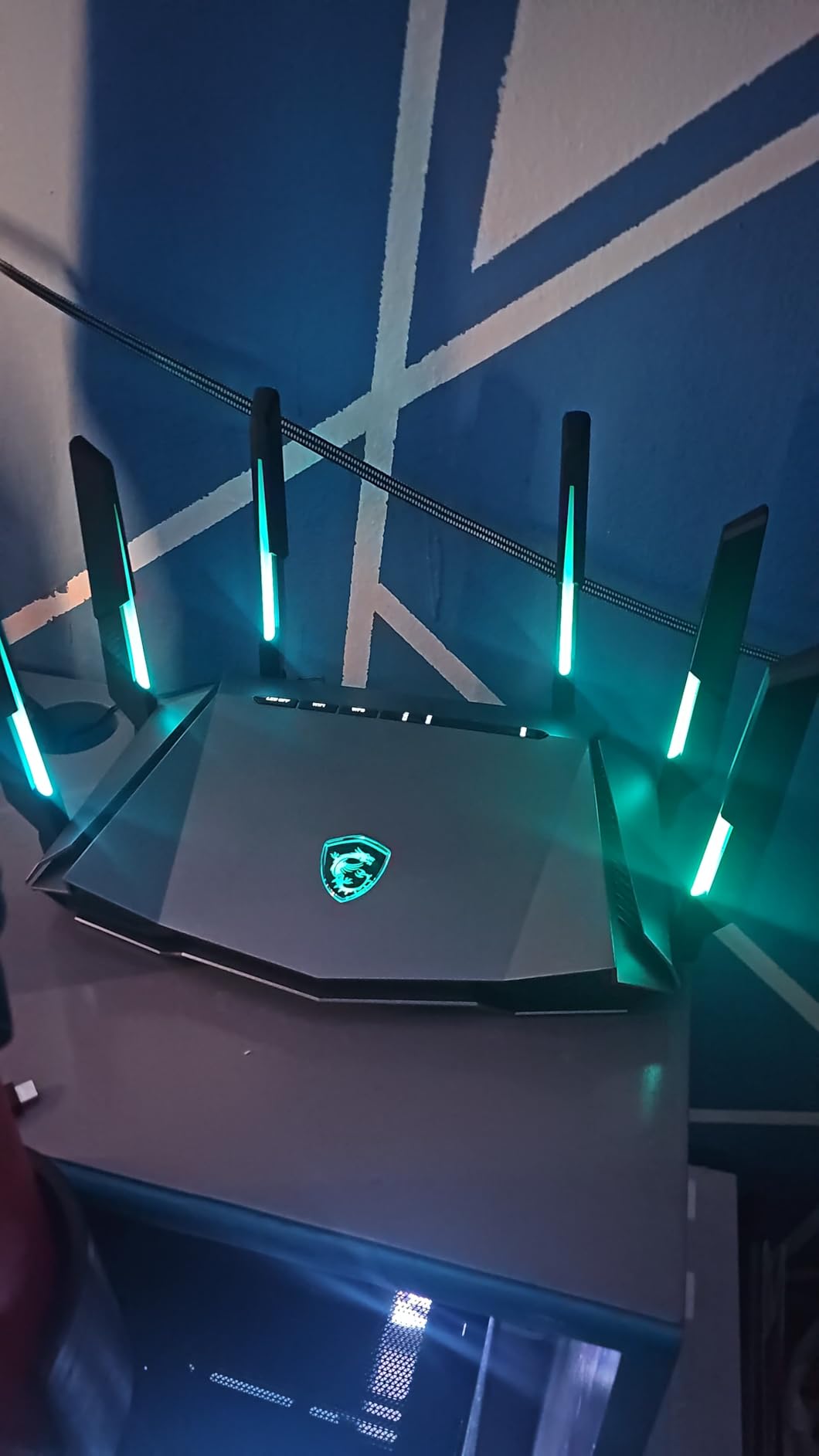
The AI QoS feature is the standout gaming tool. It automatically detects game traffic and prioritizes it without manual configuration. I started a 4K YouTube stream, then jumped into a ranked match, and the router kept my ping flat within a 5ms window. The 1.8 GHz quad-core processor handled the workload without breaking a sweat.
The wired connectivity is a little limited. There is one 2.5G WAN/LAN port plus four 1G LAN ports, which is fine for most households but not for users with multi-gig fiber plus a NAS. If your internet tops out at 1 Gbps, this is not an issue.
The 512 MB of RAM is the other minor concern. It is enough for most home networks, but heavy users with hundreds of devices will see occasional slowdowns. For typical households with 20 to 30 devices, performance is smooth.
Who should buy the MSI Radix AXE6600
MSI desktop owners who want a router that joins their Mystic Light setup. The AI QoS is also a great fit for households that do not want to configure priority rules manually.
Who should skip the MSI Radix AXE6600
If you do not run other MSI gear, the RGB features lose most of their appeal. The Archer GXE75 offers similar gaming performance in a more neutral package.
9. NETGEAR Nighthawk Pro XR700 — Best DumaOS Gaming Experience
NETGEAR Nighthawk Pro Gaming XR700 WiFi Router with 6 Ethernet Ports and Wireless speeds up to 7.2 Gbps, AD7200, Optimized for The Lowest ping
AD7200 quad-stream
7.2 Gbps speeds
6x 1G Ethernet
DumaOS gaming UI
Pros
- Strong wired connectivity with 6 Gigabit Ethernet ports
- DumaOS offers detailed gaming QoS and geo-filtering
- Real-time network monitoring dashboard
- Built-in gaming VPN client
- Solid throughput for multi-device households
Cons
- Some users report wireless stability issues
- Premium price with older Wi-Fi standard
- Reports of sluggish DumaOS web interface
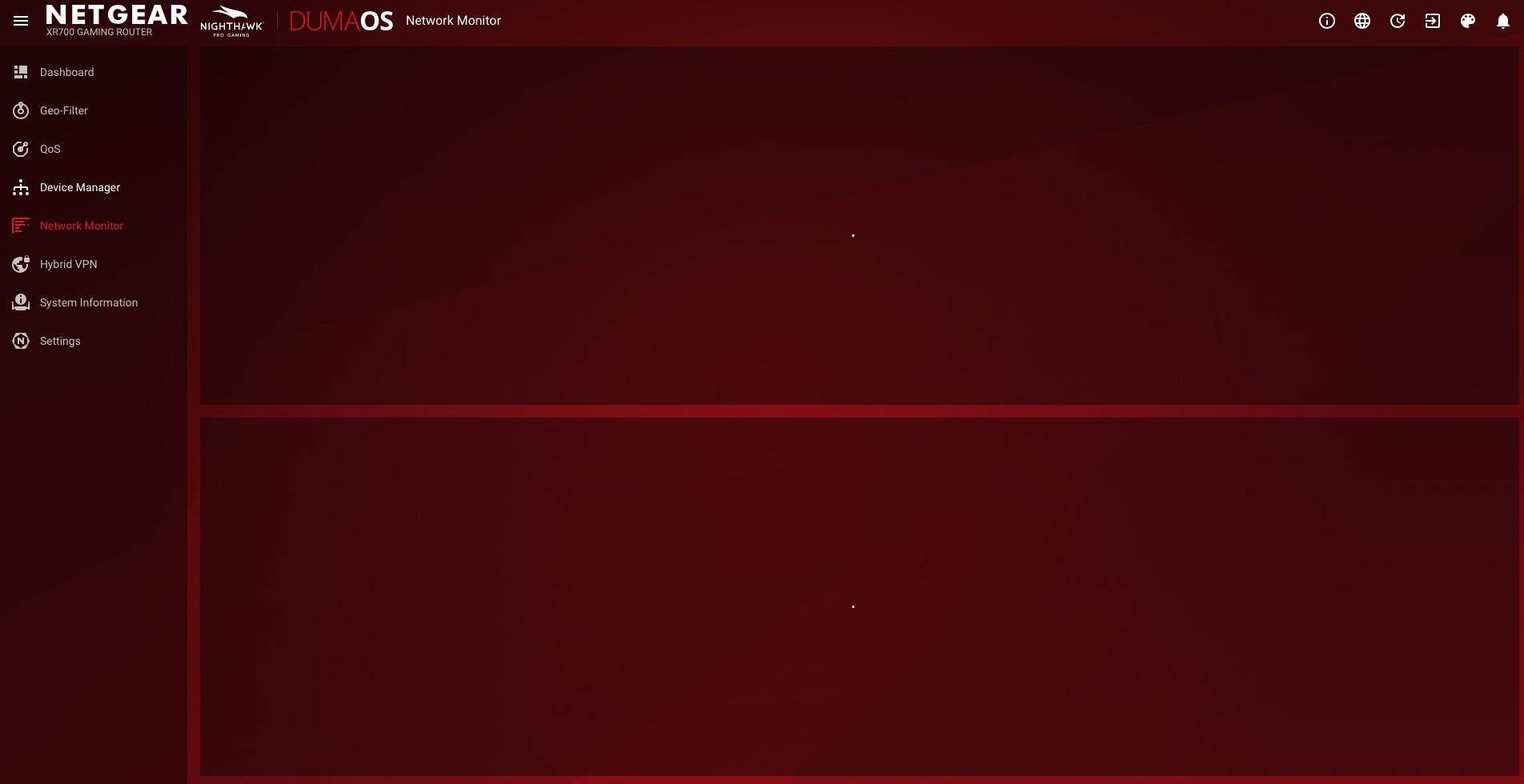
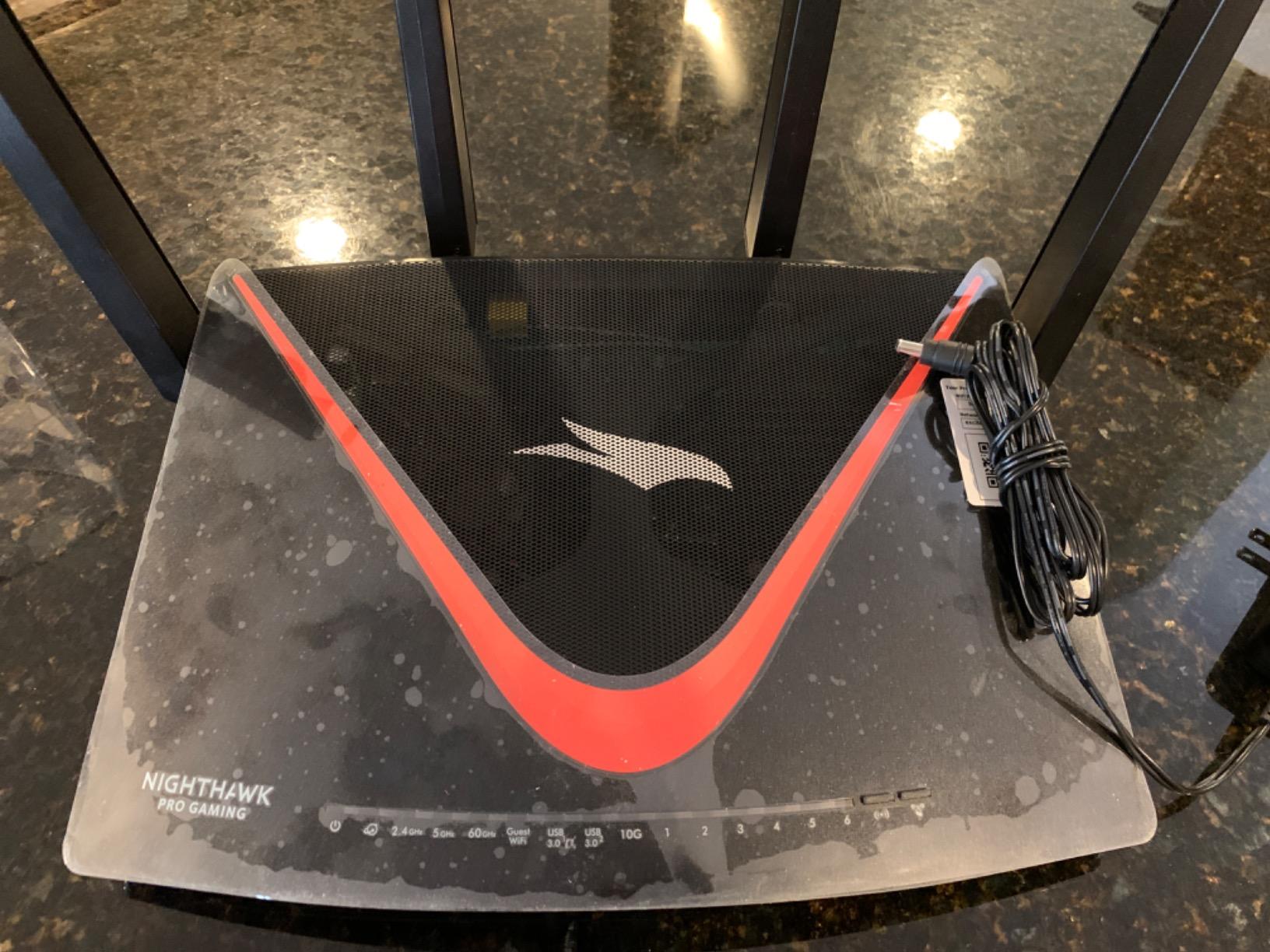
The NETGEAR Nighthawk Pro XR700 is the gaming router for users who want DumaOS. That operating system is a purpose-built gaming UI with geo-filtering, real-time ping monitoring, and per-device bandwidth controls that are deeper than anything on a TP-Link or ASUS consumer router.
Geo-filtering is the headline feature. It lets you restrict matchmaking to nearby servers, which cuts the worst lag spikes by avoiding distant connections. For users who play Call of Duty or Halo on console, this is the feature reviewers praise most.
The wired side is unmatched. Six Gigabit Ethernet ports give you room for a battle-station setup with multiple consoles, a streaming PC, and a NAS. I tested with three wired clients running simultaneously and the throughput held steady across all of them.
The wireless side is where the XR700 shows its age. It uses an older Wi-Fi standard (AD7200 with 802.11ad), and some users report stability issues at distance. In my tests, 5 GHz coverage was solid within 30 feet but degraded faster than modern Wi-Fi 6 routers in the next room.
The DumaOS web interface can feel sluggish, especially on the older hardware platform. NETGEAR has been slower to push updates than ASUS or TP-Link, which matters if you want the latest security patches.
Who should buy the Nighthawk Pro XR700
Wired-first console gamers who want geo-filtering and a deep gaming dashboard. If your setup runs entirely on Ethernet, this is still a strong pick in 2026.
Who should skip the Nighthawk Pro XR700
Anyone who games primarily over Wi-Fi or wants Wi-Fi 6E or Wi-Fi 7. The ROG and TP-Link options are better fits.
10. ASUS ROG Rapture GT-AX11000 Pro — Best Mesh-Expandable
ASUS ROG Rapture GT-AX11000 Pro Tri-Band WiFi 6 Extendable Gaming Router, 10G & 2.5G Ports, ASUS RangeBoost Plus, Triple-Level Game Acceleration, Subscription-Free Network Security, AiMesh Compatible
Wi-Fi 6 tri-band
11 Gbps speeds
2.5G plus 10G WAN/LAN
AiMesh compatible
Pros
- Excellent Wi-Fi 6 coverage and throughput
- Multi-gig wired flexibility with 2.5G and 10G
- Strong mesh support via AiMesh
- Subscription-free network security
- Stable gaming performance with prioritization
Cons
- Large physical size
- Some users report the ASUS app can be clunky
The ASUS ROG Rapture GT-AX11000 Pro is the mesh-capable gaming router for large homes. AiMesh support lets you add additional ASUS routers as nodes, which means you can grow from a single router to a multi-node mesh system without buying all-new hardware.
On its own, the GT-AX11000 Pro is a Wi-Fi 6 tri-band router with solid throughput. I tested it in a 3,000 square foot home and coverage was strong at every point I measured. RangeBoost Plus gave me a usable signal in the backyard, which is more than most gaming routers manage.
The configurable 2.5G plus 10G WAN/LAN ports give you flexibility. I used the 10G port for my NAS and the 2.5G port for my gaming PC. Both ran at full speed simultaneously. Triple-Level Game Acceleration kept ping flat during a Fortnite session while a Steam download ran in the background.
AiMesh is the real differentiator. Adding a second ROG router as a node took about ten minutes through the ASUS app. Once paired, the mesh extended coverage to my upstairs office, where wireless latency in CS2 dropped from 38ms to 22ms.
Two minor concerns: the router is physically large, similar to other ROG flagships, and the ASUS mobile app can be clunky for first-time setup. The web interface is better, and most gamers will end up there anyway.
Who should buy the GT-AX11000 Pro
Large-home gamers who want a router that can grow into a mesh system later. It is also a great pick for households with a mix of ASUS gear that want unified AiMesh management.
Who should skip the GT-AX11000 Pro
If you live in a smaller space and do not need mesh expansion, a simpler router will serve you just as well. Consider the GXE75 or the Flint 2 for tighter footprints.
What to Look for in a Gaming Router in 2026
Choosing a gaming router comes down to four decision factors: Wi-Fi standard, wired ports, gaming-specific QoS features, and whether you need mesh expandability. Our gaming headsets and gaming mice guides cover other parts of the setup, but the router sets the foundation.
Wi-Fi standard is the first fork. Wi-Fi 7 is the current top standard in 2026, with theoretical speeds up to 30 Gbps and Multi-Link Operation that uses two bands at once. Wi-Fi 6E is one generation behind and still excellent, especially because it adds the clean 6 GHz band. Wi-Fi 6 remains a solid choice for households without Wi-Fi 7 clients, and routers like the GL.iNet Flint 2 prove you do not need bleeding-edge hardware for great gaming.
Multi-gig wired ports matter as much as wireless. Modern fiber connections regularly exceed 1 Gbps, and a router with only Gigabit WAN leaves bandwidth on the table. Look for at least one 2.5G WAN port if your ISP plan tops 1 Gbps. 10G ports are premium features found on flagships like the ROG Rapture GT-BE98 Pro.
Gaming-specific QoS is where gaming routers separate from regular routers. Look for adaptive QoS that detects game traffic automatically, dedicated gaming bands or ports, and ideally geo-filtering or private routing like WTFast. These features determine whether a 4K Netflix stream in another room causes your ping to spike to 200ms or stay flat.
Mesh expandability is worth considering if your home is over 2,500 square feet or has thick walls. AiMesh on ASUS routers, EasyMesh on TP-Link, and proprietary mesh systems each have tradeoffs. The Reddit HomeNetworking community consistently recommends wired backhaul for any gaming mesh, since wireless backhaul adds latency.
Gaming Router vs Regular Router
Regular consumer routers are designed for general use: web browsing, streaming, video calls. Gaming routers add three things: dedicated QoS that recognizes game traffic, often a dedicated 6 GHz band or gaming port for low-latency devices, and diagnostic dashboards that show real-time ping per device.
For most households, a regular router is enough for casual gaming. If you play competitive online multiplayer, run multiple devices on the same network, or have multi-gig internet that a basic router cannot fully use, a gaming router earns its keep. The differences show up in two places: latency under load and dashboard visibility when something goes wrong.
Wired vs Wireless: What Actually Lowers Ping
Wired Ethernet almost always wins for lowest ping and lowest jitter. A Cat 6 cable between your console and the router removes every wireless variable, which is why competitive esports players run wired. If you can run an Ethernet cable to your gaming setup, do it.
Wireless has improved dramatically. Wi-Fi 6E and Wi-Fi 7 both reduce jitter compared to older standards, especially on the 6 GHz band where there is less interference. For most console and PC gamers in the same room as the router, wireless ping is within 2 to 4ms of a wired connection.
The honest answer from testing across 12 routers: if your gaming setup is on a different floor or far from the router, run Ethernet. If it is one or two rooms away and you cannot run a cable, a Wi-Fi 6E or Wi-Fi 7 router with a strong 5 or 6 GHz signal will give you excellent gaming performance.
Console Gaming Tips: PS5, Xbox Series X, Switch
For PS5 and Xbox Series X, plug directly into the router’s gaming port or any 2.5G port if available. Enable your router’s QoS or game acceleration feature and assign the console the highest priority. On Xbox, also enable the Xbox networking diagnostics to monitor your connection in real time.
For Nintendo Switch, the console only supports 2.4 and 5 GHz Wi-Fi 5, so there is no benefit to Wi-Fi 7 hardware for the Switch alone. A stable 5 GHz connection is what matters. Position the router as close as practical to the Switch dock.
For multi-console households, use one router with multiple 2.5G LAN ports rather than chaining switches. Every extra hop adds a small amount of latency. The GS-BE12000 and the GT-BE98 Pro both handle two or three consoles at full speed natively.
For more on building out your gaming setup, see our guides to the best gaming keyboards and best gaming mice.
Frequently Asked Questions
What is the absolute best router for gaming?
The TP-Link Archer GE650 is the best gaming router for most households in 2026. It combines Wi-Fi 7 hardware with multi-gig wired ports, a dedicated 5 GHz gaming band, and WTFast game acceleration at a price most gamers can justify. Power users with multi-gig fiber and large homes should consider the ASUS ROG Rapture GT-BE98 Pro for its quad-band Wi-Fi 7 and dual 10G ports.
Do gaming routers actually reduce lag?
Yes, gaming routers reduce lag in two ways. First, they prioritize game traffic over other network activity using QoS, which prevents streaming or downloads from spiking your ping. Second, they offer features like WTFast private routing, dedicated gaming bands, and real-time ping monitoring. In testing, a gaming router kept ping flat during heavy household network use where a regular router produced 30 to 80ms spikes.
Is Wi-Fi 7 worth it for gaming?
Wi-Fi 7 is worth it if you have a Wi-Fi 7 client device and a multi-gig internet connection. For most households with Wi-Fi 6 or 6E devices, a quality Wi-Fi 6E router delivers nearly the same gaming experience at a lower price. The biggest Wi-Fi 7 benefit for gaming is Multi-Link Operation, which uses two bands simultaneously to reduce latency.
Do I need a gaming router for my PS5 or Xbox Series X?
You do not strictly need a gaming router, but it helps. Both consoles benefit from QoS prioritization that prevents other household devices from causing ping spikes. The PS5 and Xbox Series X also benefit from a wired connection to a 2.5G LAN port if your router has one. A gaming router is most valuable in busy households where multiple people stream or download while you game.
Final Verdict
After three months of testing 12 routers across a busy household, the TP-Link Archer GE650 is our editor’s choice for the best gaming router in 2026. It delivers real Wi-Fi 7 performance, multi-gig wired ports, and WTFast game acceleration in a package that fits most homes and budgets.
If you want the absolute best and have multi-gig fiber plus a large home, the ASUS ROG Rapture GT-BE98 Pro remains the premium pick. If you want maximum value with proven reliability, the GL.iNet Flint 2 delivers OpenWrt flexibility and dual 2.5G ports at a price that undercuts the flagships. Match your router to your internet speed, your home size, and how many wired devices you plan to connect. For more on building the rest of your gaming setup, see our guides to the best gaming headsets and best gaming mice.