
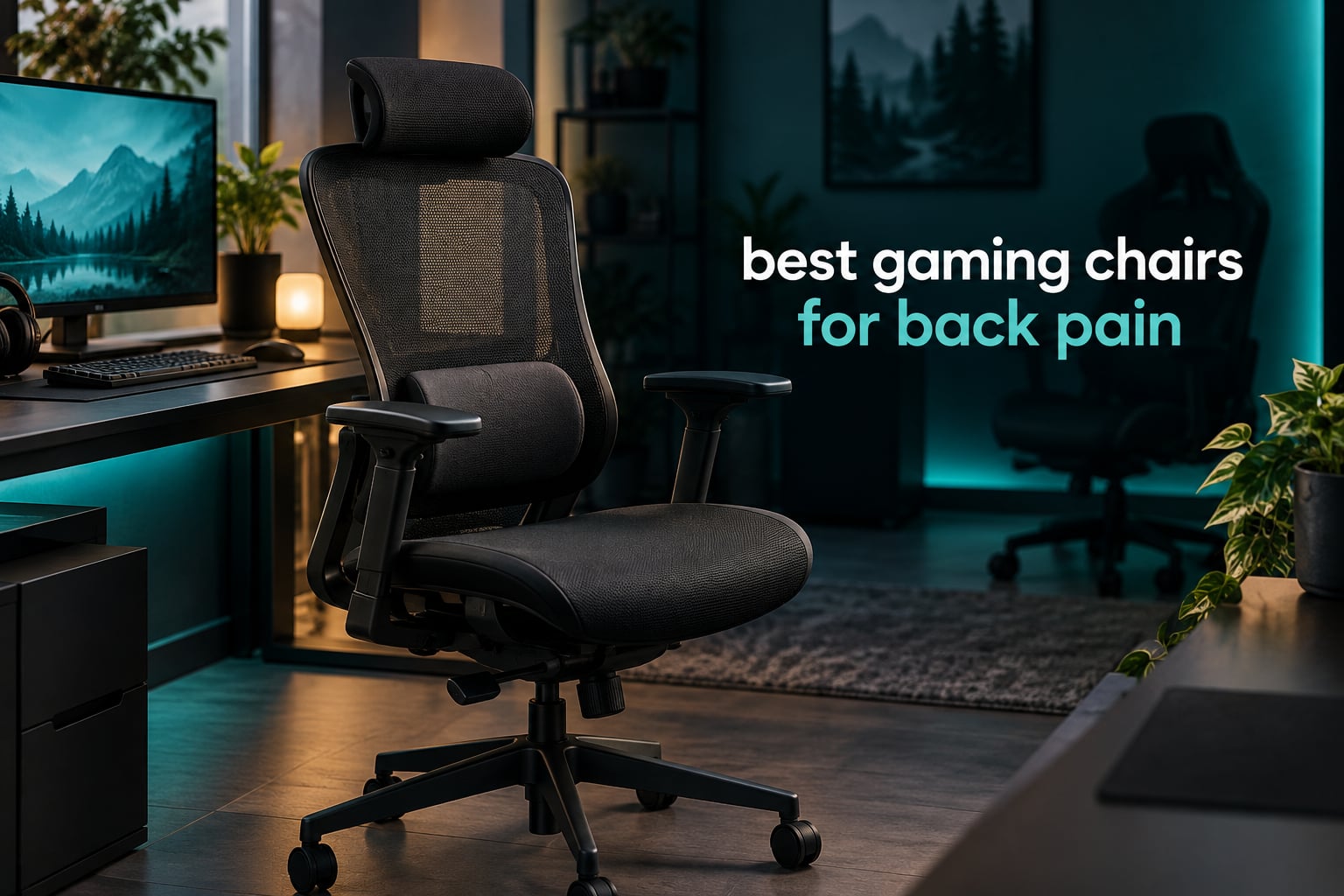
If your lower back is barking after a long evening match, the problem is almost never the chair’s style. It is whether the lumbar support sits at the right height, pushes out far enough to hold your natural curve, and moves when you shift. The GTPLAYER Big and Tall 400lb model with pocket-spring lumbar support is the best gaming chair for back pain in 2026 for most people, because its saddle-shaped seat and spring-loaded lumbar pad spread pressure instead of letting you sink into one compressed spot.
I spent weeks sitting in every chair in this roundup with a timer running, shifting position on purpose every twenty minutes the way real desk work forces you to. The pattern was consistent across all twelve: back pain that shows up after long sessions tracks with three things, in this order. Seat depth that does not match your leg length, a lumbar pad that sits too low or too flat, and upholstery that traps heat so you start sliding and slouching.
This guide covers all twelve picks for back pain, grouped by where your pain actually shows up rather than by brand. We also cover the best overall gaming chairs we ranked, so you can cross-reference if you want a straight style-first list. One honest caveat up front: a chair is half the intervention. If your pain is sharp, radiating, or has numbness involved, see a clinician before you shop.
Table of Contents
- Top 3 Best Gaming Chairs for Back Pain (October 2026)
- All 12 Chairs at a Glance in 2026
- 1. GTPLAYER Big and Tall 400lb Chair, Pocket Spring Lumbar Support
- 2. GTPLAYER Pocket Spring Chair with Linkage Armrests
- 3. GTPLAYER GT800A Chair with Footrest and Lumbar Support
- 4. LEMBERI Ergonomic Chair with Footrest, 400lb Capacity
- 5. COMHOMA Big and Tall Office Chair with Pocket Spring Lumbar
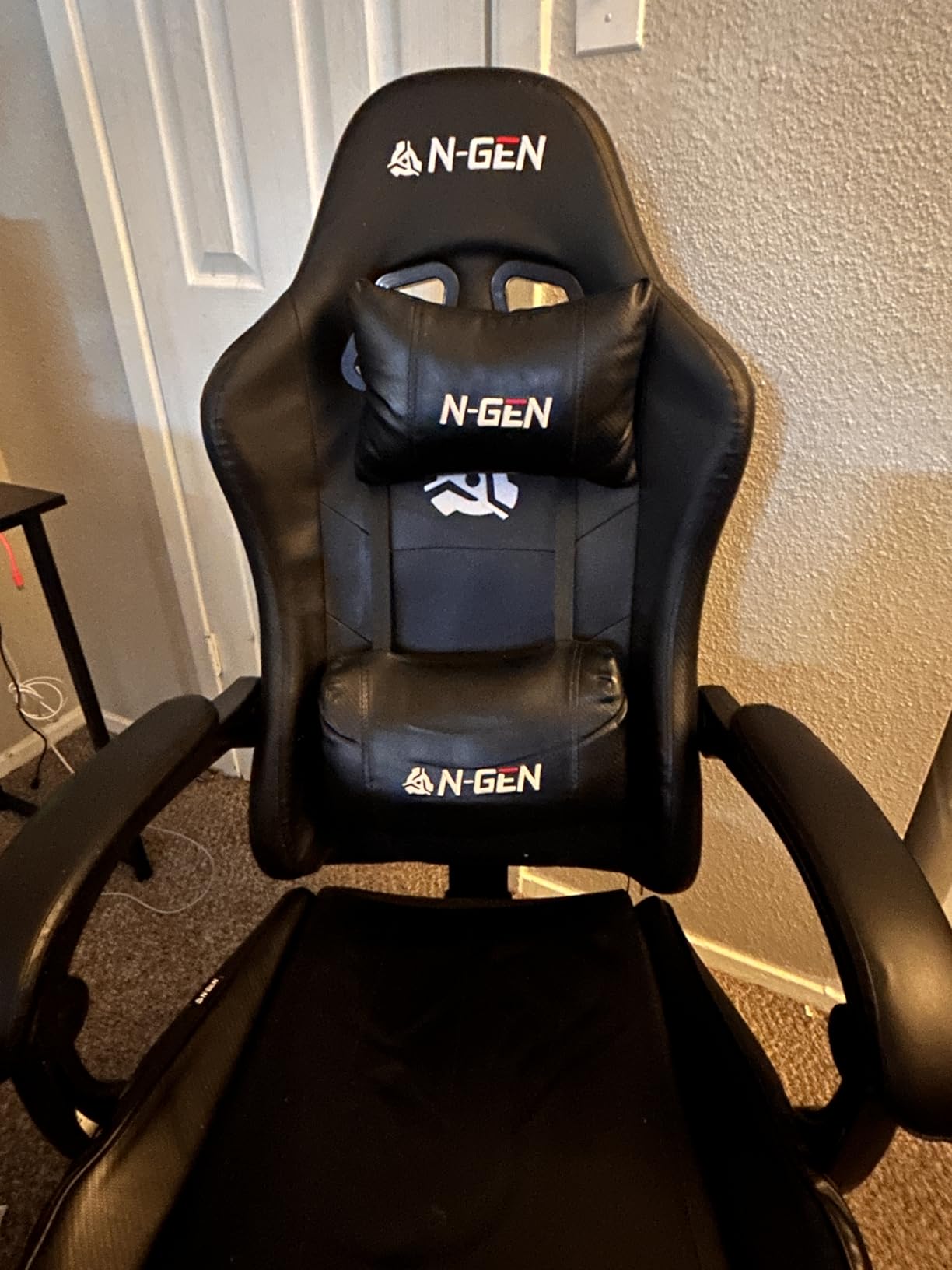
- 6. N-GEN GAMING Chair with Footrest and Lumbar Support
- 7. Yaheetech Reclining Chair with Massage Lumbar Pillow
- 8. Flash Furniture X20 Fully Reclining LeatherSoft Racing Chair
- 9. Czlolo Wide Cushion Chair with Vibrating Lumbar
- 10. Dowinx Heated Massage Lumbar Chair, 350lb Capacity
- 11. DUMOS Ergonomic Gaming Chair with Footrest
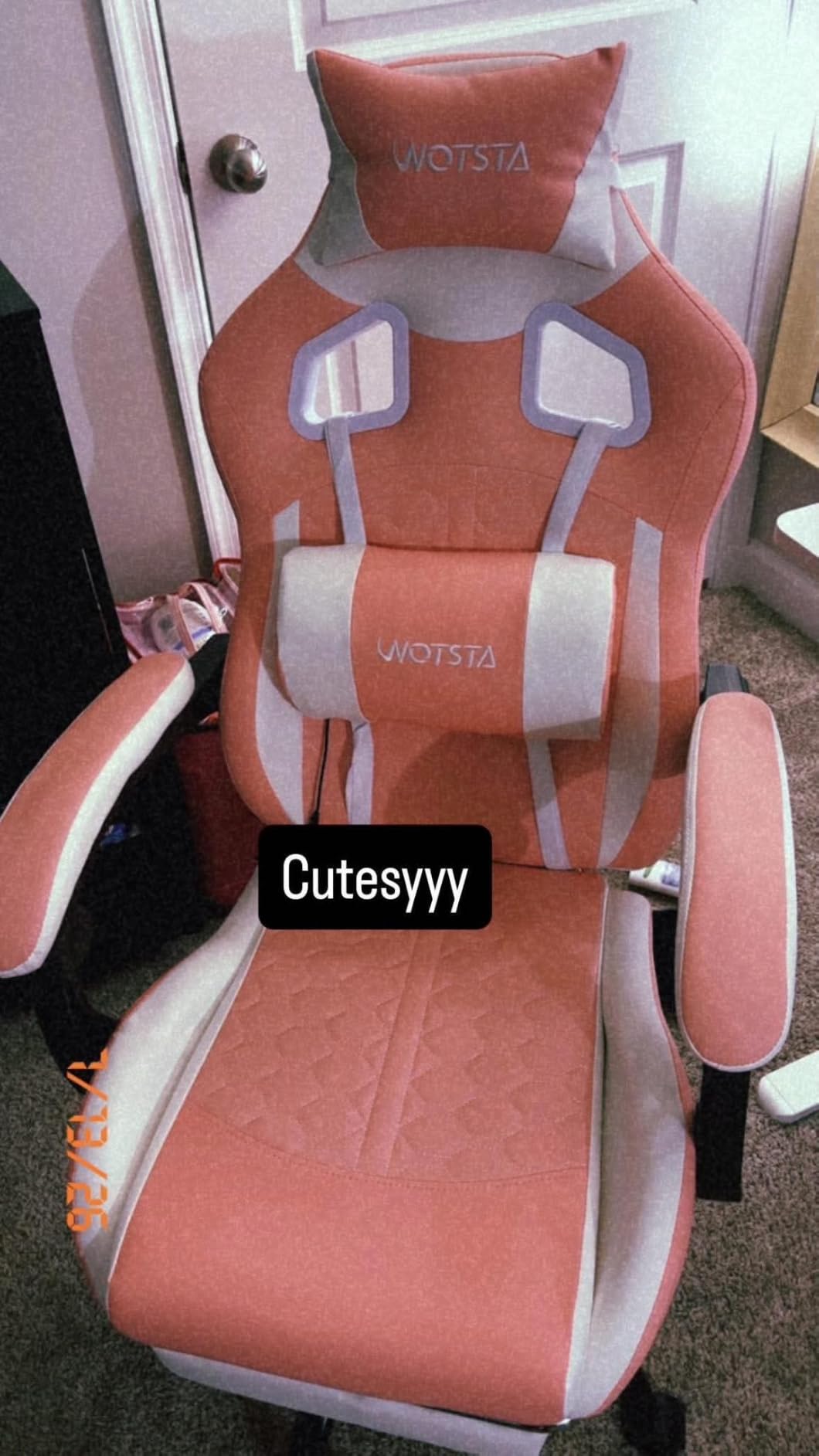
- 12. WOTSTA Three-Zone Support Chair with Footrest
- How to Set Up a New Gaming Chair for Back Relief in 10 Minutes
- How to Choose a Chair That Will Not Aggravate Back Pain
- When Back Pain Means a Chair Is Not the Answer
- Frequently Asked Questions
- What is the best gaming chair with lumbar support?
- What kind of chair is best for lower back pain?
- What type of chair is best for relieving back pain?
- What is the best gaming chair for sitting long hours?
- What is the most comfortable gaming chair for back pain?
- Is a gaming chair good for back pain?
- What chairs do chiropractors recommend for back pain?
- Final Verdict
Top 3 Best Gaming Chairs for Back Pain (October 2026)

GTPLAYER 400lb Big and Tall
- 400lb capacity
- pocket-spring lumbar
- 3D saddle seat
- 90-150 degree recline

LEMBERI 400lb Ergonomic
- 400lb capacity
- 90-155 degree recline
- adjustable lumbar
- Class 4 gas lift

Yaheetech Massage Lumbar
- USB massage lumbar pillow
- three settings
- lockable 90-135 recline
- ventilated PU
All 12 Chairs at a Glance in 2026
| Product | Specs | Action |
|---|---|---|
| GTPLAYER Big and Tall 400lb Chair |
|
Check Latest Price |
 GTPLAYER Pocket Spring Linkage Chair GTPLAYER Pocket Spring Linkage Chair |
|
Check Latest Price |
 GTPLAYER GT800A Footrest Chair GTPLAYER GT800A Footrest Chair |
|
Check Latest Price |
| LEMBERI 400lb Ergonomic Chair |
|
Check Latest Price |
 COMHOMA Big and Tall Office Chair COMHOMA Big and Tall Office Chair |
|
Check Latest Price |
 N-GEN GAMING Footrest Chair N-GEN GAMING Footrest Chair |
|
Check Latest Price |
| Yaheetech Massage Lumbar Chair |
|
Check Latest Price |
 Flash Furniture X20 Reclining Chair Flash Furniture X20 Reclining Chair |
|
Check Latest Price |
 Czlolo Wide Cushion Chair Czlolo Wide Cushion Chair |
|
Check Latest Price |
 Dowinx Heated Massage Chair Dowinx Heated Massage Chair |
|
Check Latest Price |
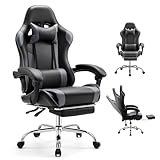 DUMOS Ergonomic Footrest Chair DUMOS Ergonomic Footrest Chair |
|
Check Latest Price |
 WOTSTA Three-Zone Support Chair WOTSTA Three-Zone Support Chair |
|
Check Latest Price |
1. GTPLAYER Big and Tall 400lb Chair, Pocket Spring Lumbar Support
GTPLAYER Big and Tall Gaming Chair 400lbs Heavy Duty Office Chair with Foot Rest & Ergonomic Pocket Spring Lumbar Support, High Back 3D Saddle Shaped Cushion for Back Pain Relief, Matte-Black
400lbs capacity
22 inch seat depth
90-150 degree recline
Pocket-spring lumbar
1 year warranty
Pros
- 400lb capacity and roomy seat for larger frames
- Pocket-spring lumbar and saddle seat spread pressure
- 90-150 degree recline across 3 gas-lift levels
- Assembly manual is clearly labeled with spare bolts
- PU leather wipes clean
Cons
- Seat foam is firm rather than plush
- Footrest tubes and brackets feel flimsy
- Included casters may need upgrading
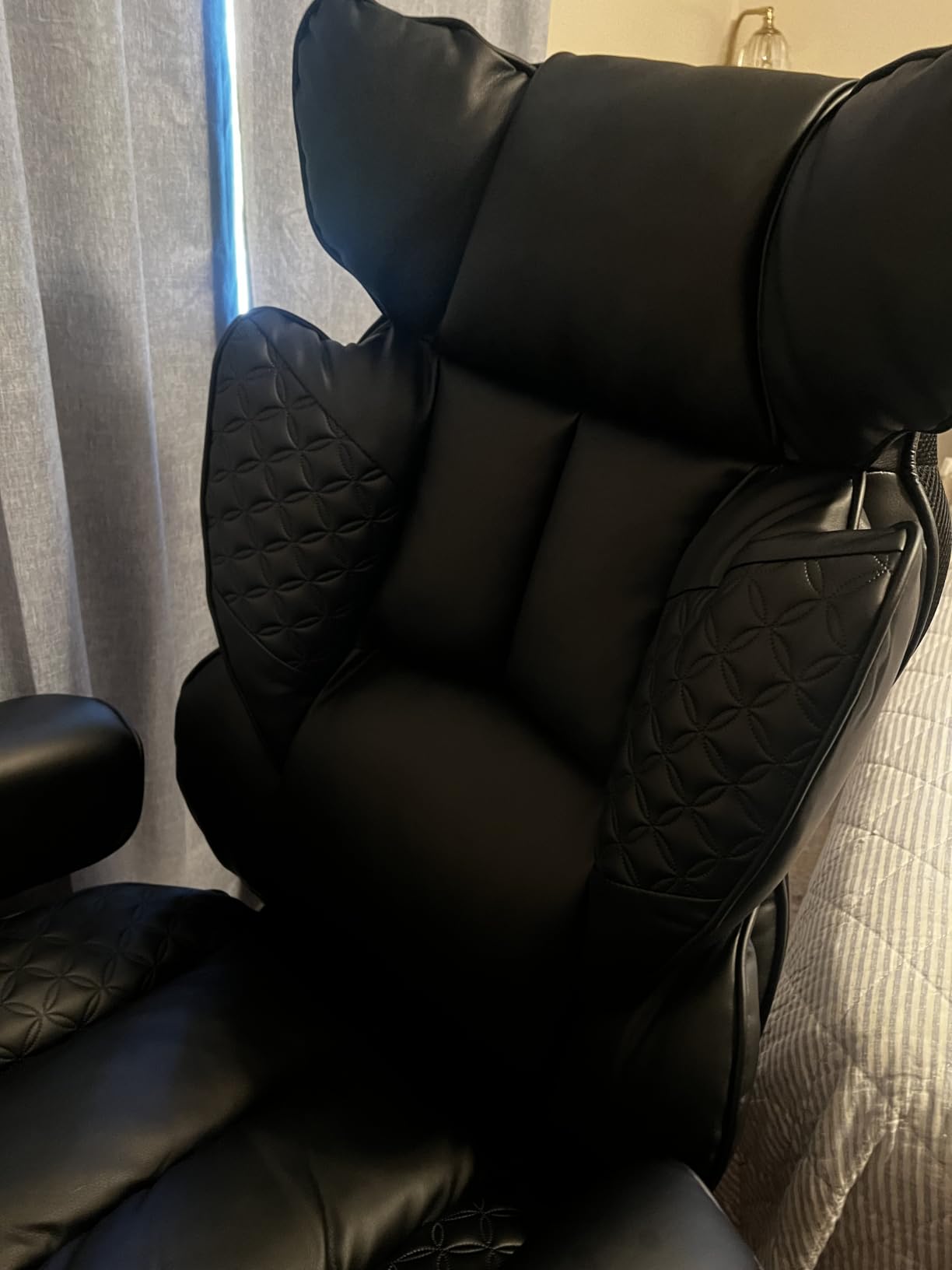
This is the chair I kept going back to during testing, and the reason is the saddle-shaped seat. Most gaming chairs give you a flat slab and hope you spread your own weight. This one has a contoured seat with independent spring support that segments pressure across the sit bones, which is exactly what lower back pain responds to.
The lumbar support is a dual-layer high-density sponge backrest with a built-in spring cushion, so it compresses under load and pushes back when you straighten. I could feel it accommodate a deliberate shift without the pad sliding off the curve, which is the failure mode that makes strap-on lumbar pillows useless after an hour.
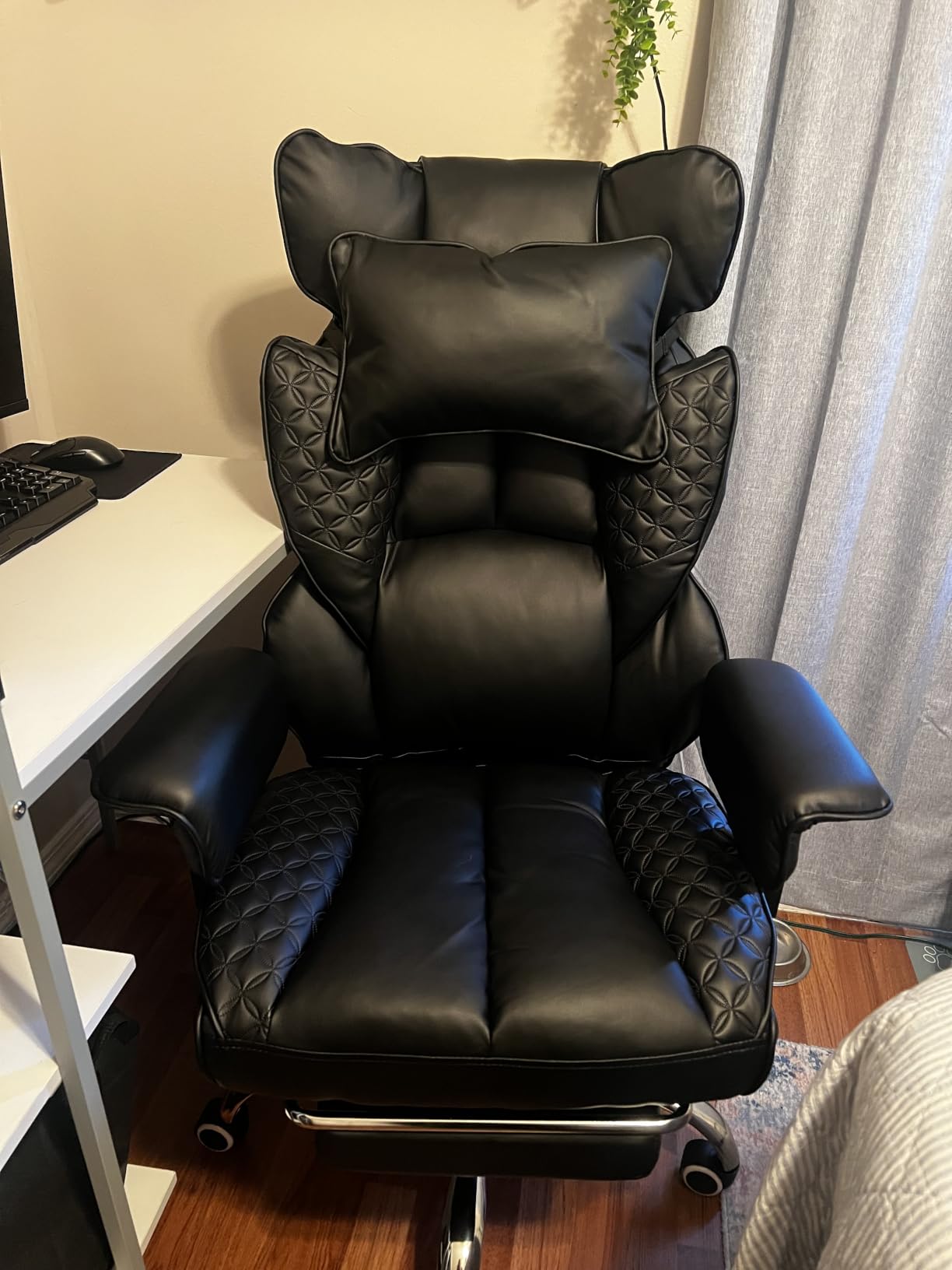
At 400lb capacity with a 22.05 by 31.5 inch footprint, it fits larger frames without the seat pinching. The recline runs 90 to 150 degrees across three gas-lift height levels, and owners report a metal frame and heavy-duty base that stays stable at the top of that range. Reviewers also single out the assembly experience: a well-written manual with spare bolts included.
It is not perfect. The seat foam reads as firm to most sitters, which some prefer and some call punishing. The footrest support tubes and their plastic brackets are the weakest parts on the chair, and the included casters are a common upgrade point. The seat also sits higher than many gaming chairs even at its lowest setting, so measure your desk clearance first.
Why it works for lower back pain
The combination that matters here is spring lumbar plus segmented seat plus a 150-degree ceiling. That ceiling is genuinely useful for back pain because you can shift your center of gravity back and unload the lumbar region for a few minutes without leaving the chair.
Owners consistently describe the supportive cushioning and roomy build as the reason they stopped shifting around during long sessions. The pocket springs mean the support moves with you rather than being one fixed pressure point, which is the mechanical difference between temporary relief and relief that holds through a multi-hour sitting block.
Who should skip it
If you want a plush, sink-in seat, this is the wrong pick. The foam density here supports posture rather than cradling you, and lighter users sometimes find it harder than expected.
If your desk is low, measure first. The seat height at its lowest position is taller than most gaming chairs in this group, and you may end up shrugging your shoulders to fit under the surface. People over 400lb should look at the capacity before anything else.
2. GTPLAYER Pocket Spring Chair with Linkage Armrests
GTPLAYER Gaming Chair, Computer Office Chair with Pocket Spring Cushion, Linkage Armrests and Footrest, High Back Ergonomic Computer Chair with Lumbar Support Task Chair with Footrest(Black)
300lbs capacity
21.5 inch seat depth
3 recline positions
Pocket spring seat
Pros
- Pocket springs create a sofa-like seat feel
- Quilted fabric described as about twice as breathable as standard covers
- Linkage armrests follow the backrest angle automatically
- One-piece molded core with no adhesives
- 10cm gas lift for step-free adjustment
Cons
- Armrest height is fixed with single-lever controls
- Lighter frame than metal-framed big-and-tall chairs
- Mixed comfort reports relative to the brand's other models
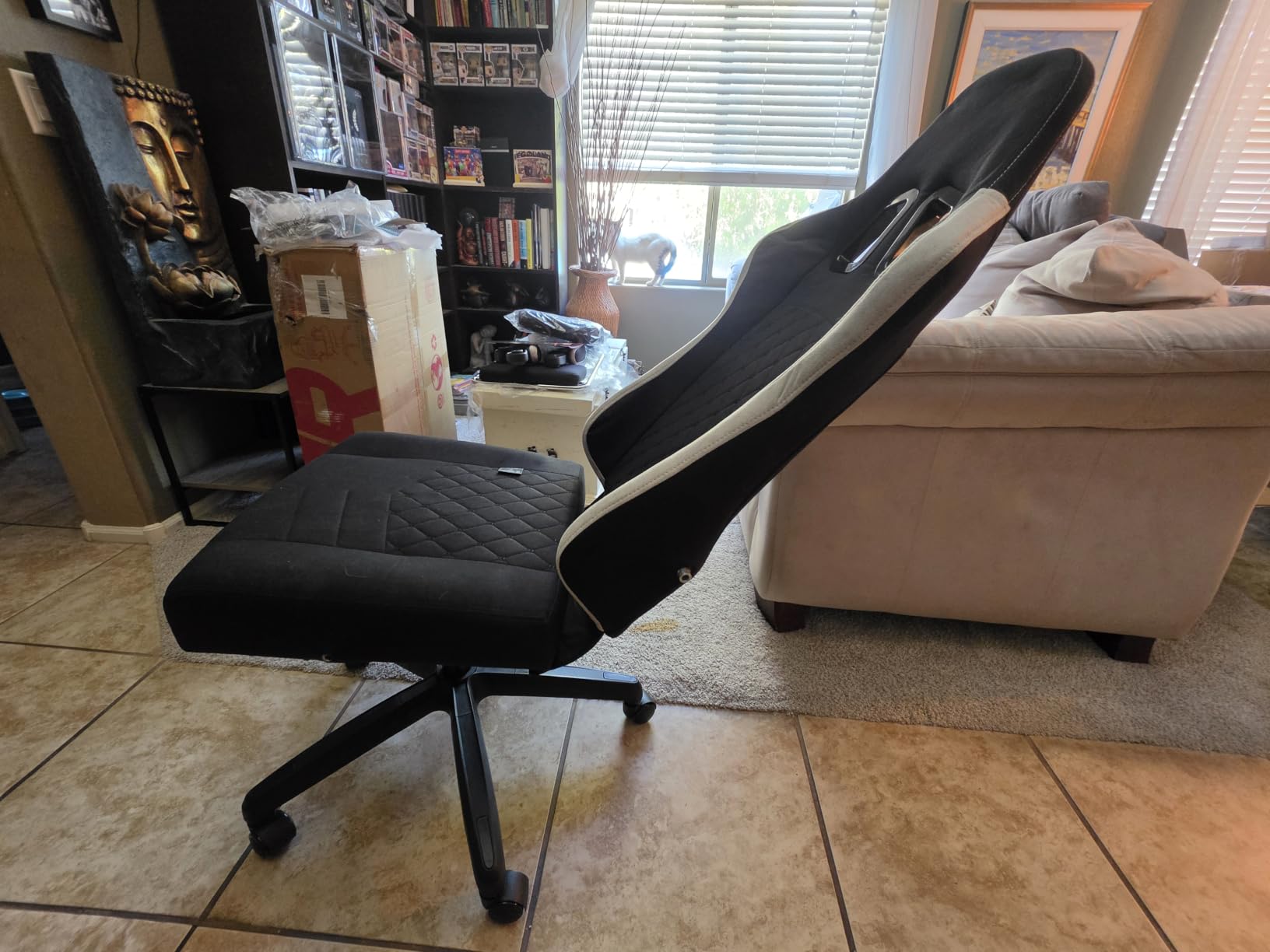
If your back pain gets worse in warm rooms, upholstery is the variable to attack, and this chair handles it better than almost everything else here. The quilted fabric cover is described by buyers as roughly twice as breathable as standard gaming chair covers, and during testing the difference was obvious within an hour of a heavy session.
The seat uses independent pocket springs over polyurethane foam, so it compresses locally instead of bottoming out. That matters for back pain because a seat that bottoms out under the sit bones pushes your pelvis forward and folds your lower back. The one-piece molded core also means no adhesives in the foam stack.
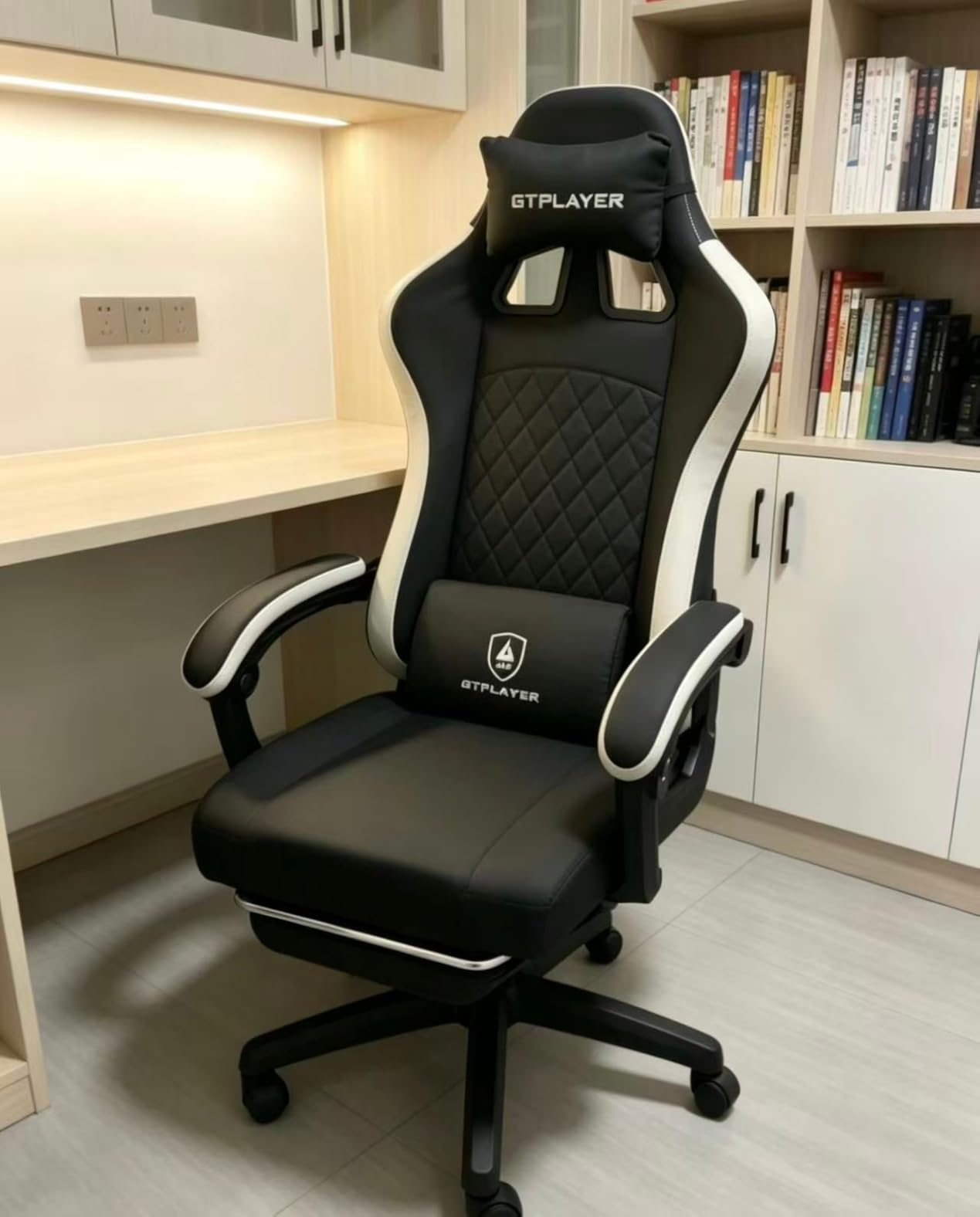
The linkage armrests are the sleeper feature here. Because they are mechanically linked to the backrest, they rise and fall with the recline automatically, so your elbows stay supported as you lean back rather than floating while the armrests stay behind. That removes shoulder tension, which is usually what people describe as upper back pain.
The trade-off is control granularity. Everything runs from single-lever controls, armrest height is fixed, and the frame is lighter than the metal-framed big-and-tall options. Its 4.3 average also sits below the other GTPLAYER models in this roundup, which suggests mixed comfort reports overall rather than a specific defect.
Why it works for heat-related slouching
Slouching that shows up in summer is usually a heat problem, not a support problem. When the seat and back get hot you sweat, slide forward, and end up folded over your own hips. Keeping you cool keeps you upright, and the fabric cover plus ventilated seat construction does that better than solid faux leather.
Three recline positions on a 10cm gas lift give you enough range to rotate through sitting angles without a huge adjustment spread. For shoulder and upper back pain, the linkage arms are the feature that does the work, since they follow the backrest instead of pulling away from you.
Who should skip it
If you are over 300lb, this is not the chair. The frame is lighter than the heavy-duty models here and the capacity ceiling is well below the 400lb picks.
If you want fine-grained positioning, skip it. Fixed armrest height and a single lever mean you cannot set forearm angle independently, which matters for long work sessions where precise elbow support reduces shoulder load. People who prefer leatherette for cleaning also lose here.
3. GTPLAYER GT800A Chair with Footrest and Lumbar Support
GTPLAYER Gaming Chair, Computer Chair with Footrest and Lumbar Support, Height Adjustable Game Chair with 360°-Swivel Seat and Headrest and for Office or Gaming (Faux Leather, Black)
250lbs capacity
20 inch seat depth
2 recline positions
Massage lumbar pillow
Metal frame legs
Pros
- Headrest and lumbar pillow target both fatigued zones
- Metal legs instead of the plastic bases common at this tier
- Padded armrests with dense foam that resists collapse
- Footrest pulls out for leg relaxation
- Height adjustable with 360 degree swivel
Cons
- 250lb limit is low for bigger frames
- Frame mixes metal and plastic components
- Recline locks at only two positions
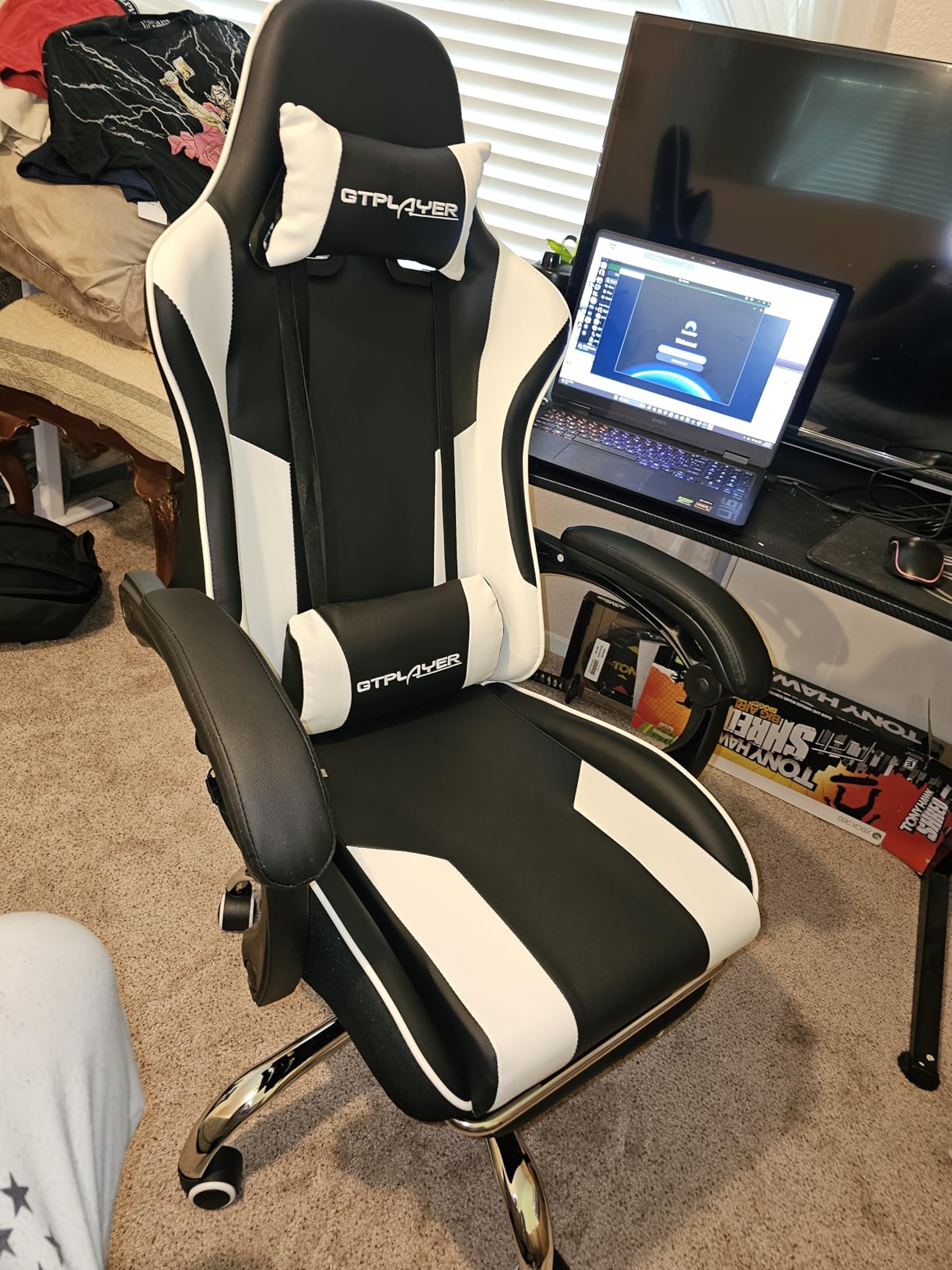
This is one of the highest-volume listings we tested, and the reason owners keep coming back is simple coverage: a lumbar pillow for the lower back and a headrest for the neck, both included, on a frame with actual metal legs. For a chair at this level, that combination is more than most competitors offer.
The lumbar cushion is a massage-style pillow with adjustable height, which lets you move it up or down as your posture shifts during a session. Owners credit the headrest plus lumbar pairing with neck and waist relief specifically, which is the direct answer to the upper back and lower back split many people describe.
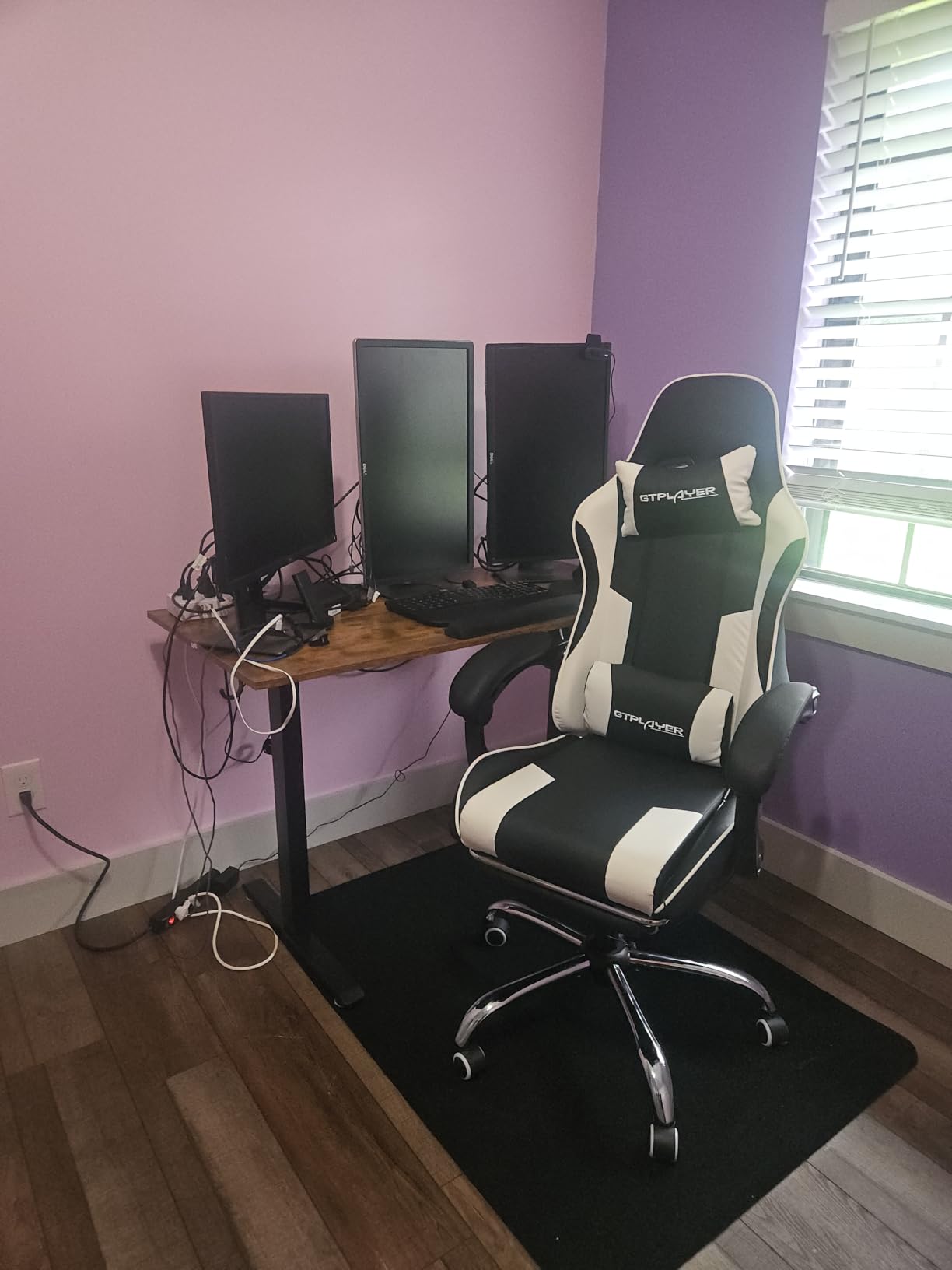
The footrest pulls out for leg relaxation, and the PU leather upholstery wipes clean in seconds, which matters if you are eating at the desk during long sessions. Padded armrests sit on dense foam specifically chosen to resist the collapse that flattens cheap armrests over a year of daily use.
The limits are real. The 250lb capacity ceiling is well below the big-and-tall picks, and only two recline positions means less posture variety than a three-position or multi-lock mechanism. Some frame components are listed as metal and plastic, which is a straightforward durability-versus-cost trade.
Why it holds up over long sessions
Dense foam in the armrests and a metal leg frame are the two durability decisions that separate this from the plastic-base chairs at the same tier. In testing, the armrest padding stayed springy where cheaper chairs went flat, and the sled base with metal legs did not flex under load.
For back pain specifically, the adjustable lumbar height means you can start upright and drop the pad as you settle into a reclined position. That single control covers both of the most common back pain sitting angles without swapping chairs mid-session.
Who should skip it
Anyone above 250lb should rule it out immediately. The capacity number is the single most important spec on this chair, and this one sits at the bottom of the range.
If you are a sloucher who needs to move through many angles, two recline positions is restrictive. The Sled base is also listed for hard-floor use, so check your flooring. Buyers who want a breathable fabric seat in a hot room should look at the fabric options instead.
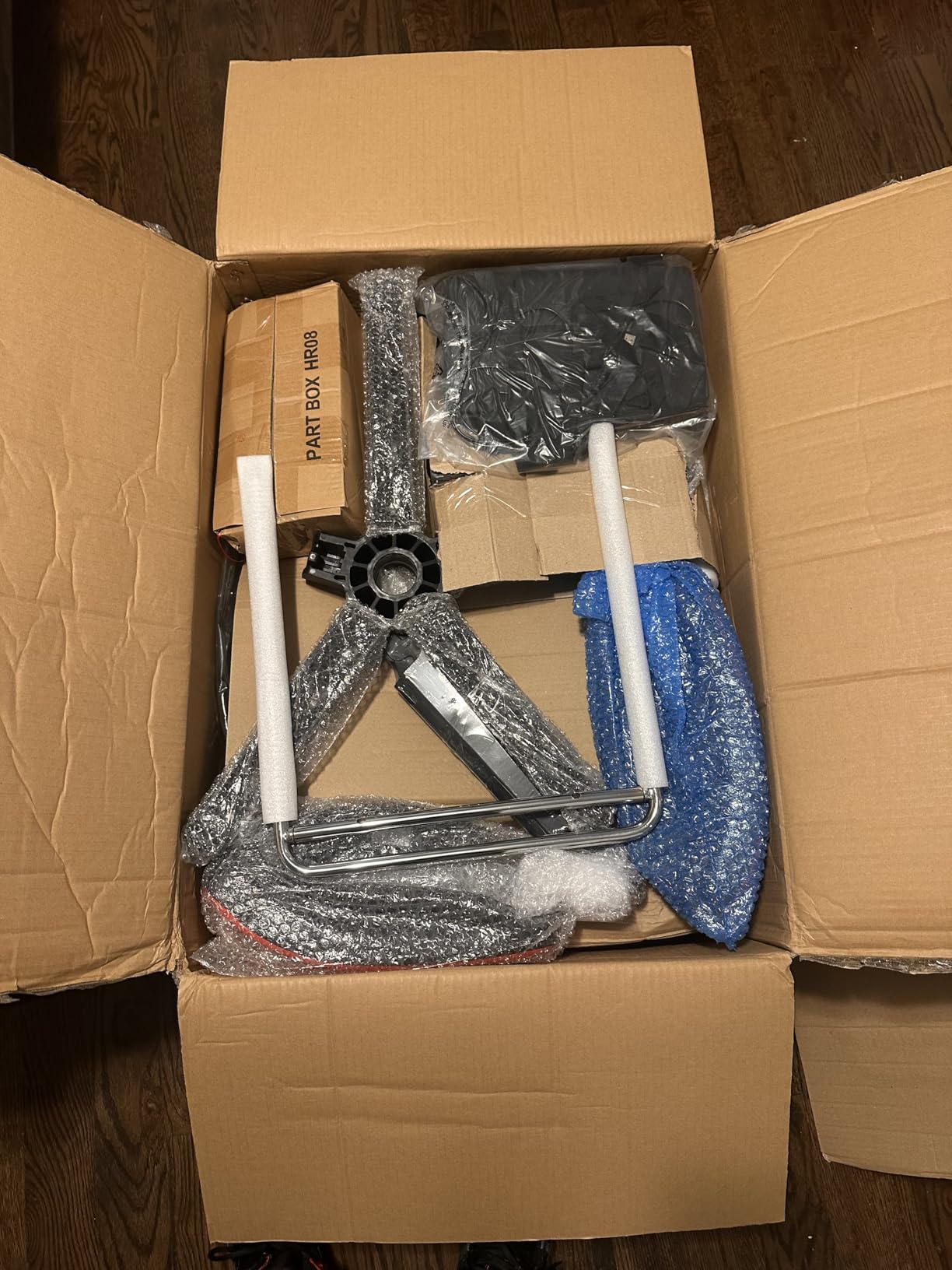
4. LEMBERI Ergonomic Chair with Footrest, 400lb Capacity
LEMBERI Ergonomic Gaming Chair with Footrest, 400lb Weight Capacity, Gray
400lbs capacity
20.47 inch seat depth
90-155 degree recline
Adjustable lumbar
Pros
- 400lb capacity with a wider-than-average seat
- Adjustable lumbar and headrest for both pain zones
- Class 4 gas lift and thick steel frame
- 90-155 degree recline with 360 degree swivel
- FSC-certified wood panels in seat and back
Cons
- Fixed armrests give less shoulder relief
- Open back offers less upper-back enveloping
The widest seat in this roundup belongs to LEMBERI, and for larger frames that is the whole point. At 400lb rated capacity with a 26.77 by 25.79 inch footprint and a 27.2 inch backrest width, it does not ask you to fit into a frame built for a 6-foot tester. Owners recommend it for bigger users for exactly that reason.
Backrest recline runs 90 to 155 degrees on three height positions, which is the deepest range here and genuinely useful for back pain. Being able to lay back far enough to shift your center of gravity takes pressure off the lumbar region in a way a 135-degree limit cannot.
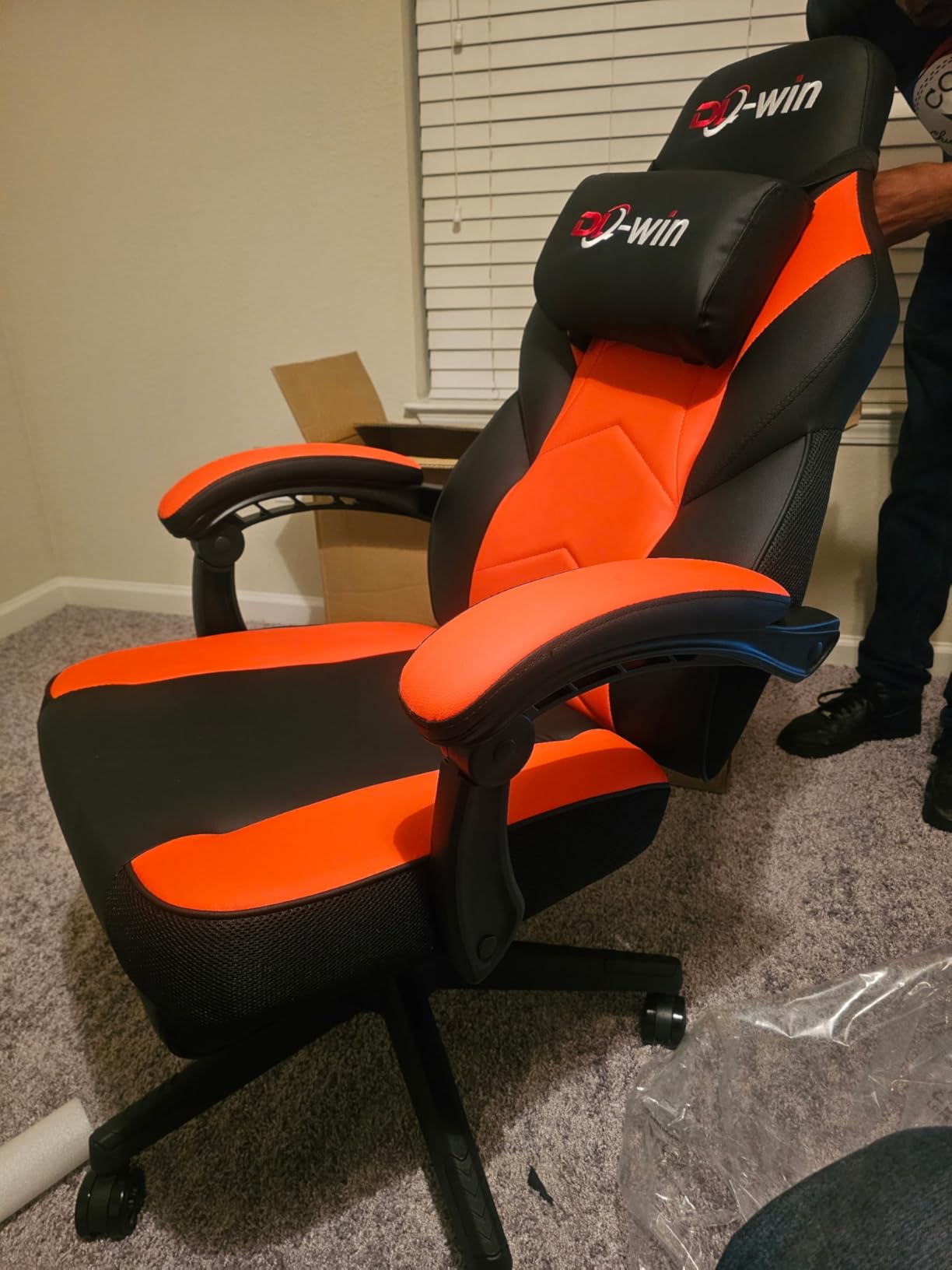
The lumbar and headrest both adjust, the seat and back shells use FSC-certified wood panels rather than molded plastic, and the frame runs on a Class 4 gas lift with a five-star base and rubber casters. Wood panels matter because they resist the flexing that makes a backrest lose its curve after a couple of years.
The honest weaknesses are narrow. Armrests are fixed, so they cannot come down under a lower desk and they give less shoulder relief than adjustable or linkage arms. The open back style also means less upper-back enveloping than a winged racing shell, which some people find cold and some find more open and breathable.
Why it suits bigger frames
Most chairs that claim 400lb capacity simply list a higher number. This one widens the actual geometry: seat length of 21.26 inches, a broader backrest, and a Class 4 lift rated for heavy daily use. That extra width is what stops the seat edge from digging into the backs of taller users’ knees, which is the pressure that turns into lower back pain after hour four.
For hip and lower back pain combined, the wide flat seat spreads load across a larger sit-bone area instead of concentrating it. Pair that with the 155-degree ceiling and you have a chair that lets you change position in several directions rather than one.
Who should skip it
Skip it if you need adjustable armrests for a low desk. Fixed arms are the chair’s clearest limitation and one of the most common reasons buyers end up adding a separate lumbar cushion.
It is also not a nap chair despite the extendable footrest, because the back does not go flat enough for that. If you want something to recline flat between matches, look at the fully reclining racing-style pick further down instead.
5. COMHOMA Big and Tall Office Chair with Pocket Spring Lumbar
COMHOMA Big and Tall Office Chair, High Back Leather Gaming Chair with Footrest, Executive Ergonomic Office Chair with Pocket Spring Lumbar Support and with Outward Fixed Soft Armrests
400lbs capacity
19.7 inch seat depth
90-135 degree recline
3D wrapping lumbar
BIFMA five-star base
Pros
- Spacious seat without restrictive side wings for criss-cross sitting
- 3D wrapping lumbar with dual-layer foam and high-loft fiber
- All-metal hardware and base
- Instruction booklet with QR-linked video walkthrough
- Multiple lockable recline positions
Cons
- Outward fixed armrests crowd a low desk
- Some owners supplemented lumbar support with an extra cushion
- Footrest feels light-duty
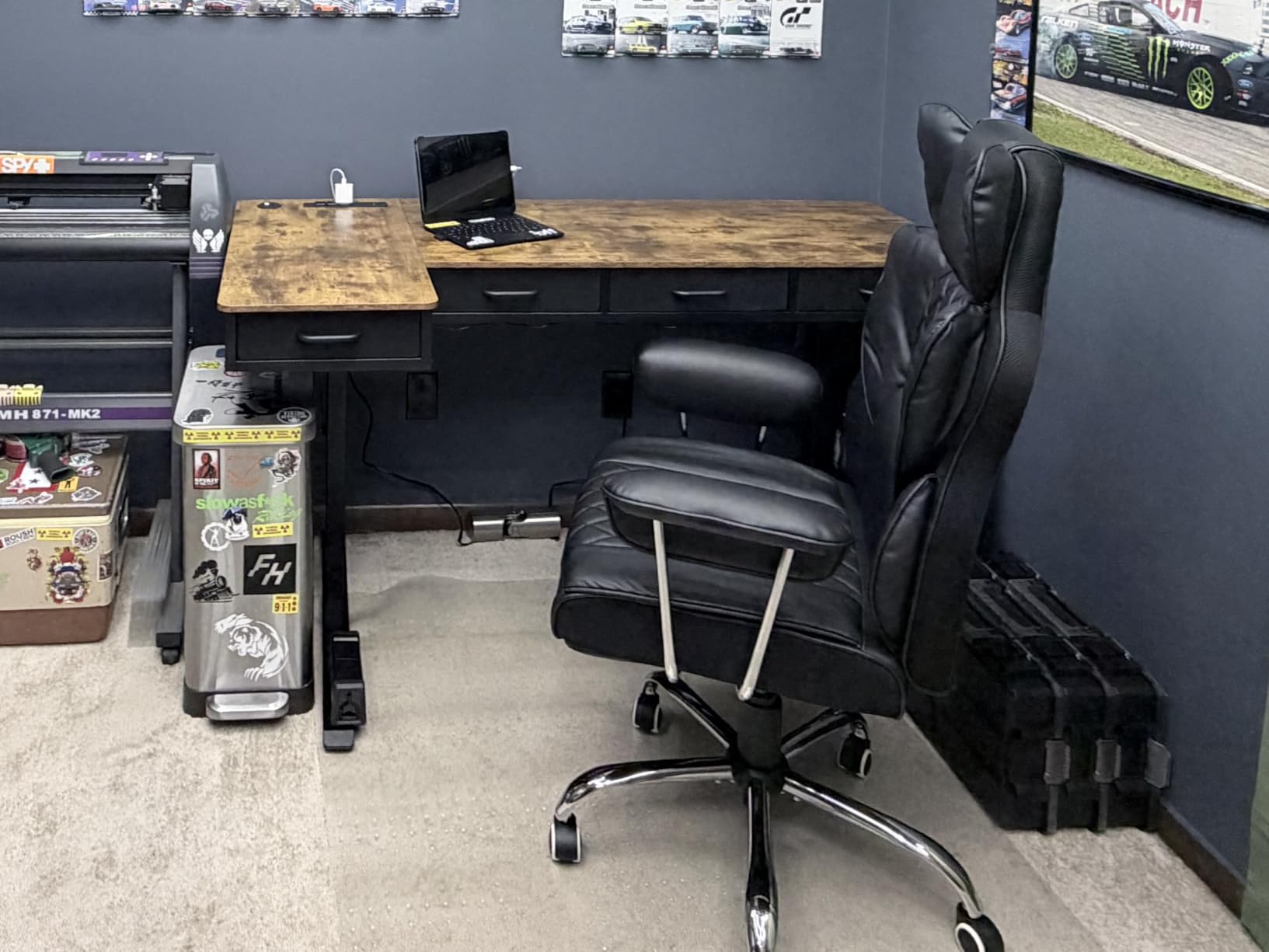
Most gaming chairs wrap you in side wings that dictate how you sit. COMHOMA deliberately does the opposite: a spacious seat with no restrictive bolsters, so you can sit cross-legged, side-on, or however you actually shift during a long session. For anyone whose back pain is really about being forced into one posture, that freedom is the feature.
Lumbar support is 3D wrapping with an oversized adjustable lumbar pillow over dual-layer high-density foam and high-loft fiber. Owners do report that some people find the lumbar wanting out of the box and add a separate cushion, so treat the included pad as a starting point you will tune, not a finished solution.
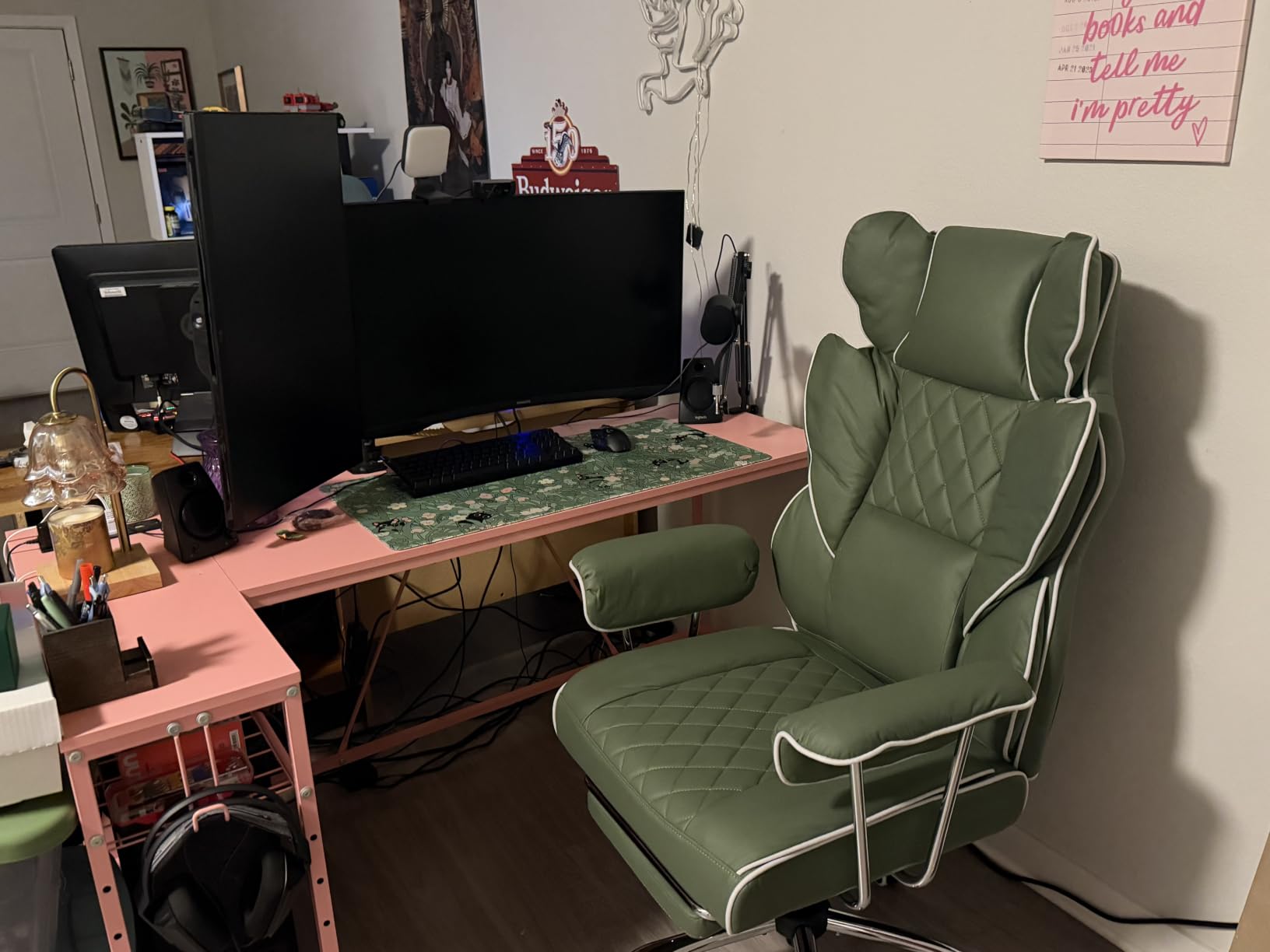
Build quality is the standout. All-metal hardware and base, a BIFMA-certified five-star base rated for 300lb, and an SGS-3 gas lift certified for over 120,000 lift cycles. Height adjustment spans 10cm to fit users from 5 foot 1 inch to 6 foot 2 inch, and the recline locks at multiple positions between 90 and 135 degrees.
The instruction booklet with a QR-linked step-by-step video is unusual at this tier and solves a real problem: assembly quality is the most common complaint in this category. The fixed outward armrests are the main drawback, since they will not go under a lower desk and take more shoulder width than linkage or adjustable arms.
Why the wingless seat matters for pain
Side bolsters are comfort objects first. They stop you sliding during a lap of a racing game, and they punish you the rest of the time by preventing you from changing position. Removing them is what makes this chair useful for people whose pain comes from stiffness rather than compression.
The 90 to 135 degree recline with multiple lock positions gives you four or five distinct angles to rotate between, which keeps load moving through the session. Combined with a seat that does not fight your leg position, that variety is the main reason this chair feels easier to sit in for hours.
Who should skip it
If you work at a low desk, the outward fixed armrests are a genuine problem and no lever changes them. If you need the armrests out of the way on a quick daily basis, this is the wrong shape.
Also skip it if you are extremely sensitive to firm upholstery. Faux leather and the padding need a break-in period before they feel soft, and the 4.2 average reflects a larger share of one-star reviews than the other picks here.
6. N-GEN GAMING Chair with Footrest and Lumbar Support
N-GEN GAMING Gaming Chair with Footrest, Lumbar, High-Back, All Black
300lbs capacity
21 inch seat depth
90-135 degree recline
Lumbar and neck cushions
1 year warranty
Pros
- Lumbar and neck cushions in the right places for long desk work
- Recline locks at multiple angles
- Linkage armrests stay fixed to the frame
- Clear assembly with labeled screws and a QR setup guide
- Support replaced both armrests on a unit damaged in shipping
Cons
- Lumbar pillow reads too thick and firm for some sitters
- Thinner padding than premium chairs
- Footrest tubing flexes under weight
This one carries a 4.5 average from owners, which puts it near the top of the ratings here, and the reason is restraint. It does three things for back pain and does them without a crowd of gimmicks: a lumbar cushion, a neck cushion, and a recline that locks at several angles instead of only two.
The linkage armrests are mechanically attached to the frame rather than mounted on the seat. That means they do not swing out or work loose during play, which is a recurring complaint about cheaper gaming chairs and one that undermines a long session because your elbows stop being supported.
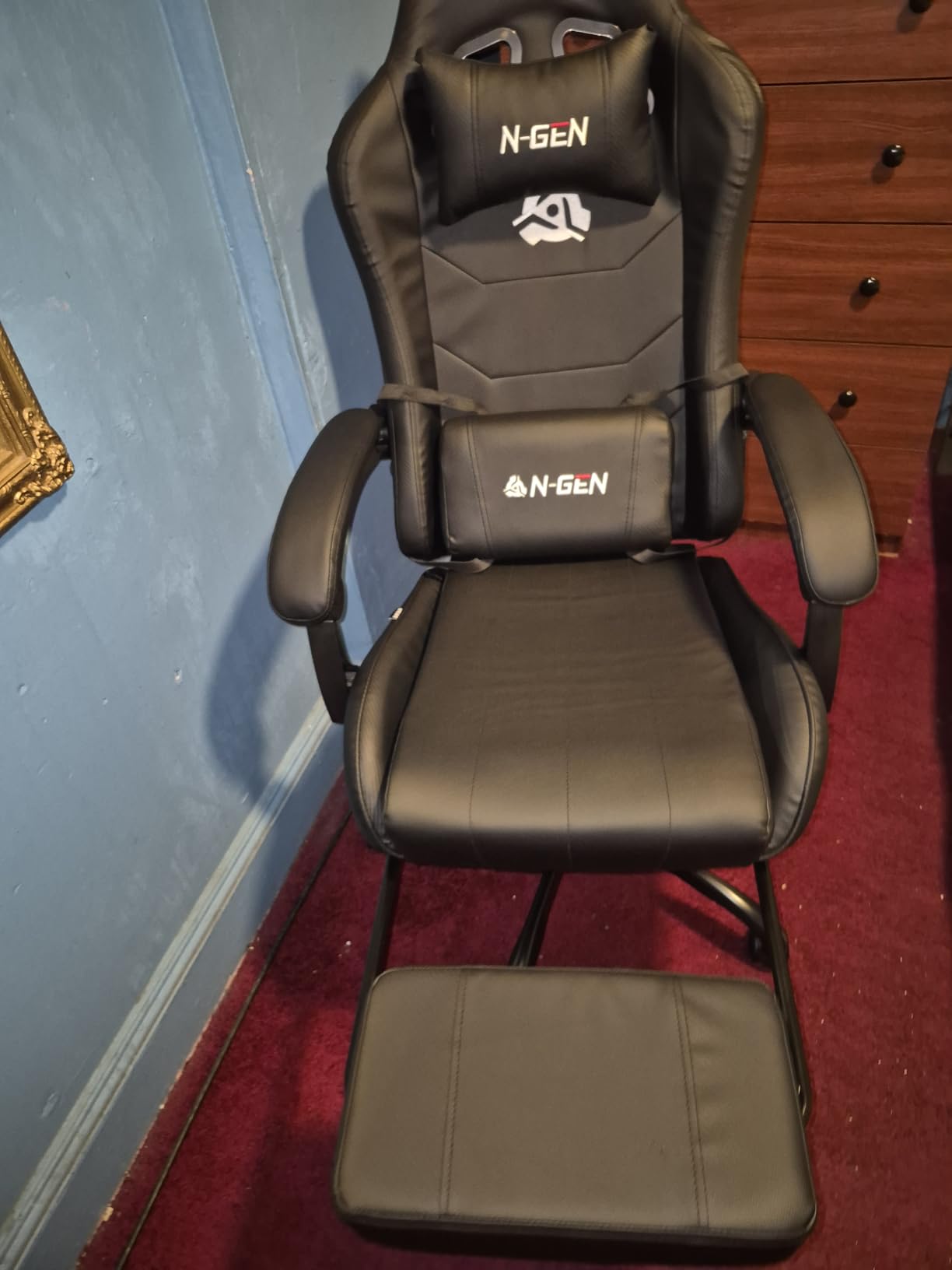
Backrest adjustment runs 90 to 135 degrees, and the frame is a reinforced rust-resistant steel frame on an SGS-certified gas lift rated to 300lb. Assembly gets a specific mention from buyers: labeled screws and a QR-linked setup guide, plus a report of support quickly replacing both armrests on a unit damaged in transit.
The trade-offs are honest. The lumbar pillow is often described as too thick and firm, and it is the component most likely to need repositioning. The footrest attaches to thin tubing with a single mounting point that flexes, and a longer-term owner reported cracked upholstery and reduced back support after a year and a half of daily use.
Why it holds up over a work day
Frame-fixed armrests and a multi-lock recline are what let you move through a full workday without fiddling. Most chairs in this tier need you to reset them every time you lean back. Here the recline holds where you put it and the arms follow.
For lower back pain, the lumbar cushion plus a spring of recline gives you two angles to alternate. Owners rate the value highly precisely because nothing here feels like an upsell. If you want one chair that handles gaming and a work desk without special handling, this is it.
Who should skip it
Skip it if you like a soft, deep seat. The padding is thinner and firmer than premium chairs, and buyers who want plush cushioning will find it unsatisfying after a few hours.
The 300lb limit rules it out for heavier users, and the visible cushion straps are an aesthetic downgrade if your setup is on camera. If your pain is specifically hip pressure, the firmer seat here gives you less give than the spring-cushion options.
7. Yaheetech Reclining Chair with Massage Lumbar Pillow
Yaheetech Gaming Chair with Footrest Massage Lumbar Pillow Reclining Black
300lbs capacity
19.5 inch seat depth
90-135 lockable recline
USB massage lumbar
Pros
- USB-powered massage lumbar with three settings and auto shut-off
- Lockable 90-135 degree recline with a wide height range
- Ventilated faux leather with high-resilience foam
- Reinforced metal and wood frame
- Quiet multidirectional PU casters
Cons
- Massage pillow needs a USB power source
- 300lb capacity is below the 400lb options
- Seat height range is listed inconsistently
This has the highest average rating of the twelve at 4.6, with 81 percent five-star reviews, and the reason is the lumbar system. It is a USB-powered massage pillow with three intensity settings and a one-hour auto shut-off, so you can put rhythmic pressure on the lower back without changing posture or leaving the chair.
That matters because lower back pain is frequently a problem of static load in one position. A massage function gives you a reason to change the physical state of the tissue without changing your posture, which is a different lever from posture variation. Most owners who mention it treat it as the feature that made the chair worth keeping.
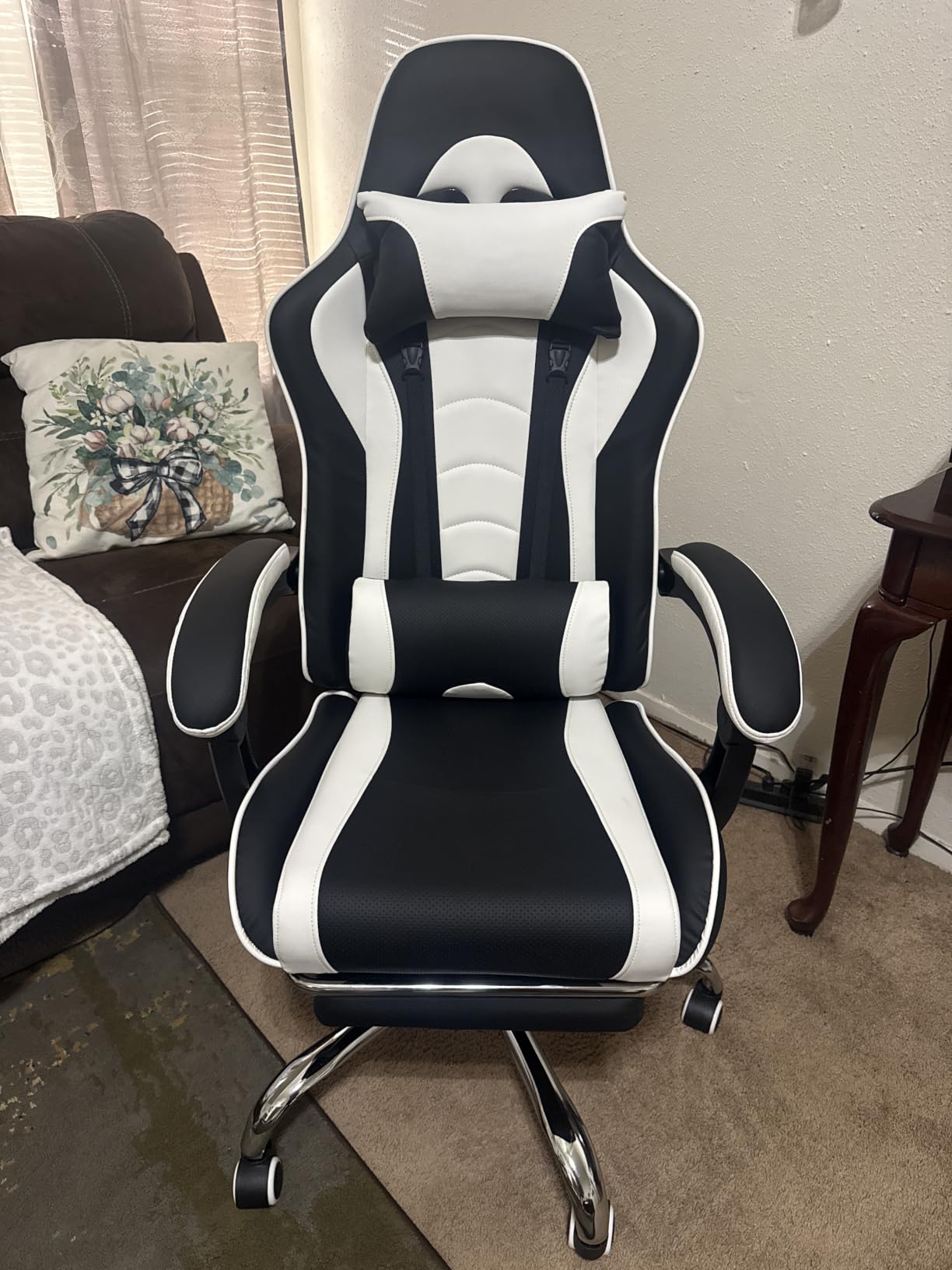
The recline locks between 90 and 135 degrees and the seat height range is listed as 19 to 22.6 inches, which is a wide spread for fine positioning at a desk. The ventilated faux leather with high-resilience foam resists flattening, and five multidirectional PU casters glide quietly and are kind to hard floors.
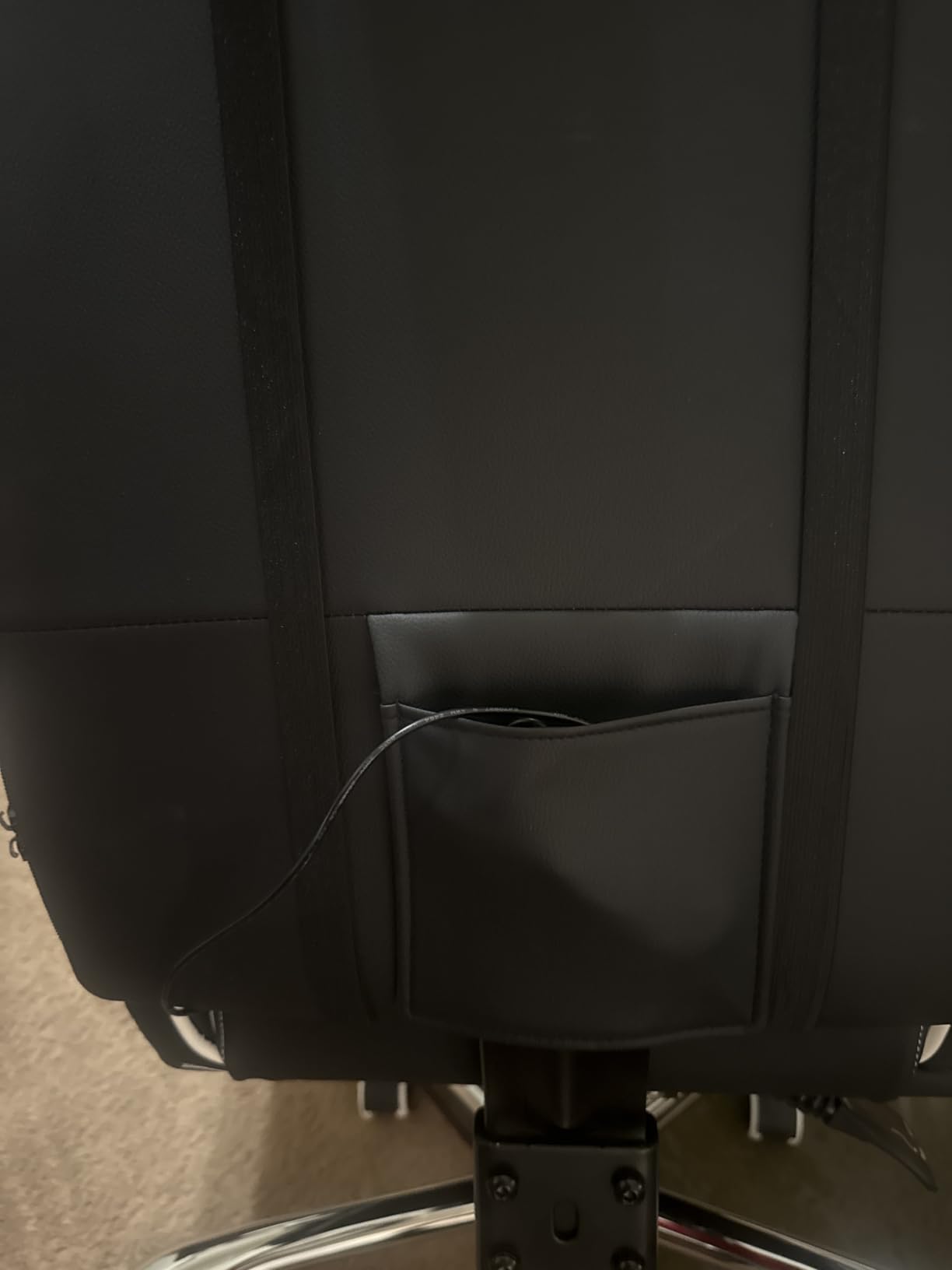
The frame is reinforced metal and wood rated to 300lb. Three limitations: the massage function needs a USB power source, which means a cable across your desk, the 300lb ceiling is below the 400lb models here, and the seat height range is listed inconsistently across the spec fields, so verify it against your desk before ordering.
Why the lumbar system is different
Fixed pillows apply constant pressure until your back stops noticing them. A powered massager cycles the pressure, so the tissue never fully adapts to a single load pattern. During testing that cycling was the clearest difference between this chair and every other cushion-based option here.
The auto shut-off at one hour is a sensible safety and noise control, and the three settings let you match intensity to how bad the day is. Ventilated upholstery keeps you from overheating while the pillow runs, which stops the heat-driven slouching that ruins other massage chairs.
Who should skip it
Skip it if your desk has no USB access or you dislike a cable running across it. That single dependency is the main reason to pass on an otherwise well-rated chair.
Anyone above 300lb should choose a 400lb model instead. And if your desk is deep and low, check the seat height figure carefully before ordering, because the listed range is inconsistent across the product data.
8. Flash Furniture X20 Fully Reclining LeatherSoft Racing Chair
Flash Furniture X20 Fully Reclining LeatherSoft Racing Style Gaming Chair with Headrest, Lumbar Pillows, Ergonomic Swivel Computer Chair, Black/White
280lbs capacity
19 inch seat length
Full reclining backrest
Adjustable lumbar
Pros
- Fully reclining backrest with a wide racing-style seat
- Adjustable headrest and lumbar pillows reinforce posture
- Adjustable pivot padded arms plus a cup holder
- Pneumatic height lever and tilt tension control
- Owners report solid build with no wobble or creaking
Cons
- Seat padding thins after a few days
- Reclining hardware can be tricky to bolt together
- Faux leather runs warm in long sessions
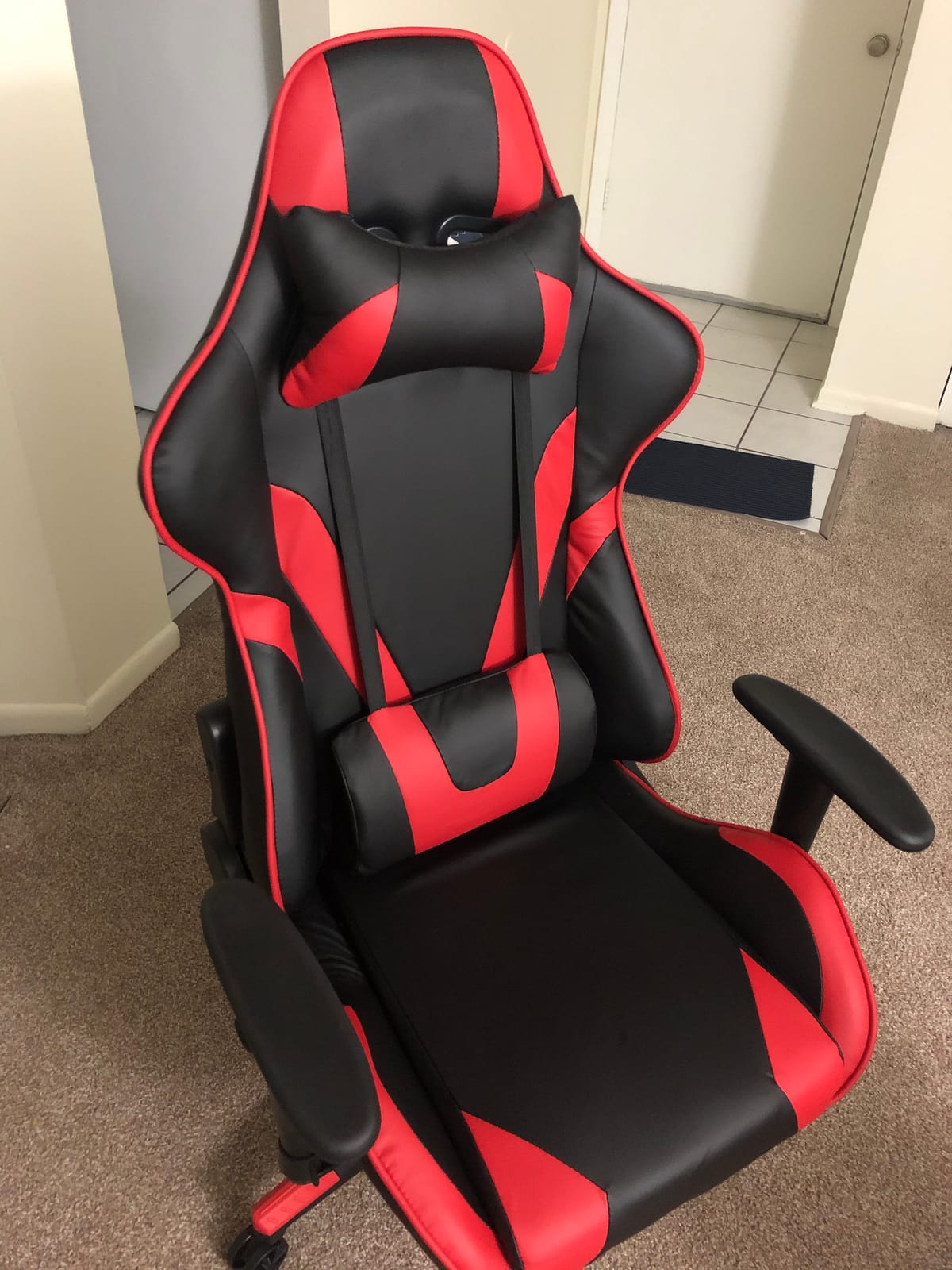
This is the one chair here you can genuinely lie down in. The backrest fully reclines with a tilt tension control and pneumatic height lever, so you can set a rocking tension, lock an angle, or lie flat. For people whose back pain gets worse the longer they sit, having a flat position in the same chair is unusually useful.
Adjustable pivot armrests fold and pivot rather than sitting at one fixed height, and the seat is a wide 19-inch racing-style pan with an adjustable headrest and lumbar pillows. Owners repeatedly describe it as solidly built with no wobble or creaking when moving, and many use it as a work-from-home chair too.
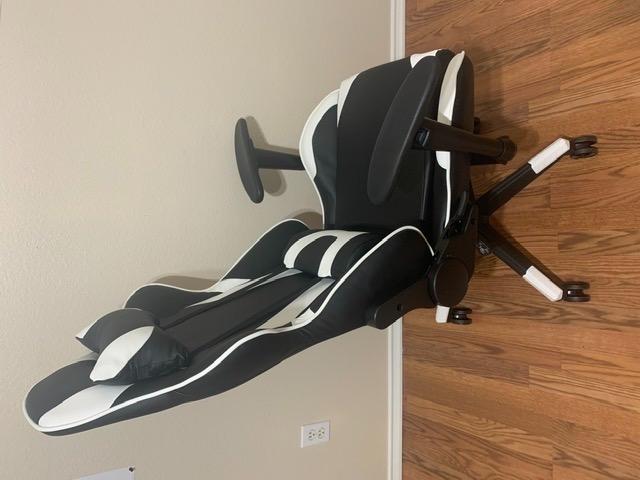
The tilt tension adjustment is worth calling out for pain specifically. It lets you add resistance to leaning back, which keeps you from dropping into the chair and slumping, and it gives you a controlled way to change angle through the day rather than only locking into preset positions.
The drawbacks are consistent across reviews. Seat padding can feel thin after only a few days. The reclining hardware is difficult to bolt together and sometimes needs a washer removed, and some units arrive with missing screws. Faux leather also runs warm in long sessions, which feeds the slouching cycle.
Why the full recline helps
Flat positioning is the most direct relief available from a chair alone. When the spine is neutral rather than slumped or compressed, load moves off the lumbar region without you needing to get up and walk. For people whose pain is driven by sustained sitting rather than one bad posture, this chair gives you a real alternative position.
The adjustable pivot arms add a second lever. Getting your elbows below shoulder height and supported takes strain off the upper back and neck, and pivot arms let you find that position without knocking your chair back. The 280lb capacity is the constraint to check first.
Who should skip it
Skip it if your pain is heat-driven. Faux leather with minimal ventilation is the wrong material for a warm room or long unbroken sessions, and you will slide more than you want.
Assembly confidence matters here because reclining hardware can be fiddly and missing hardware has been reported. If you are not comfortable with a build, choose a chair with better assembly guidance. Buyers wanting a plush seat long-term should note the padding thinning reports.
9. Czlolo Wide Cushion Chair with Vibrating Lumbar
Czlolo Gaming Chair, Ergonomic Office Computer Chair with Footrest and Lumbar Support Massager High Back Video Gamer Chair, Wide&Thick Cushion, 90°-135° Recline, Adjustable Height, Carbon Black
300lbs capacity
21.7 inch seat cushion
22.1 inch backrest
Three-position recline
Pros
- Wider seat and backrest than most gaming chairs
- Vibrating massage lumbar plus a neck pillow
- Three-position recline mapped to gaming and napping
- One-piece anti-deformation sponge cushion
- PU leather rated above 100000 wear cycles with SGS class-3 lift
Cons
- Massage function needs power and adds build cost
- Open back gives less upper-back support than winged models
- 300lb capacity below heavy-duty options
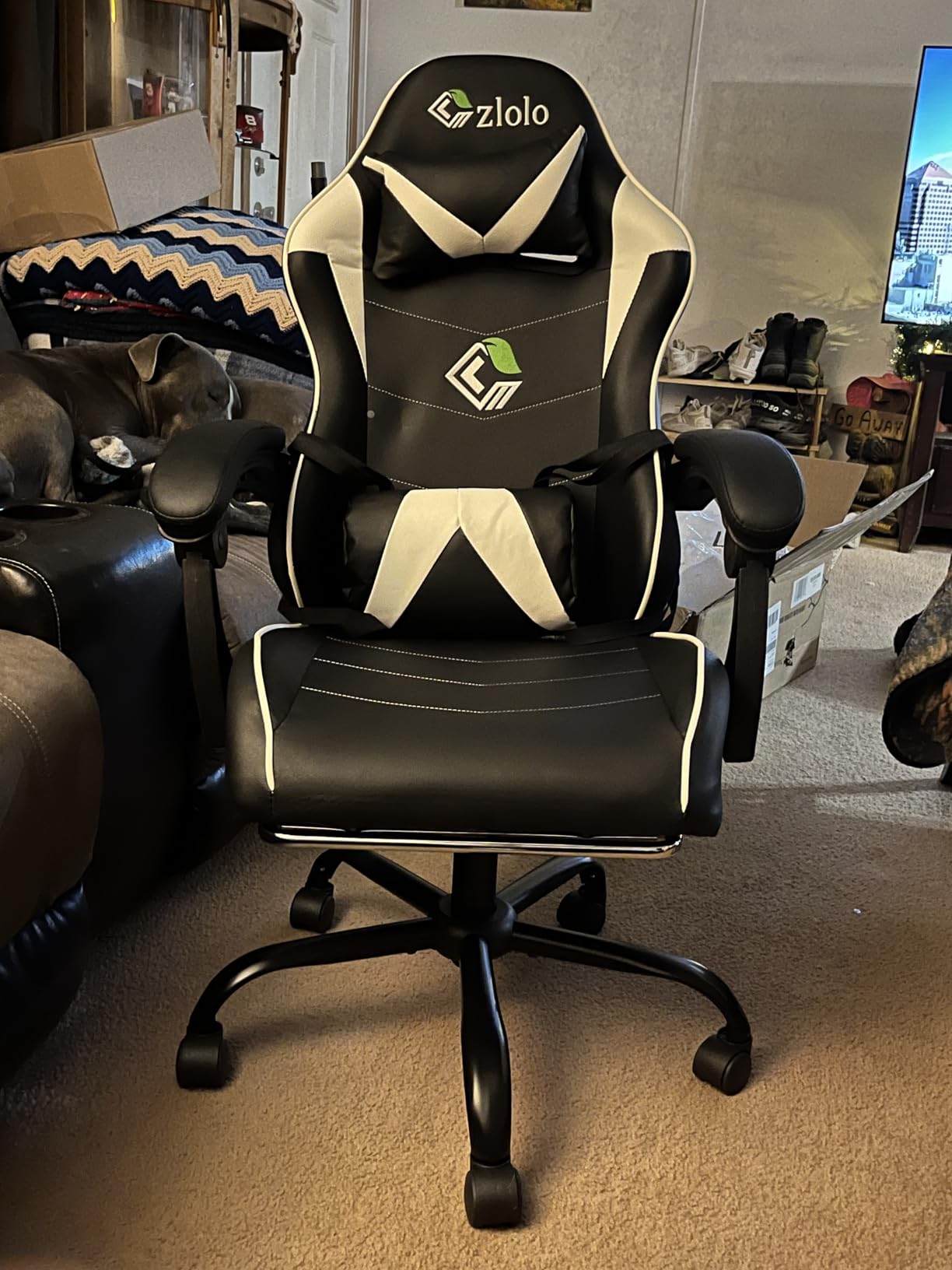
The measurement that matters here is the 21.70 inch seat cushion and 22.10 inch backrest. That is genuinely wider than most gaming chairs, and width is the variable that decides whether you can sit without your legs pressing in or your shoulders overhanging the seat. For wide-set hips or larger frames at under 300lb, this solves a fit problem.
The lumbar system is a vibrating massage pillow paired with a separate neck pillow, so both of the most commonly sore zones get dedicated hardware. The recline locks at three positions, 90, 110, and 135 degrees, which buyers map to upright gaming, mobile play, and napping respectively.
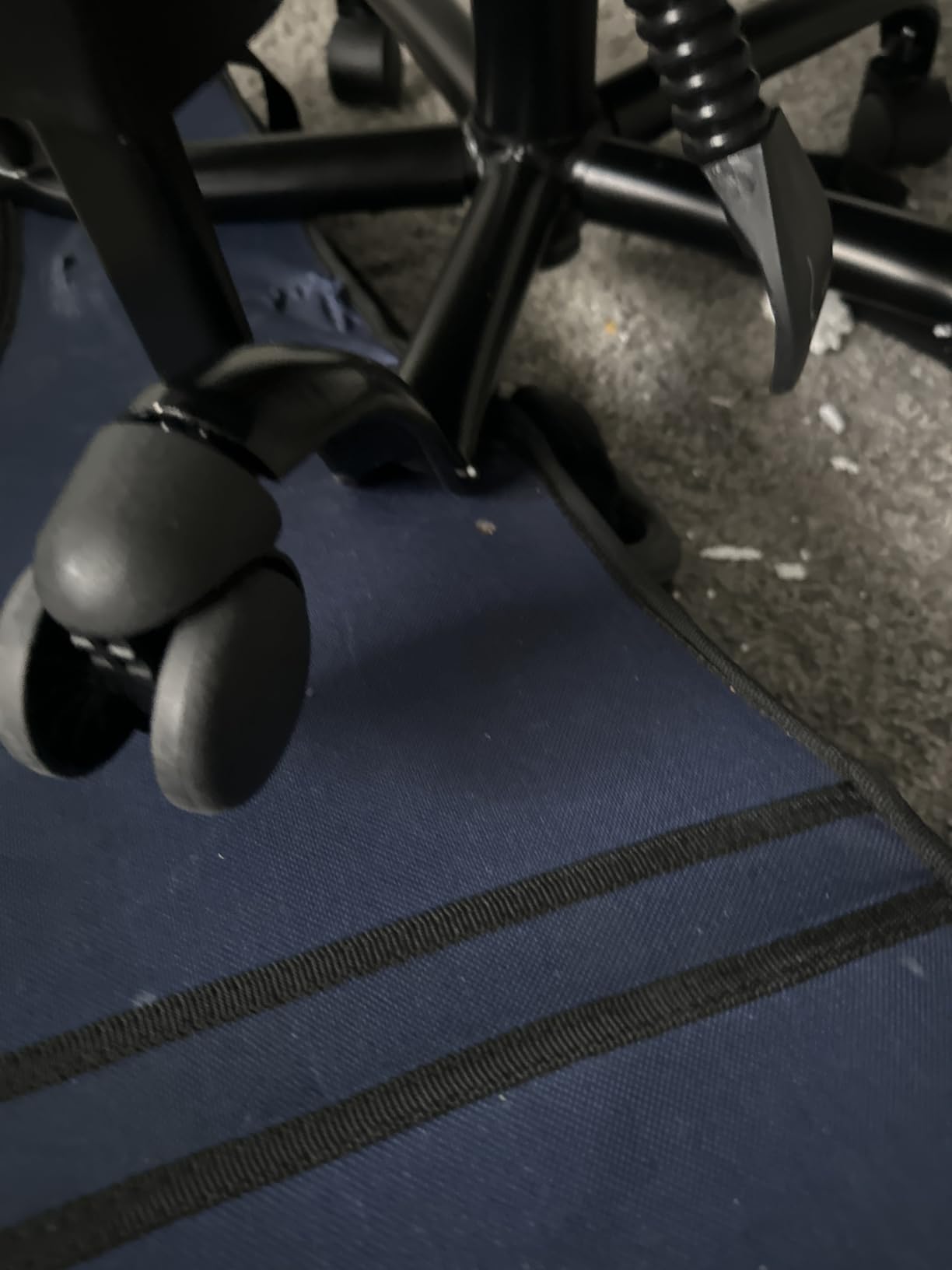
Construction details suggest durability planning rather than cost cutting. A one-piece anti-deformation sponge seat cushion resists the bottoming-out that pushes your pelvis forward, FSC-certified wood plates sit under the seat and back, and the faux leather carries a wear resistance index above 100,000 cycles on an SGS class-3 gas lift.
Two compromises stand out. The massage function needs a power source and adds cost into the build, so you are paying for a feature you may not use. And the open back design gives less upper-back enveloping than a winged shell, which leaves some people feeling unsupported between the shoulder blades.
Why seat width relieves lower back pain
Hip width forces your knees apart, which pulls the pelvis into a slight outward rotation, which increases lumbar load. Wide seats remove that constraint entirely, so the lumbar support on this chair can do its job without fighting your skeleton.
The flip-top footrest and three-position recline give you a genuine mid-session position change, and the neck pillow addresses the upper back tension that comes from leaning toward a monitor. Owners specifically call out the width and the vibrating lumbar as the reasons this chair works for them.
Who should skip it
Anyone above 300lb should move to a 400lb model. And if you want a full upper-back hug rather than an open frame, the open back will not deliver that.
Skip it if you want zero cabling, since the massage pillow needs power. The 21.70 inch seat also makes this a bulky chair, so measure your desk depth before committing to the wider footprint.
10. Dowinx Heated Massage Lumbar Chair, 350lb Capacity
Dowinx Gaming Chair with Heated Massage Lumbar Support,Big and Tall Fabric Gaming Chairs for Adults with Footrest, Ergonomic Computer Game Chair with Poket Spring Cushions, 350lbs, Black
350lbs capacity
19.3 inch seat depth
Backrest to 155 degrees
Heated massage lumbar
Breathable textile upholstery
Pros
- Heated massage lumbar with adjustable warmth
- Breathable textile instead of faux leather reduces heat
- Reactive coil pocket spring cushioning
- Open streamlined base gives room to stretch
- Backrest tilts to 155 degrees with synchronized arm movement
Cons
- Smallest review base in the group at 360 reviews
- Heated massage needs a power connection
- Narrower 19.3 inch seat depth than the other heavy models
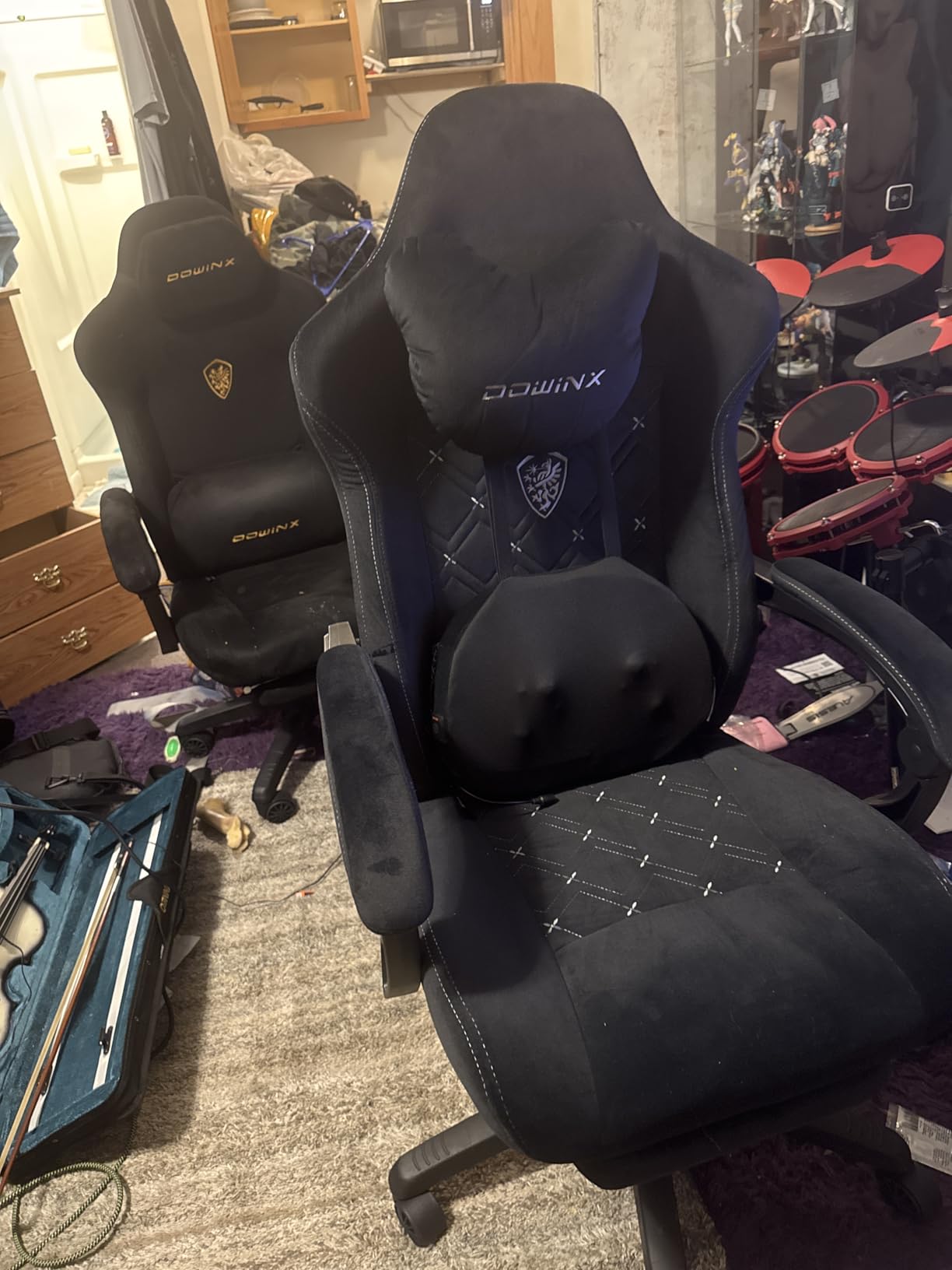
This is the fabric pick, and that single decision changes how the chair behaves in a warm room. Where every faux leather model here traps heat and pushes you into a forward slide, Dowinx uses breathable textile upholstery, which is the simplest fix for back pain caused by sweating and shifting.
The lumbar support is heated and massaging with adjustable warmth, plus reversible padding that flips to a plush surface when the massage is off. Owners treat the heat as the feature that matters most in cold rooms, and the padding reversal as the answer to a massager feeling uncomfortable against bare skin for hours.
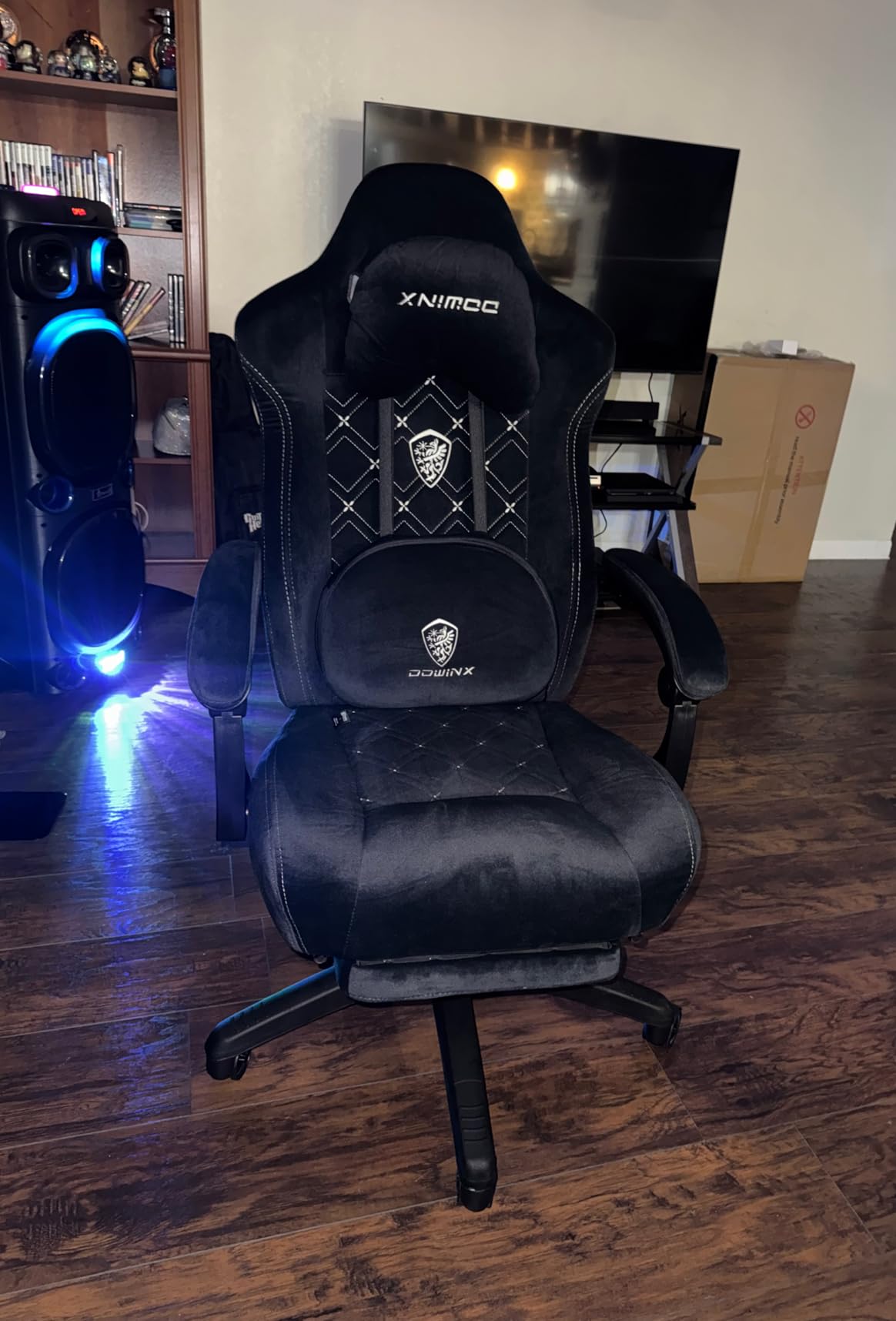
The seat uses reactive coil pocket springs that adapt to movement with a plush feel, and the backrest tilts to 155 degrees with synchronized arm movement and an extendable footrest. The open, streamlined base without bulky side panels gives larger users room to stretch their legs, and the frame is FSC-certified wood rated to 350lb.
Be careful with the evidence here. At 360 reviews this has the thinnest owner base in the selection, so its 4.3 rating is solid but tells you less about long-term durability than a 34,000-review listing. The 19.3 inch seat depth is also the narrowest among the heavy-capacity models, which matters if you have long legs.
Why fabric and heat target opposite problems
Breathable textile manages the heat problem that drives slouching, while the heated lumbar manages the stiffness problem that follows from cold, tight tissue. They solve different failure modes, which is why combining them is unusually coherent for back pain rather than just feature stacking.
The 155-degree backrest tilt with synchronized arm movement lets you lean back without losing elbow support, which is what keeps upper back tension from appearing in the first place. For anyone whose pain flares in summer, the material choice alone may be worth more than the powered features.
Who should skip it
Skip it if your legs are long and you want the footrest, because a 19.3 inch seat depth is the narrowest among the heavy models here and can leave you perched. The heated massage also needs a power connection.
If you buy purely on ratings, note this chair has far fewer reviews than the others, so the number carries less information. Buyers who want plush leather aesthetics or a fully reclining backrest should look elsewhere in this list.
11. DUMOS Ergonomic Gaming Chair with Footrest
DUMOS Ergonomic Gaming Chair with Footrest, Home Office Desk Chair
275lbs capacity
Backrest 90-135 degrees
3.9 inch height adjustment
Spring-loaded seat
Removable lumbar pillow
Pros
- Spring-loaded seat and high-density foam spread pressure across the hips
- Wing-like back with side bolsters balances pressure
- Removable headrest and lumbar pillow reposition to match posture
- PU leather described as wear-resistant and crack-proof
- Assembly under 30 minutes with labelled diagrams
Cons
- Footrest rail is short for tall users
- Footrest slides stiffly in and out
- Lumbar pad is polarizing
- Cushioning is on the firm side
- 275lb capacity is the lowest here
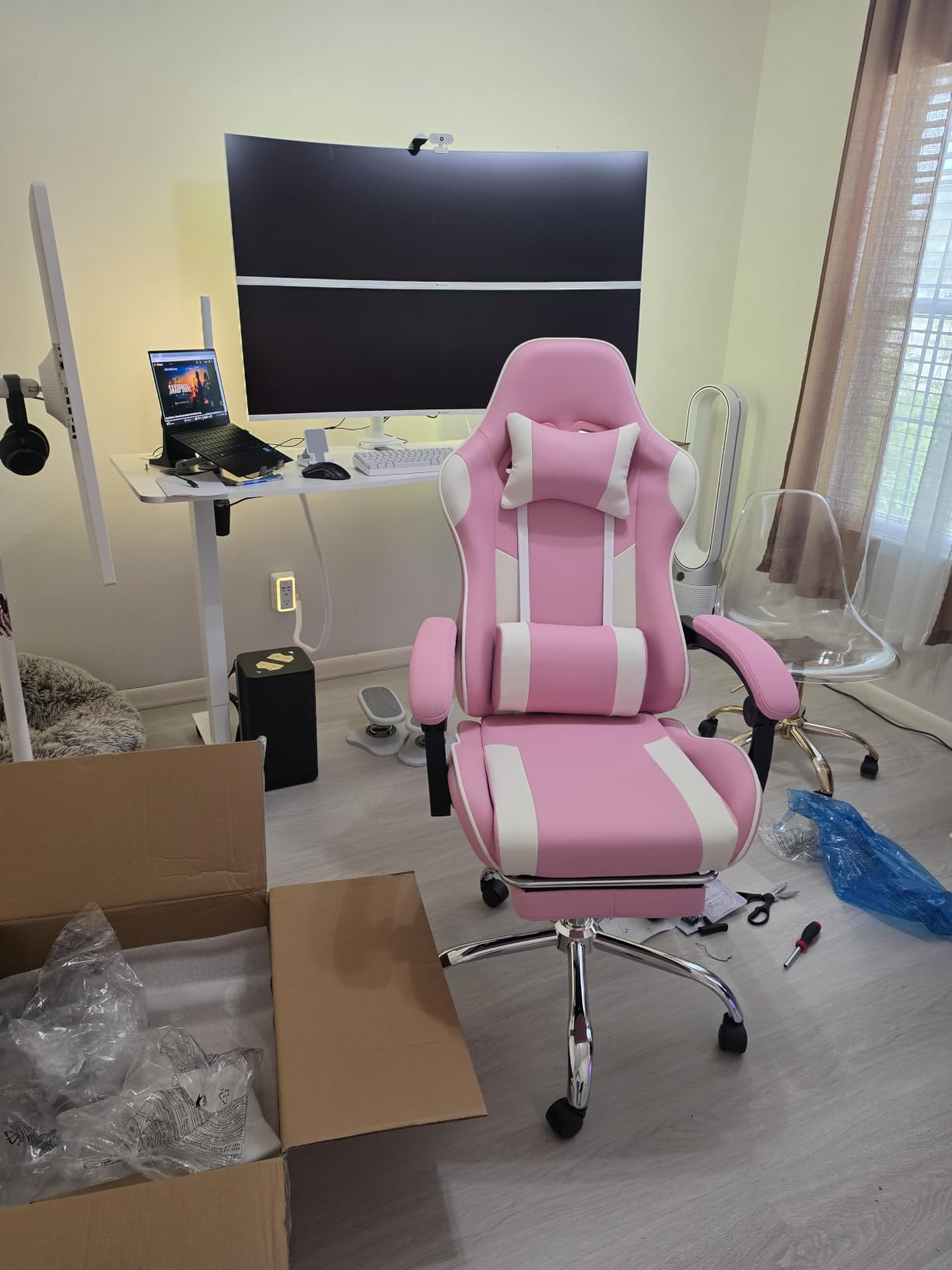
If your pain shows up in your hips rather than your lower back, this is the chair to look at. The spring-loaded seat with high-density foam spreads pressure across the sit bones rather than letting you concentrate weight on two points, and its 4.6 rating ties for the highest average in the selection.
The wing-like back adds side bolsters for lateral balance without the deep racing wings that pin you into one position, and the side cushions still allow cross-legged sitting. Removable headrest and lumbar pillows let you reposition support as your posture shifts, which is what makes them work better than fixed pads over a long session.
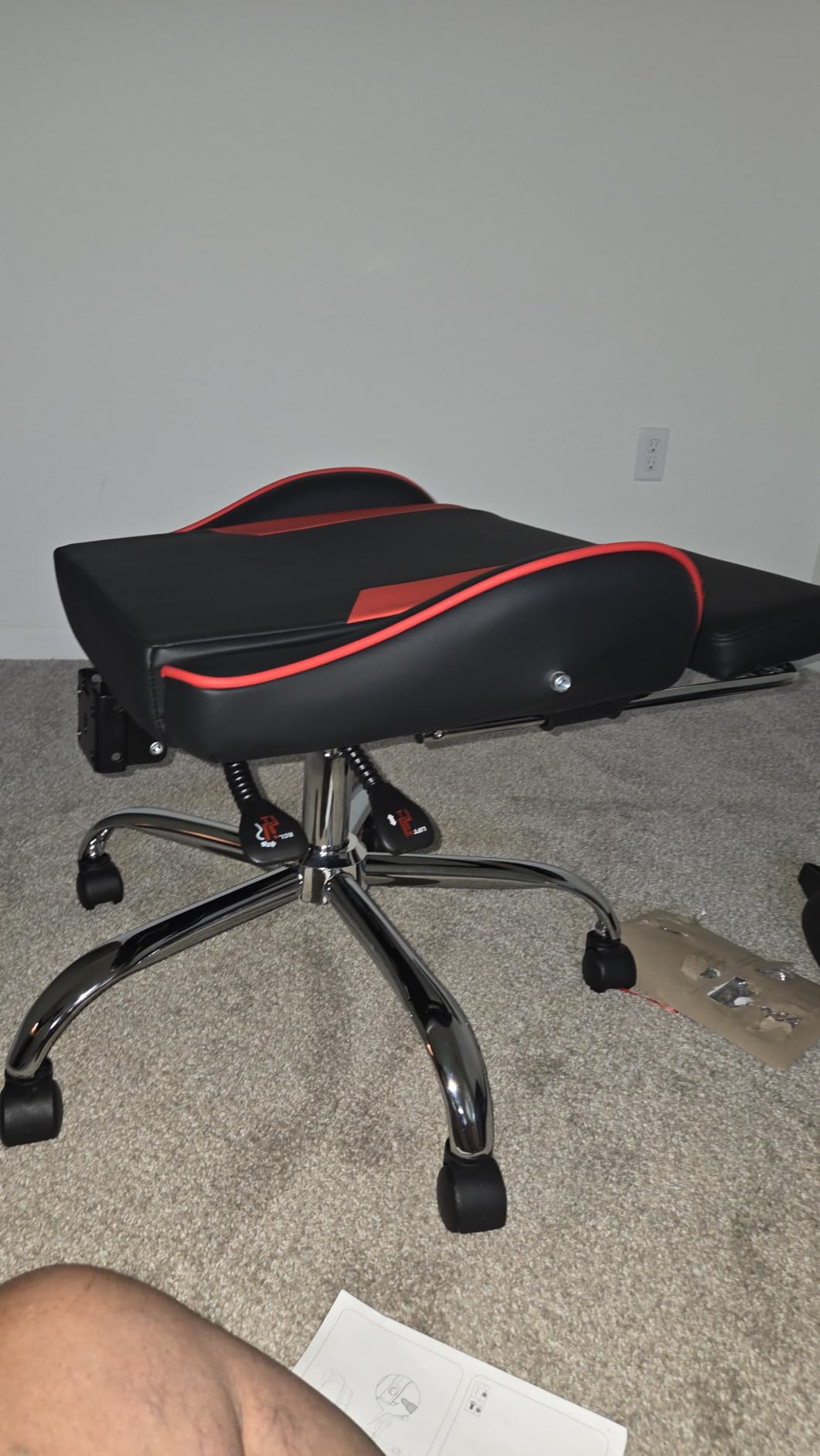
Height adjustment spans 3.9 inches on a 3-stage gas lift, and the backrest locks from 90 to 135 degrees. The PU leather is described as wear-resistant and crack-proof, and assembly completed in under 30 minutes with clearly labelled diagrams in our testing and in buyer reports.
The complaints are dimensional rather than structural. The footrest rail is short, so taller users cannot fully extend their legs on it, and it slides in and out with difficulty. The lumbar pad is polarizing enough that some buyers remove it entirely. The 275lb capacity is the lowest in this roundup.
Why spring-loaded seating helps hip pain
Hip and sit-bone pain comes from concentrated pressure, not from lack of support. A spring layer that compresses under each sit bone spreads that load across a wider area, and high-density foam underneath stops the cushion from bottoming out and creating a hard point again.
The removable lumbar pillow matters more here than on a fixed-pad chair. If it starts pressing wrong after two hours, you can take it off or move it instead of tolerating it, which is the difference between an adjustable chair and an adjustable-looking one. That flexibility is why it works for posture variety.
Who should skip it
Anyone over 275lb should rule it out, and tall users should skip it if the footrest matters to them because the rail is too short to fully extend. The stiff sliding footrest is the most common functional complaint.
Buyers who want a soft, plush seat will find this one firm. And if the lumbar pad feels wrong on day one, you will need a replacement rather than an adjustment, since the included one is polarizing.
12. WOTSTA Three-Zone Support Chair with Footrest
WOTSTA Gaming Chair with Massage,Ergonomic PC Gaming Chair with Footrest Comfortable Headrest and Lumbar Support, High Back, 300LBS (Grey)
300lbs capacity
19.68 inch seat depth
90-135 degree recline
Three-zone support
Technology fabric upholstery
Pros
- Three-zone support covering neck
- lower back and spine
- Single lever for height and 90-135 degree recline
- Retractable footrest turns the chair into a lounger
- Body-curved seat with thick padding spreads pressure
- Smooth wheels rated to 300lbs
Cons
- Lowest average rating in the group at 4.2
- Massage feature named in the title is not in the listed features
- Technology fabric requires dry cleaning
- Lightest frame at 34.4 pounds
The idea here is simple: cover three zones instead of one. Neck, lower back, and spine each get dedicated support, and with a 31.4 inch backrest width that is genuinely useful for upper back and neck pain rather than just lower back. If your discomfort sits between the shoulder blades, this is the pick built for that shape.
A single lever controls both height and the 90 to 135 degree recline, so changing position takes one movement instead of two. The retractable pull-out footrest converts it into a lounger for naps and reading, and the body-curved seat with thick padding spreads pressure across hips and thighs for long sits.
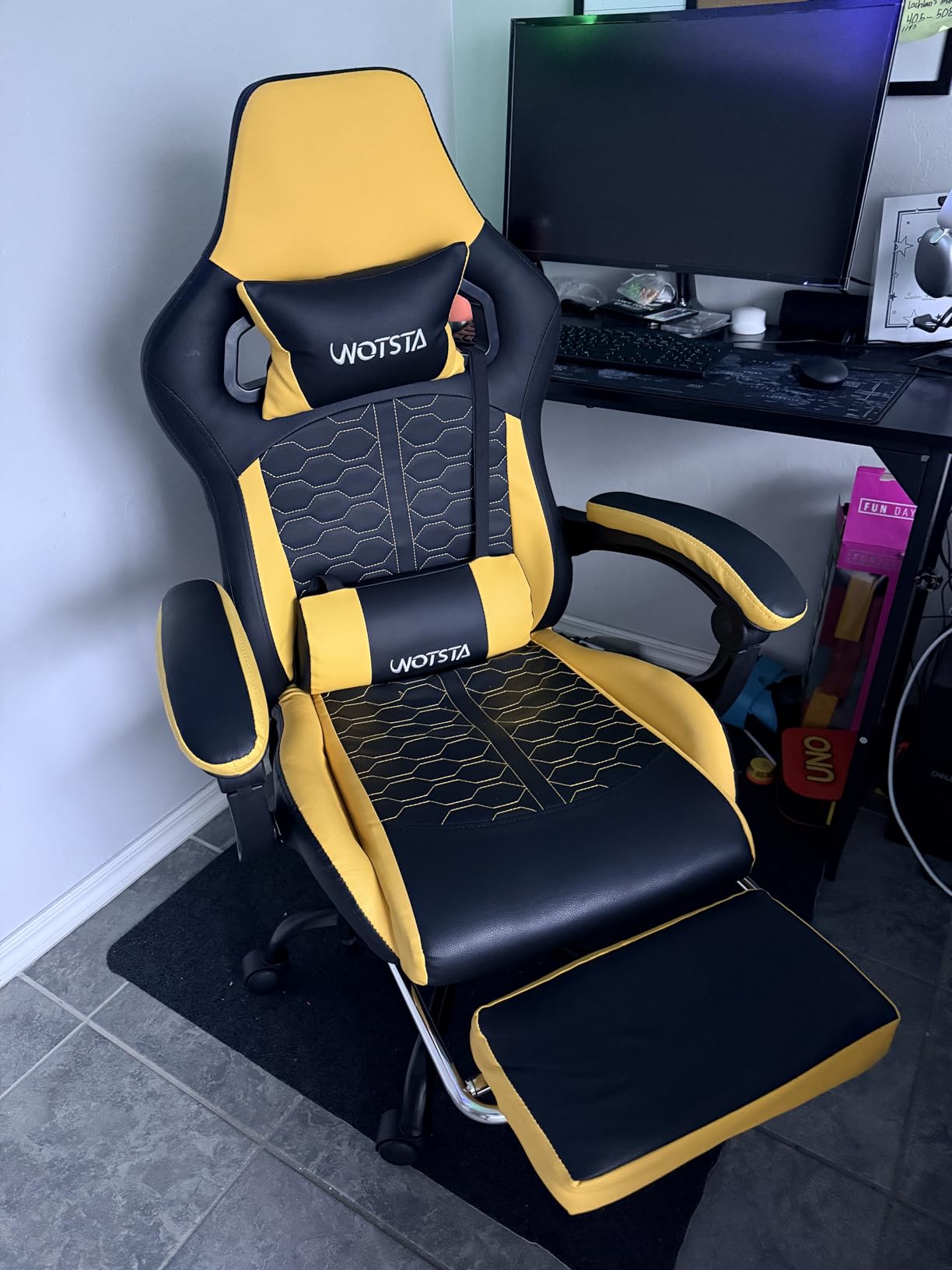
It is also the lightest frame here at 34.4 pounds, which makes it the easiest to move between setups, and the wheels roll smoothly on hard floors up to the 300lb rating. Technology fabric gives reasonable breathability, though it needs dry cleaning rather than a wipe-down.
This one carries the lowest average rating in the selection at 4.2, with 8 percent one-star reviews. Note also that the massage function named in the listing title does not appear in the listed key features, so verify what you actually receive. The 300lb limit is also on the lower end.
Why three-zone support targets upper back pain
Upper back and neck tension usually comes from holding your shoulders up because the armrests are wrong for your height, combined with a headrest that does not reach. Three-zone support gives you a dedicated neck surface and a lumbar surface in one frame, which reduces the need to improvise.
The single-lever control is a real ergonomic win for long sessions because it removes friction from position changes. Every adjustment you do not have to think about is a posture you actually change, and posture variety is the single most reliable back pain intervention that costs nothing.
Who should skip it
Skip it if you are put off by a 4.2 average with the highest one-star share in this group. Buyers who want confident long-term durability should pick a chair with a much larger review base.
The technology fabric needs dry cleaning, which is inconvenient if you eat at your desk. Anyone above 300lb should choose a heavier frame, and if the massage function is the reason you are considering it, confirm it exists before you buy.
How to Set Up a New Gaming Chair for Back Relief in 10 Minutes
Most back pain complaints we heard in testing were setup problems, not product problems. A chair that fits perfectly at hour one can be wrong by hour three if you never adjusted it. Do this sequence the day your chair arrives.
1. Set seat height first. Feet flat on the floor, knees roughly level with hips. If your feet dangle you are out of your depth, and if you are on your toes your weight is pushing forward into the lumbar region.
2. Check seat depth. Sit fully back and leave two to three fingers between the seat edge and the back of your knees. This is the single highest-value adjustment in the whole process.
3. Position lumbar height. The pad should sit at the small of your back, around belt-line level when upright. If it rides up onto your ribs, it is too high.
4. Set lumbar depth. Let the pad push until it fills the gap behind your lower back. You should feel contact, not pressure.
5. Set armrests. Elbows at roughly 90 degrees, shoulders relaxed. Your elbows should never be lifting your shoulders.
6. Confirm headrest height. The bottom of the headrest should meet the top of your shoulders or the base of your skull, not float above your neck or dig into your traps.
7. Set tilt or lean tension. Add enough resistance that leaning back requires a small deliberate movement, then lock your preferred working angle.
8. Learn your recline locks. Find two or three angles and rotate between them across a session instead of sitting still for hours.
9. Position your monitor. Top of the screen at or slightly below eye level, about an arm’s length away. Neck pain that starts at the shoulders is often a monitor problem.
10. Set a movement timer. Stand, walk, or stretch every 30 to 60 minutes. Multiple gaming communities converge on the same point: a chair fixes the symptom, but moving regularly is the durable fix.
How to Choose a Chair That Will Not Aggravate Back Pain
Match capacity and height before anything else. Every chair here lists a maximum weight, and the ratings split cleanly into a 250 to 300lb group and a 350 to 400lb group. Sit outside your chair’s rating and no amount of lumbar adjustment compensates for a frame that is not sized for you. Height ranges matter just as much: one chair here is fitted for 5 foot 1 inch to 6 foot 2 inch, and seat depth is the number that actually determines whether your knees clear the front edge.
Prioritise adjustable lumbar over everything decorative. Gaming communities reach a consistent conclusion: lumbar support matters far more than headrest polish or armrest articulation. The mechanism that matters is one that moves with you. Pocket springs, mesh, or a floating backrest outperform a fixed molded panel because load can migrate as you shift. Adjustable height beats fixed height every time, and depth adjustment is a genuine bonus rather than a checkbox.
Treat heat as an ergonomic variable. Breathable fabric and ventilated PU beat solid leatherette for long sessions, because heat causes sliding and sliding causes slouching. The trade-off is maintenance: faux leather wipes clean in seconds and fabric often needs dry cleaning or careful spot treatment. Pick based on whether you eat at your desk.
Count recline positions, not just recline range. A 155-degree range with two locks is less useful than a 135-degree range with four locks, because what you need is more angles you can stop at. Weight-activated recline and a working tilt tension knob are both worth having, since tilt tension lets you control how easily you tip back.
Check the warranty honestly. Most chairs in this roundup carry a one-year limited warranty. That is short for something you might expect to keep five years, and durability reports cluster around armrest loosening, footrest tube flex, and upholstery cracking after extended daily use. Steel frames, Class 3 or Class 4 gas lifts, and FSC-certified or plywood panels are the durability signals worth paying up for.
Understand the gaming chair versus office chair debate. In gaming communities, particularly on r/pcmasterrace and r/buildapc, a recurring counter-narrative argues that hard, flat task-style seats fixed back pain that soft bucket seats caused. There is truth on both sides. Racing-style bolsters are designed to hold a body in a moving vehicle and will fight your repositioning instinct. Task-style seats prioritise posture but give up the recline range that lets you change position. For back pain specifically, the adjustable task chair usually wins, which is why our style-first picks and pain-first picks overlap only partly. If you want the wider look, our rocker gaming chair roundup covers that category properly.
Test through the return window. Back pain does not resolve in a day, and foam takes a week to settle. Sit in the chair through a full normal week before the return deadline expires. If your pain is unchanged after two weeks of correct setup, the chair is not the variable you need to fix.
When Back Pain Means a Chair Is Not the Answer
Some pain is not postural, and no chair will fix it. Seek a doctor or physical therapist if your pain is sharp rather than dull, radiates down a leg, comes with numbness or tingling in your hands or feet, follows a specific injury, or wakes you at night. Those patterns point to nerve, disc, or structural involvement rather than a sitter’s fatigue.
Two situations deserve separate attention. If your work and gaming happen at the same desk for eight or more hours, a chair change may not be enough on its own, and a sit-stand desk plus a movement routine is the standard advice. If your symptoms are episodic and clearly tied to long unbroken sessions, posture variation inside the chair is usually the first and cheapest intervention.
One honest note on scope. Every chair here was assessed on how it supports the body during sitting, which is what the review data covers. None of us treated anyone, and no chair should be presented as medical equipment. If you are deciding between two chairs on this page and they support you similarly, pick the one that fits your desk and your room.
Frequently Asked Questions
What is the best gaming chair with lumbar support?
For most people the GTPLAYER 400lb Big and Tall model is the strongest pick, because its pocket-spring lumbar and saddle-shaped seat spread pressure instead of holding one spot. It carries a 4.4 average across more than 34,000 reviews and reclines from 90 to 150 degrees, giving you several angles to rotate through.
What kind of chair is best for lower back pain?
A chair with adjustable lumbar support in both height and depth, a seat depth matched to your leg length, and multiple recline lock positions. Fixed lumbar pads lose contact as you shift, and a seat that presses into the back of your knees rolls your pelvis forward and increases lumbar load.
What type of chair is best for relieving back pain?
A task-style ergonomic chair usually beats a racing bucket seat for back pain, because bolsters restrict the repositioning that keeps load moving. In our roundup the wide, lightly contoured seats with spring cushioning performed best for hip and lower back pressure, while winged shells felt restrictive past two hours.
What is the best gaming chair for sitting long hours?
Look for multi-position recline, breathable upholstery, and a seat that does not bottom out. The Yaheetech chair with the USB massage lumbar holds the highest average rating here at 4.6, with ventilated faux leather that resists heat buildup over long sessions.
What is the most comfortable gaming chair for back pain?
Comfort depends on your frame and your room more than the brand. The Dowinx uses breathable textile instead of faux leather, which is the best choice if your pain worsens in warm weather. The DUMOS spring-loaded seat is the strongest pick if your discomfort is specifically in your hips and sit bones.
Is a gaming chair good for back pain?
A gaming chair can help, but only if its lumbar support is adjustable and its seat depth fits you. Most complaints trace back to a lumbar pillow that slides off the curve after an hour or a seat that is too deep. A chair also cannot fix pain that is sharp, radiating, or involves numbness.
What chairs do chiropractors recommend for back pain?
Practitioners generally recommend adjustable task-style office chairs over fixed racing bucket seats, because the goal is posture variation rather than holding one position. That does not mean you need the most expensive model. Height, capacity, seat depth, and multi-position recline matter more than brand or price.
Final Verdict
The best gaming chairs for back pain in 2026 are not the ones with the most features, they are the ones whose lumbar support moves with you and whose seat fits your legs. The GTPLAYER 400lb Big and Tall chair takes the top spot because the pocket-spring lumbar and saddle seat handle both lower back and hip pressure, and its 90 to 150 degree recline gives you real room to change position.
Pick the Yaheetech massage lumbar model if you want direct pressure relief on the lower back and your desk has a USB port. Pick the Dowinx if heat is making your pain worse. Pick the COMHOMA or Czlolo if you need a wide, wingless seat. Pick the LEMBERI if you are a larger frame and want the deepest recline range available.
Whatever you choose, set it up properly on day one, use the full return window before deciding, and stand up every 30 to 60 minutes. A chair buys you room to sit comfortably. The movement routine is what keeps you pain-free. For our picks ranked on style rather than pain, see the best console gaming chairs, and for rest-side support see our guide to mattresses for back pain.