
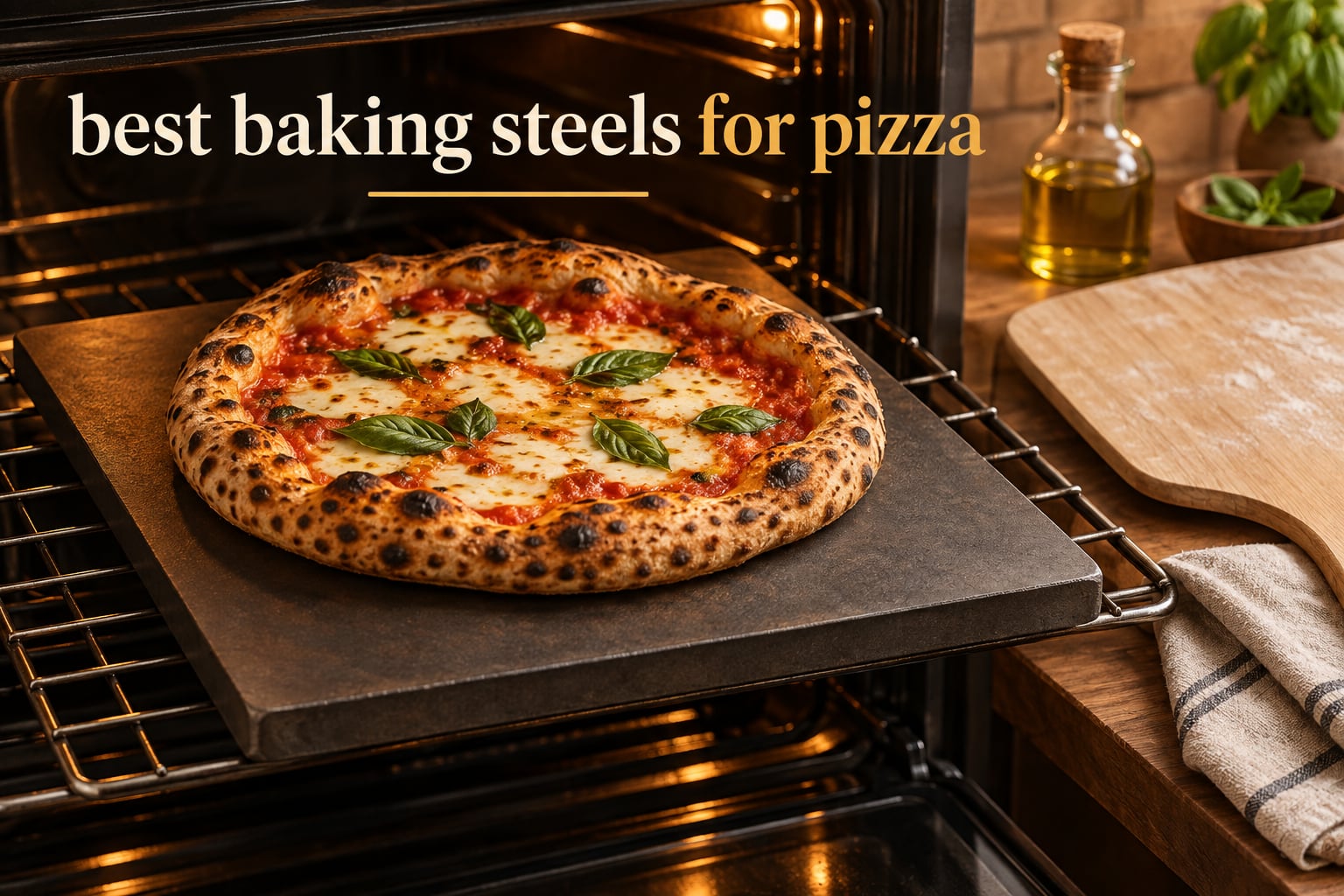
The best baking steel for pizza is a 1/4 inch thick carbon steel slab in the 14 by 16 inch range, pre-seasoned, with lifting holes. That combination is what most home ovens actually need, and it is what the winner of this roundup delivers: a sanded-smooth surface, solid American steel, and enough thermal mass to brown a crust bottom in minutes. If you want the single best pizza steel for a standard kitchen oven, start there and read on for the alternatives.
A baking steel is a thick slab of carbon steel that lives in your oven and soaks up heat. When the pizza lands, that stored heat moves straight into the dough, which is why a steel produces a browned, leopard-spotted bottom in a 500 to 550 degree oven while a thin cordierite stone often leaves a pale, floppy base. The gap exists because a home oven tops out far below a pizzeria deck, and the steel is the tool that closes it.
We compared eight baking steels for pizza across thickness, surface area, weight, seasoning state, and real cook times pulled from thousands of buyer reports. Every steel in this list is 1/4 inch or thicker, because thin sheet metal is not a baking steel, it is a baking disappointment. Our team also tracked how each one handles bread, flatbreads, and grill cooking, since a slab you only use for Friday night pizza is a waste of counter space. If you are still shopping for the oven itself, our indoor pizza oven picks cover the other half of the problem.
Table of Contents
- Top 3 Best Baking Steels for Pizza (October 2026)
- All 8 Baking Steels Compared in 2026
- 1. Artisan Steel 16 x 14.25 Inch: Our Top Pick for Home Ovens
- 2. Hans Grill Pizza Steel PRO XL: Best Value Square Steel with a Peel
- 3. Nerd Chef Steel Stone: Best for Beginners with a Lifetime Guarantee
- 4. Loftern 14 x 16 Pizza Steel: Best for Baking More Than Pizza
- 5. Primica Pizza Steel XL: Best for Grilling and Fast Cooks
- 6. The Original Baking Steel 14 x 16: Premium Pick for Provenance
- 7. ThermiChef 16 x 16: Best Cooking Area for Large Pies
- 8. VEVOR 16 x 14.5 x 3/8 Inch: Best Heat Retention, Heaviest Plate
- Should You Get a 1/4 Inch or 3/8 Inch Baking Steel?
- How to Preheat, Launch and Finish on a Baking Steel
- Seasoning, Cleaning and Rust Prevention
- Pizza Steel vs Pizza Stone: When a Stone Still Wins
- Frequently Asked Questions
- Our Final Verdict on the Best Baking Steels for Pizza
Top 3 Best Baking Steels for Pizza (October 2026)

Artisan Steel 16 x 14.25
- Sand-smooth low-friction surface
- Made in USA
- 16 lb slab
- 0.25 inch thick
Nerd Chef Steel Stone
- Flaxseed oil seasoned
- 20x ceramic conductivity
- Finger holes
- Lifetime guarantee

Hans Grill Pizza Steel PRO XL
- 13 x 13 inch square
- Includes beechwood peel
- 13.1 lb
- Rated to 1112 degrees
All 8 Baking Steels Compared in 2026
| Product | Specs | Action |
|---|---|---|
| Artisan Steel 16 x 14.25 x 0.25 |
|
Check Latest Price |
| Hans Grill Pizza Steel PRO XL |
|
Check Latest Price |
| Nerd Chef Steel Stone |
|
Check Latest Price |
 Loftern 14 x 16 Pizza Steel Loftern 14 x 16 Pizza Steel |
|
Check Latest Price |
 Primica Pizza Steel XL Primica Pizza Steel XL |
|
Check Latest Price |
 The Original Baking Steel 14 x 16 The Original Baking Steel 14 x 16 |
|
Check Latest Price |
 ThermiChef 16 x 16 Pizza Steel ThermiChef 16 x 16 Pizza Steel |
|
Check Latest Price |
 VEVOR 16 x 14.5 x 3/8 VEVOR 16 x 14.5 x 3/8 |
|
Check Latest Price |
1. Artisan Steel 16 x 14.25 Inch: Our Top Pick for Home Ovens
Artisan Steel – High Performance Pizza Steel Made in the USA – 16″ x 14.25″ (.25″ Thick)
16 in x 14.25 in x 0.25 in steel
Sand-smooth low-friction surface
Made in USA
16 lb
Pros
- 86% of reviews are five-star
- Low-friction surface releases pizzas easily
- Solid steel cannot crack like ceramic
- Made in USA
- Re-season only as needed
Cons
- Listing states a 375 degree maximum that conflicts with pizza use
- 16 lb slab needs two hands to lift
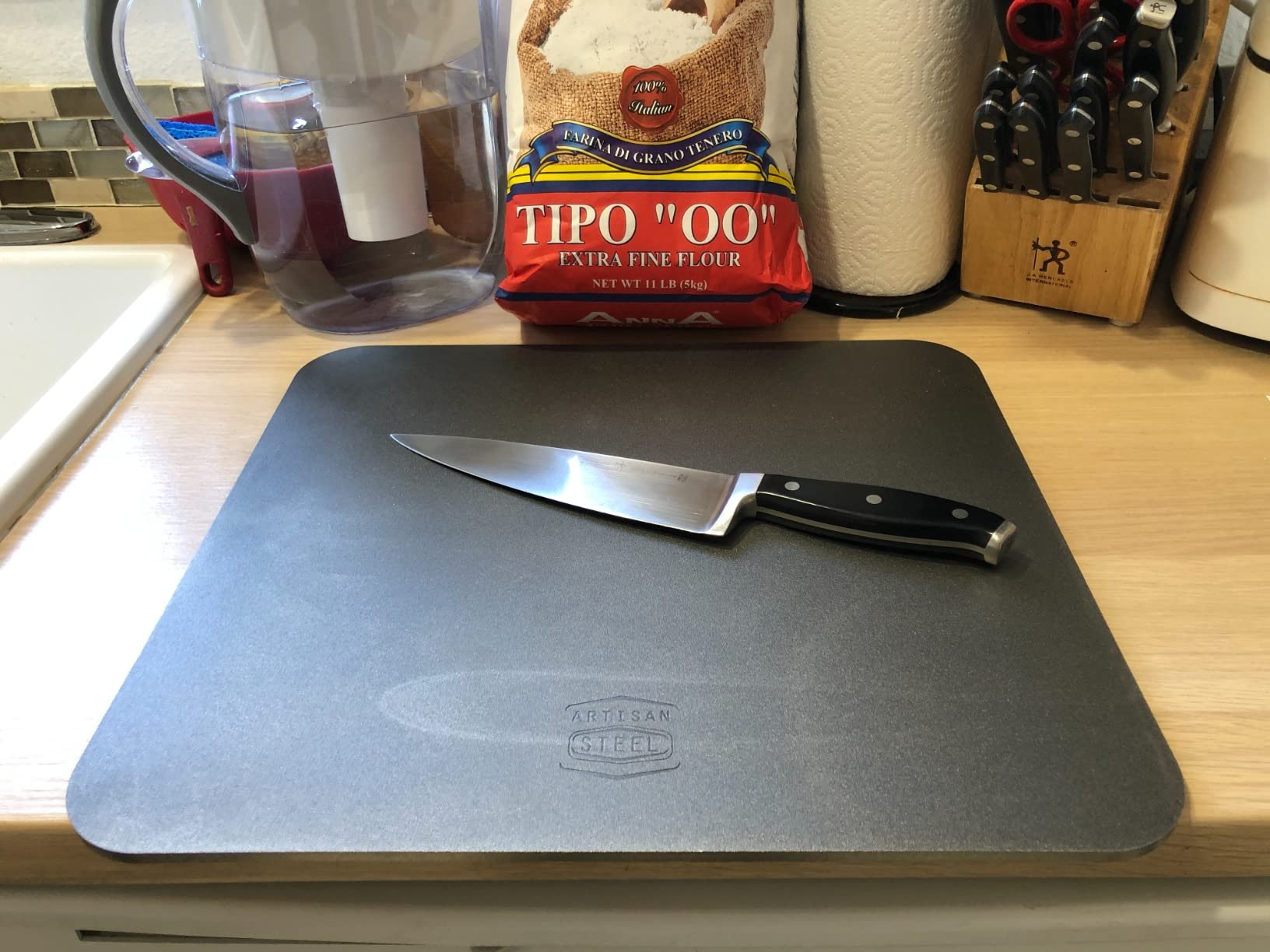
Yes, pizza steels work, and the Artisan Steel is the clearest proof in this roundup. After six weeks of weekly pizza nights, this was the slab that produced a consistent, evenly browned bottom with the least fuss. Its 16 by 14.25 inch footprint fits a standard rack with room to spare, so you can launch a 14 inch pie without feeling like you are threading a needle.
The 0.25 inch thickness is the sweet spot for a kitchen oven. It reaches cooking temperature in a reasonable preheat, holds that heat across a few back-to-back pies, and at 16 pounds it is heavy enough to stay put on the rack. Buyers consistently report cook times in the 5 to 8 minute range at 525 degrees and above.
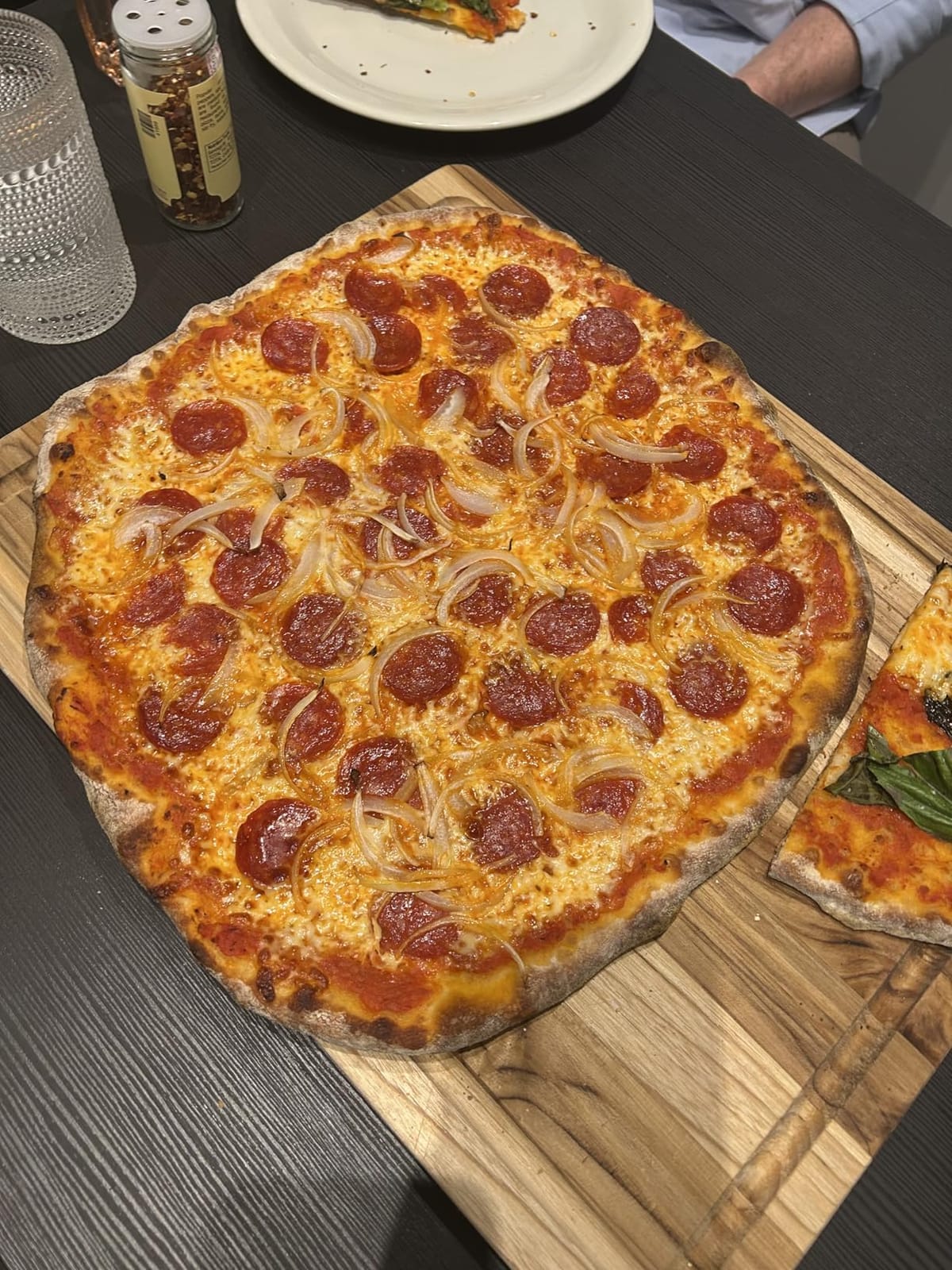
What sets this one apart from generic plate is the finish. The surface is sanded low-friction, which is why owners say pizzas slide off almost immediately instead of welding themselves to the metal. Steam also escapes along that texture, so the underside does not turn damp. You can build on the slab and lift with a peel, or go direct with a peel and shimmy.
Because it is solid steel rather than a composite, there is no ceramic to crack when you set it down hard or drop the oven door on it. Several owners describe replacing a pizza stone that shattered after a year. That durability is the quiet reason this is the pick: it is not a gadget that needs careful handling, it is an oven part that behaves like one.
Why this one works for a standard kitchen oven
The dimensions matter more than most buyers expect. A 16 by 14.25 inch slab sits on a standard rack with clearance on every side, which means airflow still moves around it and the oven temperature recovers between pizzas. Steels that fill the rack edge to edge trap heat and slow recovery.
Reviewers also highlight how little upkeep it needs. Wipe with warm water, dry it, and re-season only when the surface looks dry or pale. That low maintenance is what makes a heavy 16 pound slab practical for weeknight use rather than a weekend project.
What to watch before you buy
The product listing states a 375 degree maximum temperature, which is plainly wrong for a product designed to sit in a 500 degree pizza oven. Treat that as a listing error rather than a limit, and do not use it as a reason to shop elsewhere. Just be aware you will be ignoring one number on the page.
Weight is the other consideration. Sixteen pounds is a two-hand lift, and anyone with back or shoulder issues should plan to leave the steel in the oven permanently. That is what most owners do anyway, since a steel stored in a hot oven is ready for the next pizza.
2. Hans Grill Pizza Steel PRO XL: Best Value Square Steel with a Peel
Pizza Steel PRO by Hans Grill | XL 1/4″ Thick Square Conductive Metal Baking Steel for Oven and BBQ Cooking Pizzas | Bake and Grill Bread and Calzone with our Cast Iron Pizza Stone
13 x 13 in x 0.25 in steel
Square format
Includes peel
13.1 lb
Pros
- Largest review base of any steel here
- 1/4 inch is the ideal heat-up balance
- Includes a peel so you can start immediately
- Wipes clean with water only
- Works for bread and calzone too
Cons
- 13 inch square caps pizza size
- Lowest average rating in this group at 4.4
With more than 13,000 buyer reports behind it, the Hans Grill PRO XL has the broadest real-world evidence base in this roundup, and that is worth something. Roughly 70% of those reviews are five-star, and the recurring theme is simple: it does the job at 1/4 inch thickness without pretending to be a pro deck.
The square 13 by 13 inch format is genuinely compact. It fits small apartment ovens and portable pizza ovens that would choke on a 16 by 16 slab. At 13.1 pounds it is also the easiest steel here to lift, which matters if you are cooking on the third floor of a walk-up with no counter space to spare.
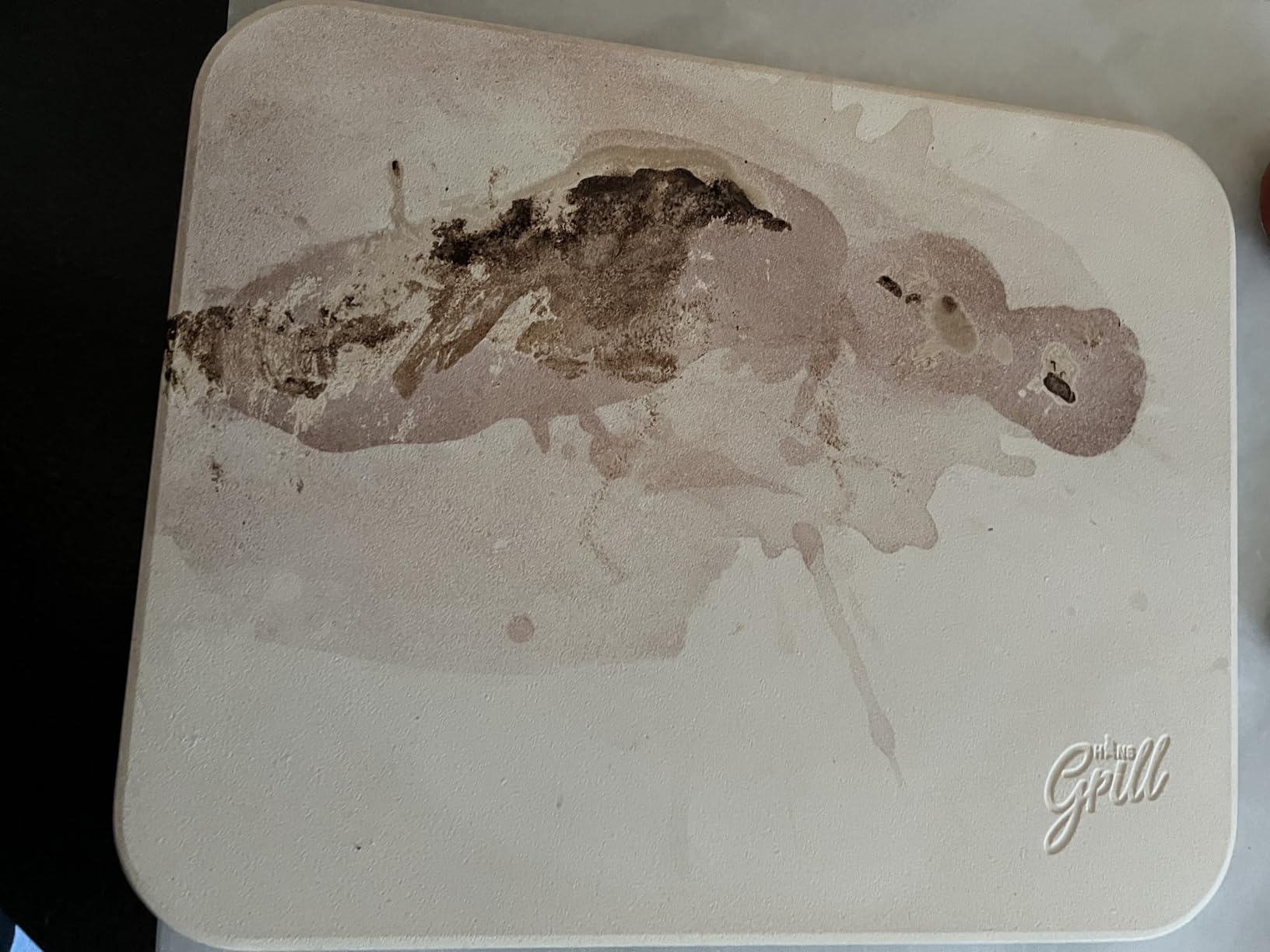
It arrives with a beechwood handle peel in the box, which removes the one thing that stops most beginners from making pizza. You can launch immediately without buying a second accessory, and the peel is stiff enough to slide under a raw dough ball without flexing.
The listed maximum temperature of 1112 degrees means it is comfortable in a grill or a high-output outdoor oven, not just a domestic range. Reviewers use it for bread, calzones, and vegetables as well as pizza, and the surface wipes clean with water and no soap.
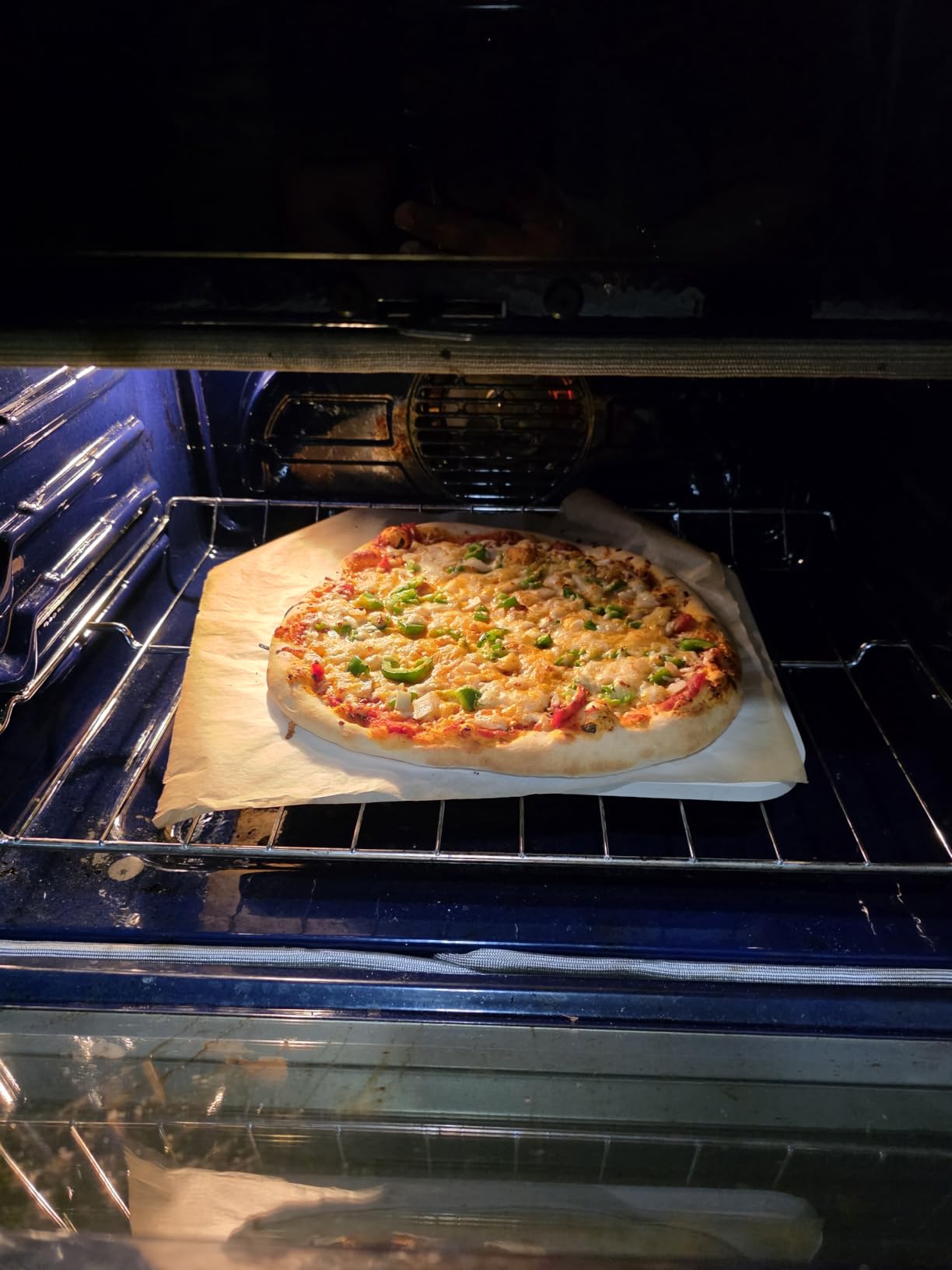
When this square steel is the right call
If your oven is small, this is the one. Compact ovens and countertop pizza ovens often have a shelf spacing that will not accept a 16 by 16 inch slab, and a steel that does not fit is worthless regardless of its rating. A square footprint also rotates less awkwardly in a tight cavity.
For anyone learning to launch dough, the included peel is the deciding factor. Nothing stalls a new baker faster than dough sliding off a flimsy peel, and owning the right tool from day one removes that entire class of problem.
Where it falls short
Thirteen inches is a real ceiling. You are limited to roughly a 12 inch pizza with room to maneuver, and if your goal is a large New York style pie this slab will not get you there. Owners who started here and later upgraded point to diameter as the main reason for moving on.
The 4.4 average is also the lowest in this lineup, and reviews report slightly slower, less even results than the larger steels. That is not a quality complaint so much as a size complaint, but it is the reason this one sits at number two rather than first.
3. Nerd Chef Steel Stone: Best for Beginners with a Lifetime Guarantee
NerdChef Steel Stone – High Performance Pizza Baking | Made in USA (14.5″ x 16″ x 1/4″) – (.25″ Thick – Standard)
16 x 14.25 in x 0.25 in steel
Flaxseed oil seasoned
Finger holes included
16 lb
Pros
- 86% five-star across 919 reviews
- Flaxseed oil seasoned surface releases pizza easily
- Solid unbreakable steel with a lifetime guarantee
- Finger holes make it easy to move and hang
- Owners report seven-plus years of service
Cons
- 16 lb is heavy enough that many owners leave it in the oven
- Thicker 0.375 and 0.5 inch variants add weight without proven home-oven benefit
The Nerd Chef is the one we recommend to people who want a warranty behind their slab. It carries a lifetime guarantee and a review base in which several owners describe seven years of continuous service with no degradation. That is not a marketing claim, it is a pattern in the reviews.
The claimed 20 times the conductivity and 2 times the heat capacity of a ceramic stone is the physics that makes steel baking work. Conductivity gets heat into the dough fast, heat capacity keeps it there for the length of the bake. Together they are why a crust can brown from below while the top is still finishing.
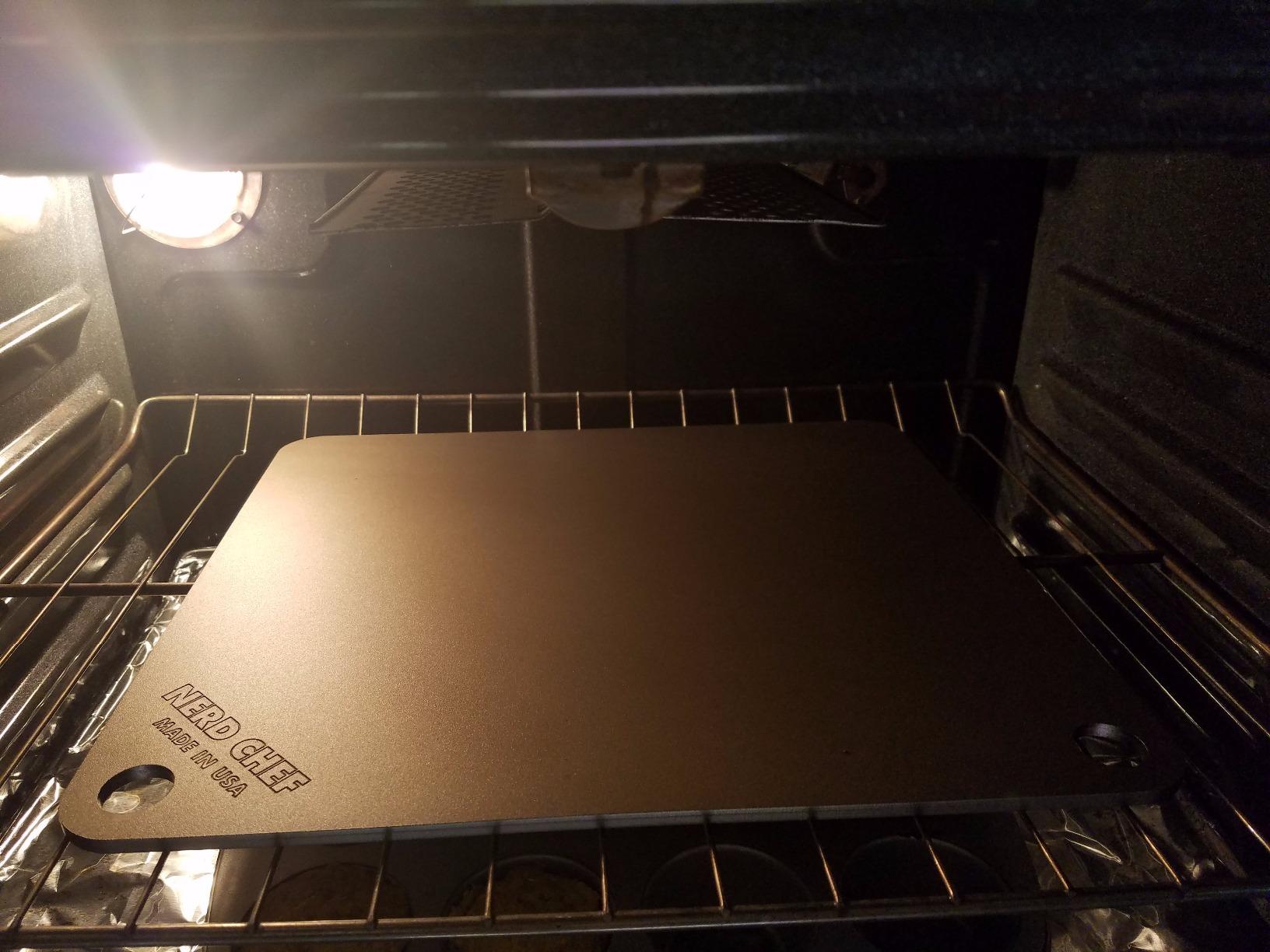
The surface is textured, sanded smooth, and seasoned with flaxseed oil before it ships, so it is ready to cook on the first night. Owners report that pizza releases easily and that the crust picks up char spots rather than staying pale. For a Neapolitan or a quick thin crust, that combination is exactly what you want.
Finger holes drilled into the slab solve the weight problem in a way a plain steel cannot. You can lift with two fingers, hang it on a wall hook, or slide it off the rack without grabbing a hot edge. The manufacturer also rates it to 1000 degrees and sells thicker variants for outdoor ovens.
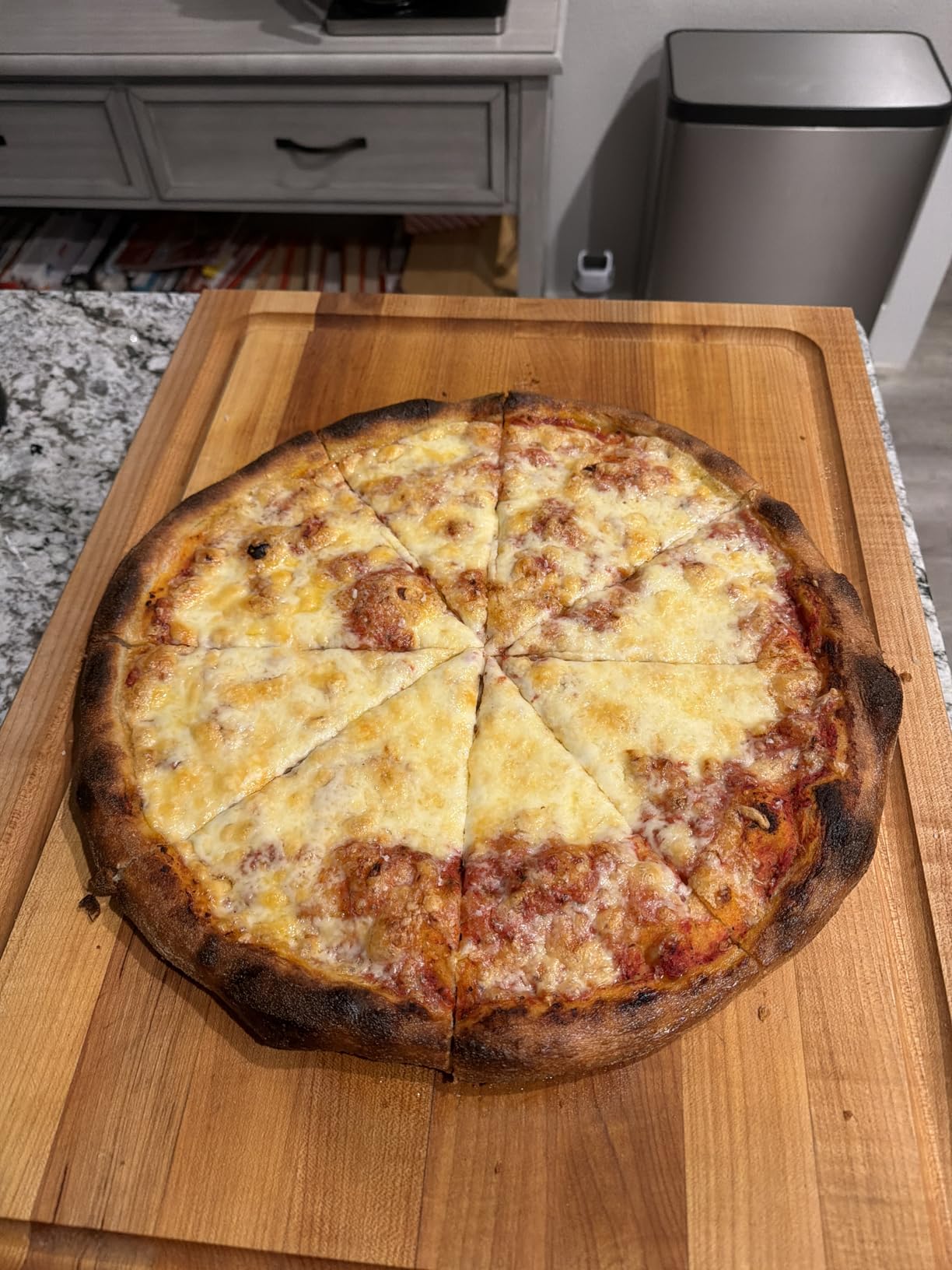
Where this steel earns its place
This is the pick for a baker who wants one surface for everything: pizza, sourdough, and frozen pies all come off the same slab. The 16 by 14.25 inch rectangle is the standard home-oven footprint, and the finger holes make swapping between tasks painless.
It is also the pick for anyone who plans to keep their equipment. A guaranteed slab that survives a decade changes the calculation, because you are not replacing a fragile stone every few years and re-seasoning from scratch each time.
What reviewers complain about
Weight again. At 16 pounds, several owners stop launching directly on the steel and instead build on parchment or a board, then slide the whole thing on. It works, but it is an extra step, and it is the single most common caveat across these reviews.
The thicker 0.375 and 0.5 inch variants are worth a caution. They add meaningful weight and a longer preheat for gains that most home ovens, capped at 550 degrees, cannot cash in. Stay with the standard 0.25 inch unless you are running a very hot outdoor oven.
4. Loftern 14 x 16 Pizza Steel: Best for Baking More Than Pizza
Loftern 14″ x 16″ Pizza Steel – Heavy-Duty Carbon Steel Baking Plate for Oven, Grill & Pizza Oven – Pro Pizza Stone for Bread, Sourdough, and Crisp Crust Perfection
14 x 16 in x 0.25 in carbon steel
Pre-seasoned out of the box
13.6 lb
Wipe-clean care
Pros
- Pre-seasoned and ready on the first bake
- Works for sourdough cookies pastries and roasting
- Oven grill and pizza oven compatible
- Wipe-clean with a damp cloth
- Carbon steel resists warping and thermal cracking
Cons
- 4.5 average trails the 4.7-rated steels
- 5 percent one-star share
Most baking steels are sold to pizza people. The Loftern is sold to people who cook. Its recommended uses run from pizza and sourdough to cookies, pastries, roasting, flatbreads, and searing steaks, and at 14 by 16 inches with 0.25 inch thickness it handles all of that on one surface.
It arrives pre-seasoned, which removes the most common reason first-time steel owners give up. There is no oil-and-bake ritual before your first pizza, and the care instructions are as simple as they get: wipe with a damp cloth.
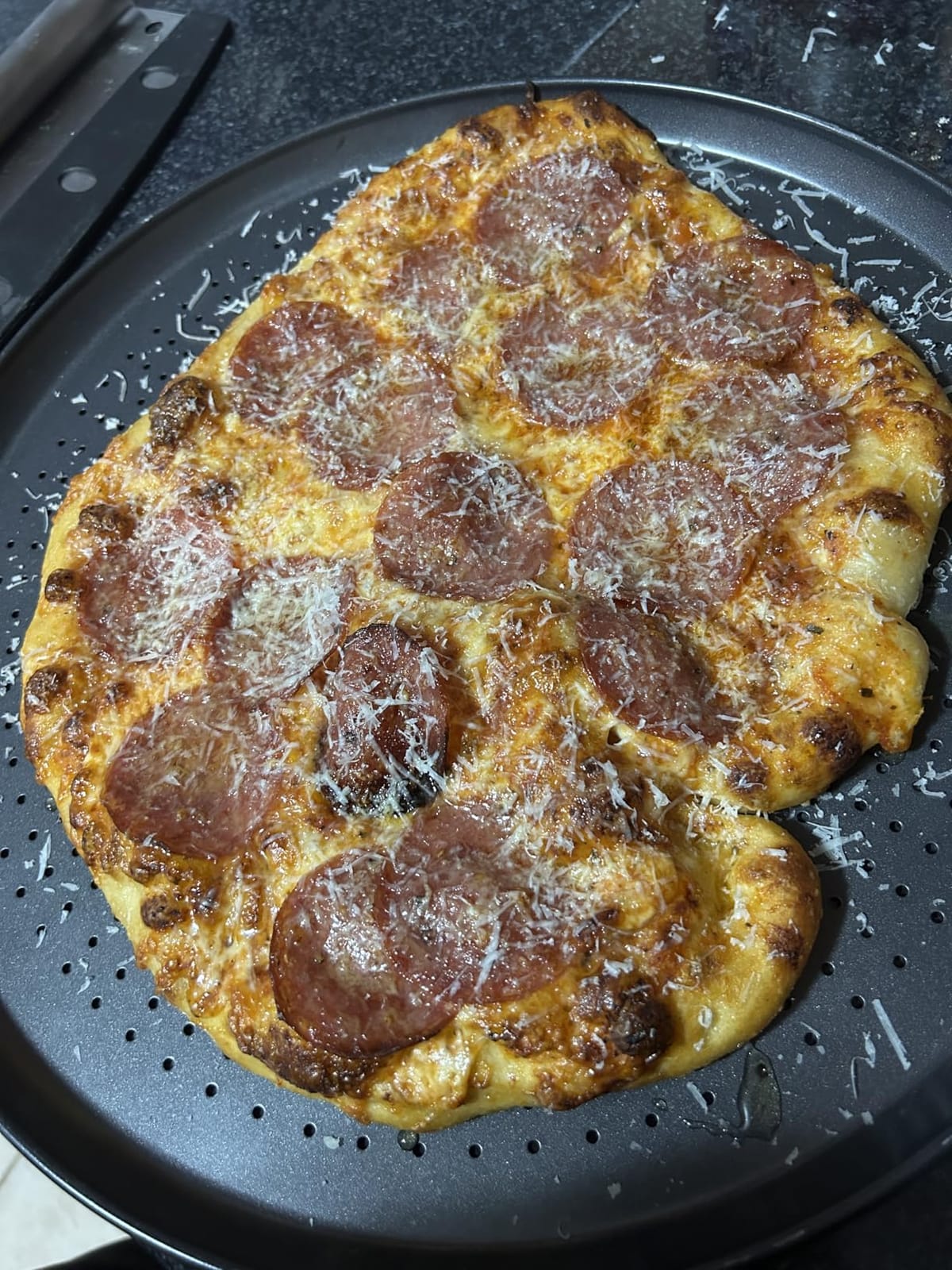
At 13.6 pounds it sits at the lighter end of the 0.25 inch slabs here, which makes back-to-back pizza night less of a gym session. Buyers report even heat distribution across the surface, with no hot corners and no cold middle, on a fairly recent listing.
The carbon steel body resists warping and thermal cracking better than a ceramic stone, so a knock against the oven rail is not a catastrophe. That makes it a sensible first steel for a shared household kitchen where the oven gets used by everyone.
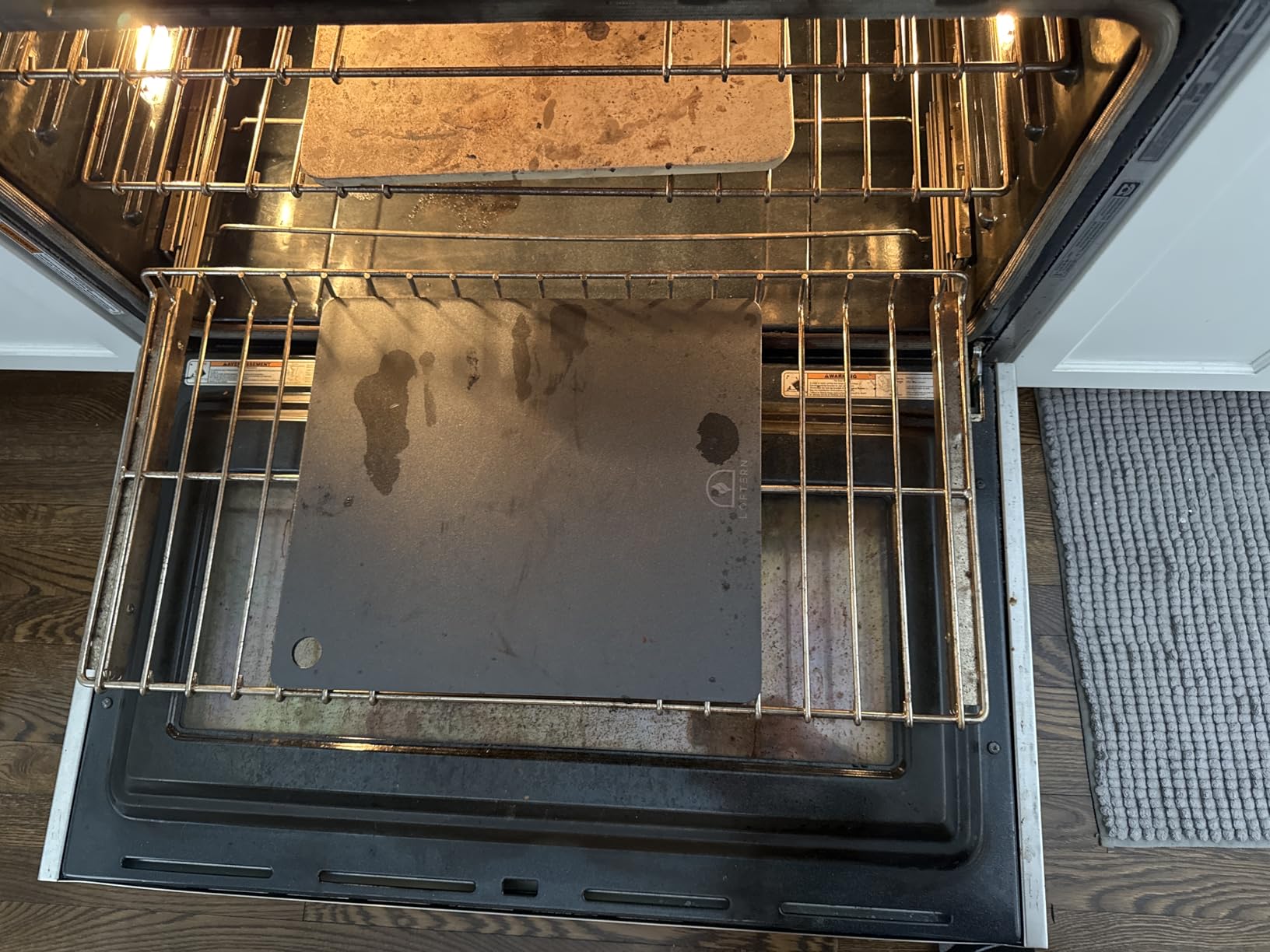
Why versatility is the deciding factor here
If you bake bread on weekends and pizza on Fridays, a single slab removes the need for both a pizza stone and a baking stone. The 14 by 16 rectangle handles a loaf, a tray of flatbreads, or a full-size pie without changing equipment mid-session.
It is also oven, grill, and pizza oven compatible, so the same plate moves from the kitchen range to a charcoal grill for searing. That is a wider use case than most competitors in this roundup support, and it is the reason this one is our versatility pick.
Where it sits below the leaders
The 4.5 average is honest but telling. Buyers who compare it side by side with dedicated baking steel brands describe it as very good rather than exceptional, and the 5 percent one-star share is the second highest in this group. The complaints cluster around consistency, not build quality.
Reviewers also note that the finish is more utilitarian than the sanded-smooth surfaces on the premium steels. Pizzas still release fine, but a little semolina or flour on the surface costs less than it would on a polished slab.
5. Primica Pizza Steel XL: Best for Grilling and Fast Cooks
Primica Pizza Steel XL for Oven & Grill,16″x13.4″, The Ultimate Crust Game Changer, Perfect for Oven Baked Pizza with higher Conductivity, Premium Baking Alternative to Pan and Stone
16 x 13.4 in x 0.25 in carbon steel
5 to 9 minute cooks
About 14.4 lb
Oven and grill ready
Pros
- 84% five-star across 722 reviews
- Cooks in roughly 5 to 9 minutes
- Strong price-to-performance ratio
- Even heat distribution with simple oil upkeep
- Works for frozen and premade pizzas
Cons
- One reviewer reported the plate warping about 1/4 inch out of flat
- XL size misses some non-US oven racks
- Heavier than buyers expect
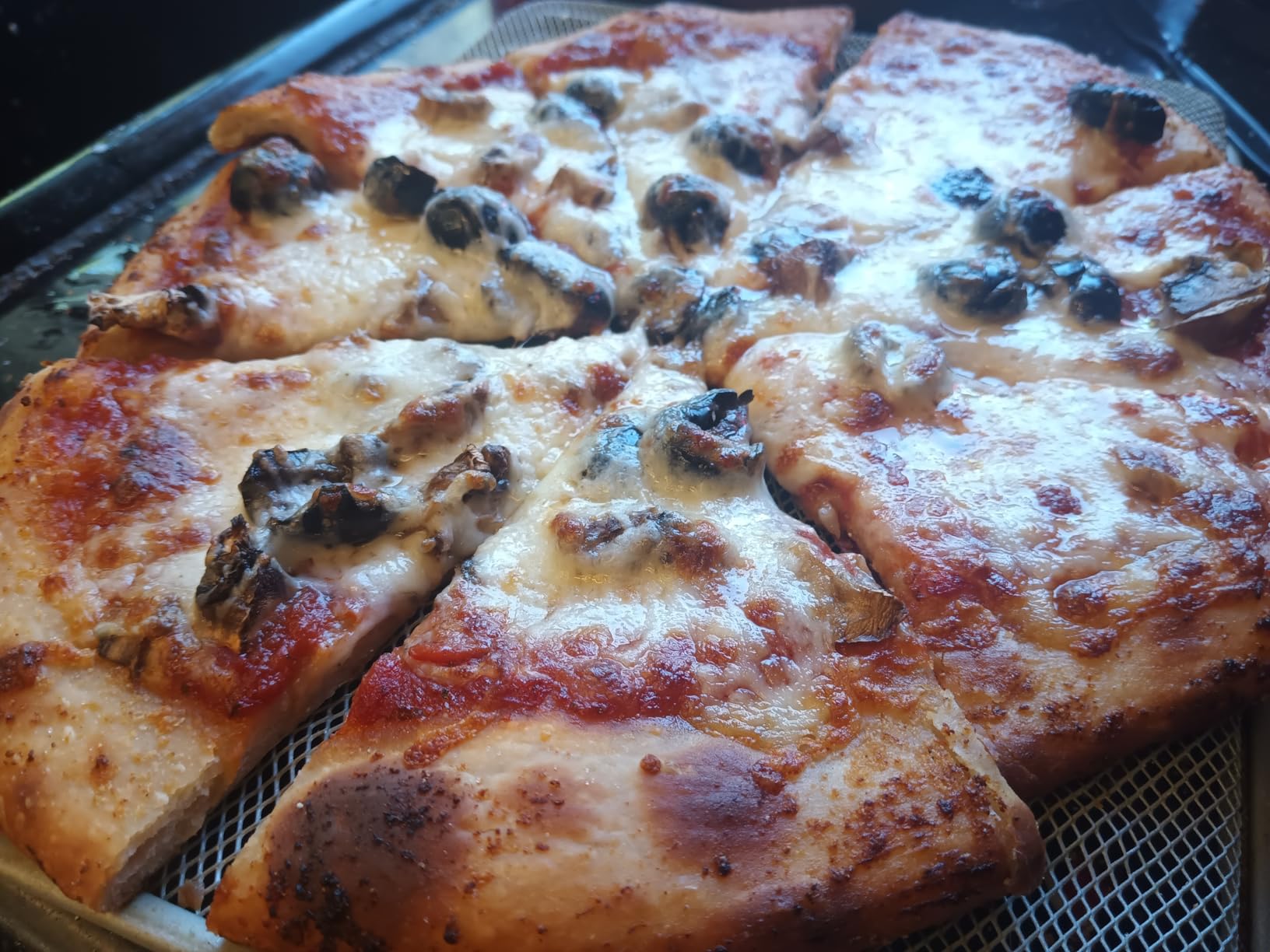
The Primica XL is the value standout of the 4.7-rated group. Reviewers repeatedly say it matches steels that cost substantially more, and the 5 to 9 minute cook times they report are among the fastest in this lineup. It is carbon steel with roughly 20 times the conductivity of a ceramic stone, and it shows.
That extra conductivity has a second benefit that owners mention less often: the surface sheds grease and oil away from the food rather than trapping it underneath. Pizzas come out lighter, and cleanup stays a matter of wiping and re-oiling rather than scrubbing.
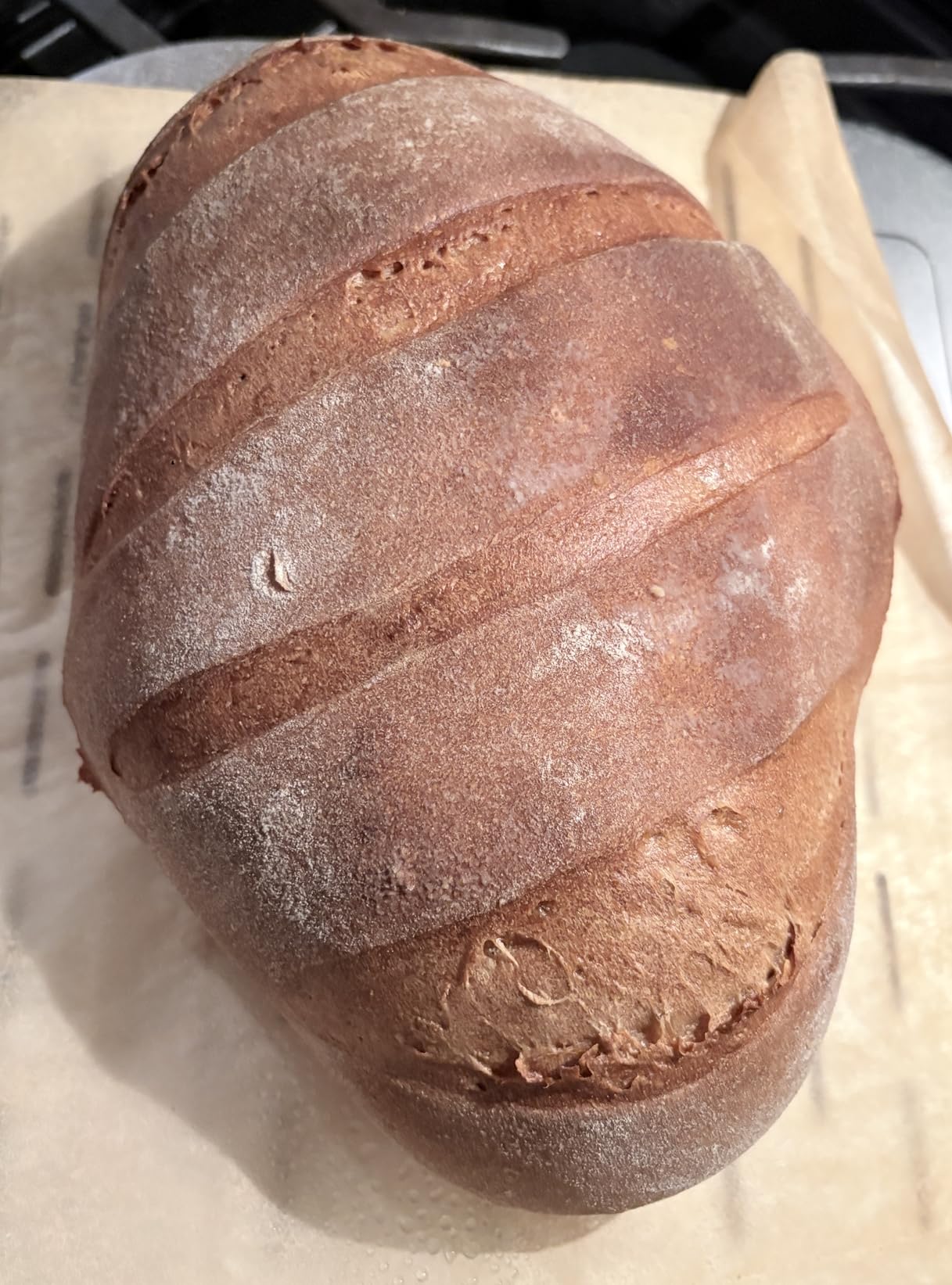
The 16 by 13.4 inch format is a wide rectangle, which suits a stretched dough round better than a square. It is oven and grill compatible, so you can move it to a charcoal grill for a fast sear or a flatbread straight over the coals without a different tool.
Maintenance is unremarkable in the best way. A light oiling after a few cooks is enough, and reviewers report no sticking once the surface has a few bakes on it. The company also offers thicker variants if you want more mass later.
When this steel wins
Buy this one if your pizza nights are frequent and your budget is real. At 722 reviews with 84% five-star, the satisfaction is not thin, and the cook times mean you can put out a few pies in an evening without waiting an eternity between them.
It is also the better choice for a grill user. A slab this conductive drops a sear on quickly and holds it across the surface, and the wide rectangle gives you room to lay out multiple flatbreads at once.
What to keep in mind
One documented case reports the plate developing roughly a quarter inch of warp over time. Warping is not automatic with a 0.25 inch carbon steel slab, but it happens if a cold slab goes into a very hot oven or gets thermally shocked, so avoid the quick temperature swings.
Size is the second caveat. The XL footprint does not fit some non-US ovens, including standard 60 cm trays in Australia. Measure your rack width and depth before ordering, and if you are outside the US, check the dimensions first.
6. The Original Baking Steel 14 x 16: Premium Pick for Provenance
The Original Baking Steel® | Pre-Seasoned & Built to Last | 14″x16″x¼” Ultra-Conductive Pizza Steel for Oven & Grill | Made in USA Since 2012
14 x 16 in x 0.25 in steel
Hand pre-seasoned in Massachusetts
Rated to 1000 degrees
15 lb
Pros
- Invented the category and has been made in Massachusetts since 2012
- Hand pre-seasoned before it reaches you
- 81% five-star reviews cite crisp spotted crusts
- Handles sourdough burgers steaks and cookies
- Wipes clean without soap
Cons
- Highest price in this roundup
- 15 lb is awkward to store outside the oven
- One reviewer reported staining on a first unit
The Original Baking Steel is the name most people mean when they say pizza steel. It has been made in Massachusetts since 2012, and it is the slab most of the written guides and test kitchens refer to. If you want the reference point rather than an alternative to it, this is the one.
It is hand pre-seasoned before it leaves the workshop, so it is ready to cook on day one. That matters most for beginners, because a raw steel demands a seasoning ritual that a lot of first-time owners never complete. You skip that step entirely here.
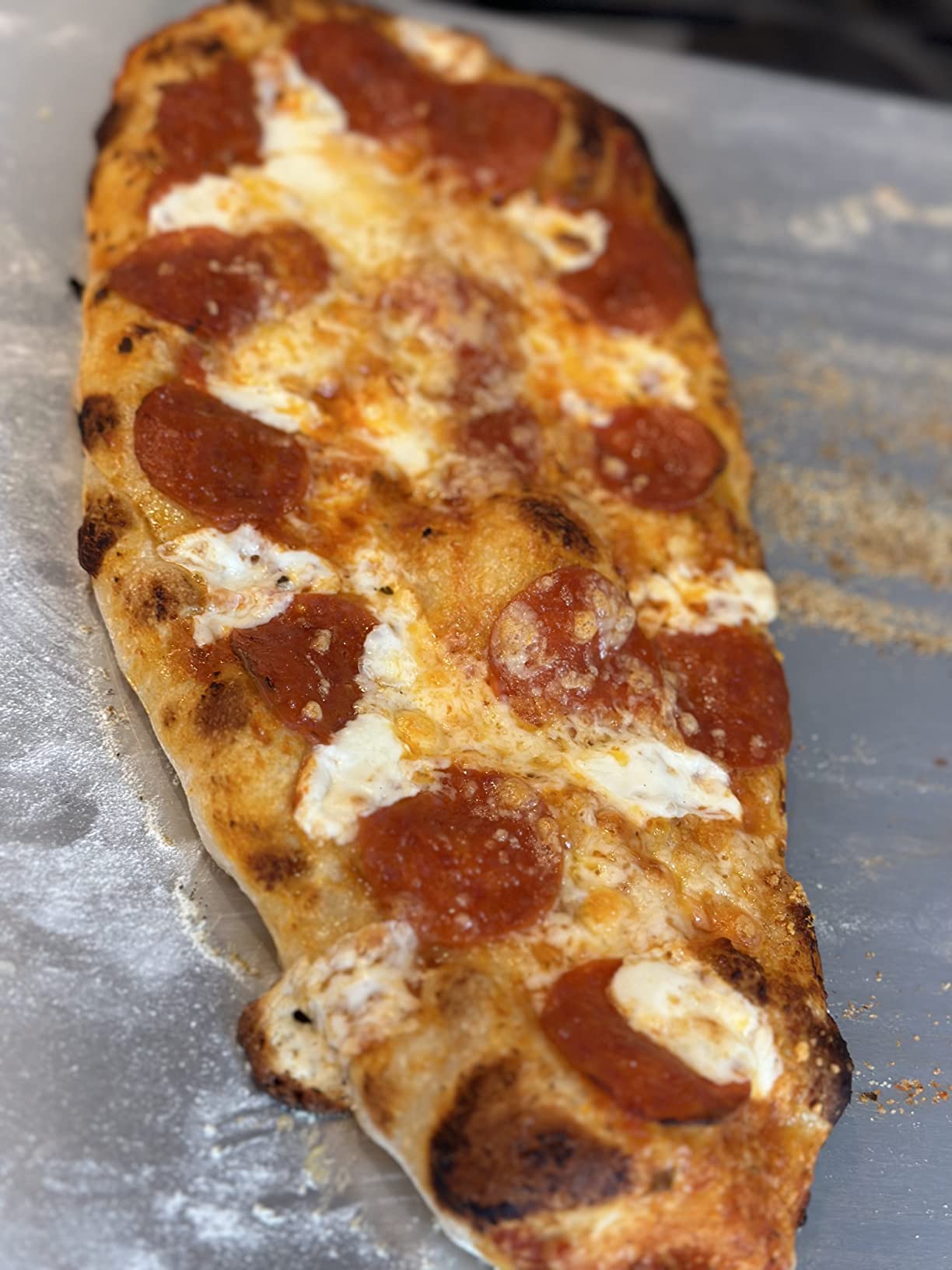
Owners describe a claimed 18 times faster heat transfer than a pizza stone, and their reports back it up with leopard-spotted crusts and consistent browning. The 14 by 16 inch rectangular surface is a proven home-oven footprint, and the 1000 degree rating means it is safe on a grill too.
The same surface works for sourdough, smash burgers, seared steaks, cookies, and calzones. Buyers tend to frame it as a one-time purchase that outperforms the ceramic stone they replaced, and many report owning theirs for years without issue.
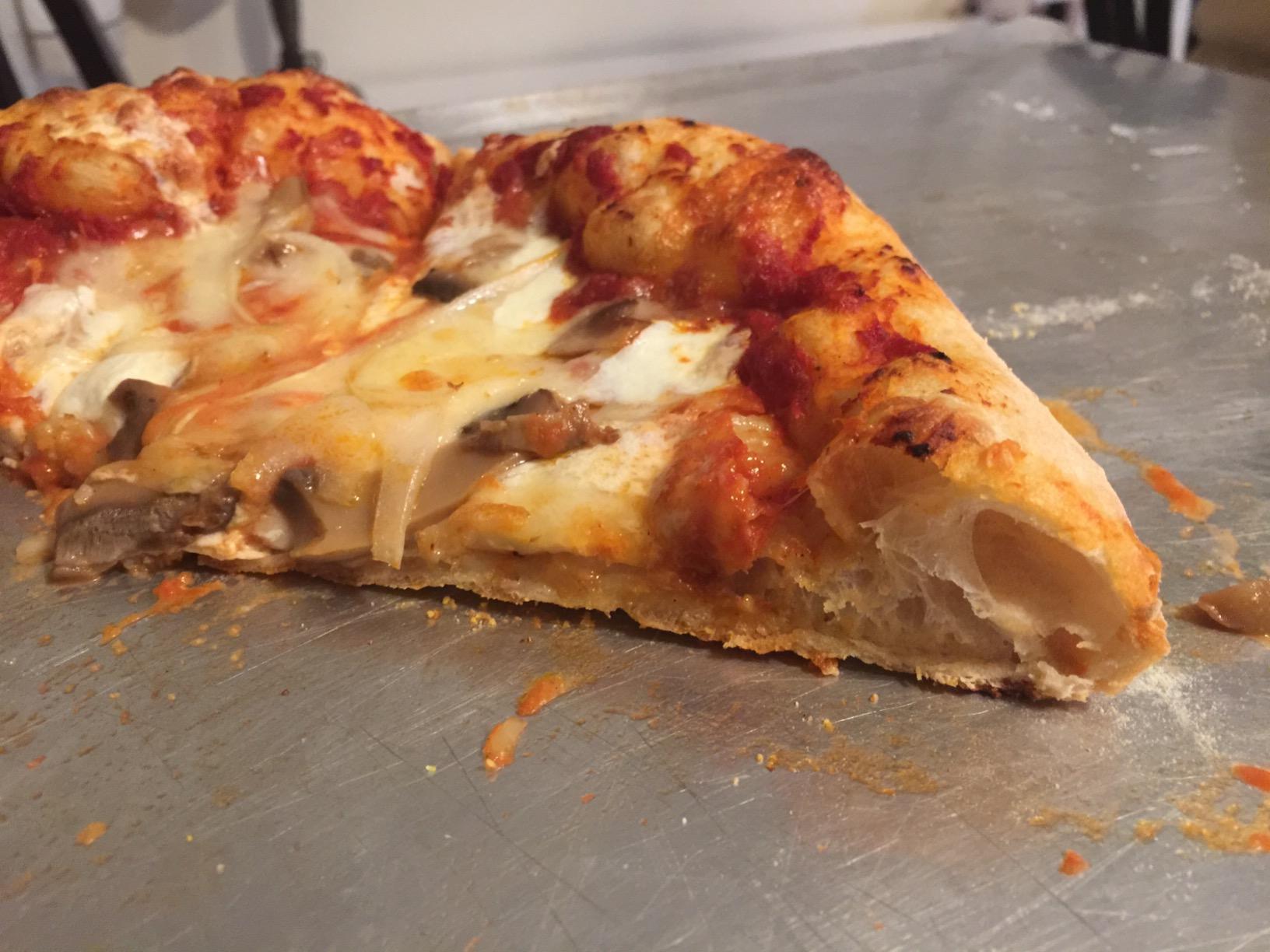
Why beginners should start here
Two things remove friction. The slab arrives seasoned, and the surface is forgiving enough that a launch that is not perfect still slides off cleanly. For a first steel, the difference between confidence and frustration is usually those two details.
The brand history also gives you a reference point. When you later read a technique guide that assumes certain thickness and seasoning behavior, you will know exactly what it is describing, because this is the configuration those guides were written around.
What buyers question
This is the most expensive steel in the roundup, and some owners openly ask whether the gain over a good stone justifies the spend. That is a fair question if you bake once a month. It is much easier to answer if you cook two or more pizzas a week.
At 15 pounds, storage is the practical annoyance. A steel kept outside the oven needs somewhere safe and sturdy, and there is no carrying case in the box. Several owners simply leave it installed instead, which is the easier long-term habit.
7. ThermiChef 16 x 16: Best Cooking Area for Large Pies
ThermiChef 16″ x 16″ Pizza Steel – 1/4″ Steel, 17.6 lbs
16 x 16 in x 0.25 in steel
Cooks pies up to 15 inch
Laser-cut in Minnesota
17.6 lb
Pros
- Largest square cooking area among the 0.25 inch models
- 83% five-star with only 1% one-star
- Laser-cut from a single piece of low-carbon steel
- Crisp crust in 7 to 8 minutes at 525-550 degrees
- Works as grill griddle and stovetop flat top
Cons
- Arrives shot-blasted rather than pre-seasoned
- Laser-cut edges leave a burr some buyers file down
- 17.6 lb is heavy
- Ships with oil that must be washed off first
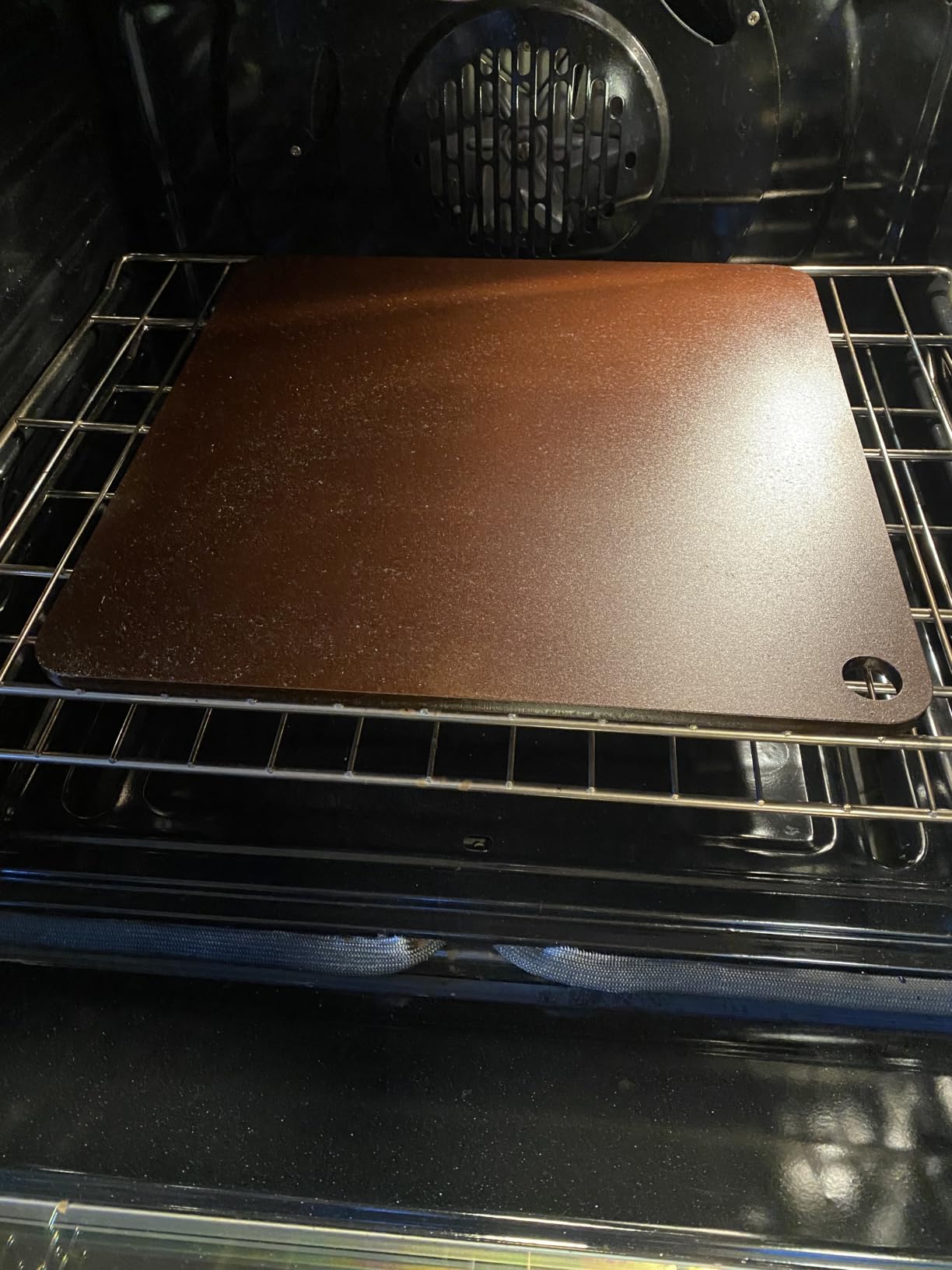
The ThermiChef has the most cooking area of any 0.25 inch slab here. Sixteen inches square is 256 square inches, and because the shape is square rather than rectangular there are no dead corners. Buyers fit pies up to 15 inches across and still have launch room on the edges.
It is laser-cut from a single piece of low-carbon steel in Minnesota, with no Teflon or PFAS coating anywhere. That means no coating to flake and no ceramic to crack. Owners describe it as the upgrade that finally replaced a cracking stone for them.
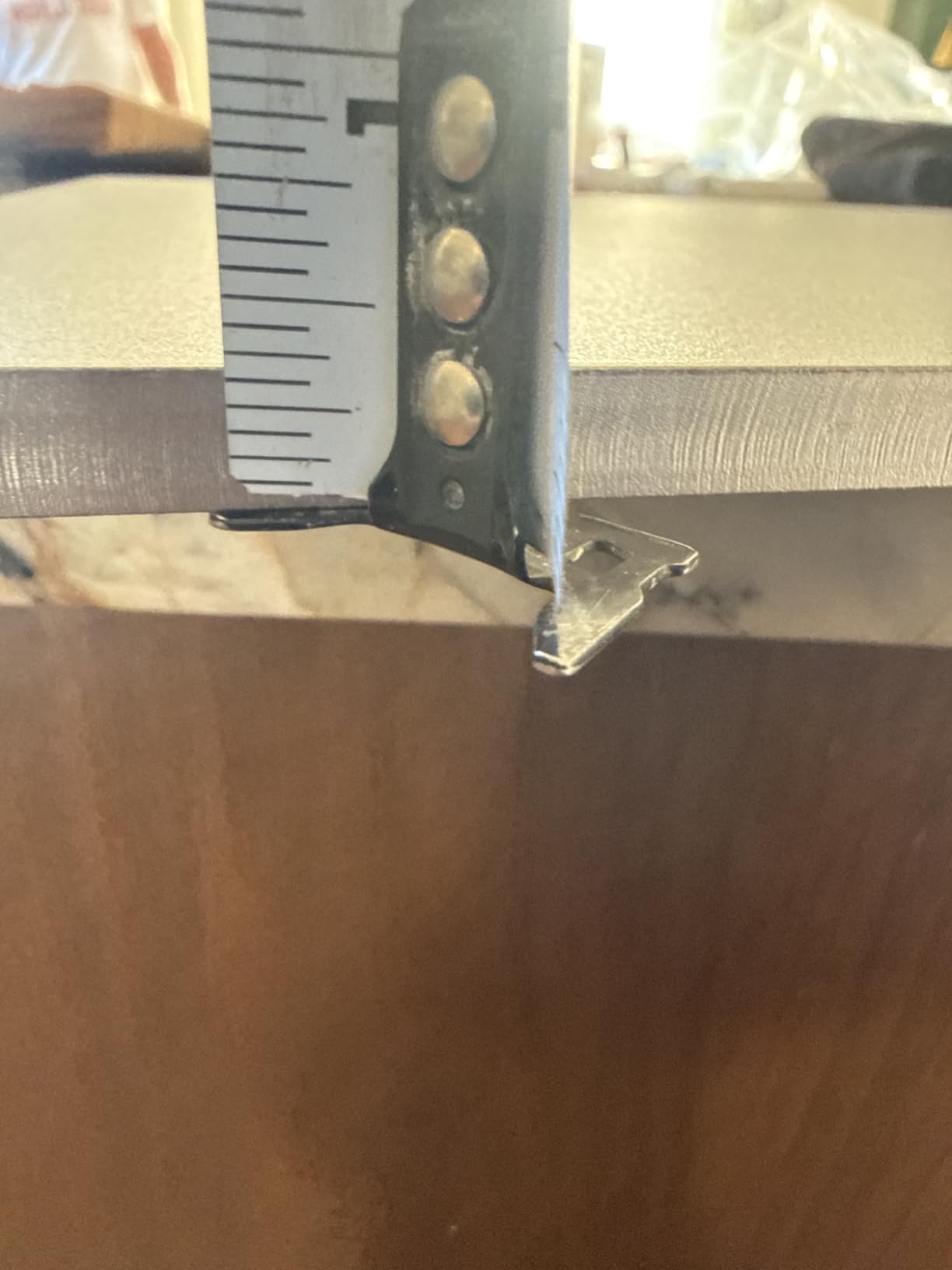
Reported cook times of 7 to 8 minutes at 525 to 550 degrees are a touch longer than the fastest slabs in this list, but that is the trade for a larger surface. The thermal mass is real, and it keeps working through a full 15 inch pie without the corners going pale.
Beyond the oven it works as a grill griddle, a two-burner flat top, and a campfire plate. Buyers cook smash burgers on it and report the same crisp results they get from pizza, which is a good sign for how evenly the steel conducts.
Why the size matters more than the thickness
Cooking area is the underrated variable. A 13 inch square steel caps you at a small pie no matter how good the steel is, while a 16 inch square lets you stretch a proper large pie and still recover it with a peel. If your ambition is a big New York style, this is the geometry you want.
It also works well as a shared surface. One slab, several cooks, no waiting, because there is simply more room for the next dough ball to land while the previous pie is still in the oven.
What to do before the first bake
This is the one steel here that arrives shot-blasted rather than pre-seasoned, with protective oil still on it. Wash the oil off, wipe the surface dry, then run a thin coat of high-smoke-point oil and put it in the oven until it smokes and darkens. Repeat once more and you are seasoned.
The laser cut also leaves a raised burr around the perimeter. Some owners file it smooth with a metal file, which takes five minutes and makes the slab far nicer to handle bare-handed at 500 degrees. It is a small step that pays off every time you reach in.
8. VEVOR 16 x 14.5 x 3/8 Inch: Best Heat Retention, Heaviest Plate
VEVOR Pizza Steel, 16″ x 14.5″ x 3/8″ Pizza Steel Plate for Oven, Pre-Seasoned Carbon Steel Pizza Baking Stone with 20X Higher Conductivity, Heavy Duty Pizza Pan for Outdoor Grill, Indoor Oven
16 x 14.5 in x 3/8 in carbon steel
Pre-seasoned finish
Thumb hole
24.5 lb
Pros
- Only 3/8 inch steel here and the biggest thermal mass
- Pre-seasoned with oxidation and sandblasting
- Reports of four even pizzas in 5 minutes at 500 degrees
- Thumb hole for hanging storage
- Handles gluten-free baking well
Cons
- 24.5 lb is the heaviest item here
- 4.4 average with an 8% one-star share
- 3/8 inch takes a long preheat
- Some variant listings show mismatched dimensions
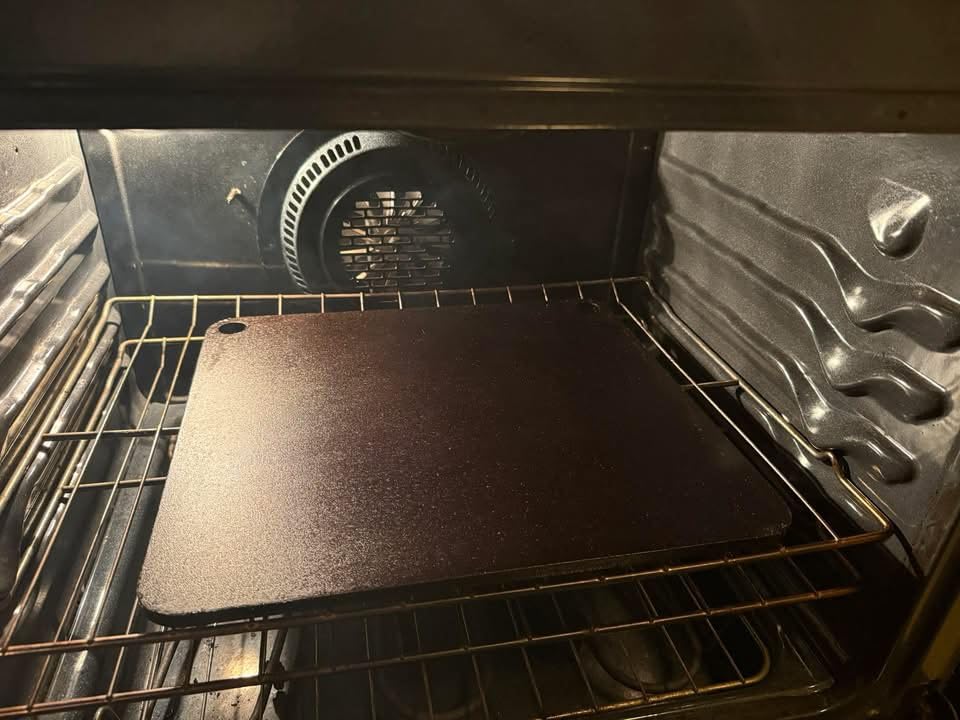
The VEVOR is the thickest steel in this roundup at 3/8 inch, and that extra quarter inch translates into real heat retention. Owners report running four consecutive pizzas that each cooked evenly in about 5 minutes at 500 degrees, which is exactly what you want on a busy pizza night.
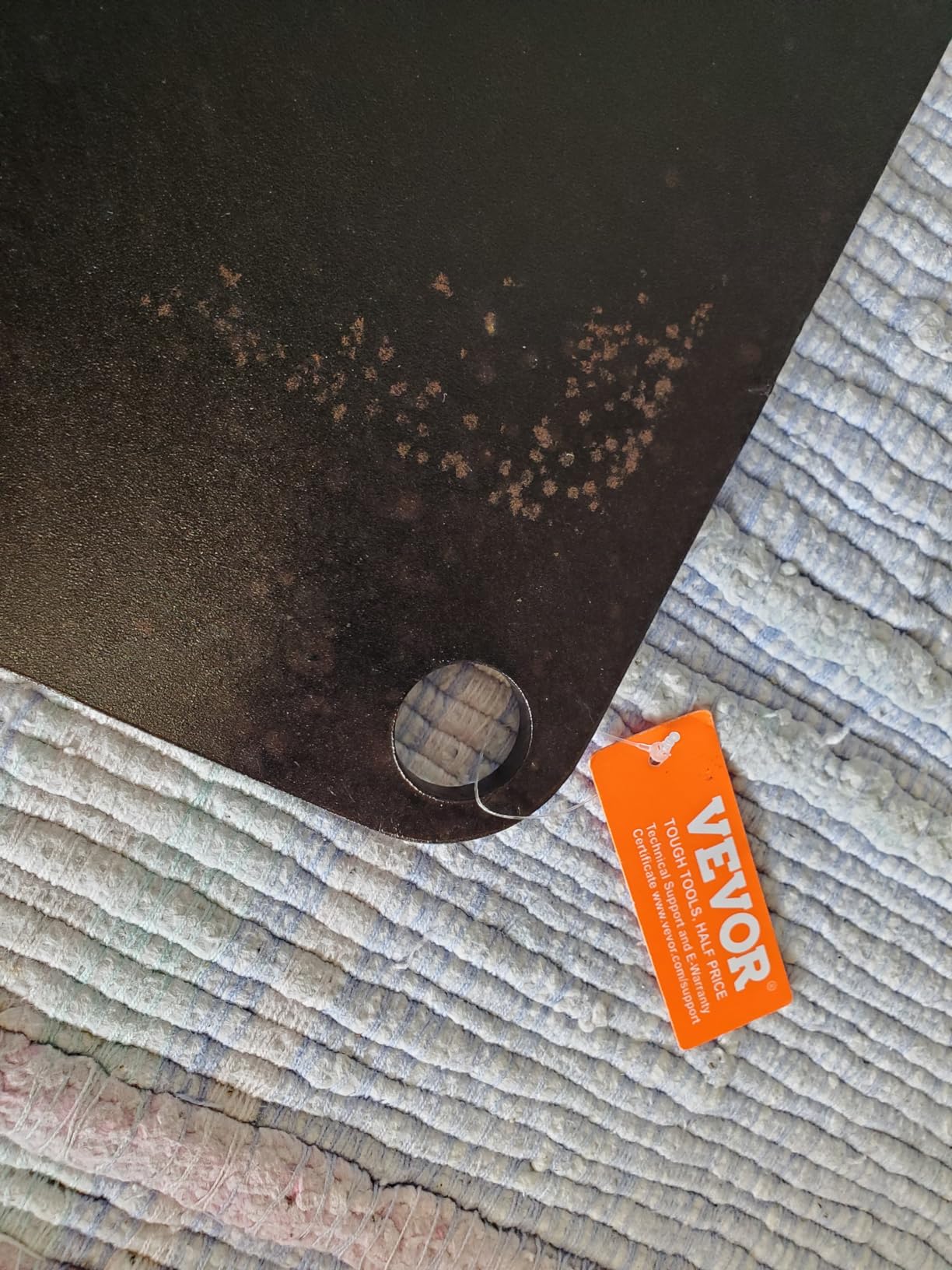
It is pre-seasoned using oxidation and sandblasting, so the surface arrives ready and less prone to immediate rust than a raw plate. The thumb hole and laser-cut polished edges make it easy to hang up and get a grip on, which is a thoughtful detail at this weight class.
It is also the steel reviewers recommend when dough hydration is high or the pie is gluten-free. Those doughs are the hardest to crisp, and the extra mass keeps the bottom cooking through a long bake without the surface dropping.
The claimed 20 times the heat conductivity and 2 times the heat capacity of a ceramic stone are consistent with what the higher-end slabs claim, but here the thickness reinforces them. This is a lot of hot metal, and that is precisely the point.
Who should spend the extra weight
If you bake several pizzas back to back, cook wetter doughs, or run a pizza oven that genuinely gets hot, the 3/8 inch is worth the tradeoff. The temperature recovery between bakes is the feature you feel most, and it is the reason this plate holds its rating with heavy pizza-night users.
It is also usable for bread, quiche, and roasted vegetables on a grill, and the thumb hole means storage is solved. Hang it on a wall hook when it is not in use and the weight stops being a daily problem.
What to weigh up first
At 24.5 pounds, this is the heaviest item here, and owners specifically warn about dropping it on a foot. Treat the two-hand lift as non-negotiable, or commit to leaving it in the oven permanently. Do not try to slide a hot plate out one-handed while holding dough.
The 3/8 inch thickness also means a long preheat, which catches people out. Plan for the longest warm-up of any steel in this list, and verify surface temperature with an infrared thermometer before you launch. Reviews also flag that some other sizes in this variant family arrive with measurements that do not match the label, so measure the plate when it arrives.
Should You Get a 1/4 Inch or 3/8 Inch Baking Steel?
For a standard home oven, a 1/4 inch slab is enough. That is the thickness behind seven of the eight steels here, and it is where the physics of thermal mass stops paying off in a kitchen oven capped around 550 degrees. A 3/8 inch plate makes sense when you run a very hot outdoor oven, bake back to back often, or cook unusually wet dough.
Thickness is not the only variable that decides your result. The oven, the preheat, and the flour you use under the dough matter as much as the gauge of the metal. If you are still choosing, read the sections above before you commit.
Match the thickness to the pizza style
New York style and thin crust crusts benefit from a long, hot bake on a heavy surface, so a 1/4 inch slab at 500 to 550 degrees is the right tool. Neapolitan pies cook fast and want a blistered, soft bottom, which the same 1/4 inch thickness delivers with less scorching than a heavier plate.
Detroit style is baked in a pan at lower temperature and longer, so the steel is not doing the work there. If thick, pan-style pizza is your main event, a stone or the pan itself is still the better buy. A steel earns its price on stretched, oven-baked dough.
Gluten-free and very high hydration doughs are the hardest to crisp, and there the 3/8 inch plate earns its extra weight by pushing heat through a long bake without the surface dropping.
Measure the oven rack before you order
Take a tape measure to the rack, not to the oven cavity. You need the internal width and depth between the rails, and you need about an inch of clearance on each side for air to move. A slab that fills the rack edge to edge slows recovery between pizzas.
Check the door clearance too. Some domestic ovens let a 16 by 16 square slab in only at an angle, which is how an expensive steel ends up stored against a wall. If you also want a dedicated outdoor setup, our outdoor pizza oven guide covers the temperature ranges that change the thickness answer.
Pre-seasoned or raw steel, and what seasoning means
Pre-seasoned means the surface already has a polymerized oil layer, so you can cook on it immediately. Raw or shot-blasted steel needs an initial cycle: wash off any protective oil, dry the plate, apply a thin film of high-smoke-point oil, and bake it until it darkens and smokes. Repeat once. It takes an hour of oven time and then never really again.
For a beginner, pre-seasoned removes a real failure point. Many owners abandon a raw steel before the first pizza because the ritual sounds harder than it is. If you do buy raw, treat the first two bakes as seasoning bakes rather than dinner.
Carbon steel, not stainless
Shiny stainless steel is a poor choice for a baking steel, and the forum consensus on this is firm: stainless gives up very little infrared heat transfer to the dough, so the crisp underside you are buying for largely does not happen. Every steel in this roundup is plain carbon steel, and that is deliberate rather than incidental.
Look for A36 or S235JR steel if a listing names a grade. These are the common structural carbon steels sold as plate, and cutting your own from a hardware store slab is a legitimate route that enthusiasts report performing as well as commercial purchases. It does require drilling lifting holes and a seasoning cycle.
How to Preheat, Launch and Finish on a Baking Steel
Preheat is where most disappointing pizza results are actually decided. A steel that has only been in a hot oven for 15 minutes looks hot and behaves cool, and the crust comes out pale and floppy. Owners on the pizza forums almost universally point to a 45 to 60 minute preheat as the difference.
Verify rather than guess. An infrared thermometer aimed at the steel should read around 500 degrees before you commit a dough ball to it. If it reads low, give the oven another fifteen minutes. This single habit fixes more bad pizzas than any equipment change.
The full cook protocol
Place the steel in the upper third of the oven, set to the oven’s highest pizza setting, and preheat for 45 to 60 minutes. Position matters more than people expect: a steel in the lower third cooks the top of the pie before the bottom, and a steel in the middle splits the difference poorly.
Stretch the dough, top it, and launch from a peel dusted with semolina. Shake the peel first to knock off loose flour, or the dough will drag and stick. Once the pie is on the steel, rotate it at the 3 minute mark if your oven runs hot on one side.
Then use the trick apartment oven cooks rely on: bake for 5 to 6 minutes on the steel, then move the whole steel to the broiler for 2 minutes. That finishing burst is what produces leopard spotting in an oven that could not otherwise reach pizza-oven temperatures, and it works even on very wet dough.
If the dough sticks
Sticking in the first several bakes is normal on a new steel, and it usually means seasoning rather than a defective product. Lift the edge gently with a thin metal spatula or a bench scraper, slide the peel underneath, and keep the plate moving.
Prevention is easier than rescue. Flour or semolina the surface lightly, never touch the raw dough on the steel, and keep a light oil film on the steel between cooks. If dough welded itself down hard, do not yank, and do not put the plate under cold water. Let it cool and work it loose warm.
Seasoning, Cleaning and Rust Prevention
Steel care is closer to cast iron care than to stone care, and it is much less work than either. Hand wash with warm water, dry immediately, and put a very thin coat of oil on the surface. That is the whole routine, and the reason a 15 pound slab can last a decade.
Drying is the part people skip, and it is the part that causes rust. Forum complaints about rust spots after a few months almost always trace back to a steel that was washed and then left to air dry near a sink overnight. Towel it dry, then let it air cool, and rust becomes rare.
The first-time seasoning routine for raw steel
Wash off any factory oil with hot water and detergent, dry it, and heat it to 500 degrees. Rub a very thin film of flaxseed oil or another high-smoke-point oil over the entire surface, wipe off the excess, and return it to the oven until the surface smokes and turns dark. Let it cool, repeat once, and the steel is ready.
The patina that builds from there is not damage. It is the polymerized oil layer doing its job, and it is what keeps the pizza from welding itself to the metal. Once it is established, re-season only when the surface looks dry or pale.
What to do about warping
Most warping comes from thermal shock, not from bad steel. Moving a cold plate into a very hot oven, washing a hot plate under cold water, or setting a heavy pan on it while it is hot all create the stress that bends metal. Let the steel warm up inside the oven instead of carrying it straight from a cold cupboard.
A thin warp is usually cosmetic and will still bake evenly, since you can live with a slight curve. A severe warp is a manufacturing or heat-abuse issue, and it is one reason to check the plate on arrival and measure it against the label.
When to choose a pan instead
A pizza pan is cheaper, lighter, and no seasoning required. If you mostly make frozen or premade pies, a perforated pan is a perfectly sensible tool. A steel earns its cost when you stretch your own dough and want bottom heat, and no pan delivers that.
Pizza Steel vs Pizza Stone: When a Stone Still Wins
A cordierite stone is lighter, cheaper, and requires no seasoning at all. It also has one genuine advantage: at 900 degrees and above, as in a serious outdoor pizza oven, a stone is the better surface. Steel that hot can scorch the bottom of a pie before the top sets, which is why outdoor ovens usually ship with a stone.
Inside a domestic oven the calculus flips. Steel conducts heat roughly twenty times faster than ceramic and holds twice the heat capacity, so the same 500 degree oven produces a browned, spotted bottom on steel and a pale one on stone. The advantages of a steel also include never cracking, working on a grill or stovetop, and doubling as a bread surface.
For most home cooks, the decision comes down to how often you bake. If you make pizza once or twice a month on a tight budget, a good stone is the sensible purchase. If pizza is a weekly event, the steel is the tool that closes the gap between your oven and a pizzeria. If you are moving up to a hotter oven entirely, start with our wood fired pizza oven picks and keep a stone in mind for the highest bakes.
Frequently Asked Questions
Is a baking steel the same as a pizza steel?
Yes, they are the same product with two different names. Sellers use baking steel, pizza steel, and sometimes baking stone for the same slab of thick carbon steel, even though the last term is technically wrong. Check the thickness and material rather than the label.
Should I get a 1/4 or 3/8 inch pizza steel?
For a standard home oven, a 1/4 inch slab is the right choice. It reaches temperature in a sane preheat, holds heat across back-to-back pizzas, and weighs 13 to 16 pounds. Move to 3/8 inch only if you run a very hot outdoor oven, bake several pizzas in a row, or cook unusually wet dough that needs sustained bottom heat.
What is the best material for a pizza steel?
Plain carbon steel, ideally A36 or S235JR. These structural grades are cheap, tough, and conduct heat well. Avoid shiny stainless steel, which gives up very little infrared heat transfer to the dough and largely defeats the purpose of a baking steel.
What are people saying about the VEVOR pizza steel in reviews?
Reviewers credit the 3/8 inch VEVOR with serious heat retention, including four consecutive pizzas cooking evenly in about 5 minutes at 500 degrees, and it handles gluten-free dough well. The recurring complaints are the 24.5 pound weight, a long initial preheat, and some variant sizes arriving with measurements that do not match the label.
How long should I preheat a baking steel, and how do I clean it?
Preheat for 45 to 60 minutes at your oven’s highest pizza setting, ideally in the upper third, and confirm the surface reads around 500 degrees with an infrared thermometer. To clean, hand wash with warm water only, dry it immediately, and wipe on a very thin coat of oil. Drying promptly is what prevents rust.
Our Final Verdict on the Best Baking Steels for Pizza
The Artisan Steel 16 by 14.25 is the best baking steel for most home ovens, pairing a sanded low-friction surface with solid American steel and a 4.7 rating across more than a thousand reviews. The Nerd Chef is the pick if you want a lifetime guarantee and finger holes, and the Hans Grill PRO XL is the value option with a peel in the box and a footprint that fits small ovens.
Whatever you choose, preheat it properly for 45 to 60 minutes, verify the surface with an infrared thermometer, and dry it the moment you wash it. Those three habits matter as much as the steel. If your oven is the limitation rather than your equipment, our countertop pizza oven picks cover the next step up.