
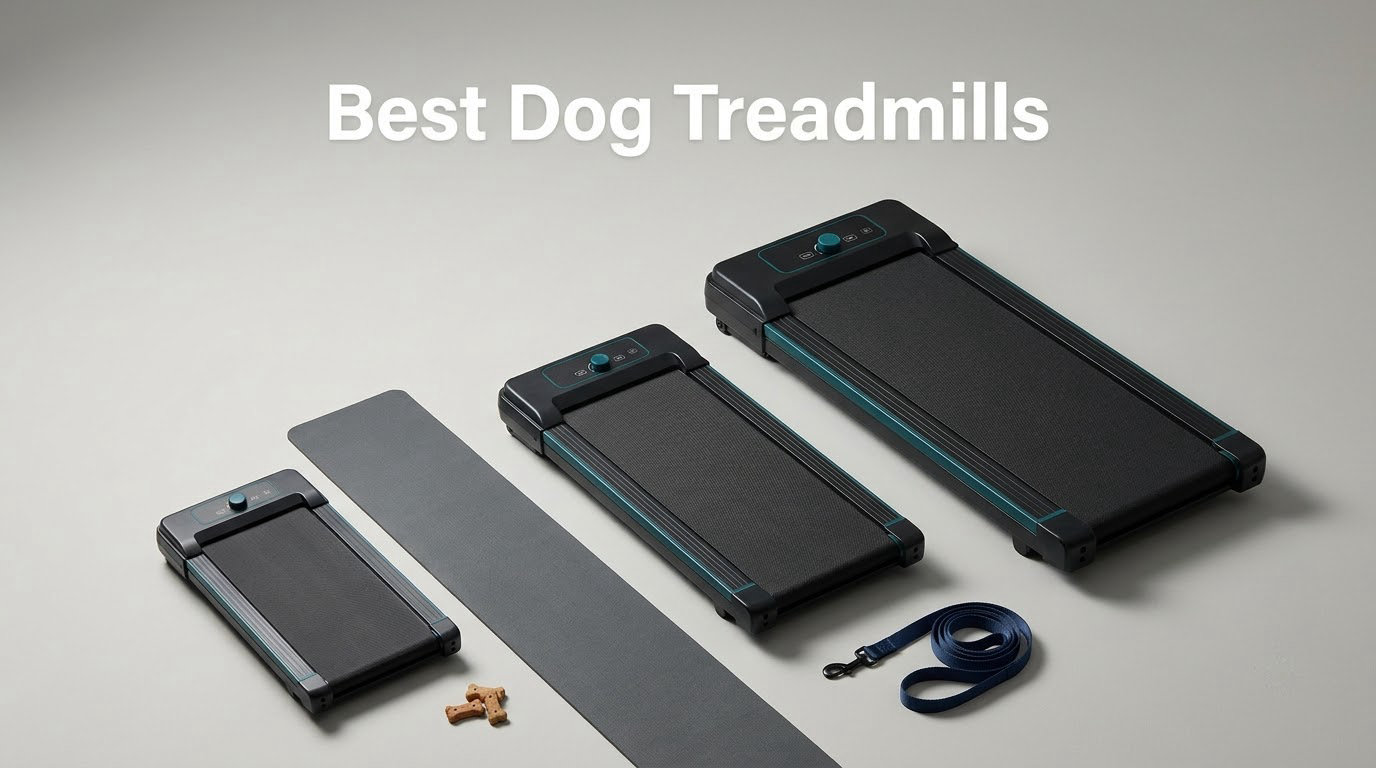
A dog treadmill is a low-speed, wide-belt running machine built for pets rather than people. It gives your dog a consistent indoor walk on any day the weather, smoke, your schedule or a recovery window gets in the way, and most pair a flat running surface with side barriers, a tether bar and speeds from a slow walk to a jog.
We spent weeks reading the specification sheets, the owner reviews and the forum threads behind these eight machines before picking anything. What came out of that is a lineup that splits cleanly into two families. Motorized treadmills run a belt at a speed you set, and slatmills have no motor at all, so the dog sets the pace and can stop whenever it wants.
That distinction matters more than any single spec, and owners on r/dogs and r/AustralianShepherd say the same thing in different words: the machine has to fit your dog’s stride, not just its weight. Owners also keep the treadmill framed as a partial solution that takes some of the burden off, rather than a replacement for real walks outside. If you are also mapping out the rest of your setup, our picks for the best dog kennels and the best wireless dog fences cover the containment side of the same problem.
Last updated for 2026. Specs were re-checked against the current listings before publication, and every rating and review count below is the verbatim figure shown on the product page.
Table of Contents
- Top 3 Picks for the Best Dog Treadmill Picks for 2026
- All 8 Dog Treadmills at a Glance in 2026
- 1. Lifepro PawRunner: Best Overall Dog Treadmill
- 2. FYC Dog Treadmill: Best Value Motorized Option
- 3. PawPaw’s Slatmill: Best Dog Treadmill for Large Dogs
- 4. CIIHI Dog Treadmill: Best for Nervous Dogs
- 5. XMKEY Dog Treadmill: Best Cushioned Running Belt
- 6. HotFeed Slat Mill: Best Fiberglass Dog-Powered Track
- 7. Petbobi Dog Treadmill: Best for Small Spaces
- 8. GYMAX 3-in-1 Treadmill: Most Versatile Design
- Are Dog Treadmills Worth It?
- How to Train Your Dog to Use a Dog Treadmill
- How to Choose a Dog Treadmill in 2026
- Frequently Asked Questions
- Final Verdict: The Best Dog Treadmill for 2026
Top 3 Picks for the Best Dog Treadmill Picks for 2026

Lifepro PawRunner
- 0.5 hp motor and 12 preset programs
- 48 x 22.8 inch deck
- 130 lb dog capacity
- Safety key and emergency stop
FYC Dog Treadmill
- 0.5 to 4.0 mph speed range
- 38 x 14.2 inch deck
- 220 lb load capacity
- Remote with 12 programs

PawPaw’s Slatmill
- Dog powered with no motor
- 330 lb capacity
- Solid wood track on carbon steel
- Adjustable height
All 8 Dog Treadmills at a Glance in 2026
Every machine below is listed with the same set of figures so you can compare them directly. Weight capacity is a structural claim about the frame, so read it next to the running surface dimensions, not on its own.
| Product | Specs | Action |
|---|---|---|
| Lifepro PawRunner |
|
Check Latest Price |
| FYC Dog Treadmill |
|
Check Latest Price |
| PawPaw’s Slatmill |
|
Check Latest Price |
 CIIHI Dog Treadmill CIIHI Dog Treadmill |
|
Check Latest Price |
 XMKEY Dog Treadmill XMKEY Dog Treadmill |
|
Check Latest Price |
 HotFeed Slat Mill HotFeed Slat Mill |
|
Check Latest Price |
 Petbobi Dog Treadmill Petbobi Dog Treadmill |
|
Check Latest Price |
 GYMAX 3-in-1 Treadmill GYMAX 3-in-1 Treadmill |
|
Check Latest Price |
1. Lifepro PawRunner: Best Overall Dog Treadmill
Lifepro PawRunner Dog Treadmill for Small & Medium Dogs, Remote Control
130 lb dog capacity
48 x 22.8 inch deck
0.5 hp motor
12 preset programs
LCD and remote
Pros
- Quiet motor that does not startle most dogs
- Assembly reported at around 20 minutes
- Compact four foot footprint
- Remote plus LCD and 12 programs
- Safety key and emergency stop
Cons
- Short belt limits it to shorter stride breeds
- Side guards feel flimsy
- Does not fold for storage
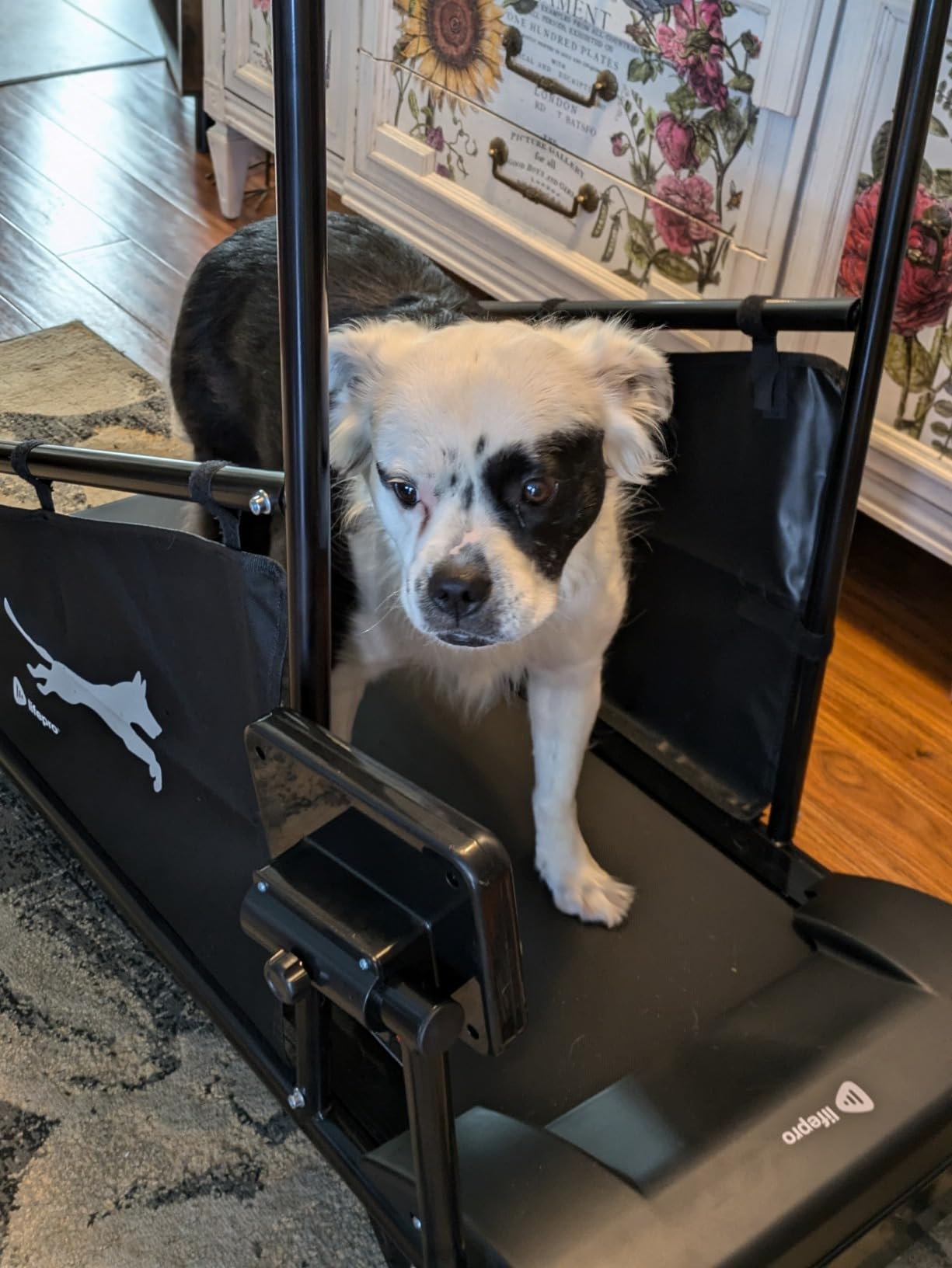
The Lifepro PawRunner is the one we recommend first, and the reason is the combination of review volume and motor noise. At 262 reviews it carries the largest owner history in this group, and owners repeatedly mention that the motor did not frighten their dog, which is the most common reason a treadmill gets abandoned in week one.
It is also the easiest to place in a room. At 47 pounds with a 48 by 22.8 inch footprint and built-in wheels, it moves between the living room and a home office without a fight. The manufacturer quotes roughly a 10 minute install, and owners put their own assemblies closer to 20 minutes.
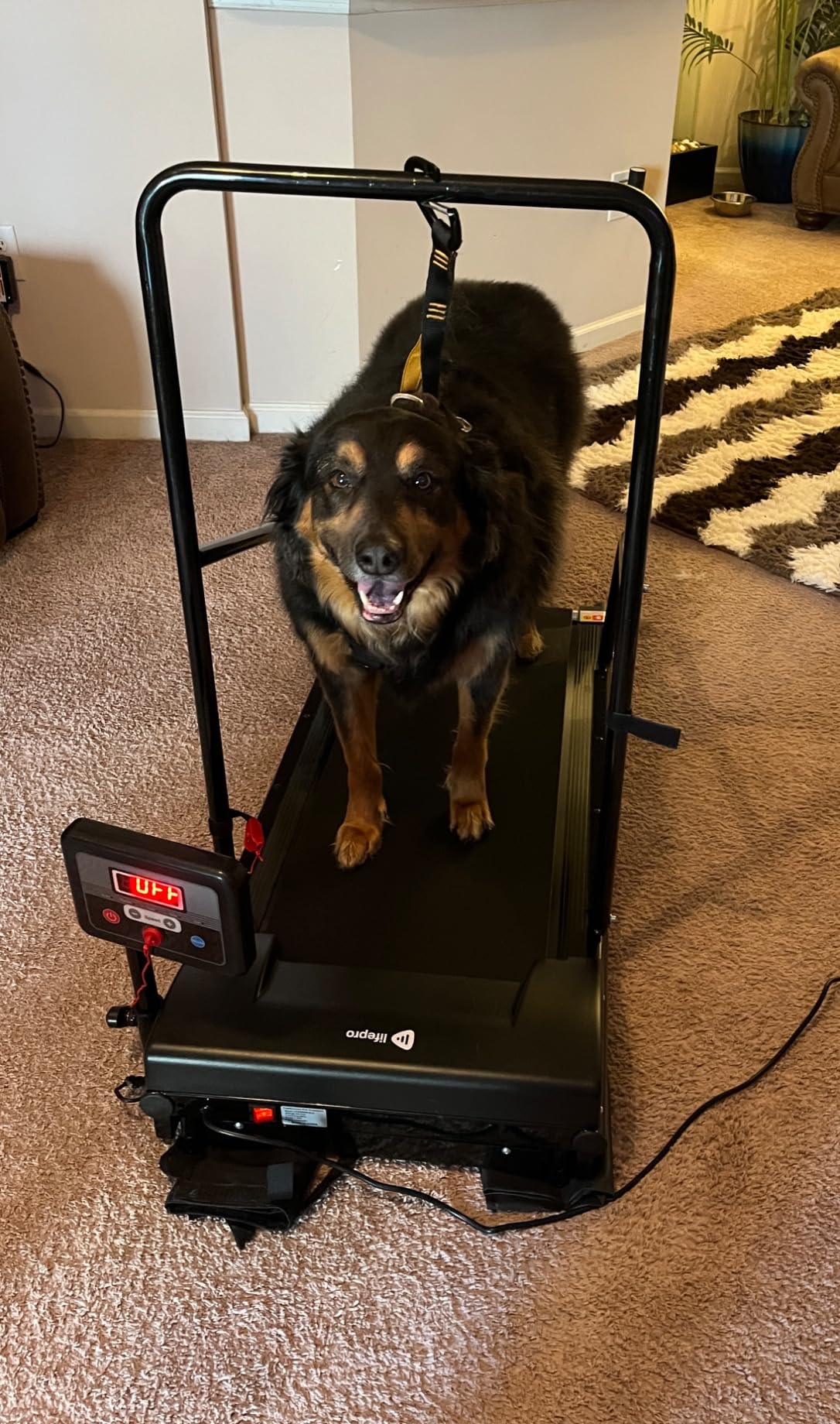
Where it falls short is belt length. The running area suits shorter-gait dogs well, but owners with Collies, Belgian Malinois and German Shepherds report their dogs outgrowing it and reaching the back of the track. Treat the 130 pound figure as a comfort limit rather than a structural one for those breeds.
Two smaller annoyances come up repeatedly. The side screen and guard attachments feel flimsy to owners who have dogs that lean outward, and the alert beep plus the awkward access point for belt lubrication get mentioned often enough to be worth knowing before you buy.
Why the PawRunner works for most households
Quiet operation is the deciding factor for a lot of owners, and this machine delivers it. The remote control means you can set speed and timing from the sofa, and the safety key plus emergency stop give you a supervised session without hovering over the console.
Bluetooth connectivity and twelve preset programs are nice touches, and manufacturer support is reported as responsive when parts go missing.
When to skip the PawRunner
Skip it if your dog is a long-stride working breed, or if you live in a home where floor space is genuinely tight and you need something that folds flat. It also does not fold, so plan where it will live before it arrives.
2. FYC Dog Treadmill: Best Value Motorized Option
Treadmill for Small & Medium Dog with Remote, Dog Running Training Machine
0.5 to 4.0 mph range
38 x 14.2 inch deck
220 lb load
2.5 hp motor
12 programs
Pros
- 0.5 mph low end suits senior and post surgery dogs
- Compact body that relocates easily
- Remote for speed and timing changes
- Tracks time distance and calories
- Smooth and quiet for its size
Cons
- Walking board under the belt cracked for one owner
- Belt feels slippery at first
- Heavy to unpack alone
The FYC treadmill is the pick if you want a lot of machine for the money and you are training a dog that needs to go slowly. The 0.5 mph floor is the standout number here, because that is the speed range that makes sense for a senior dog, a puppy or a dog coming back from surgery.
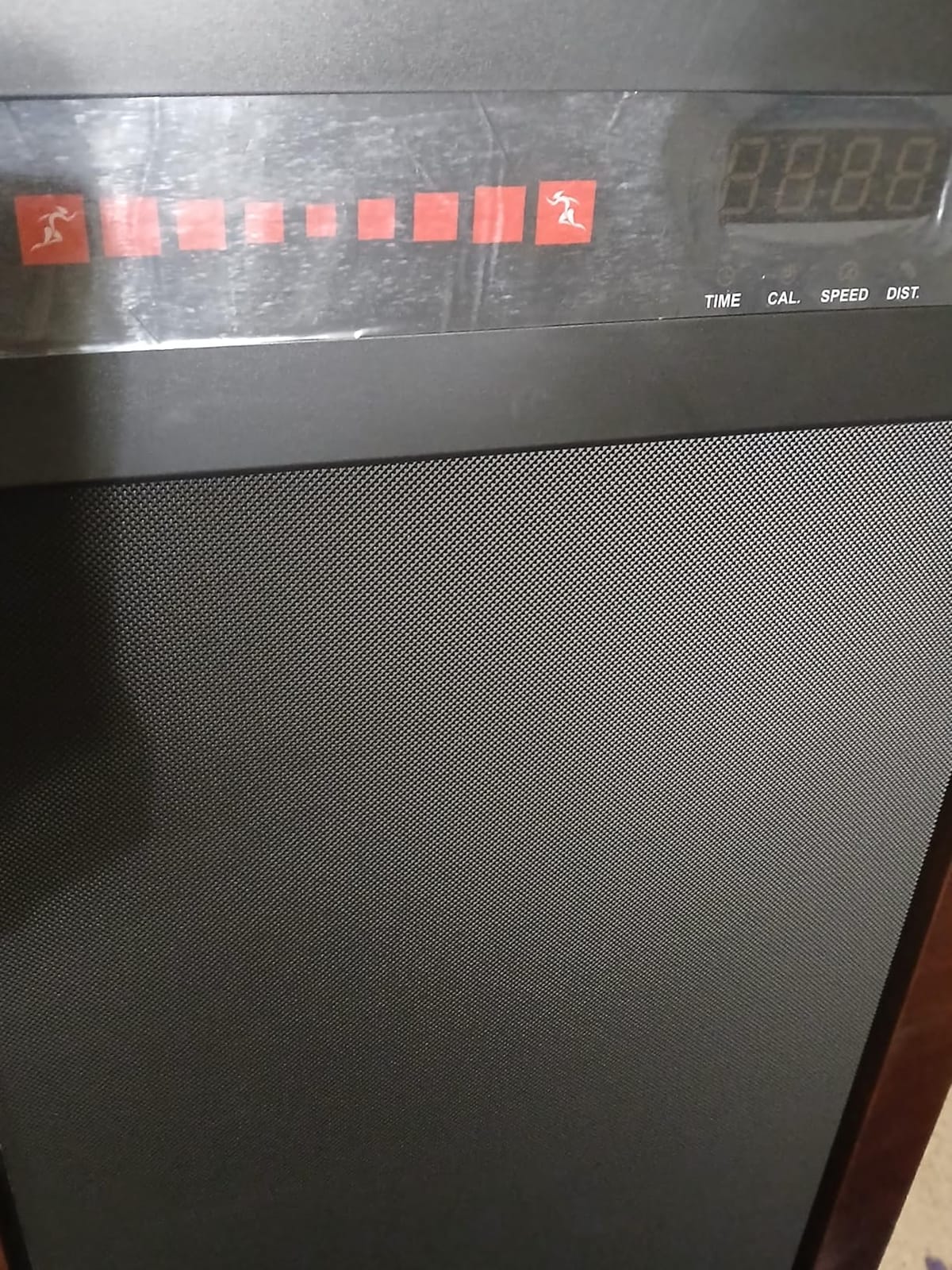
It runs from 0.5 to 4.0 mph with twelve preset programs, and the remote lets you change speed and timing without walking over to the machine. Owners also like that it tracks calories, distance and time so a short rehabilitation session can be measured rather than guessed.
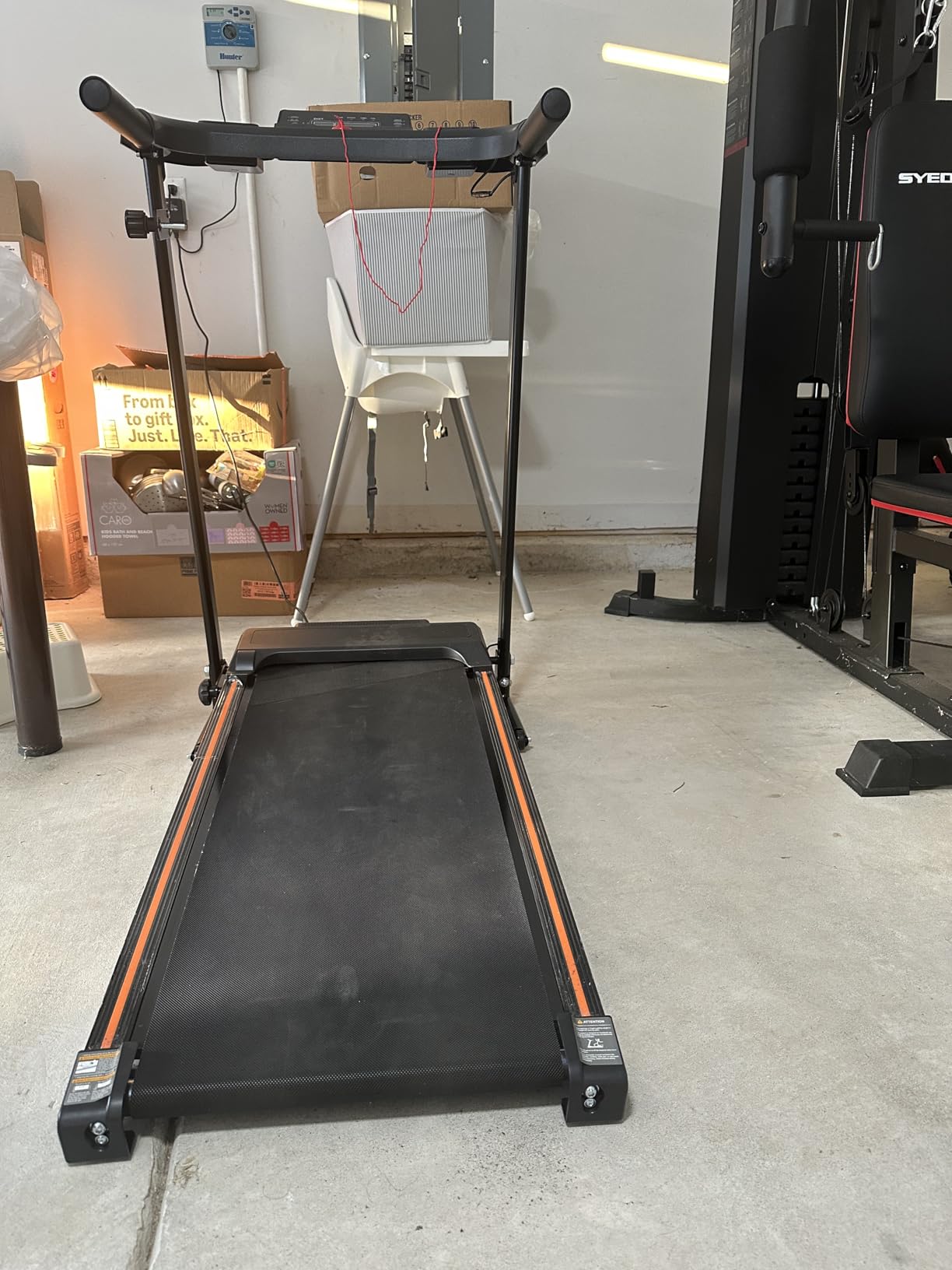
The 2.5 hp motor and 220 pound load rating hold up for medium breeds, and several owners mention using it as a human walking pad too. The included lubricant, remote, tool kit and manual mean nothing else needs buying to get started.
Durability is the honest weak point. One owner reported the walking board under the belt cracking in under three months of moderate use, although several other buyers describe the seller replacing a failed remote and a broken deck quickly. Treat the machine as a walking and slow jogging platform rather than a sprinting rig.
Who this machine suits best
It is a strong fit for post-surgical and senior dogs because the low end of the speed range is genuinely usable, and the 0.5 mph setting is slower than what most competitors offer. It is also a good second machine for a household that also wants a human walking pad.
Owners in apartments like the compact 44.33 by 23.25 inch body because it relocates easily between rooms.
When to look elsewhere
Skip it if your dog is a powerful sprinter, since the belt is better suited to walking and slow jogging than running. It is also a heavy package to unpack on your own, and the presets lean toward running rather than storing a custom walking setting.
3. PawPaw’s Slatmill: Best Dog Treadmill for Large Dogs
PawPaw’s Dog Treadmill for Large Dogs, Medium Dogs. Dog Slatmill for Healthy & Fit Dog Life, Dog Treadmill for Indoor & Outdoor (Medium)
330 lb capacity
No motor at all
Solid wood track
69 x 22 x 59 inch frame
110 lb machine
Pros
- Dog controls the pace and can stop any time
- Handles far larger dogs than electric models
- Solid wood track and aluminum rollers allow sprinting
- Adjustable heights for different breeds
- Usable indoors or outdoors
Cons
- 110 lb frame is very heavy to reposition
- Large footprint needs a dedicated room
- No powered speed control at all
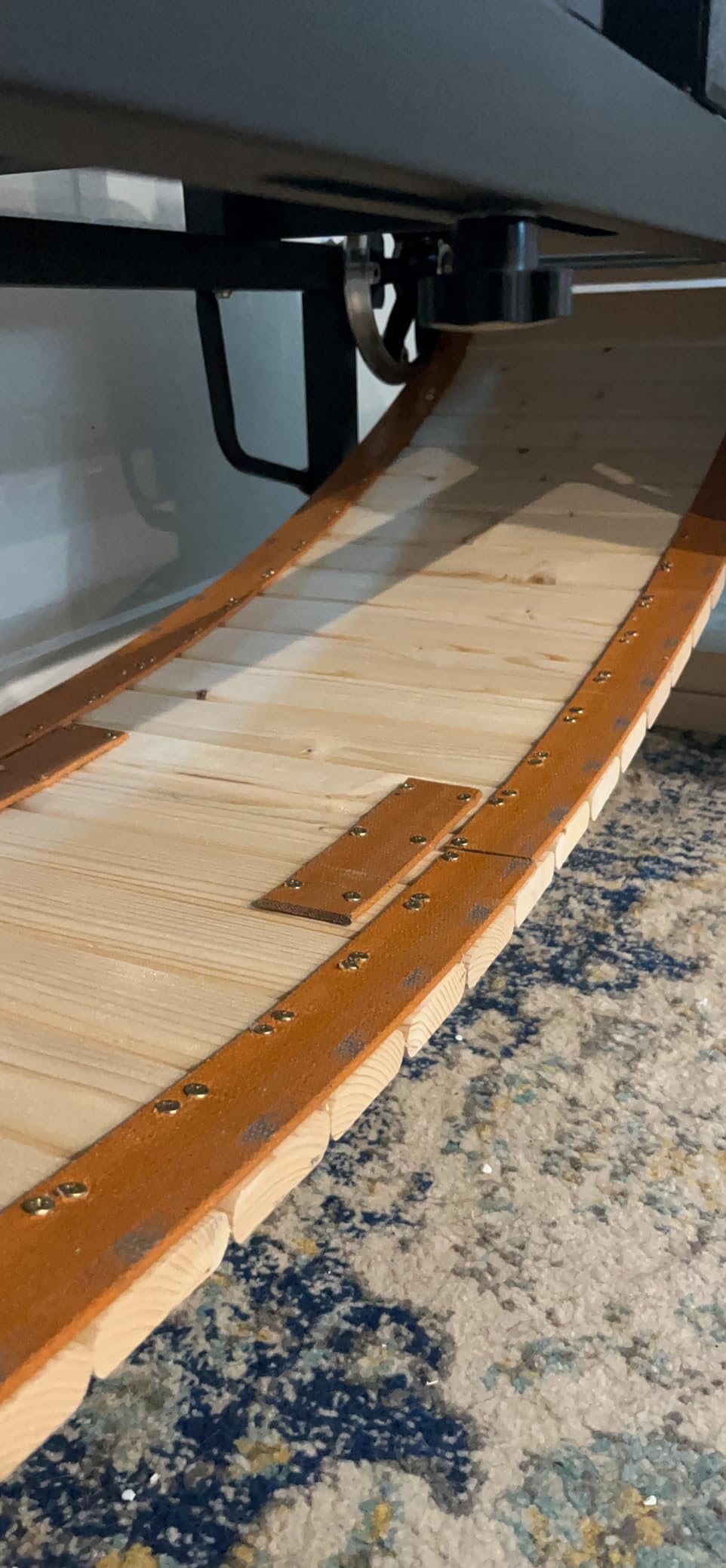
The PawPaw’s slatmill is the answer when your dog is too big or too strong for a motorized belt. It carries a 330 pound capacity, which is the highest in this group, and there is no motor, so the dog can never be forced into a pace it cannot hold.
That last point is the real argument for this category. Owners who are nervous about a belt running away from a dog that cannot keep up tend to end up here, and the 4.4 rating across 90 reviews with 67 percent five-star feedback reflects how well the concept lands.
The build is solid rather than clever. A carbon steel frame, a solid wood belt and aluminum rollers mean a dog can sprint without the machine walking across the floor, and adjustable height settings let one machine cover medium and large breeds.
Sizing guidance is explicit, which is rare and useful. The large model suits dogs with withers up to 29.5 inches and a chest under 20.5 inches, while the medium model covers withers up to 23.6 inches and a chest under 16.5 inches. Measure before you order rather than trusting the weight number alone.
Why owners choose a dog-powered slatmill
A slatmill removes the two failure modes that scare people most: a motor loud enough to frighten a dog, and a belt moving faster than the dog can comfortably go. Because the dog drives the machine, resistance and speed both come from the dog itself.
It also works outdoors, so bad-weather plans and good-weather plans can use the same machine. A 20 minute quick install is reported in the listing.
When to skip the PawPaw’s
Skip it if you need precise speed control, structured programs or a measured calorie count, because there is no motor and no display. At 110 pounds with a 69 by 22 by 59 inch frame, it also needs a dedicated corner of a room and cannot be moved casually.
4. CIIHI Dog Treadmill: Best for Nervous Dogs
CIIHI Dog Treadmill for Medium Small Dogs – Pet Running Machine
0.5 to 4.0 mph range
1.5 hp motor
Enclosed side panels
Magnetic safety key
42 lb machine
Pros
- Very quiet motor keeps the dog focused
- Side panels and armrests reduce straying
- Remote has a mute button for beeps
- Two wheels and removable panels for flat storage
- Display rotates 360 degrees
Cons
- Belt too short for long stride breeds
- No leash attachment in the box
- One buyer received a damaged unit
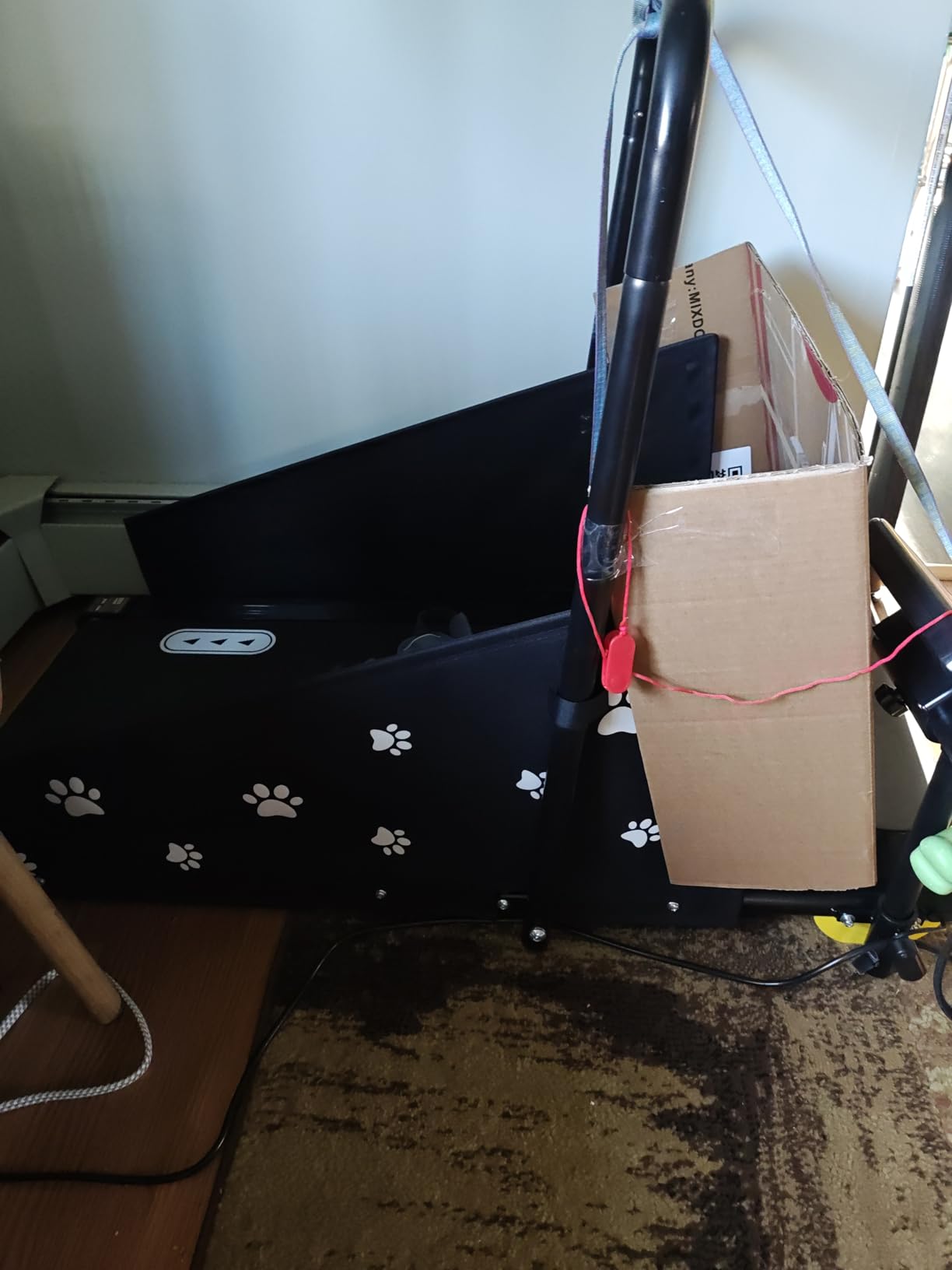
The CIIHI treadmill earns its badge for the two things that decide whether a nervous dog ever uses the machine: enclosure and silence. The side panels and armrests are described in reviews as the feature that makes skittish and senior dogs comfortable, and the motor is repeatedly called very quiet.
The remote has a mute button, which is a small detail that matters in a household with a noise-sensitive dog. The display also rotates 360 degrees so you can read speed and time from any angle in the room, and it tracks calories, distance, speed and time.
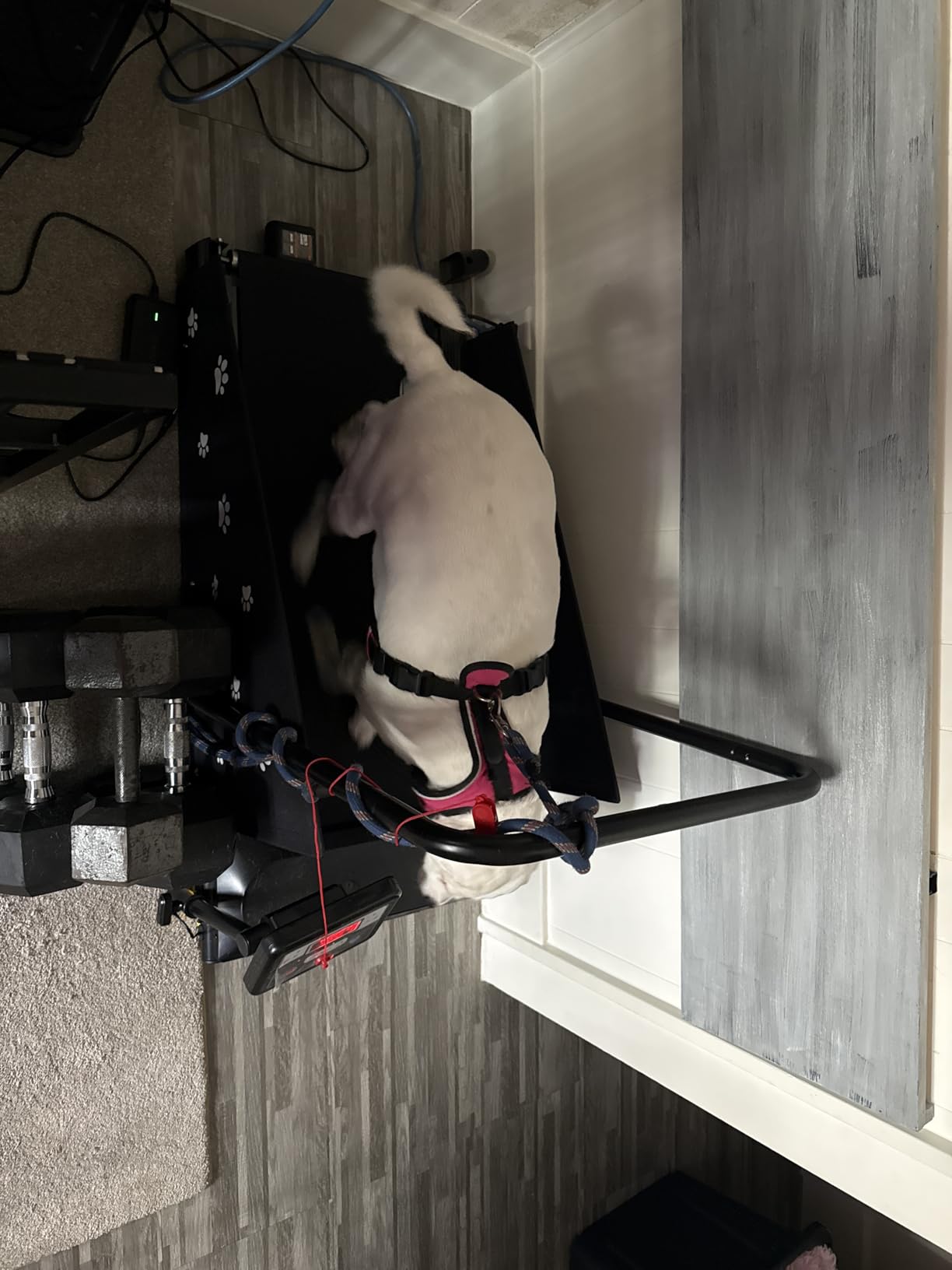
Storage is handled better than on most machines this size. Two wheels let you move it, and with the panels and armrests removed it stores flat under a sofa or bed, which is a real advantage in a small home.
The limitation is again the running surface. The belt measures 36.22 by 14.17 inches, which leaves fast, long-stride breeds such as huskies and German Shepherds reaching the back of the track. It also works as a small one-person treadmill, which is handy but means you are sharing a 265 pound load rating between two uses.
Why the enclosure matters for anxious dogs
A dog that cannot see the edge of the belt will not commit to it. Enclosed side panels remove the visual trigger that stops many dogs before they ever start, and the magnetic safety key stops the belt immediately if it is detached.
Owners in hot or cold climates treat this machine as the reliable daily alternative to an outdoor walk, and a 1 year manufacturer warranty is included.
When to skip the CIIHI
Skip it for a long-stride working breed, because the belt is the constraint rather than the motor. Note that no leash attachment is included, so plan to source a harness clip separately, and check the box on arrival because one buyer received a scratched unit with no instructions.
5. XMKEY Dog Treadmill: Best Cushioned Running Belt
Dog Treadmill, Pet Running Machine for Small & Medium Dogs, Remote Control
41.5 x 15.7 inch belt
2.5 hp motor
0.5 to 6.0 mph
Dual side barriers
65.5 ft remote
Pros
- Wide belt with 5 layer cushioning that reduces joint impact
- Twelve programs plus 3 countdown modes
- Front leash hook and dual side barriers
- 30 minute auto stop and quick speed buttons
- Remote reaches about 65.5 feet
Cons
- No side handles for a steadying grip
- Belt material shed for one owner
- Large footprint for compact homes
The XMKEY is the one to look at when belt width and cushioning are your priority. Its running surface measures 41.5 by 15.7 inches with 5-layer cushioning that owners using it for weight management and post-injury rehab specifically mention.
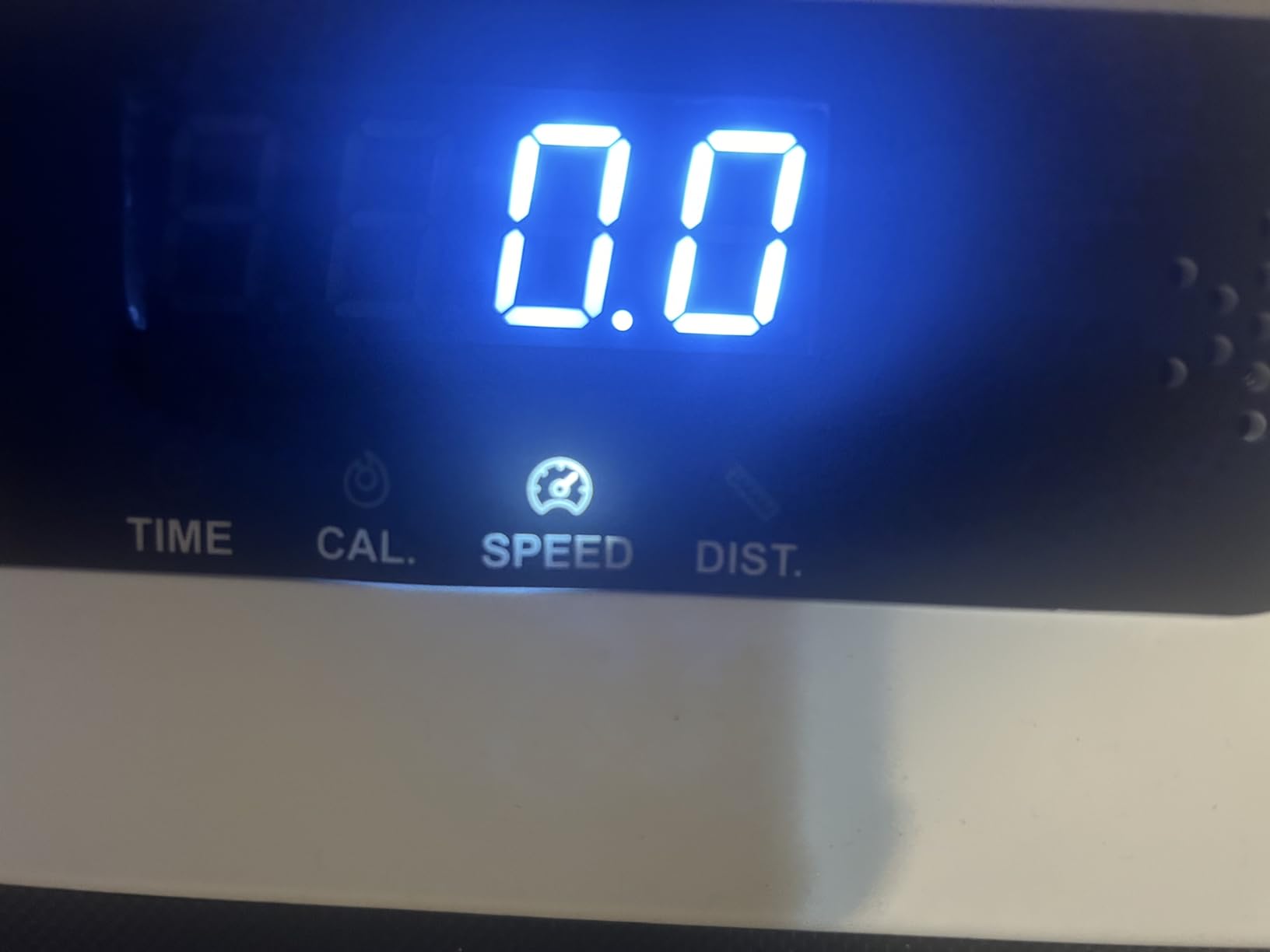
The feature set is also the most complete here. You get twelve preset programs, three countdown modes, a 3-level incline, a 30-minute auto-stop and quick-speed buttons, with a front leash hook and dual side barriers to keep the dog on the belt.
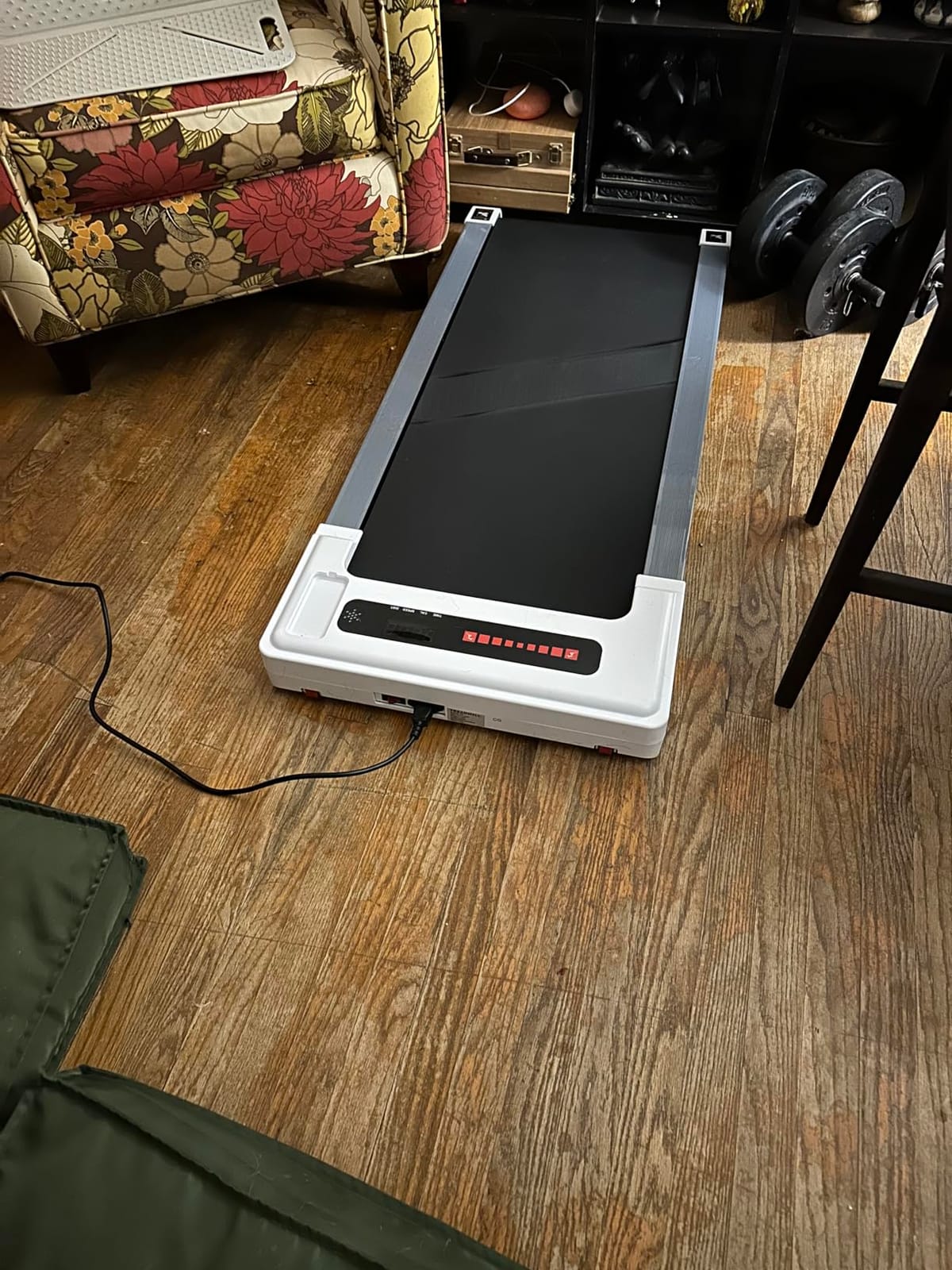
A 2.5 hp motor drives a 0.5 to 6.0 mph range, and the remote reaches about 65.5 feet, so you can adjust speed from across the room. Owners also appreciate the portable wheels when they need to move the machine.
Two caveats matter. There are no side handles, so a nervous or older dog has nothing to brace against, and one serious durability report describes the belt shedding black material after two months before the motor began faulting with an error code. That buyer received a full refund within minutes, which says something about the seller even if it does not fix the belt.
Why belt length changes the outcome
A dog that has to check its stride every few steps will stop running and start walking, and a dog that reaches the back of the track will back off. A longer belt removes both problems, which is why this machine suits a dog that already understands how to use one.
The cushioned surface also spreads joint load, which matters for an overweight dog working off weight under veterinary guidance.
When to skip the XMKEY
Skip it in a small home, because the footprint runs large for anyone wanting a compact machine. If your dog is fearful, the lack of side handles is a genuine drawback, and the durability report above is worth weighing for heavy daily use.
6. HotFeed Slat Mill: Best Fiberglass Dog-Powered Track
Dog Treadmill, HotFeed Dog Slat Mill for Medium Dogs, Doggy Treadmill with Brake & Plastic Track, Dog Pacer Treadmill to Keep Active and Fit, Up to 300LBS(Medium)
Fiberglass dog powered track
3 level brake
Carbon steel frame
70 x 25 x 60 inch frame
120 lb machine
Pros
- Splinter free fiberglass track is more durable than wood
- Dog works at its own pace with no speed setting
- Handles dogs up to 90 lb and above
- Frame does not wobble when a dog sprints
- Weather independent exercise
Cons
- Brake weakened within weeks for some owners
- Very heavy and parts intensive assembly
- Sharp pulley flanges can cut paw pads
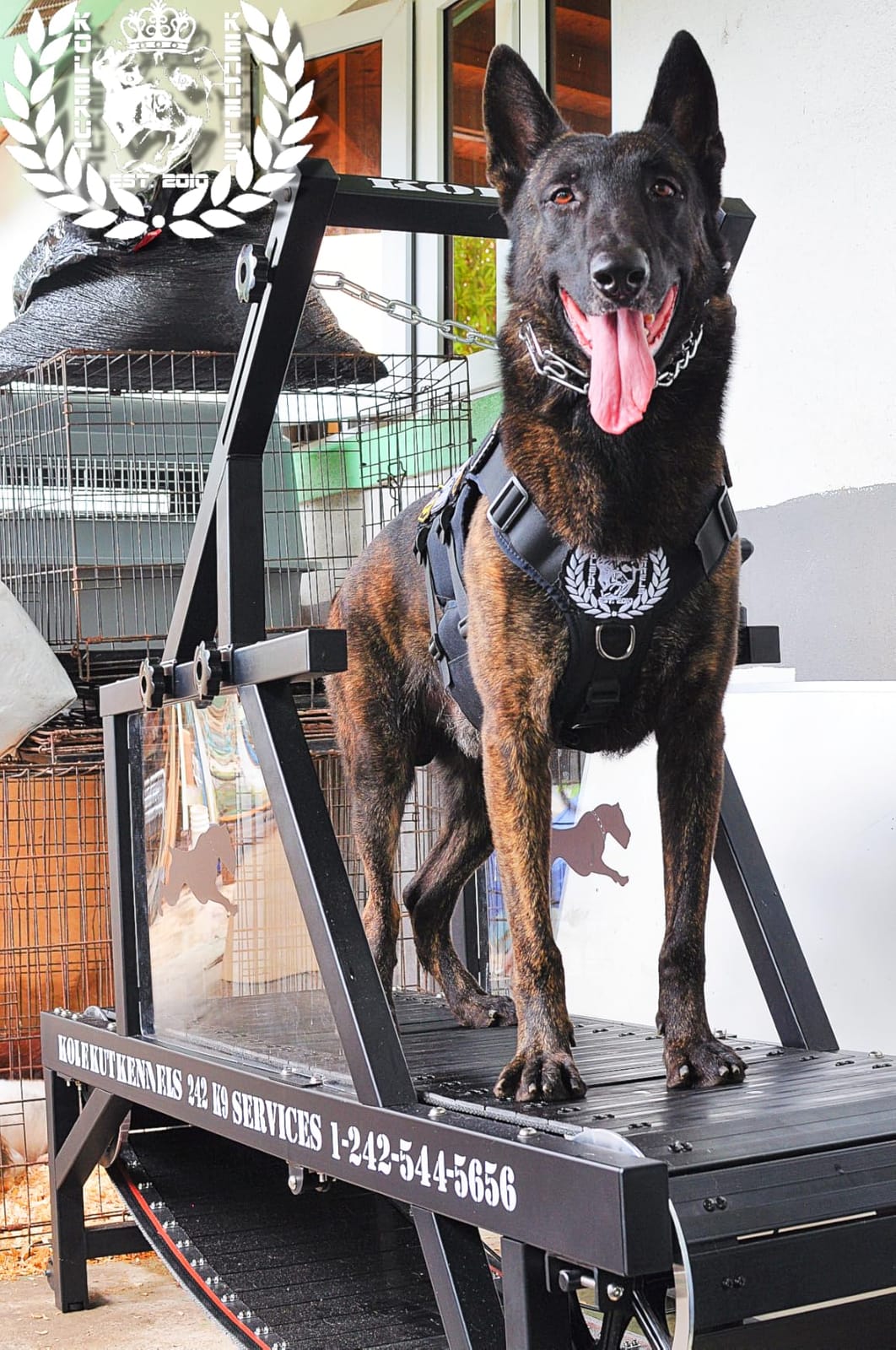
The HotFeed slat mill takes the dog-powered idea and improves the track surface. The running belt is fiberglass rather than wood, which owners describe as splinter free and more durable, and that removes a real complaint about wooden slat mills.
There is no motor and nothing to adjust for speed. The dog sets the pace, rests when it wants, and owners training food-motivated dogs onto the track report success within days by holding treats just out of reach.
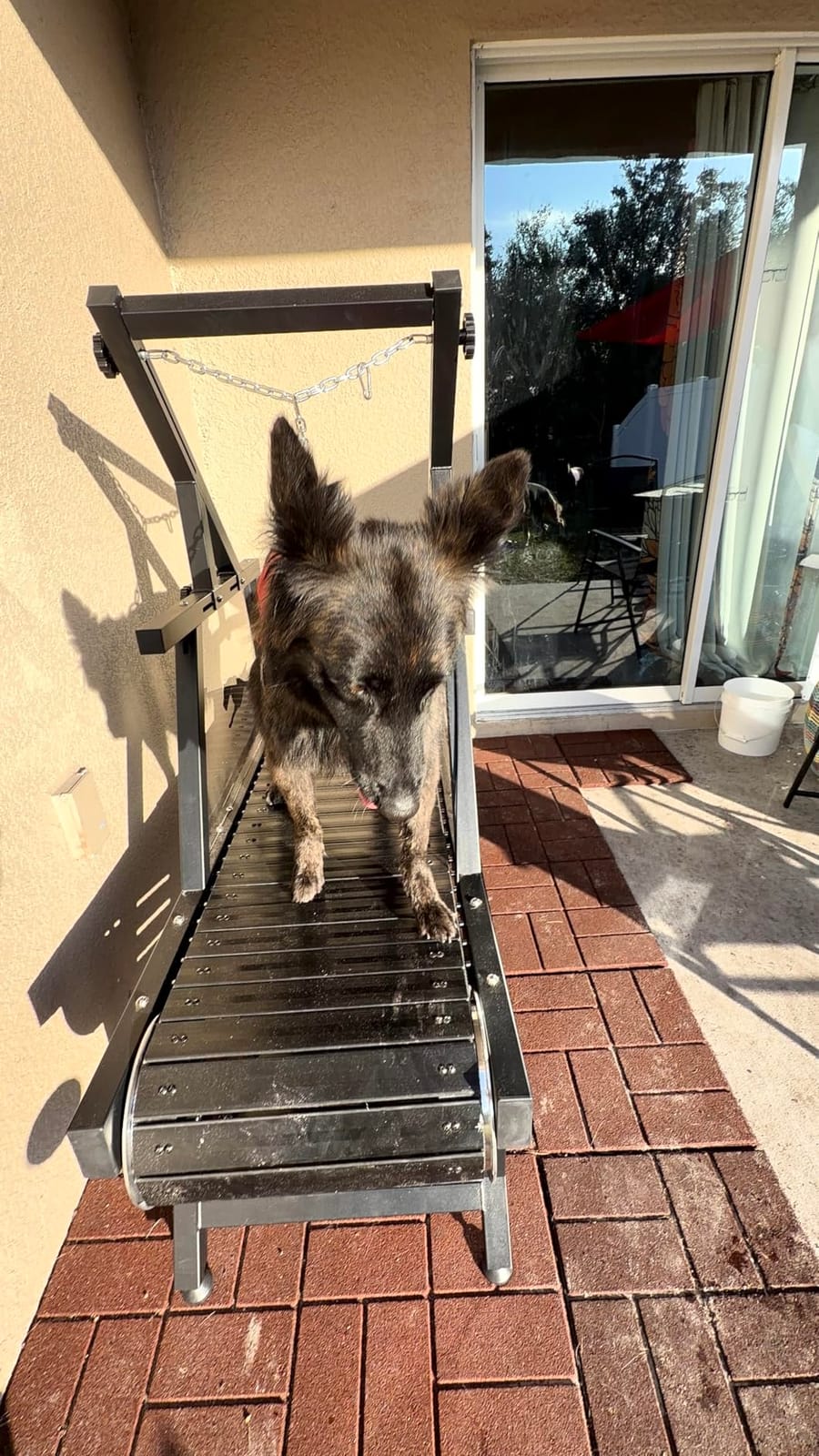
Build quality is the strong point. A carbon steel frame with aluminum rollers and clear acrylic panels does not wobble when a dog sprints, and the adjustable top bars fit dogs of different sizes. A 2 year manufacturer warranty is longer than most rivals offer.
The complaints are worth taking seriously. Owners report the brake losing holding strength within a few weeks, sharp metal pulley flanges at the belt ends that can cut paw pads, and side panels that crack and will not hold position. There is also no manual for assembly or maintenance.
Why the brake and paw safety decide this one
On a dog-powered machine the brake and the track ends are the parts that protect the dog, so weaknesses there matter more than on a motorized belt. Check the pulley flanges with your fingers before every session, and inspect the brake early rather than trusting it for months.
Several reviewers actually recommend the machine for dogs around 40 pounds or less rather than the advertised larger sizes, so treat the stated capacity carefully.
When to skip the HotFeed
Skip it if you cannot recruit a second person for assembly. At 120 pounds with a 70 by 25 by 60 inch frame, this is a two-person job with unlabeled parts and no manual to fall back on.
7. Petbobi Dog Treadmill: Best for Small Spaces
Petbobi Dog Treadmill for Small & Medium Dogs Quiet Motor Indoor Exercise
1.5 hp motor under 55 dB
36.2 x 14.2 inch belt
Folds flat
360 degree display
12 programs
Pros
- Quiet motor suited to apartments and condos
- Remote and 360 degree display monitor from anywhere
- Enclosed panels plus magnetic safety key
- Built in wheels and a detachable frame store under a bed
- 2 in 1 conversion for owners
Cons
- Best suited to dogs around 80 lb or less
- Smallest running belt of the group
- No leash ring height adjustment
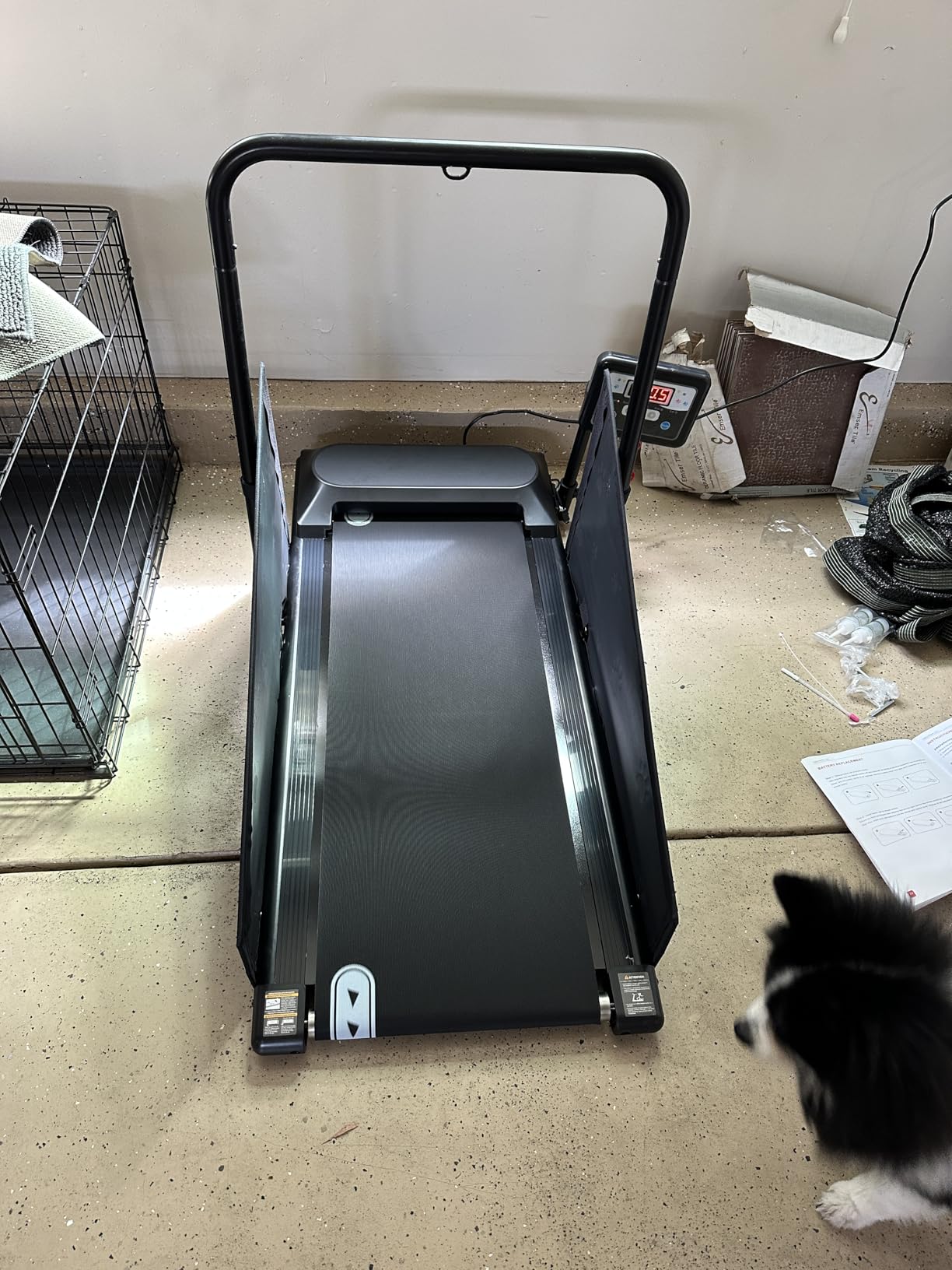
The Petbobi is the compact answer, and its 4.4 rating from 31 reviews comes with no one-star feedback at all. The motor runs under 55 dB, which is quiet enough for an apartment, condo or home office, and the enclosed side panels do the same job they do on the CIIHI.
Storage is the headline. Built-in wheels and a detachable frame let it slide flat under a bed or a sofa, and the folded size is 25 by 24.61 by 15.76 inches, so it genuinely disappears when it is not in use.
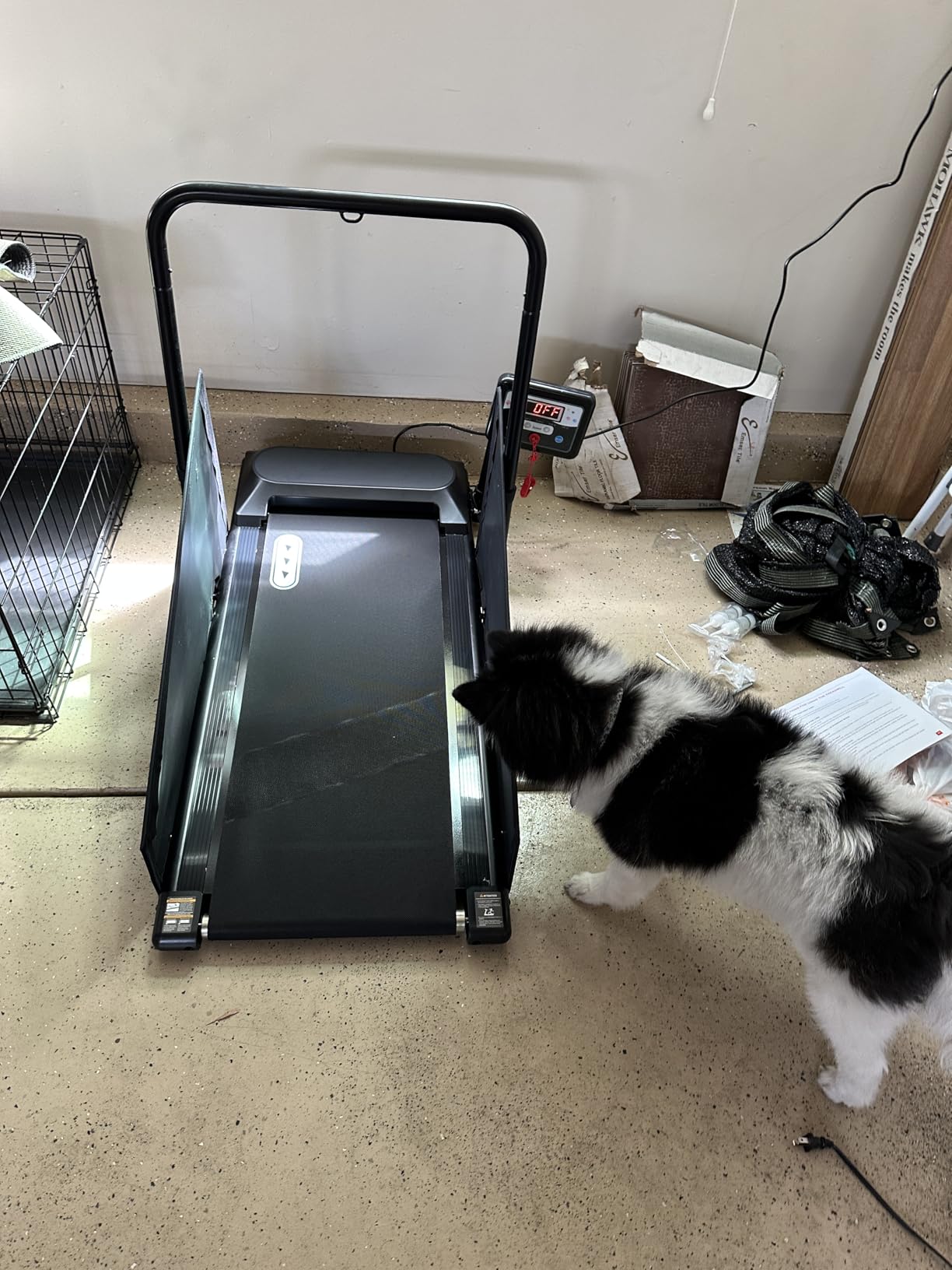
The 360-degree rotatable display and remote show speed, time, distance and calories, and the magnetic safety key plus a top leash ring make a supervised session straightforward. It also converts into a compact walking treadmill for the owner.
The constraint is the dog, not the machine. The 36.2 by 14.2 inch belt is compact, and the guidance is to confirm your dog weighs 80 pounds or less and fits that surface before you buy. A 12-month warranty is backed by support that replies within 24 hours.
Why a quiet motor changes apartment living
Noise is the most common reason a household gives up on a treadmill, and a motor under 55 dB with a remote mute mode means you can adjust speed without the beep that makes some dogs stop. That single feature does more for consistency than any program setting.
For a dog that stays indoors on bad-air-quality days, having a machine that stores flat means it gets used rather than tripping over.
When to skip the Petbobi
Skip it for any dog over roughly 80 pounds, or for a long-stride breed, because the belt is the limit. It is the right machine for a small or medium dog in a small space, and the wrong machine for a large one.
8. GYMAX 3-in-1 Treadmill: Most Versatile Design
GYMAX Dog Treadmills for Small/Medium Dogs – Pet Runner with Remote, LCD Monitor, Adjustable Incline, 2HP Motor & Wheels, Dog Running Machine for Indoor Exercise (Black)
0.5 to 7.5 mph range
39 x 15.5 inch deck
2 hp motor under 45 dB
5 layer belt
220 lb capacity
Pros
- Converts between dog treadmill walking pad and human treadmill
- Quietest published motor figure at under 45 dB
- Widest speed range at 0.5 to 7.5 mph
- 5 layer shock absorbing belt
- Built in wheels and a remote storage pocket
Cons
- Opaque side covers block the dogs sight line
- Shorter 90 day warranty
- Hook and loop covers are fiddly
The GYMAX is the most flexible machine here because it converts between three uses. Remove the side covers and handlebars and it becomes a walking pad, then a human treadmill, with a 39 by 15.5 inch deck underneath all three.
It also has the widest speed range in the group at 0.5 to 7.5 mph with 3 incline levels, and a 2 hp motor published under 45 dB, which is the lowest noise figure any machine in this roundup states.
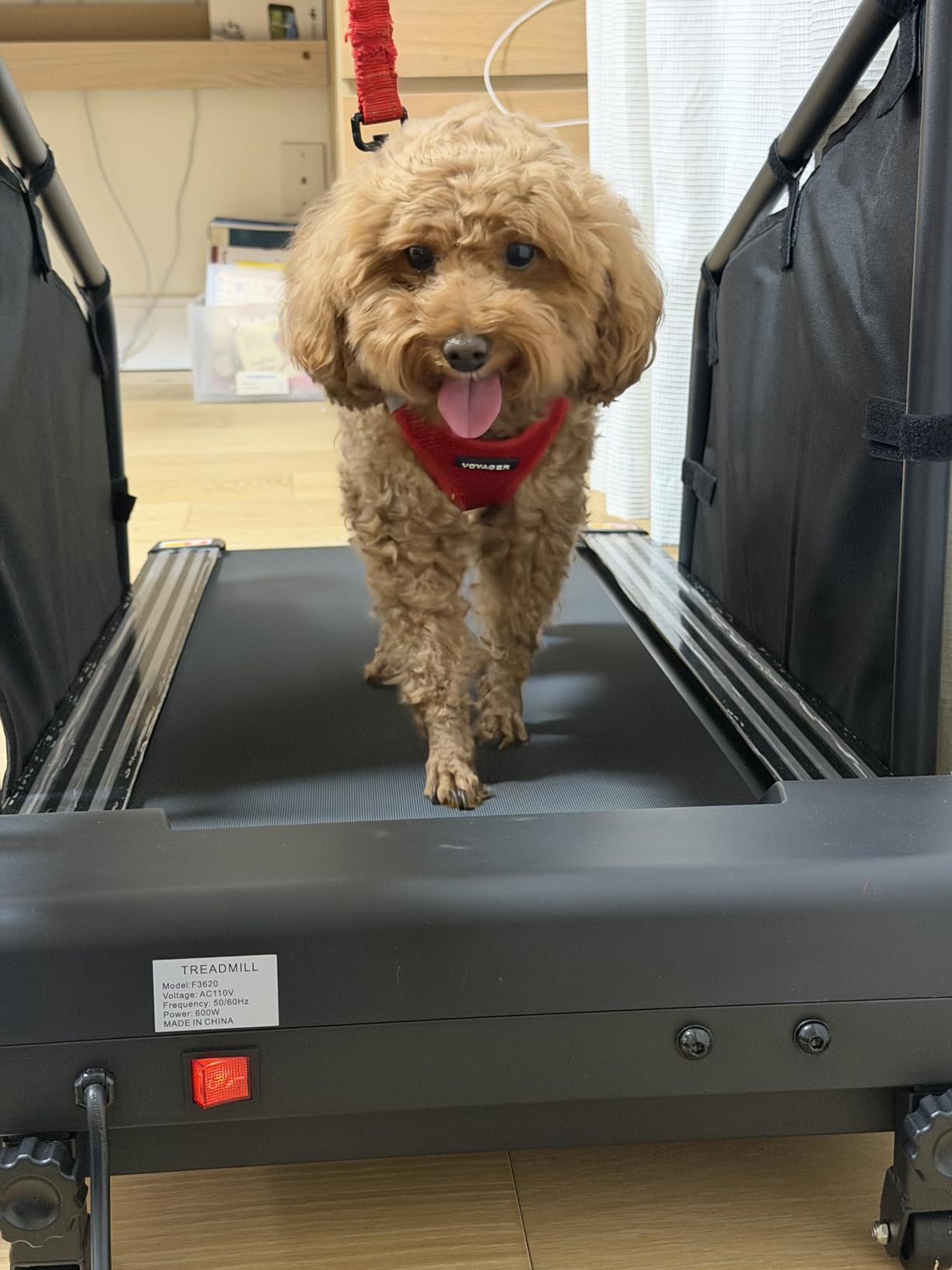
The 5-layer shock-absorbing belt is a real feature for older dogs or heavier ones, and the remote works up to 32.8 feet away with a built-in pocket to keep it. Built-in wheels make relocation painless.
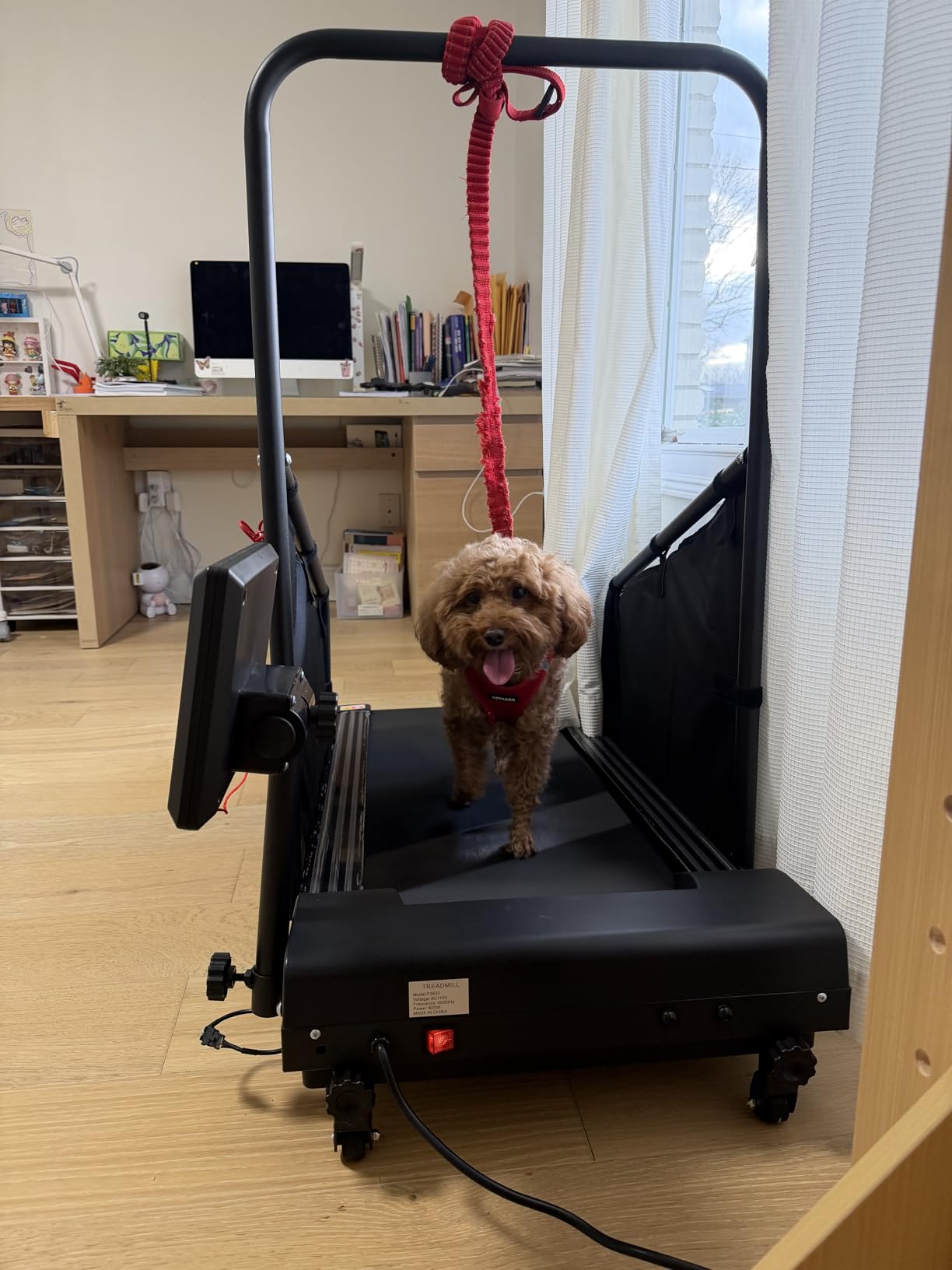
It is also the lowest-rated machine here at 3.9 stars from 28 reviews, with 13 percent one-star feedback. The most common complaint is that the opaque oxford side covers block the dog’s view of the room, which unsettles some pets, and the hook-and-loop covers are fiddly to attach. The 90-day warranty is also the shortest listed.
Why the enclosure is the deciding detail here
The side covers are marketed as a way to block the pet’s sight, but the same feature that hides the belt from a nervous dog also removes the view of the room. If your dog is anxious by nature, an enclosed machine is worth testing before you commit.
Sharing the machine with a human is genuinely useful for a household that wants one piece of equipment rather than two.
When to skip the GYMAX
Skip it if noise-sensitive behaviour is a concern and you cannot test it in person, or if you want warranty coverage beyond three months. The rating spread here is wider than any other machine in the roundup, so read the negative reviews before deciding.
Are Dog Treadmills Worth It?
They are worth it for a specific owner profile and not for everyone. The honest answer is that a dog treadmill is a reliable backup plan, not a replacement for real walks, and owners who frame it that way tend to be happy with it.
Where they earn their place: consistent exercise on smoke days, extreme heat, frozen ground and bad weather, when outdoor options disappear. They also work well for apartment dogs with no yard, for multi-dog households where everyone takes a turn, and for dogs working off weight or recovering under veterinary guidance. One owner on r/dogs described their dog learning the technique, having fun with it and losing about 6 pounds.
Where they disappoint: the motor noise frightens some dogs outright, a belt set too fast simply runs away from a dog that cannot match it, and a machine that sits in the corner unused helps nobody. Owners also point out the habituation time is real, most dogs need several sessions before they stop avoiding the moving belt, and there is a genuine risk that a dog starts treating the machine as a substitute for the walk rather than a supplement to it.
Two honest cautions before you buy. Have a vet assess your dog first if it is overweight, senior or recovering from surgery, since joint load and fatigue tolerance change the calculus entirely. And check your local rules, because some jurisdictions restrict equipment with a documented history of use in dog fighting.
There is also a cost-of-alternatives question worth asking. A border collie owner in one forum thread was told a treadmill might take some of the burden off when a walker or daycare was out of reach, which is a reasonable way to frame the decision rather than a justification.
How to Train Your Dog to Use a Dog Treadmill
Most failures are training failures, not machine failures. Work through these six steps in order and resist the urge to speed things up.
Introduce it switched off. Put treats on the belt while the machine is off and let your dog explore. Let them stand on it, walk across it and lie down on it before anything moves.
Run the motor without the belt moving. Many machines let you do this, and it lets your dog learn the sound before it learns the movement. Reward any calm behaviour.
Start at the lowest speed. For motorized models this means 0.5 mph. If your dog steps off, that is information, not a problem to solve by speeding up.
Use a harness, never a collar. Attach a clip to the harness back or the overhead tether bar. Collar tethering is a choking hazard, and a nervous dog pulling against a collar on a moving belt is a well-documented way to hurt a dog.
Keep sessions short. Five to ten minutes for the first week, building toward a 20 minute cap. Watch for heavy panting, lagging behind the pace, wide eyes or a dog that flattens their body.
End on a reward. Treats held just out of reach are how owners get food-motivated dogs onto a track within days. Finish every session with the dog off the machine and a reward.
If your dog is frightened of the sound, drop back to step two and spend a full week there. If the dog refuses to step on, check that the surface is not slippery and that the machine is on a non-slip surface itself. If the belt is running away from the dog, the speed is set too high, full stop.
How to Choose a Dog Treadmill in 2026
Work through these seven points in order. The first two decide whether the machine works at all, and the rest are preferences you can trade off.
Running surface, not frame load. A listed weight capacity is a structural claim about the frame, not a size recommendation for your dog. Look for the running length and width in inches, and match the length to your dog’s stride.
Drive type. Motorized treadmills give you speed control and programs. Slatmills have no motor, so the dog sets the pace and can stop whenever it wants. Wheel-style treadmills sit between the two.
Motor noise. For a noise-sensitive or gun-shy dog, this decides everything. Published figures in this roundup run from under 45 dB to under 55 dB.
Safety kit. Look for side barriers, a leash tether bar or ring, and a magnetic safety key or emergency stop that kills the belt when detached.
Storage and handler clearance. Belt length understates the floor space you need. Add the frame footprint plus clearance beside the machine so you can reach your dog, and check whether the frame folds or has wheels.
Session programming. Preset programs and countdown timers are useful for consistency, but a 0.5 mph floor matters more for senior, puppy and post-surgical dogs than any program list.
Support and warranty. Parts availability and warranty length tell you how long the machine is expected to last. Anything under a year is a warning sign.
On the drive-type question, which is the one buyers ask about most: choose a motorized treadmill if you want measured speed, structured programs and calorie tracking, and accept that you must keep the pace within your dog’s comfort range. Choose a slatmill if your dog is large, powerful, or you simply do not want a motor dictating the pace. A speedometer on a dog-powered machine records movement, it does not control the belt, and adjustable incline is not adjustable resistance.
A dog treadmill is not a human treadmill in a smaller case. Human decks are narrower and the control consoles are built for adult hands and adult hip width, side panels are absent on most, and speeds start far higher. Several machines here convert into a walking pad for the owner, which is a genuine bonus, but treat that as a secondary use rather than a reason to buy.
Space planning deserves its own note. The PawPaw’s slatmill lists a 69 by 22 by 59 inch frame, and the HotFeed lists 70 by 25 by 60 inches. Neither of those numbers is the belt. If you are measuring a corner, measure the frame and add roughly a foot of clearance on the side you will stand on.
If your dog will also be spending time in an outdoor space, our guide to the best insulated dog houses covers weatherproofing, and for a human exercise machine our best commercial treadmills and best incline treadmills guides are separate reads.
Frequently Asked Questions
What type of treadmill is best for dogs?
It depends on your dog’s size and your priorities. Motorized treadmills give you speed control, preset programs and measured tracking, and they suit small to medium dogs, seniors and post-surgical dogs because the speed floor can be set to 0.5 mph. Slatmills have no motor, so the dog sets the pace and can stop whenever it wants, which makes them the better choice for large or powerful breeds. Free-spinning wheel treadmills sit between the two. Match the choice to your dog’s stride before anything else.
Are dog treadmills worth it?
They are worth it for a specific owner and not everyone. A dog treadmill is a dependable backup for smoke days, extreme heat, frozen ground, apartment living and recovery periods, and owners commonly treat it as a supplement rather than a replacement for real walks. The drawbacks are real too: motor noise frightens some dogs, acclimation takes several sessions, and a dog can learn to rely on the machine instead of the walk. Get veterinary sign-off first for overweight, senior or post-surgical dogs.
Do dogs like running on treadmills?
Most do, once they are comfortable with the machine. Owners report that food-motivated dogs get onto a track within days when treats are held just out of reach, and that the dogs who take to it genuinely enjoy the session. Dogs that avoid the belt usually object to the noise or to losing sight of the room, which is why enclosed units and quiet motors matter. Work up from the lowest speed and keep the first sessions to five or ten minutes.
Are slatmills a better option for dogs than treadmills?
For large, powerful or anxious dogs, often yes. A slatmill has no motor, so the dog controls the speed and cannot be forced into a pace it cannot hold, and there is no motor noise to frighten it. Motorized treadmills win when you want speed control, structured programs and calorie tracking, or when you are working with a senior or post-surgical dog who needs a genuinely slow setting. Many owners end up wanting both a slatmill and a quiet motorized unit over time.
How long should you let your dog run on a treadmill?
Cap a session at about 20 minutes, and start much lower. The first week should be five to ten minutes, building gradually as your dog’s stamina and confidence grow. Watch for heavy panting, a dog lagging behind the belt, wide eyes, a flattened body or reluctance to step off, and stop immediately if you see any of them. Keep the incline neutral, warm up on a flat surface first, and supervise every session without exception.
What size dog treadmill do I need for my breed?
Measure your dog’s stride rather than trusting a weight number. Weight capacity is a structural claim about the frame, not a size recommendation, and a machine rated for 265 pounds may have a belt far too short for a long-gait breed. Check the running length and width in inches, then confirm the dog fits with room to spare at both ends. Small breeds under 25 pounds are comfortable on 36 by 14 inch belts, medium breeds up to 60 pounds need closer to 40 inches of length, and large breeds above 80 pounds need 50 inches or more.
Final Verdict: The Best Dog Treadmill for 2026
The best dog treadmill for most households in 2026 is the Lifepro PawRunner. It pairs the largest owner review base in this group with a quiet operation that does not frighten dogs, a 48 by 22.8 inch deck, twelve programs and a safety key, and it moves around on wheels.
Go further up the size range and the PawPaw’s slatmill is the answer for a large breed, with a 330 pound capacity and no motor to force the pace. For a dog in a small home, the Petbobi folds flat and runs under 55 dB. For measured programming and rehabilitation work, the FYC gives you a 0.5 mph floor. Check your dog’s stride against the running surface before anything else, have a vet sign off if your dog is overweight, senior or healing, and keep every session supervised and under 20 minutes.