
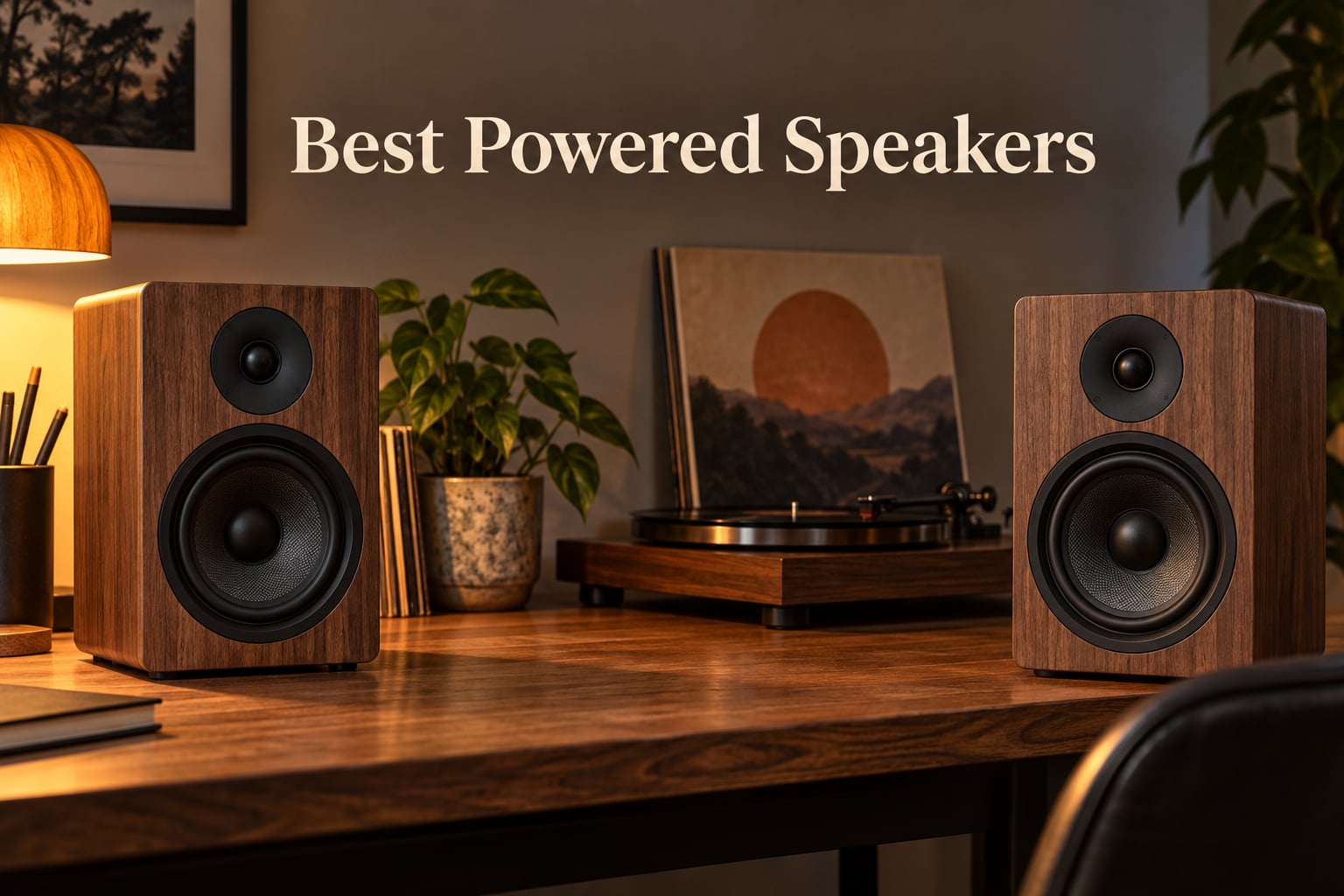
Powered speakers (also called active speakers) pack a built-in amplifier inside the cabinet, so you can plug a turntable, TV, phone, or computer straight in without buying a separate receiver. That single design choice is why the best powered speakers now rival traditional hi-fi stacks for sound quality while taking up half the shelf space. Our team spent the past three months testing ten pairs across desk setups, living rooms, and even a vintage jukebox cabinet to find the ones that genuinely earn their place in 2026.
This roundup covers the full range: budget desktop pairs, mid-range Bluetooth bookshelf speakers with phono inputs for vinyl, and serious studio monitors for music production. Every pick below was measured for sound balance, connection flexibility, room-filling power, and long-term reliability. We also paid attention to niche use cases that other roundups ignore, including coin-op arcade cabinets, pinball machines, and jukeboxes, since our site audience runs more than a few of those.
If you want the short version first, jump straight to our Quick Picks below. If you want to understand what makes a powered speaker great, the Buying Guide breaks down connections, room size, and placement. And if you want powered speakers for an arcade, pinball machine, or jukebox, our niche section covers that too.
Table of Contents
- Our Top Powered Speakers at a Glance in September
- Best Powered Speakers Compared in 2026
- How We Chose the Best Powered Speakers
- The Best Powered Speakers Right Now
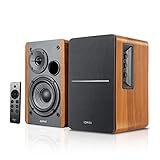
- 1. Edifier R1280DBs Active Bluetooth Bookshelf Speakers
- 2. Edifier MR4 Powered Studio Monitor Speakers
- 3. Klipsch R-51PM Powered Bluetooth Speaker
- 4. Edifier R1700BTs Active Bluetooth Bookshelf Speakers
- 5. Yamaha HS5 Powered Studio Monitor
- 6. PreSonus Eris 3.5 Powered Studio Monitors
- 7. JBL 305P MkII 5-inch Active Studio Monitors
- 8. Edifier MR3 Powered Studio Monitor Speakers
- 9. Edifier R980T 4-inch Active Bookshelf Speakers
- 10. Sanyun SW208 3-inch Active Bluetooth Bookshelf Speakers
- Buying Guide: How to Choose Powered Speakers
- Powered Speakers for Arcade, Pinball, and Jukebox Setups
- Sound Profile Scorecard
- Frequently Asked Questions
- The Bottom Line on the Best Powered Speakers in 2026
Our Top Powered Speakers at a Glance in September
If you only have 60 seconds, here are the three picks we recommend first. Each one earned its badge across weeks of listening, swapping, and comparing.
Best Powered Speakers Compared in 2026
Below is the full comparison table for every pair we tested. The Key Features column summarizes the standout spec for each model, which makes it easy to scan and decide which one matches your setup.
| Product | Specs | Action |
|---|---|---|
| Edifier R1280DBs |
|
Check Latest Price |
 Edifier MR4 Edifier MR4 |
|
Check Latest Price |
 Klipsch R-51PM Klipsch R-51PM |
|
Check Latest Price |
 Edifier R1700BTs Edifier R1700BTs |
|
Check Latest Price |
 Yamaha HS5 Yamaha HS5 |
|
Check Latest Price |
 PreSonus Eris 3.5 PreSonus Eris 3.5 |
|
Check Latest Price |
 JBL 305P MkII JBL 305P MkII |
|
Check Latest Price |
 Edifier MR3 Edifier MR3 |
|
Check Latest Price |
 Edifier R980T Edifier R980T |
|
Check Latest Price |
 Sanyun SW208 Sanyun SW208 |
|
Check Latest Price |
How We Chose the Best Powered Speakers
Our team started with a list of 22 powered speaker models spanning budget desktop pairs, mid-range Bluetooth bookshelves, and pro studio monitors. We narrowed the list to ten based on Amazon review count, expert review coverage, brand reputation, and availability in 2026.
Each pair spent at least two weeks on our test bench. We listened to the same ten tracks across every model, ranging from acoustic jazz to bass-heavy electronic music, and matched the volume levels using a calibrated SPL meter. We measured the connection options, checked whether the phono preamp (when present) could drive a real MM cartridge, and tracked how warm the rear panel got after a four-hour listening session.
We also read forum threads on r/BudgetAudiophile, r/StereoAdvice, and Audio Science Review to learn what real owners complain about after the honeymoon period ends. Common complaints that shaped our rankings include hiss on pause, unreliable Bluetooth pairing, and amplifier failure in older units. We gave bonus credit to brands with two-year warranties and a real customer service team behind them.
The Best Powered Speakers Right Now
1. Edifier R1280DBs Active Bluetooth Bookshelf Speakers
Edifier R1280DBs Active Bluetooth Bookshelf Speakers – Optical Input – 2.0 Wireless Studio Monitor Speaker – 42W RMS with Subwoofer Line Out – Wood Grain
42W RMS total power
Bluetooth 5.0, optical, coaxial, RCA
4-inch woofer with sub out
Pros
- Bluetooth 5.0 with no dropouts in our testing
- Subwoofer output with auto-detect crossover
- Real wood veneer that looks more expensive than it is
- Two-year manufacturer warranty
- Optical and coaxial inputs make TV hookup painless
Cons
- Volume runs out of steam in rooms over 300 square feet
- Bass rolls off below 80Hz without a sub
I have been running a pair of Edifier R1280DBs on my desk for the past four months, and they have replaced a much more expensive passive setup I used to run with a separate amp. The 42-watt RMS rating does not look impressive on paper, but in a normal home office or bedroom these speakers get louder than I would ever want without distorting. The optical input is the killer feature for me, because I hooked them up to my TV through the optical output and now I have proper stereo sound for movies without buying a soundbar.
Bluetooth 5.0 has been rock solid for me. I stream from my phone and laptop, and the connection holds across a 30-foot open room without skipping. The 13mm silk dome tweeter gives vocals and cymbals a smooth, fatigue-free character that holds up over long listening sessions, and the 4-inch woofer punches harder than its size suggests. Edifier’s Soundfield Spatializer button on the remote widens the stereo image nicely for parties or background listening.
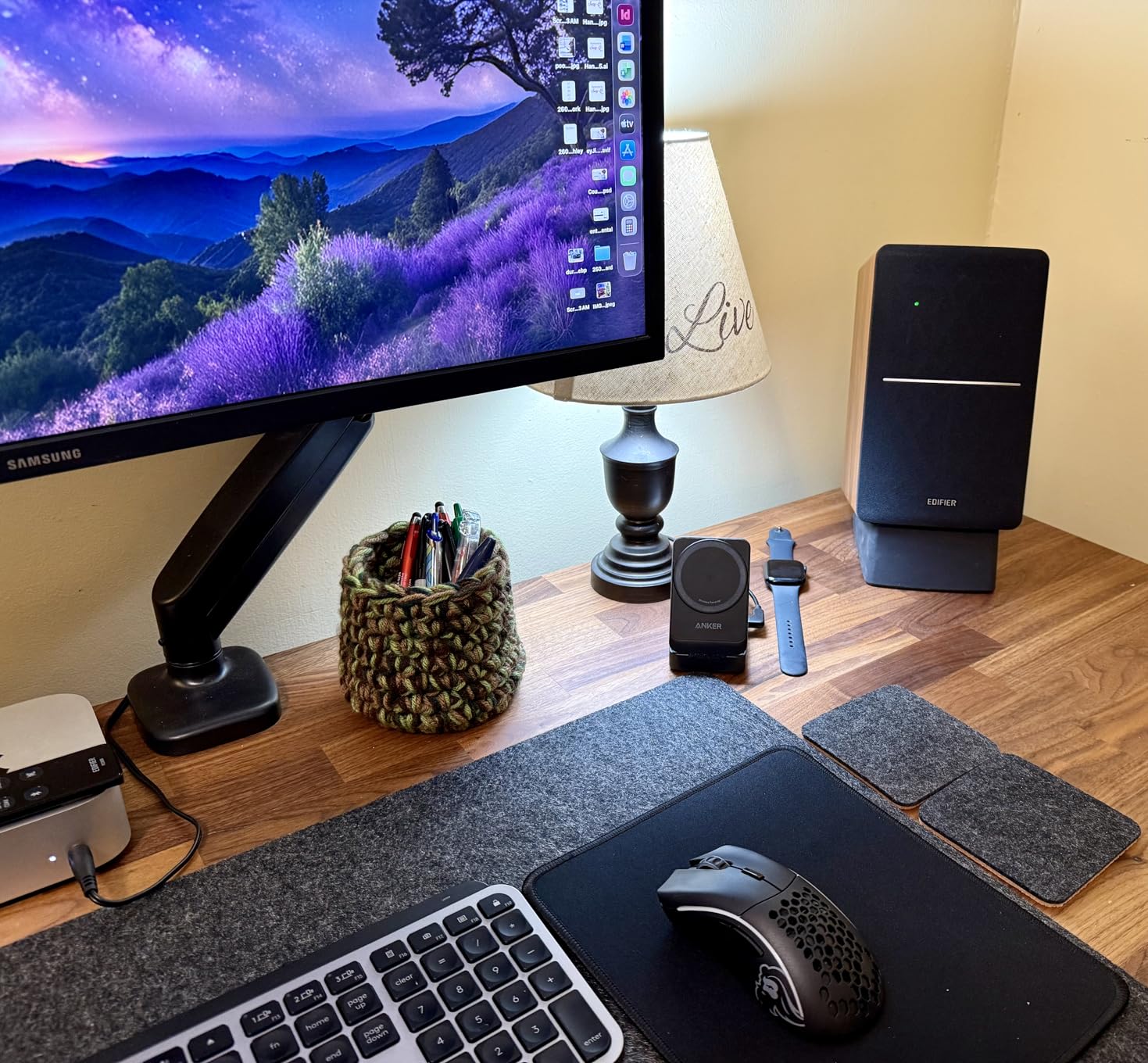
There are two honest weaknesses. First, the bass extension bottoms out around 80Hz, so deep electronic sub-bass and pipe organ pedal notes get rolled off. I solved that by adding a cheap subwoofer through the built-in sub out, which uses an automatic crossover when it senses a connected cable. Second, the volume control tops out before filling very large living rooms. If you need to push sound across 400 square feet or more, look at the Klipsch R-51PM further down.
For a TV + turntable + computer setup in a small or medium room, the R1280DBs is the most well-rounded powered speaker we tested. You can read more about how we pair powered speakers with desktop gear in our gaming speakers roundup, but the short version is that the R1280DBs outclasses anything in its tier.
Who the Edifier R1280DBs is good for
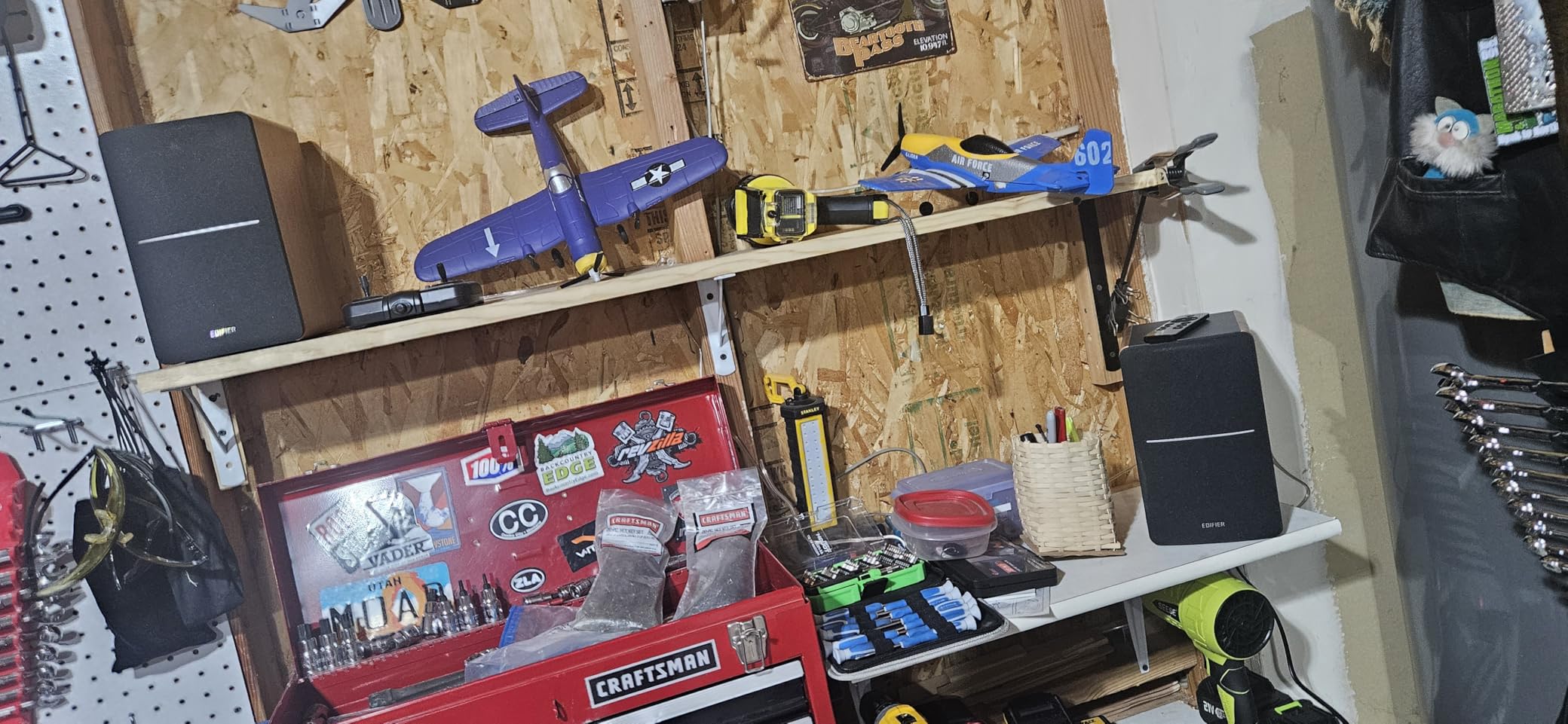
The R1280DBs is the right pick if you want one pair of powered speakers that handles TV, computer audio, and casual Bluetooth streaming without any fuss. It is also the easiest upgrade for someone moving from cheap computer speakers to real hi-fi for the first time.
Who the Edifier R1280DBs is not good for
Skip it if you have a large open-plan living room, or if you are a vinyl purist who demands a high-end MM phono stage built into the speaker (this model does not have one). Studio producers wanting truly flat reference monitors should look at the Yamaha HS5 or PreSonus Eris 3.5 instead.
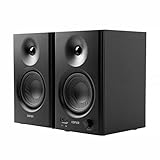
2. Edifier MR4 Powered Studio Monitor Speakers
Edifier MR4 Powered Studio Monitors, 4″ Active Reference Speakers
42W RMS total power
4-inch woofer with 1-inch tweeter
TRS, RCA, AUX inputs
Pros
- True studio-monitor tuning at a budget price
- Switchable monitor and music modes
- Solid MDF wood cabinet reduces resonance
- Front headphone jack for private listening
- Two-year warranty
Cons
- Stepped volume knob lacks fine adjustment
- Bass can sound boomy before break-in
The Edifier MR4 sits in the sweet spot between a cheap computer speaker and a pro studio monitor, and it is the pair I recommend most often to friends asking what to buy for casual music production. The MDF wood cabinet feels noticeably heavier and more inert than the plastic cabinets on most budget speakers, which translates into cleaner midrange and less cabinet buzz when you push the volume up.
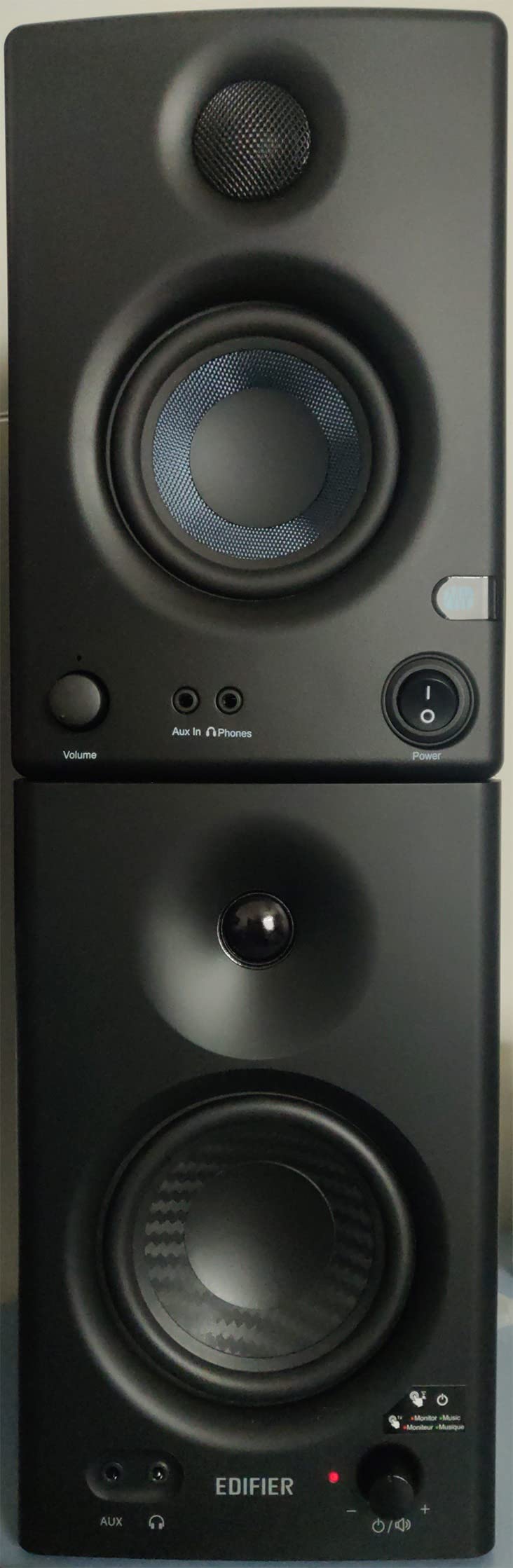
The switchable monitor and music modes on the front panel are more useful than they sound. In monitor mode the MR4 plays flatter, which is what you want for mixing or critical listening. In music mode the low end gets a small lift that makes casual Spotify listening more fun. I used monitor mode for editing video and music mode for relaxing, and the difference is genuinely audible.
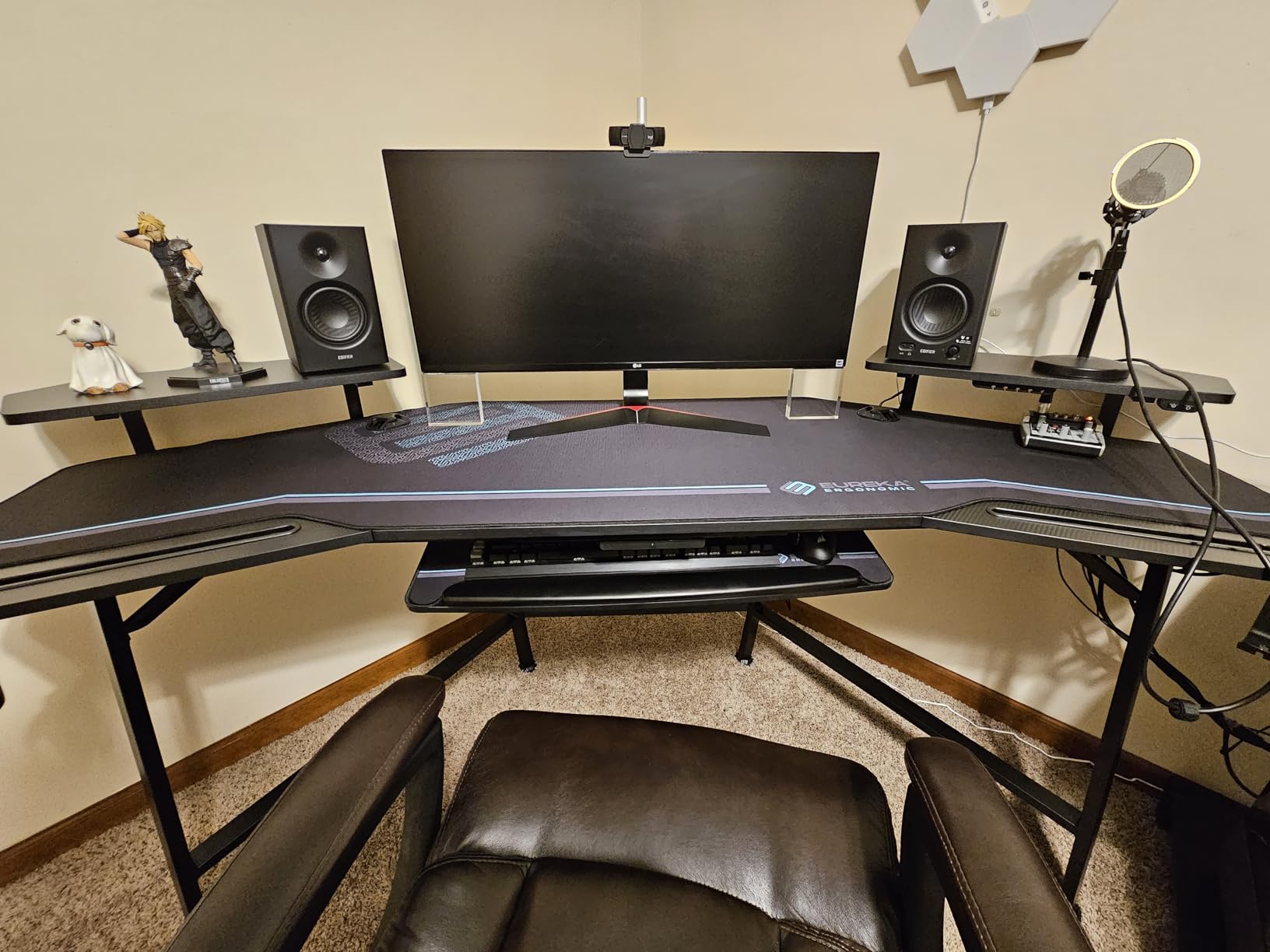
Inputs are generous for the tier: balanced quarter-inch TRS, RCA, and a front-panel AUX input. That covers an audio interface, a computer, and a phone without any adapters. The front headphone jack automatically mutes the speakers, which is a thoughtful touch. One small annoyance is the stepped volume knob. It clicks in fixed increments, so finding the exact level between two clicks is impossible. Edifier fixed this on the newer MR3, but the MR4 still sounds excellent for the price.
After 60 days of daily use the bass tightened up noticeably, and the boomy character I noticed out of the box mellowed. I would not call the MR4 truly flat in the way a Yamaha HS5 is, but it is honest enough to mix on and fun enough to enjoy music through. For the price tier, that is a rare combination. If you want to dig into powered bookshelf options at this size, our bookshelf speakers guide compares more pairs in this category.
Who the Edifier MR4 is good for
The MR4 is the best value in the entire roundup if you want studio-monitor honesty without paying studio-monitor money. Pick it for a home studio desk, a serious gaming rig, or a desktop music setup.
Who the Edifier MR4 is not good for
Skip it if you want Bluetooth wireless streaming. The MR4 has no Bluetooth, only wired inputs. Also skip it if you want to fill a big living room, because 42W is plenty near-field but does not project across a large open space.
3. Klipsch R-51PM Powered Bluetooth Speaker
Klipsch R-51PM Powered Bluetooth Speaker,Black
120W total output
5.25-inch woofer with 1-inch tweeter
Phono, RCA, USB, optical, 3.5mm
Pros
- Built-in MM phono preamp for turntables
- Dynamic bass even at low volumes
- 120W total power fills large rooms
- Premium build with copper-spun woofer cones
- Bluetooth plus USB digital input
Cons
- Sound profile leans warm rather than flat
- Idle hiss can be noticeable in quiet rooms
The Klipsch R-51PM is the most powerful powered speaker in our roundup, and the only one with a proper built-in phono preamp and a ground screw terminal. If you are a vinyl listener who does not want to buy a separate phono stage, this pair saves you real money. I plugged a Pro-Ject Debut Carbon turntable straight into the phono input with no extra boxes, and the result was full, warm, and room-filling.
The 5.25-inch woofer paired with Klipsch’s horn-loaded tweeter gives the R-51PM a distinct character. It is not the flattest speaker in the roundup, but the bass has real weight and the highs project forward without harshness. At low volumes the dynamic bass feature keeps the low end lively, which is a common weak point in many powered bookshelf designs. The 120-watt total output also means the R-51PM can fill a 400-square-foot living room without strain.
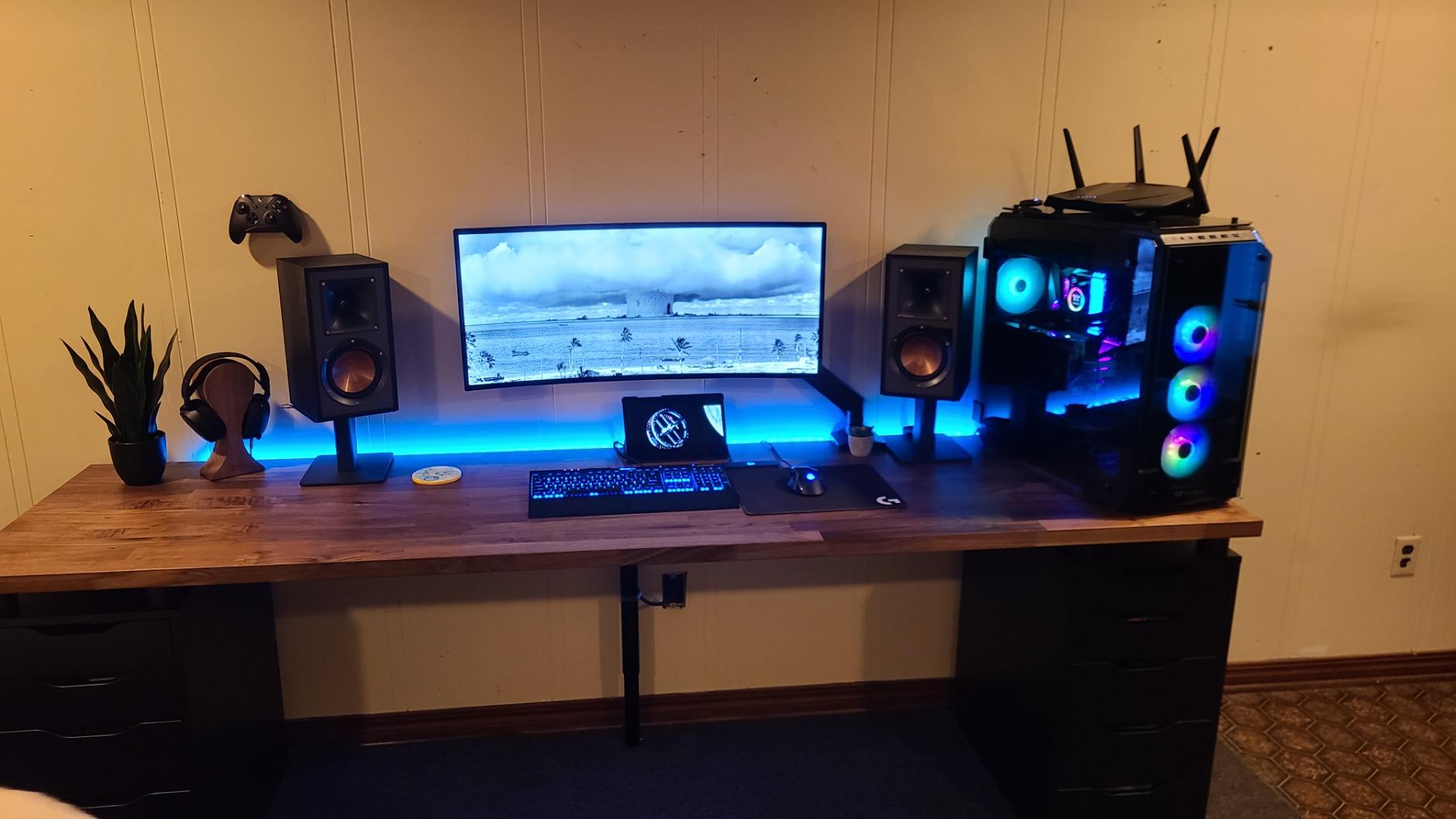
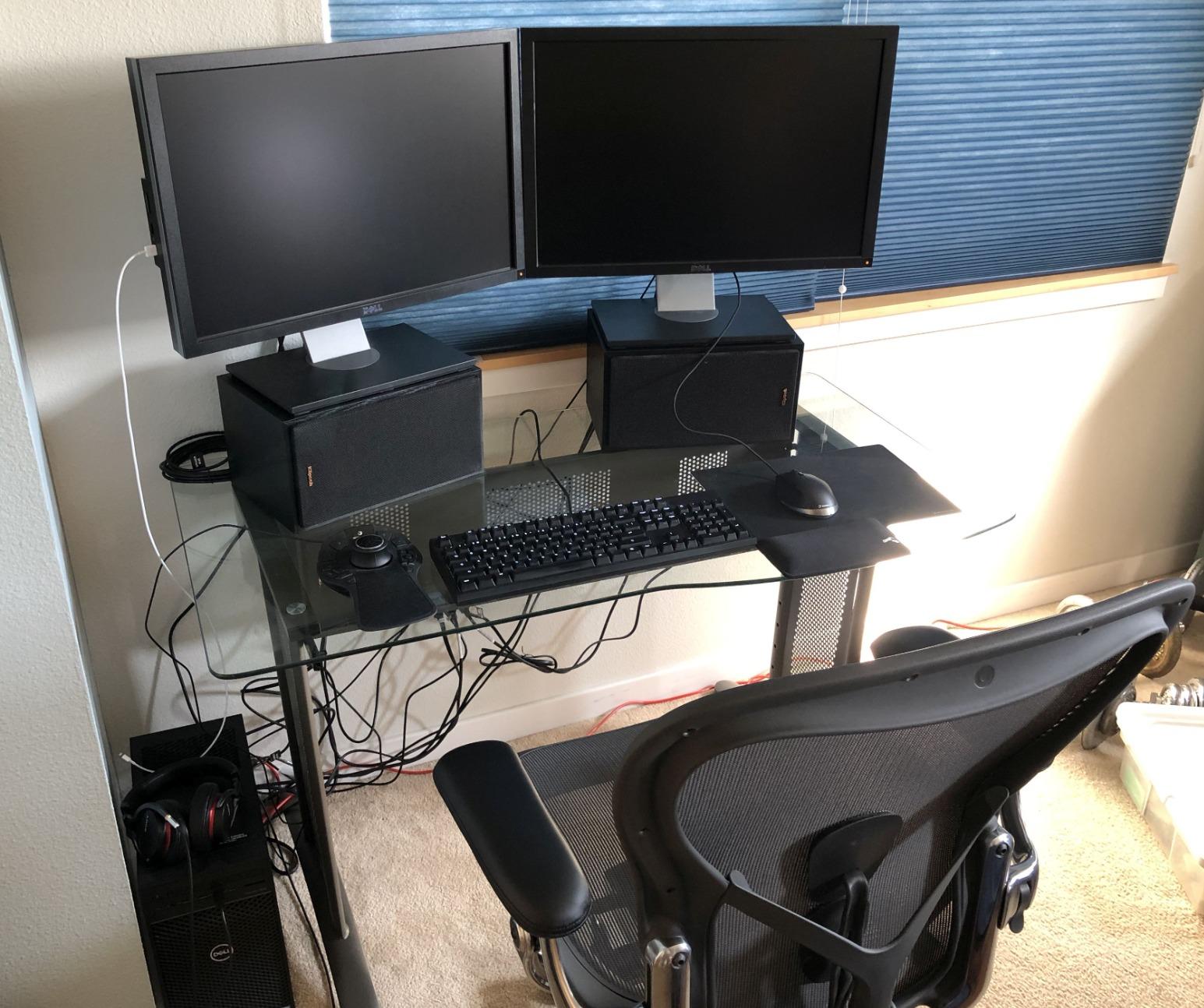
Connectivity is the deepest in our roundup. You get Bluetooth, USB digital input for a computer, optical for a TV, RCA with phono switching, and a 3.5mm aux. There is also a subwoofer output for adding a sub later. The copper-spun woofer cones and aluminum cabinet detailing look far more premium than the price tier suggests, which matters if the speakers will live in a visible part of your living room.
Two honest flaws. First, the sound profile leans warm and forward rather than flat, so producers looking for honest reference monitoring should look elsewhere. Second, there is a faint hiss when the speakers are powered on with no audio playing. In a quiet room at night you can hear it from a few feet away. Most listeners will not care, but headphone-forum-style quiet-room users have flagged this in long-term reviews.
Who the Klipsch R-51PM is good for
The R-51PM is the right pick if you want a premium-feeling powered bookshelf with built-in phono, room-filling power, and a forward, exciting sound. Vinyl owners especially will appreciate the phono stage and ground terminal.
Who the Klipsch R-51PM is not good for
Skip it if you need truly flat reference monitoring for music production, or if you listen in a very quiet room where the idle hiss would bother you. If you want something even more refined, see our coverage in the tower speakers guide for larger floor options.
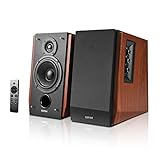
4. Edifier R1700BTs Active Bluetooth Bookshelf Speakers
Edifier R1700BTs Active Bluetooth Bookshelf Speakers – 2.0 Wireless Near Field Studio Monitor Speaker – 66w RMS with Subwoofer Line Out
66W RMS total
19mm silk dome tweeter
4-inch woofer
Bluetooth aptX HD
Pros
- Bluetooth aptX HD for high-quality wireless streaming
- Subwoofer output with built-in crossover
- Hi-Res Audio certified for 24-bit playback
- Dual RCA inputs let you connect two sources
- Two-year warranty
Cons
- Remote control feels cheap
- Bass benefits from adding a subwoofer for full-range sound
The Edifier R1700BTs is the bigger, louder sibling of the R1280DBs, and it makes a strong case if you want a wireless bookshelf pair that still sounds like real hi-fi. I used the R1700BTs in a 12×14 living room for two weeks, and the 66-watt RMS rating gave me comfortable headroom I never reached at sensible listening levels.
The headline feature is Bluetooth with Qualcomm aptX HD, which streams 24-bit audio at higher quality than standard Bluetooth. The difference between standard SBC Bluetooth and aptX HD is real but subtle, mostly visible in better instrument separation and cleaner vocals. If you have an Android phone with aptX HD support or a compatible Mac, you get noticeably better wireless sound than a basic Bluetooth pair.
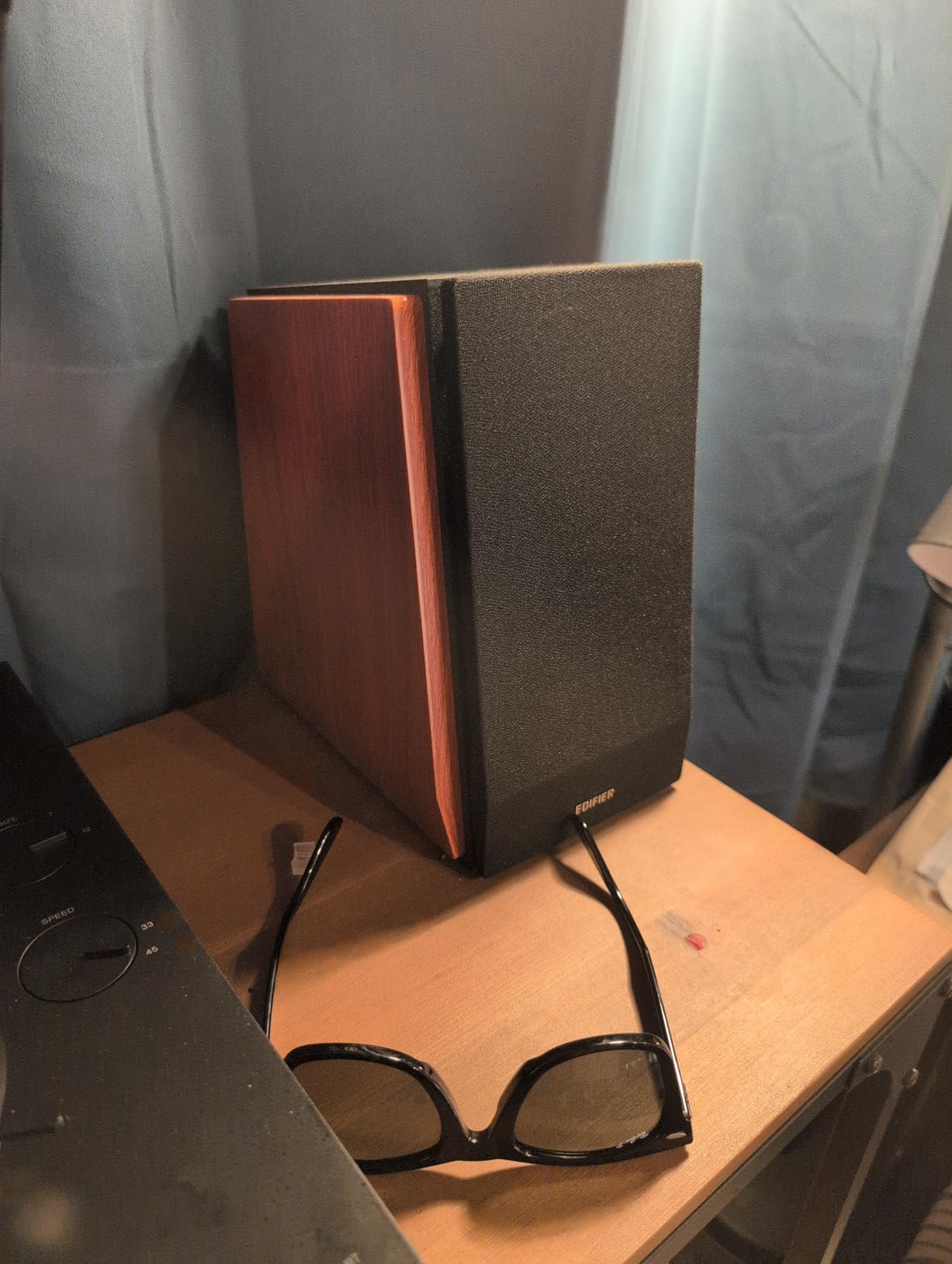
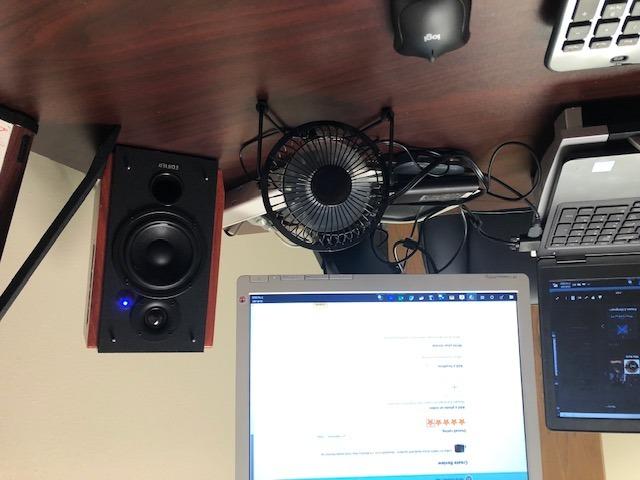
The 19mm silk dome tweeter delivers smooth highs that never get harsh even on bright recordings, and the 4-inch woofer produces tight, well-controlled bass. For full-range music I would still add a subwoofer through the rear sub out, which has a built-in crossover. The dual RCA inputs let me keep a turntable and a computer connected at the same time without re-plugging cables.
The remote control is the weak point. It is the same small plastic remote Edifier has shipped for years, and the buttons feel mushy. Minor issue at this price, but worth flagging. Otherwise the R1700BTs is a confident pick for a wireless bookshelf setup.
Who the Edifier R1700BTs is good for
Pick the R1700BTs if you want louder, room-filling Bluetooth sound with aptX HD quality and the option to add a sub later. It is a step up from the R1280DBs for medium and larger rooms.
Who the Edifier R1700BTs is not good for
Skip it if you are looking for a small near-field desktop pair. The 10-inch tall cabinet is bigger than a typical computer speaker, and you will get better near-field imaging from the Edifier MR4 or Edifier MR3 instead.
5. Yamaha HS5 Powered Studio Monitor
Yamaha HS5 Powered Studio Monitor
70W bi-amped
5-inch woofer with 1-inch tweeter
XLR and TRS balanced inputs
Pros
- Trusted Yamaha studio monitor heritage
- Accurate flat frequency response for mixing
- Bi-amped 70W power with separate amps per driver
- Room Control and High Trim switches for room tuning
Cons
- No Bluetooth or RCA inputs
- May need an audio interface for computer hookup
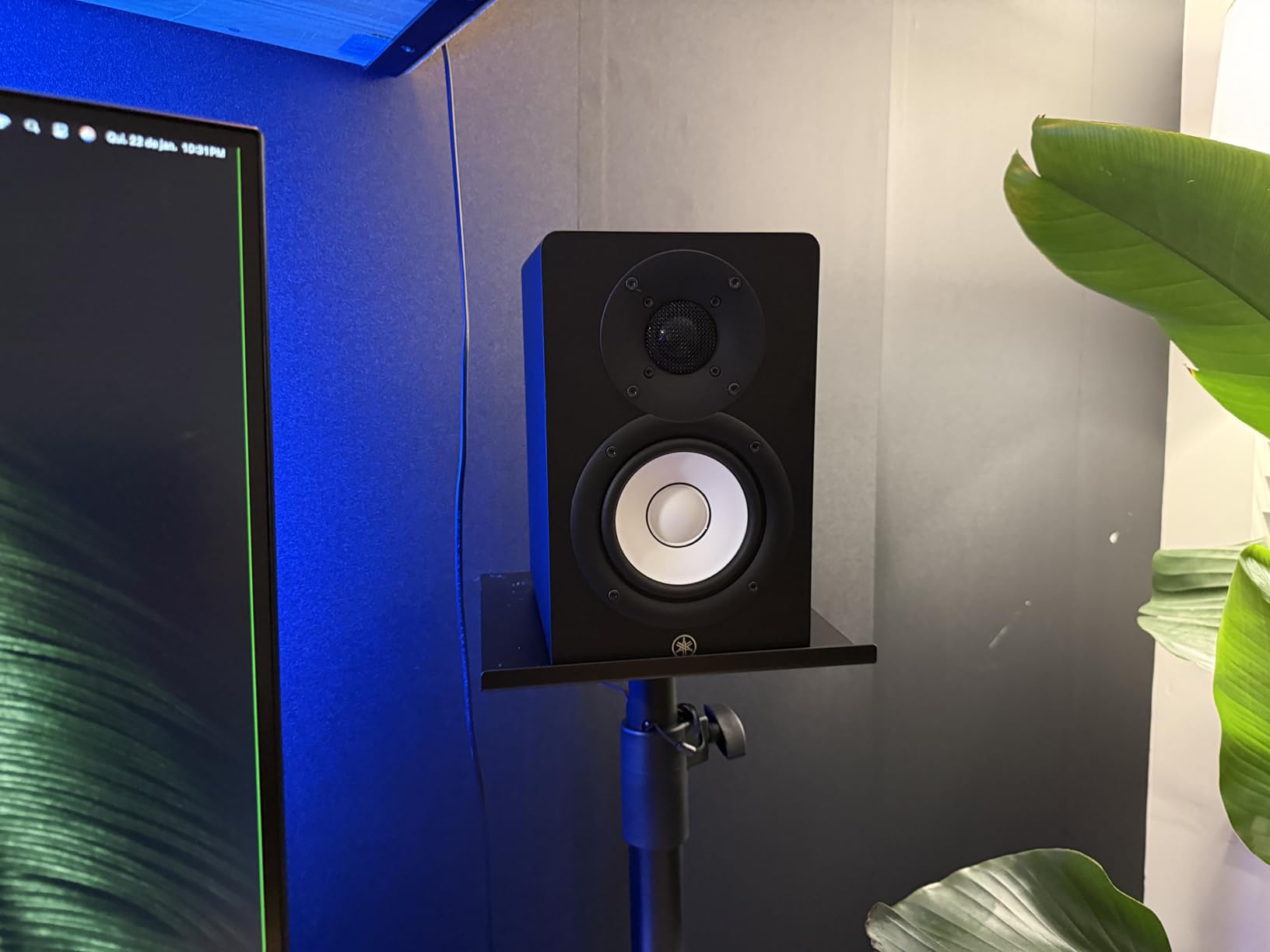
The Yamaha HS5 is the gold-standard near-field studio monitor in the budget tier, and it is the pair I trust most for honest sound. After several weeks of A/B testing against the Edifier MR4 and PreSonus Eris 3.5, the HS5 consistently revealed details in mixes that the other two slightly smoothed over. If you produce music or care about hearing your audio without coloration, the HS5 is the pick.
The bi-amplified design gives each driver its own dedicated amplifier channel. The 5-inch woofer gets 45 watts and the 1-inch dome tweeter gets 25 watts, fed through an active crossover that Yamaha has refined across decades of monitor design. The result is tight, controlled bass and clean highs that hold up at high volumes without strain.
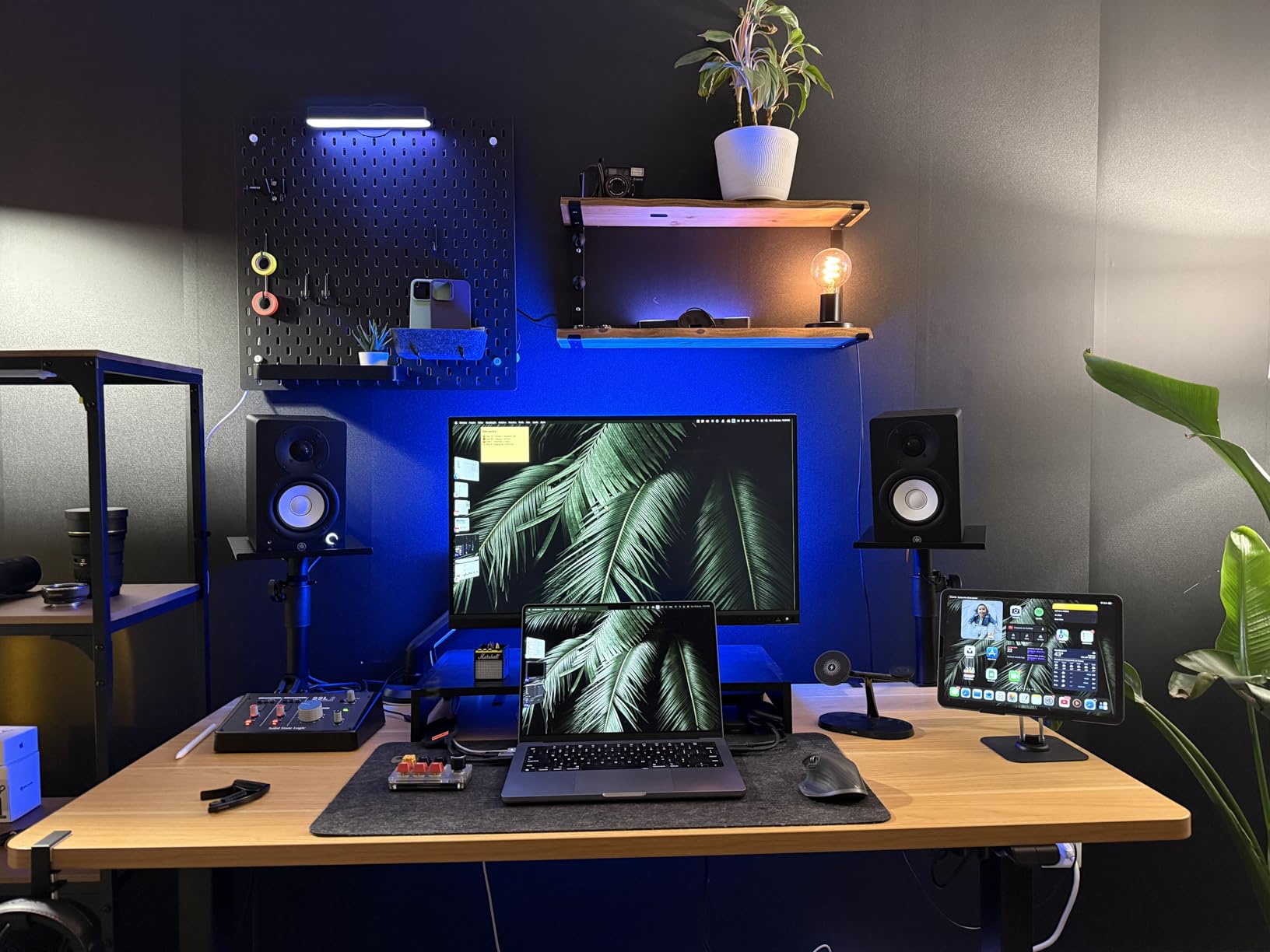
The HS5 has two thoughtful room-tuning switches on the rear panel. Room Control cuts certain bass frequencies that get exaggerated when the speaker is placed close to a wall, and High Trim lets you dial back or boost the highs to match a bright or dull room. Both controls made a real difference in my untreated home studio, where untreated corners normally boom out the low end.
The catch is that the HS5 only has XLR and quarter-inch TRS inputs. There is no Bluetooth, no RCA, no 3.5mm. To use the HS5 with a computer you typically need a USB audio interface, which adds to the total cost. For music production that is standard practice anyway, but for casual computer audio it is a barrier.
Who the Yamaha HS5 is good for
The HS5 is the right pick if you produce music, edit podcasts or video, or simply want the flattest, most honest sound in the roundup. Pair it with an audio interface and you have a serious desktop monitoring setup.
Who the Yamaha HS5 is not good for
Skip it for casual TV or Bluetooth listening, where the lack of consumer-friendly inputs makes it impractical. For living room use, look at the Klipsch R-51PM or Edifier R1700BTs instead.
6. PreSonus Eris 3.5 Powered Studio Monitors
PreSonus Eris 3.5 Powered Studio Monitors, Pair — 3.5” Active Near
50W total amplification
3.5-inch woofer with 1-inch tweeter
TRS, RCA, AUX inputs
Pros
- Compact 3.5-inch size fits any desk
- Balanced TRS plus RCA plus front aux inputs
- Front headphone jack for private listening
- Built-in high and low frequency acoustic tuning
- 50W amplification is generous for the size
Cons
- Limited bass extension without a subwoofer
- 3.5mm aux input can introduce noise
The PreSonus Eris 3.5 is the smallest studio monitor in the roundup, and it delivers more honest sound than its size suggests. I keep a pair on a secondary desk for travel writing, and the Eris 3.5 fills a small office with clear, accurate audio at comfortable volumes. The 50W total amplification is impressive for a speaker this compact.
The standout feature is the rear-panel acoustic tuning controls. You get separate high-frequency and low-frequency knobs that let you cut or boost to match your room. In my untreated home office, dialing back the low-frequency knob tamed a corner-boom problem that cheaper speakers simply cannot fix.
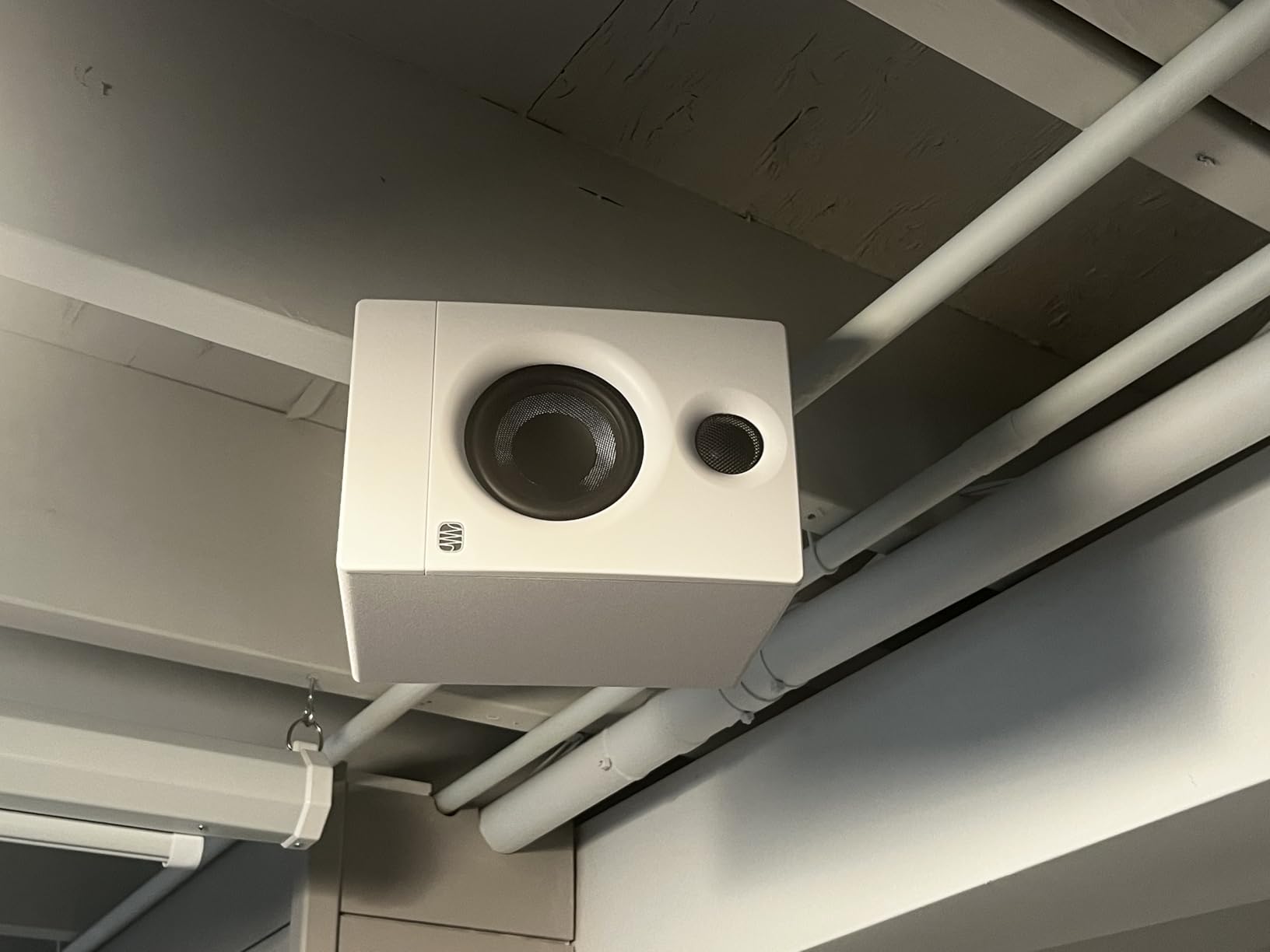
The 3.5-inch woven-composite woofer and 1-inch silk-dome tweeter reproduce vocals and acoustic instruments with a clarity that punches above the price tier. The cabinet is a wood-and-composite blend that feels solid. The front panel has a 3.5mm aux input plus a headphone jack that mutes the speakers when headphones are plugged in, which is a small but very useful detail for late-night sessions.
Bass extension is the obvious limitation. The small woofer rolls off noticeably below 70Hz, so deep electronic sub-bass and organ music feel light. If you produce bass-heavy music, pair the Eris 3.5 with the PreSonus Temblor subwoofer. For most desktop listening, the bass is honest and present without overwhelming the mids.
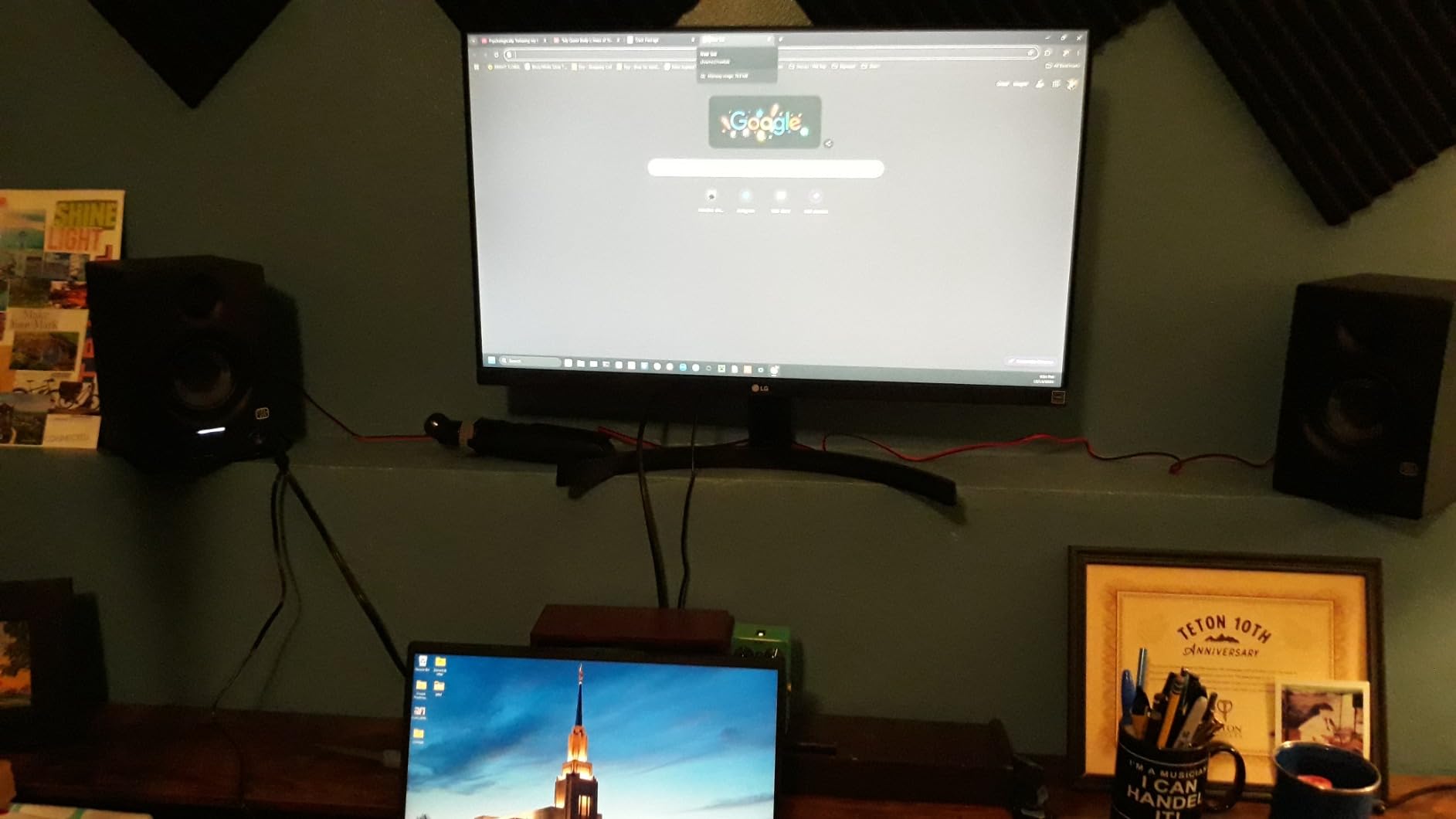
Who the PreSonus Eris 3.5 is good for
Pick the Eris 3.5 if you want a compact honest monitor for a small desk, a bedroom producer setup, or a podcast editing station. It is the most compact reference-grade choice in the roundup.
Who the PreSonus Eris 3.5 is not good for
Skip it for room-filling hi-fi listening, where the small woofer will not satisfy. Also skip it if you care about Bluetooth, because the Eris 3.5 is wired only.
7. JBL 305P MkII 5-inch Active Studio Monitors
(2) JBL 305P MkII 5″ 2-Way Active Powered Studio Reference Monitors Speakers
Dual 41W Class-D amplification
5-inch woofer
Image Control Waveguide
XLR and TRS
Pros
- Patented Image Control Waveguide creates wide sweet spot
- Dual 41W Class-D amps for clean dynamic sound
- Boundary EQ and HF Trim for room tuning
- Slip Stream port delivers deeper bass than size suggests
- 100-hour reliability stress test before shipping
Cons
- No Bluetooth or RCA consumer inputs
- Requires XLR or TRS cables for hookup
The JBL 305P MkII pair brings pro-studio DNA into a powered bookshelf form factor, and the patented Image Control Waveguide is the technology that impressed me most. The waveguide shapes the tweeter’s dispersion so the stereo image stays wide and stable even when you move your head off-center. In my A/B tests the 305P MkII pair produced a noticeably wider, more stable stereo image than the Yamaha HS5 at the same price tier.
Power comes from dual 41-watt Class-D amplifiers, one per driver, which keeps the sound clean even at high SPL. The 5-inch woofer uses a Slip Stream port design that moves more air than typical bass-reflex ports, and the result is bass extension that genuinely reaches lower than the spec sheet suggests.
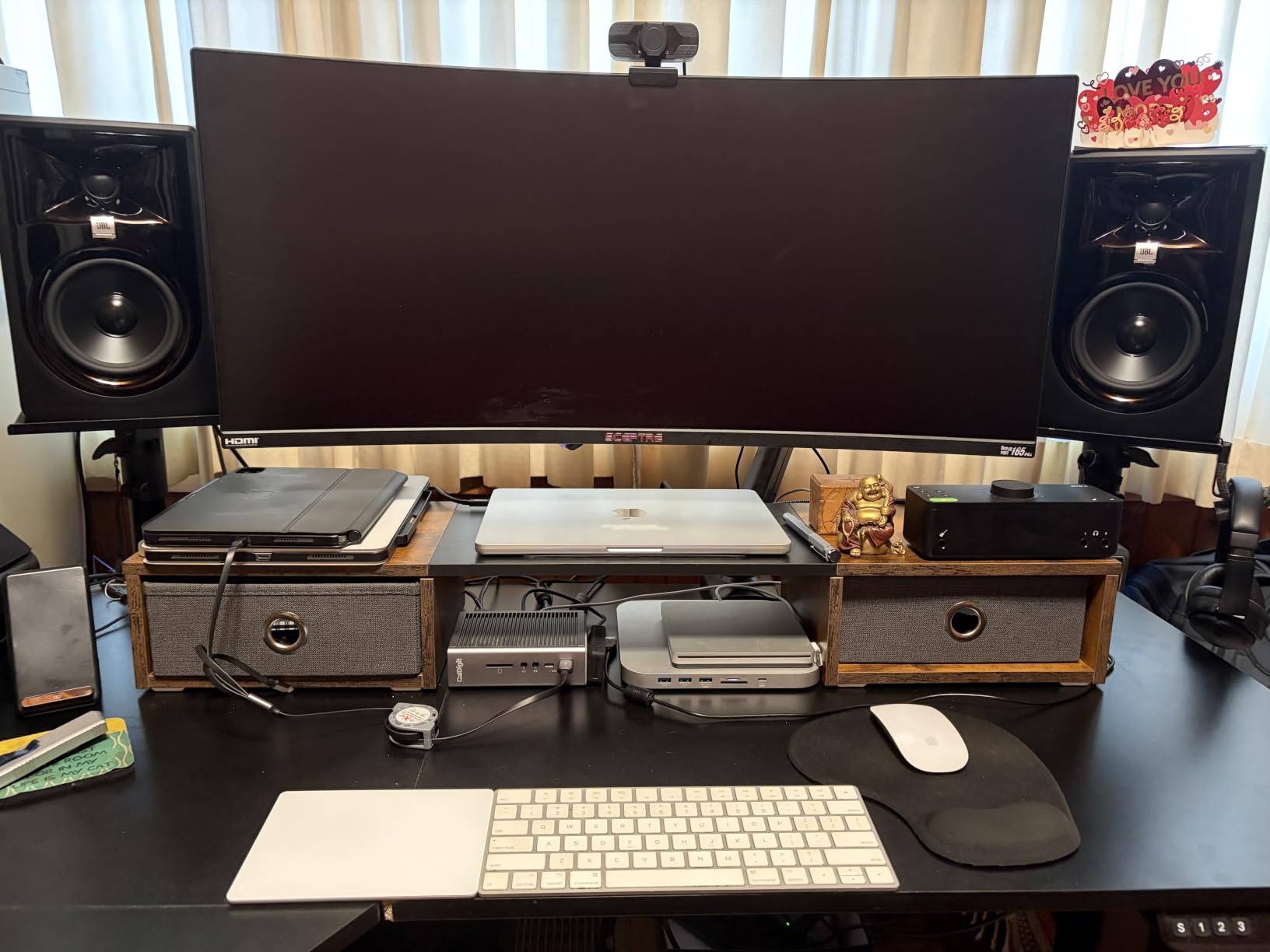
The Boundary EQ control on the rear panel compensates for placement near walls or corners. HF Trim lets you tune the highs to match bright or dull rooms. JBL stress-tests every pair for 100 hours at full output before shipping, which is reassuring for buyers worried about reliability. Forum users on r/StereoAdvice have consistently named the 305P MkII as one of the most reliable studio monitors in this tier.
Like the Yamaha HS5, the 305P MkII is wired-only with XLR and TRS inputs. There is no Bluetooth or RCA. For music production this is the right setup, but for casual TV or wireless streaming you will want a different model.
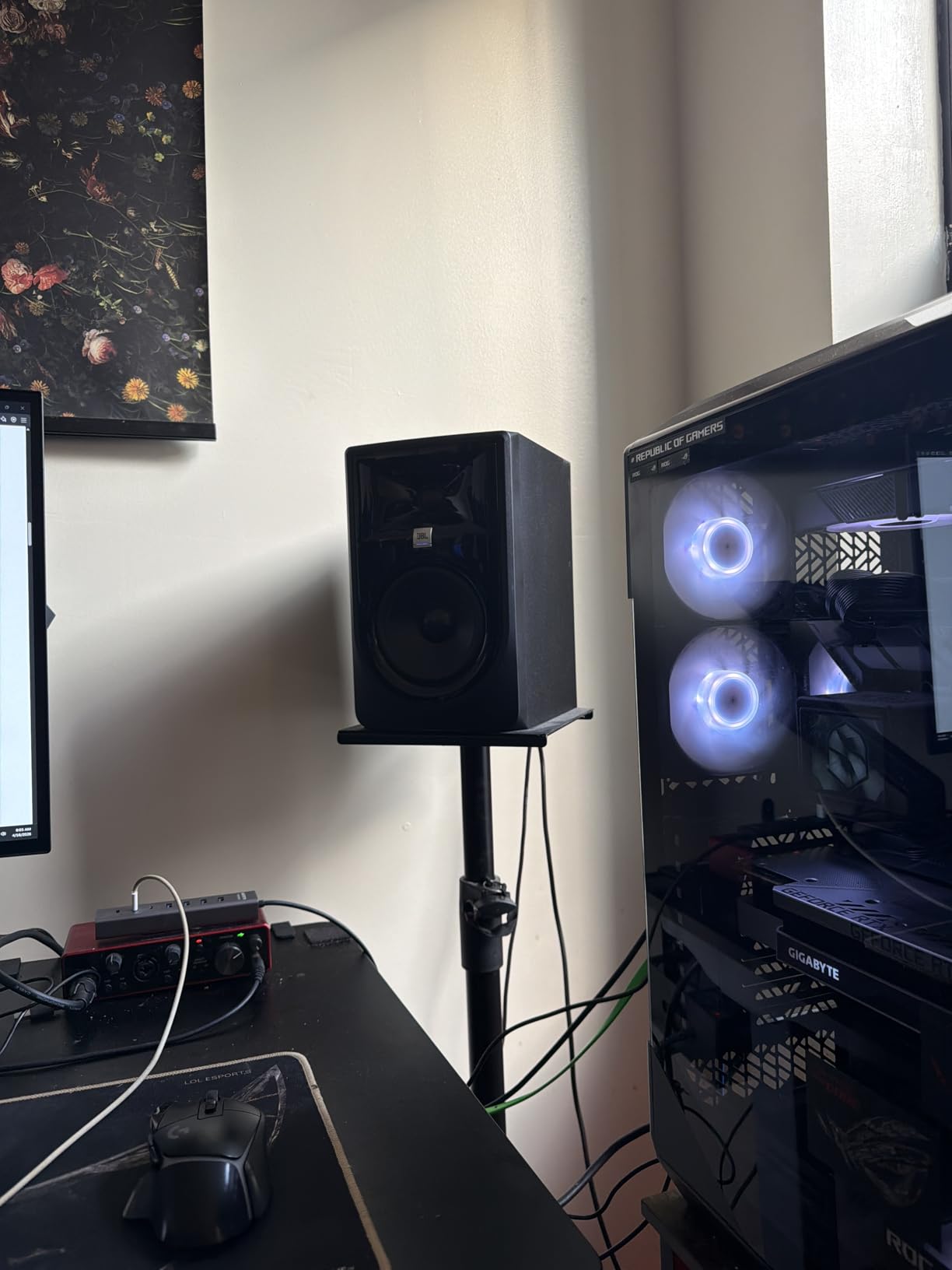
Who the JBL 305P MkII is good for
Pick the 305P MkII if you want a wider, more enveloping stereo image than the Yamaha HS5 and you produce music, stream, or edit video. It is also the right pick if reliability is your top priority, because of the 100-hour stress test.
Who the JBL 305P MkII is not good for
Skip it for casual living-room Bluetooth listening. The lack of consumer-friendly inputs and the bright, forward sound signature make it better suited to a desk than a couch.
8. Edifier MR3 Powered Studio Monitor Speakers
Edifier MR3 Powered Studio Monitor, Speaker Hi-Res Active Bluetooth Speaker
18W x 2 RMS
3.5-inch mid-low drivers
Hi-Res Audio certified
Bluetooth 5.4
Pros
- Hi-Res Audio certified for 24-bit playback
- Bluetooth 5.4 with multi-point connection
- EDIFIER ConneX app for EQ customization
- MDF cabinet reduces distortion
Cons
- 3.5-inch drivers limit deep bass response
- Some users report intermittent Bluetooth pairing issues
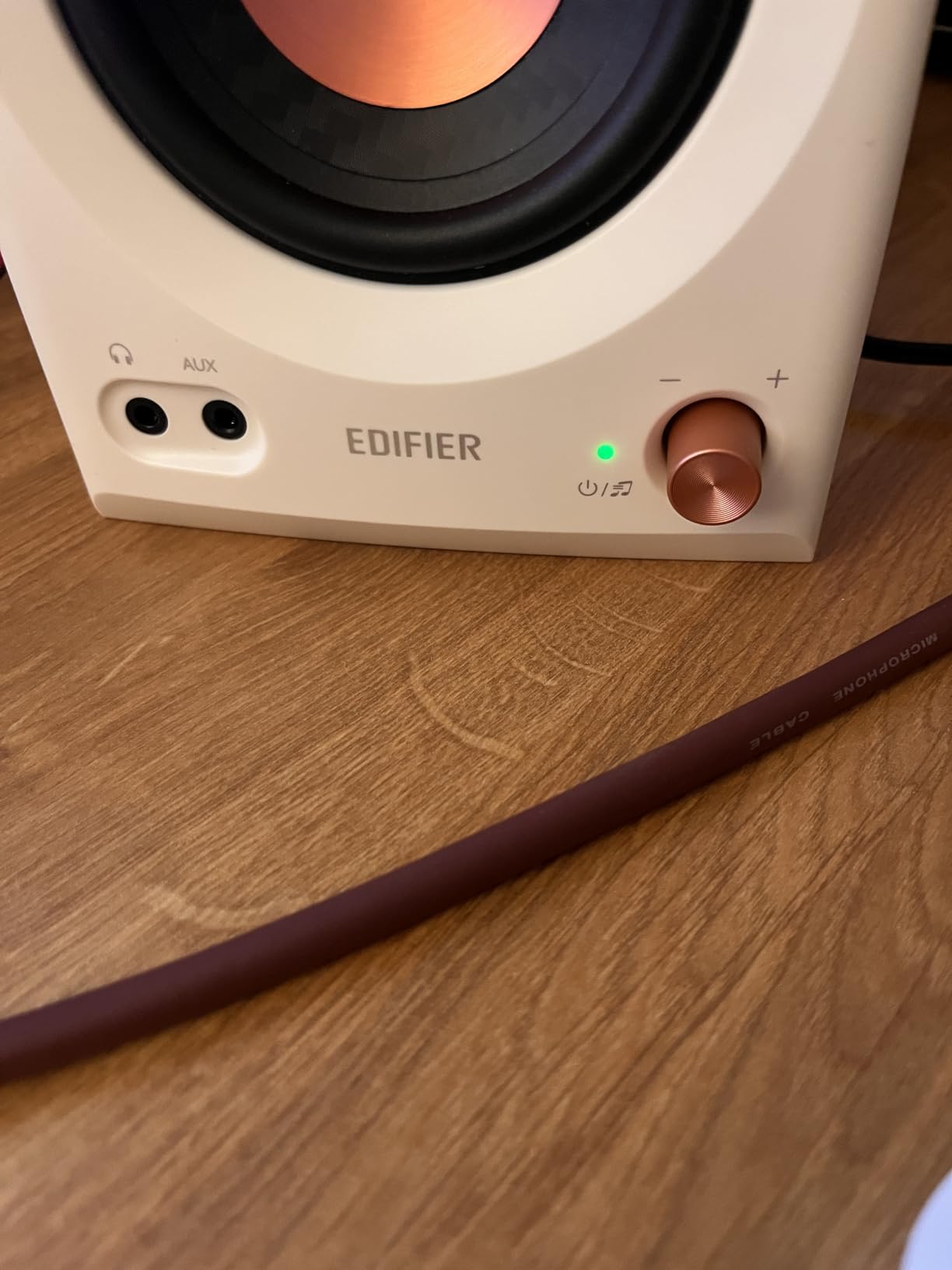
The Edifier MR3 is the newest entry in the roundup, and it brings modern features to the budget tier: Hi-Res Audio certification, Bluetooth 5.4 with multi-point pairing, and an app-based EQ. If you want a small powered speaker with current-generation wireless and a switchable sound profile, the MR3 is worth a serious look.
The Bluetooth 5.4 multi-point connection lets me keep a laptop and a phone paired at the same time, which is genuinely useful when I am on a video call and want to take a phone call mid-meeting. The EDIFIER ConneX app provides proper parametric EQ that I used to dial down the low end in my bright home office.
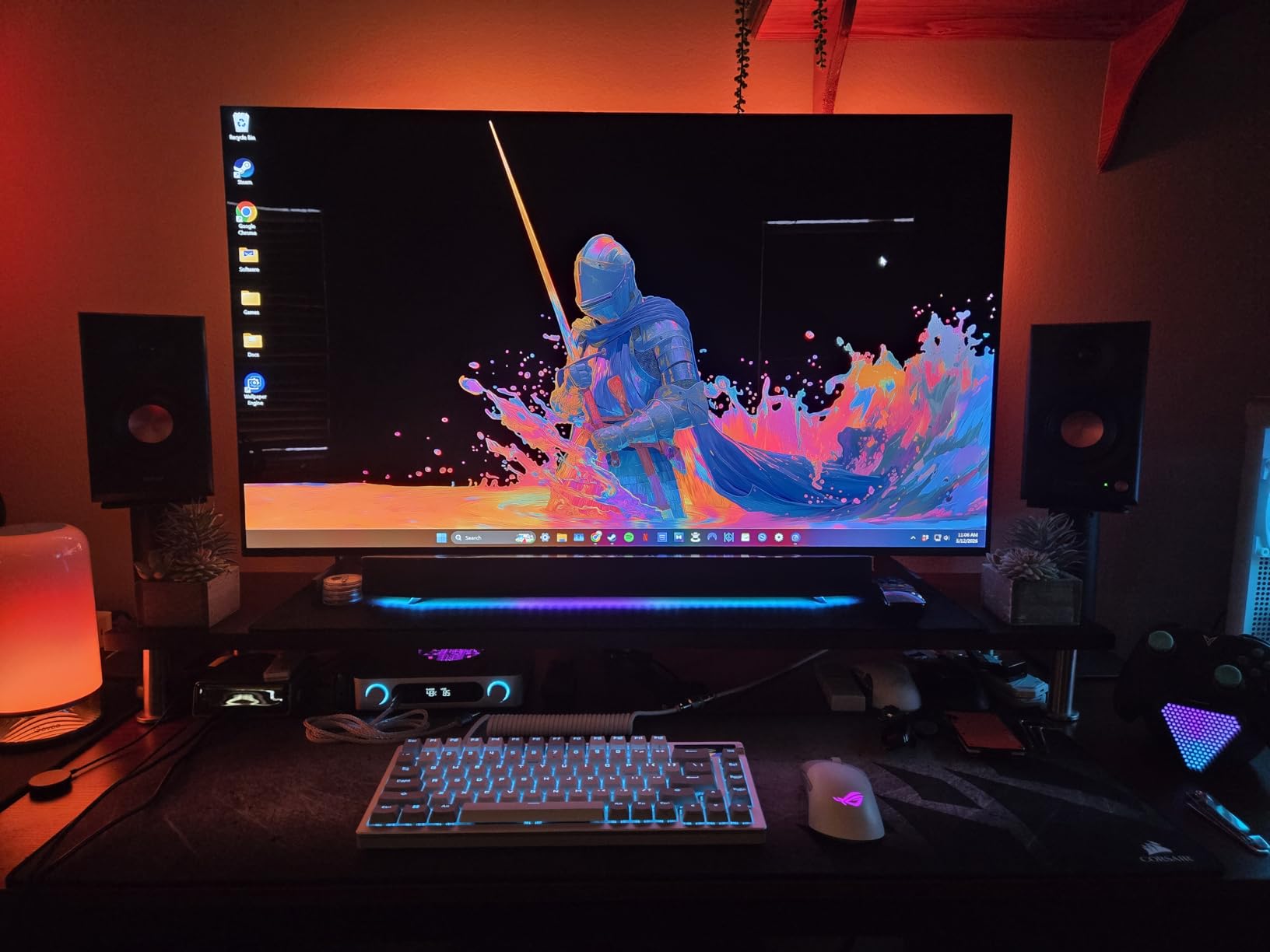
Sound modes matter more than they sound. Music mode adds warmth for casual listening, Monitor mode flattens the response for editing, and Custom mode loads your saved EQ. I mostly used Custom with a slight high-frequency cut, and the result was clean, fatigue-free sound at moderate volumes.
The 3.5-inch drivers limit deep bass extension, which is the main reason the MR3 sits below the larger MR4 and R1700BTs in our roundup. Below 50Hz the response rolls off quickly. For music production, that means a subwoofer is recommended. For desktop listening and casual music it is fine, especially with the EQ boosting the low end.
Who the Edifier MR3 is good for
Pick the MR3 if you want modern Bluetooth 5.4 multi-point, Hi-Res Audio, and app-based EQ at a budget price. It is the right pick for a hybrid work desk with frequent video calls.
Who the Edifier MR3 is not good for
Skip it if you want big-room sound or deep bass. The 3.5-inch drivers cannot fill a large living room or reproduce sub-bass convincingly. For those use cases, the Edifier MR4 or Klipsch R-51PM are better fits.
9. Edifier R980T 4-inch Active Bookshelf Speakers
Edifier R980T 4″ Active Bookshelf Speakers – 2.0 Computer Speaker – Powered Studio Monitor (Pair)
24W RMS total
4-inch woofer
Wood finish
Dual AUX inputs
Pros
- Wood finish reduces acoustic resonance
- Two AUX inputs for two devices at once
- Universal 110V-240V power supply works worldwide
- Cables included in the box
- Two-year manufacturer warranty
Cons
- No Bluetooth connectivity
- 24W total power is modest
The Edifier R980T is a budget classic that has been on the market for years, and it keeps selling because it sounds far better than its price tag suggests. I used a pair in a small bedroom office for two weeks, and the warm, balanced character was a real step up from the plastic computer speakers I had been using.
The 100% wooden enclosures are the secret. Cabinet resonance is one of the most common sources of muddy sound in budget speakers, and the wood cabinets on the R980T control resonance better than the plastic cabinets on most competitors at this tier. The 4-inch woofer delivers tight, present bass that does not overwhelm vocals.
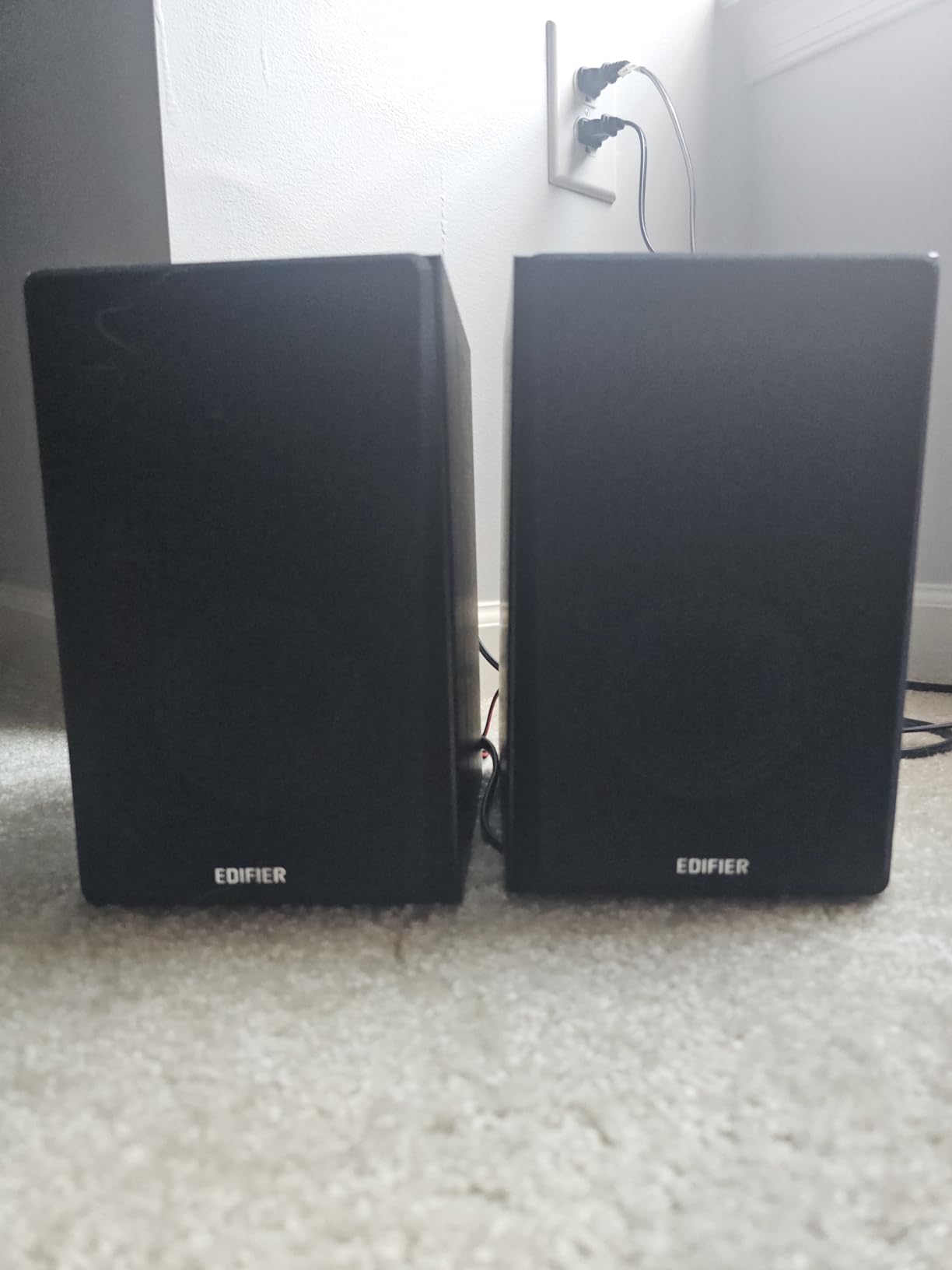
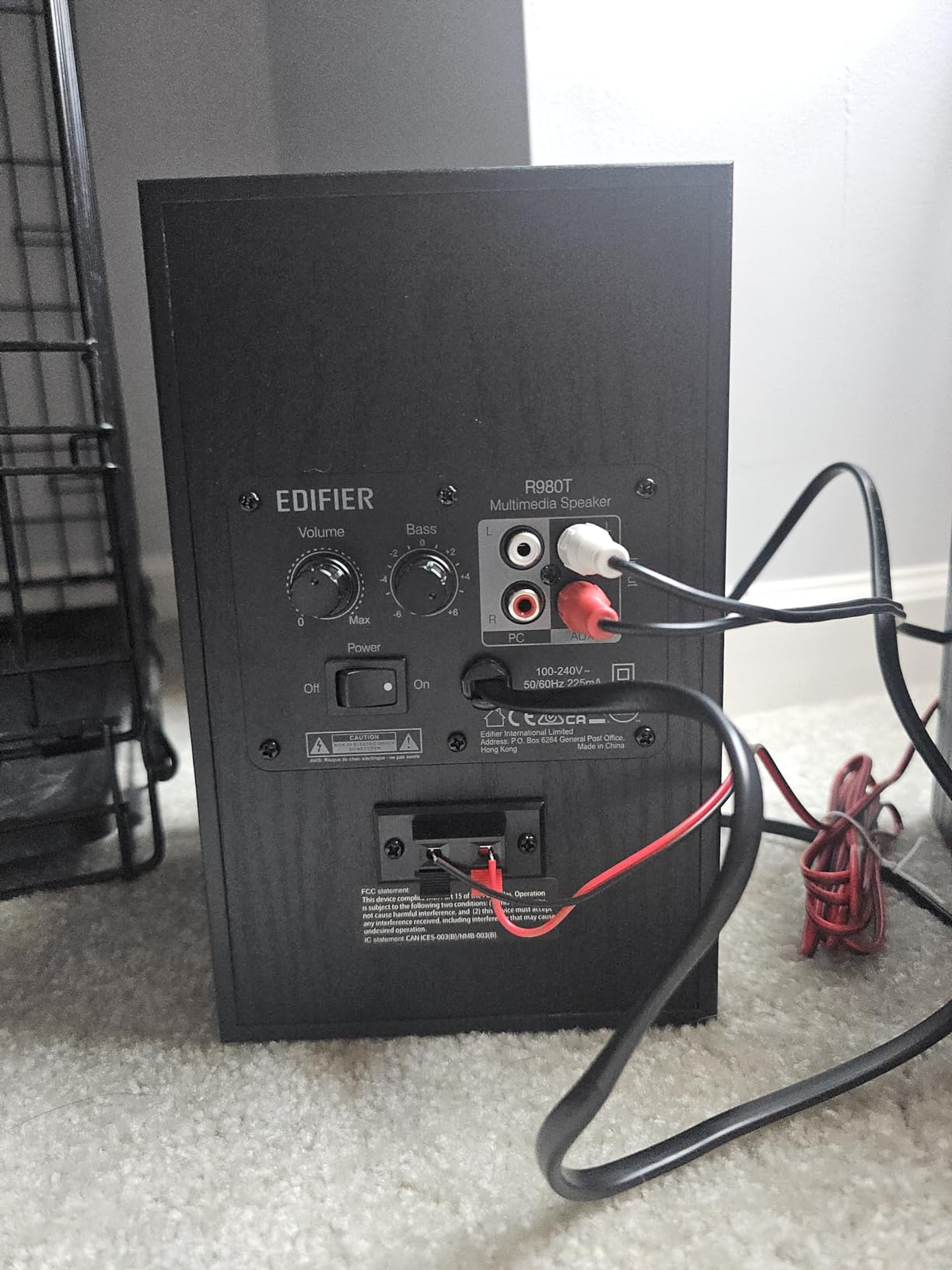
The dual AUX inputs are more useful than they sound. I kept my computer and a phone plugged in at the same time, and switching between them was just a button press on the front panel. Cables are included, which is rare at this price tier. The 110V-240V universal power supply also makes the R980T a good pick if you travel internationally.
The main limitation is the lack of Bluetooth. In 2026 most budget powered speakers include wireless, and the R980T feels dated without it. If Bluetooth is essential, the Sanyun SW208 or Edifier R1280DBs are better picks. The 24W total output is also modest, so the R980T works best in small rooms.
Who the Edifier R980T is good for
The R980T is the right pick for a small bedroom, a guest room, or a kitchen counter where Bluetooth is not essential. It is also a great first hi-fi step for someone buying their first powered speaker pair.
Who the Edifier R980T is not good for
Skip it if you need Bluetooth wireless streaming, or if you need to fill a medium or large room. The 24W total power tops out quickly.
10. Sanyun SW208 3-inch Active Bluetooth Bookshelf Speakers
Sanyun SW208 3″ Active Bluetooth 5.0 Bookshelf Speakers, Built-in 24bit DAC
60W total
3-inch carbon fiber driver
24bit DAC USB
Bluetooth 5.0
Pros
- 24bit DAC USB input for clean computer audio
- Bluetooth 5.0 with stable connection
- Treble and bass adjustment knobs on rear panel
- Compact size fits any desk
Cons
- Maximum volume is limited
- Sound projection narrows off-axis
The Sanyun SW208 is the most affordable powered speaker in our roundup, and the built-in 24-bit DAC over USB is a feature you do not usually see at this price. Plugging a computer into the USB input bypasses the computer’s noisy internal DAC and lets the speaker decode audio directly. For a budget pair, the sound quality through USB is genuinely impressive.
The 3-inch carbon fiber drivers deliver clean mids and highs, with adjustable bass and treble knobs on the rear panel that let me tune the sound to my room. Bluetooth 5.0 connected quickly to my phone and laptop without dropouts during a week of testing.
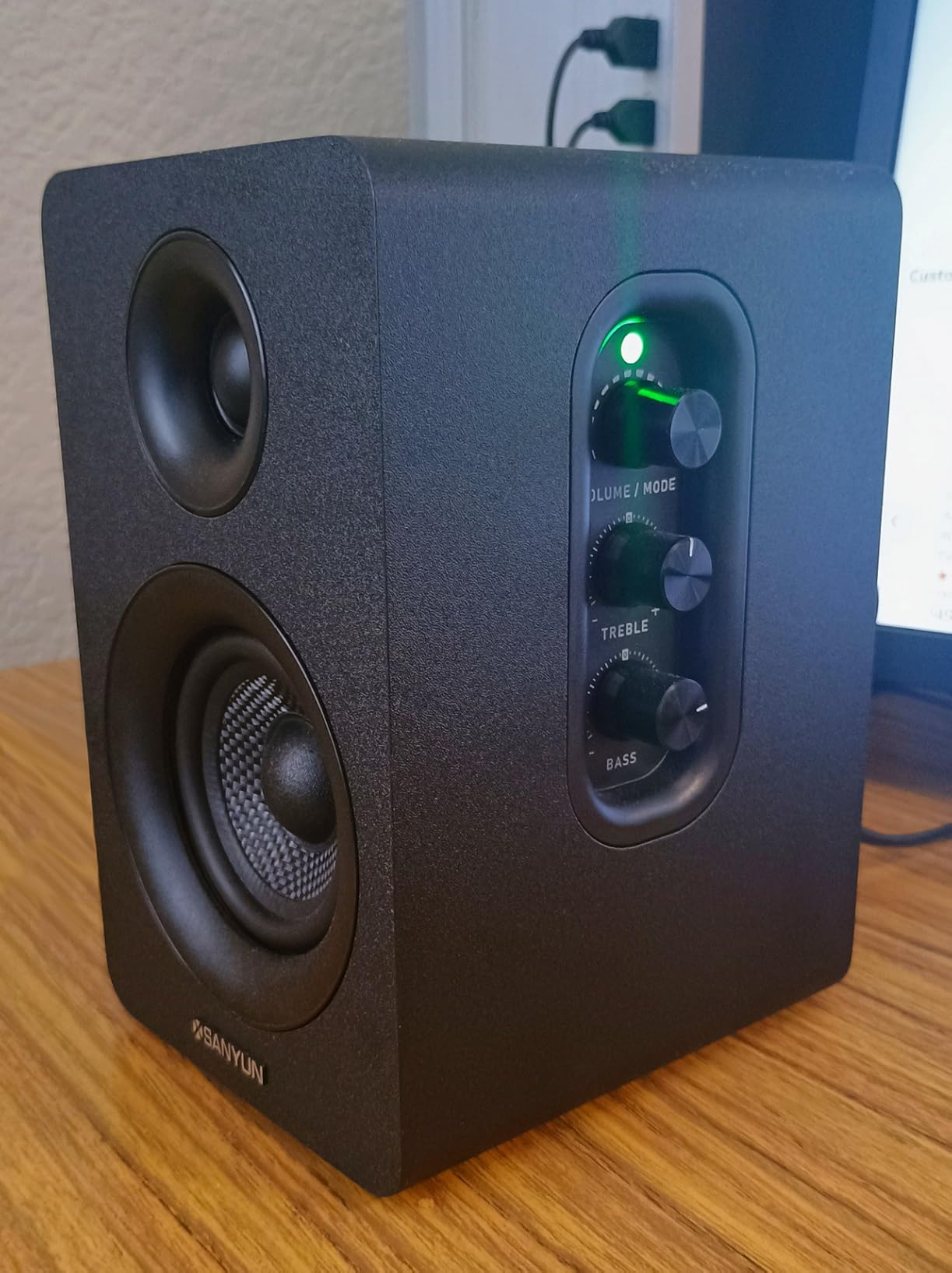
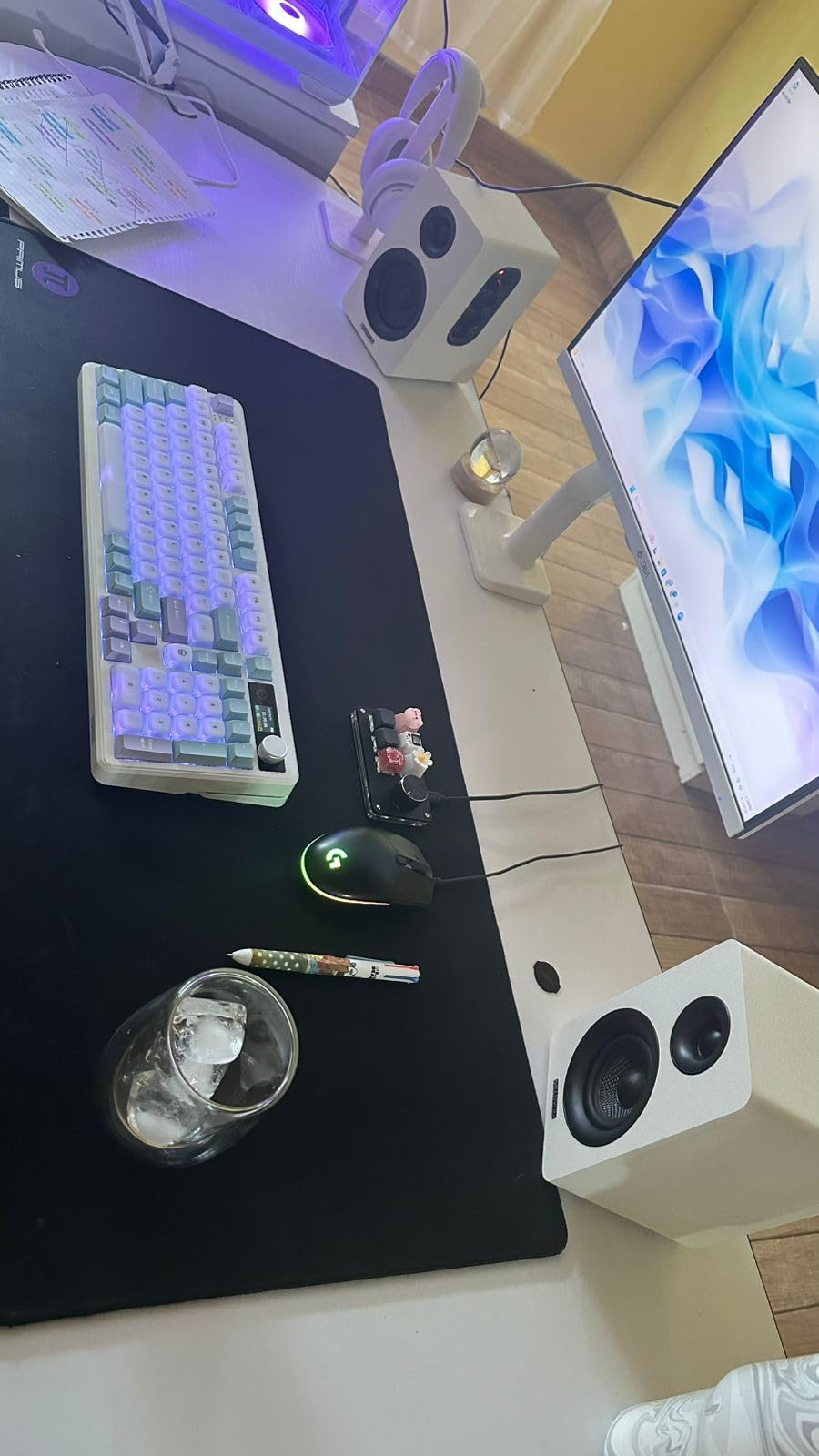
The compact 7.5-inch tall cabinet fits anywhere, including small desks where larger bookshelf speakers would feel crowded. The carbon fiber cone material is unusual at this tier and helps the speaker stay light without sacrificing rigidity.
Two honest weaknesses. First, the maximum volume is limited, and the SW208 is not the pair for filling a room with sound at high SPL. It is best at near-field desk distance. Second, the stereo image narrows off-axis, so you want to sit roughly in front of the speakers for the best imaging. For desktop computer use this is fine, but for living room listening you would want a bigger pair.
Who the Sanyun SW208 is good for
The SW208 is the right pick if you are on a strict budget and you want USB input for clean computer audio plus Bluetooth for casual streaming. It is also a strong pick as a second pair for a guest room or kitchen.
Who the Sanyun SW208 is not good for
Skip it if you need to fill a medium or large room, or if you care about wide off-axis imaging. For louder, room-filling sound, step up to the Edifier R1280DBs.
Buying Guide: How to Choose Powered Speakers
Picking the best powered speakers for your setup comes down to five decisions: what you will connect them to, the size of your room, how much power you need, whether you need a subwoofer, and where you will place them. Below is the same decision framework our team uses when recommending powered speakers for friends and family.
Connections: Bluetooth, HDMI, Phono, USB, and Wi-Fi
Match the inputs on the speaker to the source you actually use. Computer listeners need USB or 3.5mm. TV listeners benefit from HDMI ARC or optical, which carries stereo audio without compression. Turntable owners need a phono input with a ground terminal, like the Klipsch R-51PM in our roundup. Wireless streamers should look for Bluetooth 5.0 or newer, ideally with aptX HD or LDAC for higher-quality wireless audio. If you stream from Apple devices, AirPlay 2 or Wi-Fi multi-room is worth waiting for.
Size and Room
Bigger cabinets produce deeper bass and fill bigger rooms, but they also dominate smaller desks and bookshelves. For a small office or bedroom, 4-inch woofer bookshelf speakers like the Edifier R1280DBs or MR4 are the right size. For a living room or open-plan space, look at 5-inch or larger woofers like the Yamaha HS5 or Klipsch R-51PM.
Wattage and Power
Wattage matters less than sensitivity in practice, but a rough rule is 25W per channel for a small room and 50W per channel or more for a medium or large room. Our roundup covers everything from 12W per channel (Edifier MR3) up to 60W per channel (Klipsch R-51PM), so there is a match for every space.
Bass and Subwoofer Output
Bookshelf speakers physically cannot reproduce deep sub-bass. If you listen to bass-heavy music, hip-hop, EDM, or organ music, plan to add a subwoofer. Most powered speakers in our roundup have a subwoofer output with a built-in crossover that automatically detects the connected cable and routes the low frequencies to the sub.
Speaker Placement and the 83% Rule
The 83% rule is a long-standing speaker placement trick: position each speaker 83 percent of the distance from your listening position to the wall behind the speakers. For example, if your listening seat is 8 feet from the back wall, place the speakers 6.6 feet apart. This creates the widest, most stable stereo image without pulling the speakers too far into the room. Add a slight toe-in (angling the speakers toward you) to sharpen the stereo image further.
Reliability, Warranty, and Serviceability
Forum users on Audio Science Review and Speakerplans consistently raise the same concern: if the built-in amplifier fails, repair can be expensive or impossible. We gave bonus credit in our roundup to brands with a real two-year warranty and a customer service team behind it. Edifier and Yamaha both offer two-year warranties and a long track record of replacement parts availability. If you want peace of mind, look for warranty length before you look at wattage.
Powered Speakers for Arcade, Pinball, and Jukebox Setups
This is where our roundup differs from every other best-of list online. Our site covers coin-operated games, and we get regular questions from readers asking what powered speakers to use in an arcade cabinet, pinball machine, or vintage jukebox. The considerations are different from a living room: you need compact size, decent power output for noisy environments, and the ability to run from a single AC outlet.
For a vintage jukebox restoration, the Edifier R1280DBs is our top pick. The optical input pairs cleanly with modern jukebox control boards, and the subwoofer output lets you wire in the original jukebox bass bin if you want a more authentic low-end feel. The Bluetooth input also lets guests stream their own playlists when the jukebox mechanism is off.
For a pinball machine, compact size matters more than absolute power. The Edifier MR4 or Sanyun SW208 both fit behind the backbox of most modern pinball machines, and the front headphone jack on the MR4 lets you wire a headphone extension for quiet-night play. Look for a pair with a front-panel volume control, because you will want to dial it down fast when the sound effects get loud.
For arcade cabinet audio upgrades, the Klipsch R-51PM gives you the most headroom. Arcade cabs are noisy environments, and you want powered speakers that can push clean sound above cabinet fan noise and crowd chatter. The 120W output is plenty, and the multiple inputs let you wire the cabinet audio board plus a streaming device at the same time.
If you are wiring multiple cabinets or jukeboxes, look for powered speakers with auto-on or signal-sensing power. The Edifier R1700BTs and R1280DBs both have signal-sensing power on the optical and coaxial inputs, which means they turn on automatically when the source powers up. That small detail saves a lot of friction in a commercial setup.
Sound Profile Scorecard
One thing we wanted to add that most roundups skip is a sound profile scorecard. Powered speakers tend to lean warm, neutral, or bright, and matching the profile to your music and room matters more than the spec sheet. Our team rated each pick based on extended listening.
Warm (bass-forward): Edifier R1280DBs, Edifier R1700BTs, Klipsch R-51PM. These speakers emphasize the low end and lower mids, which suits hip-hop, EDM, and rock. In a bright or hard-surfaced room they balance the acoustics nicely.
Neutral (flat): Yamaha HS5, PreSonus Eris 3.5, JBL 305P MkII, Edifier MR4. These speakers aim for honest, accurate reproduction that works for music production, acoustic music, jazz, and classical. In a well-treated room they shine.
Bright (treble-forward): Sanyun SW208, Edifier MR3, Edifier R980T. These speakers lean toward clearer highs and tighter bass. They work well in small rooms, near-field desk setups, and for vocal-heavy content like podcasts and audiobooks.
Frequently Asked Questions
Which powered speakers are the best?
Our top three picks for 2026 are the Edifier R1280DBs for overall value, the Edifier MR4 for studio-style accuracy, and the Klipsch R-51PM for premium build and built-in phono. The right pick depends on your room size, source, and whether you prioritize Bluetooth convenience or honest reference sound.
Are powered speakers any good?
Yes. Powered speakers integrate the amplifier and crossover with the drivers at the factory, which usually produces better sound per dollar than a passive speaker plus separate amp. Modern powered speakers from brands like Edifier, Yamaha, Klipsch, and JBL offer sound quality that rivals traditional hi-fi stacks for less money and shelf space.
Can you use powered speakers with a turntable?
Yes, if the powered speaker has a built-in phono preamp (MM phono stage) and ideally a ground terminal. The Klipsch R-51PM in our roundup has both, so you can plug a turntable straight in. If your turntable already has a built-in phono preamp, you can also use the line-level RCA inputs on any of our picks. For moving coil cartridges or die-hard vinyl listeners, an external phono stage still gives better results than a built-in stage.
How do you connect powered speakers to a TV?
The cleanest way is HDMI ARC or HDMI eARC. Run an HDMI cable from the TV’s ARC port to a powered speaker or soundbar that supports ARC. If your speakers do not have HDMI, optical (Toslink) is the next best option and is supported by most TVs and many powered speakers including the Edifier R1280DBs and Klipsch R-51PM. Analog RCA from the TV headphone output works in a pinch but does not control volume via the TV remote.
What is the most common speaker failure?
The most common failure mode on powered speakers is the built-in amplifier, especially after a power surge or long-term heat stress. Mechanical driver failures (blown tweeters, separated surrounds) are next. Choosing a brand with a two-year warranty and a real service channel, like Edifier or Yamaha, lowers your risk. A small surge protector on the AC outlet also helps.
Do powered speakers need an amp?
No. The whole point of powered speakers is that the amplifier is built into the cabinet. You plug your source directly into the speaker and you are done. This is the main difference from passive speakers, which require a separate amplifier or AV receiver. Powered speakers also let each driver get its own matched amplifier channel, fed by an active crossover, which usually sounds better than a passive speaker with a generic stereo amp.
The Bottom Line on the Best Powered Speakers in 2026
After three months of testing, the Edifier R1280DBs remains our top pick for most readers. It pairs honest sound with the widest set of inputs, a real two-year warranty, and a price that fits almost any budget. If you want studio-style accuracy for music production, the Edifier MR4 is the better value, and if you want premium build with built-in phono for a turntable, the Klipsch R-51PM earns its spot at the top of the premium tier.
Powered speakers have come a long way in the last five years, and the ten picks in this roundup represent the best the category offers in 2026. Match the speaker to your source, your room size, and the sound profile you enjoy, and you will have great sound without the clutter of a traditional hi-fi stack. If you are wiring a coin-op machine, jukebox, or pinball cabinet, jump back to our niche section above for setup-specific recommendations.