
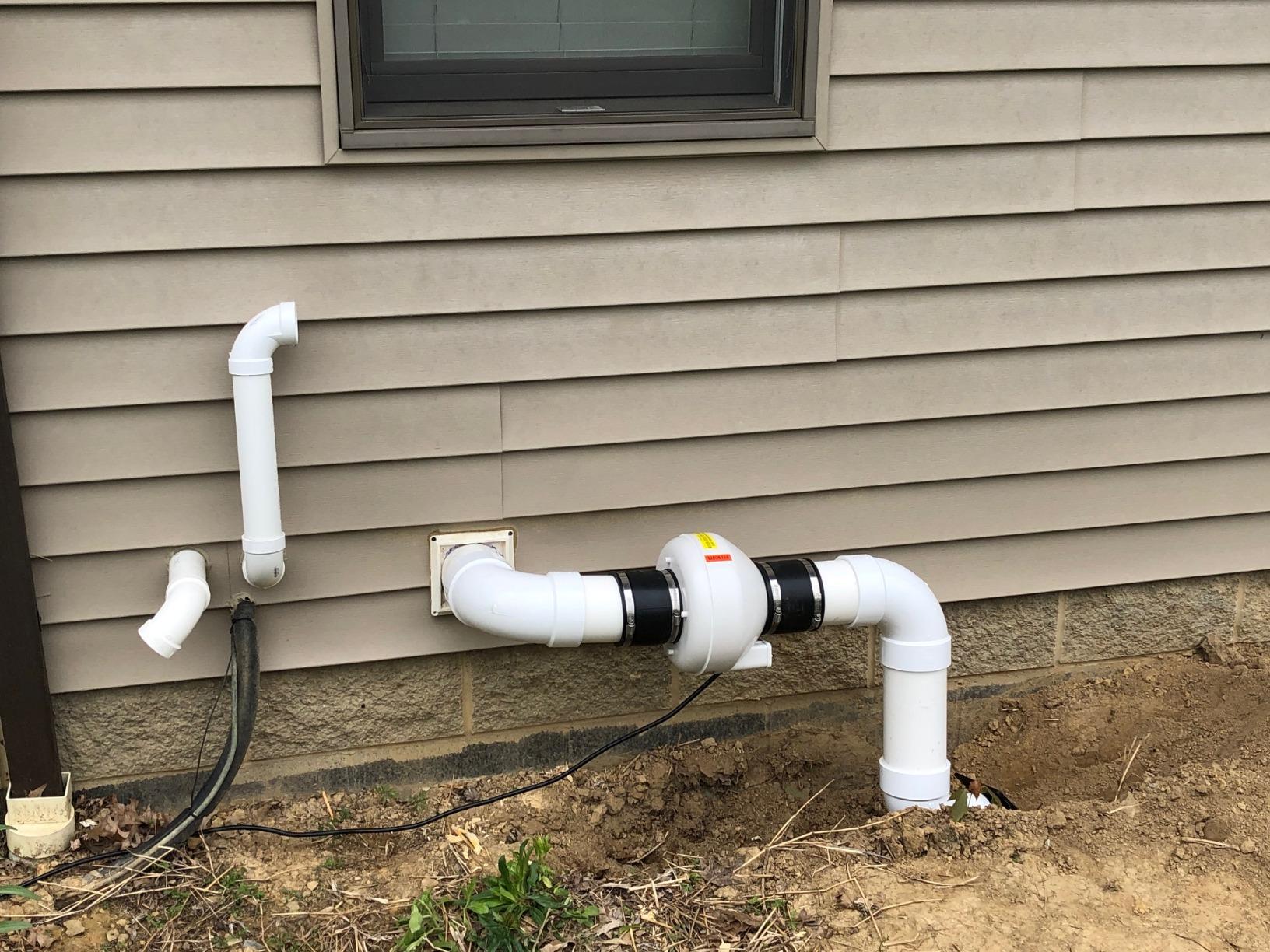
The only appliance in most American homes that is designed to run every minute of every day is the radon mitigation fan. A refrigerator cycles on and off. A furnace fires a few times an hour. A radon fan pulls soil gas out from under a slab or crawl space 24 hours a day, 365 days a year, for the life of the home.
That single fact drives every decision in this guide. A radon fan that is a little too loud becomes a torture device after a year. A fan that is a little too small leaves your radon level above the EPA action level of 4 pCi/L. A fan that is far too big simply makes noise, wastes electricity, and can depressurize a finished basement enough to pull combustion air back into the building. Getting the match right between the fan, your duct diameter, and the static pressure your system actually needs is the whole job.
So this is our guide to the best radon fans for basements in 2026, covering eight models across RadonAway, Fantech, Tjernlund, Suncourt, Festa, and a couple of newer inline designs. We compared published airflow, noise, wattage, housing dimensions, duct compatibility, and warranty terms, then weighed those numbers against what owners actually report after living with the fan. The short version: the RadonAway RP145C is the one to buy most often, the Fantech RN2 is the quiet one, and the loud fans are not automatically the powerful ones.
One quick note before we get into the specs. If you are also managing general basement humidity, a radon fan and a dehumidifier solve completely different problems, and running both changes your air balance. We covered that separately in our basement dehumidifier guide.
Table of Contents
- Top 3 Picks for the Best Radon Fans for Basements (October 2026)
- All 8 Radon Fans Compared Side by Side in 2026
- 1. RadonAway RP145C Radon Fan – The All-Round Pick for Most Basements
- 2. Fantech RN2 Radon Mitigation Fan – The Quiet One for Living Spaces
- 3. RadonAway GP501 Radon Mitigation Fan, 3 Inch – The Contractor-Grade Compact Pick
- 4. Tjernlund PVC4 Radon Mitigation Fan – The Most Versatile for Smaller Footprints
- 5. Festa AMG Maverick Radon Fan – The High Airflow Inline Pick
- 6. Suncourt RDN04 Radon Fan Kit – The Complete Kit Pick
- 7. Two Speed Radon Fan Installation Kit – The Best Pick for Noise Control
- 8. xyfair PF-100 Radon Mitigation Fan – The Pick Where Mounting Location Decides Everything
- How to Size a Radon Fan for Your Basement
- When a Bigger Radon Fan Is the Wrong Answer
- Frequently Asked Questions
- The Verdict on the Best Radon Fans for Basements in 2026
Top 3 Picks for the Best Radon Fans for Basements (October 2026)
Three fans stood out once we lined up the noise and airflow figures against each other. Here they are before the full write-ups.

RadonAway RP145C
- 166 CFM airflow
- 30 dB rated noise
- 15 watt brushless motor
- Sealed seams and five year warranty
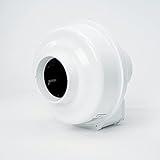
Fantech RN2
- 123 CFM at 0.5 in w.c.
- 25 dB listed noise
- Vibration welded leak proof housing
- Drops into 4.5 in PVC
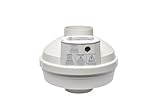
Festa AMG Maverick
- 260 CFM inline airflow
- 70 watt brushless motor
- Glass reinforced housing
- Five year warranty
All 8 Radon Fans Compared Side by Side in 2026
Here is the full lineup with the specs that actually matter for a continuously running fan. Read the noise column first if your fan will sit inside the house rather than on an exterior wall or in the attic.
| Product | Specs | Action |
|---|---|---|
| RadonAway RP145C Radon Fan |
|
Check Latest Price |
| Fantech RN2 Radon Mitigation Fan |
|
Check Latest Price |
 RadonAway GP501 Radon Fan, 3 inch RadonAway GP501 Radon Fan, 3 inch |
|
Check Latest Price |
 Tjernlund PVC4 Radon Mitigation Fan Tjernlund PVC4 Radon Mitigation Fan |
|
Check Latest Price |
| Festa AMG Maverick Radon Fan |
|
Check Latest Price |
 Suncourt RDN04 Radon Fan Kit Suncourt RDN04 Radon Fan Kit |
|
Check Latest Price |
 Two Speed Radon Fan Kit Two Speed Radon Fan Kit |
|
Check Latest Price |
 xyfair PF-100 Radon Fan xyfair PF-100 Radon Fan |
|
Check Latest Price |
1. RadonAway RP145C Radon Fan – The All-Round Pick for Most Basements
RadonAway RP145C Radon Fan P/N 23030-1 Inlet/outlet Diameter of 4.5
166 CFM
30 dB
15 watts
9.7 x 9.7 x 8.5 in
5 year warranty
Pros
- Quietest rating in the group with a large proven service life
- Lowest wattage draw among the high airflow units
- Sealed seams to inhibit radon leakage
- Brushless thermally protected motor
- Most owner reviews of any fan here
Cons
- Retrofit installs may need professional design
- Slab cracks and penetrations must be sealed for results
The RP145C is the fan most mitigation contractors in North America reach for, and after working through this lineup it is the one we would put in most basements. It carries 1400 owner reviews at a 4.4 average, and the pattern in those reviews is unusually consistent: people describe it as quiet, unobtrusive, and boring in the best possible way.
Two numbers do the heavy lifting here. The 15-watt draw is the lowest among the high-airflow units on this list, and a 15-watt load running continuously works out to roughly 131 kWh a year. The 30 dB rating is on the quiet side of the class. Neither number is a marketing invention; they match what owners say about living with the fan for years.
RadonAway builds this with a water-hardened impeller, a brushless motor, and seams sealed specifically to stop radon leaking through the housing itself. That last detail matters more than buyers expect. A cheap housing can become a path for the very gas you are trying to remove, so a sealed seam is not a cosmetic feature.
At 9.7 inches across and 8.5 inches tall, the housing is compact enough for most basement joist bays and rated for both indoor and outdoor mounting in residential and commercial work. Five years of limited manufacturer warranty, and RadonAway is a brand with easily sourced replacement parts when a decade of continuous duty eventually takes a bearing.
What the 166 CFM rating actually means for your system
That 166 CFM figure is a free-air number, and a free-air number is the least useful number on a radon fan spec sheet. What matters is airflow at the static pressure your duct run creates. A long vent pipe, several elbows, and a restrictive suction pit all push that static pressure up, and airflow falls as it climbs.
So treat 166 CFM as capacity, not as a promise, and let your actual duct layout set the real expectation. The manufacturer’s own installation guidance is blunt about this: openings, major cracks, and penetrations in the slab or membrane must be sealed, and retrofit blower sizing can require professional diagnostics.
Who should skip this fan
Skip the RP145C if your slab is large and your vent run is long, because a mid-range axial fan is not designed to fight heavy static pressure and you will end up chasing a reading that will not move. If your existing system uses 3-inch pipe, the duct geometry here will not match without reducers.
Also skip it if you need a plug-in installation with no electrical work. The unit is a 120-volt hardwired device in this configuration, so plan on a proper disconnect. If you want a quick look at what a finished basement needs to absorb acoustically before you commit to a fan, our basement futon guide covers the same low-clearance geometry problem from a different angle.
2. Fantech RN2 Radon Mitigation Fan – The Quiet One for Living Spaces
Fantech Rn2 Radon Mitigation Fan, 4.5 in Duct, 123 CFM, Residential System
123 CFM at 0.5 in w.c.
25 dB listed
58 watts
13.25 x 13.25 x 11 in
Pros
- Lowest published noise figure in the group
- Standard 4.5 in PVC fit with no reducer work
- Direct replacement for Fantech HP190 and HP2190 units
- Vibration welded leak proof housing
- Five year warranty extendable with registration
Cons
- Shorter body than the HP190 it replaces
- No power cord included
- 4.5 in adapters harder to source than 4 in parts
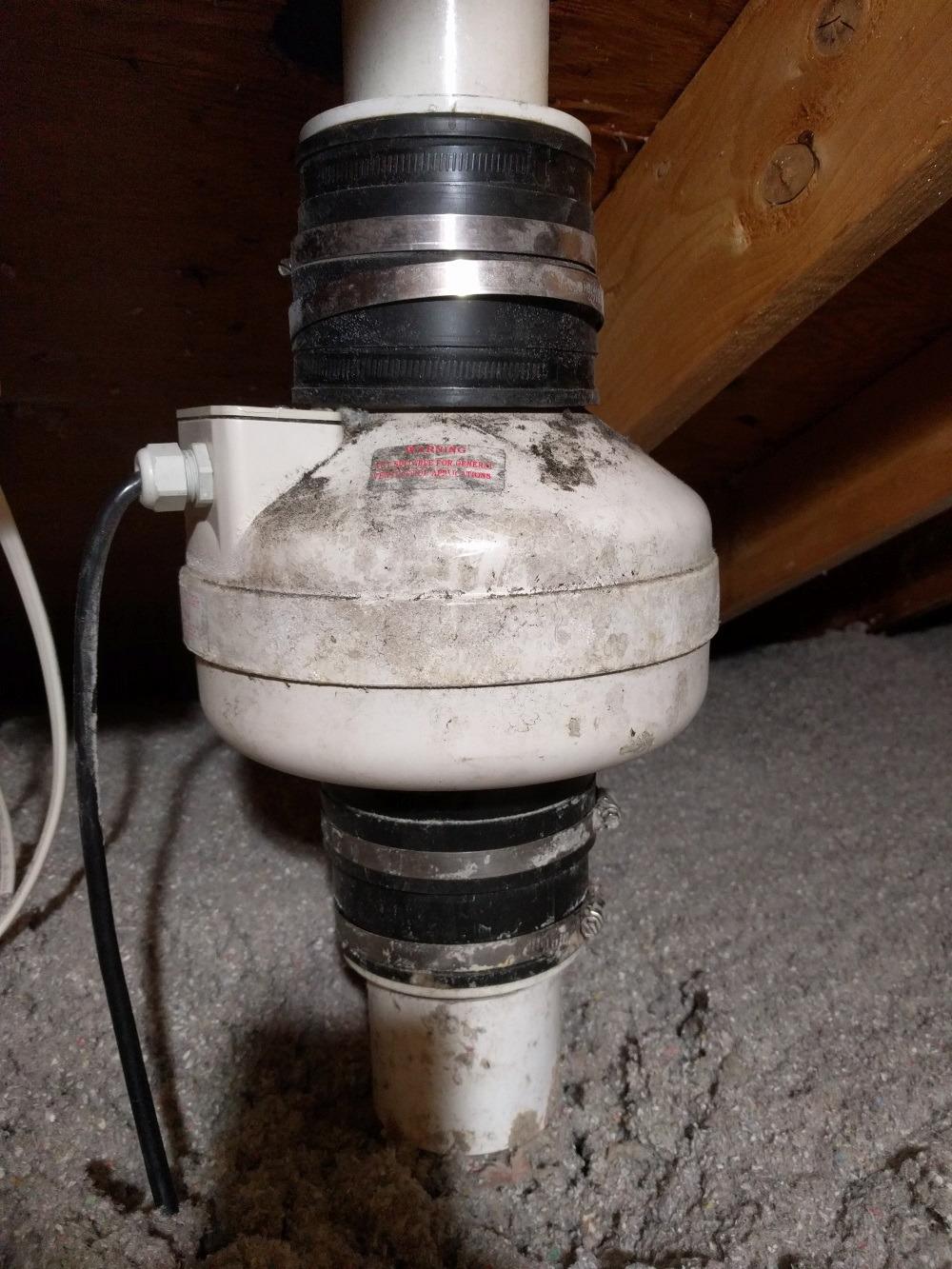
The Fantech RN2 is the fan to buy if noise is your first concern. At a 4.5 average across 479 reviews, it carries the strongest rating-to-review balance of anything here, and the single most common theme in those reviews is quietness. Owners repeatedly describe it as inaudible from across a finished basement, or quieter than a refrigerator at arm’s length.
The spec sheet lists 25 dB, and some owners say that figure is optimistic once the fan is ducted into a real vent pipe. Even so, in our comparison the RN2 is the fan with the most headroom against its stated noise number, and the actual owner reports back that up.
The important technical detail is that the RN2 publishes airflow against static pressure rather than in a vacuum: 123 CFM at 0.5 inches of water column in 4.5-inch duct, dropping to 20 CFM at 1.75 inches w.c. That honesty is a buying advantage. It tells you directly how the fan behaves as your system gets more restrictive.
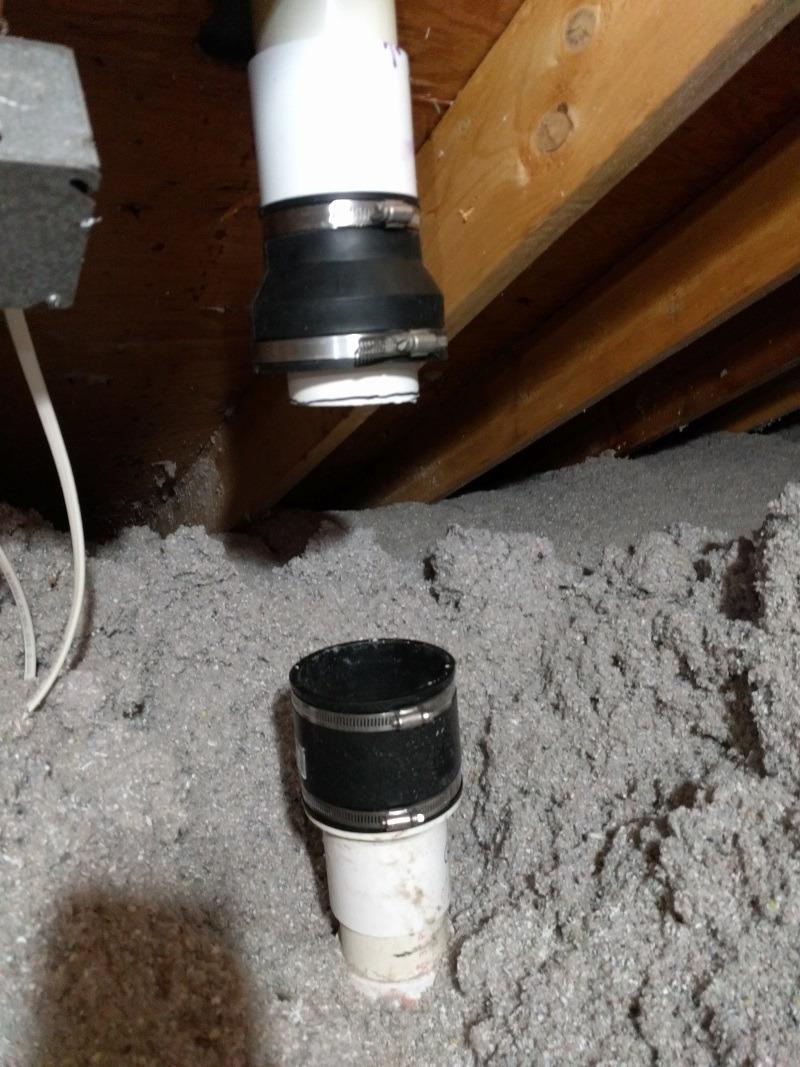
The housing is a vibration welded seam rather than a screwed or clamped joint, which is why reviewers call it leak proof. Fantech also built this as a direct replacement for its older HP190 and HP2190 units, so a lot of legacy systems can be upgraded without redesigning the duct layout.
Reading the 123 CFM at 0.5 w.c. figure properly
This is the number most buyers misread. It is not the fan’s free-air capacity; it is what the fan still moves once your duct system is creating half an inch of resistance. Sizing your purchase off that figure is exactly right, because it is the condition your installed system will create.
Watch the second number as well. Flow falling to 20 CFM at 1.75 inches w.c. tells you that once static pressure climbs, this fan is done. That is fine on a clean, short vent run, and it is the reason homeowners running a long or elbowed run report minimal suction with undersized blowers.
Who should skip this fan
Skip it if you are starting fresh with modern 4-inch schedule 40 pipe, because the RN2 is built around 4.5-inch duct and those adapters are harder to find than standard 4-inch fittings. It is a retrofit star, not a new-build star.
Also note the body is shorter than the HP190 it replaces, so existing couplings may need rework. And if you want a plug-and-play install, this one does not include a power cord, despite what some listings suggest. Plan for a hardwired connection with a disconnect within sight of the fan.
3. RadonAway GP501 Radon Mitigation Fan, 3 Inch – The Contractor-Grade Compact Pick
RadonAway 23005-1 GP501 Radon Mitigation Fan, 3″
3 in duct format
ETL listed
6 pounds
Hard wire or plug in
5 year warranty
Pros
- Compact 3 in format fits tight sump pits and crawl spaces
- Seams sealed under negative pressure
- Electrical box accepts hard wire or plug in
- ETL listed for indoor and outdoor mounting
- Five year limited warranty
Cons
- 3 in duct limits airflow on large slab areas
- Requires compatible 3 in or 4 in pipe and flanged hardware
- Highest cost relative to delivered airflow in this group
The GP501 is a different animal from the RP145C. Where the RP145C moves 166 CFM through a 4.5-inch body, the GP501 is built around a 3-inch duct and a much smaller footprint, which makes it the fan for the awkward spaces that the bigger units simply will not fit.
At 4.3 stars across 418 reviews, it carries the widest rating spread of the RadonAway fans here, with a heavier share of one-star feedback than the RP145C. Most of that criticism is about price relative to delivered airflow rather than build quality, which is a fair complaint in a compact unit.
Two details make it a favorite with installers. The seams are sealed under negative pressure, so the housing resists radon leakage while it is doing its job, and the electrical box accepts either a hardwired or a plug-in connection. That flexibility matters in crawl spaces and garages where running new wire is a chore.
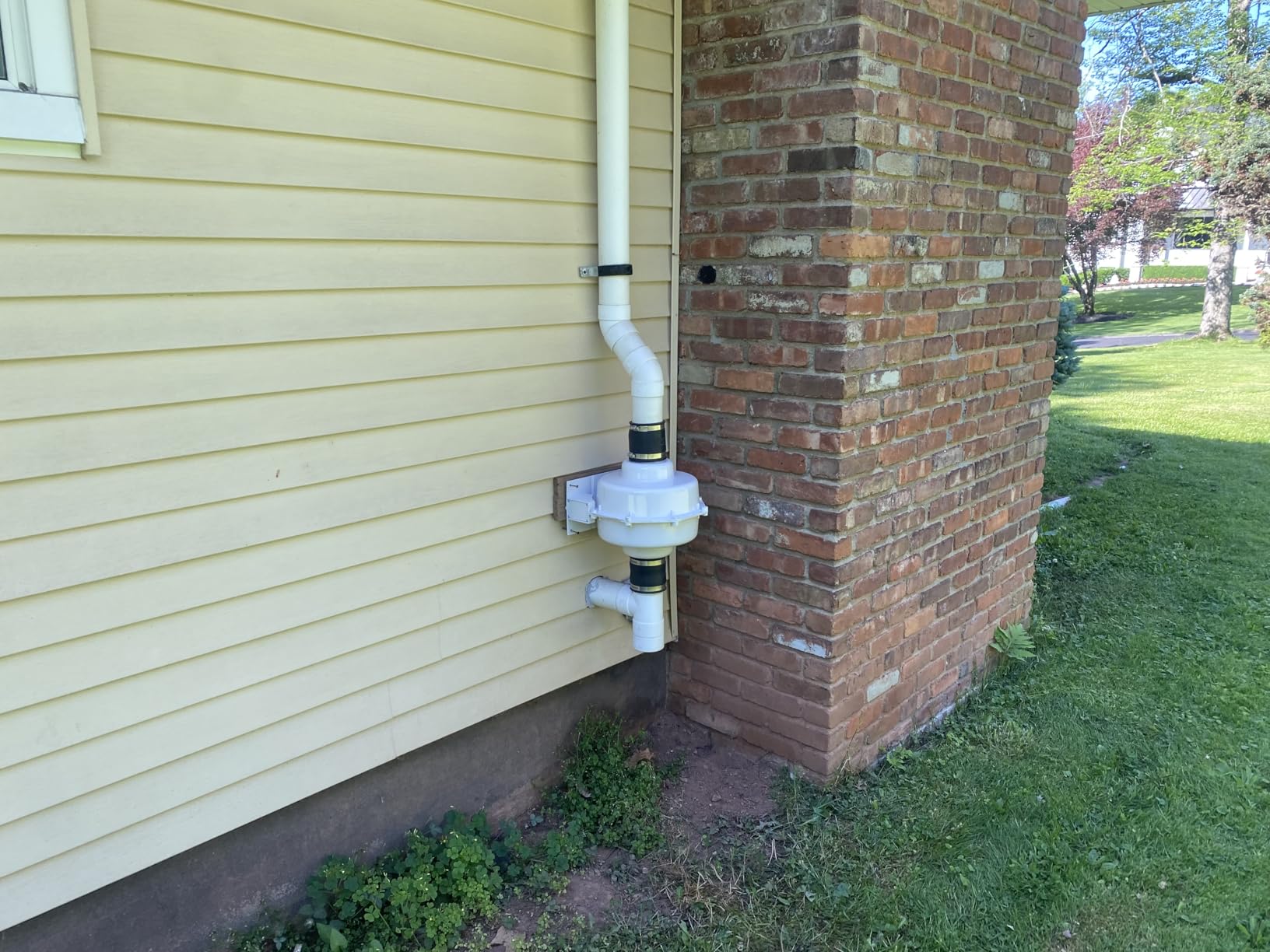
It mounts directly on the duct pipe or through an integral flange, works with 3-inch or 4-inch pipe, and carries an ETL listing for indoor or outdoor mounting with a five-year limited warranty. If your basement has a sump pit or a low-clearance crawl space, this geometry is exactly what you have been looking for.
When a 3-inch duct changes the whole system design
A 3-inch duct is a real constraint, not a marketing detail. Smaller pipe means more friction loss, which means higher static pressure, which means less air at the slab. On a small footprint that trade is worth it because you were never going to move much air anyway, and the compact housing reaches the suction pit where a bigger fan cannot go.
On a large slab, the same constraint becomes the problem. Owners who sized a 3-inch fan for a big foundation report the airflow simply cannot keep up. The duct size caps the fan, not the other way around.
Who should skip this fan
Skip it if your basement has a wide slab area and you are designing new. You will outgrow the 3-inch duct within a year of installing it, and replacing the duct later costs far more than starting with 4-inch or 4.5-inch pipe now.
Skip it if noise is your top concern and the fan will sit inside living space, since a compact high-speed unit at its rated output is not the quiet-first choice. And if you are replacing an existing 4-inch system wholesale, the reducer work will eat into the value the compact form factor was supposed to provide.
4. Tjernlund PVC4 Radon Mitigation Fan – The Most Versatile for Smaller Footprints
Tjernlund PVC4 Radon Mitigation Fan Model – Exhaust Fan with 6-Ft. Power Cord, Minimal Power Consumption, 4 In. PVC Pipe. Ventilation Fans
90 CFM
16 watts
6 ft power cord
6.4 x 6.5 x 6.8 in
3 pounds
Pros
- Connects directly to standard 4 in schedule 40 PVC
- Very low 16 watt draw for continuous duty
- Six foot power cord included for plug and play
- Custom gaskets and galvanized housing
- Adjustable discharge hood for balancing
Cons
- 90 CFM suits smaller slab areas and crawl spaces only
- Discharge hood often needs rebalancing to hit target suction
The Tjernlund PVC4 is the most approachable fan in this roundup, and for a small basement or a crawl space it may be all you need. It ships with a six-foot power cord, which means no electrician and no disconnect box work, and the whole thing weighs three pounds.
Its 4.3 average across 340 reviews comes with a heavier three-star band than the premium models, and the reason is consistent. Buyers love the price, the wattage, and the direct PVC fit. The reservations all point at the same number: 90 CFM is the lowest airflow in the group.
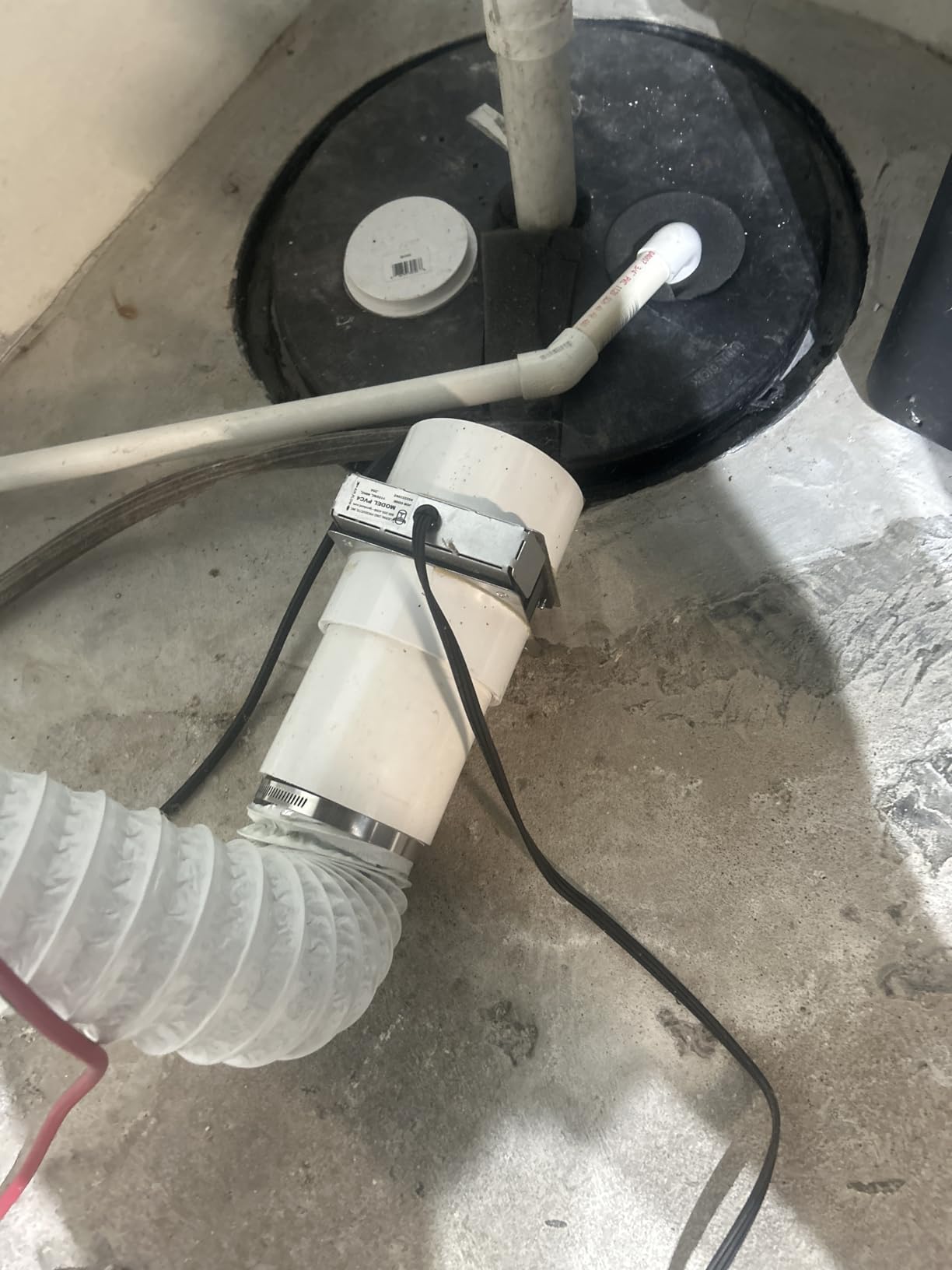
Internally it is a more serious machine than the price suggests. A permanently lubricated ball bearing motor is designed for years of continuous rotation, and the housing pairs custom-fitted gaskets with a heavy-duty galvanized steel shell and a backward-inclined steel impeller. That is a build recipe designed for a fan that never gets a day off.
At 16 watts it lands around 140 kWh a year, so running cost is close to the bottom of the class even though the output is. If you can only run a small system, this is a genuinely efficient way to run it.
Where 90 CFM is genuinely enough
Airflow requirements track the area of slab or soil you need to depressurize, not the size of the house above. A small basement, a crawl space over a limited footprint, or a addition-level foundation where the vent pipe runs short all fall into the range where 90 CFM can do the job properly.
The key check is the static pressure the system creates. On a short, direct run with few elbows, this fan holds its rated output. Add length and fittings and the number falls, which is why the adjustable discharge hood matters more here than on a higher-capacity unit.
Who should skip this fan
Skip it on a large slab, where 90 CFM simply cannot cover the footprint. Owners who try it on a bigger foundation typically report a modest reading improvement and then end up buying a second fan anyway, which is the worst outcome for both budget and noise.
Skip it if you need the highest static pressure available from a compact unit, since a small blower on a restrictive run gives up quickly. And plan a few minutes of adjustment time. Several owners had to rebalance the discharge hood to reach the target suction they wanted.
5. Festa AMG Maverick Radon Fan – The High Airflow Inline Pick
Festa AMG Maverick Radon Fan – Quiet and Energy Efficient 260 CFM Radon Mitigation System Inline Duct Fan – 4″ Electric Inline – Made with Sturdy Glass Reinforced Poly-Resin – White
260 CFM
50 to 60 dB range
70 watts
12.06 x 12.06 x 9.25 in
Pros
- Highest published airflow in the roundup
- 81 percent of reviews at five stars
- Brushless thermally protected motor
- Glass reinforced poly resin housing resists corrosion
- One click wiring for DIY setup
- Five year warranty with technical support
Cons
- 50 to 60 dB range is the loudest in this group
- Manufacturer states not for unattended areas
- Small share of early failures reported
The Festa AMG Maverick is the fan to reach for when you need to move a serious volume of air through a compact 4-inch inline body. It is rated at 260 CFM, the highest figure in this roundup, and it does it in a cylindrical housing that is smaller than most of the axial blowers here.
It ties for the highest average rating at 4.5 across 314 reviews, and its five-star share is the strongest of any product on this list. Reviewers consistently single out the pairing of high airflow with a compact body, straightforward wiring, and responsive warranty support.
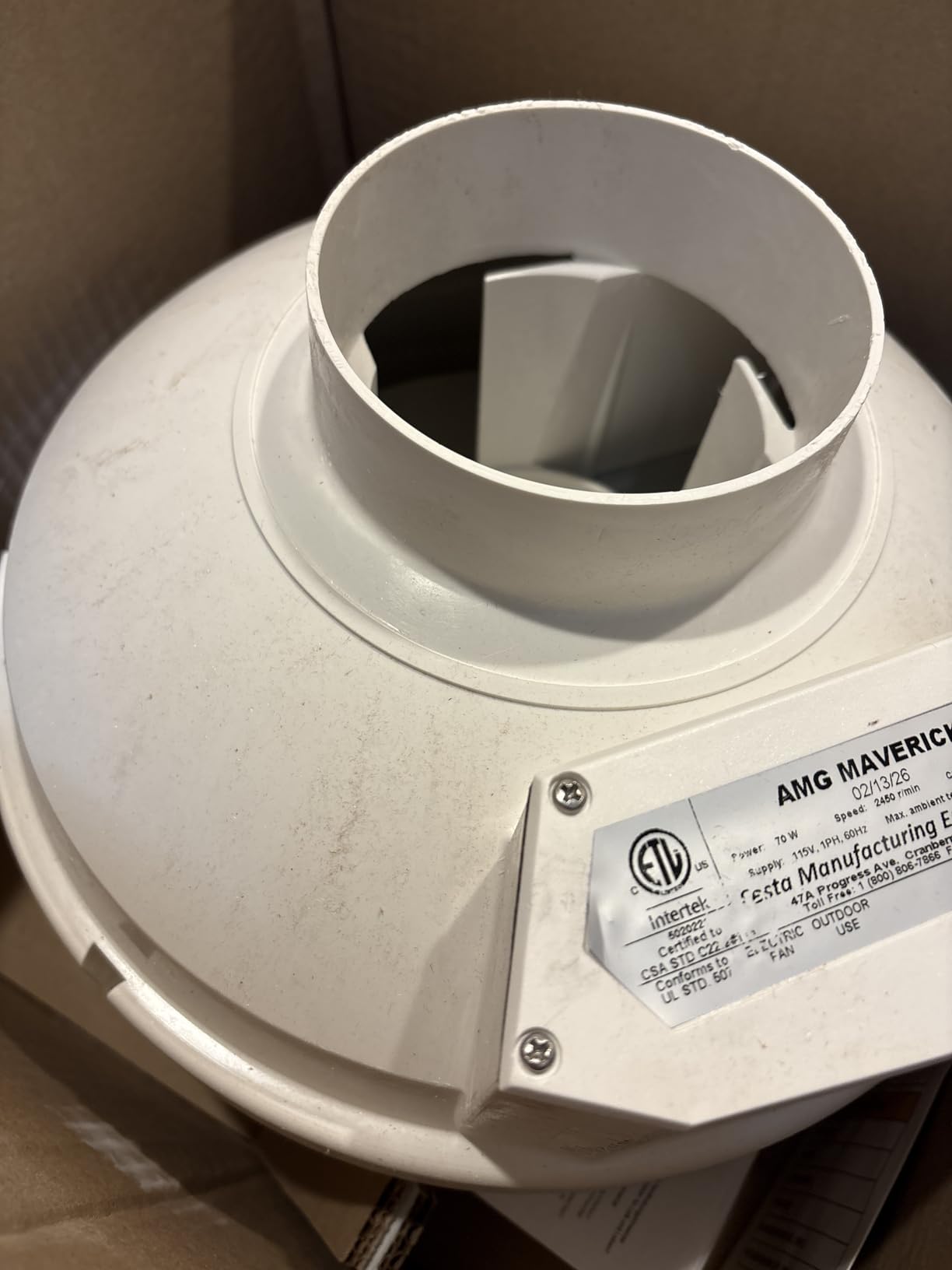
The housing is built from glass-reinforced poly-resin rather than sheet plastic, which is why reviewers describe it as durable and corrosion resistant. The motor is brushless and thermally protected, and the blade set runs at 2450 rpm. That speed is the reason for the noise profile, which we will get to in a moment.
Wattage lands at 70, or roughly 613 kWh a year of continuous running. That is meaningfully higher than the 15-watt axial units, though far below the two high-wattage centrifugal kits further down this list.
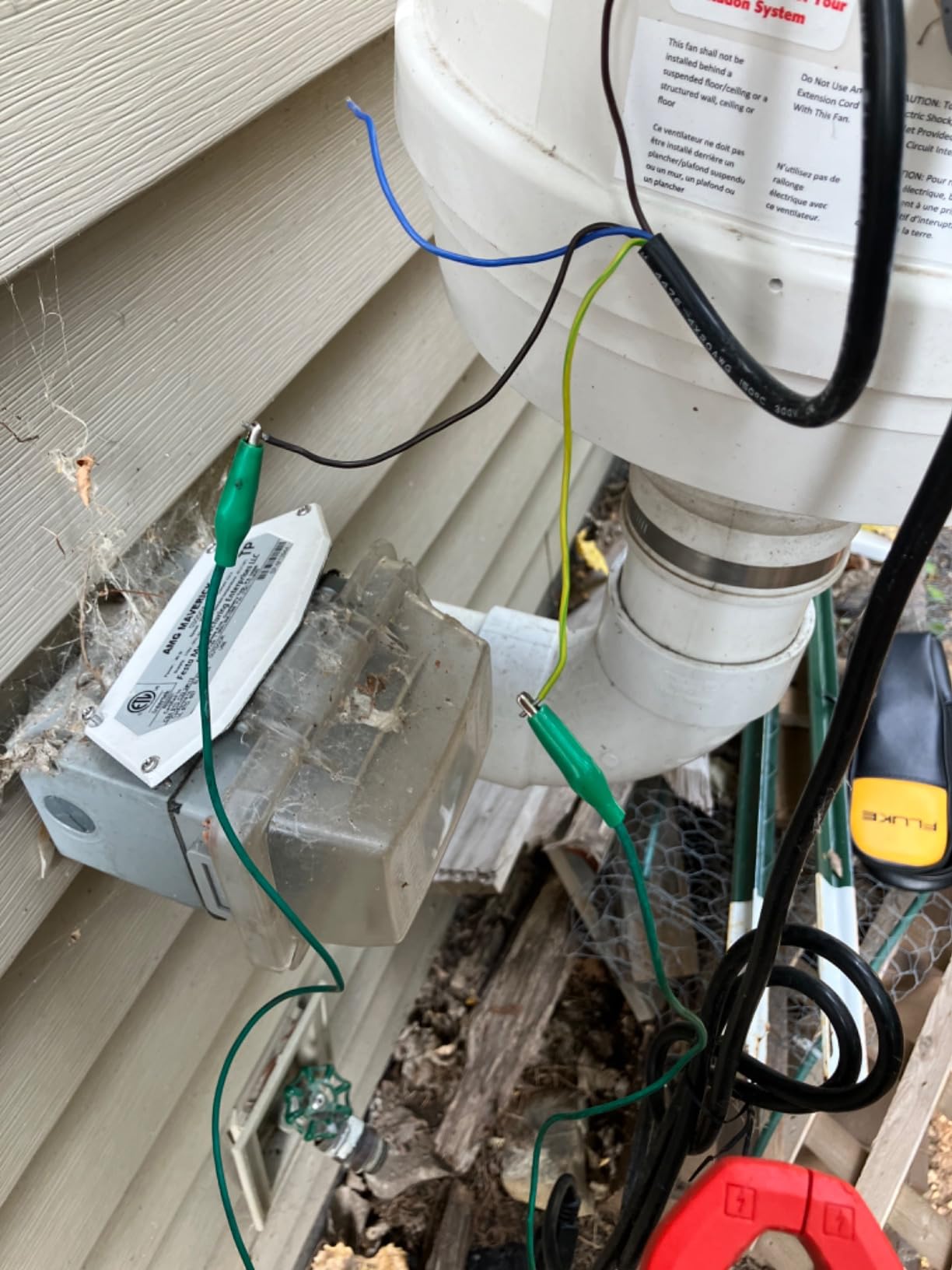
What a 50 to 60 dB range means for a finished room
This is the specification that decides who should buy it. A 50 to 60 dB fan is fine mounted on an exterior wall, in an attic, or inside a garage, where you will not hear it. Inside a finished basement with a floor overhead, that range becomes a continuous presence in your living space.
Forum discussion about quiet radon mitigation is where this spec gets debated most often, and the recurring theme is that noise complaints almost always trace back to mounting location rather than to the fan itself. A loud blower in a crawl space is invisible and silent; a modest blower under a bedroom floor is not.
Who should skip this fan
Skip it if the fan lives inside finished living space and noise is your top priority. If you need this airflow, put it outside or overhead first, then reconsider the model.
Pay attention to the manufacturer’s own qualification that the unit is not for use in unattended areas. That is a listed condition, not a defect, but it is the kind of detail that matters if you were planning to mount it somewhere you cannot easily reach. Our low-ceiling basement planning guide covers the access questions that come up with tight mechanical spaces.
6. Suncourt RDN04 Radon Fan Kit – The Complete Kit Pick
Suncourt Radon Mitigation Fan Kit, Sub-Slab, 4″ to 4″ Coupler (RDN04)
235 CFM
91 watts
MET Labs UL 507 and CSA certified
Includes two couplers
Pros
- Kit ships with two 4 in anti vibration couplers
- 235 CFM suits typical single family slabs
- Independently certified by MET Labs to UL 507 and CSA
- Assembled in the USA
- Approved for indoor above living space or outdoor mounting
- Five year warranty
Cons
- Hardwired controller with no plug in option
- 91 watt draw is high for continuous operation
- 59 dB listed figure is among the louder here
The Suncourt RDN04 is sold as a kit, and that is the reason to buy it. You get a 4-inch centrifugal fan plus two 4-inch to 4-inch anti-vibration rubber couplers, which means the parts most DIY installers forget to order are in the box.
It rates 4.4 across 184 reviews, a smaller but long-tenured owner base for a company that has been building radon mitigation equipment since 1988. The most common praise is simple: it is one cart, not three, and the couplers stop vibration from traveling into the vent pipe.
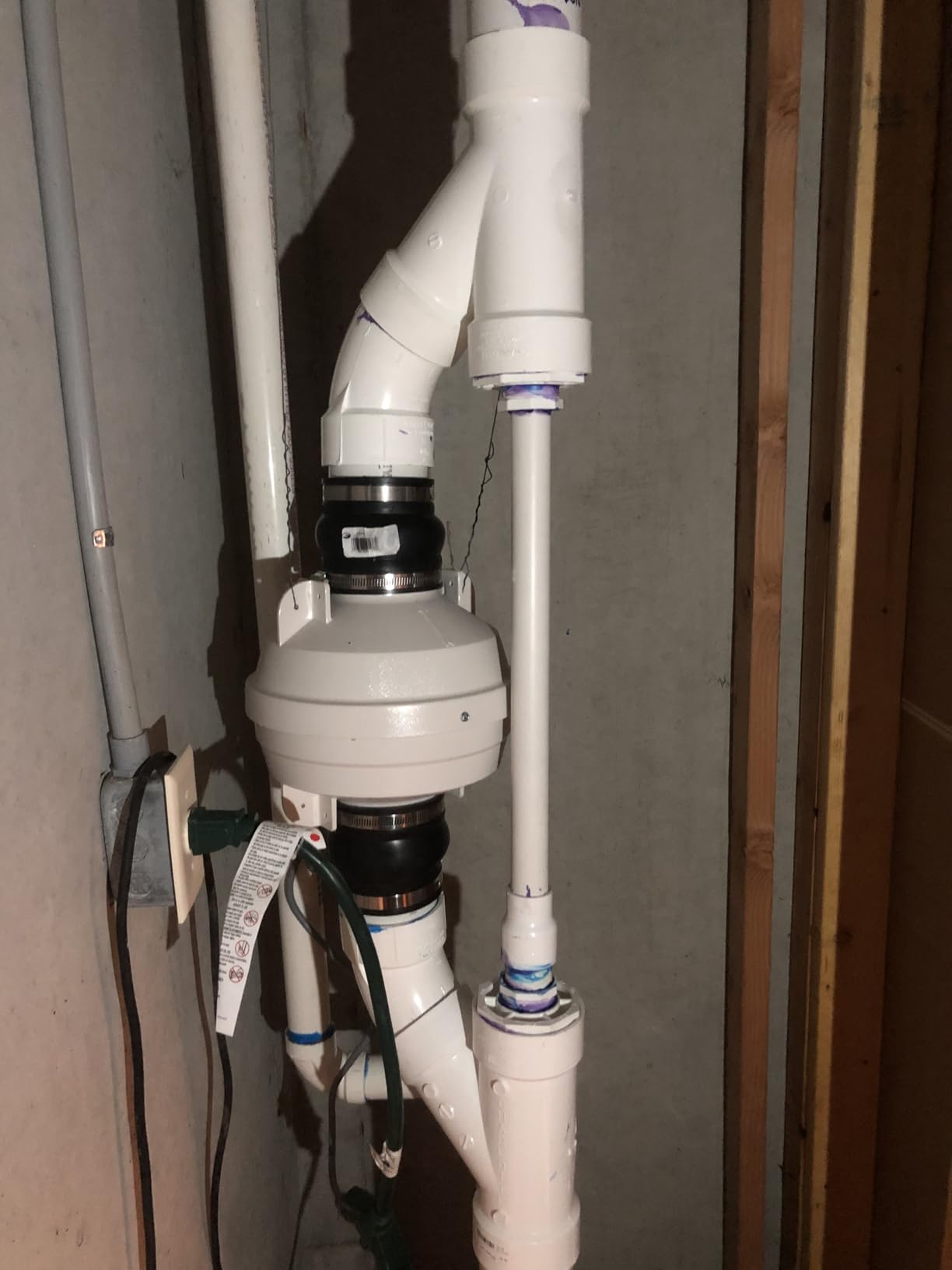
Certification is where this kit stands apart. It is independently certified by MET Laboratories to UL 507 and CSA standards, rated for continuous 24/7 duty, and approved for indoor mounting above living spaces or outdoors per EPA guidance. At 235 CFM it handles a typical single-family slab area comfortably.
The trade-off is power. At 91 watts this works out to roughly 797 kWh a year, one of the higher figures in the roundup, and a centrifugal blower at that draw is not the low-energy option. You are buying the kit completeness and the certification, not efficiency.
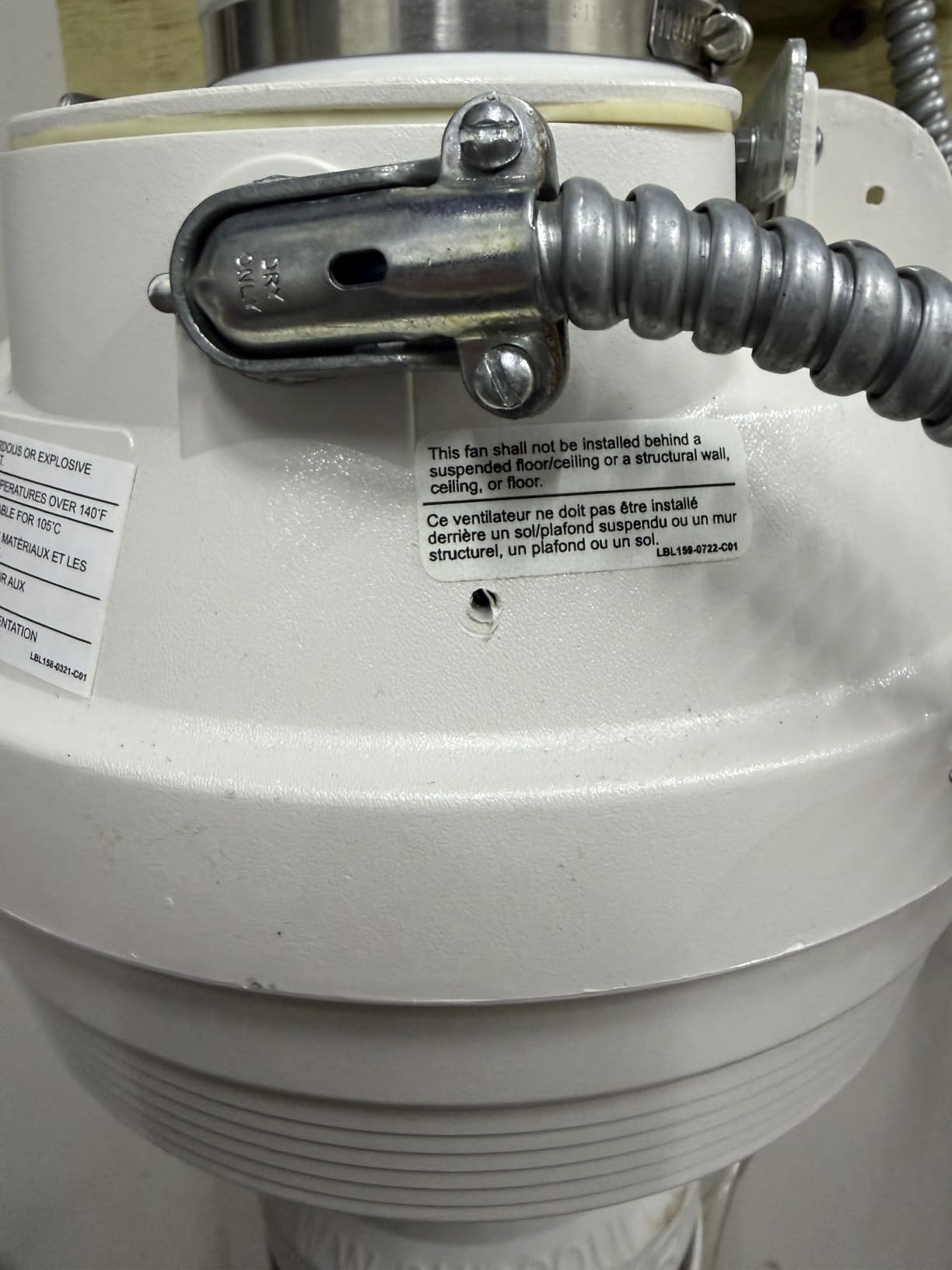
What the anti-vibration couplers actually solve
Every radon fan is mounted inline with a rigid vent pipe, and that pipe is a transmission line for vibration. Friction fans generate a steady buzz, and over years that buzz works through couplings and into the structure. Rubber isolation couplers break that path, and the practical result is a system that stays quiet as it ages instead of gradually getting worse.
They also simplify the install. Swabbing cement, letting it cure, and then building the connection is the part of a retrofit job that takes the longest, and the couplers let you mount the fan before the joint work is finished.
Who should skip this kit
Skip it if you want plug-in power. This kit is a hardwired controller type with no cord option, so budget for running a circuit and installing a proper disconnect switch within sight of the fan.
Skip it if your priority is quiet. The listed 59 dB figure puts it in the louder group, which is understandable for a 235 CFM centrifugal blower but not ideal directly under living space. And skip it if running cost is your main worry, since 91 watts is a lot of load for a fan that never turns off.
7. Two Speed Radon Fan Installation Kit – The Best Pick for Noise Control
MIDCVFRUN 4 inch Radon Fan Installation Kit – 2 Speed Radon Mitigation Fan 260/188CFM Inline Centrifugal Fan with Rubber Couplers (4 inch x 3 inch) and Air Pressure Indicator
260 CFM at 45 dB or 188 CFM at 32 dB
IP67
98 watts
Pressure indicator included
Pros
- Two speed control lets you trade noise against suction
- Low speed runs 188 CFM at only 32 dB
- Kit includes couplers and an air pressure indicator
- IP67 housing works indoors or outdoors
- Lowest one star share in the group
- One click wiring needs no specialist
Cons
- 98 watt draw on high speed
- 4 in by 3 in couplers are less common fittings
- Smallest review base in the roundup
This two-speed kit solves a problem no other fan in this roundup addresses directly: it lets you choose your noise level instead of accepting one. High speed runs 260 CFM at 45 dB. Low speed runs 188 CFM at 32 dB, which drops the fan into the same acoustic class as the quiet axial units while still moving serious air.
At 4.5 across 145 reviews, it has the smallest review base here, which is the main caution. Its rating distribution is also the most even in the group, with only a tiny one-star share, so the people who own it tend to be satisfied rather than excited.
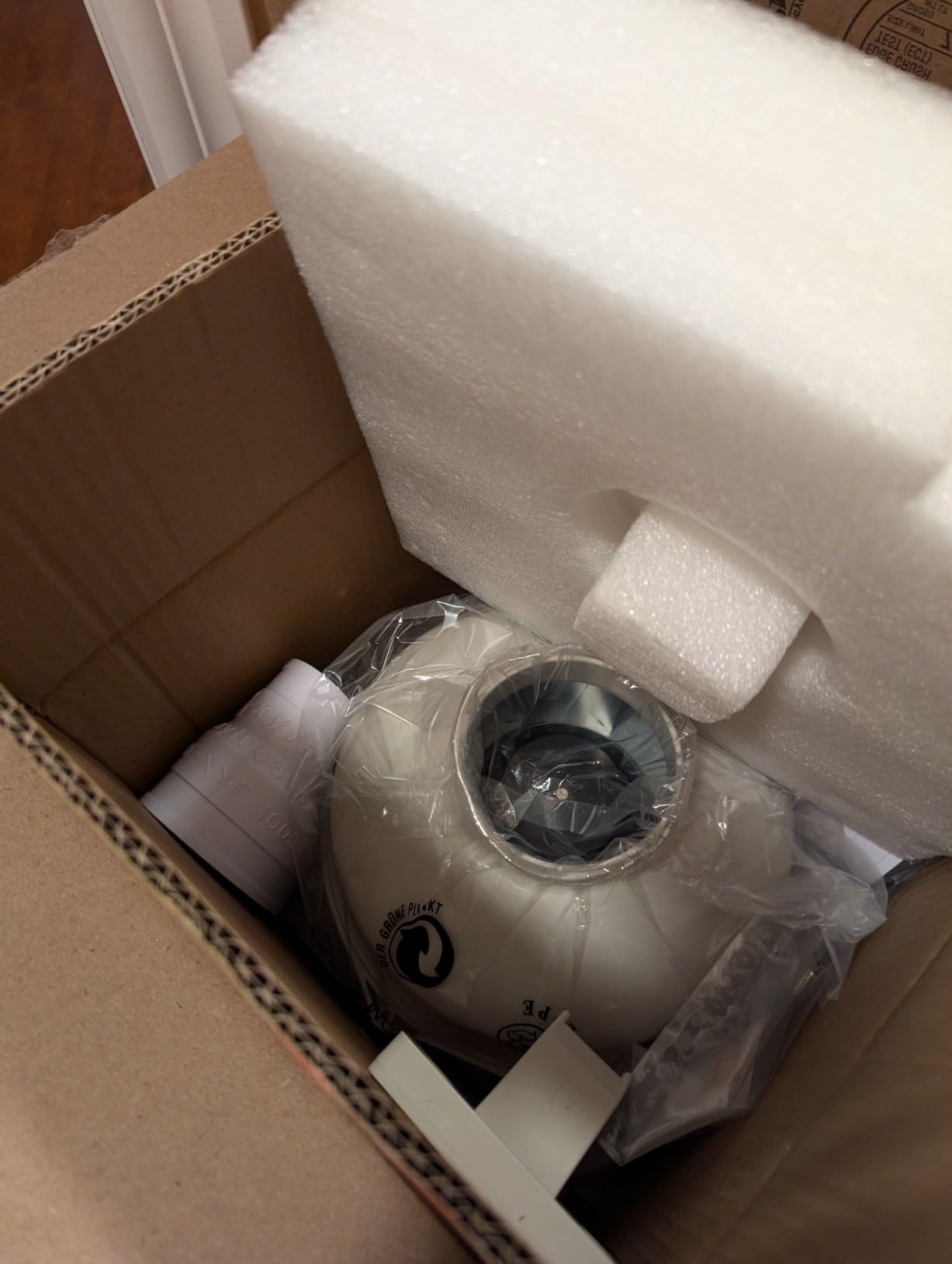
The kit includes the fan, two 4-inch by 3-inch rubber couplers, and an air pressure indicator. That indicator is a genuine inclusion rather than filler, because a manometer is how you confirm after installation that the system is still running and still depressurizing.
The housing is IP67 rated, so it can sit indoors or outdoors without a weatherproof enclosure, and the one-click wiring is designed to remove the need for a specialist on the electrical side. The centrifugal inline design handles sub-slab depressurization directly.
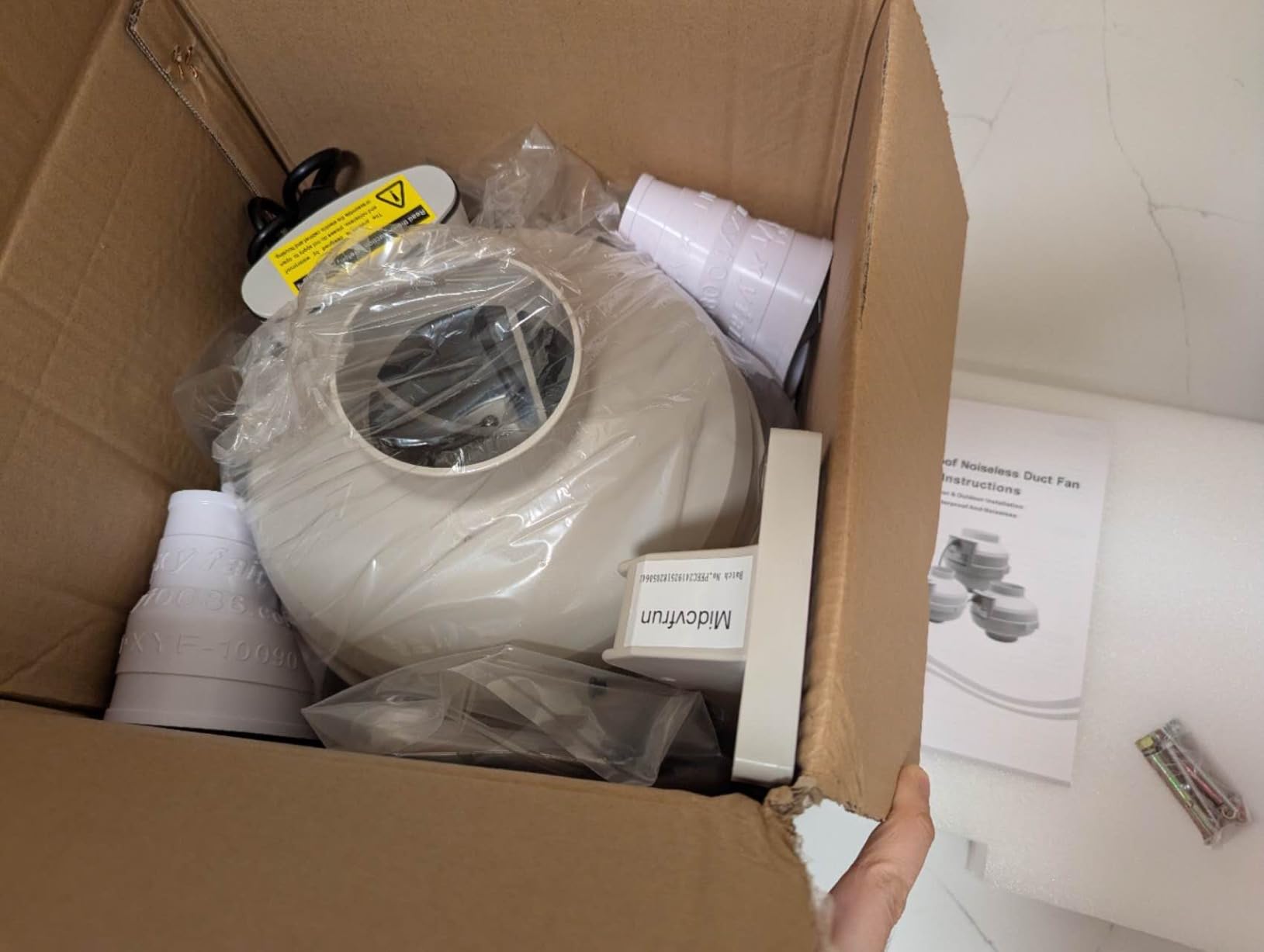
How to pick a speed setting once it is installed
Run it on low first and leave it there for a week while you live with the noise. Low speed at 188 CFM and 32 dB is often all a standard residential slab needs, and the quiet difference is immediate enough that you will know within a day whether high speed earns its place.
If your post-mitigation radon reading is comfortably under the 4 pCi/L action level on low, there is no reason to move up. High speed exists for larger footprints, tighter soil gas, and restrictive duct runs, and oversizing into high speed for no measurable gain just adds noise and electricity.
Who should skip this kit
Skip it if your existing ductwork is 4-inch all the way through and you dislike reducers. The included couplers are 4-inch by 3-inch rather than the more common 4-inch by 4-inch fittings, so a straight 4-inch run needs adapters you will have to source separately.
Skip it if long-term parts support matters most to you. With 145 reviews this is a much newer listing than the established brands, and the two-speed controller is a bespoke component that will be harder to replace in five years. Also expect 98 watts on high speed, the highest draw in this roundup.
8. xyfair PF-100 Radon Mitigation Fan – The Pick Where Mounting Location Decides Everything
xyfair PF-100 | Radon Mitigation Fan 4″ 190CFM | Waterproof Duct Fan (Indoor/Outdoor)
190 CFM
5 watts
IP67 waterproof
ETL listed
8 year warranty
Pros
- Very low 5 watt brushless external rotor motor
- IP67 sealed housing for indoor or outdoor mounting
- Mounting brackets included and fits any orientation
- Longest stated warranty in the group at 8 years
- ETL listed and thermally protected
Cons
- Several owners report more noise than expected
- Reports of bearing noise and early failure
- Lowest average rating in the group
- One reviewer disputed the stated warranty length
The PF-100 is the most polarizing fan here, and the reason is almost entirely where it gets installed. At 4.1 across 225 reviews it is the lowest-rated product in the roundup, and the reviews split cleanly along the axis of mounting location.
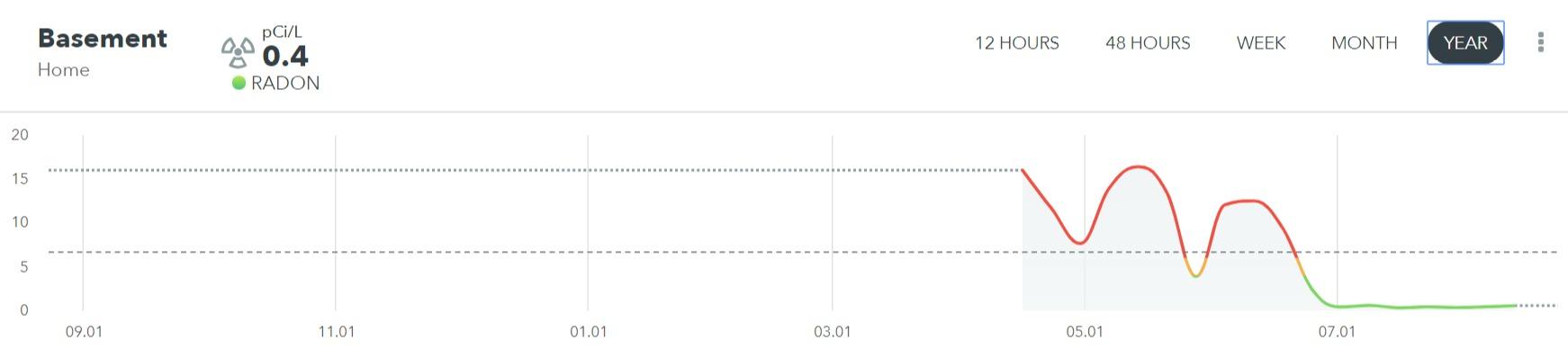
Owners who mounted it outside or in a garage describe quiet operation, strong suction, and dramatic radon reductions. Owners who installed it inside a finished basement report the noise transmitting up through the floor. One reviewer reported a reading drop from 20 to 30 pCi/L down to 1 to 1.5 pCi/L after installing the unit.
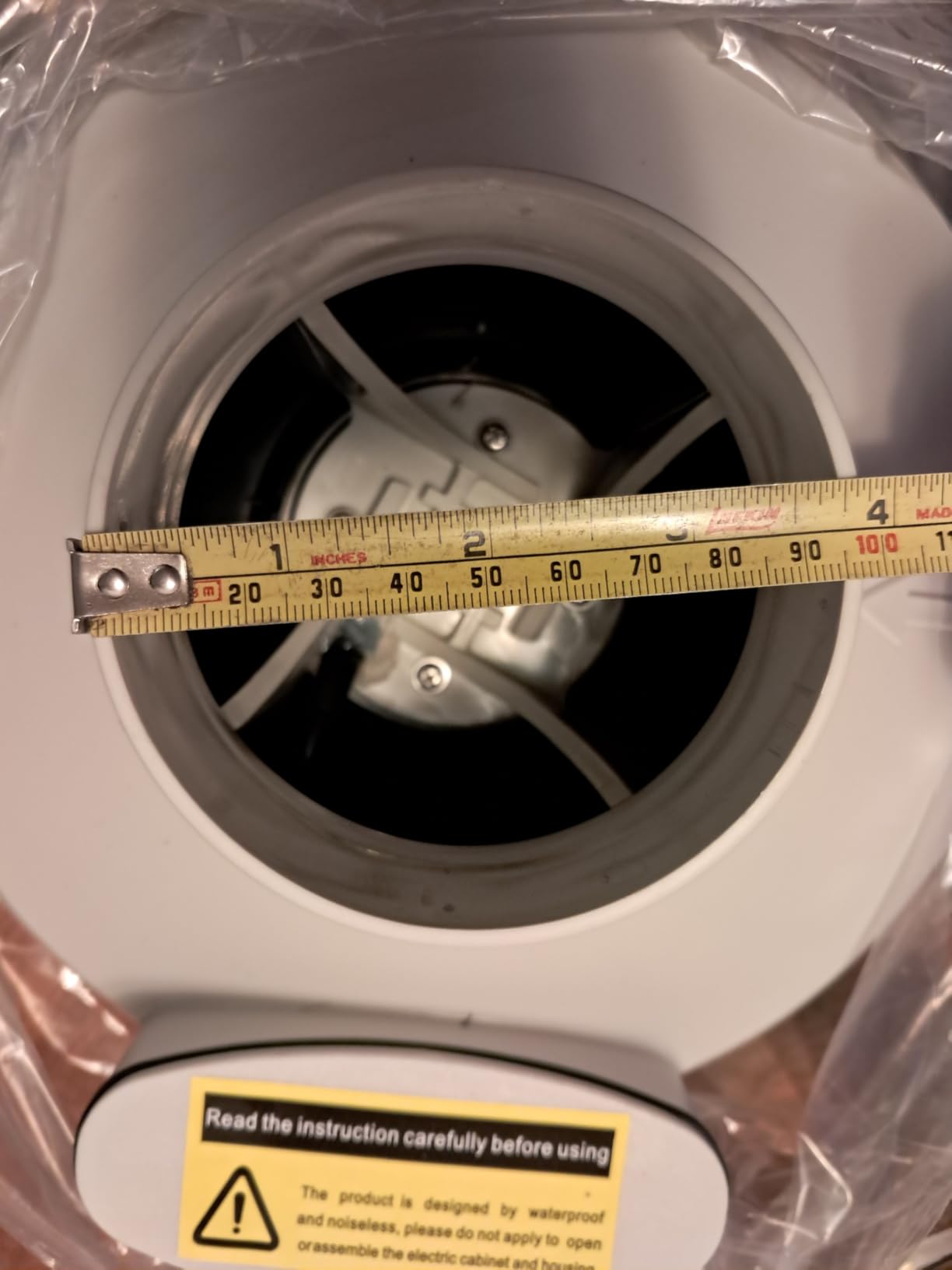
On paper the specification is attractive. It delivers 190 CFM on a 5-watt brushless external rotor AC motor, which works out to about 44 kWh a year and is the lowest running cost in the group by a wide margin. The IP67 fully sealed case prevents radon leakage, and mounting brackets are included so it can be oriented as the duct layout requires.
It is also ETL listed with a thermally protected, balanced motor and impeller, and the stated warranty is eight years with full replacement, the longest claim of any fan in this roundup. Durability reports are the weak point, with owners describing bearing whine developing within weeks and a plastic housing that lasted roughly two and a half years.
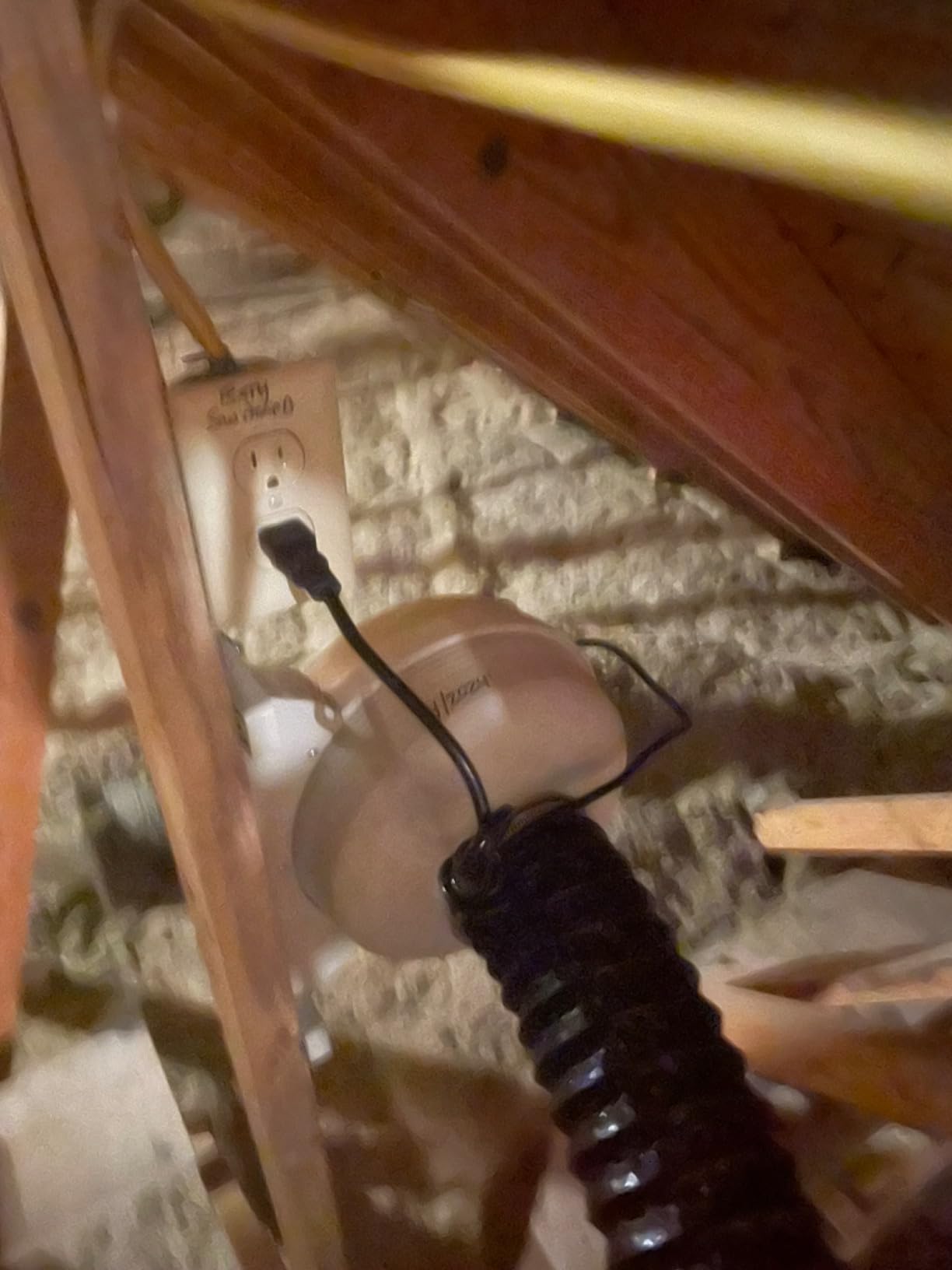
Why mounting location decides the verdict
Radon fans are quieter in absolute terms than the marketing on generic duct fans suggests, but a fan is only as quiet as the room you put it in. The same unit that disappears on an exterior wall can become a permanent background hum under a bedroom floor, because the structure carries the vibration directly into the living space above.
So read the noise feedback on this fan as a placement warning rather than a defect list. If your plan is an exterior wall or an attic above an unoccupied space, the 5-watt figure and 190 CFM make this a strong pick. If the plan is inside a finished room, pick a quieter model instead.
Who should skip this fan
Skip it if the unit will run inside a finished basement, because that is exactly where the one-star reviews come from. Also skip it if you need a long service life without monitoring, since the early-failure reports cluster in the first months, which is well inside the advertised window.
Finally, verify the warranty terms yourself before you rely on them. One reviewer disputed the stated eight-year length, and with the lowest average rating and the smallest margin for error in this group, this is the one product here we would want a second opinion on before specifying it for a whole-house system.
How to Size a Radon Fan for Your Basement
Most sizing mistakes come from reading the CFM headline and ignoring the static pressure. Match the fan to the duct system, not to the number on the box, and the decision becomes straightforward.
Measure your duct diameter before anything else
The duct diameter is the first hard constraint, because it caps the airflow no matter which fan you install. A 3-inch duct will not pass what a 4-inch duct passes, and a 4-inch duct will not pass what a 4.5-inch duct passes. Buying a fan first and forcing the duct later is the most common expensive mistake.
A rough guide by duct size: a 3-inch duct in a short, direct run is comfortable in the range of 90 to 150 CFM, a 4-inch duct handles roughly 150 to 250 CFM, and a 4.5-inch or 6-inch duct can carry 250 CFM and above. These are starting points for a short run, not guarantees, which is why we would rather you read the fan’s rated CFM at a stated w.c. than a free-air number.
Read the CFM at w.c. number, not the free-air number
Inches of water column, abbreviated w.c., is the static pressure a fan is rated at. A fan rated for 123 CFM at 0.5 in w.c. tells you what it will do once your duct system creates half an inch of resistance, which is the condition you will actually have. A fan rated 166 CFM with no pressure figure tells you almost nothing useful.
This is the single most useful habit for comparing radon fans. Buyers on mitigation forums treat a missing w.c. rating as a reason to distrust a listing, and they are right to. If two fans both claim around 150 CFM and only one of them states the static pressure, that one is the more honest number.
Axial, centrifugal, or inline: which blower type fits
Axial blowers move air along the axis of the fan and are cheap, compact, and very efficient at low static pressure. They are the right choice for short vent runs and low-clearance installs, and they are why the 15-watt and 16-watt units in this roundup exist.
Centrifugal blowers push air outward and then up through the discharge, which lets them develop much higher static pressure. That makes them the right choice for long runs, restrictive ductwork, and large slab areas, and it is why they draw 70 to 98 watts instead of 15. Inline fans describe where the fan sits in the duct rather than how the wheel moves air, and most of the high-CFM models here are inline centrifugal units.
Do the annual energy math before you commit
A radon fan runs 8,760 hours a year. Multiplying the published wattage by that figure gives you the annual consumption directly, without needing to guess anything. The 15-watt RP145C comes to about 131 kWh a year, the 5-watt PF-100 to about 44 kWh, the 16-watt Tjernlund to about 140 kWh, the 58-watt Fantech RN2 to about 508 kWh, the 70-watt Festa Maverick to about 613 kWh, the 91-watt Suncourt kit to about 797 kWh, and the 98-watt two-speed kit to about 858 kWh.
The spread is roughly twenty times between the lowest and highest draw in this roundup. For a device that never turns off, that difference compounds quietly over a decade, and it is a strong argument for matching blower type to the actual job rather than defaulting to the biggest number.
Finish the system properly: disconnect, manometer, testing
A fan on its own does not mitigate radon. The slab, membrane, cracks, and penetrations have to be sealed so the fan creates genuine negative pressure beneath the floor rather than short-circuiting through an unsealed gap, and a manometer is how you confirm that pressure is still there months later.
Electrically, the fan needs a disconnect switch within sight of the unit, and a post-mitigation radon test before you call the job done. If you are sealing the slab, running new electrical, or working in a crawl space with limited clearance, that is the point to call a certified radon professional rather than a general contractor.
When a Bigger Radon Fan Is the Wrong Answer
Yes, a radon fan can be too strong, and this is the most under-discussed topic in the category. The instinct to buy the highest CFM number is easy to understand and frequently wrong.
Forums are full of owners who installed a high-static-pressure blower on a modest 4-inch system and reported the same result: a real radon reduction but very minimal suction. Oversizing a fan does not create more negative pressure under the slab. It creates more noise, more electricity consumption, and a stronger draft through the home.
That last point matters for safety. A heavily depressurized finished basement can pull combustion air back through a furnace, water heater, or fireplace, which is a backdraft risk rather than a comfort issue. If you notice air moving toward combustion appliances when the fan runs, the fan is too strong for the system and the fix is airflow management, not a bigger blower.
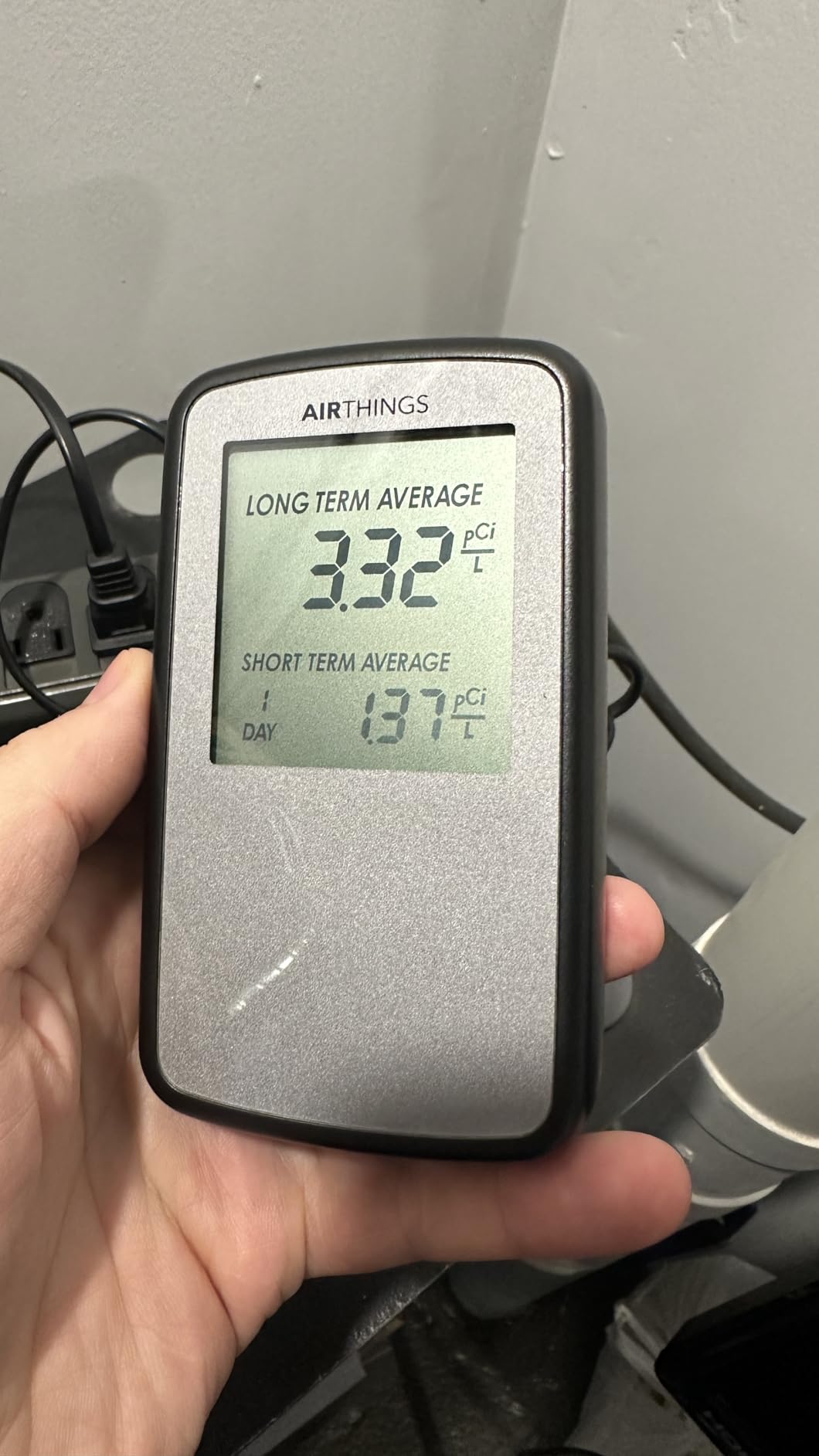
Signs you have overshot include a loud fan, a house that feels noticeably drafty, combustion appliances behaving oddly, and diminishing returns on repeated radon readings. Signs you have undershot include a running fan with no measurable change on the gauge, which almost always points to a duct or sealing problem rather than a blower capacity problem.
Frequently Asked Questions
Which brand of radon fan is considered the best?
RadonAway is the most widely installed brand in North America, and the RP145C is the model we recommend most often for a typical basement because it combines 166 CFM of capacity with a 30 dB noise rating, a 15-watt draw, and the largest base of owner feedback of any fan in our roundup. Fantech is the alternative worth shortlisting when quietness matters most, since the RN2 carries the lowest published noise figure we found.
How many CFM do I need for a radon fan?
Match the fan to your duct diameter and run length rather than to a headline number. A 3-inch duct on a short run is comfortable around 90 to 150 CFM, a 4-inch duct handles roughly 150 to 250 CFM, and a 4.5-inch or 6-inch duct can carry 250 CFM and above. Always read the airflow at a stated static pressure in inches of water column, because that is the number that reflects your installed system.
Do radon fans really work?
Yes, when the system around them is built and sealed correctly. The fan pulls radon-laden soil gas out from under the slab or crawl space and discharges it outdoors, which lowers indoor readings toward the EPA action level of 4 pCi/L. If the slab is not sealed, the fan short-circuits through cracks and penetrations, so blower size alone does not fix a system that was never sealed.
Can a radon fan be too strong?
It can, and oversized blowers are a common problem. Installing a high-static-pressure fan on a modest duct run often produces a real radon reduction but very minimal suction, along with more noise, higher running cost, and a stronger draft through the home. A heavily depressurized basement can also pull combustion air back toward a furnace or water heater, so backdraft symptoms are a clear signal to reduce airflow rather than increase it.
What is the quietest radon fan for a basement?
The Fantech RN2 carries the lowest listed noise figure in our roundup at 25 dB, and owners describe it as inaudible unless you stand next to it. The two-speed kit we tested runs 188 CFM at 32 dB on its low setting, and the RadonAway RP145C is rated at 30 dB. Mounting location matters as much as the model, since a fan under a finished floor carries its sound into the living space above.
The Verdict on the Best Radon Fans for Basements in 2026
For most basements, the RadonAway RP145C is the best radon fan in 2026 because it balances the three things that matter for a device running around the clock: 166 CFM of capacity, a 30 dB noise rating, and a 15-watt draw. It also has the deepest owner feedback base of anything we reviewed, which is worth real money on a five-year warranty.
Buy the Fantech RN2 if noise is your priority and your ductwork is 4.5-inch. Buy the RadonAway GP501 if you are working in a sump pit or a crawl space where a compact housing is the constraint. Buy the Tjernlund PVC4 if the footprint is small and you want a cord, and buy the two-speed kit if you want to tune noise against suction after installation.
Whatever you choose, size to the duct, read the CFM at w.c. figure, seal the slab, and fit a manometer so you can confirm the system is still doing its job years from now. Check the current details on any of these before you buy, and then get a post-mitigation test to close the loop.