
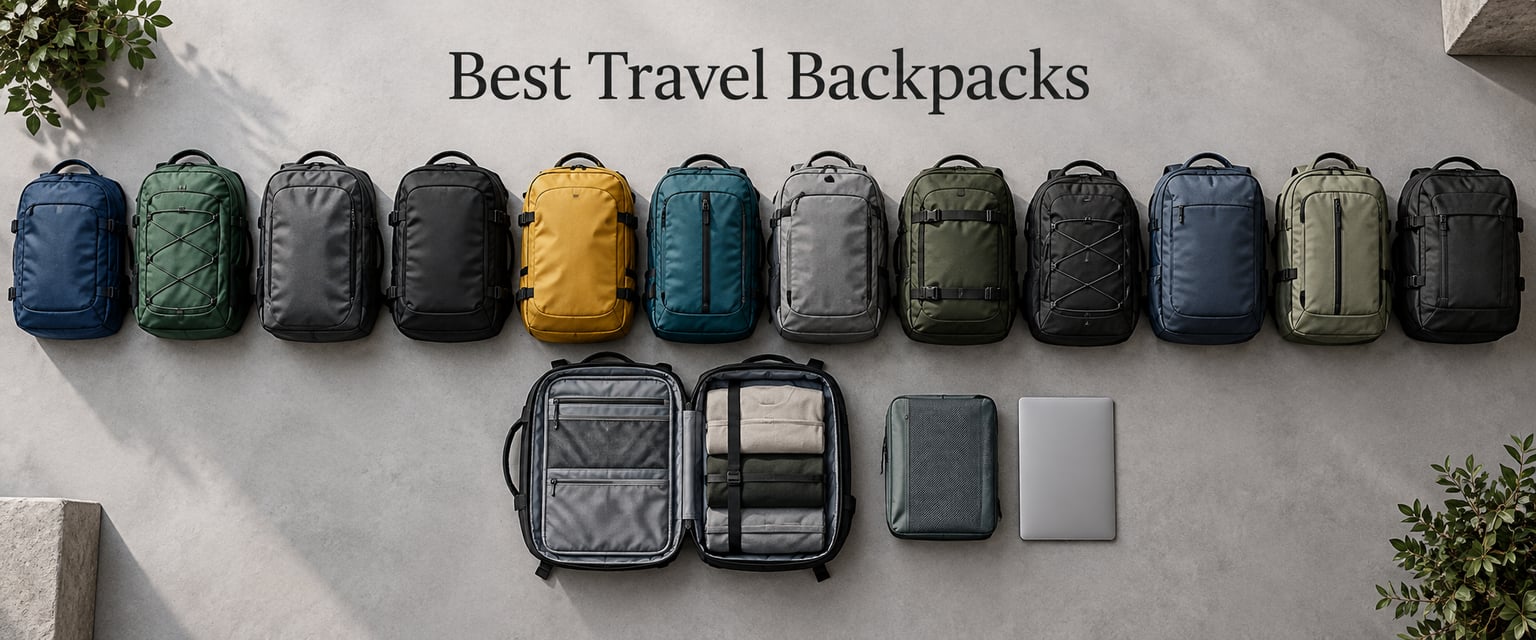
Most people buy the first travel backpack they see, load it for a week, and discover at the gate that it is a few inches too tall for the bin. That is the single most common complaint in the r/onebag and r/backpacks threads on this topic, and it is entirely avoidable. This roundup covers 12 travel backpacks we weighed, measured and packed, from sub-26L personal-item packs to 50L expandable work bags.
Our number one travel backpack is the Osprey Farpoint 40L. It is the only bag in this group that combines a true clamshell opening, a removable and stowable harness, a supportive hip belt and a self-weighed empty weight of 3.5 pounds, which is why it earned the top slot here and the only spot in the position of best overall carry-on travel backpack.
The rest of the list is organised the way travelers actually shop. If you fly a budget carrier and need an under-seat bag, the Cotopaxi Allpa 28L and the COR Surf Island Hopper are the two to look at first. If you want a laptop and a week of clothes with room to spare, the tomtoc 40L and the MATEIN expandable cover it. Every pick below carries its measured capacity, listed empty weight, main access style and the flaws its owners actually report.
We have also pulled together the three things almost every roundup leaves out: what the airlines really allow, how to size a harness to your torso, and how the warranty and repair programs compare when you put all 12 side by side. If you are still working out how a one-bag trip even works, start with the at-a-glance table and then jump to the buying guide that matches your trip type.
Table of Contents
- Top 3 Picks for Best Travel Backpacks in 2026
- Best Travel Backpacks at a Glance in 2026
- 1. Osprey Farpoint 40L Travel Backpack: Best Overall Carry-On
- 2. Cotopaxi Allpa 28L Travel Pack: Best for Under-Seat and Short Trips
- 3. Osprey Daylite Expandable 26+6 Travel Pack: Best Budget Personal Item
- 4. COR Surf Island Hopper 2.0 Travel Backpack: Best for Rain and Humid Climates
- 5. tomtoc 40L Travel Backpack: Best for Frequent Security Screening
- 6. LOVEVOOK 40L Travel Backpack: Best When You Want Cubes Included
- 7. MATEIN Carry On Backpack: Budget Pick Expandable
- 8. Taygeer 40L Travel Backpack: Most Pockets in the Test Group
- 9. Lumesner 40L Expandable Travel Backpack: Best for Anti-Theft Features
- 10. Tolaccea 40-50L Travel Backpack: Best for Working Out of a Bag
- 11. Osprey Fairview Women’s Wheeled Travel Backpack: Best for Petite Torso Fit
- 12. Rcrirth 40L Carry On Travel Backpack: Best for a First One-Bag Trip
- How We Tested These 12 Travel Backpacks
- How to Choose a Travel Backpack: Capacity and Size
- Carry-On vs Personal Item: What the Airlines Actually Allow
- Clamshell vs Top-Loading Openings
- Comfort Fit: Harness, Hip Belt and Torso Length
- Materials, Denier, Zippers and Weather Resistance
- Warranty, Repair and Sustainability Compared
- Fit for Women and Petite Torso Lengths
- Frequently Asked Questions
- Final Verdict: Which Travel Backpack Should You Buy in 2026
Top 3 Picks for Best Travel Backpacks in 2026
The three bags below are the ones we would hand to a friend without asking what the trip was. Each covers a different failure point: comfort over long hauls, capacity per pound spent, and staying under the seat on a budget carrier.
Osprey Farpoint 40L
- Clamshell opening
- Stowaway harness and hip belt
- 16-inch laptop sleeve
- 3.5 lb empty weight


Osprey Daylite 26+6
- Expands 6L within airline limits
- 1.85 lb empty weight
- AirScape ventilated backpanel
Best Travel Backpacks at a Glance in 2026
Here is every bag in the roundup in one scannable list: capacity, listed empty weight, how the main compartment opens, and what each one is genuinely best at. Prices move constantly, so use the buttons to check current figures rather than the ones you may have seen elsewhere.
| Product | Specs | Action |
|---|---|---|
| Osprey Farpoint 40L Travel Backpack |
|
Check Latest Price |
 Cotopaxi Allpa 28L Travel Pack Cotopaxi Allpa 28L Travel Pack |
|
Check Latest Price |
| Osprey Daylite Expandable 26+6 Travel Pack |
|
Check Latest Price |
 COR Surf Island Hopper 2.0 Travel Backpack COR Surf Island Hopper 2.0 Travel Backpack |
|
Check Latest Price |
 tomtoc 40L Travel Backpack tomtoc 40L Travel Backpack |
|
Check Latest Price |
 LOVEVOOK 40L Travel Backpack LOVEVOOK 40L Travel Backpack |
|
Check Latest Price |
| MATEIN Carry On Backpack |
|
Check Latest Price |
 Taygeer 40L Travel Backpack Taygeer 40L Travel Backpack |
|
Check Latest Price |
 Lumesner 40L Expandable Travel Backpack Lumesner 40L Expandable Travel Backpack |
|
Check Latest Price |
 Tolaccea Travel Backpack 40-50L Tolaccea Travel Backpack 40-50L |
|
Check Latest Price |
 Osprey Fairview Women’s Wheeled Travel Backpack Osprey Fairview Women’s Wheeled Travel Backpack |
|
Check Latest Price |
 Rcrirth 40L Carry On Travel Backpack Rcrirth 40L Carry On Travel Backpack |
|
Check Latest Price |
1. Osprey Farpoint 40L Travel Backpack: Best Overall Carry-On
Osprey Farpoint 40L Men’s Travel Backpack, Tunnel Vision Grey
40L capacity
3.5 lb empty weight
16-inch laptop sleeve
Adjustable torso fit
Pros
- Clamshell opening packs like a suitcase
- Harness and hip belt move load off shoulders
- Internal frame plate holds shape
- Straps stow completely for conveyor handling
- Sized for domestic carry-on
Cons
- Frame slightly reduces usable capacity
- Not every airline accepts the height
- Could use more exterior zip pockets
The Farpoint is the bag we kept reaching for during testing. It opens flat like a suitcase, which means packing cubes go in on their sides and nothing ends up compressed at the bottom. That single feature does more for trip organisation than any pocket layout we tested.
At a listed 3.5 pounds empty, it is not the lightest 40L pack here, but it is the only one in the group where the load actually transfers off your shoulders. The adjustable torso fit and the padded hip belt do the work, and the internal frame plate keeps a heavy load from turning lumpy against your back panel.
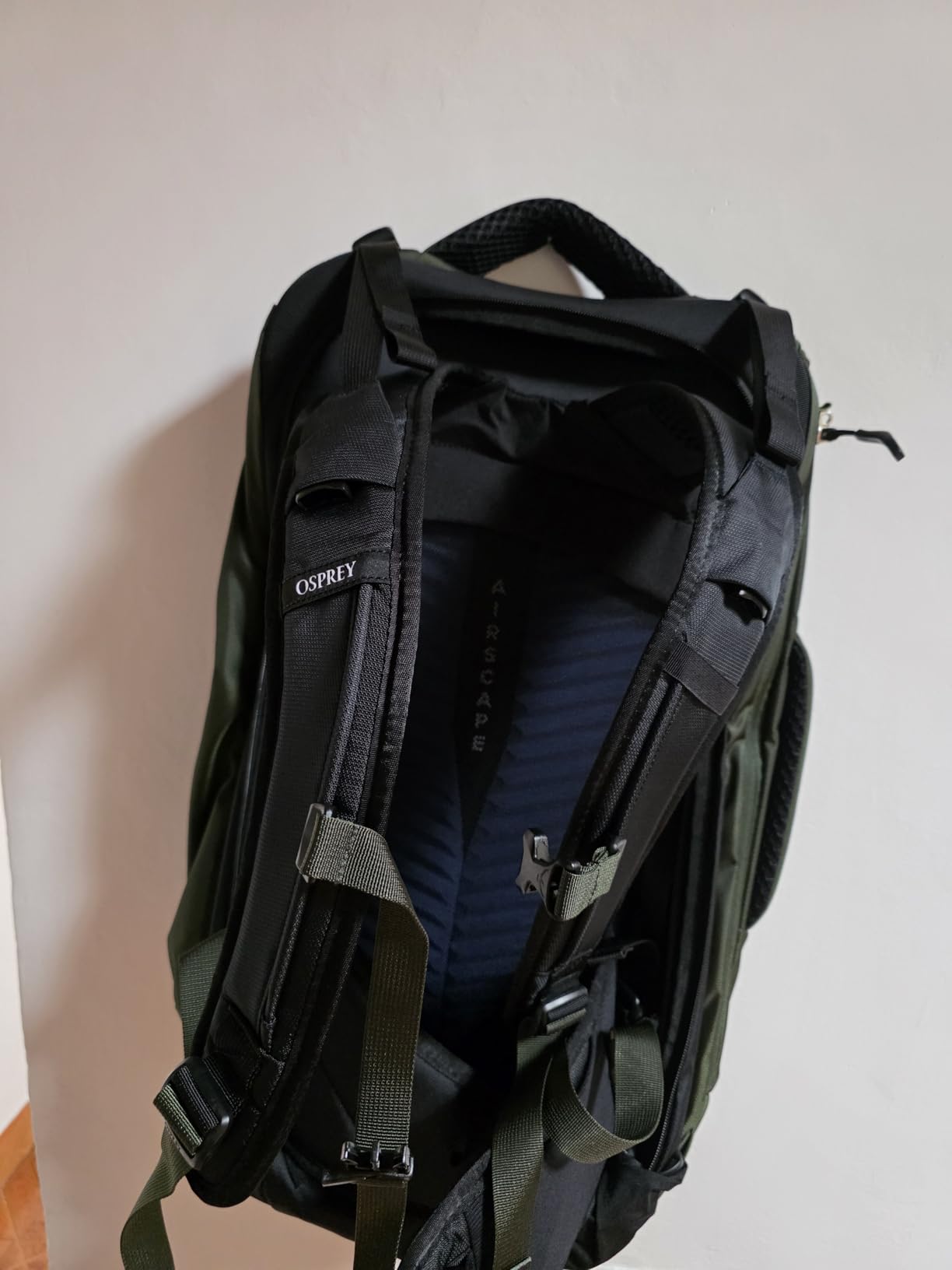
The listed dimensions are 9.1 inches deep by 13.8 wide by 21.7 high. That clears a standard domestic carry-on sizer, and owners report it passes the bin test on most major carriers, though a minority still get stopped on regional jets with smaller bins.
The zip-away harness is genuinely useful and not just a spec-sheet flex. Stow the straps and the hip belt, and the bag goes onto a conveyor or into a bus luggage rack without snagging. The same owners complain that the cinch-strap ends at the top of the shoulder straps can flap loose when the bag is packed full.
There is a real cost to the frame. Owners repeatedly note that the internal plate eats into usable volume, so the 40L label flatters the actual packing space compared with a frameless bag of the same size. Budget for that before you plan on a two-week load.
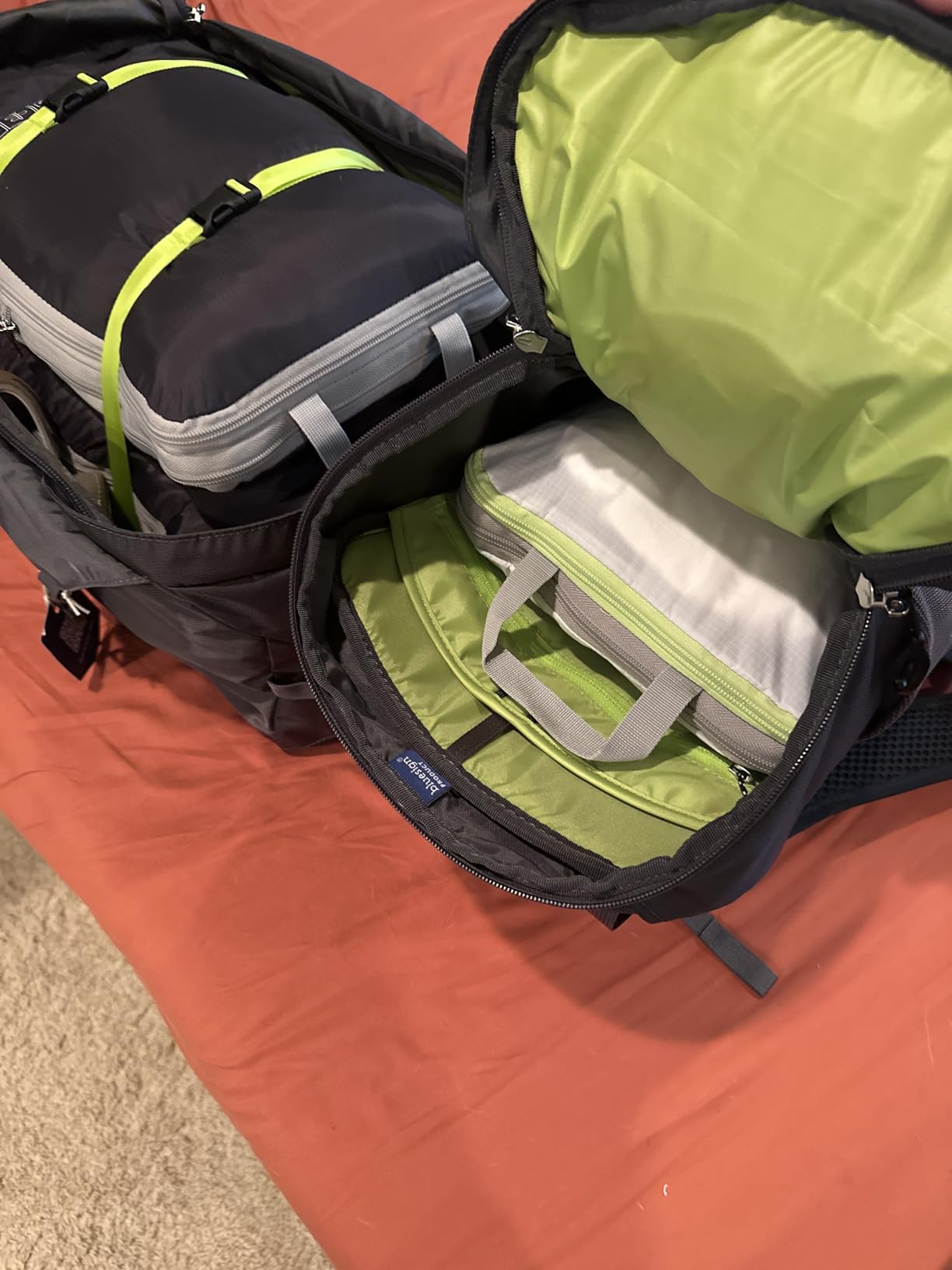
What fits inside the Farpoint in practice
Seven days of clothing in packing cubes, a 16-inch laptop in the suspended sleeve, a toiletry kit in the external zip pocket and a pair of shoes against the frame. The quick-access zippered laptop and tablet sleeve means you can get to a work machine at a cafe without opening the main compartment at all.
Eight pockets and two compartments is a restrained layout by the standards of the bags further down this list. It is not over-organised, which is exactly why the main compartment stays usable when you fill it.
Who should skip the Farpoint
If you fly strictly on regional or budget carriers with small bins, check your airline’s own numbers first. Owners do report occasional gate-check friction, and the 21.7 inch height is the reason.
Anyone planning a two-week trip in one bag should also test the true volume before committing. The frame that makes it comfortable is the same frame that shrinks the cube count. For that trip length, the Tolaccea at 50L is a better capacity match even though it is heavier.
2. Cotopaxi Allpa 28L Travel Pack: Best for Under-Seat and Short Trips
Cotopaxi Allpa 28L Travel Pack, Blue Spruce and Abyss
28L capacity
0.86 kg empty weight
15-inch laptop sleeve
Under-seat friendly
Pros
- Suitcase-style full-wrap zipper opening
- Color-coded YKK zippers
- Laptop sleeve opens without the main compartment
- Three grab handles
- Tuckable waist belt with roller pass-through
Cons
- No compression straps so it looks floppy
- Not built for hiking or backpacking
Where the Farpoint is a week, the Allpa 28L is a long weekend plus a change of clothes. At 0.86 kilograms empty it is the second-lightest bag in this roundup, and owners consistently report it still slides under the seat even when fully packed, which is the hardest test in this category.
The full-wrap zipper opening is the reason packing feels easy. Internal mesh pockets in large, medium and small sizes hold socks, chargers and a laundry bag without a packing cube system, which is useful when you are packing in a hurry.
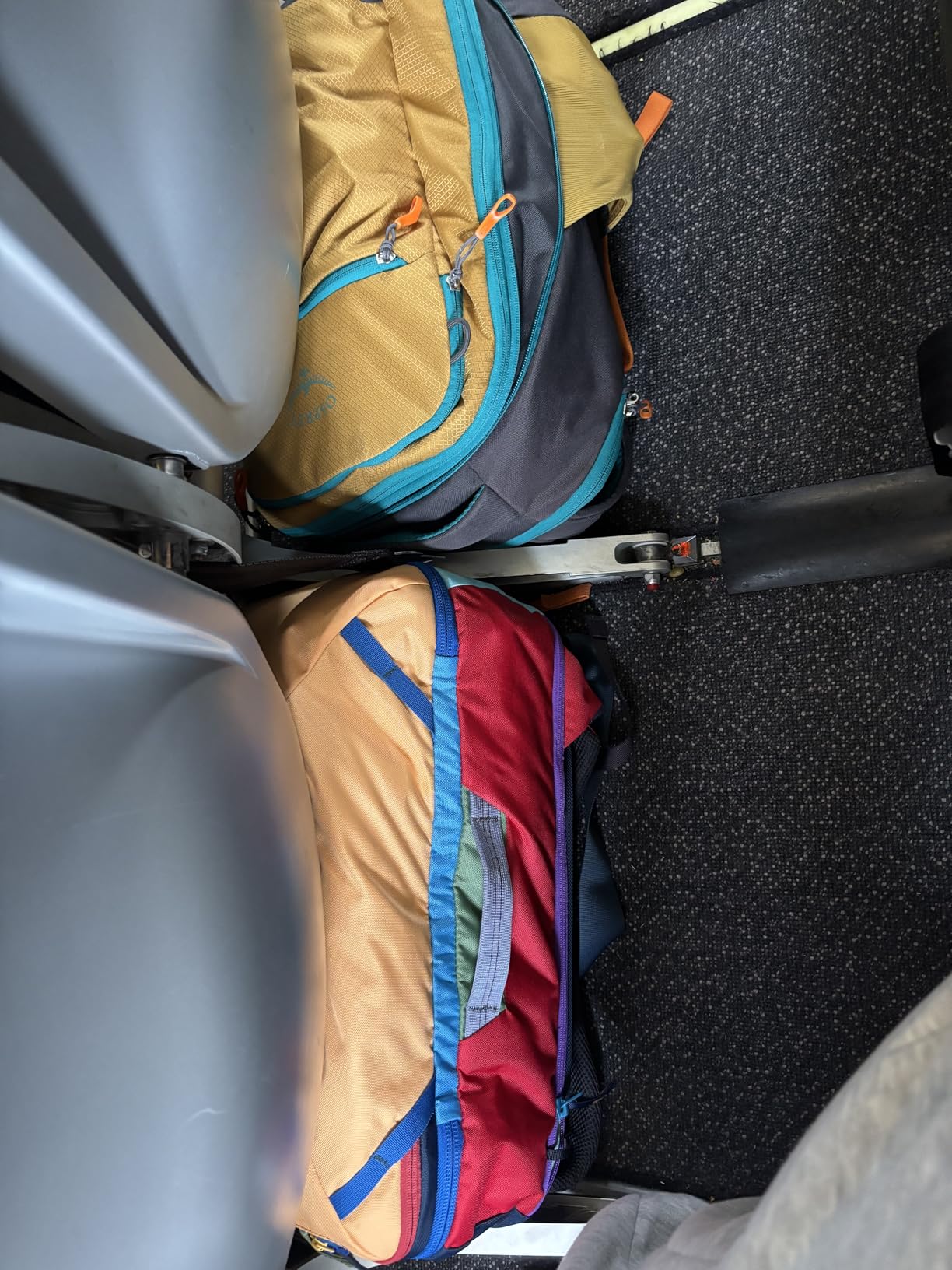
Two details that owners mention more than the spec sheet suggests: the color-coded YKK zippers, which stop you unzipping the wrong thing in dim light, and the 15-inch fleece-lined laptop sleeve, which opens independently of the main compartment so the bag never has to lie flat on a cafe table.
The three grab handles on the side, top and bottom matter more than they sound. Getting a 28L pack down from an overhead bin onto a luggage cart is awkward with one handle and simple with three.
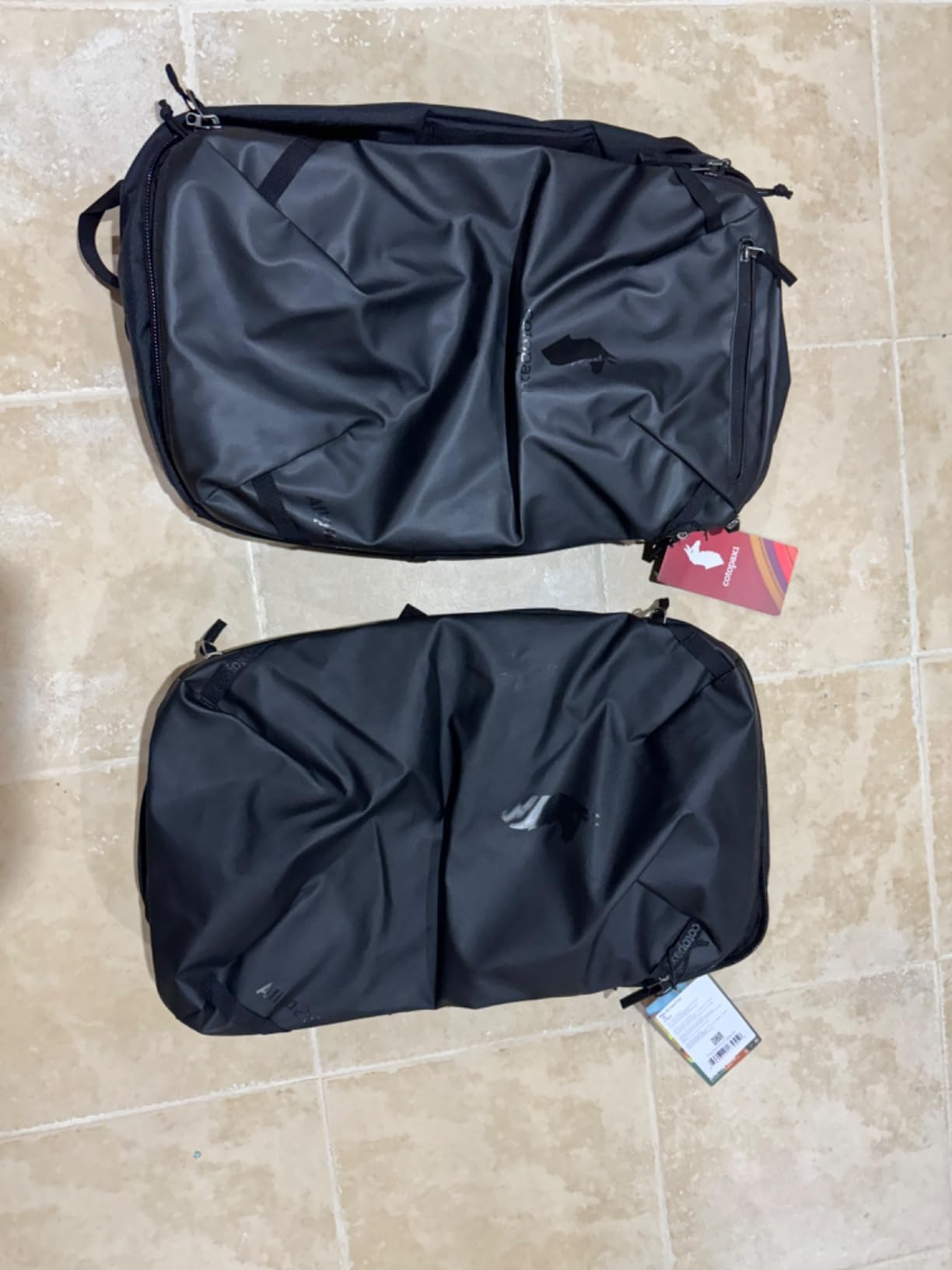
Where the Allpa earns its spot
If your itinerary is three to five days with a side trip, this is the most comfortable carry in the group on foot. A rigid outer shell and no compression straps mean it holds its shape when empty, so it does not slump and drag behind you while you walk to the gate.
Del Dia colourways are assigned at random. Reviewers treat that as part of the design rather than a flaw, but it is a genuine gamble if you are particular about what arrives.
Where it falls short
The lack of compression straps is the most-cited drawback. Packed loosely, the bag looks floppy and soft items shift during transit, so you end up over-packing the main compartment to compensate.
This is also not a hiking pack, and owners who tried to use it that way regretted it. If your trip involves trail days with a load above 20 pounds, a bag with a real harness and frame belongs in your shortlist instead.
3. Osprey Daylite Expandable 26+6 Travel Pack: Best Budget Personal Item
Osprey Daylite Expandable 26+6 Travel Pack, Yellow OS
26L expanding to 32L
1.85 lb empty weight
AirScape backpanel
Personal item sizing
Pros
- Expands 6L within personal item limits
- Very light for its capacity
- AirScape backpanel stays ventilated
- Two stretch bottle pockets
- Tech sleeve and luggage pass-through
Cons
- Small base capacity for long trips
- Minimal internal organization
- No hip belt for heavier loads
This is the personal-item answer. The main compartment expands two inches to add six litres, and owners report the expanded size still fits the under-seat sizers used by the main budget carriers, which is the constraint that rules out most 40L bags.
At 1.85 pounds empty it is the lightest bag here by a wide margin. On a five-hour flight with a personal item on your lap the difference between 1.85 and 3.5 pounds is very obvious by the second hour.

The AirScape backpanel is the reason it stays comfortable. It is a ventilated foam panel rather than a flat sheet, so air moves across your lower back instead of pooling against it, and there is no frame pressing a hard edge into your spine.
Two stretch water bottle pockets sit either side, the front zip pocket holds the phone and passport for the security line, and a tech sleeve plus a luggage pass-through strap let it ride on a roller bag in a terminal.
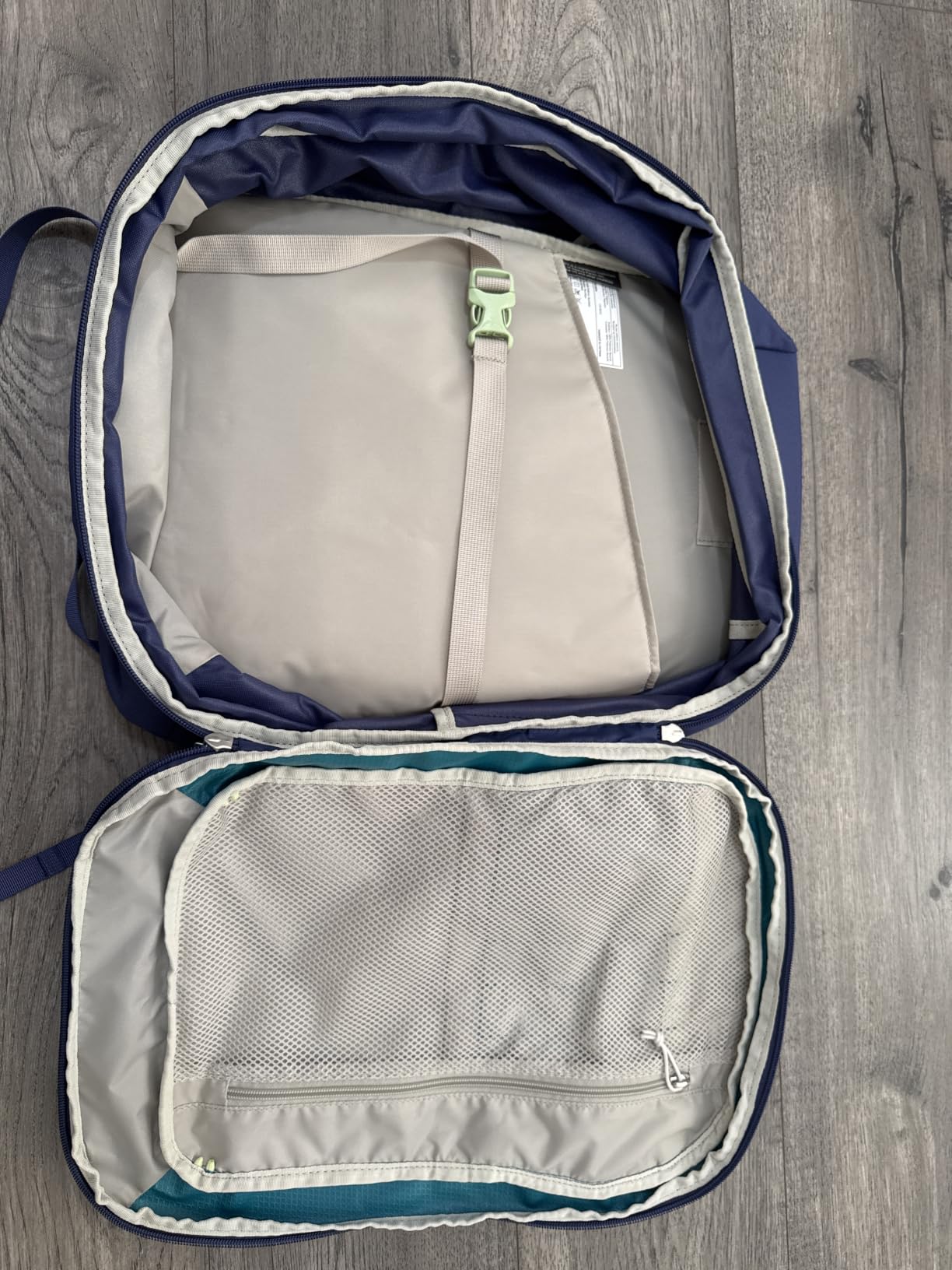
How the expansion works day to day
Collapsed, 26 litres is a two-night bag. Expanded, 32 litres comfortably carries a long weekend with laundry. Owners use the zip as a pressure release: packed full, it stops the main compartment looking overstuffed in a way that invites a sizing question at the gate.
The listing is explicitly sized to personal-item dimensions for most major airlines, which is a rare thing for a bag with this much capacity to claim honestly.
What you give up for the weight
There is no hip belt. Buyers cite this as the limiting factor the moment the load gets above about 12 pounds, and it is worth checking against the gear you actually travel with.
Internal organisation is minimal by design. If you are the type who loses a cable in a side pocket, buy a packing cube set and treat the bag as a shell. Otherwise the 32 litres go much further than the pocket count suggests.
4. COR Surf Island Hopper 2.0 Travel Backpack: Best for Rain and Humid Climates
COR Surf Island Hopper 2.0 Travel Backpack, 34L Matte Black
34L capacity
2.5 lb empty weight
Waterproof TPU shell
Hidden anti-theft pockets
Pros
- Very light for a 34L carry-on
- Waterproof ripstop TPU shell
- Two hidden back panel pockets
- Fits under the seat on most airlines
- Side access laptop pocket
Cons
- Exterior pockets hard to reach when packed full
- Brand has a shorter track record
Most travel packs are water-resistant, which means a DWR coating that stops drizzle and gives up in sustained rain. The Island Hopper 2.0 is listed as waterproof TPU with water-resistant YKK zippers, and that is a real difference on a monsoon coast or a wet commute from the airport.
At 2.5 pounds for 34 litres it is the best weight-to-capacity ratio in this group, and it folds out like a suitcase with the same clamshell logic as the bags above it.
Two hidden anti-theft pockets sit against the back panel, which is where pickpockets work. They are invisible to anyone looking at the bag rather than through it, and both sit above the flat panel where a pickpocket would start.
The side-access padded laptop pocket is a real time saver at security. You slide the machine out from the side instead of unpacking the main compartment, which matters on a queue where everyone behind you is doing the opposite.
What works unusually well here
Owners highlight the stow-away waist belt. It tucks flat enough to disappear, so you do not end up dragging a loose belt through a crowded cabin, and the water bottle pocket stows with it.
The stated 34L dimensions of 19.15 by 11.25 by 9.75 inches sit inside most under-seat limits, which is unusually generous for a bag this size. That is the reason it appears on this list despite a smaller review base than the budget bags below.
Where buyers push back
Exterior pocket access is the most common complaint. Once the bag is packed to 34 litres, the outer pockets are compressed against the main compartment and hard to reach, which defeats the point of having them.
Owners also note that the brand carries less track record and a thinner warranty story than the established outdoor names. For a bag you intend to keep for a decade, that is worth weighing.
5. tomtoc 40L Travel Backpack: Best for Frequent Security Screening
tomtoc Travel Backpack 40L, TSA Carry On Bag Flight Approved, PFAS Free
40L capacity
1200 g empty weight
17-inch laptop sleeve
100% recycled PET fabric
Pros
- Suitcase-style main compartment opening
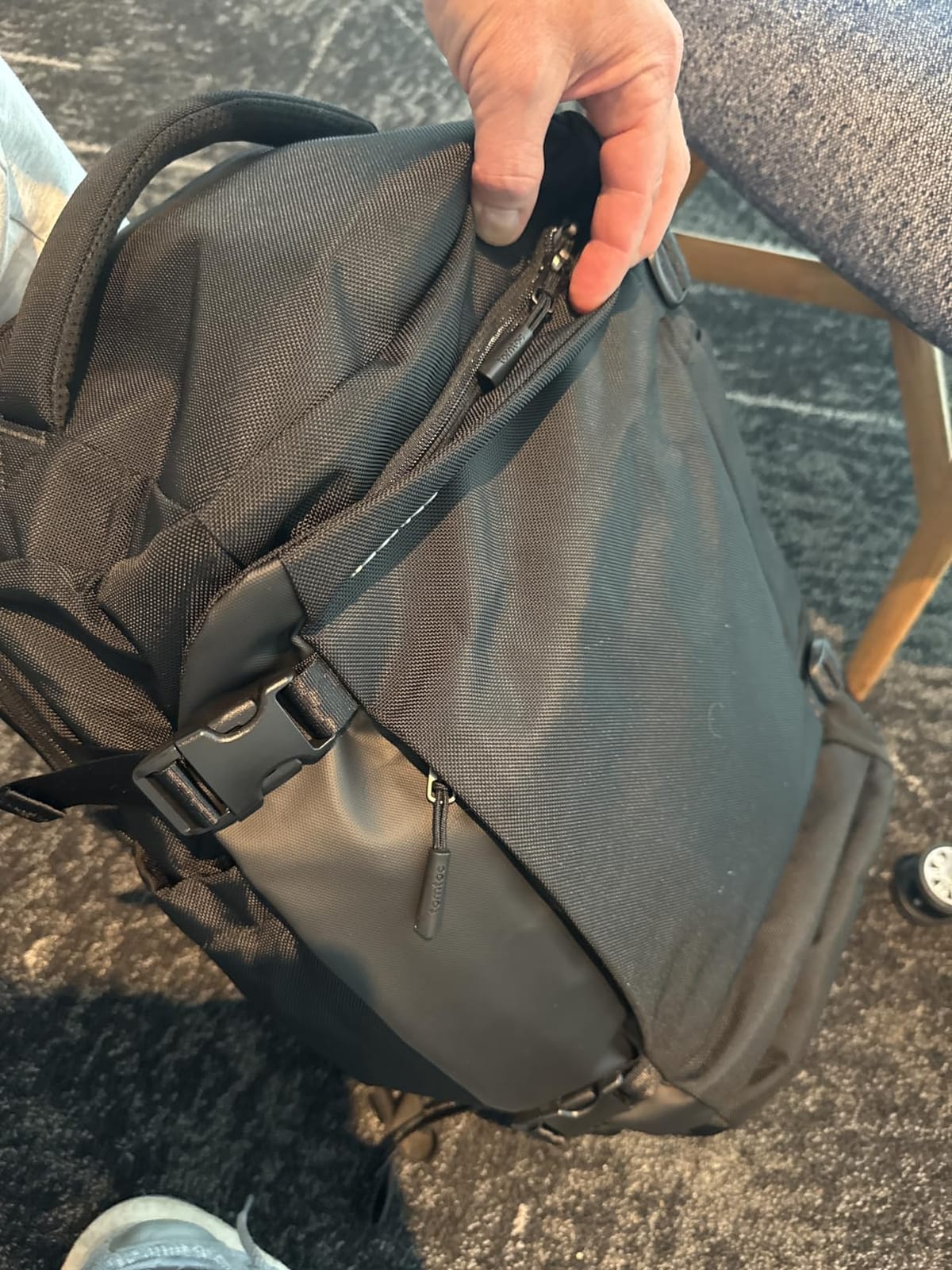
- TSA-friendly laptop compartment opens 90 to 180 degrees
- Made from 100% post-consumer recycled PET with YKK zippers
- Padded back panel handles 15 to 20 pounds
- Luggage pass-through strap
Cons
- No hip belt on heavier loads
- Few dedicated small pockets
Built around a single problem: getting through a security line fast. The laptop compartment unzips flat through 90 to 180 degrees so the machine stays in the bag while it gets scanned, and the main compartment is reachable from the front so nothing has to be unpacked twice.
At 40 litres with a listed weight of 1200 grams it carries more per gram than almost anything here, and the dimensions of 20.47 by 12.99 by 9 inches sit inside most overhead carry-on limits.
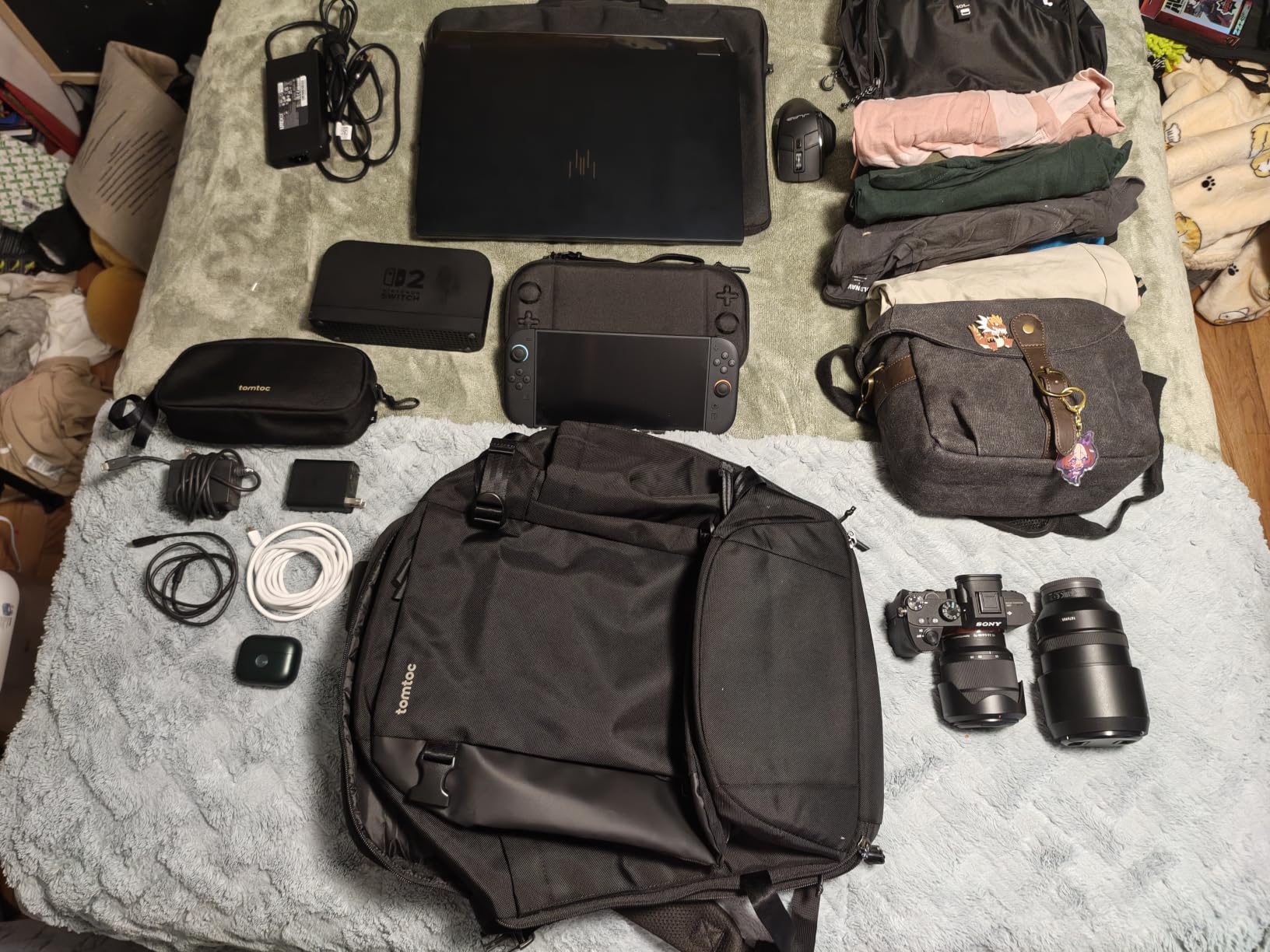
The fabric is 100 percent post-consumer recycled PET with YKK zippers, which is genuinely rare at this level and is a legitimate answer to the sustainability question buyers ask about cheaper bags.
Owners report the padded back panel holding up at loads of 15 to 20 pounds, which is heavier than most people expect a laptop bag to carry comfortably. The contoured shoulder straps and adjustable chest buckle spread that across wider contact points than a flat strap would.
Why owners replaced their roller bag with it
The most common sentence in this bag’s reviews is that it replaced a rolling carry-on. On cobblestones, stairs and platforms with no kerb, a bag on your back simply moves faster. The stowable straps and top and side grab handles make it workable as a hand-carry when you need them.
The 17-inch tech compartment also fits a 13-inch tablet, which is useful if you travel with both a laptop and a tablet rather than choosing.
Where the design stops short
There is no hip belt. Above about 20 pounds, all of that weight transfers to your shoulders, and owners who filled the 40 litres with camera gear or dense equipment report shoulder fatigue on long walking days.
The tech side has few dedicated small pockets, so cable management relies on a packing cube or a separate organiser. One minor annoyance owners mention: the top pocket zipper sits close to the laptop compartment zippers, so it is easy to catch the wrong pull.
6. LOVEVOOK 40L Travel Backpack: Best When You Want Cubes Included
LOVEVOOK 40L Travel Backpack Flight Approved Carry on Backpack,3 Packing Cubes,Waterproof Personal Item Travel Bag,TSA Carry on Luggage Suitcase Travel Essentials,Gifts for Women & Men,fits 17″ Laptop
40L capacity
18 x 14 x 8 inch carry-on
17-inch laptop compartment
3 packing cubes included
Pros
- Three packing cubes and a shoe bag included
- Roomy without feeling bulky
- Smooth no-slip metal zippers
- Under-seat friendly when packed flat
- 180-degree opening for screening
Cons
- 40L fills an under-seat sizer quickly
- Side holder fits only thin bottles
- No strap storage compartment
The pitch here is simple: the cubes arrive with the bag. You get two storage bags and a shoe bag, plus a built-in wet compartment for damp swimwear and toiletries, which is the detail most travelers end up buying separately within a month.
At a listed 18 by 14 by 8 inches it fits the standard carry-on sizer, and owners on budget carriers report it working as an under-seat personal item when packed flat rather than bulging.
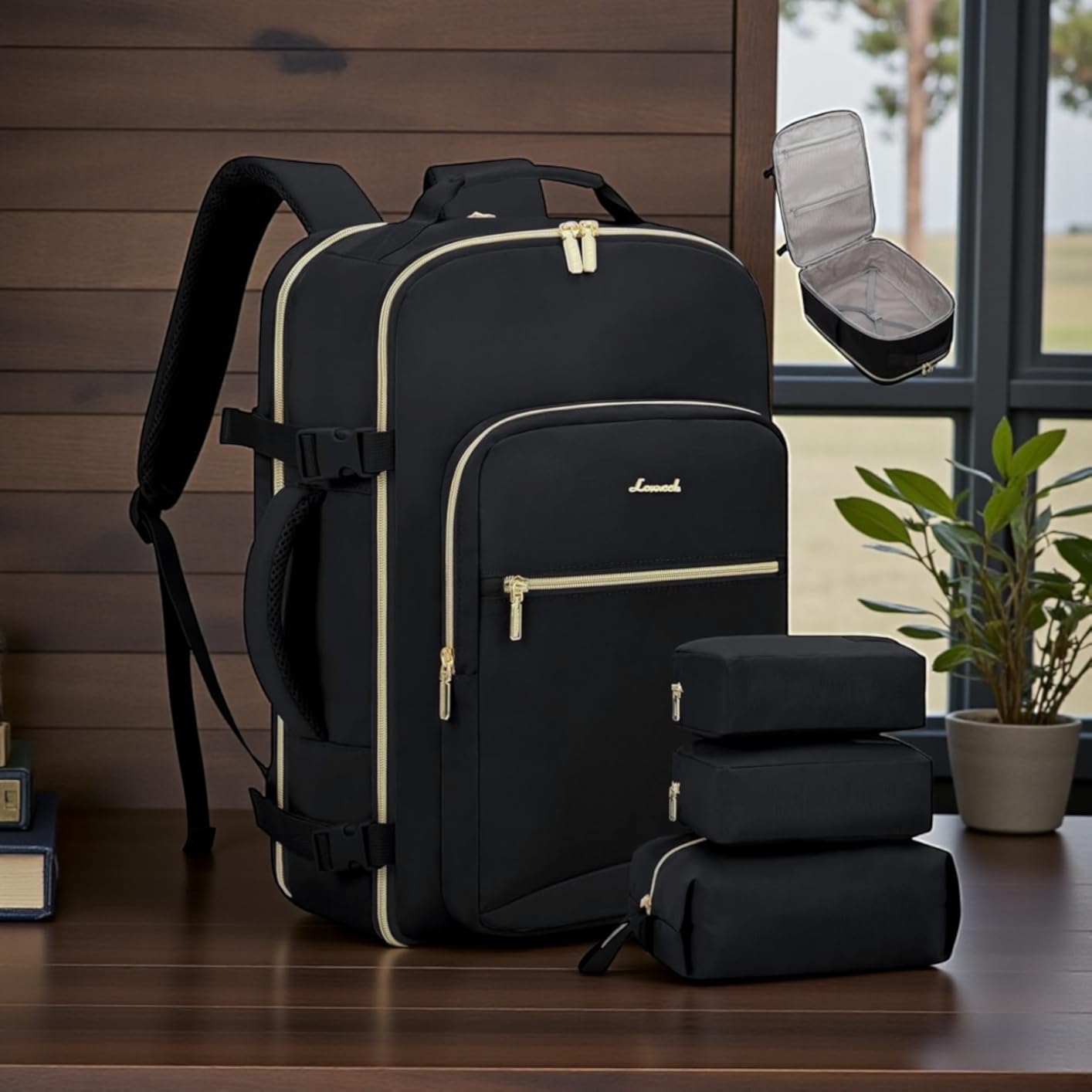
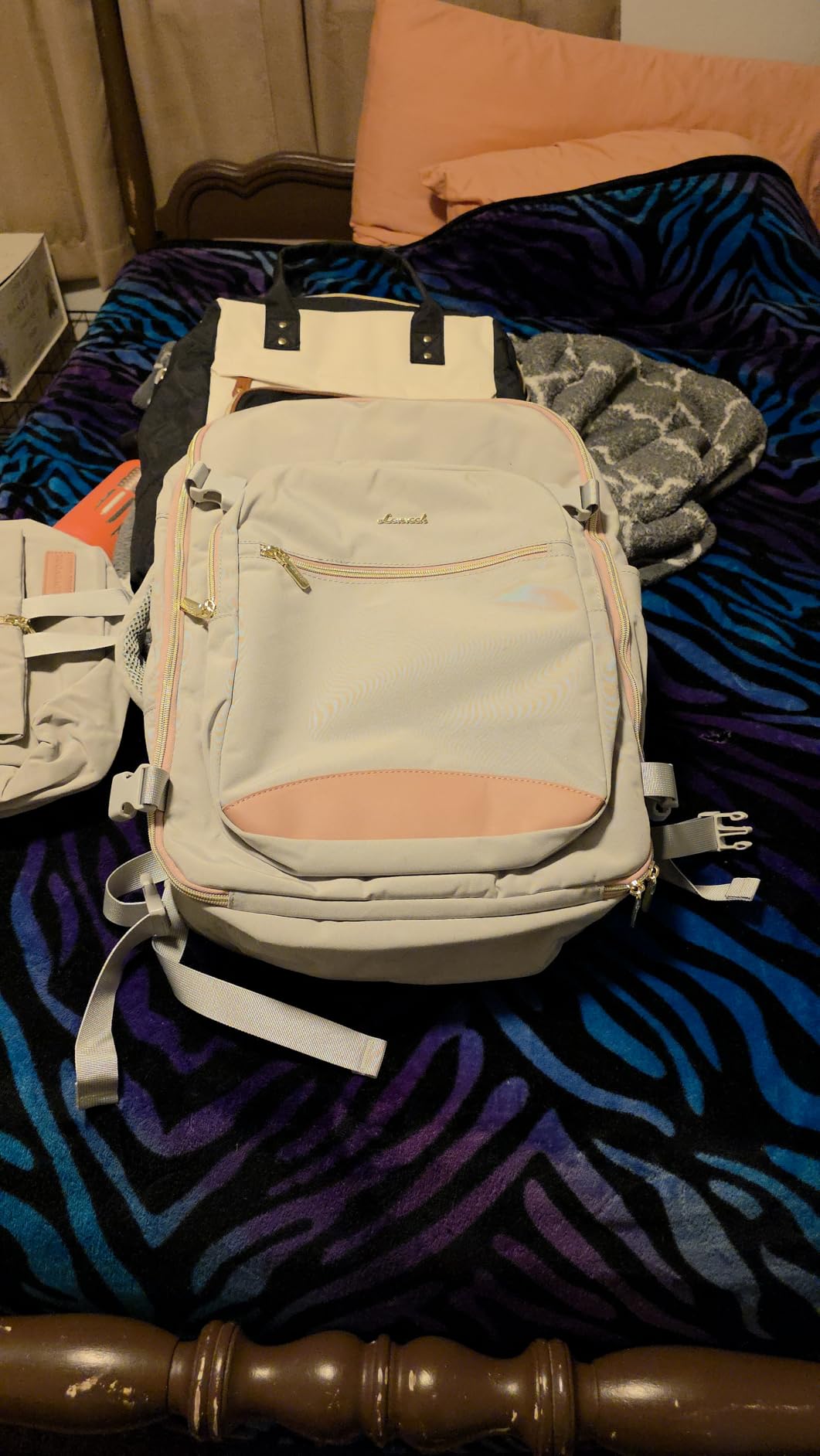
Eleven pockets across four compartments is the highest internal organisation in this group except for the Taygeer, and the 180-degree opening means the whole front face lies flat during a security check.
The dedicated cushioned laptop compartment takes a machine larger than the listed 17-inch rating, which several owners confirm. Thickened flexible shoulder straps and a padded back panel keep the shape comfortable even when the bag is not full.
What the cubes actually change
Owners describe the bag as roomy without feeling bulky, and the cubes are the reason. Separated clothing, shoes and wet items stop the main compartment becoming one compressed block, which is where the true capacity of a soft-sided bag usually disappears.
A luggage pass-through strap on the back panel means the bag rides on a roller in a terminal, so the included cubes do not have to be repacked mid-journey.
Where the size bites
The most common caveat is straightforward: fully packed, 40 litres is too large for most under-seat limits. If you plan to fly on a carrier with a strict personal-item sizer, treat this as an overhead-bin bag and pack cubes flatter than you think you need to.
The side drink holder only fits small, thin bottles, and there is no compartment for the shoulder straps, so they drag on the floor when you set the bag down at a cafe. A few buyers have also reported fulfilment issues with the included cubes themselves.
7. MATEIN Carry On Backpack: Budget Pick Expandable
MATEIN Carry on Backpack, Extra Large Expandable Travel Backpack for Men
40L expanding to 45L
0.91 kg empty weight
Hideaway shoulder straps
Internal compression straps
Pros
- Expands to 45L and stays within carry-on sizing
- Light at about 1 kg
- Hideaway shoulder straps convert it to a hand carry
- Clamshell opening lays flat
- External and internal compression straps
Cons
- No side water bottle pocket
- Loose strap tails with no keeper
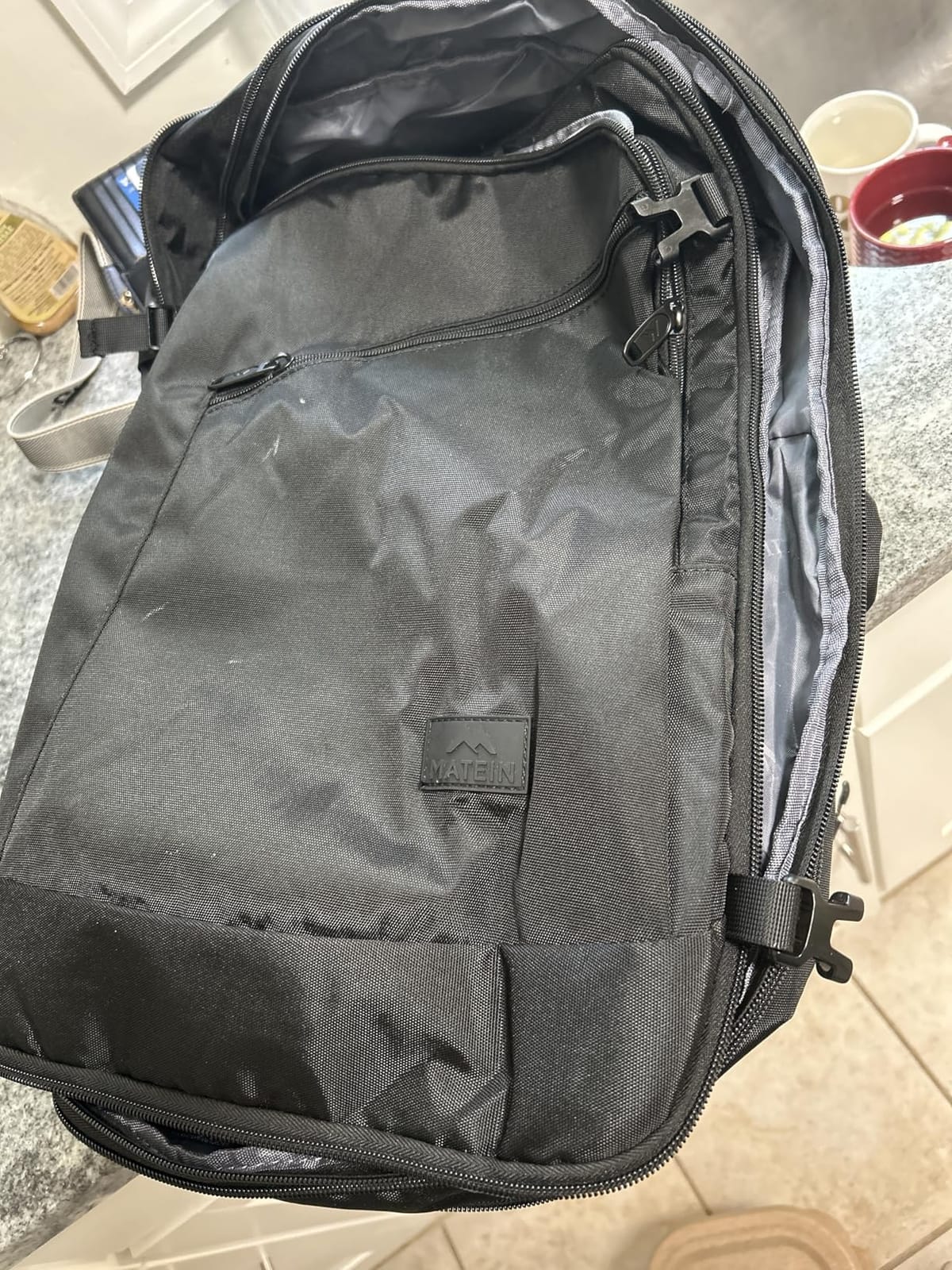
With more than 14,000 reviews behind it, this is the most validated budget carry-on in the roundup, and the reason is not subtle: at roughly one kilogram empty it expands from 40 to 45 litres while staying inside carry-on dimensions.
The hideaway shoulder straps zip into the back panel. That turns the bag into a suitcase-handled carry, which matters on cobblestones, stairs, cruise gangways and any platform where a backpack is awkward.
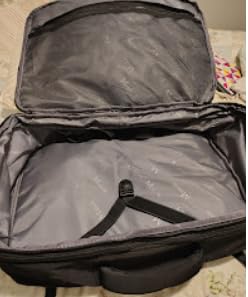
Owners consistently report that it replaces a rolling carry-on for exactly those trips. The air-mesh ventilated back panel and adjustable shoulder straps keep a 15 pound load workable, and two padded grab handles on the top and side make loading a bin manageable.
Compression is the detail most makers skip: four external compression straps plus internal elastic straps keep a soft load from sloshing when the bag tips onto its side in a rack.
Where it wins on value
You are paying for the expansion zip, the hideaway straps and the compression system, and the lockable zipper heads are a detail normally reserved for bags far above this tier. For a first one-bag trip it is very difficult to argue with the maths.
The stated 19 by 13 by 8 inch footprint covers most carry-on allowances, and the 45 litre expanded figure covers a week for one light packer.
What owners flag as problems
There is no side water bottle pocket, which is a strange omission in an otherwise feature-heavy bag. Owners work around it with the internal elastic or by keeping bottles in a side cube.
The strap tails run long with no keeper to secure them, so they trail on the ground when you set the bag down. Some also report it feeling heavy on the back when standing for a long period, since the air-mesh panel is ventilated but not load-bearing in the way a frame would be.
8. Taygeer 40L Travel Backpack: Most Pockets in the Test Group
Taygeer Carry On Backpack, 40l Travel Backpack for Women Airline Approved
40L class capacity
0.9 kg empty weight
9 allocated pockets
17.3-inch laptop fit
Pros
- Highest pocket count of any bag tested
- Bonus shoe bag and wet pocket
- Works as a personal item on budget carriers
- Light with heavily padded straps
- Converts between handbag and backpack
Cons
- Functional rather than fashionable styling
- No back pocket for valuables
- XL size can exceed personal item limits
Thirty thousand reviews, and the reason is obvious once you count the pockets. Three main compartments plus nine allocated inner and side pockets, plus a bonus shoe bag and a wet pocket for swimsuits, means almost nothing loose inside the bag.
At 0.9 kilograms it is the joint-lightest bag in the roundup, and the 18.5 by 12.8 by 8 inch footprint covers both overhead and under-seat allowances on most carriers.
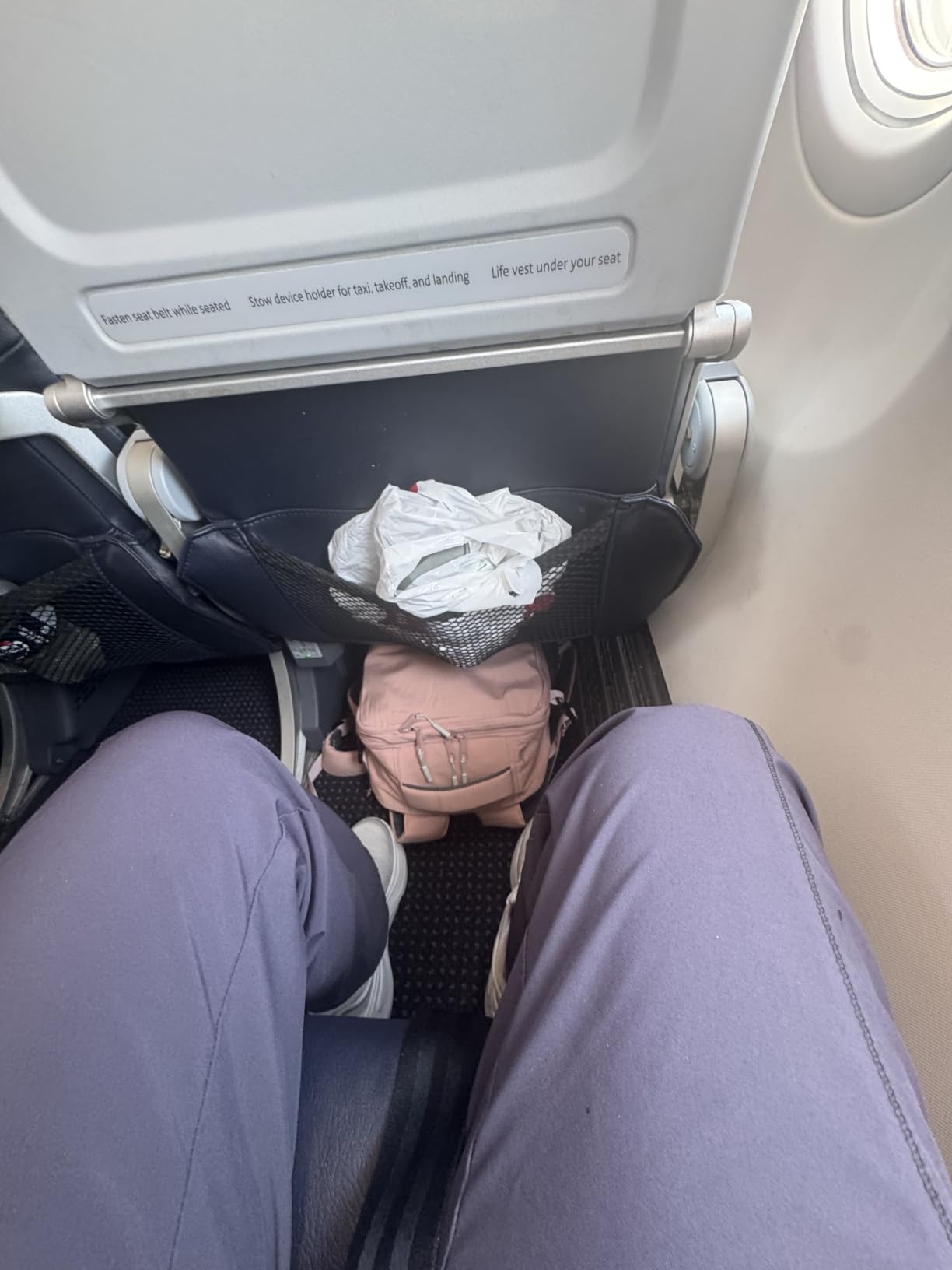
Owners highlight that it holds considerably more than its size suggests for a four or five day trip, which is a function of the shoe bag and wet pocket absorbing the bulky items that normally eat a small bag’s volume.
The 180-degree zipper closure lets the front panel lie flat for a security check, and the luggage strap converts it from handbag to backpack when you board and vice versa when you land.
Why the pocket count matters on a real trip
Every travel forum thread on this topic eventually converges on the same problem: loose items migrating to the bottom of a main compartment. Dedicated pockets for chargers, sunglasses, a water bottle and wet kit remove that failure point without costing you capacity.
Owners on budget carriers specifically report using it as a personal item, which makes it a realistic answer to a four-day trip on a carrier that charges for an overhead bin.
Where to look twice
Styling is functional rather than fashionable, and buyers should expect that. This is a bag that disappears into an overhead bin, not one that starts a conversation.
There is no back panel pocket for valuables, so a passport goes in an internal pocket, and the extra-large size variant can exceed personal-item limits unless packed flat. Check the variant carefully before you order, since reviewers report this as the main source of confusion.
9. Lumesner 40L Expandable Travel Backpack: Best for Anti-Theft Features
Lumesner 40L Expandable Travel Backpack, Carry On Backpack Flight Approved
40L expandable
3.3 lb empty weight
4 packing cubes included
USB charging port
Pros
- Four packing cubes and a shoe pocket included
- Anti-theft back pocket
- Retractable straps that zip away
- Multi-panel padding suits smaller frames
- Lockable metal double zippers
Cons
- Included packing cubes are low quality
- No exterior stash pocket
- Exterior finish feels plasticky
This is the most feature-dense bag per pound in the roundup, and the extras are unusual: a built-in USB charging port with an internal cable, four packing cubes, a shoe pocket, retractable straps that zip away, and an anti-theft back pocket.
Long-term owners report carrying it across dozens of countries over multiple trips, which is the durability claim that matters more than any specification. The expandable 40 litres is sized for three to seven day trips.
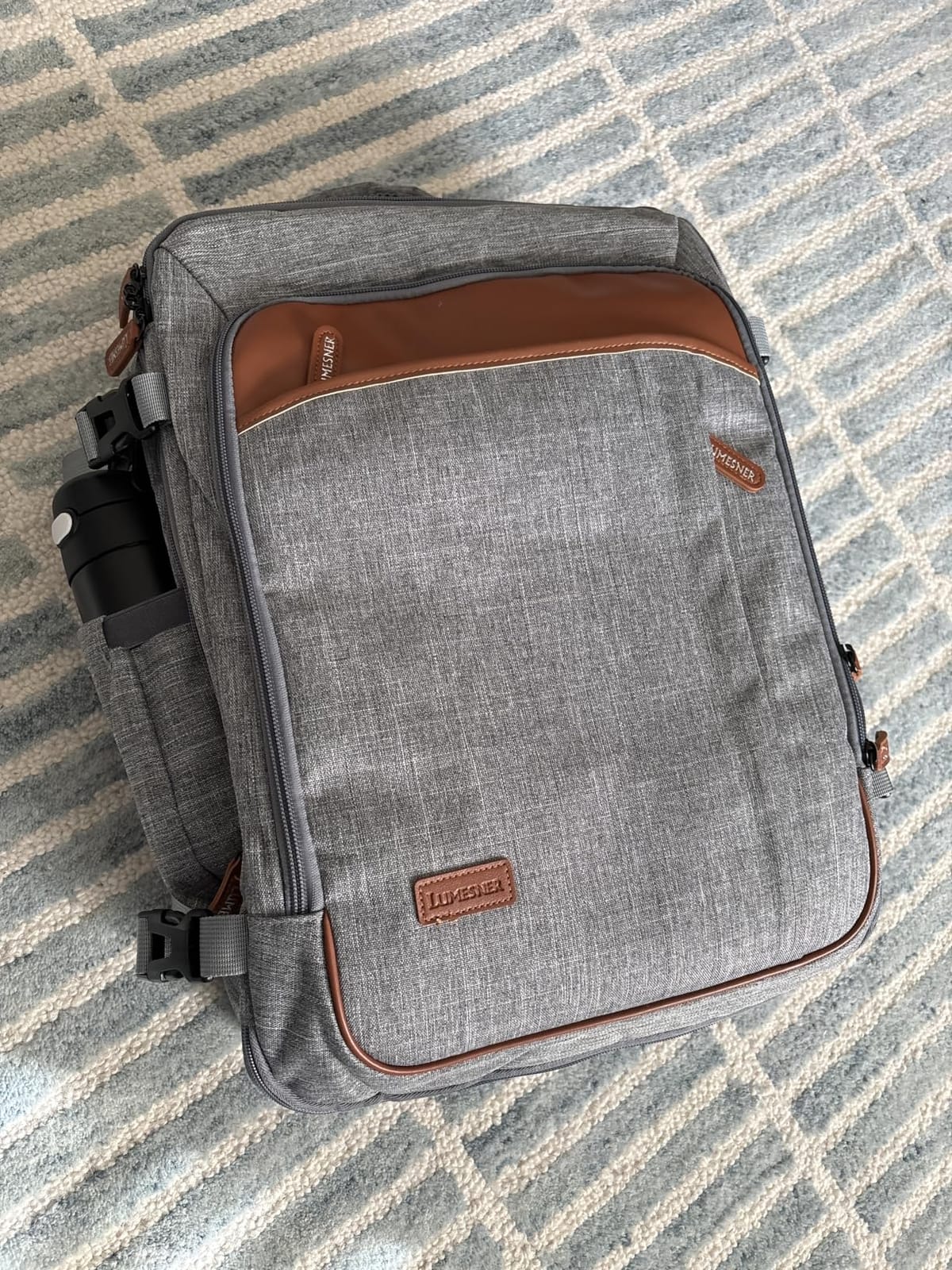
Multi-panel ventilated padding with adjustable breathable straps is the comfort story here, and reviewers with smaller frames specifically call it out as a pack that does not need a hip belt to work at moderate loads.
Customer service is worth noting too: owners report a lost strap being replaced at no cost. That is the kind of support a large review base tends to produce, and it matters for a bag bought for long travel.
What the anti-theft details do
The back pocket sits against the flat panel between your back and the bag, which is the one place on a travel backpack that a pickpocket cannot reach without a struggle. On a crowded train platform that is a meaningful difference.
Lockable metal double zippers slow the two-second window in which an unattended bag is vulnerable, and the reinforced stitching at the stress points is where most cheap bags fail first.
Where it disappoints
Several buyers are unimpressed with the included packing cubes, describing them as thin and not worth much on their own. The four-piece count is a good starter set but not a reason to buy this bag on its own.
There is no exterior quick-stash pocket for your phone and ID at the security line, so those go in a hidden compartment. The exterior also reads as plasticky to some reviewers despite the water-resistant finish.
10. Tolaccea 40-50L Travel Backpack: Best for Working Out of a Bag
Tolaccea Travel Backpack 40-50L, 16″ Laptop Carry On Duffle for Travel Work
40L expanding to 50L
3.6 lb empty weight
Suspended 15.6-inch laptop compartment
Detachable waist belt
Pros
- Laptop compartment sits between the two main compartments
- Expands from 40L to 50L within carry-on sizing
- 11 compartments including a wet pocket
- Three carry modes
- Flat back panel against pickpockets
Cons
- Overhead bin sizing only
- Shoulder straps feel less sturdy
- Horizontal bottle pocket lets bottles slide
The defining feature is where the laptop lives. The suspended shock-absorbing compartment sits between the two main compartments with side access, so a dropped bag lands on the floor panels rather than on your machine.
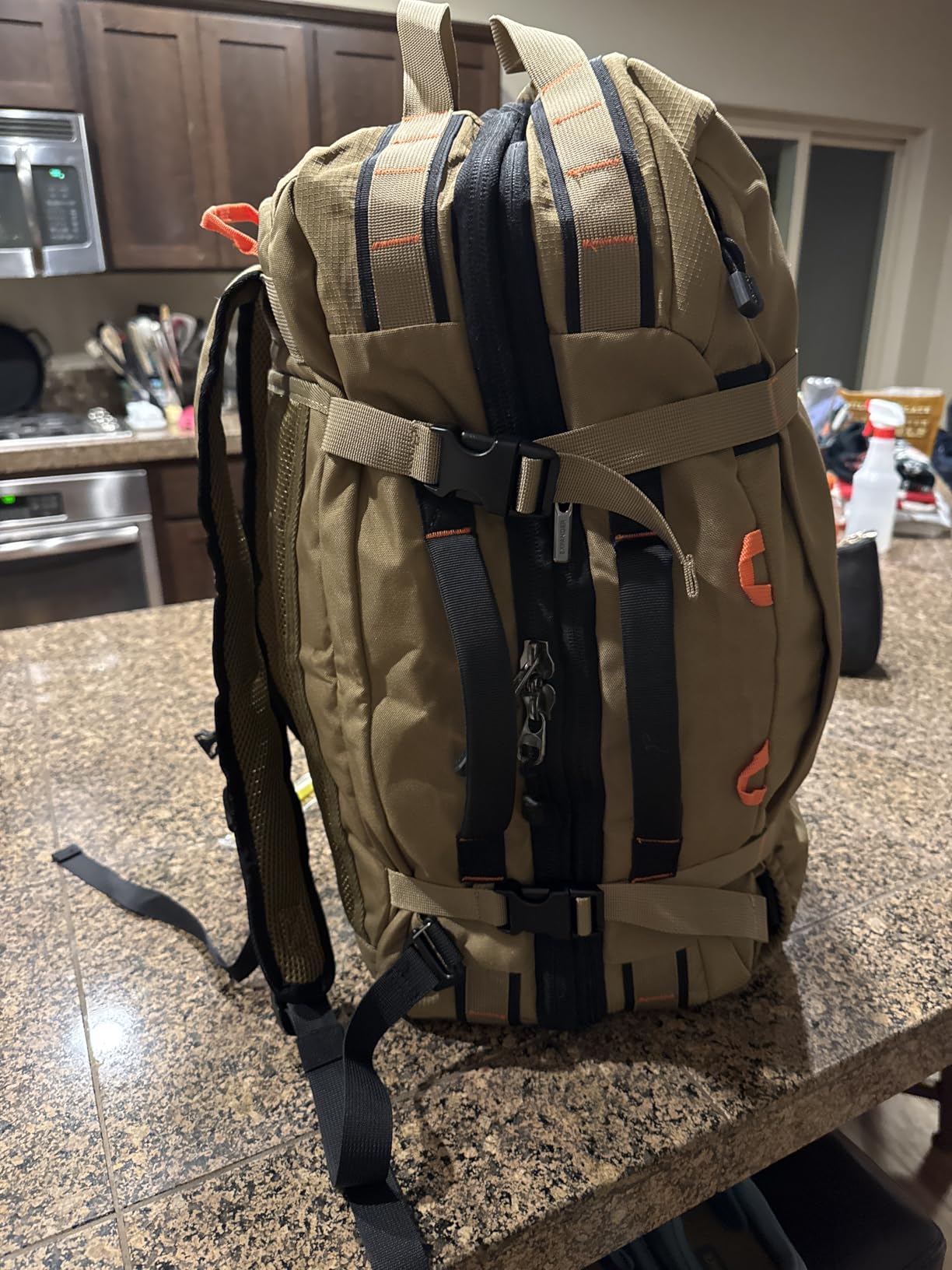
It expands from 40 to 50 litres through dual main compartments, and the stated 20.47 by 12.6 by 8.66 inch footprint is explicitly sized for an overhead bin rather than under a seat.
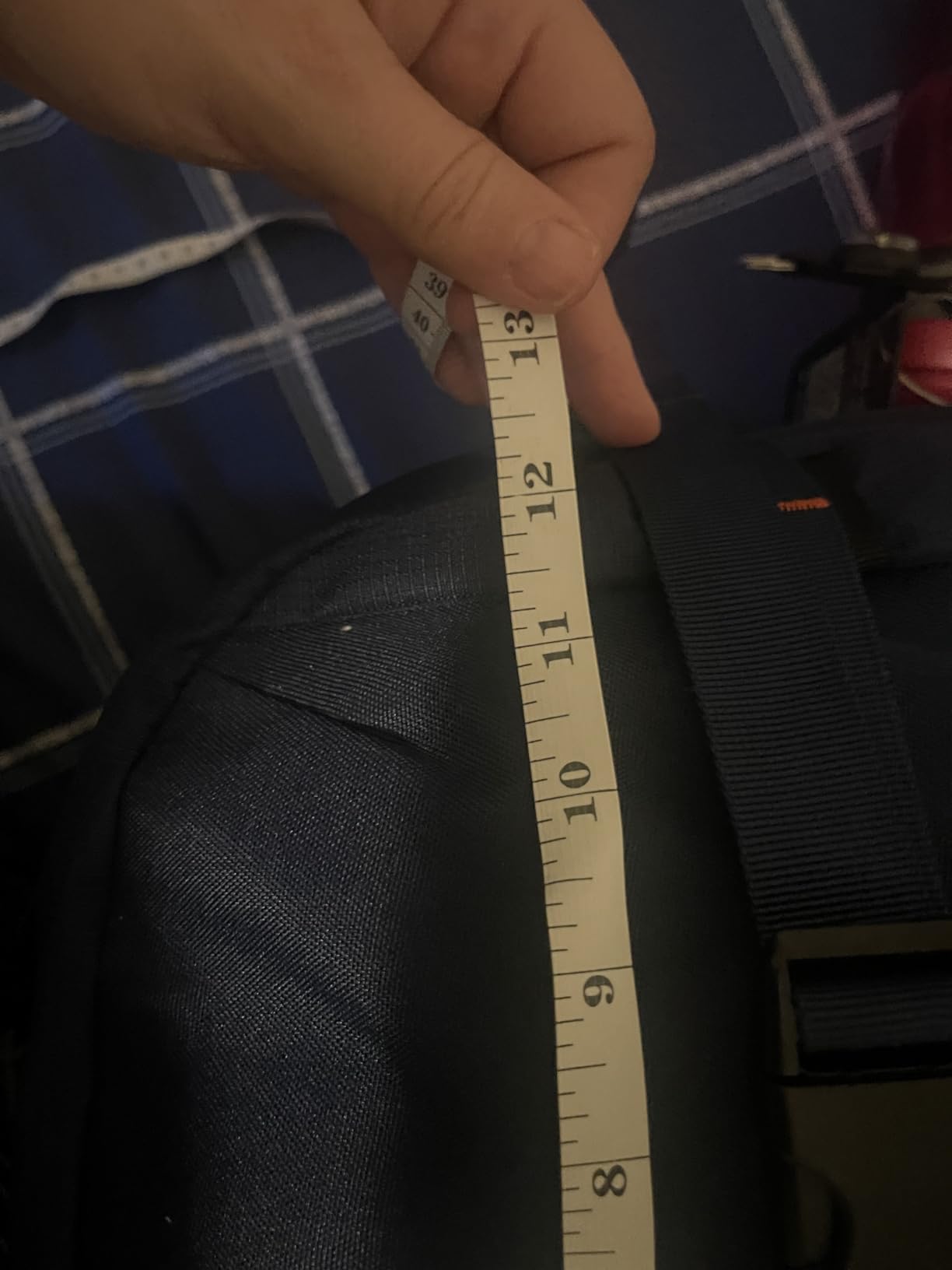
Three carry modes make it the most adaptable bag here: backpack, briefcase handle and a removable shoulder strap. For a laptop that spends a day in a meeting room and an evening on a train, that flexibility is worth more than another 10 litres.
Eleven compartments include a waterproof wet pocket for damp clothing, a hidden quick-access pocket, a detachable waist belt and SBS anti-scratch lockable zippers. The fabric is tear- and water-resistant RPET.
Why the laptop placement matters
Suspended sleeves are the single most useful upgrade on a work bag and the one most budget models skip. Owners of bags with a laptop compartment against the back panel report the corner-damage problem within a year; the suspended layout here is the fix.
Because the sleeve spans between both main compartments, you can also drop one side entirely and pack like a duffel on a weekend, which no fixed divider layout allows.
Where it falls short
This is not a personal-item bag. Owners are explicit that it is overhead-bin sized, so it will not solve a strict under-seat budget-carrier problem.
Some users find the shoulder straps less sturdy than the rest of the build, with adjusters that run very long, and several note that the horizontal bottle pocket lets a bottle slide out if it is not packed tightly. There is also no key clip or exterior quick-stash pocket for the security queue.
11. Osprey Fairview Women’s Wheeled Travel Backpack: Best for Petite Torso Fit
Osprey Fairview 65L Women’s Wheeled Travel Backpack, Black
65L capacity
6.2 lb empty weight
Wheeled carry with stowaway harness
Women's specific backpanel
Pros
- Rolls through airports then converts to a backpack
- Women's specific backpanel and hip belt distribute weight
- Large 65L capacity for long trips
- Attaches Osprey daypacks
- All Mighty Guarantee warranty
Cons
- Handle and spine eat packing space
- Only one large internal zip compartment
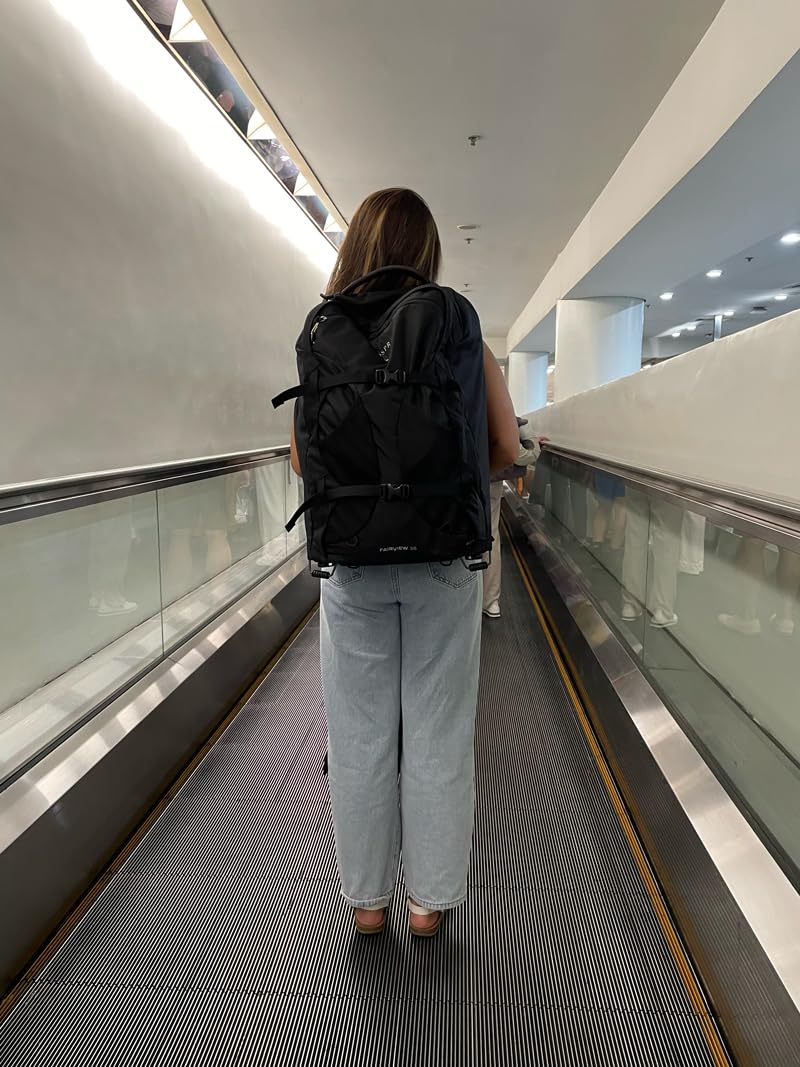
This is the only bag in the roundup that rolls and then carries on your back, which solves the single most common regret one-bag travelers report: walking a long airport concourse or a station platform with no smooth ground.
At 65 litres it is by far the largest here, and the stated 27.5 inch height means it is a check-in or a very large cabin bag rather than a standard carry-on. The point of the 65 litres is trips longer than two weeks.
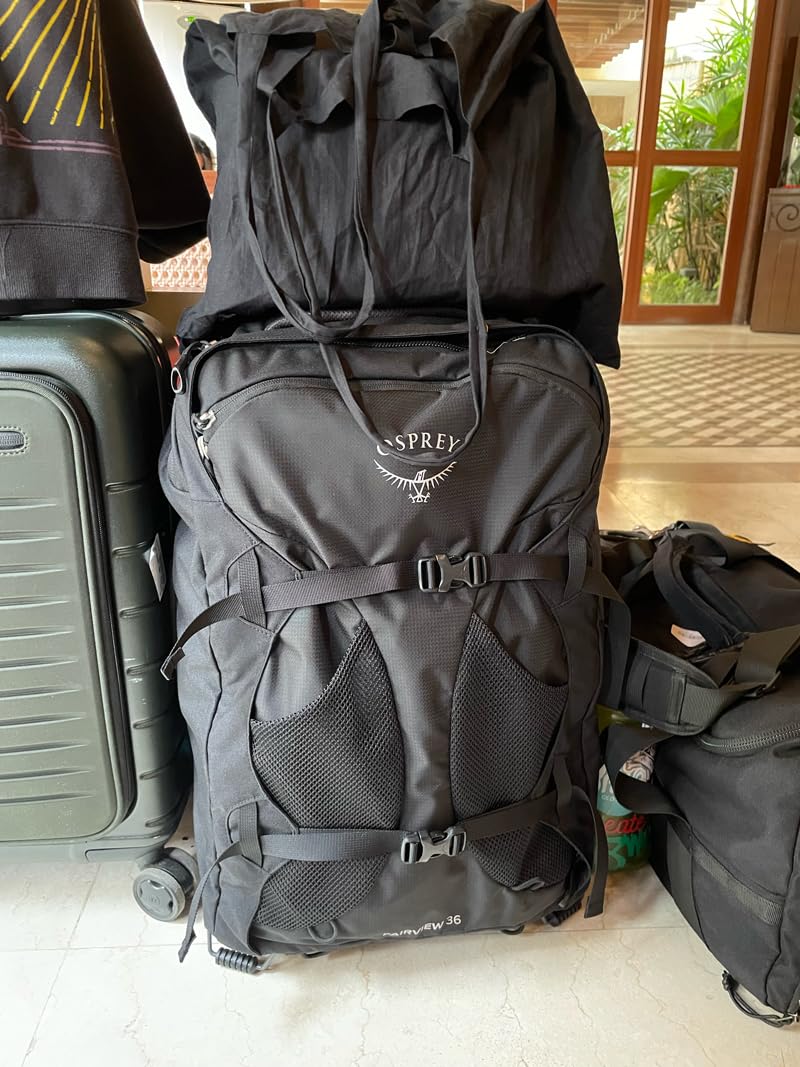
The women’s specific backpanel and hip belt are the reason it earns a place in this list. Users repeatedly raise fit as the deciding factor in this category, and contoured, torso-length-specific geometry is not something a unisex bag can fake.
Front webbing straps accept a Farpoint, Fairview or Daylite pack, so you can carry a small personal item on the top of the wheeled bag rather than wearing a second bag.
When rolling and carrying together makes sense
Cobblestone old towns, stairs, cruise terminals and stations with gaps between platforms are the situations that turn a wheeled bag into a liability. Owners report rolling it to the terminal and then wearing it from the gate to the other side, which is a genuinely useful compromise.
The stowaway harness and hip belt zip away when you roll, so the bag does not drag straps along the ground behind you.
What the wheeled design costs
At 6.2 pounds empty this is the heaviest bag here by a wide margin, and the telescoping handle plus the tall spine structure take real volume out of the interior. Users consistently report packing less than the 65 litre label suggests.
Organisation is the other limitation: one large internal zippered compartment is thin for a bag this size, so you will need a packing cube system. Harness straps also have to be zipped in or they drag when you roll.
12. Rcrirth 40L Carry On Travel Backpack: Best for a First One-Bag Trip
Rcrirth Carry On Travel Backpack Flight Approved for Men Women, Black
40L capacity
2 lb empty weight
17.3-inch laptop compartment
Hidden rear pocket
Pros
- Covers a five-day trip in one bag
- Expands two inches and still fits the overhead bin
- Seven well-stiffened compartments
- Built-in charging cable
- Hidden anti-theft pocket on the back panel
Cons
- Strap buckles can slip under load
- Shoulder straps run short for larger wearers
- Outer material gets hot in direct sun
At two pounds empty with 40 litres of capacity, this is the best simple answer for someone testing the one-bag idea for the first time. The main compartment is the equivalent of a 35 litre suitcase and expands two inches in width when you need the extra room.
Seven compartments, several of them stiffened, keep gear separated without turning the bag into a toolbox. There is a 17.3-inch laptop compartment with waterproof sections and a 180-degree opening for screening.
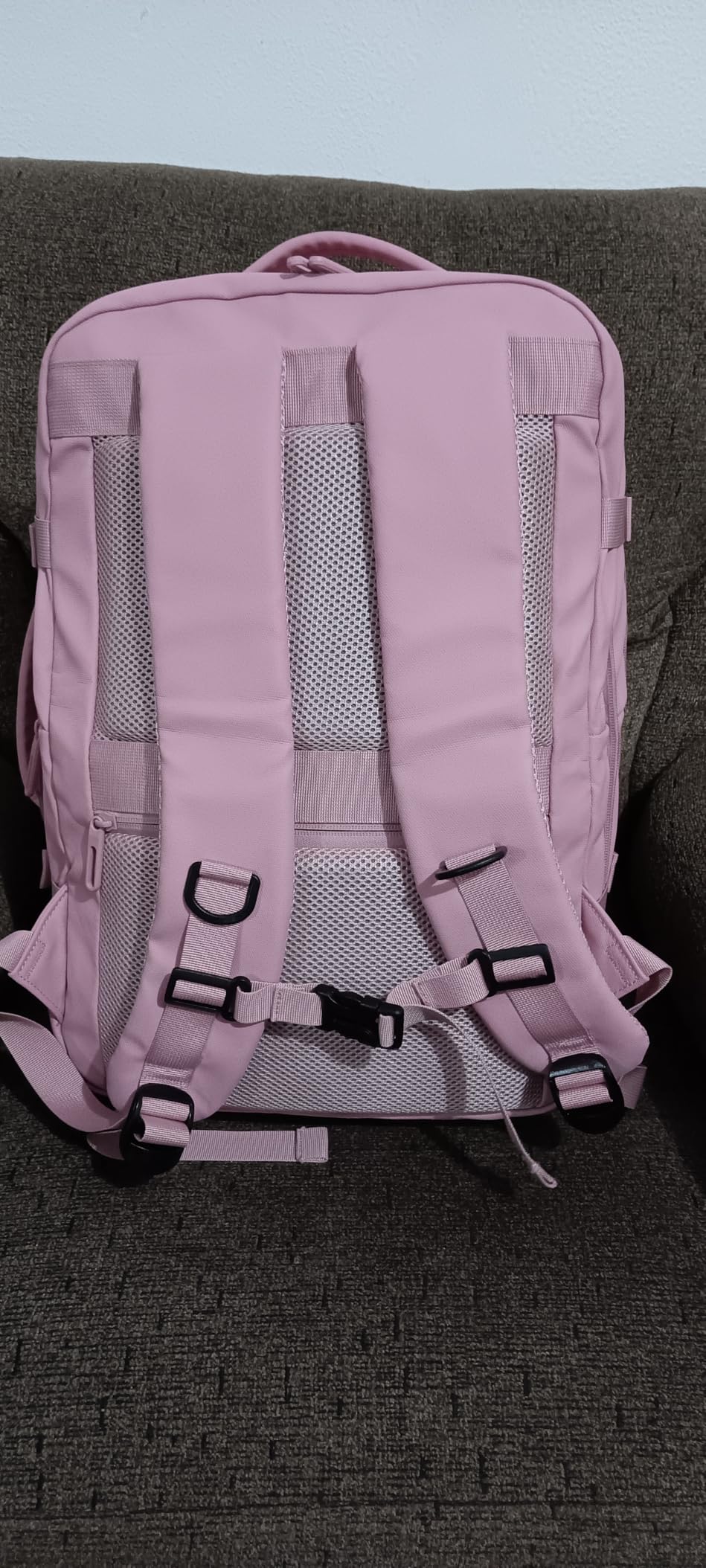
Two details that come up in reviews: a built-in cable for charging a phone on the move, and a hidden rear pocket for a passport and cash that sits against the back panel.
Buyers generally treat it as excellent value for occasional travel, and the capacity-to-weight figure is the strongest in this roundup after the COR Surf.
Why it suits a first trip
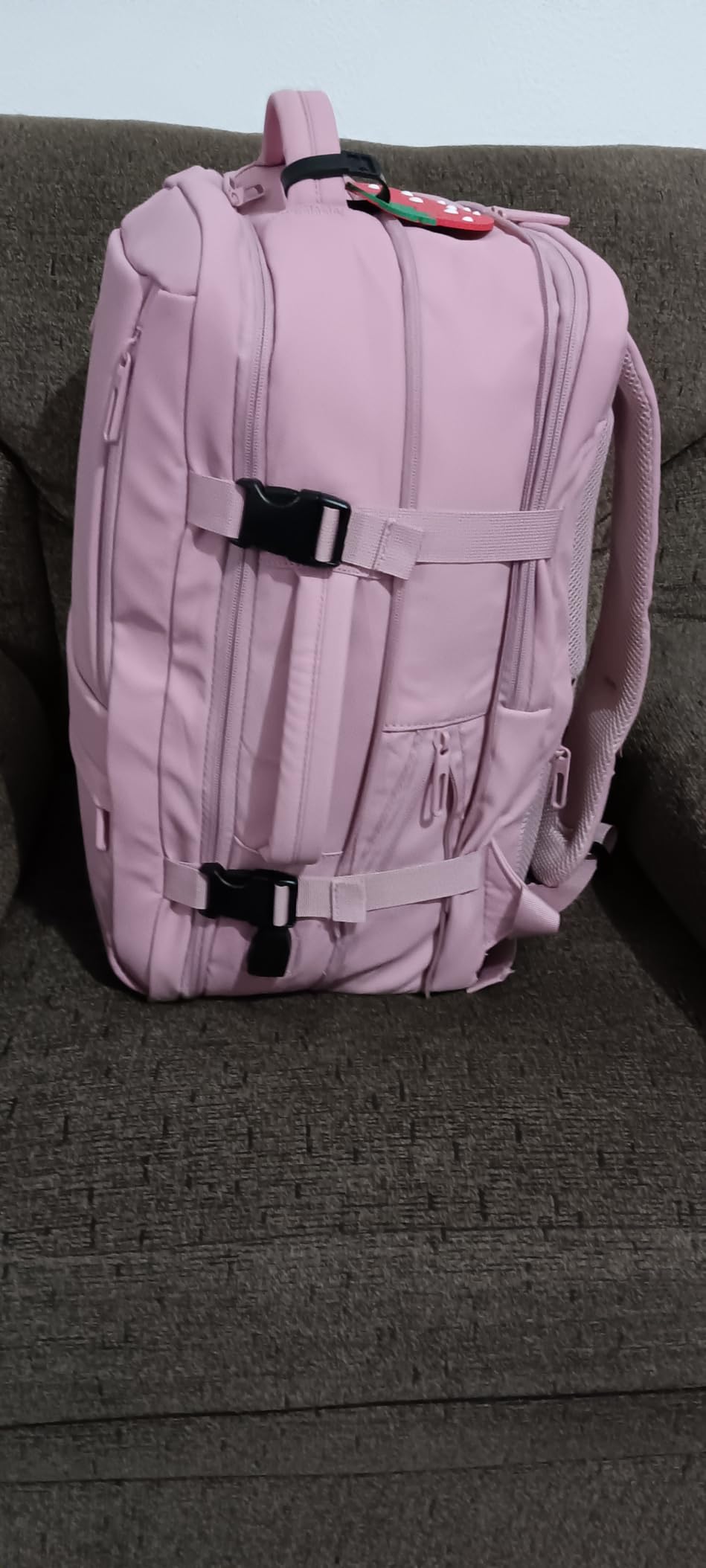
There is nothing to learn. The 9 by 12 by 18 inch footprint fits most overhead allowances, it converts between backpack and suitcase-style carry, and the expandable zipper gives you a week of capacity if you packed for a weekend.
It is also one of the few bags here that a five-day trip fits into without a single cube, which makes it forgiving if you are still working out what one-bag travel requires.
What buyers report back
The most common negative is hardware. Owners report strap buckles that slip under load and compression straps that work loose on their own, which is the failure mode that shows up after a year of heavy use rather than a weekend.
Fit is the second issue: the shoulder straps run short for larger wearers, and the outer material gets hot in direct sun. If you are tall or carrying dense gear, test the strap range before you commit.
How We Tested These 12 Travel Backpacks
Every bag in this roundup was weighed empty, measured with the expansion zips closed and open, and packed with the same reference load: seven days of clothing in packing cubes, a laptop, a toiletry kit and a pair of shoes. We compared stated dimensions against the sizers used by the main carriers.
We weighted four things heavily. Comfort over a full day of walking, main compartment access without unpacking, adherence to airline size rules at the stated dimensions, and build quality at the stress points where bags actually fail: strap buckles, base fabric, and zipper pulls.
Where a rating or review count is shown, it is the figure listed for the exact product, not for a sibling model. Prices change constantly, so the buttons below each review are the only current price reference.
If you also travel with a stroller or a child, our guides to the best compact strollers for travel and the best travel systems tested cover the ground gear side of the same trip.
How to Choose a Travel Backpack: Capacity and Size
Capacity is the first filter, and the useful ranges are narrower than brands suggest. A 20 to 26 litre bag is a personal-item or weekend bag. A 35 to 40 litre bag is the standard carry-on for trips up to a week. A 45 litre and above bag is for two weeks or longer, or for anyone who travels with camera gear.
Liters are also not comparable across brands. A bag with an internal frame or a curved back panel packs less than a soft rectangular bag of the same number, which is why the Osprey Farpoint’s 40 litres feels smaller than the MATEIN’s 40 litres once both are full. Test with cubes rather than trusting the label.
For most people the sweet spot is 35 to 40 litres with an expansion zip. It gives you a compliant base size at the airport and five extra litres of breathing room when the trip grows, which is exactly what the MATEIN and the Rcrirth do.
Carry-On vs Personal Item: What the Airlines Actually Allow
Most major carriers measure a carry-on bag against a single volume limit rather than raw inches, and the number is usually expressed in linear centimetres: roughly 56 by 36 by 23. A bag that is 22 inches tall can pass on one aircraft and fail on a smaller regional jet, which is the gate-check surprise owners complain about most.
Personal item limits are tighter and more variable. Budget carriers in particular publish smaller under-seat dimensions, and the most common frustration in forum threads is buying a 40 litre bag for a trip that required a personal item only.
Empty weight matters more than most buyers expect. Many carriers publish a combined carry-on weight allowance of around 7 to 10 kilograms, and a 3.5 pound bag plus a laptop plus a bottle consumes a large share of that before you pack a shirt. Every bag in this roundup lists its weight, and the lightest options here start at 0.86 kilograms.
Check your airline’s stated allowance before you buy, and measure the bag rather than trusting the carry-on approved label. The bags in this list that describe themselves as personal-item sized are the Osprey Daylite Expandable and the Cotopaxi Allpa 28L.
Clamshell vs Top-Loading Openings
A clamshell or panel-loading bag opens flat on a bed like a suitcase. A top-loading bag opens at the top like a duffel. For travel, clamshell wins on one point that matters more than any other feature: you can see everything you have packed without unpacking half the bag.
The trade-off is structure. Panel-loading designs usually need a frame or a rigid panel to lie flat, and that structure is exactly what costs usable litres. The Tom Bihn and Osprey-style frame bags give up capacity to hold their shape.
Top-loading bags pack slightly fuller and are simpler, but you will fish for items at the bottom. If you are the kind of traveller who repacks every morning, clamshell access is worth the capacity trade.
Comfort Fit: Harness, Hip Belt and Torso Length
Torso length is the measurement most buyers skip and the one that decides whether a bag is comfortable. Measure from the base of your neck to the top of your hip bone with a tape, and buy a bag whose torso range includes that number. A harness set too long leaves the load on your lower back; too short and it rides up onto your shoulders.
Load lifters are the small straps at the top of a shoulder harness that pull the pack closer to your body and take weight off your shoulders. Their presence or absence is a quick visual test of whether a brand actually built the harness for heavy loads rather than appearances.
A hip belt is the single biggest comfort upgrade. Only the Osprey Farpoint, the Osprey Fairview, the Tolaccea and the COR Surf in this group offer a real one; the rest rely on padded shoulder straps alone, which is fine below about 15 pounds and uncomfortable above it.
Stowable shoulder straps matter in public transit. Non-stowable straps drag on floors and catch on seats, and they force you to wear the hip belt everywhere, which is why the tuck-away waist belt on the Cotopaxi and the zip-away harness on the Osprey Farpoint earn their place.
Materials, Denier, Zippers and Weather Resistance
Denier is a measure of fabric mass: the weight in grams of 9000 metres of fibre. A 210 denier ripstop is the common travel-bag baseline, 168 denier is a step lighter, and 1000 denier ballistic or CORDURA is where heavy duty starts. Higher denier resists abrasion but adds weight and often feels stiff before it breaks in.
YKK zippers are the other shortcut worth using. They appear across most of this roundup, and a metal YKK pull is the difference between a bag that lasts a decade and one whose zipper splits in year two.
Water resistance is a spectrum. A DWR coating sheds drizzle for a season before it wears off, and only the COR Surf Island Hopper 2.0 in this list is listed as fully waterproof with a TPU shell. For monsoon travel or wet commutes, that difference is real. For everything else, a pack liner handles the rest.
Sustainability claims are worth checking rather than accepting. The tomtoc 40L is listed as 100 percent post-consumer recycled PET, the Tolaccea as RPET, and the Osprey bags carry a lifetime repair guarantee rather than a recycled-fabric claim. Repairability is the more durable signal of a brand that intends to stay in business.
Warranty, Repair and Sustainability Compared
Only one bag in this roundup carries a published lifetime warranty: the Osprey Farpoint and the Osprey Fairview, both under the All Mighty Guarantee, which covers functional failure in normal use and is backed by an actual repair program.
That is the difference the one-bag community cares about most. Buyers moving away from rollers frequently say that a bag without a repair path feels disposable, regardless of how well it is built on day one. For the budget bags further down this list, the practical answer is to budget for a replacement instead.
On materials, two bags stand out: the tomtoc in 100 percent post-consumer recycled PET with YKK zippers, and the Tolaccea in tear- and water-resistant RPET. The rest use conventional polyester or nylon with a water-resistant finish, which is a perfectly reasonable choice at a lower price point.
Our advice is to treat warranty as a tiebreaker between two bags you already like, and recycled fabric as a tiebreaker between two bags that are otherwise equal. Neither factor should outrank fit or airline compliance.
Fit for Women and Petite Torso Lengths
Fit is the most under-discussed variable in this category. A bag that fits a 19 inch torso rarely fits a 15 inch one, and the failure shows up as shoulder straps sliding off or a hip belt sitting above the hip bone, which forces all the load onto your lower back.
The Osprey Fairview in this roundup is built on a women’s specific backpanel and hip belt, and its 65 litre wheeled format is aimed at long trips where fit over hours matters more than weight. It is the only pick here with a deliberate gendered fit, and it is also the heaviest.
For smaller frames without that option, look for contoured shoulder straps and adjustable torso length rather than curved straps as such. The Lumesner with its multi-panel ventilated padding and adjustable breathable straps is the bag in this list most frequently recommended to smaller wearers.
Whatever you choose, the fitting test takes two minutes: load the bag with 15 pounds, tighten the hip belt first rather than the shoulder straps, and check whether the load sits on your hips. If it sits on your shoulders, the bag is the wrong shape for you.
Frequently Asked Questions
What is the best backpack for travel on a plane?
For most itineraries the Osprey Farpoint 40L is the strongest all-round answer, because its clamshell opening, removable hip belt and stowable harness work in an airport, on a plane and on arrival. If your carrier enforces a small under-seat limit, the Cotopaxi Allpa 28L fits below the seat where a 40L bag will not. Always check your airline’s own dimensions before ordering.
What are the top 10 backpacks for travel?
This roundup covers 12: the Osprey Farpoint 40L, Cotopaxi Allpa 28L, Osprey Daylite Expandable 26+6, COR Surf Island Hopper 2.0 34L, tomtoc 40L, LOVEVOOK 40L, MATEIN Carry On, Taygeer 40L, Lumesner 40L, Tolaccea 40-50L, Osprey Fairview Wheeled and Rcrirth 40L. Each is ranked for a specific trip type, budget or body fit rather than a single winner-takes-all list.
What is the number one travel backpack?
The Osprey Farpoint 40L is our number one pick. It is the only bag here combining a true clamshell opening, a supportive removable hip belt, a stowaway harness, a suspended 16-inch laptop sleeve and a listed empty weight of 3.5 pounds. The internal frame costs a little usable volume, but the comfort and the packing access make it the most reliable carry-on for trips of a week or more.
What is the best backpack for traveling?
It depends on trip length and airline. For a week of carry-on travel take the Osprey Farpoint 40L; for a short trip and a strict under-seat allowance take the Cotopaxi Allpa 28L or the Osprey Daylite Expandable; for a working trip with a laptop take the tomtoc 40L or the Tolaccea 40-50L. Match the bag to the airline allowance before anything else.
What size backpack counts as a carry-on?
Most major airlines use a volume-based limit of roughly 56 by 36 by 23 centimetres, which is about 22 by 14 by 9 inches. A bag is generally accepted if it passes the airline’s sizer, and sizers are smaller on some regional aircraft. For under-seat personal items, budget carriers often publish tighter figures, so measure before you buy.
How do I measure my torso length for a backpack?
Run a soft tape measure from the base of your neck down to the top of your hip bone, keeping it along your spine and slightly relaxed. That figure is your torso length, and a travel bag should have an adjustment range that includes it. Set the hip belt on your hip bones first and tighten it before adjusting the shoulder straps.
Final Verdict: Which Travel Backpack Should You Buy in 2026
Start with the airline, not the brand. Measure your allowance, decide between overhead bin and under seat, and the shortlist writes itself. From there, buy on fit: set the hip belt first, load fifteen pounds, and if the weight lands on your shoulders, the harness is wrong for your torso.
Our best travel backpack for 2026 remains the Osprey Farpoint 40L, the safest all-round carry-on in this group. For under-seat travel take the Cotopaxi Allpa 28L, for cheap and light take the MATEIN Carry On, and for a laptop-heavy working trip take the tomtoc 40L or the Tolaccea 40-50L.
Whatever you choose, pack it with cubes, weigh it before the airport, and use the button on each review to check current figures, since prices and configurations shift throughout the year. If your trips also involve a lot of gear on wheels, our best backpacks tested for heavy loads covers the harness side in more depth.