
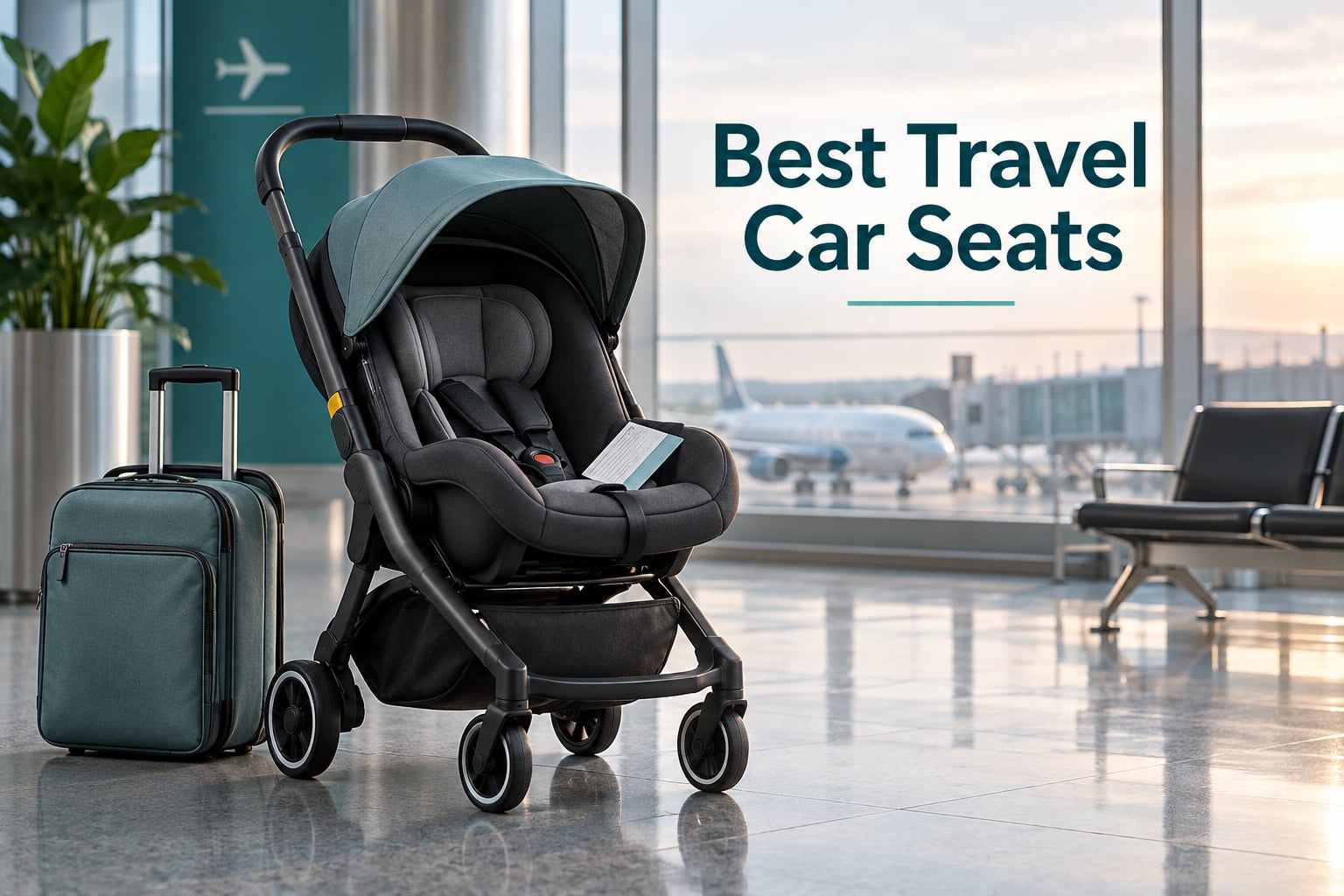
A good travel car seat does one thing an everyday convertible seat cannot: it gets through an airport without ruining your day. The Doona Car Seat and Stroller is the best overall option in 2026 because it folds into its own stroller frame and never needs a gate check, and the Hiccapop UberBoost is the best value if you are past the harness years. Both are on this list of the best travel car seats along with eight lighter, narrower and more adjustable alternatives.
What separates a travel seat from a regular one is weight, width and how much fussy hardware comes with it. The heavyweight everyday convertibles most families already own weigh 19 to 33 lbs and usually need a separate base, which is exactly the combination that has parents sweating over a boarding gate. Travel seats are built to be carried in one hand, strapped to a bag or folded into an overhead bin.
We compared ten of the most-reviewed travel car seats and boosters on Amazon, weighing portability, FAA status, install method, weight and height limits, and the stage of child each one actually serves. The list is deliberately heavy on booster seats, because the most common question parents of 4 to 12 year olds ask is which seat fits in a taxi, not which infant seat folds flat.
One thing to know before you read on: most of the seats here are not engineered for daily use in a family car. They are built for planes, rentals, rideshares and the second seat at grandma’s house. Our guide to slim car seats covers the opposite problem, seats designed to sit three across a bench for years at a time.
Table of Contents
- Top 3 Picks for Travel Car Seats in 2026
- Travel Car Seats at a Glance in 2026
- 1. Doona Car Seat and Stroller – Best Overall Travel Car Seat
- 2. Hiccapop UberBoost Inflatable Booster – Best Value
- 3. BubbleBum Inflatable Travel Booster – Best for Three Across
- 4. Diono Solana Two-Pack – Best for Two Kids or Two Cars
- 5. mifold Comfort Grab-and-Go – Best for Car-Free Families
- 6. mifold Hifold – Best for International Travel
- 7. Baby Trend Protect 2-in-1 – Best Fold-Flat Booster
- 8. Peg Perego Viaggio Flex 120 – Best for Long Road Trips
- 9. WAYB Pico – Best for Airplane Install
- WAYB Pico Travel Car Seat with Premium Carrying Bag- Lightweight, Portable, Foldable – Perfect for Airplanes, Rideshares, and Road Trips – Forward Facing for Kids 26.5–50 lbs and 33.5–45″
- Best for a 2 to 4 year old flying with their own plane seat
- Worst fit for a child under 2, or for a long drive where the child needs to sleep
- 10. Diono Solana Lite – Best for Rentals and Carpools
- How We Picked and What We Could Not Test
- FAA Approval and Airline Rules, Explained
- Buying Guide: Match the Seat to Your Child’s Stage
- Installing a Travel Seat in a Rental Car, Taxi or Ride
- Airport Gear That Makes a Travel Seat Bearable
- When You Should Skip a Travel-Only Seat
- Frequently Asked Questions
- What is the best portable car seat for travel?
- What is the most comfortable car seat for long trips?
- Do booster seats need to be FAA approval?
- Can I gate check a car seat for free?
- Is it safe to buy a used travel car seat?
- How long does a car seat last before it expires?
- What is the lightest travel car seat on this list?
- Which Travel Car Seat Should You Buy?
Top 3 Picks for Travel Car Seats in 2026

Doona Car Seat and Stroller
- Seat and stroller in one piece
- Rear-facing 4 to 30 lbs
- FAA approved
- 17.2 lbs

Hiccapop UberBoost Inflatable
- Inflates in under 20 seconds
- Fits three across
- Fits FMVSS 213
- Packs to a small bag

BubbleBum Inflatable Booster
- Backless design for 4 to 11 years
- 40 to 110 lb range
- Deflates to 12 x 6 x 4 in
- Crash tested to exceed FMVSS 213
Travel Car Seats at a Glance in 2026
All ten seats below are belt-installed except where noted, which is what makes them usable in a rental car, a taxi or an Uber without hunting for hardware. Weight and folded size are the two numbers that decide whether you will actually enjoy carrying them.
| Product | Specs | Action |
|---|---|---|
| Doona Car Seat and Stroller |
|
Check Latest Price |
| Hiccapop UberBoost Inflatable |
|
Check Latest Price |
| BubbleBum Inflatable Booster |
|
Check Latest Price |
 Diono Solana Two-Pack Diono Solana Two-Pack |
|
Check Latest Price |
 mifold Comfort Grab-and-Go mifold Comfort Grab-and-Go |
|
Check Latest Price |
 mifold Hifold mifold Hifold |
|
Check Latest Price |
 Baby Trend Protect 2-in-1 Baby Trend Protect 2-in-1 |
|
Check Latest Price |
 Peg Perego Viaggio Flex 120 Peg Perego Viaggio Flex 120 |
|
Check Latest Price |
 WAYB Pico WAYB Pico |
|
Check Latest Price |
 Diono Solana Lite Diono Solana Lite |
|
Check Latest Price |
1. Doona Car Seat and Stroller – Best Overall Travel Car Seat
Doona Car Seat & Stroller, Nitro Black – All-in-One Travel System
Rear-facing only, 4-30 lbs
Seat and stroller 17.2 lbs
FAA and TUV certified
Anti-rebound bar
Pros
- Converts from car seat to stroller in seconds
- Only seat certified as car seat plus stroller plus carrier
- One-handed maneuvering through airports and elevators
- Infant insert and head support included
- Built to last through snow
- ice and dirt trails
Cons
- Heavier than a standard car seat because of the integrated wheels
- No cup holders
- Rear-facing only with a 30 lb limit so tall toddlers outgrow it early
The Doona is the only seat here that solves two problems at once. It is a complete rear-facing infant seat that converts to a stroller with a one-click mechanism, so you are not dragging a separate stroller to the gate and watching it get tagged for the cargo hold. For a family with a baby who is not yet sitting on their own, that single feature is worth more than any amount of weight saving.
The numbers back the hype. It carries from 4 lbs to 30 lbs rear-facing, and the shell is built from fiber-reinforced polymers and rust-free aluminum with a three-layer side-impact structure and an anti-rebound bar. There is a water-repellant canopy with UPF 50+ protection, and the box includes the infant insert, head support, a vehicle seat protector and the LATCH base.
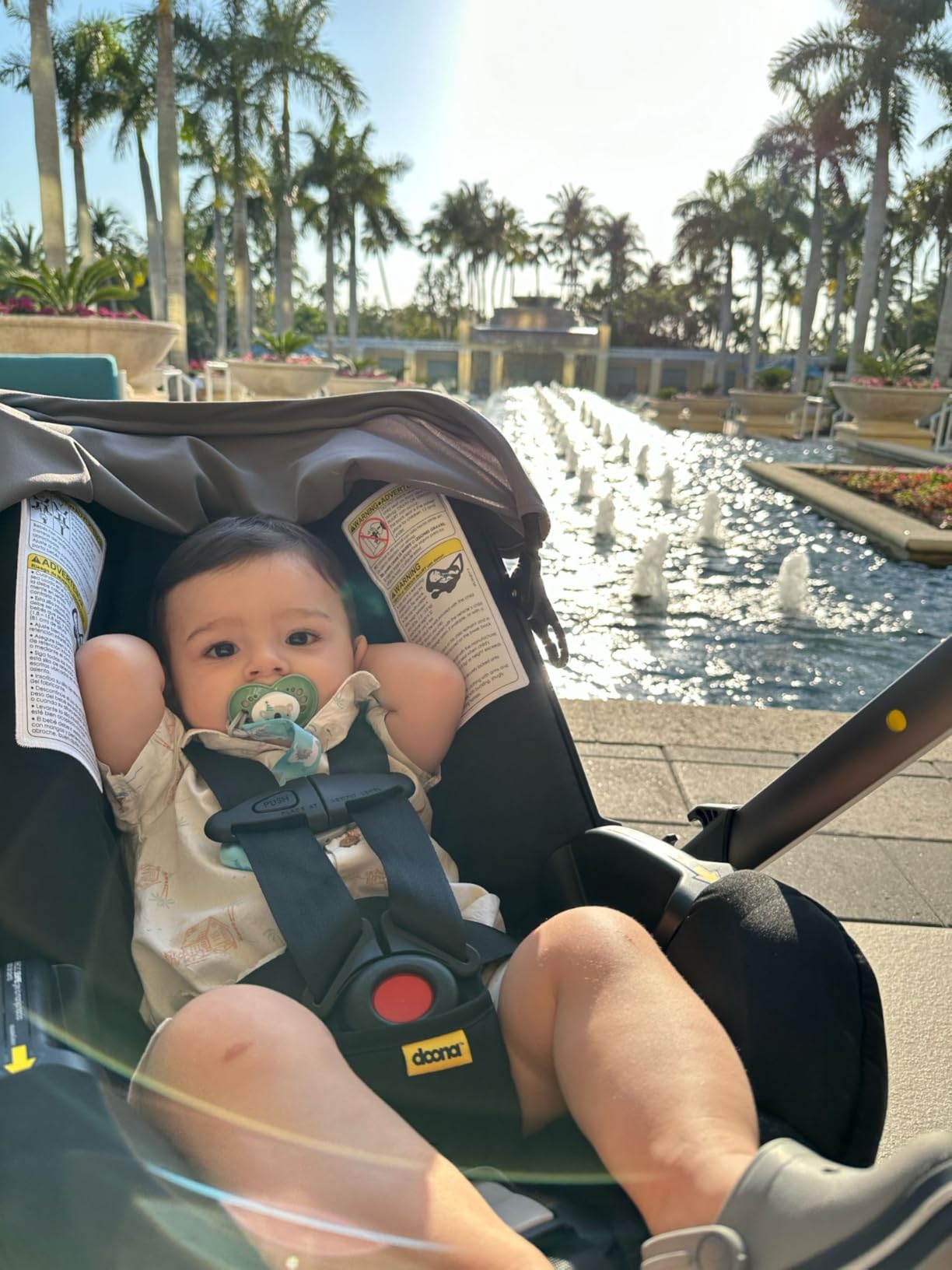
Where it gets awkward is weight and size. The seat and stroller together weigh 17.2 lbs, and the separate base adds another 9.7 lbs if you want it. Folded, the unit is 17.4 x 26 x 22.4 in, which is larger than the compact pack-down seats on this list even though it replaces an entire stroller.
Two smaller frictions come up repeatedly in reviews. The wheels occasionally need a twist before they lock into car seat mode, which is a bad discovery at a curb, and the seat cover is fiddly to remove and reinstall for washing. The Doona is also rear-facing only, so a child past 30 lbs is done with it regardless of how much they still like it.
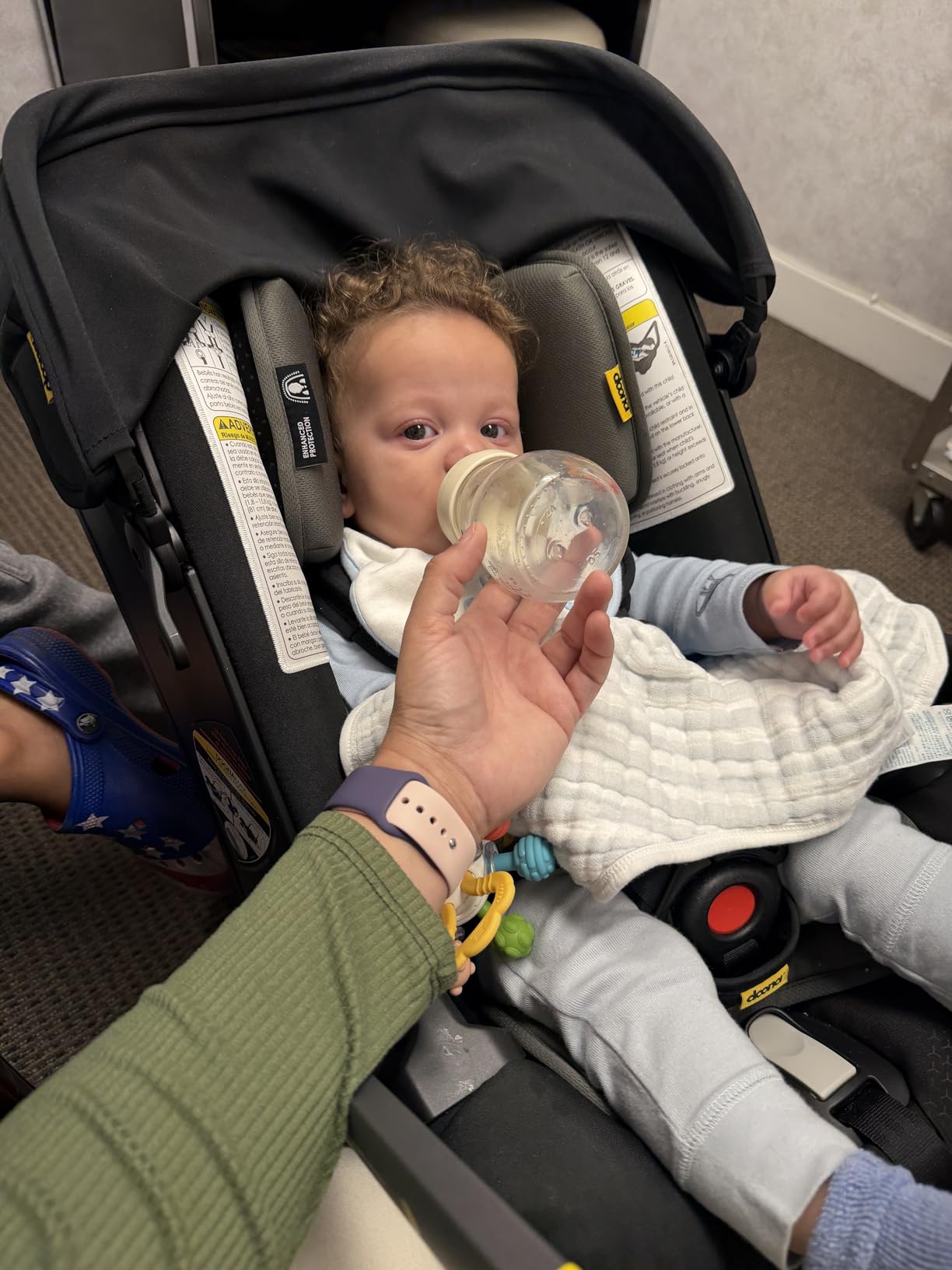
Best for babies under 30 lbs and families who hate gate-checking strollers
If your child is under about 18 months, this is the seat to look at first. The near-flat infant insert handles newborns, the head support fills out the harness for a small head, and the whole package wheels smoothly into elevators, restaurant corners and narrow aisles where a stroller plus a car seat would be impossible.
Owners also describe it as durable rather than delicate, with reports of it surviving years on paved roads, dirt trails and winter salt. That matters if you are the kind of family who uses a seat daily and also drags it to the airport.
Worst fit for tall toddlers and for parents who need a light seat in the hand
A 30 lb rear-facing limit catches many 2 year olds, and there is no forward-facing mode, so this is a baby seat with a stroller attached rather than a long-term travel solution. Reviewers with tall toddlers consistently report the seat feeling small sooner than they expected.
At 17.2 lbs plus an optional 9.7 lb base, this is not the seat to carry through three terminals on your own. Parents who mostly want something featherweight for a rental car should look further down the list.
2. Hiccapop UberBoost Inflatable Booster – Best Value
UberBoost Inflatable Booster Seat for Car, Travel Booster Seat, Black/Gray
Inflatable belt-positioning booster
Inflates in under 20 seconds
Fits three across
Meets FMVSS 213
Pros
- Packs small enough for a carry-on or backpack
- Works in any vehicle with a standard seat belt
- Three-across fit for large families
- Meets FMVSS 213 federal standards
- No hardware or base needed
Cons
- Mouth inflation is impractical for some users
- Less side-impact protection than a rigid shell
- Better for short journeys than daily use
The UberBoost answers a question most travel seat lists skip: what happens when your child is too big for a harness but you do not want a rigid seat taking up a third of the back bench. This is an inflatable belt-positioning booster. It inflates in under 20 seconds with a few breaths, and it deflates into a travel bag small enough to live in a carry-on between trips.
It meets or exceeds FMVSS 213, installs with a standard vehicle seat belt and requires no LATCH at all, so it works in the most anonymous rental car on the lot. The non-skid base holds it on leather, vinyl or cloth, and built-in positioning clips keep the lap belt off a child’s stomach where it belongs.
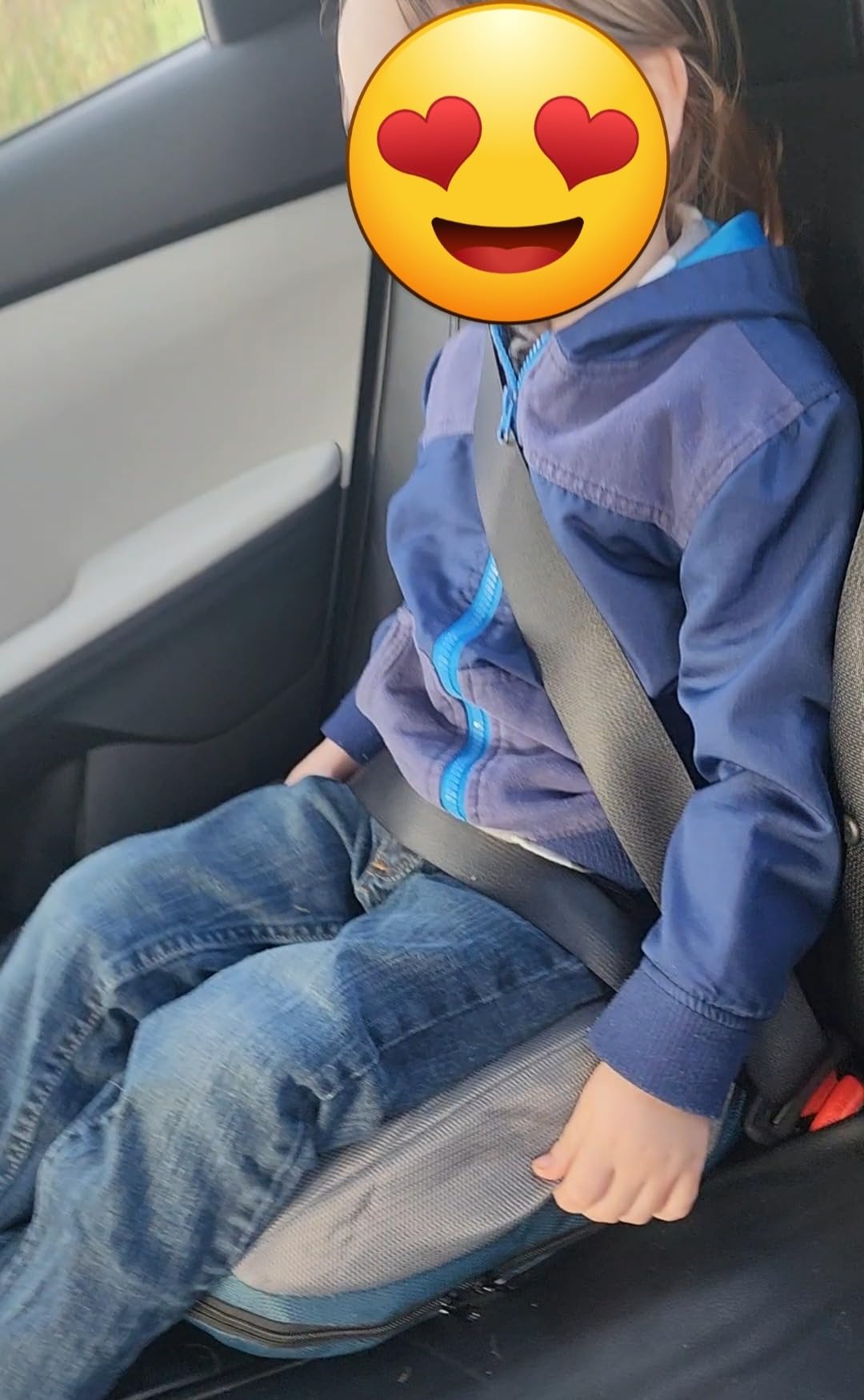
The narrow profile is the underrated feature. It fits three across a back row, or slots into the middle of the row between two conventional car seats when a family is running one of those awkward two-kids-plus-grandkid arrangements. For carpool families, one seat in a bag can serve an entire rotation.
Two things temper the recommendation. Inflation is by mouth, which parents with a toddler in hand describe as an unwelcome extra step every single time, and an air-filled design simply does not offer the side-impact structure of a hard shell. It is a booster, so the vehicle seat belt is doing the crash work.
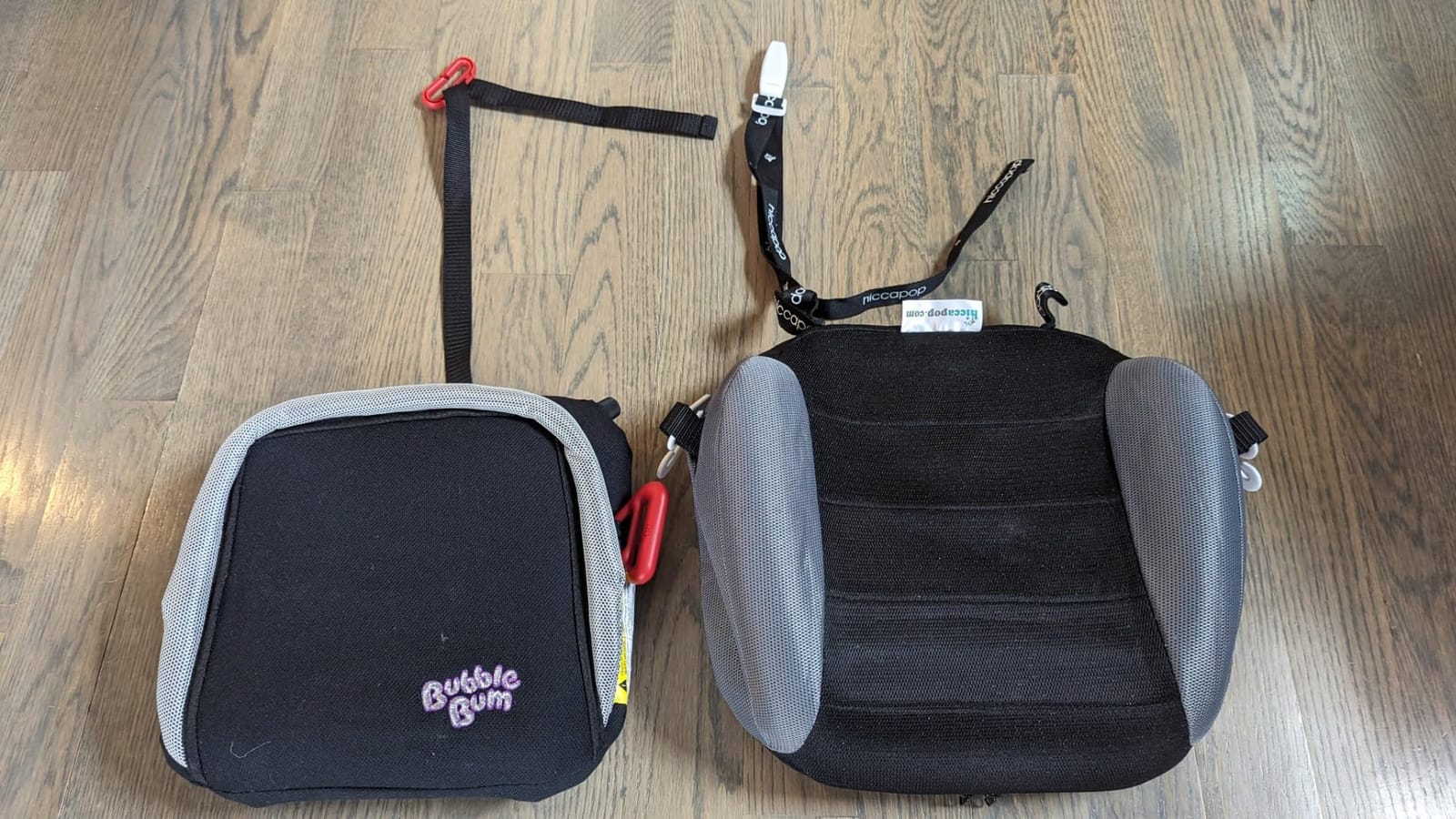
Best for booster-age kids, carpooling and three-across back seats
Buyers overwhelmingly treat this as a utility item rather than a baby purchase, which is why its 7614 reviews skew toward practical praise: easy cleaning, small packed size and no hardware. It suits a family with two or three kids in the 40 to 100 lb range who move between a minivan, a rental and a friend’s crossover.
It is also a strong choice for a first flying trip with a 4 to 6 year old, where the real question is where the child sits once the car seat is not in use. The soft cushioning keeps short and medium hauls comfortable, and a low inflation count matters more than anything when a grown-up has one free hand.
Worst fit for daily driving and for a long-haul flight where a child will sleep
Reviewers report it is not a substitute for a daily-use booster, and the reason is comfort and structure rather than safety. Air pressure shifts over long drives, and a rigid shell simply handles a 600-mile day better.
Mouth inflation is the other sticking point. If the adults in your family are traveling with a toddler who needs carrying, the twenty-second puff becomes one more thing to negotiate at the gate. A folding rigid booster is calmer for that scenario.
3. BubbleBum Inflatable Travel Booster – Best for Three Across
BubbleBum Inflatable Travel Booster Car Seat – Narrow Backless
Backless inflatable booster
40 to 110 lb range
Inflates in about 20 seconds
Deflates to 12 x 6 x 4 in
Pros
- Crash tested to exceed FMVSS 213
- Slim profile fits three children side by side
- Deflates to a small bag for travel
- Wipes clean after road-trip snacks
- Covers 4 to 11 years
Cons
- Mouth inflation can be tiring
- Twin packs can double the cost for two children
- Less protective than a rigid shell in side impacts
The BubbleBum does the same basic job as the UberBoost but with a wider weight ceiling and a documented age range. It is intended for children from 4 to 11 years old and 40 to 110 lbs, which means a single seat can carry a kid from kindergarten into the preteen years without a swap.
It independently crash tested to exceed FMVSS 213, installs with a three-point vehicle seat belt and needs no LATCH. Inflation takes roughly 20 seconds by mouth, and deflation gets you down to 12 x 6 x 4 in, small enough for a purse, a backpack or a carry-on pocket.
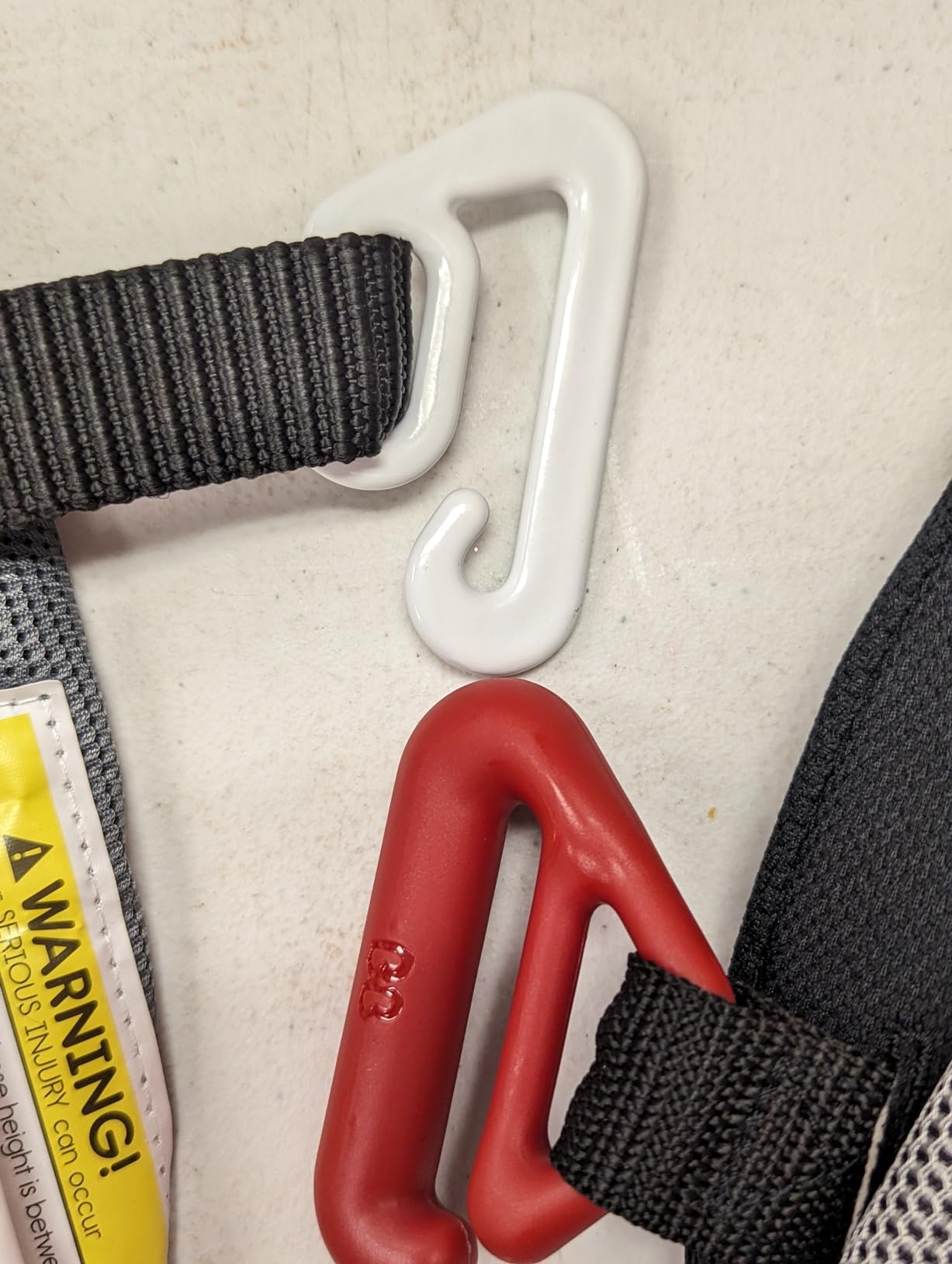
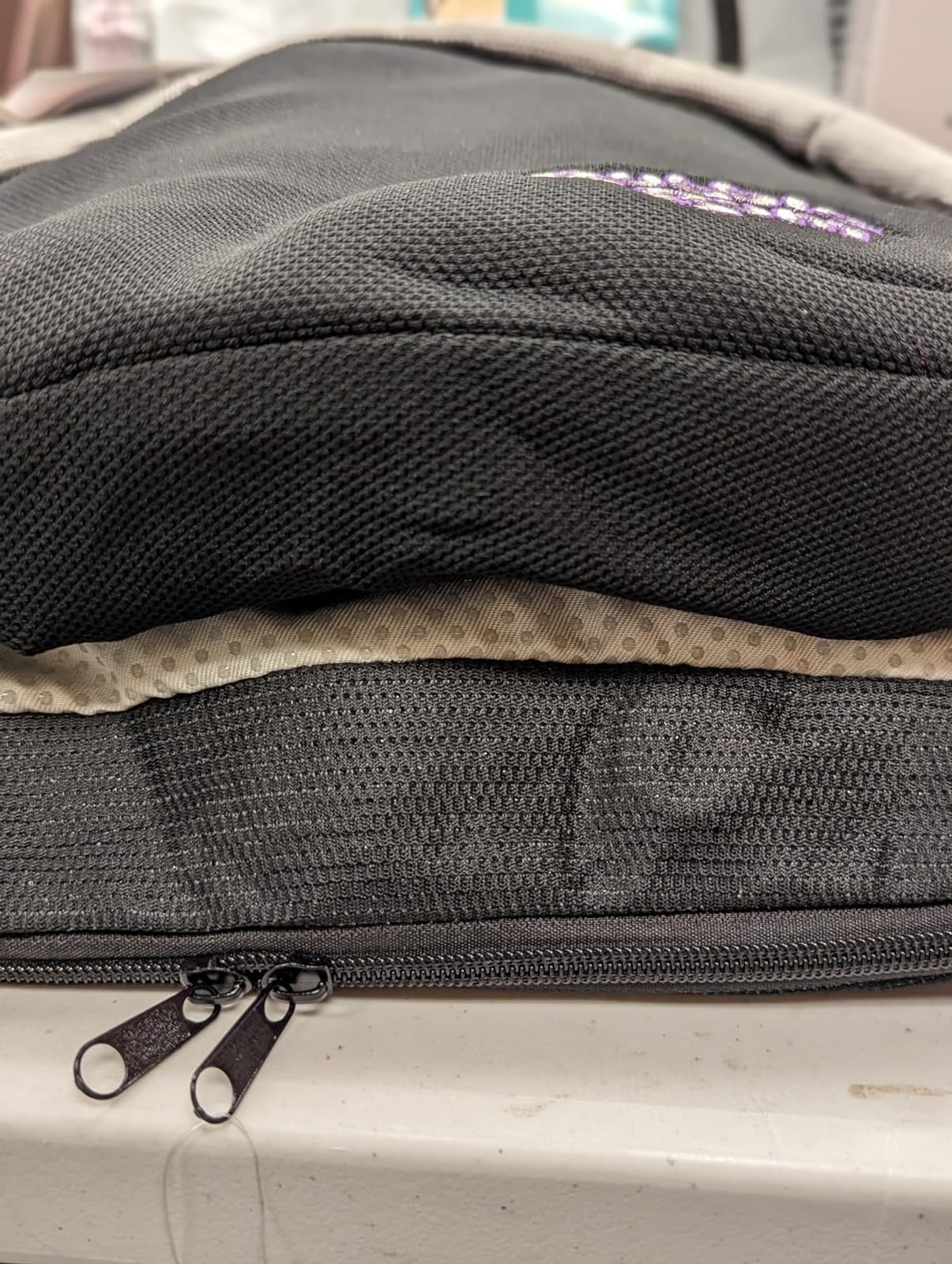
The most useful detail for a big family is the slim backless profile. Three children can sit side by side across a rear bench, which is the arrangement that forces most families to buy a second car or a bigger vehicle. The soft cushion also wipes clean with a damp cloth, which matters enormously after a road trip with snacks.
It is a backless booster, so there is no shell behind the child’s shoulders and nothing to support a smaller frame. Reviews reflect that, with mixed feelings about protection compared with traditional rigid boosters. Some listings also arrive in twin packs, which changes the math if you have two booster-age kids.
Best for large families who need three booster positions in one row
Buyers treat this as a long-term travel utility that moves between taxis, rental cars and carpools without ceremony. The three-across fit is the reason it keeps coming up, and the 40 to 110 lb range means you are not shopping again at 80 lbs.
For international or multi-city trips, the pack-down size is the differentiator. Twelve inches flat disappears into a bag, which means the seat can live in a suitcase for a whole trip and then be inflated at the rental counter on arrival.
Worst fit for younger children who need head and shoulder support
Nothing supports a child above the shoulders, so a smaller 4 year old sits lower and with less structure than they would in a high-back seat. Parents who want a seat to grow with their kid should step up to a convertible design.
There is also the mouth-inflation issue again, plus the fact that some configurations are sold as pairs. Buying two for two kids is a different purchase than buying one for one kid, and only one half of the pair gets used on a solo trip.
4. Diono Solana Two-Pack – Best for Two Kids or Two Cars
Diono Solana, No Latch, Pack of 2 Backless Booster Car Seats, Lightweight, Machine Washable Covers, Cup Holders, Black
Pack of two backless boosters
40 to 120 lb
Seat belt installation only
Machine washable covers
Pros
- Pack covers both kids or two vehicles
- Light enough to move between cars in seconds
- Narrow backless design saves back seat space
- Integrated cup holders and shoulder belt guide
- Removable machine washable covers
Cons
- Narrow seat may feel cramped for larger-boned children
- Backless design gives no head support
- No LATCH
- so belt installation only
The Diono Solana is sold as a pack of two, and that is the whole pitch. One seat for each kid, or one in the family minivan and a second living permanently in the second car or the grandparents’ driveway, which is a configuration parents on forums describe approving of more than any other travel seat feature.
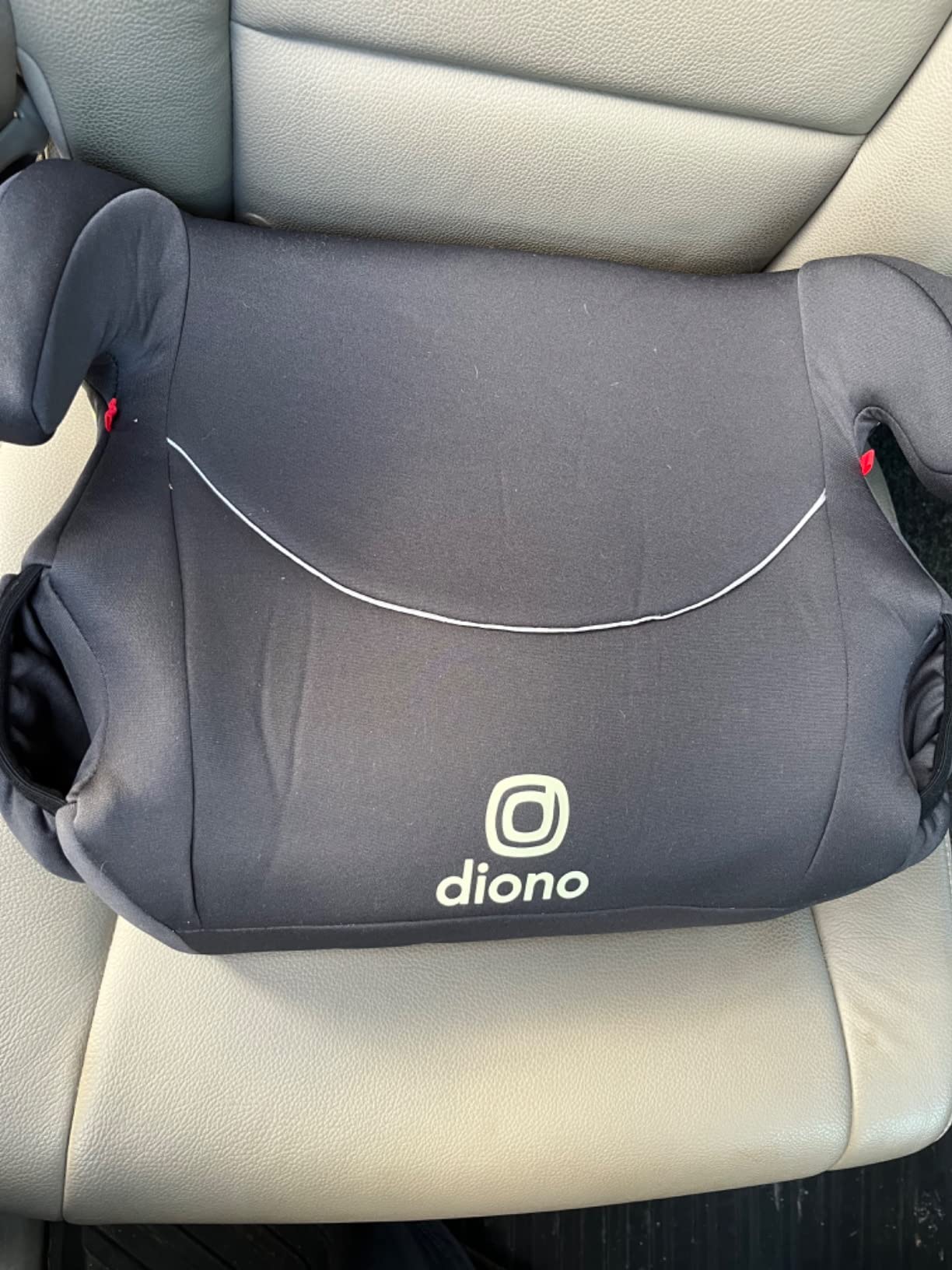
Each booster is backless, belt-installed and rated from 40 to 120 lbs, with an eight-year usable life per seat. Contoured soft fabrics sit over layered foam padding, covers come off for machine washing, and the seat carries two built-in elastic cup holders plus a shoulder belt positioner.
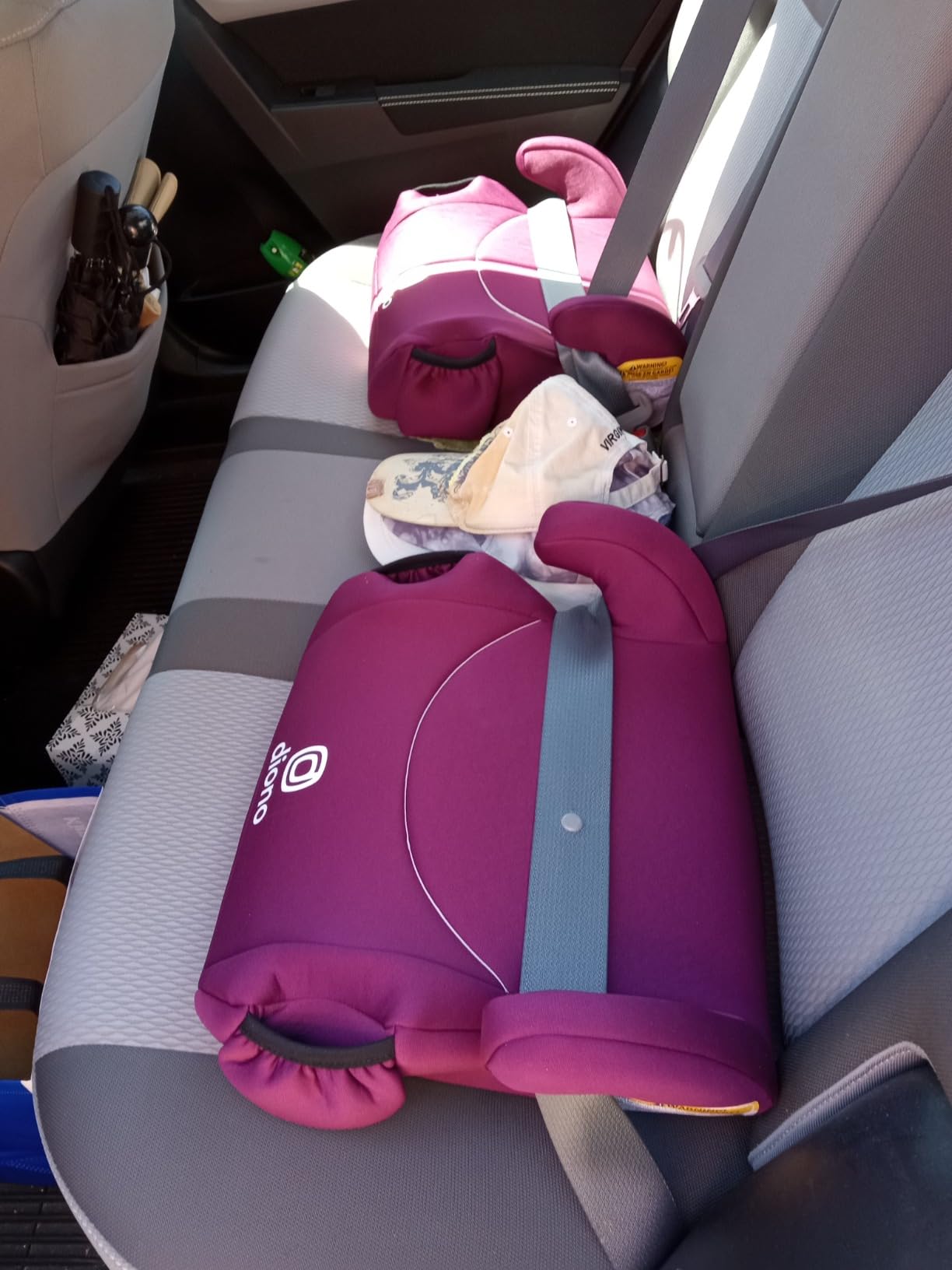
Two small design choices make it work for a child riding independently. The shoulder belt positioner guides the adult belt onto the correct part of the body, and the open side lets kids reach the seat belt buckle and clip themselves in without an adult leaning over them. That self-buckling behaviour is what parents of 6 to 10 year olds care most about.
Width is the recurring limitation. Reviewers note that larger-boned children can find the seat cramped, and a backless design gives no head or shoulder support, so a child at the low end of the range needs a high-back instead. There is no LATCH system, which is normal for this category and also what makes it work in any car.
Best for two booster-age kids or a permanent second-car seat
Families describe using one booster per child, and often moving a second one into a permanent second vehicle so nobody is reinstalling anything on a Saturday morning. The narrow backless footprint leaves real back seat space, and the weight is low enough to carry one in each hand.
It is also a strong fit for long road trips, because the cup holders and machine washable covers handle the mess that a year of daily use would produce. The 120 lb ceiling is higher than most competing backless boosters, so kids can stay in it longer.
Worst fit for a single child or anyone who needs shoulder support
If you have one booster-age kid, a two-pack is half a purchase. The single-seat version of the Diono line is a better match, and it is the one we profile as number ten on this list.
Backless means backless. A 4 year old at 40 lbs with a smaller frame has nothing behind their shoulders, and a larger 10 year old may find the width tight. Choose this for the middle of the range, not the edges.
5. mifold Comfort Grab-and-Go – Best for Car-Free Families
New Mifold Comfort Grab-and-go Car Backless Booster Seat-Compact and Portable for Every Day, Carpooling, Travel, Charcoal Grey
For children 4 and up
40 to 100 lb, 43.5 to 59 in
Fits a backpack or glove box
Three-point belt installation
Pros
- Compact enough to live in a backpack or glove box
- No installation needed in any car with a three-point belt
- Adjusts the adult belt instead of lifting the child
- Anti-slip pads hold it on leather or fabric
- Includes an extra padded cushion
Cons
- Fixed non-adjustable height
- Snug fit for bigger kids
- Less padding than costlier boosters
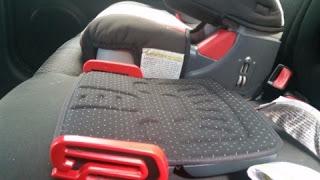
If you do not own a car, the mifold Comfort is the honest answer. It fits into a regular backpack or a glove box, weighs almost nothing, and installs with a standard three-point belt in seconds. There is no base, no LATCH, and nothing to store between trips, which is the entire problem a travel seat exists to solve.
It is designed for children 4 and up between 40 and 100 lbs and 43.5 to 59 in tall. The interesting bit is the belt fit adjuster, which pulls the adult seat belt down into correct position over the child instead of requiring a parent to lift the child up to meet the belt. That single mechanism is what a lot of booster designs get wrong.
Anti-slip pads keep it from sliding on leather or fabric, an easy-to-use shoulder belt guide keeps the belt on shoulder, and a Compact Comfort cushioned seat is included for longer rides. Parents who move between vehicles praise how quickly it installs and comes out again, which is the daily reality of rideshare life.
Sentiment is mixed on comfort. The height is fixed rather than adjustable, so a taller child at the top of the range may outgrow the fit, and the padding is minimal compared with costlier boosters. Reviews also note that the belt adjuster can be fiddly the first few times you set it.
Best for Uber, taxi and rental-only families
The travel convenience is the consistent praise point across reviews, and it is the reason this seat exists. A parent can keep it in a work bag or a car trunk, hand it to a driver, buckle a child in and be moving in under a minute with no hardware and no commitment to one vehicle.
It is also a good secondary option for a grandparent who does not want a full car seat permanently installed. Pull it out of the glove box on the school run, put it back when the grandkids leave.
Worst fit for children who need a seat that adjusts as they grow
Fixed height is the main complaint, and it matters most for a 7 to 9 year old who is tall for their age. A seat that cannot grow with the child means another purchase in a year, which is the opposite of what a multi-year booster is supposed to deliver.
Padding is also thin for a child on a long drive. If your trips are six hours or more and the child is prone to falling asleep in the car, a cushioned high-back seat is a better fit.
6. mifold Hifold – Best for International Travel
Mifold Hifold Adjustable Kids High Back Booster Car Seat with Strap – Slate Grey
High-back booster with harness strap
10 lbs
243 adjustment settings
Folds to 10.7 x 13.5 in
Pros
- 243 settings let the seat grow from age 4 to 12
- Folds flat and weighs only 10 lbs with a built-in strap
- Adjusts in four areas including head width
- Approved for use in most countries worldwide
- Lightweight EPE foam for impact resistance
Cons
- One of the more expensive portable boosters
- Seat belt positioning only with no harness
- firmer EPE foam padding
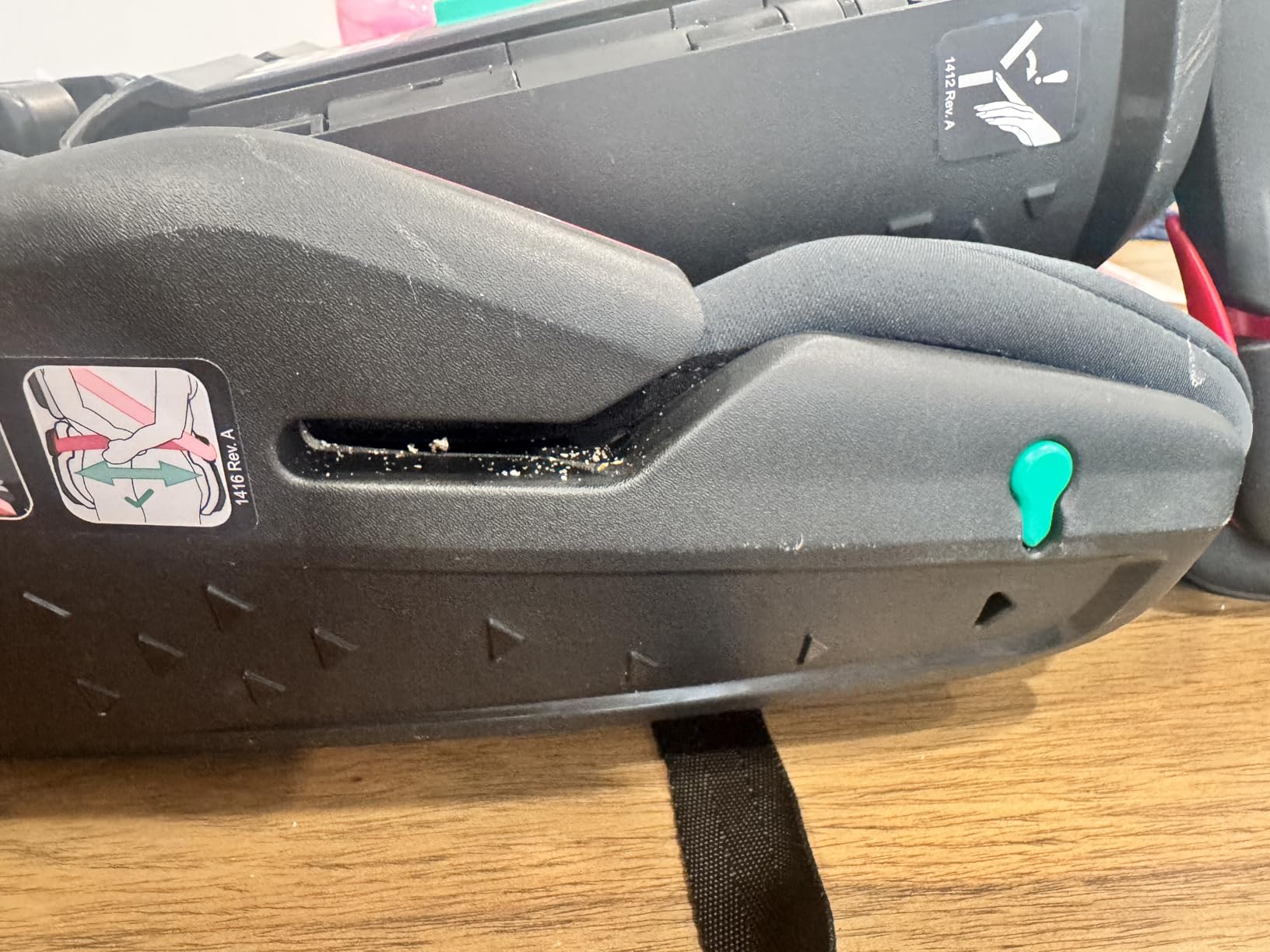
The Hifold is the only true folding high-back booster on this list, and folding matters more than it sounds. It collapses to 10.7 x 13.5 in, weighs 10 lbs and has a built-in carry strap, which means it goes into a checked bag or a carry-on instead of needing its own luggage space. It is designed for children 4 to 12 years old, 40 to 100 lbs and 43.5 to 59 in.
Adjustability is the headline: Multi-Fit technology gives 243 individual settings across four zones, including head width, which is what determines whether a seat belt sits on the shoulder and hip correctly. Because those proportions change a lot between 4 and 12, this is the seat in the lineup most likely to be used for the full run of booster years.
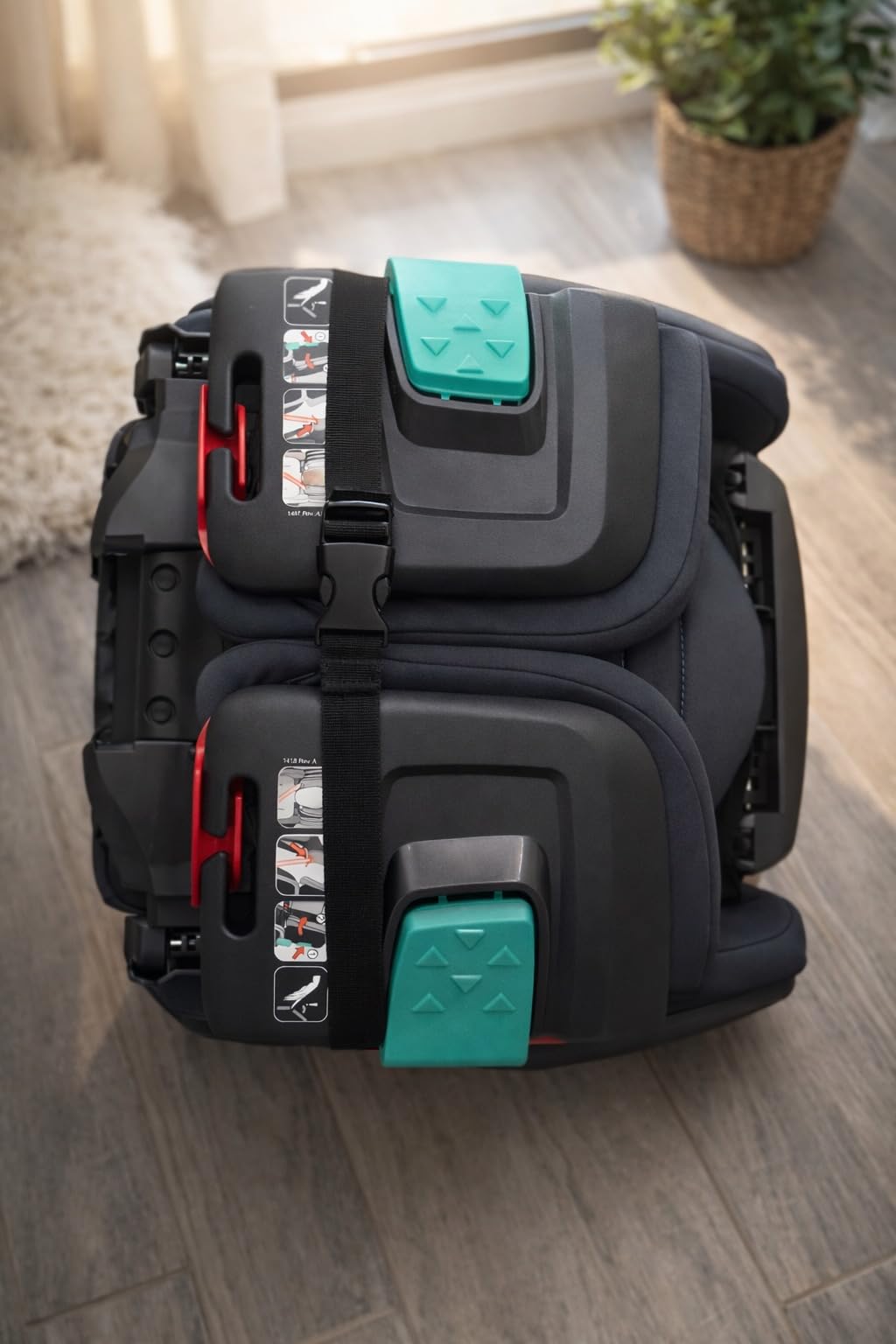
Reviewers who travel frequently, or who have children spread across a wide age range, point to that adjustability and the true fold-flat portability as the reasons to buy. It is tested to meet or exceed NHTSA FMVSS 213b, and the manufacturer lists approval for most regions worldwide apart from Australia and Taiwan.
It is a belt-positioning booster with a harness strap, not a harnessed car seat, so a child still under five who needs a five-point harness should not be placed in it. The EPE foam is also firmer than the cushioned rivals, and the cost puts it at the top of this list.
Best for families flying to multiple countries with a booster-age child
International approval, a genuine fold and a four-area adjustment system cover the three things that usually stop people abroad. It works in taxis anywhere with a three-point belt, and the packed footprint is small enough to treat as ordinary luggage rather than a special travel item.
For a child who will stay in a booster for years, the 243 settings mean the same seat handles a growth spurt without a new purchase. That is the opposite trade from the inflatable boosters, which do not adjust at all.
Worst fit for toddlers still needing a five-point harness
The harness strap is a positioning aid for the lap and shoulder belt, not a restraint system for a small child. Anyone under about 4 or under 40 lbs needs a different seat entirely, and our convertible car seat guide covers that stage.
The firmer foam and the top-of-list cost are the other trade-offs. Parents on a tight travel budget are better served by one of the inflatable or folding options, which do the same job for booster-age kids with less padding and less adjustability.
7. Baby Trend Protect 2-in-1 – Best Fold-Flat Booster
Baby Trend Protect 2-in-1 Folding Belt-Positioning Booster Seat, Midnight Black
2-in-1 folding belt-positioning booster
Converts to backless
Built-in cup holder
Lightweight build
Pros
- Folds flat like a sandwich for storage and travel
- Very light and easy to move between vehicles
- Removable back converts high-back to backless
- Built-in cup holders kids actually use
- Adjustable armrests and belt guide help self-buckling
Cons
- No LATCH anchors so belt installation only
- Short armrest for elbowing on long drives
- Folded size is bulkier than ultra-compact boosters
The Baby Trend Protect does something most boosters in this category do not: it folds. The back section comes off to convert the seat from high-back to backless, and the whole thing collapses flat into something closer to a laptop sleeve than a car seat, which makes it easy to drop into a suitcase or a large tote.
It is built for children who have outgrown a harnessed car seat and installs with the vehicle lap and shoulder belt. Adjustable armrests and a belt guide make it easier for a kid to climb in and buckle themselves, and there is a built-in cup holder that reviewers note kids actually use rather than ignore.
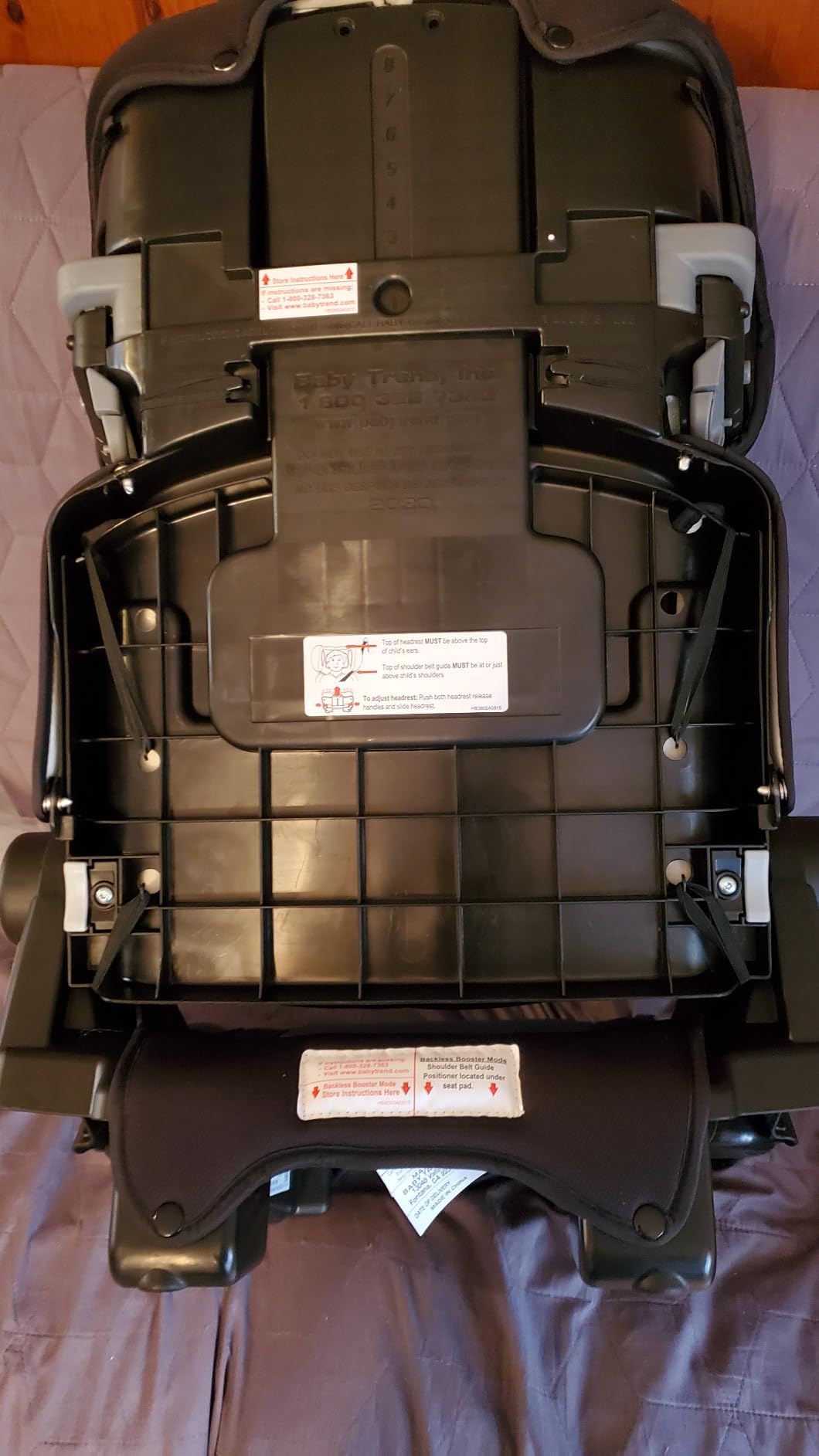
The 2-in-1 conversion is the feature that extends its life. Start in high-back mode for a smaller child, remove the back once they are tall enough, and the seat still works. Cushioned seating helps on longer trips, which is the most common use case reported for this product.
There are no LATCH anchors, so installation is seat belt only, which is fine for travel and wrong for a car with no three-point belt in the back. The armrest is short enough that some reviewers say it is not comfortable to rest an elbow against, and the folded package is still bulkier than the inflatable and backpack-style boosters further down this list.
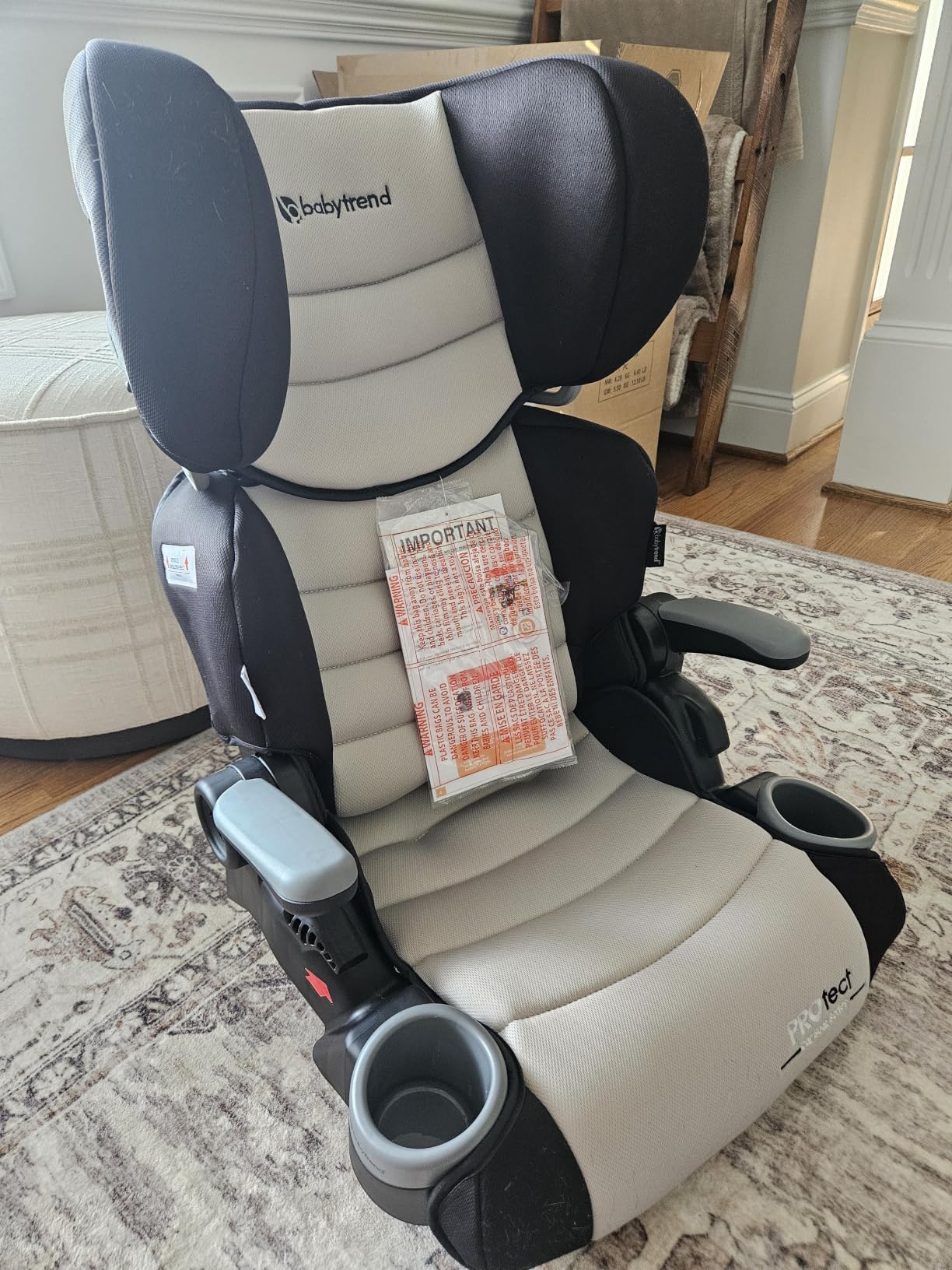
Best for grandparents and anyone with one bag of luggage
Grandparents come up often in reviews as the buyer, and the logic is obvious. One folded booster in a closet, brought out when the grandkids visit, put away when they leave, and no second car seat permanently bolted into someone else’s vehicle.
The removable back is what makes it work across a wide age range of visiting children, and the fold means it does not need a shelf or a trunk corner to live in between trips.
Worst fit for a child who needs a five-point harness or a full armrest
This is a belt-positioning booster, so it does nothing for a child still strapped into a harness. A toddler on a long flight needs a seat with a five-point restraint, not a booster.
The short armrest shows up in comfort complaints on longer drives. If your child sleeps in the car, the padded recline options among the other boosters here are the better pick.
8. Peg Perego Viaggio Flex 120 – Best for Long Road Trips
PEG Viaggio Flex 120 High Back Folding Booster, Licorice (Black)
High-back folding booster
16 lbs
Folds to 9.8 in thick
Five recline positions
Pros
- 4D adjustment across headrest
- backrest
- wings and recline
- Five recline positions for long drives
- Armless slim design lets kids self-buckle
- Folds to 9.8 in with a built-in carry handle
- Aluminum-reinforced backrest adds impact strength
Cons
- Heavier and bulkier folded than compact travel boosters
- Premium cost among belt-positioning boosters
- Integrated LATCH connectors add weight in a belt setup
The Viaggio Flex 120 is the most substantial booster on this list, and the one most at home in a car rather than a suitcase. It is a high-back folding booster with 4D Total Adjust technology across the headrest, upper backrest, side wings and recline, which is the most complete adjustment package among the boosters we looked at.
Five recline positions are the quiet advantage on a long drive. A child who can lean back sleeps, and a sleeping child is the difference between a two-hour trip and a five-hour negotiation. The slim armless seat bottom also lets kids reach the buckle and clip themselves in.
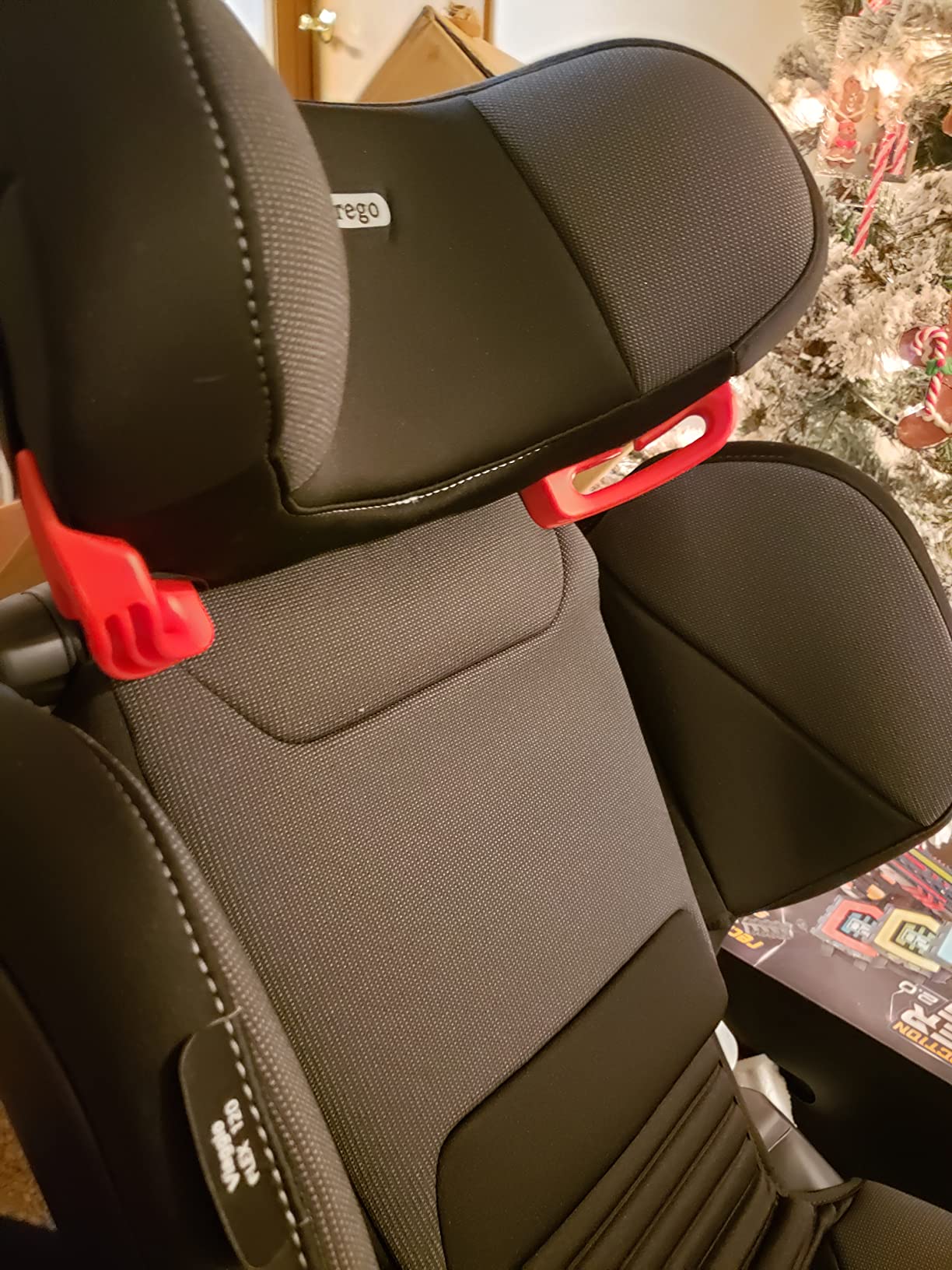
Construction is the other strength. The backrest is aluminum-reinforced and the product is described as 100% FR free, meaning no added flame retardant chemicals in the shell. The slim seat bottom is designed to position the lap belt correctly, and the seat folds to 9.8 in thick with a built-in carry handle.
It weighs 16 lbs, which is honest but heavy for airport duty, and the folded footprint is 9.8 x 23.5 x 17 in. It also has integrated rigid LATCH connectors, which add weight and are unnecessary in a belt-installed setup, so the trade is fair rather than a clear win.
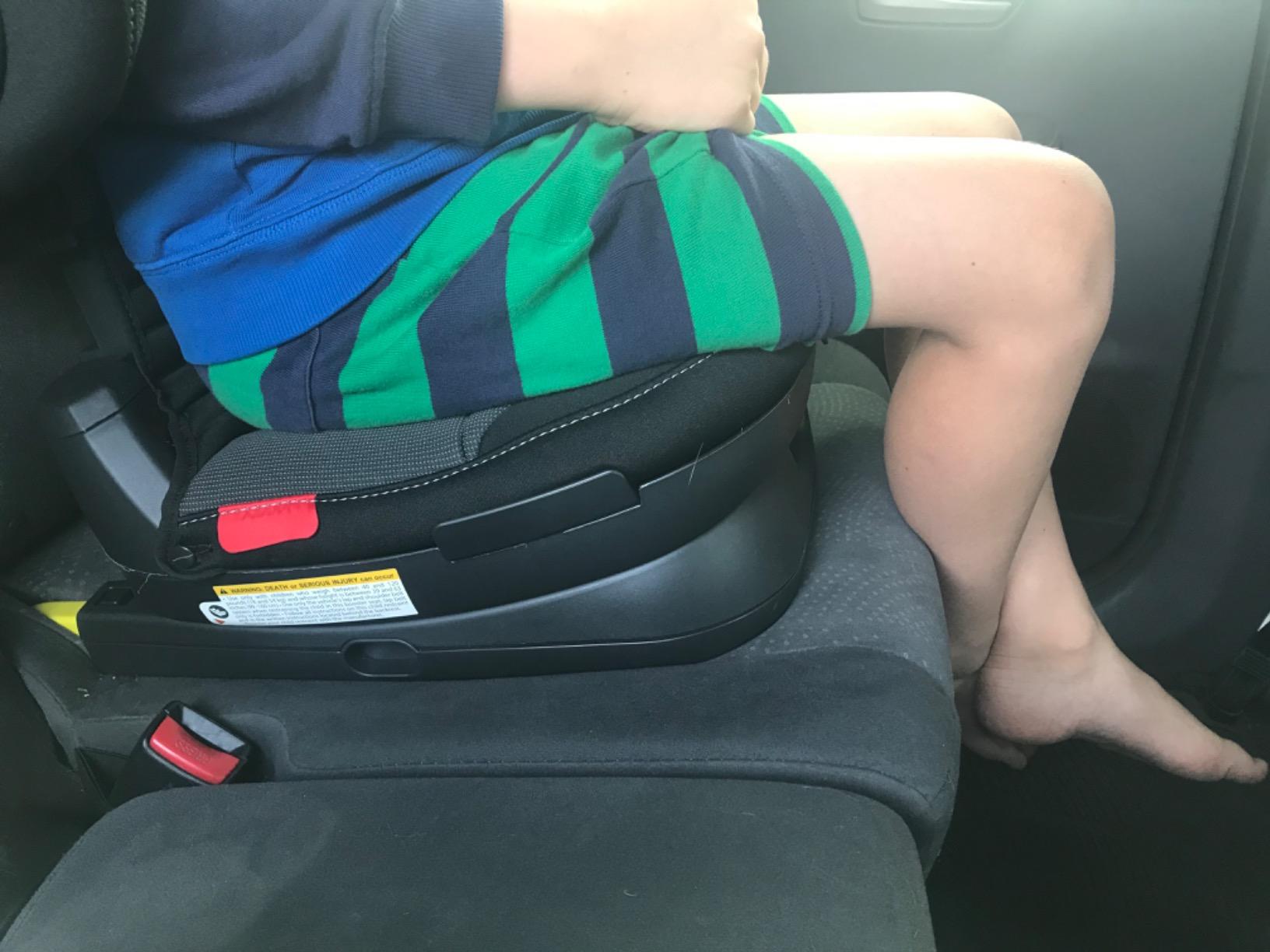
Best for multi-hour drives and sleep-prone back-seat passengers
Recline range is what separates it from cheaper boosters, and parents who drive long distances notice quickly. The 4D adjustment across four zones also means a single seat can serve children at very different sizes, which suits blended families.
The no-armrests design is worth calling out. It lets a child get in and out on their own and fits more seats across a bench, which helps a family with three children in a full-size SUV.
Worst fit for travelers who want one bag for the whole family
At 16 lbs and 23.5 in folded, this is the bulkiest booster we cover. Parents managing two children and a flight of luggage will feel that weight, and a lighter folding seat serves the same booster-age child with less effort.
It is also a car-first seat. Travelers who only use booster seats for occasional taxis and rides should weight the packing size over the recline and construction features.
9. WAYB Pico – Best for Airplane Install
WAYB Pico Travel Car Seat with Premium Carrying Bag- Lightweight, Portable, Foldable – Perfect for Airplanes, Rideshares, and Road Trips – Forward Facing for Kids 26.5–50 lbs and 33.5–45″
Forward-facing only
26.5 to 50 lbs, 33.5 to 45 in
8 lbs
Folds to 11.6 x 14.5 x 18.9 in
Pros
- Weighs only 8 lbs with an aluminum frame and mesh cover
- Installs in under a minute on a plane using the lap belt
- One-pull fold into the included backpack carry bag
- Does not encroach on the passenger behind
- FAA approved and NHTSA standards
Cons
- Forward-facing only
- not usable before age 2
- Sits low which limits the window view
- Does not recline for sleeping on long drives
- Premium price for a travel seat
The Pico is built for one specific moment: a toddler with their own plane seat, strapped in for take-off and landing. It weighs 8 lbs, folds with one pull to 11.6 x 14.5 x 18.9 in, and packs into the included backpack-style carry bag. It meets NHTSA standards and is FAA approved.
The install is the story. On board, you can have it belted in using only the lap belt in under a minute, and unlike a convertible with a harness, it does not loop over the seat back and crowd the passenger behind. For a 2 to 4 year old, that means a child is buckled and settled while the adults are still finding their own seats.
Construction details are thoughtful for a travel-only seat. It uses an aerospace-grade aluminum frame called AeroWing, and the cover is an AstroKnit wool and polyester performance mesh that keeps a child cooler than a foam-padded seat. The carry bag is made from 100% bluesign certified recycled polyester with no PU, EVA or EPS foam, which matters if you are trying to travel light.
Two constraints are absolute. It is forward-facing only, rated 26.5 to 50 lbs and 33.5 to 45 in, so a child under age 2 or under 22 lbs cannot use it. Seats manufactured before June 30, 2025 support a lower starting weight of 22 lb and 30 in. It also does not recline and sits fairly low, which reviewers link to difficulty sleeping and some carsickness.
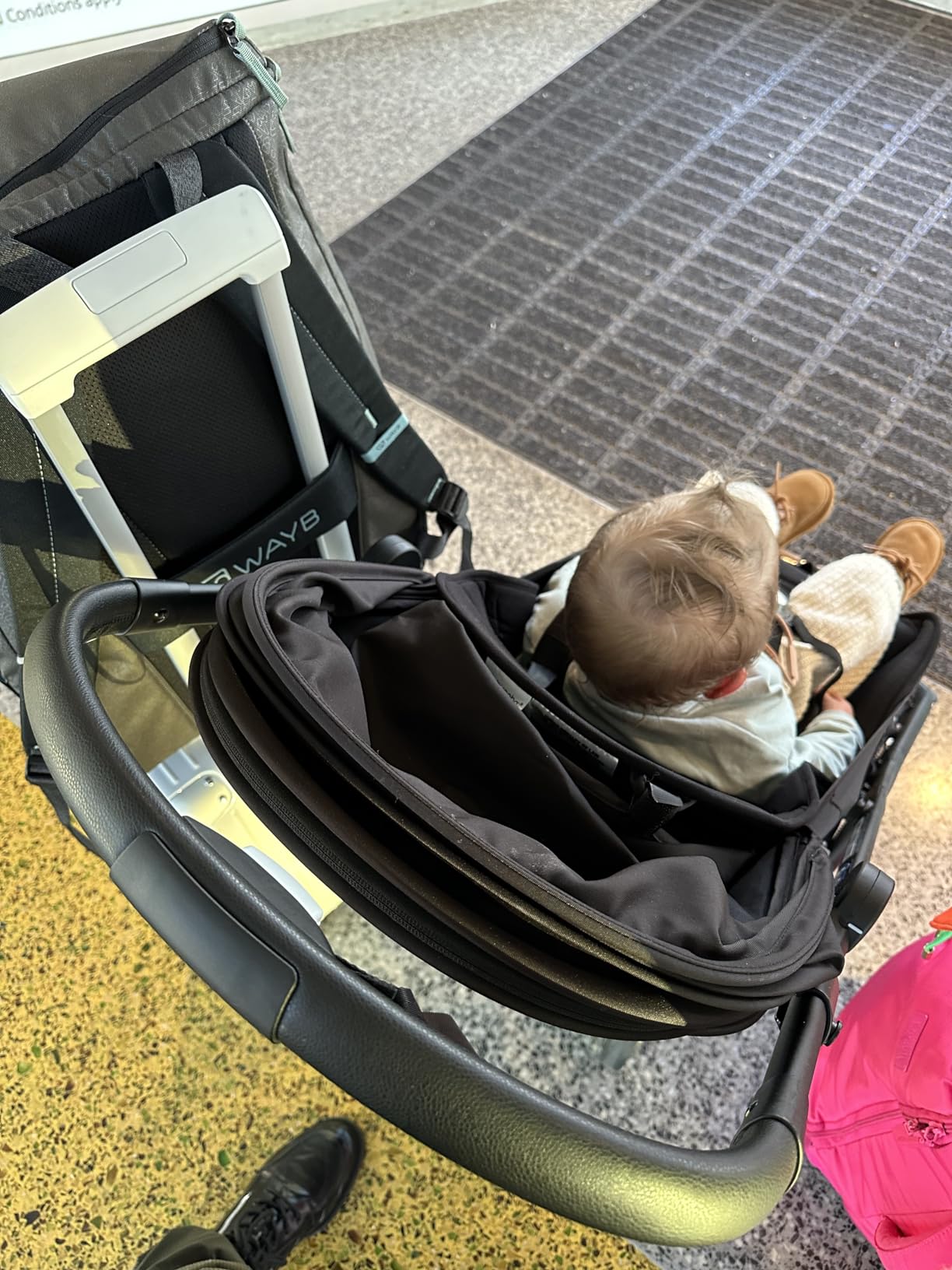
Best for a 2 to 4 year old flying with their own plane seat
Frequent travelers and solo parents rate it highly for portability, citing the 8 lb weight, the tiny folded size and the sub-minute airplane installation. For a lap-infant phase, it is the wrong tool, but the moment your child graduates to a cabin seat, this is a clean solution.
The mesh cover and the aluminum frame also mean it handles heat better than a foam-padded convertible in a warm aircraft cabin, and the carry bag leaves your hands free for a toddler and a boarding pass.
Worst fit for a child under 2, or for a long drive where the child needs to sleep
Forward-facing only is the hard limit. Rear-facing to at least age 2 is the standard guidance, and this seat cannot do rear-facing at all, so it is the second seat in your travel kit rather than the first.
No recline and a low seating position are the other complaints. A four-hour road trip with a child who falls asleep in the car is exactly the wrong use case, and the upright posture is uncomfortable over distance.
10. Diono Solana Lite – Best for Rentals and Carpools
Diono Solana Lite Backless Booster Car Seat, Lightweight & Portable for Travel, Machine Washable Covers, 40-100 lbs, Blue Surge
Backless belt-positioning booster
1.8 lbs
15.16 in wide
Fits 40 to 100 lb and 43 to 57 in
Pros
- Weighs just 1.8 lbs
- Narrow 15.16 in width fits three across
- Carabiner clips to a backpack for hands-free carry
- Meets the latest FMVSS 213B standards
- Machine washable cover
Cons
- Backless design gives no head or torso support
- Minimal padding compared with cushioned boosters
- Can feel uncomfortable for larger children
The Solana Lite stays in the car as a permanent fixture rather than a travel piece, and we include it here because so many families actually travel that way.
At 1.8 lbs, the Solana Lite sits in a different weight class from everything else here. Rigid travel seats in this lineup run from 8 lbs to 17.2 lbs, and the inflatable options pack flat but still need twenty seconds of mouth-puffing at the curb. This one is already in your bag.
It is a backless belt-positioning booster for kids 40 to 100 lbs and 43 to 57 in, meeting the latest U.S. FMVSS 213B standards. At 15.16 in wide it fits three across in most back seats, and the included carabiner clips onto a bag handle for hands-free backpack carry, which is the detail reviewers praise most.
It is a grab-and-go seat for rentals, carpools and swapping between vehicles. There is nothing to inflate, nothing to fold and nothing to install beyond routing the seat belt through the guides. The cover is machine washable, which matters for a seat that lives in a car full of children.
The trade is comfort and support. Backless means nothing behind the head or torso, the padding is minimal, and the 15.16 in width is reported to feel narrow for larger children. At the bottom of the weight range, this is a ride for the family car, not a seat for a six-hour flight.
Best for families without a car and for a rotating carpool seat
Buyers treat it as the seat that lives permanently in the trunk. It moves between the family minivan, a rental and a friend’s car in the time it takes to open a door, and the 1.8 lb weight means the adult carrying the bags is not also carrying the seat.
For a carpool rotation, three-across fit at 15.16 in wide is the deciding factor. It is a practical default for a 6 to 9 year old, which is the stage where most families need exactly one booster for a few more years.
Worst fit for a small child or a long-haul flight
There is no head or torso support, and the padding is thin, so a child at 40 lbs and under 43 in tall is not well served. A high-back booster is the right call at that size even if it weighs more.
On a plane, a backless booster is used on the ground during taxi and take-off but the child needs their own seat in the cabin, so this is a ground-travel tool. If most of your trips are flights, weight matters less than fit and install speed.
How We Picked and What We Could Not Test
We built this list around the criteria that actually separate travel seats from car seats, not around marketing language. Weight and packed size come first, because a seat you cannot lift with one hand while managing a toddler and a boarding pass is not a travel seat. FAA status comes second, because parents on parenting forums treat it as a hard requirement rather than a nice-to-have.
Install method is the third filter. Nine of these ten install with a vehicle seat belt and no hardware at all, which is what makes them usable in an unfamiliar rental car or a taxi where you cannot attach anything to the vehicle. The exception is the Peg Perego with integrated LATCH connectors, which adds weight for no benefit in a belt setup.
Finally, we weighted stage fit. A seat that serves a child for one year is a different purchase from one that serves them for six, and reviews repeatedly flag the moment a child outgrows a small travel seat as the moment regret sets in. Our all-in-one car seat guide covers that longer-span category if a travel seat would be outgrown too soon.
To be straight about limits: we did not crash test these seats ourselves and we do not have a Child Passenger Safety Technician on staff. Our judgements rest on the published specifications, the stated safety certifications in the product data, and the patterns in thousands of customer reviews. Where reviewers disagree, we have said so rather than picking the convenient side.
FAA Approval and Airline Rules, Explained
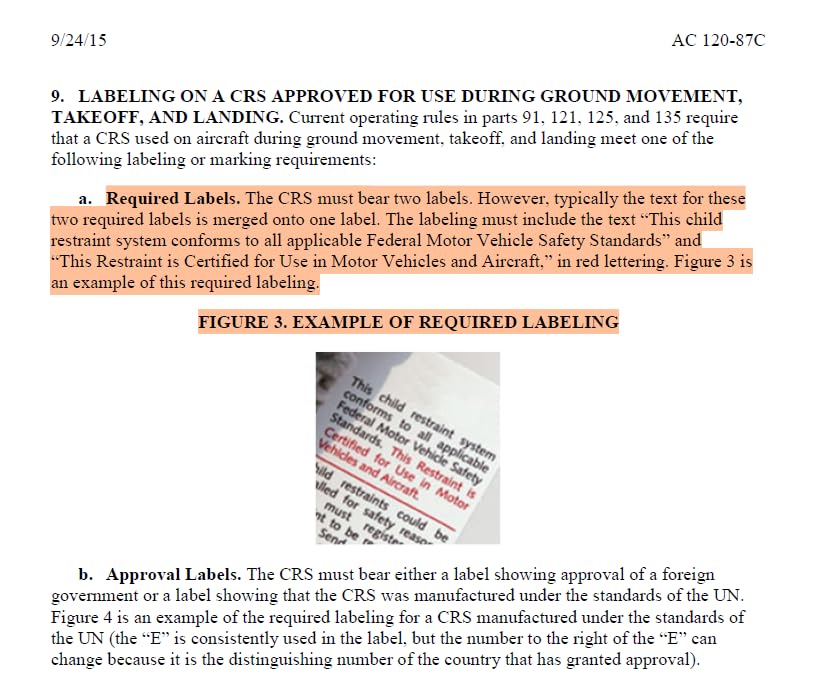
FAA approval means a specific thing: the seat was tested to federal aviation standards for use in an aircraft seat, with the child restrained in harness mode. It does not mean the seat is approved for every configuration. Most boosters are belt-positioning rather than harness seats, so they cannot earn FAA approval in the first place.
Booster seats, backless boosters and inflatable cushions are not FAA approved. That is not a quality judgment. It reflects that a child using a booster needs a vehicle seat belt to do the restraining, and there is no belt on an aircraft. On a plane, children in booster seats sit in a normal airline seat with the booster used for the taxi ride.
For an FAA-approved seat, you need a paid cabin seat for the child, not a lap. Boarding with a car seat is usually free of charge for infants and toddlers, but the child still needs their own seat. Most airlines allow you to bring the car seat into the cabin, and gate agents will typically tag it for free if you prefer to check it, though the free tag is a carrier policy rather than a federal rule.
On seat width, the practical range is roughly 17 to 18.5 in across the cabin, and a wide convertible seat can make the armrest unusable for the adult next to you. The inflatable and backless boosters in this guide are narrow enough to sidestep that issue entirely.
Buying Guide: Match the Seat to Your Child’s Stage
For a baby who is not yet sitting up, you need rear-facing and you need it to double as a stroller system, because that is where travel gets hard. The Doona is the only pick here that covers both jobs. A detachable-base infant seat is lighter to carry but adds a second bulky item to gate-check. Our infant car seat roundup covers the everyday alternative.
For a toddler between about 18 months and 4 years, the choice is a forward-facing travel seat like the WAYB Pico, which installs on a plane in under a minute with only the lap belt. Confirm the weight and height limits carefully, because a forward-facing-only seat is useless below a certain size, and most families need a separate rear-facing seat for the earlier stage.
For a child who has outgrown a harness, roughly 4 years and 40 lbs onward, most of this list applies. Decide between three approaches: an inflatable that packs flat, a folding rigid seat, or a slim backless booster that stays in the car. The inflatable wins on packing, the folding seat wins on comfort, and the backless booster wins on having a home base in one vehicle.
Weight and height limits are where travel seats cut corners, so check them before you buy rather than after. A narrow seat can be perfect for the plane and useless at home if your child is taller than its height range. Our rotating car seat guide is worth a look for families who also want easy loading at home.
One safety note belongs in every guide on this subject: keep children rear-facing until at least age 2 and as long as the seat allows, check the manufacture and expiration date on any seat before you buy it, and avoid second-hand seats with unknown history.
Installing a Travel Seat in a Rental Car, Taxi or Ride
Rental cars are the least stressful install, because the seat belt is right there and most of these seats need nothing else. Route the vehicle lap and shoulder belt through the guides according to the seat’s label, lock the belt off, and then check the install with a hand at the belt path. Movement of more than about an inch at the belt path means it is not tight enough.
In a taxi or rideshare you have less control over the vehicle. Check before you get in that the back seat has a three-point belt, not just a lap belt, because every booster on this list requires one. Sit the child on the booster, route the belt low across the hips and through the shoulder guide, and buckle in yourself first if the child cannot manage it.
For a seat with rigid LATCH connectors, do not use them in an unfamiliar vehicle if a seat belt is available. The belt install is more forgiving of a poor seat shape, and a rental car’s anchorage points are not something you want to be learning on.
Airport Gear That Makes a Travel Seat Bearable
The most repeated advice on parent forums is mundane and worth following. A padded car seat backpack distributes the weight across your back and shoulders, which is the difference between carrying an 8 lb seat comfortably and carrying it uncomfortably for forty minutes.
A folding travel cart is the second most common suggestion. Strap a heavier rigid booster or a folding seat onto a compact cart and wheel it through the terminal alongside rolling luggage. It takes about ten seconds to attach and saves your arms for the part of the journey that involves stairs.
Booster seats can also be strapped to a rolling carry-on, since a booster adds almost no extra width to a suitcase. For inflatable options, the whole point is that the deflated cushion fits in a normal bag, so no extra gear is needed at all.
When You Should Skip a Travel-Only Seat
If you take fewer than about four flights a year, bringing the car seat you already own is usually the better decision. Everyday convertibles are more comfortable, more adjustable and often rated to higher weight limits, and a once-a-year trip is not a reason to buy a second seat that sits in a closet.
The maths changes when you fly monthly, when your child is rear-facing and the daily seat is genuinely too heavy to carry, or when you rely on rideshares and rentals most of the time. In those cases a dedicated travel kit earns its place. Everyone in between is better off borrowing or renting than owning a seat they will use twice a year.
Frequently Asked Questions
What is the best portable car seat for travel?
The best portable car seat for travel depends on your child’s stage. For a baby under 30 lbs, the Doona Car Seat and Stroller wins because it converts into a stroller and is FAA approved. For a booster-age child, the Hiccapop UberBoost is the strongest all-round option, inflating in under 20 seconds and fitting three across a back seat. For a 2 to 4 year old with their own plane seat, the 8 lb WAYB Pico installs in under a minute using only the lap belt.
What is the most comfortable car seat for long trips?
The Peg Perego Viaggio Flex 120 is the most comfortable seat in our lineup for long trips, with five recline positions that let a child lean back and sleep, plus 4D adjustment across the headrest, backrest, side wings and recline. The inflatable boosters are comfortable over short distances but air pressure shifts on long drives. The Doona includes an infant insert and head support, which makes it the most comfortable choice for babies.
Do booster seats need to be FAA approval?
No, and they cannot get it. FAA approval applies to seats that can restrain a child in harness mode on an aircraft. Boosters and backless boosters position a vehicle seat belt rather than restraining a child themselves, and aircraft have no seat belts to position. On a plane, a booster-age child sits in a normal airline seat with a paid ticket, and the booster is used for the taxi ride to and from the airport.
Can I gate check a car seat for free?
Gate checking a car seat is generally free with most airlines, and many parents do it to avoid wrestling a seat through the cabin. Car seats are usually exempt from the normal checked bag fee. Policies vary by carrier and by fare class, so confirm with your airline before you fly. If you carry the seat into the cabin instead, your child needs their own paid seat and the seat must be FAA approved to be belted into an aircraft seat.
Is it safe to buy a used travel car seat?
It can be, but only if the history is verifiable. Avoid any seat that was in a crash, and be cautious with seats from yard sales, curb finds and online marketplaces where you cannot check the manufacture date. Confirm the seat is not expired, that all parts and labels are present, and that the recall history is clean. Buying new is the safer default, and several seats on our list are inexpensive enough that the discount is rarely worth the risk.
How long does a car seat last before it expires?
Most car seats carry a manufacture date rather than a printed expiration, and most expire six to ten years from that date, with some models lasting longer. The moulded date is stamped on the seat shell, the label or the harness strap. A booster with a fabric-only construction may last longer than a moulded shell. Never use a seat past its date even if the cover and harness look new, because the internal structure and foam age out of specification.
What is the lightest travel car seat on this list?
The Diono Solana Lite weighs 1.8 lbs, which places it well below the rigid seats in this guide, where weights run from 8 lbs for the WAYB Pico to 17.2 lbs for the Doona seat and stroller. Among the rigid options, the mifold Hifold at 10 lbs is the lighter end. If weight is the deciding factor, the inflatable boosters pack flat and remove the issue entirely, at the cost of mouth inflation at the curb.
Which Travel Car Seat Should You Buy?
Start with your child’s stage, not the seat’s price or badge. A baby who is not yet sitting needs a rear-facing seat that doubles as a stroller, and the Doona is the pick. A toddler with their own plane seat wants a forward-facing seat that installs in under a minute, and the WAYB Pico fills that role. A child past 40 lbs wants a belt-positioning booster, and the Hiccapop UberBoost, the mifold Comfort or the Diono Solana Lite cover three different versions of that need depending on whether you pack flat, keep it in a bag or leave it in one car.
Check the weight and height limits before you order, buy new unless the history is verifiable, and keep children rear-facing until at least age 2. Get the current version of the best travel car seats list before you book, because these categories turn over faster than they used to.