
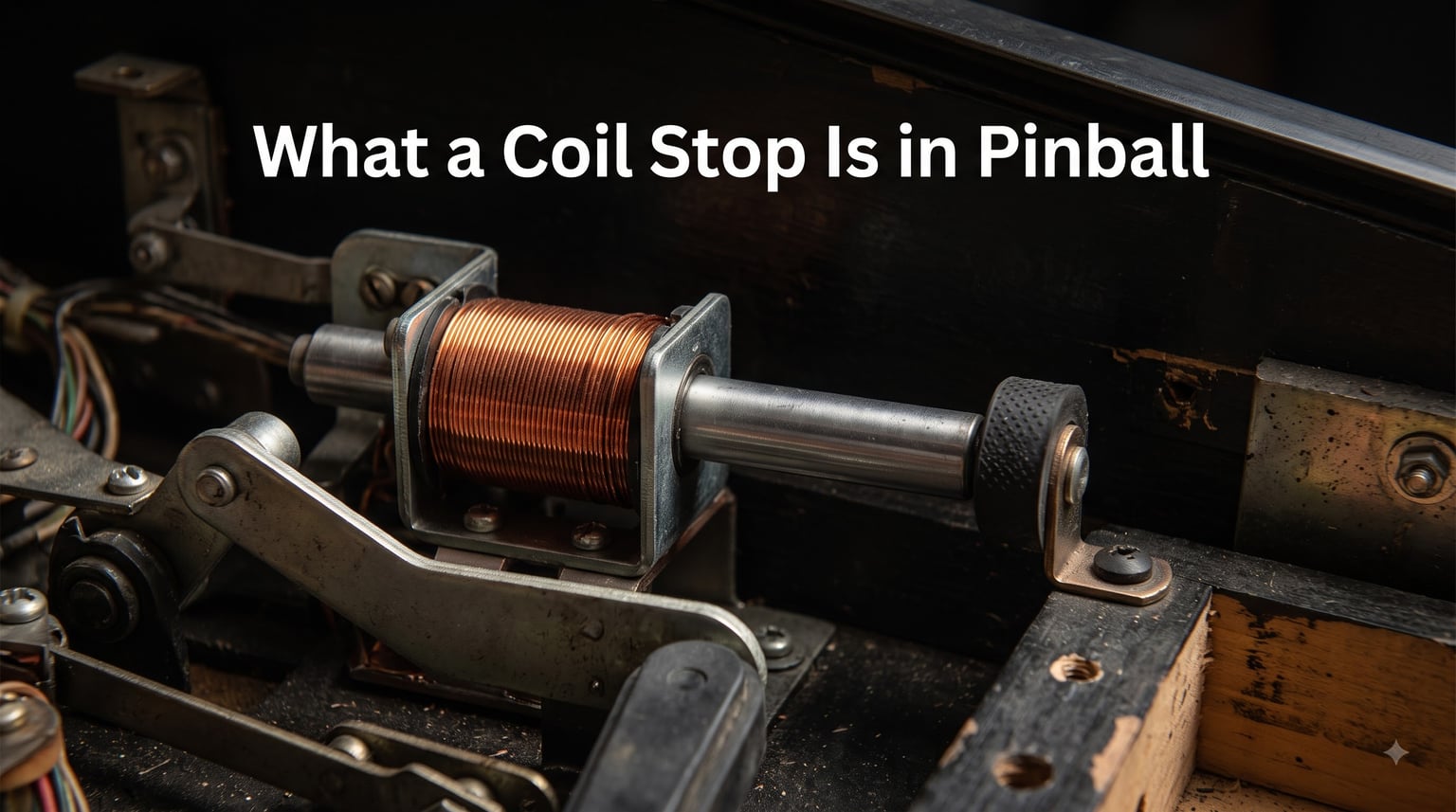
If you have ever opened up your pinball machine to troubleshoot weak flippers or mysterious metal dust, you have probably run into the coil stop. It is one of the smallest and least glamorous parts inside a pinball machine, but it does a job that keeps your entire flipper assembly from tearing itself apart. Whether you own a single home machine or maintain a route of games, understanding what a coil stop is in pinball can save you from costly repairs and frustrating gameplay.
A coil stop is a small buffer piece, typically made of rubber, nylon, or a material called flubber, mounted at the end of a pinball flipper plunger. When the flipper fires, the plunger slams forward and the coil stop absorbs that impact. Without it, you would have bare metal crashing into bare metal hundreds of times per game. That means noise, damage, and eventually a flipper that stops working.
Our team has spent years maintaining, rebuilding, and troubleshooting pinball machines from every major manufacturer. In this guide, we break down what coil stops do, how they work inside the flipper mechanism, the differences between the three main material types, and the warning signs that tell you when it is time for a replacement. We also pull real-world data from pinball forums and repair communities to give you lifespan expectations you can actually use.
Table of Contents
What a Coil Stop Is in Pinball
A coil stop is a small replacement part mounted at the back of a pinball solenoid assembly where it acts as a cushion between the moving plunger and the stationary coil frame. When you press the flipper button, an electromagnet yanks the plunger inward at high speed. The coil stop sits at the end of that travel path and stops the plunger with a cushioned surface instead of a metal-on-metal collision.
The term can confuse new pinball owners because the part goes by several names depending on the manufacturer and community. Bally and Williams machines often call it a coil stop, while some parts catalogs list it as a plunger bumper, end-of-stroke bumper, or coil buffer. They all refer to the same small piece doing the same critical job.
Most coil stops are small enough to fit between your thumb and forefinger. They typically measure around half an inch in diameter and press or screw into the flipper coil bracket at the base of the solenoid. Despite their tiny size, they are one of the most frequently replaced wear items in a pinball machine.
Think of the coil stop the same way you think of the rubber bumper on a doorstop. The door can swing open a thousand times without issue because that little piece of rubber absorbs the hit each time. Remove the rubber and the door handle eventually punches a hole through your wall. The coil stop plays that same protective role for your flipper assembly.
How Coil Stops Work in Pinball Flippers
To understand how a coil stop functions, you need a quick picture of the flipper mechanism itself. Each flipper is powered by a solenoid, which is a cylindrical electromagnet wrapped in copper wire. Inside that solenoid sits a metal plunger connected to a linkage that runs up to the flipper bat on the playfield.
When you press the flipper button, electric current floods the coil winding and generates a strong magnetic field. That field pulls the plunger inward with considerable force, sometimes in under 30 milliseconds. The plunger travels through the center of the coil sleeve and slams against the coil stop at the far end of the assembly.
Here is where the coil stop does its job. Instead of the steel plunger crashing into the steel coil bracket, the plunger hits the softer material of the coil stop. The stop compresses slightly, absorbing the kinetic energy and bringing the plunger to a controlled halt. This single action does three things at once.
First, it prevents structural damage to the coil bracket and plunger rod. Without the stop, repeated metal impacts would mushroom the plunger tip and crack the bracket over time. Second, it quiets the assembly, since rubber and nylon absorb sound far better than colliding metal. Third, it establishes the mechanical end of stroke, which tells the flipper system that the bat has reached its fully raised position.
The force involved is significant. A flipper coil on a modern Stern machine draws a heavy current surge during the initial firing phase, and the plunger accelerates fast enough to send a pinball screaming up a playfield ramp. Every bit of that energy needs somewhere to go when the plunger stops moving, and the coil stop is the part that takes it.
This is also why coil stop material matters so much. A rubber stop compresses more and absorbs more energy, but it wears out faster. A nylon stop is harder and lasts longer but transmits more impact noise. We cover those trade-offs in detail in the materials section below.
The Two-Coil System and the End of Stroke Switch
The coil stop is directly tied to one of the most important subsystems in a pinball flipper: the two-coil system. Almost every modern pinball machine uses this design to keep flippers powerful without burning out the solenoid. Understanding how it works makes the coil stop’s role much clearer.
A flipper solenoid actually contains two separate coil windings wrapped around the same core. The first is the high-power coil, which has thick wire and low resistance. It draws a massive current surge and produces the force needed to snap the flipper upward and hit a fast-moving ball. This coil is only meant to fire for a fraction of a second.
If the high-power coil stayed energized for more than a second or two, it would overheat and potentially burn up. That is where the second winding comes in. The low-power coil has thinner wire, higher resistance, and draws far less current. It produces just enough magnetic force to hold the flipper in the raised position for as long as you hold the button.
The switch between these two coils is called the end of stroke switch, or EOS switch. And here is the connection: the EOS switch is physically triggered when the plunger reaches the coil stop at full extension. When the plunger lands against the coil stop, it mechanically opens the EOS switch, cutting power to the high-power coil and leaving only the low-power hold coil active.
This means the coil stop is not just a cushion. It is the physical landmark that tells the flipper assembly to power down from full strength. If the coil stop wears down or gets compressed, the plunger travels slightly less far and may not fully trigger the EOS switch. That leaves the high-power coil running longer than intended, which can overheat the solenoid, blow fuses, and make the flipper feel sluggish or stuck.
This relationship between the coil stop and the EOS switch is why a worn coil stop causes a cascade of problems. The part itself might cost under two dollars, but the damage it prevents extends to the coil winding, the fuse bank, and the flipper control board.
Types of Coil Stops: Rubber vs Nylon vs Flubber
Not all coil stops are created equal, and the material they are made from dramatically affects both durability and the sound your machine makes. This is one of the most overlooked aspects of pinball maintenance, and almost no existing resource covers it in detail. We are going to fix that right now.
There are three main coil stop materials used in pinball machines today: rubber, nylon, and a specialized compound known in the community as flubber. Each has distinct properties that make it suited for different machines and player preferences.
Rubber Coil Stops
Rubber is the traditional and most common coil stop material, used by Williams, Bally, and many older Stern machines. Rubber stops compress significantly on impact, which means they absorb energy well and produce a softer, quieter sound when the flipper fires. If you want your machine to sound smooth and muffled rather than sharp and clacky, rubber is the way to go.
The trade-off is lifespan. Rubber degrades over time through repeated compression, heat exposure, and dry rot. A rubber coil stop can flatten, crack, or even disintegrate after years of use. Players who use rubber poly stopper upgrades specifically report quieter flippers as the main benefit, but they accept a shorter replacement interval.
Nylon Coil Stops
Nylon coil stops are harder than rubber and last significantly longer. They resist compression, meaning they hold their shape over tens of thousands of flipper cycles. Many modern replacement kits use nylon because it maintains consistent plunger travel distance, which keeps the EOS switch properly calibrated over time.
The downside is sound. Nylon transmits more impact energy as noise, so the flipper will sound sharper and more mechanical when it fires. Some players actually prefer this crisper sound, while others find it harsh compared to the muted thud of rubber. Nylon is the practical choice for high-traffic machines in arcades or bars where longevity matters more than acoustic refinement.
Flubber Coil Stops
Flubber is a specialty compound that attempts to split the difference between rubber and nylon. The name is informal, used within the pinball repair community to describe a gel-like or polymer blend material that offers better durability than rubber with better sound absorption than nylon. It compresses enough to muffle impact noise but is formulated to resist the flattening that eventually kills rubber stops.
Flubber stops are generally sold as aftermarket upgrades rather than OEM parts. They appeal to home collectors who want quiet operation without the frequent replacement schedule of rubber. Availability can be limited compared to standard rubber and nylon options, and opinions on their lifespan vary, but the general consensus is that they outlast rubber while sounding better than nylon.
Choosing between the three comes down to your priorities. Rubber is quiet but needs more frequent replacement. Nylon is durable but louder. Flubber is the middle ground for players willing to seek out an aftermarket part.
Signs of Coil Stop Failure
Coil stop failure is one of the most common issues in pinball maintenance, and the symptoms are surprisingly consistent across machines and manufacturers. If you know what to look for, you can catch a failing coil stop long before it damages the rest of your flipper assembly. Here are the key warning signs.
Brass dust under the playfield. This is the number one indicator of coil stop wear. As the stop degrades, the plunger starts making metal-on-metal contact with the coil bracket. That grinding produces tiny brass shavings that fall into the cabinet base. If you open your machine and see a fine metallic dust around the flipper area, your coil stops are likely gone or nearly gone.
Weak or mushy flippers. When a coil stop flattens or wears down, the plunger travels too far before hitting anything solid. This changes the flipper geometry and reduces the power transferred to the bat. Your flipper will feel soft and the ball will not launch with its usual speed or height.
Flippers that stick in the up position. If the worn coil stop lets the plunger travel past its intended stopping point, the linkage can over-rotate and bind. This is the symptom that sends many owners to forums asking why their flipper will not return after firing.
Louder than normal flipper noise. A healthy coil stop produces a muffled thud. A worn or missing coil stop produces a sharp metallic clack. If your machine suddenly sounds like someone hitting a wrench with a hammer, inspect the coil stops immediately.
Burned or overheated coil sleeves. When a worn coil stop fails to trigger the EOS switch properly, the high-power coil stays energized too long. This generates excess heat that can discolor or melt the coil sleeve. If you see heat damage on the sleeve, check the coil stop as part of your diagnosis.
Blown fuses. In severe cases, the extended high-power coil activation caused by a failed coil stop can draw enough current to blow the flipper fuse. If you are replacing flipper fuses repeatedly, a worn coil stop may be the root cause.
How Long Do Pinball Coil Stops Last
This is where pinball forums get contentious. Ask ten operators how long coil stops last and you will get ten different answers ranging from a few hundred plays to tens of thousands. We dug through extensive forum discussions on Pinside and Reddit to compile the most accurate picture available, and the results reveal a wide range driven by material quality, manufacturer, and play style.
At one extreme, multiple Stern machine owners have reported all of their coil stops failing between 200 and 700 plays. This is not an isolated complaint. One collector documented that every single Stern machine in a seven-game collection had coil stop failures within that range. Stern’s official position is that coil stops should last the life of the game, but the community data tells a very different story for recent production machines.
At the other extreme, owners of older Williams and Bally machines regularly report coil stops still functioning at 20,000 or more plays. These legacy machines used rubber compounds that, while eventually needing replacement, held up far longer than some modern OEM stops. New-in-box games from certain production runs have shown defective stops at as few as 1,100 plays.
Several factors explain this enormous range. First, material quality varies by manufacturer and production batch. Second, player technique matters: players who hold balls trapped against the flipper with the flipper raised put sustained pressure on the coil stop mechanism. Third, environmental conditions like heat and humidity accelerate rubber degradation.
As a practical guideline, inspect your coil stops every 5,000 plays if your machine is playing normally. If you own a Stern machine from a recent production year, check them at the first sign of any symptom described in the failure section above. When buying a used machine, replace all coil stops as part of your initial flipper rebuild regardless of apparent condition.
The community consensus is clear: treat coil stops as consumable wear items, not lifetime parts. Doing so will keep your flippers playing consistently and protect the more expensive components they interact with.
Coil Stop Maintenance and Replacement
Good coil stop maintenance is really about two things: regular inspection and replacement at the right time. The part itself is inexpensive, so the cost of being proactive is minimal compared to the cost of repairing damage caused by a neglected stop.
The best time to inspect your coil stops is during routine playfield cleaning. When you have the playfield lifted, shine a flashlight into the cabinet base near each flipper assembly. Look for brass dust accumulation, which is the earliest sign of stop wear. Then visually examine each coil stop for flattening, cracking, or disintegration.
If you find any signs of wear, replace the coil stop as part of a complete flipper rebuild. The pinball community strongly recommends replacing coil stops alongside the plunger, coil sleeve, return spring, and link whenever you service a flipper. This is because these parts all wear together, and installing a fresh coil stop against a worn plunger will shorten the new stop’s life.
The replacement process itself is straightforward for anyone comfortable with basic hand tools. Here is the general sequence.
Step 1: Power off the machine and remove the playfield or flipper assembly cover to access the coil bracket.
Step 2: Disconnect the wires from the coil terminals, noting which wire goes to which lug for reassembly. Take a photo before disconnecting anything.
Step 3: Remove the bolts holding the coil assembly to the bracket. Slide out the old coil stop from the end of the plunger or bracket, depending on your machine’s design.
Step 4: Install the new coil stop, making sure it seats fully and matches the core height of the original. Using a stop with the wrong height will change the plunger travel distance and throw off your EOS switch timing.
Step 5: Reassemble the coil bracket, reconnect the wires using your reference photo, and test the flipper before closing everything up. Listen for a clean muffled thud and confirm the flipper returns to rest smoothly.
One important compatibility note: coil stops are not universal. Bally, Williams, and Stern machines use different core heights and mounting designs. Always confirm the correct part number for your specific machine before ordering. Common part numbers include the Bally A-613-127 and the Classic Bally A-613-67, but there are many variants across manufacturers and eras.
FAQs
How does a pinball coil work?
A pinball coil is a solenoid, which is an electromagnet made from copper wire wound around a metal core. When electric current flows through the wire, it creates a magnetic field that pulls a metal plunger inward. In a flipper, this rapid plunger movement is transferred through a linkage to the flipper bat, snapping it upward to hit the ball.
What does a coil stop do in a pinball machine?
A coil stop absorbs the impact when the flipper plunger reaches the end of its travel. It prevents metal-on-metal contact between the plunger and coil bracket, reduces noise, and establishes the mechanical stopping point that triggers the end of stroke switch.
How do I know if my coil stop is bad?
The most reliable sign is brass dust accumulation under the flipper assembly in the cabinet base. Other symptoms include weak or mushy flippers, flippers that stick in the up position, louder than normal metallic clacking sounds, burned coil sleeves, and blown flipper fuses.
How long do pinball coil stops last?
Coil stop lifespan varies widely by manufacturer and material. Some Stern OEM stops have been reported failing between 200 and 700 plays, while older Williams and Bally stops can exceed 20,000 plays. As a general rule, inspect coil stops every 5,000 plays and replace them whenever you do a full flipper rebuild.
Can I replace a coil stop myself?
Yes, coil stop replacement is a beginner-friendly repair that requires only basic hand tools. The process involves removing the coil assembly, swapping the old stop for a new one of the correct core height, and reassembling. Always power off the machine first and take a photo of the coil wiring before disconnecting anything.
What is the end of stroke switch in pinball?
The end of stroke switch, or EOS switch, is a mechanical switch inside the flipper coil assembly that is triggered when the plunger reaches the coil stop at full extension. Opening this switch cuts power to the high-power coil and leaves only the low-power hold coil active, preventing the solenoid from overheating.
Conclusion
Understanding what a coil stop is in pinball transforms a mysterious source of flipper problems into a manageable maintenance task. These small rubber, nylon, or flubber buffers absorb plunger impact, reduce noise, and trigger the end of stroke switch that protects your solenoid from overheating. Check for brass dust, replace stops during every flipper rebuild, and choose the material that matches your priorities for durability and sound. Your flippers, your fuses, and your coil windings will all thank you.