
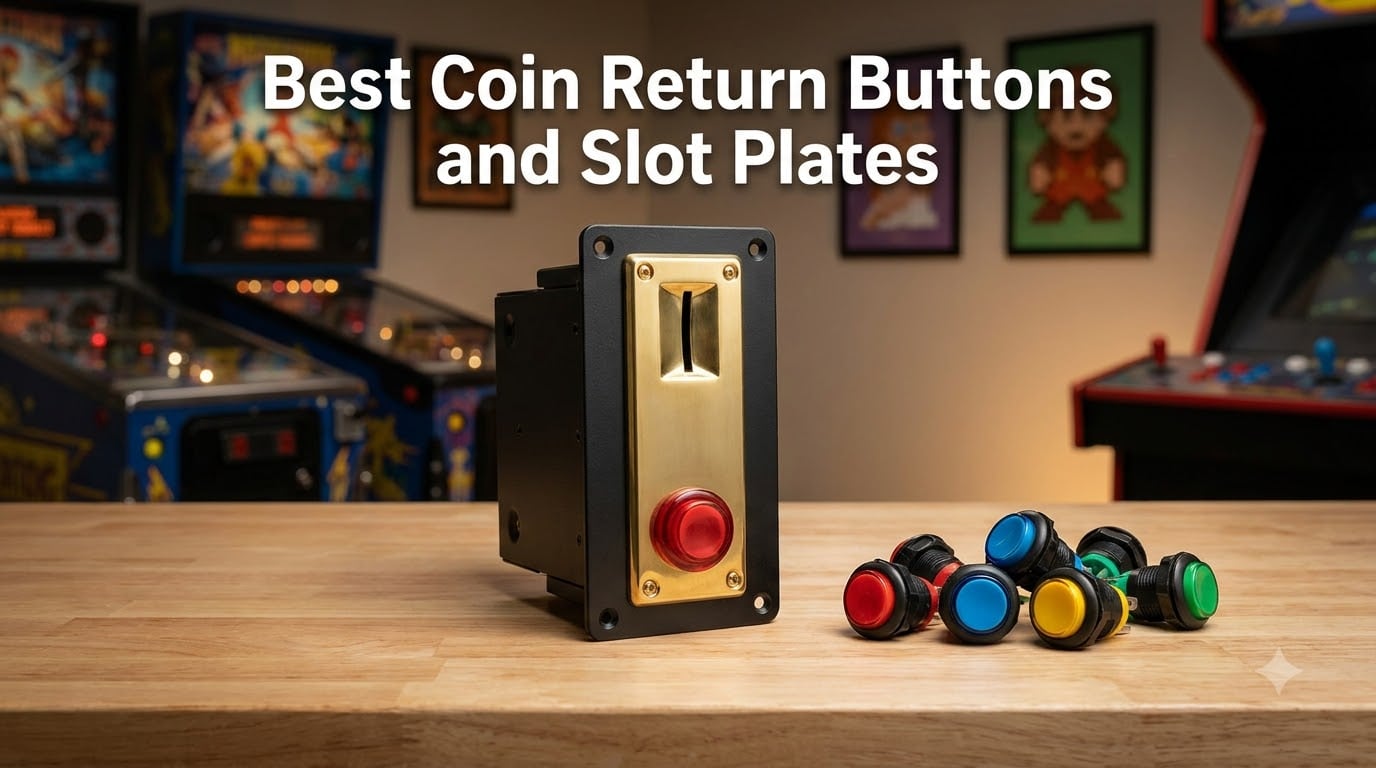
Nothing breaks the illusion of a restored arcade cabinet faster than a coin door that fights back. The coin return button sticks halfway in, the reject lever has lost its click, and the scratched slot plate eats quarters instead of passing them through. I have restored enough cabinets and virtual pinball builds at this point to know the coin door is the first thing every guest touches and the last thing most of us ever service.
That is exactly why we built this guide to the best coin return buttons and slot plates. We compared complete coin doors, drop-in illuminated coin buttons, Happ style start and coin button sets, and stamped brass slot plates side by side. Every pick below is a part you can order today, with the fitment details you need before you drill a single hole in a panel.
A quick note on how we chose. The threads on Pinside, Arcade-Museum, the Arcade Controls forum, and Reddit’s r/cade repeat the same complaints over and over: buttons that stop clicking after a decade of service, return springs that vanish into the carpet, and replacement buttons that never quite match the original color. We factored all of that in, along with verified buyer feedback from hundreds of arcade and pinball builders.
Here is the short version if you are in a hurry. The EG STARTS 60mm LED coin button set is the best overall upgrade for a home arcade or MAME cabinet, the RetroArcade.us coin door with a US quarter selector is the most complete drop-in door, and the EG STARTS Happ style button pair is the best value for a control panel. The full breakdown, including compatibility by manufacturer and a free play wiring walkthrough, is below.
Table of Contents
- Top 3 Picks for Coin Return Buttons and Slot Plates for October 2026
- Best Coin Return Buttons and Slot Plates in October 2026
- 1. EG STARTS 60mm LED Coin Buttons – Best Overall
- 2. RetroArcade.us Coin Door with Coin Selector – Best Complete Door
- 3. EG STARTS Happ Style Start and Coin Buttons – Best Value
- 4. RetroArcade.us Cash Access Coin Door Blank – Best Multi-Use Blank
- 5. RetroArcade.us Wells Gardner Style Two Entry Coin Door – Best for Pinball
- 6. UNIQANTIQ Brass Coin Slot Plate – Best Slot Plate
- 7. RetroArcade.us Single Entry Coin Door Blank – Best Slim Blank
- 8. EG STARTS Chrome LED Coin Buttons – Most Proven Pick
- What Are Coin Return Buttons and Slot Plates?
- How Does the Arcade Coin Mechanism Work?
- How to Choose the Right Coin Return Button and Slot Plate?
- How to Install a Coin Return Button and Slot Plate?
- Frequently Asked Questions
- Final Verdict on the Best Coin Return Buttons and Slot Plates
Top 3 Picks for Coin Return Buttons and Slot Plates for October 2026


EG STARTS Happ Style Buttons
- 28mm hole mount
- Adjustable shaft
- Spare microswitches
- MAME ready
The EG STARTS 60mm LED set takes the top spot because it solves the problem nobody has solved yet: lighting a coin button properly. Older coin reject buttons were never designed for LEDs, so a set that builds illumination in from the start is a genuine upgrade for any home build.
The RetroArcade.us coin door with mechanical selector is our premium pick for anyone who wants the whole job done in one order. It arrives with the coin mech, the return hardware, and the mounting pieces, which is rare at this level of fit and finish.
The Happ style pair from EG STARTS is the value pick. Two buttons, spare microswitches, and an adjustable shaft that clears a thick wooden control panel make it the easiest win on a budget MAME or JAMMA build.
Best Coin Return Buttons and Slot Plates in October 2026
| Product | Specs | Action |
|---|---|---|
| EG STARTS 60mm LED Coin Buttons |
|
Check Latest Price |
| RetroArcade.us Coin Door with Selector |
|
Check Latest Price |
| EG STARTS Happ Style Buttons |
|
Check Latest Price |
 RetroArcade.us Cash Access Blank Door RetroArcade.us Cash Access Blank Door |
|
Check Latest Price |
 RetroArcade.us Wells Gardner Style Door RetroArcade.us Wells Gardner Style Door |
|
Check Latest Price |
 UNIQANTIQ Brass Coin Slot Plate UNIQANTIQ Brass Coin Slot Plate |
|
Check Latest Price |
 RetroArcade.us Single Entry Blank RetroArcade.us Single Entry Blank |
|
Check Latest Price |
 EG STARTS Chrome LED Coin Buttons EG STARTS Chrome LED Coin Buttons |
|
Check Latest Price |
Three of these are coin doors rather than loose buttons, and that distinction matters. A door gets you the housing, the return chute, and the slot openings in one piece, while button sets assume you already have a panel or housing to mount into.
Two entries in the table are blanks, meaning the coin mechanisms and locks ship separately. That is a feature if you plan to run a door without mechs on a free play machine, and a surprise if you expected everything in the box.
The one true slot plate on the list is the stamped brass option, and it is aimed more at banks, props, and custom boxes than at arcade coin doors. It rounds out the lineup for builders rather than operators.
1. EG STARTS 60mm LED Coin Buttons – Best Overall
EG STARTS 5X New 60mm Dome Shaped LED Illuminated Push Buttons for Arcade Coin Buttons Machine Operated Games DC 12V
60mm dome LED buttons
5 colors
12V LEDs
Microswitches included
Pros
- Durable and well made
- 5 colors in one set
- Extra LEDs and switches included
- LED independent of the switch
- Clicky tactile feel
- Works on 3.3V and 5V
Cons
- Instructions are lacking
- Some LEDs have polarity issues
- Yellow may ship with an orange LED
I fitted a set of these behind the coin door of a MAME cabinet build last year and they completely changed how the front of the machine reads in a dark room. The 60mm dome shape has real presence, and the LED ring throws enough light to make the coin area the first thing people notice.
The click is the part I did not expect to care about. These have a crisp, tactile snap that feels like a proper arcade part rather than a soft domestic button, and that feedback matters when the button is doing double duty as a credit switch.
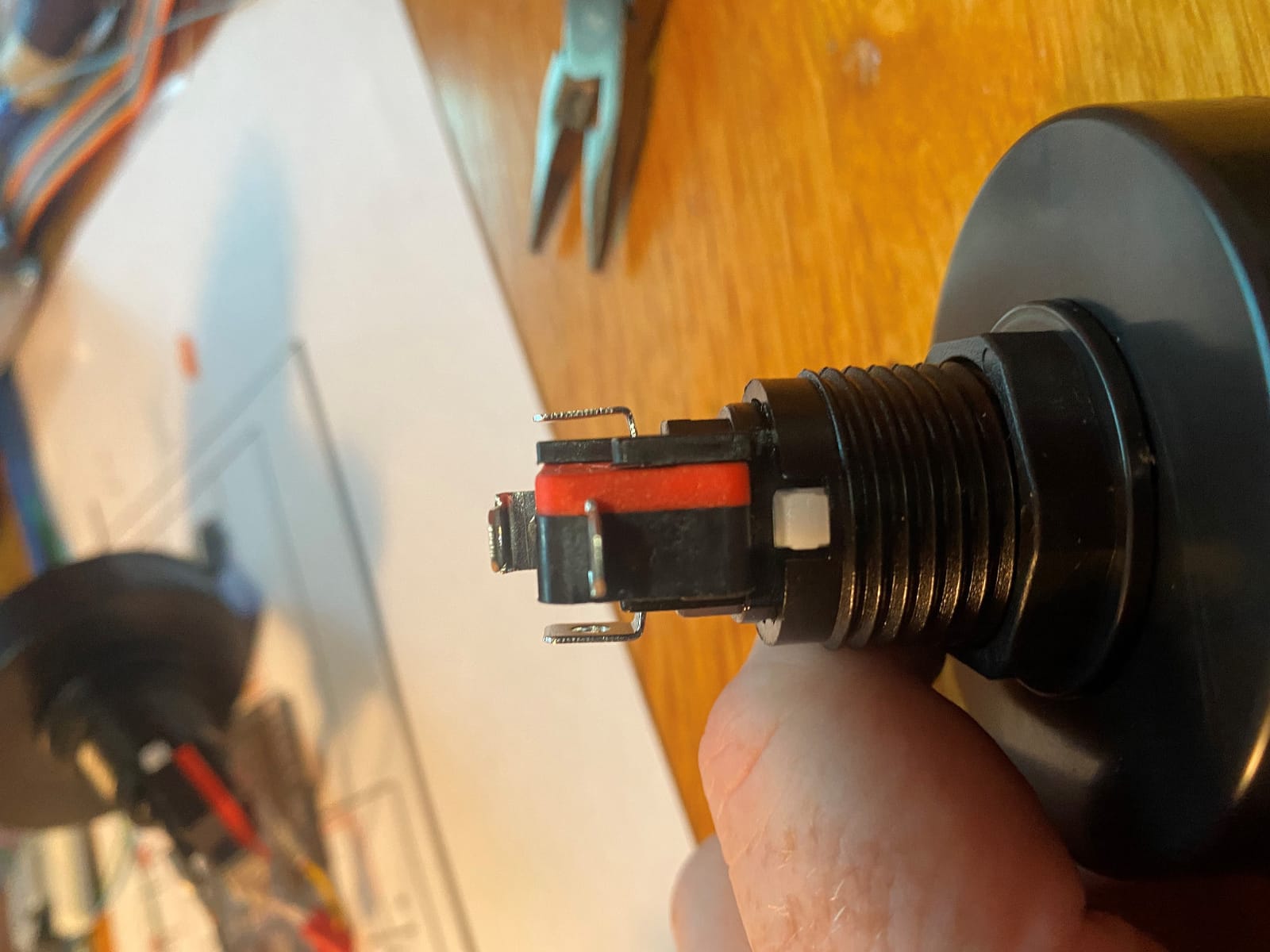
Technically, you get five buttons in red, yellow, blue, green, and white, each with its own lamp holder, adapter ring, retaining nut, and microswitch. The LEDs are 12V units, and reviewers confirm they also run happily on 3.3V and 5V, which covers Arduino and keyboard encoder setups without extra parts.
Having the LED circuit fully independent of the switch circuit is what makes these so flexible. You can light the buttons permanently from the power supply, or drive them from an output so they flash on a credit event.
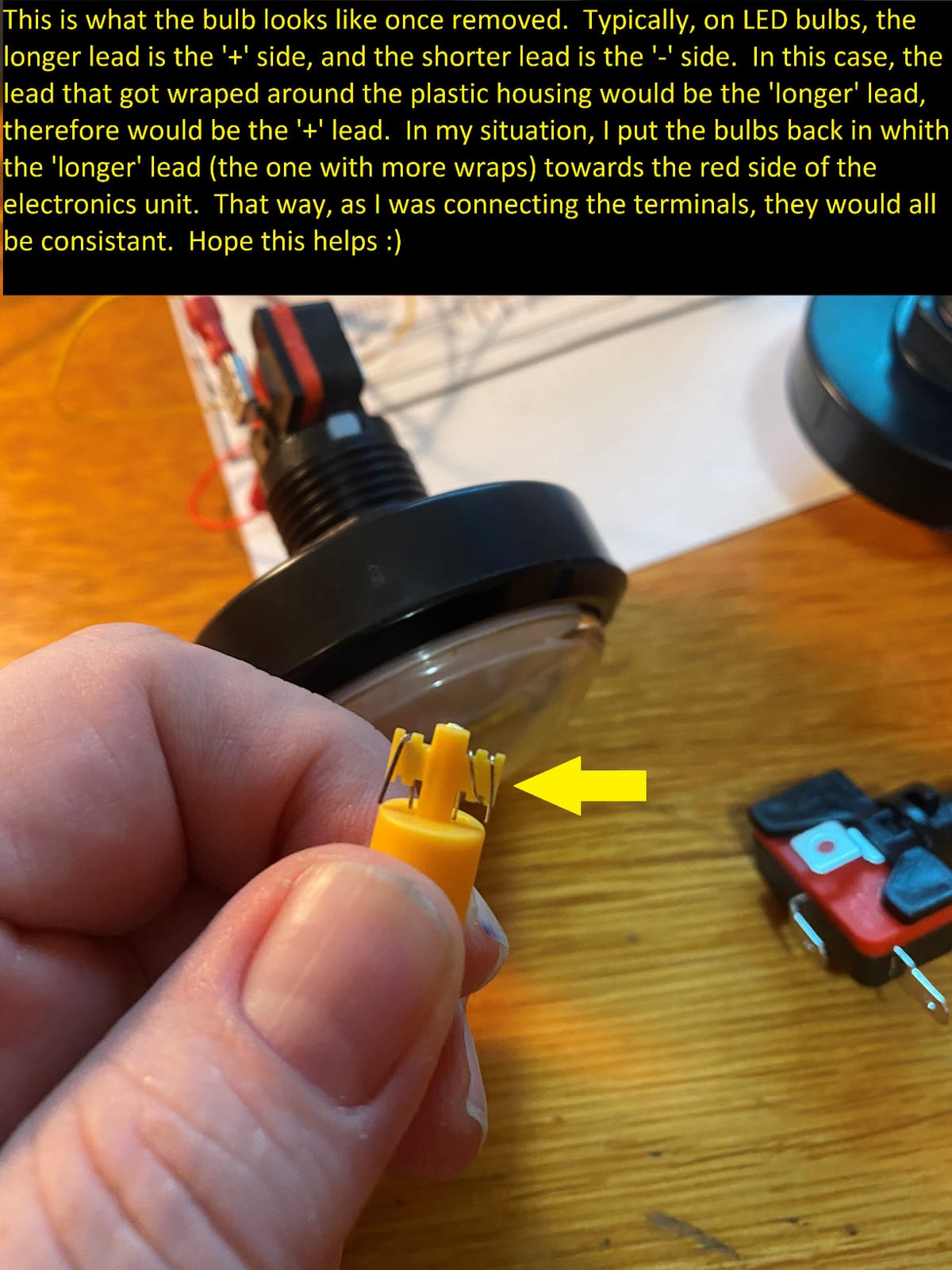
The one genuine weakness is documentation. The instructions are thin to the point of useless, and the LEDs are polarity sensitive, so if one does not light you simply pull it out, flip it, and reseat it. Once you know the trick it takes seconds.
Will These Fit My Coin Door?
Not as a straight swap into a vintage housing. A classic rectangular coin reject button sits inside a shaped holder with over an inch of travel, and these round 60mm units are designed for a drilled panel instead.
If your cabinet is an original Happ or Wells Gardner door, source an OEM style replacement for authenticity. If you are building or converting a cabinet, these are the better route and far easier to wire.
Wiring the LEDs Without Instructions
Treat the lamp and the switch as two separate circuits, because they are. The microswitch handles the coin or credit signal, and the LED only needs power and ground from your supply.
Wire all the LED positives to your 5V or 12V rail, ground the negatives, and run each switch to your encoder or JAMMA coin input. Test each LED before final assembly so you are not flipping polarity behind a finished panel.
2. RetroArcade.us Coin Door with Coin Selector – Best Complete Door
Arcade Game Coin Door with 1 Mechanical Coin selector for US 25 Cent, Jamma, Mame and More!
Single entry door
US quarter mech
Hardware included
4.5 lb steel
Pros
- True arcade look and feel
- Mechanical coin selector included
- All required hardware in the box
- Works great for the cost
- Ships quickly
Cons
- Light holder for the return button not included
- Return insert could light better
This is the door I recommend when someone wants a coin door that works the moment it is bolted on. It ships with a single mechanical coin selector set up for the US 25 cent coin, plus the hardware to mount it, and the whole assembly weighs a solid 4.5 pounds.
The look is the selling point. Reviewers consistently describe it as having the look, feel, and function of a true arcade coin door, and that authenticity is hard to fake with cheaper stamped blanks.
Drop a quarter in and it passes through the mechanism, trips the switch, and registers a credit. Push the return button with no coin jammed and nothing happens, exactly as it should, because the return is there to eject rejects rather than to add credits.
The single entry layout suits most home builds, where one coin slot is period correct and two would look busy on a narrow cabinet. Model number RA-COIN-DOOR-6-2 is the current version, listed as shipping within two to three days.
What Comes in the Box
You get the door, the mechanical selector, and the mounting hardware. The one gap is the light holder behind the return button, which is not included.
Buyers who want an illuminated return button source that holder separately, and a few note the return insert could be improved for better light spread. It is a minor parts run, not a redesign.
Fitting It to a Custom Cabinet
The door suits JAMMA, MAME, and general cabinet builds, and the 4.5 pound steel body sits flush against a standard thickness front panel.
Plan your cutout before ordering, and decide whether you are wiring the mech switch to a JAMMA harness, a keyboard encoder, or a controller board. Any of the three works, since the mech output is a simple switch closure.
3. EG STARTS Happ Style Start and Coin Buttons – Best Value
EG STARTS Happ Style 1 Player / 2 Player Start & Home Push Buttons With Micro Switch Compatible For Arcade Machine Games Mame Jamma Parts
Happ style buttons
28mm hole mount
Adjustable shaft
Spare switches
Pros
- Great tactile response
- Perfect for MAME builds
- Easy to install
- Seller includes extra microswitches
- Adjustable shaft length
- Looks like legit arcade buttons
Cons
- Markings may rub off over time
- Limited to 28mm hole mounting
For the money, this pair is hard to beat. You get a one player and a two player start button in the classic Happ style, and they look convincing enough that guests will not question them on a home arcade panel.
I have used these as coin buttons on a bench build, and the tactile response is the highlight. The switch engages with a definite snap rather than a mushy travel, which makes repeat credits feel deliberate.
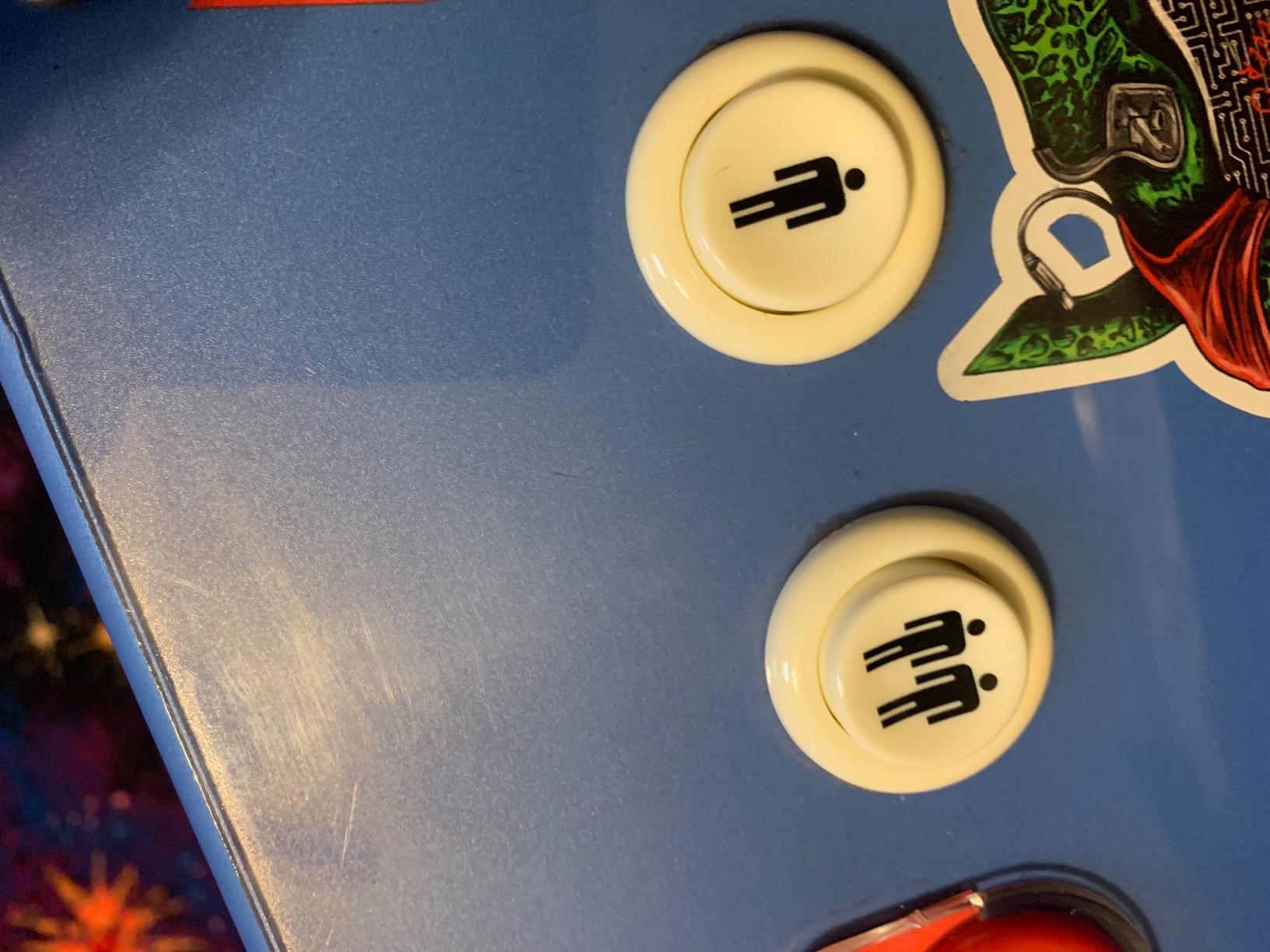
Each button mounts in a 28mm hole and carries a horizontally attached microswitch with a 4.8mm terminal. The switches are rated for 10 million cycles, which is far beyond anything a home machine will ever see.
The shaft length is adjustable, so the buttons clear a 3/4 inch wooden control panel as easily as a thin metal one. That flexibility saves you from recessing a panel or hunting for spacer hardware.
The seller includes extra microswitches in the box, which tells you they know exactly which part eventually fails. Having spares on hand means a dead switch is a two minute fix instead of a week of downtime.
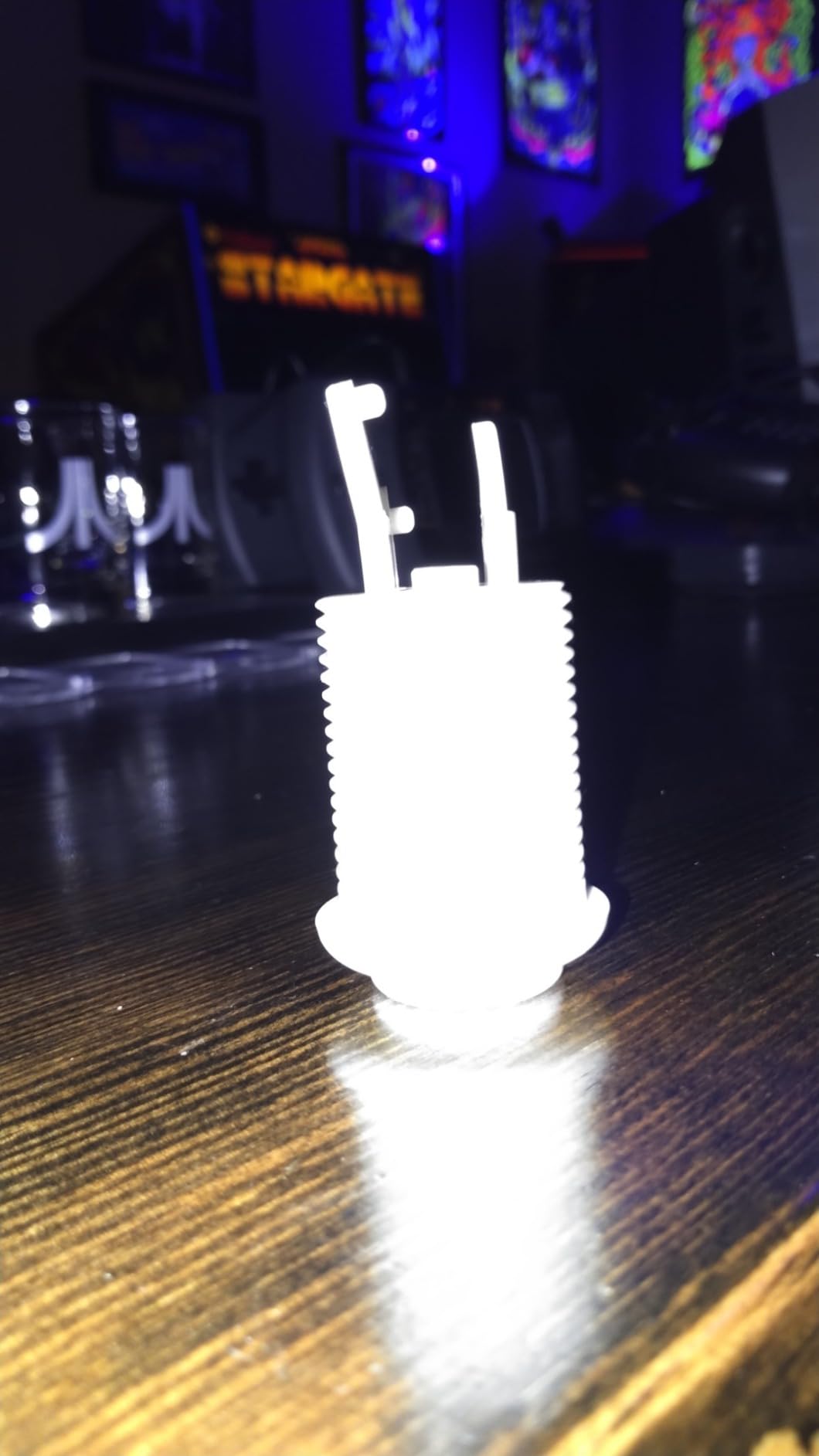
Panel Thickness and Hole Size
Measure twice here, because these are built around a 28mm hole and there is no adapter in the box for anything larger.
If your panel already has oversized holes from previous buttons, an adapter ring from the same ecosystem fixes it cheaply. On fresh wood, a 28mm hole saw makes a clean cut in one pass.
Using Them as Free Play Credit Buttons
This is where a coin button earns its keep on a home machine. Wire the switch across the same terminals your coin mech would use, and every press registers a credit.
On an encoder, map the switch to the coin key. On a JAMMA harness, connect it to the coin switch and ground pins. Either way, keep the machine’s original door intact and simply add a discreet credit button.
4. RetroArcade.us Cash Access Coin Door Blank – Best Multi-Use Blank
RetroArcade.us Arcade Game Cash Access Coin Door Blank, Jamma, MAME, Pinball Systems with Hardware
Steel blank door
2.65 lb build
Coin slot openings
90 day warranty
Pros
- Solid strong metal construction
- Installs easily
- 90 day warranty
- Freestanding or tabletop mounting
- Great for the price
Cons
- Lock sold separately
- Coin mechanism not included
This blank door is the pragmatic middle ground in the RetroArcade.us lineup. It is built from alloy steel and aluminum, weighs 2.65 pounds, and gives you the coin slot openings and the return styling without the mechanism.
I like blanks for home machines that will never take real coins. You keep the arcade silhouette on the front of the cabinet and skip the maintenance that comes with a mechanical acceptor.
Reviewers rate the construction highly, with 83 percent of buyers giving it five stars, and the most common praise is how easily it installs. The 90 day warranty is a reasonable safety net on a part at this level.
The styling is finished rather than raw, with a multicolor finish that suits JAMMA cabs and MAME builds equally well. Nothing about it reads as a unfinished project part once it is mounted.
What You Still Need to Buy
Two things ship separately: the lock and the coin mechanism. Neither is a dealbreaker, but you should plan for both if you want a fully functional coin door rather than a display piece.
If the machine stays on free play, you only need the lock for cabinet security, and the mech openings can stay empty or hold dummy mechs for the look.
Mounting Options and Panel Fit
The face measures 7.33 inches wide by 10 inches tall, and the door supports freestanding and tabletop mounting as well as standard panel mounting.
That flexibility makes it useful beyond arcade cabinets. Builders use this style of blank on countertop units, prize boxes, and custom props where a coin opening is wanted without a full mechanism behind it.
5. RetroArcade.us Wells Gardner Style Two Entry Coin Door – Best for Pinball
Arcade – Pinball game two entry Coin Door, Wells Gardner Style Coin Door
Two entry door
Wells Gardner style
Coin mechs included
8 lb steel
Pros
- Heavy solid metal construction
- Includes coin mechs and microswitches
- Fits with little modification
- Works with RetroPie and virtual pinball
- Ships quickly
Cons
- Microswitches may arrive damaged or missing lever wire
- No carriage bolts included
- May need minor tweaking of trips
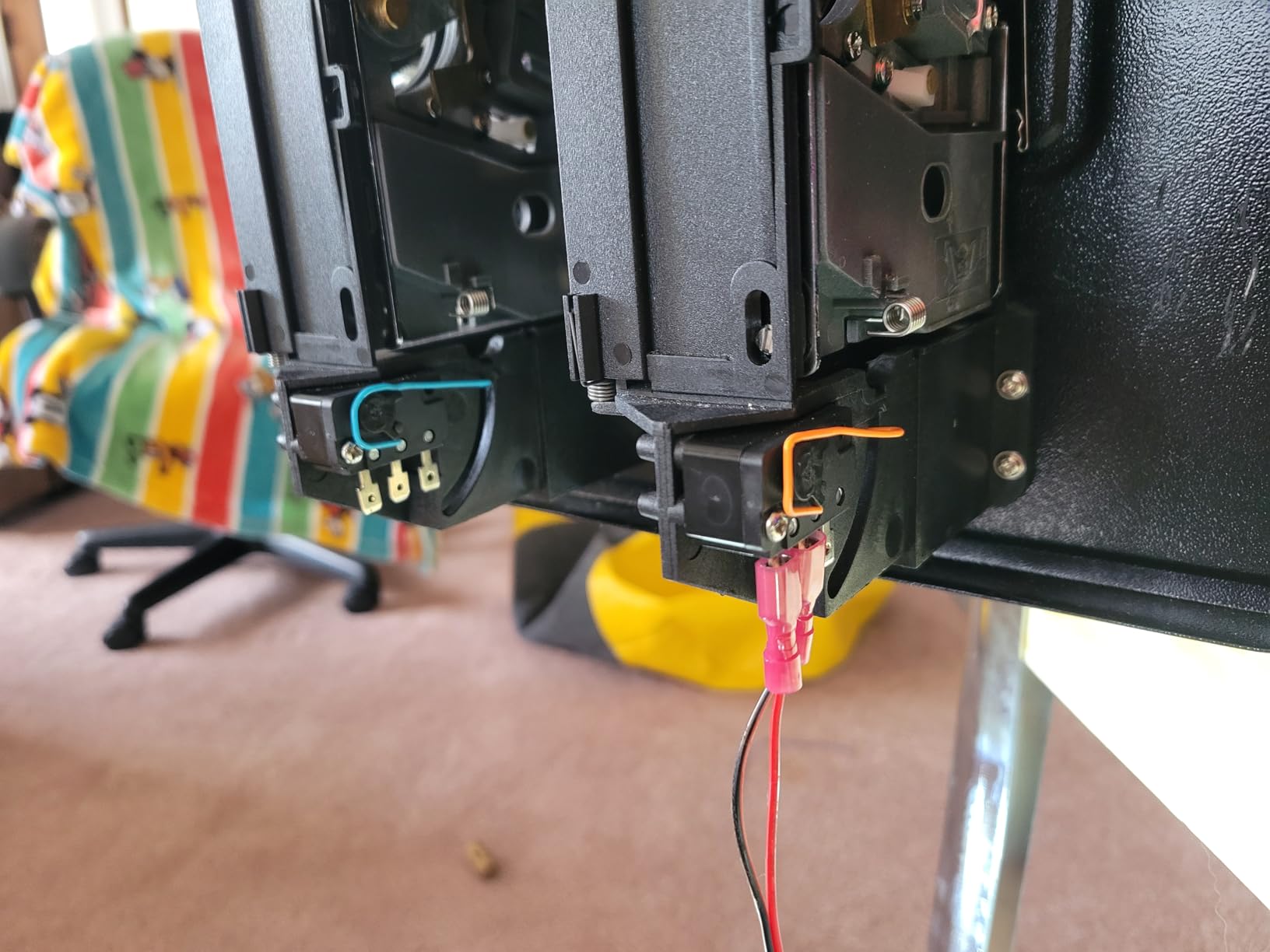
This is the door for a pinball restoration or a two player cabinet where you want both coin entries live. It follows the classic Wells Gardner styling that operators will recognize instantly, and it weighs a full 8 pounds.
That weight tells you what you need to know about the build. Reviewers describe it as heavy, solid metal, and several report it fit their cabinets with little modification, which is not something you hear often about replacement coin doors.
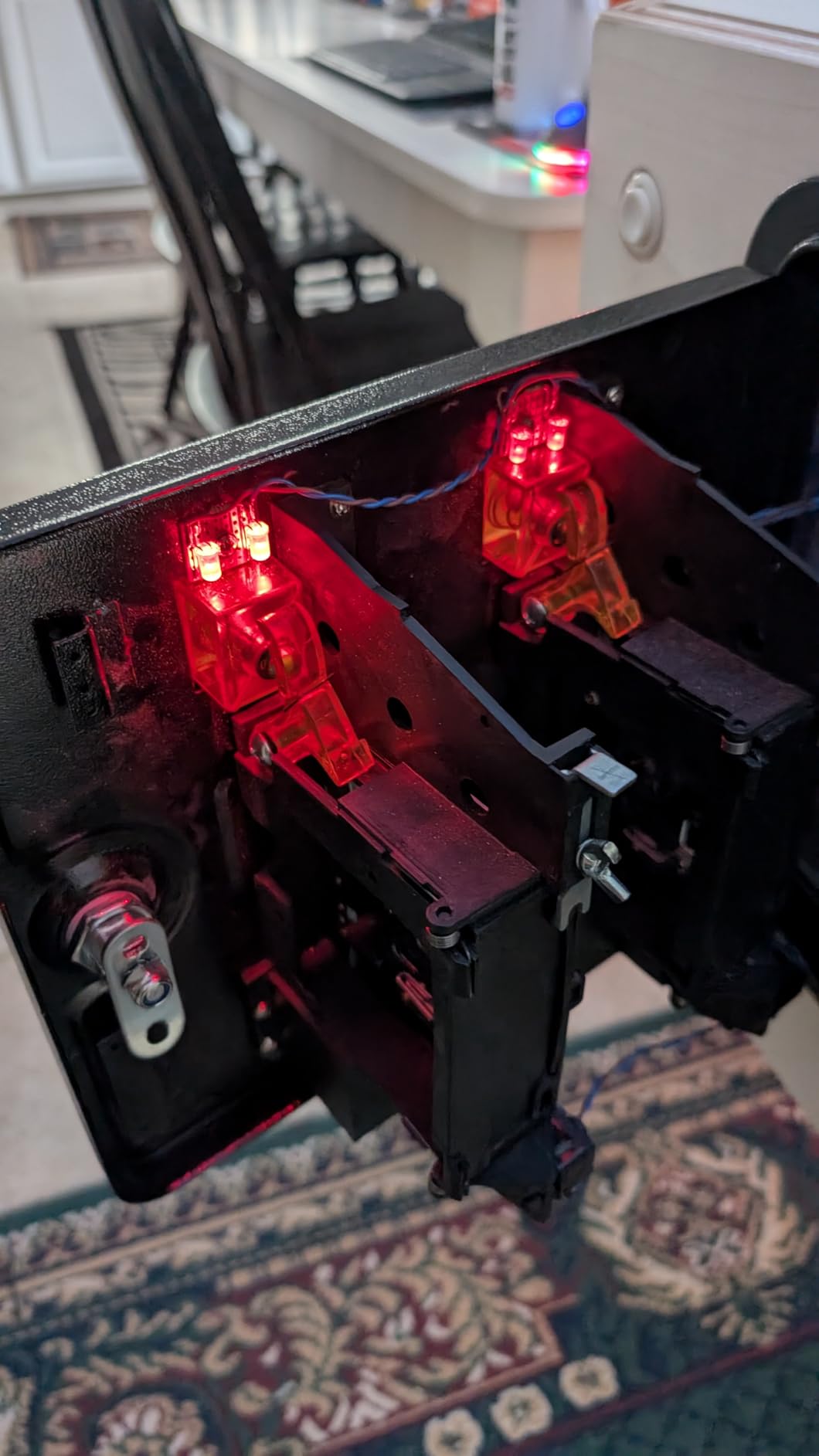
Both coin mechs and their microswitches are included, so this is a complete working assembly rather than a blank. Buyers have used it successfully with RetroPie builds and virtual pinball cabinets, wiring the mech switches straight into their controllers.
The aluminum and steel construction matches the feel of an original operator door, and the two entry layout is exactly what most classic pinball cabinets call for. At 8 pounds it also dampens cabinet rattle in a way lighter blanks never manage.
Quality control is the weak spot. A few buyers received microswitches with a damaged or missing lever wire, and the trips occasionally need minor tweaking to register reliably.
Coin Mech Compatibility
The included mechs are mechanical units in the standard form factor, and the door follows the Wells Gardner layout that fits most American cabinets.
Check the trip adjustment if a coin passes through without registering, and check the switch lever if credits fire twice. Neither fix needs parts, just patience and a small screwdriver.
Virtual Pinball and RetroPie Wiring
Treat each mech as a simple switch. One terminal to your controller input, the other to ground, and the coin entry becomes a credit key.
On a virtual pinball cabinet, map it to the coin switch in PinMAME so the door behaves like the real machine. On RetroPie, map it to the coin or select function in RetroArch.
6. UNIQANTIQ Brass Coin Slot Plate – Best Slot Plate
UNIQANTIQ HARDWARE SUPPLY Shaped Stamped Brass Сoin Slot Cover – 2 3/4″ Long x 1-1/8″ Wide – Coin Slot Plate for Bank, Money Box | BX1-B
Stamped brass plate
2.75 x 1.13 inch
Hardware included
1.25 inch slot
Pros
- Well made stamped brass
- Mounting hardware included
- Good size for custom coin banks
- Solid build quality
Cons
- Slot opening may be narrow for some coins
- Limited stock availability
This is the only true slot plate on the list, and it is a lovely piece of old school hardware. It is stamped from solid brass, measures 2.75 inches long by 1.13 inches wide, and ships with the mounting screws you need.
I used one on a handmade cash box for a gameroom counter and the finish alone justified the purchase. Fresh out of the bag it reads as a quality part, and it only looks better as the brass ages.
The slot opening measures 1.25 inches long by 3/16 of an inch wide. That is generous in length but tight in width, which is the single most important thing to check before you order.
At roughly 40 grams it is a substantial plate rather than a flimsy foil stamp, and it sits flat on wood, acrylic, and painted steel without edge lift around the screws.
Slot Size and Coin Clearance
A US quarter is about 0.07 inches thick, so it passes through the 3/16 inch opening with room to spare. The same goes for most coins and thin tokens.
Thicker arcade tokens, oversized novelty coins, and anything with a raised rim may catch. Test your coin against a 3/16 inch gap before committing if exact fit matters for your project.
Where This Plate Works Best
Think banks, money boxes, donation containers, and prop builds rather than arcade coin doors. This is a cover plate for a flat surface, not a reject bezel for a mechanism.
Restorers also use plates like this to dress up a custom front panel where a full coin door would be overkill. It gives you the coin slot silhouette with almost none of the plumbing.
7. RetroArcade.us Single Entry Coin Door Blank – Best Slim Blank
RetroArcade.us Arcade Game Single Entry Coin Door Blank, Coin mech’s and Lock Sold Separately
Single entry blank
Steel build
7.8 x 10.9 inch
90 day warranty
Pros
- Solid steel construction
- Great quality and fast shipping
- Works better than expected
- Perfect for arcade and virtual pinball builds
- Realistic appearance
Cons
- Coin mechanism not included
- Lock not included
This single entry blank is the slim option if you do not need two coin slots on the front of your machine. The face measures 7.8 inches wide by 10.9 inches tall, with a steel build and a retro finish that suits 80s style cabinets.
At 3.5 pounds it is noticeably lighter than the two entry door, which makes it easier to handle during a cabinet build and plenty stiff once it is screwed down.
Buyers describe it as better than expected for the quality, and it shows up regularly in arcade cabinet and virtual pinball build logs. The 90 day warranty matches the rest of the RetroArcade.us range.
Rating distribution tells a consistent story here, with 64 percent five star and no two star or one star reviews at all. That floor matters more than the peak when you are ordering a part sight unseen.
Blank Versus Complete Door
A blank is honest about what it is: the door, the slots, and the return styling, with no mech and no lock in the box. That is ideal for free play machines and display cabs.
If you want coins to actually register, add a mechanical coin selector and a lock as separate line items. Going blank first and adding a mech later is a perfectly reasonable path.
Wiring It for Credits
Since there is no mech, the credit switch has to come from somewhere else. Most builders mount a small push button behind the coin slot area or wire the coin return button itself as the credit trigger.
The coin return as credit button is a popular mod in the r/cade community because it keeps the front of the cabinet period correct while giving you a free play credit switch in exactly the right place.
8. EG STARTS Chrome LED Coin Buttons – Most Proven Pick
EG STARTS Arcade Buttons Chrome Silver Plated 5V & 12V LED Iit Push Button
Chrome LED buttons
1P 2P and 2 coin
24 to 28mm hole
10M cycle switches
Pros
- LED illumination looks great
- Easy LED color swaps
- Attractive chrome finish
- 10 million cycle microswitches
- Works with LEDBlinky
- Good value
Cons
- Paper labels look cheap when lit
- Caps rotate and lose orientation
- No polarity markings on LEDs
- Slightly smaller than standard buttons
No other set in this comparison has been put through the wringer like this one. It carries 345 reviews at a 4.4 average, with 65 percent five star ratings, which is a serious sample size for arcade parts.
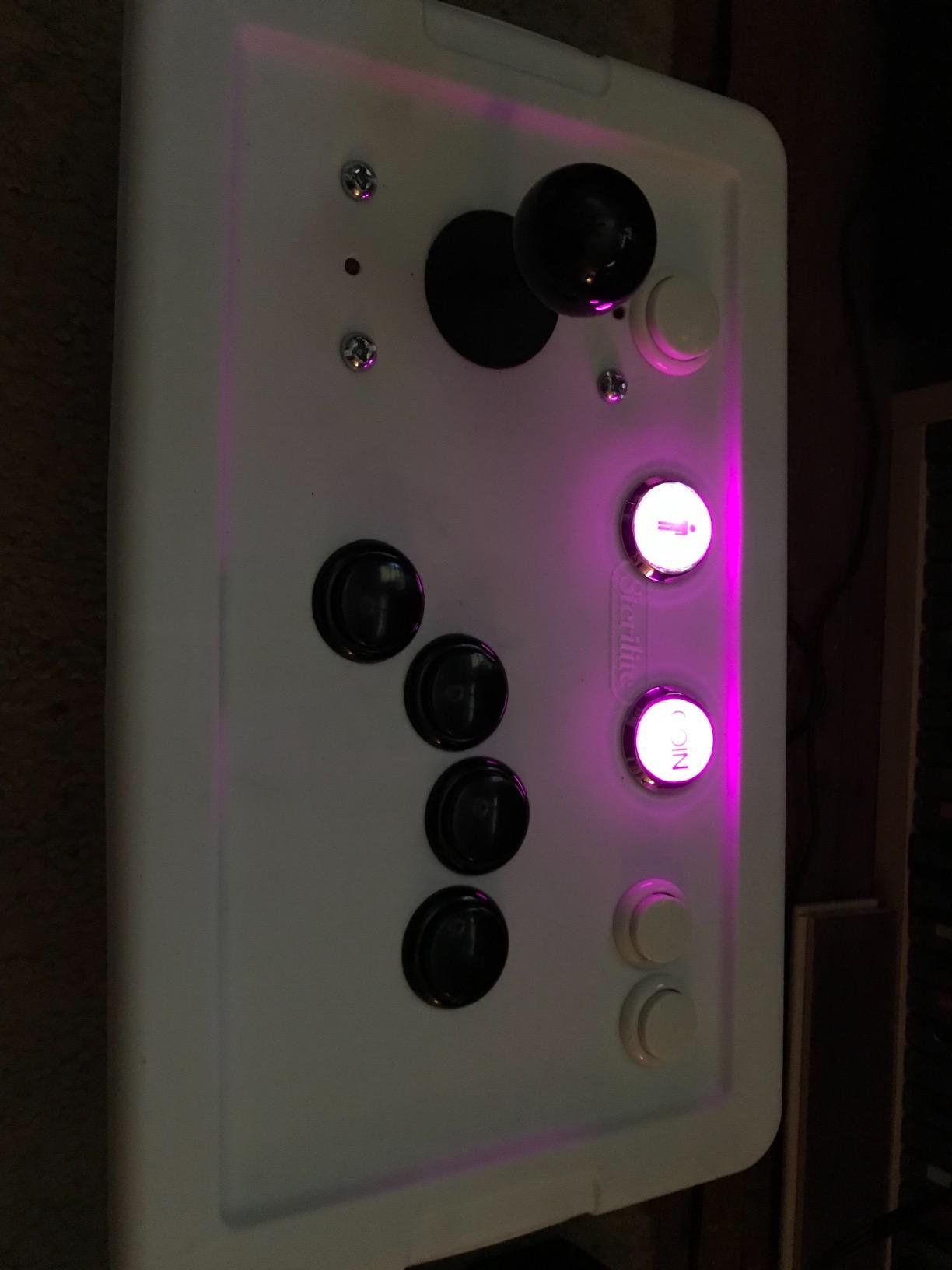
The chrome bezel is the visual draw. On a dark cabinet these buttons read as premium, and the set covers the whole control panel in one purchase with one player, two player, and two coin buttons.
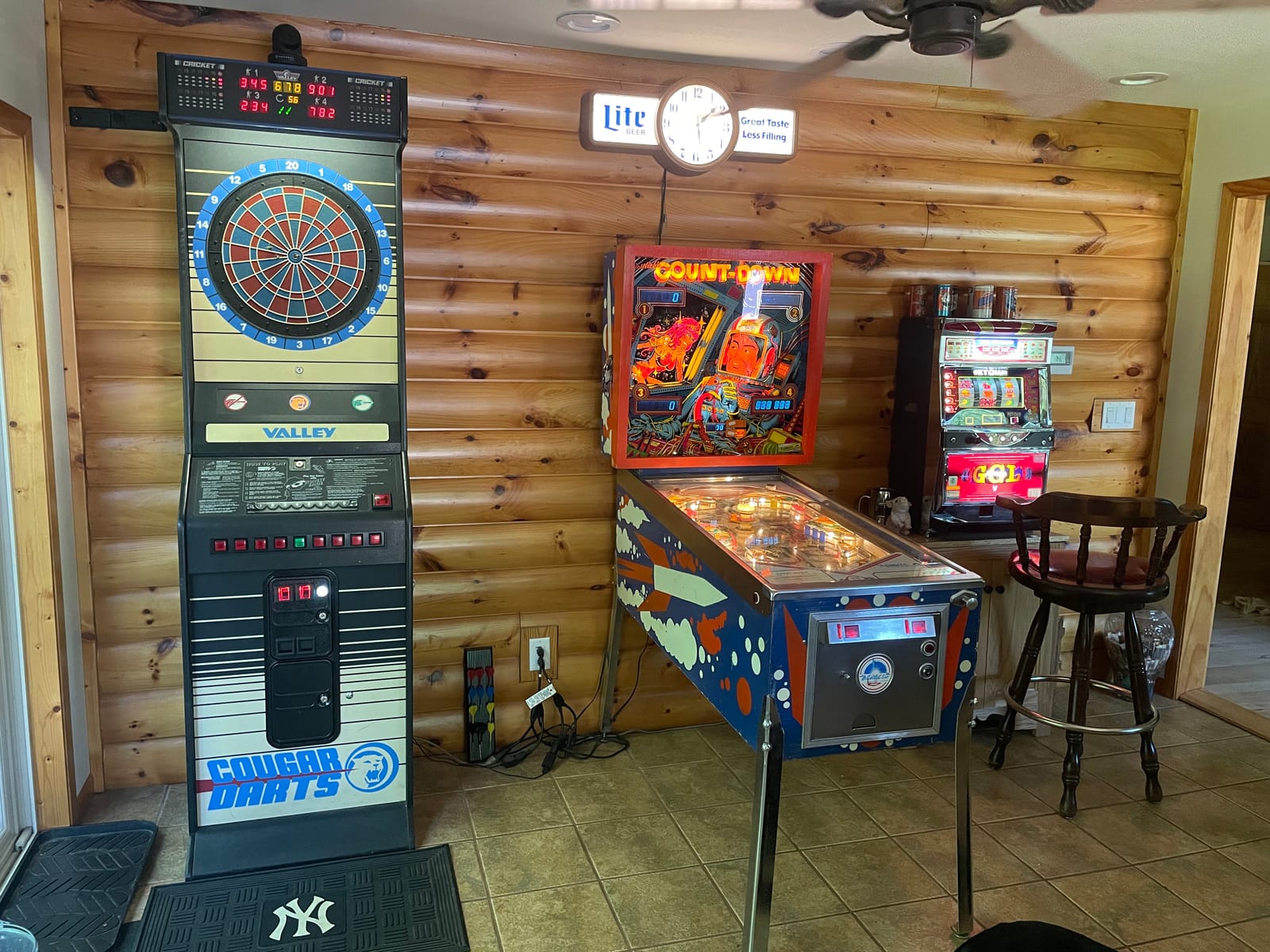
Each button needs a 24mm to 28mm mounting hole, measures 32mm across the plunger, and reaches a maximum depth of 65mm to the bottom of the microswitch. Switches are tested to 10 million cycles.
The LEDs run on 5V or 12V and can be swapped to other colors without replacing the button, which makes matching your cabinet theme a five minute job. Builders report good results driving them with LEDBlinky for dynamic lighting.
The finish is chrome plated rather than solid metal, which is worth knowing before you order. It wears well on a home cabinet but is not the part to choose for a route machine seeing daily public use.
Keeping the Caps From Spinning
The most common complaint is that the clear caps rotate and the printed labels end up sideways. It is cosmetic, and it is fixable.
A tiny drop of glue or a shim of tape under the cap holds the orientation. Several reviewers also replace the paper labels with printed inserts, which looks far better once the LED is lit.
Sorting Out LED Polarity
The LED terminals are not marked positive or negative, so expect some trial and error on first wiring. Low current means there is no risk in getting it backwards, the LED simply stays dark.
The efficient method is to bench test each button before installation. Once you know the polarity, mark the wire or the terminal with a paint pen and the panel goes together without guesswork.
What Are Coin Return Buttons and Slot Plates?
Coin return buttons, also called reject buttons, are the spring loaded plungers on a coin door that push rejected or jammed coins back out to the player, while slot plates are the shaped metal panels that guide a coin from the outside of the cabinet into the acceptor. Together they form the part of the coin door that players see and touch on every single credit.
The reject button sits directly below or beside the coin slot on most doors. Behind it are a return spring, a plunger, and often a microswitch, and pressing it should eject whatever the mechanism refused.
The slot plate does the opposite job. It controls the entry path so coins arrive at the acceptor in the correct orientation, and it blocks anything too large or too small from entering the mechanism at all.
Both parts wear out through pure repetition. Springs lose tension, plunges go gritty, and plates get scratched or bent, which is why arcade cabinet repair and pinball restoration projects so often start at the coin door.
How Does the Arcade Coin Mechanism Work?
An arcade coin mechanism accepts a valid coin, signals a credit to the game board, and routes anything invalid to the return chute. It does all of this with a mechanical acceptor that tests the coin physically before it ever reaches a switch.
Here is the path a quarter takes through a typical mechanical coin mech:
1. The coin drops through the slot plate and into the entry channel in the correct orientation.
2. A magnet and a calibrated rail test the coin’s metal content and size as it rolls down the cradle.
3. A valid coin passes the gate, trips a microswitch lever on the way down, and registers a credit on the harness.
4. An invalid or damaged coin fails the gate and falls into the return chute instead.
5. The player presses the coin return button to eject that coin from the chute back out of the door.
That switch closure is the entire interface with the game. Whether the machine is a vintage JAMMA board or a modern Raspberry Pi running an emulator, the coin input is just a momentary switch, which is exactly why the free play credit button mod works.
How to Choose the Right Coin Return Button and Slot Plate?
Choosing well here comes down to fit first, function second, and looks third. Here is how we break the decision down before spending money on coin door parts.
Fit and Compatibility Come First
Measure your existing door before you order anything. Manufacturer layouts differ, and a button that fits a Happ door will not automatically fit a Williams or Zaccaria housing.
The common standards to know are Happ and Wells Gardner for American arcade doors, Williams and Bally for classic pinball, Midway for many 90s cabinets, and Zaccaria for European machines.
Of those, Happ and Wells Gardner are the most trusted names in the community, and most reproduction doors follow one of those two layouts. When in doubt, match the style of door you already have rather than mixing families.
Switch Quality and Button Travel
Look for microswitches rated in the millions of cycles, because coin switches get hammered in commercial use and still see plenty of action at home. Both EG STARTS sets in this guide use switches tested to 10 million cycles.
Travel distance matters too. Forum regulars point out that original coin return buttons need over an inch of travel to reach the reject mechanism, which is why short throw buttons never feel right as direct replacements.
Materials and Finish
Steel and aluminum doors hold their shape and take a lock without flexing. The doors in this lineup run from 2.65 to 8 pounds, and the heavier two entry door genuinely feels like an original part.
For slot plates, stamped brass is the traditional choice and it ages beautifully. Chrome plated bezels suit modern builds, and plexiglass buttons are the base for custom painted designs.
Color Choices and the Red Standard
Red is the universal arcade standard for reject buttons, and that consensus comes straight from the collector community. If you are restoring a machine to stock, red is almost always correct.
Color mismatch is a real frustration for restorers because most replacements ship red regardless of what the machine originally had. If originality matters, photograph your old button before it goes in the bin and check specialist listings for the correct shade.
Builders have more freedom. Custom plexiglass buttons with painted or burned designs, colored LEDs, and mixed color sets all show up in build threads, and nobody is checking your homework on a home cabinet.
LED Upgrades
There is no true universal drop-in LED for original rectangular reject buttons, which is a gap the forums have discussed for years without a clean solution. Builders work around it with light holders, LED strips behind the return, or by switching to round illuminated buttons entirely.
If lighting the coin area is the goal, the round 60mm and 32mm LED button sets in this guide are the practical answer. You get designed-in illumination instead of a retrofit, and swapping LED colors later is trivial.
Where to Buy Coin Door Parts
The specialist retailers the community recommends most are TwistedQuarter, Pinball Life, and Arcadeshop. All three carry coin doors, reject buttons, slot plates, and mechanisms with detailed compatibility notes, which matters more than anything else when you are matching a vintage part.
Amazon suits complete doors and modern button sets well, especially the EG STARTS range. eBay is a last resort for obscure OEM pieces, where the risk of inconsistent quality is highest.
For Stern pinball coin door springs specifically, expect a hunt. Owners report that those springs are very hard to find, so grab them when you see them.
How to Install a Coin Return Button and Slot Plate?
Installation is straightforward once the door is off the cabinet and on a bench. Here is the process we use, plus the fixes for the two most common complaints.
Step by Step: Swapping a Reject Button
1. Unplug the machine and open the coin door, then remove it from the cabinet if the hardware allows easier bench access.
2. Photograph the wiring before disconnecting anything, especially if a microswitch is attached to the reject assembly.
3. Release the old button from its housing. Most vintage assemblies use an E-clip or a roll pin, and this is the step people underestimate.
4. Transfer or replace the return spring, then seat the new button and secure it with the original clip or pin.
5. Reconnect the switch wiring, remount the door, and test the travel. The button should return on its own every time.
6. For a slot plate, remove the old screws, align the new plate over the entry channel, and drive the mounting hardware in without overtightening thin brass.
When the Button Sticks or Stops Clicking
A stuck button is usually a coin jam rather than a broken button. Open the door, clear the return chute, and check for a coin wedged at the gate before you order parts.
If the button moves but nothing clicks, the microswitch or its lever wire is the suspect. Levers bend over time and can often be nudged back into position with needle nose pliers.
If the button will not return, the spring is worn or missing. That is the part that is genuinely hard to source for some pinball doors, so check the specialist retailers before improvising.
The Free Play Credit Button Mod
Wiring the coin return button as a credit switch is the most requested modification in the forums, and it is genuinely simple. It works because a coin input is nothing more than a momentary switch.
1. Identify the coin switch terminals on your door, which are the two contacts the mech closes when a valid coin passes.
2. Wire the return button’s microswitch across those same two terminals so it mirrors the mech signal.
3. If you prefer a separate button, mount a small switch behind the coin slot or use a Happ style button elsewhere on the panel.
4. Set the game itself to free play in the service menu where the option exists, so credits are never actually required.
5. Test with the door open and watch for double credits, which means the switch is bouncing and needs a debounce in software or a cleaner switch.
Purists keep the mech installed and functional so the cabinet can be returned to coin operation later. Everyone else just enjoys pressing the return button for a free credit, which never stops feeling like a small cheat code.
Frequently Asked Questions
How does the arcade coin mechanism work?
A coin drops through the slot plate into the acceptor, where a magnet and calibrated rail test its size and metal content. A valid coin trips a microswitch lever on its way down, which sends a credit signal to the game board, while an invalid coin is diverted to the return chute for the player to eject with the coin return button.
How do you set a coin mechanism to free play on an old arcade machine?
Enter the service menu and switch the game to free play if the option exists. If it does not, wire a small switch or the coin return button’s microswitch across the same two terminals the coin mech closes, so pressing it sends the identical credit signal. Keep the mech installed so you can restore coin operation later.
Are coin return buttons universal across arcade machines?
No. Red reject buttons are the universal arcade standard in appearance, but the housings, plunger shapes, and mounting clips differ between Happ, Wells Gardner, Williams, Bally, Midway, and Zaccaria doors. Measure your housing and match the manufacturer style before ordering a replacement.
Why does my coin return button get stuck or stop clicking?
A stuck button is usually a coin jammed in the return chute, so clear the chute first. A button that moves without clicking points to a worn microswitch or a bent lever wire, which can often be bent back into shape. A button that will not spring back needs a new return spring.
Where can I buy coin return buttons and pinball coin door parts?
The specialist retailers most recommended by the arcade and pinball communities are TwistedQuarter, Pinball Life, and Arcadeshop, all of which publish compatibility details. Amazon carries complete doors and modern button sets like the EG STARTS range, while eBay is best reserved for obscure OEM pieces.
Final Verdict on the Best Coin Return Buttons and Slot Plates
Our top pick is still the EG STARTS 60mm LED coin button set, because lighting the coin area is the upgrade that changes how a cabinet feels every time you walk past it. Add the spare switches and the five color options and it is the strongest all round choice in the lineup.
If you want a door rather than buttons, the RetroArcade.us coin door with the US quarter selector is the most complete package, and the Wells Gardner style two entry door is the one to beat for pinball restoration work. On a tight budget, the Happ style pair and the brass slot plate both punch well above their weight.
Whatever you choose, measure the door first, check what ships separately, and remember that the coin return button doubles as a free play credit switch with about five minutes of wiring. That is the beauty of the best coin return buttons and slot plates in 2026: a small part of the cabinet that carries a disproportionate share of the experience.