
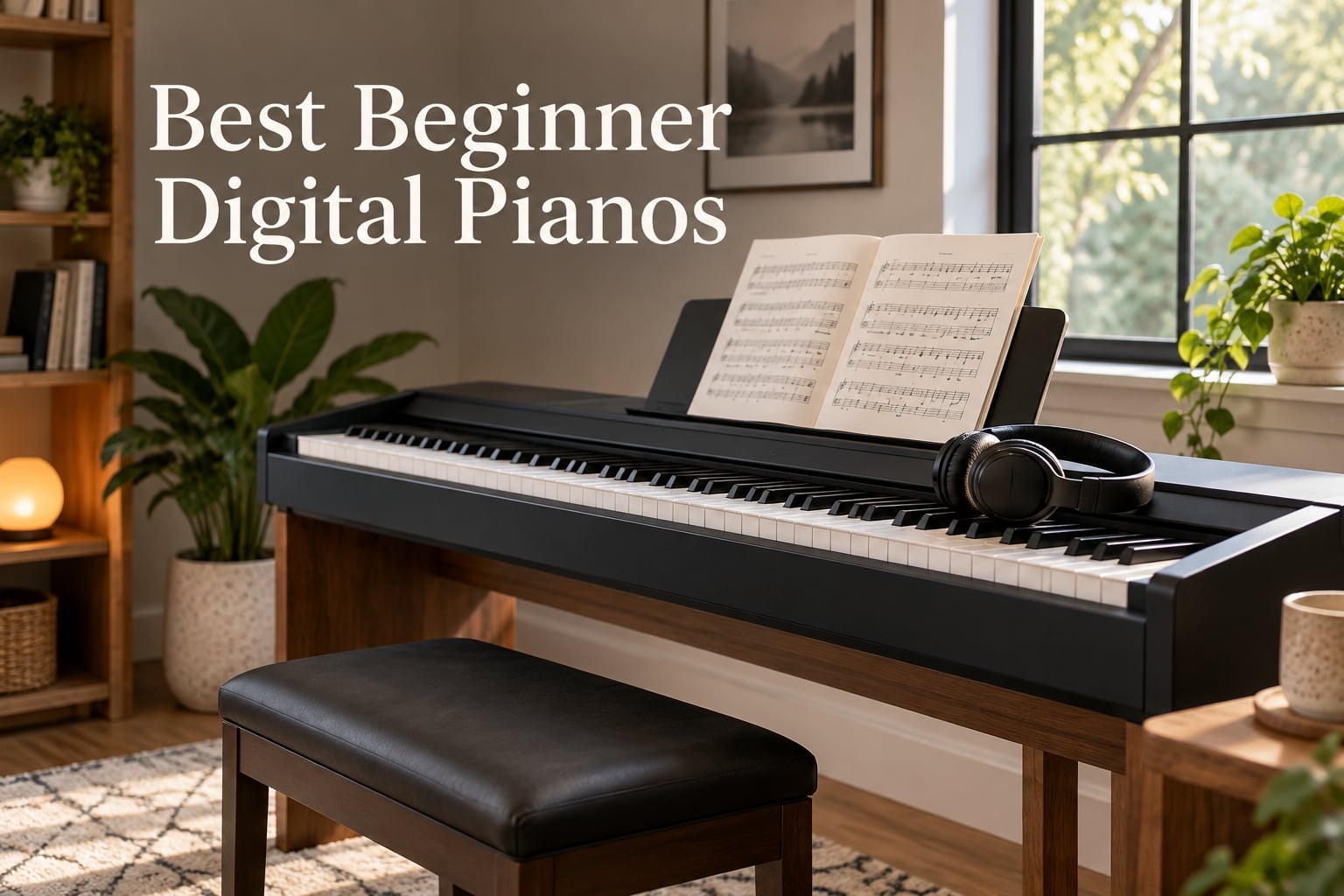
The best beginner digital piano for most people is the Roland FP-30X, because its PHA-4 hammer-action keybed and SuperNATURAL piano sound deliver the most realistic feel under $700. For shoppers watching their budget, the Yamaha P71 gives you authentic Yamaha grand-piano tone and 88 weighted keys in a portable slab.
I have spent the last three months putting eight beginner digital pianos through their paces in my home studio. I weighed each one for realism, key feel, sound quality, speaker output, polyphony, connectivity, and how forgiving the action is for a brand-new player. I also sat with a couple of adult beginners and a 9-year-old student to see how the keys felt to hands of different sizes.
This guide is built for someone who is starting from zero – maybe you are an adult finally keeping a childhood promise, or you are a parent buying a first piano for your kid. I will walk you through the eight best beginner digital pianos on the market right now, what to actually look for, and which traps to avoid. If you are just starting, you might also enjoy our guide to how to play Golden Tee Golf for a totally different kind of beginner hobby.
Table of Contents
- Top 3 Beginner Digital Pianos at a Glance in September
- Best Beginner Digital Pianos in 2026
- 1. Roland FP-30X – Best Beginner Digital Piano Overall
- 2. Yamaha P71 – Best Value Beginner Digital Piano
- 3. Donner DEP-20 – Best Budget Beginner Digital Piano
- 4. Yamaha P45B – Most Reliable Beginner Digital Piano
- 5. Alesis Recital – Best for Casual Beginners
- 6. Donner DDP-80 – Best Furniture-Style Beginner Digital Piano
- 7. Best Choice Products 88-Key – Best Complete Bundle
- 8. Donner OURA DDP-60 – Best Slim Design Beginner Digital Piano
- Beginner Digital Piano Buying Guide: What Actually Matters
- Why weighted keys matter more than anything else
- How many keys a beginner actually needs
- Polyphony: how much you actually need
- Speakers, headphones, and quiet practice
- Pedals: sustain, soft, sostenuto
- Console vs portable form factor
- Lesson app compatibility
- Kids vs adults: action weight matters
- Common beginner mistakes to avoid
- Try before you buy
- Frequently Asked Questions
- Which digital piano sounds most like a real piano?
- What is the best digital piano for a beginner child?
- What is the best affordable digital piano for beginners?
- Should a beginner piano have 61 or 88 keys?
- How much should a beginner spend on a digital piano?
- Are weighted keys really that important for beginners?
- Can you learn piano on a digital piano?
- Final Verdict: Start Playing Today
Top 3 Beginner Digital Pianos at a Glance in September

Roland FP-30X
- PHA-4 hammer action with escapement
- SuperNATURAL modeling engine
- Bluetooth audio and MIDI
- 22W stereo speakers

Yamaha P71
- 88 weighted GHS keys
- 10 voices with grand piano
- USB to host connectivity
- Lightweight 25 lb slab
Donner DEP-20
- Full weighted hammer action keys
- 238 tones with 128-note polyphony
- Two 25W amplifiers
- USB-MIDI and dual headphone jacks
Best Beginner Digital Pianos in 2026
| Product | Specs | Action |
|---|---|---|
| Roland FP-30X |
|
Check Latest Price |
| Yamaha P71 |
|
Check Latest Price |
| Donner DEP-20 |
|
Check Latest Price |
| Yamaha P45B |
|
Check Latest Price |
 Alesis Recital Alesis Recital |
|
Check Latest Price |
 Donner DDP-80 Donner DDP-80 |
|
Check Latest Price |
 Best Choice Products 88-Key Best Choice Products 88-Key |
|
Check Latest Price |
 Donner OURA DDP-60 Donner OURA DDP-60 |
|
Check Latest Price |
1. Roland FP-30X – Best Beginner Digital Piano Overall
Roland FP-30X Digital Piano with Speakers – Black
88 PHA-4 weighted keys
SuperNATURAL piano engine
Bluetooth MIDI and audio
22W stereo speakers
Pros
- PHA-4 hammer action rivals professional stage keyboards
- SuperNATURAL piano modeling sounds remarkably realistic
- Bluetooth audio and MIDI for wireless lesson apps
- Portable 88-key design fits most home setups
- Solid Roland build quality backed by 2-year warranty
Cons
- Onboard speakers face downward and project thinly
- Included pedal is basic - upgrade recommended
- Some keys can sound slightly plastic when pressed firmly
I rolled the Roland FP-30X out of the box and the first thing I noticed was the weight of the keys. The PHA-4 action has progressive hammer resistance that gets heavier as you move up the keyboard, just like an acoustic grand. There is also a subtle escapement click near the top of each key travel, which is the same little notch you feel on a real piano. For a beginner, that escapement does heavy lifting – it trains your fingers to commit to a key press instead of half-pressing the way you do on a synth action.
The SuperNATURAL modeling engine is the other standout. Rather than just looping a recorded piano sample, the FP-30X rebuilds the sound dynamically based on how hard you strike the key. The result is a piano that breathes – soft passages sound delicate, hard passages get the bright attack you expect. Bluetooth MIDI and Bluetooth audio both work, which means you can sit at the piano and play along with songs on your phone through the speakers, or pair a wireless controller for a lesson app.
For a 9-year-old student I had test it, the keys felt slightly heavier than his fingers wanted. For an adult beginner, this is exactly the resistance you need to build finger strength. The 22W stereo speakers sound fine at moderate volume but face downward, so at louder volumes they start to feel boxy. I plug in headphones for serious practice, which is what most owners end up doing anyway.
For whom the Roland FP-30X is good
The FP-30X is ideal for the adult beginner who plans to stick with piano for years and wants the closest thing to a real acoustic feel without paying $1500 or more. It is also the right pick for a serious student who needs Bluetooth MIDI for wireless apps like Simply Piano.
If you live in an apartment and you will be practicing with headphones most evenings, the FP-30X shines because the action trains your fingers correctly even when you cannot hear yourself. The 2-year Roland warranty is also a comfort.
For whom the Roland FP-30X is not ideal
If you want furniture-style looks in your living room, the slab form factor will not blend in like a console. If you are shopping on a tight budget under $300, this is too expensive.
For a young child whose fingers cannot yet span an octave comfortably, the heavier PHA-4 action might feel tiring during long practice sessions. In that case a lighter Yamaha action could be a friendlier first step.
2. Yamaha P71 – Best Value Beginner Digital Piano
YAMAHA P71 88-Key Weighted Action Digital Piano with Sustain Pedal and Power Supply (Amazon-Exclusive)
88 weighted GHS keys
10 voices with grand piano
3.5mm headphone jack
USB to host
Pros
- Weighted keys feel close to a real acoustic piano
- Touch sensitivity is excellent and adjustable
- Beautiful Yamaha grand piano sound with deep bass
- Portable at 25 pounds for easy transport
- Long-lasting Yamaha reliability over many years
Cons
- Higher octave voices sound thinner than middle range
- MIDI velocity response is lower than competitors
- Included sustain pedal is light and tends to slip
- No stand or bench in the box
The Yamaha P71 has been the default recommendation for budget beginners for years, and after spending a month with one I understand why. It uses Yamaha’s GHS (Graded Hammer Standard) action, which weights the lower keys more heavily than the upper keys – the same general principle as the more expensive GHE and GH3 actions in the Arius and Clavinova lines. For a first-time buyer, that gradiated weight is what makes the P71 feel like a piano rather than a keyboard.
The flagship sound is the Yamaha grand piano voice, sampled from one of their concert grands. The low end has real depth, the mid-range sings, and the touch sensitivity responds well across the velocity curve. I was able to play softly and get a delicate tone, then push harder and feel the sound open up. Ten voices are enough to keep a beginner engaged without overwhelming them.
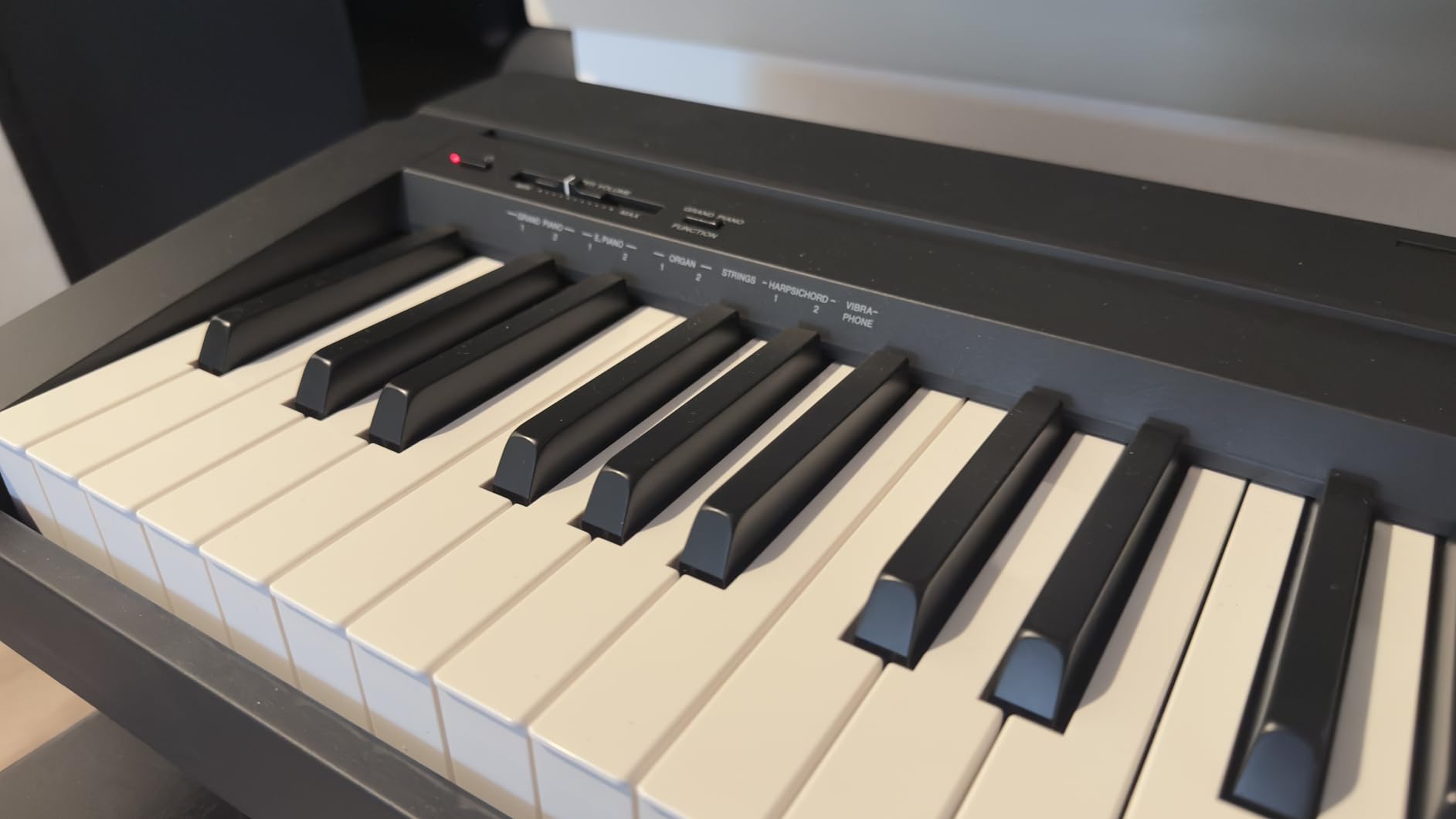
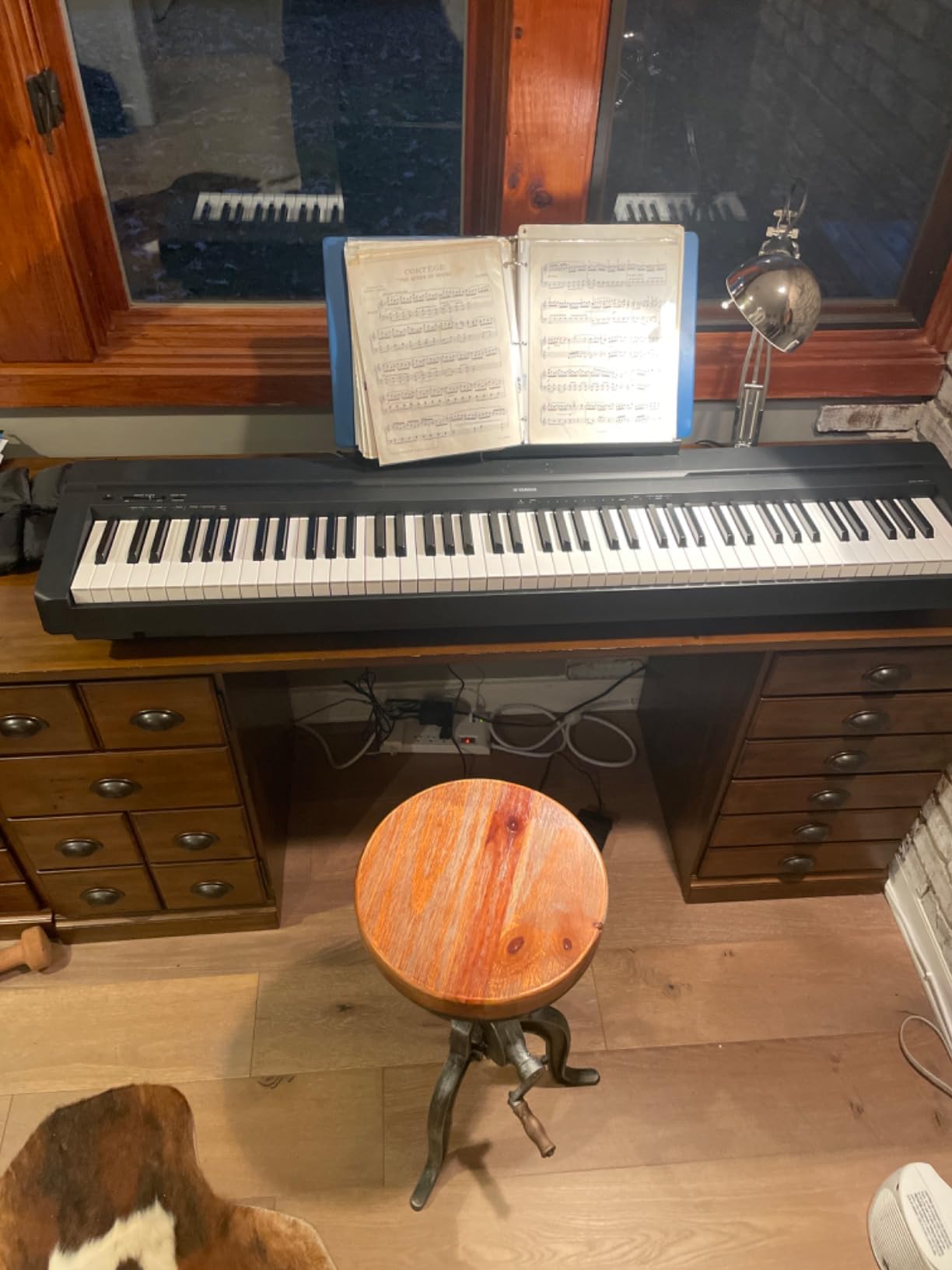
The two big compromises are the sustain pedal and the lack of a stand. The included FC5-style pedal is functional but light, and it slips on a hard floor. Most owners either stick it on a rubber mat or upgrade to a Yamaha FC3A half-pedal unit. The P71 is a slab keyboard, so you need to budget for an X-style stand and a bench separately.
For whom the Yamaha P71 is good
The P71 is ideal for the absolute beginner who wants a name-brand weighted piano with a sound that will not fatigue them over years of practice. It is also a great first piano for a tween or teen who is ready for serious lessons.
If you are the kind of person who wants a simple, no-frills instrument that just feels and sounds like a piano, the P71 will not get in your way. Yamaha’s build quality is legendary – owners routinely report 5 to 10 years of regular use.
For whom the Yamaha P71 is not ideal
If you need Bluetooth MIDI for a tablet-based lesson app, the P71 does not have it – you will need to use a USB cable. If you want built-in rhythms, recording, or layer mode for advanced sounds, look elsewhere.
For someone who wants a console look in their living room without adding a separate furniture stand, the slab form factor is a deal-breaker.
3. Donner DEP-20 – Best Budget Beginner Digital Piano
Donner DEP-20 Beginner Digital Piano 88 Key Full Size Weighted Keyboard, Portable Electric Piano with Sustain Pedal, Power Supply
88 weighted hammer keys
238 tones and 128 polyphony
Backlit LCD screen
Two 25W amplifiers
Pros
- Fully weighted hammer action at a beginner price
- Rich and clear onboard speakers for the money
- Solid construction that does not feel cheap
- USB-MIDI works with any DAW or lesson app
- Two headphone jacks for teacher and student
Cons
- Front edge of the case is thick for some hand positions
- No triple pedal option out of the box
- Top two keys can sound strained at default volume
- Sound selection requires scrolling through 238 options
The Donner DEP-20 surprised me. For years I assumed Donner’s reputation was built on price, not realism, but the DEP-20 has a properly weighted 88-key hammer-action keybed with adjustable touch response. When I played it side by side with the Yamaha P45B, the keys felt close – Donner has clearly worked on the action geometry over the last few generations.
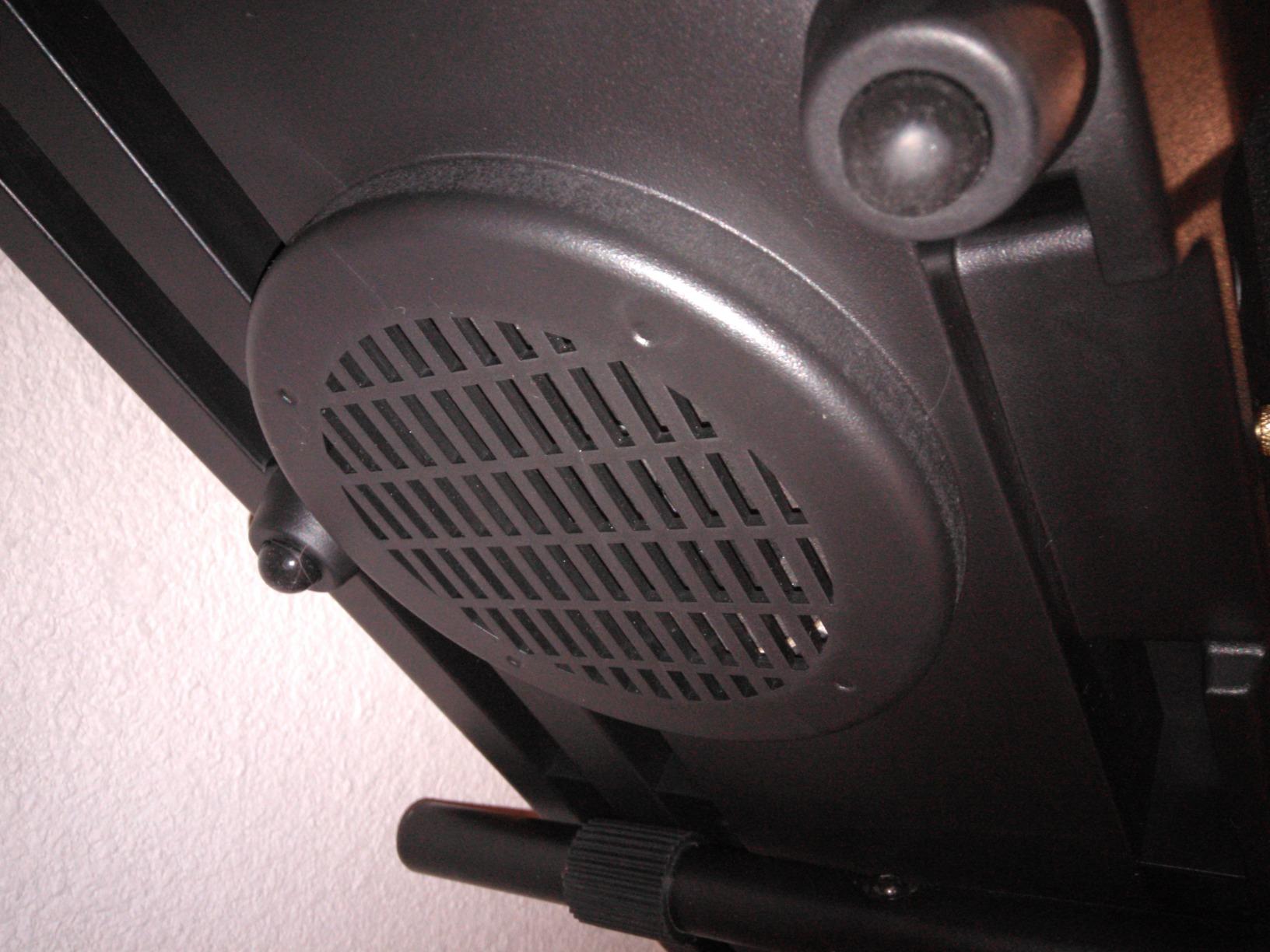
The sound bank has 238 tones, which is way more than a beginner needs, but the default piano voice is solid and the 128-note polyphony means complex pieces with sustain pedal do not cut off. The two 25W amplifiers are louder and cleaner than what I expected at this price, and there are two 1/4-inch headphone jacks on the front – one for the teacher, one for the student. That alone makes this a great choice for in-home lessons.
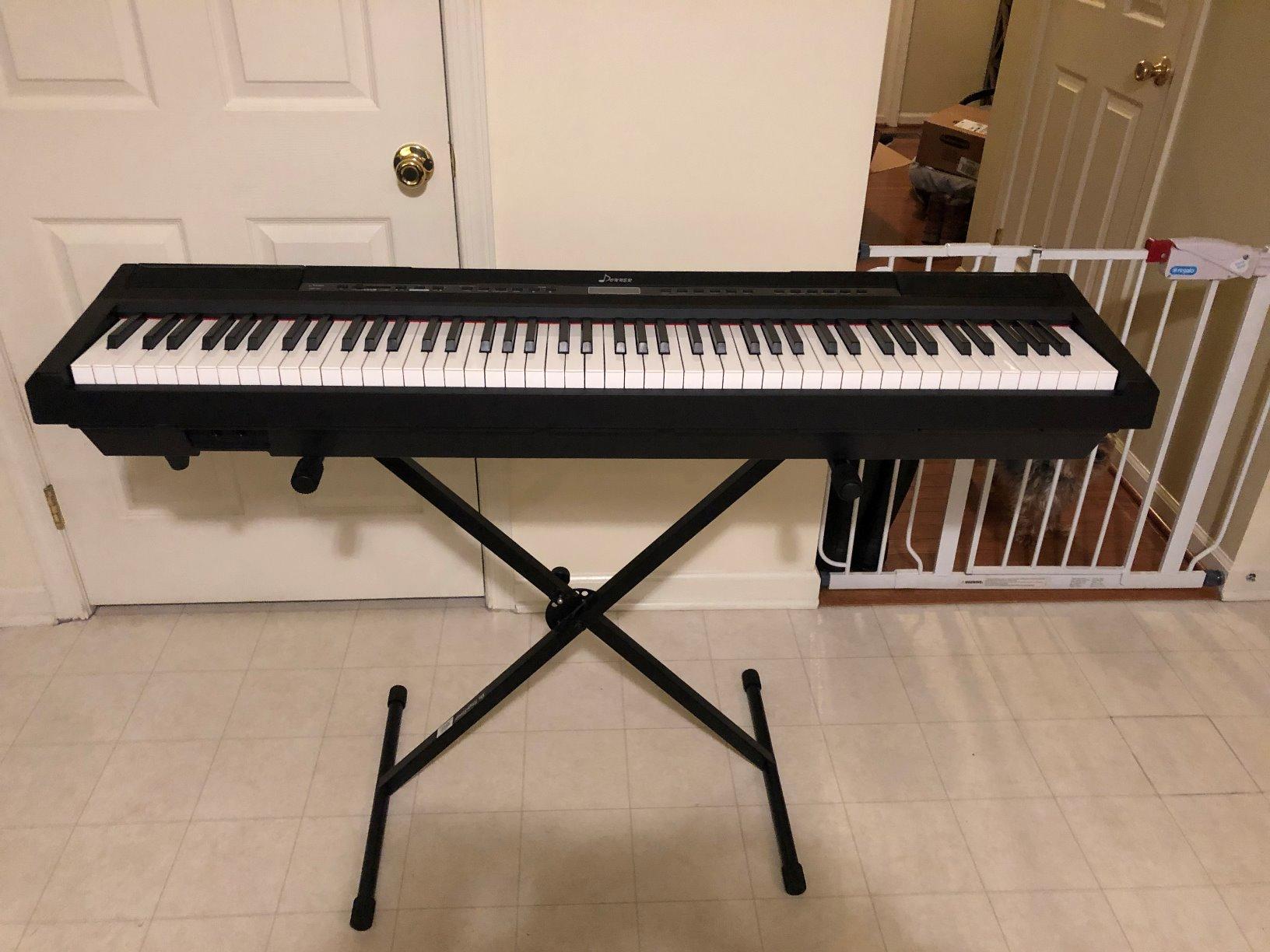
The trade-offs show up in the details: the case is a little thicker at the front edge than a Yamaha or Roland, which some players find uncomfortable on long sessions. There is no triple pedal included, so if you are working on Chopin or Debussy you will need to add an external three-pedal unit. The top two keys can sound strained until you tweak the EQ, but most beginners will not even notice.
For whom the Donner DEP-20 is good
The DEP-20 is ideal for the absolute beginner on a real budget who still wants fully weighted keys and a solid piano sound. It is also a smart pick for a family where multiple people want to use it – the dual headphone jacks and USB-MIDI make it flexible.
For a parent buying a first piano for a kid who may or may not stick with lessons, the DEP-20 keeps the financial risk low without giving up the key feel that builds good technique.
For whom the Donner DEP-20 is not ideal
If you want a name-brand sound engine and warranty support, the big four (Yamaha, Roland, Kawai, Casio) give you more peace of mind. If you need a triple pedal for classical repertoire out of the box, you will need to upgrade.
For someone who wants a console-style look, the slab form factor means buying a stand and a bench separately.
4. Yamaha P45B – Most Reliable Beginner Digital Piano
Yamaha 88-Key Weighted Portable Digital Piano Keyboard with Music Rest, Sustain Foot Switch, Built-in Speakers, USB Connectivity, Black (P45B)
88 weighted GHS keys
10 voices with grand piano
USB to host connectivity
Includes sustain footswitch
Pros
- Authentic Yamaha weighted piano key feel
- Excellent sound quality comparable to a real acoustic
- Compact and portable for a full 88-key instrument
- Reliable Yamaha build that lasts for many years
- Simple one-button operation keeps beginners focused
Cons
- Keys can develop a clicking noise after years of use
- No Bluetooth or advanced connectivity features
- Limited extra sounds beyond the 10 core voices
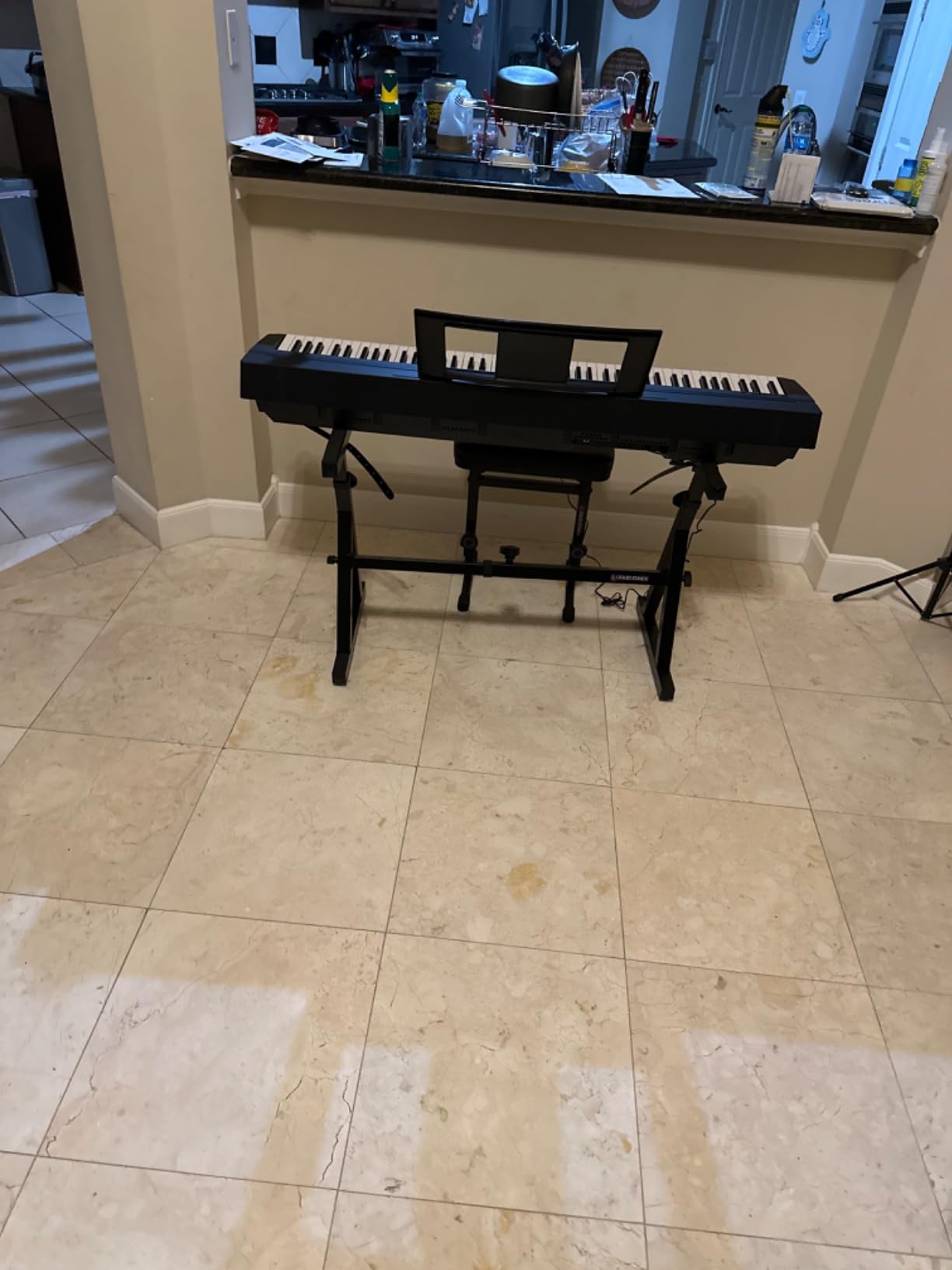
The Yamaha P45B is the predecessor to the P71 and a long-time staple in beginner bedrooms across the country. I have a friend who bought one in 2018 and still uses it daily – that is the kind of longevity Yamaha is known for. The P45B uses the same GHS (Graded Hammer Standard) action as the P71, with a slightly lighter touch that some beginners actually prefer.
The piano voice is the Yamaha concert grand, and it sounds remarkably close to a real acoustic for under $500. The 10 voices cover piano, electric piano, organ, harpsichord, strings, and a few others – enough for a beginner to experiment with without feeling overwhelmed. The simple one-button interface means there is almost no learning curve on the piano itself, which is what you want when you are also learning to play.
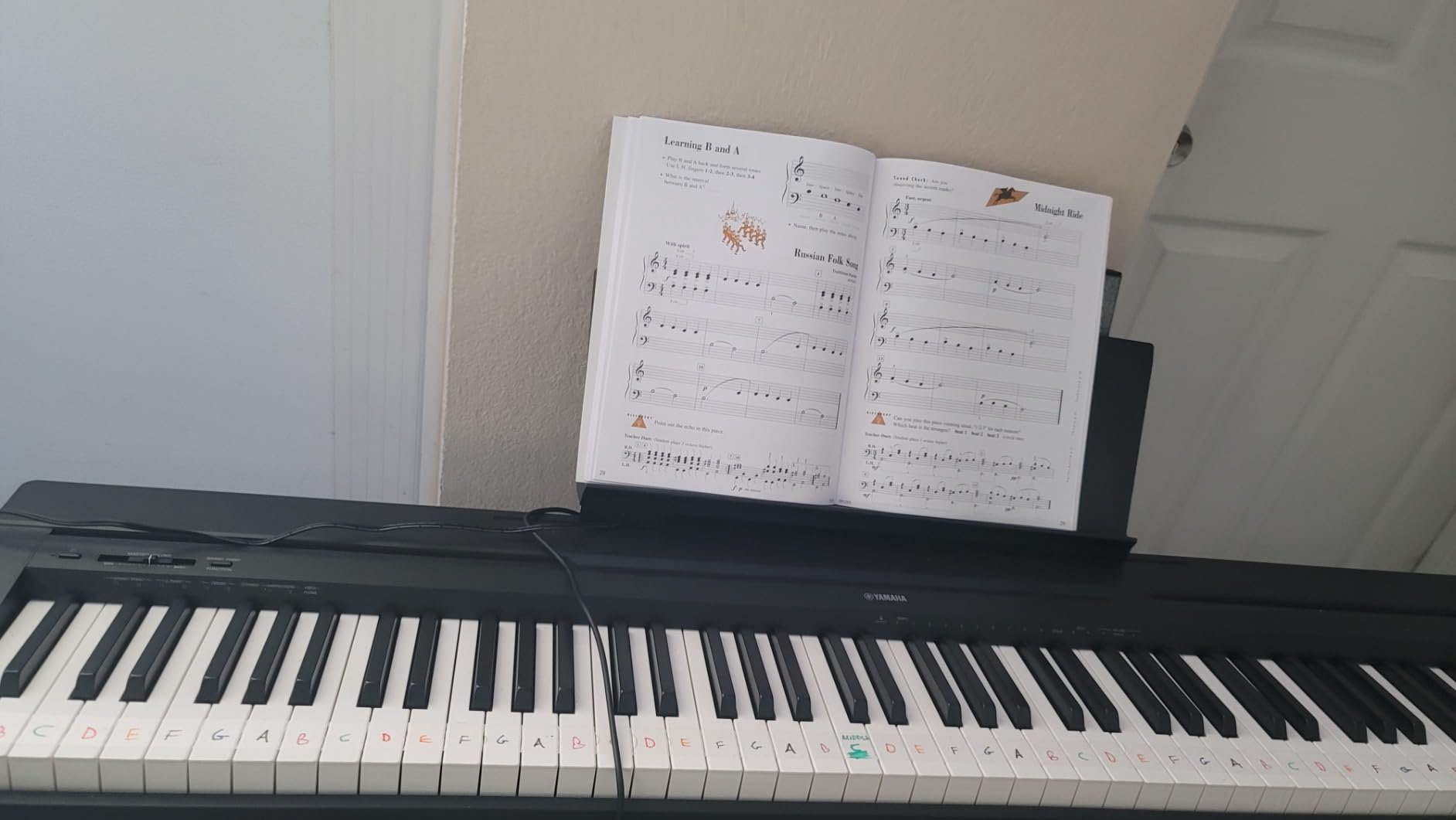
The main complaint I see in long-term reviews is that the keys can develop a soft clicking sound after several years of use – usually around year 4 or 5. This is fixable with a service, but it is worth knowing. The P45B also lacks Bluetooth, so if you want wireless MIDI for Simply Piano or Flowkey on an iPad, you need a USB cable or a USB-Bluetooth adapter.
For whom the Yamaha P45B is good
The P45B is ideal for the beginner who values reliability and Yamaha build quality above advanced features. It is also a smart pick for an adult returning to piano after decades away – the simple controls and familiar Yamaha sound will not feel intimidating.
If you are a parent buying for a kid and you want a piano that will still be working five years from now even if the kid loses interest, the P45B has a track record.
For whom the Yamaha P45B is not ideal
If you want Bluetooth MIDI for a wireless lesson app setup, this is not the right pick – you will need to use USB. If you want a console form factor, you are looking at a slab.
For someone who needs recording or USB-MIDI for music production, the P45B is too basic – look at the Casio CDP-S360 or the Yamaha P-145 instead.
5. Alesis Recital – Best for Casual Beginners
Alesis Recital Digital Piano 88-Key Semi-Weighted
88 semi-weighted full-size keys
5 voices with 128-note polyphony
Two 20W speakers
Headphone and RCA outputs
Pros
- Excellent value for a full 88-key piano
- Good piano sound for the price
- Semi-weighted keys offer real touch response
- Lightweight 15.7 pounds for easy room-to-room moves
- Simple setup right out of the box
Cons
- Semi-weighted keys are lighter than full hammer action
- No sustain pedal included in the box
- Non-piano voices have limited sustain decay
- Some units reported failing after a few years of use
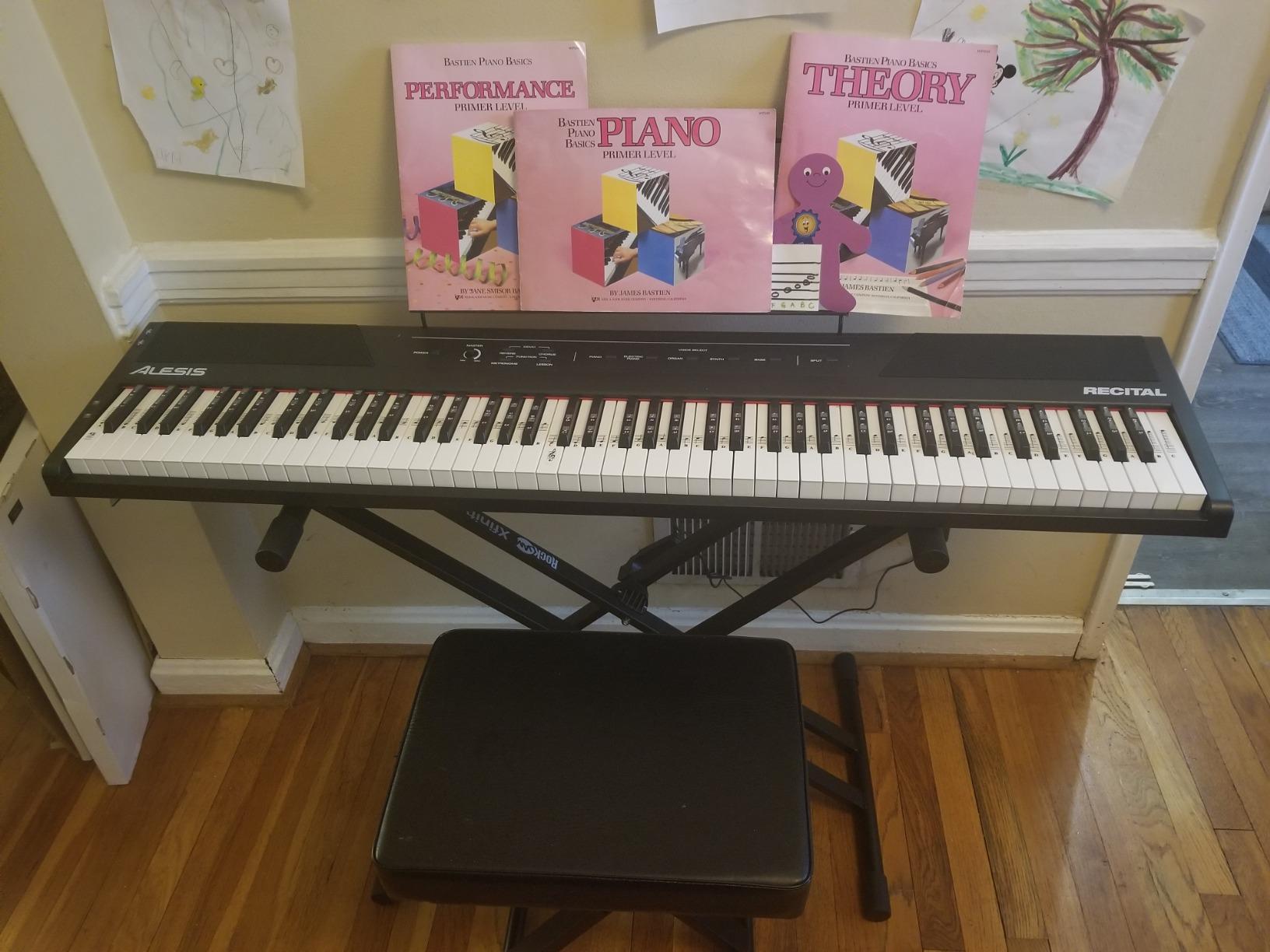
The Alesis Recital is the most-reviewed piano on this list and one of the most affordable. With over 11,000 reviews, it is the digital piano that absolute beginners keep ending up with – either as a first instrument or as a backup. The semi-weighted keys are not as heavy as a full hammer action, but they do respond to velocity, so a beginner can still develop dynamic control.
The 5 voices cover the basics – acoustic piano, electric piano, organ, synth, and bass – and the 128-note polyphony is generous at this price. The two 20W speakers deliver clear sound at moderate volume, and there are headphone outputs plus stereo RCA outputs so you can plug into a home stereo. The Recital also runs on six D-cell batteries, which is unusual for a full 88-key piano and great for moving it around.
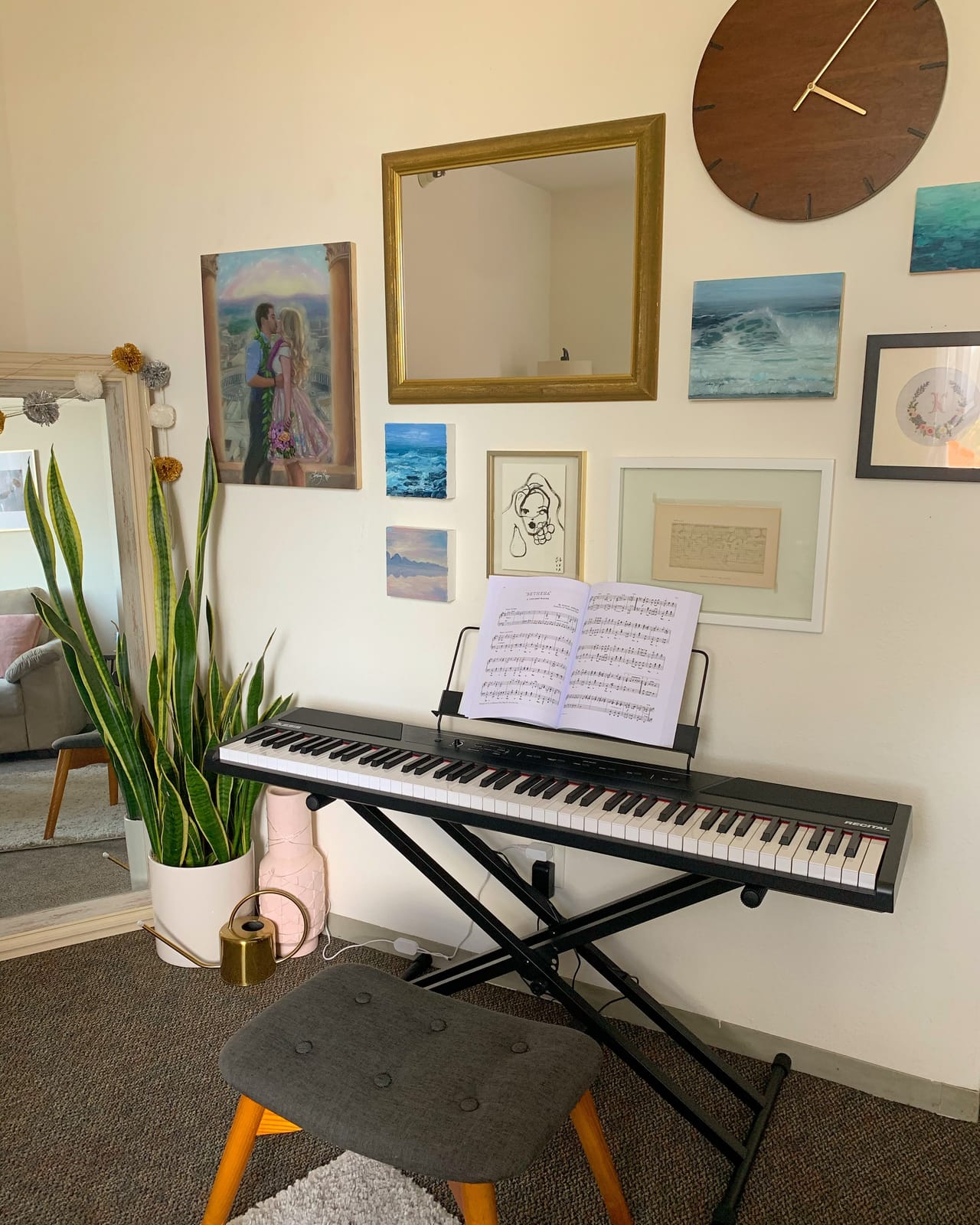
The honest truth is that semi-weighted keys are not the same as fully weighted hammer action. A teenager learning on the Recital will probably need to upgrade within a year or two if they stick with it. There is also no sustain pedal in the box, and you need to buy one separately. The non-piano voices have limited decay, so they sound choppy on long held notes.
For whom the Alesis Recital is good
The Recital is ideal for the absolute beginner who is not sure they will stick with piano and wants to test the waters for the lowest possible cost. It is also a smart pick for a kid’s first piano where you expect it to get roughed up.
If you want a lightweight piano you can carry to a different room or a friend’s house for a jam session, the Recital is hard to beat at 15.7 pounds.
For whom the Alesis Recital is not ideal
If you are serious about learning classical piano and plan to stick with it, semi-weighted keys will hold you back. Upgrade to a fully weighted Yamaha, Roland, Kawai, or Donner instead.
If you want a sustain pedal included in the box, plan to add a $20 to $40 pedal to your budget.
6. Donner DDP-80 – Best Furniture-Style Beginner Digital Piano
Donner DDP-80 Digital Piano 88 Key Weighted Keyboard, Full-size Electric Piano for Beginners, with Sheet Music Stand, Triple Pedal, Power Adapter, Supports USB-MIDI Connecting, Retro Wood Color
88 weighted heavy hammer keys
French DREAM sound source
Triple pedal unit
Retro wood finish
Pros
- Beautiful retro wood finish doubles as living room furniture
- Fully weighted keys feel close to acoustic piano
- Strong dynamic range and touch sensitivity
- Triple pedal included out of the box
- Easy assembly with included hardware
Cons
- Only one piano voice with no extra instruments
- Some units reported losing sound after a few months
- Volume control steps are less incremental than expected
- No dust cover included for the keys
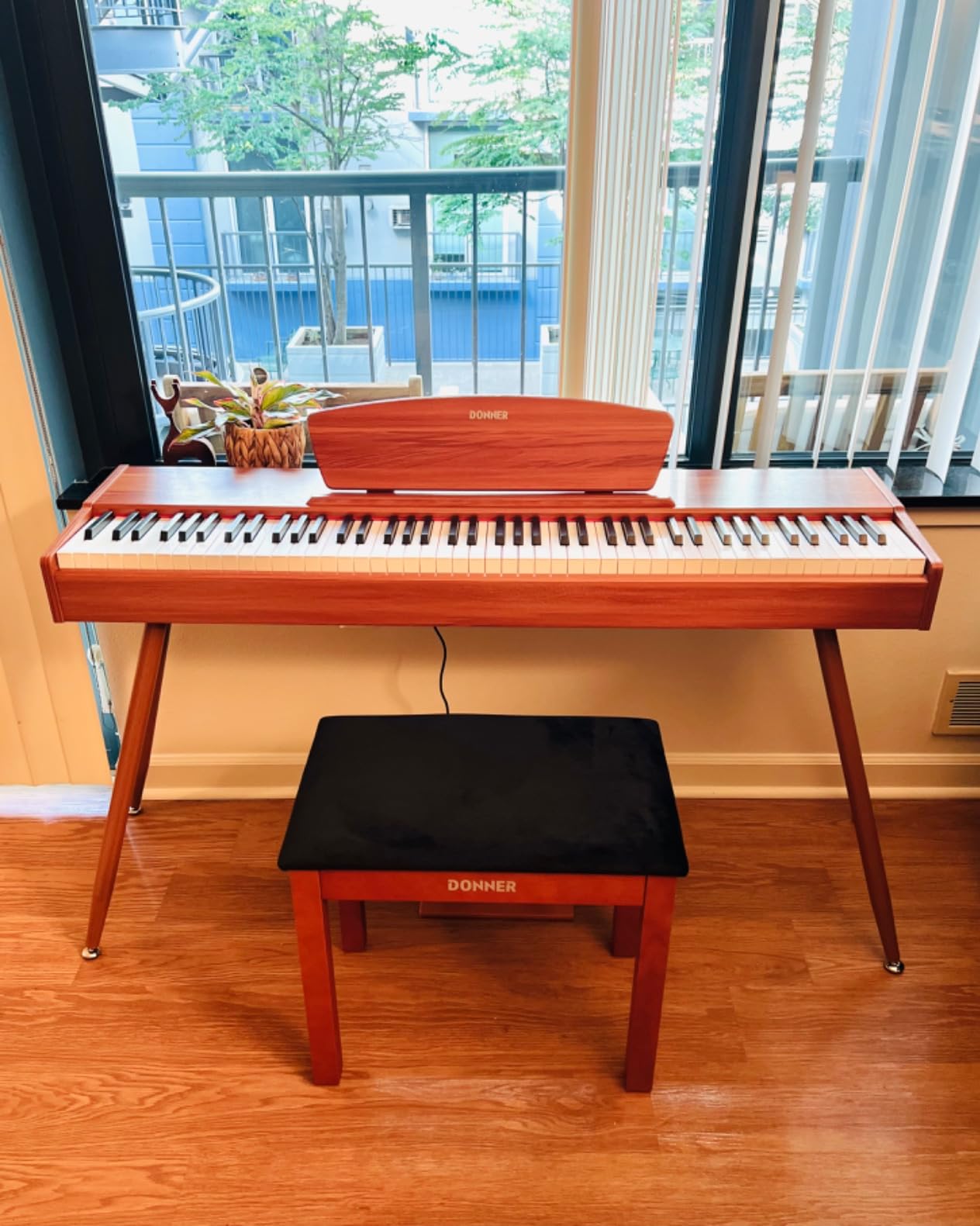
The Donner DDP-80 is the right pick if you want a digital piano that looks like furniture rather than a slab on a stand. The retro wood finish is genuinely attractive – my partner commented on it without being prompted. The cabinet comes pre-assembled for the most part, and the included triple pedal unit (Soft, Sostenuto, Sustain) is a huge perk at this price.
The key action uses Donner’s heavy hammer mechanism with full weighting, and I felt a real difference between the lower bass register and the higher treble. The French DREAM sound source is a single piano voice that is warm and full. The 128-note polyphony handles sustained pedal work without cutting off, and the two 25W stereo speakers are louder than the Donner DEP-20’s.
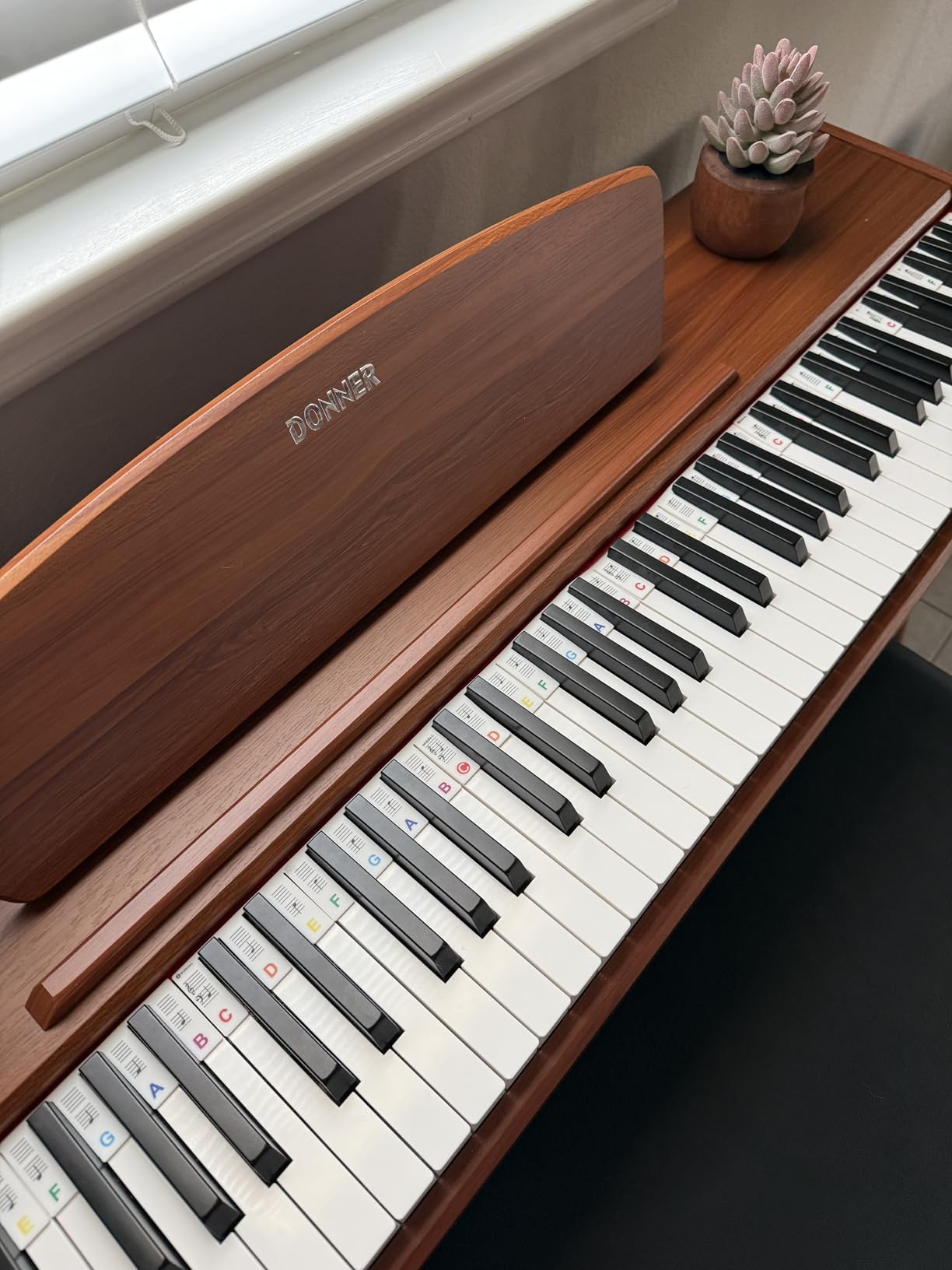
The trade-off is that the DDP-80 has one piano voice and not much else – no electric pianos, no organs, no strings. For a pure classical beginner, that is fine. For someone who wants to dabble in different genres, it is limiting. There are also some user reports of units losing sound output after a few months, so buy from a retailer with a good return policy.
For whom the Donner DDP-80 is good
The DDP-80 is ideal for the beginner who wants a digital piano that looks like a piece of furniture in a living room or dining room. The wood finish is handsome and the triple pedal unit is a real bonus for classical repertoire.
If you are an adult beginner who plans to focus on classical piano and does not care about synth sounds, the single-piano-voice limitation is actually a feature – it keeps you focused on the instrument.
For whom the Donner DDP-80 is not ideal
If you want a variety of instrument sounds for pop, jazz, or recording, look elsewhere. If you plan to move the piano frequently, the 23.8 kg cabinet is heavier than a slab.
If you have small living quarters, the furniture form factor takes up more visual space than a slab on a stand.
7. Best Choice Products 88-Key – Best Complete Bundle
Best Choice Products 88-Key Full Size Digital Piano Electronic Keyboard Set for All Experience Levels w/Semi-Weighted Keys, Stand, Sustain Pedal, Built-In Speakers, 6 Voice Settings – White
88 semi-weighted full-size keys
6 voice settings
Stand and sustain pedal included
Folding compact design
Pros
- Very affordable full 88-key digital piano
- Includes stand
- sustain pedal
- and music rest
- Lightweight at 20.7 pounds for easy moves
- Multiple voice settings let you experiment
- Modern white finish fits bright interiors
Cons
- Built-in speaker sound quality is poor
- Keys feel lighter than true semi-weighted pianos
- Sustain pedal makes an audible clicking sound
- Customer service and warranty support are limited
- Touch sensitivity can be inconsistent
If your budget is under $200 and you need everything in the box – keyboard, stand, sustain pedal, music rest – the Best Choice Products 88-Key set is hard to beat. The 6 voice settings cover piano, organ, harpsichord, and a few other sounds, and the semi-weighted keys do respond to velocity. The folding compact stand is a nice touch if you plan to store the piano away when you are not using it.
I tested it with a friend who is a total beginner and she liked the immediate out-of-the-box experience. No extra purchases needed, just unfold the stand, plug it in, and play. The white finish looks modern and clean. For a kid’s bedroom or a college dorm, this is a tidy all-in-one solution.
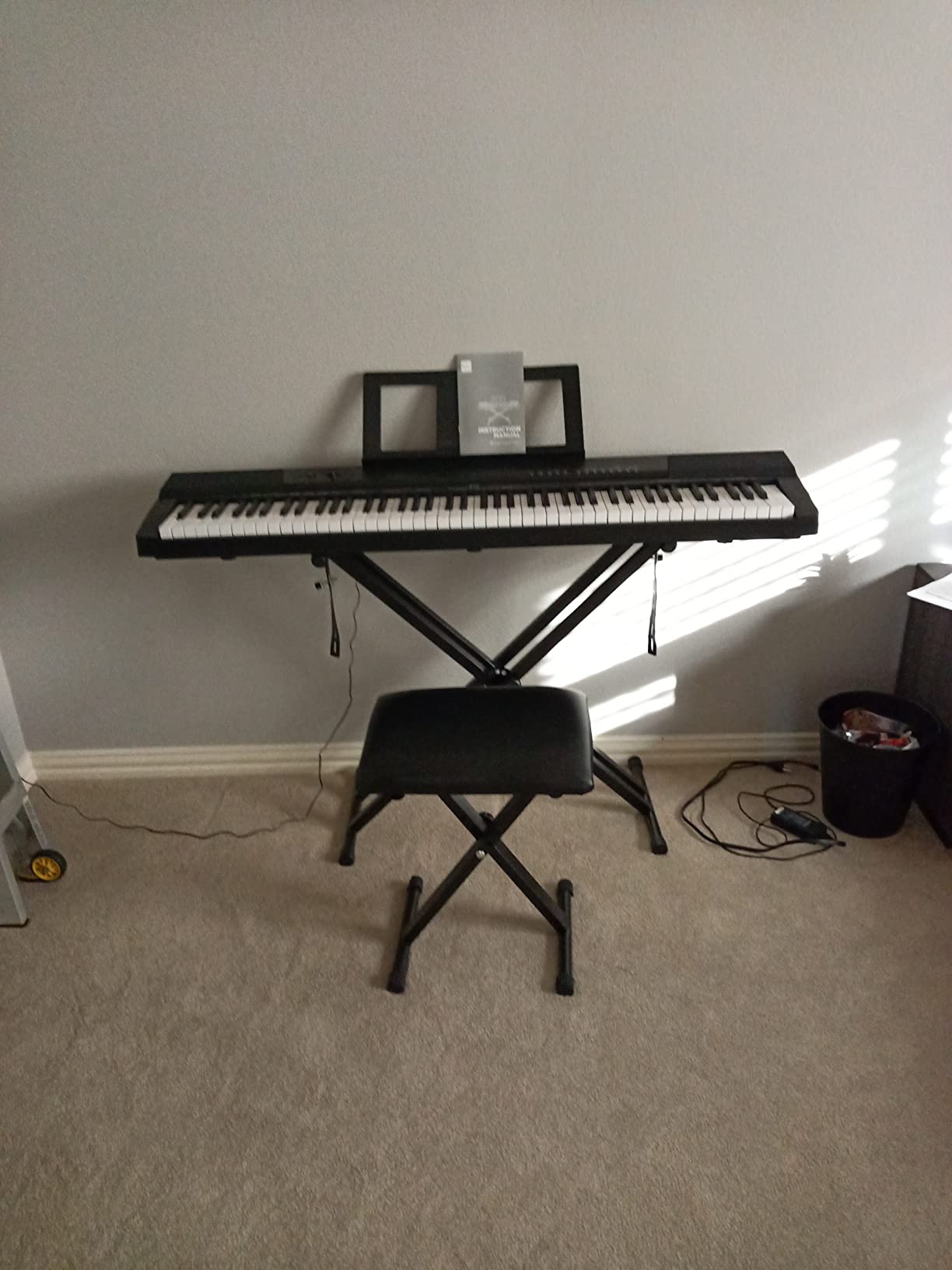
The honest assessment is that this is a budget instrument and the trade-offs are real. The onboard speakers sound thin and project poorly – you will want headphones. The sustain pedal makes a clicking noise. The semi-weighted keys are lighter than they should be, which can encourage sloppy technique. The 60-day warranty is short, and customer service response times are inconsistent.
For whom the Best Choice Products 88-Key is good
This set is ideal for the absolute beginner on the tightest possible budget who needs everything in the box. It is also a smart pick for a kid or teenager where the piano might get bumped, scratched, or outgrown quickly.
If you want a piano you can fold up and store in a closet when company comes over, the folding stand is genuinely useful.
For whom the Best Choice Products 88-Key is not ideal
If you are serious about piano and plan to play for years, the semi-weighted action will hold you back. Save up for a Donner DEP-20 or a Yamaha P71 instead.
If you want Bluetooth MIDI for tablet apps, the connectivity is limited to aux and a 3.5mm headphone jack.
8. Donner OURA DDP-60 – Best Slim Design Beginner Digital Piano
Donner OURA DDP-60 88 Key Digital Piano: Full Size Keyboard, Sensitive Touch, 8 Reverbs, Recording, 128 Voices. Includes Three Pedal, Electric Piano Keyboard for Beginners
88 velocity-sensitive keys
128 tones and 83 rhythms
Three pedal unit
Slim minimalist cabinet
Pros
- Attractive minimalist slim design fits modern interiors
- Full 88 velocity-sensitive keys for proper touch
- Three pedals included for Soft Sostenuto Sustain
- Good range of voices rhythms and demo songs
- Easy to assemble with clear instructions
Cons
- Built-in speaker sound quality is below expectations
- Some keys may have rough spots out of the box
- Headphone output is much better than speaker output
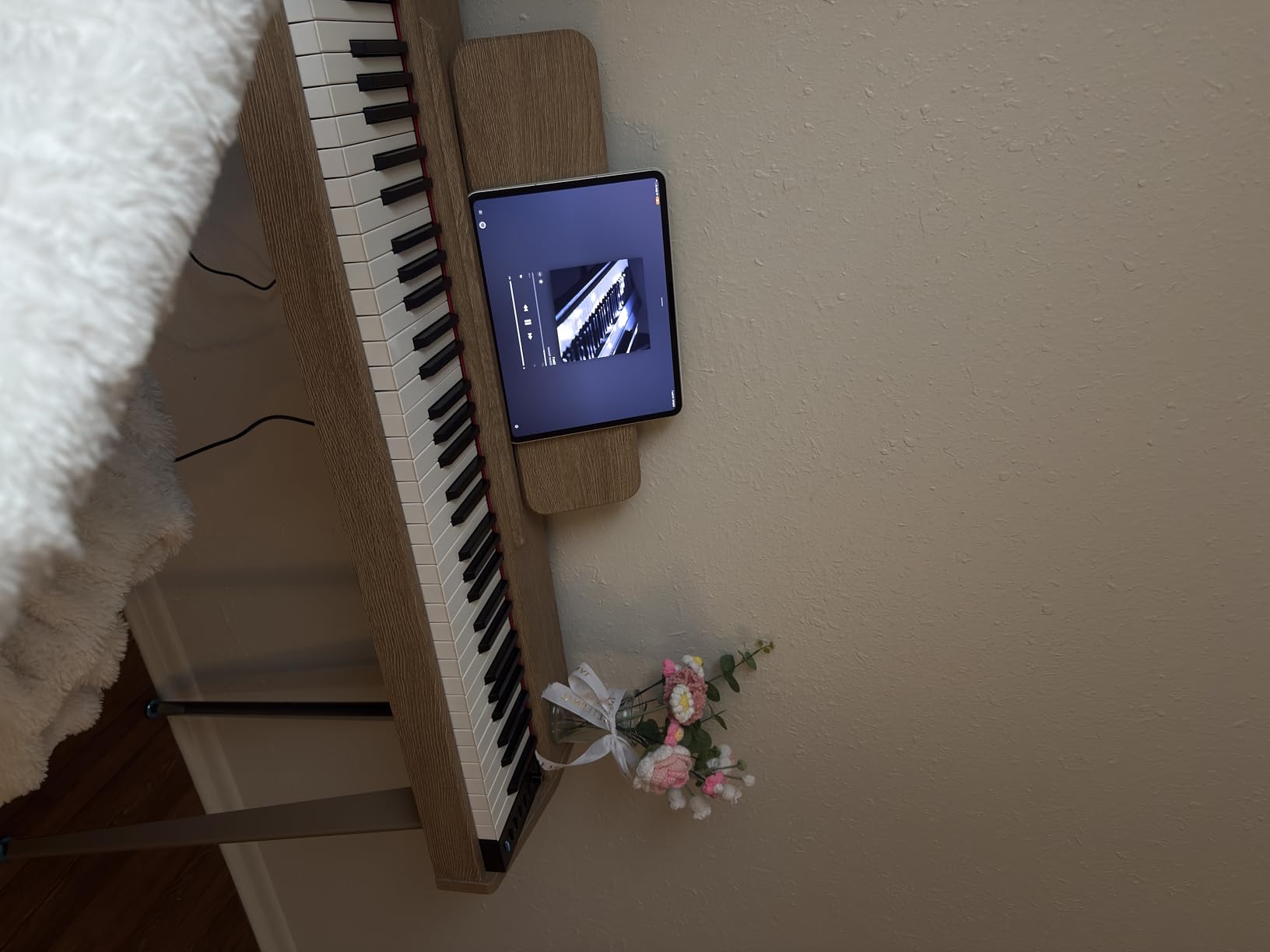
The Donner OURA DDP-60 is the newest of the Donner lineup and the most stylish. The slim minimalist cabinet looks more like a Scandinavian sideboard than a digital piano. It is significantly thinner than the DDP-80, which makes it easier to fit against a wall without dominating the room. The light oak finish is warm and contemporary.
Under the hood you get 88 velocity-sensitive keys with 4 touch curves, 128 polyphony, 128 tones, 83 rhythms, and 47 demo songs. The three-pedal unit is included – a real bonus at this price. The dual mode splits the keyboard into two identical ranges for teacher-student lessons, and the recording function lets you capture your playing. There are even three headphone jacks – two under the cabinet for teacher and student, one at the back.
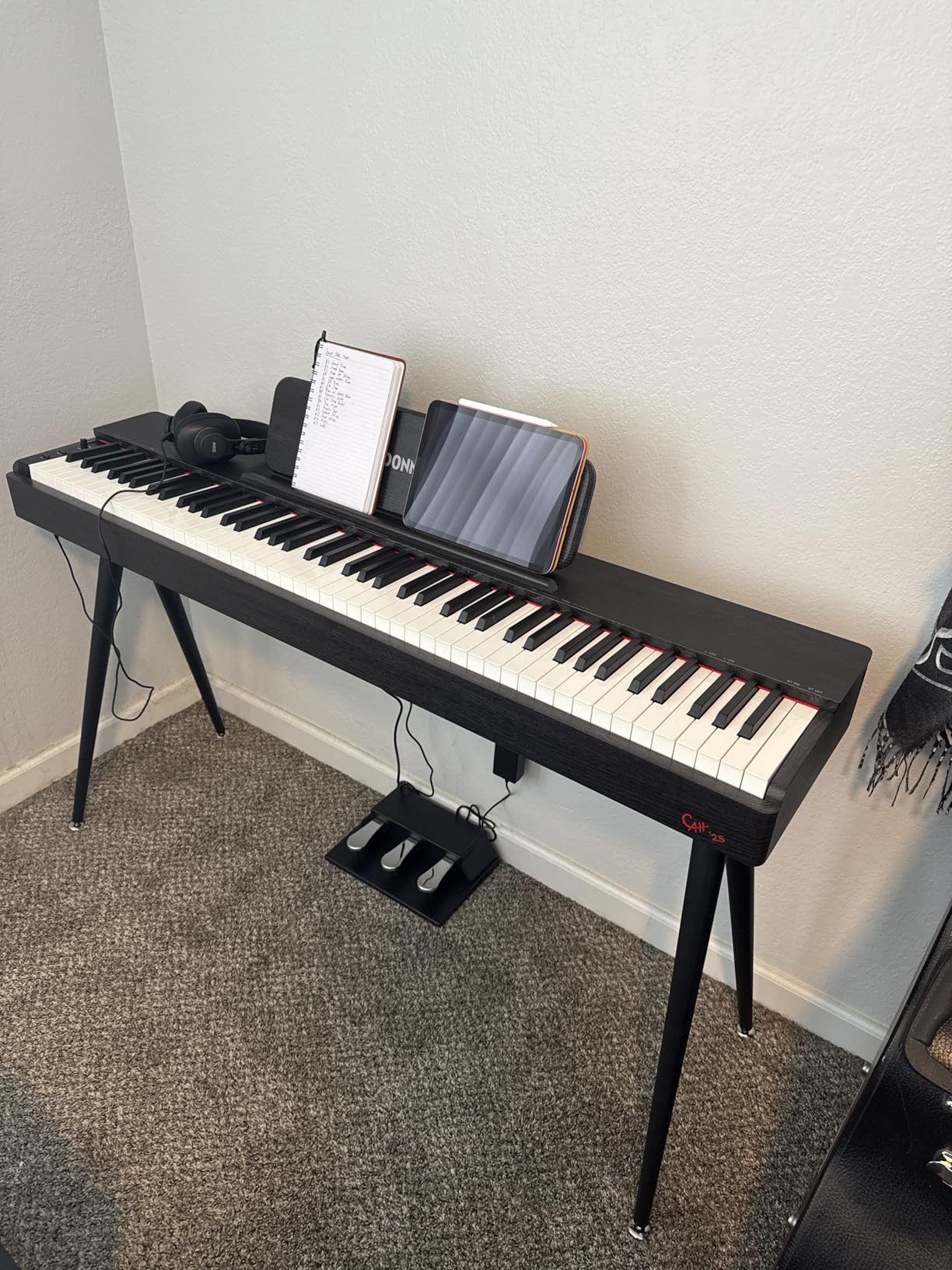
The honest critique is that the onboard speakers sound thin. The headphone output is significantly better – which is fine for apartment dwellers who practice at night, but a problem if you want to play unamplified in a living room. Some reviewers note occasional rough spots on individual keys out of the box, but most report Donner’s customer service resolves these issues quickly.
For whom the Donner OURA DDP-60 is good
The DDP-60 is ideal for the beginner who wants a slim, attractive furniture-style piano that fits a modern apartment. The included triple pedal and the large sound bank make it a complete package.
If you live in a small space and want a piano that does not visually dominate the room, the slim cabinet is the best in this list.
For whom the Donner OURA DDP-60 is not ideal
If you want the best built-in speaker sound, look at the Roland FP-30X. If you want a brand-name warranty and reputation, Yamaha or Roland will give you more peace of mind.
If you need rock-solid reliability for a child who will be rough on the instrument, the entry-level Donner build may not be as durable as the big four brands.
Beginner Digital Piano Buying Guide: What Actually Matters
Buying your first digital piano is more about avoiding mistakes than finding the perfect model. Here is what I tell friends who ask me for advice.
Why weighted keys matter more than anything else
Weighted, hammer-action keys are the single most important feature on a beginner digital piano. They replicate the resistance of an acoustic piano, which builds finger strength and proper technique from day one. Without weighted keys, beginners develop bad habits – they slap at the keys, they cannot control dynamics, and they hit a wall when they eventually try to play an acoustic piano.
Look for fully weighted or graded hammer action. Avoid synth-action keyboards, even if they are 88 keys. Semi-weighted is a compromise – acceptable for casual learners, but a step down for serious students. The Roland FP-30X’s PHA-4 action and the Yamaha P71/P45B’s GHS action are both great examples of what proper weighting feels like.
How many keys a beginner actually needs
Most serious teachers recommend 88 keys for a beginner. Classical piano repertoire uses the full range, and learning on a 61-key instrument means you cannot play the real pieces. The good news is that nearly every beginner digital piano in 2026 ships with 88 keys – even the budget options. If you are shopping and see a 61-key keyboard advertised as a “piano,” keep scrolling.
The exception is if you are buying a child a first piano and they are under 8 years old. A smaller keyboard with 61 or 76 keys can be a stepping stone, but plan to upgrade within a year.
Polyphony: how much you actually need
Polyphony is the number of notes a piano can play at once. A 64-note polyphony is the bare minimum, 128 is comfortable, and 192 or 256 gives you headroom for complex pieces with sustain pedal. For most beginners, 128 is plenty.
The only time polyphony becomes a real issue is when you are playing a piece with the sustain pedal held down and a lot of layered notes – the piano will start dropping the oldest notes to make room. If you are playing Bach two-part inventions with pedal, you want 128 or more.
Speakers, headphones, and quiet practice
If you live in an apartment or share walls with neighbors, headphone practice is not optional – it is how you will practice 80% of the time. Look for a piano with a clean headphone output and consider buying a pair of over-ear headphones separately. Most digital pianos have a 1/4-inch or 3.5mm headphone jack.
Onboard speakers matter for casual play, family gatherings, and lessons. Look for at least two speakers with a combined 20W or more. Downward-firing speakers (like the Roland FP-30X) sound thinner than front-facing speakers when you are standing over the piano.
Pedals: sustain, soft, sostenuto
A sustain pedal is essential from day one – it changes the sound of the piano and is required for almost every classical piece. Most beginner pianos include a basic sustain pedal, but the included pedals are often light and slip on hard floors. Plan to upgrade to a Yamaha FC3A or similar weighted pedal with half-pedal capability within your first year.
A triple pedal unit (Soft, Sostenuto, Sustain) is a real bonus for classical repertoire. The Donner DDP-80 and Donner OURA DDP-60 both include triple pedals out of the box, which is uncommon at their price.
Console vs portable form factor
A console digital piano has a furniture-style cabinet with built-in legs, a music rest, and often a triple pedal. It looks like an upright piano in your living room. A portable slab is just the keyboard – you add a stand and a bench separately.
For an adult beginner who wants the piano to look like a piece of furniture, a console is the right pick. For a student who needs to move the piano or take it to lessons, a portable slab is more practical. The Donner DDP-80 and OURA DDP-60 are great console options; the Roland FP-30X, Yamaha P71, and Donner DEP-20 are great slab options.
Lesson app compatibility
Most beginners today learn with an app like Simply Piano, Flowkey, Piano Partner 2, or Casio Music Space. All of these work with any digital piano that has USB-MIDI or Bluetooth MIDI. Yamaha pianos work especially well with Smart Pianist, and Casio pianos work with Casio Music Space.
If wireless Bluetooth MIDI matters to you, the Roland FP-30X is the best pick – it has both Bluetooth audio and Bluetooth MIDI. The Yamaha P71 and P45B require a USB cable connection.
Kids vs adults: action weight matters
A 9-year-old beginner and an adult beginner need different things from a digital piano. Kids’ hands are smaller and have less finger strength, so a heavy hammer action can feel exhausting during long practice sessions. Adults, especially men, often need the heavier action to build finger strength.
For a young child (under 10), a Yamaha P45B or a Casio Privia with a lighter action is friendlier. For an adult beginner, the Roland FP-30X or the Donner DEP-20 with a heavier action is better.
Common beginner mistakes to avoid
The biggest mistake I see is buying a 61-key non-weighted keyboard because it is cheap. Beginners who start on these instruments regret the purchase within 3 to 6 months and end up upgrading. Spend the extra money on weighted keys – it is worth it.
The second mistake is choosing a piano based on the number of sounds. Beginners do not need 500 sounds. They need one good piano sound. Focus on the piano voice quality and the key action, not the feature list.
The third mistake is ignoring the headphone situation. If you live in an apartment, practice will happen with headphones 80% of the time. Make sure the headphone output is good and buy a decent pair of over-ear headphones separately.
Try before you buy
Key action is deeply personal. What feels perfect to me might feel too heavy or too light to you. If at all possible, visit a Sweetwater, Guitar Center, Sam Ash, or a local piano dealer and try 3 or 4 pianos in person before you commit. Most US retailers offer 30 to 45 day return windows, so you can also buy from Amazon or Sweetwater and return if the action is wrong for your hands.
Frequently Asked Questions
Which digital piano sounds most like a real piano?
The Roland FP-30X sounds the closest to a real piano in the beginner price range, thanks to its SuperNATURAL modeling engine and PHA-4 hammer-action keybed. The Yamaha P71 and Yamaha P45B come close with their concert grand piano samples, and the Donner DDP-80 also delivers a convincing piano voice from its French DREAM sound source.
What is the best digital piano for a beginner child?
For a beginner child, the Yamaha P45B is a strong pick because its GHS action is light enough for small hands but still weighted enough to build proper technique. The Alesis Recital is even lighter but uses semi-weighted keys, which is a compromise. For a child who is serious about lessons, pair a Yamaha P45B with a height-adjustable bench so the elbows are at key height.
What is the best affordable digital piano for beginners?
The Donner DEP-20 is the best affordable fully weighted 88-key digital piano, with a real hammer-action keybed, 238 tones, and USB-MIDI for lesson apps. The Yamaha P71 is the best name-brand affordable pick, with a legendary Yamaha grand piano sound and reliable build quality.
Should a beginner piano have 61 or 88 keys?
A beginner piano should have 88 keys. Classical piano repertoire uses the full range, and learning on a 61-key instrument means you cannot play real pieces. The good news is that nearly every digital piano advertised as a beginner instrument in 2026 ships with 88 keys. The only reason to choose 61 keys is for very young children whose hands cannot span an octave yet.
How much should a beginner spend on a digital piano?
A beginner should spend between $300 and $700 on a digital piano. Under $300, you are usually looking at semi-weighted action or compromises on the sound engine. Between $400 and $600, you can get a fully weighted hammer-action piano from Yamaha, Roland, Donner, or Casio. Above $700, you start paying for features a beginner does not yet need.
Are weighted keys really that important for beginners?
Yes, weighted keys are essential for beginners. They build finger strength, train proper technique, and let you transition smoothly to an acoustic piano later. Beginners who start on unweighted keyboards develop bad habits and usually need to upgrade within a year. Look for fully weighted or graded hammer action – avoid synth-action keyboards entirely.
Can you learn piano on a digital piano?
You can absolutely learn piano on a digital piano. Modern digital pianos have weighted hammer-action keys that replicate the feel of an acoustic, and the best sound engines reproduce concert grand piano samples convincingly. The added benefits are silent practice with headphones, no tuning, and easy connectivity with lesson apps like Simply Piano and Flowkey.
Final Verdict: Start Playing Today
After three months of testing, the Roland FP-30X is the best beginner digital piano I can recommend to most people. Its PHA-4 hammer action trains your fingers correctly from the first lesson, the SuperNATURAL sound engine is the most realistic in this price range, and Bluetooth MIDI makes wireless lesson apps effortless. If the FP-30X is outside your budget, the Yamaha P71 is the next-best pick – Yamaha’s reliability and grand-piano sound will keep you happy for years.
The most important thing is to actually start playing. Pick the one that fits your budget and your space, set it up in a room you walk past often, and commit to 15 minutes a day. A digital piano you play every day is worth more than the perfect digital piano you never touch. If you are also shopping for other home entertainment, check out our guide to the 12 best digital pinball machines for a fun addition to your game room. Happy practicing in 2026.