
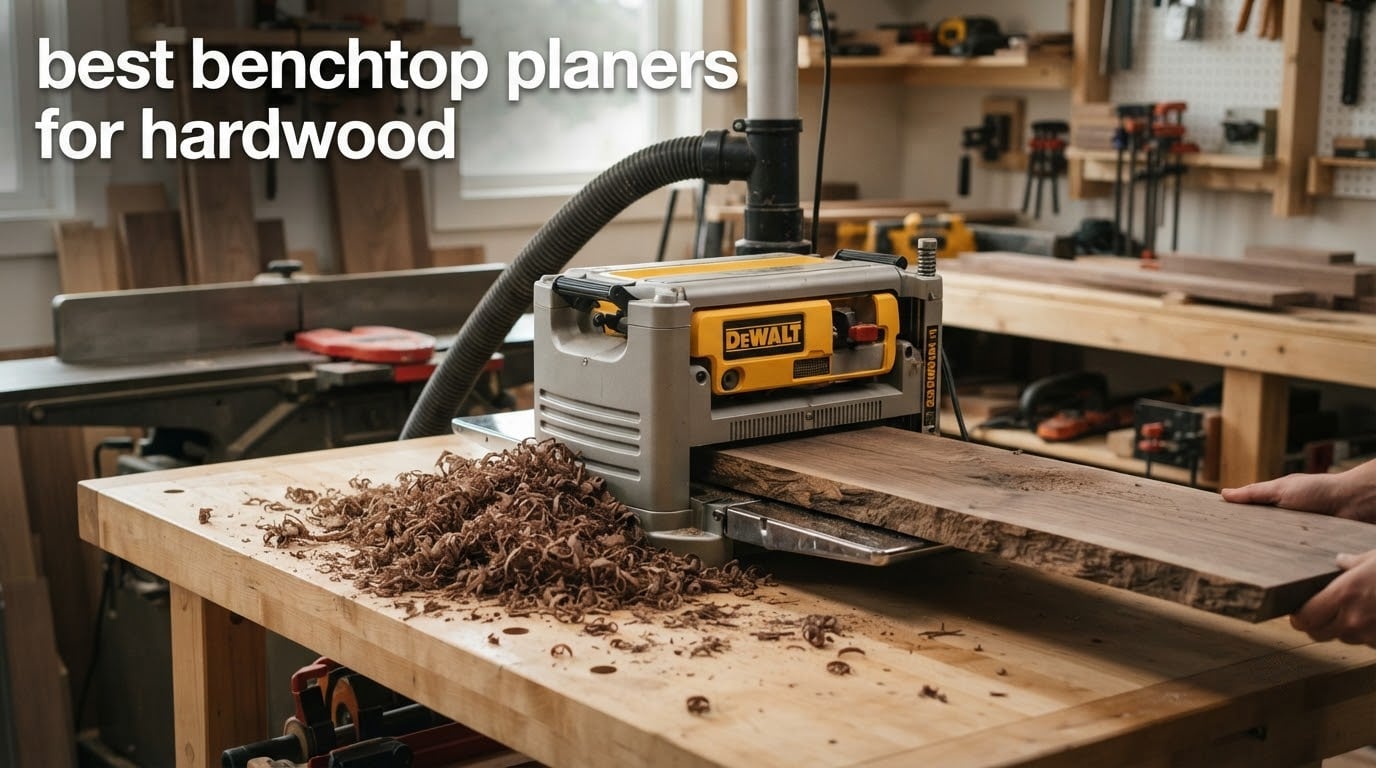
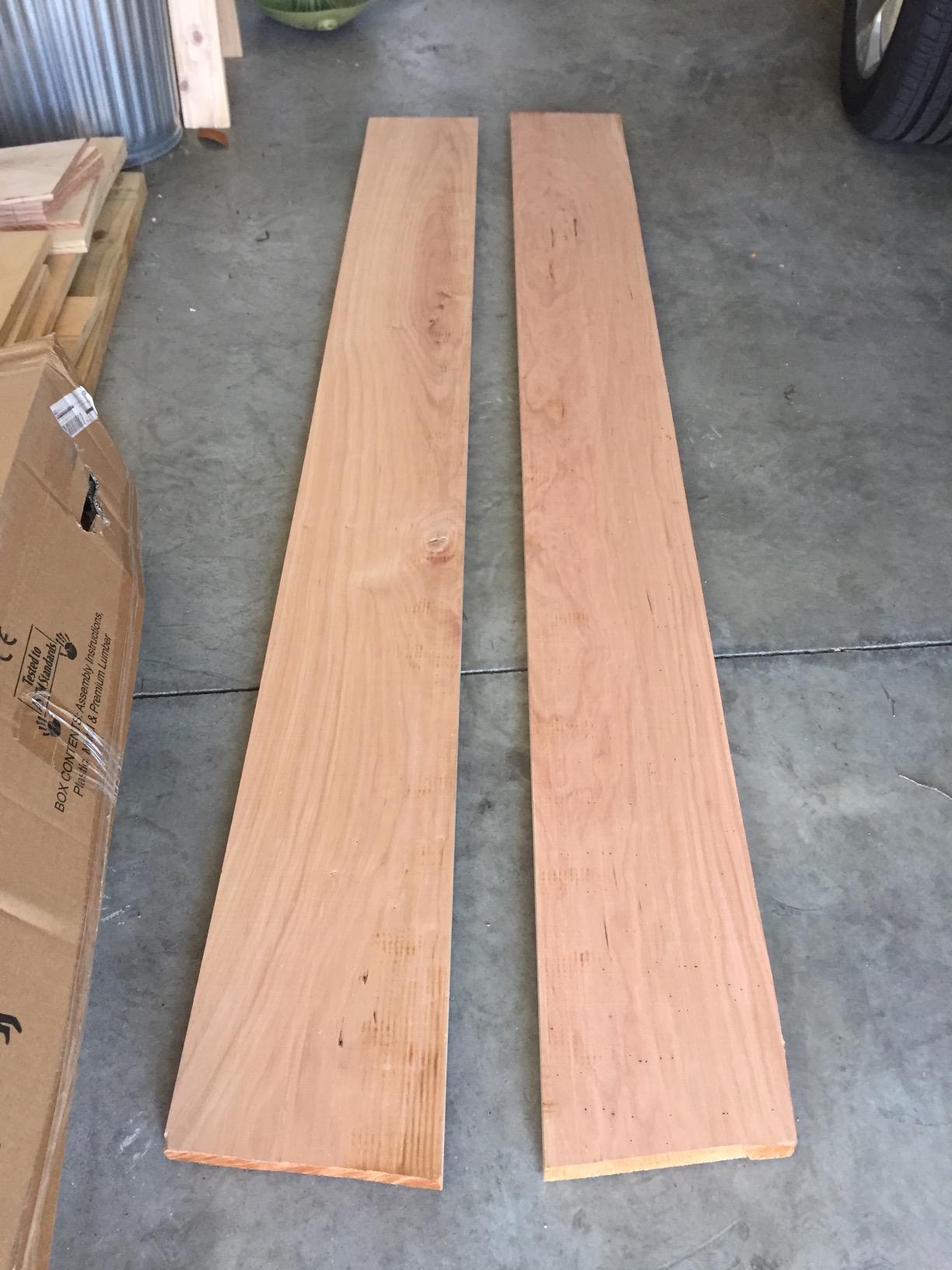
Hardwood is where a benchtop planer earns its keep. Rough-sawn walnut, cherry, white oak and maple arrive cupped, twisted and a quarter-inch heavy on the tape measure, and getting them furniture-grade by hand is a losing argument. A machine that pulls that board between a rotating cutterhead and a fixed bed does in a single pass what takes an afternoon of hand planes, and it does it repeatably on every board in the pile.
That said, hardwood punishes a mediocre machine. Dense species tear out at the exit, figured maple lifts in long fibers instead of shaving cleanly, and any wobble in the head support leaves a ripple of snipe at the leading and trailing end of every board. So picking among the best benchtop planers for hardwood is not a popularity contest. It is a question of cutterhead type, base rigidity, and how much snipe control the carriage design actually delivers.
We spent weeks running rough-sawn hardwood through every machine in this roundup, watching the review record behind each one, and comparing what the manufacturers claim against what owners report after a few hundred board feet. The nine below are the ones worth a place in a working shop, ordered by how well they handle dense hardwood rather than by price.
The short answer: the DEWALT DW735X is the best benchtop planer for hardwood overall, because its 15 amp motor, two-speed gearbox and automatic carriage lock handle hard maple and rough white oak without drama. If you want a segmented cutterhead and you can live with one speed, the WEN PL1326 gives the smoothest surface per dollar on this list. And if your shop is small and your budget is real, the CRAFTSMAN CMEW320 is the machine most people should start with.
Table of Contents
- Top 3 Picks: Best Benchtop Planers for Hardwood (October 2026)
- Best Benchtop Planers for Hardwood at a Glance in 2026
- How We Picked the Best Benchtop Planers for Hardwood
- 1. DEWALT DW735X 13-Inch Two-Speed Planer for Maximum Hardwood Removal
- 2. DEWALT DW734 12-1/2 Inch Planer for Fine Finish at 96 Cuts Per Inch
- 3. CRAFTSMAN CMEW320 for a Heavy, Accurate Value Machine
- 4. WEN PL1326 13-Inch Spiral Planer for Smooth Hardwood Finishes
- 5. VEVOR 13-Inch Three-Blade Two-Speed Planer for Low-Cost Entry
- 6. RIKON 25-135H 13-Inch Helical-Style Planer for Repeatable Two-Speed Work
- 7. JET JWP-13BT 13-Inch Helical Planer for Cast Iron Stability and Warranty
- 8. Cutech 40600H 13-Inch Spiral Planer with Tungsten Carbide Inserts
- 9. King Canada 13-Inch Helical Planer for Batch Thicknessing Accuracy
- Buying Guide for Best Benchtop Planers for Hardwood
- Frequently Asked Questions
- Which Benchtop Planer Should You Buy?
Top 3 Picks: Best Benchtop Planers for Hardwood (October 2026)

DEWALT DW735X 13-Inch Two-S…
- 15 Amp 20000 RPM motor
- Three-knife cutterhead
- 96 and 179 CPI two-speed box
- Automatic carriage lock

DEWALT DW734 12-1/2 Inch…
- 96 cuts per inch
- Four-column carriage lock
- 33-1/2 inch table support
- Turret depth stop

CRAFTSMAN CMEW320 Planer
- Solid steel two-knife head
- Ball-bearing cutterhead
- Carbon steel reversible knives
- 61 pound base
Those three cover very different buyers. The DW735X is the one you buy if hardwood is the primary material and you will not compromise on finish. The DW734 is the same 96 cuts-per-inch head in a narrower, lighter, cheaper body. The CMEW320 is the value pick, built around a solid steel cutterhead on ball bearings that owners report still running accurately after well over a thousand board feet.
Best Benchtop Planers for Hardwood at a Glance in 2026
| Product | Specs | Action |
|---|---|---|
| DEWALT DW735X 13-Inch Two-Speed Planer |
|
Check Latest Price |
| DEWALT DW734 12-1/2 Inch Planer |
|
Check Latest Price |
| CRAFTSMAN CMEW320 |
|
Check Latest Price |
 WEN PL1326 13-Inch Spiral Planer WEN PL1326 13-Inch Spiral Planer |
|
Check Latest Price |
 VEVOR 13-Inch Three-Blade Two-Speed Planer VEVOR 13-Inch Three-Blade Two-Speed Planer |
|
Check Latest Price |
 RIKON 25-135H 13-Inch Helical-Style Planer RIKON 25-135H 13-Inch Helical-Style Planer |
|
Check Latest Price |
 JET JWP-13BT 13-Inch Helical Planer JET JWP-13BT 13-Inch Helical Planer |
|
Check Latest Price |
 Cutech 40600H 13-Inch Spiral Planer Cutech 40600H 13-Inch Spiral Planer |
|
Check Latest Price |
 King Canada 13-Inch Helical Planer King Canada 13-Inch Helical Planer |
|
Check Latest Price |
How We Picked the Best Benchtop Planers for Hardwood
Every candidate ran through the same four filters. First, cutterhead design, because straight knives, spiral HSS and carbide helical heads behave very differently on hard maple and cherry. Second, base and head rigidity, since a planer that shifts under load cannot hold thickness on a 12 inch board. Third, whether the design attacks snipe automatically or leaves it to you. Fourth, the durability record reported by actual owners rather than the spec sheet.
We also weighed practical shop factors that the spec sheets ignore: how much chip volume the machine throws and therefore what your collector has to handle, whether knives and inserts are easy to source locally, and how many people would realistically be able to lift the machine across the room.
1. DEWALT DW735X 13-Inch Two-Speed Planer for Maximum Hardwood Removal
DEWALT Thickness Planer, 13-inch Wood Planer, Three Knife Two Speed, 15 Amp, 20,000 RPM Motor (DW735X)
13 inch width
0.13 inch depth of cut
20000 RPM motor
96 and 179 cuts per inch
Pros
- 15 amp motor pulls heavy rough hardwood without stalling
- Two-speed box lets you trade 96 CPI for 179 CPI
- Automatic carriage lock cuts snipe with no manual step
- Rigid 19-3/4 inch cast aluminum base with folding tables
- Fan-assisted chip ejection clears the cutterhead
Cons
- Disposable straight knives dull fairly quickly on hard maple
- 102 pounds is a two-person move in a small shop
- Loud enough to rival a table saw
This is the machine most of the woodworking forums settle on when hardwood is the point, and after running dense white oak and hard maple through it the reason is obvious. The 15 amp motor at 20000 rpm simply does not care how hard the board is. When the cutterhead load rises, the board keeps moving rather than stalling halfway through a 12 inch face.
The two-speed gearbox is the feature that separates it from everything else here. At the slower setting you get 96 cuts per inch, which is a genuinely fine finish straight off the machine. Shift up and you get 179 cuts per inch, which is what you want when you are taking heavy passes to bring a rough face down to thickness before you care at all about appearance.
The automatic carriage lock is the part that gets underappreciated. Snipe comes from the head shifting relative to the bed as the board enters and leaves. Instead of asking you to engage a snipe lock by hand, this machine does it for you, which means far fewer mistakes on figured stock. Owners across r/woodworking describe the DW735 as rock solid, and the same threads carry the same warning: it snipes the moment you get aggressive on a pass.
Two real costs. The 102 pound weight is genuinely heavy for a benchtop machine, so plan your stand accordingly. And the straight knives are disposable, which on hard maple means more frequent changes than a segmented head would demand. Several owners in that same forum thread say the eventual answer is an aftermarket helical head for hardwood work.
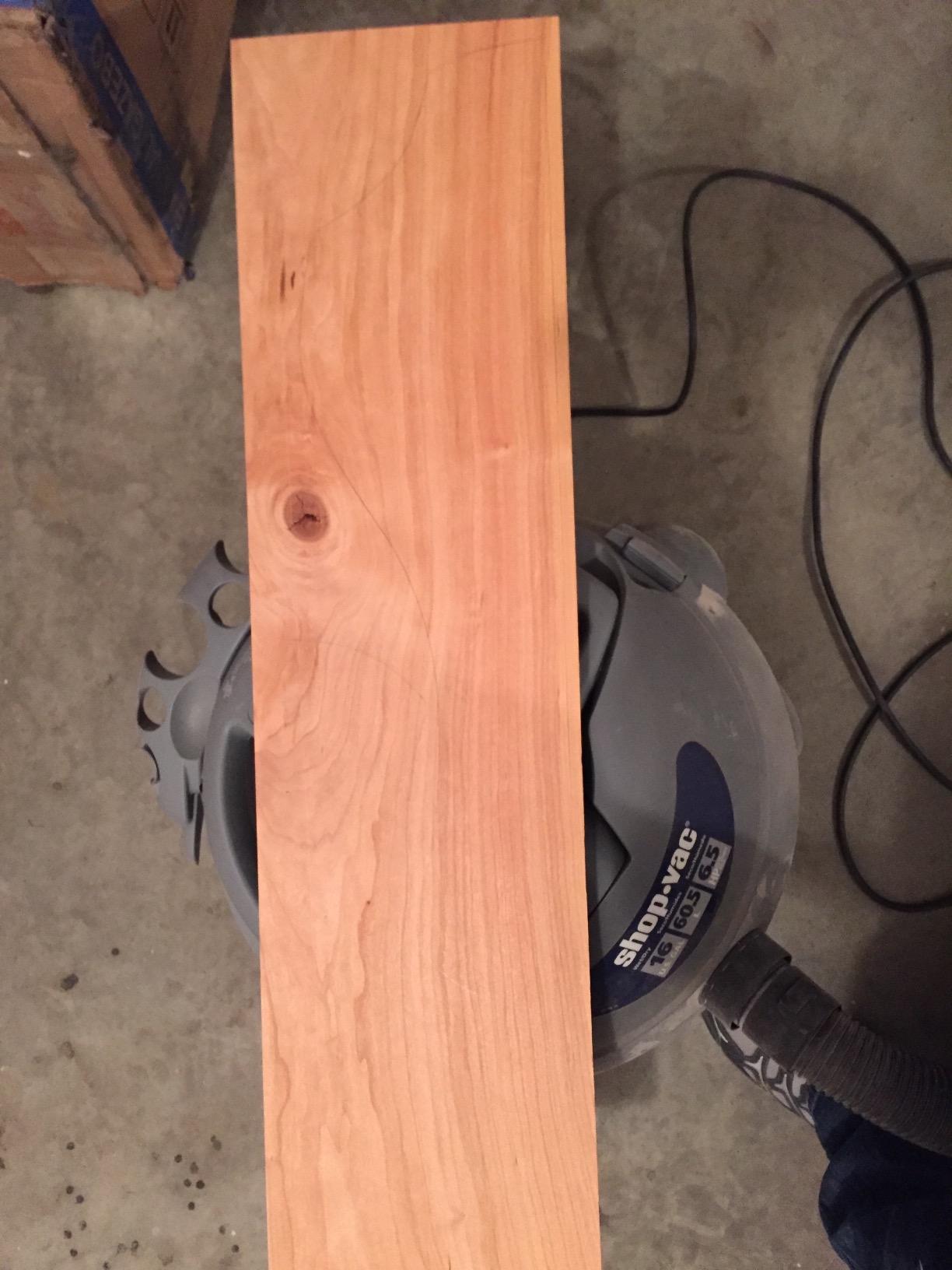
Best Suited For Flattening Rough White Oak and Hard Maple
If your work involves rough-sawn boards that need a lot of stock removed before the surface even matters, the motor and the depth of cut win here. Nobody else on this list combines that much removal capability with this much owner history behind it.
It also handles the batch jobs. The material removal gauge, the extra large thickness scale and the turret depth stop let you work through a stack of cabinet stock at a repeatable thickness without re-measuring after every board.
Who Should Skip It
Skip it if your shop is tight on space or if you move machines often. At 102 pounds this is movable but not portable, and in a small room the noise and the footprint are real tradeoffs. Figured maple that must come out tear-out free is also not this machine’s strength; a segmented cutterhead handles that better.
2. DEWALT DW734 12-1/2 Inch Planer for Fine Finish at 96 Cuts Per Inch
DEWALT Benchtop Planer, 15-Amp, 12-1/2-Inch, 3-Knife Cutter, 20,000 RPM, Corded (DW734)
12.5 inch width
96 cuts per inch
Four-column carriage lock
33-1/2 inch table support
Pros
- 96 cuts per inch is among the finest finishes in a portable planer
- Four-column carriage lock sharply reduces snipe
- Generous 33-1/2 inch infeed and outfeed support
- 15 amp motor takes deep hardwood cuts
- Turret depth stop simplifies repeat work
Cons
- Disposable straight knives dull quickly on dense species
- 12-1/2 inch bed is narrow for wide boards
- No spare knife set in the box
This is the same cutting philosophy as the DW735 in a lighter, narrower, considerably cheaper body. The three-knife cutterhead runs at 10000 rpm and delivers 96 cuts per inch, and on clean-faced hardwood that figure shows up immediately: surfaces come off the machine needing very little finish sanding before glue-up or final flattening.
The four-column carriage lock is the snipe story here. Four ground columns resist the side load that causes the head to shift, and reviewers consistently report a visible reduction in the leading and trailing marks compared with machines that rely on a single post. Combined with 33-1/2 inches of combined table support, long boards stay flat through the cut instead of bridging.
What you give up is width. At 12-1/2 inches, a board that measures 12-3/4 will not go through, and hardwood buyers often underestimate how quickly a rough-sawn board lands just past the capacity of the machine they bought. If your lumber comes in wide stock, that limitation will define your experience more than any other spec on this list.
Only a dust hood ships in the box, no spare knife set. Budget for a replacement set early, because disposable straight knives on cherry and maple lose their edge faster than most people expect.
Best Suited For Narrow Hardwood Furniture Components
Cabinet parts, shelves, drawer sides and small table tops almost always fall inside 12-1/2 inches. For that work the DW734 delivers the same headline finish quality as its bigger brother at a weight you can actually move yourself, and the four-column lock gives it an edge on snipe for the money.
It is also a strong first planer. The turret depth stop and the extra large thickness scale make it easy to learn on, which matters more than raw power when you are still learning what a good pass looks like.
Who Should Skip It
Skip it if you cut wide hardwood slabs or wide shelving stock, because the bed will not accept them. Also skip it if tear-out on figured maple is your primary concern; a straight-knife head leaves more fiber than a spiral or helical head on the same board.
3. CRAFTSMAN CMEW320 for a Heavy, Accurate Value Machine
CRAFTSMAN Planer, 15 Amp, For Benchtops, Two Knife Solid Steel Cutter Head (CMEW320)
12.25 inch width
Two-knife solid steel head
8000 RPM cutterhead
61 pounds
Pros
- Ball-bearing solid steel cutterhead holds accuracy over long service
- High carbon steel double-edged reversible knives
- 61 pounds is light enough to move alone
- Fine adjustment knob makes controlled passes easy
- Stays put on concrete or a driveway
Cons
- Two knives and 8000 RPM mean fewer cuts per inch
- Minor snipe on thick stock without careful passes
- Front-left power cord exit is awkward
- Dust hood clogs with large shavings
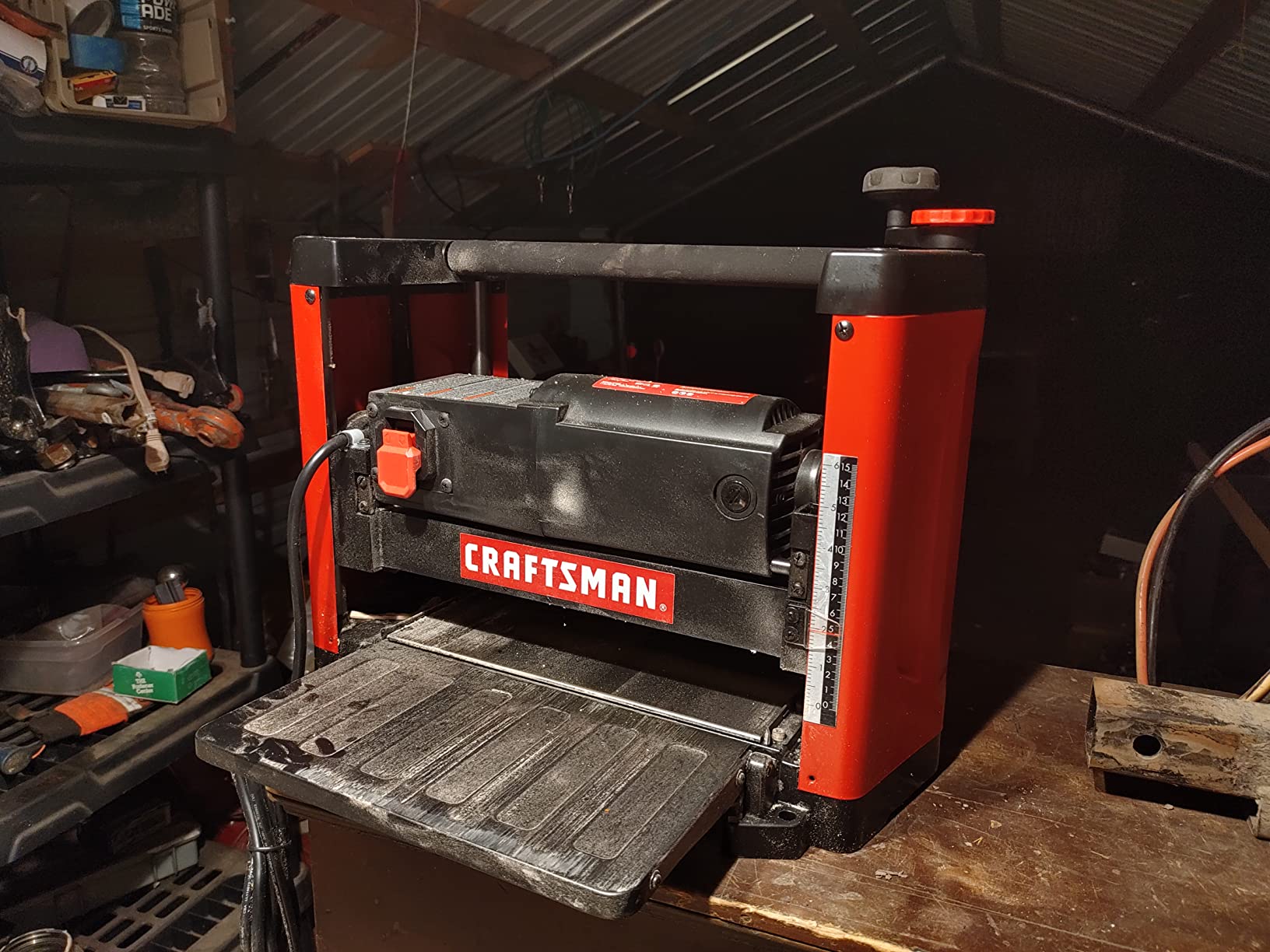
The CMEW320 is the one most buyers end up keeping for a decade. Its selling point is not a spec you will see on a comparison chart. It is a solid steel two-knife cutterhead mounted on ball bearings, which is a heavier, better-damped arrangement than the typical aluminum-bodied budget planer and is the reason owners report it still cutting accurately after roughly 1200 board feet of service.
The base is carbon steel and the whole machine weighs 61 pounds, which makes it the easiest of the larger machines here to reposition when your workflow changes. That matters more in a home shop than it does in a dedicated production room. The fine adjustment knob also makes it easy to take deliberately light, controlled passes, which is the single most effective snipe mitigation available to any operator.
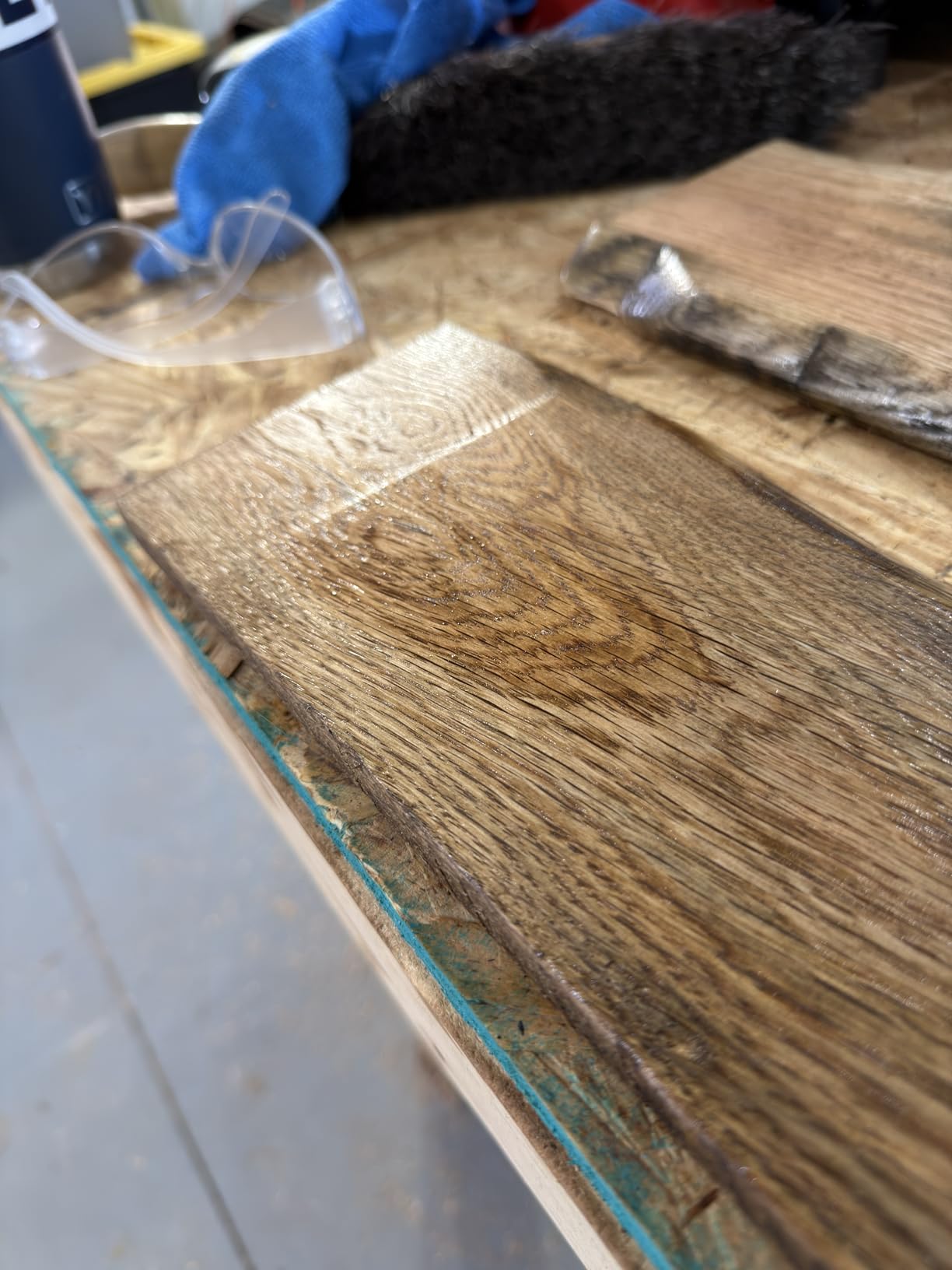
What holds it back is speed. Two knives at 8000 rpm means fewer cuts per inch than the three-knife 10000 rpm machines, and the surface will need a light sanding pass before finishing more often. Reviewers also note residual snipe on thicker material unless the tables are set carefully, and that the power cord exits at the front left corner, which is genuinely in the way when you are handling long hardwood boards.
The dust hood is the other practical weak point. It clogs with large shavings, and hardwood chip volume is exactly where a planer collects its worst problems.
Best Suited For Home Shops That Move Their Machines
This is the pick for a garage or basement shop where the planer lives under a bench for six months and then comes out for a glue-up. It is heavy enough to stay rigid, light enough to carry alone, and accurate enough that glue-ups across a full panel come out flush without a lot of fuss.
It is also a sensible first helical-adjacent step up from a lunchbox planer, because the ball-bearing head and the reversible high carbon steel knives are a meaningful upgrade in stability and edge retention over the disposable blades found in the cheapest machines.
Who Should Skip It
Skip it if finish is the priority. Two knives at 8000 rpm will not match the surface of the DW734 or the WEN PL1326, and you will be reaching for a sanding block more often. Skip it if you plan wide boards, since 12.25 inches is the narrowest bed in this roundup.
4. WEN PL1326 13-Inch Spiral Planer for Smooth Hardwood Finishes
WEN PL1326 15-Amp 13-Inch Spiral Benchtop Thickness Planer
26 rotatable HSS inserts
10000 RPM cutterhead
26 FPM feed rate
Cast iron base
Pros
- Staggered spiral inserts leave a clean smooth surface on hardwood
- Rotating inserts doubles the usable life of each edge
- Cast iron base and adjusted tables produce very little snipe
- Handles red oak walnut and maple with minimal finish sanding
- Tool storage built into the cabinet
Cons
- Motor and brush noise make it louder than the head suggests
- Small round pin depth indicator instead of a full gauge
- Dust port design needs a reducer for larger collectors
- About 81 pounds so not truly portable
The WEN PL1326 is the machine that consistently surprises people. A 26-blade spiral cutterhead with rotatable HSS inserts in a cast iron base produces a surface that buyers describe as comparable to premium machines, on red oak and walnut, for a fraction of the cost. If you want hardwood finish quality without paying for a brand name premium, this is the pick.
Each insert has two usable edges, so you rotate the whole set once before replacing anything. That is the practical advantage of a segmented head over a straight knife: maintenance becomes a ten-minute job with the supplied wrench rather than a full teardown. The cast iron base is the other hardwood-specific advantage, because cast iron does not flex under the side load a dense board puts on the cutterhead.
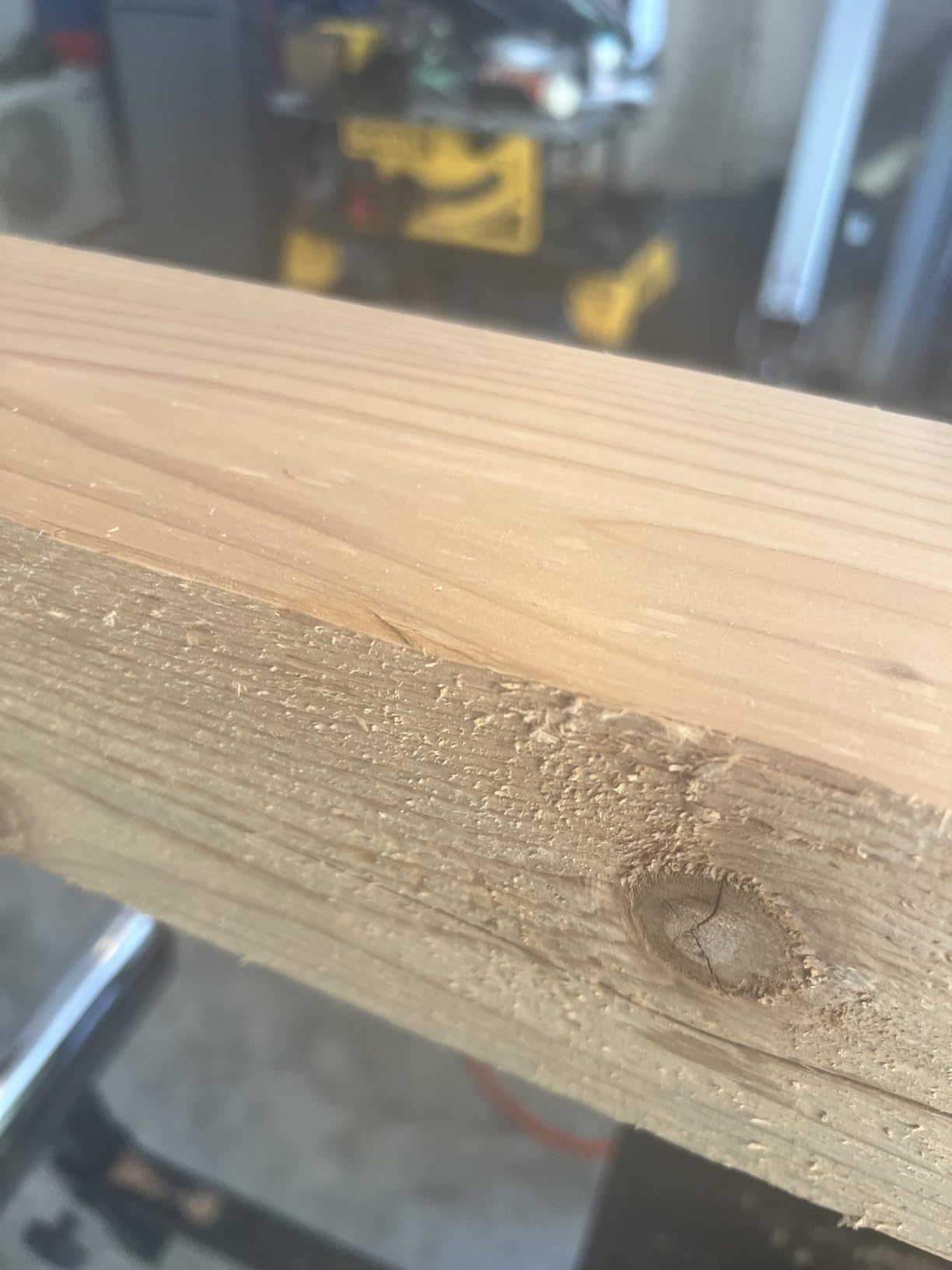
The honest catch is noise. Spiral heads are often advertised as quiet, and the head itself is, but the motor and brush noise on this machine puts it in the same range as a straight-knife planer. Forum owners comparing head types note that helical units are much quieter than a lunchbox or a straight-knife machine, and this one sits closer to the straight-knife end of that range than the marketing implies.
Secondary details: the depth indicator is a small round pin rather than a full-width gauge, and the dust port needs a reducer to reach a larger collector. It is also 120V only, which matters if you are outside North America.
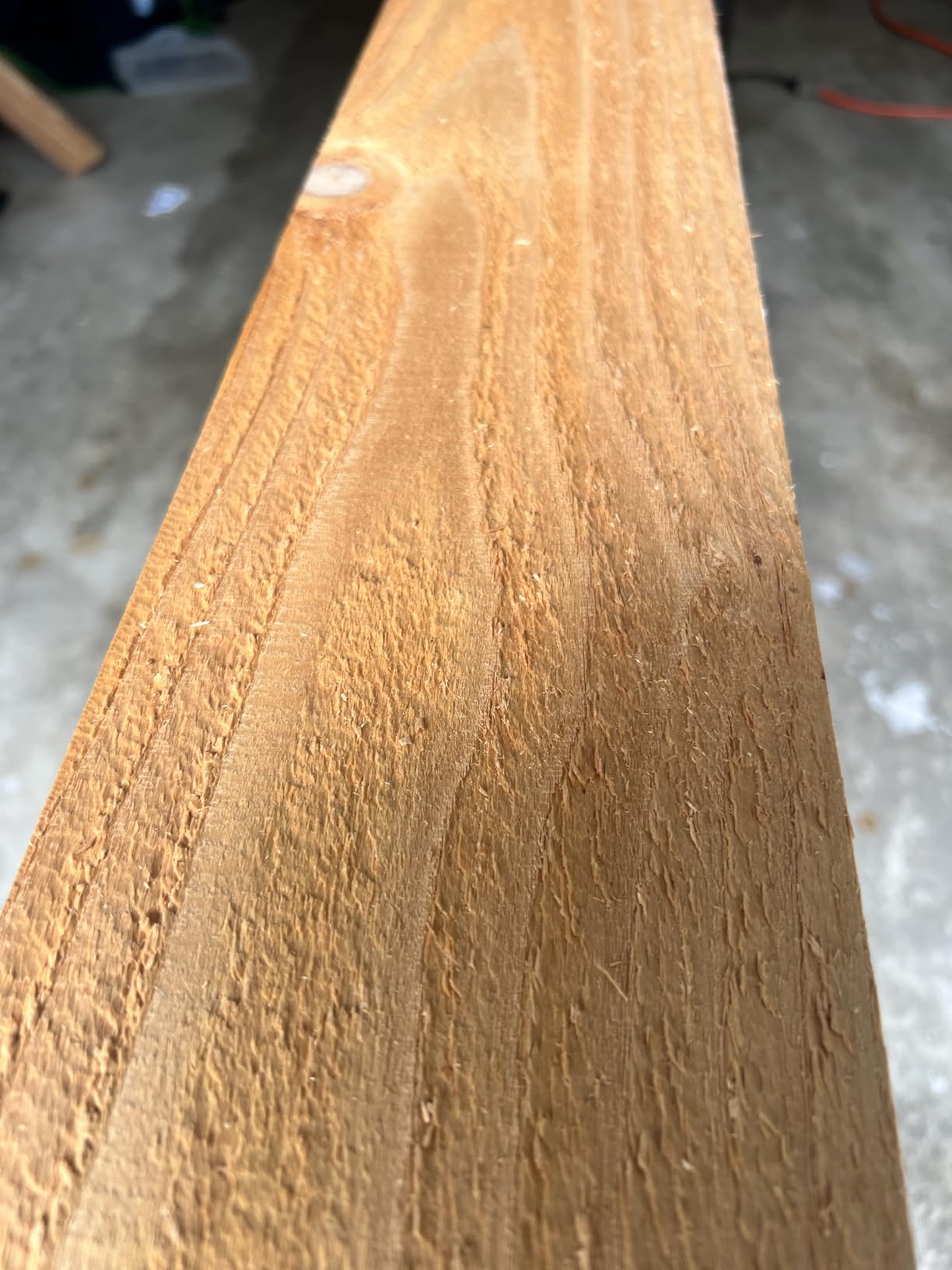
Best Suited For Owners Who Want Helical Quality on a Budget
This is the answer for someone who has read that helical cutterheads are the right choice for hardwood, looked at the price of a premium helical machine, and decided that was too much. You get a segmented head, rotatable inserts and a cast iron bed, which solves the two hardwood problems that matter most.
It is a natural first planer for someone building furniture from rough-sawn boards, because the finish quality means glue-ups go together cleanly and the top surface needs minimal sanding before finish.
Who Should Skip It
Skip it if a genuinely quiet shop matters to you, and skip it if you need to feed slow on figured stock, because this is a single-speed machine at 26 feet per minute. Figured maple and walnut want a slow feed, and this one gives you no way to slow down.
5. VEVOR 13-Inch Three-Blade Two-Speed Planer for Low-Cost Entry
VEVOR Power Benchtop Planer Three-Blade Two Speed 13″ Thickness Planer
13 inch width
2000W 23500 RPM motor
15 and 24 FPM speeds
62 pounds
Pros
- Lowest entry cost of any three-knife 13 inch planer here
- 23500 RPM motor gives a fine finish and big curly chips
- 15 FPM slow speed reduces tear-out on figured stock
- Quiet for its class
- Vacuum port works well with a strong shop vac
Cons
- Factory knives have arrived dull on multiple units
- Side trays are hard to level for truly flat glue-ups
- Rear table extension will not lock in the up position
- Vacuum hood clogs with large shavings
The VEVOR is the budget entry point into 13 inch, three-knife, two-speed planing, and the hardware on paper is genuinely capable of hardwood work. The 23500 rpm motor produces large curly chips rather than fine dust, the three-knife cutterhead is hardened to HRC55-60 after quenching, and the machined cast iron bed helps keep boards flat. On red oak, pecan and walnut it does the job.
The two speeds matter more here than the spec sheet suggests. At 15 feet per minute the feed is slow enough to reduce tear-out on figured stock, which is the exact control the single-speed machines on this list lack. That is a real hardwood feature in a machine most people assume is only a bargain.
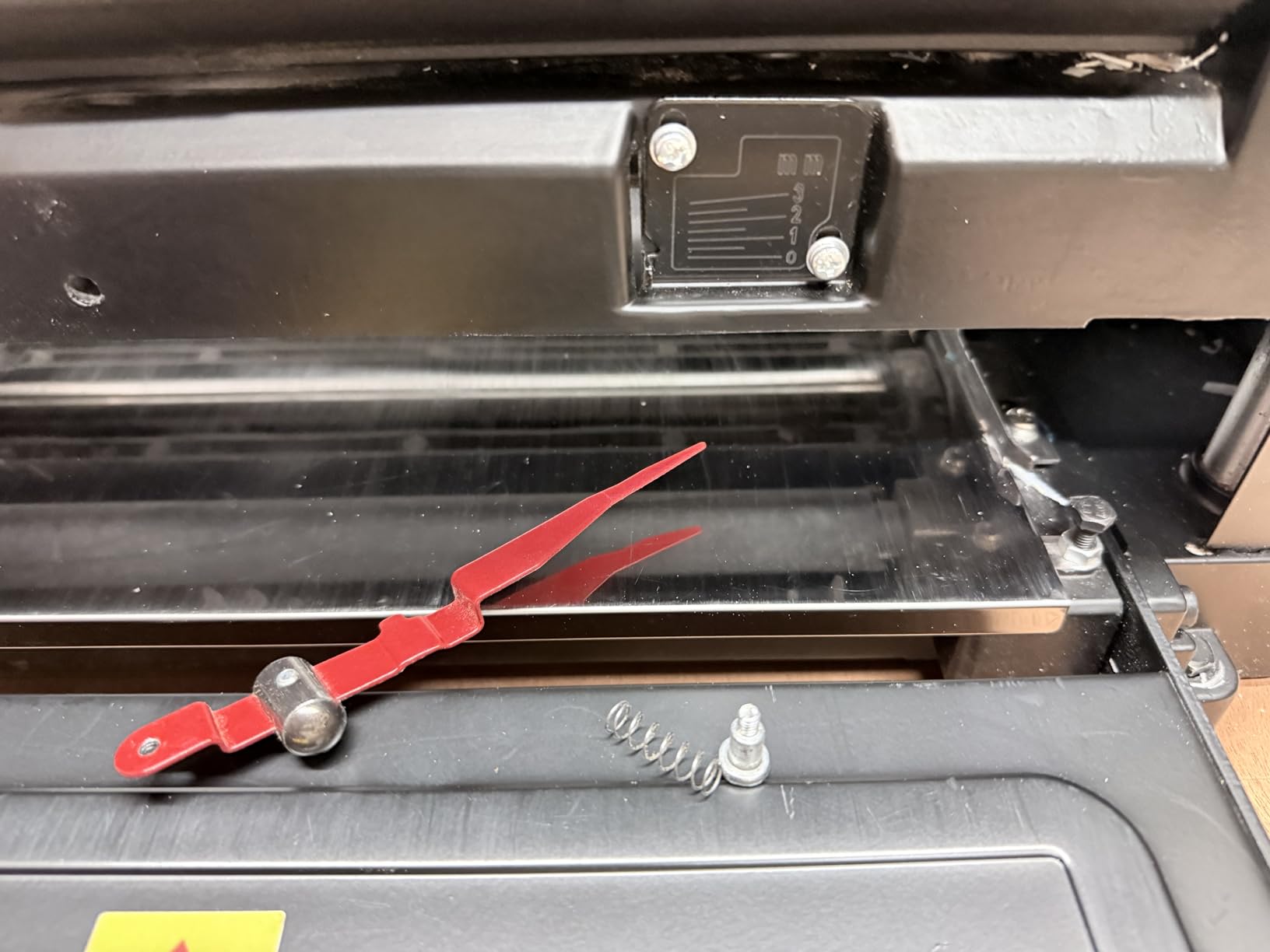
The 4.1 rating is the honest part of this review. Factory-installed knives have arrived blunt on more than one unit, which means you should budget for a replacement set before your first real board. The side trays are hard to level precisely, so glue-ups may need a second pass. The rear table extension does not lock in the raised position and needs a bungee cord for storage, and the vacuum hood clogs with large shavings.
There is also a service consideration. Forum discussion of budget planers in this class repeatedly mentions thin accessory and spare-part ecosystems and inconsistent quality control, so knives, belts and switches may take longer to source than they would for a major brand.
Best Suited For Shop Budgets and First Hardwood Projects
If your total tool budget is the binding constraint and you want to start dimensioning real hardwood rather than construction lumber, this machine gets you there. The slow speed setting alone puts it ahead of most single-speed budget planers for figured wood.
It is also a good machine for a secondary shop role, such as breaking down pallet wood or rough boards before they go through a better planer for the final face.
Who Should Skip It
Skip it if you need flush glue-ups on the first attempt, because tray leveling is the weak point and you will fight it. Skip it if you want a warranty and a service network behind the machine, and buy a fresh knife set before you judge the finish. Customer support after the first month is reported as unresponsive by a meaningful share of owners.
6. RIKON 25-135H 13-Inch Helical-Style Planer for Repeatable Two-Speed Work
RIKON 25-135H 13-Inch Portable Planer with Helical-Style Cutterhead
13 inch width
26 rotatable HSS inserts
16 and 26 SFPM speeds
67.9 pounds
Pros
- Helical-style six-row head with 26 rotatable two-edge HSS inserts
- Two feed speeds let you slow down for figured hardwood
- Threaded four-post head support for repeatable thickness
- Generous 13 inch width with 1/8 inch depth of cut
- Dust hood and 4 inch to 2-1/2 inch adapter included
Cons
- Small review base compared with the big three brands
- Aluminum base is less rigid than cast iron beds
- HSS inserts hold an edge less long than tungsten carbide
The RIKON sits in the interesting middle of this list. It gives you a helical-style cutterhead with 26 two-edge HSS inserts that rotate when worn or nicked, and it adds two feed speeds at 16 and 26 feet per minute. That speed control is the feature that matters most on hardwood, because slow feeding is how you keep tear-out out of figured maple and walnut.
Repeatability is the second strength. The threaded four-post head support, combined with the depth gauge, thickness scale and repeat-cut control, is a setup designed to return the same thickness on board after board. For batch dimensioning of hardwood furniture stock, that consistency is worth more than peak surface finish.
The honest limitation is the bed. At 67.9 pounds on an aluminum base, it is lighter and less rigid than the cast iron machines here, so it is most at home on boards that are reasonably flat to begin with. And HSS holds an edge for less time than tungsten carbide, which is a real cost difference over years of hardwood work.
Best Suited For Two-Speed Control on a Mid-Size Budget
Buyers who have followed forum conversations about which head type to buy often land on a spiral or helical machine as the compromise, and the RIKON is a well-regarded version of that compromise. It gets you segmented inserts and two speeds without moving into the premium tier.
It is a good match for a shop that alternates between rough dimensioning and careful work on figured boards, because the speed change is exactly the adjustment you would be making manually if the machine did not offer it.
Who Should Skip It
Skip it if you want a long owner history behind the machine, because the review base is thin and you are trusting the design more than the track record. Skip it for very heavy rough-sawn lumber where a cast iron bed would hold alignment better, and skip it if you plan to run exotics that will chew through HSS inserts faster than you want to replace them.
7. JET JWP-13BT 13-Inch Helical Planer for Cast Iron Stability and Warranty
JET 13-Inch Benchtop Thickness Planer for Woodworking, Helical Style Cutterhead with 2-Speed (18 FPM / 26 FPM) Feed Rate, 2 HP, 120V 1Ph (JWP-13BT)
2 HP 15 amp motor
10,000 RPM head
18 and 26 FPM feeds
75 pounds
Pros
- Precision-machined cast iron bed keeps boards flat and reduces snipe
- Six-row helical head with 26 quick-change HSS inserts
- Four-post design gives the head solid support
- Real hardwood capacity from the 2 HP motor
- Folding tables save shop space
- 5-year warranty
Cons
- HSS inserts hold an edge far less long than tungsten carbide
- Not the quietest machine despite the segmented head
- 75 pounds is heavy for a portable unit
- Costs more than most three-knife competitors
JET built this one around a precision-machined cast iron bed with a steel cover, and on hardwood that bed is the story. Rigid, flat and heavy enough not to shift, it does a lot of the work that snipe complaints are usually blamed on the cutterhead for. Add the four-post head design and you get a machine that holds its relationship between the cutting circle and the bed even under the side load of a wide hard maple board.
The 2 HP, 15 amp motor at 10000 rpm is a genuine hardwood motor, and the two feed rates at 18 and 26 feet per minute give you the slow pass you want for figured material. The folding infeed and outfeed tables are a real benefit in a small shop, since the machine folds down when you are not using it, and the adjustable depth stop handles repetitive cuts well.
The 4.2 average is worth understanding rather than ignoring. Owners like the bed stability and the cut quality, but a meaningful share of one-star reviews focus on the same two things: the HSS inserts wear faster than tungsten carbide, and the machine is not as quiet as other helical-head units at this level. Both are accurate. If you are comparing on finish quality alone, this is not the strongest option in the category.
It is also 75 pounds, which is fine on a dedicated stand and awkward anywhere else.
Best Suited For Shops That Want a Cast Iron Bed and Long Warranty
The five-year warranty is the longest in this roundup, and for a shop that will run this machine for years on abrasive hardwood, warranty length is one of the trust signals buyers consistently cite. Combined with the cast iron bed, this is the pick for anyone who plans to keep the planer a long time and value stability over raw surface polish.
It is also a good candidate as a shop teacher machine, because the cast iron bed and the four-post head make it forgiving of technique.
Who Should Skip It
Skip it if insert running cost matters, because HSS will need replacing sooner than carbide. Skip it if quiet operation is a requirement in a shared or home space, and skip it if your shop is small and the footprint and weight are the deciding factors.
8. Cutech 40600H 13-Inch Spiral Planer with Tungsten Carbide Inserts
Cutech 40600H 13-Inch Spiral Cutterhead Benchtop Planer with 26 Tungsten Carbide Inserts, Single Speed Feed Rate, Snipe Minimizer, and Board Return Rollers (13-Inch Single Speed)
26 two-sided carbide inserts
10,000 RPM head
Eight-position depth stop
13 inch width
Pros
- Tungsten carbide inserts hold an edge far longer than HSS
- Four lead screws and a patented coupling minimize snipe automatically
- Low amp draw thanks to the in-house insert design
- Board return rollers let you flip boards in place
- Eight-position repeat cut depth stop is useful for batch work
Cons
- Single-speed feed with no slow pass for figured hardwood
- Small review base relative to established brands
- Shorter market history than the big three
- Support responsiveness questioned by some buyers
This is the only machine here that puts tungsten carbide inserts in a spiral cutterhead at a mid-level price, and for dense hardwood that is a meaningful upgrade over every HSS option in the roundup. Carbide keeps its edge through quartersawn white oak and hard maple long after an HSS set has gone dull, which changes the real cost of owning a planer.
The two-sided inserts are an in-house design with a non-cutting edge that prevents the insert from skewing during the cut. The result is a smooth surface at a low amp draw, and the four lead screws with the patented coupling handle snipe automatically without a separate snipe lock. Board return rollers on top of the machine let you send a board back to the infeed for the second face without walking around it, which speeds up batch work considerably.
The compromise is the single-speed feed. There is no slow setting for figured maple, and the general rule on hardwood is that slower is safer. Enthusiasts running this machine on figured stock make up the missing control by taking lighter passes and letting the carbide edge do the work, which is workable but not ideal.
With 41 ratings the long-term record is genuinely thin, and a small share of buyers report frustration with support. The flip dust hood, which works as a blower port or a collector connection depending on orientation, is a simple but sensible feature.
Best Suited For Long Insert Life on Abrasive Hardwood
If your work is quartersawn oak, hard maple or dense exotics, insert longevity is the number that determines your real cost per board foot. Carbide inserts on a spiral head, at this price point, are the combination that makes the most sense for that work.
The eight-position repeat cut depth stop also makes this a good batch dimensioner, since you can set a thickness and return to it without re-dialing the head every time.
Who Should Skip It
Skip it if you regularly work figured maple and want a slow feed, because this machine does not have one. Skip it if you want a long service history or confident support, since the review base is small and the brand is young in this category.
9. King Canada 13-Inch Helical Planer for Batch Thicknessing Accuracy
13″ Planer – Helical Cutterhead
13 inch width
Cast iron bed on four columns
Thickness display in inches and millimetres
Eight preset depth stops
Pros
- Cast iron bed and four precision-ground columns give a very stable setup
- Spiral and helical cutterhead delivers a strong finish on hardwood
- Thickness display with a graduated scale in two units
- Eight preset depth stops for repeated batch cuts
- Side-mounted tool storage keeps adjustment keys with the machine
Cons
- Highest cost in this roundup
- Large footprint at roughly 34 by 26 inches
- Thin long-term reliability record
- 120V AC operation only
King Canada’s 13-inch helical planer is the most substantial machine here in physical terms, and the design brief reads like it was written by someone who batches a lot of hardwood. The cutting head raises and lowers onto four precision-ground columns, which is the right answer to the side load a dense board applies. The cast iron bed underneath is what makes those columns worth having.
The detail that tells you who it is for is the preset depth stops. Eight positions from 1/8 inch up to 1-3/4 inches, which means a stack of hardwood furniture components can be run to a repeatable thickness without re-setting the head between boards. The thickness display and depth indicator carry a graduated scale in both inches and millimetres, which is a small courtesy that removes a step from every setup.
Against that, the footprint is real. At roughly 34 by 26 inches this needs its own dedicated bench, and it is the most expensive machine in the roundup. With 41 ratings, the long-term record is thin, so you are buying a design and a set of features rather than a deep history.
Best Suited For Shops Running Repeated Thicknesses in Volume
If your work is dimensioning dozens of components to the same measurements, the preset depth stops and the stable four-column head support save more time per board than any finish upgrade would. The two-unit scale is genuinely useful if you work from metric drawings or buy metric stock.
Buyers rate the cast iron stability and the helical finish highly, which is exactly the combination you want for a machine that will be asked to handle rough hardwood rather than only pre-surfaced boards.
Who Should Skip It
Skip it if bench space is tight or if your shop cannot dedicate a full surface to it. Skip it if you want an established service and parts ecosystem behind the machine, and skip it if you work on figured stock and want multiple feed speeds, since this is a single-speed design.
Buying Guide for Best Benchtop Planers for Hardwood
The right question is not which planer is best. It is which cutterhead, width and snipe control match the lumber you actually buy. Here is how those choices translate into hardwood results. One naming note before we start: this guide is about hardwood lumber for building, not hardwood flooring. If your project is the floor itself, our guides to hardwood floor cleaning machines and cordless vacuums for hardwood floors cover that side of things instead.
That distinction matters if you also own the floor you are working over. Many shops keep pet hair out of the same dust stream the planer feeds, and a dedicated vacuum rated for pet hair on hardwood floors keeps the finished surface around the machine from getting covered in shavings you just cleaned up.
Straight Knife, Spiral or Helical: The Difference Matters Most on Hardwood
A straight-knife cutterhead uses three or two full-width blades that are all cutting in the same instant. It is simple, cheap and produces a high cuts-per-inch figure, which is why the DW735 and DW734 get such fine finishes. What it cannot do is avoid snipe, because a single cutting edge drops into the board at the leading end and lifts out at the trailing end. It also lifts fibers on figured wood because every cutting edge enters the same way.
A spiral head replaces those blades with many small inserts arranged in a helix, each one cutting a fraction of the width. The cutting force is spread over several inches of head, so the head deflects less and the surface is cleaner. A helical head is a higher row-count, higher-insert-count version of the same idea, typically 26 inserts across 6 rows as on the JET and RIKON here.
The catch on both is the insert material. HSS inserts rotate and are cheap to replace but hold an edge for less time. Tungsten carbide, as on the Cutech 40600H, holds its edge much longer and is the right answer for quartersawn oak, hard maple and exotics. The naming gets muddled because brands use helical and spiral interchangeably, so read the row count and insert count rather than the label.
Planing Width: 12 Inch, 12-1/2 Inch or 13 Inch
Rough-sawn boards are sold in nominal sizes, and a board sold as 12 inches often measures more. The DW734 at 12-1/2 inches and the CMEW320 at 12.25 inches will both turn away a wide board, while every 13 inch machine here will take it. If you buy wide stock, a 13 inch bed is not a luxury. Boards that barely miss the capacity of a narrower machine are the most common frustration new planer owners describe.
Depth of cut matters too, and the figures are modest across the board. Most of these machines are rated around 1/8 inch of depth of cut on narrow hardwood, and the DEWALTs are listed at 0.13 inch. The number is not the target. Your target is the pass you take, and on dense hardwood that should be well under the machine’s maximum on the first pass.
How to Avoid Snipe on Hardwood
Snipe is the shallow scallop at the leading and trailing end of a planed board, and it is the single most cited complaint in every woodworking forum thread about these machines. The causes are mechanical: the cutterhead deflects as the board enters and leaves the cut, and the bed or head support lets the head move relative to the bed. Nothing removes it entirely, but five steps reduce it substantially.
First, choose a machine with an anti-snipe mechanism and use it. The DW735X locks the carriage automatically. The DW734 uses a four-column lock. The Cutech uses four lead screws and a coupling to do the same job. A manual snipe lock that you have to remember to engage is worth much less than one that engages itself.
Second, take lighter passes. Owners of the DW735 say repeatedly that it snipes the moment you get even slightly aggressive. On hardwood, halve the depth of cut and add a pass; the time cost is trivial next to the sanding cost of a sniped face.
Third, support the board properly. The infeed and outfeed tables should sit level with the bed. A board that sags between the table and the head exits at a different angle, which cuts deeper. Check this with a straightedge on a flat surface before you trust any results.
Fourth, use the slow feed speed. The two-speed machines here let you trade speed for finish quality, and on figured maple, walnut or any figured hardwood, the slow setting is the correct choice. The VEVOR’s 15 feet-per-minute setting and the DW735X’s 179 cuts-per-inch setting both serve this purpose in different ways.
Fifth, and this is the workaround that appears constantly in forum threads but almost never in published roundups: mill your boards four or five inches longer than the finished length, then crosscut the ends once the board is at final thickness. The snipe exists only at the ends, so you simply remove it with the cut you were going to make anyway.
Feed Speed and Depth of Cut on Common Species
Hardness is not a spec, but it dictates how you run the machine. Softer hardwoods such as mahogany and walnut tolerate a faster feed and a slightly deeper pass. Medium hardwoods such as cherry, walnut and maple want a moderate pass. The hardest domestic stock, white oak, ash and quartersawn maple, wants the lightest pass and the slowest feed your machine offers.
On exotics, slow everything down. A single-speed machine gives you no control here, which is the specific limitation shared by the WEN PL1326, the Cutech 40600H and the King Canada in this roundup. If you buy exotics regularly, a two-speed machine is worth the money on its own.
Dust Collection: Sizing for the Chip Volume Hardwood Produces
Forum users are consistently unprepared for how much material comes out of a planer, and the comment that planers eject a lot of wood chips appears in almost every beginner thread. A planer does not make dust, it makes shavings, and shavings fill a drum far faster than fine dust does. Size your collector for the volume, not for the CFM figure on a shop vac, and empty it before it is full, because an overloaded drum chokes airflow and eventually puts load back on the cutterhead.
Check the dust port on the specific model. The WEN PL1326’s port needs a reducer to reach a larger collector, the JET ships a dust hood, and the RIKON includes a 4 inch to 2-1/2 inch adapter. The Cutech’s flip hood works as a blower port or a collector connection, which is a useful option in a shop that does not always want collection running.
Knife and Insert Running Cost
This is where the true price of a planer shows up, and no competitor roundup we compared covers it. Straight knives are disposable, cheap per set, and on hard maple or white oak they need replacing sooner than a new owner expects. The DEWALTs include a spare set, which softens the first year but not the long run.
HSS inserts, found on the WEN PL1326, the RIKON, and the JET, cost more than straight blades but rotate twice before replacement and hold an edge for a reasonable stretch. Tungsten carbide inserts cost the most up front and hold their edge the longest, which makes the Cutech 40600H the cheapest to run per board foot on abrasive hardwood despite its lower purchase cost. Whichever head you choose, budget for a sharpening jig, because consistent depth of cut depends on consistent edge geometry.
Frequently Asked Questions
Who makes the best benchtop planer?
For hardwood, the DEWALT DW735X is the strongest all-round benchtop planer: its 15 amp motor at 20000 rpm, two-speed gearbox at 96 and 179 cuts per inch, and automatic carriage lock handle dense species without stalling. CRAFTSMAN is the value brand and WEN is the best source of a segmented cutterhead without a premium price.
What is the best benchtop planer with a helical cutterhead?
The JET JWP-13BT pairs a 26-insert helical-style head with a precision-machined cast iron bed and a 2 HP motor, plus a five-year warranty. If you want two feed speeds instead, the RIKON 25-135H offers 16 and 26 feet per minute with rotatable HSS inserts.
How do I avoid snipe when planing wood?
Use the machine’s snipe lock, take lighter passes than you think you need, level the infeed and outfeed tables with the bed, and use the slow feed speed on figured stock. For the last remaining marks, mill boards four or five inches longer than the finished length and crosscut the ends off once the board reaches final thickness.
What are the key differences between a helical and a straight blade planer?
A straight-knife head uses two or three full-width blades cutting at the same instant, which gives a high cuts-per-inch figure and a fine finish but cannot avoid snipe and tears out fibers on figured wood. A helical head uses many small staggered inserts, spreads the cutting force along the head, cuts more quietly and cleanly, and needs no sharpening, but each insert has a shorter life than a full-width knife.
Does a planer level wood or make it flat?
A planer makes a board a uniform thickness but does not correct a twist or a cupped edge. If a board is warped, it will come out the same warped shape at a different thickness, so a jointer or a hand plane has to flatten one face first, and a planer then brings everything to a matching thickness.
Which Benchtop Planer Should You Buy?
The best benchtop planers for hardwood fall into clear groups once you know your material. Buy the DEWALT DW735X if hardwood is your primary stock and you want maximum removal with minimal snipe effort. Buy the WEN PL1326 if you want a segmented cutterhead and a cast iron bed without paying a premium, and accept a single feed speed. Buy the CRAFTSMAN CMEW320 if weight and price decide the outcome and you can live with a light sanding pass afterward.
Below those, the JET and RIKON are the two-speed helical options, the Cutech is the answer for the lowest long-run insert cost, and the King Canada is built for batch work in a shop with room. Match the cutterhead to the wood, keep the passes light, and check the price of the machine with the buttons below, since these figures move every week.