
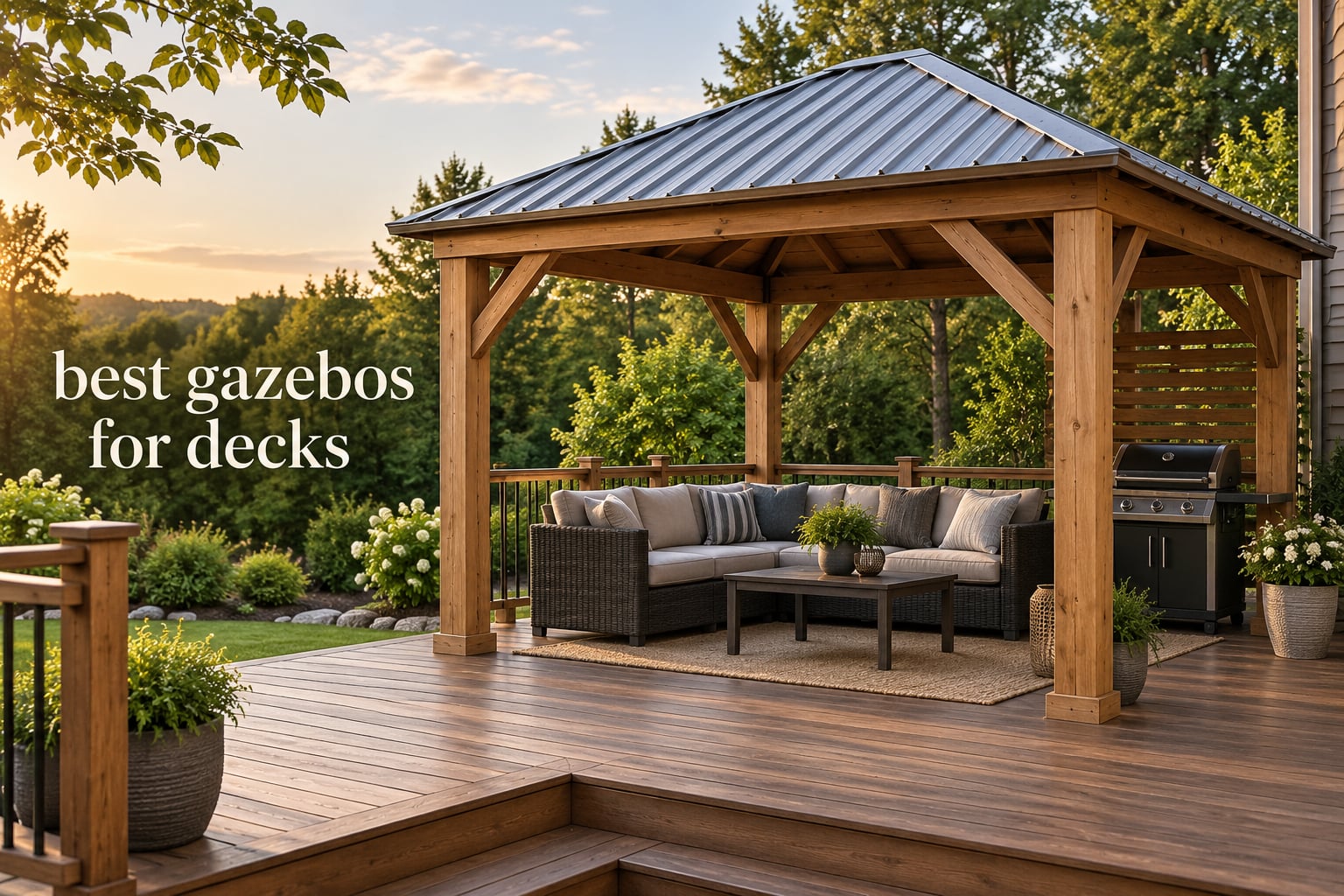
A deck sits higher than a patio, so it gets more sun, more wind and more of everything the weather can throw. That is exactly why the best gazebos for decks come up so often, and exactly why most fabric canopies fail there within a season or two. We compared ten of them on the numbers that decide whether a structure belongs on an elevated platform: shipped weight, frame material, roof construction, published wind and snow figures, and what the box actually contains for anchoring.
Short answer first, because it is the number one question on deck forums: yes, you can put a gazebo on a deck, as long as the structure is freestanding on four posts, properly anchored into the framing, and within the load your joists and footings carry. Anything heavier than a soft pop-up tent belongs on a ground-level pad unless a builder signs off on the deck itself.
We have covered the general field in our broader gazebo roundup and gone deeper on hardtop gazebos. This one is organized around a single question: which of these ten actually makes sense over a wooden deck.
Table of Contents
- Top 3 Best Gazebos for Decks (October 2026)
- Quick Overview: All 10 Gazebos Compared in 2026
- 1. PURPLE LEAF 12 x 20 Hardtop Gazebo – Best Overall for Decks
- 2. LAUSAINT HOME 10 x 13 Double-Roof Gazebo – Best Value
- 3. EROMMY 10 x 12 Hardtop Gazebo – Best for Bug-Free Decks
- 4. Aoxun 10 x 12 Hardtop Gazebo – Best Starter Hardtop
- 5. Aoxun 20 x 10 Wall-Mounted Lean-To Gazebo – Best for Small Decks
- 6. Aoxun 12 x 16 Hardtop Gazebo – Best for Large Decks
- 7. Modern Shade Cedar Grill Gazebo 10 x 12 – Best for Grilling
- 8. AirWire 10 x 12 Aluminum Gazebo – Most Versatile
- 9. COBIZI 12 x 12 Pop-Up Gazebo – Best Portable Pop-Up
- 10. VEVOR 12 x 12 Screened Gazebo Tent – Best for Full Screening
- How to Anchor a Gazebo to Deck Framing
- What to Look For in the Best Gazebos for Decks
- Common Gazebo Mistakes on Decks
- Frequently Asked Questions
- Is it a good idea to put a gazebo on a deck?
- What is the best gazebo for a deck?
- How much weight can a deck hold for a gazebo?
- What kind of gazebo can withstand high winds?
- What gazebo has a 100 mph wind rating?
- Do gazebos need to be taken down in winter?
- What are the common gazebo mistakes?
- Is a gazebo or a pergola better for a deck?
- Final Verdict for the Best Gazebos for Decks in 2026
Top 3 Best Gazebos for Decks (October 2026)
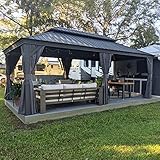
PURPLE LEAF 12×20 Hardtop
- Aluminum frame
- Galvanized steel hardtop
- Double vented roof
- Built-in drainage

LAUSAINT 10×13 Double Roof
- 40x40mm steel frame
- Double-tier roof
- Netting and curtains
- Wind resistance Level 6

EROMMY 10×12 Hardtop
- Galvanized steel roof
- Aluminum frame
- Dual-track netting
- Pre-drilled bases
The PURPLE LEAF is the pick we would put over a large deck without hesitating: aluminum frame, galvanized steel roof, a drainage system built into the posts, and the highest rating in this group at 4.8 across more than fifteen hundred reviews. The LAUSAINT is the one to buy when you want a double-tier steel roof without spending hardtop money, and the EROMMY solves the bug problem with fully zipped dual-track sidewalls.
Quick Overview: All 10 Gazebos Compared in 2026
| Product | Specs | Action |
|---|---|---|
| PURPLE LEAF 12×20 Hardtop Gazebo |
|
Check Latest Price |
| LAUSAINT HOME 10×13 Gazebo |
|
Check Latest Price |
| EROMMY 10×12 Hardtop Gazebo |
|
Check Latest Price |
 Aoxun 10×12 Hardtop Gazebo Aoxun 10×12 Hardtop Gazebo |
|
Check Latest Price |
 AirWire 10×12 Aluminum Gazebo AirWire 10×12 Aluminum Gazebo |
|
Check Latest Price |
 Aoxun 20×10 Wall-Mounted Lean-To Aoxun 20×10 Wall-Mounted Lean-To |
|
Check Latest Price |
 Aoxun 12×16 Hardtop Gazebo Aoxun 12×16 Hardtop Gazebo |
|
Check Latest Price |
 Modern Shade Cedar Grill Gazebo Modern Shade Cedar Grill Gazebo |
|
Check Latest Price |
 COBIZI 12×12 Pop-Up Gazebo COBIZI 12×12 Pop-Up Gazebo |
|
Check Latest Price |
 VEVOR 12×12 Screened Gazebo Tent VEVOR 12×12 Screened Gazebo Tent |
|
Check Latest Price |
1. PURPLE LEAF 12 x 20 Hardtop Gazebo – Best Overall for Decks
PURPLE LEAF Patio Gazebo 12′ X 20′ Built-in Drainage System, Gray
240 sq ft
Powder-coated aluminum frame
Galvanized steel hardtop
4.7 inch posts with drainage
Pros
- Aluminum frame will not rust
- Galvanized steel double roof
- Water drains through the posts
- Double vented roof moves air
- Strongest rating in this group
Cons
- Assembly takes many hours and needs several people
- Roof center wedges and corner endcaps fit awkwardly
- Interior heat builds on still days
This is the unit I keep coming back to. It is a 12 by 20 rectangle, which covers 240 square feet, built on 4.7 inch aluminum posts with a galvanized steel roof on top and a double vented tier that lets hot air out before it settles over your table.
The detail that convinced me it suits a deck specifically is the built-in drainage. Water runs along a roof gutter and then down through the posts, so runoff never sheets across your decking or drips along the rail line. At 234 by 144 by 122 inches, it clears a typical railing height with room to spare.
Owners report it holding up well: one reviewer describes it surviving hail and 80 mph thunderstorm gusts once it was anchored properly, and customer service is repeatedly called responsive when replacement pieces are needed. The warranty runs five years on the top panel, two years on the curtain and netting, and one year on the frame, which is a fair reflection of where the weak points sit.
What to check before you build
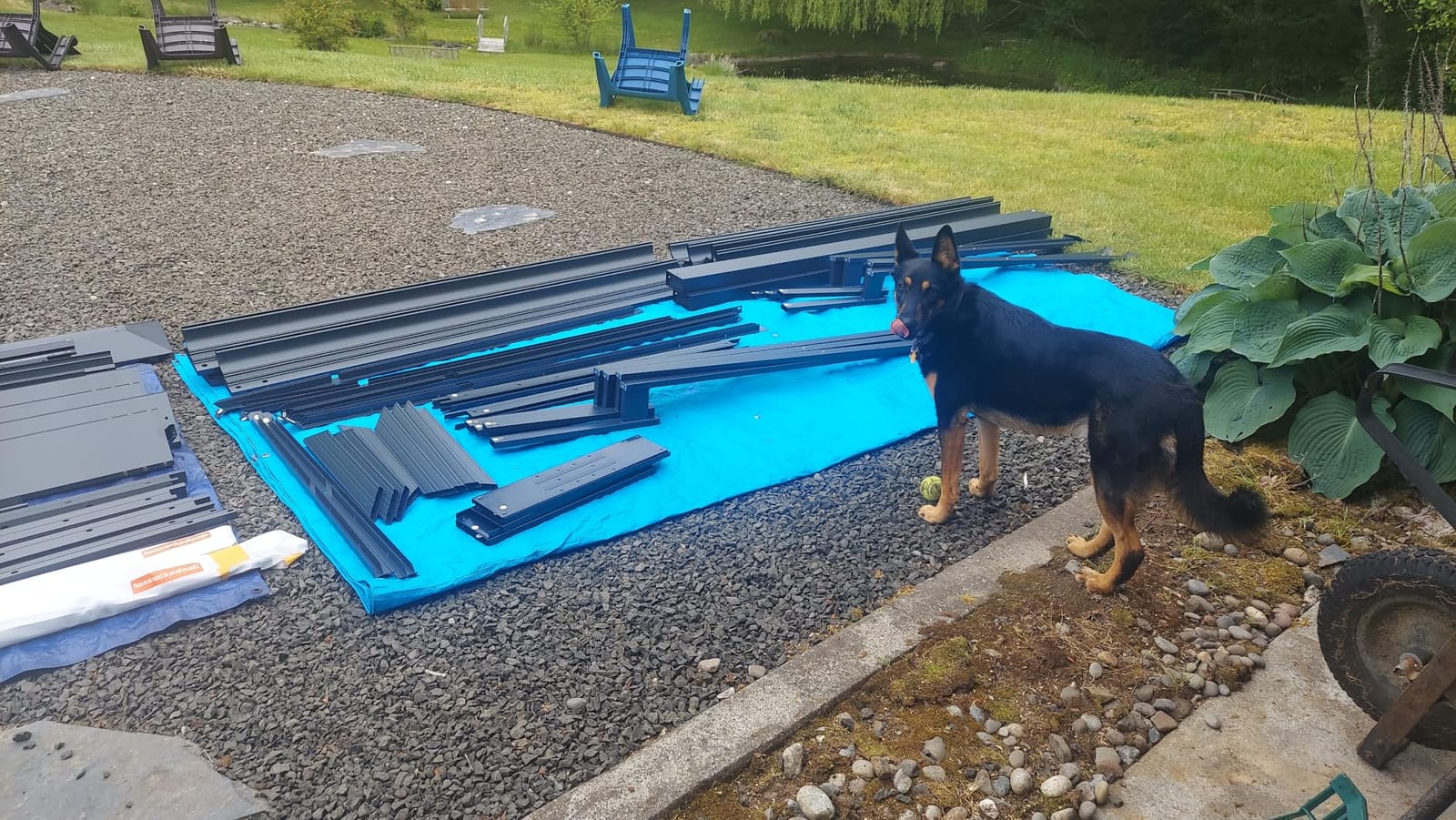
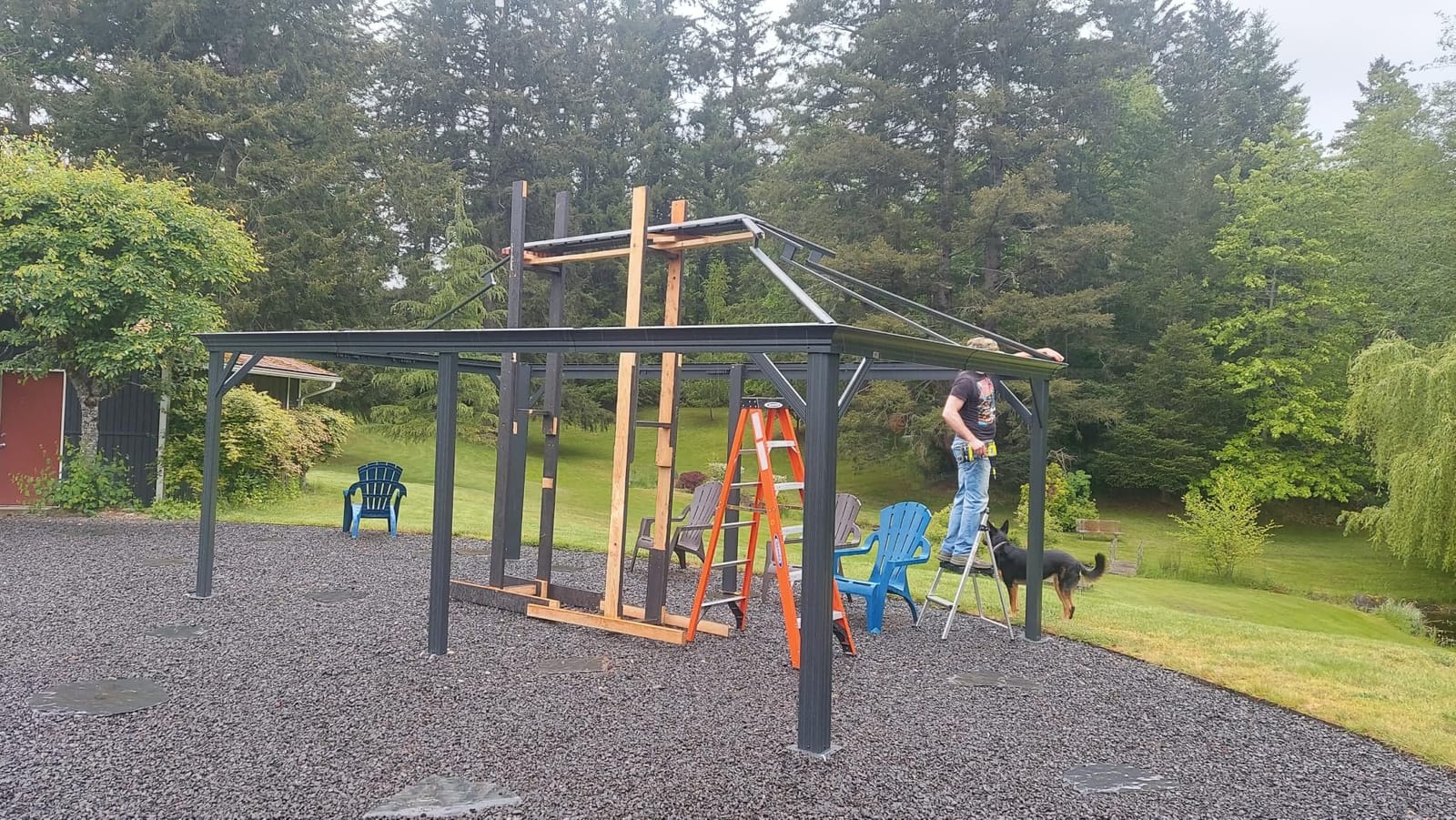
This is a heavy build. Owners describe many hours of assembly with several people helping, and the fiddliest moments are the roof center wedges and the corner endcap covers, which several reviewers said were hard to align. Budget a full day rather than an afternoon, and have a hex key set plus a drill with a hex bit ready.
Check your post locations against your deck posts before the boxes arrive. If the four gazebo posts cannot land close to your joists or existing supports, you are looking at a joist reinforcement job rather than a weekend project.
Who should skip it
Skip this model on a small deck. At 240 square feet it needs a genuinely large platform, and it is the heaviest framed structure here, so it makes no sense above a 10 by 10 pad. If your deck is compact but you still want a wood-look structure with serious wind numbers, the cedar grill gazebo further down is lighter on your joists per square foot of coverage and reads better next to natural decking.
2. LAUSAINT HOME 10 x 13 Double-Roof Gazebo – Best Value
LAUSAINT HOME 10×13 Gazebo Canopy with Netting, Curtains & Double Roof
129.29 sq ft
40x40mm galvanized steel frame
Double-tier roof
Zippered netting and curtains
Pros
- Thicker posts than most at this level
- Double roof keeps the interior cooler
- Netting and curtains both included
- Holds a sofa and chairs on a 15x15 deck
- Metal frame handled two summers of wind and hail
Cons
- Canopy is difficult to stretch over the roof frame
- Assembly runs far longer than the step count suggests
- Included stakes are weak for high wind on soft ground
This is the value pick in the group, and it earns that label on the frame rather than the price tag. The posts are 40 by 40 millimeters of galvanized steel with a powder coat, which is a heavier gauge than most competitors at this size, and the whole unit comes in at 103.2 pounds.
It is a soft double-tier canopy rather than a hardtop, with 135G polyester rated to 1500MM water resistance and UPF 50 UV protection. Reviewers report it fitted well on a 15 by 15 deck with a sofa, coffee table and deck chairs underneath, which tells you the usable interior is honest.
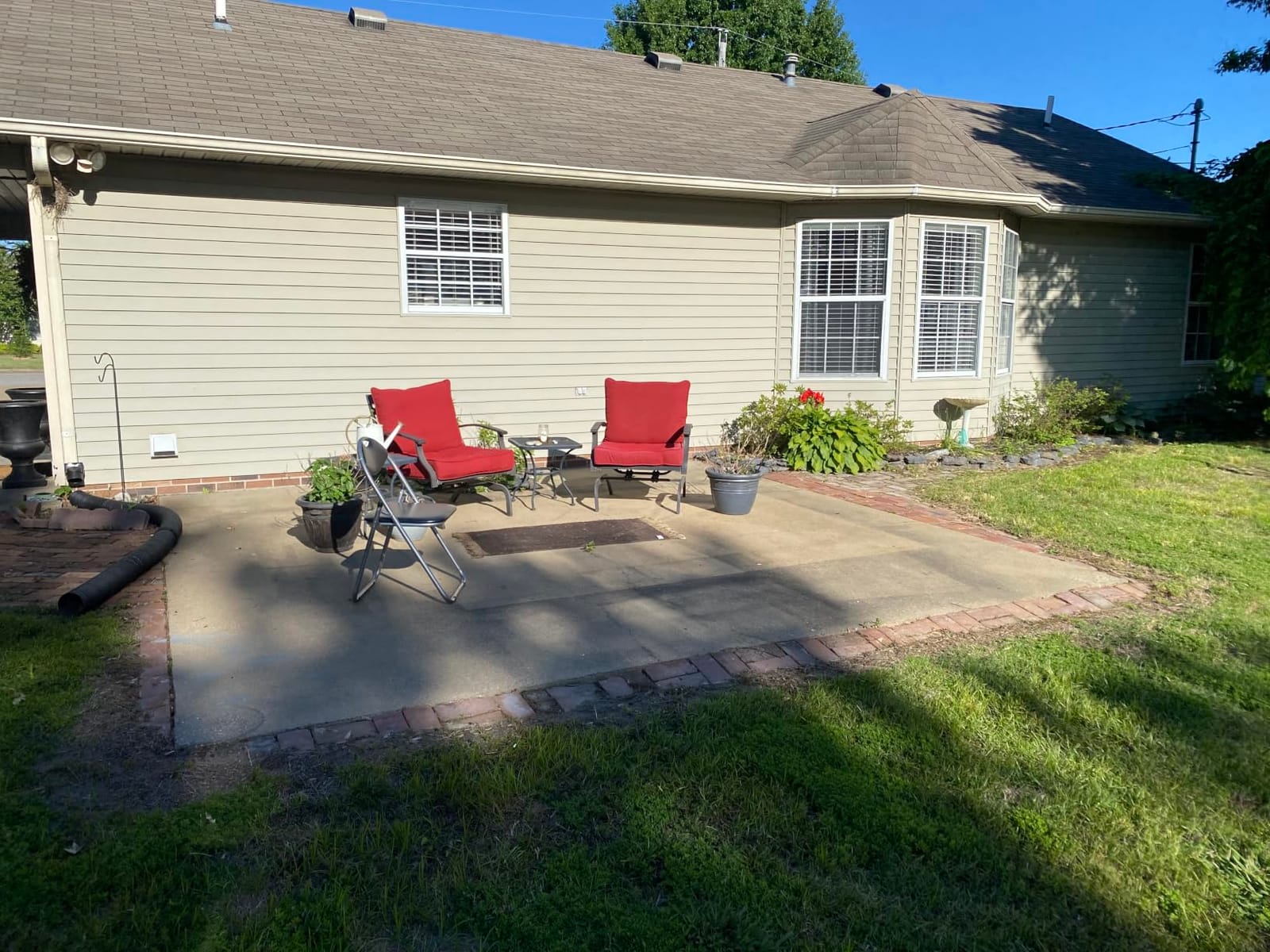
Bug protection is handled with zippered mosquito netting plus tie-back privacy curtains, and a center hook and D-rings on the roof let you hang a fan or string lights. That hook matters more on a deck than in a backyard, because the roof is the only place you can hang things without drilling a beam.
Getting the canopy onto the frame
The single most repeated complaint is physical, not structural: pulling the 135G canopy over the roof frame, especially the vented top section, is genuinely hard to do alone. Two people on opposite sides of the frame make this a ten-minute job instead of a fight.
On anchoring, the box contains eight expansion bolts meant for concrete. Those will not hold in a wood deck, so plan to buy lag bolts or structural screws sized for your framing. Reviewers who bolted the legs to their decks report the frame surviving wind and hail through two summers.
Where it falls short
This is not a permanent-structure answer. In coastal or high-wind areas the fabric canopy ages faster than steel, and it carries a wind resistance rating of Level 6 only when properly secured. For a year-round structure with a published wind test figure, look at the cedar grill gazebo or the Aoxun lean-to instead.
3. EROMMY 10 x 12 Hardtop Gazebo – Best for Bug-Free Decks
EROMMY 10′ x 12′ Hardtop Gazebo, Aluminum Frame Gazebos with Galvanized Steel Double Roof, Permanent Outdoor Metal Pavilion with Curtain and Netting for Patio, Lawn, Deck
120 sq ft
Galvanized steel double roof
Powder-coated aluminum frame
Dual-track sidewalls
Pros
- Steel roof outlasts fabric and polycarbonate
- Double-layer zippered walls block UV and bugs
- Pre-drilled bases handle uneven ground
- Roof hooks for lighting or a fan
- Twelve sizes from 10x10 to 14x24
Cons
- Must be anchored before it can be relied on
- Dual-track curtain system adds assembly steps
If mosquitoes are the reason you want a gazebo, this one handles it better than anything else here. The double track system carries two independent layers: zipped insect netting on the inner track and curtains on the outer one, so you can screen the whole perimeter and still open the curtains for airflow without opening the bugs.
The structure is a galvanized steel double roof on a rustproof triangular powder-coated aluminum frame, weighing 209 pounds across 120 square feet. The vents in the upper tier let wind pass through while the roof blocks the sun, which is what makes a fully enclosed setup survivable in July.
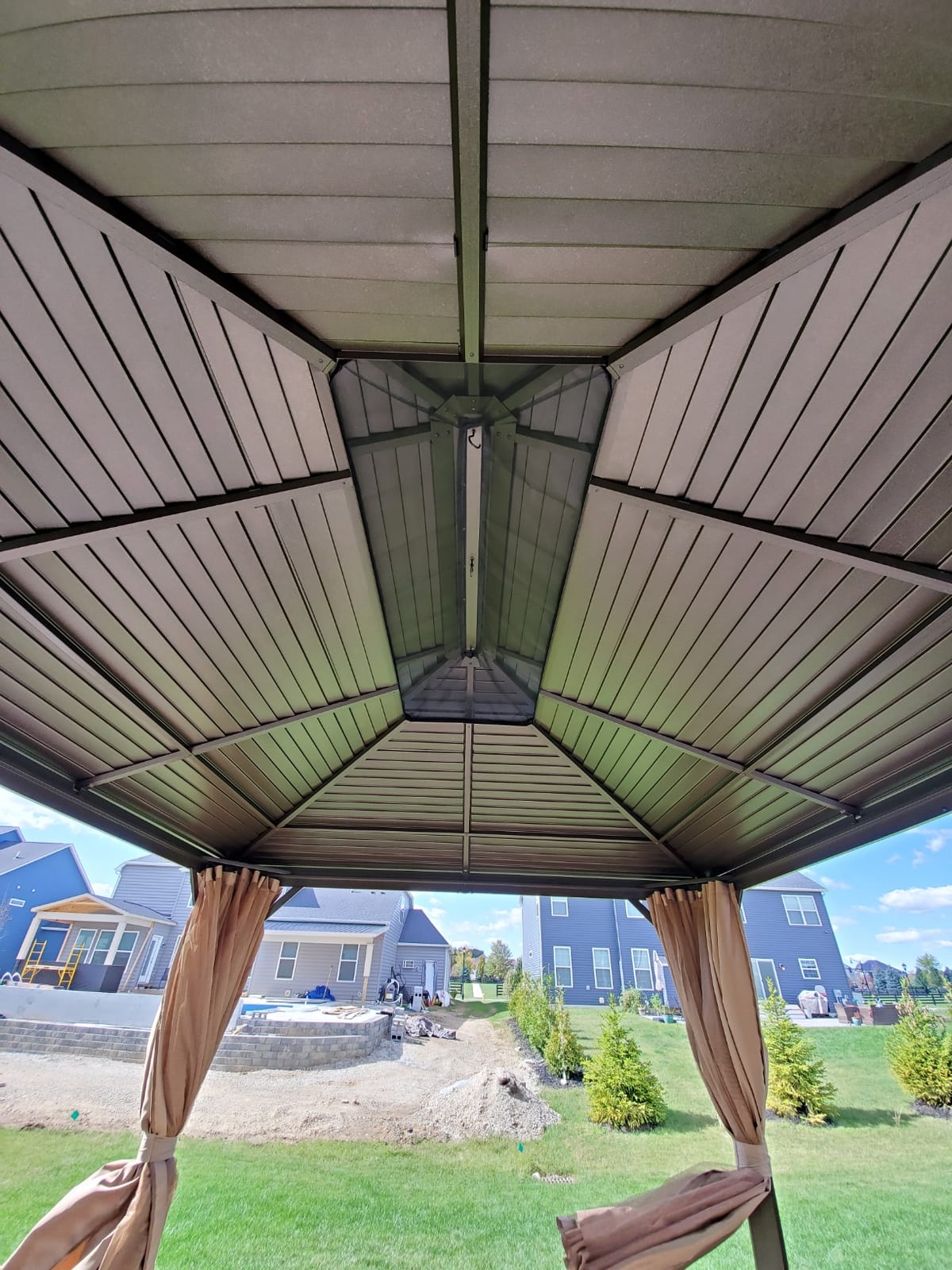
Two practical points stand out. First, the legs are pre-drilled, which matters when your deck is not perfectly flat. Second, this brand runs twelve sizes from 10 by 10 up to 14 by 24, so if the 120 square foot version feels tight you have a direct path to a larger footprint without switching suppliers.
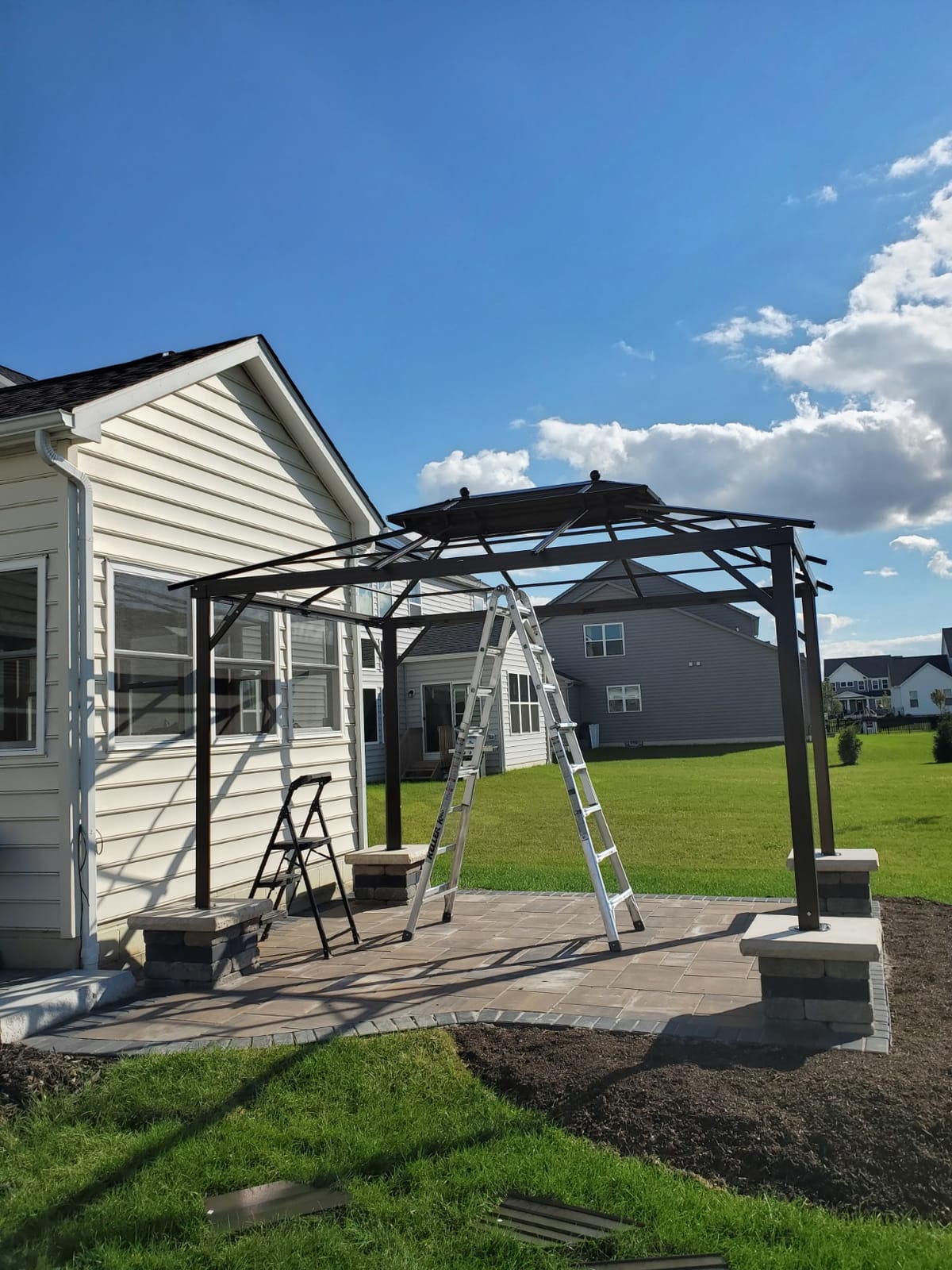
Getting the screening right
Set the netting on the inner track first, before you raise the curtains. Zip every panel closed and check the bottom edges sit inside the base channel, because a two-inch gap at deck level is where a screened gazebo loses its value in a single evening.
Two roof hooks accept a fan or a light fixture. With the walls fully closed, a fan matters more than it would on an open structure, so plan the electrical run before you close the tracks rather than after.
What to watch out for
The recurring advice from buyers is straightforward: anchor it properly or do not trust it. A permanent metal structure like this develops real wind sail area, and the feet are only as good as what they are bolted to. There is also a modest penalty in assembly time, since the double-track system adds steps that single-track designs skip.
4. Aoxun 10 x 12 Hardtop Gazebo – Best Starter Hardtop
Aoxun Gazebo 10×12 Hardtop Gazebo with Double Galvanized Steel Roof, Gray
120 sq ft
Double galvanized steel roof
Powder-coated metal frame
Wind grade 7, 31-38 mph
Pros
- Thick frame with good load-bearing capacity
- Galvanized roof resists rust fading and snow
- Netting on a zipper track plus curtains
- Roof hooks for lights and fans
- Instructions and hardware included
Cons
- Manufacturer advises removing soft parts in extreme weather
- Install suggested for 3-4 people over 2-4 hours
- Wind resistance limited to about grade 7
This is the first hardtop we would hand someone moving up from a fabric canopy, because the roof is a real double galvanized steel build rather than fabric or polycarbonate. At 199.5 pounds over 120 square feet, it delivers the roof weight that makes an all-season structure possible.
The frame is thick powder-coated metal, and the netting runs on a zipper track with tie-back privacy curtains behind it. Roof hooks on the underside take a fan or string lights, and all the hardware and clear instructions ship in the box along with four ground piles and expansion screws.
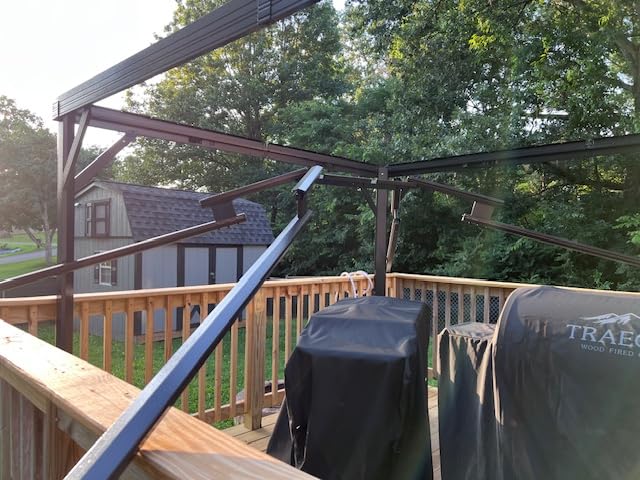
The honest limitation is published rather than discovered: the wind resistance grade is 7, which the maker states as 31 to 38 mph. That is a working number for sheltered decks, but it is well short of what the cedar and lean-to models here quote, so it is not the pick for an exposed coastal site.
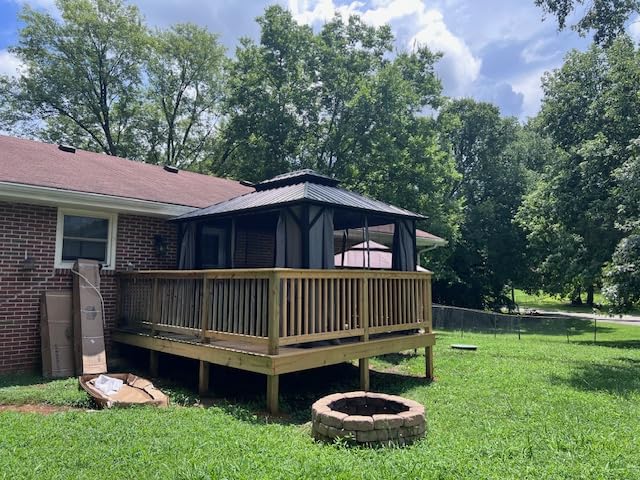
Planning the build
The maker suggests three to four people for two to four hours. That is a fair estimate, and the extra hands matter most when the steel roof panels go on. Lay the panels out in order before you start, because they stack and the fit is tight once the frame is square.
Expansion screws are for concrete or pavers. On a deck you need structural fasteners into the framing, and you should treat the pre-drilled holes as a guide rather than a promise, checking each post is plumb before you commit.
Where it is not the answer
If your deck sits open to a prevailing wind or you get winter storms, this grade of wind rating is the deciding factor, not the roof type. Move up to the cedar grill gazebo for an 83 mph test figure, or the Aoxun lean-to for a lean-to that is rated to 40 mph and carries the load through the house wall rather than four feet on your decking.
5. Aoxun 20 x 10 Wall-Mounted Lean-To Gazebo – Best for Small Decks
Aoxun 20’x10’ Gazebo with Aluminum Frame & Polycarbonate Panel, White
200 sq ft
All-aluminum frame and roof
Rated 40 mph wind,6 inch snow
Polycarbonate panels, 99% UV
Pros
- Strongest published wind figure among lean-tos
- Polycarbonate cuts solar heat by up to 90%
- Sloped roof drains without pooling
- No front posts so deck joists carry nothing
- 92% light transmittance keeps it bright
Cons
- Must be fixed to a wall with the supplied expansion bolts
- Open lean-to side leaves it only partly enclosed
This is the answer for a tight deck, and it is the shape almost no editorial roundup covers. It attaches to the house wall with no front posts, so the only thing landing on your decking is a light rail-level base rather than four concentrated post loads. The 200 square feet of coverage comes from depth instead of span.
The structure is all aluminum, top frame and columns, rated to 40 mph wind and up to 6 inches of snow, with a stated load capacity of 55 pounds per square meter. The multi-walled polycarbonate panels block 99% of UV and cut solar heat by up to 90% while still passing 92% of the light, so it stays usable in summer rather than turning into a dark box.
Rated for temperatures from minus 40 to 240 degrees, the sloped roof channels water away instead of pooling it on the panels, which is the single biggest cause of polycarbonate failure.
Checking your wall before you order
This unit requires the supplied expansion bolts into a masonry or wall surface, which is exactly why it earns its place on a small deck. Look for a solid exterior wall line with stud spacing you can hit, not a vinyl or aluminum siding panel with nothing behind it.
Confirm the mounting height gives you head clearance across the full 20 foot run. The unit is 99.42 inches tall at the eave area, so on a low deck door or window head you may need to step up to a taller wall section.
What you give up
A lean-to is open on one long side by design, so it is partial shade and partial weather cover rather than an enclosed room. If your goal is bug-free lounging rather than shade, the EROMMY dual-track setup covers all four sides and is a better match, at the cost of four post loads on your deck.
6. Aoxun 12 x 16 Hardtop Gazebo – Best for Large Decks
Aoxun 12′ X 16′ Hardtop Gazebo with Built in Drainage, Aluminum Gazebos
190.56 sq ft
4.7 inch aluminum posts
Hidden gutter drains through corners
Dual-track curtains and mesh
Pros
- Hidden gutter keeps the deck dry and clean
- Reinforced frame resists warping
- Dual-track curtains and mesh move independently
- Ceiling hook for string lights
- Roof blocks 99% of UV while venting
Cons
- Must be anchored to hold up in strong wind
- Large footprint suits bigger decks than compact ones
Where the PURPLE LEAF wins on rating volume, this one wins on build detail. The triangular aluminum posts measure 4.7 inches and sit inside a reinforced all-metal frame, which is the kind of specification that stops a deck frame from ringing after a heavy table gets dragged across it.
The concealed gutter is the standout. Instead of dripping off the roof edge, water routes down through the corner posts, so the decking underneath stays dry and free of splatter. That single feature does more for a wood deck than any amount of cosmetic trim.
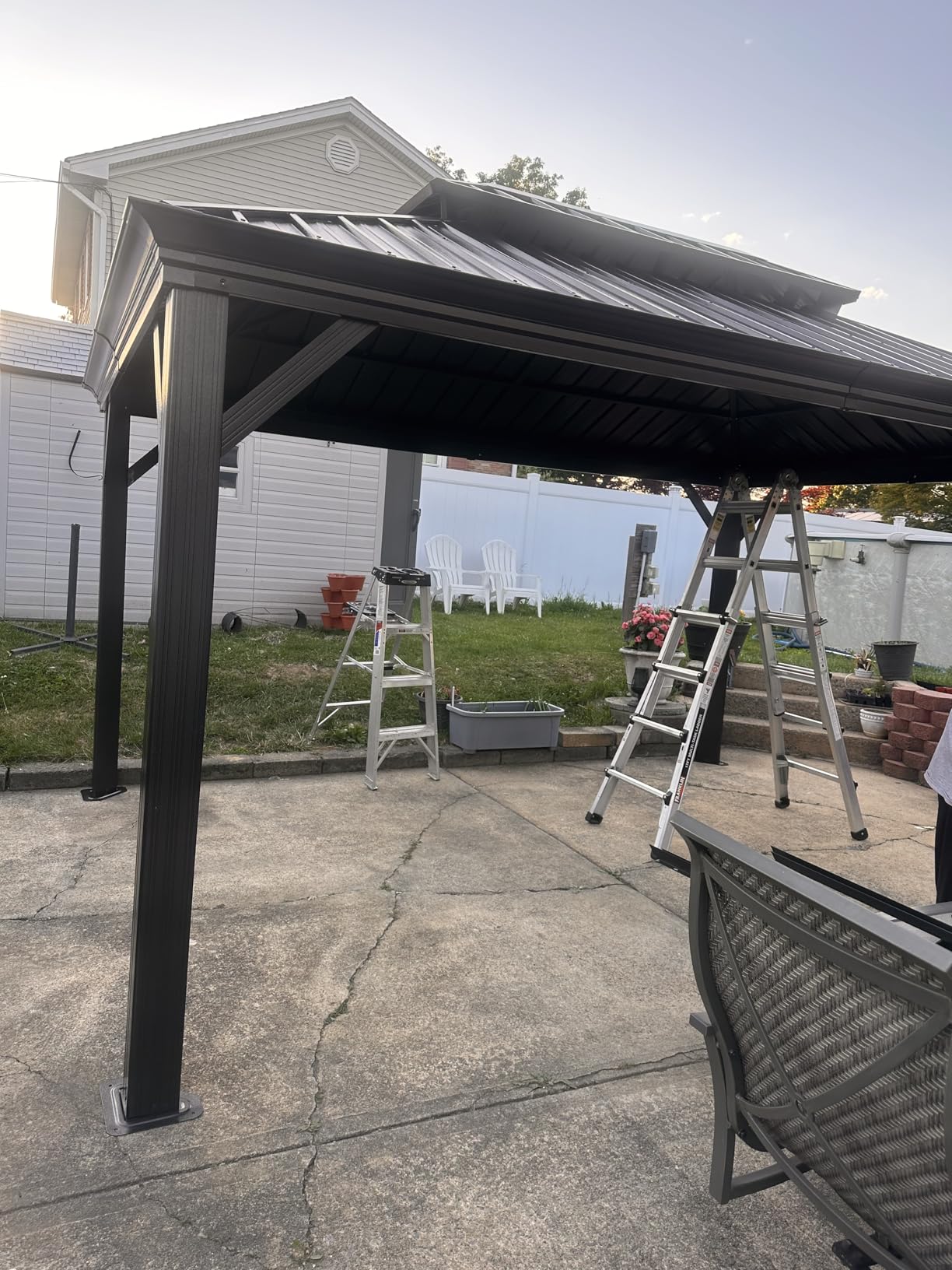
Soft goods are handled well too: 180GSM gray polyester curtains and 35GSM wraparound insect screening run on independent dual tracks, so you can slide the shade without disturbing the bug layer. A reinforced ceiling hook takes string lights or a fan. The footprint is 190.56 square feet at 192 by 144 by 120 inches.
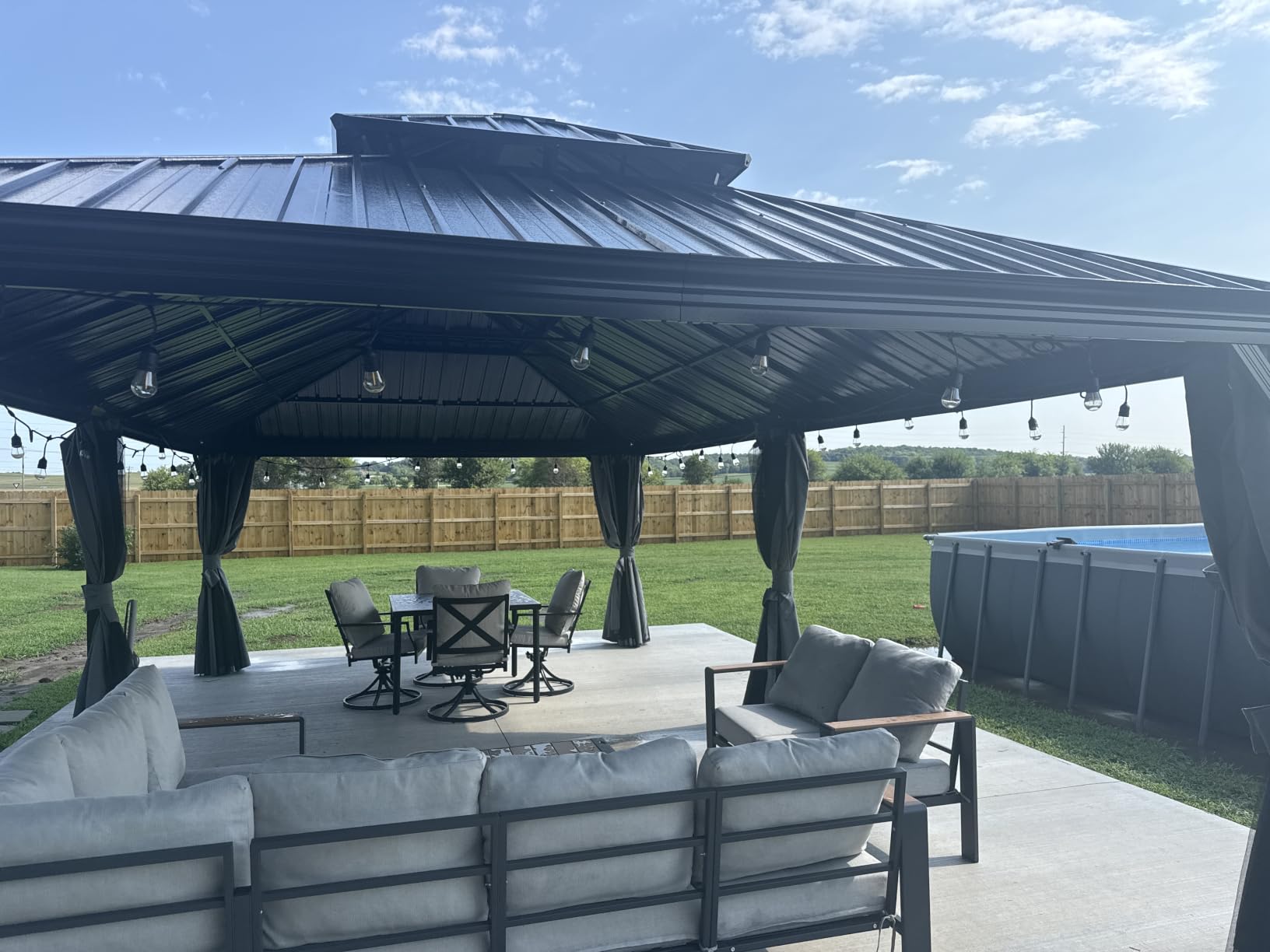
Sizing it against your deck
At 12 by 16 this needs a deck that is genuinely large, and it arrives in six packs, so plan where you will stage the pieces. Measure your clear span between posts first, because this footprint does not forgive a tight deck the way the 10 by 12 units do.
If your deck is around 16 feet on the long side, leave a few inches at each end so you can reach the base plates. The drainage-through-post design is worth the extra care during assembly, since the corner post channels have to line up with the roof gutter outlets.
Where it does not fit
Owners consistently rate it highly but repeat one caveat: it has to be anchored to stand up in wind. If you are not prepared to bolt four bases into your framing, this is the wrong purchase regardless of how good the frame is, and the smaller Aoxun 10 by 12 hardtop is easier to secure on a modest platform.
7. Modern Shade Cedar Grill Gazebo 10 x 12 – Best for Grilling
Modern Shade Wood Grill Gazebo 10′ x 12′ with Sloped Galvanized Steel Roof
120 sq ft
FSC-certified cedar frame
5 degree sloped galvanized steel roof
Tested wind rating 83 mph
Pros
- Cedar frame matches a wood deck naturally
- Sloped roof has not leaked in multi-day rain
- Blocks low sun for evening viewing
- Tested to the highest wind figure here
- Anchors to decking or concrete
Cons
- Some posts not included and must be bought separately
- Included screws are too weak for the load
- Roof tiles can be hard to fit precisely
- Rear of roof has no drainage and can pool
This is the one we recommend when the objection is that metal gazebos look industrial sitting on a natural wood deck. The frame is FSC-certified cedar with powder-coated steel bolts and brackets, and it is the only wood-framed structure in this group.
The roof is a 5 degree sloped galvanized steel hardtop, and the slope is the functional point: water runs off rather than sitting on panels. Owners report it staying dry through several days of rain, and it blocks the low sun well enough that people watch television out there.
At 83 mph, this carries the highest published wind figure in the lineup. For a grill station beside a deck, that combination of a solid roof, a real wind number and a wood finish is hard to beat.
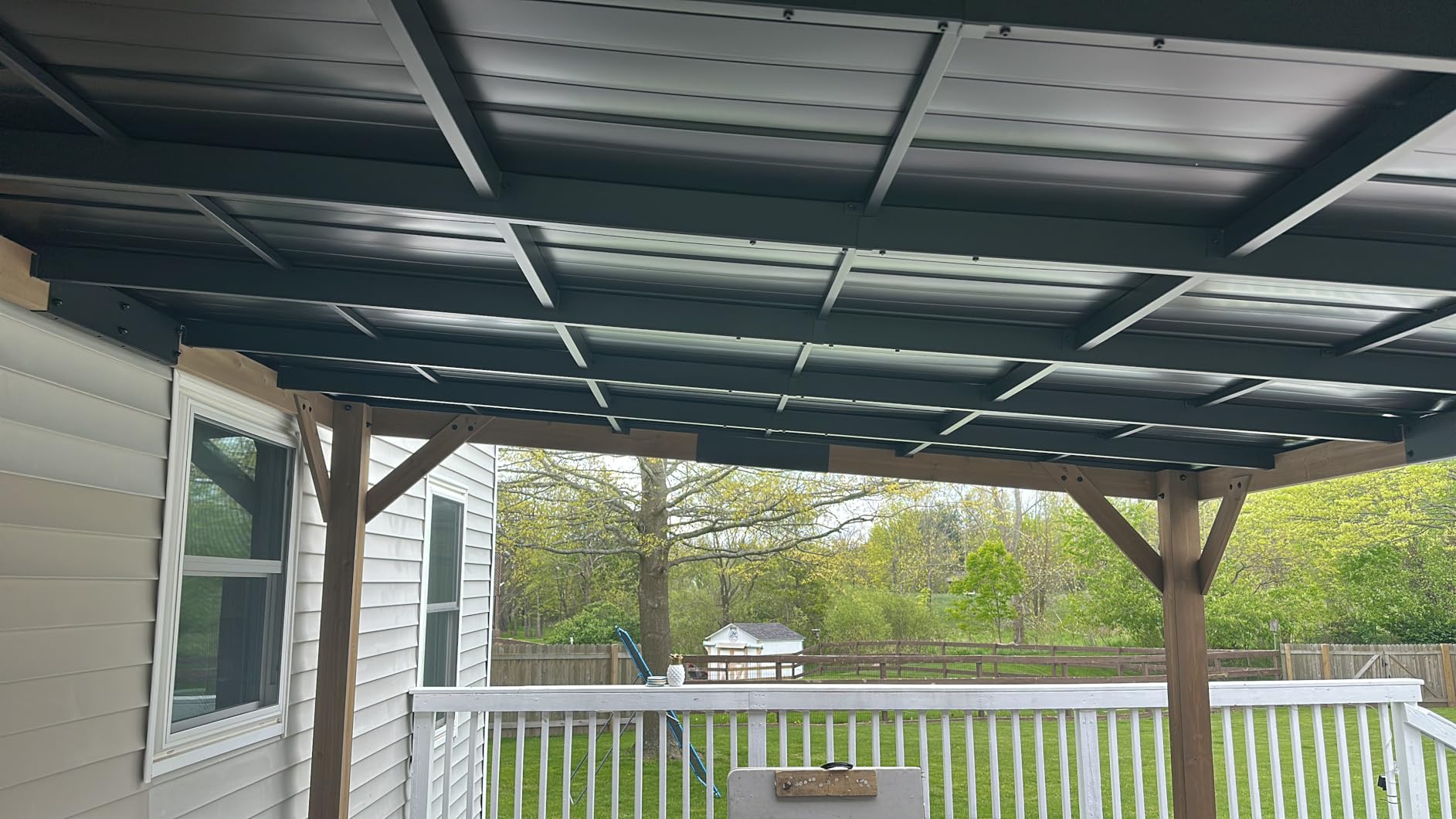
It comes in at 292.8 pounds, the heaviest unit we tested, so treat the four posts as permanent. The maker states they are secured with expansion bolts on concrete or decking, which is the clearest anchoring instruction anywhere in this roundup.
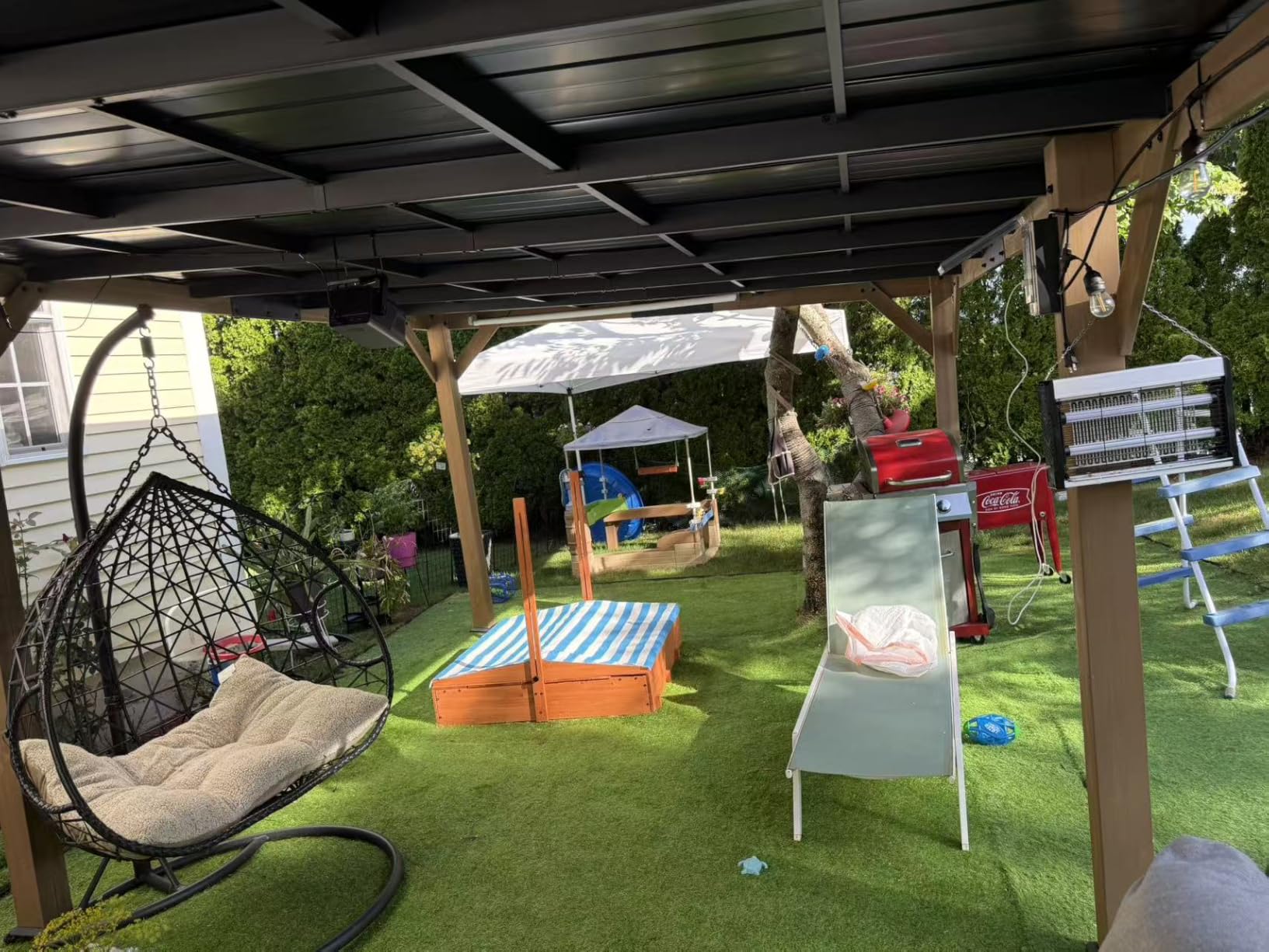
Read the packing list carefully
The most useful thing to know before ordering is that the parts list needs checking against the contents. Some buyers report posts arriving separately, and included screws described as too weak for the load, so buy your own structural fasteners and confirm the post count in your specific size before the day of assembly.
Roof tiles are cut to fit but not precisely, and some units develop sagging at the front and back beams over time. Inspect each panel against the frame before you commit the screws, because a forced fit is where the weak hardware gets loaded.
What to check after the first rains
The one genuine design complaint is drainage at the rear of the roof, where water can collect. After a few heavy rains, look at the rear beam and the back edge of the decking underneath it. If you find pooling, add a small flashing cap along that run before it becomes a rot problem.
One reviewer also disputes the cedar labeling on their unit, so check the wood species on the actual posts you receive rather than trusting the listing photo. Aesthetic fit on a cedar deck is the reason to buy this one, so verify the material before you build the frame around it.
8. AirWire 10 x 12 Aluminum Gazebo – Most Versatile
AirWire 10’x12′ Hardtop Aluminum Gazebo Dark Gray
120 sq ft
Double galvanized iron roof
Powder-coated aluminum frame
Dual-track curtains and mesh
Pros
- Powder-coated aluminum resists rust and fading
- Vented double roof dissipates heat
- Dual-track curtains and zipped mesh
- Two roof hooks for lights or a fan
- Written instructions and video provided
Cons
- Arrives in three boxes at different times
- Assembly wants 2-4 people over 2-5 hours
- Roof is water resistant rather than waterproof
- Lowest average rating here at 3.9 stars
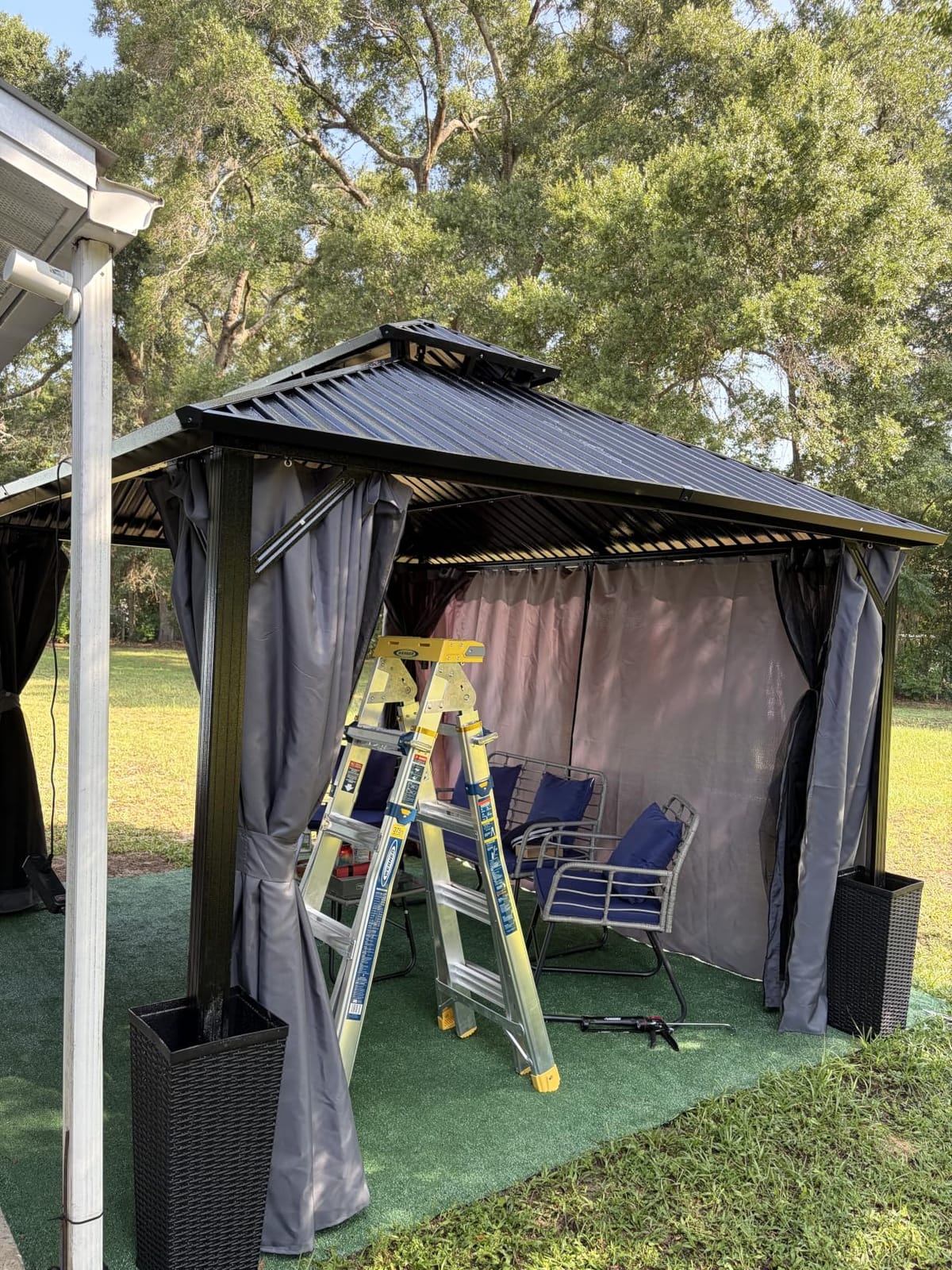
The AirWire is the entry point into a metal hardtop, and the frame is the strongest part of the equation. Powder-coated aluminum resists rust, corrosion and fading, and the legs come pre-drilled, which saves a step when you are anchoring into an existing deck.
The roof is double-layered galvanized iron with a vented design for airflow and heat dissipation, and the sidewalls use brown polyester curtains with black zipped mesh on a dual-track system. Two roof hooks take lights or a fan.
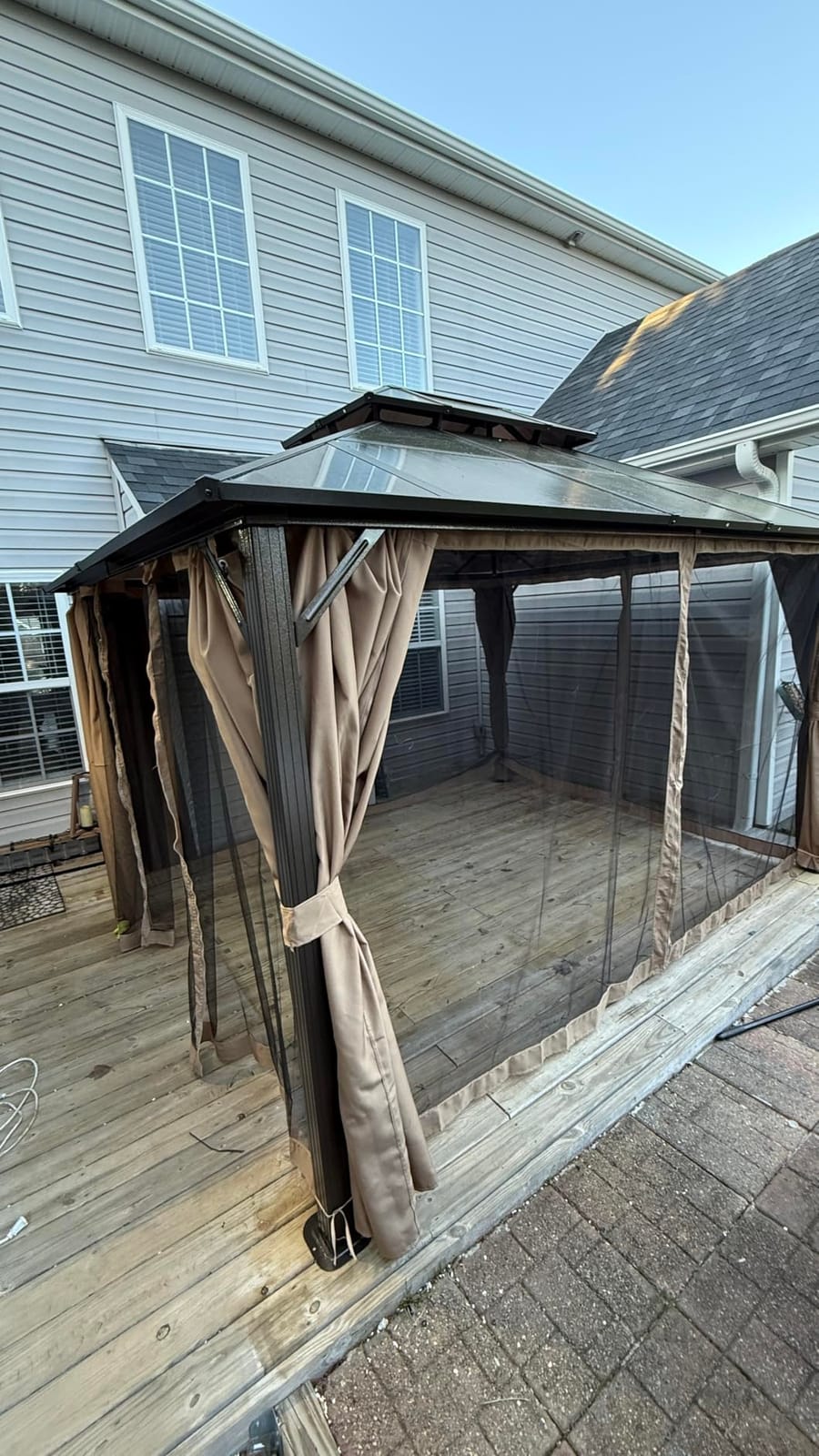
Be clear-eyed about two things. It arrives in three boxes that may come at different times, which can stall an assembly day, and the roof is water resistant rather than fully waterproof. In steady rain that distinction matters at the seams.
Why the rating sits where it does
At 3.9 stars it carries the lowest average in this group, and the drivers are practical rather than cosmetic: multi-box delivery, a demanding build, and a roof that is resistant rather than waterproof. Buyers do like the aluminum finish and the venting once it is up.
Our take is that the rating reflects logistics more than the structure. If your deck is sheltered and you accept occasional drip management, the frame and roof are sound. If your site is fully exposed or you want zero leak risk, put the money into the Aoxun 10 by 12 hardtop instead.
Planning the assembly day
The maker suggests two to four people for roughly two to five hours. At 217.2 pounds, this is not a one-person job, and the roof panels are the point where extra hands stop being optional.
Track the boxes as they land, since they may arrive separately, and stage them on the deck rather than in the yard. You will be lifting galvanized panels up to 110 inches off the deck surface, which is awkward at ground level and much easier from a raised platform.
9. COBIZI 12 x 12 Pop-Up Gazebo – Best Portable Pop-Up
COBIZI 12×12 Pop Up Gazebos On Clearance – Upgrade Easy Up Metal Outdoor Gazebo Waterproof – Portable Gazebo with Mosquito Nettings, 4 Ropes 8 Stakes and Carry Bag for Patio Garden(Coffee)
144 sq ft
Alloy steel fold-out frame
Double vented top
Zippered high-density netting
Pros
- Sets up in about 15 minutes for one person
- Light enough to move and store in a car
- 144 sq ft shades 8-10 people
- Double vented top with mesh walls
- Includes stakes sandbags and ropes
Cons
- Not easy to fold back into the carry bag
- Included stakes and ropes can lose it in wind
- Stitching on some loops is light
- Window panels cannot be secured when rolled
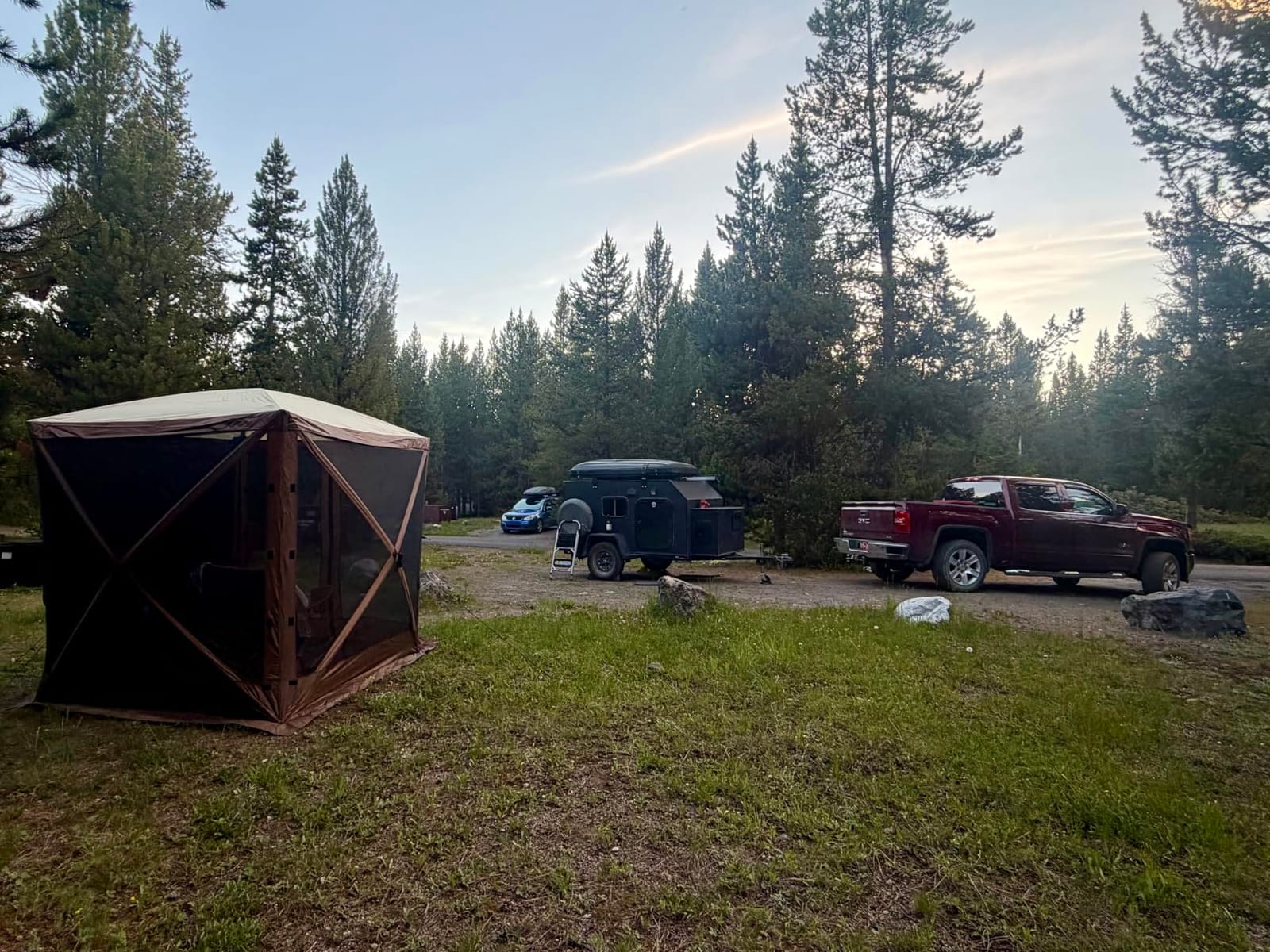
This is the option for anyone who cannot or will not drill into their deck. The alloy steel frame folds out and sets up in about fifteen minutes for one person, and at 45.5 pounds it moves between the deck, the patio and the car trunk without a second person.
The canopy is 300D Oxford with a silver-plated PU lining and waterproof sealing tape, giving UPF 50 plus UV protection across 144 square feet. A double vented top plus zipped high-density netting keeps bugs out while air moves through the top.
The package includes a carry bag, the frame, two canopy tops, netting, eight stakes, four sandbags and four ropes, with three adjustable height settings. Owners like the generous shade area and the effective screening for the money.
Do not rely on the included stakes
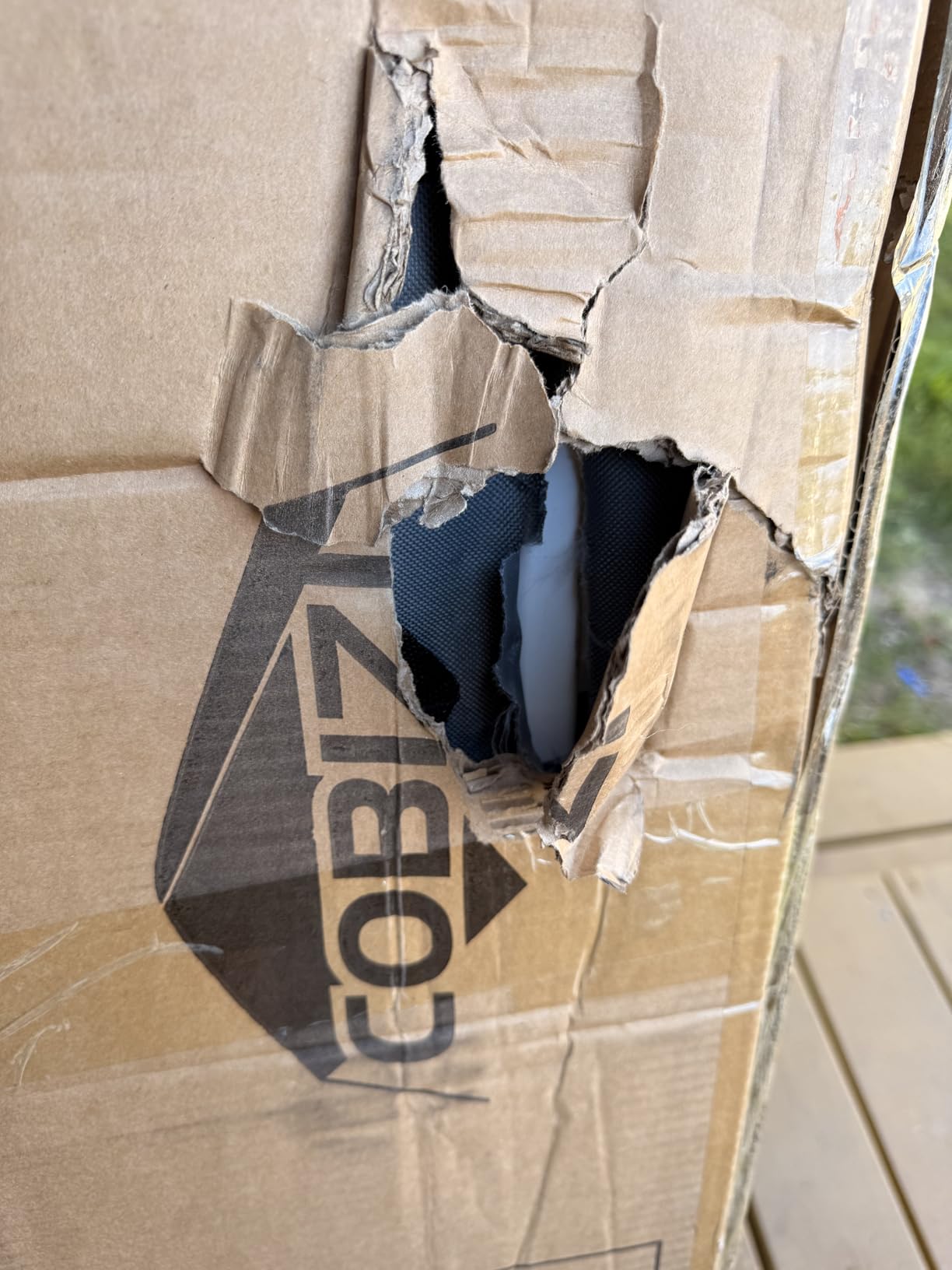
The most serious complaint in the reviews is a collapse during overnight rain when only the supplied stakes and ropes were used. On an elevated deck in a breeze, add your own ballast or tie-downs rather than trusting the factory set, especially with water loading the canopy.
Extra sandbags on the four leg points cost almost nothing and resolve most of the complaints. Keep the frame on the deck only during use, and fold it down if a storm is forecast.
Where it fits against a permanent structure
Treat this as seasonal shade, not shelter. Owners report it holding up against hail, heavy rain and high wind when properly staked, but the frame is fabric-based and will age faster than any hardtop here.
The other recurring niggle is refolding: getting it back into the carry bag takes practice, and a couple of buyers could not manage it. If you plan to put it up every weekend, factor in that friction before committing.
10. VEVOR 12 x 12 Screened Gazebo Tent – Best for Full Screening
VEVOR 12x12ft Pop Up Gazebo Tent with Mosquito Netting, 6 Removable Wind Panels & 2 Mesh Windows, Outdoor Canopy Shelter for Patio, Army Green
144 sq ft
Fiberglass poles
Oxford fabric with UPF50+
Six removable side panels
Pros
- Tool-free pop-up in about 10 minutes
- Fine mesh blocks mosquitoes and no-see-ums
- Stands alone and has held up in heavy wind
- Removable panels adjust shade and privacy
- Folds into a supplied carry bag
Cons
- Fine mesh noticeably reduces airflow
- Supplied stuff sack is undersized
- Weighs close to 35 pounds so car packing is easier
- Refolding gently matters or poles bend
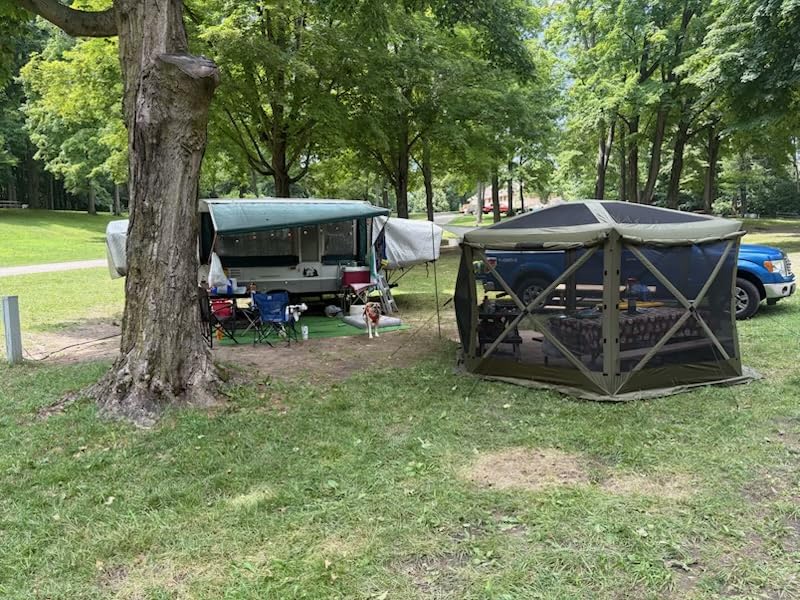
The VEVOR is the most thoroughly screened fabric unit we looked at, and with 3163 reviews it carries the largest owner base in this group. Six removable windproof cloth panels, two of them with mesh windows, wrap a 12 by 12 footprint in high-density polyester mesh rated UPF50 plus.
Setup is genuinely tool-free. One person pops the fiberglass frame in about ten minutes, the double-sided zippers let you open and close panels without wrestling fabric, and the whole thing packs down when you are done with the season.
Buyers consistently praise the screening quality: the mesh is fine enough to stop mosquitoes, no-see-ums and sand fleas. It is rated for eight people and covers 144 square feet, with a peak ceiling of 2.4 meters and a low point of 1.82 meters.
Why the mesh cuts both ways
The flip side of that fine mesh is reduced airflow. Owners on windy days report the tent feeling stuffy, which is the honest trade for keeping no-see-ums out. Roll up panels on the windward side when the air is moving and zip them back before dusk.
The frame also deserves gentle handling. Fiberglass pole sections can crack or splinter at the metal sockets, and poles bend if the tent is refolded carelessly, so take the extra minute to fold along the seams rather than shoving fabric back in.
Who should pick this one
Choose it for bug control and portability, not for weather protection. It is listed as water resistant rather than waterproof, so in steady rain you will want a hardtop instead. Customer service is singled out for fast, courteous replacement of damaged parts, which matters when a fiberglass pole cracks a season in.
How to Anchor a Gazebo to Deck Framing
Anchoring is the step that separates a gazebo that stays put from one that becomes a sail. Every unit here except the pop-ups needs it, and the factory-supplied expansion bolts are sized for concrete or pavers, not for a wood deck.
Find your joists. Look straight down from above and mark the center of each joist. The gazebo base plate needs at least one joist under it, and ideally a post or beam.
Position the frame and check the hole pattern. Set the base plate over the joist and confirm the pre-drilled holes land within about an inch and a half of the joist centerline before you drill anything.
Use structural-grade fasteners, not deck screws. Structural lag bolts or structural screws are the right choice for the load; ordinary drywall screws will not hold a steel plate under shear.
Drill pilot holes slightly smaller than the fastener shank, and predrill through the base plate into the joist on every hole rather than only the ends.
Keep the frame plumb. Check diagonal measurements between opposite base plates and adjust before the final tightening, because a racked frame twists the roof panels.
Add hurricane straps above the base plate where a post meets the roof beam. This is cheap and it is the difference between a structure that stays and one that folds.
Add ballast as well as fasteners. Planters or pavers on the base plates add stabilizing mass that fasteners alone do not provide.
If your deck has no joists directly under the planned footprint, the honest answer is to reinforce before you build, not to improvise longer lag bolts into thin air. On r/Decks the consensus is consistent: people get told by builders that an elevated structure needs to land on framing, and the ones who skipped that advice regretted it.
What to Look For in the Best Gazebos for Decks
Hardtop or softtop
Hardtops here run from 191.8 pounds to 292.8 pounds and are the only option for year-round use, snow regions and exposed decks. Softtops come in between 35 and 103 pounds, set up faster and cost less, but the fabric ages in sun and wind, and forum owners who had them are moving to metal permanently.
Frame material
Powder-coated aluminum is the best balance on a deck: it will not rot, it will not rust, and it stays cool to the touch in summer. Galvanized steel is heavier and tougher but needs watching for surface rust at fastener points. Cedar looks the best against a wood deck and needs a sealer every year or two, and it is the heaviest of the three at 292.8 pounds in our lineup.
Wind and snow ratings
A wind rating is the sustained speed a structure is tested to withstand, and the industry norm sits around 50 mph for a reason: above that, wind pressure climbs fast and anchoring becomes the deciding factor rather than the frame. Almost nobody publishes 100 mph, so treat any such claim carefully and look for the anchoring hardware instead. In snow-heavy regions, snow load matters more than wind, and a double-tier galvanized roof buys you a bigger published number than a single slope.
Size against your deck
Measure the clear span between your posts first. On a 10 by 10 deck, a 10 by 12 hardtop is already snug. On 12 by 16 and larger, move up a size, and always leave a few inches at the edges so you can reach the base plates with a wrench. Our detailed hardtop gazebo comparison breaks the sizing down further by model.
Screens, curtains and lighting
Dual-track systems are worth paying for on a deck, because you can zip the bug layer closed and still open the curtain layer for airflow. Roof hooks are the standard place for a fan or string lights, and on a closed structure the fan is what makes July bearable.
Assembly reality
Expect three to four people and two to five hours for a 10 by 12 hardtop, and considerably longer for a 12 by 20 unit. A drill with a hex bit is effectively required, the roof panels always need at least two people, and the hardest ten minutes on any softtop is pulling the canopy over the frame.
Permits, codes and HOA rules
A permanently anchored structure may need a permit depending on your municipality, and HOAs frequently restrict height, color and setbacks above a deck line. Ask before you order, since moving a shipped gazebo is a far bigger problem than choosing the right one.
Common Gazebo Mistakes on Decks
Anchoring with the supplied concrete expansion bolts into a wood deck, which is what most hardware is sized for.
Letting the four posts land between joists with no framing underneath them.
Bolting a gazebo roof to the house or into a cantilevered upper floor, which builders consistently warn against.
Sizing the structure larger than the deck allows, leaving no room to reach the base plates.
Buying a softtop expecting year-round use in a sun and wind exposed location.
Skipping the level and diagonal check before the final tightening, which racks the frame.
Leaving soft components installed when a storm is forecast instead of removing curtains and netting.
Ignoring the box contents before starting, so a missing post is discovered halfway through the build.
Frequently Asked Questions
Is it a good idea to put a gazebo on a deck?
Yes, provided the gazebo is freestanding on four posts, anchored into your deck framing, and within the load your joists and footings carry. Never bolt a gazebo roof to your house or into a cantilevered upper floor. If the gazebo posts cannot land near a post, beam or joist, have a deck builder check the span first.
What is the best gazebo for a deck?
For most decks the best option is a hardtop with a galvanized steel roof on an aluminum frame. Our pick is a 12 by 20 model rated at 4.8 stars across more than fifteen hundred reviews, with a double vented roof, water drainage through the posts, curtains and netting included. Smaller decks are better served by a 10 by 12 unit or a wall-mounted lean-to.
How much weight can a deck hold for a gazebo?
It depends on your joist span, spacing and footings, not on a single number. The hardtops in this group weigh 191.8 to 292.8 pounds before you add furniture, and a peak of roughly 70 pounds on each of four posts is realistic. Have the post locations checked by a builder if no deck posts sit under the planned footprint.
What kind of gazebo can withstand high winds?
A hardtop with a galvanized steel roof, a reinforced frame and correctly anchored bases performs best. Published figures in this group range from 31 to 38 mph on one model up to 40 mph on the wall-mounted lean-to and a tested 83 mph on the cedar grill gazebo. Rating matters less than whether every base is bolted into framing.
What gazebo has a 100 mph wind rating?
Most manufacturers do not publish a 100 mph rating, and a claim without a test standard attached deserves scepticism. Treat the number, the frame specification and the anchoring hardware as one package. In practice, structure survival depends on the bolts in your deck as much as on the frame you bought.
Do gazebos need to be taken down in winter?
Hardtop gazebos can generally stay up year-round once they are anchored, and testers report them surviving snow, hail and wind without damage. Soft components are the exception: manufacturers commonly advise removing curtains and netting in extreme weather. In heavy snow regions, check the published snow load figure before deciding to leave it standing.
What are the common gazebo mistakes?
The most frequent errors are anchoring with concrete expansion bolts into a wood deck, letting posts land away from joists, sizing the structure larger than the deck allows, and attaching the roof to the house or a cantilever. Checking the parts list before building and leveling the frame diagonally before tightening catch most of the rest.
Is a gazebo or a pergola better for a deck?
A gazebo gives you a solid roof for rain, sun and bug protection, which a pergola does not. A pergola or a retractable awning is the better pick for a deck that gets heavy snow or very strong wind, or for anyone who cannot anchor posts. If you want shade only and the deck is compact, a retractable shade slung from the house wall is far easier to live with.
Final Verdict for the Best Gazebos for Decks in 2026
For a large deck, the PURPLE LEAF 12 x 20 hardtop is the one to beat: aluminum frame, galvanized steel roof, drainage built into the posts and the strongest rating here at 4.8. For a mid-size deck that is mostly about shade and bugs, the EROMMY 10 by 12 with dual-track netting gives you the most usable enclosed space. For a compact deck or a tight side yard, the Aoxun wall-mounted lean-to puts 200 square feet of cover over your boards while loading your joists almost not at all. If the look matters more than the numbers, the cedar grill gazebo is the only wood-framed option and carries the highest published wind figure at 83 mph.
Whichever one you choose, the deciding factor is the same: anchor it into your framing with structural fasteners, verify your posts can carry the load, and check the box contents before you start the build. That is where most deck gazebo problems are actually decided, not in the model name.