
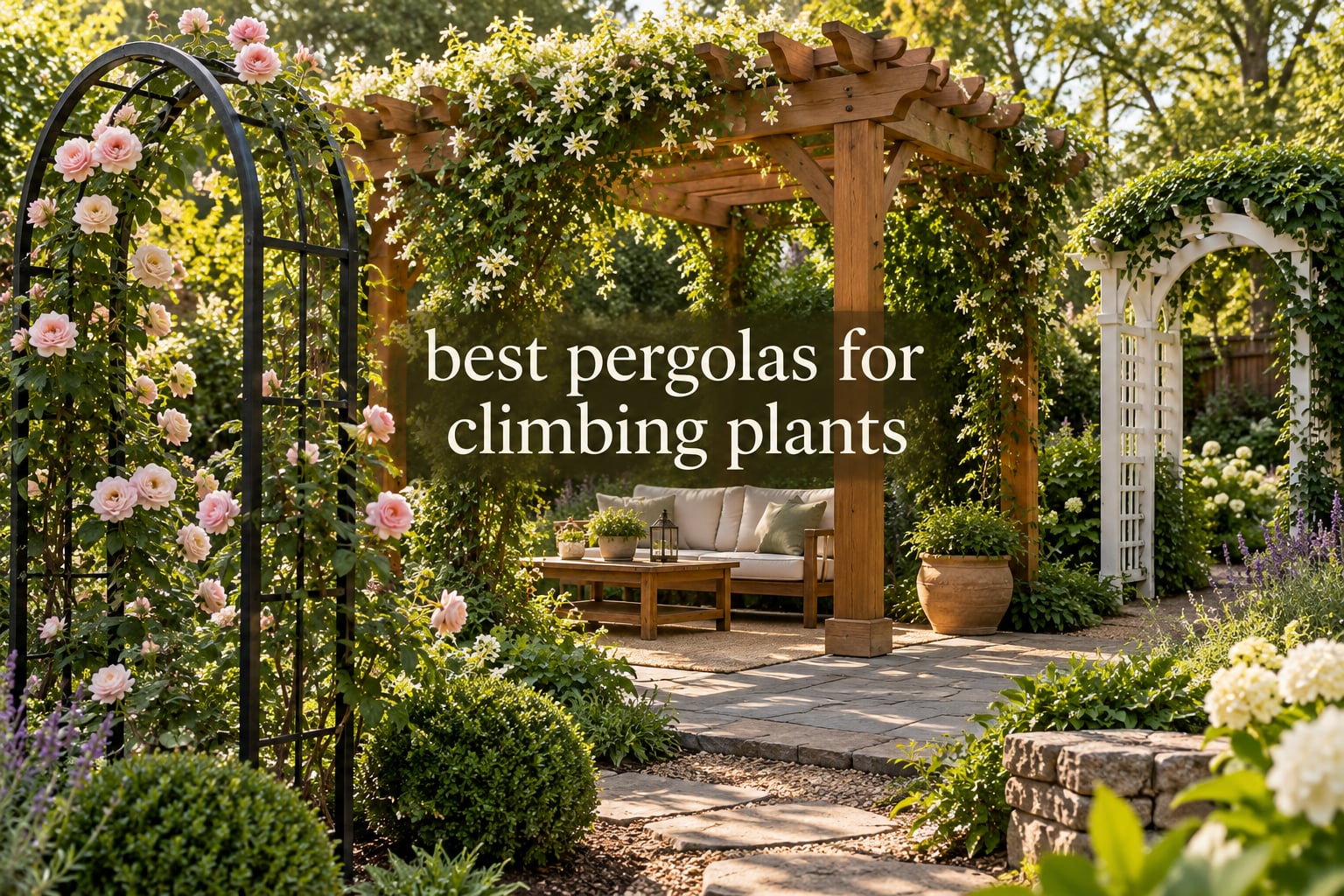
The best pergolas for climbing plants are heavy-duty frames with 4×4 or larger posts, short beam spans and real ground anchoring, not lightweight arches. A mature wisteria, grapevine or bougainvillea puts far more load on a frame than most product photos suggest, and that load is what decides whether the structure still stands in year five.
Most pages ranking for this question are plant lists. They tell you which vine to buy and leave out the part that matters, which is whether the structure you are buying can carry that vine once it is fifteen feet up and twenty feet across. We went at it the other way: we picked structures first, then checked whether each one can hold plant weight for the long haul.
What follows is a 12-structure roundup that runs from one genuine full-size cedar pergola kit down to lightweight metal arches. Only one entry here is a traditional roofed pergola in the classic sense, and we say so plainly. The other eleven are arches and trellises, which is what most people buying for climbing plants actually end up with, because the real question is usually vine support rather than patio shade.
One honest note before we start, because it comes up constantly in forums: the first question buyers ask is not about plants, it is whether the structure gets used or just stands there. Members on r/HomeImprovement and r/ElkGrove keep circling the same worry, that a pergola becomes an expensive garden ornament. If your goal is a shaded seating area you will use weekly, a full kit is worth the money. If your goal is a vine-covered garden entrance, an arch trellis does the job for a fraction of the effort. Our general pergola roundup covers the structure-only case in more depth.
Table of Contents
- Top 3 Best Pergolas and Arbors for Climbing Plants
- All 12 Structures Compared at a Glance
- 1. Backyard Discovery Beaumont 16×12 Cedar Kit – The Only Real Pergola Here
- 2. Dura-Trel Providence Vinyl Arbor – Best Value for Long-Term Climbing
- 3. Adorox 7.8ft Metal Garden Arch – A Lightweight Frame for Lightweight Vines
- 4. VINGLI Iron Arch with Lattice Sides – Narrow, but Genuinely Vine-Friendly
- 5. OUTOUR Birdcage Arbor – Tall Panels for Tall Vines
- 6. Outvita 7ft Iron Garden Arch – Built for Wind
- 7. Queension 7.2ft Wide Garden Arch – Biggest Opening, Least Climbing Surface
- 8. GIANTEX 7ft Fir Wood Arbor – Rustic Look, Careful Assembly
- 9. Vita Rosewood Cedar Arbor – The Most Consistently Well-Rated
- 10. SCENDOR 9ft Birdcage Pavilion – A Room, Not a Gate
- 11. LZRS 4-Panel Iron Trellis Set – The Most Plant-Focused Option
- 12. Outvita 7ft Wooden Garden Arbor – Quick to Build, Needs Anchoring
- The Vine-Weight Rule That Decides Everything
- What Size Pergola Do You Need?
- What Is the Best Material for a Pergola?
- Freestanding or Attached to the House?
- Roof Style and the Light Your Vines Need
- Anchoring, Footings, and When to Hire a Pro
- Frequently Asked Questions
- The Bottom Line on Pergolas for Climbing Plants
Top 3 Best Pergolas and Arbors for Climbing Plants

Backyard Discovery Beaumont…
- Cedar with 6x6 posts and dual cross beams
- Pro-Tect tested to 100 mph winds
- Multi-level trellis roof

Dura-Trel Providence Vinyl…
- Vinyl lattice sides
- 64 inch wide by 85 inch tall
- 20 year warranty
The Backyard Discovery Beaumont is the only roofed structure in this group and the only one with a full seating footprint, and its 6 inch by 6 inch posts with dual cross beams are the reason it can carry a mature vine that would fold a lighter frame. The Dura-Trel Providence is the value answer: vinyl lattice sides, a 20 year warranty and more than a thousand reviews behind it. The Adorox arch is the quickest way to find out whether you even like growing on a structure, though it is a party frame first and a trellis second.
All 12 Structures Compared at a Glance
Every entry below appears with its material, footprint and the kind of vine it can realistically carry, so you can rule options out before reading the detail.
| Product | Specs | Action |
|---|---|---|
| Backyard Discovery Beaumont 16×12 Cedar Kit |
|
Check Latest Price |
| Dura-Trel Providence Vinyl Arbor |
|
Check Latest Price |
 Adorox 7.8ft Metal Garden Arch Adorox 7.8ft Metal Garden Arch |
|
Check Latest Price |
 VINGLI Iron Arch with Lattice Sides VINGLI Iron Arch with Lattice Sides |
|
Check Latest Price |
 OUTOUR Birdcage Arbor OUTOUR Birdcage Arbor |
|
Check Latest Price |
 Outvita 7ft Iron Garden Arch Outvita 7ft Iron Garden Arch |
|
Check Latest Price |
 Queension 7.2ft Wide Garden Arch Queension 7.2ft Wide Garden Arch |
|
Check Latest Price |
 GIANTEX 7ft Fir Wood Arbor GIANTEX 7ft Fir Wood Arbor |
|
Check Latest Price |
 Vita Rosewood Cedar Arbor Vita Rosewood Cedar Arbor |
|
Check Latest Price |
 SCENDOR 9ft Birdcage Pavilion SCENDOR 9ft Birdcage Pavilion |
|
Check Latest Price |
 LZRS 4-Panel Iron Trellis Set LZRS 4-Panel Iron Trellis Set |
|
Check Latest Price |
 Outvita 7ft Wooden Garden Arbor Outvita 7ft Wooden Garden Arbor |
|
Check Latest Price |
1. Backyard Discovery Beaumont 16×12 Cedar Kit – The Only Real Pergola Here
Backyard Discovery Beaumont 16′ x 12′ Traditional Cedar Wood Pergola Kit with Trellis Roof, All-Season Durability, High-Wind Rating, PowerPort, Shade for Outdoor Patio, Deck, Garden, and Entertaining
Cedar wood
192 sq ft
6x6 posts, dual cross beams
95 in high
Pros
- Cedar that resists decay
- Trellis roof is a ready-made vine framework
- Pro-Tect tested to 100 mph winds
- PowerPort adds outlets and USB ports
Cons
- Multi-day build needing three or more people
- Heavy boxes are hard to move
- Wood needs sealing before weather
This is the structure to buy if a heavy vine is the plan. Sixteen by twelve feet, 192 square feet of shade, and the part that matters is underneath: six inch by six inch posts with dual structural cross beams. That frame is dimensioned for a mature wisteria or grapevine, which is not a light load once the trunk thickens and the arms spread along the beams.
We spent time reading how owners actually build it, and the consensus is that this is a construction project rather than a weekend job. Three or more people, a full weekend or more, and two long boxes that are genuinely awkward to carry from a driveway. If you are assembling solo, this is not your kit.
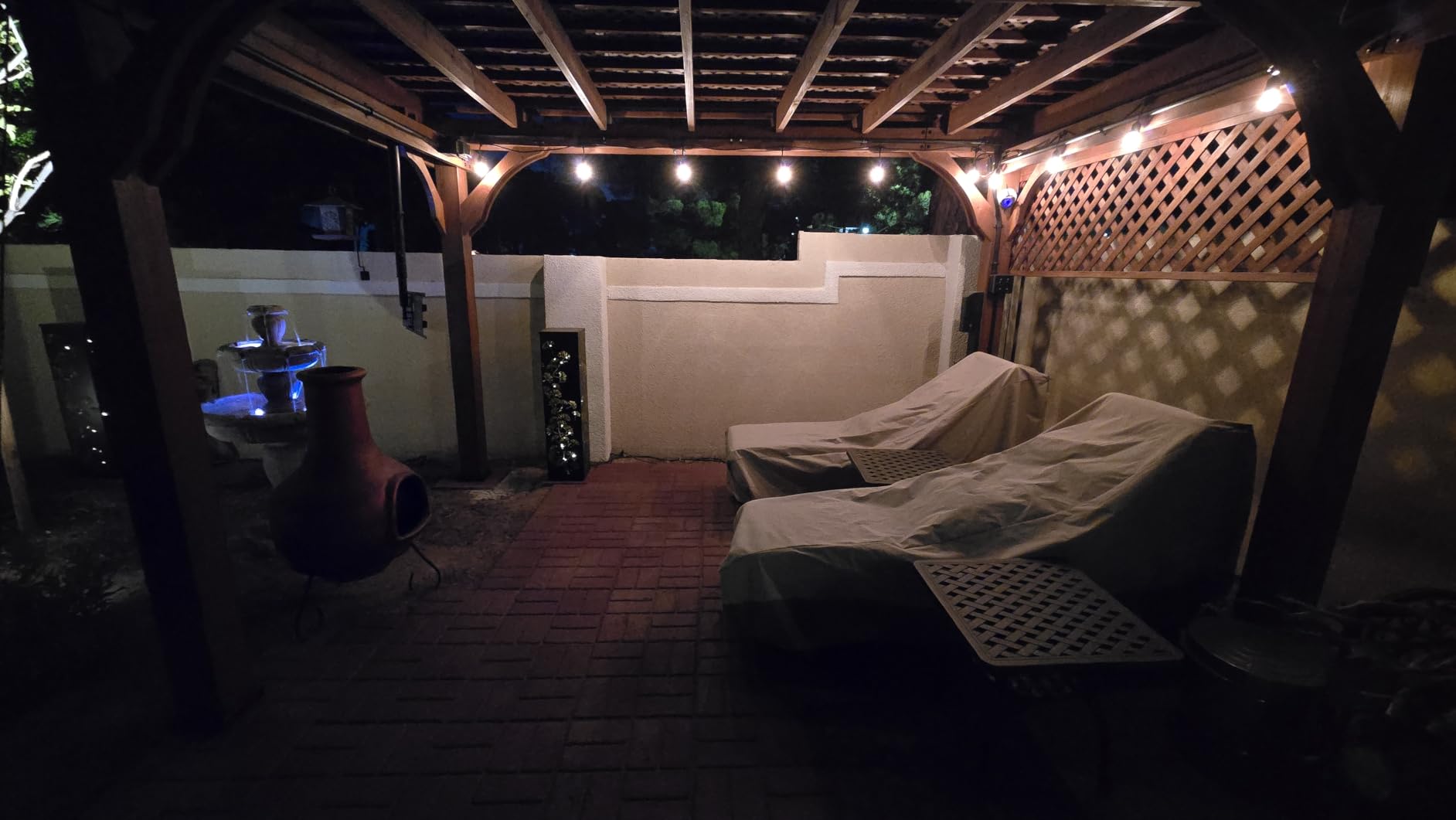
The trellis roof is a real advantage for climbers. Rather than open rafters, you get a multi-level lattice that gives wisteria and grapevine something to run along and clematis something to grip. Owners also extend the structure over time with matching trellis panels, wiring and lighting, which is how most of them end up turning it into a garden nook rather than a bare frame.
Anchoring is handled with powder-coated galvanized steel anchor plates and resin feet, and the Pro-Tect testing is rated to 100 mph winds when anchored as specified. That rating only means something if you actually anchor it. Buyers cite holding steady in real storms, but they also stress that the lumber arrives untreated and needs sealing before it takes weather.
Is it strong enough for wisteria and grapevine?
Yes, on posts and beams. The six inch posts and dual cross beams are the reason this kit sits in a different class from the arches in this roundup. Add concrete footings rather than relying on the resin feet alone if you are in an exposed or high-wind site.
The weak point is the assembly, not the frame. Owners report top slats with no pilot holes and purlin holes that do not always line up, so budget time for fixing and re-fitting boards. A few boards also arrive slightly warped.
When should you skip it?
Skip it if you only want a vine-covered garden entrance. You will spend a weekend assembling 546 pounds of cedar to get a feature that a lighter arch handles at a fraction of the effort. It is also the wrong choice on a small patio, which is the single most common regret reported in landscaping forums.
Skip it if you are not prepared to seal the wood after delivery. Untreated cedar exposed to weather ages faster and the frame will not look the way the product photos do in year two. Otherwise, for patio shade plus heavy vines, nothing else in this list comes close.
2. Dura-Trel Providence Vinyl Arbor – Best Value for Long-Term Climbing
Dura-Trel Providence Arbor, Vinyl Garden Archway for Outdoors, 64″ x 85″, White – Backyard Decorative Arch and Backdrop with Lattice Design and Trellis Sides for Climbing Plants, Vines and Flowers
PVC vinyl
64W x 85H
Lattice sides
20 year warranty
Pros
- Lattice sides give vines a broad grip surface
- Never needs stain or paint
- Ground anchors and pre-drilled parts included
- 20 year warranty against fading
Cons
- Vinyl reads less premium than wood or iron
- Rectangular shape is plainer than a curved arch
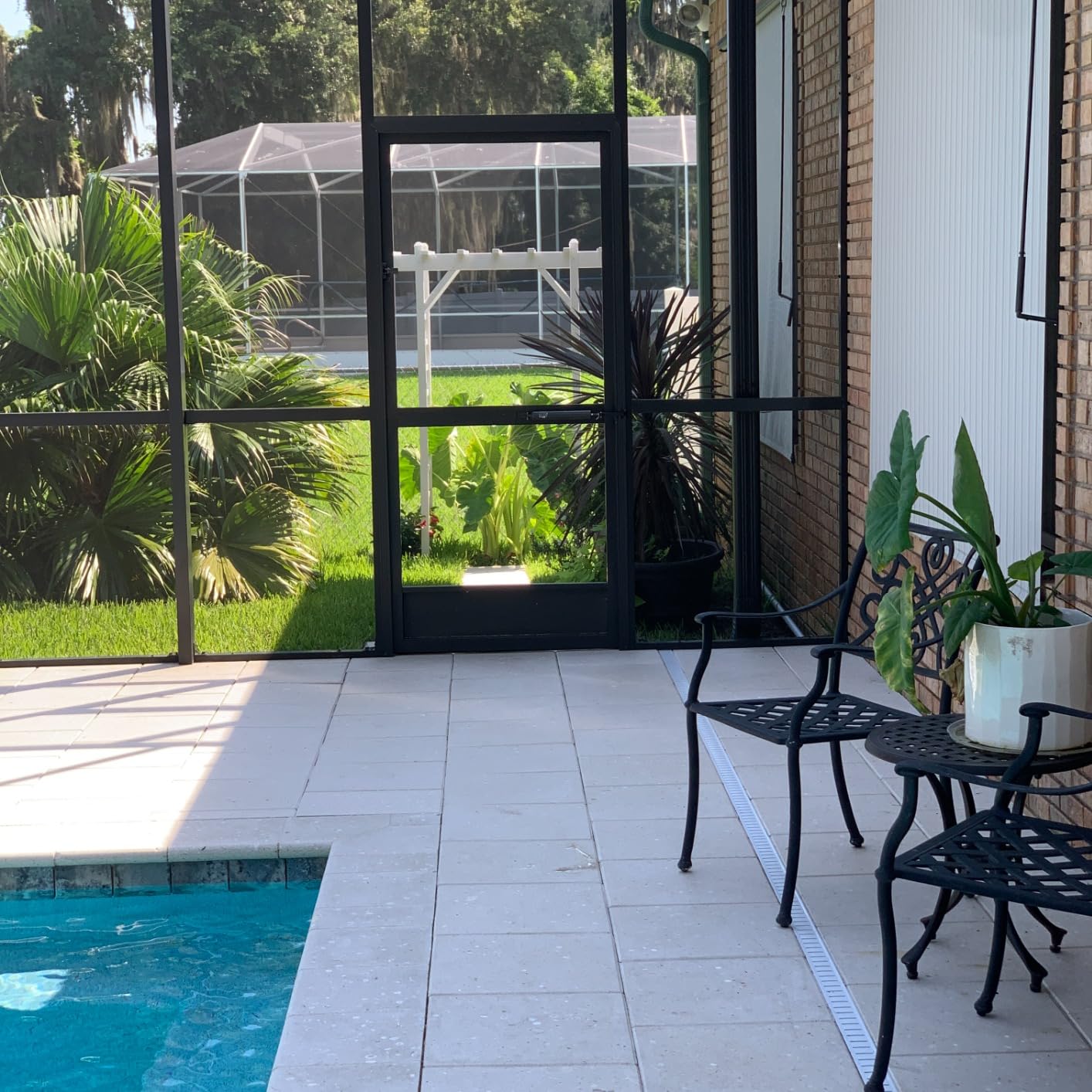
Over a thousand reviews sit behind this arbor, and the reason owners keep it is that nothing rots, fades or needs sealing. The classic grid lattice on both sides gives climbing plants and vines a broad surface to work with, which is what separates it from the smooth-tube arches in this roundup.
At 64 inches wide and 85 inches tall it is a walkway-scale structure, not a seating shelter. Think of it as a permanent garden gateway that a honeysuckle or clematis covers over a few seasons. It also doubles as a trellis, a wedding archway or a seasonal backdrop, which is a lot of function for a single frame.
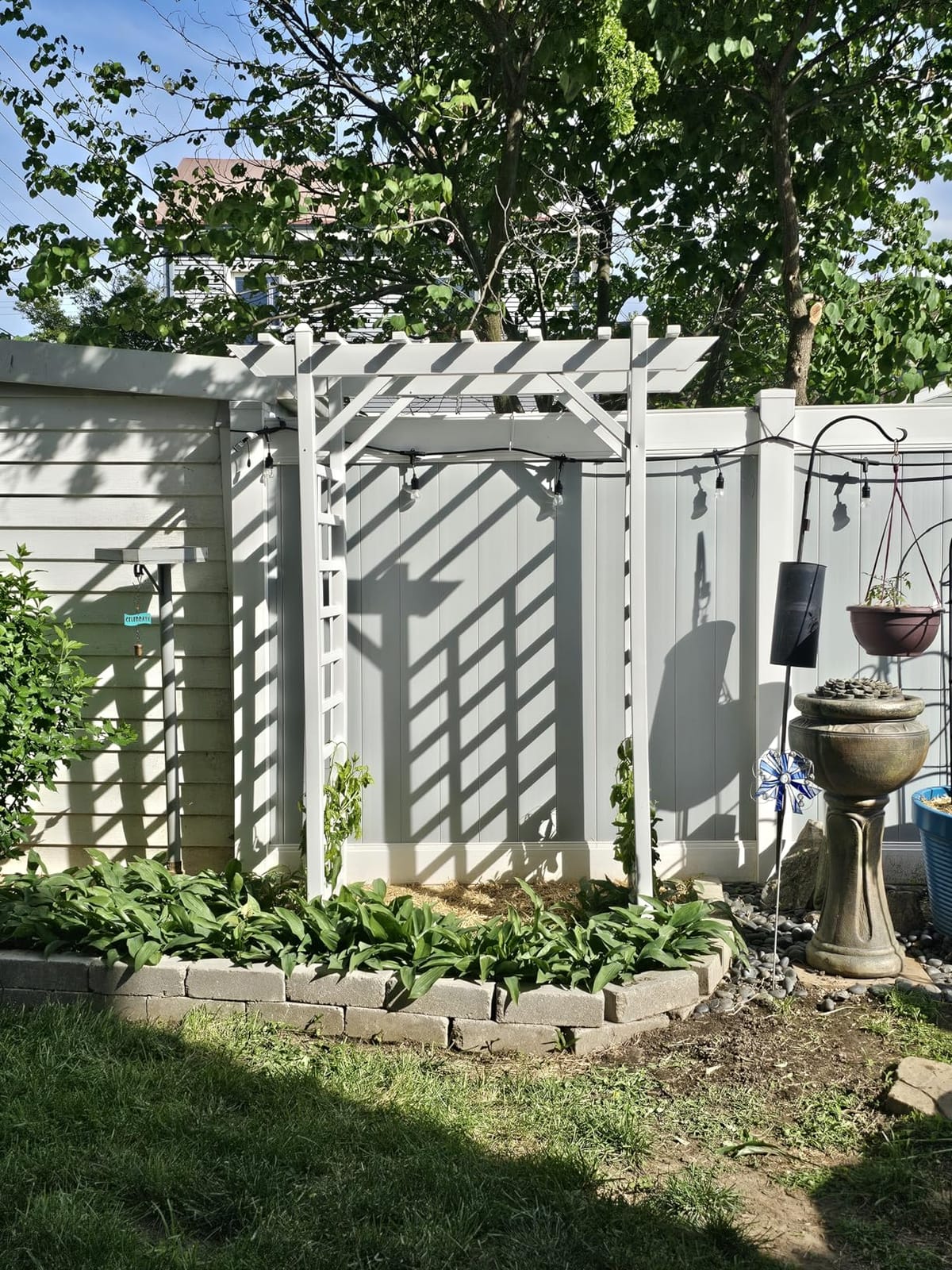
Assembly is the easy part. Parts arrive pre-cut and pre-drilled, and ground anchors are included, so it goes together in an afternoon without a drill. The PVC construction with stabilizers handles outdoor exposure, and a hose is the whole maintenance routine.
The 20 year manufacturer warranty against fading, cracking, peeling or discoloration is unusually long for a garden structure, and in practice that warranty is doing real work here. The honest drawback is aesthetic: a white vinyl frame does not have the grain and aging character of cedar, and a minority of buyers say exactly that.
Which vines suit it best?
Clematis, honeysuckle, morning glories and climbing roses do well, because they grip lattice rather than wrap thick woody stems. Keep heavier vines off it. A large structure of this type carries a light vine comfortably, and the square opening is not engineered for the arm weight of a mature wisteria.
It is also a good option on a rental or in a climate where untreated wood is a losing battle. Nothing to seal, nothing to stain, nothing to replace in a decade.
What are the compromises?
The shape is a plain rectangle, so it reads more functional than decorative compared with the birdcage designs further down. It is also fixed at one size, which means a wider garden path needs a different solution.
One more practical note: the frame is rated for climbing plants, not for people to climb on. If children will use it as a play structure, check the post fixings first.
3. Adorox 7.8ft Metal Garden Arch – A Lightweight Frame for Lightweight Vines
Adorox 7.3FT Garden Arch Trellis for Climbing Plants, Black Metal Garden Arbor for Outdoor Garden, Rose and Vine Support, Wedding Archway and Backyard Decoration, Black
Powder-coated metal
88 in high x 63 in wide
4 pounds
20 lb load test
Pros
- Weighs 4 pounds so one person can carry it
- Labeled parts with clear instructions
- Sets up and stores in minutes
- Handles light annual vines
Cons
- Light tubing flexes under mature vines
- 20 lb load limit
- Little surface for dense coverage
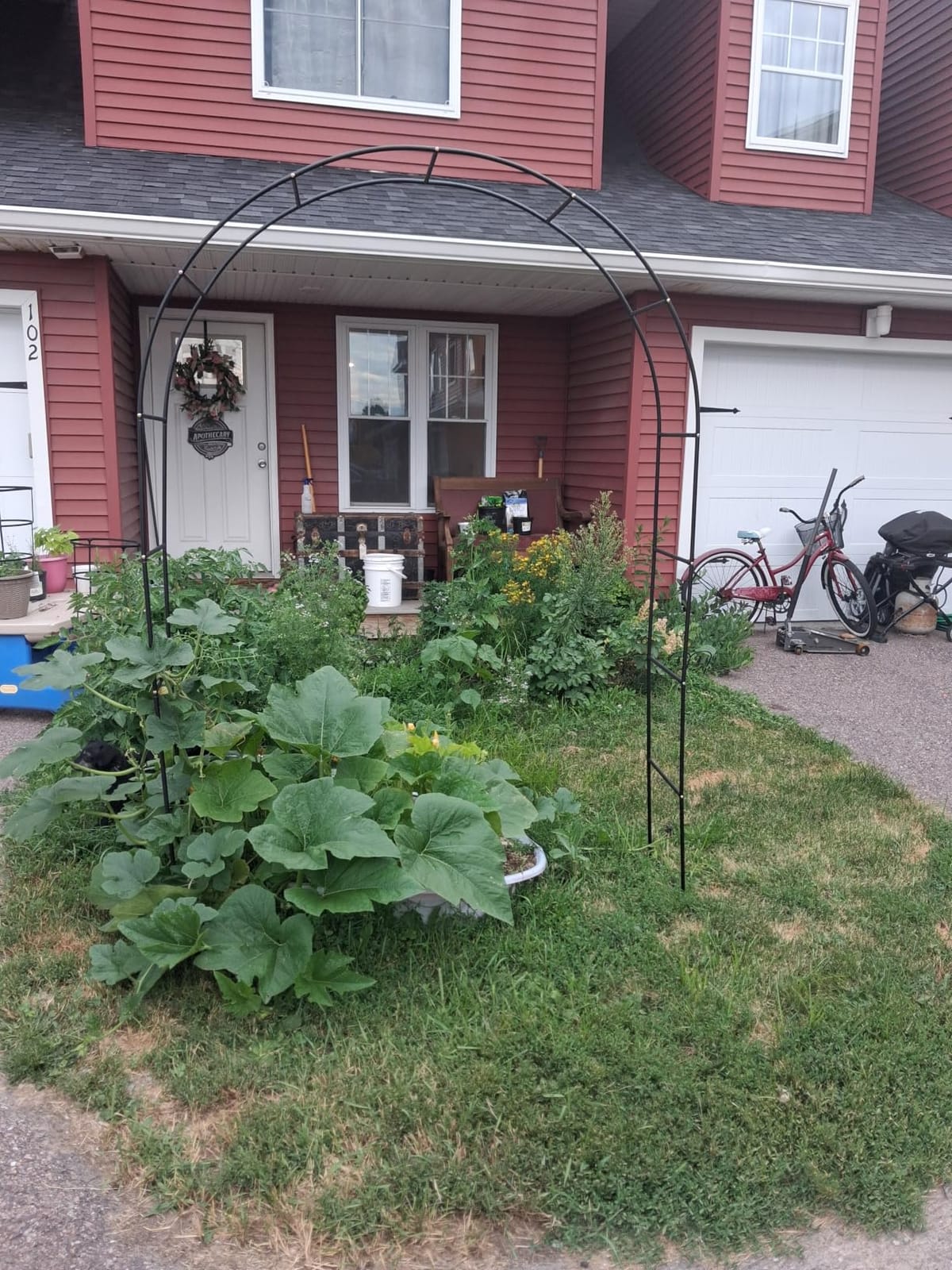
More than five thousand reviews make this one of the most widely bought structures here, and buyers are clear about what they are buying: an arch for events, photos and lightweight vines. It is the Amazon best seller in Garden Arbors, which explains both the volume and the 4.1 average sitting alongside a nine percent one-star share.
As a first experiment it is hard to argue with. It weighs 4 pounds, so one person can carry it out, set it up over a path and take it down again. Assembly is quick with clearly labeled parts, and the powder-coated finish handles outdoor use without complaint.
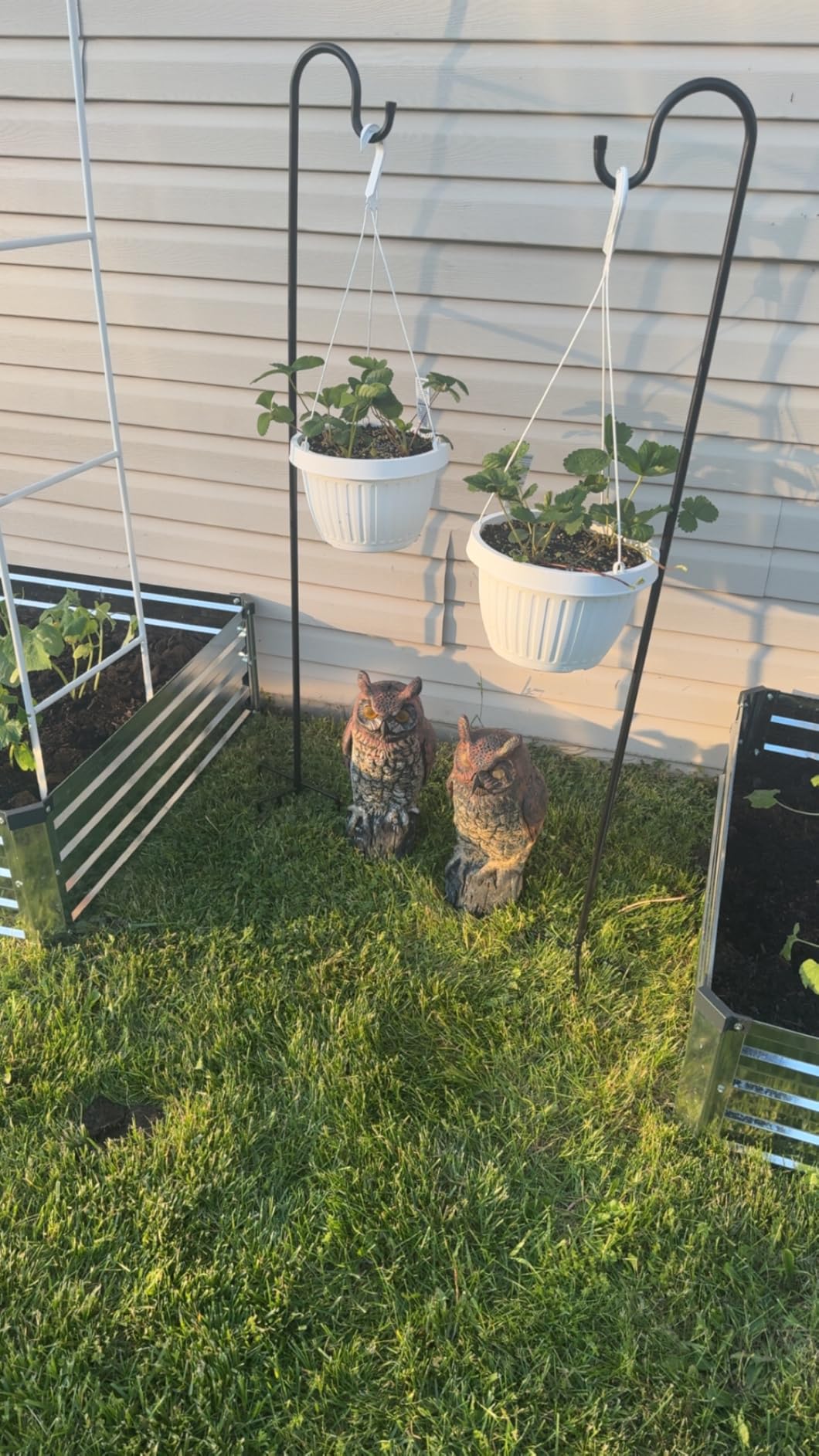
The 20 lb load test is the number to remember. It covers evenly distributed hanging decorations, which tells you this is a display frame. A light annual vine like a nasturtium or a young clematis will do fine. Anything woody and mature will push it past its limits and the frame will flex visibly.
Slim tubing also means limited surface area, so coverage takes longer and looks sparser than on a lattice or trellis design. Buyers using it for serious plant support are a minority for exactly this reason.
Is it strong enough for a permanent vine?
For a light, non-woody climber, yes. For wisteria, grapevine, mature clematis or a climbing rose, no. The frame is a decor piece with light vine capability, and treating it as a permanent heavy support is the mistake that leads to the disappointed reviews.
If you want the arch look with real climbing capacity, look at the double-layer iron models instead, or the cedar option further down.
When is it the right call?
It wins when the structure is for a party, a wedding photo spot or a seasonal display you want to reuse every year. It also wins as a low-commitment trial before you spend on a bigger frame.
It loses as a permanent garden feature because you will eventually want a heavier vine on it, and that means buying a second structure. Reviewers who return with heavy plants are the ones who left the one-star reviews.
4. VINGLI Iron Arch with Lattice Sides – Narrow, but Genuinely Vine-Friendly
VINGLI Garden Arbor, Arch Archway for Wedding Ceremony Party, Steel Garden Trellis for Plant Climbing, Christmas Decorations Pergola for Backyard, Lawn, for Hallowmas (Black)
Powder-coated iron
81 x 15.9 x 81.8 in
Squared lattice panels
Pros
- Powder-coated iron resists rust for years
- Squared lattice panels actually hold vines
- Long ground nails anchor in soil
- Assembly is quick and low effort
Cons
- Narrow opening once vines are trained
- About 9 kg to reposition alone
Where most metal arches are smooth tubes with nothing for a vine to hold, this one has squared lattice side panels built in. That single design decision is what separates a structure a plant can climb from a frame a plant merely leans against.
The powder-coated iron frame is the other strong point. Buyers report it still looking good after years outdoors, with no rust creeping through the finish, which is what you want from a frame planted permanently in soil.
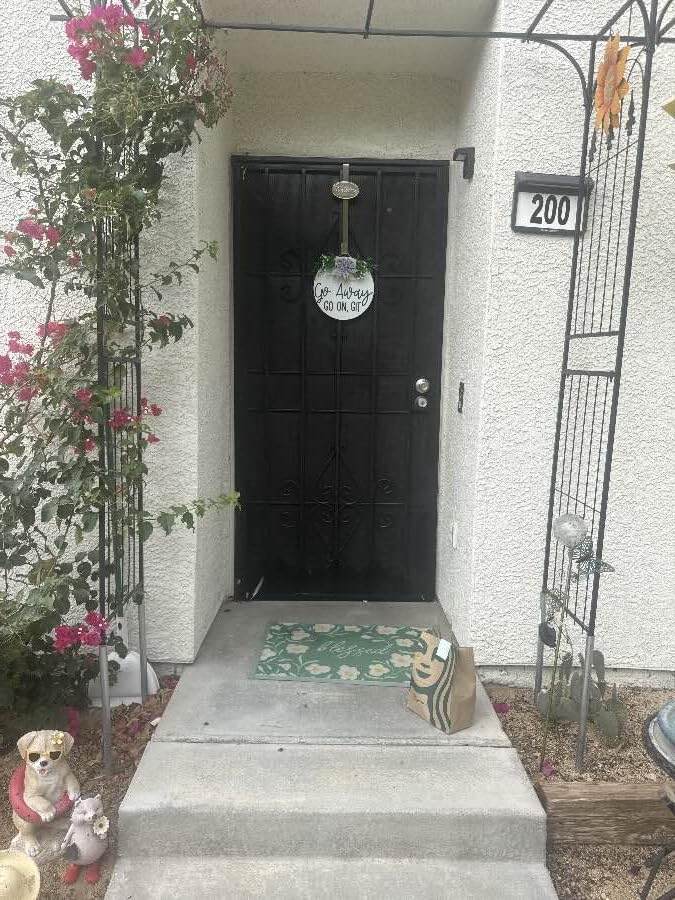
Anchoring is handled with long ground nails driven into the soil, which is enough in sheltered ground and worth supplementing in exposed sites. Assembly is described consistently as straightforward, with no specialist tools required.
At 81 inches tall and 15.9 inches deep, this is a slim profile. Buyers repeatedly note the walking clearance is tighter than the product photos suggest once plants are trained across it. Plan for one person to pass, not two.
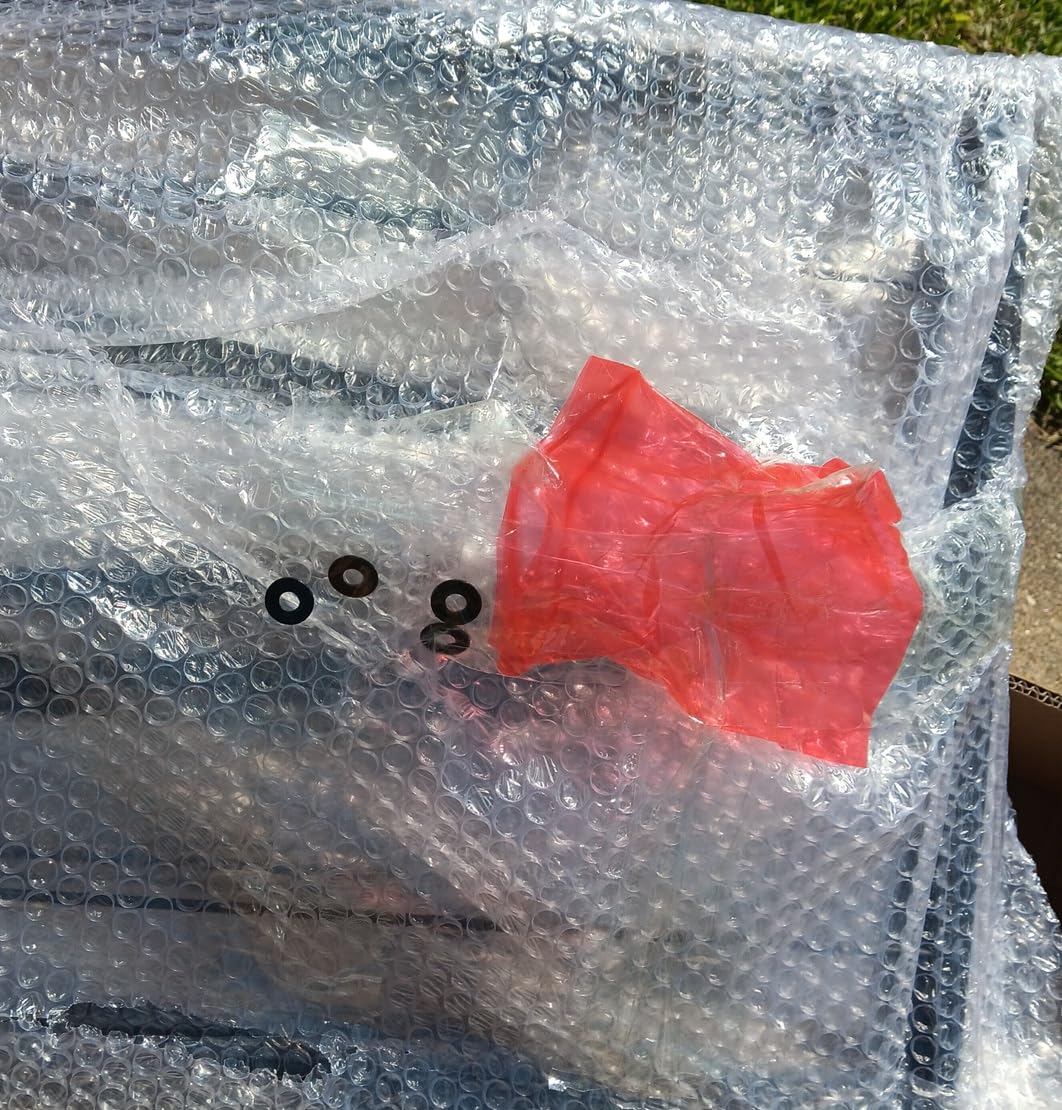
How does it handle vine weight?
Well for light to medium climbers, and the lattice is the reason. Clematis, honeysuckle and climbing roses will grip the squared panels and cover the frame faster than on a tube arch. The mass is modest, so a woody vine can be trained across it with regular pruning.
It is not a shade structure and does not pretend to be. If you want to sit underneath, this is the wrong size and the wrong shape entirely.
What should you watch for?
Clearance and weight. At roughly 9 kg it is not a one-person carry, and once it is in the ground with a vine on it, you will not be moving it again.
Also consider the ground it goes into. Long nails work in loose soil; in heavy clay or near a paved path you will want to set it in a proper footing rather than relying on the nails alone.
5. OUTOUR Birdcage Arbor – Tall Panels for Tall Vines
OUTOUR 106”H French Style Birdcage Shape Heavy Duty Gazebo Arbor Arbour
Powder-coated frame
106H x 79L x 79W
Four tall side panels
30 pounds
Pros
- Tall 106 in frame with four full panels
- Panels sized for clematis wisteria and grape
- Large climbable surface on all four sides
- Powder-coated finish handles year-round use
Cons
- Tubbing reads thinner than the listing implies
- Ground stakes make leveling awkward
- Unlabeled parts matched by hand
At 106 inches tall with four full-height side panels, this is one of the few arches in the group with enough surface to carry a serious climber. The panels are sized by the manufacturer for ivy, clematis, wisteria and grapevine, and long-term owners report it still standing and fully covered after several seasons.
The birdcage shape is genuinely useful rather than merely decorative. A 79 by 79 inch footprint is big enough to become a small sitting area or a meditation corner once a vine closes over the top, which is a different proposition from a path-width arch.
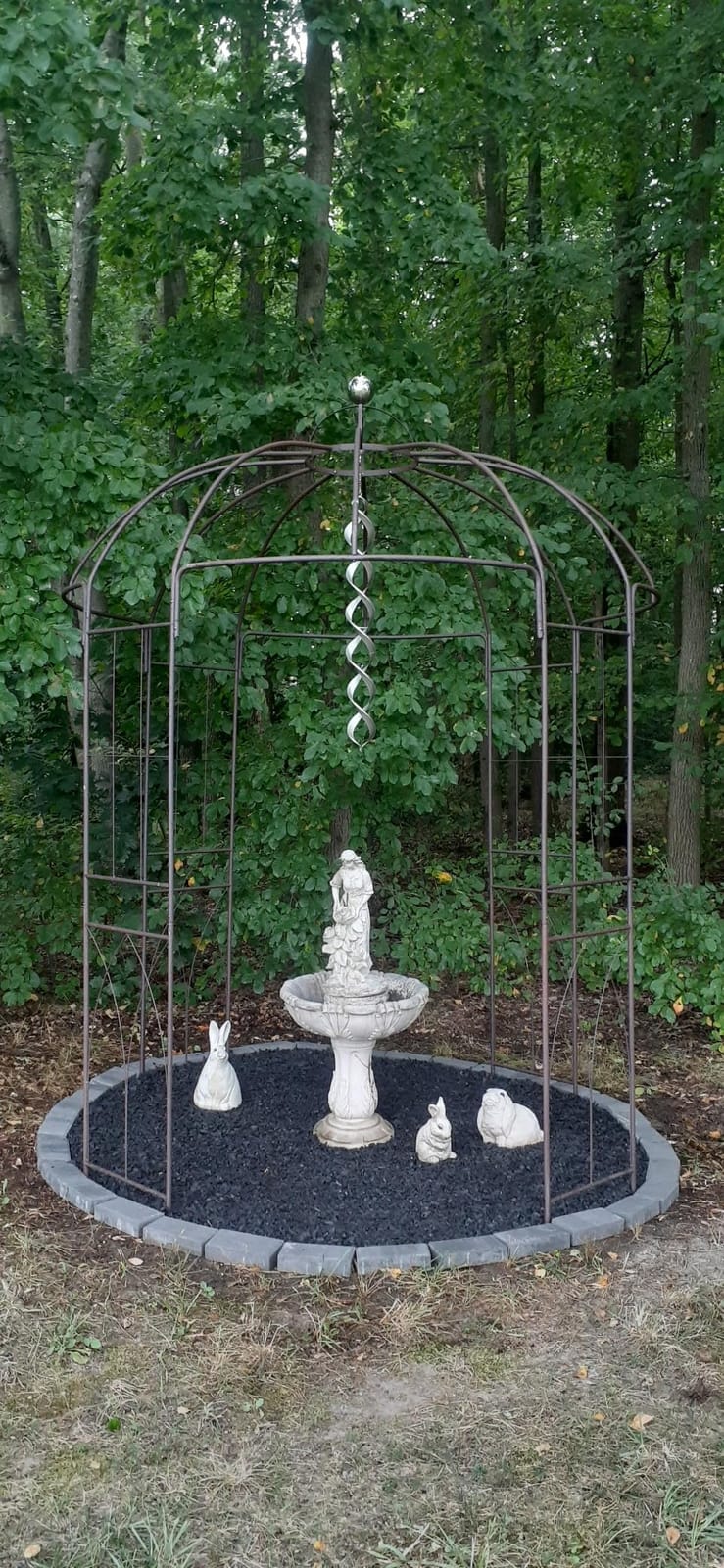
Ground stakes are included for securing the panels, and the powder-coated finish holds up through the seasons. The whole thing weighs under 30 pounds, light enough that some owners assemble and reposition it alone.
Here is the honest catch. The listing describes wrought iron, and reviewers who examined the frame found thin hollow metal rather than the material implied. That is a gap between the spec and the product, and it is worth knowing before you plan a heavy vine on it. Levelling is also awkward because the stakes go in separately after assembly.
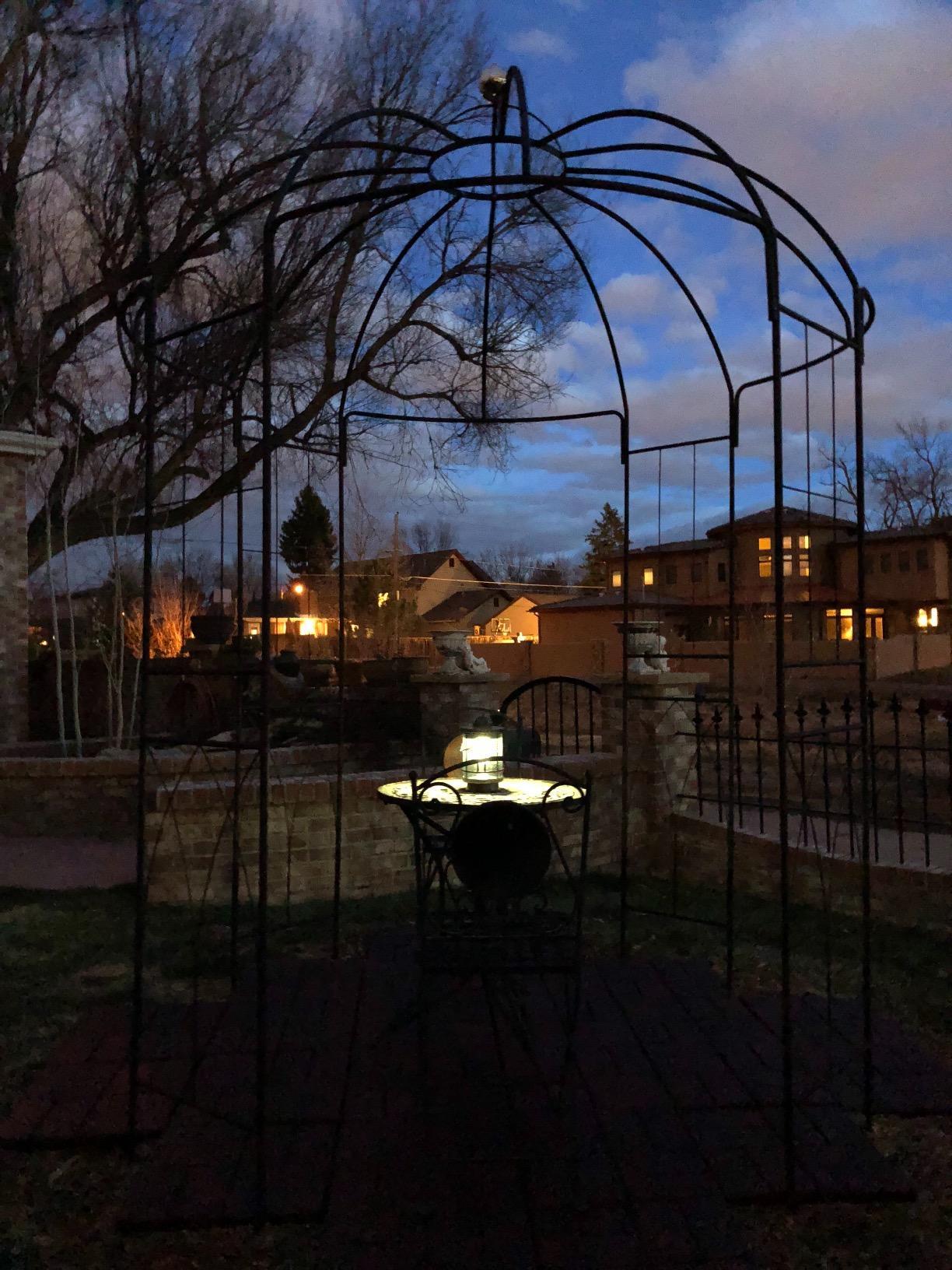
Can it carry wisteria?
More comfortably than most arches in this roundup, because of the four tall panels and the height. The limiting factor is the frame material rather than the surface area, so keep the vine trained and pruned rather than letting it run unchecked for years.
Pruning is the deciding factor more than the structure. A wisteria that is cut back hard each winter puts far less load on any frame than one allowed to sprawl.
What are the drawbacks to plan around?
Assembly needs two or more people, and parts are not labeled, so you match them to the instruction images by hand. Budget an afternoon.
Plan the levelling before you start. Because the ground stakes are installed separately, an uneven surface shows up immediately and is annoying to correct later. Some buyers also report paint that chips easily and occasional missing screws, so check the parts list at delivery.
6. Outvita 7ft Iron Garden Arch – Built for Wind
Outvita 7FT Metal Garden Arch Arbor, Black Trellis Frame
Powder-coated iron
52.17W x 83.86H
27.4 pounds
8 ground stakes
Pros
- Double-layer frame and 8 deep stakes hold in wind
- Burr-free ironwork is safe for vines and people
- Pre-drilled holes with reinforced insert nuts
- 27 pound build feels solid
Cons
- 27 pounds makes it a two-person move
- Sides are open so coverage comes slowly
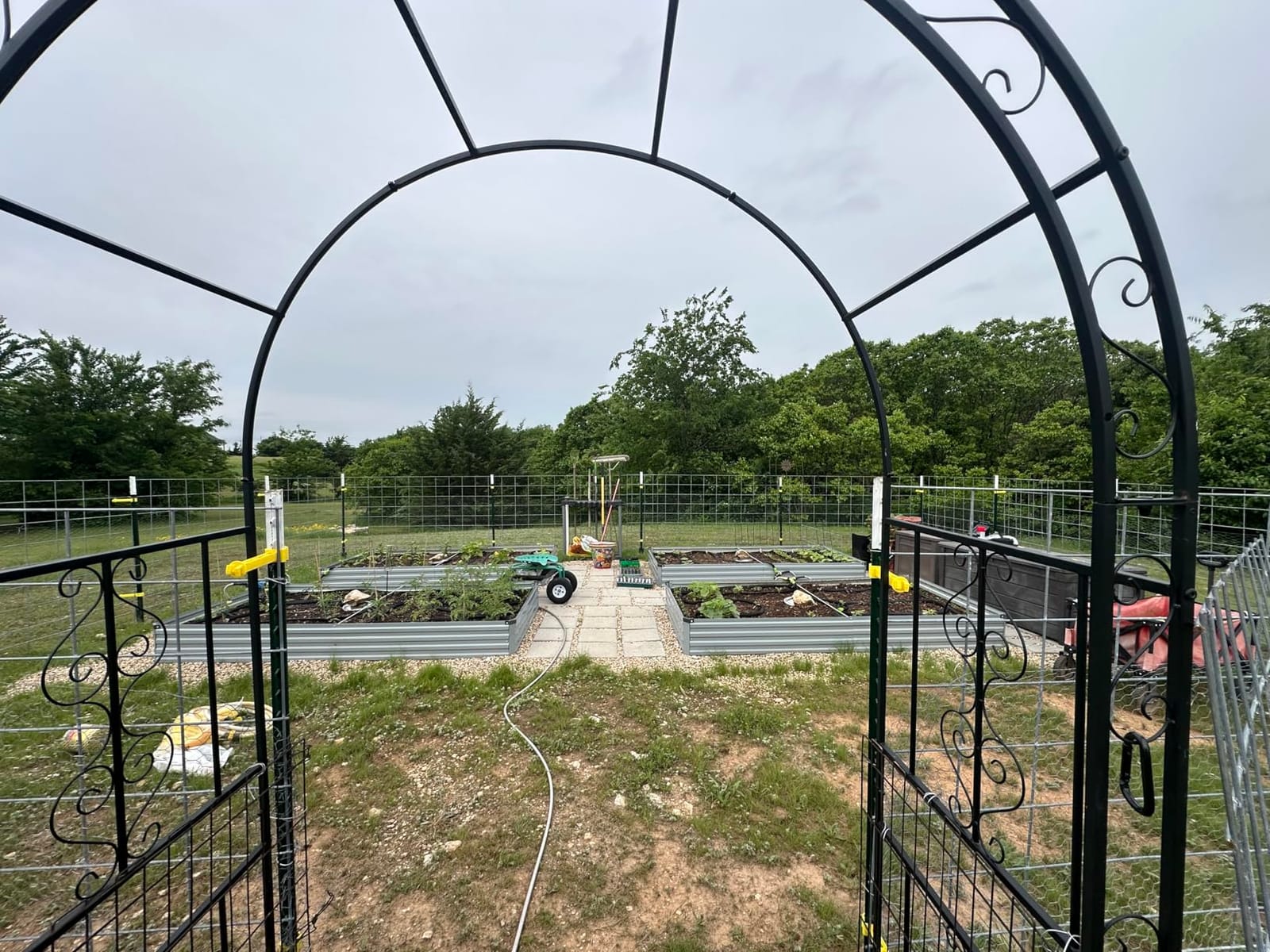
This is the arch we would put in an exposed site. What earns it that reputation is the double-layer frame paired with eight ground stakes driven 7.8 inches into the ground, and buyers consistently name those stakes when they describe it surviving storms.
That anchoring matters more than people expect. Most of the reported failures across this whole category come down to a lightweight frame with shallow feet in a lawn, and this one is engineered against that specific problem.
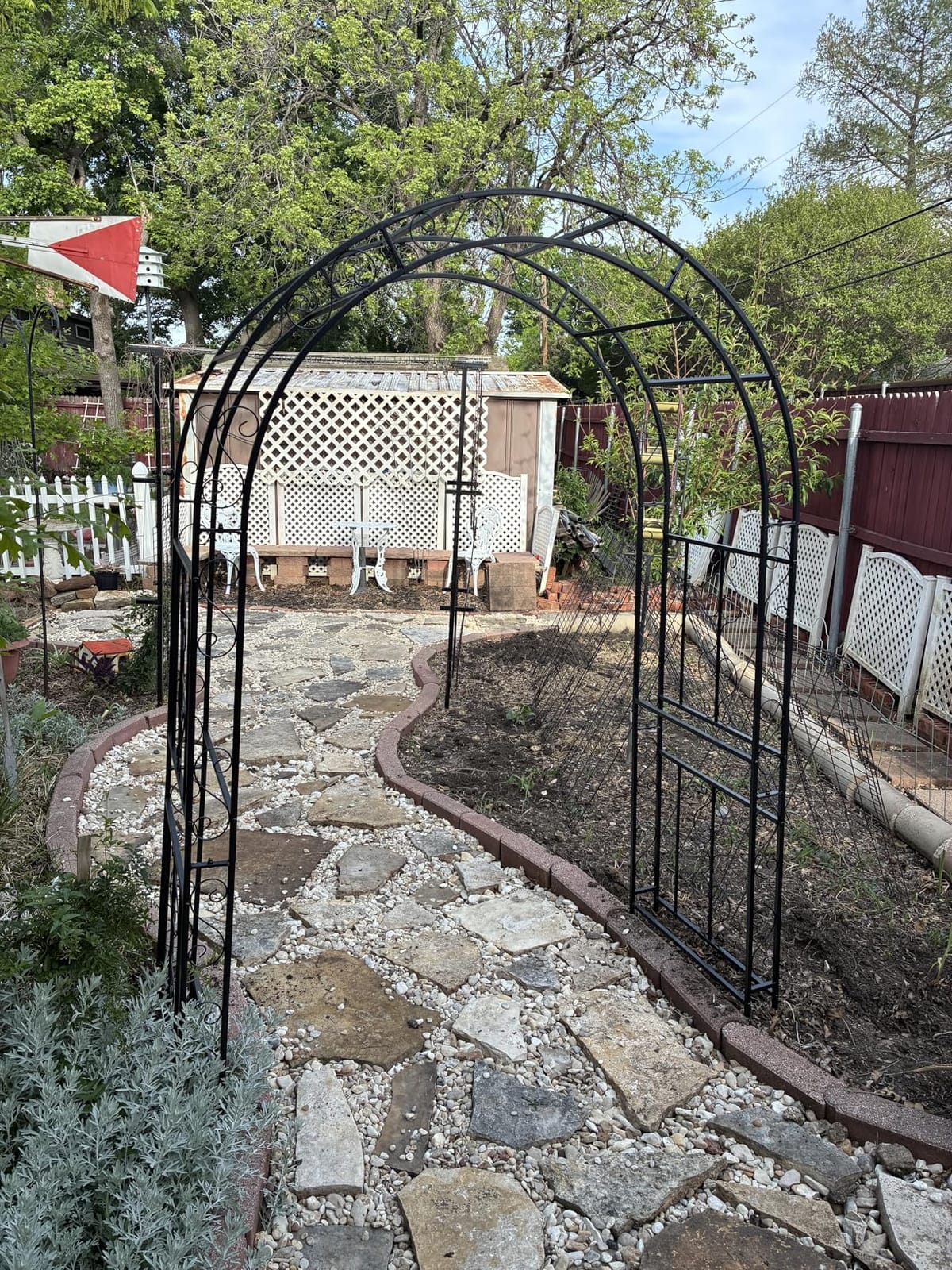
The ironwork is burr-free at every corner and surface, which is not a small detail in a garden. Vines do not get scraped, and people walking through it do not catch fabric on raw metal. The weather-resistant powder coating protects against abrasion and weathering over time.
At 27.4 pounds the build feels substantial rather than flimsy, and the pre-drilled holes with reinforced insert nuts mean assembly is quick, around 15 minutes according to owners.
How does it compare to lighter arches?
Heavier, and that is the whole point. Where a thin-tube arch flexes in a gust, a double-wall iron frame with deep stakes holds its shape. If your site gets real wind, the extra weight and the eight anchors are what you are paying for.
The cost of that stability is portability. At 27 pounds, repositioning it once assembled is a two-person job, so pick the spot before you build it.
What about vine coverage?
The sides are relatively open, so coverage takes longer than on a lattice design. Expect a lighter, airier look with thin plants like morning glories and climbing roses, and a slower, sparser result than the birdcage models.
If you want fast dense coverage on a windy site, this is the wrong trade. Buy the LZRS four-panel set later in this list instead, and anchor it properly.
7. Queension 7.2ft Wide Garden Arch – Biggest Opening, Least Climbing Surface
Queension Extra Large Garden Arch 7.2Ft Wide 9.2Ft High, Black
Steel tube
7.2ft W x 9.2ft H
14.1 pounds
Tool-free buckles
Pros
- Wide opening that fits two or three people
- Tool-free buckles let one person build it
- 0.8 inch steel tube resists bending
- Frosted coating resists fading and scratching
Cons
- Smooth tubes give vines little to grip
- Marketed as a photo backdrop more than a trellis
At 7.2 feet wide and 9.2 feet tall, this is a large arch, wide enough for two or three people to pass. The 4.6 rating and 80 percent five-star share come from that size, combined with something genuinely rare: tool-free assembly that one person can do in seconds.
Seventeen double arch-shape tubes connect with a buckle design, so it assembles, disassembles and carries without tools. If you want an entrance frame for a wedding arch, a photo backdrop or a party that changes location, there is nothing else here that folds down that fast.
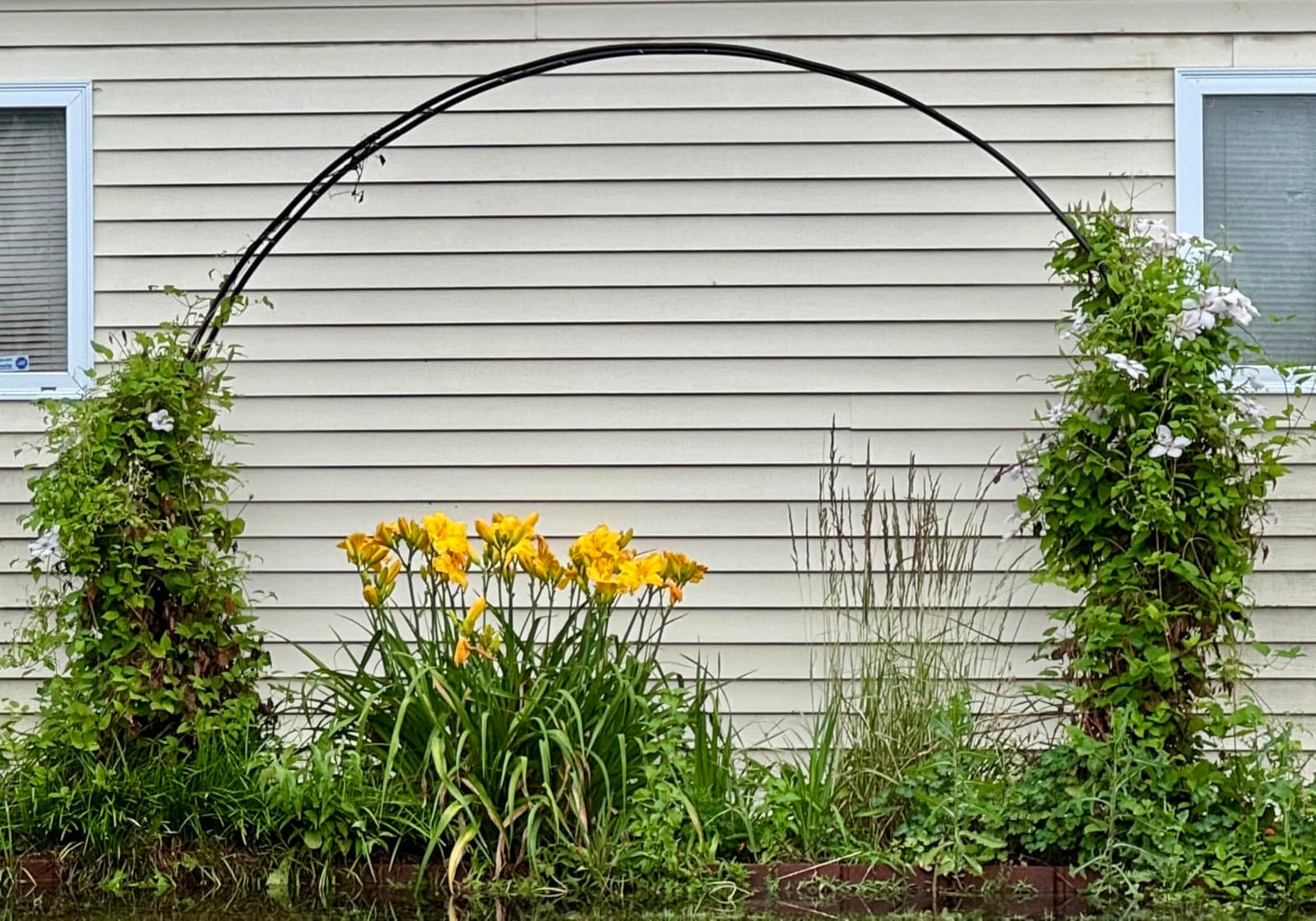
The 0.8 inch diameter steel tube is thicker than the thin-gauge arches and resists bending, and the frosted coating process resists fading, rusting and scratching so it can be reused outdoors season after season. The prongs base with a buckle connection gives it better fixing than most open-frame arches.
Here is the tension to understand before buying. Buyers love it as an entry frame to be covered, but the smooth steel tubes give climbing vines very little to grip. It works as a gateway that a vine covers, not as a stand-alone support structure for one.

Is it a trellis or a backdrop?
Primarily a backdrop frame that happens to be coverable with plants. The smooth tube surface is the limitation, and buyers note it directly, so plan to add a light climber or string a trellis panel across the opening if you want real coverage.
At 14.1 pounds it is portable, so a seasonal approach works well: cover it for summer, take it down in winter and reuse it indoors.
Where it wins and where it does not?
It wins on size, portability and speed of setup, and the 4.6 rating reflects that honestly. Nobody is claiming it is the strongest frame for plant weight.
It loses if your plan is a permanent heavy vine, and it loses on width for a large garden path beyond 7 feet. For a wide permanent gateway, choose the LZRS four-panel set or a cedar arbor instead.
8. GIANTEX 7ft Fir Wood Arbor – Rustic Look, Careful Assembly
Giantex 7FT Wood Garden Arbor Trellis, Wooden Wedding Arch for Ceremony
Fir wood with metal
55W x 24D x 85H
26.5 pounds
Pros
- Reinforced side trellises for roses and ivy
- Protective finish over natural fir
- Legs push straight into the ground
- Rustic dark brown suits a garden gate
Cons
- Thin dry wood and curved arches can crack
- Screws snap because holes are not pre-drilled
- Leans and breaks on an unlevel footing
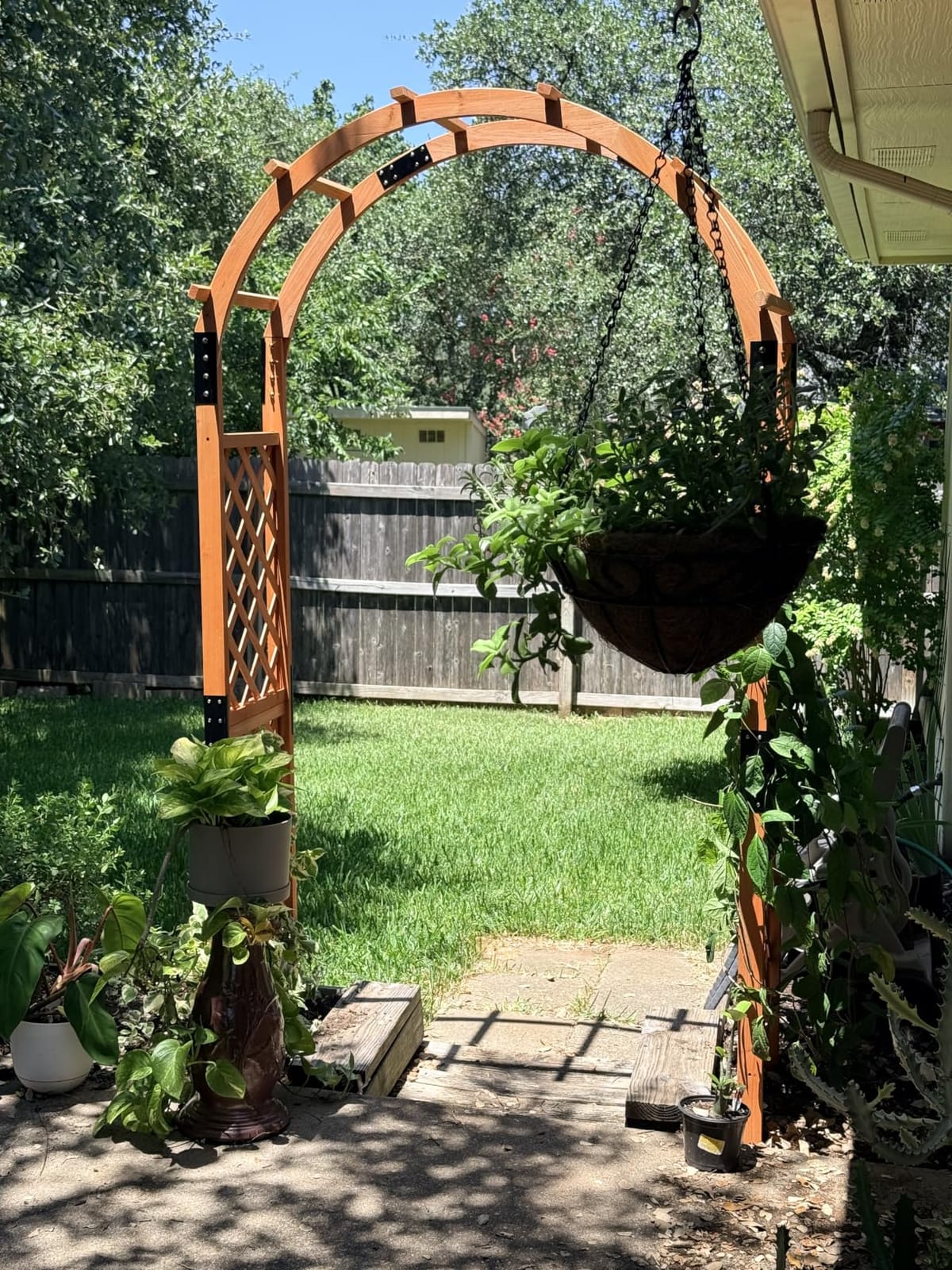
The look is the reason most people buy this one. Natural fir with a dark brown finish and a classic, rustic styling that suits a garden gateway better than any black powder-coated tube, plus reinforced side trellises that give roses, ivy and morning glories something solid to climb.
Setup is refreshingly simple. The legs insert directly into the ground with no tools or anchors required, and several owners report putting the whole thing up alone. Several also say the size is bigger than expected for what they paid.
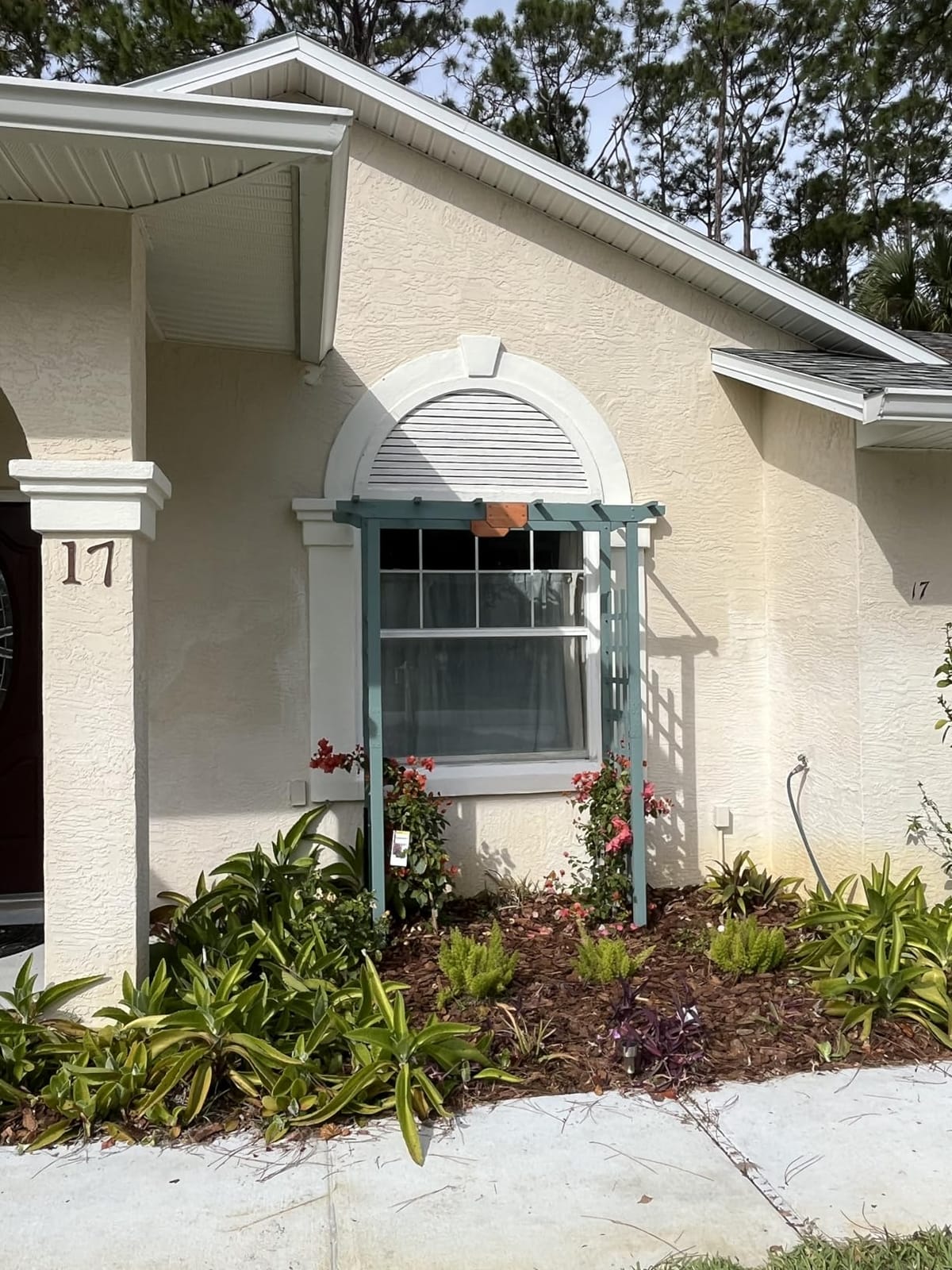
The caution is in the joinery. Because the holes are not pre-drilled, screws go straight through metal braces into the wood, and that is exactly where the reported problems come from: snapped screws and cracked curved sections. A few reviewers also describe the wood as dry and thin.
All of that is manageable with the right technique. A level, flat footing prevents the leaning and eventual breakage that owners describe, and applying a protective oil at install keeps the fir from drying out. Build it carefully and it lasts.
Is the wood strong enough for a climbing rose?
Yes, for roses, ivy and morning glories, and the reinforced side trellises are genuinely useful rather than decorative. It is not a frame for a mature wisteria, where the arm weight and slow thickening trunk are a different load entirely.
For a rustic gateway with a climbing rose or two, the balance is good: the trellis is real, the look is right and the install needs one afternoon.
What can go wrong during assembly?
Stripping screws and cracking the curved arch sections, both of which come back to drilling pilot holes before you drive anything. Owners who drilled first report far fewer problems, and the fix costs ten minutes.
Second, an unlevel footing. The arch will lean, and leaning on a thin fir frame is how it eventually breaks. Take ten minutes to level the ground before assembly rather than after.
9. Vita Rosewood Cedar Arbor – The Most Consistently Well-Rated
Rosewood 47″W x 89″H Cedar Arbor
Cedar wood
47W x 88.7H
45 pounds
Water-based stain
Pros
- Solid cedar that ages well and resists rot
- Lattice detail holds climbers properly
- Golden brown water-based stain
- Backed by a 1 year defect warranty
Cons
- Heavy at 45 pounds so it needs help
- 47 inch opening is narrow to walk through
- Higher cost than the metal options
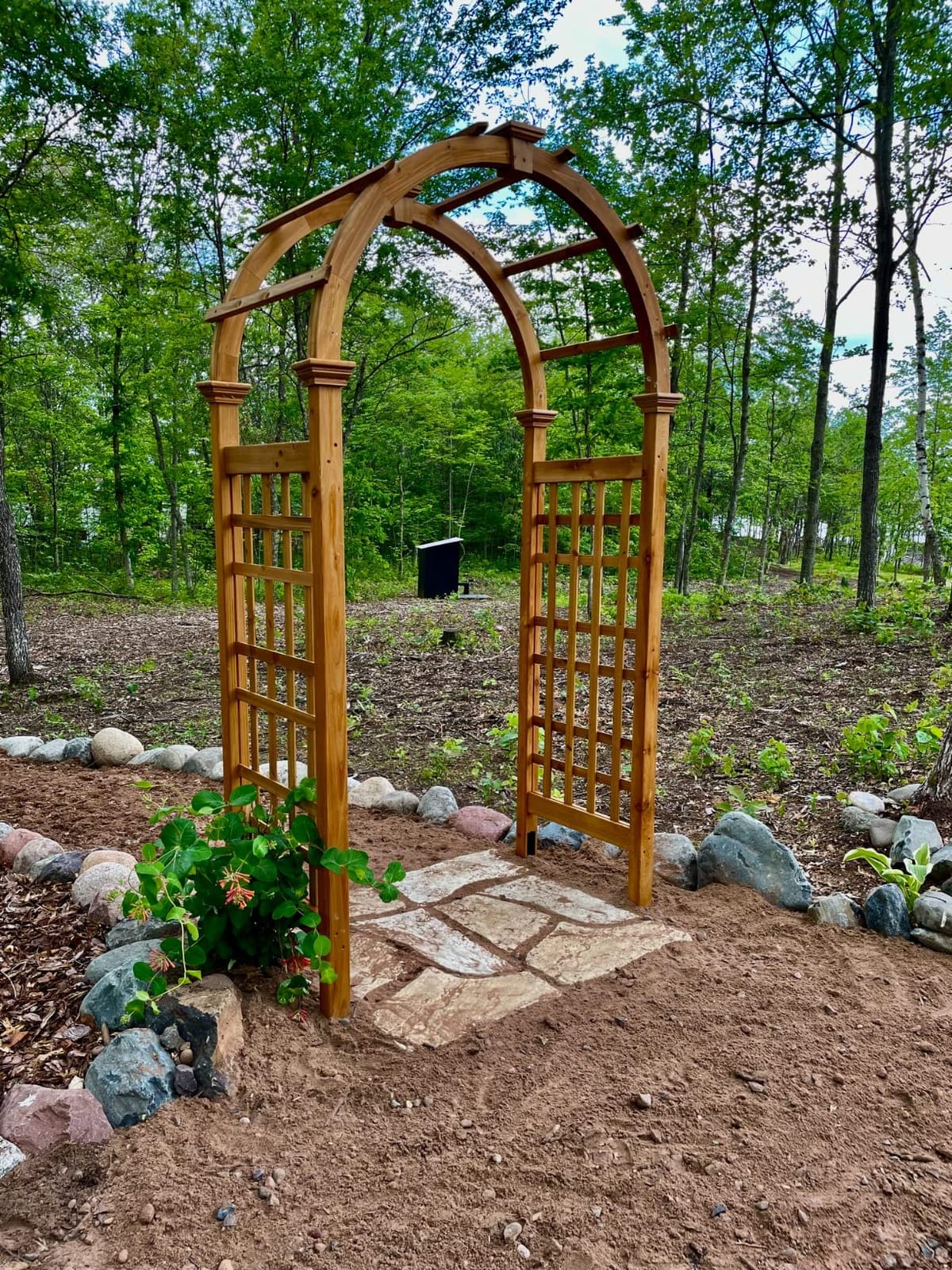
Cedar is the material answer for heavy vines, and this is the cedar structure that holds up best in the ratings. Buyers who pay a premium for it expect a heavy, well-finished piece, and they describe it that way in the reviews: 4.6 stars with 82 percent five-star ratings.
The 47 inch width and 88.7 inch height make it a garden gateway rather than a walkway tunnel, and the lattice detail is cited as the feature that actually supports climbers. The golden brown water-based stain gives a rich natural look without the filminess of a heavy coating.
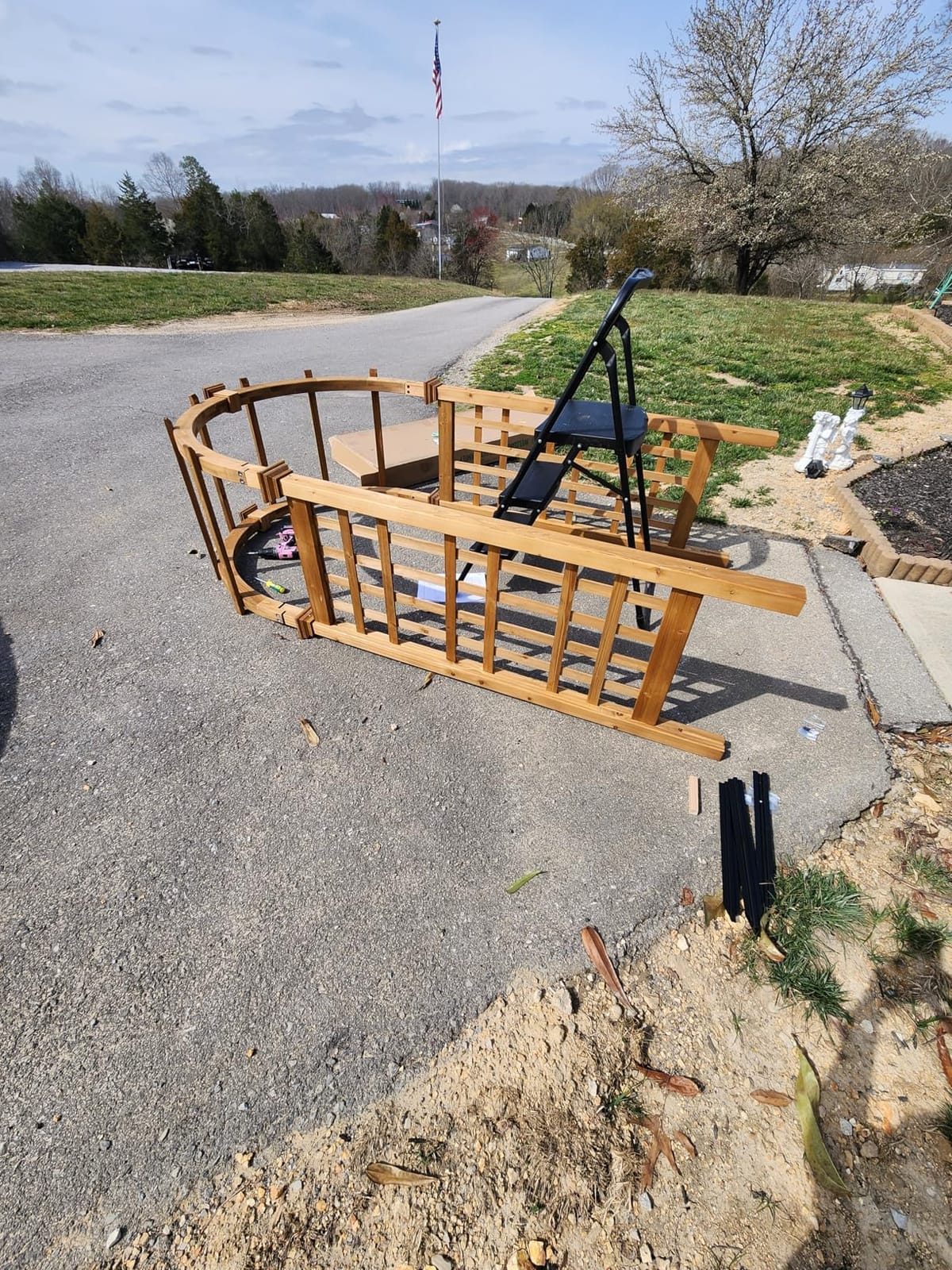
Wood grain means no two pieces match exactly in colour, finish and knots, which some buyers see as a drawback and others consider the whole point of buying cedar. A 1 year warranty covers material defects rather than weather, so treat the frame with a sealant on a normal schedule.
At 45 pounds it needs two people to position, and it is heavier than the metal arches in this roundup. That weight is also the reason it stays where you put it while a vine builds up around it.
Why pay more for cedar?
Cedar resists rot better than softer woods and carries vine weight without needing steel reinforcement, which matters if the plant is a long-term one. It also weathers to a silver-grey rather than decaying, so the structure still looks deliberate when the vine thins out in winter.
The lattice is the practical reason. It is a real climbing surface with enough texture for clematis and roses to hold on, rather than a frame the plant has to be tied to.
Where does it fall short?
Three things buyers accept in exchange. It sits at the higher end of the price range in this roundup, the 47 inch opening is narrower than most metal arches for walk-through traffic, and 45 pounds means a two-person lift.
If you want a wide entrance, choose a metal arch. If you want a structure that will still look right in ten years with a woody vine on it, this is the one.
10. SCENDOR 9ft Birdcage Pavilion – A Room, Not a Gate
SCENDOR Garden Arches Arbors Birdcage Shape,9′ High x 6.8′ Wide,Metal Pergola Pavilion Gazebo Enduring Iron Trellis Plants Support Use for Outdoor Garden Arbor Climbing Plants Wedding Arches Ceremony
Powder-coated iron
9ft H x 6.8ft W
12.2 in ground spikes
Pros
- Big enough for chairs and a table
- 12.2 in spikes anchor well in soil
- Welded iron resists rust and wind
- Doubles as a garden room
Cons
- Erection needs several people
- Needs open space rather than a narrow path
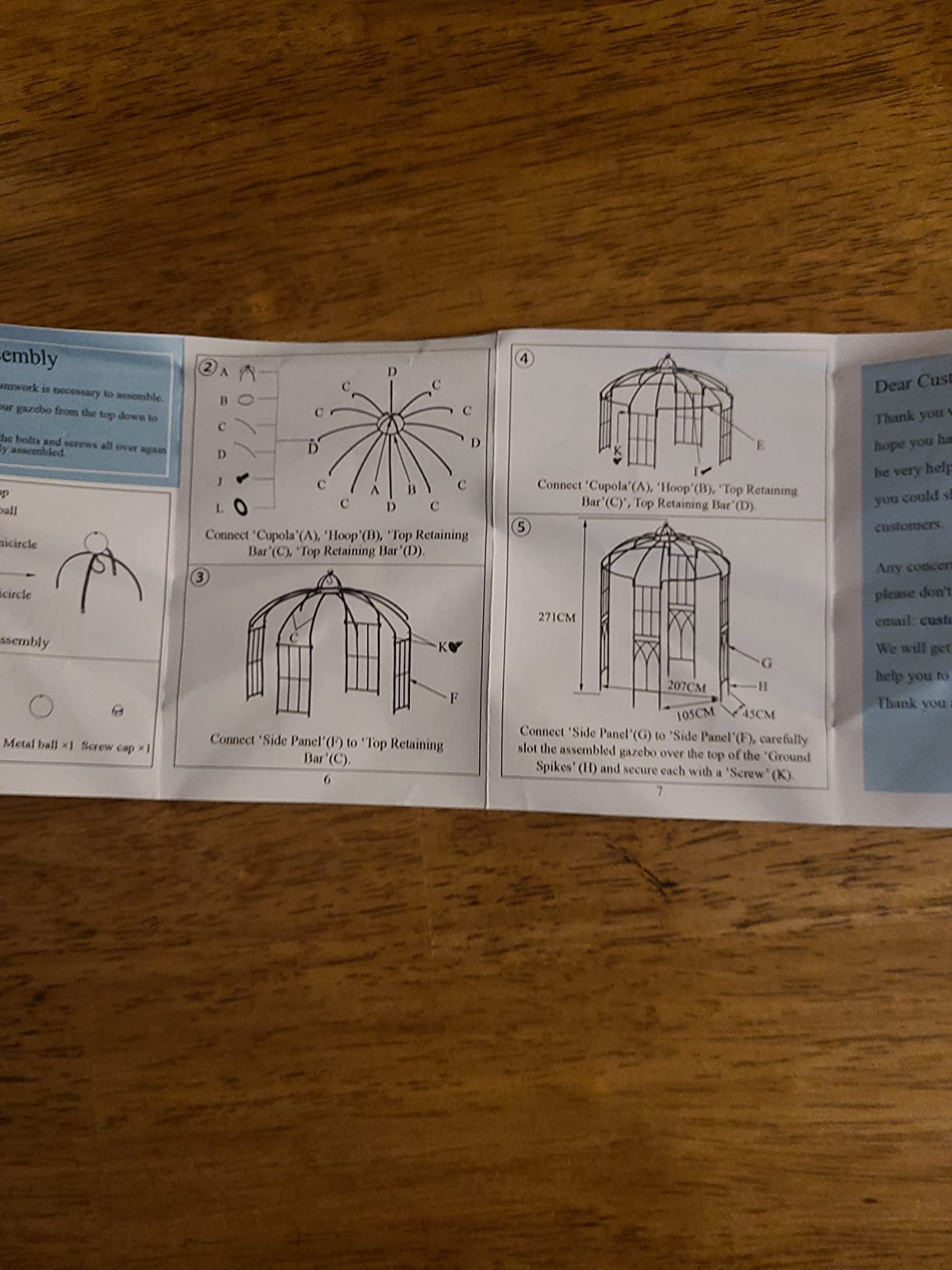
This is chosen for space rather than ornament. At 9 feet high and 6.8 feet across, it can hold chairs and a table, and owners use it as a shaded garden room, a lunch spot or a ceremony backdrop once a vine closes over the top.
The size is the point and also the constraint. It is wider and taller than most garden paths, so it needs genuine open space. In a narrow side yard it will feel like it is crowding the border rather than sitting in the garden.
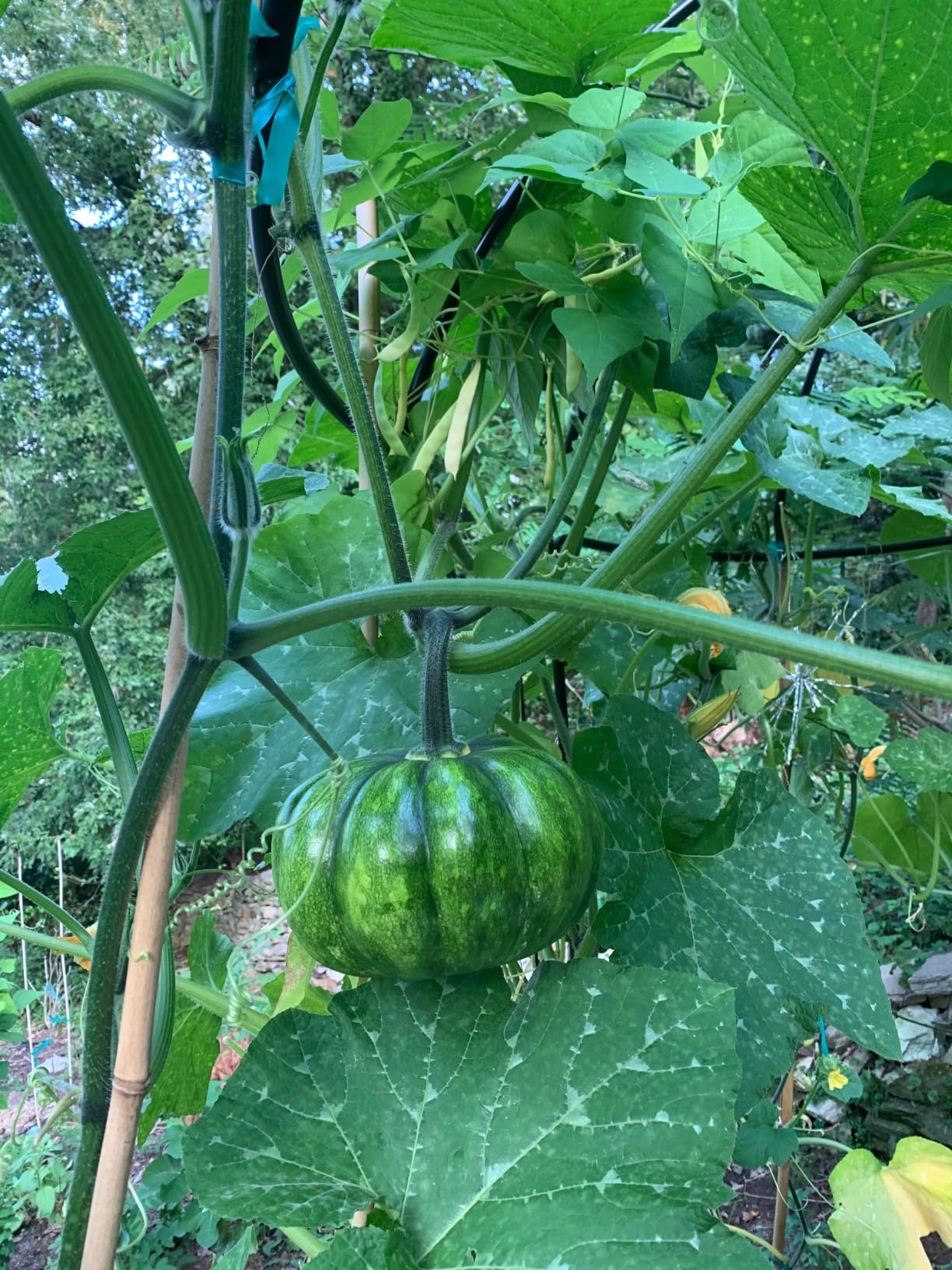
Anchoring gets the credit here, with 12.2 inch ground spikes that give real holding power in soil. The anti-rust powder-coated welded iron frame resists rust and handles strong wind, which is the combination you want for something this size standing permanently outside.
Detailed instructions and extra fasteners are included, and the frame can be positioned or moved once assembled, though that takes help given the height.
Is it a pergola or an arch?
A pavilion-style arbor. There is no slatted roof for shade, so a vine is what makes it a usable outdoor room. Plant a vigorous climber and it becomes a shaded seating area that a 12 by 16 kit could not cover at this footprint without losing the walk-in feel.
It suits a garden with a wide path or an open lawn edge. It does not suit a small patio, which is the oversizing warning that comes up repeatedly in homeowner discussions.
What does assembly involve?
Several people, realistically. Buyers describe it as a one-afternoon job with help, and the tall frame is not something to wrestle upright alone. Set the four corners and the spikes before you erect it.
Once up, the maintenance conversation is simple. Wipe it down occasionally, check the spikes annually as soil settles, and prune the vine hard each winter so the frame is not carrying more weight than it should.
11. LZRS 4-Panel Iron Trellis Set – The Most Plant-Focused Option
LZRS 71 x 80in Rustic Iron Arch Decoration Garden Trellis with Black Metal Coating – Perfect for Supporting Climbing Plants Outdoor, Roses, Vines, Flowers, and Vegetables.
Powder-coated iron wire
80W x 71H
Set of 4 panels
Pros
- Four panels make one wide arch or two trellises
- Thick wire shows no rust outdoors
- Has held through 40 mph gusts
- Works for climbing roses and clematis
Cons
- No pointed feet so ground install is awkward
- Lower bar too weak to stand on
- Couplings are fiddly to line up
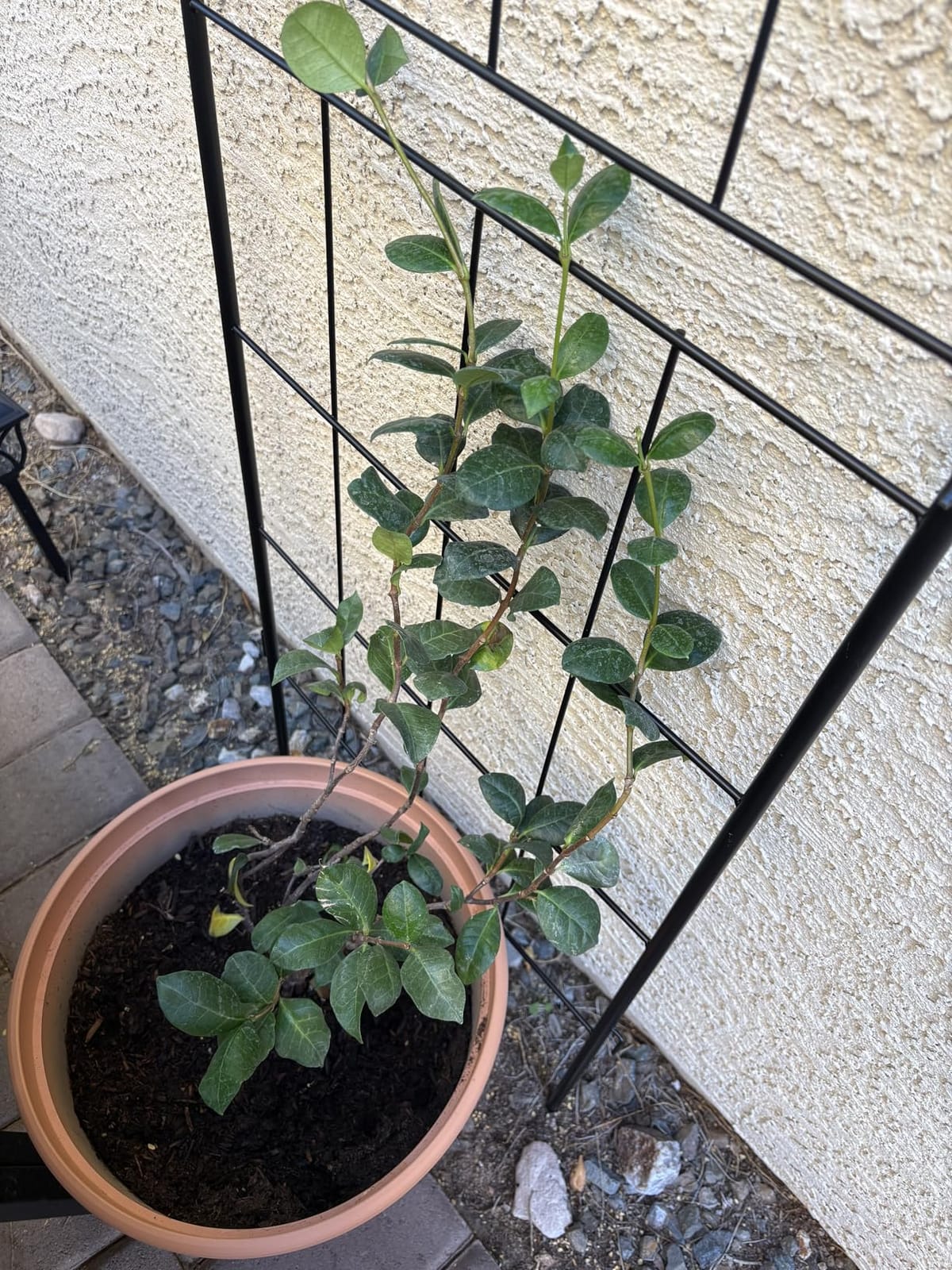
This is the one in the roundup that owners bought specifically to grow on, and the reviews reflect that. People picked it for climbing roses and clematis and came back months later with photos of the vine up the lattice.
The modular design is the standout idea. Four panels install side by side for a single 80 inch wide arch, or split into two separate trellises, which also lets you use them as vertical garden walls along a fence and save ground space.

Construction is thick metal wire with a rust-proof black powder coating, and owners report no rusting at all in outdoor use. One buyer has it holding through 40 mph gusts once installed, and the hook design allows adjustable angles for flexible layouts.
Top and bottom pieces connect with screws for ground or planter mounting, and the whole thing wipes clean with a damp cloth. It is listed as suitable for ivy, roses, clematis, jasmine, cucumbers, vines, grapes and morning glories, which is about as broad a plant list as this category produces.
Why do the reviews love it?
Because the climbing surface is the product. Thick wire with a real grid gives clematis and roses something to grip immediately, and the coating means the metal lasts. That combination is rarer in this category than it should be.
It is also the most flexible option here, working as an arch, as two separate trellises or as a wall panel against a fence.
What makes installation awkward?
The lack of pointed feet. Panels have to be pushed into soil by hand or with a mallet, and the lower horizontal bar is not strong enough to stand on while you drive them in. Work on one panel at a time.
Some buyers also wish the panels were taller, and the male and female couplings are fiddly to line up. Budget an evening rather than an afternoon, especially in harder soil.
12. Outvita 7ft Wooden Garden Arbor – Quick to Build, Needs Anchoring
Outvita 7Ft Dark Brown Wooden Garden Arbor Arch Trellis
FSC-certified wood
85 in high
30 pounds
Pergola-style top shelf
Pros
- Sanded FSC wood with no splinters
- 30 to 40 minutes with a drill
- Top shelf and cut-outs give vines a path
- Buyers buy them as gifts
Cons
- No ground anchors so it can blow over
- Thin wood can arrive cracked at joints
- Holes are not pre-drilled
The selling point here is speed. Owners report 30 to 40 minutes with a drill, and the pieces are joined with screws and metal plates with all hardware included. For a quick garden entrance that looks decent, that is a fair trade.
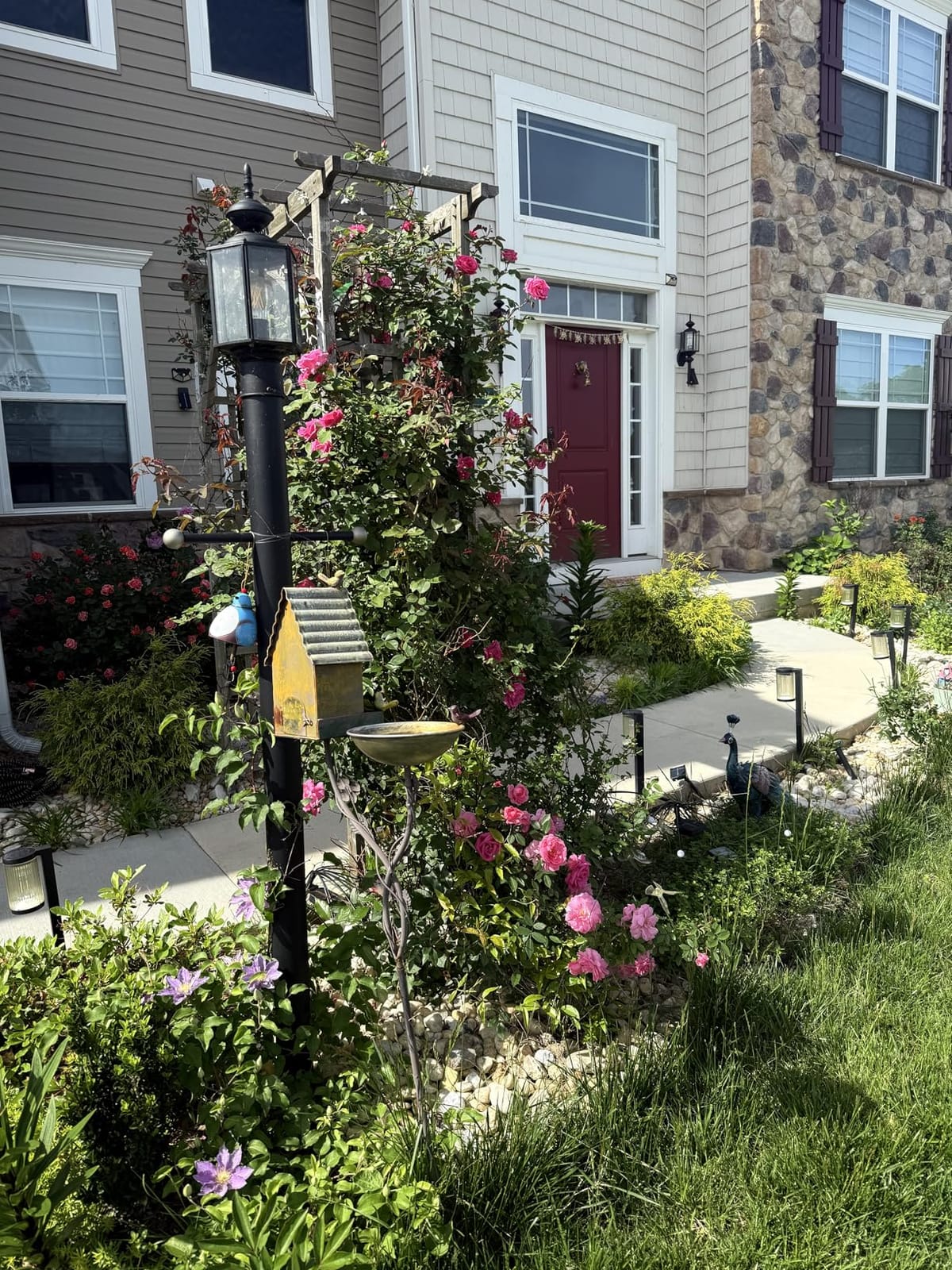
Material is FSC-certified solid wood, fully sanded to prevent splinters, with a natural look that suits a garden entrance. The pergola-style top provides partial shade, and the side panels have rhombus cut-outs that give vines somewhere to hang.
What drags the rating down to 4.3 is one consistent root cause, and it is not the appearance or the assembly. The frame is not anchored. Several owners had theirs blow over in a storm and crack, and the fix was zip ties to a fence or ground stakes.
That is a solvable problem with a small stake set, but it is the first thing to solve. Buy anchors, set them, and this becomes a much better structure.

How does it handle vine weight?
Fine for climbing roses, ivy and annuals on the cut-out panels and the top shelf. The top shelf is a genuinely useful perch for a young vine to start from, and the rhombus cut-outs give a leaf-and-a-twine climber plenty of texture.
It is not a heavy-vine frame. Treat anything woody and long-term as a plant on loan from the structure rather than a permanent resident.
What should you check on delivery?
Look for cracks at the joints and legs before you assemble anything. Reviewers report thin wood arriving with large cracks, and a cracked leg is a return trip rather than a five-minute fix.
Then drill pilot holes, because the holes are not pre-drilled and screws can strip or split the wood on repeated assembly. With anchors in the ground and a little care, this is a good inexpensive garden entrance.
The Vine-Weight Rule That Decides Everything
A mature wisteria is one of the heaviest vines you can put on a pergola, so choose posts at least 4×4 and keep the beam span under 10 feet. Bougainvillea and mature grapevine sit close behind. Lightweight annual climbers can be trained on almost anything with a surface to grip.
The mechanism matters as much as the mass. Twining stems wrap around beams, so wisteria and grapevine need something they can circle rather than a flat panel. Tendrils and leaf stalks grip wire or narrow members, which is why clematis and peas do well on trellis. Adhesive pads grip flat surfaces, and rambling roses need their long canes tied and trained along the frame.
This is why a pergola’s posts give each mechanism a vertical path and its beams give horizontal runs, so coverage builds from the base outward. A structure with no horizontal surface, like a smooth tube arch, forces you to add your own trellis panel later.
The practical translation: match the structure to the plant’s mass and climbing style, not to the plant’s popularity. Buy the cedar arbor for a rose you will prune annually, and the full kit for wisteria you intend to keep for thirty years.
What Size Pergola Do You Need?
Size the structure to the space you will actually use. A 6×6 to 8×12 unit works as a garden gateway or a path accent, a 10×10 to 12×12 covers a small patio, and 12×16 to 16×16 is where a seating area for several people becomes realistic. Match the footprint to the vine’s mature spread, not to its current size.
Two cautions from homeowner forums apply more than any spec sheet. The recurring regret is buying too large, because a 12×12 or bigger structure overwhelms a modest patio. The second is buying too small for a mature vine, which leaves you extending the frame later.
Height matters too. Most arches in this roundup top out between 85 and 106 inches, which is comfortable to walk under. A full pergola clears around 95 inches at the beam, so check headroom against your tallest visitors before you commit.
One gap worth naming: buyers who want 20 feet by 12 to 16 feet find very few kits in that footprint. The answer is usually a modular design built from two structures, or a custom build, and either way you are past the kit tier and into planning territory.
What Is the Best Material for a Pergola?
Cedar is the best material for heavy vines because it resists rot and carries load without steel reinforcement. Aluminum suits strength and adjustable louvers, vinyl needs no maintenance but limits spans, steel maximises durability, and fiberglass sits between wood and metal. For a structure that must hold plant weight for decades, material choice is not cosmetic.
Wood in general, and cedar specifically, is the standard for vine-bearing structures. It has the grip surface that twining stems need, it takes fasteners, and it weathers to silver rather than rotting when treated. Pressure-treated pine works and costs less, but it needs sealing on a schedule.
Vinyl, as the Dura-Trel arbor shows, needs no sealing at all and comes with a 20 year warranty in one case. The limitation is span and load, so it suits light to medium climbers rather than a heavy woody vine.
Aluminum is the premium answer, and our aluminum pergola roundup covers that tier in full. Its strength and adjustable louvers suit heavy vines, and louvers also solve the light problem a solid roof creates. Steel is the most durable metal option, and the iron arches in this roundup show how well powder coating holds up outdoors. Fiberglass is the compromise pick when you want low maintenance without a vinyl look.
Freestanding or Attached to the House?
A freestanding pergola gives you a 360 degree structure and can carry a vine on every side, which is what you want if coverage is the goal. A wall-attached pergola saves ground space, works in a narrow side yard, and gives you a roof over a patio or deck, but the vine is limited to the outer frame.
Attach it to the house when ground space is the constraint or when you want shade over existing seating. The flashing and ledger work is more involved than a freestanding build, and the structure transfers load into the wall, so the attachment point has to be sound.
Go freestanding when you want a garden feature rather than shade, and when you want the vine to wrap all the way around. Just remember that freestanding means four posts to anchor instead of two, which is more concrete and more work. If you need a lighter way to support a plant without a full frame, an arch is easier still, and we cover that choice in our support structure guide.
Roof Style and the Light Your Vines Need
Open slats give vines the light they need to flower densely, and they are why a traditional pergola works as a plant support. A solid roof delivers more shade but can starve a vine of the light it needs, slowing growth and reducing flowering. Louvered roofs sit in between and let you tune the light as the plant matures.
That is the short version. If your goal is a fully covered patio you will use in summer, a solid or louvered roof makes sense and you should choose a vine that tolerates reduced light. If the goal is coverage, keep the roof open or adjustable.
Slats spacing matters for vines as much as for shade. Tight spacing gives more shade and slower growth. Wide spacing lets light through, which suits grapevine and wisteria that need sun to ripen their flowers and fruit.
One more thing people regret later: when a mature vine is removed, it can leave staining on wood and damage the collar where the stem joined the frame. Cutting the vine a few inches away from the structure, rather than unwinding it off the beams, makes that clean-up far easier.
Anchoring, Footings, and When to Hire a Pro
A vine-bearing structure needs more anchorage than a decorative one, because the load arrives gradually over years and never announces itself. Ground stakes and nails are fine for lightweight arches in sheltered soil. Poured concrete footings and concrete anchors are the right answer for a full pergola, and for any structure carrying wisteria, bougainvillea or a mature grapevine.
Three checks decide whether a listing is worth your time. Post thickness tells you the load capacity, and for heavy vines you want 4×4 or larger. Finish quality tells you how long the frame lasts, and powder coating beats paint outdoors. Anchor inclusion tells you whether the manufacturer expects the structure to stay put, and concrete anchors in the box are a credibility signal several listings in this category carry.
Build it yourself if the kit is small, the ground is level and you have a spare weekend. Hire a pro if you are pouring footings, working on a slope or near a house wall, or if the frame is large enough that a mistake in the joinery shows. The failure modes in this category are almost never about strength, they are about a frame that was never properly fixed down.
And check your local permit requirements before you start, because a large attached or freestanding structure may need approval in some jurisdictions.
Frequently Asked Questions
Can a pergola support heavy vines?
Yes, if it is built for the load. Heavy vines like wisteria, bougainvillea and mature grapevine need posts at least 4×4, a beam span under 10 feet, and concrete footings with real anchors. Lightweight arches and thin-tube frames cannot carry them, and the failure shows up as sagging beams years later.
What is the best material to use for a pergola?
Cedar is the best material for heavy vines because it resists rot and gives twining stems a surface to grip. Aluminum suits strength and adjustable louvers, steel maximises durability, vinyl needs no maintenance but limits spans, and fiberglass sits between wood and metal.
What size pergola should I get?
Match the footprint to how you will use it. A 6×6 to 8×12 unit works as a garden gateway, 10×10 to 12×12 covers a small patio, and 12×16 to 16×16 creates a real seating area. Do not oversize for a small yard, and do not undersize for a mature vine you plan to keep.
Should a pergola have a solid roof for climbing plants?
Open slats give vines the light they need to flower densely. A solid roof gives more shade but can starve a vine and slow its growth, while louvered roofs let you tune the light as the plant matures. Choose a solid or louvered roof for shade and pick a vine that tolerates lower light.
Is it cheaper to build a pergola or buy a kit?
Building your own usually costs more in time than a kit does, and a vine-bearing structure needs poured footings and anchoring hardware on top of the lumber. Kits trade material volume for build speed, and the largest models still need three or more people. An arch or trellis is the cheaper route if shade is not the goal.
The Bottom Line on Pergolas for Climbing Plants
For a genuine pergola that shades a patio and carries wisteria or grapevine, the Backyard Discovery Beaumont cedar kit is the pick. Its 6 inch posts, dual cross beams and wind rating put it in a different class from everything else we tested in 2026, and nothing else in this roundup offers a roofed 192 square feet of vine-ready structure.
For vine support rather than shade, the shortlist is shorter and the decision is simpler. The Dura-Trel Providence is the best value with a 20 year warranty, the LZRS four-panel set is the most plant-focused option, and the Outvita 7ft iron arch is the one to buy where wind is the concern.
Whatever you choose, decide the vine first. The plant sets the post size, the span, the anchoring and the roof style, and a frame built for the wrong vine is the expensive mistake. Check the post thickness, the finish and the anchor inclusion before you buy, and anchor it properly on the day you build it.