
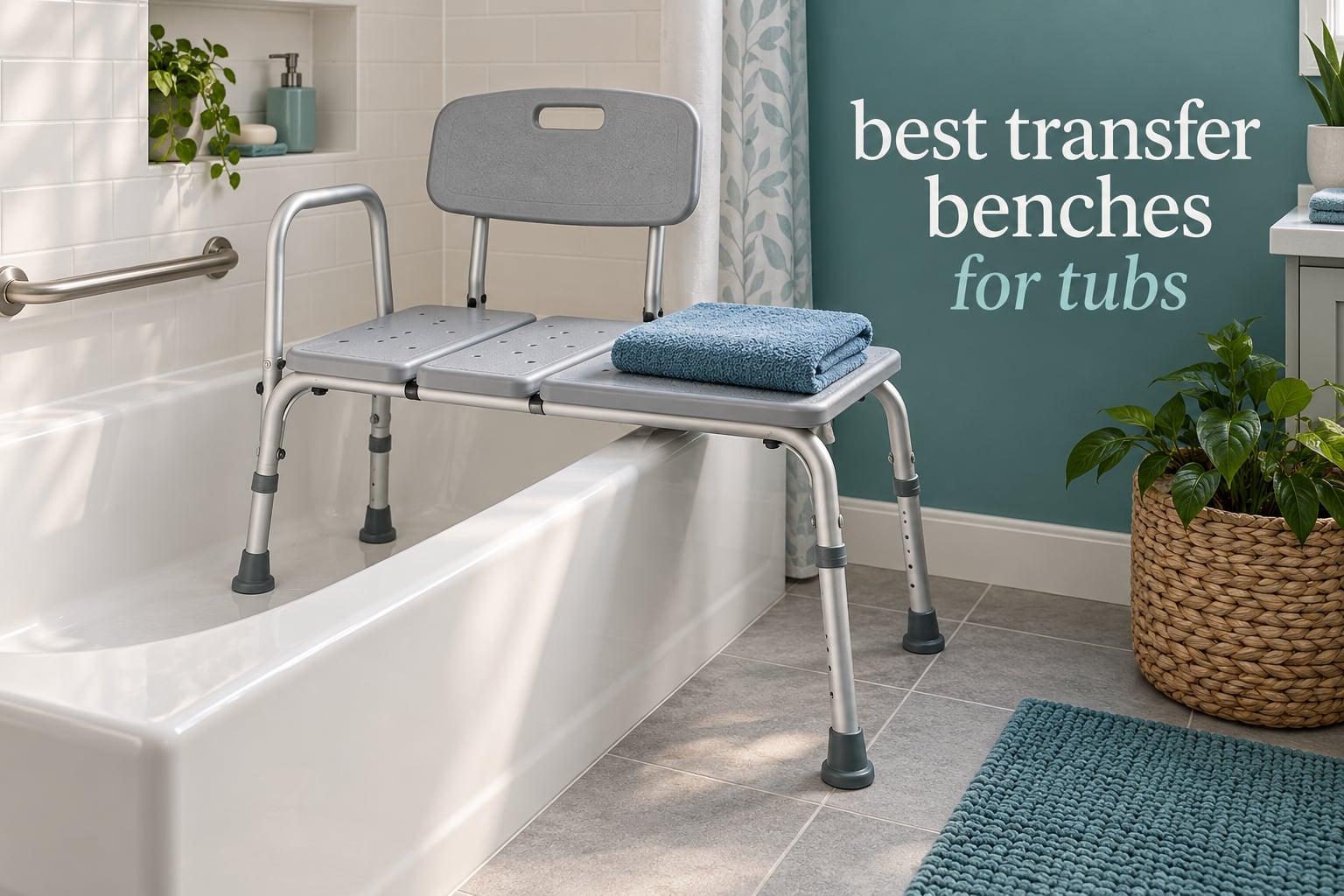
A tub transfer bench is a bath safety seat that straddles the bathtub wall, with two legs standing inside the tub and two on the bathroom floor. The user sits down at floor level, scoots sideways over the tub wall, pivots, and bathes while fully seated rather than climbing over a high wall. Two in-tub legs bear the load on the tub floor while adjustable out-of-tub legs level the frame to the higher bathroom floor.
That single design fact is the whole reason these benches exist. Stepping into a tub demands balance, leg strength and a moment of trust in a wet room, and the bathroom is where older adults and anyone recovering from a hip fracture, a stroke or a joint replacement take the worst fall of their life. A transfer bench removes the step-over entirely: you sit, slide, pivot, and lower yourself into the water from a supported position.
We compared 10 of the highest-rated transfer benches for tubs currently on the market, weighing the published specifications against what buyers actually report after living with them. Capacity, frame construction, seat travel, foot grip and the awkward details nobody lists until the bench is already in the bathroom drove almost every call. Three picks sit far above the rest on review volume and build quality, and two of them are sliding designs that change the transfer completely.
A note before we start: this is a general product comparison, not medical advice. If a bench is being bought for post-operative or rehabilitation use, ask your doctor or occupational therapist first, and never exceed the capacity printed on the frame.
If your bathroom problem is water temperature and tub depth rather than safe access, our guides to inflatable hot tubs and cold plunge tubs cover a different need. If you are choosing a tub for a loved one to recover in, the hot tub buying guide is worth a look first, because a deeper, wider tub makes every transfer bench easier to use.
Table of Contents
- Top 3 Transfer Benches for Tubs in 2026
- All 10 Transfer Benches for Tubs at a Glance
- 1. DMI Tub Transfer Bench and Shower Chair with Non Slip Aluminum Body
- 2. Medline Transfer Bench for Bathtubs and Showers, 400 lb Capacity
- 3. Medline Tub Transfer Bench with Microban Antimicrobial Protection
- 4. Platinum Health Carousel Sliding Shower Chair with Swivel Seat
- 5. Moen DN7105 Home Care Premium Tub Transfer Bench
- 6. Platinum Health Gateway Premium Sliding Shower Chair
- 7. Flash Furniture HERCULES Series 300 lb Capacity Transfer Bench
- 8. Carex Universal Tub Transfer Bench with Backrest
- 9. Drive Medical Splash Defense Tub Transfer Bench
- 10. HOMLAND Tub Transfer Bench with Backrest, Height Adjustable
- How to Choose Transfer Benches for Tubs That Fit Your Bathroom
- Transfer Bench vs. Shower Chair vs. Bath Lift
- How to Use a Transfer Bench in a Bathtub
- Safety, Coverage and Care
- Frequently Asked Questions
- The Verdict
Top 3 Transfer Benches for Tubs in 2026
DMI Tub Transfer Bench
- 400 lb capacity
- Sliding seat
- 19 in to 23.5 in height
- Suction cup feet

Medline 400 lb Transfer Bench
- 400 lb capacity
- Tool-free assembly
- Reversible backrest
- 17.5 in to 22 in

All 10 Transfer Benches for Tubs at a Glance
| Product | Specs | Action |
|---|---|---|
| DMI Tub Transfer Bench and Shower Chair |
|
Check Latest Price |
| Medline Transfer Bench for Bathtubs |
|
Check Latest Price |
| Medline Microban Transfer Bench |
|
Check Latest Price |
 Platinum Health Carousel Sliding Bench Platinum Health Carousel Sliding Bench |
|
Check Latest Price |
 Moen DN7105 Home Care Bench Moen DN7105 Home Care Bench |
|
Check Latest Price |
 Platinum Health Gateway Sliding Bench Platinum Health Gateway Sliding Bench |
|
Check Latest Price |
 Flash Furniture HERCULES Bench Flash Furniture HERCULES Bench |
|
Check Latest Price |
 Carex Universal Transfer Bench Carex Universal Transfer Bench |
|
Check Latest Price |
 Drive Medical Splash Defense Bench Drive Medical Splash Defense Bench |
|
Check Latest Price |
 HOMLAND Tub Transfer Bench HOMLAND Tub Transfer Bench |
|
Check Latest Price |
1. DMI Tub Transfer Bench and Shower Chair with Non Slip Aluminum Body
DMI Tub Transfer Bench and Shower Chair with Non Slip Aluminum Body, FSA Eligible, Adjustable Seat Height and Cut Out Access, Holds Weight up to 400 Lbs, Bath and Shower Safety, Transfer Bench
400 lb capacity
Sliding seat and perineal cut out
Seat height 19 in to 23.5 in
Weighs 10.7 lb
Pros
- Rust resistant aluminum frame with blow molded seat and back
- Two rows of offset adjustment holes level the bench on uneven tub floors
- Sliding seat lets a caregiver move the user over the lip with minimal strain
- FSA and HSA eligible
- Light enough to lift out of the tub when needed
Cons
- Removable cut-out cover sits loosely and pops up when you sit on it
- Seat rails cross the tub wall so a standard curtain will not close
- Felt light duty rather than heavy duty to some owners
The DMI bench has more owner feedback behind it than any other transfer bench we looked at, and after living with the design for a few weeks it is the one we would put in a bathroom first. The frame is a rust-resistant aluminum body with a blow-molded plastic seat and backrest, and it carries a 400 lb rating with a lot of margin above the average user.
What makes it work is the seat height range of 19 in to 23.5 in from the floor and the two offset rows of adjustment holes. Most benches give you one row, which means the frame either sits too high inside the tub or leaves the user too far from the floor outside it. The DMI gives you a genuine second row, and owners with uneven or sloped tub floors say it is the reason their bench does not rock.
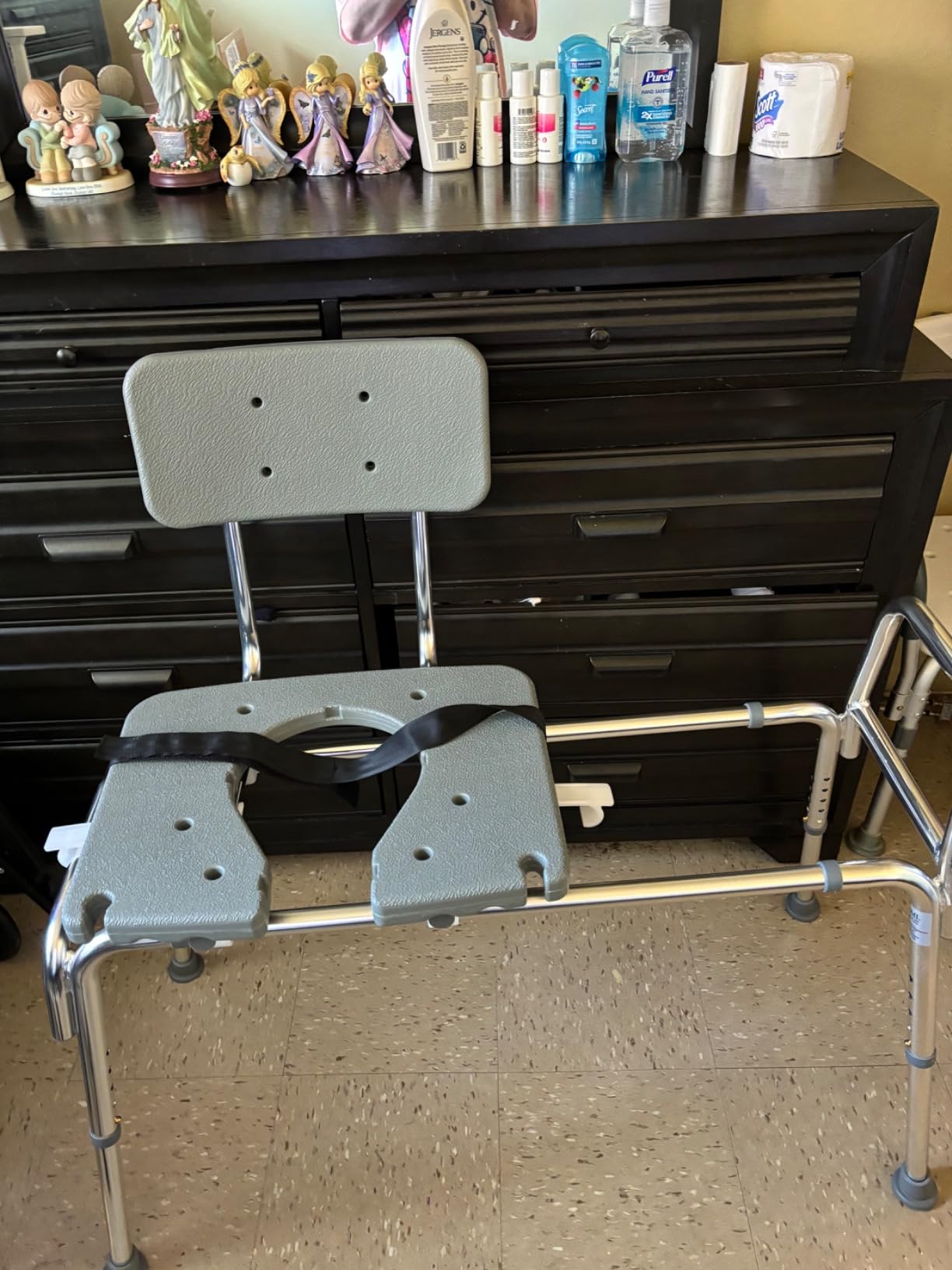
The whole unit weighs 10.7 lb, so a caregiver can lift it out of the tub between uses without a fight. The seat slides along the rails rather than being fixed, which turns a two-person struggle into a one-person move, and the hook-and-loop safety belt and strap locks keep the user in place during the slide. It also carries a removable perineal cut-out, which is the feature most of this category omits and the one that matters most if seated washing is part of the routine.
Measure your tub before you order. The overall footprint is 39 in wide by 18 in deep by 37 in high, with a 19 in by 14.5 in seat, and those rails crossing the tub wall mean a standard shower curtain cannot be pulled closed around it. Several owners put a towel on the rim to protect the tub finish where the rails sit.
What the sliding seat changes for daily use
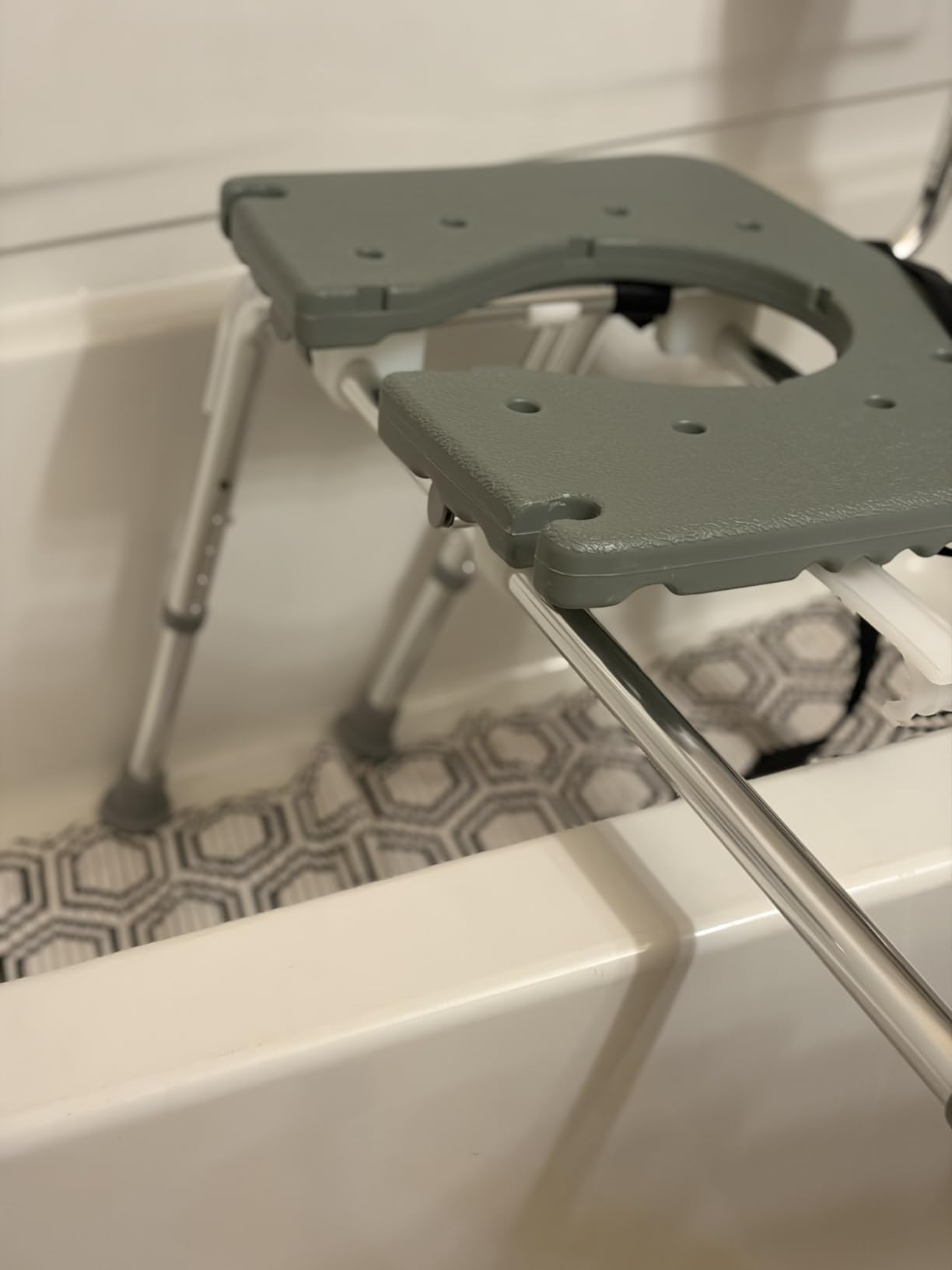
A fixed seat asks the user to lift their own body weight sideways across the bench and over the tub wall. A sliding seat lets the bench move instead, so the caregiver guides the user across with a fraction of the effort and the user’s arms stay inside the rail rather than pushing down on a wet frame. For anyone recovering from a hip fracture or a stroke, that difference is the reason bathing becomes possible at all.
The cost of the sliding mechanism is that the seat occupies a fixed length of rail, and without the cut-out cover fitted only part of the seat sits outside the tub. The cover itself is the weak point buyers complain about most: it sits loosely and tends to pop back up under weight, so check it is seated properly before every transfer.
Where it falls short
The backrest sits fairly far back, which leaves shorter users sliding forward against the belt rather than resting against it. There is also no grab handle on the out-of-tub side, so a user with no arm strength on one side has limited support during the sit-down and stand-up moments, which are harder than the slide itself.
At 400 lb rated capacity with 10.7 lb of bench, this is a sturdy-feeling but not heavy-duty frame, and a few owners describe it as light duty next to the bariatric models. If you are close to 400 lb or above, move up to a bench built for that range rather than sitting at the ceiling of this one.
2. Medline Transfer Bench for Bathtubs and Showers, 400 lb Capacity
Medline Transfer Bench for Bathtubs and Showers, Adjustable Shower Bench and Bath Seat For Seniors and adults, Slip-resistant Feet, Heavy-Duty 400 lb. Weight Capacity, Tool-Free Assembly
400 lb capacity
Seat height 17.5 in to 22 in
Rust resistant aluminum
Reversible backrest
Pros
- Highest rated bench in this group at 4.6 stars across more than 7400 reviews
- Tool-free locking push-button assembly
- Reversible backrest fits either tub entry side
- Wide suction cup feet grip the tub floor
- 400 lb capacity on a rust-resistant aluminum frame
Cons
- Only one stationary arm rest
- so support is limited on the opposite side
- Large 32 in footprint crowds a small bathroom
- Seat turns slippery once soap and water build up
If you want the strongest rated bench with the widest review base in this group, the Medline 400 lb model is it, holding a 4.6 star average across more than 7400 ratings. It is also the plainest design of the ten, which is a compliment: nothing about it needs explaining, and the tool-free push-button assembly means no tools, no loose screws and no call to a handyman.
The seat height adjusts from 17.5 in to 22 in from the floor, which covers a lot of standard tub wall heights, and the reversible backrest means the same bench works in a tub with entry from either side. Overall it measures 32 in wide by 18 in deep and up to 36.5 in high with the backrest fitted, and it weighs 12.6 lb.
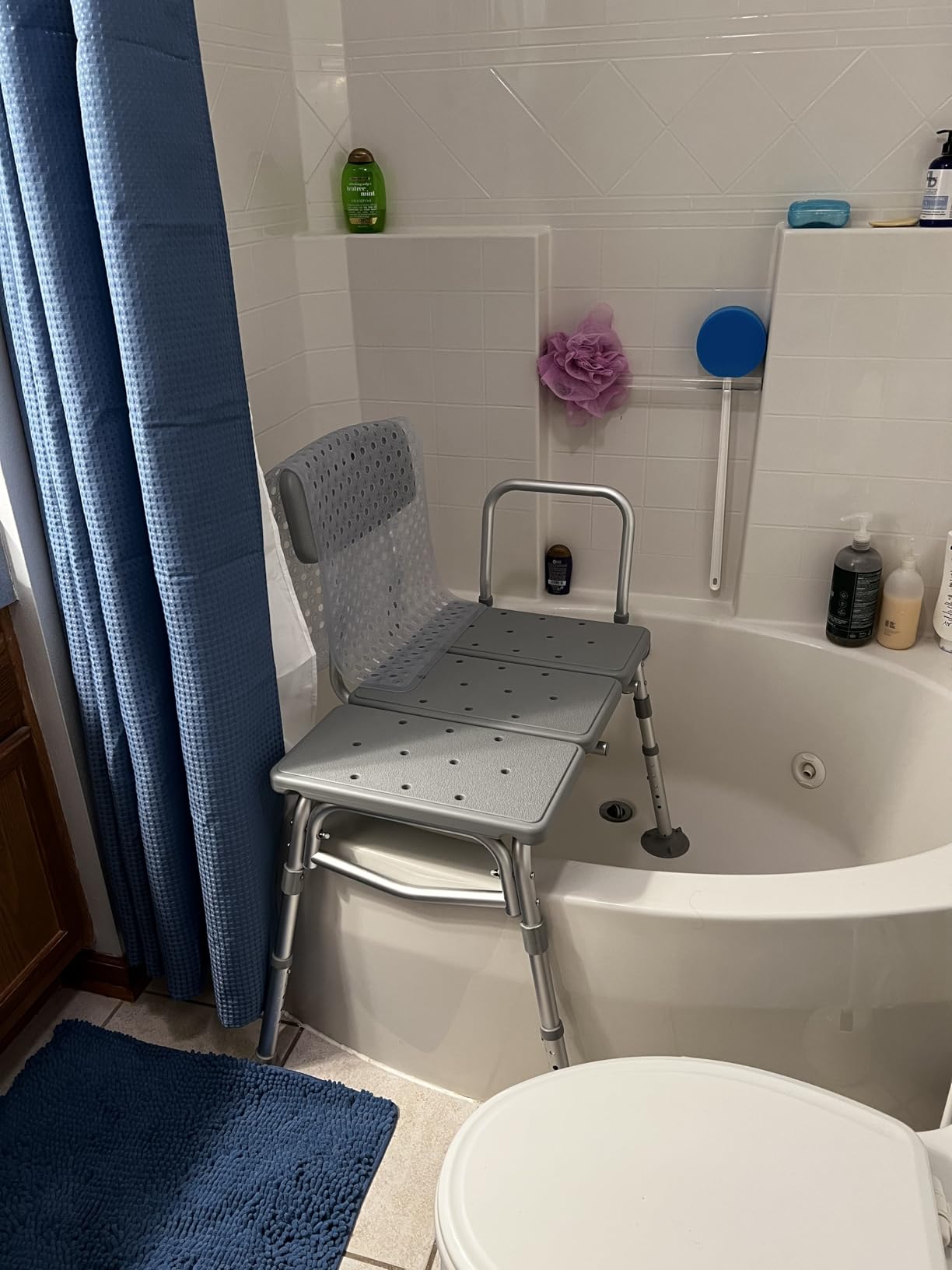
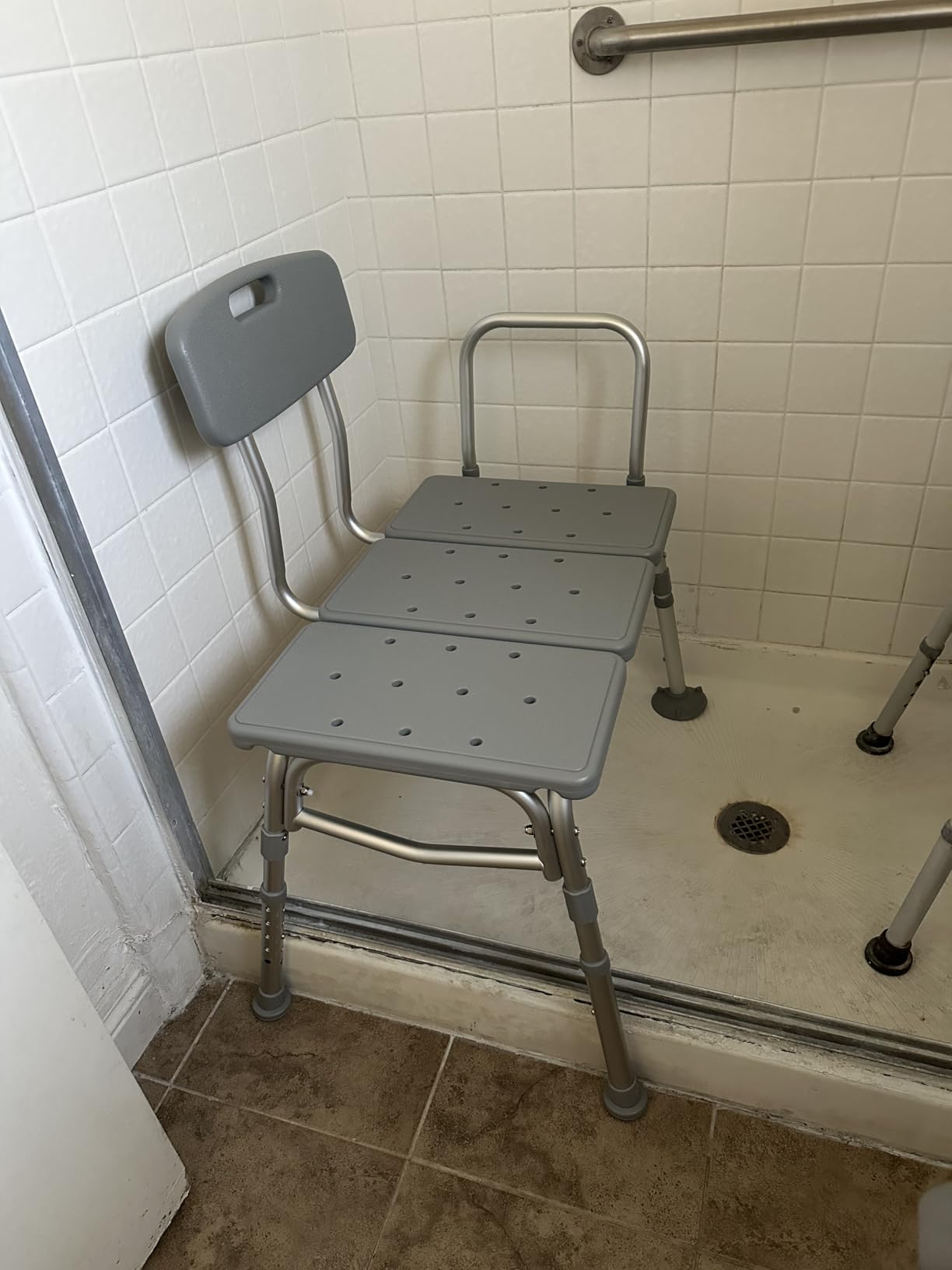
What we liked most in real use is the foot design. The two legs inside the tub use wide suction cups, and users report the bench barely shifts once they are down, which matters more than almost any other feature when the person sitting on it has limited core control. The rubber-tipped out-of-tub legs do the same job on tile.
The seat is 16 in deep by 26.5 in wide, which gives a larger user more room than the narrower plastic seats on the budget models. It is still a hard surface, so a bariatric user or anyone with reduced sensation from a stroke will want a padded model or a seat pad rather than assuming bare plastic is fine.
Why this is the value pick
Rating and volume together are the most reliable signal in this category, and this bench has both. Buyers consistently describe it as well built, easy to assemble and the reason a family member could keep bathing independently, and the construction is a straightforward rust-resistant aluminum frame with no proprietary parts to fail.
Buyers also mention that shower curtains generally need to be cut or adapted around the rails to keep water inside the tub, which is a two-minute job with scissors and a careful seal. Budget for that as part of setup rather than a defect.
Who should skip it
There is only one stationary arm rest, and its side is fixed by how you assemble it, so plan the assembly around the user’s stronger side. If someone needs a push point on both sides to sit down and stand up safely, a bench with two arms or padded pivoting arms is the better choice.
The 32 in width is a real footprint. In a bathroom where the toilet is close to the tub, this bench can block access, so measure the gap between the tub wall and the toilet before you commit. And always dry the seat and feet after each use, because the one complaint that recurs across this whole category is soap turning a molded seat slippery.
3. Medline Tub Transfer Bench with Microban Antimicrobial Protection
Medline Tub Transfer Bench and Shower Chair with Microban Antimicrobial Protection, Adjustable Shower Bench and Bath Seat For Seniors And Elderly, 350 lb. Weight Capacity, Light Blue
350 lb capacity
Microban antimicrobial protection
Folding aluminum frame at 10.8 lb
Seat height 19 in to 23 in
Pros
- Microban treatment resists bacteria
- staining and odor in a permanent wet environment
- Lightest folding frame in the group at 10.8 lb so it stores out of the way
- Suction cup feet inside the tub plus rubber tips outside
- Tool-free assembly and simple push-button height adjustment
- Backrest gives real reassurance for post-surgery users
Cons
- No perineal cut-out
- so seated washing is difficult
- Legs will not adjust low enough for very short users
- Steel fasteners inside the legs can corrode if not sealed
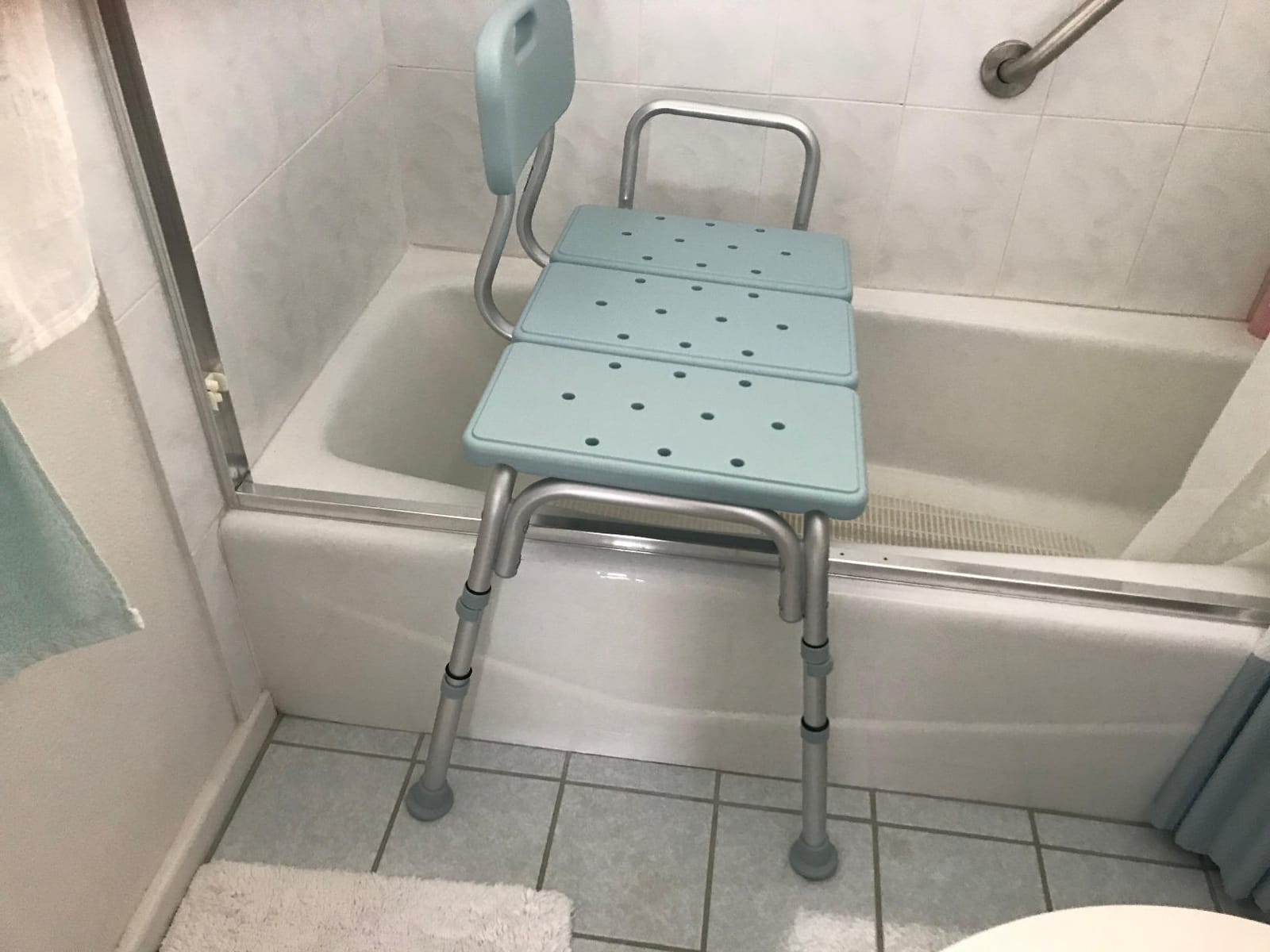
This is the same Medline engineering as the runner-up with a different job: hygiene and storage. The Microban treatment is built into the material rather than sprayed on, so it keeps working for the life of the bench instead of washing off, and it targets exactly the stain and odor problems that make a family give up on a bathroom aid.
It is also the bench you can actually put away. At 10.8 lb with a folding aluminum frame, one person can lift it out of the tub and store it between uses, which matters enormously in a bathroom where the bench is in the way for everything else. Seat height runs from 19 in to 23 in, and it carries a 350 lb rating.

Buyers repeatedly mention buying this bench to replace an identical older unit that finally gave up, which tells you something useful about longevity in normal residential use. The rubber slip-resistant tips handle the wet bathroom floor, and the suction cup feet on the legs that stand inside the tub handle the tub itself.
Two things to plan for. The seat has no perineal cut-out, which rules it out for anyone who needs to wash seated in that position, and the legs do not adjust low enough for very short users even at the bottom of the range. Check the user’s inseam against the 19 in minimum before ordering.
When antimicrobial protection earns its place
A transfer bench lives in a permanently damp environment with bare feet, wet towels and often limited cleaning. That combination produces mildew in the seat texture, staining around the drain holes and odor in the frame joints, and a bench that smells unpleasant gets used less, which defeats the point entirely. A treated surface slows all three.
It also suits shared bathrooms and assisted living situations where the same equipment is used by more than one person, because the antimicrobial treatment is part of the material rather than a wipe-down step that gets skipped.
Where the compromises show
The internal steel fasteners are the part to watch over time. Buyers who have owned the bench for many years report corrosion at the legs where the fasteners sit inside the tube, so a periodic rinse and dry, and a check that the push-buttons still spring back fully, is worth doing a few times a year.
At 350 lb this is below the 400 lb standard of the two benches above it, so if the user is heavier than that, this is not the right bench regardless of how well it is built. The folding frame is also what makes it so easy to move, and that same folding hardware is the first thing to inspect if the bench ever starts to feel loose.
4. Platinum Health Carousel Sliding Shower Chair with Swivel Seat
Platinum Health Carousel Sliding Shower Chair Tub Transfer Bench with Swivel Seat, Premium Padded, Pivoting Arms, Adjustable Space Saving Design for Tubs, Inside Shower, for Handicap & Seniors, Blue
Swivel and sliding seat
330 lb capacity
Seat height 19 in to 34.5 in
Padded seat, back and arms
Pros
- Swivel seat locks every 90 degrees and slides along rails into the tub
- Medical grade closed-cell foam padding will not absorb water
- Padded pivoting arms work as push points during transfers
- Protrudes far less into the bathroom than a fixed bench
- Reversible for either tub entry side
Cons
- No perineal cut-out in the solid padded seat
- Slide release lever is mounted on the right side only
- Heaviest bench here at 20 lb
- Deep soaking tubs may need the optional leg extension kit
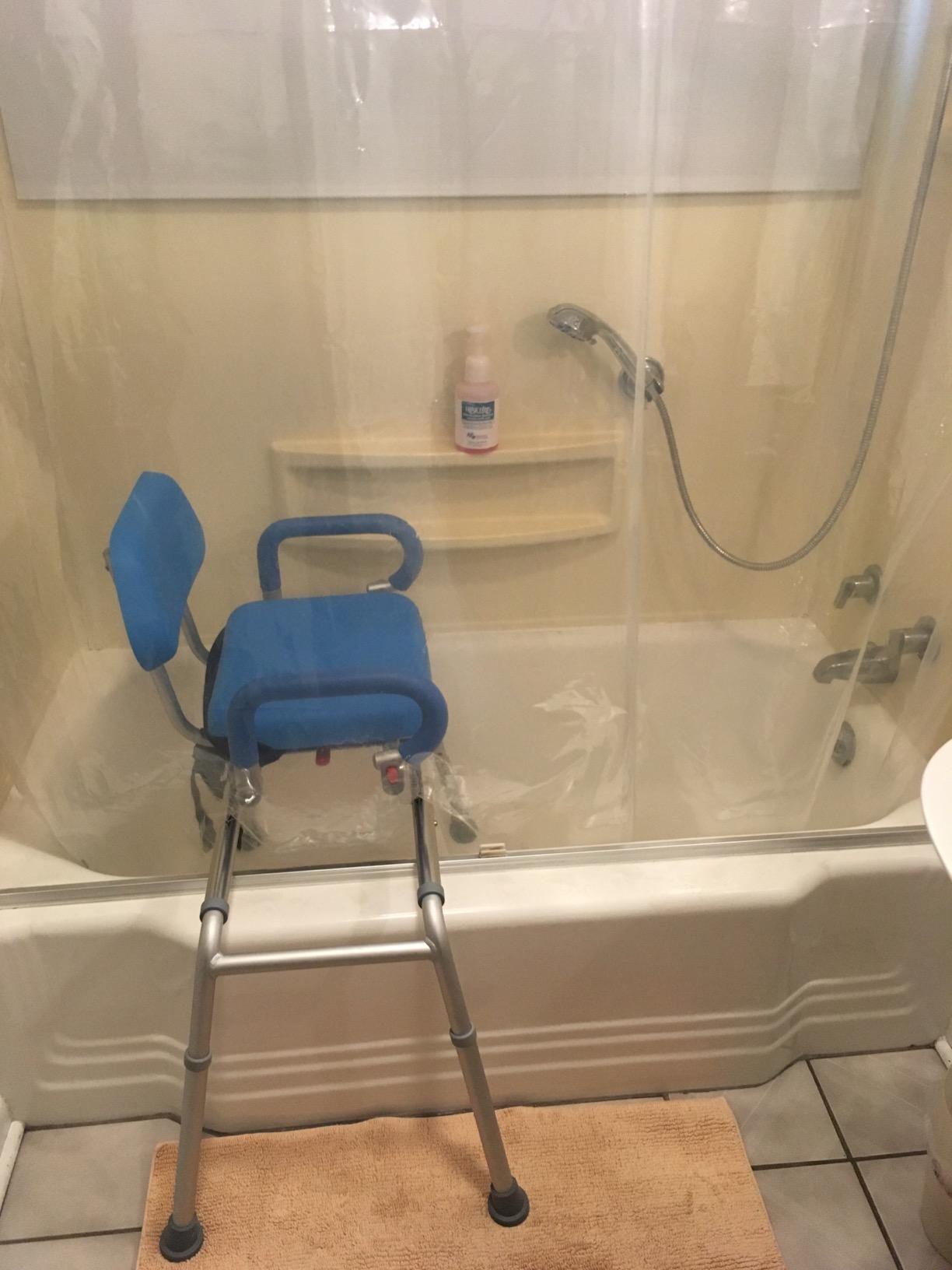
The Carousel is the only bench here where the seat rotates as well as slides, and that changes the transfer from a body movement into a mechanical one. The seat locks every 90 degrees, so a user or caregiver can turn to face the tub, then slide straight in along the rails without twisting, shuffling or lifting a leg over the wall.
It is also the most comfortable. The seat, backrest and both armrests are padded with medical grade closed-cell molded polyurethane, which does not absorb water the way open-cell foam does, and the padding stays warm to the touch instead of feeling like cold plastic at 6 a.m. on a cold morning.
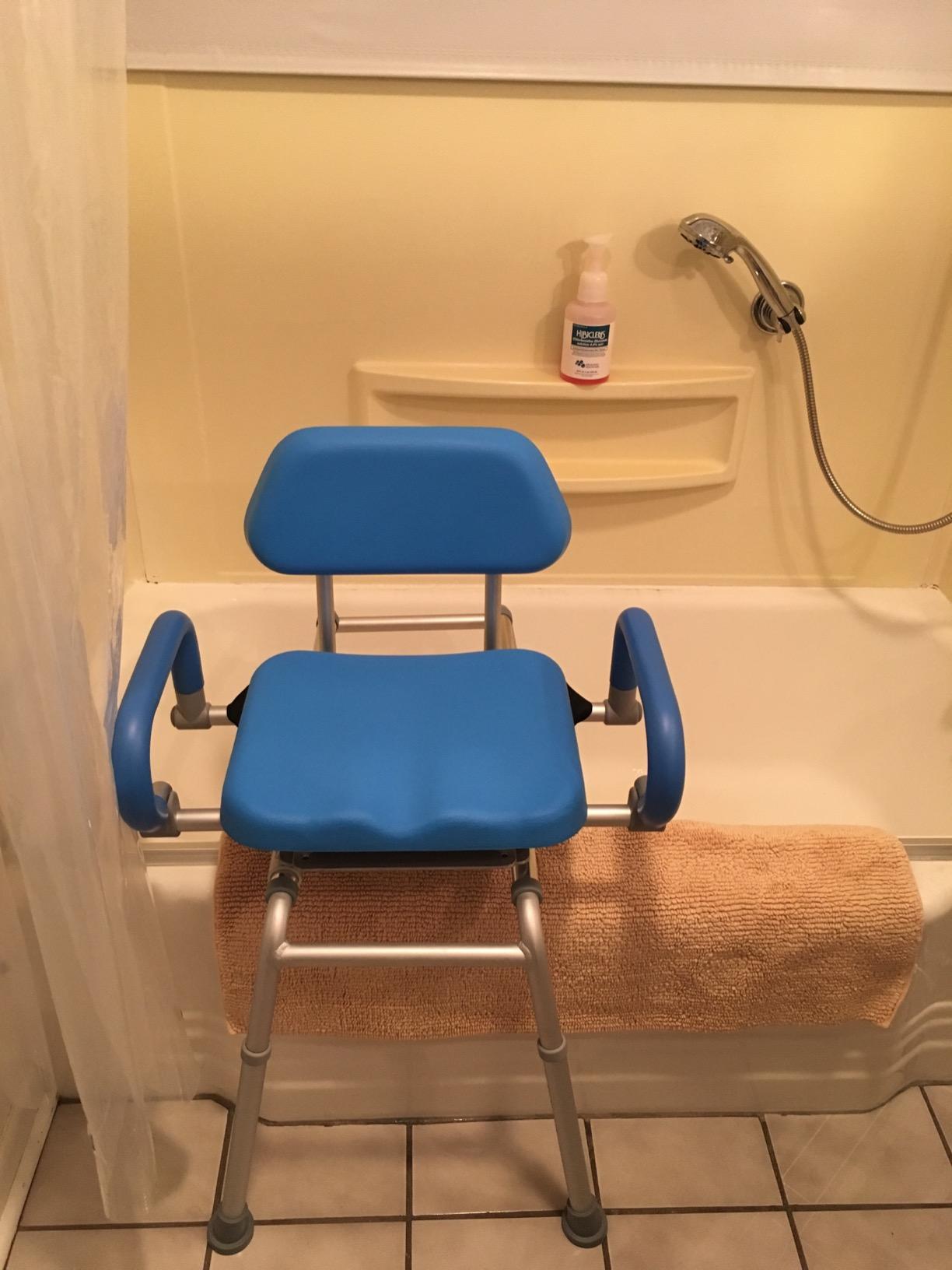
The real space saving is structural. A conventional bench projects its full length into the bathroom, and this one pivots instead of projecting, which is why owners in small bathrooms describe it as the first aid that actually fitted. Seat height runs from 19 in to 34.5 in, giving it far more range than any fixed bench, and it is fully reversible for entry from either side of the tub.
Capacity is 330 lb, which is lower than the 400 lb standard of the plastic benches. That is a deliberate trade for the swivel mechanism, and it does mean this is not the model for a user above 330 lb. Variants include blue, gray, white and a bariatric blue version.
Where the swivel mechanism pays off
A sliding seat still needs the user to move their own body weight across the rails. A swivel seat does not. For a person with no upper-body strength, painful shoulders, a hip that cannot bear rotation, or a caregiver moving someone who cannot contribute at all, the difference between shuffling across a bench and being pivoted into place is the difference between bathing and not bathing.
The padded armrests double as leverage points during the transfer, and the seat belt adds a second layer of security once the user is in position. Owners consistently describe the sense of confidence this combination gives, which matters as much as the engineering.
What to check before buying
The slide release lever is mounted on the right side of the seat, and a user with right-side paralysis or a right shoulder injury needs the opposite arm to work it. Confirm which side the user can operate before ordering, and mention it to the supplier if the lever position is a problem.
At 20 lb this is the heaviest bench in the group, so repositioning it takes two people or real effort, and a deep soaking tub may need the optional leg extension kit to bridge the extra depth. The solid padded seat also has no perineal cut-out, so plan seated washing around that. Expect to spend more than a fixed bench; in return you get the least effortful transfer available in this category.
5. Moen DN7105 Home Care Premium Tub Transfer Bench
Moen DN7105 Home Care Premium Tub Transfer Bench
400 lb capacity
Seat height 16.5 in to 21 in
Pedestal anti-tip leg
Limited lifetime warranty
Pros
- Wide out-of-tub pedestal leg resists tipping forward and backward
- Stays stable on sloped and older tub floors where cheaper benches wobble
- Side grab handle plus a holder for a handheld shower head
- Styling that suits a main bathroom rather than a care facility
- Owners report it still working after eight years
Cons
- Wide footprint crowds small bathrooms and sits close to the toilet
- Seat extension lets water past the curtain onto the bathroom floor
- Shower head holder is loose and the opening is small for many hoses
- Handle side is fixed by the assembly direction
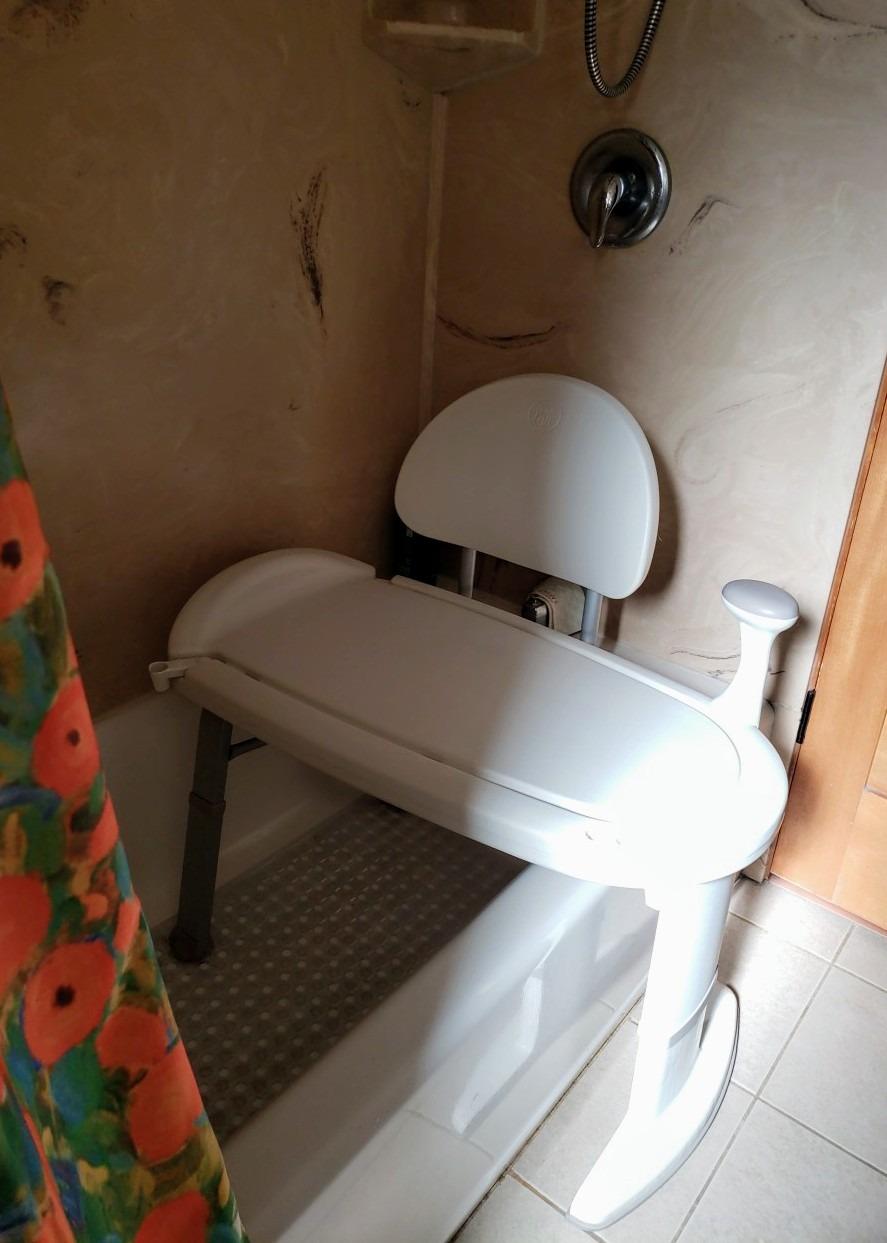
The Moen is the most stable bench in this group, and the reason is one specific part: a wide exterior pedestal leg outside the tub instead of a slim tubular leg. A standard bench can pitch forward or backward as the user shifts weight onto the tub side, and that is the moment most slips happen. The pedestal spreads the load and refuses to move.
Buyers with old tubs report that it is the bench that does not rock on a sloped tub floor, and it carries a limited lifetime warranty, which is the strongest warranty in this roundup. It is also the only bench here that looks designed for a bathroom somebody actually lives in rather than a care facility, with a glacier finish and integrated lines.
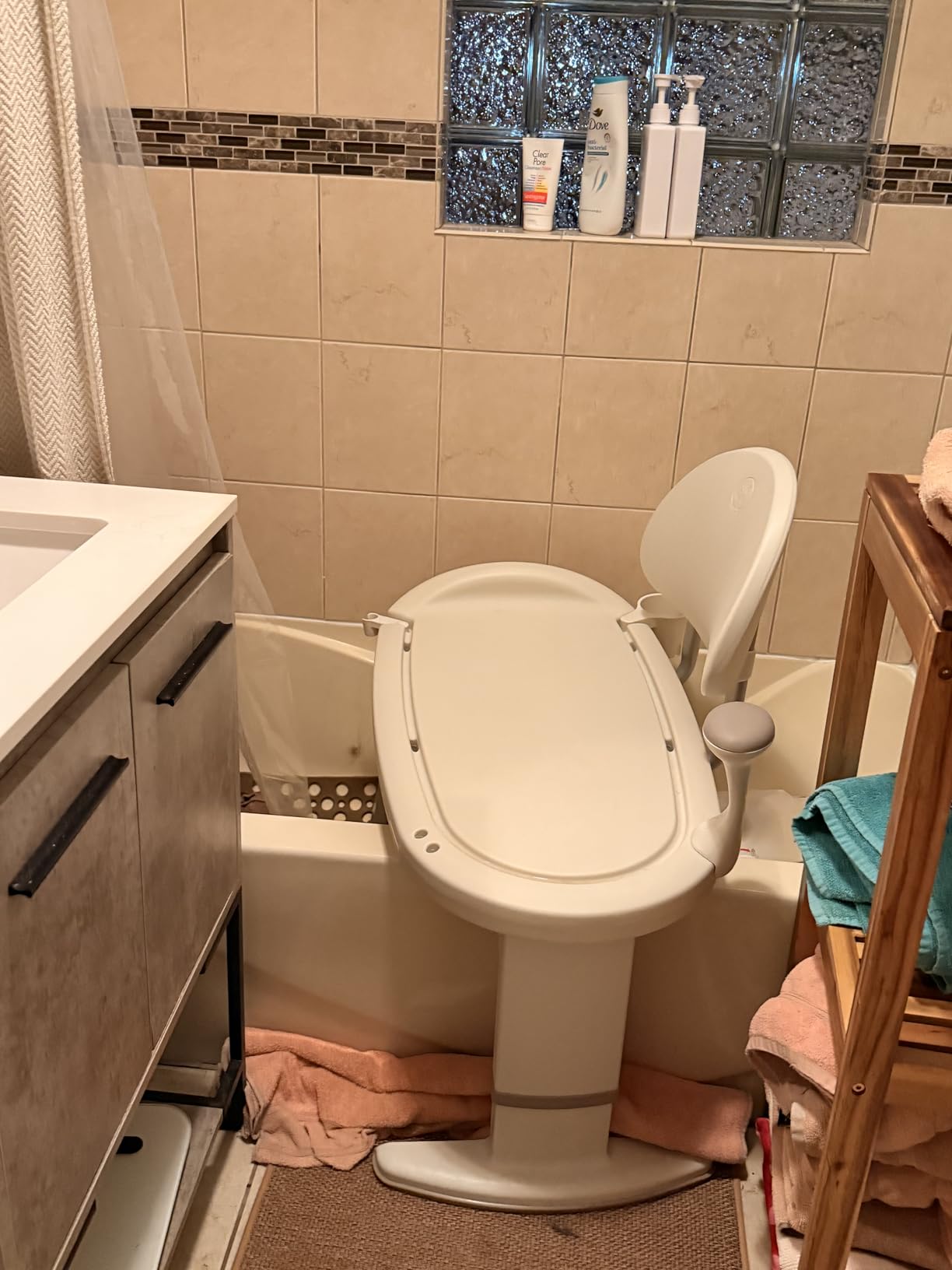
The inner legs are set shorter than the outer ones on purpose, so water drains back into the tub instead of pooling on the floor of the frame, and the push-button leg adjusters have silicone ends that resist slipping as the legs are extended. Seat height runs from 16.5 in to 21 in, and the seat itself is 29.25 in wide by 18.125 in deep, a genuinely generous seating area.
There is an integrated backrest, arm supports, a side grab handle and a holder for a handheld showerhead. That last detail is not a gimmick: keeping a handheld shower within reach means the user never has to stand or shift to rinse, which is where a lot of the risk lives.
Why stability beats features
Every other feature on this list is a convenience, and stability is the one that decides whether a person is still using the bench a year later. A bench that tips, slides or rocks teaches the user to distrust it, and once they have had one bad moment on a wet floor, no amount of padding brings them back to it.
The 400 lb capacity and lifetime warranty reinforce that. If you are buying for a family member who will use the same bathroom for years, the Moen is the model most likely to still be there, and the pedestal design is why reviewers who tested cheaper benches in the same tub call it the one that did not wobble.
Where the design works against you
The wide pedestal leg is a stability win and a space loss. At about 32.75 in wide by 21.875 in deep, it crowds a small bathroom and can sit close enough to the toilet to block access, so measure the clear floor space on the out-of-tub side before ordering.
The seat extension that makes the transfer smooth also lets water run past the shower curtain and onto the bathroom floor, which matters most for the person standing nearby. The showerhead holder is loose and the opening is tight for many hoses. The handle side is set by which way you assemble it, so build that in before you start, and check that the bench will clear a high-sided one-piece tub and shower at full extension.
6. Platinum Health Gateway Premium Sliding Shower Chair
Platinum Health Gateway Premium Sliding Shower Chair Bath Transfer Bench with Swivel Padded Bath Tub Seat for Tubs and Shower, for Handicap & Seniors Mobility & Daily Living, Gray
Swivel sliding seat
330 lb capacity
Height range 14 in to 35 in
Padded seat and back
Pros
- Padded swivel and sliding seat reduces skin shearing compared with a fixed bench
- Medical grade closed-cell foam will not absorb water
- Space-saving footprint works in tight bathrooms
- Tool-free assembly in under five minutes
- Reversible for either tub entry side
Cons
- 330 lb limit is below the 400 lb standard of most benches here
- Heavier at 17.6 lb than basic sliding benches
- No padded armrests on this model
- so fewer leverage points
The Gateway is the Carousel’s more compact sibling: same sliding and pivoting idea, less padding and no pivoting arms, and a 14 in to 35 in height range that is the widest on the market. That lower minimum height is the reason it fits tubs the fixed benches cannot bridge, and it works in tight bathrooms where a 39 in footprint is simply not an option.
It is the choice for someone who needs a genuine sliding mechanism but does not need the premium upholstery, and the padded medical grade seat still glides instead of dragging skin across plastic, which reduces the shearing that causes pressure irritation during longer baths.
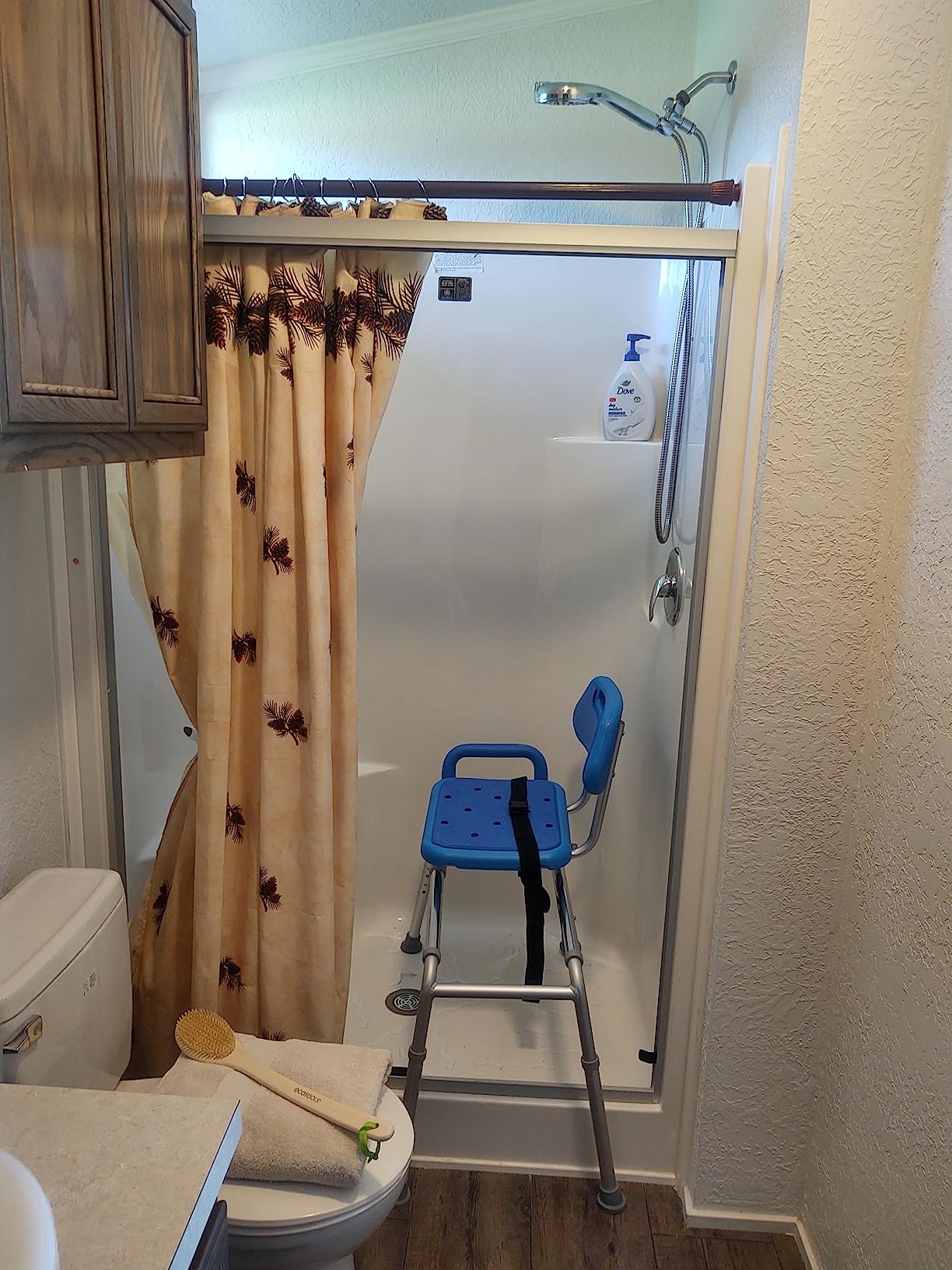
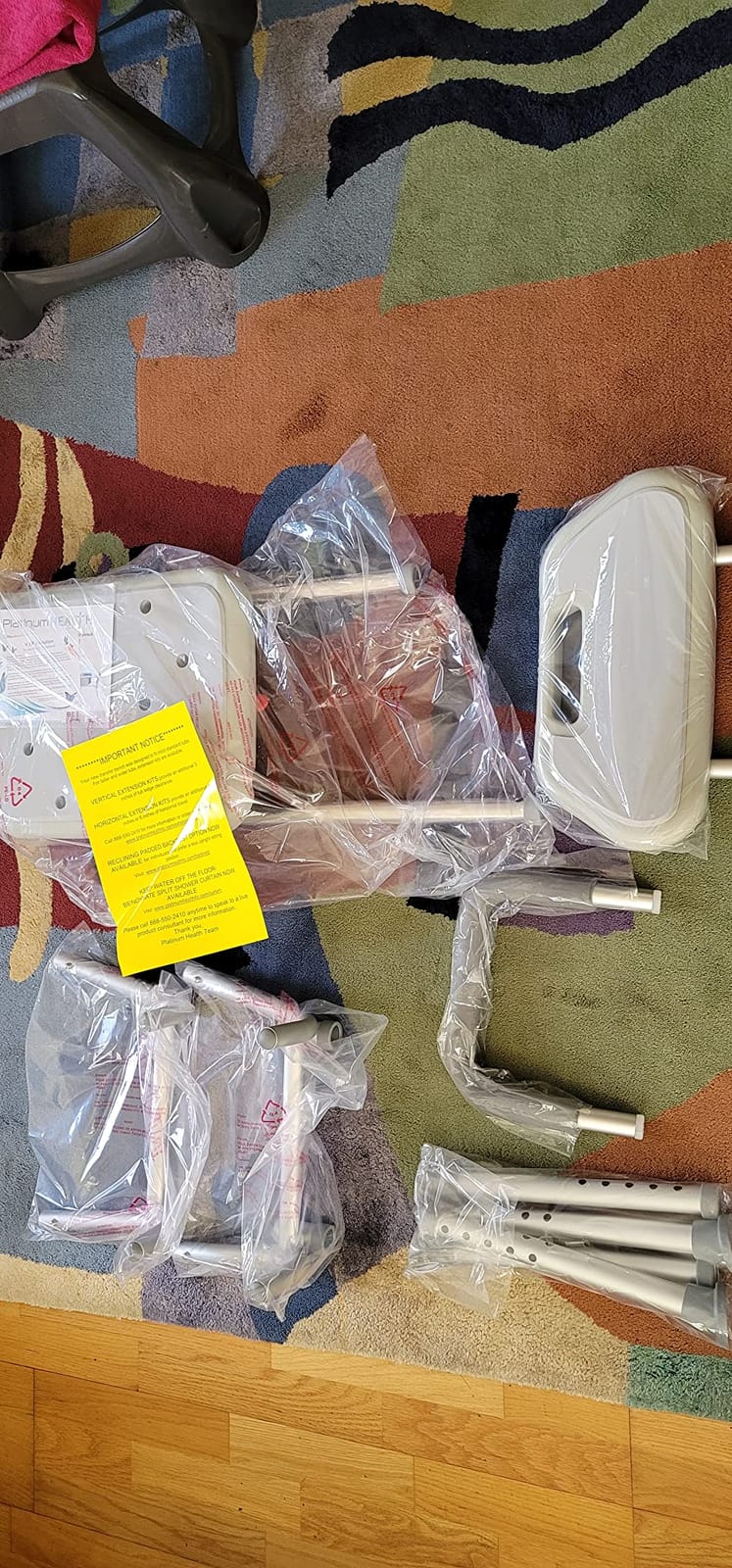
Owners and caregivers describe it as safer and more comfortable than a fixed seat because the user glides rather than shuffles, and the tools-free assembly takes under five minutes, which matters when the person installing it is not the person using it. It weighs 17.6 lb and measures 33 in wide by 13 in deep by 35 in high.
The padded assist handle gives a grip point during the glide, and the seat height adjusts through a very wide range, which lets the same bench bridge a shallow alcove tub and a deep modern one. It is fully reversible for either entry side.
Sliding seats and skin protection
When a user transfers across a fixed bench, the skin on the backs of the legs and the seat is dragged across a hard surface, and in a user with thin skin, reduced sensation or poor circulation that shearing can cause real damage over time. A sliding seat turns that drag into a glide, or removes the movement entirely when a caregiver operates it.
That is the honest reason to pay more for a sliding model rather than a fixed one, and it is not a small benefit for anyone recovering from surgery or managing a skin condition.
Where it falls behind the Carousel
There are no padded armrests on this model, so the user has fewer points to push against during the sit-down and stand-up moments. The 330 lb capacity is also below the 400 lb standard here, and at 17.6 lb it is not the bench you will be carrying in and out of the tub daily.
It shares the common problem of rails crossing the tub wall, so a standard shower curtain will not close around it and the floor will get wet. The right comparison is against the Carousel: pay more for pivoting armrests and a lower price, or pay less for a simpler machine with a wider height range.
7. Flash Furniture HERCULES Series 300 lb Capacity Transfer Bench
Flash Furniture HERCULES Series 300 Lb. Capacity Adjustable Gray Bath & Shower Transfer Bench with Back and Side Arm
300 lb capacity
Seat height 17.25 in to 21.25 in
Backrest and side arm
ANSI BIFMA X5.1-17
Pros
- One of the lowest entry costs in this group and FSA eligible
- Conforms to the ANSI BIFMA X5.1-17 transfer bench standard
- Backrest and side arm give real support sitting down and standing up
- Drain holes in the seat and anti-slip rubber feet suit wet rooms
- Light at 10.5 lb so it is easy to reposition
Cons
- 300 lb capacity is the lowest here
- Hard plastic seat gets uncomfortable in longer showers
- Fewer height settings than competing benches
- Lower rating reflects more reported defects
The HERCULES is the sensible entry point when the budget is the binding constraint and the user is well under 300 lb. It is one of only two benches in this roundup that states it conforms to the ANSI/BIFMA X5.1-17 transfer bench standard, and it carries a 5 year limited warranty on the non-moving metal parts, which is unusual at this price level.
The side arm and backrest are the details that separate it from the cheapest plastic benches. Having a push point on one side genuinely helps with the sit-down and stand-up, and having a back at all keeps a user with poor trunk control from leaning backwards into nothing.
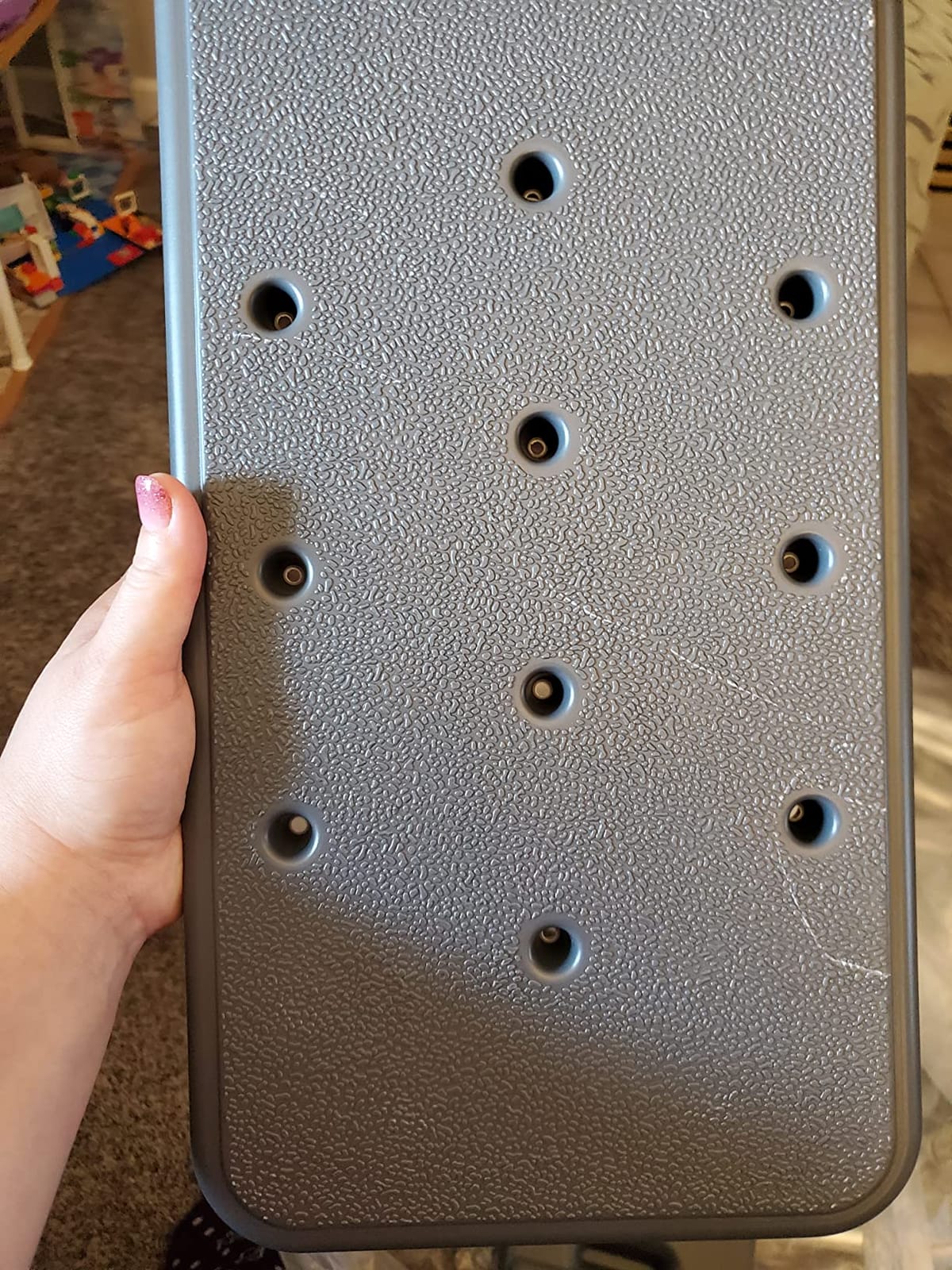
Seat height runs from 17.25 in to 21.25 in, the seat is 27 in wide by 16.5 in deep, and the whole bench measures 30 in wide by 20.5 in deep and up to 35.5 in high. At 10.5 lb it is easy to lift out of the tub, and the drain holes in the seat stop water pooling on a surface the user is sitting in.
Owners value the combination of price, light weight and a drain-holed anti-slip seat, and the anti-slip seat texture helps with the soap problem that affects hard plastic surfaces across this category.
When a lower price is the right call
A bench that is affordable gets used, and a bench that gets used prevents the fall that an unaffordable bench would have prevented anyway. For a lighter user in a rental or a short recovery where the bench will be returned or handed on, this is a defensible purchase rather than a compromise.
The published standard and the warranty are the two things to check before buying any cheap bench, and both are stated here. Generic marketplace benches in this category frequently do not publish either, and the gap shows up in the ratings.
What the 300 lb limit rules out
Three hundred pounds is a real ceiling, and it excludes a large share of the users who need a bench most. It is also the lowest rating of the ten here at 4.2 stars, with owners reporting more defect and comfort complaints than the medical-grade brands above it, and the hard plastic seat is uncomfortable over a shower longer than a few minutes.
There are fewer height settings than most competing benches, so check the range against your tub wall height before ordering. And the same curtain problem applies: the rails cross the tub wall, so plan to adapt the curtain or accept a wet floor.
8. Carex Universal Tub Transfer Bench with Backrest
Carex Universal Tub Transfer Bench, Bath Seat with Backrest, Shower Chair for Elderly and Disabled, Transfer Bench & Shower Seat for Bathtub with Adjustable Legs, Converts to Right or Left Hand Entry
400 lb capacity
All plastic construction
Tool-free exact leveling
Backrest with two handles
Pros
- No metal parts at all
- so nothing to rust or corrode in a wet bathroom
- Holds 400 lb in a compact footprint
- Exact-level tool-free height adjustment on every leg
- Backrest with two built-in handles for positioning
- Disassembles for storage or travel
Cons
- Unpadded plastic seat and back get uncomfortable in longer showers
- Fixed sliding seat still requires scooting across the bench
- Lower review volume than the other benches here
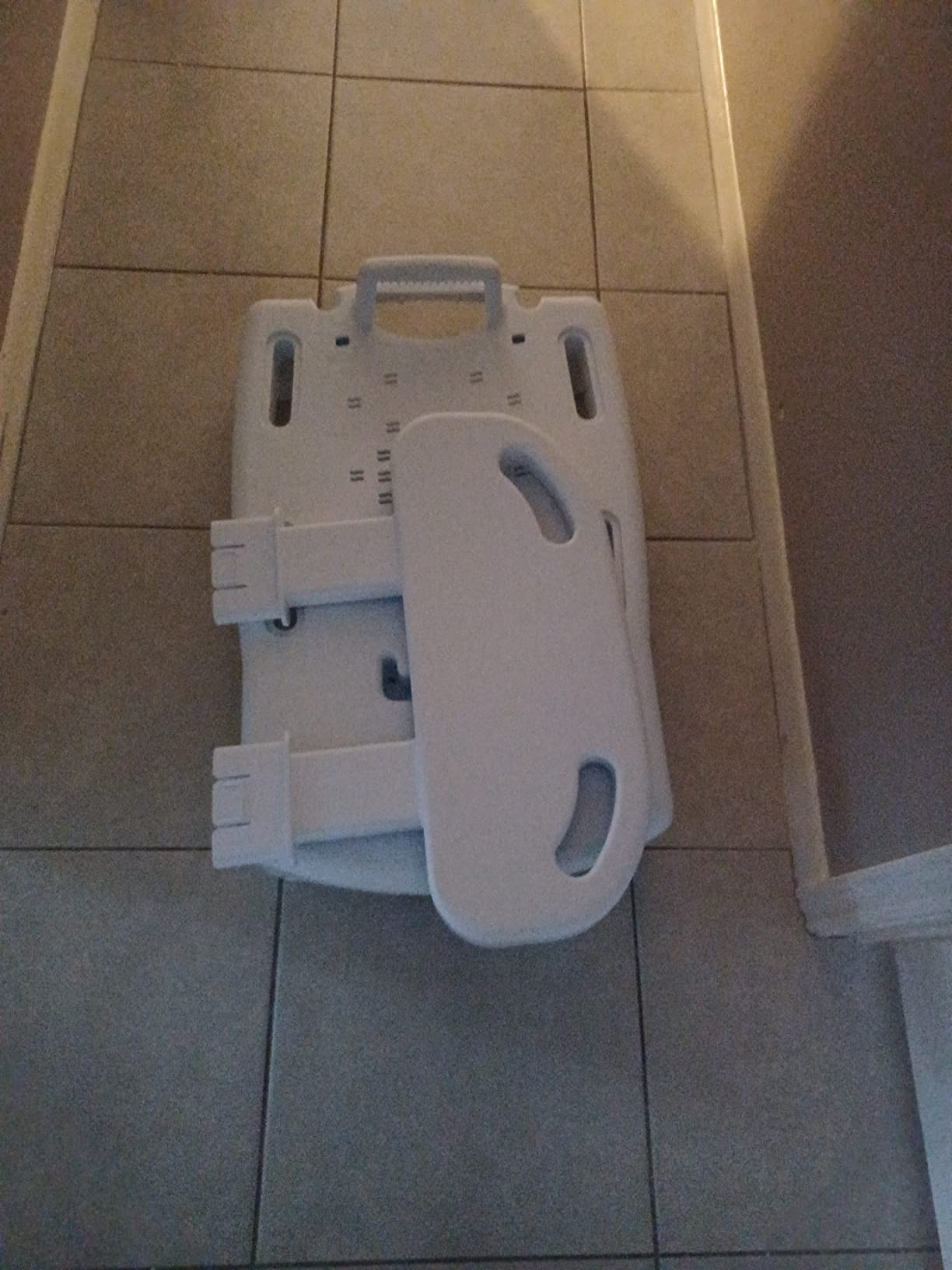
The Carex solves a problem the other benches leave open: corrosion. It is built entirely from plastic, with no metal frame and no internal fasteners, so in a permanently wet bathroom there is nothing that can rust. In coastal areas, in older housing with hard water, or anywhere a metal bench has already failed once, that is a genuine long-term advantage.
It is also compact for a 400 lb bench, measuring 29.76 in by 19.02 in by 32.99 in, and it holds that rating on a frame that weighs 14.51 lb. The backrest has two built-in handles moulded into it, so a caregiver can position a user who cannot position themselves.
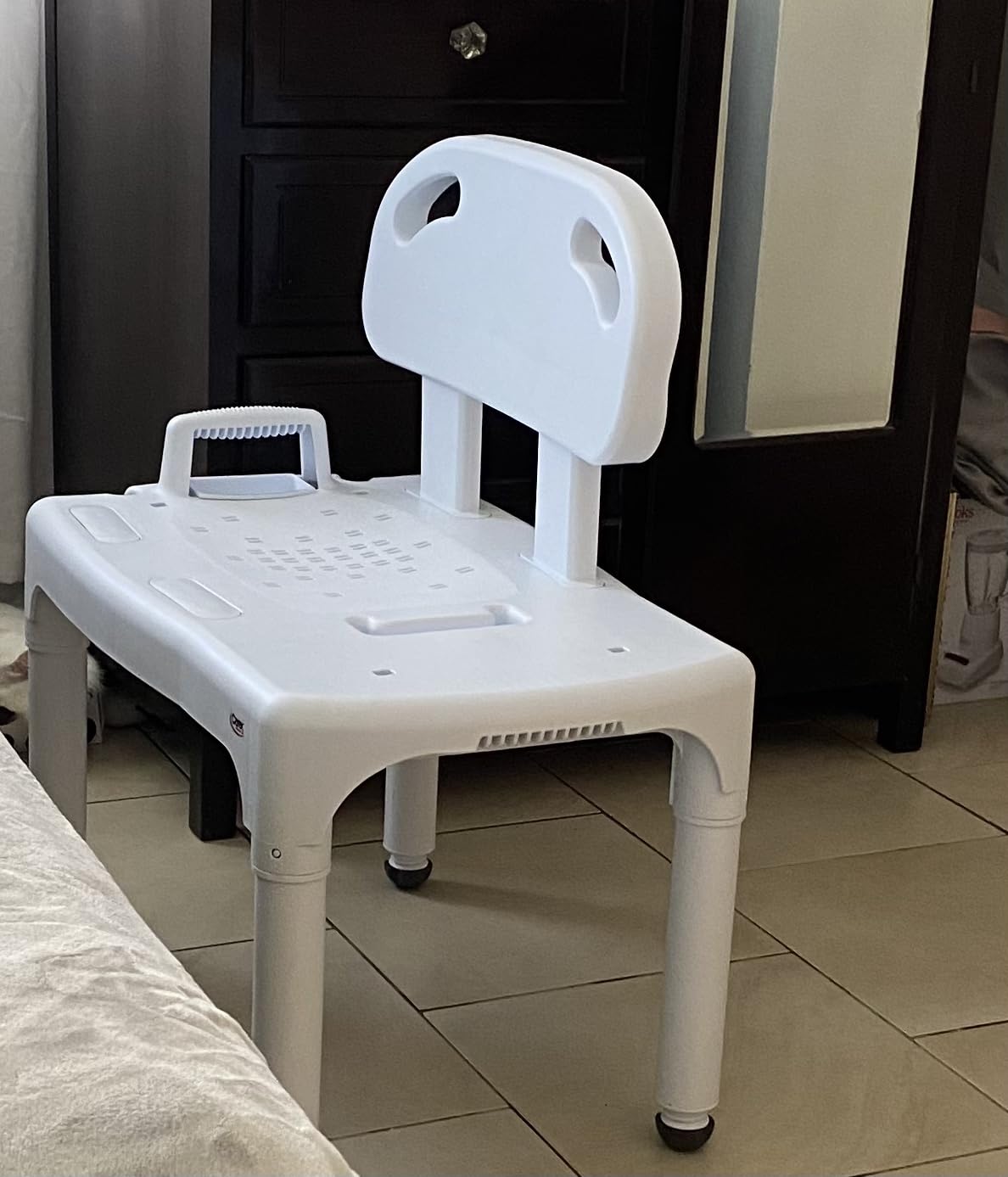
Every leg adjusts for exact leveling with no tools, which matters on a tub floor that is not flat and a bathroom floor that certainly is not. The design is one side outside the tub and one side inside, so the user sits down first and moves the legs across, rather than having to lift both legs over the wall in one motion.
It converts for entry from either side of the tub, so it adapts if the bathroom layout changes or if the user’s stronger side changes. It also disassembles for storage or travel, which is useful for a house with two bathrooms or for a user who travels.
Why all-plastic changes the maintenance story
Metal transfer benches fail from the inside out. Saltwater, hard water and constant humidity corrode the fasteners inside the leg tubes long before the frame looks damaged from outside, and the bench then develops play at the height adjustment. There is nothing inside a plastic bench to corrode.
It also rinses clean in seconds and does not rust-stain a white tub, which matters if the bathroom is rented or if the tub is the expensive thing in the room. The downside is weight, since plastic needs more material to reach the same strength, and 14.51 lb is heavier than the aluminum models.
What you give up
The seat and backrest are unpadded, and plastic conducts cold straight into the skin, so a long shower on a hard seat is genuinely uncomfortable. The seat is fixed rather than sliding, so the user still has to move their own body weight across it, which is the single biggest limitation compared with the sliding models.
It also carries fewer ratings than the other nine benches here, so the long-term evidence base is thinner even though the 4.5 star average from those ratings is solid. If the user is above 300 lb, the 400 lb rating covers most cases, but check the actual user weight against the label before ordering.
9. Drive Medical Splash Defense Tub Transfer Bench
Drive Medical Splash Defense Tub Transfer Bench, Adjustable Height, White
400 lb capacity
U-shaped water channel curtain
0.5 in height increments
Reversible backrest
Pros
- Only bench here whose curtain channels genuinely keep water inside the tub
- Wide suction cup legs barely move once seated
- Dual-column legs adjust in 0.5 in increments for precise leveling
- Pinch-free lever system is safer for caregivers with arthritic hands
- Top category sales rank of any bench in this roundup
Cons
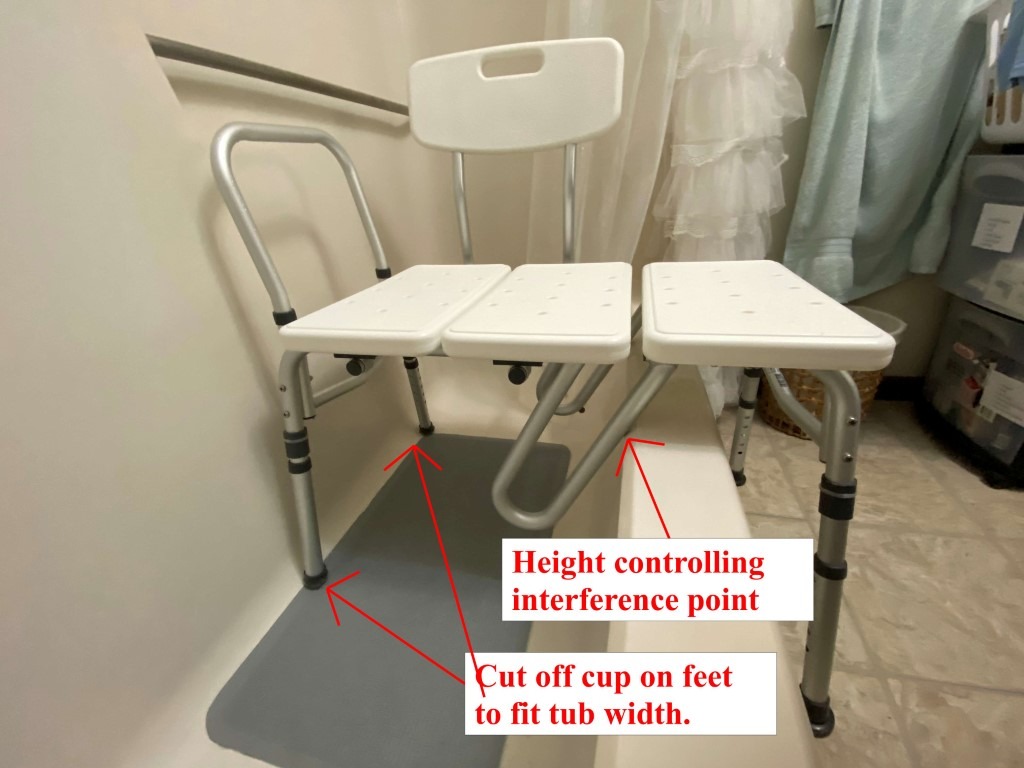
- Wide frame barely fits inside some standard tubs
- Curtain channel bars stop the outside legs reaching the floor on high-walled tubs
- Rear legs ride up the curved tub wall and need a towel to prevent scratching
- Limited height range for tall tubs
- Assembly is more involved
Nearly every bench in this category creates the same second problem: rails cross the tub wall, so the shower curtain cannot close and the bathroom floor ends up wet. That matters far more than it sounds, because the person standing beside an unsteady user is standing on a wet tile floor. The Splash Defense is the one bench here designed specifically to solve it.
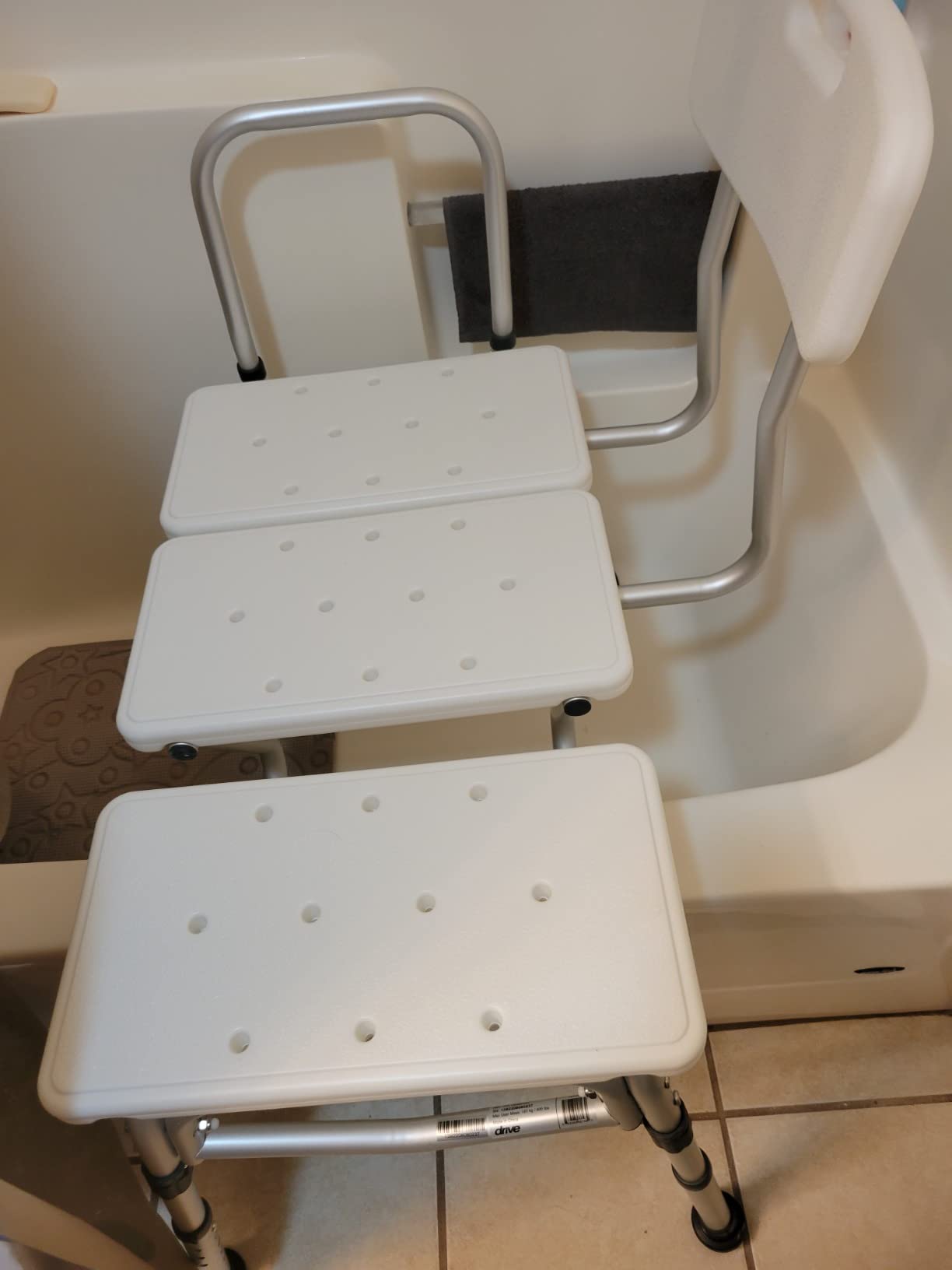
The seat has a U-shaped cut-out and curved channel bars on both sides that guide the curtain inside the tub, so water stays where it should. Caregivers single this out as the feature that sets it apart, and it is the reason this bench can be used by a user whose household is genuinely slip-conscious.
The wide suction cup legs grip the tub floor firmly, with users reporting almost no movement once seated, and the dual-column extending legs adjust in 0.5 in increments, which is finer than the push-button benches and lets you level precisely on an uneven tub. The pinch-free lever system means the adjustment pins cannot catch fingers, a small thing that matters when the person adjusting the bench has arthritic hands.
It is 400 lb rated, the backrest is reversible for any bathroom layout, and it weighs 12.7 lb. The seat is 28 in by 16 in, and assembly is tool-free though more involved than a single push-button bench.
Why a wet floor is a safety issue, not an annoyance
Bathroom falls cluster around the same moment: the user is shifting position, the caregiver is moving around the tub, and the floor is wet. Every other bench here makes that floor wetter than it needs to be, and the curtain workaround is cutting the fabric and resealing it yourself, which many households never do.
This bench makes the curtain work again by design, and that is worth more than a padded seat for anyone whose bathroom is shared with a person who cannot catch themselves.
Where the water channel gets in the way
The channel bars add width, and the wide frame barely fits inside some standard tubs. On a high-walled one-piece tub and shower, the curtain bars stop the outside legs from reaching the floor entirely, so the bench cannot be used at all, which is the same limitation the Moen has.
The rear legs also ride up against the curved back wall of a tub as the user shifts, so a towel on the rim is worth doing to protect the finish. The height range is more limited than the sliding models, and the assembly takes longer than a push-button bench. If your tub has a tall wall, check this model against a fixed-frame bench with longer legs before ordering.
10. HOMLAND Tub Transfer Bench with Backrest, Height Adjustable
HOMLAND Tub Transfer Bench with Backrest for Bathtub, Height Adjustable
400 lb capacity
A-frame aluminum build
Seat height 17.5 in to 22.5 in
Seat 27 in wide
Pros
- Thicker aluminum tubing than standard models for a steadier frame
- 27 in wide seat gives good room for a larger user
- Push-button height adjustment with a reversible backrest
- Drainage holes and non-slip rubber feet for wet use
- Easy to assemble and easy to move despite its sturdiness
Cons
- Hard plastic seat is uncomfortable in longer showers
- Same shower curtain conflict as the other sliding benches
- Smaller review base than the established Medline and Moen models
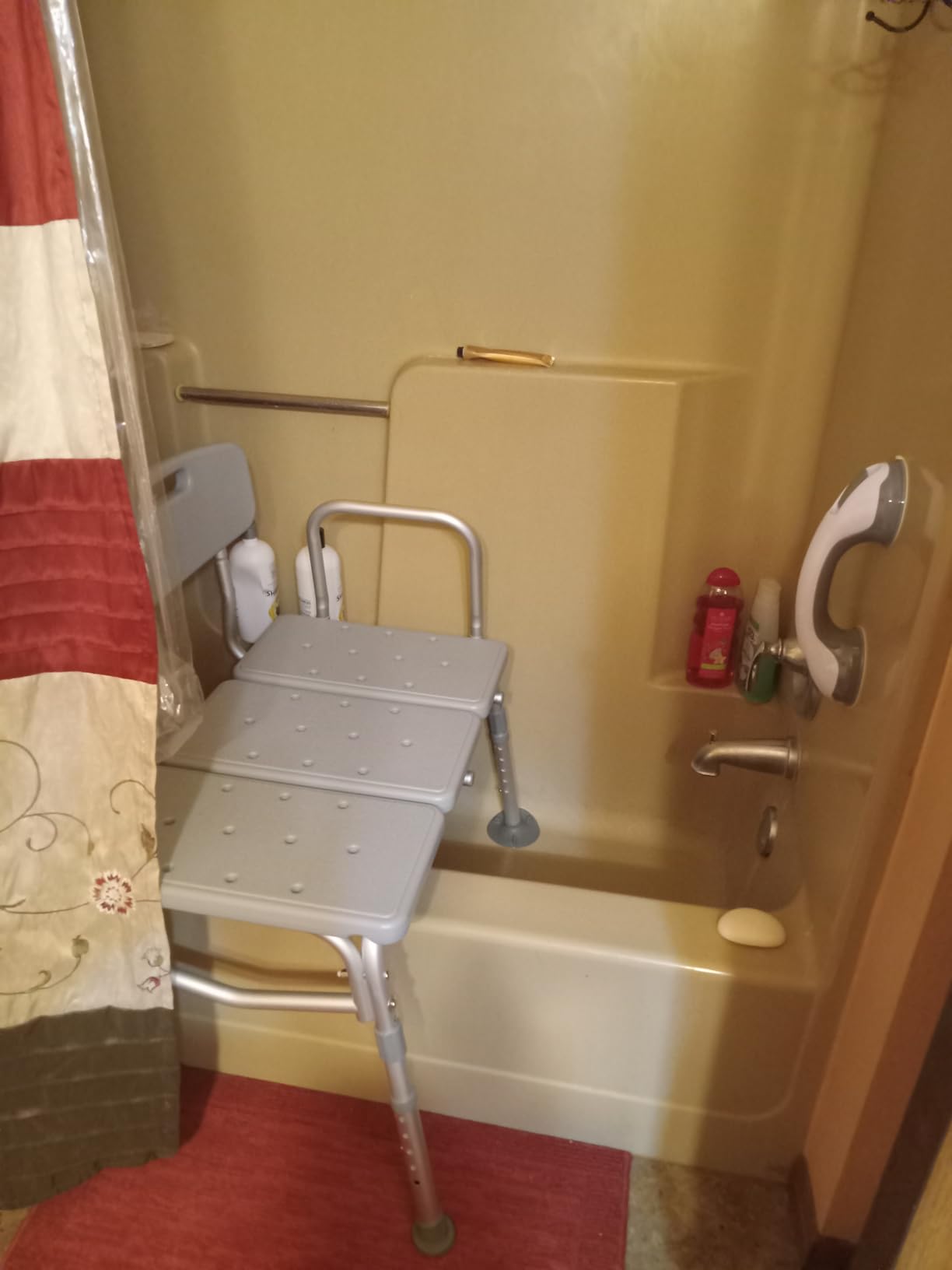
The HOMLAND is the one to look at when a standard bench is too narrow, and the reason is the 27 in wide seat combined with a 32.3 in overall width. A user who has found a 26 in seat cramped still has usable room here, which is the complaint that shows up repeatedly in reviews of narrower plastic benches in this category.
The frame uses an A-frame structure with tubing that is thicker than standard models, and the design decision shows in the ratings: 4.5 stars from close to a thousand reviews, with owners specifically mentioning stability as a reason for the score rather than just tolerating it.
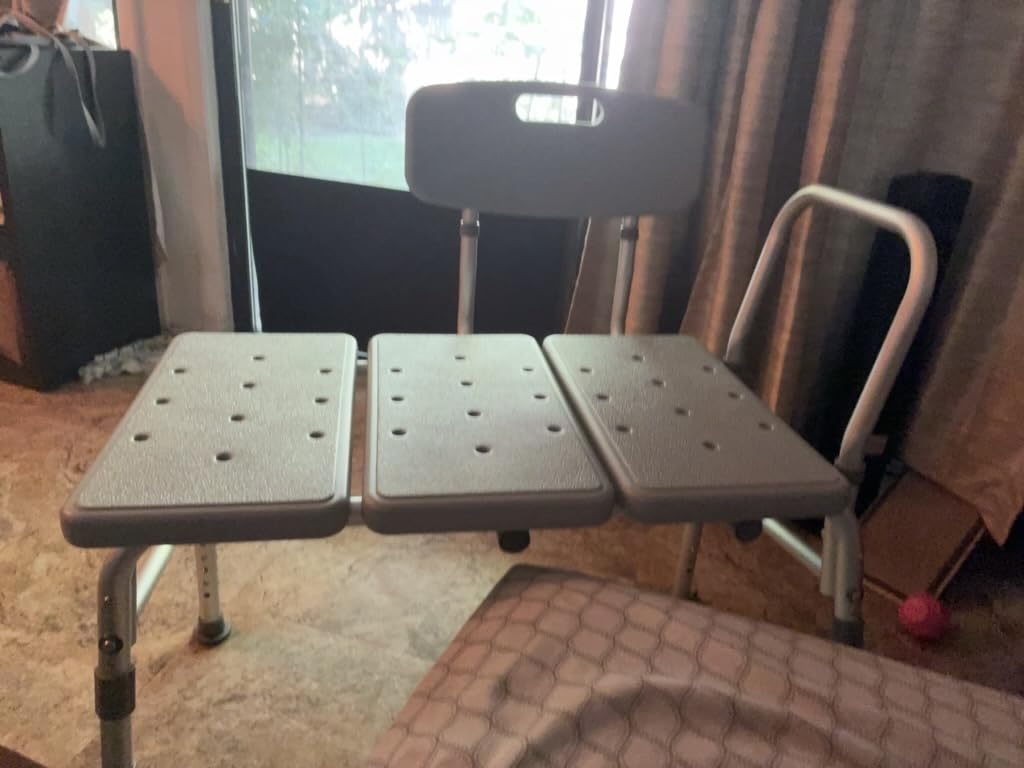
Seat height adjusts by push button from 17.5 in to 22.5 in, and the backrest reverses to the other side so the same bench fits tubs with entry from either side. The seat has drainage holes, so it does not hold a pool of water against the user, and the rubber feet grip a wet floor.
Overall it measures 32.3 in wide by 22.4 in deep by 30.12 in high, and the aluminum construction keeps it light enough for one person to move. It carries a 400 lb rating.
When a wider seat changes the outcome
A user who does not fit properly on a bench does not squeeze in gracefully, they either feel unsafe at the edges or need a caregiver holding them, and both outcomes end independent bathing. Wider seats and wider bases are the cheapest safety upgrade in this category, and this is the model where it shows up in the specification rather than in the marketing.
The A-frame geometry also spreads the load toward the corners of the tub floor, which is a genuinely useful property on a tub with a sloped or curved base.
What to weigh up
The seat is hard plastic with no padding, so it is uncomfortable over a long shower and cold on contact, which is the same trade-off as every fixed bench here. The rails still cross the tub wall, so the curtain problem applies unless you adapt it.
It also has a smaller review base than the long-established Medline and Moen models, so the long-term durability evidence is thinner even though the current rating is strong. If you are deciding between this and the Medline 400 lb bench, decide on seat width and tubing thickness, because capacity and height range are otherwise close.
How to Choose Transfer Benches for Tubs That Fit Your Bathroom
Fit is the number one reason transfer benches get returned, and it takes ten minutes of measuring to avoid. Get a tape measure and check five things before you choose a model, because a bench that is beautiful and stable but does not span your tub is useless.
First, measure the tub opening width at its narrowest point, rim to rim. Any bench whose overall width is wider than that opening will not sit correctly, and the wide-frame models in this roundup are the first to be ruled out. Second, measure the tub wall height from the bathroom floor to the top of the rim, then compare it against the bench seat height range, because the seat has to end up level with or slightly above the rim for a clean slide over.
Third, measure the tub floor from the wall to the opposite side where the in-tub legs land, and check the leg reach can reach the floor. A deep modern soaking tub or a wide whirlpool needs a bench with a long in-tub leg span. Fourth, check the bench overall width against the clear floor space on the out-of-tub side, including the distance to the toilet and the bathroom door, because the pedestal on the Moen and the swivel footprint on the Carousel need room in opposite directions.
Fifth, and most commonly missed, check whether your tub is a high-sided one-piece tub and shower unit. Several of the benches here, including the Drive Medical Splash Defense and the Moen, cannot bridge a tall one-piece unit because the legs cannot reach the floor. If you have one, you need a bench with a longer in-tub leg or an extended leg kit.
On weight capacity, the honest rule is to have at least 100 lb of margin between the user’s weight and the printed rating, because the rating covers the user and the load they are moving, and because nobody should be sitting at the ceiling of a load rating. Most benches here are 300 or 400 lb; the two Platinum Health swivel models are 330 lb.
On seat type, the choice is between sliding and fixed. Sliding seats reduce the skin shearing that comes from dragging a body across a hard surface and reduce the effort a caregiver needs, which is why they cost more and why they are the right call for anyone recovering from a hip injury, a stroke or a bariatric transfer. Stationary seats are fine for a user with good arm strength who can scoot safely.
On feet, the difference between a bench that holds and one that wanders comes down to suction cups on the in-tub legs and non-slip rubber on the out-of-tub legs. Both matter, and every bench in this roundup has at least one of the two; the Medline 400 lb model and the Drive Medical have the widest suction cups and the least reported movement.
On the shower curtain, expect the rails to block it unless you choose the Drive Medical Splash Defense, which has channel bars designed to guide the curtain inside. Otherwise, cut the curtain and reseal the edge, or accept that the floor gets wet and keep a towel down.
On coverage, transfer benches are durable medical equipment, which means they can be covered when prescribed as part of a care plan. Original Medicare covers DME with a written order from a clinician and a supplier that accepts the assignment, and Medicaid DME benefits vary by state. Health savings and flexible spending accounts typically treat a transfer bench as a medical expense, and two of the benches here, the DMI and the Flash Furniture, are explicitly FSA eligible. Check your own plan, because eligibility rules differ and the wording matters more than the brand.
Transfer Bench vs. Shower Chair vs. Bath Lift
A shower chair sits entirely inside the tub or shower and is the right choice for someone who can step over the tub wall but tires quickly or feels unsteady standing. It is cheaper, smaller and easier to store, and it is the wrong choice for a wheelchair user, because there is no way to transfer sideways into it.
A transfer bench is for someone who cannot safely step over the wall or stand to shower, which after a hip fracture, a stroke or a lower-limb surgery can be true for months. It costs more, takes more floor space and has a longer learning curve, and it is the only one of the three that supports a sideways wheelchair transfer.
A bath lift lowers and raises a person in and out of the tub mechanically and is worth considering when the user cannot bear weight through the arms at all. It is a significant step up in cost and installation, so it belongs in a conversation with an occupational therapist rather than an impulse purchase.
How to Use a Transfer Bench in a Bathtub
Set the bench so the long end faces away from the shower head, and check the out-of-tub legs sit flat on a dry floor. Extend the legs until the frame is level, with no side-to-side lean, and confirm the in-tub legs are down on the tub floor rather than resting on the rim. Test the feet with a firm push before anyone sits.
Sit down on the out-of-tub half of the seat as you would into a chair, with your back to the bathroom and your feet on the floor. Use the arm or handle for support on the way down. Do not attempt to lift both legs over the wall at this stage.
Swing or slide your legs across the tub wall one at a time, then shift your hips toward the center of the seat. On a sliding model, a caregiver can push the seat along the rails instead of asking the user to scoot, which is far easier on both of you.
Turn to face out of the tub and lower yourself slowly using the armrests, or have the caregiver guide the descent. If a swivel seat is fitted, rotate to face out first, then step down onto the dry floor. If you are alone, the descent and the step down are the two moments where a fall is most likely, so go slowly.
When you are finished, reverse the sequence: sit, rotate or slide toward the wall, bring the legs over one at a time, then push up to standing using the armrest. Rinse the seat and dry both the seat and the feet afterwards, and never stand on the bench to reach anything.
Safety, Coverage and Care
Run a two-minute check before every bath. Confirm the frame is level, the feet and suction cups are seated on their surfaces, the backrest and armrest are locked, the seat is not worn or cracked, and the path from the bench to the floor is dry and clear of towels. Wipe the seat dry after each use, because soap residue is the most common cause of a slip on this equipment.
Never exceed the capacity printed on the frame, and never stand on the seat or use the backrest as a step. If the user is post-operative, has had a joint replacement, or is under a fall-risk assessment from a clinician, follow that clinician’s instructions over anything on this page, and ask an occupational therapist to demonstrate the transfer once before the first solo bath.
On payment, this is where buyers lose the most time. Transfer benches qualify as durable medical equipment, so a written order from a doctor, nurse or occupational therapist plus a supplier that accepts Medicare assignment is the standard route to coverage under Original Medicare. Medicaid covers DME for eligible members but the specific item list and the supplier rules vary by state, and commercial insurance varies widely, with many plans requiring a prescription and a failed standard option documented first. HSA and FSA accounts usually reimburse a transfer bench as a medical expense, and two of the benches here are explicitly marked FSA eligible.
For care, rinse the frame and seat after every use, dry the seat and the push buttons, and check the internal leg fasteners twice a year for corrosion if you live somewhere with hard water. Mildew collects in seat texture and around drain holes, so a monthly wipe with a bathroom-safe cleaner keeps it from becoming a reason nobody wants to use the bench.
Frequently Asked Questions
Does Medicare pay for a tub transfer bench?
A tub transfer bench is durable medical equipment, so it can be covered when a doctor or occupational therapist writes an order and you buy it from a supplier that accepts Medicare assignment. Coverage usually requires that the item is needed for a medical condition and that cheaper alternatives have been tried first. Check with your supplier before ordering, because the documentation is what determines payment.
How much does a tub transfer bench cost?
Prices in this category range widely by type. Basic fixed-frame plastic and aluminum benches sit at the low end, padded sliding models with perineal cut-outs sit in the middle, and swivel or premium padded benches sit at the top. The exact figure changes constantly, so use the price buttons on this page to check the current figure for each model.
Does insurance cover a tub transfer bench?
It depends entirely on the plan. Original Medicare covers qualifying durable medical equipment with a written order, Medicaid covers DME for eligible members with state-specific rules, and commercial plans often require a prescription plus documentation that a lower-cost option was tried first. Health savings and flexible spending accounts usually treat the bench as a medical expense, and two of the benches in this roundup are explicitly FSA eligible.
How to use a transfer bench in a bathtub?
Position the bench with the long end facing away from the shower head, level the frame with the feet fully down, then sit down on the out-of-tub half of the seat. Move your legs across the wall one at a time, shift toward the center, turn to face out and lower yourself slowly using the armrest. Reverse the steps to get out, and always dry the floor and the seat afterwards.
How safe are tub transfer benches?
They are among the safer bathing options when used correctly, because they remove the step-over a tub wall entirely. The main risks come from using a bench above its rated capacity, from a wet or soapy seat, from an unlevel frame, and from a wet bathroom floor. A bench with a backrest, arm supports and non-slip or suction feet, used with a dry floor, addresses nearly all of these.
What is the best way for seniors to get out of a bathtub?
Use a transfer bench if they cannot step over the tub wall safely, a shower chair inside the tub if they can step over but tire quickly, and a bath lift if they cannot bear weight through the arms at all. An occupational therapist can assess which applies. Whichever you choose, the sit-down and the step down from the bench to the floor are the two moments that need the most attention.
The Verdict
The DMI Tub Transfer Bench is our pick of the best transfer benches for tubs, because no other model combines a 400 lb rating, a genuine sliding seat, a removable perineal cut-out, two rows of height adjustment holes and more than eight thousand owner ratings. The Medline 400 lb bench is the alternative if you want the highest rating and the simplest tool-free setup, and the Platinum Health Carousel is worth the step up when the transfer has to be as close to effortless as it can get.
Match the bench to the user rather than to the price. Measure the tub first, leave margin under the capacity rating, and choose a sliding or swivel seat if anyone is recovering from surgery or needs a caregiver to do the heavy work. Then check the current figure for your pick and get it in the bathroom before it is urgently needed.