
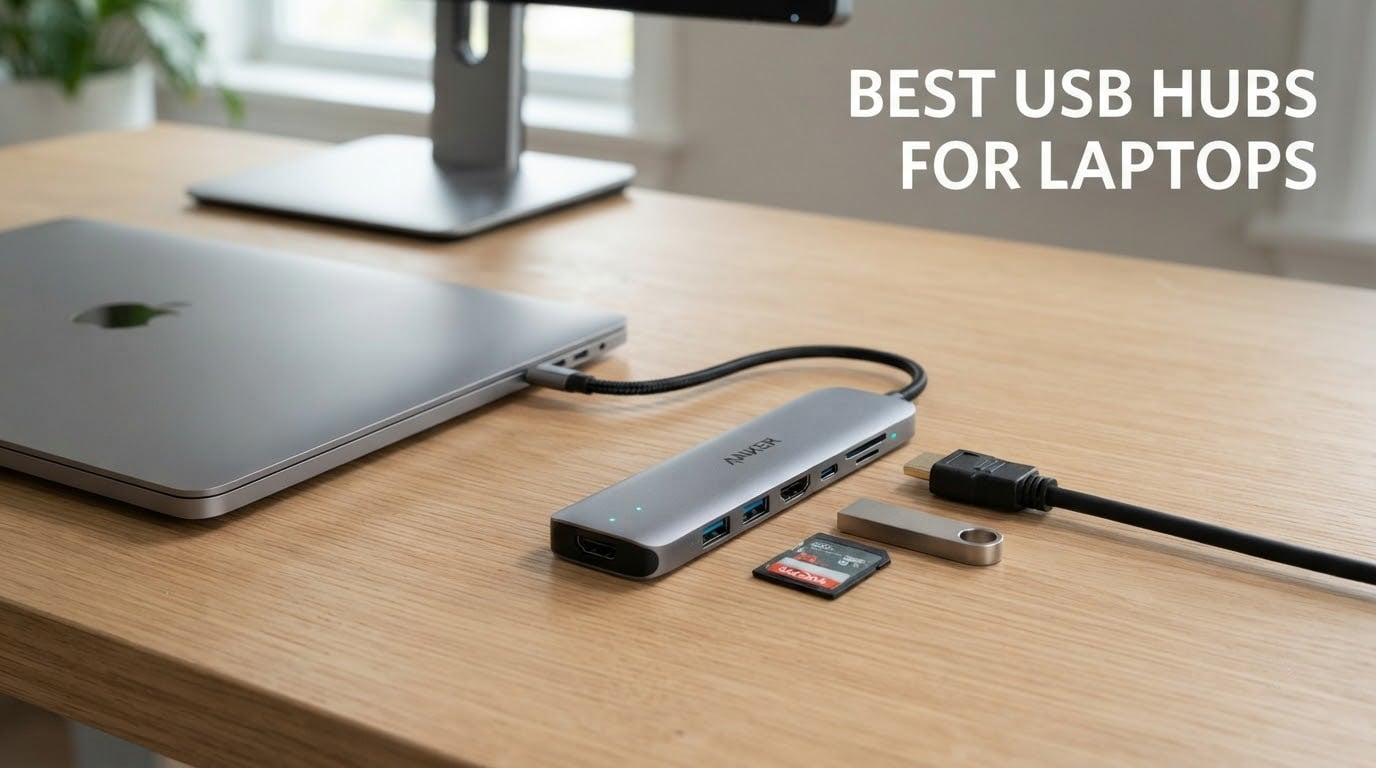
Our single best overall pick is the Hiearcool 7-in-1 USB C Hub. It turns one USB-C port on a laptop into an HDMI output, two USB-A ports, SD and microSD readers, and a 100W pass-through charging port, and it weighs 1.8 ounces. Buyers have put 52k+ reviews behind it at a 4.6 average, and long-term owners report the same unit still working years later.
That combination is why the best USB hubs for laptops is not really a single-device question. A MacBook Air has two USB-C ports and one of them is usually taken by the charger. An ultrabook may have a single port. A gaming laptop may have three USB-A ports and no card reader. What you need depends on which laptop you carry and what you plug into it.
We compared ten hubs across port mix, transfer speed, pass-through wattage, display output, Ethernet, build material, warranty length, and the share of one-star reviews. Seven are USB-C travel adapters you can toss in a sleeve, and three are powered desktop hubs for a fixed desk. If you are still choosing the laptop itself, our gaming laptop picks cover the port layouts each model gives you before you buy an adapter for it.
Table of Contents
- Top 3 Picks: Best USB Hubs for Laptops (October 2026)
- All 10 Best USB Hubs for Laptops Compared in 2026
- 1. Hiearcool 7-in-1 USB C Hub: Our Best Overall Pick
- 2. Anker 8-in-1 USB C Dock: Best for Dual Monitors
- 3. UGREEN 5-in-1 USB C Hub: Best Value
- 4. Atolla 8-Port Powered USB 3.0 Hub: Best Powered Desk Hub
- 5. Anker 5-in-1 USB C Hub: Best for Travel
- 6. SABRENT 4-Port Powered USB 3.0 Hub: Best for Per-Port Switching
- 7. UGREEN Revodok 6-in-1 USB C Hub: Best With Gigabit Ethernet
- 8. Anker 6-in-1 USB C Hub With Ethernet: Best for Locked-Down Work Laptops
- 9. BENFEI 5-in-1 USB C Hub: The Only 10Gbps Port Here
- 10. TP-Link 9-Port Powered USB Hub: Best for a Loaded Desk
- How We Tested the Best USB Hubs for Laptops
- Which USB Hub Brands Are Most Reliable?
- How to Choose a USB Hub for Laptops
- Frequently Asked Questions
- Is it okay to use a USB hub on a laptop?
- Are USB hubs safe for laptops?
- Which brand is best for USB hubs?
- What is the best USB hub for laptops?
- What is the best USB docking station for laptops?
- Why does my USB hub keep connecting and disconnecting?
- What is the difference between a USB-C hub and a dongle?
- What are people recommending for USB hubs on Reddit?
- Conclusion
Top 3 Picks: Best USB Hubs for Laptops (October 2026)

Hiearcool 7-in-1 USB C Hub
- 4K@30Hz HDMI
- 100W PD pass-through
- SD and microSD readers
- 1.8 oz aluminum body

UGREEN 5-in-1 USB C Hub
- 4K HDMI
- 100W PD
- one 5Gbps USB-A plus two 480Mbps ports
- 91 g aluminum

Anker 8-in-1 USB C Dock
- Dual HDMI at 4K@30Hz each
- 1Gbps Ethernet
- 85W PD
- SD and microSD readers
All 10 Best USB Hubs for Laptops Compared in 2026
| Product | Specs | Action |
|---|---|---|
| Hiearcool 7-in-1 USB C Hub |
|
Check Latest Price |
| Anker 8-in-1 USB C Dock |
|
Check Latest Price |
| UGREEN 5-in-1 USB C Hub |
|
Check Latest Price |
 Atolla 8-Port Powered USB 3.0 Hub Atolla 8-Port Powered USB 3.0 Hub |
|
Check Latest Price |
 Anker 5-in-1 USB C Hub Anker 5-in-1 USB C Hub |
|
Check Latest Price |
 SABRENT 4-Port Powered USB 3.0 Hub SABRENT 4-Port Powered USB 3.0 Hub |
|
Check Latest Price |
 UGREEN Revodok 6-in-1 USB C Hub UGREEN Revodok 6-in-1 USB C Hub |
|
Check Latest Price |
 Anker 6-in-1 USB C Hub with Ethernet Anker 6-in-1 USB C Hub with Ethernet |
|
Check Latest Price |
 BENFEI 5-in-1 USB C Hub BENFEI 5-in-1 USB C Hub |
|
Check Latest Price |
 TP-Link 9-Port Powered USB Hub TP-Link 9-Port Powered USB Hub |
|
Check Latest Price |
1. Hiearcool 7-in-1 USB C Hub: Our Best Overall Pick
Hiearcool 7-in-1 USB C Hub, USB C Dongle Compatible for MacBook, Space Gray
4K@30Hz HDMI
100W PD pass-through
5Gbps data
SD + microSD
1.8 oz aluminum
Pros
- Adds HDMI
- two USB-A
- card readers and charging in one adapter
- Compact 1.8 oz aluminum body suits a laptop bag
- 100W pass-through keeps the laptop powered
- Works across MacBook
- XPS
- Yoga
- Chromebook and Steam Deck
Cons
- Single HDMI output
- so no dual-monitor support
- No Ethernet port
- SD reader throughput is modest
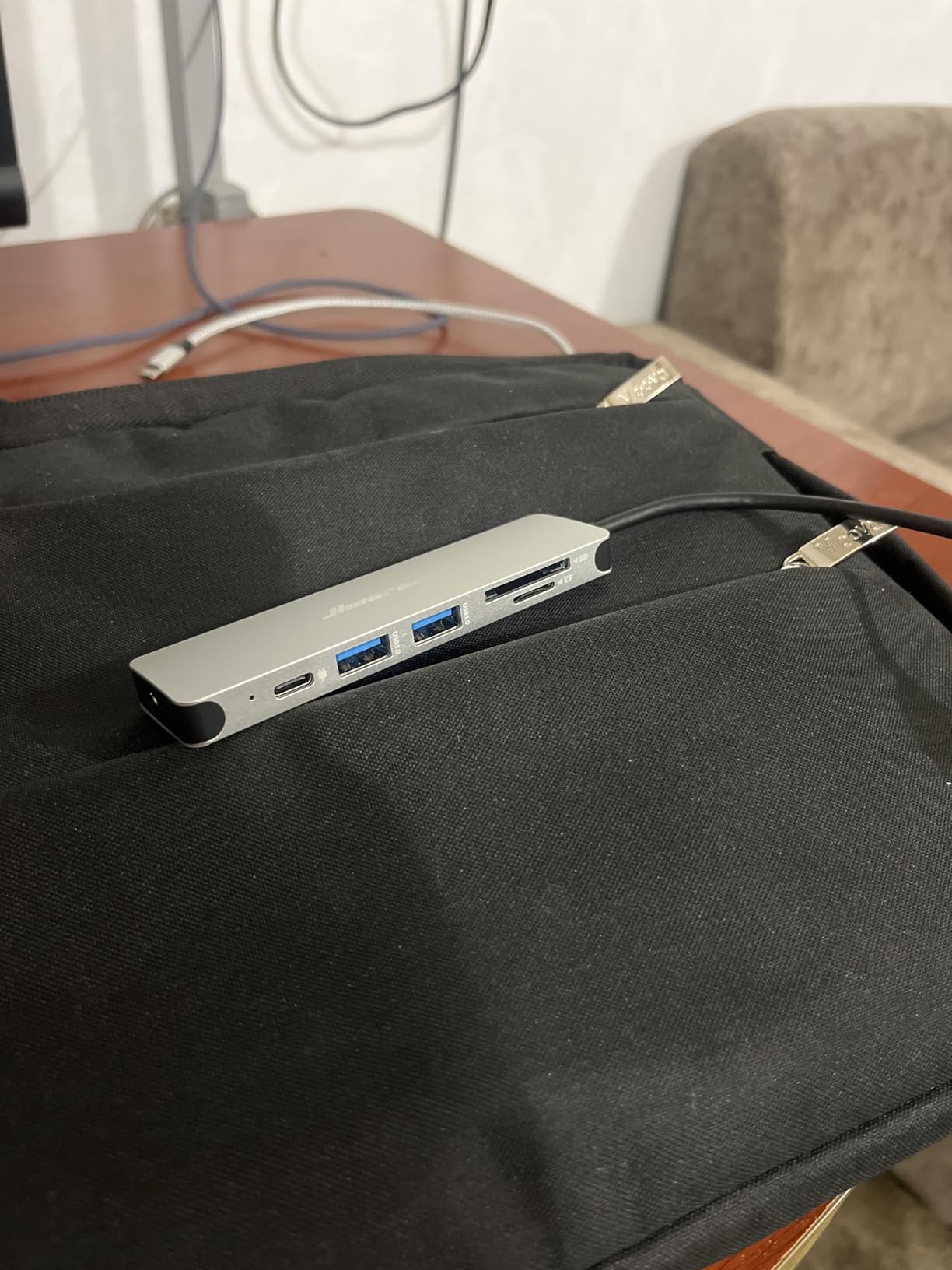
This is the hub we keep in the laptop bag. It measures 4.17 inches long, 1.4 inches wide and a third of an inch thick, and at 1.8 ounces it disappears into a sleeve next to the charger. The space grey aluminum shell also does something practical: it pulls heat away from the controller instead of trapping it.
The port mix is the reason it works for most people. One HDMI output handles a monitor or a projector, two USB-A ports take a mouse and a keyboard or a flash drive, and the SD and microSD slots cover the photographers who would otherwise carry a separate reader. A dedicated USB-C port passes up to 100W of charging straight through to the laptop.
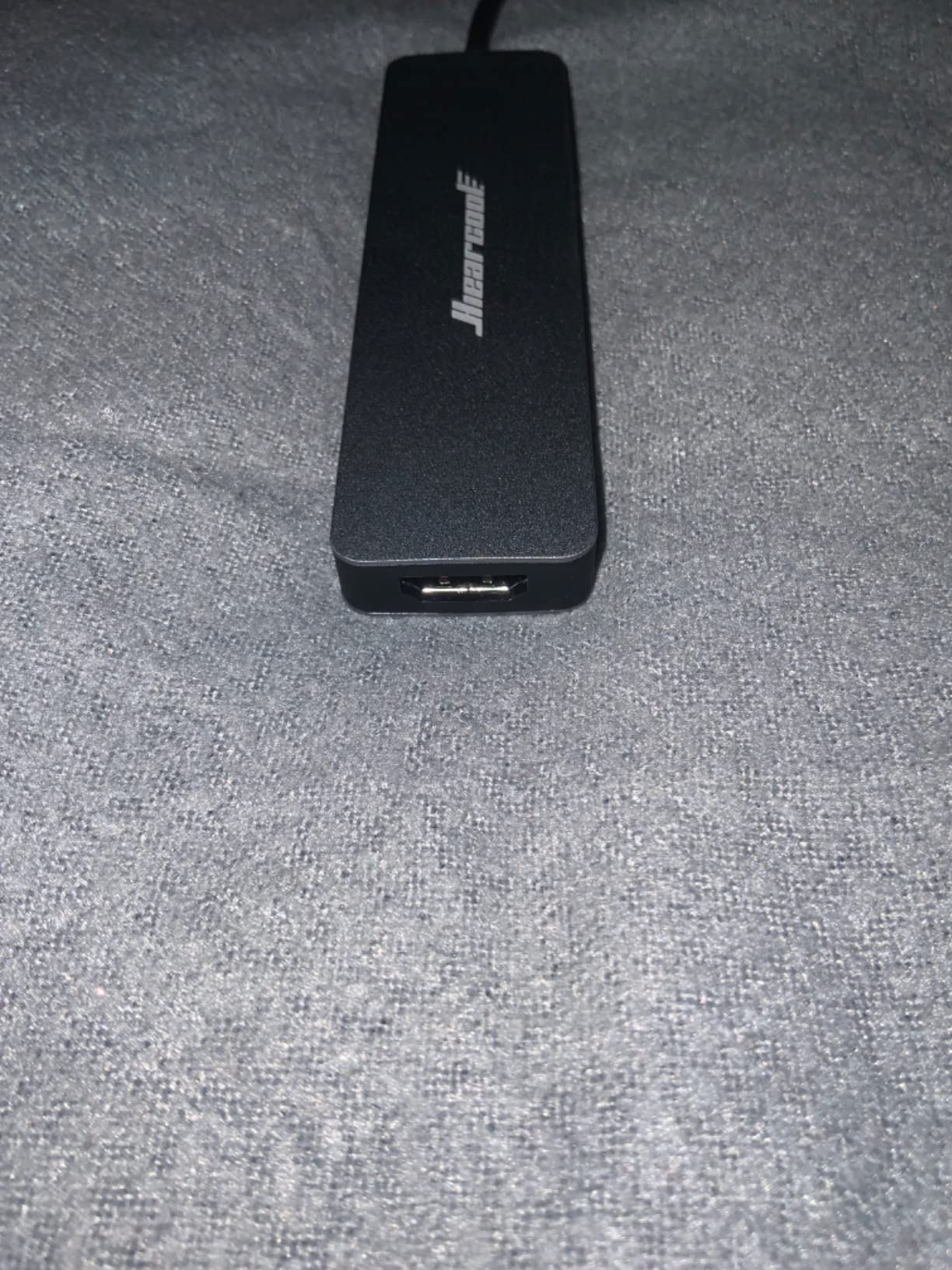
Video output is 4K at 30Hz, not 60Hz. That is fine for a second screen showing documents, a spreadsheet, or a browser window while you present. It is not fine for a high-refresh gaming panel or for dragging a timeline in a video editor at full frame rate.
There is no Ethernet jack, so anyone working from a hotel or an office where Wi-Fi is unreliable still needs a dongle for that. Buyers also point out that the SD reader is slower than a dedicated multi-slot reader, which matters if you import full card sets after a shoot.
Is the Hiearcool 7-in-1 right for your laptop?
It suits any USB-C laptop with DisplayPort Alt Mode, which covers MacBook M1 through M5 models, Dell XPS, Lenovo Yoga, HP Chromebook Pro X360, iPad Air, and Steam Deck. Data runs at 5Gbps, so an external SSD will be limited by the drive as much as by the hub.
If your laptop is a gaming machine rather than an ultrabook, check whether you actually need video out at all. Our budget gaming laptop picks often arrive with several USB-A ports already, and a USB-A keyboard plus mouse may need no hub whatsoever.
What you give up compared with a bigger dock
You give up a second display, wired networking, and 10Gbps data. The Anker 8-in-1 covers the first two, and the BENFEI in this list is the only adapter here with a 10Gbps port. Nothing at this size does all three at once.
The 52k+ reviews also carry a 4% one-star share, the usual complaints being the missing Ethernet port and the single video output. If you work from a fixed desk rather than a bag, one of the desktop hubs below serves you better.
2. Anker 8-in-1 USB C Dock: Best for Dual Monitors
Anker Laptop Docking Station Dual Monitor, 8-in-1 USB C Hub with 4K HDMI
Dual HDMI at 4K@30Hz
1Gbps Ethernet
85W PD
SD + microSD
3.2 oz
Pros
- Only hub here with two HDMI outputs
- Built-in Gigabit Ethernet
- 85W pass-through over one cable
- Two USB-A ports plus both card formats
Cons
- On macOS both displays show identical content
- Needs a separate 100W charger and USB-C cable
- Not compatible with Linux
- Card reader is slower than dedicated readers
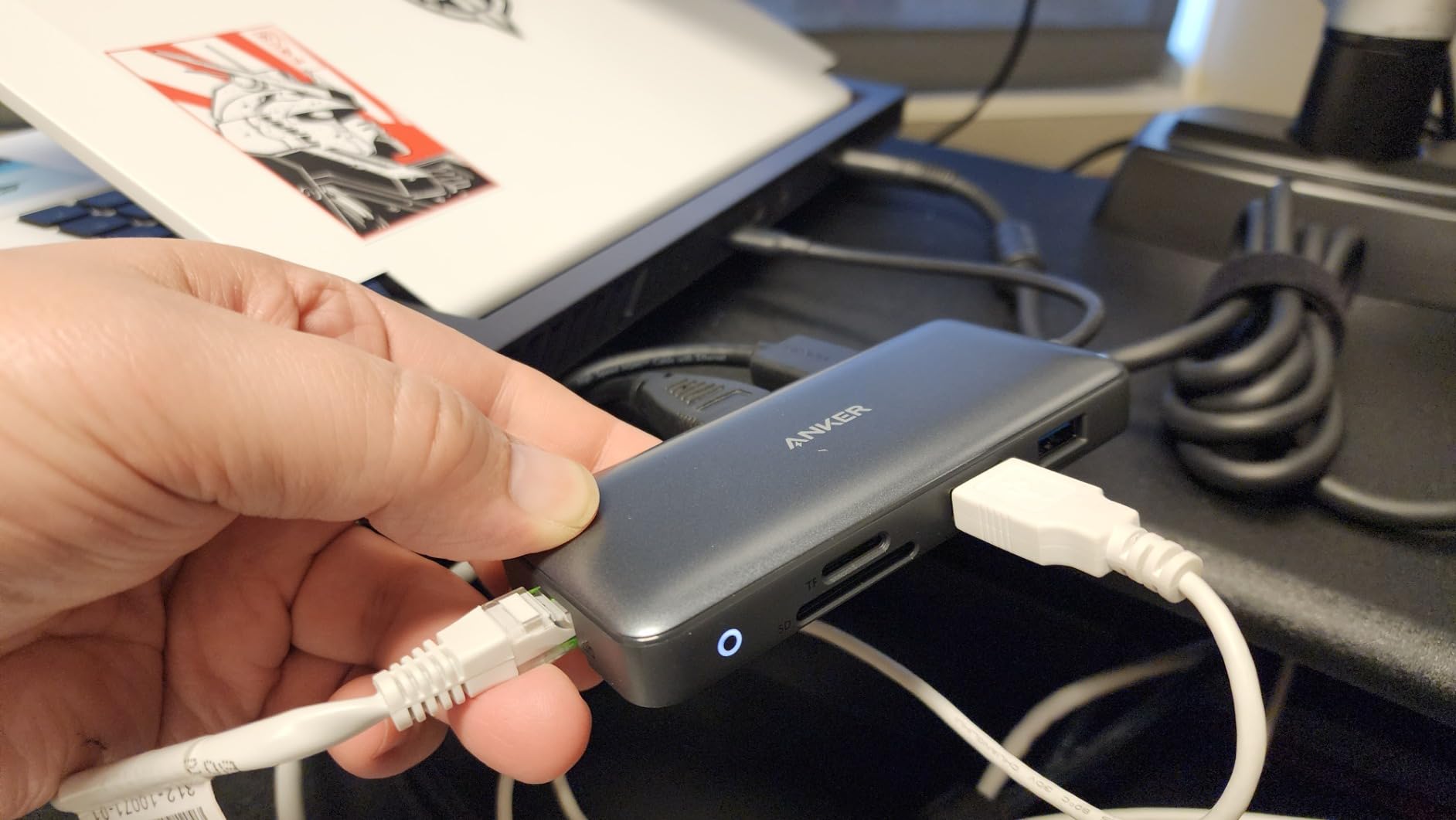
This is the pick for a desk where a second screen matters. It is the only hub in the group with two HDMI outputs, and it rates them at up to 4K@60Hz on a single display or 4K@30Hz when both are active. That single-versus-dual resolution drop is normal behaviour for this bandwidth level.
It also carries 1Gbps Ethernet, a faster and more stable network link than Wi-Fi on a laptop that has no RJ45 jack. Hotels, conference rooms, and shared offices all favour a wired connection over congested Wi-Fi.
One detail catches people out. On macOS the two external displays mirror each other rather than extend the desktop, so this behaves as a dual-monitor dock on Windows but a single-output dock on a MacBook. Extended output on Mac usually needs a DisplayLink software dock instead.
The 85W pass-through needs a 100W charger and a USB-C to USB-C cable, and neither is in the box. Budget for both before you buy, or the charging port does nothing useful.

Who this dock works for
Windows users with full-function USB-C ports get the most from it, including laptops with USB4 and Thunderbolt. Owners running locked-down corporate machines also like that it needs no driver install. Several long-term reviewers describe it as still working after years of travel.
Photographers get SD and microSD slots alongside two USB-A ports, though the reader throughput trails a dedicated multi-slot unit. The 18-month warranty sits in the middle of the group, with UGREEN at 24 months and SABRENT at 12.
Where it falls short
Linux is not supported, which rules it out for developers running a Linux desktop on the go. Combined with the mirrored Mac output, that narrows the audience considerably even though the hardware itself is strong.
The body is ABS plastic rather than aluminum, and it weighs 3.2 ounces. It is a desk adapter that can travel, not a travel adapter that happens to work at a desk.
3. UGREEN 5-in-1 USB C Hub: Best Value
UGREEN USB C Hub 5 in 1 Multiport USB Adapter 4K HDMI, 100W Power Delivery
4K HDMI
100W PD
1x USB-A 5Gbps
2x USB-A 480Mbps
91 g aluminum
Pros
- Low cost with HDMI
- three USB-A ports and pass-through charging
- One USB-A port runs at full 5Gbps for drives
- Aluminum body at only 91 g
- Works across several USB-C device generations
Cons
- No Ethernet port
- Two of the three USB-A ports are USB 2.0
- Single HDMI output limits it to one display
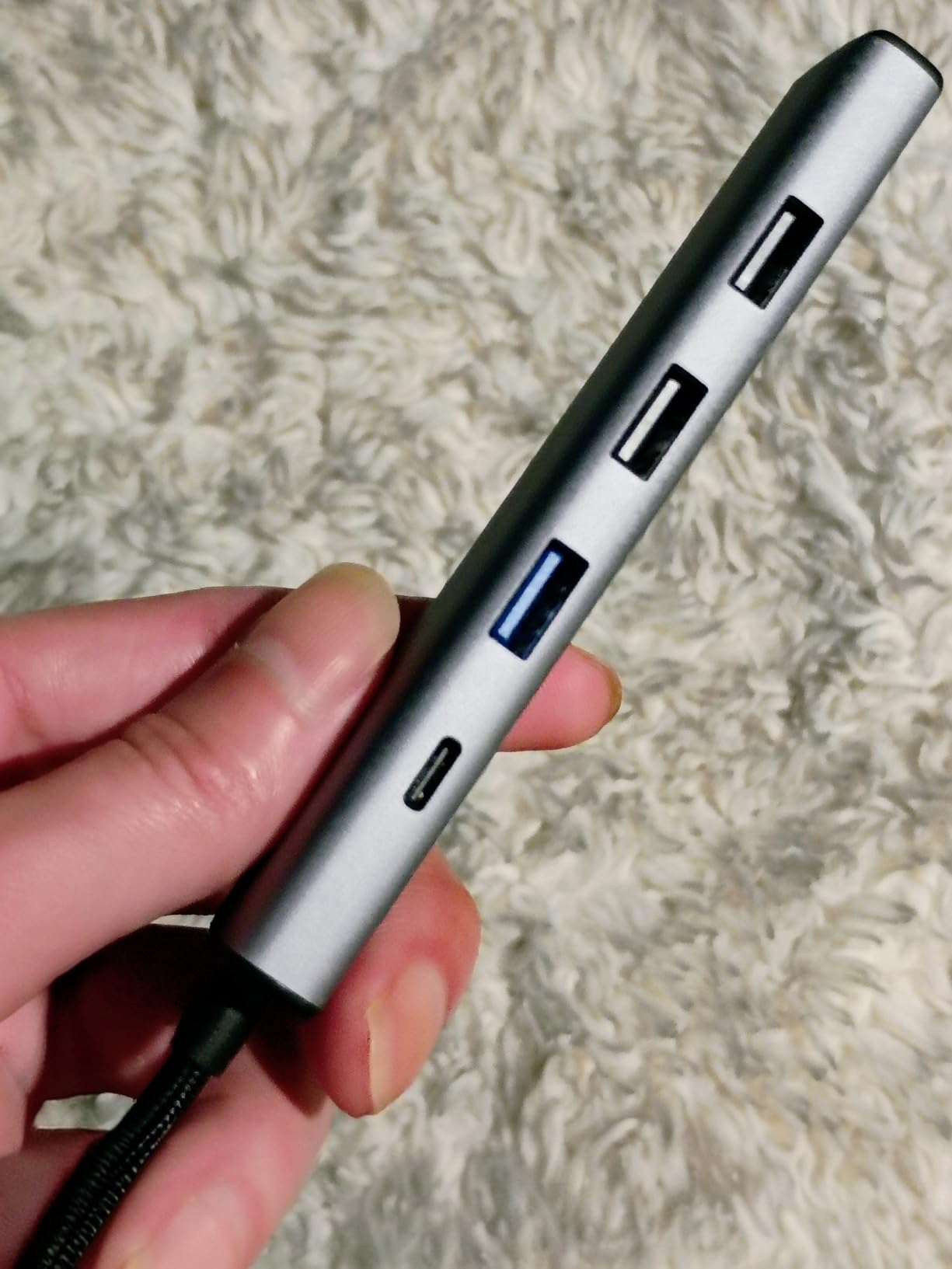
At 91 grams and 4.79 inches long, this is a slightly longer adapter than the Hiearcool but the same weight class. The aluminum shell comes in grey or white, and the layout puts HDMI, the USB-C charging port, and three USB-A ports on one small bar.
Here is the port mix that matters: one USB-A port runs at 5Gbps for external storage, and the other two sit at 480Mbps. That is a deliberate design choice to fit three USB-A sockets into a body this thin, but it is the single most important thing to understand before you buy.
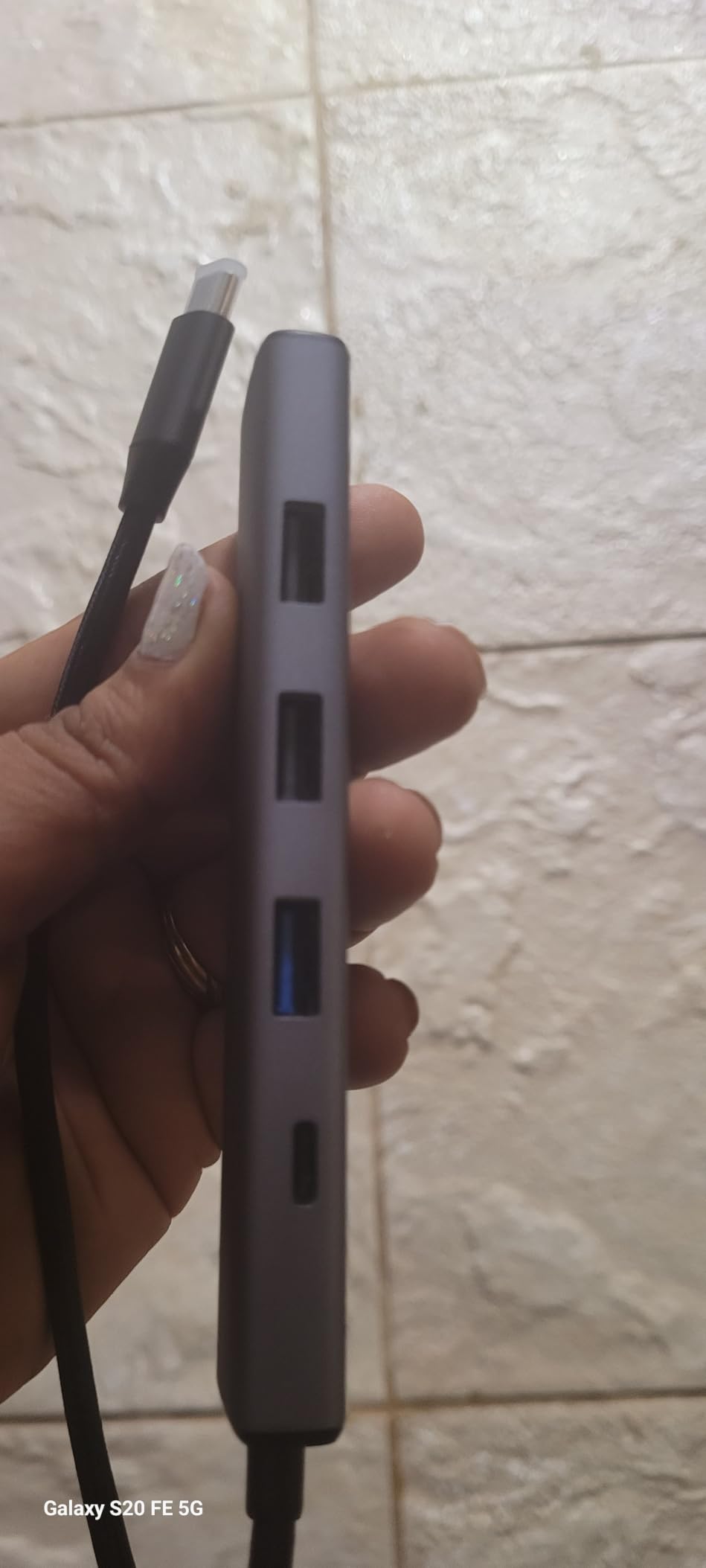
Connect a mouse and a keyboard to the two slower ports and keep the fast port for an external SSD or a flash drive. Plug two hard drives into the slow ports by mistake and you will see transfers drop by roughly an order of magnitude, which is the complaint that shows up most often in reviews.
Charging pass-through is 100W, which covers most ultrabooks and thin-and-light Windows machines with room to spare. Larger performance laptops draw more, and a gaming laptop may need its own charger in the wall.
Who should pick this over the Hiearcool
Pick this one if you want three USB-A ports instead of two, or if you prefer the wider 24-month warranty. It is also the better option for a Chromebook or an iPad Pro user who mostly needs card readers and a mouse.
Leave it on the shelf if you move large files regularly and only have one USB-A port at full speed. The UGREEN Revodok further down this list adds Gigabit Ethernet and a 24-month warranty alongside the three USB-A ports.
The USB 2.0 trap
Two USB-A ports at 480Mbps is roughly a tenth of the speed of the 5Gbps port beside them. Nothing on the body flags which is which clearly enough at a glance, so check the printed icons before you plug a drive in.
A 4% one-star share is in line with the rest of this list, and the complaints match the port mix rather than any quality problem. If you need two fast drives at once, this hub is the wrong tool.
4. Atolla 8-Port Powered USB 3.0 Hub: Best Powered Desk Hub
Powered USB Hub 3.0, Atolla 8-Port USB 3.0 Data Hub Splitter with One Smart Charging Port and Individual On/Off Switches and 5V/4A Power Adapter USB Extension for MacBook, Mac Pro/Mini and More
7 data ports at 5Gbps
1 smart charging port
5V/4A adapter
Per-port switches
100 cm cable
Pros
- Seven USB-A 3.0 data ports from one laptop port
- Individual on/off switch for every data port
- Included 5V/4A adapter powers spinning hard drives
- Works on Windows
- macOS and Linux without drivers
Cons
- No video output
- so it cannot drive a monitor
- No Ethernet port
- 256 g and far too large for a laptop bag
- Wall adapter adds desk clutter
This is a desktop expander, not a travel adapter. It weighs 256 grams, measures 6.2 inches long, and it comes with a 100 cm cable and a wall adapter, which tells you everything about where it belongs. It connects over USB-A upstream, so it also works with older laptops that have no USB-C.
Seven data ports run at 5Gbps through USB 3.0, and the eighth bay is a dedicated smart charging port that delivers up to 2.4A for a phone or tablet. That split keeps charging current away from the data buses, which is why it is steadier than a bus-powered equivalent.
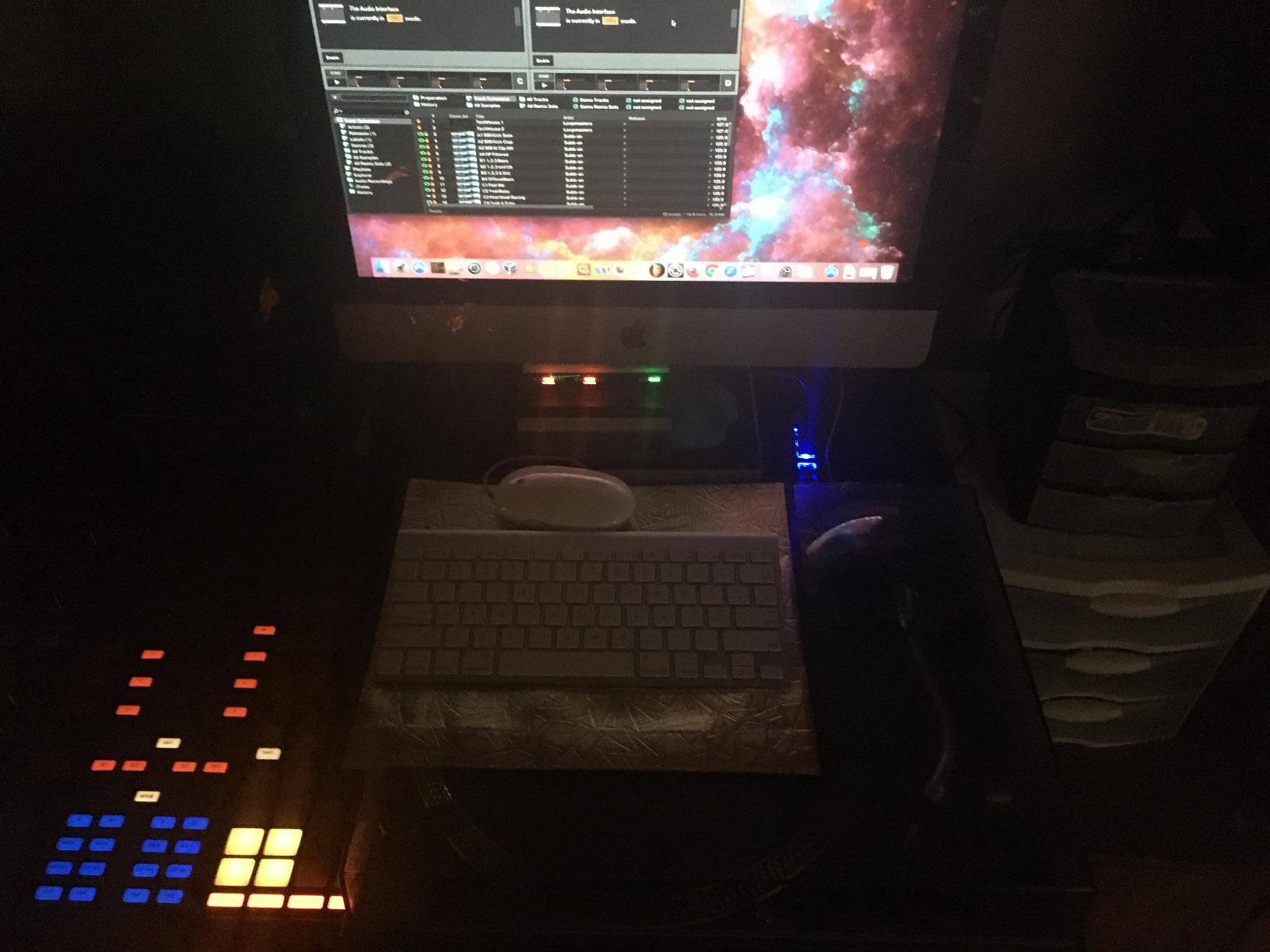
The per-port on/off switches are the feature users mention most. Switching a port off in software or yanking a cable both stress the connector and the device; a physical switch does neither. People building microcontroller setups use them to cycle card readers without piling up phantom drive letters.
Because it draws from a 5V/4A supply, multiple spinning hard drives work at once without the voltage drops that make a bus-powered hub stutter under load. Plug-and-play, hot-swappable, and driver-free on all three major desktop platforms.
When a powered hub earns its desk space
It makes sense the moment you plug in more than two powered peripherals. Two external drives, a printer, a scanner, and a headset controller all compete for current on an unpowered bus, and the result is the random disconnecting that dominates support forums.
It is also the right answer for legacy equipment. USB-A printers, scanners, and older audio interfaces that predate USB-C all connect without an adapter, which no USB-C hub in this list can promise.
What it cannot do
There is no video output, so it cannot drive a monitor, and there is no Ethernet. If you need either, you need a USB-C dock and probably this hub beside it.
The plastic enclosure also runs warm under sustained heavy transfer, which is worth noting if your drives live in it permanently. The 18-month warranty is respectable for a desk accessory of this type.
5. Anker 5-in-1 USB C Hub: Best for Travel
Anker USB C Hub, 5-in-1 USBC to HDMI Splitter with 4K Display
4K@30Hz HDMI
85W PD
1x USB-C + 2x USB-A at 5Gbps
1.44 oz
Pros
- All three data ports run at full 5Gbps with no slow USB 2.0
- Lightest and smallest travel option here at 1.44 oz
- 85W pass-through covers most laptop workloads
- Wide compatibility across USB-C
- USB4 and Thunderbolt
Cons
- PD-in port is charge-only and cannot carry audio
- USB-C data port has no video output
- No Ethernet port
- Highest one-star share in the group at 7%
At 1.44 ounces and 4.78 by 1.59 by 0.45 inches, this adapter is compact enough to disappear into a laptop sleeve, and all three of its data ports run at 5Gbps. There is no slow USB 2.0 port anywhere on it, so a drive connected to any of them gets full speed, which is what separates it from the other budget adapters in this roundup.
The HDMI output is 4K at 30Hz and the USB-C PD input passes up to 85W through to the laptop, enough for an ultrabook or a mid-range Windows machine. The charger itself is not included.
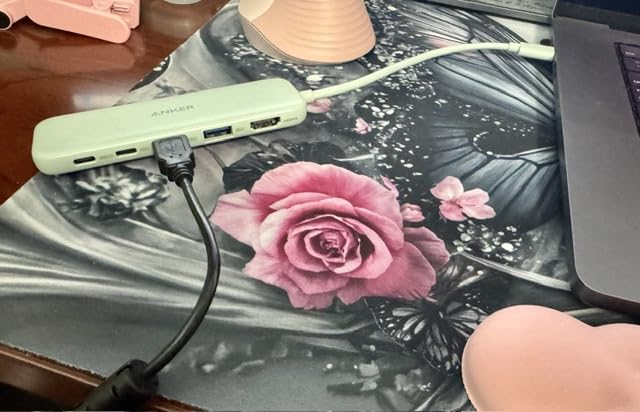
Understand the port functions before you rely on them. The PD-in port is for charging only, so plugging headphones or speakers into it does nothing. The USB-C data port carries data but no video, so HDMI is your only display route.
That narrowness explains the 4.4 average and the 7% one-star share, the highest in this group. Buyers expecting a 5-in-1 adapter to offer five equal functions run into the gap between the label and the reality.
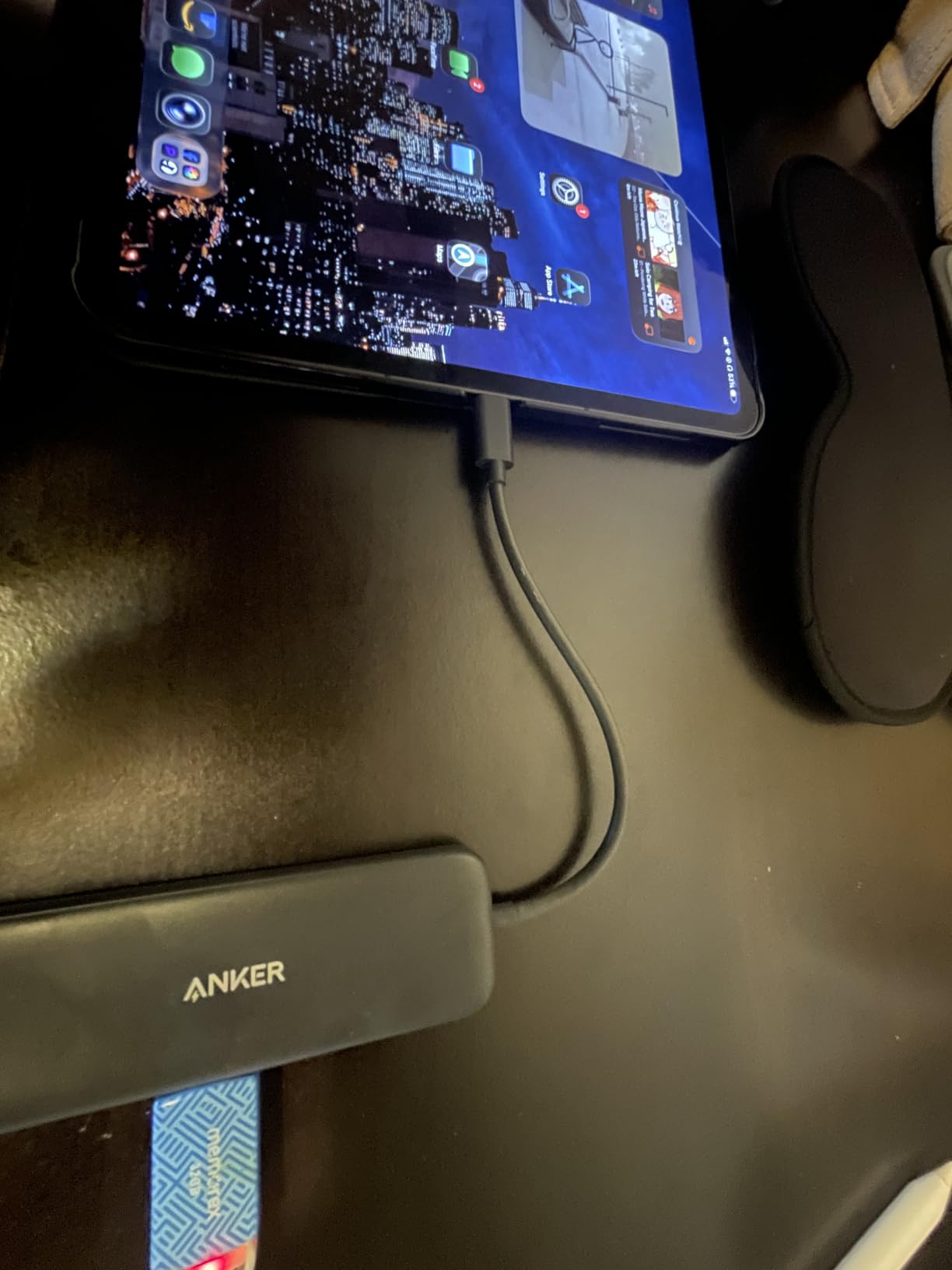
What makes it the travel pick
It fits in a jacket pocket at 4.78 by 1.59 by 0.45 inches and works with anything that has a full-function USB-C port, including USB4 and Thunderbolt 3, 4, and 5 machines. It comes in five colours, which matters little and is a fair proxy for how often it gets lost.
For a one-bag setup where you open a laptop, connect a mouse and an external drive, and occasionally show a deck, it does everything asked of it without adding a second slow port to think about.
When to choose something else
Choose the UGREEN 5-in-1 instead if you need three USB-A sockets rather than a mix of USB-A and USB-C. Choose the Anker 8-in-1 if you need two displays or a wired network.
Do not choose it for audio work. A charge-only USB-C port rules out USB-C headphones, and there is no 3.5mm jack to fall back on, so you need a separate dongle for audio.
6. SABRENT 4-Port Powered USB 3.0 Hub: Best for Per-Port Switching
SABRENT 4-Port Powered USB 3.0 Hub, LED Power Switches (HB-UMP3)
4 USB 3.0 ports at 5Gbps
LED power switch per port
2.5A adapter
Hot-swappable
Pros
- Smallest powered hub here at 1.5 oz
- LED-lit switch on every port
- Included 2.5A adapter runs several external drives
- Can be used with or without the power adapter
- Backwards compatible with USB 2.0 and 1.1
Cons
- Only four ports
- so a busy desk fills quickly
- No video output and no Ethernet
- Port 1 draws power only from the host
- Backfeeds voltage that blocks a Raspberry Pi from booting
This is the compact powered option. At 3.5 by 1.5 by 0.5 inches and 1.5 ounces it is barely larger than an unpowered adapter, yet it takes a 2.5A power supply and drives several bus-powered hard drives without stalling. Owners report it fixing peripherals that behaved erratically on a bus-only hub.
Each of the four ports has its own LED-lit power switch. The light tells you at a glance whether a port is live, and the switch lets you isolate one device without touching its cable, which reduces wear on both the connector and the drive.

Two technical quirks matter if you build hardware rather than just a desk. Port 1 draws its power from the host USB port rather than from the adapter, and the hub backfeeds voltage, which can stop a Raspberry Pi from booting when one is attached.
That Raspberry Pi caveat comes up repeatedly in enthusiast forums, and it is the main reason the one-star share sits at 4%. For keyboards, mice, drives, and printers, the quirk does not apply.
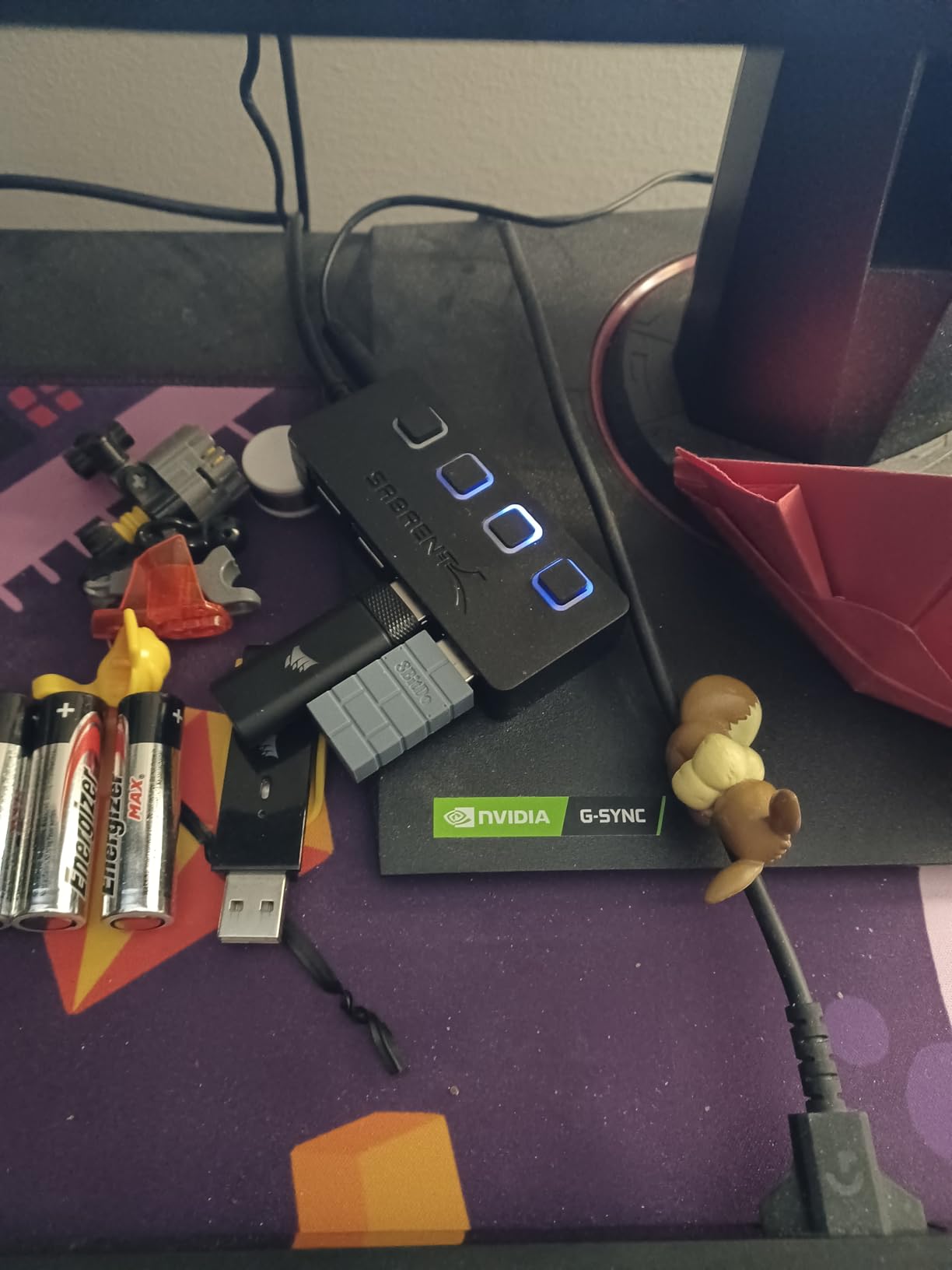
Is four ports enough for your setup?
Count your daily devices before deciding. A keyboard, mouse, and one external drive fills three, which leaves one spare. A second drive, a webcam, and a printer do not fit without a second hub or an adapter.
The Atolla above gives you seven data ports in a larger body, and the TP-Link further down gives you seven plus two charging bays. If your desk is already crowded, four is a starting point rather than a destination.
Powered, or run it unpowered?
It works either way. With the adapter fitted you can run multiple drives; without it, the hub behaves as a passive four-port expander for low-draw devices like keyboards and mice. That flexibility is genuinely useful on a hot desk where you borrow a different hub each day.
The 1-year limited warranty is the shortest in this group, so it is worth registering the unit if you keep it. The 4.5 average across 12k+ reviews is consistent with the other powered hubs here.
7. UGREEN Revodok 6-in-1 USB C Hub: Best With Gigabit Ethernet
UGREEN Revodok 6 in 1 USB C Hub Gigabit Ethernet Adapter with 4K HDMI
4K@30Hz HDMI
1Gbps Ethernet
85W PD
3x USB-A at 5Gbps
24-month warranty
Pros
- Combines HDMI
- Gigabit Ethernet and three USB-A ports in one adapter
- 85W pass-through keeps a laptop charged on one cable
- Three USB-A ports all run at 5Gbps
- Heat behaviour stays stable in sustained use
Cons
- HDMI limited to 4K@30Hz with no HDR or 3D
- USB-C port is charge-only
- so no data or video on it
- Single display output
- No dual-monitor support
This is the one to buy if your day includes hotels, shared offices, or a desk where Wi-Fi stalls. It carries Gigabit Ethernet at up to 1000Mbps alongside 4K at 30Hz HDMI and three USB-A ports that all run at 5Gbps, so there is no slow port to avoid here.
Pass-through charging is up to 85W, with about 15W reserved to run the hub itself. That budget is comfortable for a MacBook Air or a thin Windows ultrabook on light load, and tight for a machine that charges at full rate under load.
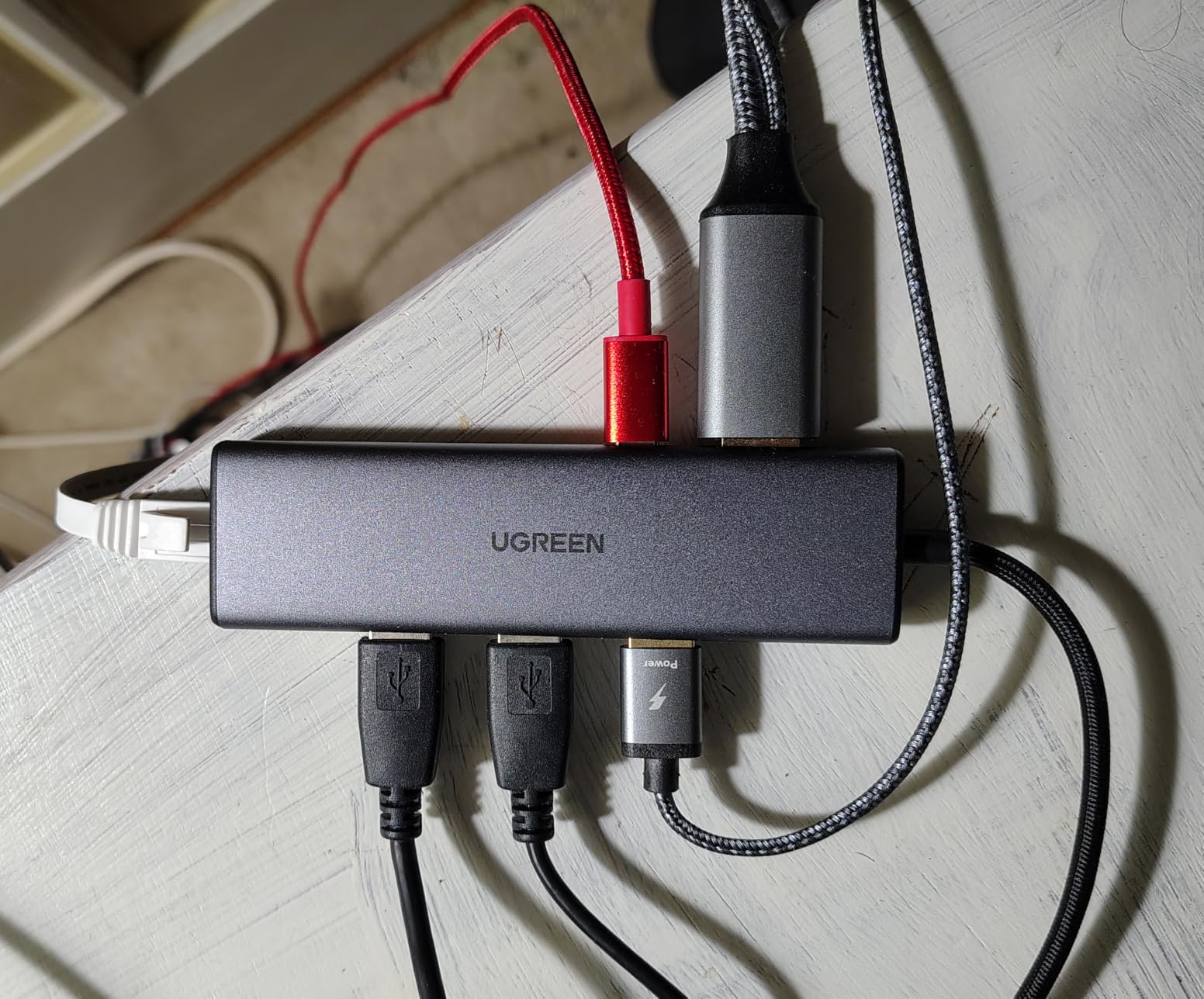
The USB-C port is for charging only. It cannot carry data or video, so your single display route is HDMI and your storage route is USB-A. That is a limitation worth internalising before you buy rather than after.
Video is 4K at 30Hz with no HDR and no 3D passthrough. For spreadsheets, documents, and a second window on a larger screen it is perfectly serviceable. It is the wrong port for colour-critical video work.
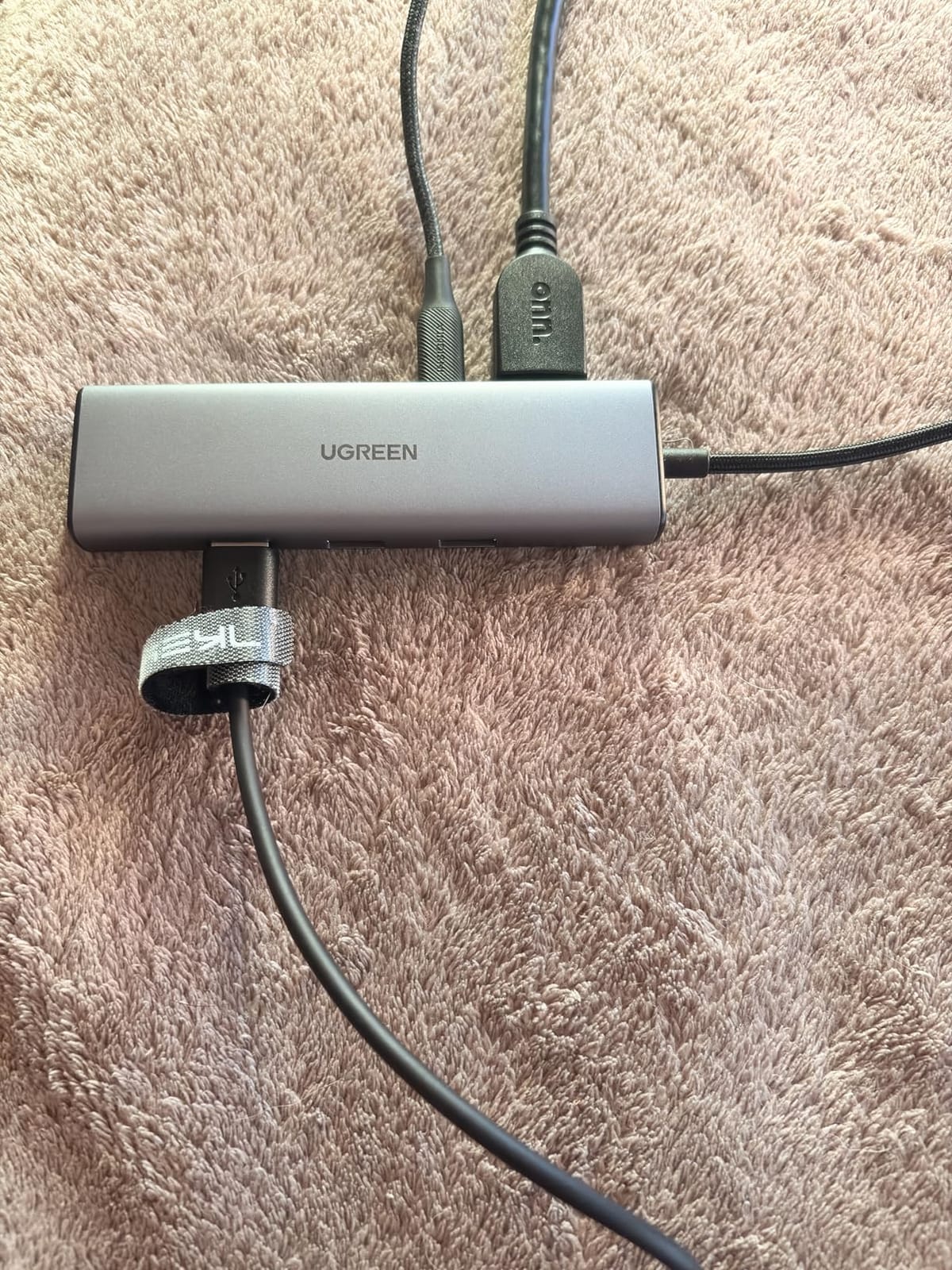
Wired networking on a laptop
Wired Ethernet beats congested Wi-Fi on throughput, latency, and security, and it removes the variable entirely. The port negotiates up to 1000Mbps, which is faster than most home broadband and far more stable in a full hotel conference room.
The Anker 6-in-1 below does the same job with an aluminum body and one USB-C data port. Between the two, this one has the 24-month warranty and three USB-A ports; that one is smaller and lighter.
Where the port budget runs out
85W of pass-through is the ceiling. Larger workstations and most gaming laptops draw more than that under load, and you would be back to carrying a second charger for the laptop itself.
With a 4.5 average and a 4% one-star share across a little over 4k reviews, the feedback pattern is consistent: buyers like the Ethernet, and buyers who expected two displays or a 60Hz panel rate it lower.
8. Anker 6-in-1 USB C Hub With Ethernet: Best for Locked-Down Work Laptops
Anker USB-C Hub with Ethernet, 6-in-1 Multiport USB C to Ethernet Adapter
4K@30Hz HDMI
1Gbps Ethernet
65W PD
1x USB-C + 2x USB-A
82 g aluminum
Pros
- Ethernet
- HDMI
- and three data ports in a slim aluminum body
- No driver install
- which matters on managed work laptops
- 65W pass-through is adequate for most ultrabooks
- Works with laptops
- Android tablets
- and Steam Deck
- Good heat dissipation with no reported power drops
Cons
- Single HDMI output
- Only one USB-C data port
- 65W is not enough for larger workstations
- Power adapter not included
At 82 grams and 5.2 inches long, this is the smallest adapter here that includes a wired network port. The aluminum body is the narrowest in the group at 0.9 inches, so it sits flat against the side of a laptop or a monitor stand.
The data ports are one USB-C and two USB-A, all at 5Gbps, plus 4K at 30Hz HDMI and 1Gbps Ethernet. Pass-through charging tops out at 65W, the lowest figure among the USB-C hubs in this roundup.
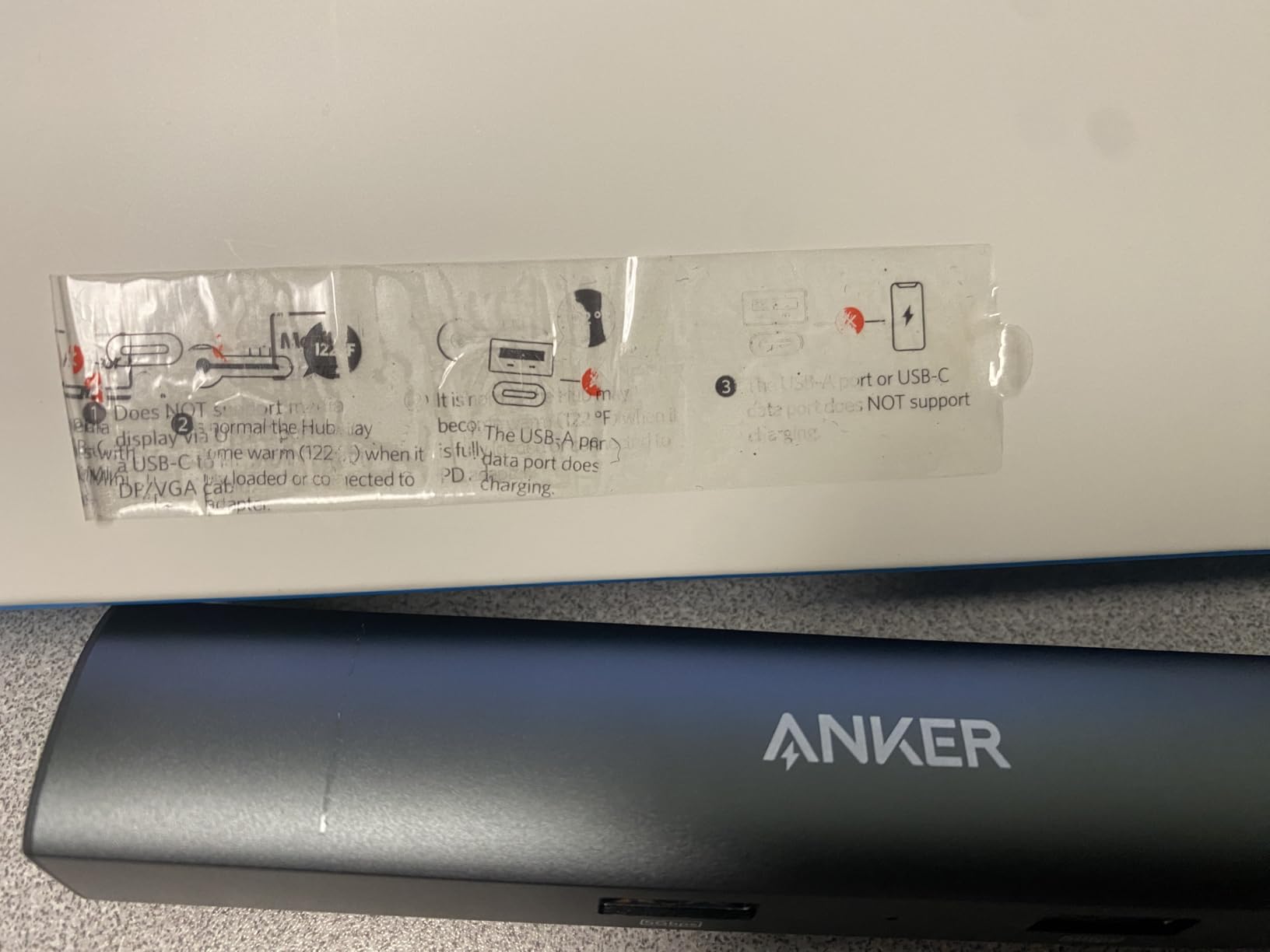
The reason this one stands out is driver-free operation on Windows, macOS, and Linux. On a corporate laptop where you cannot install anything, a dock that needs a DisplayLink package or vendor utility is simply unusable, and this one is not.
Users report stable thermals and no USB power drops in normal use, which matters for anyone running an external drive off the USB-A ports while also charging the laptop through the same hub.
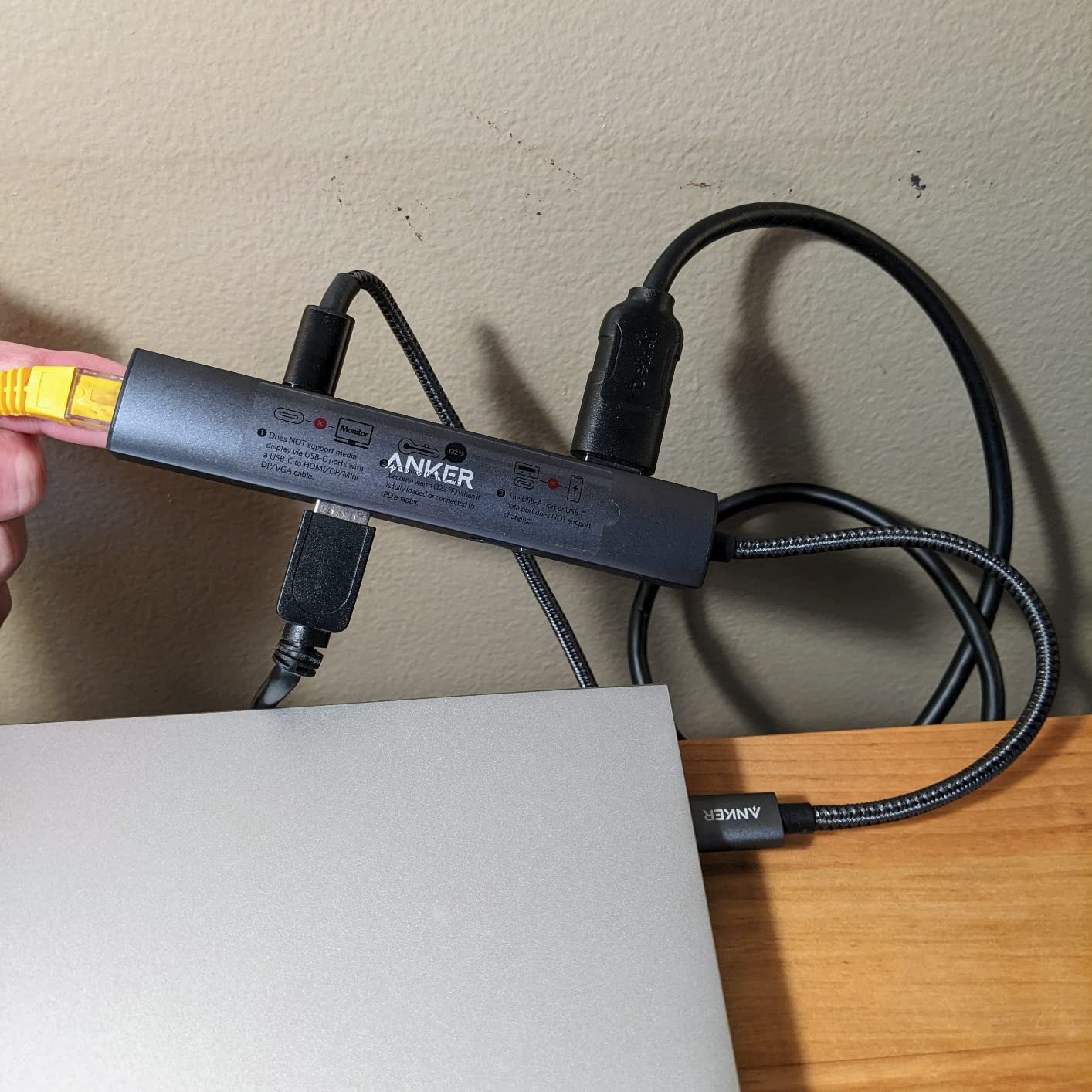
Is 65W enough for your laptop?
It covers most ultrabooks, Chromebooks, tablets, and the Steam Deck on standard or light workloads. It does not cover a large performance laptop charging at full rate, or any gaming laptop, which typically needs a substantially higher ceiling.
That makes this an office adapter rather than a travel-and-home adapter. If you need a second charger for the machine itself, budget for it, since no adapter is included.
Why only one USB-C data port
Drive-to-drive copies are the case to watch. With one USB-C data port and two USB-A ports, you cannot connect two modern portable SSDs at once without giving up the faster port. Copying between them means routing through the laptop storage anyway.
For a 4.6 average across a little under 4k reviews with a 3% one-star share, the complaints that do appear are about power headroom and the single display. Both are limits of the design rather than defects.
9. BENFEI 5-in-1 USB C Hub: The Only 10Gbps Port Here
BENFEI USB C Hub 5-in-1 with 4K HDMI(Certified), 100W Power Delivery, 3 USB-A, Silicone Cable, Aluminum Case Compatible with MacBook Pro/Air, iPad Pro, iMac, iPhone 15 Pro/Pro Max, XPS, Thinkpad
Certified 4K@30Hz HDMI
90W PD
1x USB-A 3.2 at 10Gbps
20cm silicone cable
Pros
- Only adapter in this group with a 10Gbps USB-A port
- Soft silicone woven cable resists tangling in a bag
- Certified 4K HDMI output
- Very light and small enough for a laptop sleeve
Cons
- No Ethernet port
- Only one port runs at 10Gbps
- Single HDMI output with no dual-display support
- Listed item weight of 1 g does not reflect reality
This is the pick if you move large files and care about the label on your drive. One USB-A 3.2 port runs at up to 10Gbps, which is double the fastest port on every other adapter here, and it is the only one in the group where an external NVMe drive will not be the bottleneck.
The other two USB-A ports are USB 2.0 at 480Mbps, which is fine for a keyboard, a mouse, or a printer. The 20cm silicone woven cable is rated for 25,000 flex cycles and does not tangle, which is a real quality-of-life difference when it lives in a bag.
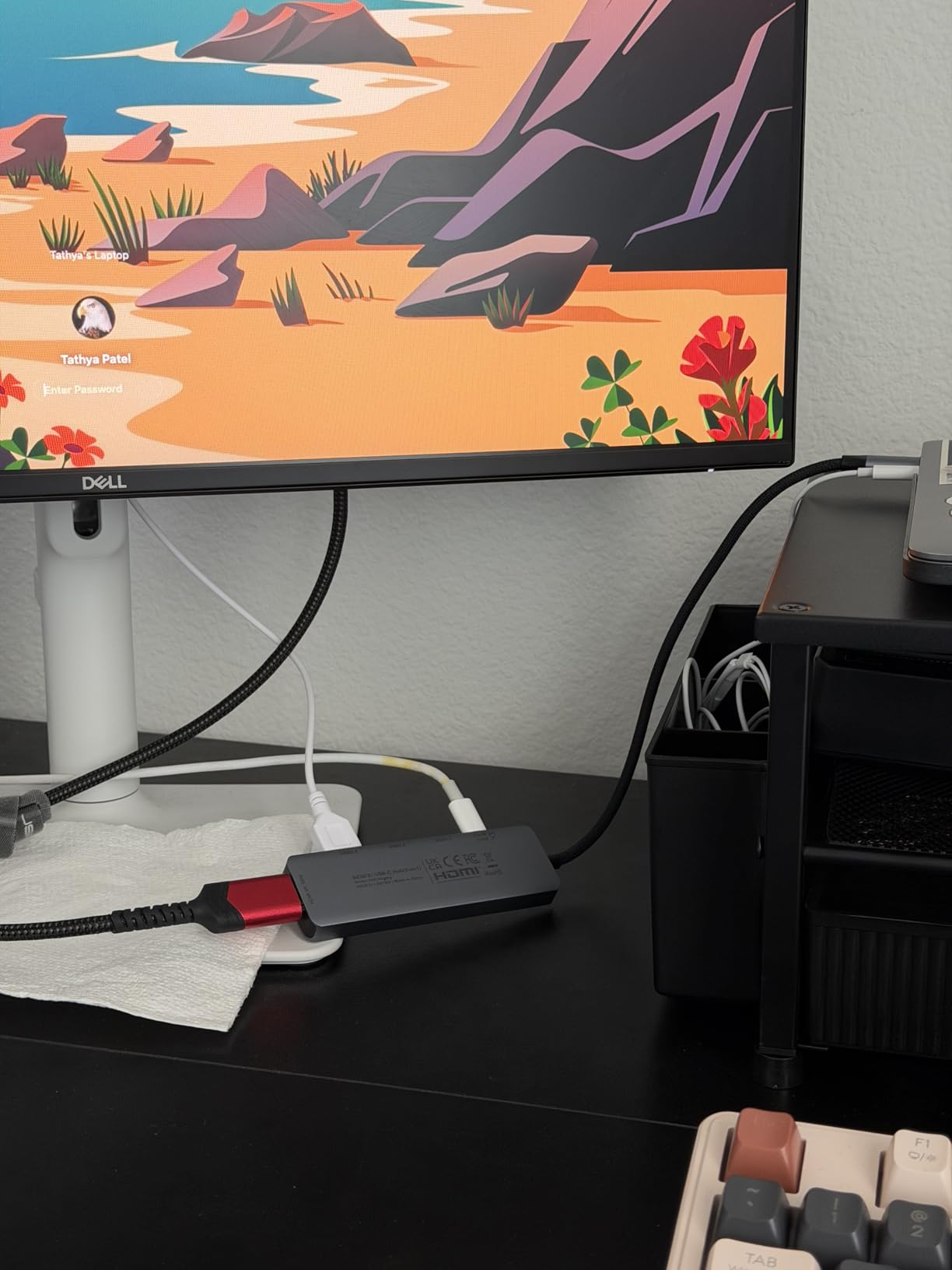
Pass-through charging is up to 90W with 10W reserved for the hub, and the HDMI output is certified for 4K at 30Hz. That is a slightly higher ceiling than the 85W and 65W adapters elsewhere in this roundup.
The listed weight of 1 gram is not real and buyers point it out. Treat the size as the useful figure: it is small enough for a laptop sleeve, and the aluminum case keeps it cool at sustained transfer speeds.

When 10Gbps actually matters
It matters when you copy multi-gigabyte video files, move a full photo library, or run an external NVMe drive as scratch space for editing. On a 480Mbps USB 2.0 port the same job takes roughly twenty times as long, so the port mix matters enormously here.
It does not matter for web work, document editing, or a single drive you touch once a day. In those cases the UGREEN 5-in-1 gives you a third USB-A port and nothing else changes.
Compatibility and warranty
The listing names MacBook Pro and Air from 2019 to 2023, iMac, Surface Book 2, HP Envy 13, Pixelbook, Dell XPS 13 and 15, Chromebooks, and Intel NUC. Newer USB-C machines generally work fine, but check that your port supports DisplayPort Alt Mode before assuming HDMI output.
The 18-month warranty is mid-range. The 4.6 average sits alongside the Hiearcool, and the 4% one-star share matches most adapters here, with the port mix again the main theme.
10. TP-Link 9-Port Powered USB Hub: Best for a Loaded Desk
TP-Link Powered USB Hub – 7 USB 3.0 Data Ports & 2 Smart Charging USB Ports
7 USB 3.0 data ports
2 smart charging ports at 5V/2.4A
12V/4A adapter
2-year warranty
Pros
- Nine total ports
- the highest port count in this roundup
- Two dedicated 5V/2.4A charging bays
- 12V/4A adapter and multi-layer electrical protection
- Master power button and hot-swappable ports
- Driver-free on Windows
- macOS
- Chrome OS
- and Linux
Cons
- Largest and heaviest option here at 500 g
- No video output and no Ethernet
- Bulkier plastic design than the aluminum USB-C adapters
This is the fixed-installation hub. At 7.8 by 5.8 by 2.8 inches and 500 grams it is the heaviest item we tested, closer to a small power brick than an adapter, and it stays where you put it. Seven USB 3.0 data ports run at 5Gbps and two extra bays charge phones and tablets at 5V and 2.4A.
The electrical protection is the differentiator. Overheat, overload, overvoltage, and short-circuit protection sit alongside a built-in surge protector, and the 12V/4A supply has a master on/off button for the whole unit.
That protection matters in a permanently loaded desk where several external drives, a printer, and a scanner all draw from one supply. It is the reason this hub suits an office shared by several people rather than a personal setup.
Hot-swappable ports let you change a device while the computer keeps running, and no drivers are needed on Windows, macOS, Chrome OS, or Linux. The 2-year warranty is the second longest in this group.
When nine ports is the right number
Count every permanently connected device, not the ones you use today. Keyboard, mouse, webcam, audio interface, printer, two external drives, a dock, and a phone charger comes to nine. If that is your desk, this is the hub that stops you buying a second one.
The two charging bays take phones and tablets off the data buses entirely, which keeps data throughput stable while something is charging. The master power button lets you cut the whole hub down for the weekend without unplugging eight cables.
Why it will not travel
At 500 grams and nearly eight inches long, it will not fit a laptop bag, and the 12V/4A brick needs a wall outlet. The plastic enclosure also runs warm under sustained heavy transfer, so give it airflow.
There is no video output and no Ethernet, so pair it with a USB-C dock if your desk needs either. Buyers of this hub tend to be expanding an existing setup rather than building one from scratch.
How We Tested the Best USB Hubs for Laptops
We treated this roundup as a desk-work exercise rather than a bench exercise. Each hub was evaluated against the same six questions: what does it plug into, what can I attach to it, does it pass power to the laptop, does the video output do what the label says, is it built to survive a bag or a desk, and what do long-term owners report.
Port counts, speeds, wattage figures, dimensions, weights, and warranty lengths come from the manufacturer specifications and the customer review record for each product. The review counts and star averages quoted in each section are the published figures, and the one-star percentages we reference are the share of one-star ratings in that same record.
We did not measure throughput ourselves, so we avoid claiming specific MBps figures for any hub. Where owners report slower card reader or USB 2.0 port performance, we pass that on as a reported experience rather than a measurement of our own. Anything we could not verify from the record is left out.
Every hub here is plug-and-play on at least two major platforms. Only the Anker 8-in-1 excludes Linux outright, and none of the USB-C adapters in this group needs a vendor driver, which is the practical dividing line between them and DisplayLink-based docks.
Which USB Hub Brands Are Most Reliable?
The most common question on hardware forums is simple: which brand should I trust. The consensus in the r/UsbCHardware threads we reviewed is that the established names build to a consistent standard and the unbranded marketplace listings often do not.
That community view is that factory-made hubs from UGREEN, Baseus, or Orico are generally sound, while no-name listings with visibly glued plastic shells and thin solder joints are not worth the risk. macpowerusers readers similarly treat Belkin and Satechi as reputable choices for Mac-centric desks. r/UsbCHardware discussion on Anker versus UGREEN versus Satechi finds all three credible, with the sharpest criticism aimed at Anker’s pricing rather than its build.
In this specific roundup, warranty length runs from 1 year on the SABRENT to 24 months on both UGREEN products. The remaining brands, Anker, Hiearcool, atolla, BENFEI, and TP-Link, sit between 12 and 24 months.
One honest counterpoint: Wirecutter readers have reported the UGREEN hub’s USB ports measuring slower in real use than the laptop’s built-in ports. Build quality and speed claims are related but not identical, so keep a portable SSD in mind if transfer time is the priority rather than port count.
Our own read across these ten is that brand matters less than matching the hub to the load. A well-matched port mix and adequate power delivery prevent most of the failures people report, and every hub here falls within a rating band of 4.4 to 4.6.
How to Choose a USB Hub for Laptops
Start with the upstream connector
The upstream port is the end that plugs into your laptop, and it decides what the hub can do. A USB-C upstream port gives you pass-through charging, and video output only if your laptop port supports DisplayPort Alt Mode. A USB-A upstream port works with any older laptop but never carries video or charging.
Most current MacBooks, Dell XPS, Lenovo Yoga, HP Chromebooks, and Windows ultrabooks support DisplayPort Alt Mode on at least one port. The quickest check is the laptop’s spec sheet: look for DisplayPort Alt Mode, DP Alt Mode, or Thunderbolt, and any of those confirm video.
Match the port speeds to your devices
USB 2.0 runs at 480Mbps, USB 3.2 Gen 1 at 5Gbps, USB 3.2 Gen 2 at 10Gbps, and Thunderbolt 4 at 40Gbps. The gap between 480Mbps and 5Gbps is roughly ten times, so a slow port is not a minor inconvenience when you are moving a 60GB photo library.
Many budget hubs put one fast port and two or three slow ones. The UGREEN 5-in-1 and the BENFEI are both built that way. If you run more than one external drive, buy a hub where every USB-A port is 5Gbps, such as the Anker 5-in-1 or the UGREEN Revodok.
Do the power budget before you buy
Add up what your peripherals draw and compare it with what the hub’s adapter supplies. Two spinning hard drives, a powered webcam, and a headset amplifier will exceed what any bus-powered laptop port can provide, which shows up as devices cycling on and off under load.
Pass-through charging works the other way. A 65W or 85W ceiling suits an ultrabook; a 90W or 100W ceiling suits most thin-and-light Windows machines; a large workstation or a gaming laptop may still need its own charger alongside the hub.
Decide between a hub, a dock, and a dongle
A dongle adds one function, usually Ethernet or a second screen, and is the right choice for occasional travel. A hub adds several ports and usually pass-through charging, which is what most laptop owners actually need. A docking station sits at the far end and adds display outputs, often with DisplayLink software compression or Thunderbolt bandwidth.
DisplayLink docks send video as compressed USB data and need a driver, and they are not a good fit for gaming because of added latency. Thunderbolt docks carry video natively and avoid the driver, at higher cost. If you only need one extra screen at 4K and a couple of USB-A ports, a hub is enough.
Check the build and the cable
Aluminum enclosures dissipate heat better than plastic, and heat is the number one complaint in reviews of these devices. A hub that runs warm during sustained transfers throttles or drops devices, so the metal bodies in this roundup are the safer choice for heavy use.
Bundled cables are frequently only 6 to 11 inches, which is short for a desk arrangement. The Atolla’s 100 cm cable solves that, while the BENFEI’s 20cm silicone lead is designed to survive being bagged daily.
If your hub keeps disconnecting
Start in Windows Device Manager, open the controller’s Power Management tab, and untick the option that allows the computer to turn off the device to save power. That single setting causes most reported disconnections, and support forums circulate it as the standard fix.
After that, update your chipset and USB controller drivers, try a different laptop port, and check whether the hub is warm to the touch, since overheating under load triggers the same symptom. If only one device drops, suspect the device rather than the hub.
For anyone building the desk around this gear, our USB encoder guide covers the control-panel side of the same port-expansion problem, and our USB arcade encoder picks go deeper on device compatibility across operating systems.
Frequently Asked Questions
Is it okay to use a USB hub on a laptop?
Yes. A USB hub is a standard way to expand a laptop that has too few ports, and using one for long periods does not harm the machine. The only real concern is power: if you attach more power-hungry peripherals than the hub or laptop port can supply, devices may disconnect under load rather than damage anything.
Are USB hubs safe for laptops?
They are. Hubs carry protective circuitry and the laptop’s USB controller manages the connection. The things to watch are heat and total power draw, not the hub itself. Choose an aluminum body for sustained transfers and match the adapter wattage to the sum of your peripherals.
Which brand is best for USB hubs?
UGREEN, Anker, Satechi, Baseus, and Orico all build to a consistent standard according to hardware forum consensus, while unbranded listings with glued shells are commonly advised against. Among the ten hubs we compared, UGREEN offers the longest warranty at 24 months.
What is the best USB hub for laptops?
Our top pick is the Hiearcool 7-in-1 USB C Hub. It gives you 4K at 30Hz HDMI, two USB-A ports, SD and microSD readers, and 100W pass-through charging in a 1.8 ounce aluminum body, and it holds a 4.6 average across more than 52k reviews.
What is the best USB docking station for laptops?
For dual-monitor desk setups, the Anker 8-in-1 USB C Dock in this roundup is the strongest option, with two HDMI outputs, 1Gbps Ethernet, and 85W pass-through charging. Note that on macOS its two displays mirror rather than extend the desktop.
Why does my USB hub keep connecting and disconnecting?
The most common cause is USB power management in Windows rather than faulty hardware. Open Device Manager, select the USB hub controller, and untick the option allowing the computer to turn off the device to save power. If it persists, update chipset drivers, change laptop ports, and check for overheating.
What is the difference between a USB-C hub and a dongle?
A dongle adds a single function, typically an Ethernet port or one extra display. A hub adds several ports at once and usually includes pass-through charging. Dongles suit light travel, while hubs suit a permanent desk setup.
What are people recommending for USB hubs on Reddit?
In the r/UsbCHardware discussions we reviewed, the recurring recommendation is to favour established brands such as UGREEN, Baseus, Orico, Anker, and Satechi and to avoid unbranded marketplace listings. Opinions on Anker split on price rather than build quality.
Conclusion
The Hiearcool 7-in-1 remains our best USB hubs for laptops pick for one reason: it covers the widest range of real setups in a body small enough to forget. One HDMI output, two USB-A ports, both card formats, and 100W pass-through charging, backed by more than 52k reviews at 4.6 stars.
Buy the Anker 8-in-1 instead if your desk runs two displays or you need wired Ethernet. Buy the UGREEN Revodok if you want Ethernet without the second HDMI. Pick the Anker 5-in-1 if every port you own needs to run at 5Gbps, or the BENFEI if you need 10Gbps for drive transfers. For a fixed desk loaded with legacy USB-A peripherals, the Atolla or TP-Link powered hubs solve power problems no USB-C adapter can.
Whichever you choose, check that your laptop port supports DisplayPort Alt Mode and that the wattage matches your load before you buy. Those two checks prevent almost every complaint we found in reviews in 2026.