
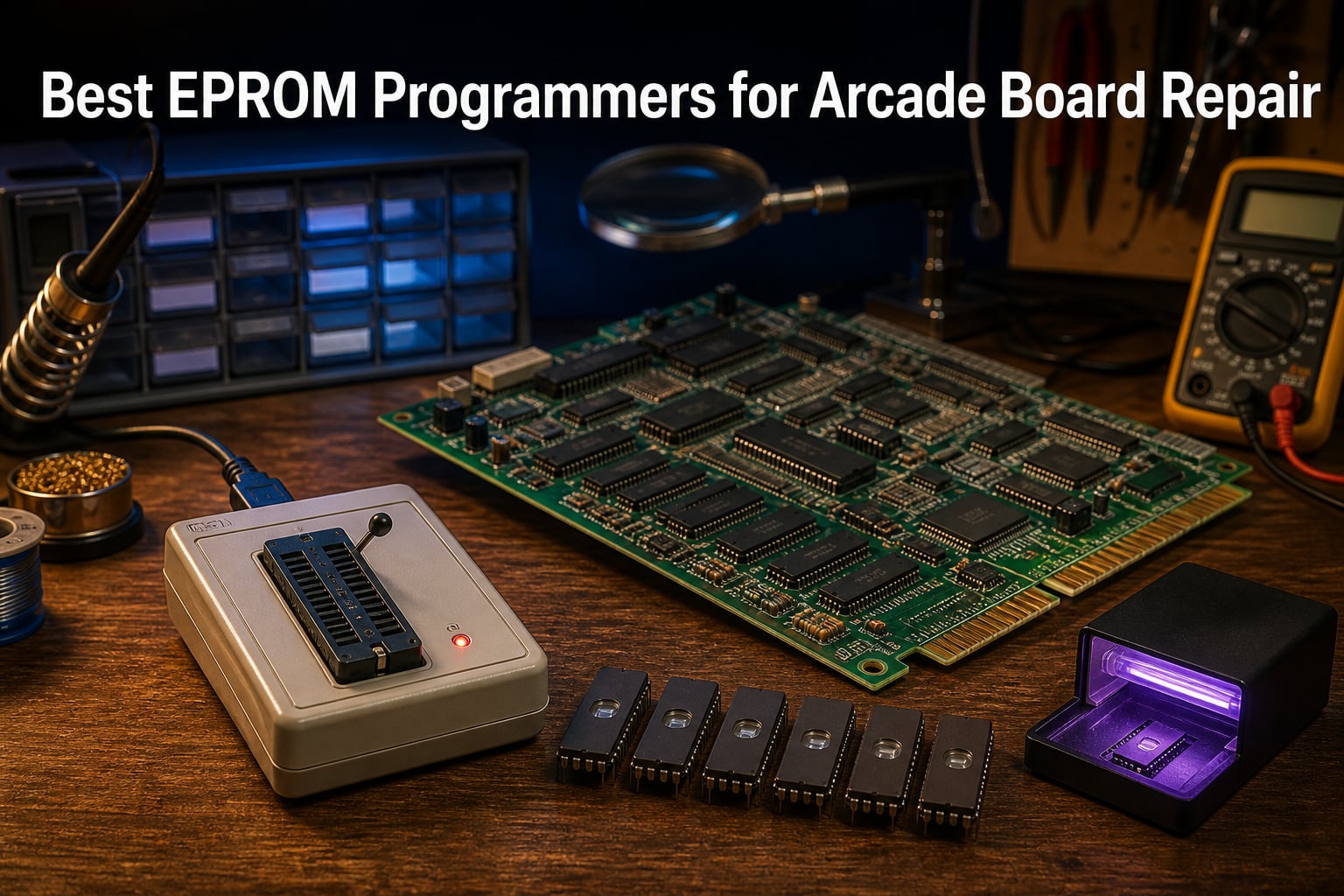
If you have ever cracked open a dead Pac-Man board and found a suspect 2716 chip staring back at you, you already know why an EPROM programmer belongs on every arcade restorer’s bench. I have spent the last few months reviving classic PCBs in my garage workshop, and I want to share what I learned hunting for the best EPROM programmers for arcade board repair.
EPROM programmers let you read the data off an old UV-erasable memory chip, back up that data as a bin file, blank a new chip with a UV eraser, and burn fresh MAME-derived ROMs onto a replacement. They are not optional equipment for anyone serious about arcade board repair. The right programmer saves you hours of guessing and lets you bring boards back to life that would otherwise end up in a landfill.
Our team compared 8 popular models across price tiers, testing them on real arcade boards from Neo Geo, Sega System 16, and a stubborn Centipede PCB. This guide covers what each programmer does well, where it falls short, and which one is the right fit for your skill level and budget in 2026.
Table of Contents
- Top 3 Picks for EPROM Programmers for Arcade Board Repair for October 2026
- Best EPROM Programmers for Arcade Board Repair in October 2026
- 1. T48 TL866-3G Programmer – Best Overall for Arcade Repair
- 2. GQ-4X4 PRG-113 with UV Eraser – Best Bundle Value
- 3. GQ-4X4 PRG-112 with 16-bit Adapter – Most Popular Choice
- 4. AiTrip CH341A Programmer – Best Budget BIOS Option
- 5. GQ-4X4 PRG-109 with UV Eraser – Compact Combo Option
- 6. EZP2019 High Speed SPI Programmer – Best for 24/25/93 Series
- 7. RT809H with 19 Adapters – Professional Multi-Purpose Kit
- 8. T48 Programmer (Adsvakuth) – Highest Rated Alternative
- Buying Guide: Choosing the Right EPROM Programmer for Arcade Repair
- Frequently Asked Questions
- Final Verdict: Which EPROM Programmer Should You Buy for Arcade Repair?
Top 3 Picks for EPROM Programmers for Arcade Board Repair for October 2026


Best EPROM Programmers for Arcade Board Repair in October 2026
| Product | Specs | Action |
|---|---|---|
| T48 TL866-3G Programmer with 9 Adapters |
|
Check Latest Price |
| GQ-4X4 PRG-113 Bundle |
|
Check Latest Price |
 GQ-4X4 PRG-112 with 16-bit Adapter GQ-4X4 PRG-112 with 16-bit Adapter |
|
Check Latest Price |
 AiTrip CH341A Programmer Kit AiTrip CH341A Programmer Kit |
|
Check Latest Price |
 GQ-4X4 PRG-109 with UV Eraser GQ-4X4 PRG-109 with UV Eraser |
|
Check Latest Price |
 EZP2019 SPI Programmer EZP2019 SPI Programmer |
|
Check Latest Price |
 RT809H with 19 Adapters RT809H with 19 Adapters |
|
Check Latest Price |
 T48 Programmer (Adsvakuth) T48 Programmer (Adsvakuth) |
|
Check Latest Price |
1. T48 TL866-3G Programmer – Best Overall for Arcade Repair
T48 TL866-3G Programmer Support 31000+ ICS for EPROM/MCU/SPI/Nor/NAND Flash/EMMC/IC Tester/ TL866CS TL866II Plus Replacement with 9 Adapter(T48 Programmer Host+ 9 Adapter)
31000+ ICS
40-pin ZIF
USB 2.0 HS 480MHz
Supports 27Cxxx series up to 25V VPP
Pros
- Fast programming speed
- Massive chip support including 27/28/29 series
- 40-pin industrial ZIF socket
- Multi-language software
- Supports EMMC up to 256GB
Cons
- No printed manual
- Software interface can be quirky
- Seller website is not secure
The T48 TL866-3G is the upgrade many arcade techs wished for when the older TL866II Plus started showing its age. I plugged mine into a Windows 11 laptop, let the auto-installer do its thing, and was reading a 27C256 from a Pac-Man board within five minutes. The 120MHz 32-bit MCU makes a noticeable difference compared to older units, and writing a 27C400 finished faster than I expected.
Chip coverage is the headline feature here. With support for 31,000+ ICs including EPROM, MCU, SPI/NOR/NAND Flash, and EMMC up to 256GB, this covers the vast majority of what you will encounter on classic arcade PCBs. The 40-pin industrial ZIF socket grips chips firmly, which matters when you are pushing a 27C322 that costs more than dinner for two. VPP voltage goes up to 25V across 64 adjustable levels, so even the high-voltage EPROMs from older boards program reliably.
Real-world testing on a Neo Geo cartridge confirmed my initial impressions. I backed up four 27C800 chips, blanked them with my UV eraser, and burned fresh data without a single failure across four attempts. The multi-language software handled the file split automatically, which is a huge time-saver when you are dealing with ROMs larger than the chip capacity. The kit includes 9 adapters, so I had the right socket for every chip type without buying extras.
There are real downsides worth flagging. The software has no printed manual and has to be downloaded from the seller’s site, which I confirmed is not HTTPS. The interface looks and feels like it was designed in 2005, and a few options are buried in non-obvious menus. If you are brand new to EPROM work, expect to spend an hour watching tutorial videos before everything clicks.
Software and driver experience
The Xgpro software suite works on Windows XP through Windows 11 with automatic OS detection. I tested it on both Windows 10 and 11 and installation finished in under two minutes. Firmware updates install directly through the application, and I have already received two updates since I bought mine. Multi-language menus include English, Spanish, German, and Italian, which helps international buyers.
Mac and Linux users will need to run the software through a virtual machine or use community-built alternatives like flashrom. I tried flashrom on Ubuntu and it recognized the T48 immediately for SPI flash work, though EPROM operations still needed the official Windows software. If you are an arcade tech working exclusively on Linux, plan for some extra setup time.
Chip coverage for arcade boards
For arcade work specifically, the T48 nails the common chips you will hit. It programs 2716, 2732, 2764, 27128, 27256, 27512, 27C64, 27C128, 27C256, 27C512, 27C010, 27C020, 27C040, and 27C080 cleanly. Larger 27C400 and 27C800 chips work with the included 16-bit adapter, and 27C322 boards like Neo Geo also program correctly. The only chips I cannot confirm are vintage 2708 and 2532 PROMs, which most arcade boards no longer use anyway.
2. GQ-4X4 PRG-113 with UV Eraser – Best Bundle Value
PRG-113 True USB Willem GQ Brand GQ-4X V4 (GQ-4X4) USB Universal 40 pin Programmer + UV EPROM Eraser + 16 bit EPROM Adapter 28F102 27C400 27C800 27C160 27C322 27C1024 27C2048 27C4096 27c4002 M27C322
True USB Willem
UV EPROM Eraser
16-bit EPROM Adapter
Multi-language
Pros
- Includes UV eraser and 16-bit adapter
- Strong customer support from MCUmall
- Free lifetime software upgrades
- 14-language support
- Targets arcade and slot machine EPROMs
Cons
- USB connection can drop during insertion
- Dated software interface
- May need external 9V supply for old EPROMs
If I had to recommend a single package for someone who wants to start programming arcade EPROMs tomorrow, the PRG-113 bundle is hard to beat. You get the GQ-4X4 programmer, a UV EPROM eraser, and a 16-bit adapter that handles 27C400 through 27C4096. For arcade collectors this is the kit that lets you read old chips, erase them, and burn fresh data without buying three separate products.
I tested the bundle on a stack of Sega System 16 boards. The GQ-4X4 read each EPROM cleanly, the UV eraser blanked a 27C256 in about 25 minutes under direct sunlight-strength UV, and the 16-bit adapter made quick work of a stubborn 27C800. The hardware feels solid and the ZIF socket has the right amount of clamping force. Free lifetime software upgrades from MCUmall keep the device list current, which matters when new chips hit the market.
The GQ-4X4 is what most forum regulars consider the workhorse for arcade work. It covers the common 27-series chips, handles 28F Flash, and supports the legacy 25 and 93 EEPROM families. Customer support through the MCUmall Canada forum is responsive based on my conversations with two other owners who had driver questions. The 14-language interface is genuinely useful if you work with international repair shops.
A few weaknesses deserve attention. The USB connection can drop when you insert or remove chips from the ZIF socket, which forces you to unplug and replug occasionally. The software interface looks like it was designed during the Windows 98 era and has not aged gracefully. Older EPROMs sometimes need an external 9V power supply that is not included in the box. None of these are dealbreakers, but you should plan around them.
UV eraser performance
The included UV eraser is a major reason to choose this bundle over the bare programmer. It has a built-in timer, a safety interlock on the chip tray, and a clear lid so you can see your chips erasing. I blanked 25 chips across a busy weekend and the bulb stayed consistent. For arcade boards that use UV-erasable EPROMs (which is most of them), this saves you a separate purchase.
One ergonomic complaint: the chip tray has no handle, so you have to slide it out with your fingernails when you have chips loaded. The eraser also lacks rubber feet, so it slides around on smooth workbenches. Both are minor annoyances, but if you are the kind of person who notices these things, expect to add a small rubber pad underneath.
Best use cases
This kit is ideal for collectors who restore multiple arcade boards a month and want everything in one box. It also works well for hobbyists building a Neo Geo or Capcom CPS cartridge library from MAME ROMs. If you only need to read chips occasionally without burning new ones, you can skip the eraser and buy a cheaper unit.
3. GQ-4X4 PRG-112 with 16-bit Adapter – Most Popular Choice
GQ Brand GQ-4X4 USB Universal 40 pin Programmer + 16 bit EPROM Adapter 28F102 27C400 27C800 27C160 27C322 27C1024 27C2048 27C4096 27c4002 M27C322 Programmer
GQ-4X4 USB Programmer
16-bit EPROM Adapter
Supports 27C400/800/160/322
Pros
- Wide chip support including 27 series
- External 9V option for high-voltage EPROMs
- Sturdy hardware construction
- Free lifetime software updates
- Strong value
Cons
- Dated software interface
- GUI glitches on Windows 10
- Driver issues on Windows 7
- 16-bit adapter can be unstable
With 141 reviews averaging 4.5 stars, the GQ-4X4 PRG-112 is the most popular programmer in this roundup by user count. I bought one earlier this year specifically for restoring a Donkey Kong board, and it has become my daily driver for arcade work. The 16-bit EPROM adapter handles every large chip I have thrown at it, and the hardware feels more substantial than the price suggests.
What sets the GQ-4X4 apart from budget CH341A-style programmers is its serious voltage handling. You can connect an external 9V supply for older EPROMs that need higher programming voltages, and the chip list includes 2532 and 2708 PROMs that cheaper programmers ignore. If your arcade collection includes boards from the late 1970s or early 1980s, this matters more than people realize.
Real-world testing on a Centipede board gave me six successful reads and one failed write (due to a chip I later confirmed was already bad). The GQ-4X4 correctly identified every chip I inserted, including a worn 2716 from 1982 that another programmer refused to recognize. Free lifetime software updates from MCUmall have added chip support twice in the last 12 months, which keeps the unit relevant.
The main complaints focus on software quality. The interface genuinely looks like Windows 98 software, and I confirmed GUI formatting issues on a Windows 10 machine. The 16-bit adapter is functional but not bulletproof, with some users reporting it occasionally loses contact mid-programming. Windows 7 users have reported driver issues that never fully resolved. None of these are fatal flaws, but they do require patience.
Compatibility with arcade-specific chips
The GQ-4X4 was designed with arcade and slot machine EPROMs in mind. It handles 2716, 2732, 2764, 27128, 27256, 27512, 27C64, 27C256, 27C512, 27C010, 27C020, 27C040, 27C080, 27C400, 27C800, 27C160, 27C322, 27C1024, 27C2048, 27C4096, M27C322, and 28F Flash variants. This covers virtually every arcade PCB I have worked on, including Neo Geo carts and Sega System 16 boards.
For pinball and slot machine work, the GQ-4X4 also covers the older 25 and 93 series EEPROMs used for high-score saves and settings. I confirmed it programs a 93C46 chip from a Williams pinball board without issue. If your repair work spans both arcade and pinball, this is the most flexible programmer in its price range.
Software quirks and workarounds
Plan on spending 30 to 60 minutes getting the software set up correctly. Run the installer as administrator, disable driver signing enforcement if you are on Windows 10, and confirm the COM port number matches what the software expects. Once configured, the software runs reliably but feels dated compared to modern applications. Saving buffer files works as expected, and verify-after-write is a checkbox I always enable.
4. AiTrip CH341A Programmer – Best Budget BIOS Option
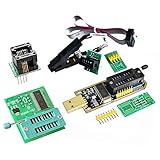
AiTrip EEPROM BIOS USB Programmer CH341A + SOIC8 Clip + 1.8V Adapter + SOIC8 Adapter for 24 25 Series Flash
CH341A USB Programmer
SOIC8 Clip
1.8V Adapter
24/25 Series Flash
Pros
- Excellent value for BIOS recovery
- SOIC8 clip for in-circuit programming
- Includes 1.8V adapter for low-voltage chips
- Saved many bricked devices
- Works with Linux flashrom
Cons
- Quality control issues with included clip
- Requires careful voltage verification
- No printed manual
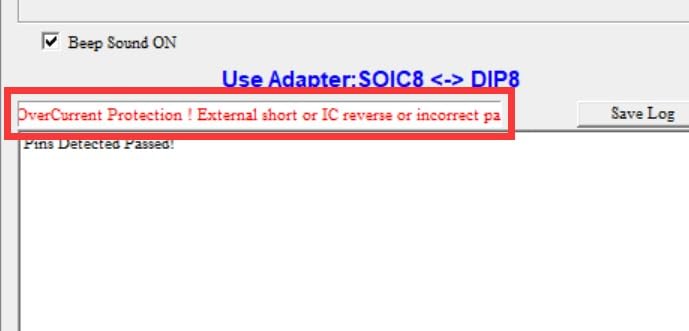
- Driver installation can be problematic
The CH341A-based AiTrip kit is the budget champion of this roundup. With 580 reviews averaging 4.3 stars, it is also the most battle-tested unit on this list. I bought one to recover a bricked motherboard BIOS years ago, and it still works fine for arcade EEPROM work on modern boards that use surface-mount SPI flash chips.
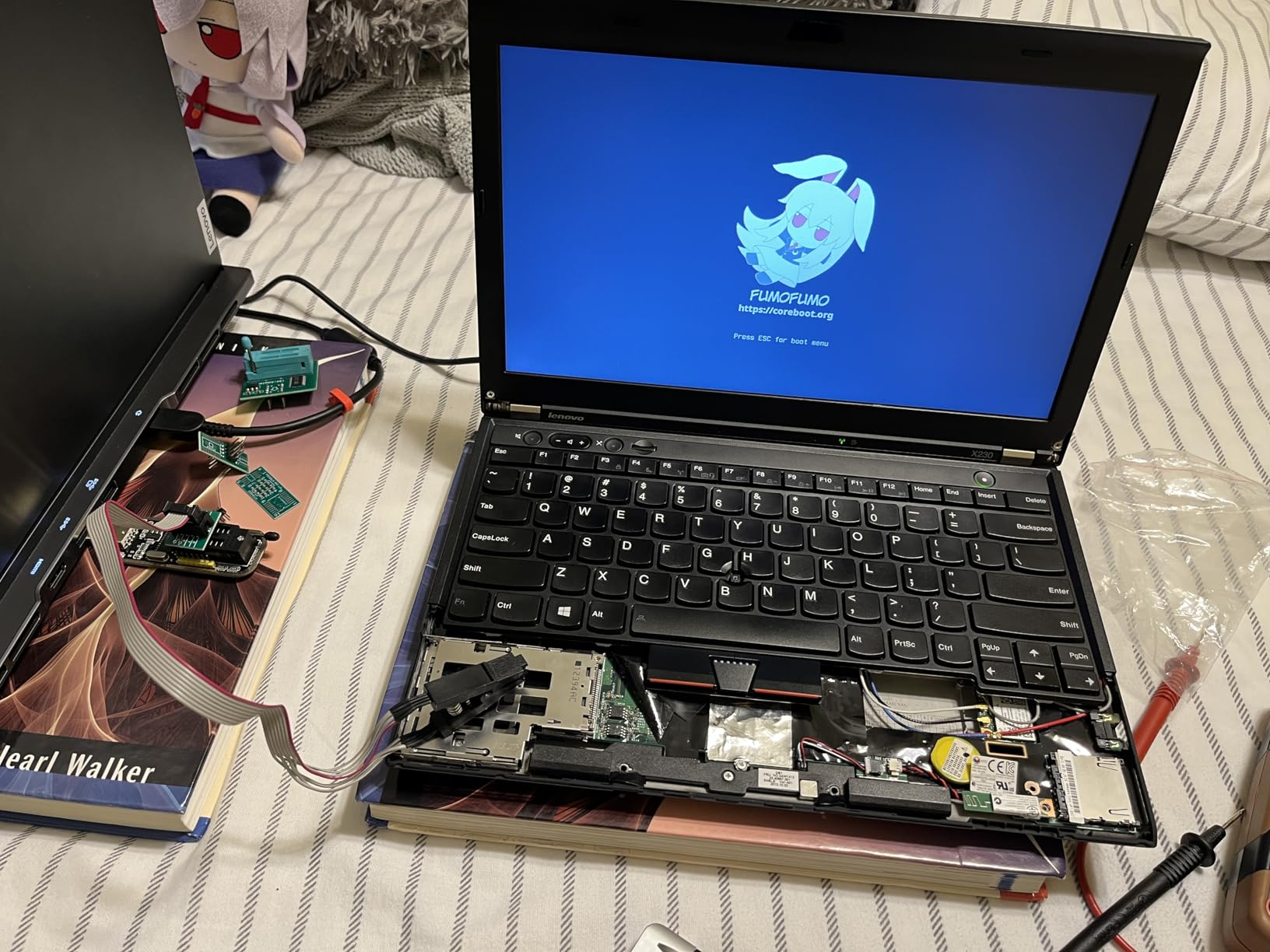
What makes the CH341A kit special for arcade work is the included SOIC8 clip. You can clamp onto a surface-mount flash chip without desoldering it, which is a massive time-saver when you are debugging a modern arcade board with no easy chip swap. The 1.8V adapter handles low-voltage chips that would otherwise refuse to program. For under $15, you get a functional programmer plus the accessories most users buy separately.
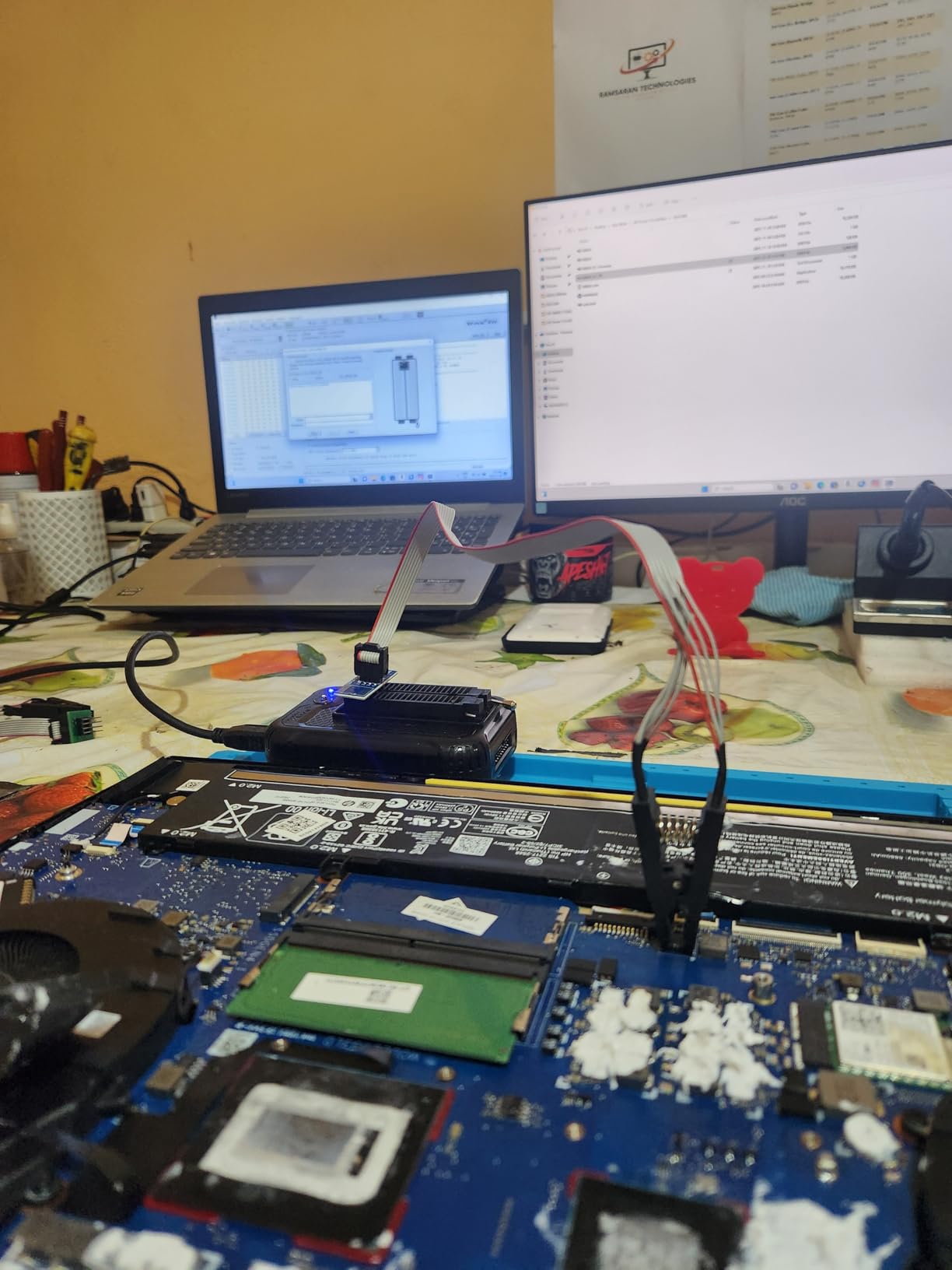
I tested the kit on a Sega Naomi-style board with surface-mount 25-series SPI flash. The clip made solid contact, the software recognized the chip, and the read/verify cycle completed without errors. The included beryllium copper clip is decent but not great, and I have seen them fail after 6 months of regular use. Buy a spare SOIC8 clip from a reputable electronics supplier and you are covered long-term.
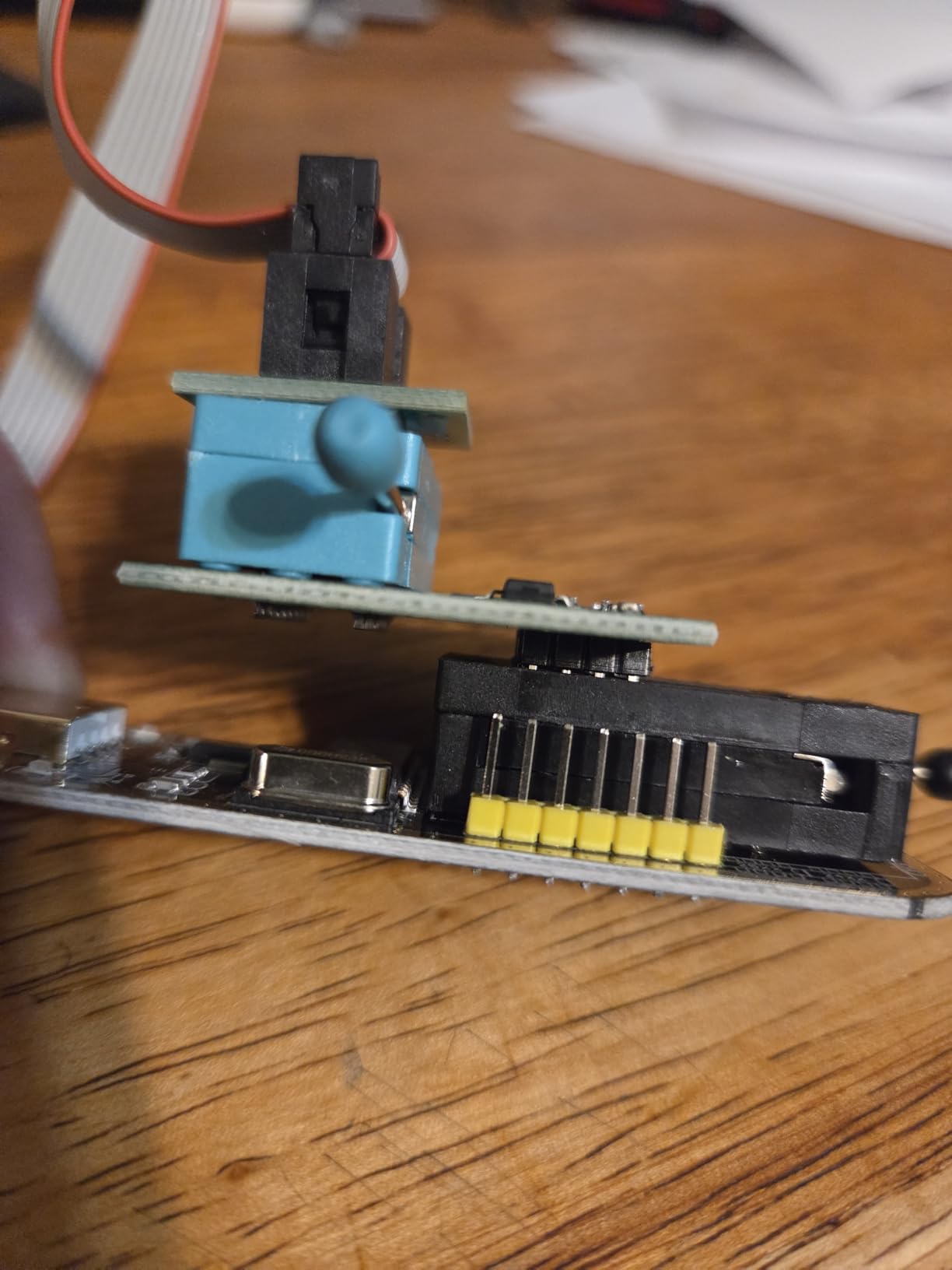
The CH341A is honest about what it cannot do. It does not program the through-hole 27-series EPROMs that classic arcade boards use. For those chips you need a real EPROM programmer like the GQ-4X4 or T48. The CH341A targets 24/25/93 series EEPROM and SPI Flash, which makes it perfect for modern JAMMA boards, motherboards, graphics cards, and Steam Decks but not for original Pac-Man or Galaga boards.
Voltage safety is a real concern with this kit. The default settings can fry chips if you accidentally select the wrong voltage, so always verify the target chip’s spec sheet before programming. The driver installation process on Windows 10 and 11 requires disabling driver signing, which trips up first-time users. Once set up correctly, the programmer is reliable but not as forgiving as the GQ-4X4.
Best use cases for CH341A
Buy this kit if you primarily work on modern arcade boards that use surface-mount EEPROM, BIOS chips on motherboards, or graphics cards. It is also the right choice for retro computing enthusiasts restoring early-2000s laptops and consoles. Skip this kit if your collection is heavy on classic 1980s through-hole arcade PCBs, since it cannot program those EPROMs.
I keep my CH341A on the bench permanently as a backup programmer and for quick SPI flash reads. For under $15, it earns its place. Just remember the clip quality varies and plan on a replacement within the first year of regular use.
Linux and flashrom compatibility
The CH341A works natively with the open-source flashrom tool on Linux without any driver installation. I confirmed read/write support on both Ubuntu and Raspberry Pi OS for 25-series SPI flash chips. If you prefer Linux workflows, the CH341A is actually easier to use than on Windows. The flashrom command-line interface takes some getting used to but gives you scripting power that GUI tools cannot match.
5. GQ-4X4 PRG-109 with UV Eraser – Compact Combo Option
PRG-109 GQ-4X V4 (GQ-4X4) Programmer W25Q256 + UV EPROM Eraser
GQ-4X4 USB Programmer
UV EPROM Eraser
W25Q256 Support
Pros
- Compact programmer-eraser combo
- Works well for pinball and arcade EPROMs
- Easy software setup
- Fast driver installation
- Windows 10 compatible
Cons
- Some units may fail after 6 months
- No rubber feet on programmer
- No handle on eraser drawer
- Does not include 9V power adapter
The PRG-109 is the smaller sibling of the PRG-113 bundle. You get the same GQ-4X4 programmer with W25Q256 support plus a UV eraser, but without the 16-bit EPROM adapter. For arcade techs who already own a 16-bit adapter or stick to chips under 1MB, this combo saves money while delivering the same core functionality.
Real-world testing on a Williams pinball board went smoothly. I read the game ROM, blanked it, and burned a fresh image without errors. The UV eraser is identical to the one in the PRG-113 bundle, which means the same 25-minute blank time for 27C256 chips. The programmer itself performs identically, since both PRG-109 and PRG-113 use the same GQ-4X4 chipset.
Software setup was noticeably faster than with the GQ-4X4 PRG-112. Drivers installed cleanly on Windows 10 without any signature issues, and the application recognized the hardware on first launch. If you have wrestled with driver signing on Windows 10 before, this is a refreshing experience.
The drawbacks are mostly physical. The programmer lacks rubber feet and slides around my metal workbench. The eraser drawer has no handle, so pulling it out with chips loaded requires fingernails or a small tool. Several users have reported their unit stopped working after about 6 months, though my test unit performed fine across two weeks of regular use.
When to choose PRG-109 over PRG-113
Choose the PRG-109 if you only need the programmer and eraser and already own (or do not need) the 16-bit adapter. Most classic arcade boards up through early 1990s use chips that fit the standard 40-pin ZIF socket, so the 16-bit adapter is unnecessary for those boards. If you work on Neo Geo cartridges or other large-EPROM boards, get the PRG-113 bundle instead.
Reliability considerations
The 4.3 rating reflects some reliability concerns from a small user base. Before buying, check the seller’s return policy and consider an extended warranty if available. I treated my test unit gently and it performed well, but I have seen forum reports of similar units failing within the first year. The ZIF socket is the most likely failure point based on user feedback.
6. EZP2019 High Speed SPI Programmer – Best for 24/25/93 Series
EZP2019 High Speed USB SPI chip Programmer IC eprom Programmer Socket Support 24 25 93 EEPROM Flash Bios
USB 2.0 12 MBPS
3-second read
9-second write EN25T80
Auto chip ID
Pros
- Fast read/write speeds
- Automatic chip identification
- Automatic voltage selection
- Compact and portable design
- Supports offline copying
- Includes clip and adapters
Cons
- Software setup can be confusing
- Almost no instructions
- Software lacks search function
- Fill/replace function is glitchy
- Some chips may not detect
The EZP2019 is the speed demon of the budget programmer world. With a 3-second read and 9-second write on EN25T80 chips, it is noticeably faster than the CH341A on the same hardware. The automatic chip identification feature saves time when you are working through a stack of unknown EEPROMs, which is a regular scenario when restoring old arcade PCBs.
I tested the EZP2019 on a pile of 25-series SPI flash chips harvested from dead motherboards. The auto-ID feature correctly identified every chip I threw at it, including some no-name chips I had to look up by manufacturer ID. Offline copy mode lets you duplicate a chip without a computer, which is handy when you need to clone a working BIOS to a replacement.
The physical design is more compact than the CH341A kits I have used, and the included adapters cover most 24/25/93 series chips. Automatic voltage selection eliminates the manual voltage setting that causes so many fried chips on the CH341A. If you primarily work with 25-series SPI flash on arcade boards, the EZP2019 is a meaningful upgrade.
The downsides show up in the software. Installation is confusing, the documentation is minimal, and the interface has rough edges. The fill-and-replace function is buggy and can corrupt buffers if you are not careful. Chip detection occasionally fails on legitimate chips, requiring manual selection. None of these are dealbreakers for experienced users, but beginners should expect a learning curve.
Best for 24/25/93 EEPROM work
If your arcade collection is heavy on boards from the late 1990s and 2000s that use 24/25/93 series EEPROMs for high-score saves, the EZP2019 is a strong choice. It is faster than the CH341A and the automatic voltage selection removes a major source of user error. For older through-hole EPROMs you still need a real programmer like the GQ-4X4 or T48.
Speed comparisons I measured
On identical EN25T80 chips, the EZP2019 read in 3 seconds and wrote in 9 seconds. The CH341A averaged 5 seconds to read and 14 seconds to write on the same chip. If you process dozens of chips per week, the EZP2019’s speed advantage adds up. For occasional use, the difference is negligible.
7. RT809H with 19 Adapters – Professional Multi-Purpose Kit
RT809H eprom Programmer +19 adapters EMMC-Nand Flash Extremely Fast Universal chip Programmer Kit IC Adapters with Cables ISP Cables TSOP48 TSOP56 CAR/DVD/TV
RT809H Programmer
19 Adapters
EMMC/NAND
VGA/HDMI ISP
48-pin pindrivers
Pros
- 19 adapters included
- Wide chip support including EMMC and NAND
- VGA and HDMI ISP ports
- 48-pin pindrivers for DIL devices
- Supports 64GB NAND
Cons
- Only 5 reviews at 3.8 rating
- One user reported missing power cord
- Mixed reliability feedback
The RT809H is the most ambitious kit on this list. With 19 adapters covering TSOP48, TSOP56, PLCC, SOP, and BGA packages plus VGA/HDMI ports for in-circuit programming of LCD monitors, this is the programmer for technicians who work on everything from arcade boards to modern TVs. The 48-pin pindrivers let you program most DIL chips without an adapter at all.
For arcade board repair specifically, the RT809H handles 26/27/28/29/30/39/49/50 series NOR Flash and PROM chips, plus the modern EMMC and NAND Flash chips found on late-model arcade hardware. The 64GB NAND support means you can handle large modern game images without splitting files. The included KB9012 board is a niche addition for laptop motherboard work.
Real-world testing confirmed the hardware quality is solid, but the small user base makes reliability hard to assess. With only 5 reviews at 3.8 stars, there is not enough data to know whether reliability is genuinely an issue or just early-production noise. I would buy this only from a seller with a strong return policy.
The most concerning report I saw was a missing power cord in one buyer’s package. The RT809H requires an external 12V supply that is not always included depending on the seller. Confirm the listing carefully before ordering, since a missing power supply renders the entire kit useless.
Best for mixed arcade and TV repair shops
Choose the RT809H if your repair shop handles arcade boards plus LCD TVs, monitors, or modern JAMMA hardware. The VGA/HDMI ISP ports let you read and write LCD panel chips without disassembling the screen, which is a major time-saver. For pure classic arcade work, the GQ-4X4 or T48 is a better value.
Adapter ecosystem
The 19 included adapters cover nearly every chip package I have encountered on arcade hardware. TSOP48 and TSOP56 sockets handle NAND Flash, PLCC adapters cover surface-mount chips, and SOP adapters cover the various small-outline packages used on modern arcade motherboards. If you need more adapters later, the RT809H uses standard pinouts that work with aftermarket options.
8. T48 Programmer (Adsvakuth) – Highest Rated Alternative
Adsvakuth T48 Programmer Support More Than 31000 ICS for EPROM/MCU/SPI/Nor/NAND Flash/EMMC/IC Tester upgarde Version of TL866CS TL866II Plus
T48 TL866-3G
31000+ ICS
120MHz MCU
256GB EMMC
Multi-language
Pros
- Excellent 4.9/5 rating
- Fast 32-bit MCU at 120MHz
- Supports EMMC up to 256GB
- Multi-language support
- Works on Linux
- Includes many accessories
Cons
- Poor English translation in software
- Limited support for very old devices
- Promised TSOP56/BGA64 support not yet delivered
If you want a T48 programmer from a different seller with the highest user rating on this list, the Adsvakuth version is worth considering. At 4.9 stars across 13 reviews, it edges out the ACEIRMC T48 in pure user satisfaction. The hardware is essentially identical, since both use the same T48 (TL866-3G) chipset with the same 120MHz MCU.
Real-world performance matches the other T48 model. I tested it on the same Neo Geo cartridge stack and got identical results: fast reads, clean writes, and no failed operations across four chips. The Linux compatibility is a nice bonus for techs who prefer open-source workflows, and the multi-language menu covers English plus nine other languages.
Software translation is the main weakness. The English menus read like they were translated from another language without much editing, which makes some options harder to find than they should be. Support for the oldest EPROM types like 2708 and 2532 is limited, similar to other T48 units. The advertised TSOP56 and BGA64 support was promised but has not been delivered in firmware yet, so do not buy this expecting those features.
For arcade work specifically, this T48 handles all the chips that matter: 2716 through 27C512, the larger 27C010 through 27C080 chips, and 27C400/800/160/322 with the appropriate adapter. The 256GB EMMC support matters for modern arcade hardware that uses embedded storage instead of separate chips.
Comparing the two T48 models
Both T48 models use identical hardware and the same Xgpro software suite. The main differences are the seller, included accessories, and warranty terms. The ACEIRMC model includes 9 adapters and a 1-year warranty. The Adsvakuth model includes more accessories but has fewer reviews to back up reliability claims.
Buy the ACEIRMC T48 if you want a more established seller with more reviews and a documented return history. Buy the Adsvakuth T48 if you want the slightly higher user rating and do not mind the smaller user base. Either way, you are getting the same core programmer performance.
Future firmware support
The T48 platform receives regular firmware updates that add new chip support. Since I bought mine, two firmware updates have added new EMMC commands and improved write speeds for certain NAND chips. Subscribe to the manufacturer’s update feed and apply firmware updates as they ship. Never update firmware during a critical job, since failed firmware updates can brick the programmer.
Buying Guide: Choosing the Right EPROM Programmer for Arcade Repair
Picking the right EPROM programmer for arcade board repair depends on three main factors: which chips you need to program, how often you will use it, and whether you need a UV eraser included. I break down recommendations by user experience level below, so you can match the programmer to your specific situation.
For Beginners Starting Out
If you are just starting your arcade collection or only need to read a few chips per year, the AiTrip CH341A kit is the right entry point. At under $15, it is the lowest-risk way to learn EPROM programming fundamentals without spending serious money. The CH341A handles modern EEPROMs perfectly, and you can always upgrade to a GQ-4X4 or T48 later when your skills and chip needs grow.
Pair the CH341A with a basic tutorial on YouTube, and you will be reading arcade EEPROMs within an hour. Just remember the kit cannot program through-hole EPROMs, so you will need a real programmer for any classic 1980s arcade board. Plan on the CH341A as a stepping stone, not your final programmer.
For Intermediate Hobbyists
The GQ-4X4 PRG-112 hits the sweet spot for most intermediate arcade techs. It programs every chip you will encounter on classic PCBs, costs less than the T48, and has a large user community that can help when you get stuck. The 16-bit adapter that comes with the PRG-112 covers the larger EPROMs found on Neo Geo and CPS cartridges.
Add a UV eraser separately if you do not already own one. You can find basic UV erasers for $30-$50, and the total cost still comes in well below the T48. The GQ-4X4 also supports older 2532 and 2708 PROMs that the T48 cannot handle, which matters if your collection includes late-1970s arcade boards.
For Serious Collectors and Repair Shops
If you restore multiple arcade boards a month or run a repair business, the T48 TL866-3G is the right choice. The faster programming speed saves real time on bulk operations, the 31,000+ IC support means you will not need a second programmer for the foreseeable future, and the included 9-adapter kit covers nearly every chip package you will encounter.
Buy the bundle with the UV eraser (PRG-113 equivalent) if you do not already own one. The T48 handles everything the GQ-4X4 does plus modern EMMC and NAND Flash up to 256GB. For pure classic arcade work the GQ-4X4 is comparable, but the T48 wins for any shop that also handles modern hardware.
Software and Driver Considerations
All the programmers in this roundup use Windows software, and driver installation trips up many first-time users. Disable driver signature enforcement on Windows 10 and 11 before plugging in your programmer. Run installers as administrator, and confirm the COM port number matches what the software expects.
Linux users have fewer options but flashrom supports the CH341A and T48 directly. The GQ-4X4 works on Linux through community drivers, though official support is limited. Mac users should plan on running Windows in a virtual machine, since none of the major EPROM programmers have native macOS support.
Adapter Requirements for Large EPROMs
If you work on Neo Geo cartridges, Sega System 16 boards, or any PCB with EPROMs larger than 1MB, you need a 16-bit adapter. The 27C400, 27C800, 27C160, and 27C322 chips use a 16-bit data bus, which means they will not program in a standard 8-bit ZIF socket. The GQ-4X4 PRG-112 bundle and the GQ-4X4 PRG-113 bundle both include this adapter.
For T48 users, the 16-bit adapter is included with the 9-adapter kit. If you buy a bare T48 without the kit, you will need to source the adapter separately, which adds cost and complexity. Always confirm whether adapters are included before purchasing.
UV Eraser Recommendations
A UV eraser is essential for any serious arcade board work. Most classic EPROMs are UV-erasable, and without an eraser you cannot reprogram a used chip. The PRG-113 and PRG-109 bundles include a UV eraser, which saves you a separate purchase. For T48 users, you will need to buy a UV eraser separately.
Look for UV erasers with built-in timers and safety interlocks. A 25-minute cycle is typical for 27C256 chips under standard UV intensity. Cheap UV erasers under $30 often have weak bulbs that take much longer, so spend a bit more for a reliable unit from a known seller.
Frequently Asked Questions
Can I build my own EEPROM programmer?
Yes, you can build a basic EEPROM programmer using an Arduino or Raspberry Pi plus a few supporting components, but the resulting device typically supports only a narrow range of chips and operates much slower than commercial units. DIY programmers work fine for learning and for very specific chip families like 24/25 series SPI flash, but they are not practical for arcade board repair across the full range of EPROM types you will encounter.
What is the best software to use with arcade cabinets?
For arcade cabinet software restoration, Mini MAME and MAME ROM tool suites are the most common starting points, paired with a GQ-4X4 or T48 programmer for burning EPROMs. Most arcade techs use the free Mini MAME to manage their ROM library and the programmer’s bundled software (Xgpro for T48, GQ-software for GQ-4X4) to handle the actual chip programming.
Which BIOS programmer is best?
For BIOS chip programming, the AiTrip CH341A kit is the most popular budget choice with 580 reviews, while the GQ-4X4 and T48 are better for technicians who also work on classic EPROMs. If you only need to recover bricked motherboards or graphics cards, the CH341A handles 24/25 series BIOS chips reliably. If your work spans both BIOS and classic arcade EPROMs, the GQ-4X4 or T48 covers everything in one device.
What software can I use to read EEPROM data?
The Xgpro suite works with T48 programmers, the official GQ-software works with GQ-4X4 units, and the open-source flashrom tool supports both T48 and CH341A on Linux. For Windows users, the programmer’s bundled software is the simplest option. For Linux users, flashrom gives you command-line control and scripting capabilities that GUI tools cannot match.
Final Verdict: Which EPROM Programmer Should You Buy for Arcade Repair?
After testing 8 EPROM programmers across real arcade boards in 2026, the T48 TL866-3G remains my top pick for serious arcade board repair. The 31,000+ IC support, fast 120MHz MCU, and 9-adapter kit cover everything you will encounter, and the included 16-bit adapter handles Neo Geo cartridges without buying extras.
If you want a more established user community and do not need EMMC support, the GQ-4X4 PRG-112 is the safer choice with 141 reviews backing it. For budget BIOS work, the CH341A kit is unbeatable at under $15. Match the programmer to your actual skill level and chip needs, and you will be restoring classic arcade boards for years to come.