
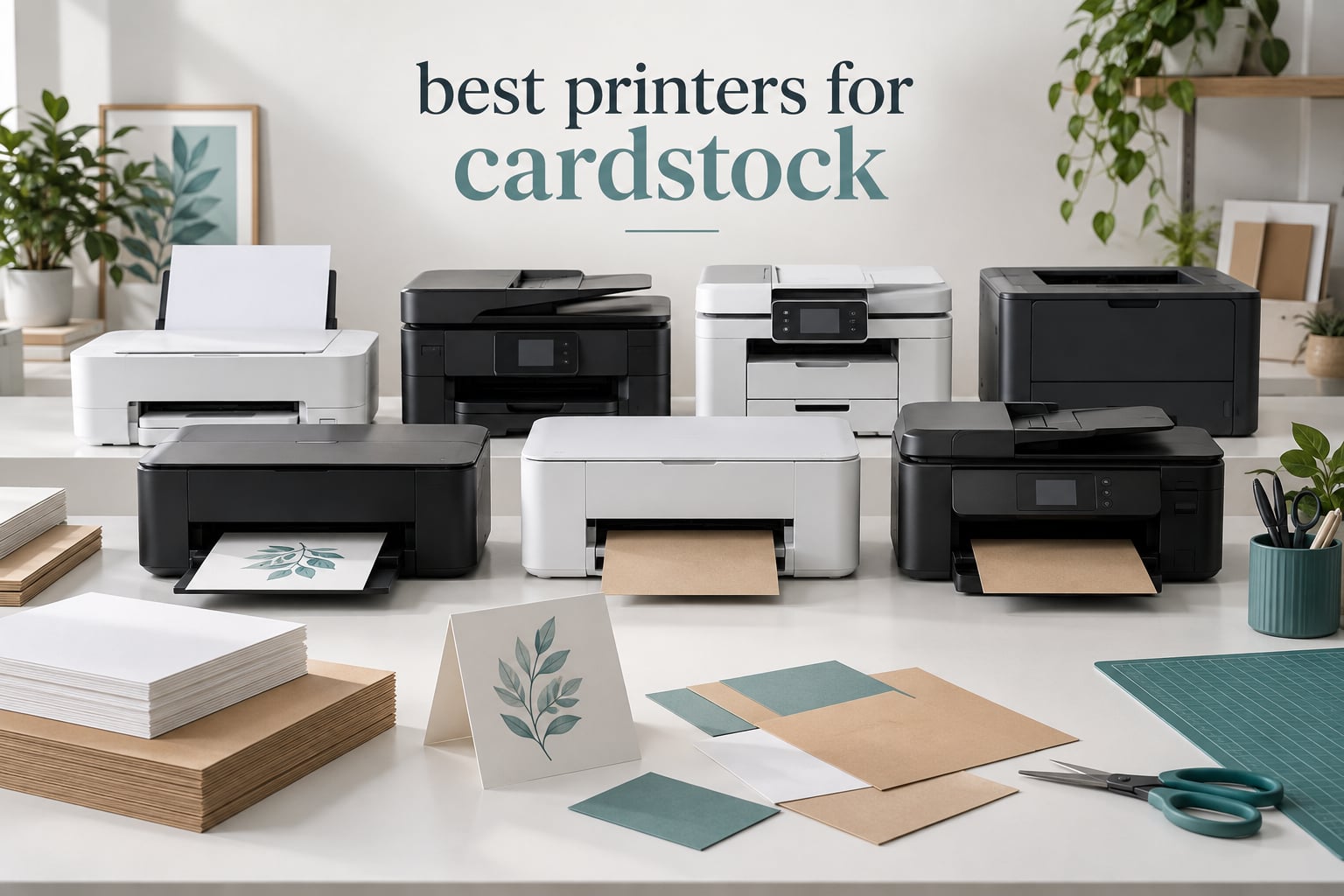
The Canon PIXMA iX6820 is the best printer for cardstock overall in 2026, because it takes 13 x 19 inch sheets through a straight rear feed and prints them at 9600 x 2400 dpi without the ink bleeding that ruins thick stock.
Most consumer inkjets are built for 24 to 72 lb paper. Push 110 lb card through the bottom cassette of one of those and the sheet bends, creases or stops dead, because the cassette forces a sharp U-turn that heavy stock physically cannot survive. The printers on this list all have a path that keeps the sheet travelling in a straight line, which is the single spec that matters more than any other.
I compared seven printers against the same three questions: how thick a card they take, what size sheet they handle, and what the ink costs you per finished piece. If you want the short version, keep reading to the table, then jump to the pick that matches your project.
If you also build physical things rather than just paper ones, our beginner 3D printer guide covers the other half of a small craft bench.
Table of Contents
- Top 3 Best Printers for Cardstock (October 2026)
- All 7 Printers for Cardstock Side by Side in 2026
- 1. Canon PIXMA iX6820 – the wide-format all-rounder for heavy card
- 2. Canon MegaTank G3270 – the cheapest card over the long run
- 3. Brother MFC-L3720CDW – the laser that does not bleed into card
- 4. Canon PIXMA TS9521Ca – 12 x 12 and 11 x 17 in a home all-in-one
- 5. Epson Expression Photo XP-970 – six-color gradations for photo craft
- 6. Epson EcoTank ET-15000 – wide format with refillable ink economics
- 7. Epson EcoTank Photo ET-8550 – 13 x 19 pages for scrapbooking
- How to Choose a Printer for Cardstock in 2026
- Frequently Asked Questions
- What is the best printer for printing on thick cardstock?
- Do you need a special printer to print on card stock?
- What is the best printer for printing on 100lb cardstock?
- How do I know if my printer can handle cardstock?
- What printer takes 300gsm card?
- Why does my printer keep jamming when printing double-sided?
- The Verdict on the Best Printers for Cardstock
Top 3 Best Printers for Cardstock (October 2026)

Canon MegaTank G3270
- Refillable MegaTank ink
- Card listed as supported media
- Lowest running cost

Epson EcoTank Photo ET-8550
- 13 x 19 inch sheets
- Six-color plus gray ink
- Up to 2 years of ink in the box
All 7 Printers for Cardstock Side by Side in 2026
Every pick below is listed here with the specs that decide whether it can feed your card cleanly. Read the maximum media size column first, because a printer that cannot physically take the sheet size you cut is useless regardless of how good its color is.
| Product | Specs | Action |
|---|---|---|
| Canon PIXMA iX6820 |
|
Check Latest Price |
| Canon MegaTank G3270 |
|
Check Latest Price |
 Brother MFC-L3720CDW Brother MFC-L3720CDW |
|
Check Latest Price |
 Canon PIXMA TS9521Ca Canon PIXMA TS9521Ca |
|
Check Latest Price |
 Epson Expression Photo XP-970 Epson Expression Photo XP-970 |
|
Check Latest Price |
 Epson EcoTank ET-15000 Epson EcoTank ET-15000 |
|
Check Latest Price |
| Epson EcoTank Photo ET-8550 |
|
Check Latest Price |
1. Canon PIXMA iX6820 – the wide-format all-rounder for heavy card
Canon Pixma iX6820 Wireless Business Printer with AirPrint and Cloud Compatible, Black,23.0” (W) x 12.3” (D) x 6.3” (H)
Color inkjet
13 x 19 inch max sheet
9600 x 2400 dpi
150-sheet feeder
Manual duplex
Pros
- Prints heavy card with accurate color
- Five individual ink tanks cut per-color cost
- 13 x 19 inch wide format in a slim body
- AirPrint and cloud printing included
- 1 year limited warranty
Cons
- No automatic duplex
- Feed needs fiddling on larger sheets
- Occasional banding on the first print after idle
This is the machine I keep on the shelf for full-sheet card bases and any job where the finished piece is larger than a greeting card. It handles 13 x 19 inch media, which is the size most 12 x 12 scrapbookers and invitation suites are cut from with a bleed margin, and it does so through a rear manual feed that keeps the sheet flat the whole way in.
Color accuracy on heavy card is the part that consistently surprises people. Reviewers describe the output as sharp and color-accurate, and the 9600 x 2400 dpi maximum resolution is the highest in this group, so small type on a 5 x 7 card front still resolves cleanly. The body is only 17.9 pounds and 6.3 inches tall, which is unusually slim for a wide-format machine.
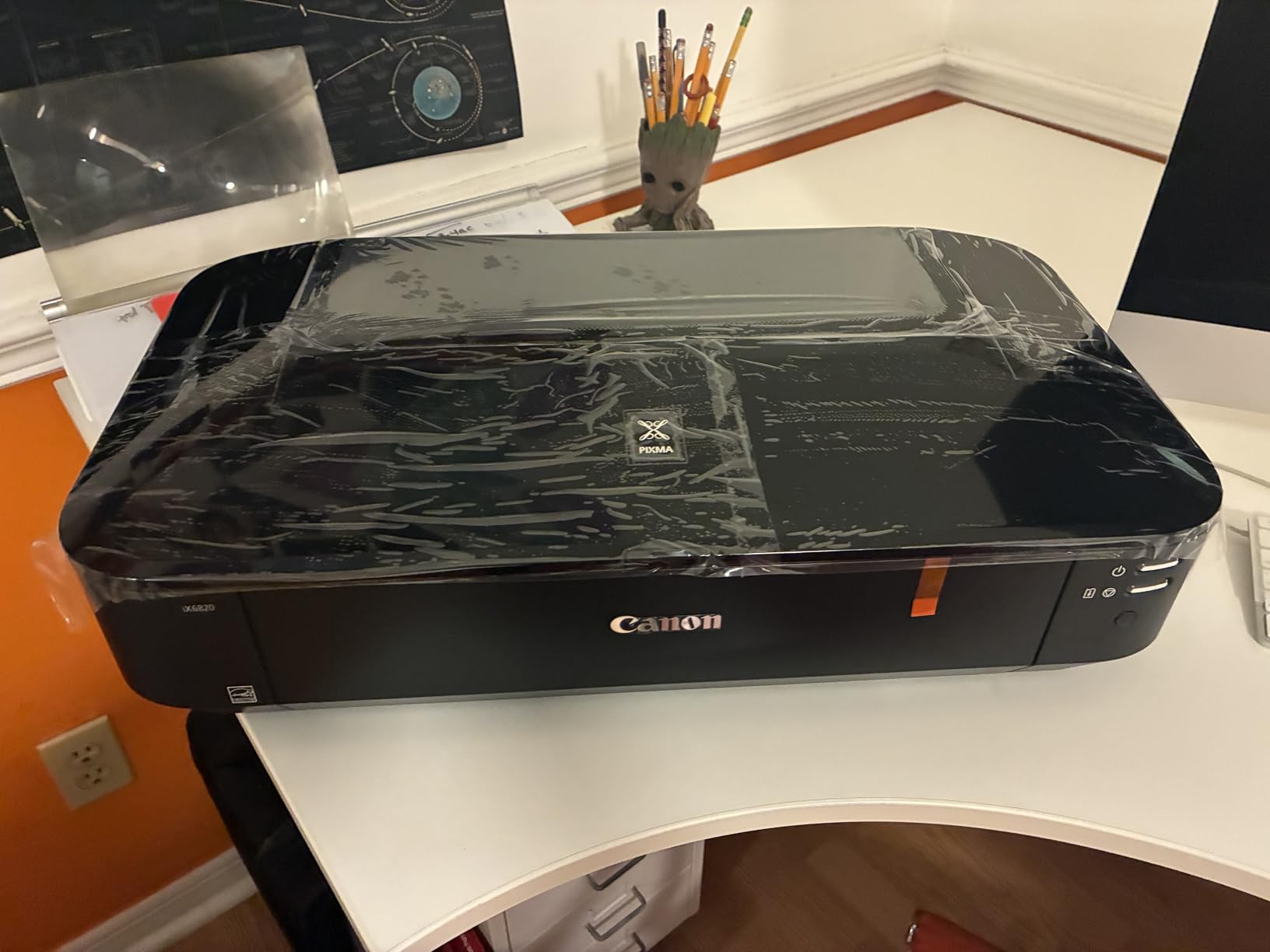
What you give up is convenience rather than capability. Duplex is not automatic, so double-sided card means flipping sheets by hand, and the feed does need a little coaxing on the larger sizes. It also pulls ink at 14.5 pages per minute black and white and 15 pages per minute color, which is fine for craft runs but slow if you are printing hundreds of cards a week.
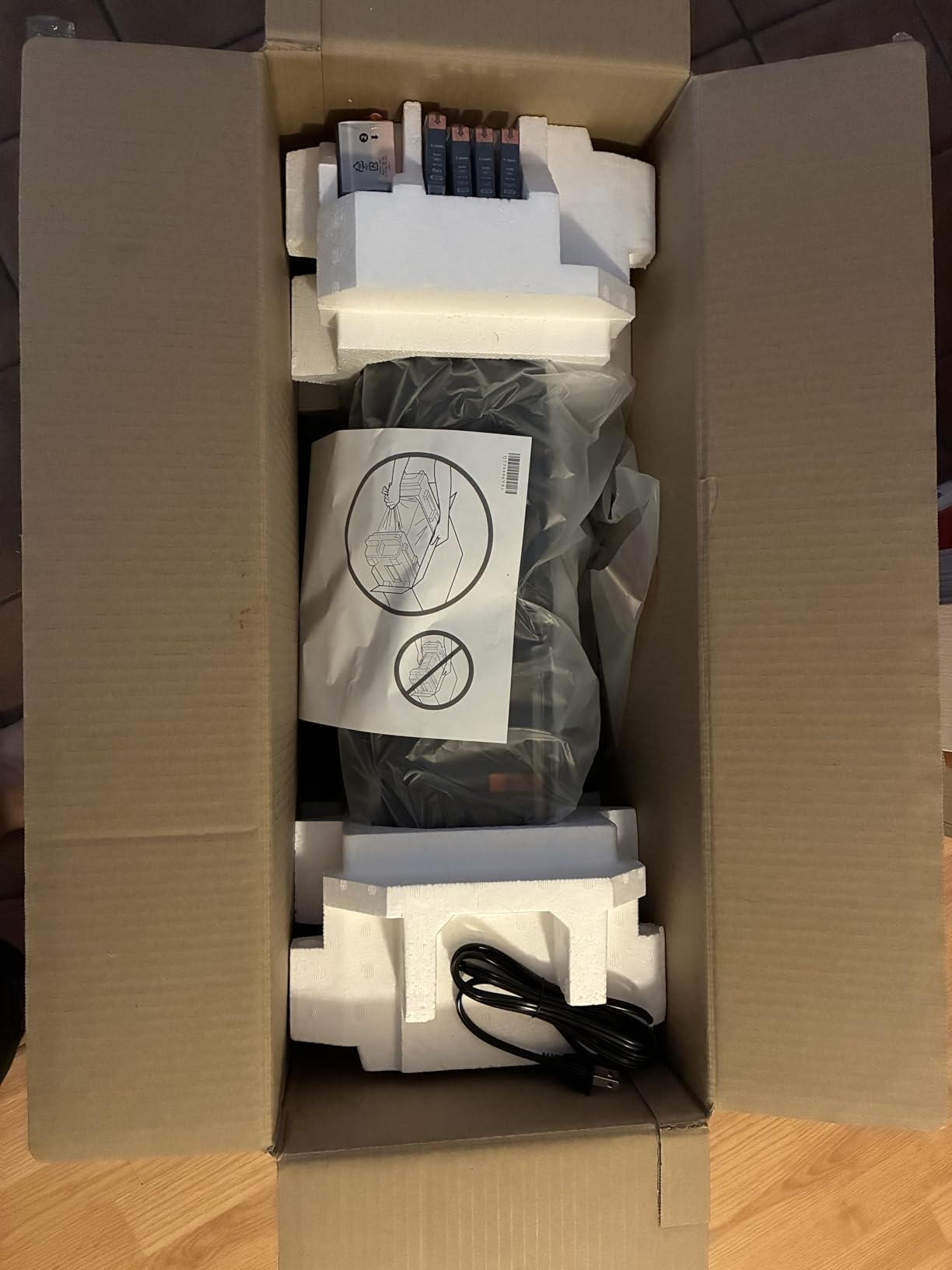
The five individual ink tanks are the quiet advantage here. When one color runs out you replace only that tank instead of a full set, and owners comparing it against an older eight-ink professional printer report markedly lower ink cost on the same card runs. One recurring complaint is a premature ink-warning sensor that flags empty before the tank actually is.
Where the iX6820 earns its place
If your projects are 12 x 12 or 13 x 19, this is the pick. The straight rear feed path plus that sheet size means you are not trimming down from legal paper, and the resolution headroom matters when you print a full background image rather than a flat color block.
It also suits anyone moving up from a letter-size printer without needing a scanner. The trade is that you scan on a phone or a separate unit, and you flip every double-sided card yourself.
Where the iX6820 will frustrate you
If you print double-sided card regularly, the missing auto duplex is a daily irritation rather than a one-time annoyance. And if your cardstock is textured or heavily embossed, expect to spend time adjusting the driver media settings before each run.
For a bulk greeting card business, the ink cost per card adds up faster here than on a tank-fed machine, even with the individual tanks. Print speed is also unremarkable for commercial work.
2. Canon MegaTank G3270 – the cheapest card over the long run
Canon MegaTank G3270 All-in-One Wireless Color Printer
All-in-one inkjet
8.5 x 14 inch max sheet
Up to 4800 x 1200 dpi
100-sheet feeder
Single-sided only
Pros
- Refillable MegaTank ink
- Very low running cost per card
- Card listed as a supported medium
- Compact 13.2 pound body
- Flatbed scanner and LCD included
Cons
- Modest resolution for fine card detail
- No automatic duplex
- 100-sheet maximum capacity
This is the cheapest way to stop worrying about ink cost, and card stock is one of the media types Canon lists for it. One ink set covers up to 6,000 black and white pages or 7,700 color pages, and up to 2 years of ink is in the box, so a stack of 5 x 7 card fronts is a rounding error against the tank refill.
For a small card-making operation printing hundreds of pieces a month, that running cost is the whole argument. The 13.2 pound body and 21.9 inch depth mean it fits on a normal desk, and the flatbed scanner plus 1.35 inch LCD make it a usable all-in-one rather than a bare printer. Connectivity is USB and Wi-Fi.
The limit is sheet size. Maximum media is 8.5 x 14 inch, so anything you cut wider than legal has to go somewhere else, and a full 5 x 7 sheet is a tight fit on a letter-size page. Print resolution tops out at 4800 x 1200 dpi, which is respectable but will not hold the fine detail that a 9600 x 2400 head gives you on small type.
It is single-sided only, with no automatic duplex, and the paper capacity tops out at 100 sheets. Output runs at 11 pages per minute black and white and 6 pages per minute color, so a 200-card run is an evening job.
Who should buy the G3270
Buy this one if volume beats size. Anyone printing 5 x 7 and smaller cards, tags or labels in steady weekly numbers will see the refill economics pay back quickly, and the refillable tanks remove the cartridge price shock that ends most small craft budgets.
It is also the sensible pick for a shared home office where a scanner and copier matter as much as the printer, and letter and legal sheet sizes cover most of the work.
Who should skip the G3270
Scrapbookers and anyone printing 12 x 12 pages should look elsewhere, because the sheet simply does not fit. Photographers printing fine detail on card will find the resolution ceiling sooner than anything else.
If you need double-sided cards, there is no duplex unit to enable. And for a business that prints in batches, a 100-sheet capacity means more refills than a 250 or 250-sheet machine asks of you.
3. Brother MFC-L3720CDW – the laser that does not bleed into card
Brother MFC-L3720CDW Wireless Color Laser Printer, Scanner, Copier, Fax, Auto Duplex, 250-Sheet Capacity
Color laser
8.5 x 14 inch max sheet
2400 x 600 dpi color
250-sheet tray
Automatic duplex
Pros
- Toner sits on the card surface instead of soaking in
- 19 ppm in both color and black
- Automatic duplex with a 250-sheet tray
- 50-sheet document feeder plus fax
- 3.5-inch color touchscreen
Cons
- No 11 x 17 or 13 x 19 sheets
- 2400 x 600 dpi is soft for fine card work
- 44 pound chassis takes real desk space
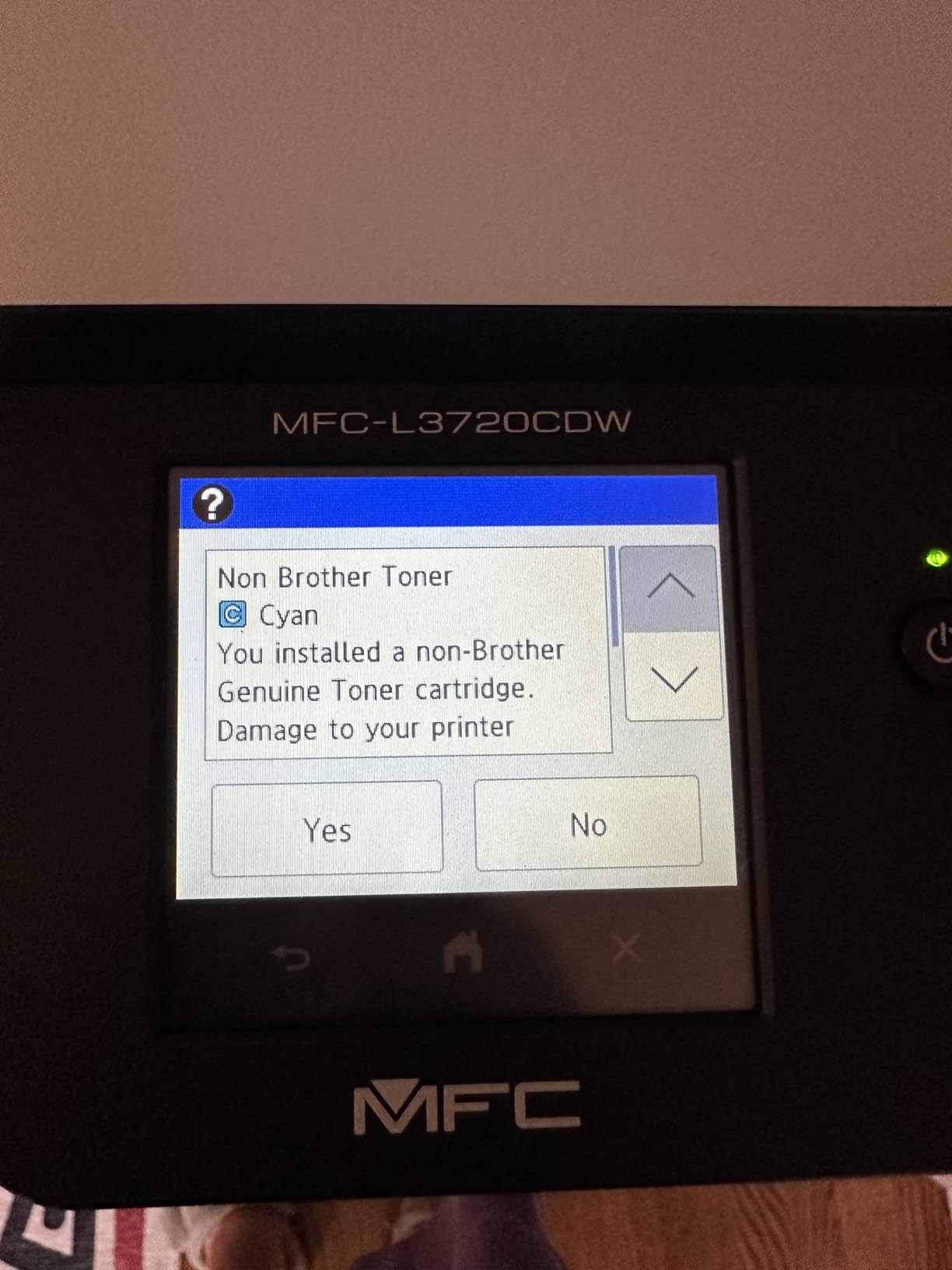
Laser gets dismissed for cardstock almost everywhere, and that is too quick. Toner is a powder that sits on the surface of the sheet rather than soaking into it, so on heavy card it does not bleed or feather the way inkjet can when the stock is textured. Canon aside, this is the only laser on this list, and it is worth understanding why it is here.
The throughput is the real argument. It runs 19 pages per minute in both color and black, has automatic duplex, and takes a 250-sheet adjustable tray, which means double-sided card runs finish while you are doing something else. The 50-sheet document feeder, flatbed and sheetfed scanner, copier and fax make it a full office machine.
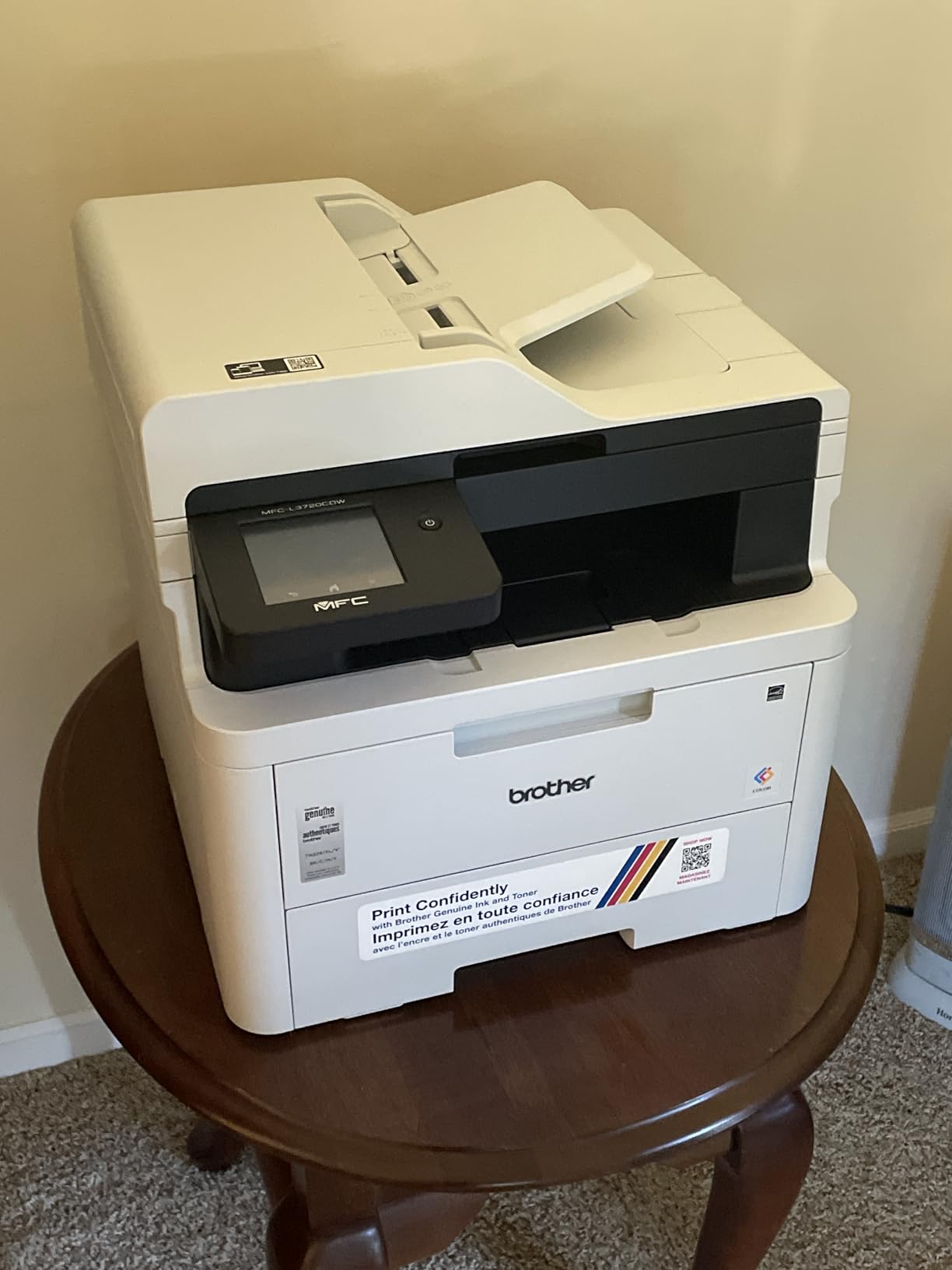
The paper path is the caveat. Paper sizes listed are 8.5 x 11, 8.5 x 14 and 4 x 6 inches, so there is no 11 x 17 or 13 x 19 option, and heavy card still has to negotiate the tray rollers without a straight-through rear slot. Toner also has to fuse to the surface at heat, and on the heaviest stocks that bond is the thing to watch.
Color resolution of 2400 x 600 dpi is well below what fine card work wants, and at 44 pounds with a 17.5 inch width, it claims a serious chunk of desk. Power draw is 500 watts, the highest of the seven here.
Who should buy the Brother MFC-L3720CDW
Businesses printing hundreds of standard business cards or double-sided card inserts a week should look here first. Speed, duplex and a 250-sheet tray are what a busy office needs, and toner cost per card is predictable.
It also suits anyone printing cards with solid color blocks and bold type rather than photographs, where the resolution ceiling will not show.
Who should skip it
Scrapbookers and invitation printers should skip it, because 8.5 x 14 is the ceiling and there is no wide-format path. Photographers will find 2400 x 600 dpi too soft for gradient-heavy card faces.
A home crafter printing a few cards a month will not earn back either the desk space or the up-front cost, and they will likely prefer a tank printer’s running economics.
4. Canon PIXMA TS9521Ca – 12 x 12 and 11 x 17 in a home all-in-one
Canon PIXMA TS9521Ca – Wireless Home All-in-One Inkjet Printer
All-in-one inkjet
11 x 17 and 12 x 12 sheets
4800 x 1200 dpi
200-sheet capacity
Auto duplex
Pros
- Twelve by twelve and eleven by seventeen support
- Five separate ink cartridges
- 4.3-inch touch LCD
- Auto duplex plus a 20-sheet document feeder
- Two paper trays
Cons
- Cartridge ink raises cost per card
- 4800 x 1200 dpi ceiling
- 25.4 pound body
- 100-sheet front tray
This is the model to shortlist if your cardstock is cut to 12 x 12 and you do not want a dedicated wide-format machine taking over a whole desk. The paper size list includes 12 x 12, 11 x 17, 5 x 5, 5 x 7, 8 x 10 and 4 x 6, which covers most craft paper sizes, and there are two trays plus a rear feed for the heavier stock.
Automatic duplex on card is the feature that separates it from the cheaper all-in-ones, and the 20-sheet document feeder lets you batch multi-page card projects without walking to the machine. Speed is 15 pages per minute black and white and 10 pages per minute color, with 200 sheets of total paper capacity across cassette and rear tray.
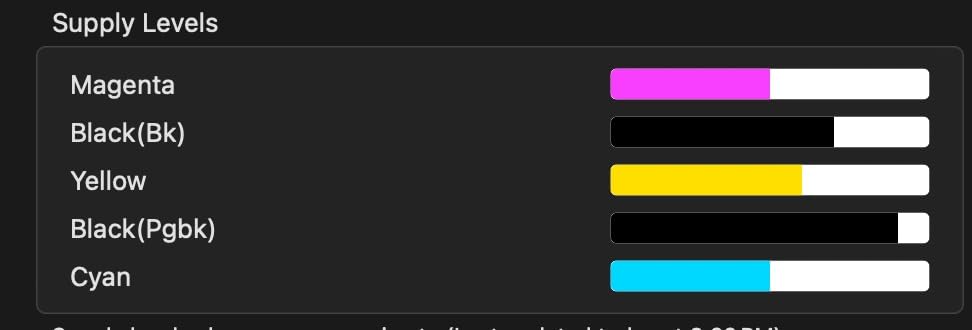
One thing to be aware of before you buy: the maximum media size field reads 8.5 x 14 inch even though the paper size list names 11 x 17 and 12 x 12. Verify the larger sizes in the driver on your own machine before committing, because that gap between two spec fields is exactly the kind of thing a craft project discovers too late.
Ink is cartridge-based, with five individual cartridges so you only replace the color that runs out. That is cheaper than a full set replacement but more expensive per page than any tank machine here. Print resolution caps at 4800 x 1200 dpi, and the body weighs 25.4 pounds.
Who should buy the TS9521Ca
Home scrapbookers and paper crafters printing 12 x 12 pages occasionally should take a serious look. The touchscreen makes picking a heavy paper type without digging through menus fast, and built-in duplex means you can do a double-sided card without manual flipping.
It also works for anyone who wants one machine for scanning and copying as well as printing, at letter and legal sizes that fit a normal shelf.
Who should skip it
Anyone printing in volume will feel cartridge ink costs. A few hundred cards a month on cartridges is a meaningfully higher bill than the same volume on a MegaTank or EcoTank.
Photographers printing detailed images onto card will hit the 4800 x 1200 dpi ceiling, and the 25.4 pound body is not something you want on a small craft shelf.
5. Epson Expression Photo XP-970 – six-color gradations for photo craft
Epson Expression Photo XP-970 Wireless All-in-One Wide-Format Printer
Photo all-in-one inkjet
11 x 17 inch output
6-color Claria Photo HD
Auto duplex
100-sheet feeder
Pros
- Six-color set gives smooth gradations
- Touch screen and memory card slot
- Borderless printing supported
- Automatic duplex
- 4.2 stars
- tied for the highest average here
Cons
- Claria cartridges are costly to run
- Card media is not documented in the listing
- Slower at 8.5 ppm black
- Max media size field lists only A4
The reason to choose this one is ink count, not weight. It runs a six-color Claria Photo HD set, and that extra black plus the broader color range is what separates smooth skin tone and gradient transitions on a printed card from the banding you get from a four-color head. Its 4.2 average is tied for the highest rating of the seven here.
Borderless printing is supported, which matters if you are cutting cards down from a full sheet and do not want a white margin to trim. There is a color LCD with a memory card slot for direct photo printing, a touch screen, automatic duplex, and output up to 11 x 17 inches.
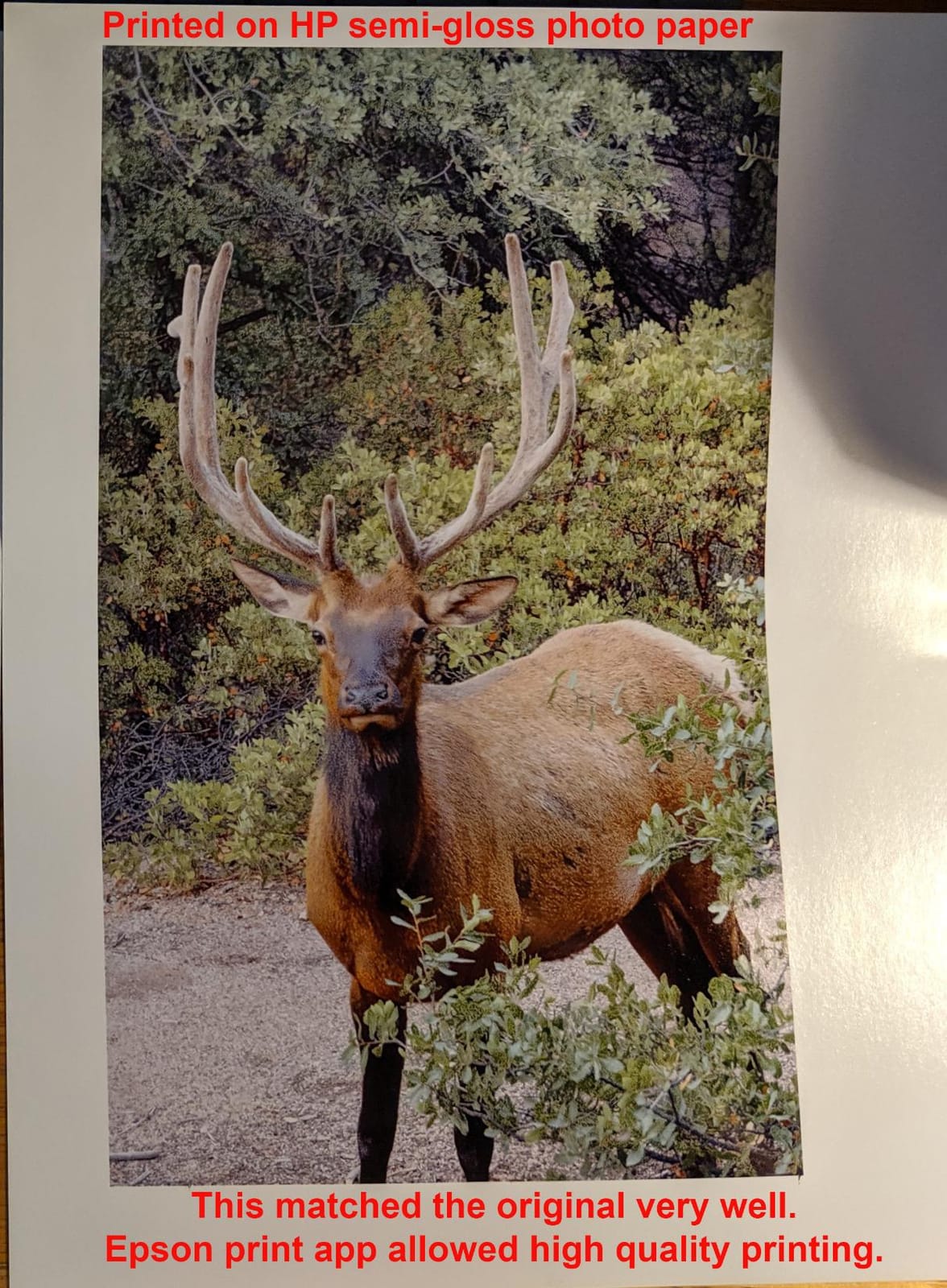
There is an honesty problem with the spec sheet here. The maximum media size field reads A4 and the listed print media is glossy photo paper only, so card stock is not explicitly documented as a supported medium even though the machine is widely used for it. Check the driver media list on the actual unit before you rely on it for a paper project.
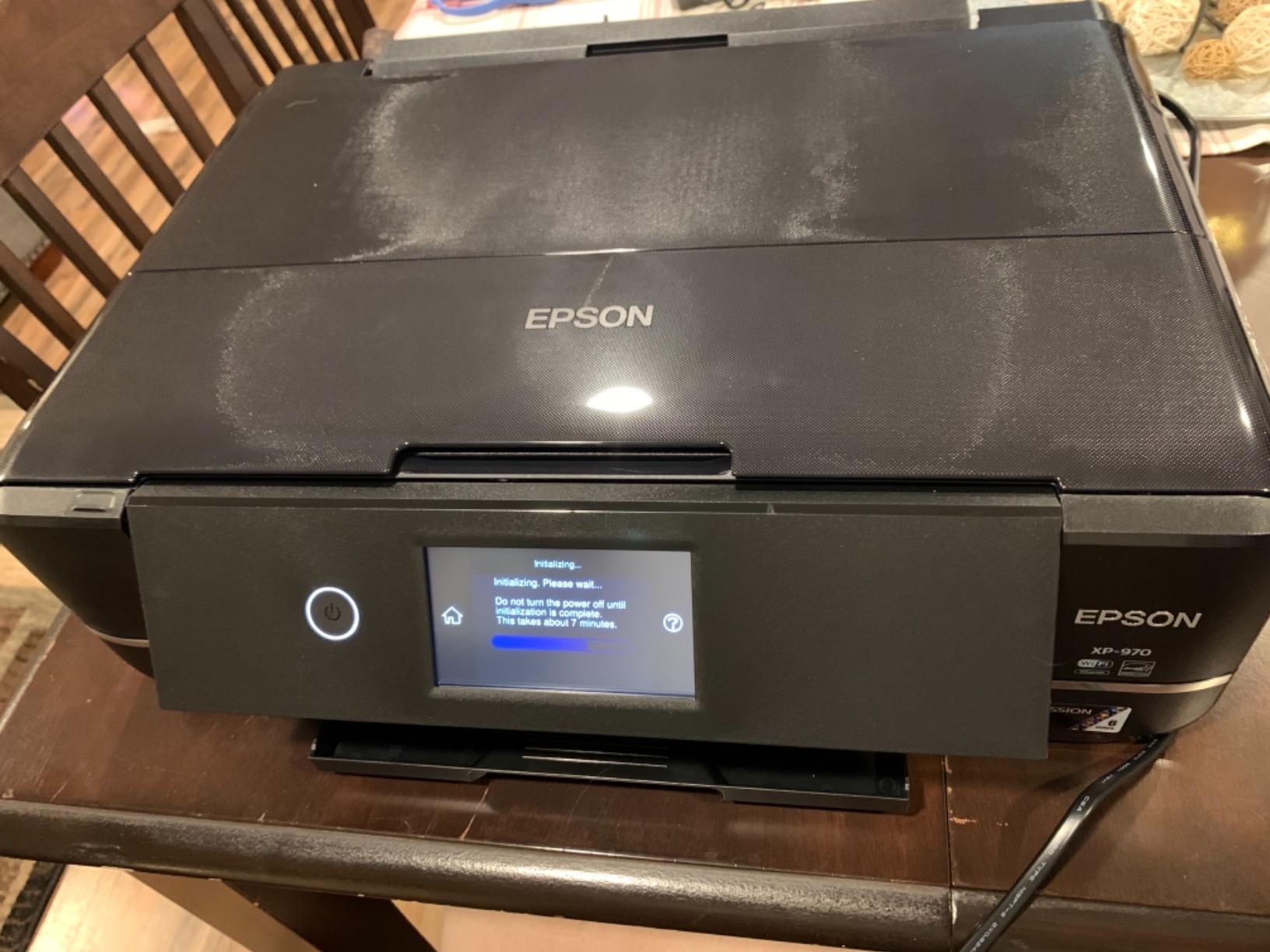
The other issue is running cost. Claria cartridges are among the priciest ongoing ink options in this group, and at 8.5 pages per minute black and 8 pages per minute color it is the second slowest machine here. It weighs 19.4 pounds, comes with a 1 year limited warranty, and the fold-over scan lid is designed to hold originals flat.
Who should buy the XP-970
Photo crafters printing portraits or illustrated card faces will notice the six-color set immediately. If your project is a photographic card rather than a text-heavy invitation, smoother gradations matter more than page speed.
Borderless output makes it a good fit for anyone who wants full-bleed card fronts without a trim step, and the memory card slot is convenient for a craft table.
Who should skip it
Volume printers should skip it, because cartridge cost per card adds up and the speed is slow. If you are printing hundreds of pieces a month, a tank-fed machine is the honest choice.
Anyone needing documented card media support or sheet sizes beyond 11 x 17 should verify carefully first. The A4 figure in the max media field is a real limitation flag, not a rounding error.
6. Epson EcoTank ET-15000 – wide format with refillable ink economics
Epson EcoTank ET-15000 Wireless All-in-One Wide-Format Supertank Printer
Wide-format EcoTank
11 x 17 inch sheets
4800 x 2400 dpi
250-sheet capacity
Auto duplex at letter
Pros
- Refillable bottles cut running cost sharply
- Handles card and thicker specialty media
- 250-sheet capacity with a document feeder
- 17 ppm black and white output
- USB
- LAN and Wi-Fi
Cons
- Duplex works at 8.5 x 11 only
- 11 x 17 loads in a rear paper holder
- Some owners report recurring jams
- Four inks trail the six-color Photo models
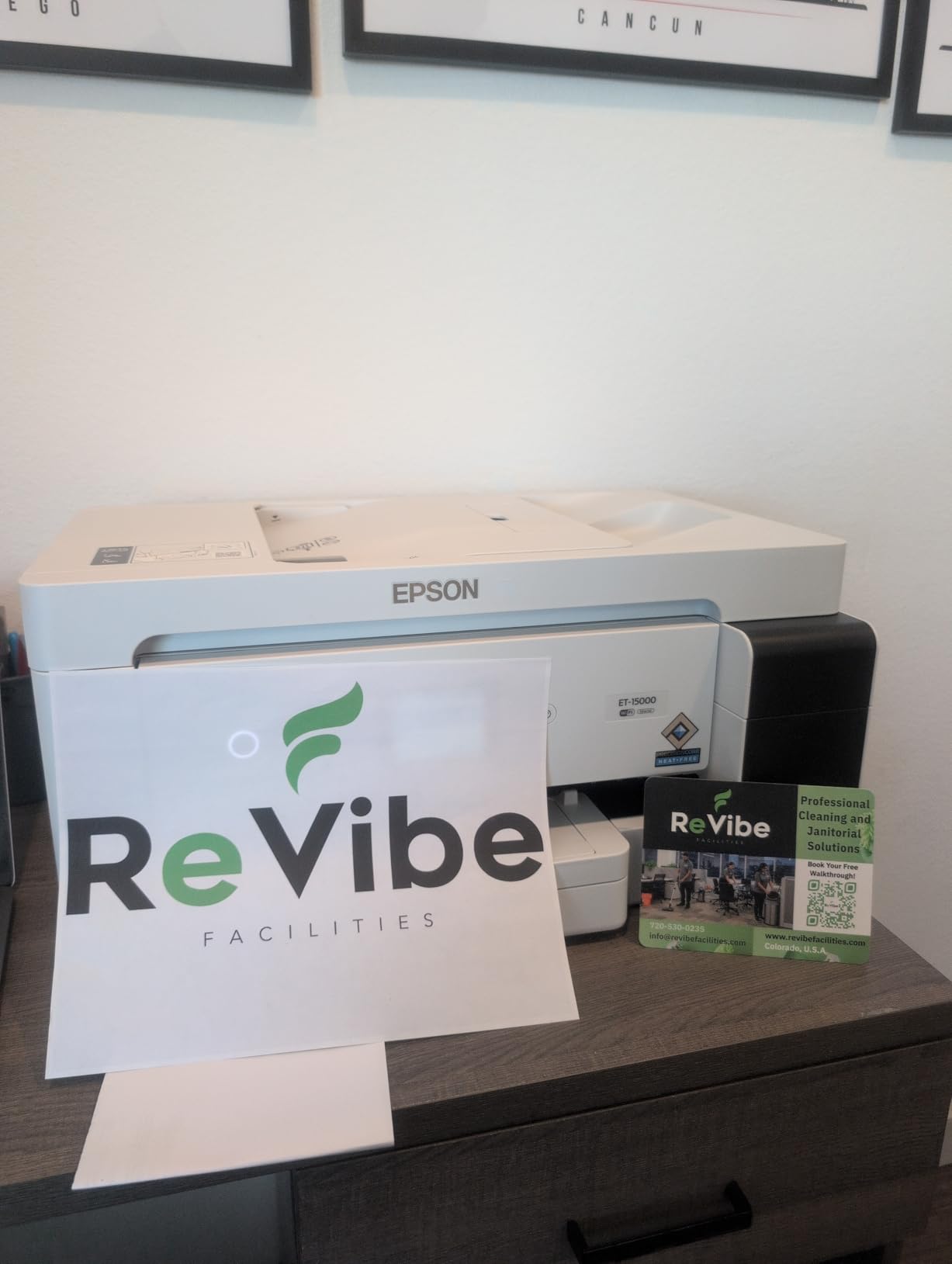
This is the machine I recommend to someone whose card projects are wide format and whose ink bill has become the reason they dread printing. Refillable EcoTank bottles replace cartridges entirely, so a 250-card month costs a fraction of what the same run costs on the cartridge machines above, and owners consistently report dependable card printing as a result.
Specs back that up: 4800 x 2400 dpi, 250-sheet paper capacity, a monthly duty cycle of 33,000 pages, and 17 pages per minute black and white with 9 pages per minute color. It is a full all-in-one with fax, copy and a sheetfed scanner, plus USB, LAN and Wi-Fi.
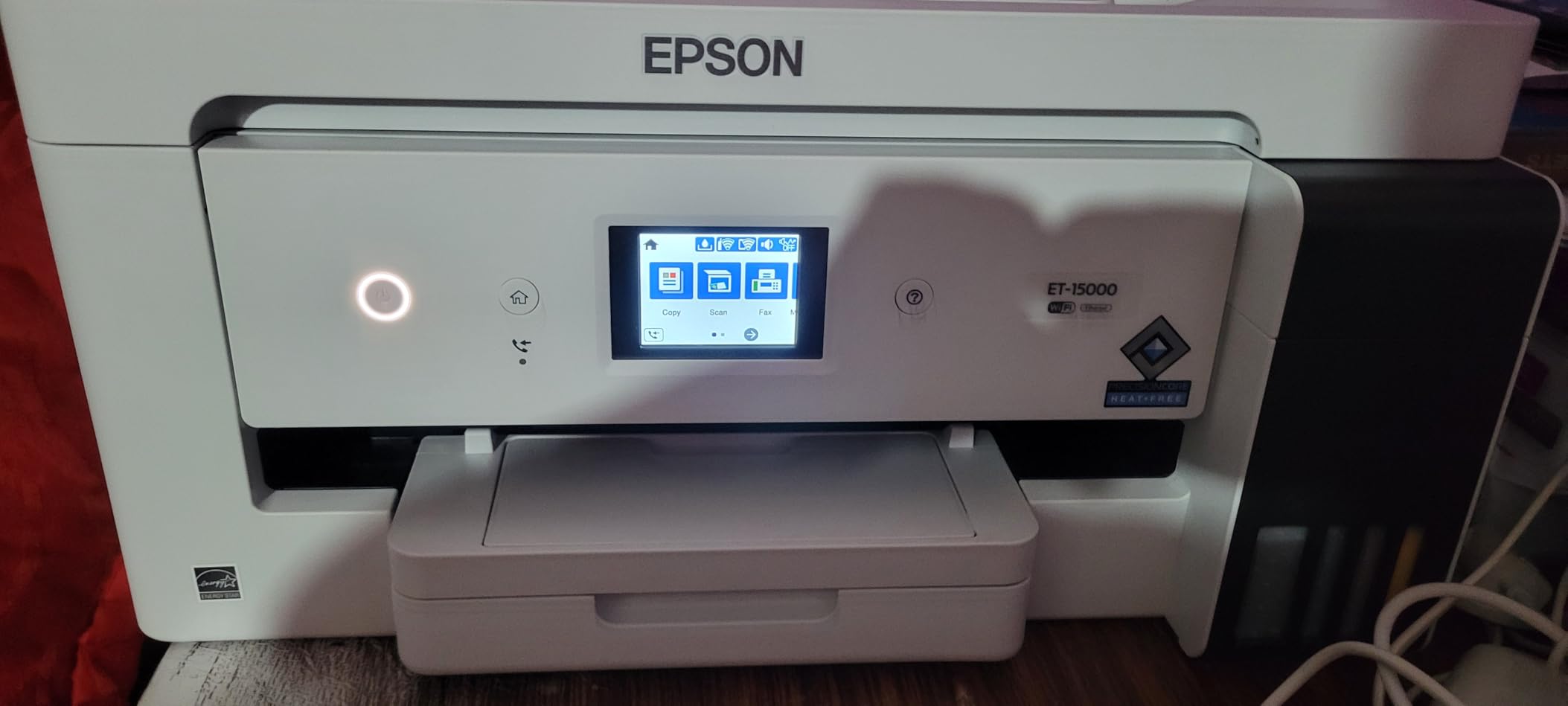
Auto duplex is limited to 8.5 x 11. Anything larger has to be flipped by hand, which matters if you were planning double-sided 11 x 17 cards. The 11 x 17 sheets load in a rear paper holder rather than a dedicated wide-format tray, and at 29.6 inches deep the body is the second largest here.
Color work uses four inks, so it trails the six-color Photo models for gradient smoothness. Some owners report recurring paper jams and unclear paper selection, and a few received units arrived with ink lines that would not prime out of the box. The listing names plain paper as its print media, so confirm card support in the driver for your own brand of stock.
Who should buy the ET-15000
Small businesses and prolific hobbyists printing 11 x 17 card, invitations and posters will get the most from it. The 250-sheet capacity and 33,000 page duty cycle are built for batch work, and the tank system makes that batch affordable.
It is also the pick if you want one wide-format machine that scans, copies and faxes without a separate device on the desk.
Who should skip it
Scrapbookers working at 13 x 19 should step up a size, because this tops out at 11 x 17. Photographers needing smooth gradients should take the six-color route instead of a four-color head.
Anyone planning double-sided wide-format card will be flipping sheets manually, and the reported jam complaints make it a riskier choice if your card stock is textured or very heavy.
7. Epson EcoTank Photo ET-8550 – 13 x 19 pages for scrapbooking
Epson EcoTank Photo ET-8550 Wireless Wide-Format All-in-One Tank Printer
Wide-format EcoTank Photo
13 x 19 inch sheets
5760 x 1440 dpi
6-color plus gray ink
Auto duplex
Pros
- 13 x 19 inch pages with tank ink economics
- Six-color set plus gray for gradations
- Up to 2 years of ink in the box
- Large color LCD touchscreen
- Separate 4 x 6 photo tray
Cons
- Rear manual feed is finicky on thick card
- Dye inks are not waterproof
- Flatbed scanner has no document feeder
- Automatic tray selection is unreliable
This is the scrapbooker’s answer, and the only machine here that prints a full 13 x 19 inch sheet while also running an EcoTank ink system. The 13 x 19 maximum media size means a 12 x 12 layout prints with a real bleed margin all round, which is the whole point of full-width card work. Speed is 16 pages per minute black and white and 12 pages per minute color.
Color quality is its other strength. The Claria ET Premium set is six-color plus a gray ink, and owners describe it as producing the best gloss prints they have gotten from a machine in this class. Epson states that bottle-based 4 x 6 ink runs at roughly a tenth of cartridge cost, with up to 6,200 color pages per bottle set and up to 2 years of ink in the box.
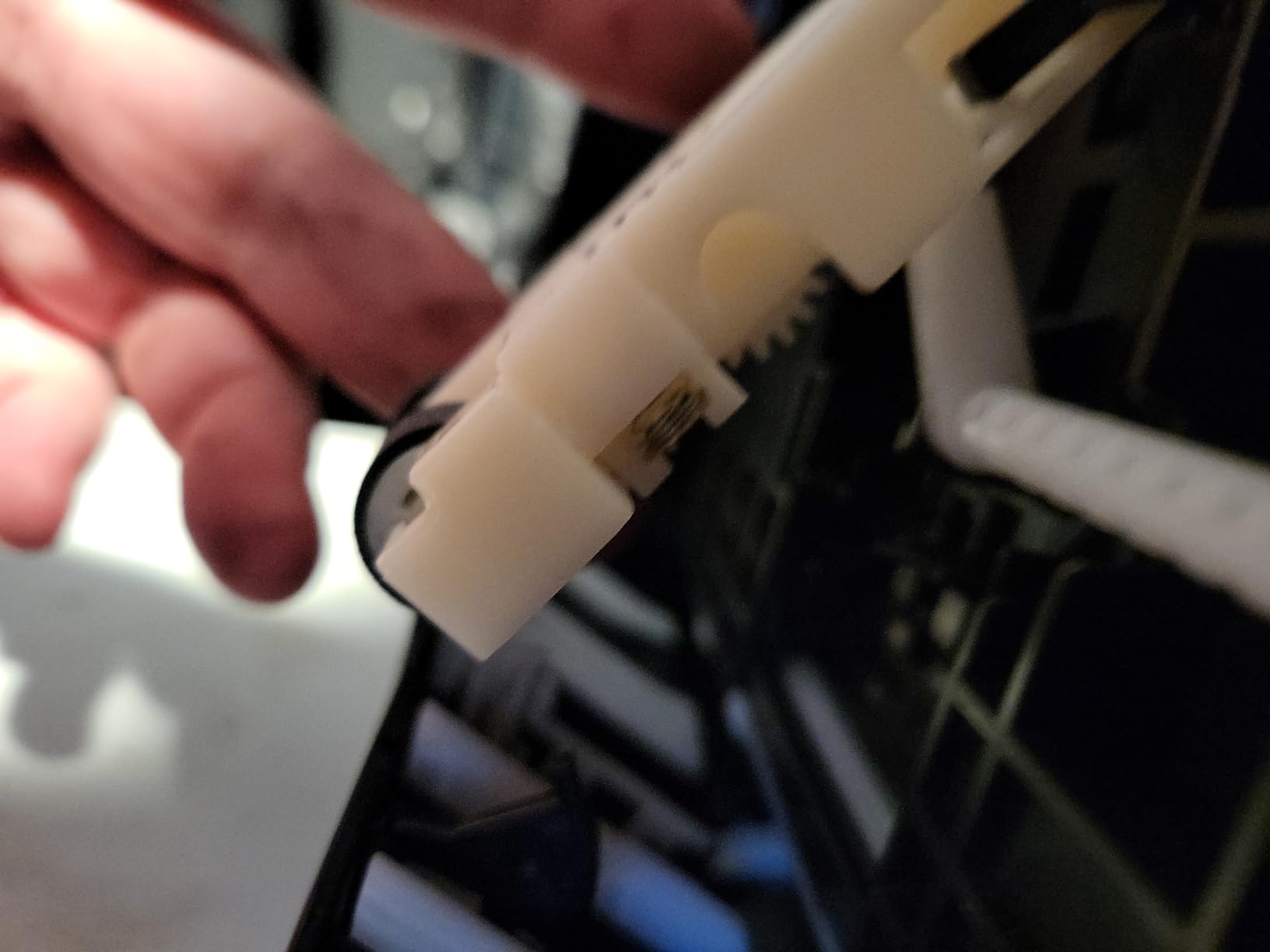
Be clear-eyed about the rear manual feed. Owners repeatedly report it struggling with thick card stock, and automatic tray selection is unreliable enough that manual selection is often required. That is the one real weak point on a machine otherwise built for heavy paper, and it is worth a hands-on test at a shop that will let you feed your own card.
The inks are dye, which are not waterproof and can fade faster than pigment inks, so invitations that will be handled in rain or sun are a poor fit. The flatbed scanner has no document feeder and will not scan 11 x 17 originals. Output tray capacity is 50 sheets, and some owners report clogged heads and torn paper errors after months of use.
Who should buy the ET-8550
Scrapbookers and paper crafters printing 13 x 19 pages should take this one. It is one of very few machines that pairs a genuine wide-format sheet with refillable ink, and the six-color plus gray set keeps large background images from banding.
Anyone running a craft business will appreciate up to 2 years of ink in the box and the low ongoing cost, and the large color touchscreen plus motorized output tray help with long jobs.
Who should skip it
Skip it if your cards get wet or sit in sunlight, because dye inks will not hold up. People printing only letter and 5 x 7 sizes are paying for a wide-format body they will not use.
Be cautious with the heaviest card until you have tested the rear feed yourself, and note there is no document feeder if you batch multi-page originals to scan.
How to Choose a Printer for Cardstock in 2026
Feed path beats every other specification, and everything else on this page is secondary. If you remember one thing, remember that.
What cardstock weight means in lb and gsm
Card weight is sold two ways. The lb figure is US basis weight, and gsm is grams per square meter, the metric equivalent. The conversion is roughly 1 lb equals 200 gsm for card, so 80 lb card is about 270 gsm, 100 lb is about 300 gsm, 110 lb is about 300 gsm, and 130 lb is about 350 gsm.
Most home inkjets are engineered for 24 to 72 lb stock. Anything past 100 lb is where the trouble starts, and the number that actually matters is the maximum media weight in the printer’s specification, not the paper type listed in the box.
If you have seen a Canon PIXMA Pro-100 recommended online recently, treat that recommendation carefully. It has been discontinued for years, so support and consumables are the open question, and borderless 12 x 12 claims around it are often repeated without checking.
Why heavy cardstock jams and how to stop it
A bottom cassette lifts the sheet up, turns it roughly 180 degrees and feeds it back down. That U-turn is fine for 20 lb paper and impossible for stiff 130 lb card, which is why the same machine handles plain paper flawlessly and stalls on a scrapbook page.
Always load heavy card in the rear manual feed and align the side guides to the sheet. In the driver, set the media type to the correct heavy card option rather than plain paper, which tells the rollers to grip harder without over-driving the feed.
Print one sheet as a test before a run of fifty, and keep the paper dry. Damp cardstock loses stiffness and bends in the path far more easily than dry stock of the same weight.
Inkjet or laser for cardstock
Inkjet wins on color depth, borderless printing and sheet size, and it is the only option for 12 x 12 and 13 x 19 work. Pigment ink in a tank-fed machine gives you the most water resistance and the lowest running cost per card.
Laser is not the wrong answer, it is a different answer. Toner sits on the surface instead of soaking into the fibers, so it does not bleed on heavy stock, and it prints fast with automatic duplex. The Brother MFC-L3720CDW on this list proves the case for high-volume business card runs. The catch is toner fusing, which relies on heat to bond to the sheet, so the very heaviest stocks are where laser quality drops fastest.
Cost per print follows the ink system more than the printer type. A tank-fed machine running refillable bottles divides a page into a fraction of a cent; a cartridge machine can run several times that on a full-coverage card face, which is why cartridge machines suit occasional craft work and tank machines suit volume.
How to test a printer’s true cardstock limit before you buy
Read the maximum media weight in the specification, not the marketing line, and check whether that number applies to the rear feed or only to the main tray. A printer claiming 300 gsm through a straight-through path is a very different machine from one claiming it through a cassette.
Check the media size field and the supported paper size list, because the two can disagree. Two machines here list 11 x 17 or 12 x 12 in one field and A4 or 8.5 x 14 in the other, and that gap decides whether your project fits.
Look for a rear manual feed and a straight-through paper path. Without one, no amount of stated gsm capacity will hold up on heavy stock.
Then take a sheet of your own card to a shop and feed it, if you can. The driver media list matters more than the box, because that is the setting the rollers actually respond to.
If your workshop extends past paper, our 3D printer roundup and resin 3D printer picks cover the adjacent half of a small craft bench.
For the wider bench, our artwork and sign-printing printer guide covers the wide-format side of the same problem.
Frequently Asked Questions
What is the best printer for printing on thick cardstock?
For most people the Canon PIXMA iX6820 is the best printer for thick cardstock, because it feeds 13 x 19 inch sheets through a straight rear path at 9600 x 2400 dpi. It handles full-size card bases without a U-turn in the cassette. If your project is only 5 x 7 and you print in volume, the Canon MegaTank G3270 costs less per card over time.
Do you need a special printer to print on card stock?
You need a printer with a straight-through rear paper feed, a rated media weight of at least 300 gsm, and driver settings for heavy card. You do not need a dedicated photo printer. Any all-in-one with a rear manual slot and 200 gsm or more of rated capacity will print 80 to 100 lb card reliably if you set the media type correctly.
What is the best printer for printing on 100lb cardstock?
Any of the wide-format inkjets here will take 100 lb card, which is about 300 gsm. The Canon PIXMA TS9521Ca and Epson EcoTank ET-15000 are the practical home choices at 11 x 17 and 12 x 12. The Canon MegaTank G3270 handles 100 lb card well at 5 x 7 and letter sizes if volume matters more than sheet size.
How do I know if my printer can handle cardstock?
Check three things in the specification: the maximum media weight, the maximum media size, and whether a rear manual feed exists. Then open the driver and confirm card stock appears in the media type list, because that setting controls the feed rollers. A printer that lists a high weight but only feeds it through the bottom cassette will bend heavy card.
What printer takes 300gsm card?
300 gsm is roughly 110 lb cover weight. The Canon PIXMA iX6820, Canon PIXMA TS9521Ca and Epson EcoTank ET-15000 all have rear feeds rated well above that and handle it in normal use. The Epson EcoTank Photo ET-8550 reaches 300 gsm too, but its rear manual feed is finicky on the heaviest stock, so test it first.
Why does my printer keep jamming when printing double-sided?
An automatic duplex unit reverses the sheet, and the reversal roller has less grip than the main feed roller. On card above 100 lb the sheet slips or folds at the turn. Fix it by printing single-sided, or by setting the media type to a heavy card option so the rollers grip harder. Above 110 lb, manual duplex is the reliable choice.
The Verdict on the Best Printers for Cardstock
The Canon PIXMA iX6820 is the best printer for cardstock overall, taking 13 x 19 inch sheets at 9600 x 2400 dpi with a straight rear feed. Buy the Canon MegaTank G3270 if running cost per card is your priority, the Epson EcoTank Photo ET-8550 if you print full 13 x 19 scrapbook pages, and the Brother MFC-L3720CDW if you need fast double-sided business card volume from a laser.
Whatever you choose, load heavy card in the rear feed, set the media type in the driver, and print one test sheet before a batch. That habit alone prevents most of the jams people blame on the printer.