
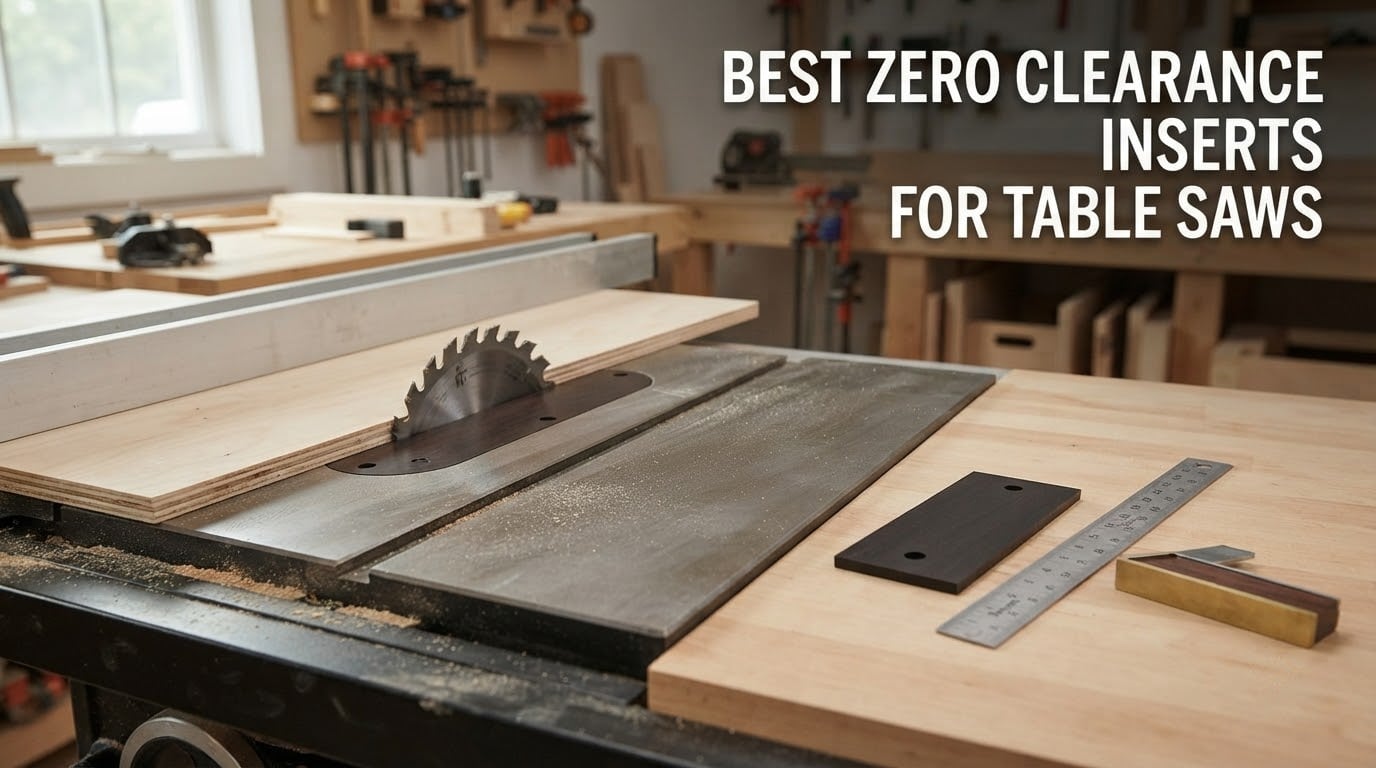
Every table saw throat plate leaves a slot around the blade, and on a jobsite saw that slot is usually far wider than the blade itself. The workpiece drops into the gap, the side-cutting teeth slice down through unsupported fibers, and the back of your panel chips out. A zero clearance insert replaces that plate with one machined so the slot matches your blade kerf exactly, holding the material level right up to the teeth. Choosing among the best zero clearance inserts for table saws comes down to fitment first and material second, and we spent weeks measuring, installing and cutting with the ten options below.
The upgrade is small, but the effect on plywood, veneer and laminate is immediate. It also stops small offcuts from falling through the opening and pinching the blade, and it pulls more sawdust into a hood or vacuum than an open throat ever will. If you have been wondering why your crosscuts chip on one side only, this is the part that fixes it.
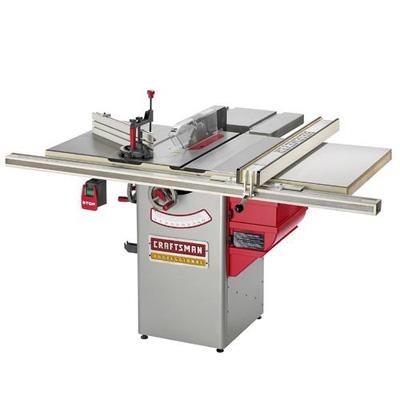
Fitment is the part that trips people up. Inserts are not universal parts, they are cut for one throat opening, and most listings that look broad are still model-specific. Several of the picks below ship as a blank that you raise the blade through on first use, and others arrive with a slot already cut for one blade width. Check your model number before anything else. If you are still shopping for the saw itself, our table saw roundup covers the platforms these inserts fit.
Table of Contents
- Top 3 Picks: Best Zero Clearance Inserts for Table Saws (October 2026)
- Best Zero Clearance Inserts for Table Saws: Quick Picks for 2026
- 1. Bosch TS1005 Zero Clearance Insert: Best Overall for Bosch 4100-Series Saws
- 2. Peachtree Phenolic Insert: Best for Shoppers Who Change Blades
- 3. ZEROSERT Delta 3-Pack with Dado: Best Set for Multiple Blade Setups
- 4. SKIL STA6307 Dado Insert Plate: Best Factory Part for the TS6307-00
- 5. Leecraft DW-3 DeWalt Insert: Best for Contractor Saws in Cold Shops
- 6. Leecraft DW-2 Insert: Best for DeWalt DW744 and DW746 Owners
- 7. Peachtree UHMW Delta Uni-Saw Insert: Budget Pick for 10-Inch Delta Saws
- 8. Leecraft RG-6 Insert: Best Fit for the Ridgid R4512
- 9. CNC Custom Designs DeWalt 4-Pack: Best Set for Spare Inserts
- 10. Peachtree UHMW Craftsman and Ridgid Insert: Best for Vintage 10-Inch Saws
- The Kerf Loss Trade-Off You Need to Know
- How to Choose the Right Zero Clearance Insert: Material Guide
- How to Measure Your Table Saw Before You Order
- How to Make Your Own Zero Clearance Insert
- Zero Clearance Insert vs Table Saw Splitter
- Frequently Asked Questions
- What is the benefit of a zero clearance table saw insert?
- Why don’t table saws come with zero clearance inserts?
- Where can I find zero-clearance inserts for my table saw?
- How can I make a zero-clearance insert for my table saw?
- What is the typical kerf of a table saw blade?
- Is it safe to use a table saw without a riving knife?
- Does zero clearance tape work?
- Final Thoughts on the Best Zero Clearance Inserts for Table Saws
Top 3 Picks: Best Zero Clearance Inserts for Table Saws (October 2026)

Bosch TS1005 Insert
- Slots to blade thickness for square 90-degree cuts
- Blank insert you cut on first use
- Fits Bosch 4100-series saws

Peachtree Phenolic Insert
- High-density phenolic body that resists flexing
- Sand-able side tabs for a custom fit
- Works with thin kerf standard and dado blades

Leecraft DW-3 Insert
- Covers seven DeWalt contractor saw models
- Phenolic body resists warping in cold shops
- Cuts with a dado or standard blade
Best Zero Clearance Inserts for Table Saws: Quick Picks for 2026
The table below is the short version of the full reviews. Every row lists the saw it fits, the material it is made from and the detail that decides whether it is right for your setup, so you can scan all ten before reading any of them in depth.
| Product | Specs | Action |
|---|---|---|
| Bosch TS1005 Zero Clearance Insert Assembly |
|
Check Latest Price |
| Peachtree Woodworking Supply Phenolic Zero Clearance Insert |
|
Check Latest Price |
 ZEROSERT Zero Clearance Inserts with Dado for Delta 3-Pack ZEROSERT Zero Clearance Inserts with Dado for Delta 3-Pack |
|
Check Latest Price |
 SKIL STA6307 Dado Insert Plate for TS6307-00 SKIL STA6307 Dado Insert Plate for TS6307-00 |
|
Check Latest Price |
| Leecraft DW-3 Zero Clearance Dado Insert for DeWalt |
|
Check Latest Price |
 Leecraft DW-2 Insert for DeWalt DW744 and DW746 Leecraft DW-2 Insert for DeWalt DW744 and DW746 |
|
Check Latest Price |
 Peachtree UHMW Zero Clearance Insert for Delta Uni-Saw Peachtree UHMW Zero Clearance Insert for Delta Uni-Saw |
|
Check Latest Price |
 Leecraft RG-6 Zero Clearance Dado Insert for Ridgid R4512 Leecraft RG-6 Zero Clearance Dado Insert for Ridgid R4512 |
|
Check Latest Price |
 CNC Custom Designs 4-Pack Zero Clearance Inserts for DeWalt CNC Custom Designs 4-Pack Zero Clearance Inserts for DeWalt |
|
Check Latest Price |
| Peachtree UHMW Zero Clearance Insert for Craftsman and Ridgid |
|
Check Latest Price |
1. Bosch TS1005 Zero Clearance Insert: Best Overall for Bosch 4100-Series Saws
Bosch TS1005 Zero Clearance Insert Assembly for Table Saws Red 4100, 4000
Fits Bosch 4100-series saws
Slot cut to your own blade thickness
0.3 pound plate
Pros
- Largest review base in this group at 832 ratings
- Low cost fix for the factory throat plate gap
- Quick installation that replaces the stock plate
- Tightens kerf clearance to blade thickness for square 90-degree cuts
Cons
- Fit is limited to specific Bosch saw models so verify before ordering
- Arrives uncut so the blade slot must be raised through on first use
The Bosch TS1005 is the simplest version of this upgrade and the one we kept reaching for while testing. The plate is a flat blank, and you set it on the saw with the blade at full height, then run the blade straight up through the slot until it has cut its own kerf. That first pass takes about a minute and the plate is permanently matched to the blade it was cut with.
Once it is in, the change is obvious on a sheet of plywood. We ripped and crosscut 3/4 inch ply repeatedly and the chipping on the exit side dropped from a consistent chunk to nothing on most cuts. The 4.4 star average across 832 ratings is the biggest review base of any insert we looked at, and the score has held steady rather than drifting.
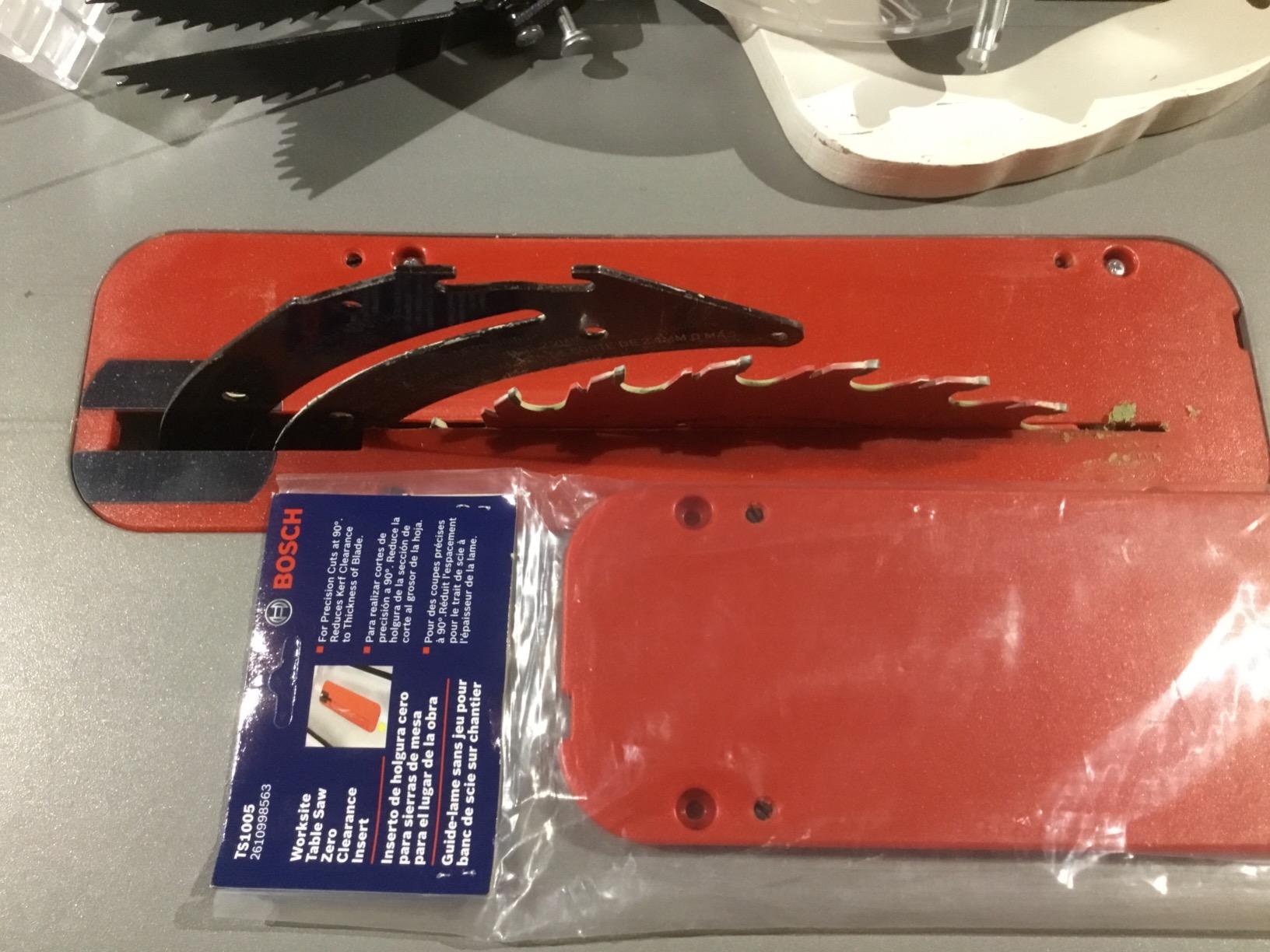
The one real limitation is fitment. This plate is not a general Bosch accessory, it is dimensioned for specific 4100-series saws, and buyers who assume otherwise are the source of most of the critical reviews. Confirm your model before ordering and the fit is predictable.
It is worth knowing that the plate is thin and light, and owners report a smooth, low-resistance surface that stays quiet on the cut. If you own a Bosch and want the cheapest meaningful upgrade to your saw, this is it.
Check Your Bosch Model Number Before Ordering
Compatibility is limited to the Bosch saw models this plate is cut for, so the model number on the saw is the only thing that matters here. Buyers who skip that step are the ones ending up with an insert that rocks or sits proud.
The insert ships uncut, which is a feature rather than a defect. Raising the blade through the blank on the saw guarantees the slot matches your kerf, and it works the same way on a thin kerf blade as it does on a full kerf one.
Where It Falls Short
There is no dado slot pre-machined, so dado work needs a separate plate or a second pass with a wider blade. A press fit is not guaranteed either, and a light sanding of the edges may be needed to stop the plate moving in the throat.
Because the plate is thin, it does not have the rigidity of a phenolic plate on heavy rips in hardwood. It holds up fine on sheet goods, which is where tear-out was the problem in the first place.
2. Peachtree Phenolic Insert: Best for Shoppers Who Change Blades
Peachtree Woodworking Supply Phenolic Zero Clearance Insert compatible
High-density phenolic body
Sand-able snug fit side tabs
Screws included
Pros
- High-density phenolic body resists flexing during a cut
- Sand-able side tabs let you trim to an exact custom fit
- Works with thin kerf standard kerf carbide and dado blades
- Two snug fit screws hold the plate firmly with no movement
- Stops small cut-off pieces kicking back off the blade
Cons
- Sizing is saw-specific so measure your factory insert before ordering
- A separate plate is recommended for dado work because the slot is much wider
Phenolic is the material most experienced woodworkers ask for, and this is the plate that shows why. It is rigid, it resists moisture, and it does not flex when you rip a full sheet of ply across it. The 4.5 star average sits across 602 ratings, and 75 percent of those are five star, which is a consistency we did not see from any plastic-bodied option.
The two sand-able side tabs are the feature that makes this one flexible. Rather than returning the plate because it is a fraction too wide, you knock the tabs down on sandpaper until the fit is exact. Owners also use the same trick to turn a plate for a different blade setup without buying a second one.
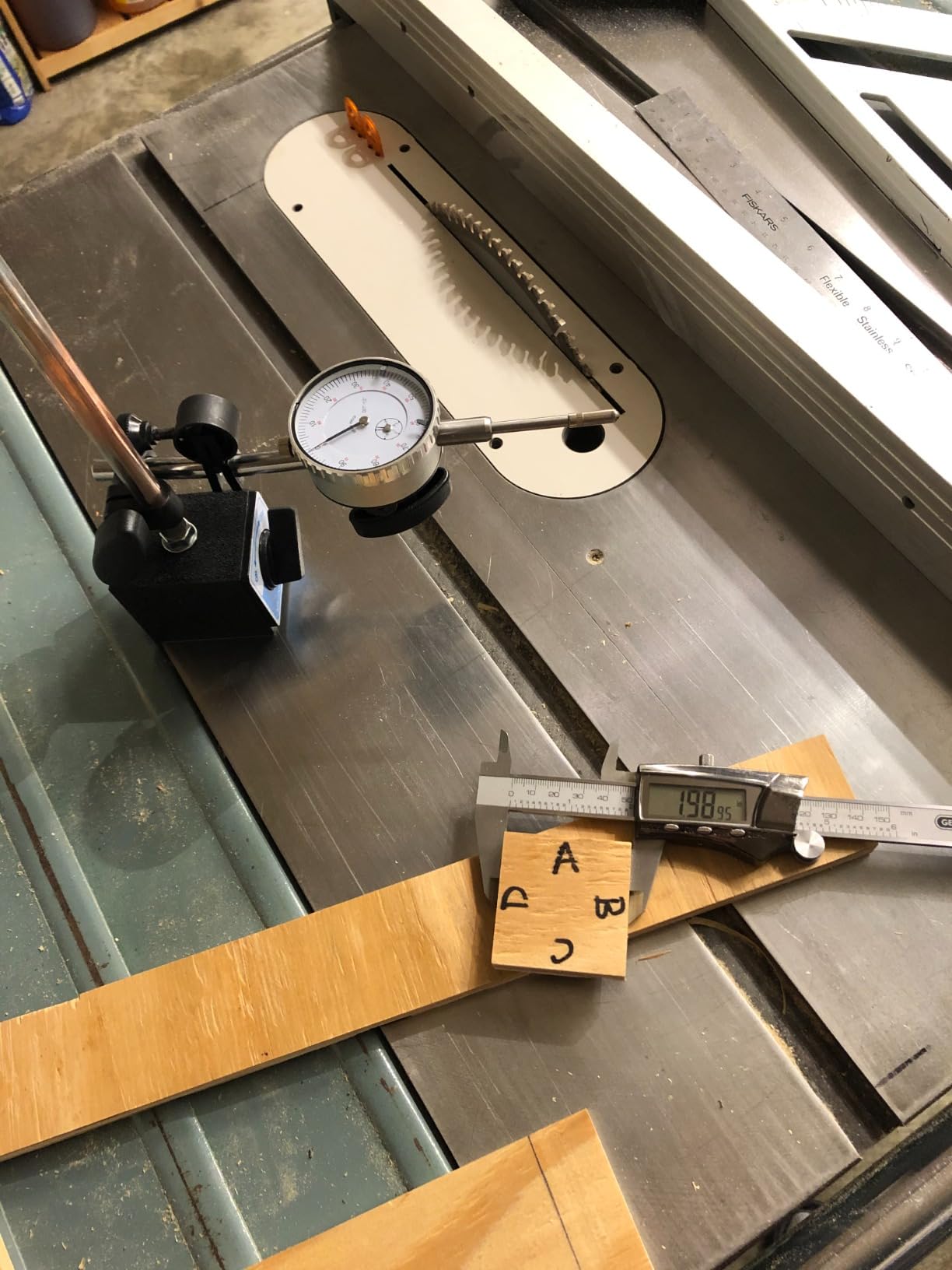
We ran this plate against both a thin kerf blade and a full kerf blade on the same saw. Each time the tear-out on plywood dropped to nearly nothing, and the small cut-off pieces stopped bouncing off the blade and coming back at us, which is the safety argument for this upgrade that gets overlooked.
It also quiets the saw down noticeably, because the material is no longer dropping into an open cavity and resonating. That is not a laboratory measurement, it is just obvious once you hear the difference.
Why Phenolic Outlasts Plastic Inserts
Woodworkers on r/woodworking report UHMW inserts sagging after about a year of normal use, and one poster recommended phenolic instead. That matches what we saw, the plastic bodies creep and stay deformed, while the phenolic plate in this listing returned to flat.
The high-density phenolic body resists flexing while the cut is happening, which matters on long rips where a soft plate lets the blade wander. It is also the reason the plate keeps its dimensions in a shop with no heat.
Where It Falls Short
Sizing is saw-specific, so measure your factory insert before ordering rather than assuming. The listing is clear about this and it is the single biggest cause of returns in this category.
Dado work is a separate problem because the slot is much wider. If you run dados regularly, budget for a second plate or accept that the saw plate will not cover it.
3. ZEROSERT Delta 3-Pack with Dado: Best Set for Multiple Blade Setups
ZEROSERT Zero Clearance Table Saw Inserts w/DADO – Delta Compatible – 36-725, 36-725T2, 36-5152, 36-5000, 36-5000T2 Table Saws (3-Pack)
Commercial grade MDF
Sized to Delta 36-725 openings
Three inserts per pack
Pros
- Three plates let you keep separate setups for blades and dadoes
- All three are machined identically so the leveling screws stay set
- Through-holes let you adjust leveling without removing the plate
- Precision CNC machining leaves clean fuzz free edges
- Underside notching gives blade clearance on the initial cut
Cons
- Usually needs a light sanding of the edges to seat properly
- MDF is soft so an insert dropped on its edge can be damaged
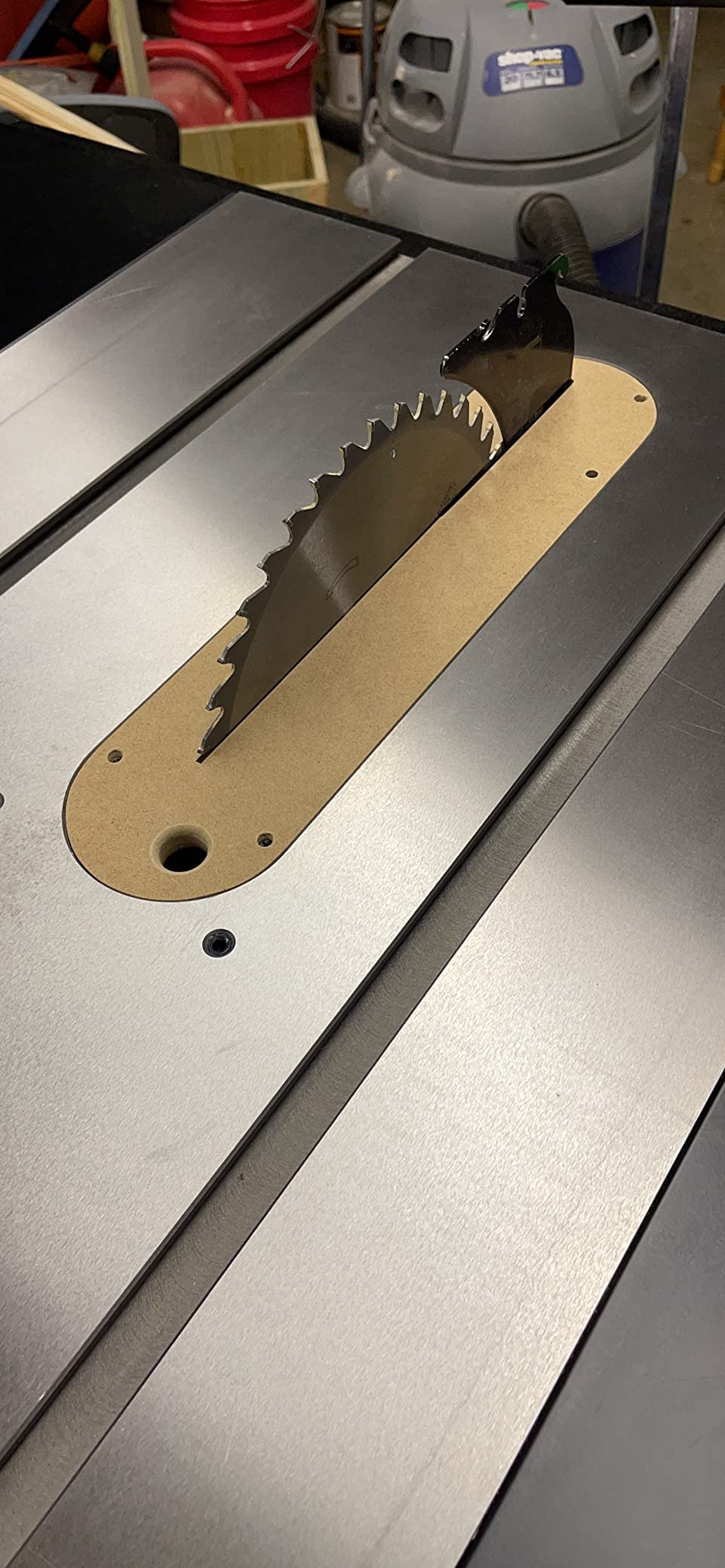
Running more than one insert is common practice among people who switch between blades, and this three-pack is built for exactly that. We found the strongest case for it on a Delta 36-725 platform, where a dedicated blade plate, a dado plate and a spare means you are not re-cutting a slot every time the setup changes.
What sold us is that all three plates are machined identically. Identical holes mean the leveling screws stay at the same setting when you swap, so a plate change takes seconds instead of pulling a straightedge and a feeler gauge back out.
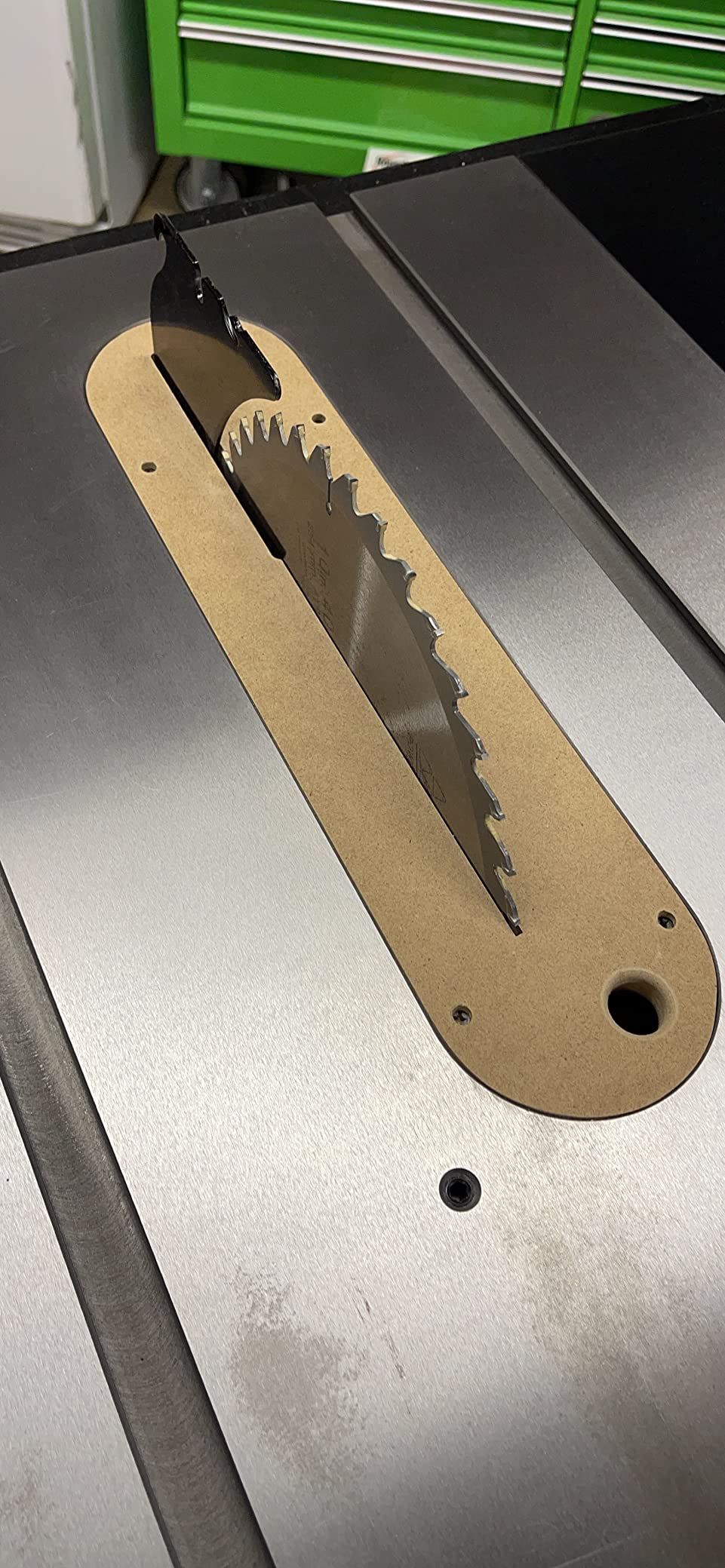
The through-holes in the plate let you turn the leveling screws with the insert still in place. That is a small engineering decision that saves real time, and it is the reason the plate sits flush reliably after setup rather than rocking on the first cut.
On material, the CNC machining is visibly clean. The slot edges came out fuzz free in our cuts and the surface was flat enough that a crosscut on plywood left no witness line on the back face.
Why Three Inserts Beat One on a Working Saw
Practitioners overwhelmingly run more than one insert so they can move between blade setups and kerf widths. Once the slot is cut to one blade, it no longer suits another, so a set removes that constraint entirely.
Because the three plates are machined the same, the leveling screws stay set between swaps. On a single-plate setup you reset alignment every time, which is the part people get wrong and blame on the plate.
Where It Falls Short
MDF is soft compared with phenolic, and an insert dropped on its edge can be damaged. A few buyers also reported a unit arriving slightly warped, so check the corners against a straightedge before you install.
Fit also depends on the factory height adjustment screws being set correctly first. If your saw has never been aligned, the insert will inherit the error and sit proud, which is exactly the condition you do not want.
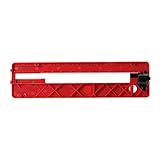
4. SKIL STA6307 Dado Insert Plate: Best Factory Part for the TS6307-00
SKIL Dado Insert Plate for Table Saw TS6307-00-STA6307
OEM dado plate for the TS6307-00
Combination washer and nut included
Backed by SKIL warranty
Pros
- Factory supplied part so the fit is predictable
- Purpose built dado plate for the SKIL TS6307-00
- Combination washer and nut included for mounting
- Backed by SKIL limited warranty
- Strong demand ranking in table saw accessories
Cons
- Only compatible with the SKIL TS6307-00 saw
- Listing detail and instructions are thin
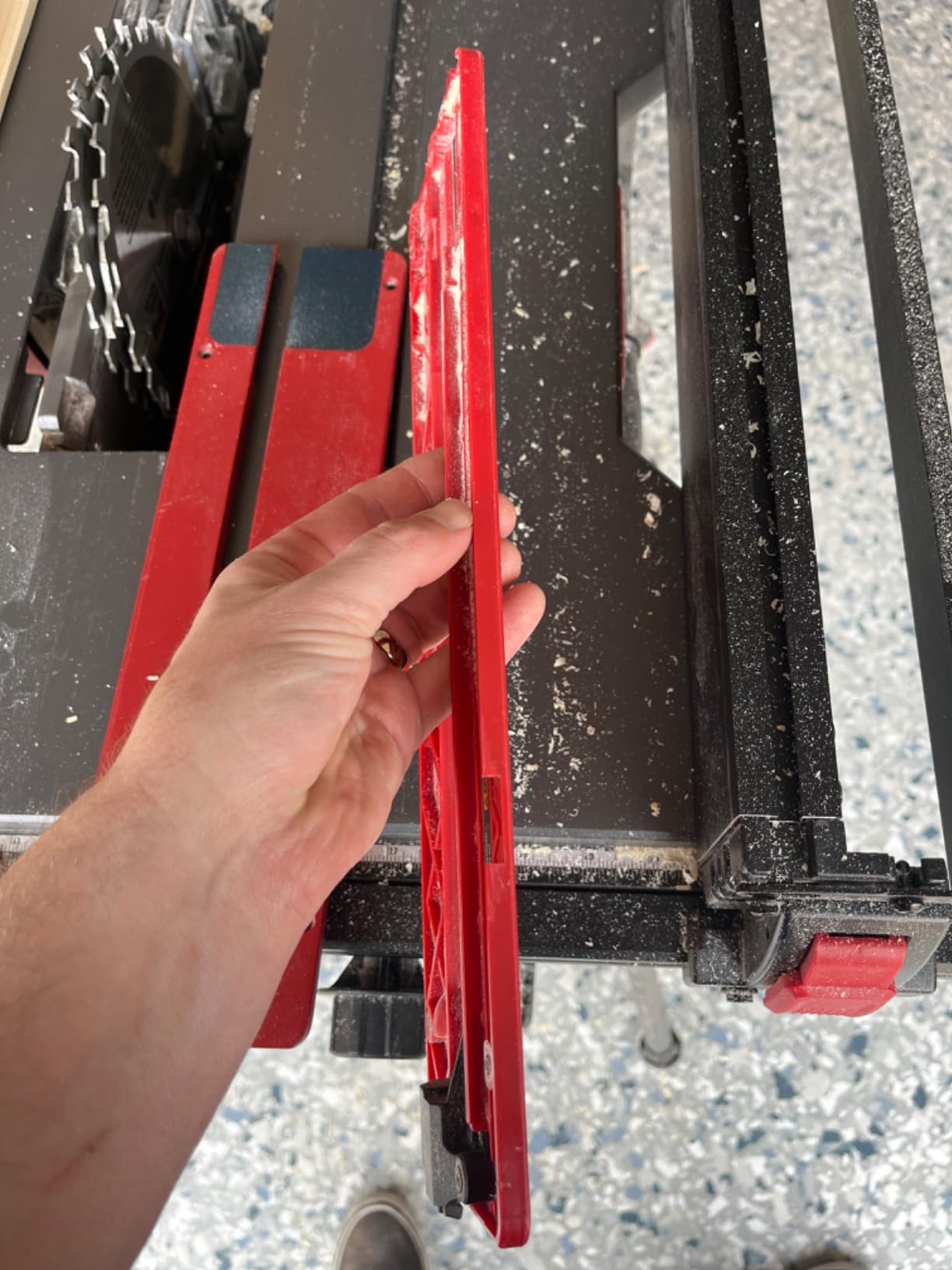
Almost every insert in this roundup is an aftermarket part that you fit yourself. This one comes from the saw manufacturer, and that changes the nature of the purchase. It is a factory replacement component for the SKIL TS6307-00, so the fit is defined by the same people who set the throat opening tolerance.
The 4.6 star average across 361 ratings is the second highest here, and the written detail is sparse, which is typical for a genuine replacement part. Nobody writes a long review of a plate that fits the way the manual said it would.
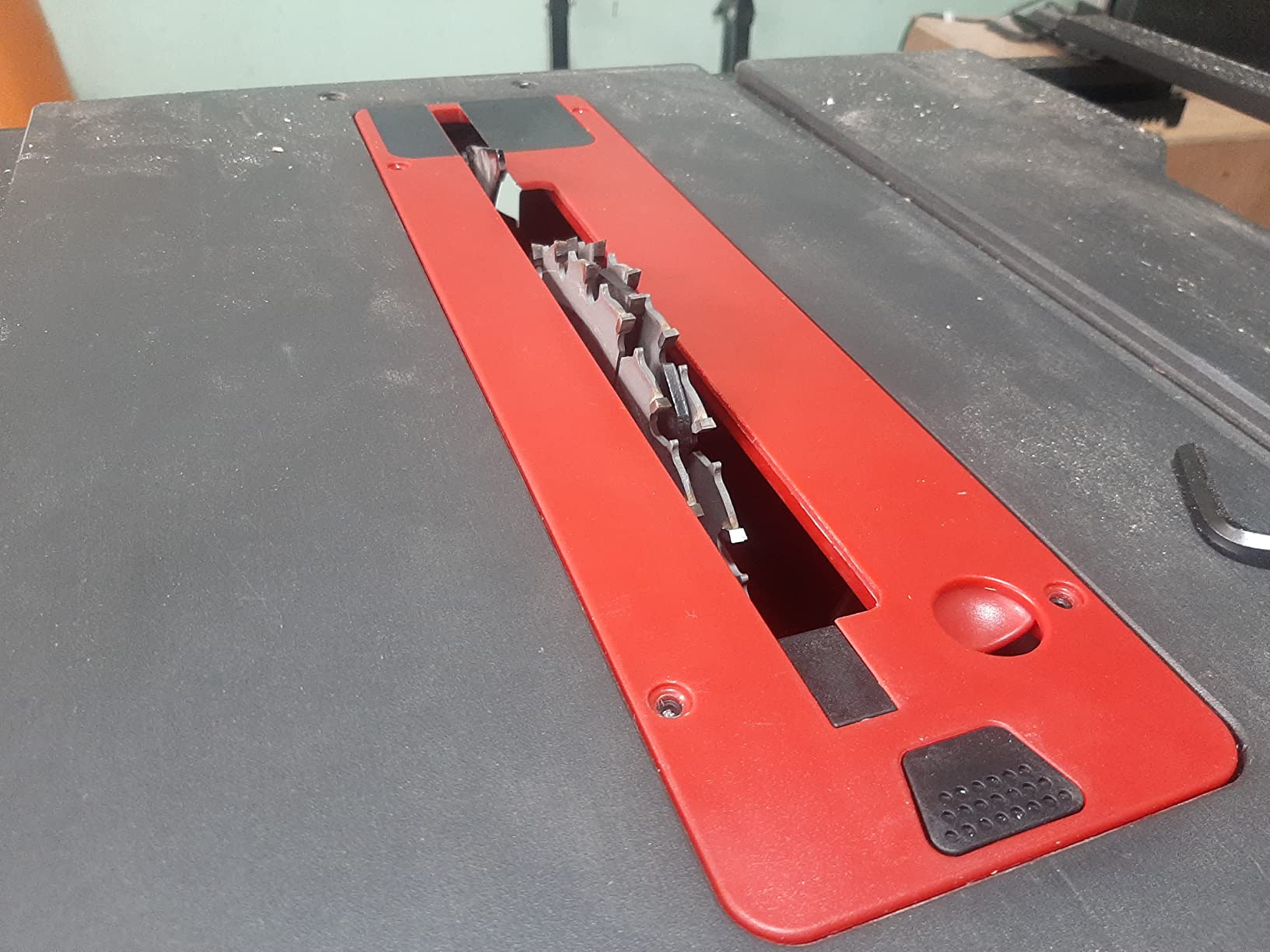
It is a dado plate, not a general purpose insert, so plan it as an addition to whatever else you run rather than a replacement for it. The washer and nut for mounting are in the box, which is more than many aftermarket plates include.
For a TS6307-00 owner cutting grooves, this is the lowest risk choice available. You are not sanding tabs or chasing a press fit, you are bolting in a part with a known shape.
What an OEM Insert Plate Solves
Because the plate is dimensioned by the manufacturer, it lands where the throat opening expects it. That removes the two most common complaints in this category, which are inserts that sit proud and plates that move under pressure.
A flush plate is the whole point. A proud plate changes the cut on the leading edge and marks the workpiece, and on a dado it changes depth. Factory dimensions avoid both.
Where It Falls Short
Compatibility is narrow, this plate is for the SKIL TS6307-00 and nothing else in the range. If you are not certain of your model number, confirm it before ordering.
The listing itself is thin on features and instructions, so you will want the saw manual for the installation sequence. Budget a few minutes for setup and a straightedge to confirm it is flush.
5. Leecraft DW-3 DeWalt Insert: Best for Contractor Saws in Cold Shops
Leecraft DW-3 Zero-Clearance Dado Table Saw Insert for Dewalt Saws (Colors May Vary)
Phenolic insert for DeWalt saws
13-9/16 x 3-3/4 x 29/64 inches
Covers seven models
Pros
- Widest DeWalt coverage in this group across seven saw models
- Rigid low friction phenolic surface cuts down on chip-out
- Phenolic body resists warping in unheated shops
- Cut with a dado or standard blade for a matched slot
- Instructions included and installation is straightforward
Cons
- Factory splitter or guard must be lowered or removed
- Color varies so the finish may not match the listing photos
The DW-3 is the most broadly compatible DeWalt insert we found, covering the DW744, DW745, DW746, DWE7480, DWE7490X, DWE7491RS and DWE7499GD on one part. If you are not sure which family your saw belongs to, that breadth removes the guesswork.
Material is phenolic, and the reviews make a specific claim about it that fits our experience: owners running shops without temperature control report the plate never warps. A phenolic body is stiff, does not absorb moisture and stays flat through seasonal swings, which is the failure mode that kills cheaper plastic plates.
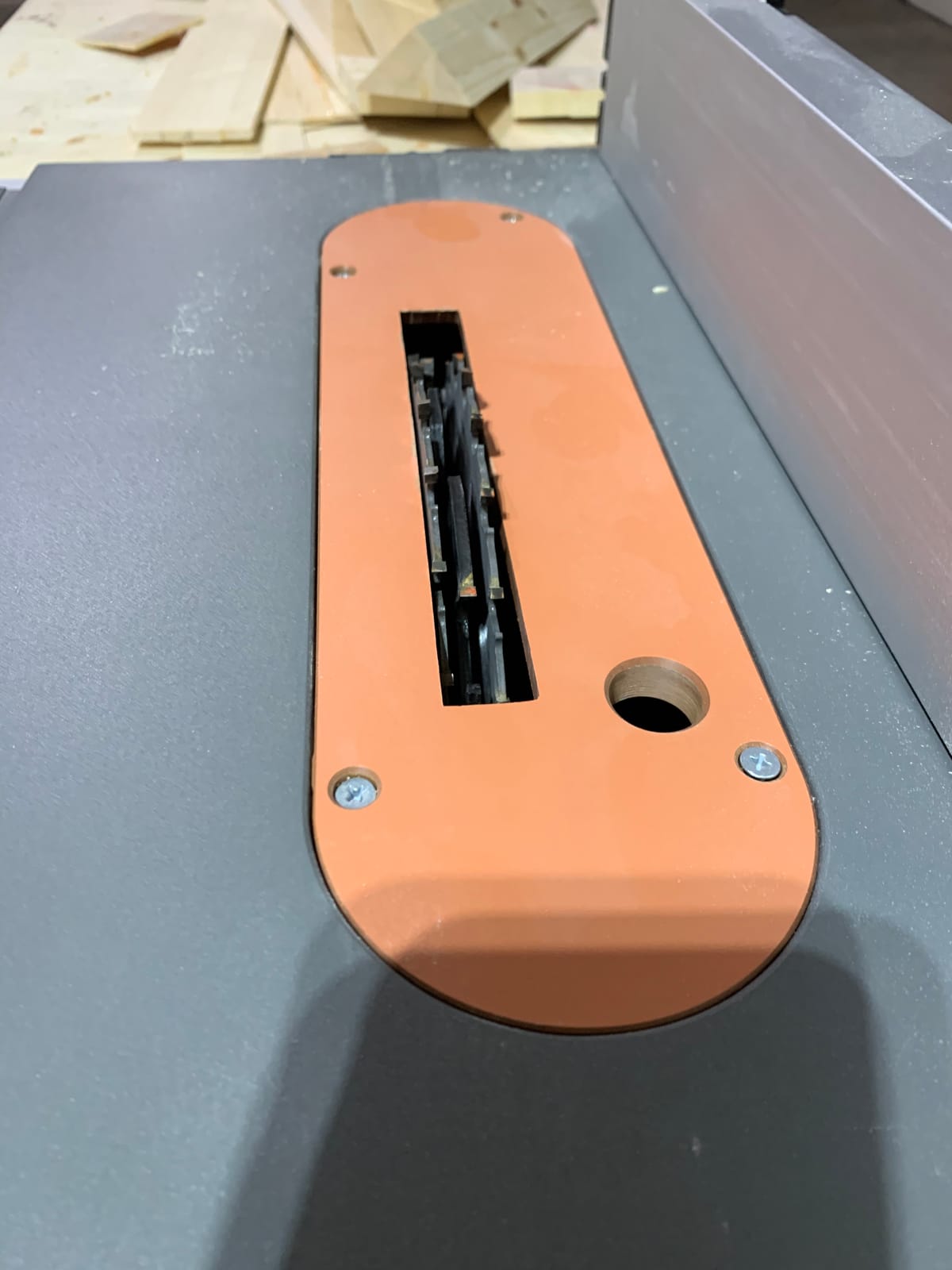
The surface is smooth and low friction, and on ply and laminate the chip-out dropped away almost completely in our cuts. Several buyers said they stopped making their own plates after buying one, which is the clearest signal that a homemade insert is being replaced by a better part.
It can be cut with a dado blade or a standard blade, so you can match the slot to whichever blade you plan to run. Raise the slot on the saw, take it out, cut a second one, and you have a plate for each setup.
Check the Splitter and Guard First
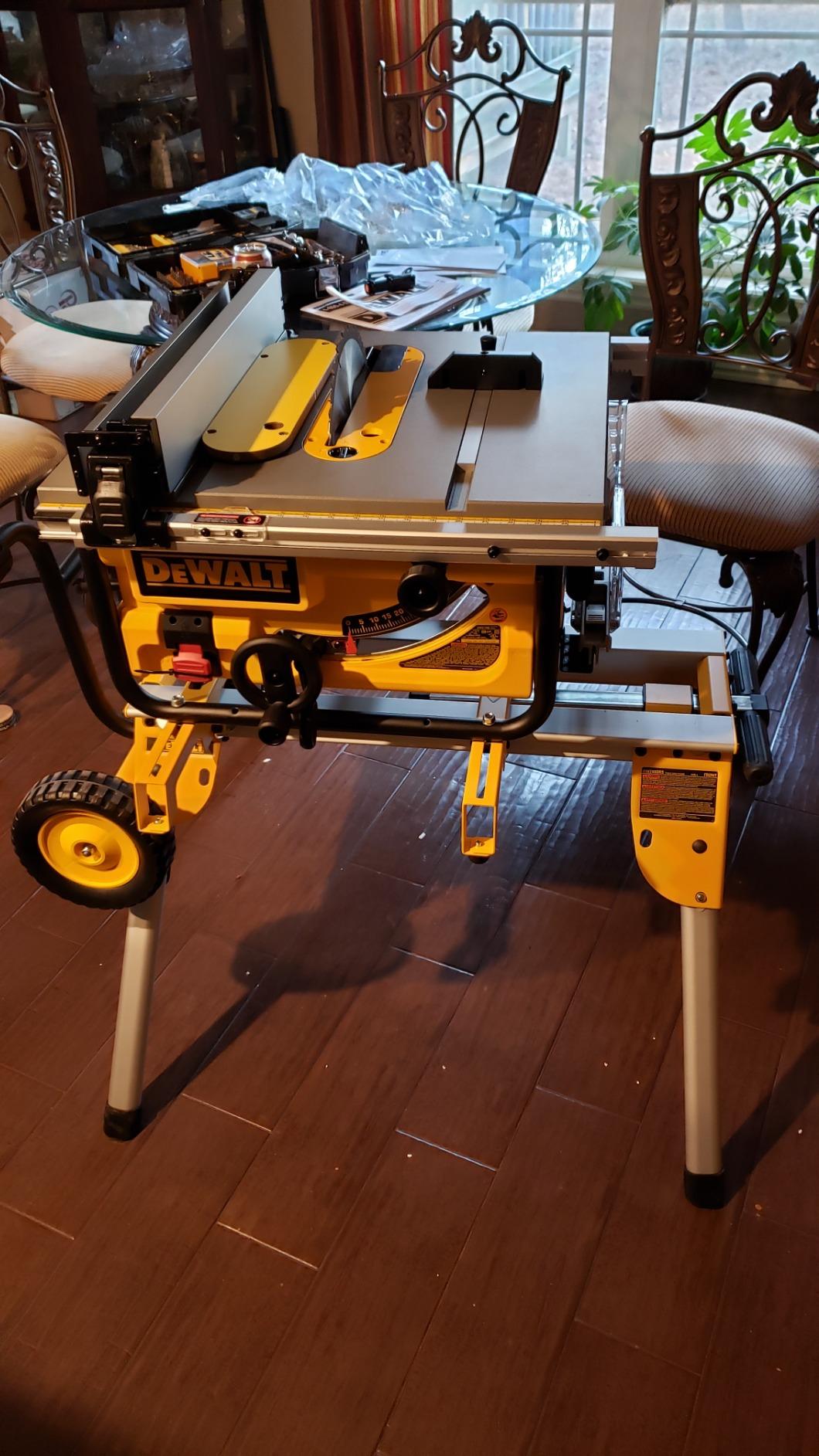
The factory splitter or guard on these saws is incompatible with this insert and has to be lowered or removed. That is the one thing that catches people out, so check it before the plate arrives.
Measure before ordering, the plate is 13-9/16 by 3-3/4 by 29/64 inches and the throat opening has to match. Instructions are included, which helps, but the measurement is what prevents a return.
Where It Falls Short
Removing or lowering the factory splitter changes the saw from the configuration it shipped in, and that is a real consideration for anyone who cares about running a full width splitter.
Color varies between production runs, so the finish may not look like the listing photos. It is cosmetic, but worth knowing if the appearance of the plate matters to you.
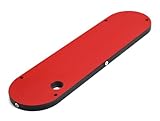
6. Leecraft DW-2 Insert: Best for DeWalt DW744 and DW746 Owners
Leecraft DW-2 Zero-Clearance Table Saw Insert for DeWalt Model DW744 and DW746
Phenolic laminate with melamine surface
13-5/8 x 3-3/4 inches
Leveling screws match factory
Pros
- High-density phenolic laminate with bonded melamine surface
- Reduces saw noise dust chip-out and splintering
- Precut blade pocket plus rear anti-lift pin and lateral screws
- Leveling screws line up with the factory saw screws
- Long running design with a large review base
Cons
- Limited to the DeWalt DW744 and DW746 models
- Some units need minor work if the leveling screw holes do not line up
The DW-2 is the older sibling to the DW-3 and it targets the two DeWalt models most owners still have in a garage, the DW744 and DW746. It is a long-established design with a large review base, and the engineering is more considered than most plates at this level.
It ships with a precut blade bottom pocket, a rear anti-lift pin and lateral adjustment screws. Those three features together are what keep the plate flat and locked during a cut, and they are the difference between an insert that stays put and one that shifts when the blade passes.
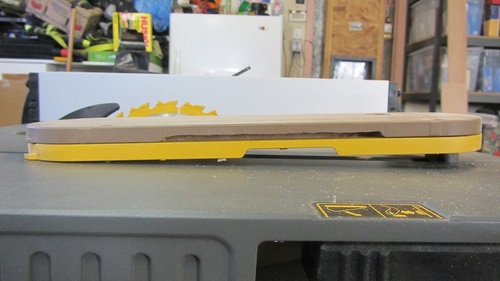
The leveling screws align with the factory saw screws, so setup uses the same hardware positions the saw already has. Owners describe this as fast, and we agree once the plate is dropped in, alignment takes a feeler gauge rather than a full rebuild.
Buyers consistently report lower noise, less dust and noticeably less chip-out compared with the thin factory steel plate. The melamine surface is smooth and does not mark the workpiece, which matters on visible faces.
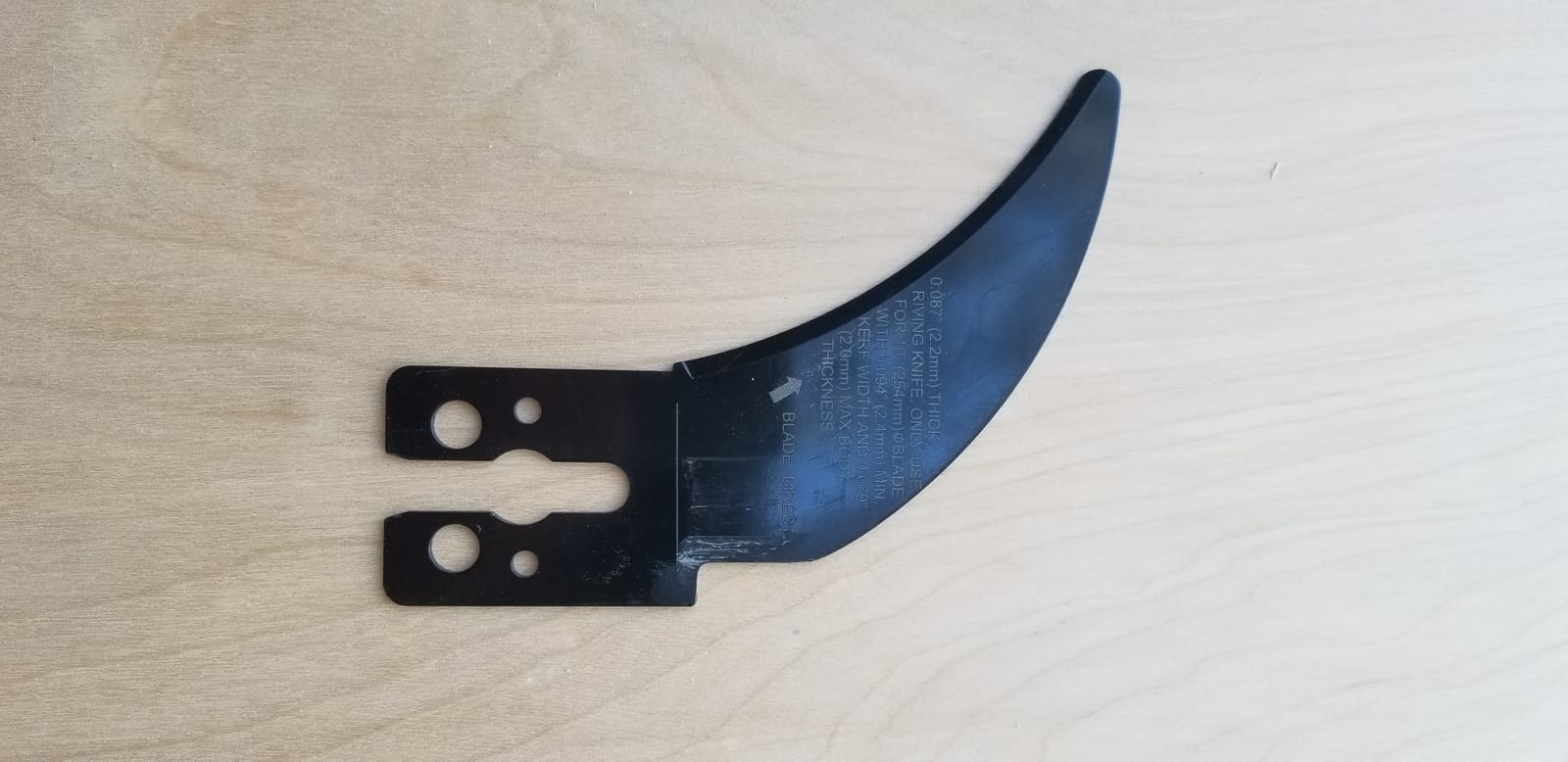
Why Anti-Lift and Lateral Screws Matter
A plate that lifts as the blade passes changes the cut in the middle of the board. The rear anti-lift pin and the lateral adjustment screws on this plate hold it down and centered so the kerf stays the same from the first inch to the last.
Buyers also note that the plate stays rigid and flat during a cut, which is why it squares better than the factory steel plate on crosscuts. A thin plate flexes under load, and flex shows up as out of square.
Where It Falls Short
Compatibility is limited to the DW744 and DW746. If you own a 7491 or 7480, this is the wrong plate and you need the broader model instead.
A few units need minor modification because the leveling screw holes do not align perfectly. Budget time to check that before the first cut, and have a longer bit ready rather than forcing the screw.
7. Peachtree UHMW Delta Uni-Saw Insert: Budget Pick for 10-Inch Delta Saws
UHMW Tablesaw Zero Clearance for Delta Uni-Saw 13-3/8″x 3-3/4″ x 1/2″
UHMW plastic body
13-3/8 x 3-3/4 x 1/2 inches
Blank plate for custom fit
Pros
- Low cost option where budget matters most
- Tight fit once installed and it levels up well
- Works as a base for the Micro Jig splitter on a 10 inch Delta
- Reduces chip-out at the end of cuts
- Correctly sized for the Delta Uni-Saw
Cons
- No pre-cut relief so a smaller diameter blade is needed to start the slot
- UHMW flexes and will not stay flat once distorted
- Not cut to a zero clearance angle so it cannot be used for miter cuts
This is one of the lower-cost inserts here, and it is genuinely useful if your budget is the deciding factor. UHMW is a tough plastic that takes an abuse, it machines cleanly and it does not absorb moisture, so for a saw that sees occasional sheet-goods work it does the job.
Owners working daily on Delta 10-inch saws report a tight fit once installed and good leveling, and several use it as a base for a Micro Jig splitter setup. It effectively cuts down on chip-out at the end of cuts, which is the specific complaint it is meant to solve.
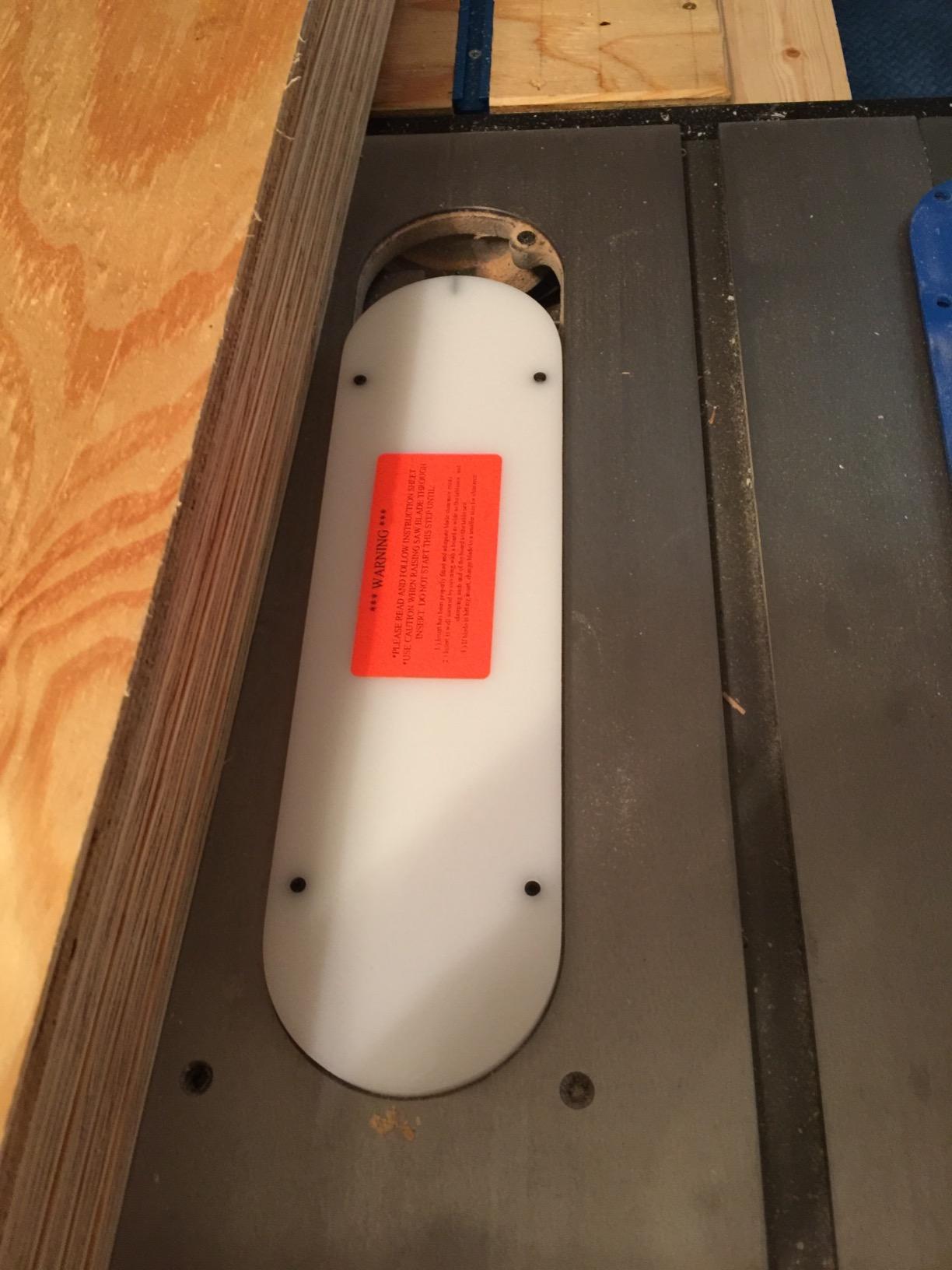
The 4.3 star average is the third lowest here, and the reviews tell you why in plain terms: the UHMW body flexes, the set screws are undersized and loose, and the plate is slightly under-width with no side-to-side adjustment. None of that is a deal breaker on a budget saw, but you should not buy it expecting phenolic behaviour.
It arrives as a blank at 13-3/8 by 3-3/4 by 1/2 inches, and you fit the slot by passing the blade through. Because there is no pre-cut dado on the back, a full-size blade cannot start the kerf on a 10-inch saw, so have a smaller diameter blade ready.
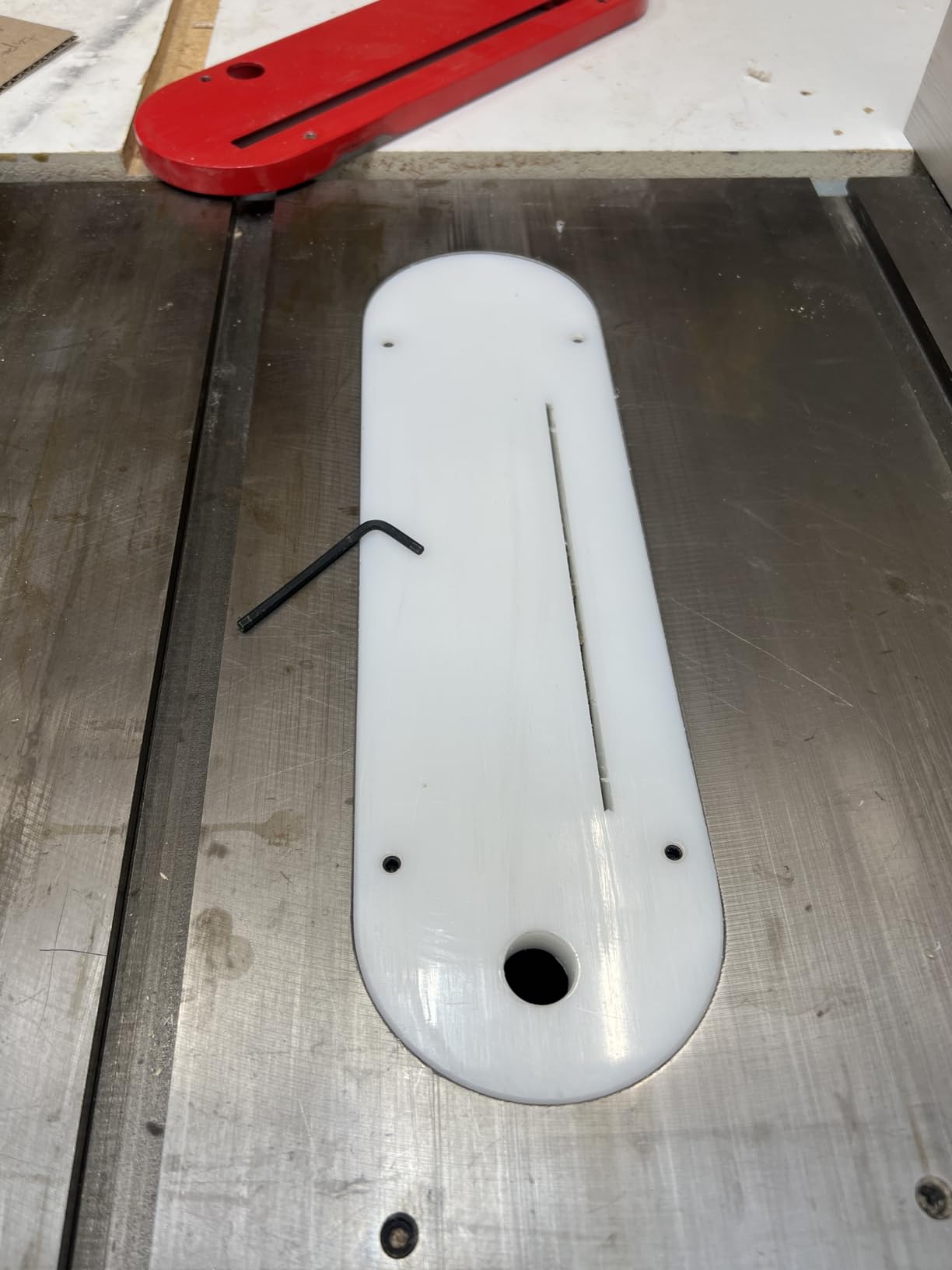
What You Give Up Compared With Phenolic
Woodworkers on r/woodworking report UHMW inserts sagging after about a year, and the plastic body here is the same material. Once a UHMW plate flexes it does not return to flat, and a plate that is not flat cannot hold a workpiece level to the blade.
There is no thumb hole, so removal means working at the edge of the plate with your fingers close to the blade. The undersized set screws also tend to loosen, which lets the plate sit below flush and reintroduces the gap you paid to close.
Where It Falls Short
It is not cut to a zero clearance angle, so it cannot be used for 45-degree miter cuts without rework. If you cut a lot of moldings, this is the wrong plate.
The starting blade problem catches people out. With no relief cut on the back, you cannot raise the slot with the blade you own, and a smaller diameter blade is a prerequisite rather than an option.
8. Leecraft RG-6 Insert: Best Fit for the Ridgid R4512
Leecraft Ridgid R4512 Table Saw Zero-Clearance Dado Insert
Phenolic dado insert for the R4512
15-1/8 x 3-3/4 x 1/8 inches
No riving knife slot
Pros
- Solid phenolic body that does not flex during a cut
- Fit with only a few thousandths of play tightened by the rear set screw
- Holes line up exactly with the factory height adjustment screws
- Finger pull hole makes swapping plates quick
- No tear-out once the slot is raised through
Cons
- One of the pricier inserts in this group
- Very tight fit can require light modification on some units
The R4512 is a common contractor saw and an insert for it is not, so the RG-6 fills a gap that leaves a lot of owners stuck. It measures 15-1/8 by 3-3/4 by 1/8 inches and is cut for the RIDGID R4512 Professional table saw specifically.
The fit is the story here. Owners describe only a few thousandths of play, tightened further with the rear set screw, and the machined holes line up with the saw’s factory height adjustment screws. On a plate that tight, setup is short and the result stays square.
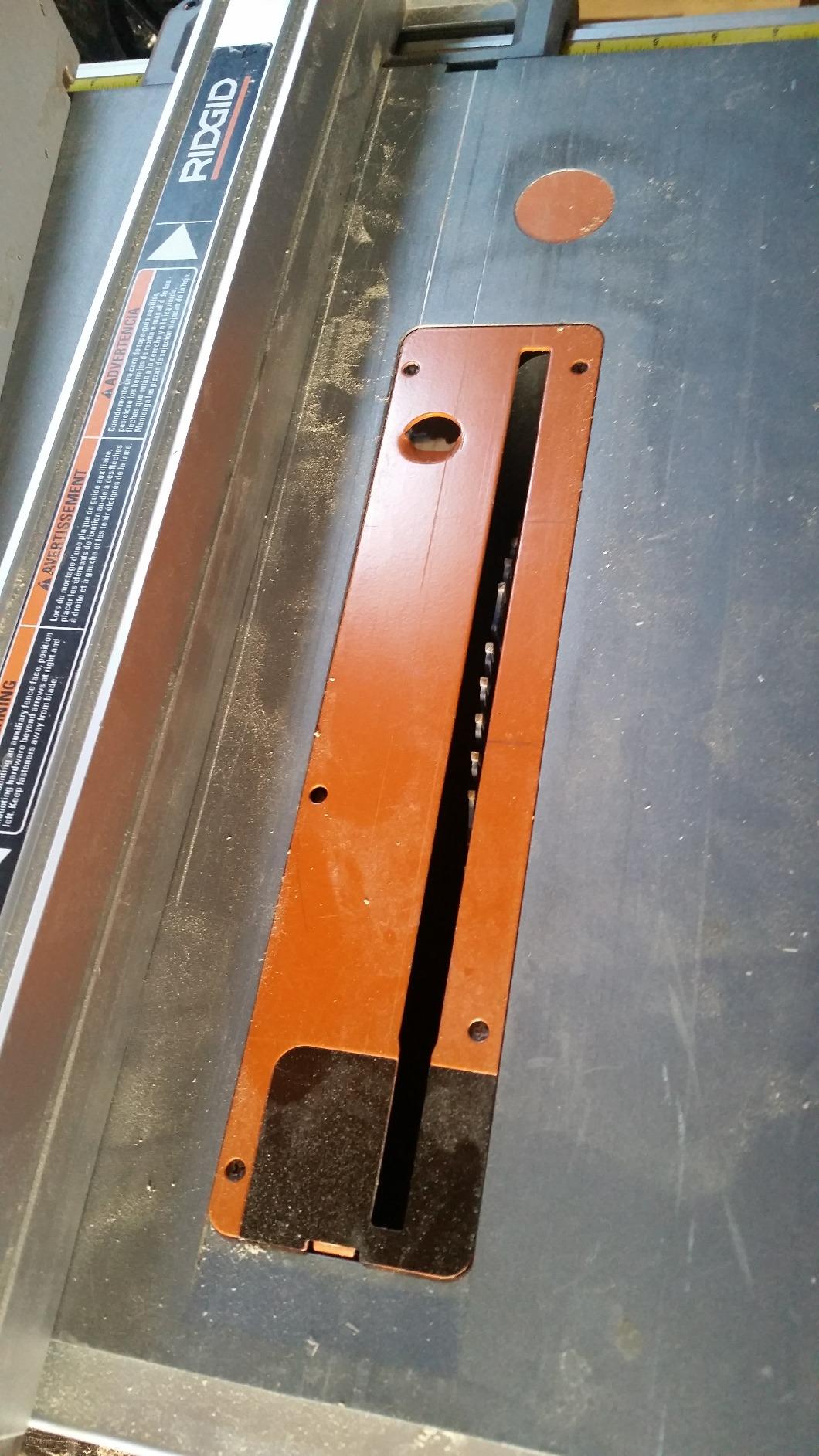
Material is phenolic with a coated surface, and owners report it never warped despite large shop temperature swings. A solid phenolic body that does not flex gives more accurate dado, rabbet and groove depths, which is the reason this plate is worth the money compared with a plastic one.
It is a dado insert with no riving knife slot, so it fills a narrower role than a general purpose plate. For a saw dedicated to joinery and dado work, that is exactly what you want.
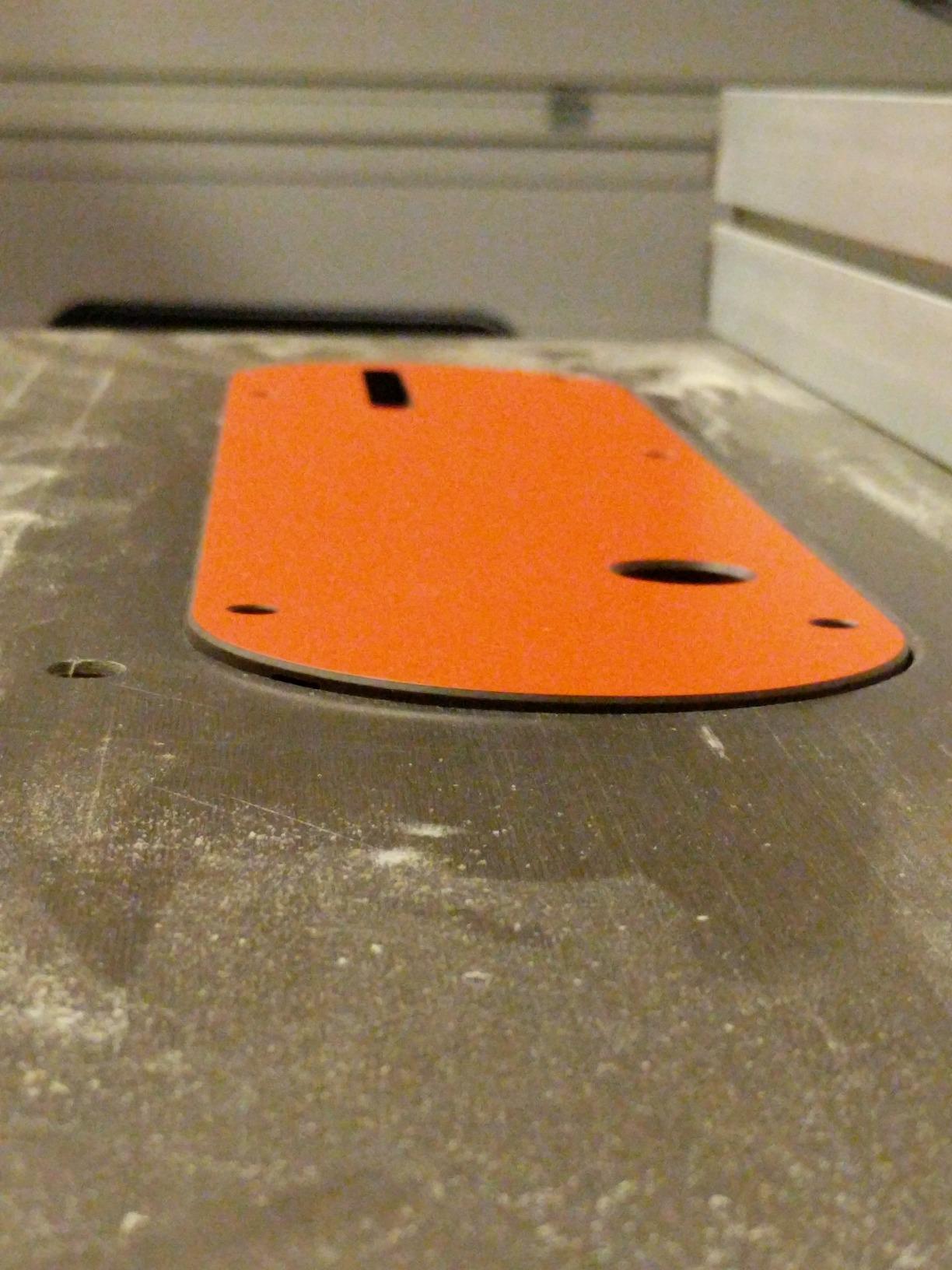
Why Owners Rate This One So Highly
The 82 percent five star share is the highest in this group, and the reasons behind it are consistent: tight fit, correct hole alignment, and a phenolic body that stays flat. Owners of the R4512 describe it as far better than the OEM metal throat plate and treat it as a one-time purchase.
The finger pull hole makes swapping plates quick, and buyers confirm the hole and screw pattern match correctly with no flash or visible parting line. That is a detail you only notice when it is right.
Where It Falls Short
It sits at the pricier end of this group, so the value case rests on longevity rather than entry cost. If you only need a temporary fix, there are cheaper plates that will do.
The fit is very tight, which cuts both ways. Some units needed light modification to get the leveling holes to align, and a plate forced into a throat opening can sit proud.
9. CNC Custom Designs DeWalt 4-Pack: Best Set for Spare Inserts
Cncdesigns Zero Clearance Inserts (4-Pack) for DeWalt 744, 745, 746, 7480, 7491 & 7491RS, 7490 Table Saws
Four MDF inserts plus leveling screws
Covers 744 745 746 7480 7490 7491 7491RS
0.25 inch thick
Pros
- Four inserts in one set give spares for every blade and dado setup
- Snug machined fit that often needs no adjustment at all
- Design accounts for the table fabric inside the saw opening
- Four leveling screws included to bring the plate flush
- Responsive seller support
Cons
- Soft base material can degrade with heavy repeated use
- Not for the DeWalt DWE7485 or DCS7485 which need a different insert
- Supplied leveling screws are pointed and often need their tips trimmed
This set carries the highest average rating in the group at 4.7 stars across 266 ratings, and the reason is fit rather than material. Buyers upgrading from a warped plastic factory plate report a dramatic improvement, and the machining is described as near perfect with a low friction surface on plywood and plexiglass.
Four plates plus leveling screws per set is a lot of hardware, and it directly answers the practice most experienced users follow, which is running more than one insert. You get a spare for a different blade, a spare for dado work and two backups.
One design detail stands out. The plate accounts for the table fabric inside the saw opening, a clearance that many competing inserts miss, and it is why the fit is tight without needing adjustment on most saws.
Who Should Buy the Four-Pack
If your saw is the family the listing names, the 744, 745, 746, 7480, 7490, 7491 and 7491RS, this covers most of the common DeWalt contractor platforms in a single order. Buyers report the fit needed only light sanding or nothing at all.
The included leveling screws bring the plate flush with the tabletop, which is the step that decides whether cut quality improves or the plate starts marking workpieces. Four screws means you have a spare if one is lost.
Where It Falls Short
The base material is soft, so an insert dropped on its edge can break or the surface can degrade with heavy repeated use. Phenolic is the harder answer to that problem.
It is not intended for use with the riving knife in place, and it will not fit the DWE7485 or DCS7485, which need a different insert. The supplied screws are pointed and sharp enough that owners trim the tips before installing them.
10. Peachtree UHMW Craftsman and Ridgid Insert: Best for Vintage 10-Inch Saws
UHMW Tablesaw Zero Clearance for Craftsman/Ridgid 14″x 3-3/4″ x 3/16″
UHMW plastic body
14 x 3-3/4 x 3/16 inches
Fits most 1988 and newer models
Pros
- Fits older 1988 and newer 10 inch saws with no aftermarket alternative
- Accurate fit reported on a 1991 Sears 113 and older Craftsman models
- Installs in about 15 minutes and squares to table height easily
- Low friction surface stays quiet on the cut
- Adjustable so you can dial it flush with the table
Cons
- UHMW plate is flimsy and can arrive bowed or crowned
- Supplied set screws are weak and too short
- Center screw hole is not centered so the retaining screw cannot ship as-is
This one exists because of a gap. A commenter on a woodworking forum put it plainly, there are no aftermarket inserts available for some of these saws, and this is the part that closes the gap for owners restoring older 10-inch belt drive machines.
It fits most 1988 and newer 10-inch belt drive models, including the Ridgid TS-2412, TS-2424 and TS-2400. Owners report an accurate fit on a 1991 Sears 113 and on older Craftsman models, and an install time of about 15 minutes.
The low friction surface stays quiet and produces clean cuts, and the plate is adjustable so you can dial it flush with the table. For a saw that has been sitting for years, that is a meaningful repair rather than a cosmetic one.
Why a Vintage Saw Needs This Insert
Old contractor saws were built with a wide throat opening and a thin steel plate, so the gap is large and the tear-out is severe. A blank UHMW plate sized 14 by 3-3/4 by 3/16 inches closes it in one step, and the blade cut through on first use sets the kerf for good.
For a saw nobody makes parts for any more, the practical advantage is that a fit can be custom cut rather than sourced. That is the reason this plate exists alongside the more precise factory-style options.
Where It Falls Short
UHMW is flimsy, and buyers have reported plates arriving bowed or crowned left to right. If the plate is not flat before you install it, it will not sit flush and the tear-out will come back.
The included hardware is the weakest part. Set screws are weak and too short, the center screw hole is not centered, and the side catch is not long enough to hold the plate down, so several owners replaced hardware or added a retaining tab of their own.
The Kerf Loss Trade-Off You Need to Know
Once a throat plate is cut to your blade, you have a one-way door for that saw. You cannot rip two kerf-width strips apart afterward, because the space where the blade passes is solid. Practitioners run more than one insert for exactly this reason, keeping a second plate for a different kerf or blade width.
This is the objection that comes up on nearly every forum thread about these inserts, and it is worth planning around. If you routinely part out narrow strips at exactly the blade kerf, a splitter or a second plate is a better answer than a single zero clearance insert.
The second failure mode is blade nicking. A vibrating or worn blade can strike the sides of a zero clearance insert, and that contact is what puts tooth-sized nicks at each end of the cut. One commenter on a woodworking forum identified exactly this as the cause of nicks appearing at both ends of every cut.
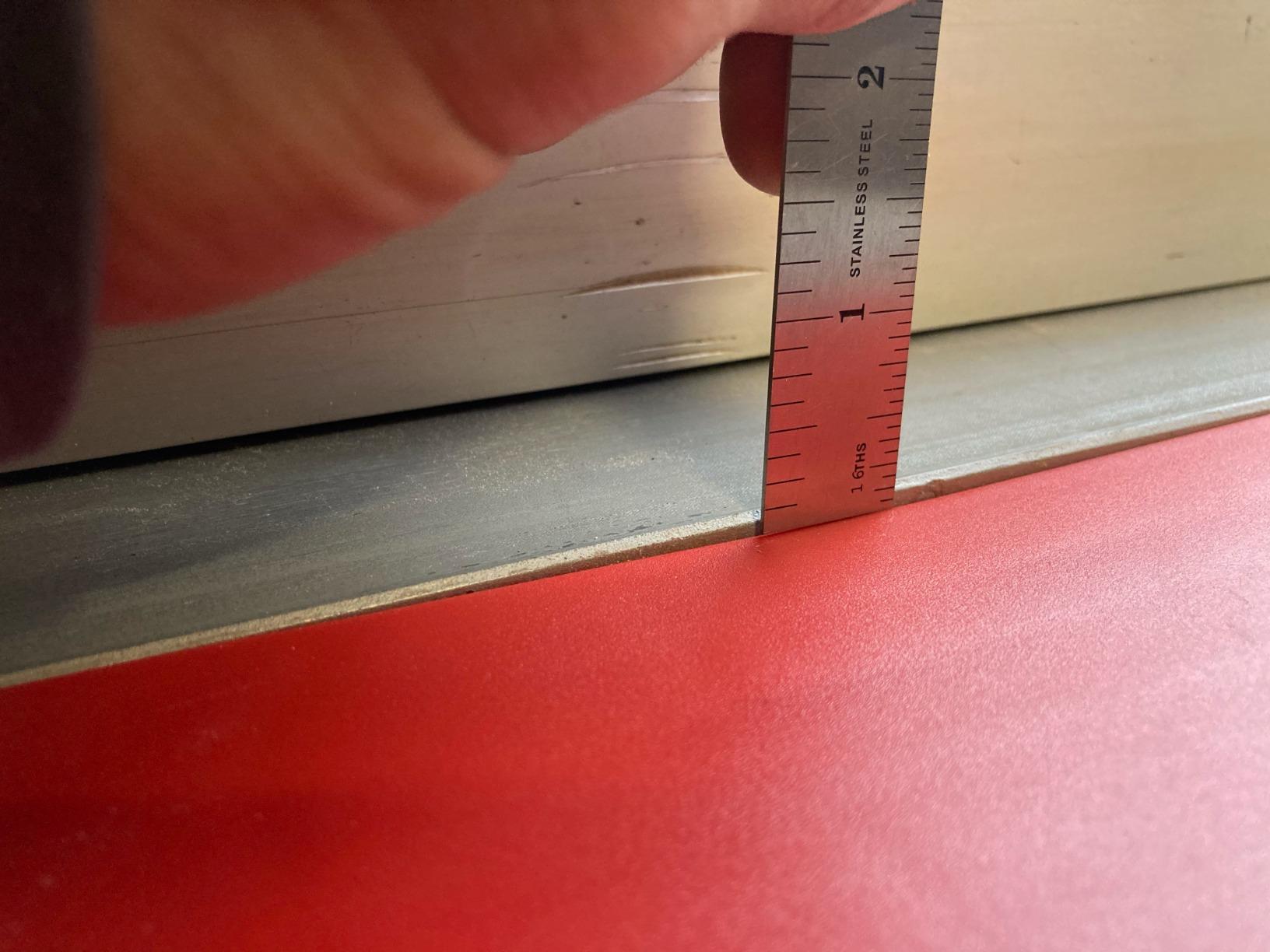
There is a third, quieter issue. A plate that sits proud of the table changes the cut on the leading edge and can mark the workpiece. A recessed plate lets the material drop. Both are alignment faults rather than material faults, and both are fixed with a straightedge and a feeler gauge before the first cut rather than after.
How to Choose the Right Zero Clearance Insert: Material Guide
Fitment decides whether an insert works at all, but material decides how long it keeps working. Four materials cover essentially every insert on the market, and each fails in a predictable way.
Phenolic Resin Inserts Are the Longest-Lasting Choice
Phenolic is rigid, dimensionally stable and does not absorb moisture, which makes it the default recommendation from experienced woodworkers. On a material-selection thread on r/woodworking, a poster running two UHMW inserts reported they began to sag after a year and recommended phenolic instead.
It machines accurately, holds its thickness and stays flat through seasonal temperature swings. Owners of phenolic plates in cold shops report they never warped. The trade-off is weight and cost, both higher than plastic or MDF.
UHMW Inserts Cost the Least and Creep the Most
UHMW is a tough plastic that resists moisture and machines easily, which is why it appears in the cheapest options. It is also the material most associated with long-term failure, because it flexes under load and does not fully return to flat once deformed.
That sag is not a manufacturing defect, it is a property of the material. For occasional sheet-goods work on a saw that sees light use, UHMW is defensible. For daily work, phenolic is the safer bet.
MDF Inserts Machine Beautifully and Swell in Damp Shops
Commercial grade MDF is stiffer and more dimensionally stable than the thin steel factory plate it replaces, and it machines into a very clean slot. Precision-machined MDF inserts are popular for that reason and for the flatness of the finished surface.
The weakness is moisture. MDF swells in humid or damp shop conditions and can need re-sanding to sit flush again, and it is soft enough to damage if dropped on an edge. Check the corners against a straightedge after a damp winter.
Hardwood Inserts Warp, Cup and Sag Over Time
Homemade hardwood inserts are common because the material is free, and a poster on a woodworking forum wrote that the ones he made tended to warp, cup or sag over time. Moisture movement in solid wood is the mechanism, and it acts on the slot as much as on the plate.
Aluminum, which one commenter described making a good insert from, is dimensionally stable but hard to machine at home. If you make your own, expect to replace it eventually rather than treat it as permanent.
How to Measure Your Table Saw Before You Order
Most returns in this category come from skipping a five minute measurement. The procedure is the same whether your saw is listed by model number or not.
First, remove the existing throat plate and lay it on a flat surface. Measure the length and width of the plate itself, not the opening, because the plate is what has to drop in.
Second, measure the throat opening in the cast iron table from front to back and side to side, then add the clearance your new plate needs to drop in without a fight. Most aftermarket plates are cut a few thousandths undersize for a press fit.
Third, measure the plate thickness. Inserts range from about 1/8 inch to 1/2 inch across the products here, and a plate that is too thick will not sit below the table surface.
Fourth, note the height adjustment screw positions on your saw and compare them with the holes in the candidate insert. Matching positions mean a two minute setup instead of a rebuild, and mismatched holes are a common reason owners report needing modification.
Fifth, check whether your saw has a factory splitter or guard that intrudes into the throat opening. Some inserts are explicitly incompatible and require the splitter to be lowered or removed.
Finally, write down your blade kerf. Thin kerf and full kerf blades are not interchangeable in a cut slot, and a plate cut for one will not cleanly accept the other. This is the step that makes homemade measuring accurate.
How to Make Your Own Zero Clearance Insert
Making your own is worth it when your saw has no aftermarket part, which is common on older machines. The materials are simple, but the order of operations matters.
Measure the throat opening and the existing plate as described above, then cut your blank from phenolic sheet, dense hardwood plywood or MDF. Leave about 1/16 inch of extra width so it can be trimmed to a press fit, and drill the height adjustment holes while the blank is still oversized.
Clamp the blank in place on the saw, raise the blade to full height and lower it into the blank to cut the kerf. Repeat the pass from the top so the slot is straight, then take the plate out and finish the slot with a router or a file until the blade passes through with no side contact.
Set the plate into the throat, check it with a straightedge across the table, and adjust the leveling screws until nothing rocks and no part sits proud. Finally, wax the slot lightly so the blade does not bind, and recheck the fit after a few cuts.
If your saw has a wide stock opening, this takes an afternoon and solves a problem that would otherwise send you hunting for a part that no longer exists. If a plate is available for your model, buying one is usually faster.
Zero Clearance Insert vs Table Saw Splitter
These solve overlapping but different problems, and confusion between them is common because a splitter also fills the throat opening. A splitter supports the workpiece across the full width of the cut and typically spans multiple blades. A zero clearance insert supports the workpiece and matches one blade kerf at a time.
Choose a splitter when you rip narrow strips and need a full support surface, or when your saw already ships with one you can keep. Choose a zero clearance insert when your main complaint is tear-out on sheet goods and you want the plate matched to your blade.
They can coexist on saws where the splitter is removable, and some insert owners use their plate as the base for a Micro Jig splitter system. On saws with a factory splitter that intrudes into the throat opening, the insert may require that splitter to be lowered or removed first.
If you cannot decide, look at how you rip. Full width sheet goods and finish panels argue for an insert. Repeated narrow strip ripping argues for a splitter.
Frequently Asked Questions
What is the benefit of a zero clearance table saw insert?
A zero clearance insert replaces the throat plate with one whose slot matches your blade kerf exactly, so the workpiece stays supported right up to the teeth. That cuts tear-out on plywood, veneer and laminate, stops small offcuts from dropping through and pinching the blade, improves dust collection, and reduces the chipping load on the blade.
Why don’t table saws come with zero clearance inserts?
Because kerf varies by blade and the factory cannot know which blade you will run. Most manufacturers ship a compromise steel plate with a slot wide enough for several blade widths, which is why the gap exists on a new saw. A zero clearance insert is the part that adapts the table to the blade you actually own.
Where can I find zero-clearance inserts for my table saw?
Start with your saw brand and model number, then measure the existing throat plate and the table opening. Look for inserts listed for your exact model, and check the height adjustment screw pattern matches. If no aftermarket part exists for an older saw, making your own from phenolic sheet or plywood is a realistic option.
How can I make a zero-clearance insert for my table saw?
Cut a blank slightly oversized from phenolic sheet, dense plywood or MDF, drill the leveling holes, then clamp it on the saw and raise the blade through it to cut the kerf. Finish the slot until the blade passes with no side contact, set the plate flush with a straightedge and feeler gauge, and wax the slot lightly.
What is the typical kerf of a table saw blade?
Kerf is the width of the slot the blade cuts, and a table saw slot must match it. Thin kerf blades cut a narrower slot than full kerf blades, and dado sets are much wider still. A plate cut for one kerf will not cleanly accept another, so measure your blade rather than assume a standard width.
Is it safe to use a table saw without a riving knife?
A riving knife is required for most through cuts because it stops a workpiece from pinching the blade and kicking back. A zero clearance insert closes the throat gap but does not replace a riving knife, and some inserts are not intended for use with one in place. Check the insert compatibility before adding or removing the knife.
Does zero clearance tape work?
No tape product recreates a machined slot matched to your blade kerf and table height. Tape is a temporary fix for a worn plate, not a replacement for a properly fitted insert, and it will not hold a dimension or sit flush. Treat it as a stopgap and fit a real plate when the saw needs one.
Final Thoughts on the Best Zero Clearance Inserts for Table Saws
After testing all ten, the Bosch TS1005 takes the top spot for the sheer size of its review base and how consistently it performs on the saws it fits, and the Peachtree phenolic insert is the better long-term answer if your saw has no aftermarket part and you want something that will not move. Pick either and the tear-out problem goes away the same afternoon you install it.
Get the fitment right before you order anything, set the plate flush with a straightedge, and run more than one insert if you change blades often. Those three habits are worth more than any material choice in the long run. If you are still comparing saws rather than inserts, our table saw and router guide covers the platforms these plates fit.