
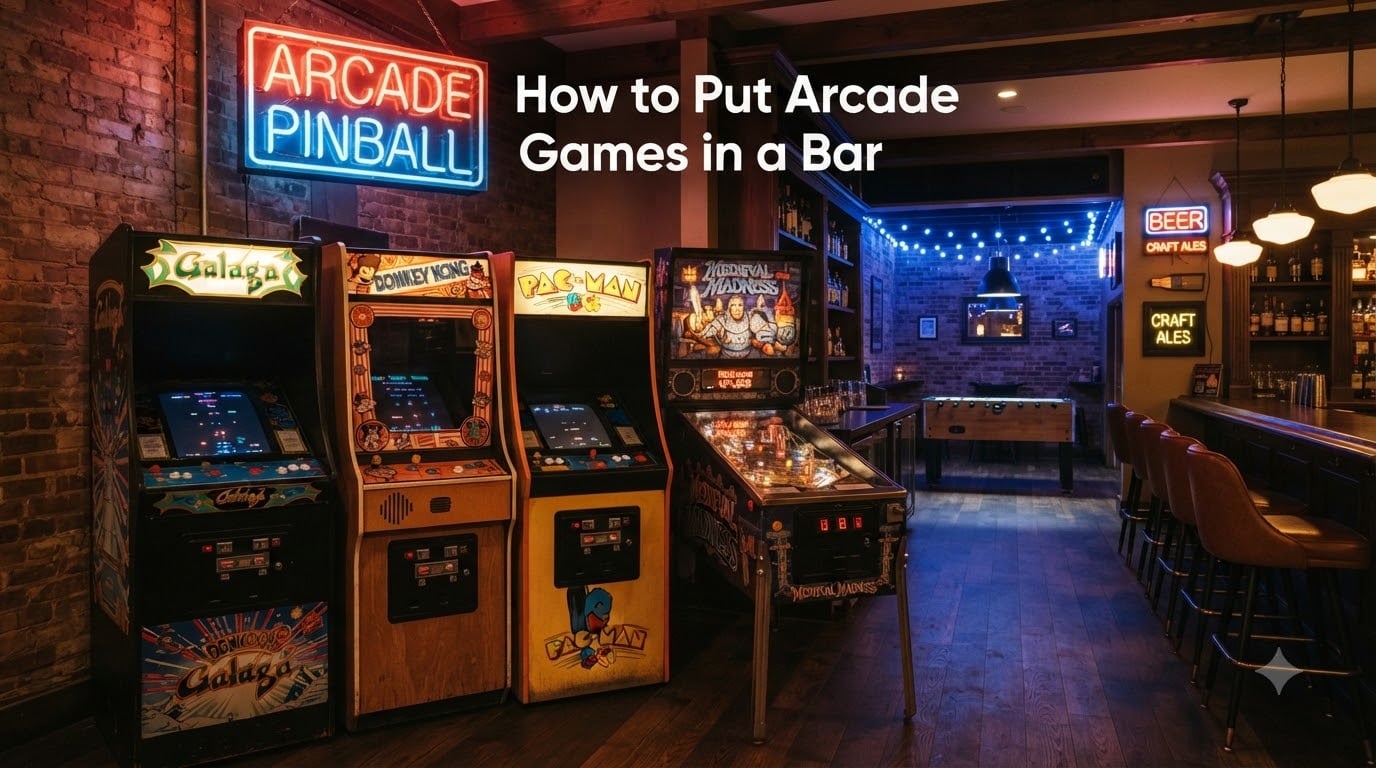
Adding arcade games to your bar is one of the highest-impact changes you can make for customer engagement and revenue. To put arcade games in a bar, you need to assess your space, choose games that match your crowd, decide between buying or revenue-sharing with a vendor, handle any local licensing requirements, install the machines, and set up a payment system. That process sounds straightforward, but the details make the difference between a buzzing game room and a collection of dusty cabinets nobody touches.
I have spent years following the bar arcade scene, reading owner experiences on forums like r/cade and r/arcade, and studying what makes arcade bars succeed. The good news is that bar owners across the country are proving that arcade games for bars are more than a novelty. They are a legitimate revenue driver and a way to stand out in a crowded nightlife market.
This guide walks you through every step of the process. You will learn what types of games work best in bar settings, how to plan your layout, what it costs to get started, how licensing works, and how to keep your machines running smoothly for years. Whether you run a small neighborhood tavern or a large brewpub, this information applies to your venue.
Table of Contents
- Why Arcade Games Belong in Your Bar
- Types of Arcade Games That Work Best in Bars
- Step-by-Step: How to Put Arcade Games in a Bar
- Cost Considerations: Buying vs Leasing vs Revenue-Share
- Space Requirements and Layout Tips
- Licensing and Legal Considerations
- Maintenance and Upkeep
- Common Mistakes to Avoid
- FAQs
- Conclusion
Why Arcade Games Belong in Your Bar
Arcade games give customers a reason to stay longer, spend more, and come back with friends. When people are entertained, they order another round. They invite coworkers for after-work drinks. They plan birthday parties at your venue instead of the place down the street. That is the core business case for adding games to a bar.
The nostalgia factor is powerful. Adults who grew up in the 80s and 90s light up when they see a Galaga cabinet or a classic pinball machine. That emotional connection translates directly into longer visits and repeat business. I have seen bar owners on r/cade describe how a single pinball machine transformed a slow weeknight into their busiest evening.
Beyond nostalgia, competitive games create community. Pinball leagues, Golden Tee tournaments, and fighting game nights build regular crowds that show up every week. These are not casual visitors. They are loyal customers who spend money on food and drinks while they play and socialize.
Arcade games also help you monetize dead space. That unused corner near the restrooms or the awkward wall by the pool table can generate revenue with a well-placed cabinet. Even a single crane machine or countertop game can pull in surprising income from impulse plays.
Types of Arcade Games That Work Best in Bars
Not every arcade game belongs in a bar. The best bar arcade games share a few traits: they are easy to pick up, fun to watch, and suited to short play sessions between drinks. Here is a breakdown of the game categories that consistently perform well in bar environments.
Classic Video Arcade Cabinets
Classic fighting games and beat-em-ups are bar staples. Titles like Street Fighter 2, Mortal Kombat, and NBA Jam come up again and again in forum recommendations from actual bar owners. These games are perfect for bars because they are instantly recognizable, competitive, and great for head-to-head play between friends.
A multicade cabinet loaded with dozens of classic games is a space-efficient way to offer variety without filling your floor with individual machines. Many bar owners start with a multicade as their first cabinet because it appeals to the widest range of customers.
Pinball Machines
Pinball is the undisputed king of bar arcade games. Modern pinball machines from manufacturers like Stern feature licensed themes from popular bands, movies, and TV shows that draw immediate attention. The physical, tactile nature of pinball makes it a spectator sport, which is perfect for a bar atmosphere.
Pinball tournaments are a proven revenue driver. Bars that host weekly or monthly league nights report significant increases in food and drink sales on those evenings. The competitive pinball community is passionate and loyal, and they travel to play on good machines.
The trade-off is cost and maintenance. New pinball machines are expensive, and they require more upkeep than solid-state video games. Many bar owners enter revenue-share agreements specifically for pinball to avoid the upfront cost and maintenance burden.
Sports Bar Games
If your bar caters to a sports crowd, dedicated sports arcade games are a natural fit. Golden Tee Golf is the most successful bar arcade game of all time, and for good reason. It is easy to learn, supports up to four players, and has a national tournament network that keeps regulars coming back.
Big Buck Hunter and Silver Strike Bowling are two other proven performers in sports bars. Big Buck Hunter appeals to hunting and outdoors enthusiasts, while Silver Strike Bowling captures the casual party crowd. These games are designed specifically for bar environments and have proven track records spanning decades.
Physical and Table Games
Air hockey, foosball, and basketball arcade games bring physical energy to your bar that video screens cannot match. These games get loud, competitive, and social. They are also relatively affordable compared to full video cabinets and require minimal maintenance.
Air hockey tables in particular are consistent earners. They appeal to all ages and skill levels, and a single table can keep two to four players entertained for 20 minutes or more. Basketball arcade games like NBA Hoops are great for groups and generate a lot of excitement.
Pool tables remain a bar classic, though they take up significant floor space. If you have the room, a well-maintained pool table is still one of the best investments you can make for customer retention.
Redemption and Crane Machines
Claw machines and other redemption games are impulse-driven earners. They take up minimal space and require almost no customer education. A well-stocked crane machine with appealing prizes can generate steady passive income, especially in high-traffic areas near the entrance or restrooms.
Some bar owners look down on crane machines, but the revenue numbers tell a different story. These machines often have the highest return on investment per square foot of any game in the building.
Indie and Party Games
Newer indie arcade games are gaining traction in bar settings. Killer Queen is a 10-player team-based game that has built a dedicated following in arcade bars across the country. Games like Kungfu Kickball and other party-focused titles are designed for group play and social interaction.
These indie games are worth watching because they offer something different from the classics. They attract a younger demographic and create the kind of shared experience that drives social media sharing and word-of-mouth marketing for your bar.
Step-by-Step: How to Put Arcade Games in a Bar
Here is the complete process for adding arcade games to your bar, from planning through launch. Follow these steps in order to avoid costly mistakes and set up your game room for long-term success.
Step 1: Assess Your Space and Layout
Walk your bar floor with a measuring tape before you do anything else. You need to know exactly how much usable space you have for games without disrupting walkways, bar access, or seating. Most standard arcade cabinets need about 3 feet of width and 2 feet of depth, plus at least 3 feet of clearance in front for the player.
Look at your electrical setup at the same time. Each arcade cabinet needs its own dedicated outlet, and you should avoid daisy-chaining power strips. If your electrical panel is outdated, factor in the cost of an electrician before you commit to a specific number of machines.
Consider traffic flow carefully. Games should be placed in areas where players will not block paths to the bar, restrooms, or exits. A cramped bar with poorly placed games feels chaotic, while a thoughtfully arranged game zone feels like a destination within your venue.
Step 2: Know Your Audience
Match your game selection to your customer demographic. A sports bar with a blue-collar crowd will kill it with Golden Tee and Big Buck Hunter. A craft beer bar with younger patrons might do better with retro fighting games and indie titles. A dive bar with regulars who grew up in the 80s will see constant play on a classic multicade.
Talk to your regular customers before you buy. Ask them what games they would play. You might be surprised by the answers. I have seen bar owners assume everyone wants the latest games, only to find that their crowd cannot get enough of a simple air hockey table.
Step 3: Choose Your Acquisition Model
You have three main options for getting arcade games into your bar: buying outright, leasing, or entering a revenue-share agreement. Each model has different cost structures, risk levels, and maintenance implications.
Buying outright gives you full control and 100 percent of revenue, but requires significant upfront capital and you handle all maintenance. Leasing spreads the cost over time but still puts maintenance on you. Revenue-share means a vendor places and maintains the machines in exchange for a split of the income, which is the lowest-risk option for bar owners who do not want to deal with repairs.
Step 4: Find the Right Vendor or Distributor
If you are buying machines, look for commercial arcade distributors rather than consumer sellers. Commercial-grade machines are built for continuous public use and come with the durability and support that consumer models lack. Companies like Betson, PrimeTime Amusements, and local vending distributors serve the bar and restaurant market specifically.
If you are going the revenue-share route, search for local arcade vendor companies in your state. Forum users on r/cade consistently recommend local vendors because they respond faster to maintenance calls than national companies. A broken machine earns nothing, so responsive service matters more than the revenue split percentage.
Ask any vendor for references from other bars they service. A reputable vendor will happily connect you with satisfied clients. If they cannot or will not provide references, that is a red flag.
Step 5: Handle Licensing and Permits
Before you install any coin-operated games, check your local and state regulations. Many jurisdictions require an amusement device permit for each machine. These permits are usually inexpensive but must be renewed annually. Your city or county business licensing office can tell you exactly what applies to your location.
Some states have specific rules about coin-operated amusement devices that date back to anti-gambling legislation. Make sure your games are classified as amusement devices, not gambling equipment. Redemption games with prize payouts can sometimes fall into a gray area, so clarify the rules before installation.
If your bar allows minors at any time, check age restrictions on specific game types. Some jurisdictions restrict certain game content from venues where minors are present.
Step 6: Install and Configure
Position your machines and secure them according to the manufacturer or vendor recommendations. Heavy machines like pinball should be leveled carefully for proper play. Make sure all power cords are routed safely and not creating trip hazards.
Test each machine thoroughly before opening to the public. Play every game, test every button, and verify that coin or card systems are functioning. A machine that eats quarters on day one will destroy customer confidence in your game room.
Step 7: Set Up Your Payment System
Traditional coin-operated machines still work, but card reader systems are becoming the standard in modern bar arcades. A card reader system lets customers load a prepaid card or use a mobile app to pay for games. This eliminates coin jams, reduces theft, and gives you detailed data on which games are earning.
Some bar owners offer free play during specific hours to drive traffic on slow nights. Free-play mode removes the payment barrier entirely and turns games into an amenity that boosts drink sales. This works especially well for competitive events and tournament nights.
Cost Considerations: Buying vs Leasing vs Revenue-Share
Understanding the full cost picture is essential before you commit to any acquisition model. Here is what you can expect from each approach.
Buying Outright
New commercial arcade cabinets typically range from $3,000 to $8,000 depending on the game type and features. New pinball machines from Stern run $6,000 to $9,000 or more for premium models. Used machines can be found for half those prices or less, but they come with higher maintenance risk and may need immediate repairs.
The advantage of buying is simple: every dollar the machine earns goes to you. The disadvantage is the upfront cost and the fact that you own all maintenance and repair responsibilities. If a pinball machine breaks, you are the one scheduling the technician and paying the bill.
Leasing
Leasing spreads your equipment cost over monthly payments instead of a large upfront purchase. Lease terms typically run 24 to 60 months and may include maintenance depending on the agreement. This model is good for bars that want new equipment but need to manage cash flow.
The downside is that leasing usually costs more over the full term than buying outright. You are also locked into a contract, which is a problem if a game underperforms and you want to swap it out.
Revenue-Share Agreements
In a revenue-share arrangement, a vendor places machines in your bar at no upfront cost to you. The vendor handles delivery, installation, maintenance, and repairs. You split the revenue, with splits typically ranging from 50/50 to 70/30 in favor of the bar owner.
This is the lowest-risk option and the one most recommended by experienced bar owners on forums. You get arcade games with zero capital investment and zero maintenance headaches. The trade-off is that you give up a portion of the revenue. For many bar owners, that trade is well worth it.
Revenue-share is especially smart for pinball machines, which are expensive to buy and costly to repair. Let the vendor absorb that risk while you collect a share of the income.
Maintenance Cost Expectations
If you own your machines, budget for ongoing maintenance. Common arcade repairs include button and joystick replacements, monitor issues, power supply failures, and coin mechanism problems. Pinball machines need more frequent service due to their mechanical complexity.
A good rule of thumb is to set aside 10 to 15 percent of your machine’s purchase price annually for maintenance and repairs. This covers routine service and unexpected breakdowns without straining your operating budget.
Space Requirements and Layout Tips
Smart layout design separates successful bar arcades from cluttered ones. The goal is to create a game zone that feels intentional, not like an afterthought.
Standard upright arcade cabinets need a footprint of about 2 by 3 feet, with at least 3 feet of clearance in front for the player. Pinball machines need about 2.5 by 5 feet including player space. Cocktail-style cabinets that double as tables are great space-savers for smaller bars.
Group your games by type to create natural zones. Put video cabinets together, cluster physical games like air hockey and foosball, and give pinball machines their own area. This organization helps customers find what they want and prevents overcrowding.
Pay attention to noise. Games with loud speakers can interfere with conversation and music. Position louder machines away from quieter seating areas and consider adjusting volume settings to match your bar’s ambient sound level.
Lighting matters too. Game cabinets look best in slightly dimmer areas where screen glare is minimized. Consider adding accent lighting around your game zone to draw attention and create atmosphere without washing out the screens.
Licensing and Legal Considerations
The legal side of putting arcade games in a bar is not complicated, but it does require attention. Ignoring permit requirements can result in fines or forced removal of your machines.
Most cities and counties require an amusement device license for each coin-operated machine. These licenses are typically obtained from your local business licensing or tax office. Fees are usually modest, often $25 to $100 per machine per year. Some jurisdictions cap the total number of amusement devices based on your square footage or occupancy.
Check whether your state classifies arcade games as gambling devices in any circumstances. Pure amusement games are legal everywhere, but redemption games that pay out prizes of value can trigger gambling regulations in some states. Know the rules before you install a claw machine with high-value prizes.
Review your liability insurance to confirm that arcade games are covered. Most standard business liability policies cover amusement devices, but it is worth verifying with your insurance agent. If a customer injures themselves on an arcade machine, you need to be protected.
If you operate under a revenue-share agreement, clarify in writing who is responsible for permits and licensing. Some vendors handle this as part of their service. Others expect the bar owner to obtain and maintain all required permits.
Maintenance and Upkeep
Arcade machines in bars take a beating. Spilled drinks, heavy use, and environmental factors mean maintenance is not optional. It is the difference between machines that earn for years and machines that sit broken for weeks.
Establish a weekly maintenance routine. Wipe down cabinet exteriors, check coin mechanisms for jams, test all buttons and joysticks, and inspect power connections. For pinball machines, clean the playfield glass weekly and check rubber rings and flippers for wear.
Keep a log of issues and repairs for each machine. This helps you spot recurring problems and track maintenance costs over time. If a particular machine breaks down repeatedly, it may be time to replace it or move it to a lower-traffic spot.
For revenue-share machines, report problems to your vendor immediately. The best vendors respond within 24 to 48 hours. If your vendor is consistently slow, renegotiate or find a new one. A broken machine costs you money every day it sits idle.
Forum users on r/cade emphasize that maintenance is the number one reason bar owners regret buying machines outright. If you are not willing to learn basic repairs or hire a technician, revenue-share is the better path.
Common Mistakes to Avoid
Bar owners new to arcade games tend to make the same handful of mistakes. Learning from others saves you time, money, and frustration.
The biggest mistake is overcrowding your space. Cramming too many machines into a small bar makes the room feel cluttered and uncomfortable. Start with two or three games and expand based on customer response and available space.
Another common error is choosing games based on personal preference rather than customer demographics. You might love racing games, but if your crowd wants fighting games, that racing cabinet will sit idle. Let your customers guide your decisions.
Neglecting maintenance from day one is a recipe for disaster. Establish your maintenance routine before the first machine arrives, not after the first breakdown. If you are buying outright, identify a local arcade technician before you need one.
Finally, do not ignore payment system upgrades. Coin-only machines frustrate customers who do not carry change. Card reader systems and mobile payment options remove friction and increase play frequency. The data tracking alone is worth the investment.
FAQs
Are arcade bars profitable?
Yes, arcade bars can be highly profitable when managed well. The games themselves generate direct revenue, but the bigger profit driver is increased food and drink sales from customers who stay longer. Bars that host regular tournaments and game nights often see their highest-revenue nights tied to arcade events.
How much does it cost to put arcade games in a bar?
Costs vary by acquisition model. Buying new arcade cabinets outright ranges from $3,000 to $8,000 each, with new pinball machines running $6,000 to $9,000. Revenue-share agreements require zero upfront cost but split earnings with the vendor. Leasing spreads cost over monthly payments. Budget an additional 10 to 15 percent of purchase price annually for maintenance if you own the machines.
Do I need a license to put arcade games in my bar?
Most cities and counties require an amusement device permit for each coin-operated machine, typically costing $25 to $100 per machine per year. Check with your local business licensing office for specific requirements. Some states also have regulations around redemption games that pay out prizes, so verify how your games are classified before installation.
What are the most profitable arcade games for bars?
Golden Tee Golf, Big Buck Hunter, and Silver Strike Bowling are consistently top earners in sports bars. Pinball machines generate strong revenue, especially during tournament nights. Classic fighting games like Street Fighter 2 and NBA Jam perform well in bars with younger crowds. Crane machines often have the highest revenue per square foot due to their small footprint and impulse-play appeal.
Should I buy or lease arcade games for my bar?
If you have the capital and want full control plus 100 percent of revenue, buying outright is the best long-term play. If you want to minimize risk and avoid maintenance responsibilities, a revenue-share agreement with a local vendor is the recommended choice. Leasing is a middle ground for bars that want new equipment without the full upfront cost.
How much space do I need for arcade games in a bar?
A standard upright arcade cabinet needs about 2 by 3 feet of floor space plus 3 feet of player clearance in front. Pinball machines need roughly 2.5 by 5 feet including player space. Plan for at least one dedicated electrical outlet per machine and keep walkways to the bar, restrooms, and exits clear at all times.
Conclusion
Knowing how to put arcade games in a bar comes down to a clear sequence: assess your space, match games to your crowd, choose the right acquisition model, handle licensing, install thoughtfully, and maintain consistently. Each step builds on the one before it, and skipping any of them leads to underperforming machines and wasted investment.
The bar owners who succeed with arcade games are the ones who treat the game room as a real part of their business, not a novelty. They track revenue per machine, listen to customer feedback, rotate underperformers, and host events that turn their arcade into a community destination. Arcade games for bars work when you work at them.
Start small with two or three well-chosen games. Learn what your customers play. Expand from there based on real data, not guesses. If you follow this approach, your bar arcade can become one of your most reliable revenue streams and a defining feature that sets your venue apart from every other bar on the block.