
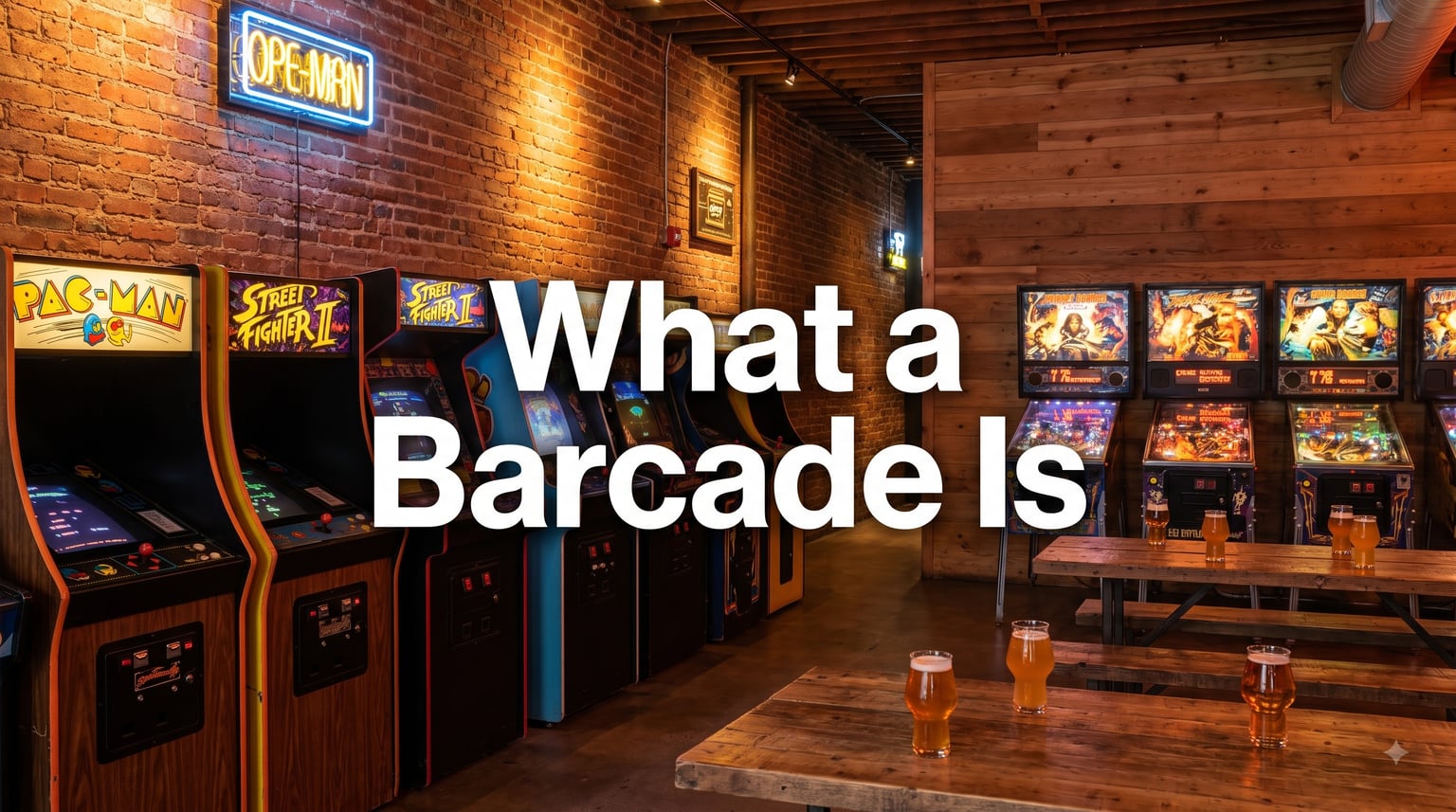
If you’ve ever heard someone mention a “barcade” and pictured a smoky bar with a Pac-Man cabinet in the corner, you’re halfway there. A barcade is a hybrid entertainment venue that pairs a full-service bar with a wall of classic arcade games and pinball machines, built specifically for adults who want to drink, play, and socialize at the same time.
I spent a Friday night at the original Barcade in Brooklyn last fall, and within twenty minutes I had a beer in one hand and a joystick in the other, talking to strangers about high scores on Street Fighter II. That social spark is exactly what a barcade is designed to deliver. In this guide, I’ll walk you through the meaning, the origin story, the games, the food, and how to make the most of your first visit.
Table of Contents
- What a Barcade Is: The Short Answer
- The Origin Story: Where Did Barcades Start?
- How a Barcade Is Different From a Regular Bar
- How a Barcade Is Different From a Regular Arcade
- What Games Can You Play at a Barcade?
- Food and Drinks at a Barcade
- Who Goes to a Barcade?
- Tips for Your First Barcade Visit
- The Social and Nostalgia Factor
- FAQs
- Final Thoughts on What a Barcade Is
What a Barcade Is: The Short Answer
A barcade is a licensed bar that houses a collection of classic arcade games and pinball machines. The word itself is a portmanteau of “bar” and “arcade,” and it describes a venue where adults (typically 21 and over) can order craft beer or cocktails while playing retro video games from the 1970s, 80s, and 90s. Most barcades operate on free play, meaning the cost is built into your drink or a small cover fee rather than feeding quarters into every machine.
Think of it as a grown-up arcade that serves alcohol instead of tokens. The vibe is closer to a neighborhood pub than a family fun center, but instead of background music and a few TVs, the entertainment is the games themselves.
The Origin Story: Where Did Barcades Start?
The barcade concept traces back to October 1, 2004, when Paul Kermizian and his partners opened the first Barcade location in Williamsburg, Brooklyn. The neighborhood at the time was a magnet for young creatives who had grown up playing arcade games in the early 80s, and Kermizian bet that they would pay for craft beer if the venue came with the games from their childhood.
He was right. The original Williamsburg spot drew lines around the block on weekends and helped spark a wave of similar venues across the United States. Today, the Barcade chain operates multiple locations in the northeast, plus outposts in Los Angeles and Detroit. But the term “barcade” now covers any independent venue following the same recipe: a full bar, curated retro cabinets, and an adults-only atmosphere.
I find it interesting that the model took off during the rise of farm-to-table cocktail bars. Both trends are part of the same nostalgia wave, where millennials actively seek experiences that feel analog, handcrafted, and rooted in the past.
How a Barcade Is Different From a Regular Bar
A regular bar is mostly passive. You stand or sit, you talk, you drink, and you watch a screen. A barcade is active. You move between machines, you challenge the person next to you to a round of Mortal Kombat, and you cheer when someone beats a high score.
That movement changes the social dynamic completely. In my experience, it’s much easier to meet people at a barcade because the games act as conversation starters. You don’t need a clever opener when the cabinet beside you is flashing “INSERT COIN” and someone’s struggling with a Donkey Kong kill screen. The game gives you a reason to talk, laugh, and bond over a shared childhood memory.
How a Barcade Is Different From a Regular Arcade
Family arcades like Dave & Buster’s, Chuck E. Cheese, or your local movie-theater lobby are designed around kids, birthdays, and prize tickets. A barcade flips that model. The minimum age is usually 21, the lighting is dim and moody, and the cabinets are hand-picked vintage pieces rather than modern redemption games.
You’ll also notice the food and drink quality. Instead of flat soda and frozen pizza, most barcades pour local craft beer, mix creative cocktails, and serve a real pub menu with burgers, wings, and shareable snacks. The pinball machines are typically maintained by collectors, and the cabinet selection leans toward classics like Pac-Man, Galaga, Ms. Pac-Man, and Centipede, rather than ticket-redemption games.
What Games Can You Play at a Barcade?
The exact lineup varies by venue, but most barcades organize their floor into four categories:
Classic arcade cabinets: Pac-Man, Donkey Kong, Galaga, Space Invaders, Q*bert, and similar titles from the golden age of arcades.
Fighting games: Street Fighter II, Mortal Kombat, and King of Fighters setups with joysticks and six-button layouts for head-to-head play.
Pinball machines: A rotating mix of vintage and modern pinball tables, often including Stern, Bally, and Williams releases.
Party and skill games: Skeeball, basketball shootouts, air hockey, and occasionally shuffleboard or foosball.
At the Brooklyn Barcade, I counted more than 40 pinball machines alone when I visited, plus another 30 or so video cabinets. Smaller independent barcades typically run with 15 to 25 machines, enough variety to keep a group entertained for hours without repeating the same game.
Food and Drinks at a Barcade
Don’t expect bar peanuts and a damp napkin. Most barcades run a full kitchen with elevated pub food. Think smash burgers, loaded tots, soft pretzels with beer cheese, and rotating specials. Some venues partner with local restaurants and allow outside food, while others run a tight in-house menu.
The drink program is where barcades tend to shine. You’ll find a rotating tap list of craft beer, often 20 to 30 options, plus a cocktail menu built around retro themes. I’ve seen drinks named after arcade characters, served in custom glassware, and crafted with the same care you’d expect at a craft cocktail bar. Prices run a bit higher than a dive bar but stay in line with most urban gastropubs.
Who Goes to a Barcade?
The core audience is adults aged 25 to 45 who grew up with arcades and want to recapture that experience with a drink in hand. Date nights are huge. So are group outings, birthday parties, and corporate team-building events. Some barcades host league nights for pinball and Street Fighter, which attract a more competitive crowd.
Because most venues enforce a strict 21-and-over policy (or 18+ in some international locations), you won’t find families with young kids. That age restriction is part of the appeal: it creates an adult playground where nobody is worried about stepping over a toddler to reach the joystick.
Tips for Your First Barcade Visit
After several visits to barcades in three different cities, I’ve learned a few things that make the night smoother:
Go on a weeknight if you can. Weekends pack in fast, and lines for the most popular cabinets get long. A Tuesday or Wednesday visit gives you open access to every game.
Wear comfortable clothes. You’ll be standing, leaning, and reaching for joysticks. Skip the heels and tight collars.
Ask about the play system. Most barcades are free play, meaning your drink covers unlimited games. A few still use tokens or a cover charge at the door, so check before you commit.
Bring cash for the tip jar. Many pinball tables have an honor-system tip jar for the winning player. Toss in a dollar when you lose, and you’ll feel better about it.
Try at least one game you’ve never played. The whole point is discovery. Pick a cabinet you don’t recognize and let it surprise you.
The Social and Nostalgia Factor
What keeps people coming back isn’t the beer or the games. It’s the feeling. Barcades give adults permission to be a little silly, to compete without stakes, and to relive the version of themselves that walked into a 7-Eleven with a pocket full of quarters in 1987. That nostalgia is a powerful draw, especially for millennials who remember the original arcade era but were never allowed to linger past their bedtime.
The community around barcades is also worth mentioning. Regulars know each other, league nights turn strangers into rivals, and high scores get written on whiteboards. It’s not unusual to walk in solo and leave with three new friends and an invitation to next week’s pinball tournament.
FAQs
What is the meaning of Barcade?
A barcade is a portmanteau of bar and arcade. It describes a licensed bar that also operates a full floor of classic arcade games and pinball machines, designed for adults who want to drink and play at the same time.
What age is appropriate for a barcade?
Most barcades in the United States require guests to be at least 21 years old because they serve alcohol. A few locations allow entry to 18+ guests without alcohol service. Always check the specific venue’s policy before you go.
What should I wear to a barcade?
Wear comfortable, casual clothes you can move in. You’ll be standing, leaning over cabinets, and reaching for joysticks. Sneakers, jeans, and a relaxed shirt work well. Skip the dress shoes, heels, or anything you don’t want to spill a drink on.
Where did Barcade originate?
The first Barcade opened on October 1, 2004, in Williamsburg, Brooklyn. Founder Paul Kermizian combined craft beer with a curated collection of vintage arcade cabinets and pinball machines, and the concept spread across the country throughout the 2010s.
Final Thoughts on What a Barcade Is
Now that you know what a barcade is, the only thing left is to visit one. Pick a venue near you, grab a friend, and challenge them to a round of Street Fighter II over a couple of craft beers. Once you experience the mix of nostalgia, social energy, and friendly competition, you’ll understand why barcades keep growing in 2026.