
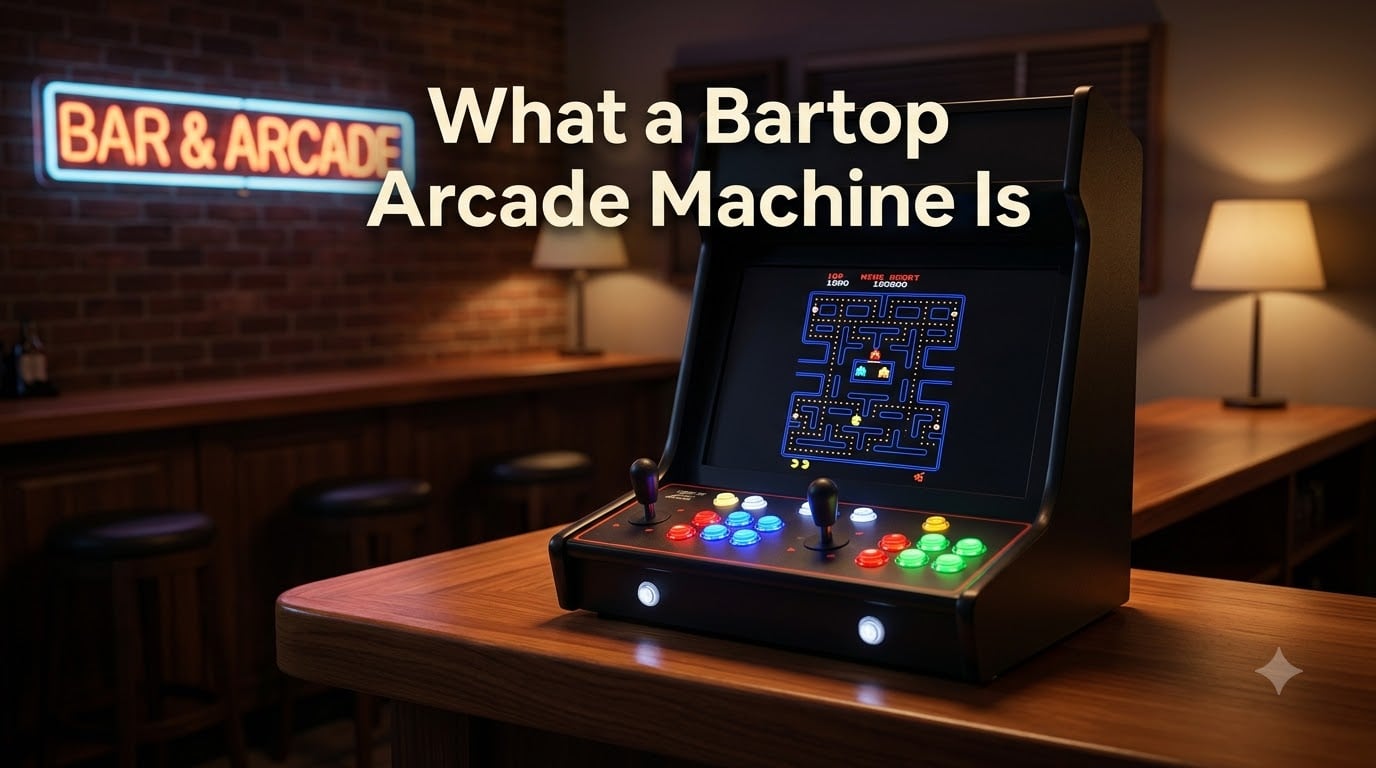
A bartop arcade machine is a compact, plug-and-play arcade system that sits on a desk, counter, or table and delivers the authentic retro gaming experience using real arcade controls. Our team has spent years testing, building, and reviewing home arcade setups, and the bartop format keeps coming up as the sweet spot for anyone short on floor space.
If you have ever wondered what a bartop arcade machine is and whether it belongs in your game room, home bar, or office, this guide breaks it all down. We cover the definition, dimensions, components, game libraries, and how the bartop compares to full-size and tabletop cabinets so you can make an informed decision.
Think of a bartop arcade as everything great about a standing arcade cabinet, shrunk to a size that fits where a microwave would go. Same joysticks, same buttons, same classic games, just without the six-foot footprint.
Table of Contents
- What a Bartop Arcade Machine Is: The Full Definition
- Key Features of a Bartop Arcade Machine
- How Big Is a Bartop Arcade Machine
- Bartop Arcade vs Full-Size vs Tabletop Cabinets
- What Games Come on a Bartop Arcade Machine
- DIY vs Pre-Built Bartop Arcade Machines
- Where to Put a Bartop Arcade Machine
- Are Bartop Arcade Machines Worth It
- Frequently Asked Questions About Bartop Arcade Machines
- Conclusion: What a Bartop Arcade Machine Is and Why It Matters
What a Bartop Arcade Machine Is: The Full Definition
A bartop arcade machine is a self-contained retro gaming cabinet designed to rest on a flat surface rather than stand on the floor. It pairs arcade-grade controls with an internal computer or emulator board, a built-in screen, and stereo speakers, all housed in a compact enclosure that typically measures under two feet wide.
The bartop format emerged as retro gaming enthusiasts looked for ways to capture the arcade feel without dedicating an entire room to full-size cabinets. Forum builders on communities like r/cade and r/Raspberry_Pi popularized the design, and pre-built manufacturers followed with plug-and-play versions.
So what do arcade machines do in the bartop format specifically? They recreate classic arcade gameplay with authentic physical controls. You get the tactile snap of a real joystick and the satisfying click of arcade buttons, paired with software that runs thousands of vintage games from the golden age of arcades.
How a Bartop Arcade Works
A bartop arcade works by combining three main elements: a computing platform, an emulator, and arcade controls. The computing side is usually a Raspberry Pi, a mini PC with an Intel processor and SSD storage, or a dedicated arcade board.
That computer runs MAME (Multiple Arcade Machine Emulator) or a similar emulator, which mimics the original hardware of vintage arcade machines. The emulator software loads game files called ROMs, each one a digital copy of an original arcade game.
The control side connects through an interface like an I-PAC board, which translates joystick movements and button presses into inputs the computer understands. A frontend such as Hyperspin or similar software provides the menu system where you browse and select games.
What Arcade Machines Do That Makes Them Special
Arcade machines deliver a physical, tactile gaming experience that software alone cannot replicate. The weight of a proper arcade joystick, the resistance of a SANWA button, and the dedicated screen combine into something that feels like stepping into an actual arcade.
Bartop versions capture that same sensation in a fraction of the space. You still get the illuminated marquee, the LED buttons, and the authentic control layout, just packaged for a countertop instead of an arcade floor.
Key Features of a Bartop Arcade Machine
What makes a bartop arcade machine stand out from other gaming setups is its collection of authentic arcade-grade components packed into a small footprint. Here are the features that define a quality bartop cabinet.
Display
Most bartop arcades use a 17-inch to 19-inch HD monitor, typically running at 1080p resolution. Some premium models apply CRT shaders, software filters that mimic the scanlines and color depth of old cathode-ray-tube monitors for an authentic retro look.
Controls
The control panel is the heart of any arcade machine, and bartop versions are no exception. Quality cabinets use genuine SANWA joysticks and arcade buttons, the same hardware found in commercial arcade machines.
Most bartop arcades support two-player layouts, each with a joystick and six to eight buttons per player. LED-illuminated buttons are common on premium models, adding visual flair in a darkened game room.
Audio and Connectivity
Built-in stereo speakers handle game sound effects and music. For connectivity, look for USB 3.0 ports for adding external drives, HDMI output for connecting to a larger TV, and audio-out jacks for headphones or external speakers.
Build Quality
Reddit enthusiasts consistently emphasize that real arcade parts matter more than anything else. A well-built bartop uses MDF or quality plywood cabinetry, toughened glass or acrylic over the screen, and proper wiring throughout. Cabinet artwork, side art, and an illuminated marquee complete the authentic arcade look.
How Big Is a Bartop Arcade Machine
Typical bartop arcade dimensions land around 18 to 24 inches wide, 14 to 18 inches deep, and 16 to 22 inches tall. Weights usually range from 15 to 35 pounds depending on materials and hardware inside.
That footprint is roughly the size of a large microwave or a small CRT television. It fits comfortably on a standard desk, kitchen counter, bar top, or dedicated shelf without dominating the space.
Space Planning Tips for Apartments and Small Rooms
One of the biggest pain points our team sees in forum discussions is people underestimating how much room they need around the machine for comfortable two-player play. You want at least 18 inches of clearance in front of the controls for your arms.
Reddit builders on r/cade recommend making a cardboard mock-up before buying or building. Cut a box to the cabinet dimensions and set it where you plan to play. This simple step catches clearance issues before you commit.
If counter space is tight, consider a wall-mounted shelf rated for at least 40 pounds. That frees up the surface below while keeping the arcade at a comfortable standing or bar-stool height.
Bartop Arcade vs Full-Size vs Tabletop Cabinets
Understanding the differences between arcade machine types clears up a lot of confusion. Three main formats dominate the home arcade market, and each serves a different purpose.
Bartop Arcade Machines
Bartop cabinets sit on a surface and offer full arcade controls for one or two players. They typically include a proper monitor, built-in speakers, and a complete emulator setup with thousands of games. This is the format most people picture when they hear “compact arcade machine.”
Full-Size Arcade Cabinets
Full-size cabinets stand on the floor, usually between five and six feet tall. They offer the most authentic arcade experience with the largest screens and most elaborate control panels, but they demand serious floor space. A single full-size cabinet can eat up six square feet or more, which rules them out for apartments and small game rooms.
Tabletop and Cocktail Arcades
Tabletop arcades are the smallest option, often handheld or sitting flat on a table with a screen facing up. Cocktail arcade machines sit low like a coffee table with the screen beneath a glass top. Neither typically includes full-size arcade controls, which limits the authentic feel compared to a bartop cabinet.
Which Format Wins for Home Use
For most home buyers we talk to, the bartop arcade hits the best balance. It delivers authentic arcade controls and a satisfying screen size while fitting in spaces where a full-size cabinet simply cannot go. You sacrifice some screen real estate and the standing-at-the-cabinet posture, but you gain versatility and affordability.
What Games Come on a Bartop Arcade Machine
A typical pre-built bartop arcade machine ships with anywhere from hundreds to over 3,000 classic arcade games. Forum users consistently tell us they expect at least 3,000 titles from a quality machine.
The game library comes from MAME, which can run ROMs from the entire golden age of arcade gaming. That means titles spanning the late 1970s through the early 2000s, covering fighting games, shoot-em-ups, beat-em-ups, puzzle games, and sports titles.
Many bartop arcades also run emulators for home consoles, expanding the library to include classic 8-bit and 16-bit console games. Some users on r/Raspberry_Pi report loading 10,000-plus games across multiple platforms on a single bartop build.
Can You Load Your Own Games
Yes. One of the most common questions in retro gaming forums is whether you can add your own ROMs, and the answer is almost always yes. Most bartop arcades include USB ports or internal storage that lets you copy additional game files onto the system.
This is a major advantage over locked-down plug-and-play units. You are not stuck with a fixed game list, and you can curate your own collection over time.
DIY vs Pre-Built Bartop Arcade Machines
One of the biggest decisions you will face is whether to build your own bartop arcade or buy one pre-built. Both paths have real trade-offs in cost, effort, and final quality.
Building Your Own
A DIY bartop arcade typically costs under $400 in materials, according to multiple Reddit builders. You need a Raspberry Pi or mini PC, a monitor, arcade controls, an I-PAC or similar interface, wiring, and cabinet materials.
Free bartop arcade plans are widely available online in PDF form, and kits exist that pre-cut the cabinet panels for you. The trade-off is time and skill. Assembly and wiring can be challenging for beginners, and forum posts are full of troubleshooting questions about wiring mistakes and software configuration.
The reward is total customization. You pick every component, design the artwork, and build exactly the machine you want.
Buying Pre-Built
Pre-built bartop arcade machines typically run $700 and up, with premium models reaching $850 or more. That premium buys you plug-and-play convenience, professional build quality, and a warranty.
For many buyers, the pre-built convenience is absolutely worth it. You unbox the machine, plug it in, and start playing within minutes. No soldering, no software headaches, no weekend spent in the garage.
Quality manufacturers back their machines with multi-year warranties and lifetime technical support, which forum users cite as a major purchase factor.
Which Path Should You Choose
If you enjoy building, have basic tools, and want maximum control over components and cost, go the DIY route. If you want a hassle-free, professionally built machine backed by a warranty, buy pre-built. There is no wrong answer, only the one that fits your time and budget.
Where to Put a Bartop Arcade Machine
One of the biggest advantages of a bartop arcade is placement flexibility. Unlike a full-size cabinet that demands its own floor footprint, a bartop fits into spaces you already use.
Home Bars and Counters
The format was literally designed for bar tops. A bartop arcade on a home bar or kitchen counter turns an underused surface into an instant entertainment center. This is where the bartop earns its name.
Game Rooms and Man Caves
In a dedicated game room, a bartop arcade complements other setups without competing for floor space. Set it on a shelf or side table and it becomes a conversation piece between sessions on larger equipment.
Desks and Offices
A bartop arcade on a desk or office shelf provides a quick retro gaming break during the workday. The compact size means it coexists with your monitor and keyboard without crowding the workspace.
Apartments and Small Spaces
For apartment dwellers, the bartop format is often the only viable arcade option. It delivers the full arcade experience without surrendering the square footage a standing cabinet would consume.
Are Bartop Arcade Machines Worth It
For retro gaming enthusiasts, collectors, and anyone who wants authentic arcade gameplay in a compact format, a bartop arcade machine is absolutely worth the investment. You get genuine arcade controls, a satisfying screen, and thousands of classic games in a package that fits on a countertop.
The value proposition comes down to what you would otherwise spend. A full-size cabinet costs more, takes up far more space, and is harder to move. A tabletop unit is cheaper but lacks the authentic controls. The bartop sits right in the middle, delivering the best of both worlds.
Forum users consistently report high satisfaction with their bartop purchases and builds. The combination of authentic arcade feel, massive game libraries, and space efficiency makes it one of the most popular home arcade formats available.
Frequently Asked Questions About Bartop Arcade Machines
What is a bartop arcade machine?
A bartop arcade machine is a compact, plug-and-play arcade system that sits on a desk, counter, or table. It combines arcade-grade controls like joysticks and buttons with a built-in screen, stereo speakers, and an emulator computer, all in a small cabinet typically under two feet wide.
How much does a bartop arcade machine cost?
Pre-built bartop arcade machines typically range from about $240 to $850 depending on build quality, game library size, and components. Building your own costs under $400 in materials but requires time and some technical skill.
How big is a bartop arcade machine?
Most bartop arcade machines measure 18 to 24 inches wide, 14 to 18 inches deep, and 16 to 22 inches tall. They typically weigh between 15 and 35 pounds, making them easy to move and place on counters, desks, or shelves.
What games come on a bartop arcade?
Most pre-built bartop arcades include anywhere from hundreds to over 3,000 classic arcade games running through MAME. Many also support console emulators, and you can typically load your own ROMs to expand the library.
Can you build your own bartop arcade machine?
Yes. DIY bartop arcade builds using a Raspberry Pi or mini PC typically cost under $400 in materials. Free plans and pre-cut kits are widely available, though assembly and wiring require some patience and basic technical skill.
Conclusion: What a Bartop Arcade Machine Is and Why It Matters
Understanding what a bartop arcade machine is comes down to one simple idea: authentic arcade gaming in a package that fits your life. It gives you real arcade controls, a proper screen, stereo sound, and thousands of classic games without demanding an entire room.
Whether you build your own for under $400 or buy a pre-built machine with a warranty, the bartop format delivers the retro arcade experience in a way no other cabinet type can match for small spaces. If you have been on the fence, now you know exactly what you are getting and why it works.