
When I first walked into a bar in the late 1990s and saw two people sitting across from each other, drinks on the table between them, mashing buttons while a tiny screen flickered between their faces, I was hooked. That was my first encounter with a cocktail arcade cabinet, and I have been fascinated by them ever since.
If you are searching for what a cocktail arcade cabinet is, you are in the right place. I have spent years collecting, restoring, and writing about retro gaming hardware, and I want to share what I have learned. This guide explains the definition, history, design, gameplay, and modern variations of one of the most underrated arcade formats ever built.
By the end of this article, you will understand exactly what makes a cocktail arcade cabinet different, why it earned that unusual name, and whether one belongs in your home game room.
Table of Contents
What Is a Cocktail Arcade Cabinet?
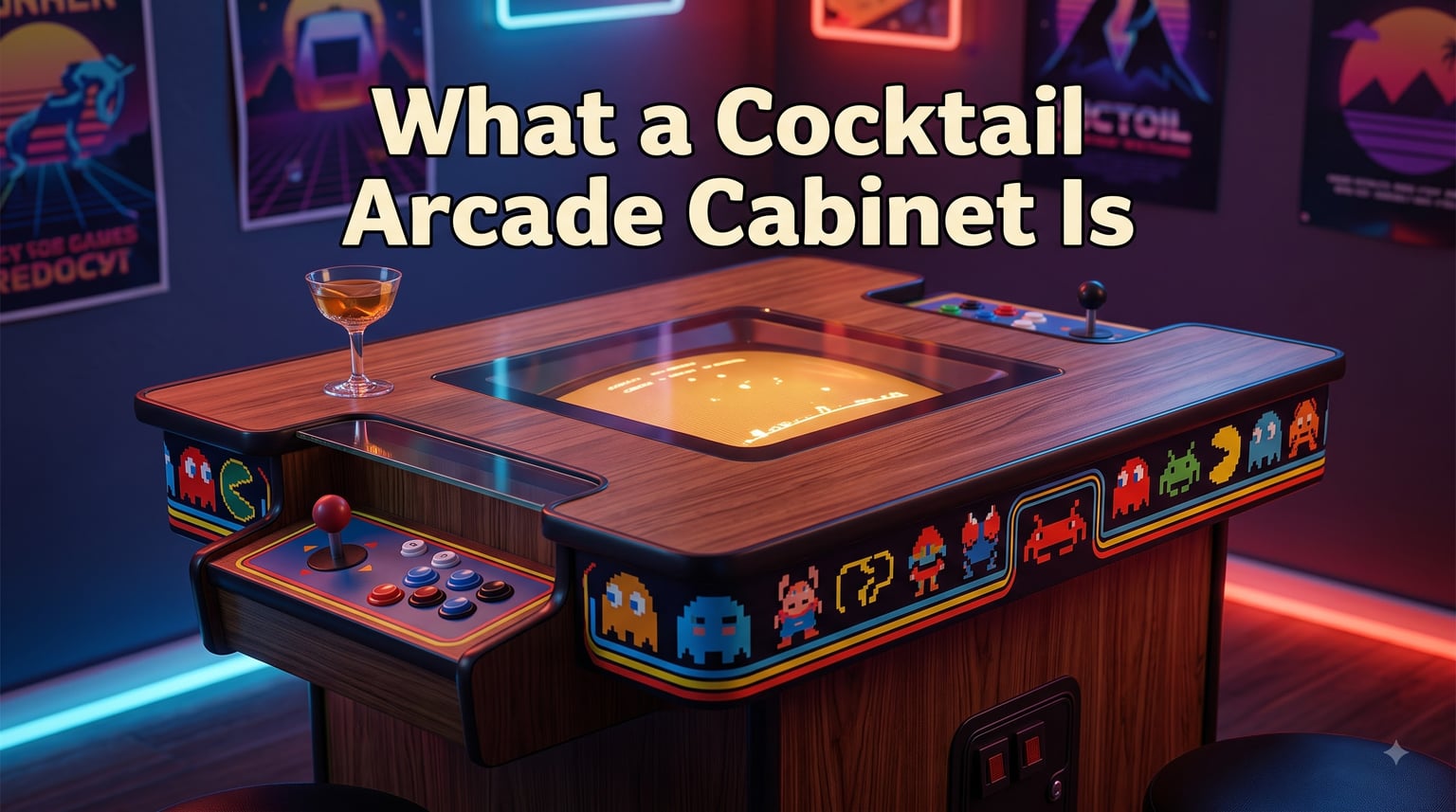
A cocktail arcade cabinet is a table-shaped arcade machine with two sets of controls mounted at opposite ends, allowing two players to sit facing each other while playing. The screen sits horizontally beneath a protective glass surface, giving the cabinet a coffee-table appearance that doubles as furniture between gaming sessions.
The format was designed for social play. Unlike upright cabinets where two players stand side-by-side looking at the same screen, a cocktail cabinet puts players across from each other. The monitor can physically flip its image 180 degrees between turns, so each player gets a properly oriented view of the action.
Most cocktail cabinets ship with multiple games pre-loaded on modern systems, while vintage units from the late 1970s and 1980s typically housed one or two titles. Today you will find them sold as 60-in-1, 412-in-1, or even 1500-in-1 multi-game systems that hold entire classic arcade libraries.
Key Physical Features
Low rectangular table shape, usually around 30 inches tall
Horizontal screen mounted under tempered glass or acrylic
Two control panels at opposite ends with joysticks and buttons
Coin doors or free-play buttons on one or both sides
MDF or plywood construction with vinyl side art
Why Is It Called a Cocktail Arcade Cabinet?
The cocktail name comes from the cabinet’s original setting: bars, restaurants, and hotel lounges. The flat top surface was intentionally designed to hold drinks, snacks, or ashtrays when the machine was idle, which meant patrons could order a cocktail, set it on the cabinet, and play a quick round without needing a separate table.
I have owned three vintage cocktail cabinets over the years, and the design intent is obvious the moment you see one. The surface sits at coffee-table height, the screen is recessed and protected, and the cabinet is sturdy enough to rest a drink on without wobbling. It is a piece of furniture that happens to play games.
Forum members at arcade-projects.com and retropie.org.uk often point out that this dual purpose is what made cocktail cabinets popular in hospitality settings during the early 1980s. A bar owner could justify the purchase because the unit served paying customers and doubled as a cocktail table during slow hours.
Other Names You Might Hear
The cocktail cabinet goes by several nicknames in the retro gaming community:
Tabletop arcade
Cocktail table arcade
Horizontal cabinet
Bar-top arcade
Head-to-head arcade table
All of these terms describe the same basic format: a flat, table-shaped cabinet with controls at both ends.
How Does a Cocktail Arcade Cabinet Work?
A cocktail arcade cabinet works almost exactly like a standard upright cabinet, with one clever twist. The monitor is mounted horizontally beneath the playfield glass, and the game software flips the screen image 180 degrees whenever the turn switches from player one to player two.
When player one starts a game, the screen is oriented for their viewing angle. Once player one loses a life or completes a turn, the screen flips so player two sees the action correctly from the opposite side. This is why cocktail cabinets excel at turn-based games like Pac-Man, Donkey Kong, Galaga, and Centipede.
Modern multi-game cocktail cabinets typically use a small computer board running MAME, RetroPie, or a proprietary emulator. Older units from the 1980s used dedicated arcade boards from manufacturers such as Midway, Namco, Konami, and Atari.
Controls and Input Options
The control panel at each end usually includes:
One or two 8-way joysticks for movement
Two to four action buttons per player
Occasionally a trackball for games like Centipede or Missile Command
Start and select buttons on some models
Some higher-end cabinets include spinner controls, light guns stored in side compartments, or even dedicated fighting game layouts with six or eight buttons per player.
Cocktail Arcade Cabinet vs Standard Arcade Cabinet
The biggest difference between a cocktail arcade cabinet and a standard upright cabinet is how players interact with the machine. An upright cabinet stands tall with one screen facing outward; players stand side-by-side and look at the screen together. A cocktail cabinet sits low with two screens worth of viewing angle; players sit facing each other and look down.
This single design choice changes everything about the experience. Let me break down the differences clearly.
Size and Footprint
A cocktail cabinet is wider than an upright, typically 36 to 48 inches across the playfield. However, it is much shorter, usually under 36 inches tall. This makes cocktail cabinets ideal for rooms with limited ceiling clearance, basements with low ceilings, or apartments where a full upright would dominate the space.
Player Experience
Cocktail cabinets encourage conversation. When I host game nights, the cocktail format gets people talking, trash-talking, and laughing together in a way upright cabinets never do. The face-to-face seating arrangement turns gaming into a social event instead of a parallel one.
Game Compatibility
Not every arcade game works well on a cocktail cabinet. Real community feedback from arcade-projects.com confirms that 4-way joystick games like Pac-Man, Galaxian, and Donkey Kong play beautifully. 8-way joystick games work fine. Fighting games like Street Fighter II do not, because the screen flipping between rounds is jarring when you are trying to read combos.
Maintenance Access
Cocktail cabinets are generally easier to maintain than uprights because the control panels and screen lift up from the top. There are no side doors to unbolt, no marquee bulbs to swap from a ladder, and the electronics are usually accessible by removing four screws from the control panel.
A Brief History of Cocktail Arcade Cabinets
Cocktail arcade cabinets emerged in the mid-1970s alongside the golden age of arcade gaming. The exact origin is debated, but most collectors credit Atari and Midway with popularizing the format in the late 1970s.
The cocktail design gained massive traction in the early 1980s when arcade operators realized the format could fit in spaces where uprights could not. Bars, pizza parlors, hotel lounges, and airport waiting areas all installed cocktail cabinets because they looked like furniture and did not intimidate non-gamers.
Notable Vintage Cocktail Cabinet Models
Atari Centipede Cocktail (1981) – Featured a trackball and became one of the most popular cocktail cabinets ever made
Midway Pac-Man Cocktail (1981) – The most produced cocktail cabinet of all time, with tens of thousands of units in the field
Donkey Kong Cocktail (1981) – Nintendo licensed multiple cocktail versions of its hit platformer
Galaga Cocktail (1982) – Namco’s cocktail version became a favorite in family entertainment centers
By the mid-1980s, the cocktail format started losing ground to upright cabinets because fighting games and driving games required dedicated screens and controls. The cocktail cabinet never disappeared though, and the retro gaming revival of the 2010s brought it back.
Common Uses and Settings
Modern cocktail arcade cabinets show up in several settings. I have personally seen them in all of these locations and can confirm each one works well.
Home Game Rooms
This is the most popular modern use. A cocktail cabinet doubles as a coffee table when not in use, so it fits in living rooms, dens, and basements without looking out of place. Many owners I have talked to at retro gaming conventions say the cocktail format was their first arcade purchase because of the furniture-friendly footprint.
Bar and Restaurant Settings
The original use case still works perfectly. Modern establishments use cocktail cabinets as decorative pieces that also generate revenue, especially in craft cocktail bars and retro-themed restaurants.
Office Break Rooms
Several tech companies I have visited have cocktail cabinets in their break rooms because the format encourages team interaction. Employees sit down, share a quick round of Pac-Man, and head back to work. No standing required.
Party and Event Rentals
Event rental companies often stock cocktail cabinets because they are easy to transport, set up in 10 minutes, and appeal to guests of all ages. The face-to-face seating is a natural icebreaker at weddings, corporate events, and birthday parties.
Maintenance and Care Tips
Caring for a cocktail arcade cabinet is straightforward, but a few habits will keep yours looking and playing great for decades. I follow this routine with my own units.
Cleaning the Screen Surface
The glass or acrylic surface that protects the monitor needs regular cleaning because players touch it constantly. Use a microfiber cloth and a non-ammonia glass cleaner. Ammonia-based cleaners can yellow acrylic over time and damage vinyl side art if it drips.
Inspecting the Control Panel
Lift the control panel every few months and check for loose wires, worn microswitches, and dust buildup. Most arcade buttons are rated for one million clicks, but a busy cocktail cabinet can wear through them in five to seven years.
Protecting the Vinyl Art
The side art on a cocktail cabinet is vulnerable to scratches because the cabinet sits at knee height. I added clear furniture pads to the corners of mine after a vacuum cleaner left a mark. If your vinyl is already damaged, replacement art is available from several online retailers.
Storing During Long Breaks
If you are not going to use the cabinet for more than a month, cover it with a fitted sheet or a purpose-made arcade cover. Dust is the biggest enemy of vintage arcade electronics, and a simple cover prevents hours of cleaning later.
FAQs
What is an arcade cabinet?
An arcade cabinet is the wooden or metal enclosure that houses an arcade video game. It contains the monitor, control panel, motherboard, power supply, and coin mechanism, all built into a single freestanding unit designed for placement in public venues or home game rooms.
What is a cocktail arcade machine?
A cocktail arcade machine is a table-shaped arcade cabinet with control panels mounted at both ends. Two players sit facing each other across the flat surface, and the screen flips its orientation between turns. The design originally allowed patrons to set drinks on the cabinet while playing in bars and restaurants.
Why is it called an arcade cabinet?
The term arcade originally referred to the covered walkways where early coin-operated machines were installed in the late 1970s and early 1980s. As these venues became known for their gaming machines, the word arcade came to mean both the location and the cabinet housing the game itself.
What is the rarest arcade cabinet?
Some of the rarest arcade cabinets include the original Polybius arcade game rumored to exist in Portland in 1981, the limited-run Champion Boxing two-player cocktail unit, and early Atari prototype cabinets that never reached mass production. Rarity drives prices into five-figure territory for collectors.
Conclusion
A cocktail arcade cabinet is one of the most distinctive formats in arcade gaming history. Its table-shaped design, dual control panels, and screen-flipping gameplay created a social experience that upright cabinets could never match. The cocktail name came from its original purpose: doubling as a place to rest drinks in bars and restaurants while patrons played a round of Pac-Man or Centipede.
Now that you know what a cocktail arcade cabinet is, you can decide whether one belongs in your space. If you want a piece of arcade history that doubles as furniture, encourages face-to-face gaming, and holds hundreds of classic titles, the cocktail format is hard to beat. I have one in my living room, and it never fails to start a conversation when guests visit.
Your next step is to decide between buying a vintage original, a modern multi-game reproduction, or building your own from a kit. Each path has its own rewards, and the retro gaming community at forums like retropie.org.uk and arcade-projects.com is happy to help newcomers get started.