
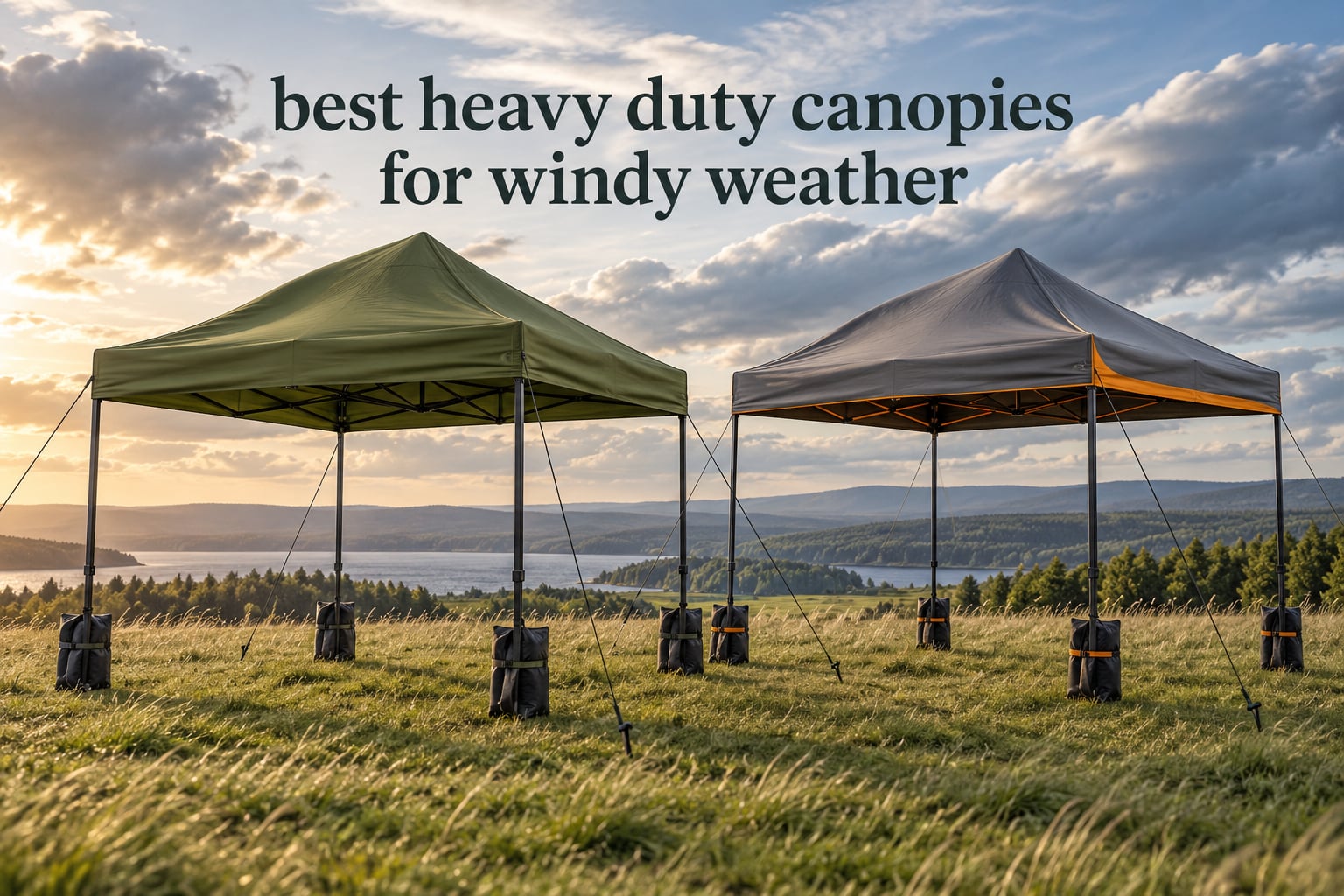
Most published canopy wind numbers are not comparable, and that is the whole problem. One brand quotes a wind tunnel figure of 62 mph, another prints 50 km/h on the box, a third says only “wind resistant” with no test behind it.
Buyers end up cross-shopping numbers that were produced under completely different conditions, then anchoring a tent that weighs 50 pounds with the four thin stakes that came in the bag. The result is a bent frame, a roof panel in a neighbour’s fence, and a warranty claim that gets denied because weather damage is excluded.
So here is the short answer before we get into the list: a 10×10 pop-up canopy anchored properly should be struck before sustained winds reach about 30 mph and before gusts reach 40 mph. Hurricane force begins at 74 mph, and no pop-up canopy is built for that.
What separates a good heavy duty canopy from a bad one is frame gauge, anchoring discipline, and honest weight per leg, not the number printed on the carton.
This guide covers the best heavy duty canopies for windy weather across the full price range, from a 48-pound steel 10×10 to a 100-pound 10×20 built for weddings and market stalls.
We compared all ten canopies in this roundup on the same six specs so the ratings can actually be set side by side: frame material, leg diameter and profile, wall thickness, frame weight, peak height, and any published wind claim with the test type noted. Where two models are 10×20 rather than 10×10, we say so plainly, because a wider footprint means more sail area and more anchor weight.
We did not lab-test these tents in a wind tunnel, and we will not pretend otherwise. What we did was read the published specifications, compare them against the engineering markers that actually predict wind performance, and weight all of it against thousands of owner reviews.
Where a reviewer reported a specific gust speed or a specific failure, we name it. Where we are estimating, we say so.
Table of Contents
- Top 3 Best Heavy Duty Canopies (October 2026)
- All 10 Heavy Duty Canopies Compared Side by Side
- 1. ABCCANOPY 10×20 Commercial-Series Patio Canopy — Best Heavy Duty Canopy Overall
- 2. Eurmax USA 10x10ft Commercial Pop Up Canopy — Best Value for Wind Performance
- 3. ABCCANOPY 10×10 Premium-Series — Best for a Published Wind Figure
- 4. ABCCANOPY 10X10 Commercial Pop Up Canopy with Sidewalls — Best for Full Enclosure
- 5. Eurmax USA 10×10 Pop Up Canopy with Four Zippered Walls — Best for Spare Parts Support
- 6. CROWN SHADES 10X10 Commercial Pop Up Canopy — Best for Fast Setup in Wind
- 7. MASTERCANOPY 10×10 Heavy Duty Pop Up Canopy — Best High Peak for Rain and Wind
- 8. COBIZI 10×20 Heavy Duty Pop Up Canopy — Heaviest Enclosed Setup for Full-Day Events
- 9. COBIZI 10×10 Heavy Duty Pop Up Canopy — Best for Wind-Driven Rain
- 10. E-Z UP ES100S 10×10 Instant Commercial Canopy — Best Documented Storm Survivor
- What Wind Speed Is Too High for a Pop-Up Canopy?
- What Actually Makes a Heavy Duty Canopy Hold Up in Wind
- How to Anchor a Canopy for Wind
- Using Canopies in Coastal and Hurricane Conditions
- Frequently Asked Questions
- Final Verdict for Windy Weather
Top 3 Best Heavy Duty Canopies (October 2026)
If you want the shortlist and nothing else, these are the three canopies we would put on a truck for a market, a fair, or a job site with real exposure. The first carries the deepest owner history, the second is the strongest value per pound of steel, and the third is one of only a few in the group that prints a wind figure alongside its leg size.

ABCCANOPY 10×20 Commercial-…
- Alloy steel frame
- 86 pounds
- 200 square feet
- UPF 50+ waterproof top
Eurmax USA 10×10 Commercial
- Full truss steel frame
- CPAI-84 top
- seam sealed
- 4 sandbags included

ABCCANOPY 10×10 Premium-Series
- 45mm hexagon legs
- 50 km/h stated wind figure
- peak tensioner
All 10 Heavy Duty Canopies Compared Side by Side
This is the master table. Every row lists the frame material, the published wind claim where one exists, and the frame weight, because those three numbers say more than any marketing adjective. Wind figures quoted in km/h are converted to mph at roughly 0.62 for a like-for-like read.
| Product | Specs | Action |
|---|---|---|
| ABCCANOPY 10×20 Commercial-Series |
|
Check Latest Price |
| Eurmax USA 10×10 Commercial |
|
Check Latest Price |
| ABCCANOPY 10×10 Premium-Series |
|
Check Latest Price |
 ABCCANOPY 10X10 with Sidewalls ABCCANOPY 10X10 with Sidewalls |
|
Check Latest Price |
 Eurmax USA 10×10 with 4 Walls Eurmax USA 10×10 with 4 Walls |
|
Check Latest Price |
 CROWN SHADES 10X10 Commercial CROWN SHADES 10X10 Commercial |
|
Check Latest Price |
 MASTERCANOPY 10×10 Heavy Duty MASTERCANOPY 10×10 Heavy Duty |
|
Check Latest Price |
 COBIZI 10×20 Heavy Duty COBIZI 10×20 Heavy Duty |
|
Check Latest Price |
 COBIZI 10×10 Heavy Duty COBIZI 10×10 Heavy Duty |
|
Check Latest Price |
 E-Z UP ES100S 10×10 Commercial E-Z UP ES100S 10×10 Commercial |
|
Check Latest Price |
Three things stand out before we go product by product. First, only four of these ten carry a printed wind figure at all, and those four come from two different traditions.
Second, frame weight across the group runs from 48 pounds to 100 pounds, and that spread maps almost exactly onto how much anchor weight you need per leg. Third, two of the ten are 10×20 units, which means twice the sail area and a different ballast calculation entirely.
1. ABCCANOPY 10×20 Commercial-Series Patio Canopy — Best Heavy Duty Canopy Overall
ABCCANOPY Patio Pop Up Canopy Tent 10×20 Commercial-Series(Black)
Alloy steel frame
240 in by 120 in by 132 in
86 pounds
200 square feet
UPF 50+ waterproof top
Pros
- True steel frame that holds through repeated storms
- 200 sq ft covers eight tables or twenty people
- sets up in under three minutes once practised
- brand honours frame warranty with free parts
Cons
- Very heavy to load solo
- roller bag quality varies between shipments
- scissor centre bolt is a weak point if left unanchored
- replacement rails cost a lot
This is the unit we keep coming back to because it has the deepest owner history in the group: 7910 reviews averaging 4.4 stars, accumulated over many seasons of real use.
Long-term owners consistently report that the alloy steel frame survives severe weather when the tent is properly anchored, and the manufacturer services warranty claims quickly.
That combination of proven frame and responsive parts supply is what you are actually buying, because a heavy duty canopy is a consumable system and the replacement rail is the part you will eventually need.
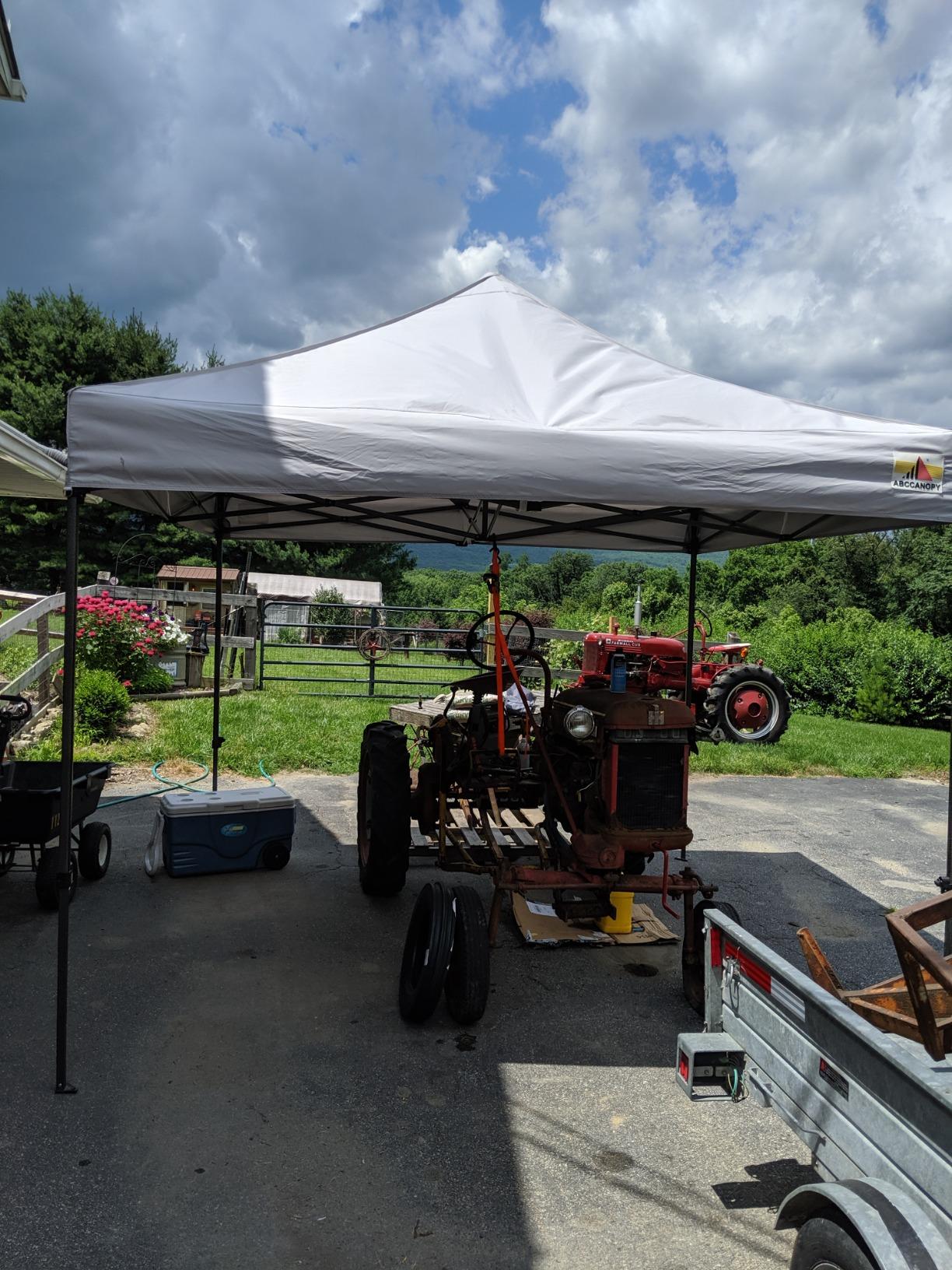
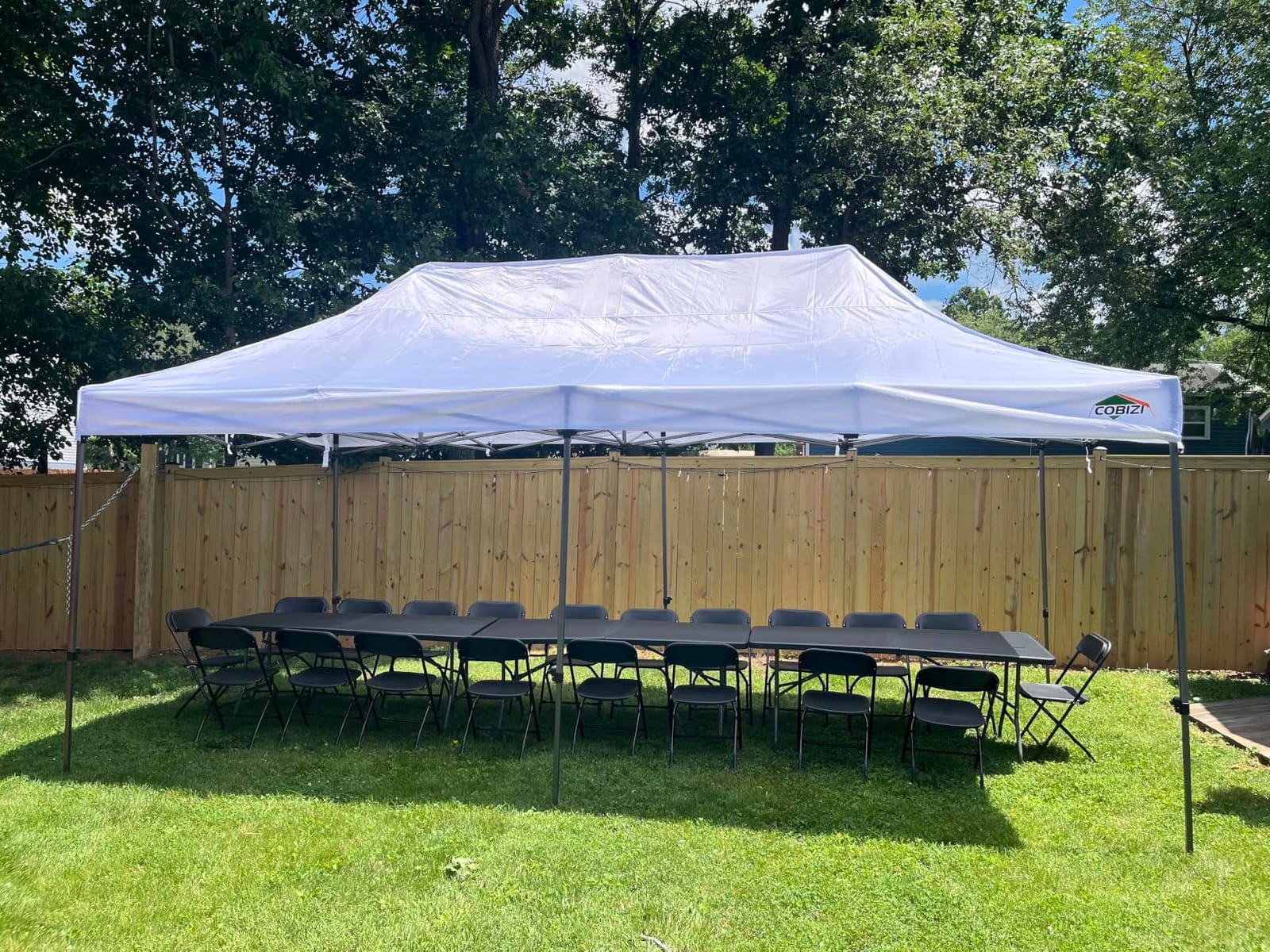
The footprint is 240 inches by 120 inches with a 132-inch centre height, which is 200 square feet of shade. Owners use it for eight tables at a garden party, twenty people at an outdoor event, or seven beach chairs in a row. The top is 100% waterproof with a UPF 50+ UV blocker, and the package includes six sand bags, four stakes, and ropes.
Be clear about the trade-off: this weighs 86 pounds. It is the kind of load that needs two people or a deliberate solo technique, and buyers who try to muscle it onto a picnic table alone are the ones who end up with a bent rail.
The frame ships with one year of after-sale protection and the fabric with six months.
What owners complain about most is the accessory layer rather than the shelter itself. Roller bag quality varies between shipments, and one documented report describes a bent scissor-section centre after an unanchored gust. Anchor it on every leg and that failure mode disappears.
When this canopy earns its weight
It earns its bulk when the tent stays up for days, not hours. Vendors running a multi-day market, event crews working a construction site, or anyone who wants one structure to cover a vendor row without splitting into two tents.
At 200 square feet you get shade for a whole group rather than a corner.
The 132-inch peak also matters in wind. A steeper pitch sheds water faster and gives the roof less of a shallow scoop to catch moving air. If your site gets rain as well as gusts, that geometry is doing real work for you.
When to pick something lighter instead
Skip it if you are solo, mobile, and setting up on the same lawn twice a month. Eighty-six pounds plus the anchor weights is a two-person job in practice, and the folded bag is long. A 10×10 at 57 pounds is far easier to move between venues and still plenty for a family event.
Also consider a different structure entirely if you plan to leave it standing overnight with a wind forecast above 25 mph. No amount of frame quality fixes a canopy that nobody is there to lower.
2. Eurmax USA 10x10ft Commercial Pop Up Canopy — Best Value for Wind Performance
Eurmax USA 10x10ft Pop Up Canopy,Commercial Instant Tent for Outdoor Events,Patented No-Tip Rolling Storage Bag with 4 Sandbags,UV & Water Resistant,Heavy Duty Portable Shelter Gazebo,White
Alloy steel truss frame
4.5 stars across 3683 reviews
100 square feet
Three height settings 10.4 ft to 11 ft
Seam sealed CPAI-84 top
Pros
- Held through 60 mph gusts when staked and ballasted
- reinforced wheels on an oversized roller bag
- seam sealed PU coated top blocks about 99 percent UV
- three height settings with quick release buttons
Cons
- Supplied stakes too light and short for real anchoring
- top fabric tears on some builds
- wheels not offset so the bag must lie flat
- roughly 65 to 70 pounds
At 4.5 stars across 3683 reviews, this pairs a top rating in the group with the higher review count among the products holding it.
More importantly, owners describe it surviving specific weather rather than vague conditions. Multiple reviewers report their canopy held through severe thunderstorms and 60 mph gusts with two stakes per leg, and one user on r/camping wrote that the Eurmax is the sturdiest unit they have ever owned.
That community consensus matches what the frame specification suggests.
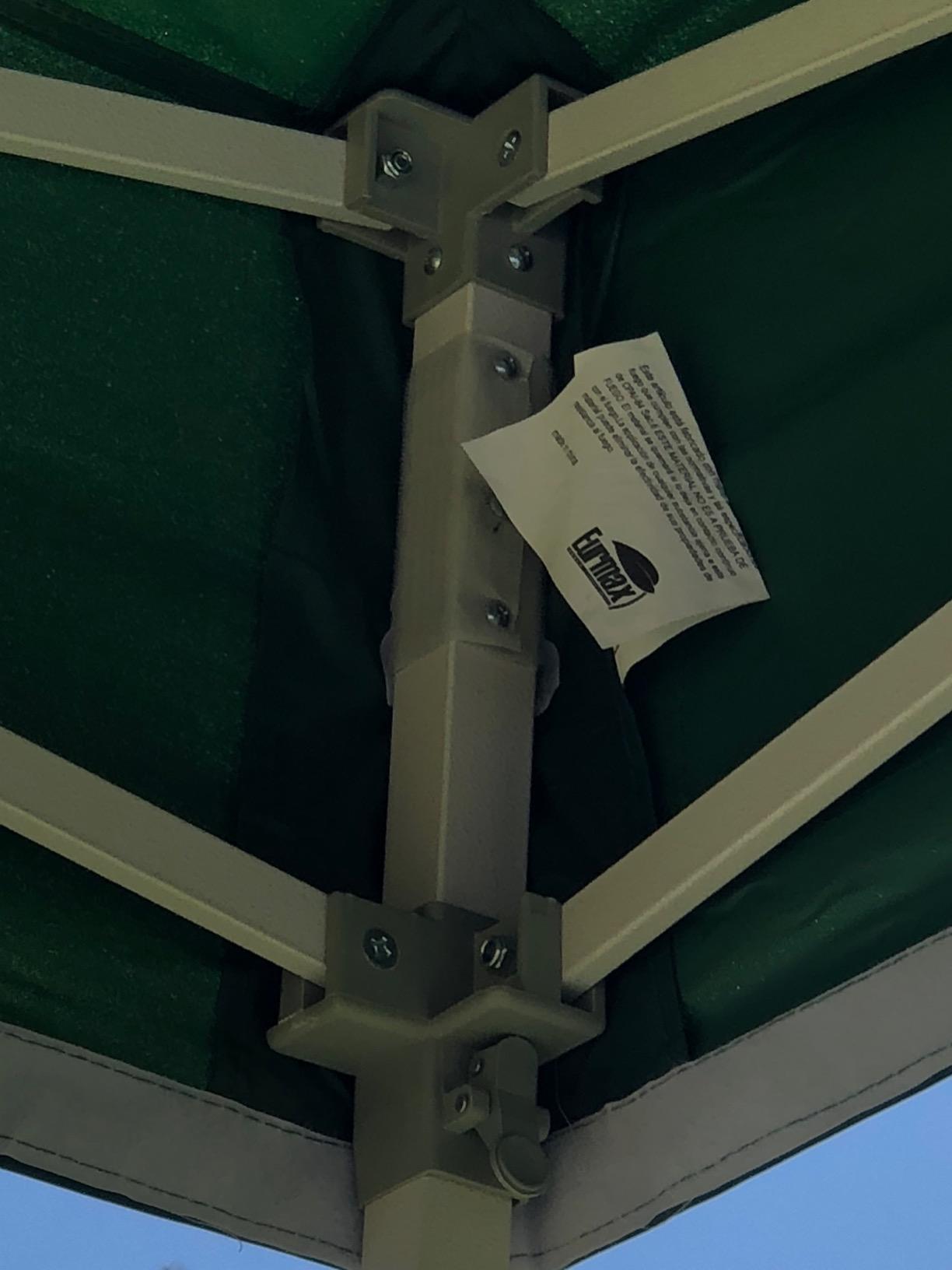
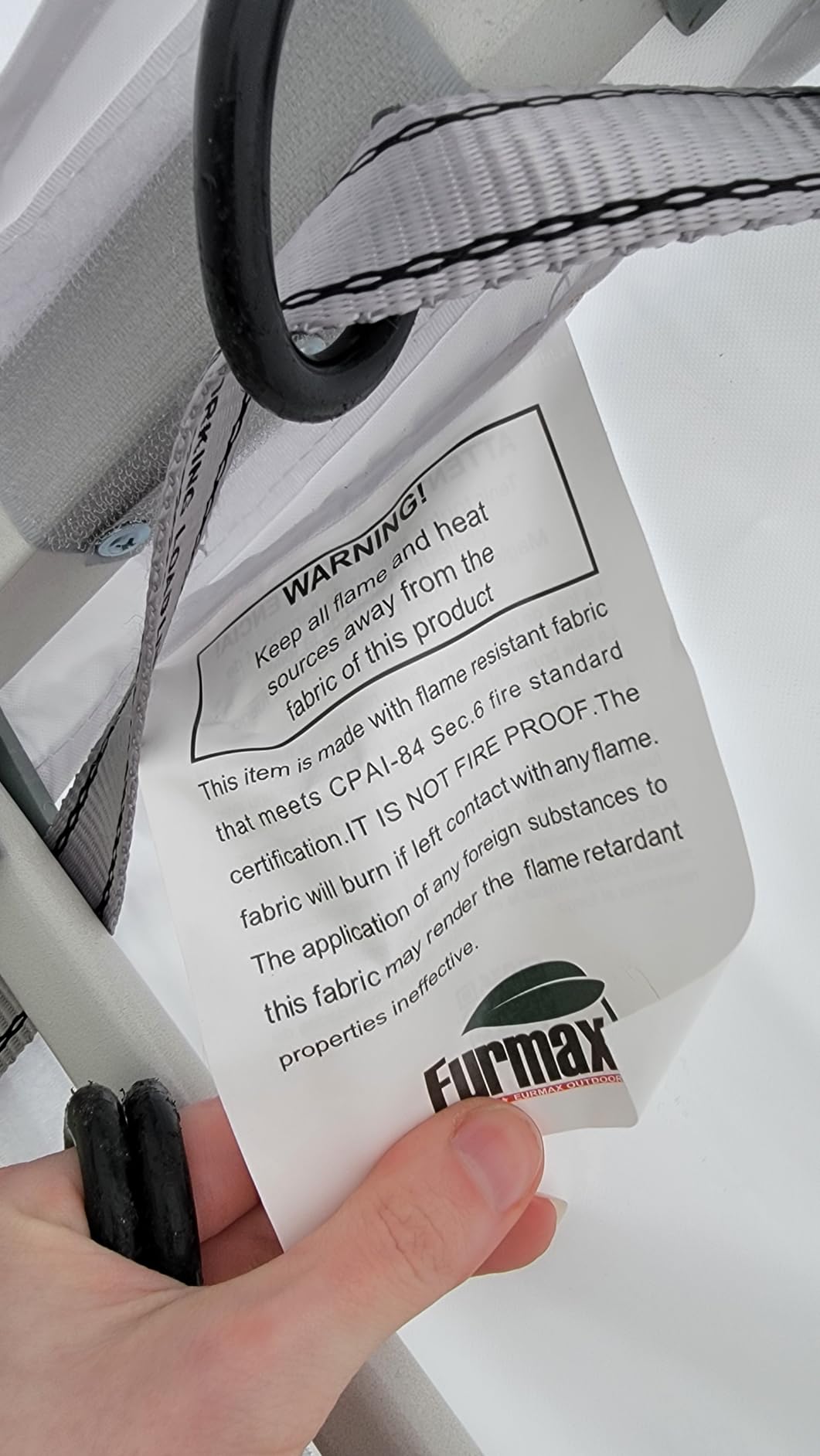
The top is CPAI-84 and NFPA 701 fire-retardant polyester with a PU coating, and every stitching line is seam sealed, which is why water sheds rather than wicks through. UV blocking sits at about 99 percent. Three height settings run from 10.4 feet to 11 feet, adjusted with a thumb button, and corner sliders lock without pinching fingers.
The most useful thing this package does not give you is adequate ground anchors. Owners are near-unanimous on that point: throw out the supplied stakes and buy proper ground anchors, because two stakes per leg is where the 60 mph reports come from.
Lowering the canopy to its lowest height setting when gusts are forecast is the other standard tip, because it drops the sail profile and removes the reverse parachute effect that lifts unanchored tents.
Packed, the unit is 65 inches by 10 inches by 10 inches and the frame runs around 65 to 70 pounds. The L-shaped roller bag is oversized and holds the frame plus top, but the wheels are not offset, so the bag has to lie flat and it eats more storage floor space than a conventional bag.
When this canopy earns its place
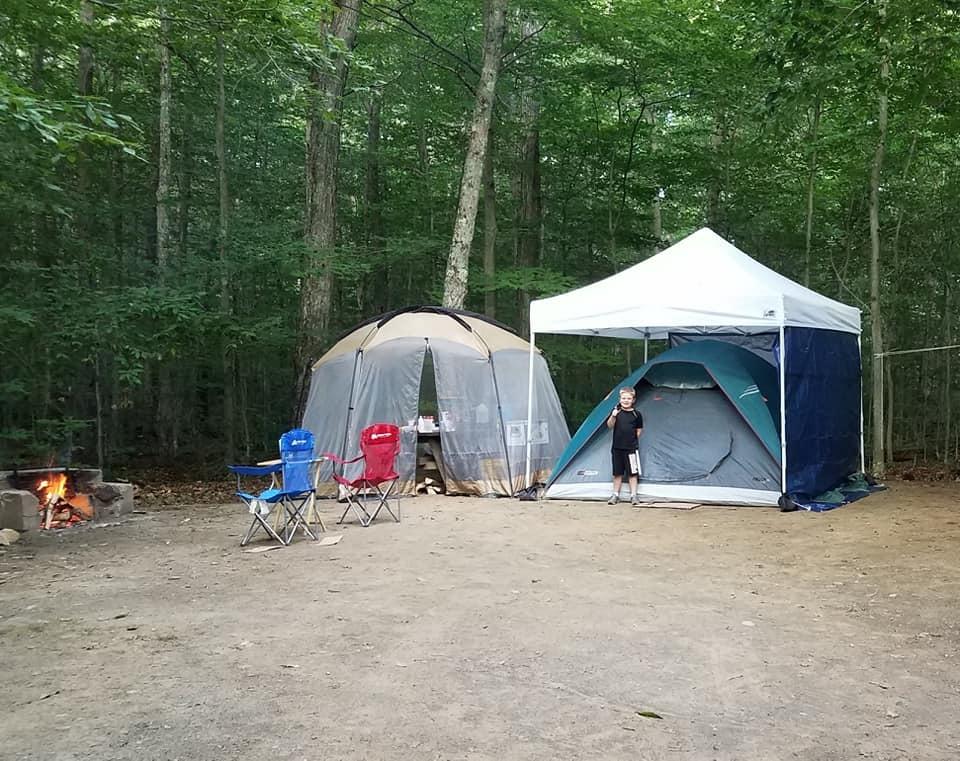
It suits campers, tailgaters, and market vendors who get genuine wind where they pitch rather than a sheltered patio.
The 10×10 footprint is small enough that one person can realistically anchor four legs, and the full truss frame resists the racking that twists lighter frames in a gust.
If you can commit to two stakes per leg plus sand bags on the corners, this carries one of the stronger owner records among mid-size units in the group. Anyone comparing heavy duty pop up canopy options should read the reviews on the top fabric, since a minority of samples arrive with a thin panel that tears easily.
When it is the wrong tool
It is wrong for coastal sand, where stakes pull straight out and you need plates instead, and wrong for anyone who needs to load a sedan trunk solo. The stowed length and the weight are the two complaints that come up most often, and they are not small inconveniences.
If your site is concrete or asphalt with no way to stake, budget for four base plates as a separate purchase. The included sand bags will get you through a mild evening, not a storm.
3. ABCCANOPY 10×10 Premium-Series — Best for a Published Wind Figure
ABCCANOPY Commercial Pop Up Canopy Tent 10×10 Premium-Series, White
45mm hexagon steel legs
Stated 50 km/h wind figure
48 pounds
Silver coated 300D PU polyester
Pros
- Thickened 45mm hexagon legs rated to about 50 km/h
- peak tensioner keeps the roof tight so rain cannot pool
- silver coated 300D fabric blocks 99.99 percent UV
- truss takes hanging worklights
Cons
- Cover panel is thinner than replacements
- no hook tape on the roof edge for side walls
- supplied stakes and ropes too light for real gusts
- roller bag can split after a few uses
This is one of the few 10×10 frames in the group that publishes a wind figure alongside a specific leg size: 1.77-inch, or 45 mm, hexagon-shaped legs with a hammertone powder coating, built to withstand 50 km/h of strong wind.
That works out to roughly 31 mph. It is a manufacturer claim rather than a tunnel certification, and we treat it as such, but it is still more information than most of the field gives you.
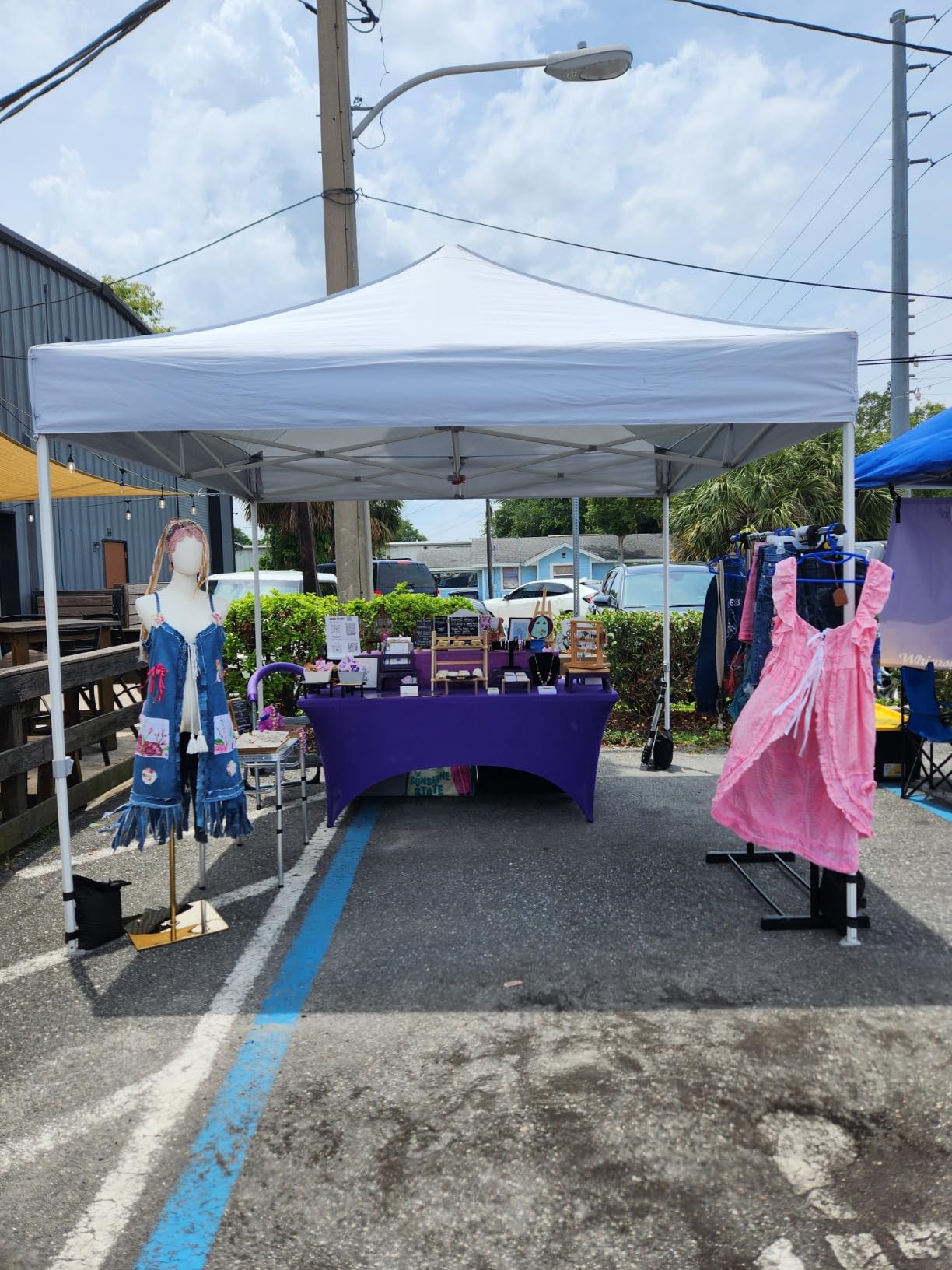
The design detail that matters most in a squall is the peak tensioner. It lifts the centre higher and pulls the roof tight so water runs off instead of pooling. Pooling water is what actually collapses many canopy frames, because the weight of the water lands on the roof and pushes the legs out of plumb before any wind is involved. A taut roof is a structural feature, not a cosmetic one.
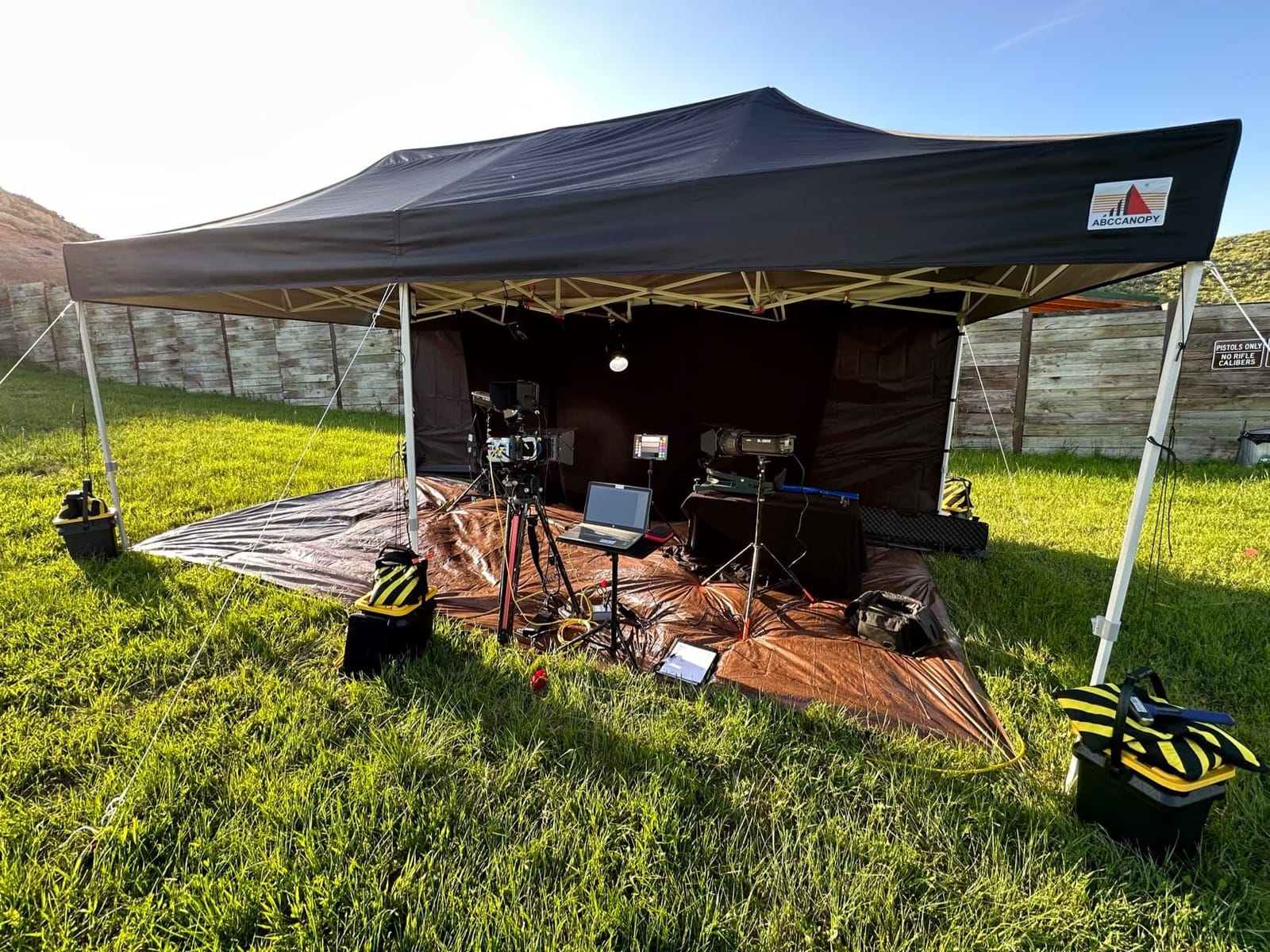
The fabric is silver-coated 300D PU polyester with sealed seams, rated waterproof, blocking 99.99 percent of UV. Steel D-rings sit on each corner. Owners running markets and race tracks report this frame surviving 40 to 50 mph gusts and heavy rain without shifting, and 48 pounds keeps it manageable for one person to load.
The criticisms are consistent and all sit outside the frame. The supplied top cover is noticeably thinner than the replacement covers, there is no hook tape along the roof edge so side walls need sewing on or extra hardware, and the stakes and ropes that come in the box are too light to hold against a real gust. Owners running 40 to 50 mph events are buying better anchors separately.
What the 50 km/h figure actually means
Read it as a baseline condition figure, not a survival guarantee. It assumes the tent is staked, ballasted, and set to a sensible height, and it says nothing about gusts or crosswinds. In our read, 31 mph of steady wind with proper anchors is realistic for this frame, and 40 mph gusts are the point where you lower the peak or strike it.
That is a useful number to have, because most competing listings print no figure at all. It lets you plan. On a day forecast to hit 30 mph, this is a stay-up tent. On a day forecast to hit 45, it is a strike-it day.
When to choose this over a heavier frame
Choose it when one person may be setting up, when the car boot is small, or when you want the highest peak-to-weight ratio in the group. Forty-eight pounds still gives you a truss frame and hexagon legs, which is a step up from the straight-leg budget units.
Pass on it if rain is your main concern. The thinner supplied top cover is the weak link, and a replacement cover is a sensible add-on for anyone leaving this up through more than one storm.
4. ABCCANOPY 10X10 Commercial Pop Up Canopy with Sidewalls — Best for Full Enclosure
ABCCANOPY Commercial Pop Up Canopy Tent with Sidewalls 10X10,White
Alloy steel full truss frame
28 kg
120 in by 120 in by 132 in
3 sidewalls plus a door wall
500 denier polyester top
Pros
- Full truss frame with square legs stays steady when staked and ballasted
- three removable side walls plus a door wall block wind and rain
- velcro and zip walls attach in seconds
- three height settings on a thumb latch
Cons
- Heaviest of the ABCCANOPY 10x10s
- roller bag handles and rivets are weak points
- peak tensioner can crack early
- side wall zippers wear
- included weight bags may be light
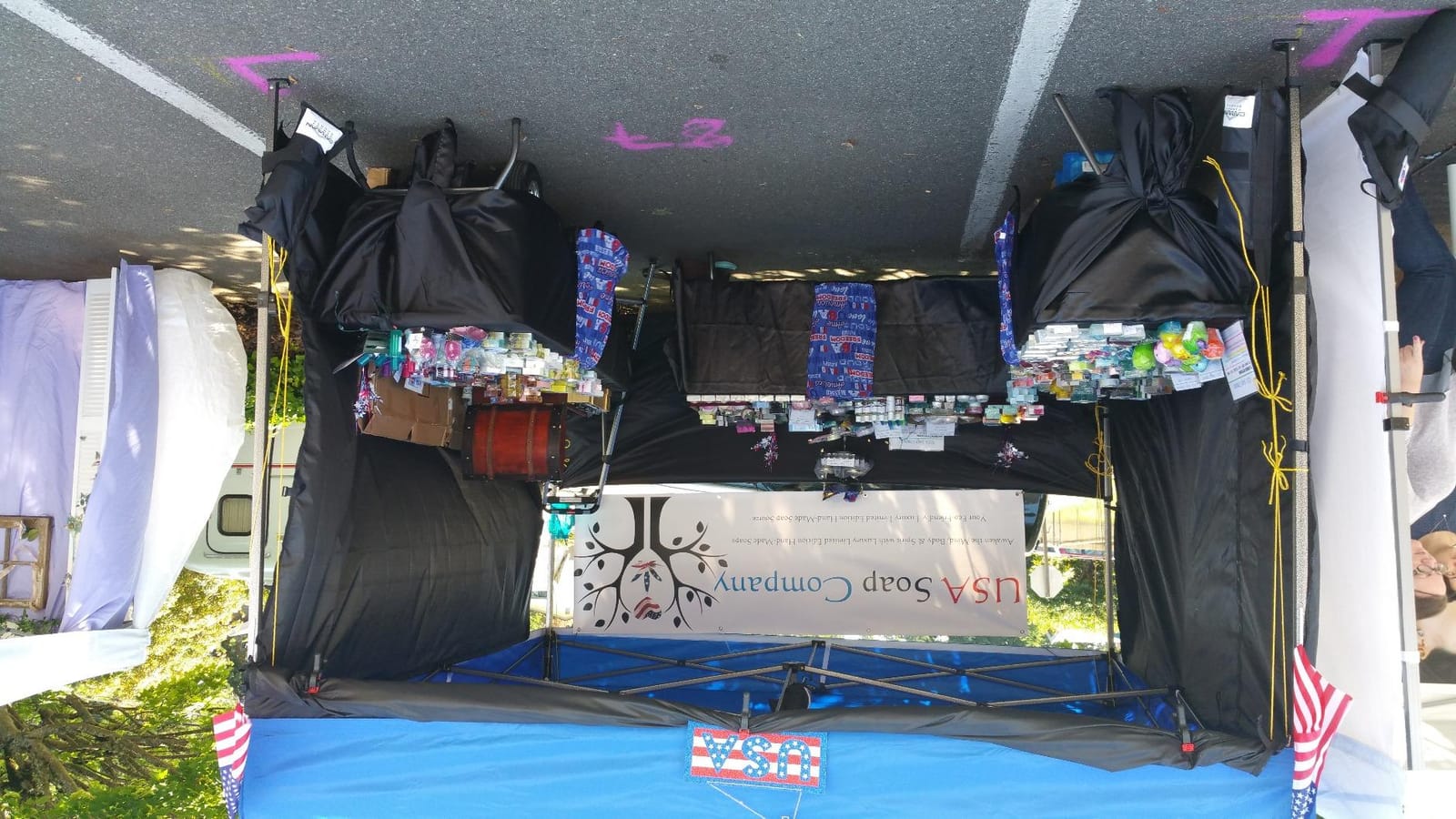
Enclosure is the most effective wind modification you can make to a canopy, and this is the unit in the group built around it. Three removable side walls plus a door wall attach with velcro and zips in seconds when the weather turns, and with all four fitted the interior is shielded from driving rain and from the pressure that would otherwise build under an open roof.
The frame is a 10×10 full truss structure with 1 mm square legs and a cross truss, described by the manufacturer as commercial grade. It weighs 28 kg, or about 62 pounds, and stands 132 inches at the centre with three height settings on a simple thumb latch.
The top is 500 denier polyester with PU lining, certified flame retardant, waterproof, and UPF 50+, blocking 99.98 percent of UV.
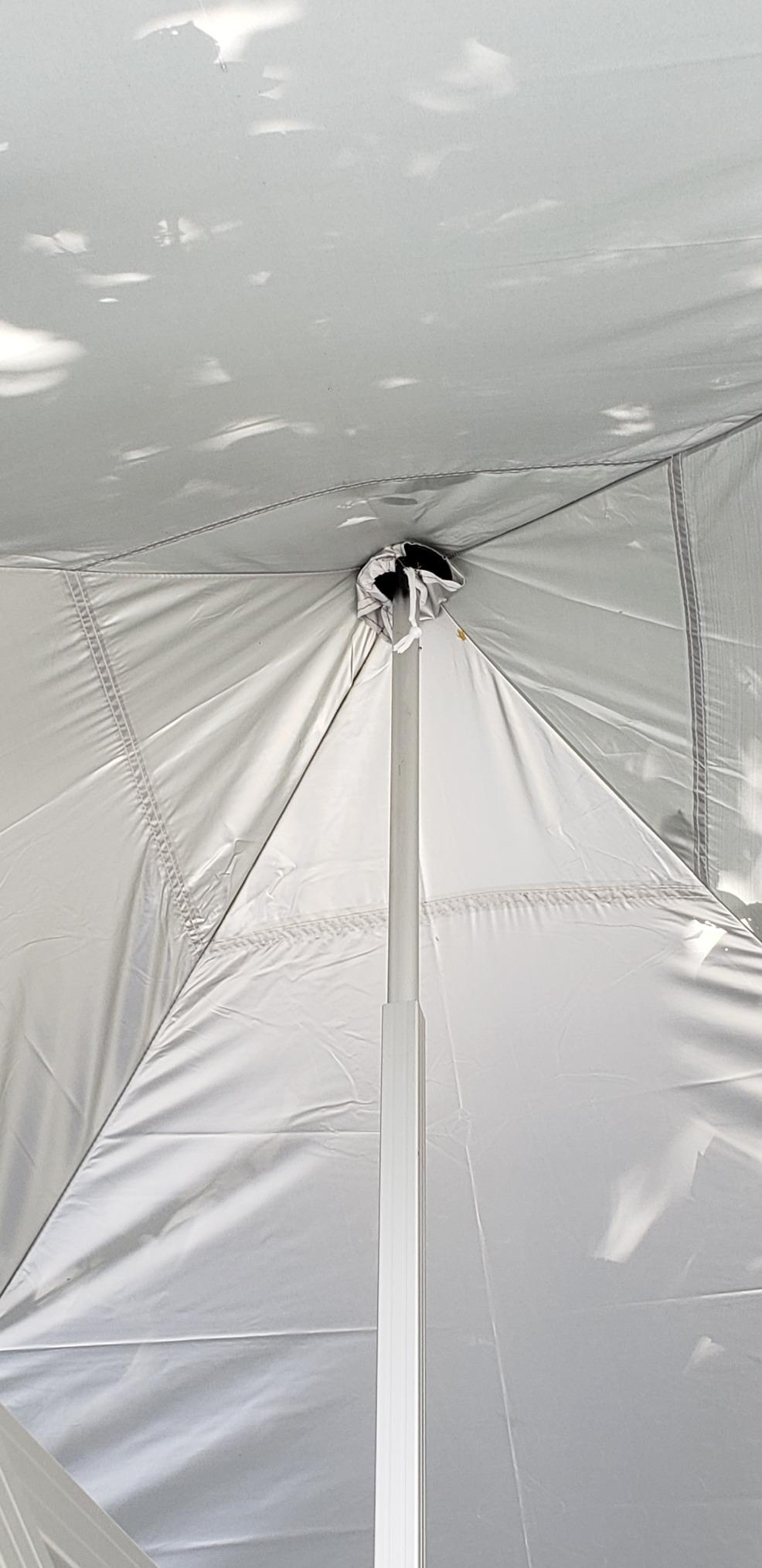
At 6804 reviews and 4.4 stars, this is one of the better-evidenced canopies in the roundup. Market users treat it as a dependable commercial frame that stays put in heavy wind once pegged and weighted. The negatives cluster around accessories rather than structure: bag hardware, a peak tensioner that can fail early in life, and side wall zippers that lose teeth after stretch.
One practical caution worth flagging: if you fit three side walls, orient the open side away from the prevailing wind. With the gap facing into the wind, pressure builds inside the enclosure and pushes the frame upward. This is the sidewall orientation trap that catches experienced vendors, and it is the opposite of what instinct suggests.
When enclosure is worth the extra setup time
It pays off in autumn and winter markets, in coastal drizzle, and whenever you are protecting goods or food rather than just standing in shade. Vendors who work evening events report a real difference in comfort once the walls are on, because the walls block wind chill as well as rain.
It also helps structurally. A roof with tensioned walls pulls downward and inward at the eaves instead of billowing, which reduces the load the frame has to carry in a gust.
When to choose an open-sided model
Skip it for hot-weather use and for events where airflow matters more than shelter. Side walls trap heat and block cross-ventilation, and an enclosed box in summer heat can be worse than no shade at all. Vendors who work warm-weather fairs usually carry walls for transport and hang them only when the forecast demands.
Also note the 28 kg weight. That is a heavy lift for a 10×10 at 62 pounds, and the bag hardware has drawn more complaints here than on lighter models. Budget for a proper wheeled bag if you move it often.
5. Eurmax USA 10×10 Pop Up Canopy with Four Zippered Walls — Best for Spare Parts Support
Eurmax USA 10×10 Pop Up Canopy Tent,Commercial Tent with Patented No-Tip Rolling Bag,4 Zippered Removable Walls,UV & Water Resistant Canopy Top,Heavy Duty Outdoor Gazebo,Instant Shelter(White)
Alloy steel frame with steel core
61 pounds
10x10 footprint
Four sandbags included
US spare parts stock
Pros
- Full truss frame with a steel core resists gusty conditions when staked
- patented L-shaped no-tip rolling bag fits frame plus top
- four sandbags included for corner ballast
- replacement parts held in the US
Cons
- Around 60 to 70 pounds so solo loading is a chore
- stowed length is longer than most 10x10s
- top fabric on some builds is thin and tears easily
- one report of a bent leg after an unweighted gust
The durability argument here is not about the tent surviving a storm. It is about what happens three years later when a leg twists or a corner slider snaps.
This brand holds replacement parts in the United States rather than routing support through a third-party seller, which in practice means you can replace a component instead of replacing the tent. For a buyer who plans to keep a canopy for a decade, that is worth more than any accessory included in the box.
The frame is a full truss design with a steel core rated to resist gusty conditions when properly staked, at 61 pounds for the 10×10 footprint. Buyers who came from lightweight aluminium frames rate this one far better once it is anchored with two stakes per leg.
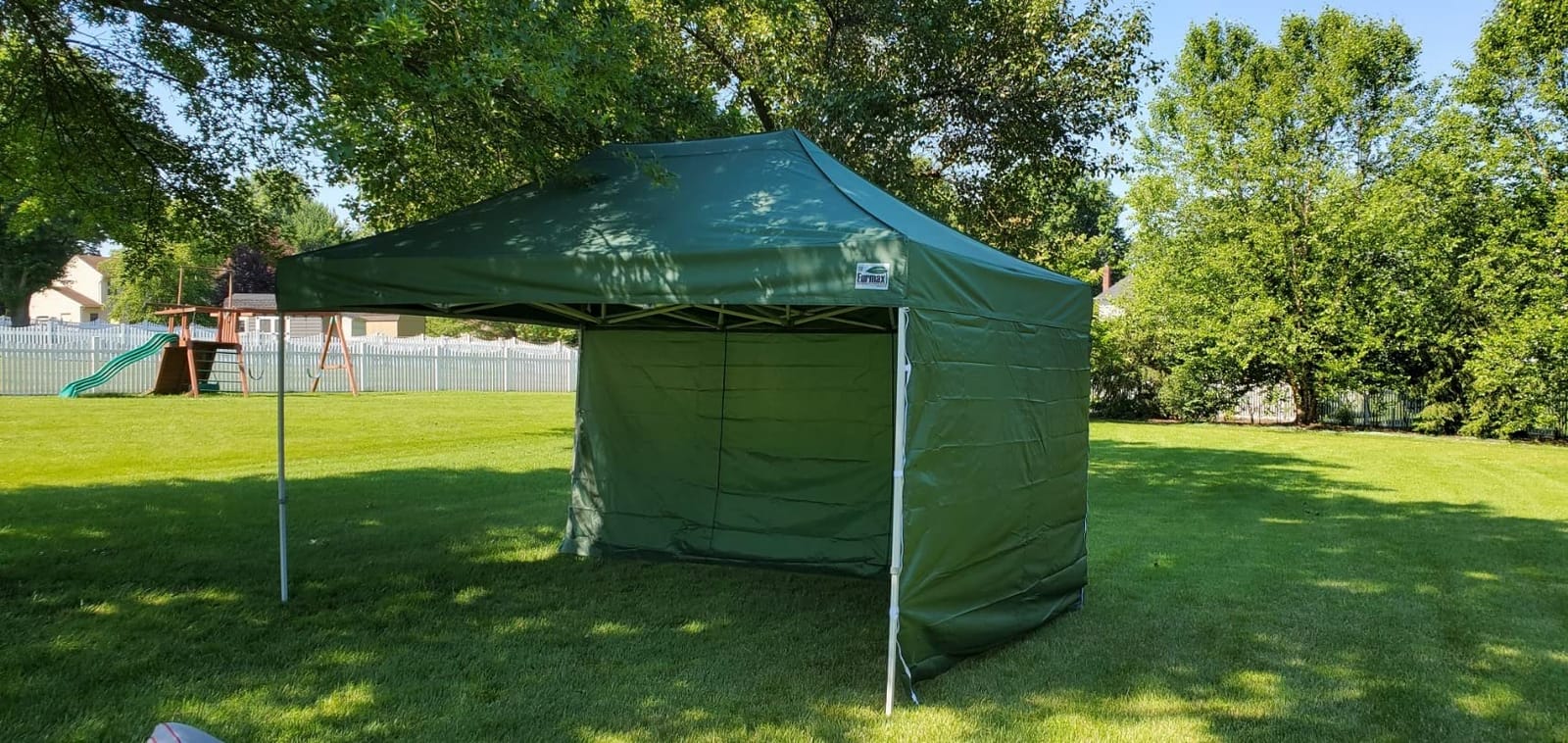
The top is UV protected and water resistant, and the package includes the frame, top, three removable enclosure walls, one wall with a door and window, four sand bags, and the wheeled bag.
The recurring operating note is that the heavy frame and long stowed length trade portability for wind performance, and that is the honest framing. A minority of canopies arrive with a thin top that tears easily, so check the fabric before you rely on it in rain. One documented report describes a bent leg after an unweighted gust, which is the predictable outcome when the tent is never ballasted.
Community consensus lines up with the specification. An owner on r/camping describing the Eurmax line described them as sturdy but heavy, needing sand bags and stakes, and expensive. That is the correct expectation for any commercial 10×10: the frame does the work, and the ballast decides the outcome.
If transport is your binding constraint, measure the folded length first.
What the steel core changes
A steel core in the leg means the member resists bending rather than flexing and springing back. In a gust that difference is the gap between a frame that racks sideways and recovers, and one that takes a permanent set. It also means the frame holds its geometry when wet, when a cheaper tube would already be softening at the joints.
Buyers upgrading from a recreational aluminium canopy usually notice the weight first and the stability second. The weight is the cost. The stability is the payoff.
When this is not your tent
It is not the right choice for a solo operator moving weekly, or for anyone with a small vehicle. The stowed length is longer than on most 10×10 canopies and is cited as not fitting a sedan trunk.
It is also worth pairing with better walls than the supplied ones if you work in wind, since the four included panels use hook-and-loop and zippers that wear faster than the frame. Our heavy duty roundup format uses the same rule everywhere: judge the frame and the fabric separately.
6. CROWN SHADES 10X10 Commercial Pop Up Canopy — Best for Fast Setup in Wind
CROWN SHADES 10X10 Commercial Pop Up Canopy Tent with Sidewalls, Green
Steel truss with hardened bolts
21.55 kg
120 in by 120 in by 110 in
CENTERLOK single push hub
Truss rated to 120 lbs
Pros
- CENTERLOK hub locks all four legs with a single push
- over 9 ft 5 in interior height with 6 ft valance clearance
- 300D silver coated fabric with taped seams
- two legs have integrated wheels
- two year warranty
Cons
- Straight leg style braces less than a hex leg frame in strong gusts
- warranty explicitly excludes wind and weather damage
- tall peak makes the folded package longer
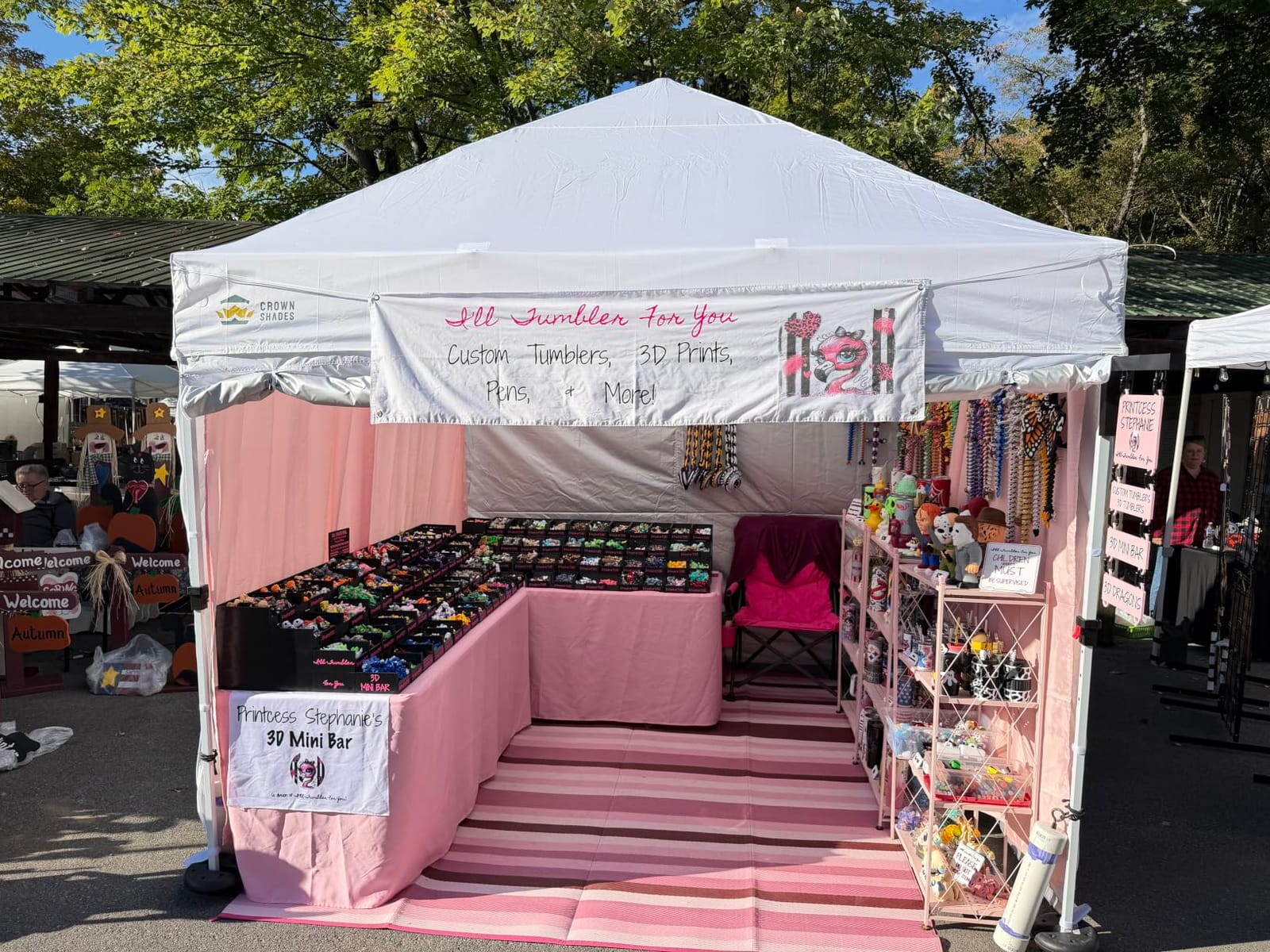
Setup speed is a wind feature in disguise. A tent that takes eight minutes to raise is a tent people leave standing when a storm is twenty minutes out, and a tent that takes two minutes is one you can actually lower or strike in time. The CENTERLOK hub on this model locks all four legs with one push at the centre, no tools required, and two people can have it standing in seconds.
The frame is a steel truss with hardened bolts and reinforced eaves, rated to support up to 120 lbs of hanging load. Interior height is over 9 feet 5 inches with more than 6 feet of clearance under the valance, which is genuine standing room rather than ducking room.
The fabric is rugged 300D silver coated with UPF 50+ UV protection, CPAI-84 flame resistance, water repellency, and waterproof sealing tape. Two legs have integrated wheels.
Now the honest caveat. This is a straight-leg frame, and reviews note that straight-leg style offers less bracing than a hexagon-leg commercial frame in strong gusts. The truss carries vertical load well and braces the top, but there is less lateral stiffness in the legs themselves.
If you are forecasting sustained winds above 25 mph, this is not the frame I would pick. If you need to be up and down quickly in moderate conditions, it is very hard to argue with.
The other thing to know before you buy is the warranty language. The two-year warranty covers the first year with a full canopy replacement, and it explicitly excludes wind and weather damage. That is standard across the industry, but it changes the buying calculation for event vendors who plan to leave tents up for days.
What setup speed is really worth
Think about the decision you make in a forecast. When a line of storms is two hours out, the useful question is not which frame is strongest in theory, it is whether you can break the tent down and load the car before the first gust arrives.
A frame that two people can strike in a couple of minutes changes that outcome more often than a slightly heavier frame would.
The STO-N-GO bag reinforces the point. It has a dedicated pocket sized for 8 stakes, 4 guy ropes, and 4 removable wall panels, so the anchoring hardware travels with the tent instead of being abandoned at the last site.
When to choose something else
Choose a hexagon-leg or heavier truss model when the site is genuinely exposed, when the tent stays up unattended overnight, or when you are on a coastal site with steady crosswinds. The straight-leg geometry has less margin for error in exactly those conditions.
The tall peak that gives you the headroom also means the folded package is longer than most 10×10 models. Measure your storage before committing.
7. MASTERCANOPY 10×10 Heavy Duty Pop Up Canopy — Best High Peak for Rain and Wind
MASTERCANOPY 10×10 Heavy Duty Pop Up Canopy Tent with Roller Bag(Black)
Powder coated full truss steel
132 in centre height
57 pounds
200 denier silver coated top
Stated 50 km/h wind
Pros
- Full truss powder coated square legs rated to about 50 km/h
- 132 inch centre height gives a steep pitch that sheds rain
- centre peak held by adjustable poles rather than a flexible arch
- 600D PVC coated roller bag
- reported to have withstood 60 mph gusts
Cons
- Replacement tops have short velcro strips that do not match original coverage
- bag and instructions are vague
- leg locks are stiff so two people are needed
- one owner reports a collapsed frame and no warranty response
Height is an underrated wind and rain variable, and this stands among the tallest 10×10 frames in the group at 132 inches.
A steeper pitch means water runs off before it can load the roof, which is the most common way a canopy frame fails.
Pooling water pushes down on the fabric, the fabric transfers that load to the legs, and the legs bow out of plumb. Remove the pooling and the frame survives weather that would otherwise take it.
There is a second structural choice here worth noting. The centre peak is held by adjustable poles rather than a flexible arch, which means it resists side-to-side flex.
A flexible arch absorbs gust energy by bending, and repeated bending eventually loosens the fabric attachment. A rigid pole transmits the load down into the truss instead.
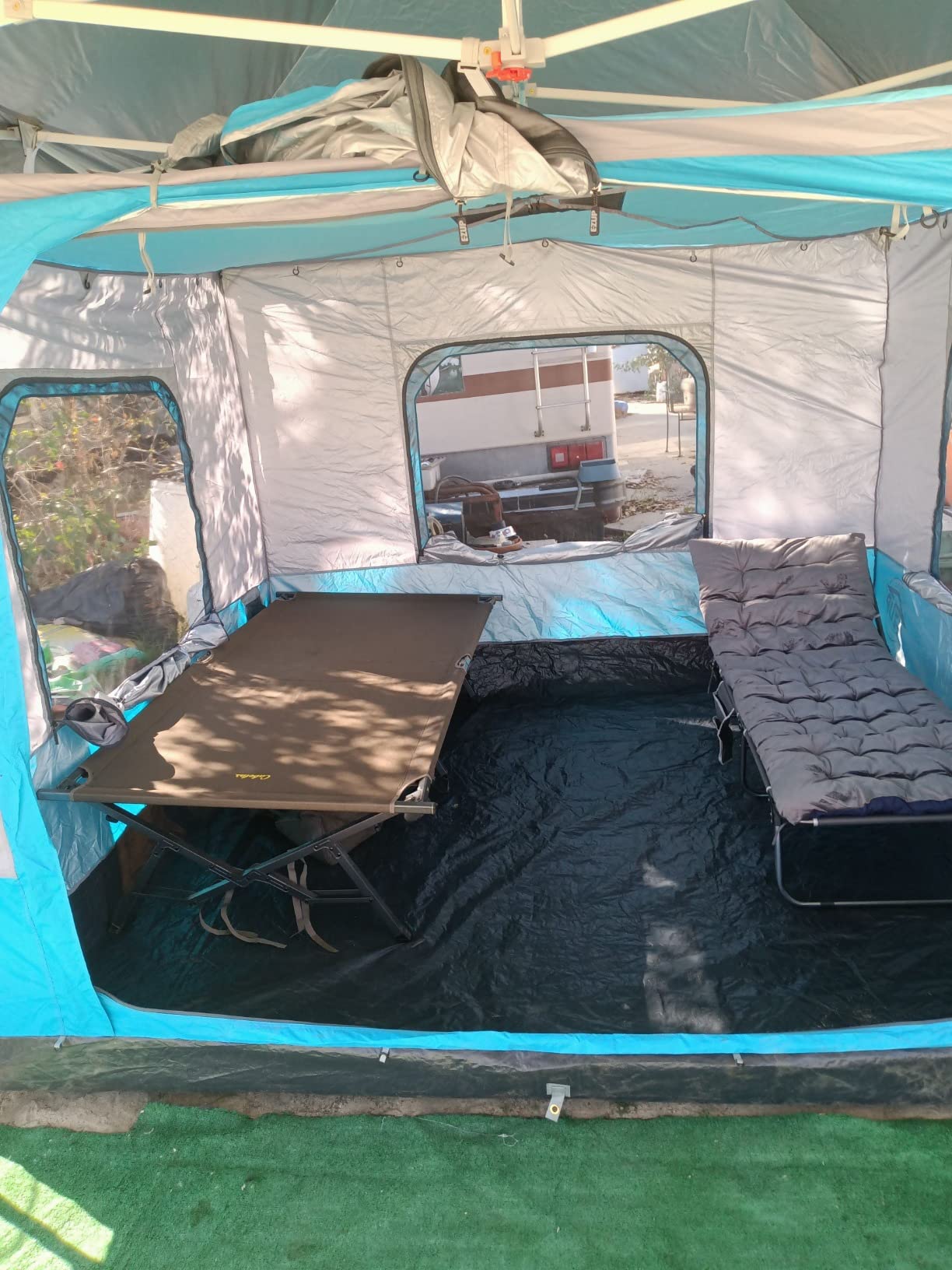
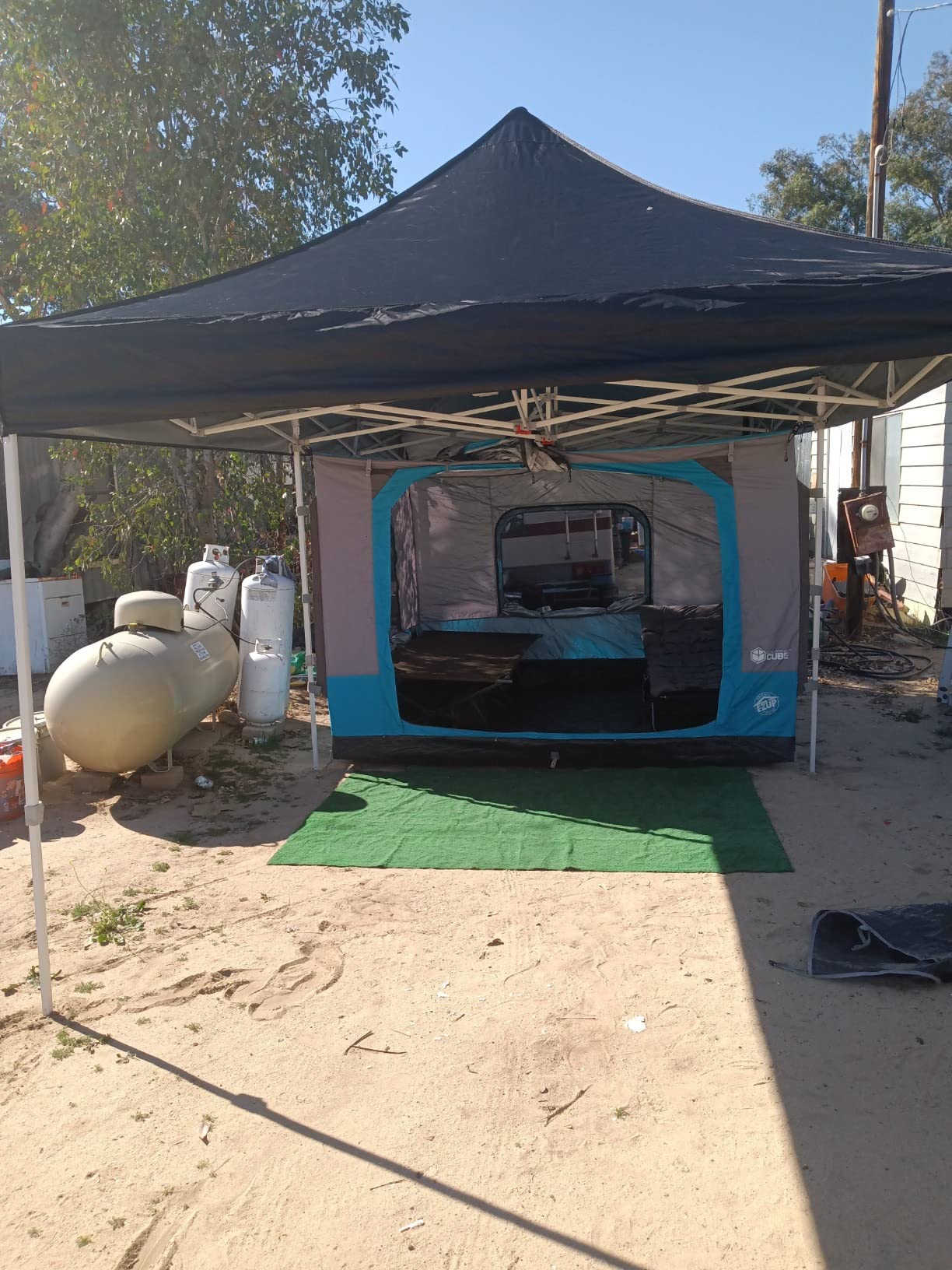
The frame is a 10×10 full truss of powder-coated 1 mm square legs with a cross truss, stated to withstand 50 km/h wind with the sand bags and ropes, which is roughly 31 mph.
At 57 pounds it sits in the middle of the group for weight. The top is 200 denier silver coated polyester, and the package includes 4 sand bags, 4 ropes, 4 stakes, and a wheeled bag made of 600D PVC coated fabric with reinforced handles and oversized wheels.
The dominant owner theme is wind resilience. Multiple owners report leaving theirs standing through 60 mph gusts and golf-ball hail where lighter canopies twisted and collapsed.
One caveat applies to those reports: they used the supplied stakes and weights rather than engineered anchors, so treat them as the ceiling of what the frame can do rather than the typical case.
Why peak height changes survival odds
A tall peak raises the roof out of the boundary layer where the fastest air sits, but the bigger effect is drainage. On a low-slope roof, a modest rainfall becomes tens of pounds of standing water in minutes. On a steep roof it runs off.
For anyone who needs one tent to cover both sun and rain, that is the more valuable of the two benefits.
It also gives real headroom. At 132 inches you can stand up under the ridge, walk in without stooping, and hang lighting or signage from the truss.
Where the accessory layer falls short
The weak point is the fabric layer. Replacement tops carry short velcro strips that do not match the original coverage, so a replacement can leave gaps at the seams.
The bag and instructions are vague, and some sizes are hard to find setup demonstrations for. Stiff leg locks mean two people are needed to raise it.
One documented owner report describes a collapsed frame in light wind and rain followed by no response to warranty claims. Service issues are uncommon against 1492 reviews, but budget for the possibility that a replacement fabric is on your own list.
8. COBIZI 10×20 Heavy Duty Pop Up Canopy — Heaviest Enclosed Setup for Full-Day Events
COBIZI 10×20 Heavy Duty Pop Up Canopy Tent with Sidewalls, Easy Up Canopy
1.26 in pipe with 0.03 in wall
100 pounds
240 in by 120 in by 130 in
420D double PU Oxford top
Stated 18 mph rating
Pros
- Heavy steel at 1.26 inch diameter with 0.03 inch wall plus an intermediate pole rated to 220 lbs
- six PU coated sidewalls shut out wind driven rain
- 420D double PU Oxford top rated to 2.1 psi waterproof pressure
- three height settings
- fits a full size pickup bed
Cons
- Published wind rating of only about 18 mph
- 100 pounds needs two or three people
- still shifts in wind with all four sandbags attached
- reports of missing hardware and slow warranty threads
This is the heaviest frame in the roundup at 100 pounds and the most contradictory spec sheet. The steel is genuinely substantial: 1.26-inch pipe diameter with 0.03-inch wall thickness, full truss powder-coated construction, and an intermediate pole rated to 220 lbs.
No other canopy here has a member rated for that load. Yet the manufacturer publishes a wind rating of only about 18 mph, the lowest published figure in this group.
Both numbers are useful. The tube gauge tells you the frame has large reserve strength for structural loads, and the 18 mph figure tells you the manufacturer will not stand behind it in serious wind without more ballast than what is included.
Read together, they say this is a tent built to be heavy and sealed rather than built to be left up in a gale.
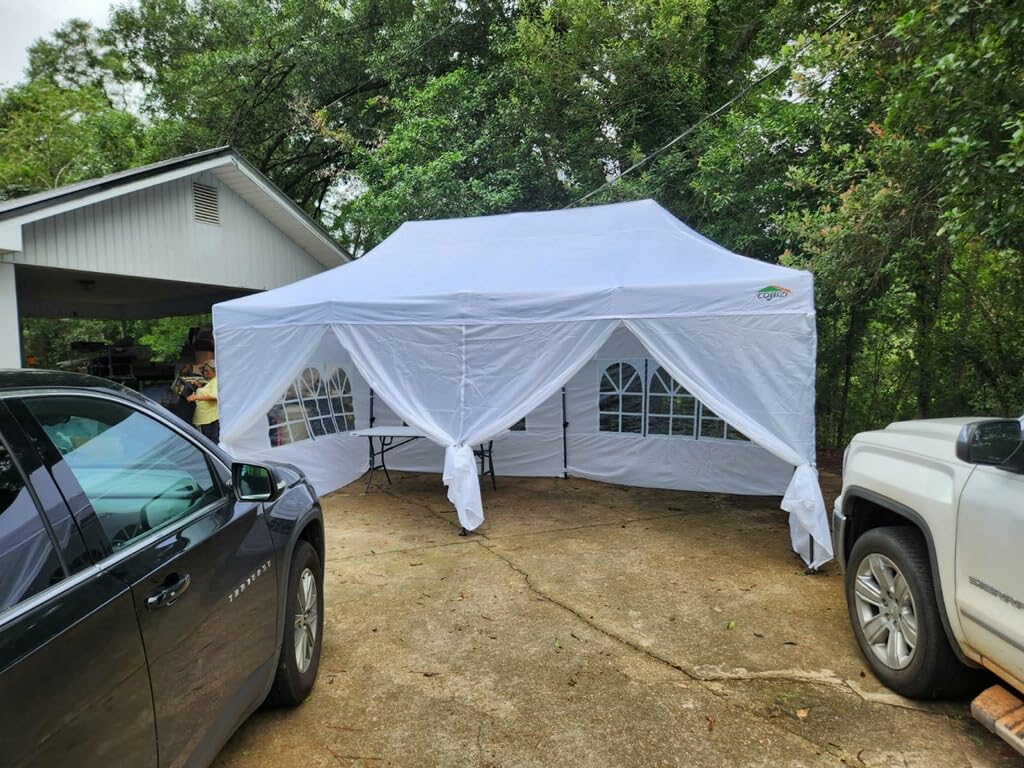
Carrying 100 pounds over a 10×20 footprint means this is a two or three person lift, and setup with all six walls on takes roughly an hour.
The payoff is the enclosure: six PU coated sidewalls, four with windows, on 420D Oxford with two layers of PU coating and fully sealed seams. It is rated to 2.1 psi waterproof pressure against 1.1 psi for typical tent fabric.
Owners confirm it covered a severe thunderstorm with no leaks, and it fits a full size pickup bed.
Owners do report that it still shifts noticeably in wind even with all four sand bags attached. That is expected for a 200 square foot footprint on a 130-inch frame. A 10×20 needs roughly four times the anchor weight of a 10×10 to be equally secure, and the included bags do not reach that.
Why heavy tube and a low wind rating coexist
Tube diameter and wall thickness govern how much load a leg carries before it bends. Wind rating is a system property that depends on the whole assembly: sail area, height, anchoring, and fabric tension. A tent can have legs strong enough to hold a small aircraft hangar and still be unsuitable for a gale because there is 200 square feet of fabric above it catching every gust.
That is why published ratings are the honest number to anchor your decisions to, and why we lead with them. Nobody should read this canopy as a storm shelter.
When this is the right buy
Long events where you want walls, shade, and rain cover for a large group over many hours. Weddings, community events, market stalls that need storage behind them, construction sites where equipment sits under cover. In those situations the 18 mph ceiling is not a problem because you are set up in the morning and taken down the same day.
Skip it for unattended overnight use or for any site with steady coastal wind. Also expect some missing hardware on a minority of canopies and slow warranty response, so check the packing list before you leave the property.
9. COBIZI 10×10 Heavy Duty Pop Up Canopy — Best for Wind-Driven Rain
COBIZI 10×10 Heavy Duty Pop up Canopy Tent with Sidewalls Commercial Canopy
1.26 in pipe with 0.03 in wall
62 pounds
120 in by 120 in by 132 in
Four sealed PU coated walls
Stated 18 mph rating
Pros
- Owners moving from lighter brands report it is far stouter in moderate wind and rain
- roof geometry does not allow water to pool
- four hook and loop sidewalls cut wind driven rain
- older users set it up solo in about 25 minutes
- truss can be loaded from above
Cons
- Published wind rating of about 18 mph is modest for a heavy duty tent
- legs stay plumb only when staked or walls fitted
- heavier and slower than lighter alternatives
- cover fabric can develop pin holes
- weak return and warranty handling
This smaller sibling uses the same heavy tube as the 10×20 at 62 pounds, giving it one of the heavier wall thicknesses among the 10×10 frames here. Owners who compared it directly against cheaper canopies rate the frame and fabric decisively higher, and report that it survives a first storm when sandbagged and roped.
One older user sets it up solo in about 25 minutes using 1000 lb paracord guy lines.
The 420D Oxford top with two layers of PU coating is rated to 2.1 psi of waterproof pressure, roughly double a typical tent fabric, and all four walls are PU coated with fully sealed seams.
That specification matters specifically for wind-driven rain, where horizontal water finds seams and eyelets long before it finds its way through fabric. The roof geometry is designed so water cannot pool, which is what usually brings lesser frames down.
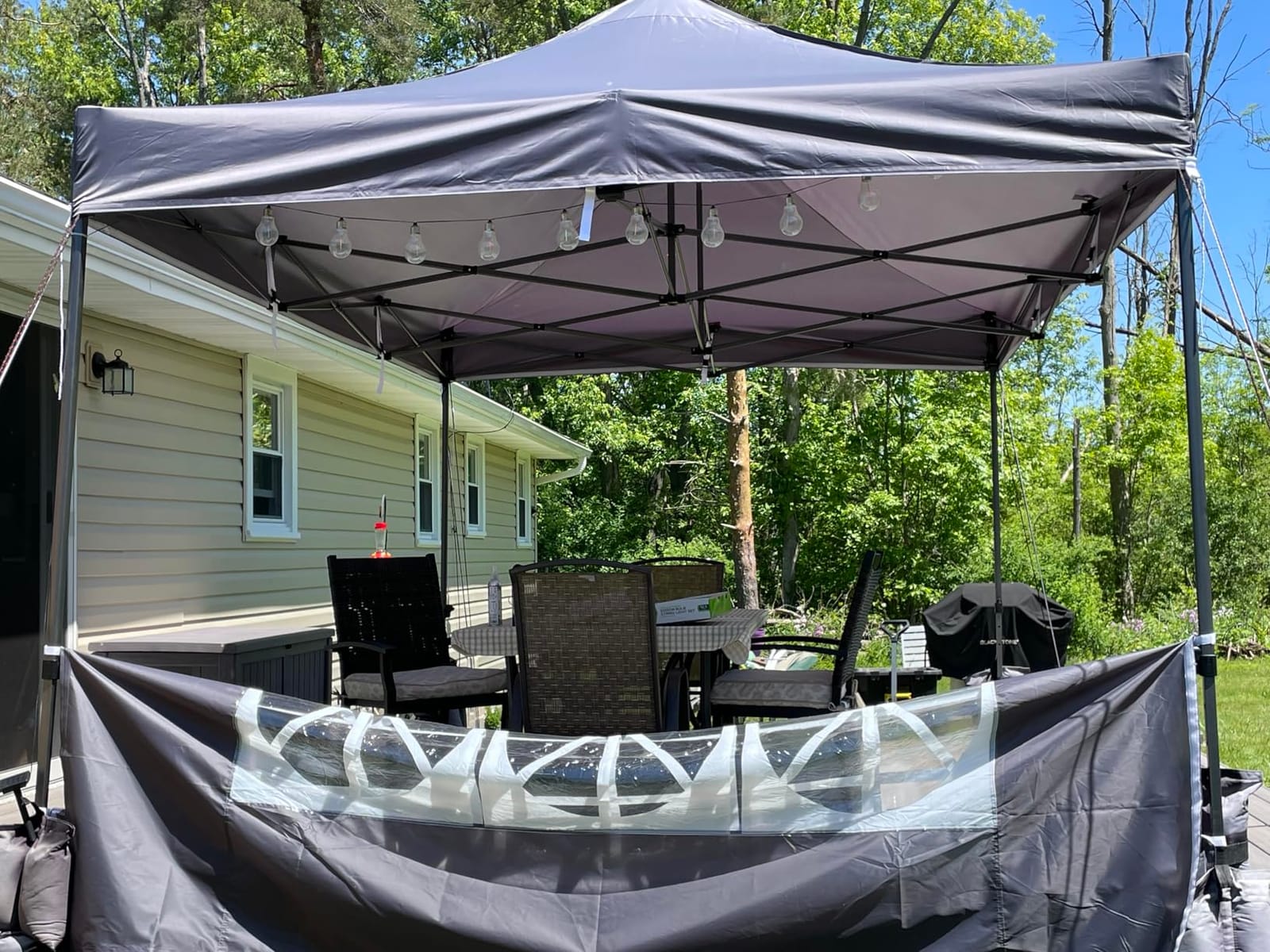
The honest headline is the 18 mph published rating, and it is well below what the hexagon-leg and truss-plus-pole designs in this group claim. This tent is stouter than its rating implies, because the tube gauge is exceptional, but the number is what the manufacturer will stand behind.
There is a practical point in the reviews that applies to any straight-leg frame: the legs are hard to keep plumb unless the tent is staked or the side walls are fitted. That is not a defect so much as a reminder that the walls and the anchors are structural, not optional accessories.
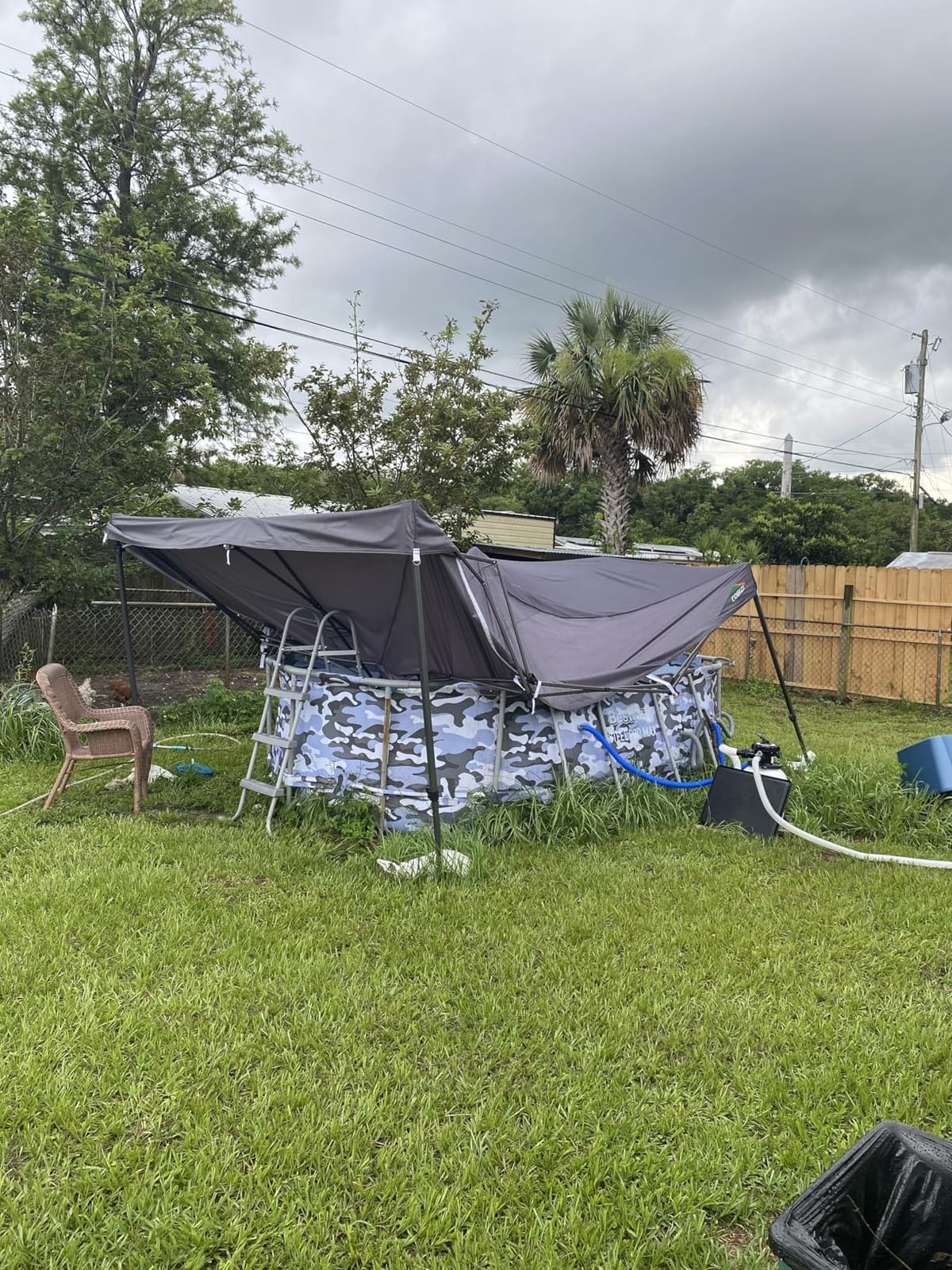
What 2.1 psi buys you in a squall
Waterproof pressure ratings describe how much column of water the fabric holds before leaking, which matters when rain arrives at an angle driven by wind. At roughly double a typical rating, this fabric gives you a much longer window before the first seep, which in practice means the difference between a dry table at the end of an event and a wet one.
Combined with four sealed walls, this is the configuration we would pick for an autumn market or a sporting sideline where rain is expected and the wind is moderate.
When to skip it
Skip it for high-wind sites, full stop, if you rely on the printed rating. Eighteen mph is barely above a fresh breeze and it is the lowest claim here. Anyone needing genuine wind performance should choose one of the hexagon-leg or heavy truss units above.
Service is the other weakness to plan around. Reviews describe poor documented return handling and no direct service line, and note that the cover fabric can develop pin holes at frame and tie points. Buy a spare top if you keep it up regularly.
10. E-Z UP ES100S 10×10 Instant Commercial Canopy — Best Documented Storm Survivor
E-Z UP ES100S Instant Commercial Pop Up Canopy Tent, 10′ x 10′ with 3 Sidewalls, 1 Mid-Zip Sidewall and Wide-Trax Roller Bag, White
Alloy steel straight leg frame
49 lb frame and top
120 in by 120 in by 138 in
11 ft 5 in peak
Wide-Trax roller bag
Pros
- Held through a full day of 45 mph winds gusting to 65 mph when guyed internally while neighbouring tents failed
- three height settings with push button toggles
- Wide-Trax wheels roll over uneven surfaces
- three year manufacturer warranty
- free and low cost replacement parts
Cons
- Bulky 10x10 at 49 to 56 pounds with a 62 inch collapsed length
- Wide-Trax bag zips only around the base so loading is awkward
- side panels are narrow at the corners and hard to zip
- frame shakes in high wind even when staked
- fabric stretches and pools unless kept taut
This has the most detailed wind survival account in our roundup. One owner reports the canopy holding together through a full day of 45 mph winds gusting to 65 mph, internally guyed, while tents around it lost fabric or frames. That is a specific, checkable claim from the review data rather than a marketing number, and it is the reason this model finishes the list despite a lower review count of 597.
The geometry supports it. This is a pyramid profile with an 11 foot 5 inch exterior peak and 6 foot 10 inch maximum headroom, giving 100 square feet of shade at both ground and top level.
A pyramid roof has less area catching wind at the edges than a flat valance design, and the internal guying reduces the span the fabric has to support.
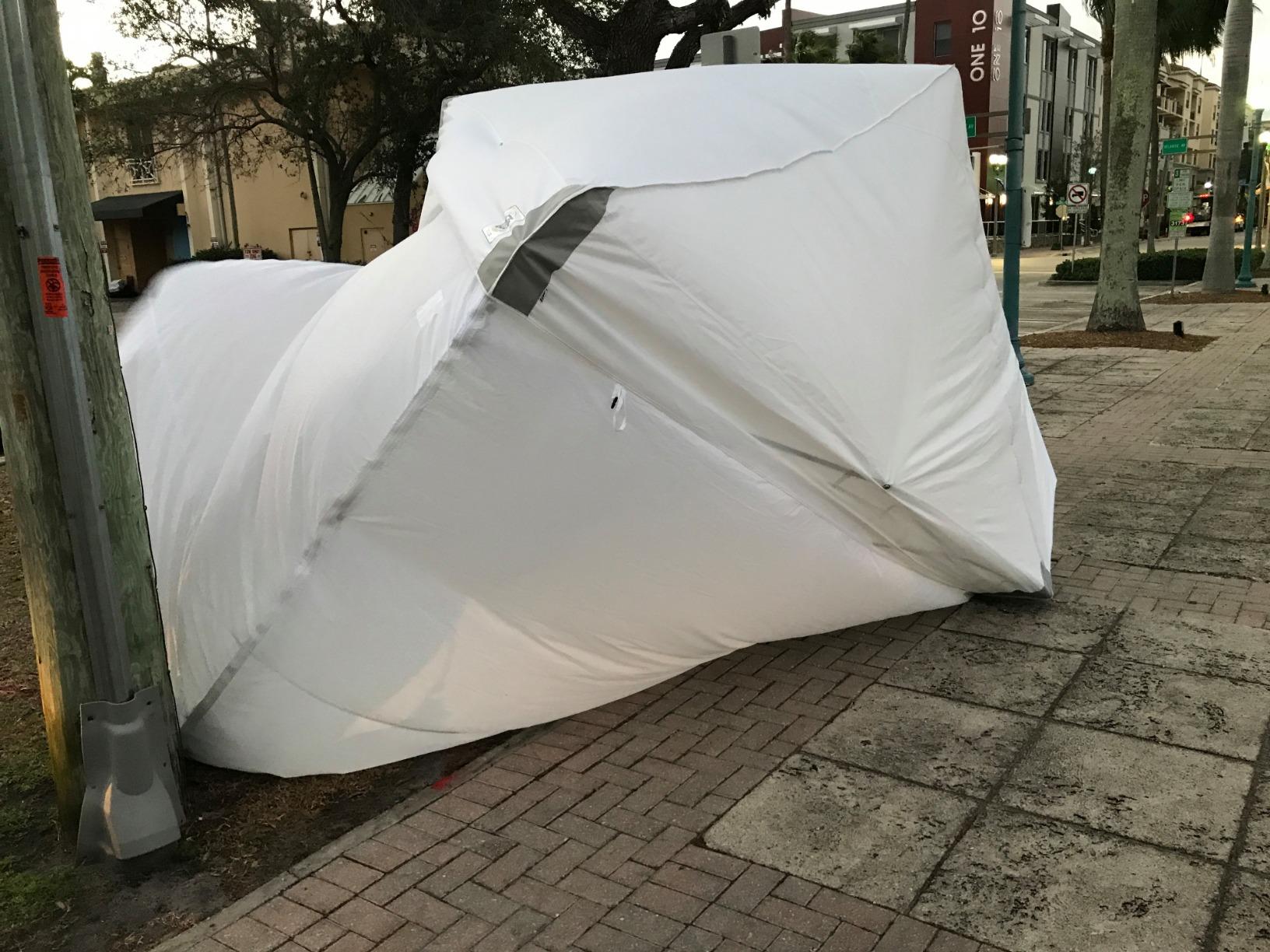
The build is a heavy duty straight leg alloy steel frame with push-button toggle leg adjustments and large pull-pin loops, plus a three-year manufacturer warranty. Replacement parts are shipped free and reasonably priced even once the warranty has expired, which is unusual in this category and a genuine long-term ownership advantage.
The complaints are all about handling rather than survival. At 49 to 56 pounds with a 62-inch collapsed length it is among the bulkiest 10x10s here.
The Wide-Trax bag zips only around the base, which makes getting the collapsed frame in genuinely awkward. Side panels are a little narrow at the corners and hard to zip together.
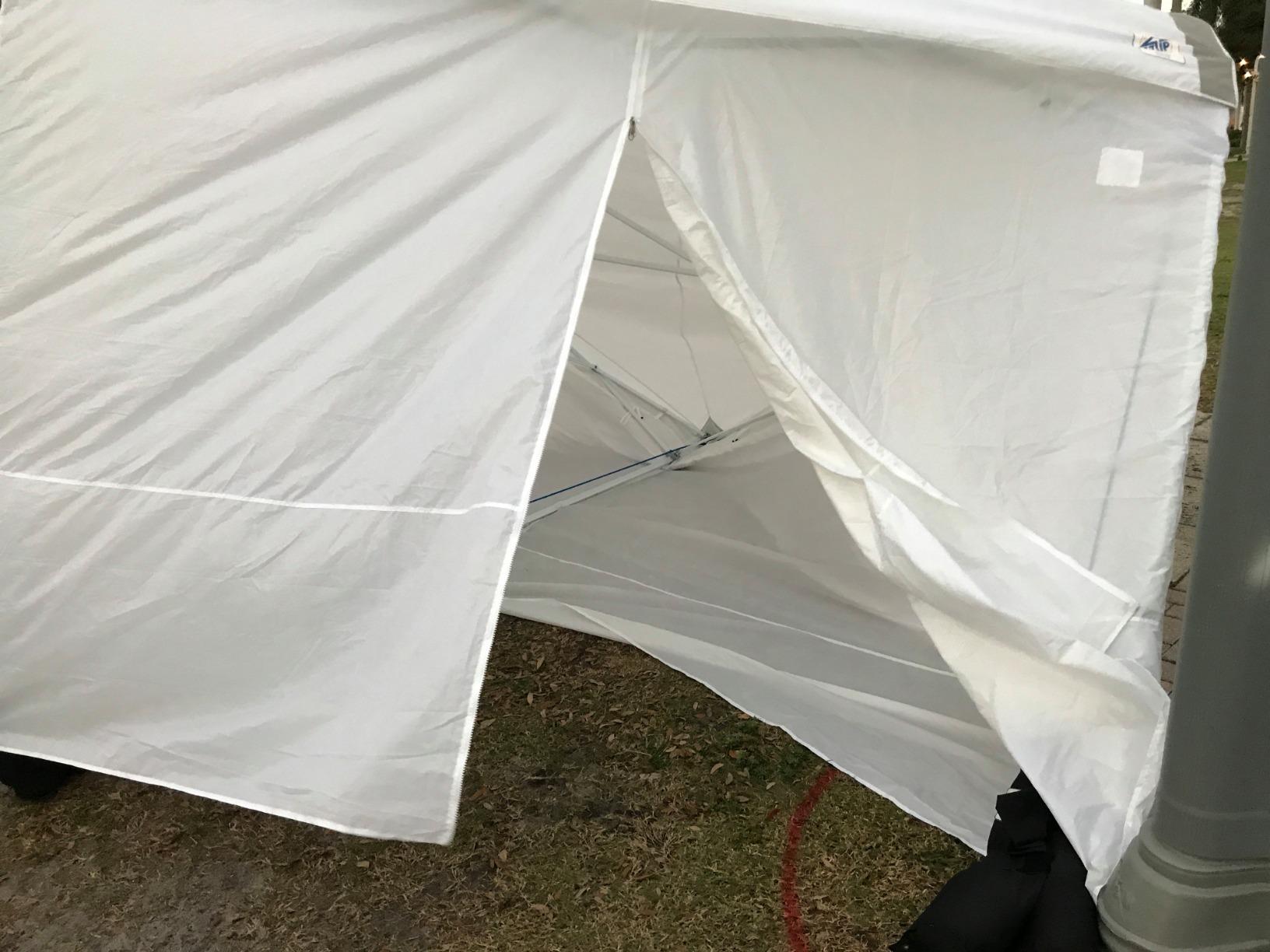
How a tent holds 65 mph gusts and still shakes
No contradiction there. A frame can survive a load without being rigid against it. What you feel through the legs is flex within the structure’s range, and what matters is whether the frame returns to plumb afterward. Flexing under a gust is normal; taking a permanent set or buckling a joint is failure.
That is also why the internal guying matters so much on this model. Guying the roof to the frame transfers the fabric’s tension load directly into the structure, so the roof stops pumping energy into the span between corners.
When this is the right call
Choose it when you have a forecast that genuinely looks serious and you want the widest margin between your tent and the storm, particularly if your site is exposed and neighbours have nothing over their heads. The three-year warranty and cheap replacement parts make it a sensible long-term hold.
Pass on it for tight storage, small vehicles, or frequent solo moves. Bulk is the trade-off, and it is a real one.
If the fabric stretches and pools water over time, keep the roof taut with the internal guying rather than letting it slacken, since a slack roof is what turns a good frame into a poor one in rain.
What Wind Speed Is Too High for a Pop-Up Canopy?
Strike any pop-up canopy before sustained winds reach 30 mph and before gusts reach 40 mph. Hurricane force begins at 74 mph, and no canopy in this roundup is designed for that. Between 40 and 74 mph you are in storm territory, and the tent has to be down and the frame secured or it becomes a projectile.
The reason to act early rather than late is the reverse parachute effect. Wind flowing over and under the roof creates uplift pressure that grows with wind speed, and it grows faster than the wind itself. A tent that is comfortable at 20 mph can be lifted at 35. Waiting until you see damage means the decision has already been made for you.
Here is the working decision table we use. Beaufort numbers describe wind by its observed effects on land, which is a more honest gauge than a weather app for deciding about a tent.
Below 15 mph (Beaufort 2-3, leaves moving constantly). Any canopy in this roundup is fine. Stake all legs and add corner ballast as routine.
15 to 25 mph (Beaufort 4, moderate breeze, small branches move). Stay up, lower the peak to the lowest height setting, and fit walls on the leeward side only. Avoid the enclosure trap by leaving the windward side open.
25 to 35 mph (Beaufort 5-6, large branches in motion, umbrellas hard to hold). Bring the tent down. Owners of the models above report survival at these speeds when fully ballasted, but that is the edge of the useful range, not a place to be casual.
35 mph and above (Beaufort 7 and up). Strike it. Gusts can exceed sustained readings by a wide margin, and a canopy that survives the average can still lose a panel to a single gust. Below 40 mph gusts is the practical limit for a properly anchored 10×10.
Hurricane force, 74 mph and above. Not a canopy question. Nothing portable survives that, and the only safe answer is to be inside a rated structure.
What Actually Makes a Heavy Duty Canopy Hold Up in Wind
Six specifications tell you more about wind performance than any marketing adjective. Check these before you read a single review, and you will see why some canopies in this roundup outlast others with similar star ratings.
Leg diameter and profile. Look for at least 45 mm, or 1.77 inch, legs. Hexagon or octagon profiles brace better than round or square tube because the flat faces resist racking. Two of the tents here use 1.26-inch pipe with 0.03-inch wall, a heavier wall than the square tube used by most frames in this group, and one pairs its stated 50 km/h figure with 45 mm hexagon legs.
Wall thickness. Recreational canopies sit near 0.5 mm. Commercial frames use 1 mm square or hexagon tube. The heavy end of this roundup reaches 0.03 inch, or about 0.76 mm, on larger pipe. Thicker wall means the leg resists bending before the joint or foot ever fails.
Frame weight. This is the most useful proxy for a genuinely heavy duty canopy. A 10×10 commercial frame in the 55 to 65 pound range is solidly built. Below 45 pounds you are generally looking at lighter gauge tube. The 10×20 models here run 86 to 100 pounds, and that mass is the reason they need far more ballast per leg than a 10×10.
Peak height and roof geometry. A steeper pitch sheds water instead of pooling it, and pooling is what collapses frames in rain. A pyramid profile catches less wind at the edges than a peaked or valance-heavy design. Rigid centre poles resist side-to-side flex better than flexible arches.
Truss bracing. A full truss adds a diagonal cross member between each pair of legs, roughly doubling lateral stiffness compared with straight legs alone. It is the most obvious sign of a commercial frame, and the truss units here hold ground where straight-leg models shake.
Joints, footpads, and hardware. The parts owners mention when frames fail are the scissor bolts and the footpads. Cast aluminium footpads spread load better than stamped steel plates and resist rust. Buyers also ask whether the brand sells replacement legs, since that decides whether the tent lasts a decade or five years.
On aluminum versus steel: steel is stronger per dollar and tolerates abuse, which is why nearly every commercial canopy here uses alloy steel.
Anodized aluminum is lighter for the same strength and resists salt air and corrosion much better, which matters on the coast, at the cost of a higher price and a bigger dent risk. If you are moving solo or fighting corrosion, aluminum is the better trade; if you are parking the tent and leaving it, steel wins.
Sidewalls deserve their own note. Walls reduce wind load when they are tensioned and correctly oriented. With three walls fitted, the open side must face away from the wind. Leave the gap facing into the wind and pressure builds inside the enclosure, which pushes the frame upward and can lift the whole structure off its anchors.
How to Anchor a Canopy for Wind
Anchoring is where wind performance is actually decided. The frame matters less than the ballast configuration, and most published failures happen because a 50-pound tent was left with four small weights.
The rule we apply: a 10×10 needs between 33 and 62 pounds of anchor weight per leg in serious wind, and the higher end applies to gusty or exposed sites. A 10×20 with twice the sail area needs proportionally more. Quoting from the certified testing in this category, one 60 lb base weight per leg is the configuration behind a 62 mph wind tunnel figure, which is the highest published tunnel figure we found for a pop-up canopy.
Grass and soft soil. Use ground stakes at a 45 degree angle driven away from the tent, with tension straps from each stake to the frame’s upper corner rather than to the foot. Stakes pulling out of soft ground is a recurring coastal and wet-soil failure, so use longer stakes than the ones supplied. Add 20 to 25 lb per leg as sand bags.
Sand. Stakes are nearly useless on a beach because the sand gives way. Use base plates or wide flat foot pads to spread the load, and weight each leg heavily. Anchor guy lines to buried anchors or to fixed objects like a vehicle or a dune anchor. Expect to re-check and add ballast during a windy day as the sand packs down.
Asphalt and concrete. No stakes are possible, so ballast is the only option. Cast or welded base plates at every leg with 33 to 62 lb each, secured with straps that pass through the foot and around the plate. This is the configuration that matches the certified testing numbers, and it is why vendors on hard surfaces get better results than the same tent on grass.
Gravel and rough ground. Stakes work well, but use plates under the feet so the legs do not sink and settle out of plumb. Check plumb on all four legs after the last stake goes in.
The procedure itself is short. Set every leg at the same height and confirm the frame is plumb before you attach anything, then fit foot plates at all four corners.
Attach one anchor per leg and tension it before moving to the next, because a half-tensioned canopy twists under load and pulls itself apart. Add ballast to every leg, not just two.
Then run a corner strap to the frame’s upper corner on the windward side, which is the only thing that stops the roof acting as a scoop. Re-check every strap and plate after the first gust, then again at the halfway point of any long event.
The most common mistake is using the included stakes because they came in the bag. Reviews across this group are near-unanimous that supplied stakes and ropes are too light and too short for genuine gusts. Buy better anchors separately; treat the included ones as tent-pegs for calm weather only.
Using Canopies in Coastal and Hurricane Conditions
Coastal sites are the hardest case and the one most roundups ignore. Salt air corrodes steel, sand removes the option of staking, and steady onshore breeze means the tent is never fully at rest.
On a beach the tent becomes a sail unless it is genuinely ballasted, and coastal owners in community discussions tend to treat the fabric as disposable.
Three rules for coastal use. First, rinse the frame with fresh water after each event, because salt residue on steel is what turns a coated leg into a rusted one within a couple of seasons.
Second, treat the top fabric as a consumable. A canopy that survives one season on the sand is a canopy that did its job.
Third, bring it down rather than fight it. Steady 25 mph onshore wind is exactly the range where a secured tent lives and an unsecured one becomes a hazard to everyone on the beach.
Hurricane season planning is the same logic with a clock attached. Know your local storm timing and work backwards: a 10×10 typically takes ten minutes to strike once it is down to the frame and fifteen minutes to load.
A two-hour lead time is comfortable and under one hour is not. A 10×20 with walls needs considerably longer, which is why we would never leave one standing overnight in a forecast.
Finally, the warranty point that changes the buying decision for anyone staging repeated events. Wind and weather damage is excluded from warranty coverage nearly everywhere in this category, including explicitly on at least one model here.
That means the frame warranty protects you against manufacturing defects and corrosion, not against a squall. Your protection is the anchoring, not the paperwork.
Field repairs are worth a mention too. Punctures in canopy fabric can be patched with self-adhesive waterproof tape or duct tape on the underside of the panel, away from the seam, and the repair will outlast the event. Tape is not a fix for a torn seam along a tensioned edge, which is where the load actually runs.
Our approach to product testing across heavy duty gear, from engine stands to commercial treadmills, is the same: read the specification, then read what owners report when it fails. Both halves matter, and the failures are almost always in the accessories rather than the frame.
Frequently Asked Questions
What wind speed is too high for a canopy?
Strike any pop-up canopy before sustained winds reach 30 mph and before gusts reach 40 mph. Hurricane force begins at 74 mph and no portable canopy is built for it. Act early, because uplift pressure under the roof grows faster than wind speed, so a tent that is comfortable at 20 mph can lift at 35.
How do I keep a canopy tent from blowing away?
Ballast and stake every leg individually. A 10×10 needs roughly 33 to 62 lb of anchor weight per leg in serious wind, and a 10×20 needs proportionally more. On soft ground use longer stakes at a 45 degree angle with tension straps to the upper frame corners. On hard ground use base plates. Add corner ballast to all four legs and never just two.
Will a tent survive 50 mph winds?
A properly anchored commercial canopy can hold 50 mph gusts, and owners in our roundup report survival at that speed. Sustained 50 mph is a different matter and should be treated as a strike-it threshold. The published wind figures across this category run from about 18 mph to 31 mph for 10×10 models, so read the manufacturer number as the baseline and keep a wide margin below it.
Who makes the strongest canopies?
In this roundup the strongest documented showing belongs to the E-Z UP ES100S, which one owner reports held through a full day of 45 mph winds gusting to 65 mph while neighbouring tents failed. On published figures, the ABCCANOPY 10×10 Premium-Series states 50 km/h, about 31 mph, alongside its 45 mm hexagon legs. Frame weight, tube gauge, and anchoring decide the outcome more than brand name.
What is the best beach canopy for high wind conditions?
On sand, use base plates rather than stakes, because sand gives way, and weight every leg heavily. Choose a heavy tube gauge frame and expect to replace the fabric each season, since salt and abrasive sand destroy the top. Rinse the steel frame with fresh water after every event to prevent corrosion. Bring the tent down rather than fight steady onshore wind above 25 mph.
Final Verdict for Windy Weather
The best heavy duty canopies for windy weather are not the ones with the biggest number on the box. They are the ones with a truss frame, tube gauge you can measure, enough mass to resist being lifted, and an anchoring plan you commit to before the weather arrives.
For most buyers, that combination starts with the ABCCANOPY 10×20 as the overall pick for proven long-term durability, the Eurmax 10×10 as the strongest value for real gust exposure, and the ABCCANOPY Premium-Series when you want a published wind figure alongside 45 mm hexagon legs.
Whichever one you choose, treat the take-down threshold as non-negotiable. Strike at 30 mph sustained, and before that if you cannot be on site. The canopy that survives is the one you took down in time.